Feed the Beast to Sleep

Feed the Beast to Sleep

What the fizzled Egyptian revolution tells us is that the power of the people rises not so much for freedom as for bread. And who am I but a fat and comfortable American to think there’s anything wrong with that?

Today’s demonstrations are pitiful by last week’s standards. It’s also more rigidly organized, capable of orchestrated violence. It’s a quickly maturing opposition that lost Round One. Round One’s heart and soul was people power; that’s gone. Next moves – if they exist at all – must be contemplated without people power.

People power has retreated to homes and businesses. Many workers want to start spending the 15% pay rises announced over the weekend by the Egyptian government. The more effete have the promises of political reform to solace them at night. “Free” is an adjective being attached to everything from the continuing protest to Hare Krishna dancing.

We know different, of course: our media celebrities are now confined to describing their confinements: the press has been muzzled as never before. There’s internet, again. There’s even the Google executive let out of jail. Yet Egypt progressives write feverishly of a crackdown of dissidents in serious high gear, now directed by the so-called people friendly army not police.

My style carries gloom, but also guilt. I fret about which is more important: the crackdown, the disheartened revolution, the recovery of most power by Mubarak with the same indecision about which kind bagel I should pull from my well-stocked pantry to toast.

Mubarak can’t afford 15% pay rises to a huge section of his population with pipe lines being blown up, tourists fleeing the country and capital evaporating. But don’t forget sugar daddy sitting just to the southeast. I suspect some remarkable new alliances between Egypt and Saudia Arabia are being worked out right now.

If sugar daddy runs out of sugar, that’s another story altogether. Bread digests quickly. If there’s not more in the days ahead, people power will rise, again.

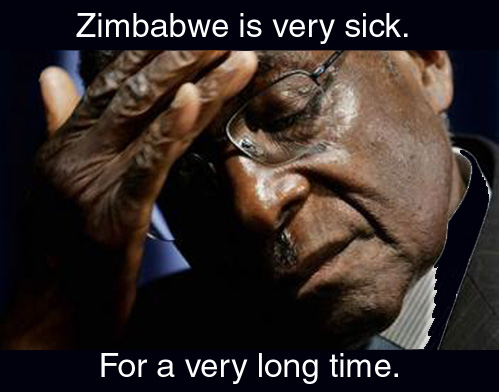
But feed the beast long enough and it will go to sleep. The emasculation of rapid ideological change is a longer process. Sometimes it works quickly, like in China. And sometimes it works slowly, like in Zimbabwe.

But it always seems to work.

Serengeti Highway Muddle

Serengeti Highway Muddle

The great Serengeti Watch organization announced over the weekend that they had an advance copy of the Tanzanian government’s environmental impact study necessary for proceeding with the highway, but they didn’t analyze it for us. This is a serious mistake.

The 600-page report has not yet been officially released, but you can get to it through Serengeti Watch by clicking here.

I haven’t read it, and like many supporters of Serengeti Watch I’m upset that they led me to the document without some coaching as to what should be looked at in the 600 pages. The point of Serengeti Watch is to guide those of us who have placed our trust in them to take the lead. They’ve dropped an enormous opportunity, here.

Please, Serengeti Watch, give us a few more details and fast, before others not quite so sympathetic will do so.

Twevolution in Egypt!

Twevolution in Egypt!

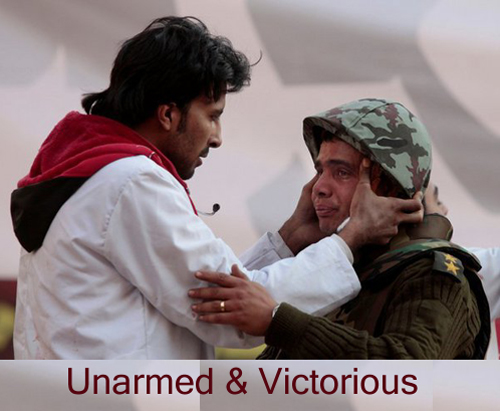
As this blog goes to press millions are at Tahrir Square just ending prayers. This mostly and remarkably peaceful revolution is a new kind. No longer revolution, but Twevolution!

Click here! This is a live twitter feed of the Revolution!

Peaceful attempts to topple governments in my lifetime have been mostly failures. The one possible exception was the toppling of Peru’s President Fujimora in 2000 although it was not just the people in the streets but Peru’s other arms of government including its military that wanted him gone.

But in all the other cases, government change only came after tremendous violence often involving foreign governments.

This appears to be different. Really different.

Woe to Boeing and Lockheed, but it seems that fighter bombers might have been replaced by….

Twitter. Facebook. YouTube and so much more!

The amateur video which follows was picked up by AlJazeera and probably did more than any other video to really fuel the revolution. It shows the first street confrontation on January 28 between protesters and police, finally won by the protesters.

The video below was created a week earlier by a single, courageous woman pleading with everyone to join her in protest. She challenges watchers with the memory of Mohammed Bouazizi, the Tunisian who self-immolated himself.

Peaceful protest in the past seemed to be destined for failure. How many bodies must fall in front of a tank before the phlanx of bodies succeeds? Buddhism and nonviolence has thus had a checkered history.

But until now, Buddhism and nonviolence lacked a winning tool.

There is an answer to “how many bodies” and Tahrir Square may just have them at this very minute. There is a calculus where not even a nuclear bomb can suppress a united protest.

When NBC reporter Richard Engel was asked on a live internet feed Wednesday night what strategy the anti-government protesters could possibly employ to counter the armed and carefully organized thugs fighting them, he hesitated, but then answered enthusiastically, “Information!”

That’s it! America is discombobulated by competing media pretending to report social will but actually governed by a need to produce entertainment. So even while we are in possession of the greatest technology skills and assets in the world, and while those were used to elect our first black president, I see them mostly coopted by our commercial priorities.

But not a place like Egypt. Desperation is very subjective. It’s completely fair to say that many in the U.S. feel as desperate trapped by the socio-economic system as Mohammed Bouazizi felt within his Tunisian society before he set himself on fire. But as that first video by that courageous young woman explains, there are alternatives in this highly connected world to removing yourself from society.

Mohammed’s action galvanized the desperation in his society. But not with steel and bullets, just with … Nielson Ratings!

Finally enough voices fell in line that their universal message could not be defeated even by overwhelming force.

Alive in Egypt is a consolidation site of videos, audio and tweets.

More skilled videos being created from around the world about the revolution can be found at Mibazaar.

“We Are All Khalid” is among Facebook’s most influential pages.

There are hundreds of sites like this one, and this one.

Was it Richard Engel who said it? This is the Information Revolution?

Egypt Picture Hard to Read

Egypt Picture Hard to Read

Because there are so many tourists in Egypt, and because there’s no legal requirement that tour companies honestly reveal the scope of their operations, it’s very difficult to get an accurate picture of tourists and tourism right now. But here’s my best try.

Before the trouble last week, the U.S. State Department reported there were about 50,000 Americans in the country, of which 3-5000 were tourists. Since January 25, probably 6-7000 of those have left, of which 1500 may be tourists. That leaves around 3500 tourists and 43,500 nontourist Americans in Egypt right now.

And I venture to say they will not be hurt. No one likes what’s happening in Tahrir Square, now, but the violence in the country is localized. Savvy tourists will remain safe.

About a third of the 6-7000 Americans who have been able to leave did so aboard U.S. government supplied evacuation charters. But most of the travelers on the U.S. government charters were not tourists; they were government workers and U.S. residents living in Egypt.

Two-thirds of the Americans who have evacuated seemed to have done so on commercial flights.

Since 2800 Americans had previously registered with the U.S. State Department as intending to visit Egypt now, I estimate there were about 5000 American tourists there when the trouble started last week.

Tourist registration with foreign consulates is a service all countries provide, but in recent times it’s mostly large tour companies that register their clients, rather than individuals, and it’s usually hardly a third to a half of the actual tourists who travel.

In the best of times true tourist numbers are very hard to get. This is because no U.S. or foreign agency reports the numbers of people entering or leaving a country in real-time. The U.S. is the best for reporting inbound tourists on a quarterly basis. But Egypt, for example, reports suspicious statistics only once annually.

What irritates me is that in the absence of being able to get this hard information, media turns to professional tour companies. This is a terrible mistake, because most tour companies (especially American ones) grossly inflate their actual production and often to the great pleasure of host countries.

Yesterday, for instance, in a single dispatch from Moscow reported in Britain’s Daily Mail the Russian state news agency RIA Novosti reported a ridiculous 45,000 Russians touring in the country at the moment. In virtually the same paragraph, Konstantin Shvartser of the Pegas Touristik said there were only 18,000. And in a continuation of the numbers folly, he then claimed only 18 Russians altogether want to leave the country, now.

USAToday reports on tourism by surveying well-known American tour companies like Abercrombie & Kent and Grand Circle.

But those (good) companies won’t reveal their numbers, and the fact is that the majority of American tourists traveling to Egypt these days don’t use established tour companies like these, so what’s happening to their customers is really rather insignificant to the bigger picture.

Most travelers to Egypt, today, book through the internet often directly with Egyptian companies. It’s likely, in fact, that as many Americans book Nile cruises with British companies as with American companies.

In trying to gauge the “real situation” imagine being a resident of Washington, D.C. or Watts in L.A. during the riots of the 1960s. The longer the crisis continues, the more basic services become strained of course. But unless you actually walk into the midst of the trouble, until strained services reach a critical point, you’re probably going to be OK.

Officially, most foreign nations have advised their citizens to avoid central Cairo and Alexandria. But many European countries, including Britain, have advised tourists who find themselves elsewhere (such as Sharm el-Sheik or Luxor) to remain until travel to international airports becomes easier and safer.

Most Nile cruises have stopped sailing, although we also know that large companies like Sonesta (which owns 5 ships), Sofitel and Hilton are continuing to provide services (food, shelter) to passengers who were onboard when the trouble broke out.

“Living conditions in Cairo and the risks to foreigners are not quite as bad as they may appear in the media,” writes the only excellent coverage I’ve so far found, in today’s Huffington Post.

So the bottom line is that the vast majority of foreigners, including tourists, remain in the country and have had enough time to position themselves in a safe way. Commercial flights continue to operate at the Cairo airport.

I am no expert on the MidEast, and I have been wrong in predictions before. But as one experienced traveler voice, I don’t see what’s happening in Egypt right now as dangerous for the tourists or foreign residents who unfortunately find themselves there.

Patience for Tourists in Egypt

Patience for Tourists in Egypt

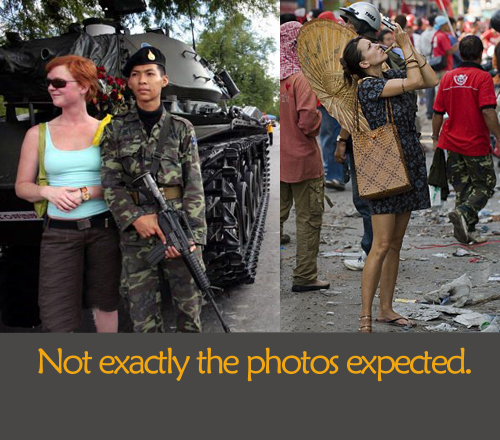
So far, so good for tourists stranded in Egypt. There are 30-50,000 tourists currently trying to leave Egypt, and their itinerary isn’t exactly what they thought.

They shouldn’t try to leave. They should hunker down like the majority of tourists, there, now.

In near lockstep with the delicate balance of the American government, tourists had initially decided to wait-and-see. Large American tour operators like Isram Travel and Abercrombie & Kent sent out bulletins assuring the world that their tourists were doing just fine.

But when the conflict stretched over last weekend, curiosity turned to ennui and finally real concern. And when the tourists tried to leave and couldn’t, the panic button was hit. That happened to thousands yesterday and may have been a mistake.

I’ve been in a number of conflicts as a tourist during my life time of travel. Most of the time the thing to do is … hunker down and wait it out. (Not always, but it is the thing to do this time in Egypt.) Patience, not a tourist attribute, has to be summoned up then cultivated for as long as it might take.

This is not another Rwandan genocide or Balkan War. This is a popular uprising that looks surprisingly disciplined. Until that “look” changes, stay put tourists!

Egypt gets between 15 and 16 million tourists every year, and right now is the highest of the high seasons. It is likely there are several hundred thousand tourists in the country right now. The U.S. State Department believes there are at least 5000 Americans currently touring Egypt, and possibly twice that number.

Desperate tourists don’t make good decisions. Those panicking and trying to leave are mostly being disappointed. Their chances of leaving aren’t good, and it will be extremely expensive. Much more expensive than “hunkering down.”

Television reports, of course, laud those who made it out. Because a lot of television can’t make it in to tell those stories. And of course there will be headlines about the odd act of violence at a tourist hotel … something that likely might have happened with a revolution or not.

The majority of tourists in Egypt right now are doing the right thing: stay there and wait it out.

At any given time, there are as many as 50,000 American in the country, including teachers, engineers and technicians working on the Suez Canal and many involved in the oil and gas industries.

Regina Fraser who hosts the PBS show “Grannies on Safari” may have enjoyed being interviewed by CNN but by yesterday she wanted out.

Regina was on a cruise ship on the Nile, and remains there unable to get to Cairo. At any given time there can be as many as 150 cruise ships sailing between Luxor and Aswan carrying as many as 15-20,000 tourists.

Egypt’s tourism contributes enormously to its economy. (Estimates vary from 5% according to the World Tourist Organization, the as much as 10% according to the Egyptian Tourist Board.) It is one of the last value markets for tourism of any kind to Africa, where a ten-day trip is available for under $2,000. This is half to a third the average elsewhere on the continent.

And most importantly, so far, no tourists have been harmed. In fact the opposite seems to be true. When I was a young kid traveling the world the last place to find a young single woman was Egypt. But Emma Vielbig, 19, was traveling alone in Egypt last week when the trouble started.

Like any kid, she ventured into the streets and tear gas. She got caught in mayhem but was rescued by some anonymous fellow on a motorcycle who grabbed her shouting “You’ve got to get out here” and motored her back to her hostel.

Few would plan a vacation into a revolution. A vacation is supposed to be at least a good measure of R&R. But a revolution is what’s happening in Egypt, and so far, tourists are not being redefined. They remain tolerated onlookers, cash heavy foreigners, but so far, safe.

There is an important lesson for all of us who travel. The situation in Egypt was mostly a surprise. It has much to unfold yet. But so far, tourists are safe. All they have to worry about is their own impatience.

What does Egypt mean?

What does Egypt mean?

Egypt’s popular rising by a better educated generation reflects a global interconnectivity that transmits the will of the people as effectively as bar photos. But do Americans in particular understand what these people really want? I don’t think so.

Cries of “Freedom!” are easily translated from most any language, but “democracy” is another word altogether. Americans have consistently reported on African uprisings as “democratic movements.” Some are but most aren’t.

Sunday’s announced results in the Sudanese referendum – long expected – is hardly a step in the democratic process many claim. It’s a step in a process that secedes power in Khartoum to a political group that has been working for it throughout my life time, and in my opinion, well earned. But there is no room in this process for competing views about governance.

And whether or not the northern tribes will receive the fair attention proscribed in the new South Sudan constitution remains to be seen. Unlike truly democratic societies where law is the foundation of governance, that isn’t at all certain in the new South Sudan.

The first spark of popular uprisings in Africa began long ago in South Africa, and ever since the regime changed in 1994 Nelson Mandela’s party, the African National Congress, has been firmly in control and often in defiance of democratic ideals like freedom of the press.

Following the horrendous genocide in Rwanda in 1994, the populist uprising of Watutsi mostly in exile in Uganda stormed into the country and took control. Paul Kagame was the military general that led the attack, and he has remained president ever since. In the last election, his opponents were either jailed or killed.

Yet South Africa, Rwanda and now the South Sudan are definitely fulfilling the aspirations of the people who brought them to power. Those aspirations can be summed up in a single word, justice.

Americans misinterpret democracy for justice. We also tend to believe that democracy is more absolute than justice. Nothing could be further from the truth.

The filibuster in the Senate is a case in point. Manifestly not democracy, it prevails nonetheless as just. Ditto for the electoral college, or the ability of our courts to reverse a popular referendum.

The people in the street may be screaming for freedom and democracy to get the attention of CNN, but what they really want is … justice.

And that’s what makes the recent uprisings in Tunisia and Egypt, and likely soon elsewhere in the Arab world, to be so problematic. Wealth and opportunity cannot be redistributed as quickly as a Hosni Mubarak can be toppled from power.

And so it’s a matter of how patient the revolutionists will be. Africa is legend for the patience of its people, and that’s why I remain completely optimistic in the future of South Africa and most of Africa in general.

The big question, then, is whether Egyptians have the same patience as South Africans and Kenyans. It’s a very big continent: I just don’t know.

When Right is Wrong

When Right is Wrong

Not just Gabby shot, but now David murdered in certain part because of the hatred created by the American Right. There are two things I just don’t understand: (1) how can anyone deny this obvious link, and (2) how could we possibly have let these happen? Who will be next?

Wednesday afternoon one of the finest, gentlest and most articulate Ugandans to have lived was beaten to death in his Kampala home with a hammer. Kato was Uganda’s most prominent gay rights activist.

Kato’s death, like Gabriel Gifford’s attempted assassination, was not random. They were both likely done by crazed individuals, but individuals directed if not wholly inspired by hate speech from the American Right.

The incredible attempts by Americans including President Obama to deny this represents a dangerously irresponsible lack of common sense, if not a terrible act of cowardice.

We all know the connection of the American Right to Gabby’s shooting. And hold on! “American Right” is not a person, it is not Sarah Palin. But Sarah Palin is a part of the “American Right,” thousands of individuals and countless organizations who have irresponsibly implied violence (if not called for it outright) against individuals opposing their views.

Val Kalende, the head of a major Ugandan gay rights organization told South Africa’s Pambazuka News shortly after the murder, “The Ugandan Government and the so-called U.S Evangelicals must take responsibility for David’s blood!”

Reporter Leigh Phillips of the European Union on-line publication EUObserver reported today that some EU States have now “threatened to cut aid funding to [Uganda] as a result of the [anti-gay] legislation, which was introduced after a group of American right-wing Christians travelled to the country in March 2009 to hold anti-gay rallies.”

You can read my own accounts of this terribly developing story, including lots of links and videos at “Trail of Hate Rounds the World”.

I am especially saddened and angered by President Obama. Both in his State of the Union address last week, and in a message deploring Kato’s death he refused to link the heated American Right rhetoric to the acts.

I can understand the special importance that a leader of such power has in reducing tensions – especially deadly ones – but in the State of the Union Obama specifically stated “There is no connection” between heated rhetoric and Representative Gabriel Gifford’s attempted assassination. Not to affirm a connection was wrong of Obama. But to affirm the lie that there is no connection is despicable.

His message about Kato was more circumspect. Denial comes only as inference in what was not said. Better, but no cigar.

With no cap on the lunacy from our leaders, denial of the causal relationship between the American Right’s rhetoric and violence has gone viral in America. We are once again burying our heads in the sand of deceit and fantasy.

This senseless violence will end only when the American Right changes the tone of public debate. And that tone is not – as often suggested – equally created by “both sides.” It is an American Right phenomenon. Only they can end it.

Animals Are Not People

Animals Are Not People


Animals are not people. Sorry about having to tell you this, they are living things deserving our utmost respect, but there’s not a hippo I know who is really Mama Cass with a preference for long, lacey dresses.

I’ve tried avoiding the attached video, just as I’ve tried avoiding talking about the lion who adopted an oryx in Samburu, or the buffalo gang war that saved junior from the teeth of Capt Cook’s nemesis. But, alas, too many of you have sent me this video.

It’s definitely fun to watch. Wrongly characterized as the local EMT or school-crossing guard, a hippo “escorts” little animals across dangerous places. First a young wildebeest.

Then, a very young zebra, I’d estimate less than three weeks and maybe younger, gets separated from its family as they try to cross through the strong current of the Mara River in the far north Serengeti.

Lost and bewildered, Mama Cass arrives on the scene to escort the darling to a little rock island and watches over it while it regains its strength before sending it striding into its bright future across the final trickles of the stream to land fall.

(Where, I now speculate which is not in the video, it is immediately consumed by a cat.)

The video was shot when a group of tourists including a Tanzanian lodge manager were out routinely game viewing. What was not routine was how that Tanzanian lodge manager has grossly exaggerrated the situation, claimed the hippo “saved” the baby zebra, and subsequently copyrighted the video.

I don’t know the lodge manager, so I don’t know if he really believes what he says. It could just all be the start of a new children’s book series, and if that’s what it is, congratulations Joe you’ve lucked out.

But if there’s one iota of real belief in what he says, he’s nuts.

Here’s my take. It was a pretty large hippo, so likely a female and even more likely a female which had recently (very recently) lost a baby. This occurred during the wildebeest migration with lots of beef running across streams. Ergo, lots and lots of crocs.

The giant crocs especially along the Mara River are remarkable creatures that basically sleep for ten months of the year, waking for around two to eat. When they wake they are incredibly voracious, sloppy eaters.

They have difficulty discerning between a wildebeest and a baby hippo. In fact, I’ve seen them mistake a car tire for a wildebeest.

It’s a dire time for a hippo to give birth. And what that mother in the video was doing was not “escorting” the baby to the shore; quite to the contrary. What she was desperately trying to do was pull it back into open water and make it dive, below where crocs feed.

That’s the strategy for an unfortunate mother hippo who gives birth during the wildebeest migration. Keep the baby as deep in the water, where by the way it’s born to begin with, until the eating machines are full.

So sorry, folks. This was no cross-cultural bioethnic altruism for the good of the wild. It was just another hippo in a group doing what they do best, trying to survive.

And the cathartic tourists shooting the video were just doing what bad tourists do best, making fantasies out of reality.

Here’s a better way. Nick Brandt is one of the most creative artists working in East Africa. He sticks with black-and-white images, and by so doing does what he does best, makes reality out of fantasies.

His photos are remarkable for not being realistic, but futuristic or sometimes even apocalyptic. And in so doing he conveys stellar truths about elephants and lions and so much more, portraying their intrinsic beauty in almost mechanical ways. But most of all, after viewing these photos you are left more with emotions than explanations.

And that’s much closer to representing the reality of Africa’s wild than misinterpreting instinct for empathy. Animals don’t have empathy. We have empathy.

State of the Union, State of Africa

State of the Union, State of Africa

As I listened to President Obama last night, I thought of the State of Africa, and I realized that real hope for future justice in the world is squarely with Africa, today, not America.

Many will consider me foolish: yesterday was a day of tear gas, rioting and general upheaval in much of north Africa. But what I see are people uprising, renewed and respirited. And what I heard last night was Obama snuffing out new spirits in America.

Africa has been in the throes of radical change ever since apartheid in South Africa fell almost 20 years ago. Economic catastrophe today is the motivation that carries the spirit of liberty from South Africa to Tunisia. There’s nothing odd about that.

Economic catastrophe has always been a reason for political change throughout the history of civilized society, and so it should be, since it is often caused by the older society unable to adjust to newer social realities.

In Africa this has led to radical changes in the political organizations in South Africa, Kenya, Liberia, Senegal, Madagascar, Sudan, Cote d’Ivoire and the Comoros. I’m not suggesting that the direction of this change is yet fully understood or right now universally good. But it is all fueled by people power. And that all by itself, is good.

Respirited mass movements lead to real recalibration of society. Former winners become losers and former losers become winners. The cocktail party phrase that social change can be a win-win situation is premature. There is too much injustice and prejudice in the world still for that to yet be fully possible.

But it doesn’t mean that the new losers are relegated to the same misery that the former losers might have suffered. In Africa, in fact, it means that the powerful just become a little less powerful. Kenya’s former dictator, Daniel arap Moi, enjoys a wonderful retirement, safe and comfy and in fact respected by a wide section of Kenyan society.

But his ouster by the people of Kenya led to a series of events that has heralded in a new populist who is likely to radically alter the Kenyan economy currently defined by legions of poor. No single movement or leader is capable of changing the science of economics. But Raila Odinga is likely to elevate the condition of Kenya’s poor in the next decade far beyond what I could have imagined, and no doubt at the expense of the rich and powerful.

Who will by all standards, still be rich and powerful. Just not as rich and powerful as before.

This is precisely what happened and continues to happen in South Africa. It began a generation ago, as the richest and most powerful emigrated to the tune of 1800 per month starting in the 1980s, as they realized their lofty positions could not be sustained in a modern African society.

Throughout Africa, populist movements are ushering in more just and equitable societies.

In America, Obama was that symbol as well in 2008. But he failed. He is far behind his times.

Obama’s message is one of unity, and in all fairness, this is no surprise. He has been extremely true to his theories. But that was not what brought him to power. What brought him to power was a massive belief that real change would occur in America.

That may be our fault, not his, but he was complicit. He accepted the mantle of change. He now revels in the temerity of those who condescend to answer a robo phone poll. But he seems too steeped in the past to be pried from his 19th century politics, constrained by dead heroes like Abraham Lincoln, so great for their times but as outdated today as a buggy wagon.

I look at Africa, and my heart beats fast and hopefully. I listen to Obama and grow depressed.

Global Warming Spins East Africa

Global Warming Spins East Africa

We are just beginning to understand how severe global warming impacts the equatorial regions like East Africa. We know that Vanuatu may flood away, but we now suspect that important parts of East Africa will both blow and flood away, too.

Short rains in specifically defined areas of East Africa failed the end of last year. For those areas, which include large parts of Laikipia (Samburu) and Kajiado (east of Amboseli, parts of Tsavo), crops have failed and hoofed stock losses are projected at more than 20%.

This follows last year’s record floods, which followed a three-year minidrought during which 80% of pastorliasts’ hoofed stock was lost.

Meteorologists are beginning to see a pattern in this jumble of devastating weather. Radical and extreme weather is likely now the “norm” across the equatorial regions of the world, including East Africa.

Much of East Africa is booming economically, especially Kenya, and a large component of this growth is agriculture. Yesterday, Kenya’s Tea Board reported record earnings of nearly $1.3 billion in 2009. This moved tea production above cut flower production ($995 million) and tourism ($850 million).

But unfortunately for Kenya and distinct from its neighbor Tanzania, its agricultural zone is especially vulnerable to global warming. The equator runs right through Kenya, about 40 miles due north of Nairobi. This invisible line seems to be the marker for catastrophe from global warming.

For most of my life, we expected a serious drought in East Africa about every ten years, and when it came, it was widespread and devastating. I remember a drought in the eighties when safaris were hard pressed to find anything but dying cats. An all-day game drive in the crater resulted in one dying hyaena.

Wild animals are particularly resilient, and we know now much better than we knew then that animals know where to go to survive in serious droughts. And men, too, are resilient. A single horrible blow every ten years was expected and unsurprising.

What is happening now is altogether different. Think of the equatorial regions like a blue, red and green quilt. The red areas get drought again and again, sometimes harder than other times but multiple times. The blue areas get hit less far less than the red areas, but often enough, but are then followed by extreme floods. And the remaining green areas are basically wetter than they’ve been in the past.

As you would expect the red drought areas are semi-arid, and these are the areas of the hoofed stock, the pastoralists like the Maasai. Multiple droughts as is happening now is destroying the resilience these people have evinced for milennia. It’s one thing to weather disaster once every ten years. Every 2 or 3 years means whatever seeds were laid by the last grass have completely blown away, along with whatever top soil was left.

But the greatest surprise is that in areas that were normally even more arid than Maasailand, floods are now a regular occurrence. Turkana, far north of Samburu, accustomed to 1 or 2″ of rain annually received nearly 30″ of rain last year. Everything pooled and melted, and now in the throes of a drought, there is little left up there but dust.

Everything is happening so fast, it’s very hard to predict how East African society will adjust to these extremes. Except one thing seems more and more clear: the lifestyle of the pastoralist is doomed.

At least a year’s warning is often possible. The opposing phenomena of El Nino, inevitably followed by La Nina, can predict what is going to happen.

El Nino is the increase in the ocean temperature. About a year after El Nino is diagnosed, heavy rains and floods tumble on parts of East Africa. La Nina is the decrease of temperatures following El Nino, but a decrease below what is normal. About a year after La Nina, rainfall decreases throughout East Africa, causing the specific area droughts over semi-arid land.

The El Nino phenomenon occurred about once every decade in the past. La Nina never occurred. Now, El Nino comes four or five times a decade, always followed by La Nina.

If this becomes a pattern, agricultural production, pastoral life styles and wilderness areas like big game parks, will be rattled to the core.

Another large component of East Africa’s explosive growth is Chinese investment, mostly in infrastructure to develop natural resources like oil. Which is used for factories and automobiles. Which produces more greenhouse gases. Which causes more global warming, more and longer El Ninos and more La Ninas.

This is all happening so quickly in the context of developing economies, that it seems completely unstoppable, even though we possess the science to stop it. The tipping points have been endlessly discussed in the developed world: Cap-and-trade, green technology, electric cars.

But to a Maasai herder surviving day-to-day, or a land owner with oil in the ground in Kenya and three kids who want to go to an expensive university, these are not compelling topics.

The question is, will the land flood away or blow away before enough cash can be acquired to compensate for its loss?

I heistate to underestimate the remarkable resources of the young East Africa, but this challenge looks pretty grim.

Birthplace of Man, and of Slavery

Birthplace of Man, and of Slavery

The last day that human slavery was legal in the civilized world was June 19, 1865, and every day since extraordinary efforts to understand and document the horrific practice have been unrelenting. Now Tanzanian scientists are debunking several established concepts about the origin and explosion of slavery in the 17th century.

Amistad and Goree Island lead most explanations of the incredible increase in slavery in the 18th and 19th centuries as principally motivated by America’s rapid development, especially the growth of the cotton and tobacco industries.

Most black Americans are descendants of West African slaves held on southern agricultural farms, and until now, documented slave trading from East Africa seemed incidental to the millions taken from West Africa for the Americas.

Last week Tanzanian scientists announced several years of ongoing work in the northern coastal regions of the country has uncovered evidence that the slave trade flourished in East Africa from as early as the 13th century, long before the West African commerce began.

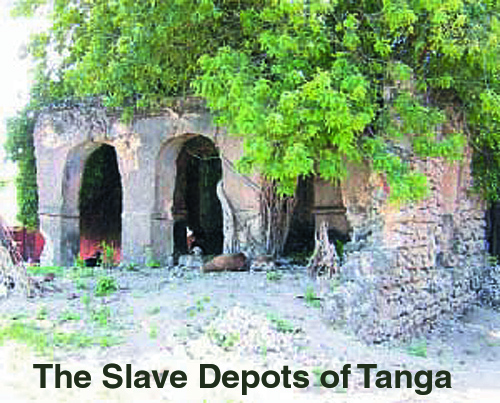
Prof. Edward Mgema has discovered more than 42 sites along the Tanzanian Indian ocean coast near Tanga that appear to be ancient slave trading depots, and likely ones that were used for more than 500 years.

Mgema is challenging older established theories which hold that little slaving occurred in East Africa relative to West Africa, based mostly on the journals of ships trading into the area that rarely listed slaves in their manifest. This fact still remains to be explained if Mgema is right.

The holding areas Mgema reports were nearly all associated with ancient mosques, and the inference is that slaving in East Africa was organized or at least condoned in a religious way that might have kept it off the ship’s commercial records. This has yet to be established.

Slaving was known to exist from nearly all ports in Africa from the earliest times, but none as commercially dynamic as evinced by the slave depots and holding sites like Goree Island, and now, the mosque depots in northern Tanzania. Moreover, if corroborated by further study, the 42 Tanzanian sites predate by hundreds of years any such sites in West Africa.

Several elephant researchers, including Tanzania’s Charles Foley, have contended for some time that slaving was a natural outcome of harvesting elephant ivory. Foley contends that once the ivory was cut from the elephant, the only way to transport it to the coast for its ultimate delivery to Asia and Arabia was by catching slaves to carry it.

There is now and has always been much larger elephant populations in East than West Africa.

Whether slavery was born or ivory harvesting or as a religious practice, or both, Mgema’s recent archaeological discoveries put some real teeth into the notion that East Africa, not West Africa, was where slaving began and likely where over all time the most slaves were harvested.

Mgema has been working in the Tanga area of the north Tanzanian coast for some time. He is also the discoverer of hominid footprints that are thought to be 1.5 million years old.

It will be interesting to see if this extraordinary work by an extraordinary Tanzanian scientist can crack open some misconceptions about the origin and motivation for slavery. It isn’t often that a developing world scientist can effect a massive academic body of work mostly built by westerners.

Congratulations to Mgema and his team. No matter how this is accepted in the west, one thing has certainly been discovered at a more contemporary level. There are some really smart people in Tanzania!

Mugabe dying, but not his Empire

Mugabe dying, but not his Empire

Robert Mugabe, czar of Zim, may be coming to an end. But the era of Robert Mugabe is set to last a very, very long time.

Mugabe remains in Malaysia where he returned unexpectedly following his annual vacation, for emergency prostrate surgery. He was too paranoid to have the surgery in Europe, which is nearer to Zimbabwe, or next-door South Africa where the first heart transplant was performed, certain that unfriendly doctors would kill him. He says he’s 86 years old, but most of us believe he’s 89 or 90. He has suffered from various cancers for years.

Last week, the day after Mugabe left, Zimbabwean troops were deployed across the country, swaggering and arrogant as usual, setting up camps where there weren’t hotels and ordering out without paying.

Mugabe’s illness is being well reported in the Zimbabwean Mail, the only reliable “local” media on Zimbabwe. (It’s published in London.)

Mugabe regularly takes a vacation every December/January, and this time it was to not-so-unfriendly Malaysia. He left on Saturday to return home, then abruptly switched gears and returned to Malaysia for surgery.

The Mail reported Tuesday that the surgery was fairly major removing all of the prostate. The newspaper reported Wednesday that before Mugabe left he ordered his underlings to prepare a new election.

The opposition won the last election according to the few outside observers that were allowed in, but the government overturned the numbers. After some street violence the two sides settled on a coalition government that gives the opposition a face but absolutely no power.

The government uses a voter registration roll of which a third of the names are over 120 years old or already declared dead.

Tendai Biti, one of the opposition faces in the unity government, told a hastily summoned press conference Wednesday that the election will cause a bloodbath.

Not exactly.

Zimbabwe, which is effectively Mugabe, controls everything including whose blood will be drawn at any moment. Rest assured government thugs, militias and supporters will be just fine.

What’s become so interesting about Zimbabwe is a certain purity of evil. Unlike so many authoritarian countries in the world, Zim makes no bones about, say, a voter registration poll. It doesn’t matter to the authorities if everyone knows that people who elect them are dead.

Mugabe’s humility at sitting next to Morgan Tsvangirai, his “prime minister” in the coalition government, is astounding. Tsvangirai has a Mercedes just like Mugabe, but virtually nothing else.

Tsvangirai has been beaten nearly to death several times, has lost his wife in a suspicious car accident, has had all of his assets attached, and has virtually no power to do anything but flee the country, which he has decided not to do.

Mugabe must hate the dickens out of him, but the old man patiently sits next to Tsvangirai especially for the foreign press and listens patiently to a now well-known litany of criticisms, then Mugabe says nothing and leaves the room.

And, so, nothing changes.

An election will cause blood to flow, but it won’t pool in a bath. It’s always a one-directional fight in Zimbabwe. That’s the reason Mugabe wants another election. He wants to rev up the level of terror as he fades from the scene.

The country is, well, not really a country anymore. The joke of the Zimbabwean dollar reaching a quadtrillion mark note was finally too difficult for money printers, so it’s now the U.S. dollar and nothing else. And for this country which was once was the 8th largest economy in Africa, there are now fewer dollars in circulation and in local assets than in Raleigh, West Virginia.

Once one of Africa’s richest agricultural areas, there is not enough food produced to feed a tenth of its remaining population. Mines over rich natural resources are functioning at about a tenth of capacity. Tourism is dead. Most rational Zimbabweans left long ago.

And for many of the same reasons that China doesn’t take a proactive stand with North Korea, South Africa is quite happy to maintain the status quo. A total and complete breakdown of the country would send too many immigrants all at once into South Africa.

And don’t think that the status quo will change if Mugabe dies. There are legions who depend on Mugabe’s intricate architecture of payoffs, and the hierarchy is already in place. His likely successor is Defense Minister Emmerson Mnangagwa.

If not Mnangagwa, then Vice-President John Nkomo. If not Nkomo, then head of the army, General Constantine Chiwenga. If not Chiwenga, then secret service boss Happyson Bonyongwe. And if not Bonyongwe, then Police Commissioner Augustine Chihuri.

It’s all neatly diagramed out. And there are a thousand other names that fall further down the tree of power. And every single one of them on the toothpick highrise knows it will come tumbling down if one toothpick moves out of line. And then, there would be a real bloodbath.

But it wouldn’t bring good people to power. The good people are gone. Zim’s problem was that good, educated, decent Zimbabweans left instead of fought. It’s been easier for them over the years to slip down to South Africa, move over to Mozambique or become refugees in far flung places like .. America. All the proactive will for good in Zimbabwean has been beaten out.

Some contrarians (optimists?) believe when the stick house falls that Tsvangirai will plaster the pieces of left over government back together, the way he’s so often plastered up his own skull.

I wouldn’t bet on it.
No Yawn, but not a Scream Either

No Yawn, but not a Scream Either

Southern Sudan has voted to split from the North in a peaceful, fair election. Minor trouble was reported in the border regions, but all the players took it in stride. It was not and never should have been considered the moments before doomsday.

We have known for 5 years this would be peaceful. George Clooney, of course, didn’t. And that’s understandable. There just wasn’t enough drama to hold his audience.

Exact and official results will be announced in about 4 weeks, as planned. But one of the most reliable sources of news from Khartoum, the Sudan Tribune, published a photo today of Mohamed Ibrahim Khalil, the north’s pivot man for the referendum, announcing to the press that the outcome was for succession.

There were dozens of foreign election observers, and every single one of them has validated the process “peaceful and credible.”

The south, which is much more open and transparent, is being polite to its soon-to-be discarded motherland, by not officially releasing the exact numbers until the north does.

But it is widely believed that over 60% of the qualifying plebiscite voted, and that nearly 70% of both the north and south will have voted for succession, perhaps as much as 95% of the voters in the south doing so.

About 50 people were killed during the week of voting, although not even these casualties in the now disputed Abyei oil-producing region can be linked directly to the referendum itself. It seems as I’ve written earlier that the dispute between two militias was actually about who would be allowed to vote in another referendum to be held in this region some time in the future.

Creating two countries out of one is not easy. “The Sudan” has been more or less in tact since 1899. The two sides have been unable to demarcate the actual border, precisely because they have been unable to apportion the rich oil reserves that exist there.

But The New York Times headline, “Roots of Bitterness in a Region Threaten Sudan’s Future” is just another over statement of the current situation, with little credit to the good reporting The Times has otherwise managed from the region. The conflict in Abyei is more akin to a gang war in Watts than a war between the U.S. and Mexico, which is how The Times and others are characterizing it.

Another problem will be the flood of new immigrants into the South, although even that has been steadily occurring for some time.

There are many more positive components of this whole process. Basically, a five-year transition has been on-going. When this peace deal was signed five years ago, separation at that point was a given.

And while Khartoum may ultimately fiddle the numbers to save what little face it can, there’s no doubt the north will validate the result. The important point here, really, is that this was predictable, as so many of us were saying again and again.

But the voices of the little people on the street mean less when the predicted outcome is good and peaceful.

Thank you, Jimmy Carter. And George, I love your movies.

Don’t Evict the Bees!

Don’t Evict the Bees!

Do you sacrifice a small group of ancient people to promote a larger society? We put Indians onto reservations. Should the Kenyans evict 36,000 Ogiek from their forest?

It’s one thing for an activist to threaten you and your grandchildren with no clean water. It’s another when your kitchen faucet stops dripping.

That’s what’s happening in Kenya, today, right now. Even while giant factories are blossoming like mushrooms in my backyard after a morning drizzle. It’s happening right now as 12-lane highways are creeping across the country.

The water rationing schedule announced each week in the newspapers is as ordinary as a TV guide.

And all the needed water comes from one place: the Mau Forest. It’s the only indigenous forest in Kenya, and by our standards for instance, terribly small, only 675,000 acres, an area about the size of Rhode Island.

The Mau provides 7-10 million people with not only clean drinking water, but water for factories and cleaning. Moreover, the recent reduction of the forest has contributed to mud slides and soil erosions that has been devastating.

The Mau has sinisterly been eaten away for nearly a hundred years. British colonials recognized its rich soil and confiscated huge portions for their settlers. Independence only deepened the problem as corrupt politicians confiscated more.

The deposed dictator Daniel arap Moi may own as much as 300,000 acres of what was once Mau Forest, now tea estates.

Kenya is the world’s largest tea exporter. Take it from me, it’s the best tea in the world!

Then, during the political violence following the 2008 election, hundreds of thousands of people fled to the hills. And those hills were largely the Mau. As many as 100,000 people began to squat in the Mau.

Then came the Developed World’s haughty solutions to global warming. In Copenhagen in 2009, then Cancun in 2010, developed countries proposed not reducing their own greenhouse emissions right away, but rather a sort of Global Cap-and-Trade policy without the Cap called “REDD’’ — Reduced Emissions from Deforestation and Forest Degradation in Developing Countries.

$30 billion to the developing world by 2012, and $100 billion more by 2020. Kenya’s portion, if it ever comes: a few hundred million. But that’s sizeable to Kenya, and in order to get it, Kenya has to preserve the Mau. There’s no other forest it can “trade”.

Dennis Martinez writing for the Boston Globe calls this “Slow Death by Carbon Credits.”

Colonial land grabbing, corruption politician land grabbing-cum-tea development, internally displaced persons and REDD. And not a drop to drink.

Now what.

In what is really a radical, radical move, the Kenyan government has decided to evict everyone from the Mau. All those colonial land-grabbers, some of the modern politicians with tea farms, all the displaced persons from political turbulence, buying all the previous land owners and squatters new land somewhere else, at billions and billions of shillings (that will still be less than the compensation from REDD).

And, the 36,000 Ogiek who have lived there for a number of generations.

The Ogiek are forest people. The generation before the current one was almost entirely hunter/gatherers and bee-keepers. The Ogiek were themselves displaced from arguably better forests around Kenya in the 1930s by British land grabbers. But when they moved, they took their lifeways with them.

But the Kenyan government policy is without qualification. Everyone goes. Including the Ogiek. And, their bees?

No one is wondering about the bees. Unlike temperate forests here at home, forests in Africa rely much more on pollination and cross-pollination to survive. The diversity of the forest biomass is much greater in the equatorial parts of the world like Kenya. Without a constant diversity, the forests collapse.

The diversity is dynamic to some extent, a sort of constant evolution of new species and sub-species. Quite apart from the morality of evicting the Ogiek, the longest living residents of the Mau, what about the bees?

Money talks. REDD talks. Bees don’t.

Great video below about Ogiek and bee-keeping. Stick with the first 30 seconds which have nothing do with Ogiek or bee-keeping.

A Holiday Great for us & Africa

A Holiday Great for us & Africa

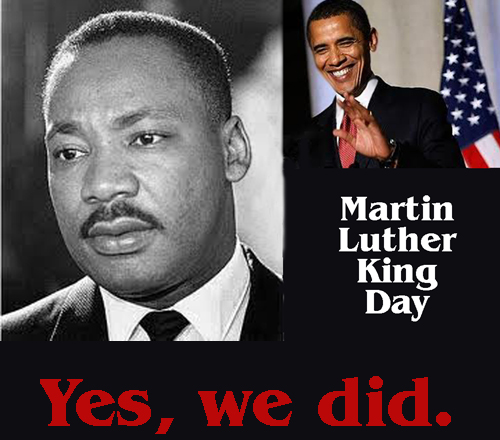
Today is an American holiday, Martin Luther King Day. I am a white man who has spent nearly half of every year of his working life in black societies. I am witness to the change that King’s type of philosophy has made in Africa and at home.

King was America’s black civil rights champion, and what I and probably most people remember of his turbulent last days was nearly unspeakable violence. My most vivid memory is as a very young journalist, penned in under a burning El Stop in downtown Chicago as the city raged following King’s assassination.

I remember gun fire as a regular sound in my low-rent apartment in Washington during the summer of the 1968. Or the unending sirens and tear gas around my apartment in Berkeley in 1969.

King is duly revered for radically changing American society with non-violence? When what I remember most is fire, bullets and ambulances?

It’s been more than 40 years since then. Trauma has a way of finding its small berth among the many more ordinary memories of earlier life. My young student years were lived in Jonesboro, Arkansas. Of the more than 1000 students in public middle and high schools when I was there, there was not a single black. Less than a decade after I graduated, I returned to Jonesboro for a wedding, and learned that almost half the town was black.

I lived in Jonesboro for 5 years. I went to school, groomed pretty dogs at a vet’s, shopped on main street, sipped sodas at the donut shop, cheered at school sports’ matches, went to church socials. I remember regularly seeing only one black, Bessie Mae, our maid.

I left that society for the turbulent 60s, then left the turbulent 60s for Africa, and when I returned how things had changed!

King’s philosophy of non-violence, like Gandhi’s and to a much smaller but significant extent, Mandela’s, were not eras of no violence. There was incredible violence, and this violence, as with the sizzling El Stop that nearly fell on me, will be blazoned in our memories forever. But with time we’re able to reflect that that violence was the reaction to those heros’ methodical, unswerving actions for a freer, fairer society.

Those movements as a whole were not violent. But the reactions to them were hideously violent, and then sometimes when Watts or Chicago burned, the frustration of the oppressed boiled over. But mostly it was not that. Mostly it was unarmed hundreds of thousands of peaceful demonstrators being tear gassed and shot by police.

And why? Because it was the desperation of trying to stop the inevitable. I really believe there is more good in the world than bad. Justice will ultimately prevail.

We are a deeply rooted Chicago family. My father was sent from Chicago to Jonesboro to start a factory owned by an Illinois company to avoid the growing union movement in the north. One of the first things he did was pack up us three young kids in the car and drive us into the cotton fields west of Memphis, stopping the car, saying nothing, and making us watch black share-croppers toiling in the summer sun.

Try as I may, that and Bessie Mae, are the only blacks I remember as a teenager, living in the midst of them.

Today, my President is black. My Attorney General is black. My closest friends, many in Africa, are black. My rare return to Jonesboro encountered many blacks. Memories created of life, today, are no longer monochrome or technicolor, they are just wonderfully vivid.

Social justice does prevail. In some places, throughout Africa for example, it seems to take longer than in my more developed society, and perhaps that’s the reason. The messages get around more quickly. So in my life time, the personal sacrifices of Africans are understandably greater than here at my home.

But the sacrifices of each individual are the same. And what King taught us is that they’re effective. All you need to do is rise to the needs of your community above the needs of yourself.

I am so fortunate to have lived long enough to see King’s work transform the bad in my society to good, almost as an imperative. An imperative that I believe I now at this very moment see happening throughout so much of Africa.

Happy Birthday, Martin! You’d have been 82, today!