On Safari: East versus South

On Safari: East versus South

Six weeks in sub-Saharan Africa has confirmed my long-held views on where the best game viewing is and why, how seriously threatened the wilderness is by remarkably fast and unregulated economic growth, and how youthful optimism about Africa’s future mostly discounts its precious wilderness.
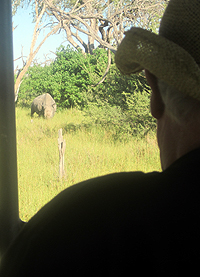
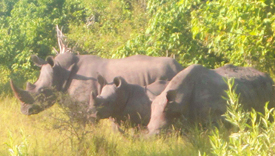
Wild rhino in the Okavango Delta.
My first stint of the year began in Cape Town, included Johannesburg, multiple places in Botswana including the Okavango Delta, Victoria Falls and Zambia, Nairobi, and ended as I guided my first “great migration safari” in northern Tanzania.

The ability to contrast East and southern Africa so immediately corroborates my long-held view that East Africa provides better game viewing for the typical safari traveler.

This might seem strange when I also tell you that in a single day on Chief’s Island in Botswana we saw the Big Five (lion, leopard, rhino, elephant and buffalo) and that seeing the Big Five in East Africa is no longer guaranteed no matter how many days you have on safari.

That’s because rhino is so rare, today, in East Africa. (Caution: captive or contained rhino, as found in fenced places like Nakuru National Park, Solio and elsewhere in
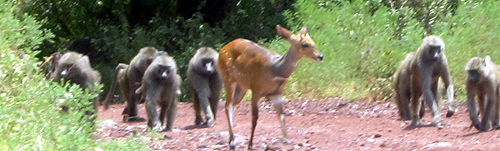
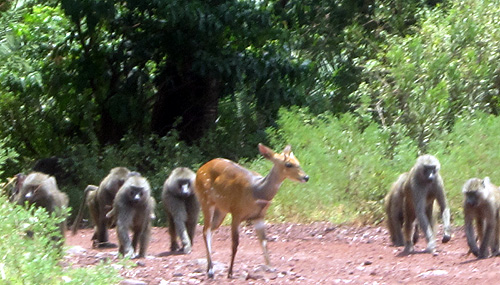
We saw this bushbuck unnaturally traveling with a baboon family in Lake Manyara. Its possible adoption by the baboons is an example of East Africa's stressed wilderness.
Laikipia including Lewa Downs, doesn’t count. Those are fun to visit, but they aren’t true wildernesses, anymore.)

But therein lies the important distinction between East and southern African game viewing. The south’s wilderness has been managed much better over the last century. Kruger National Park in South Africa is likely the best managed wilderness on earth.
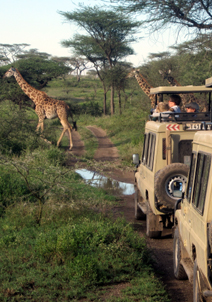
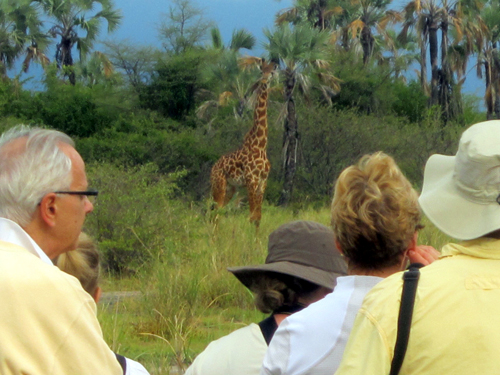
Groups of up to 20 giraffe in East Africa are common. Much smaller numbers in southern Africa.
For more than a century, Kruger and similar southern African wilderenesses have sustained rich and varied biomasses. Although currently suspended throughout much of southern Africa including Kruger, culling had been and in many places still is an instrument of aggressive pruning that aimed to insure the most diverse biomass possible.

Culling has never occurred in East Africa, and likely because of its cost rather than any moral inhibition. Similarly, the south routinely reintroduces or just moves around various species from one wilderness to another in an attempt to achieve balance.

Anti-poaching is far better funded and managed in the south. All decisions about park management, its borders and its sustenance (including the still controversial actions of creating unnatural watering holes from aquifers) has come from officials that are far better trained and paid in the south than in the East.

So in a relatively short time in Botswana visiting two different areas in the Okavango Delta and Moremi we saw a balanced variety of several dozen types of larger mammals including a dozen elephant families and large numbers of buffalo and several prides of lion.

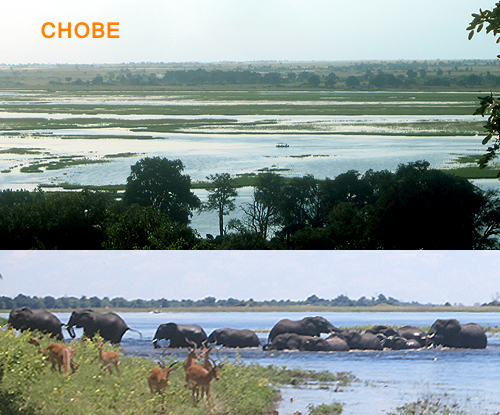
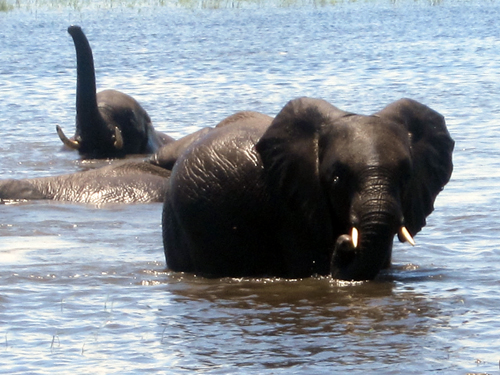
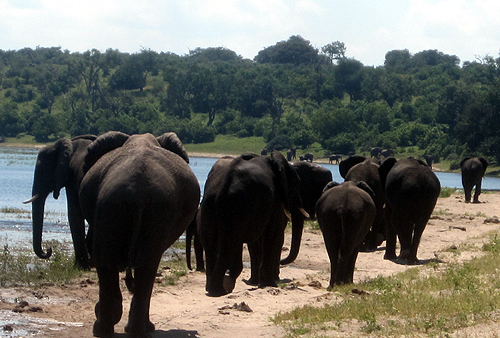
In Botswana’s Chobe balance has gone to the wind. Chobe is almost all elephants: too many, and at the exclusion of much of the rest of its historical biomass. It’s heart-breaking for me to return to areas along the Chobe River that were oncebeautiful forests and are, today, grasslands. The elephant population has destroyed much of Chobe’s former wilderness. It is, in fact, more like East Africa than southern Africa.
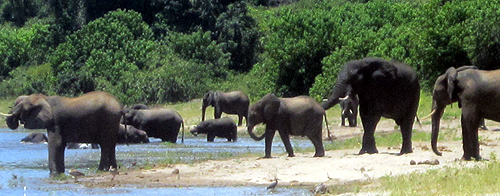
Which is why so many people love Chobe. There are so many elephants in so many endearing behaviors and from time to time dangerously so, that Chobe like so much of East Africa provides the thrills often missing from a more balanced and rich biomass.
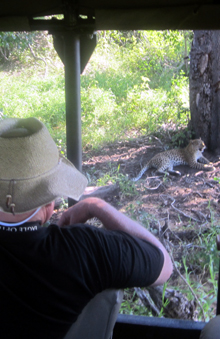
We see about the same number of leopard in east and southern Africa.
One implication in the above is that East Africa (and Chobe) are worse wildernesses, because the biomass is less rich, because they have either been poorly or not managed.

This remains to be seen. I think the scientific consensus points in this direction, but it’s been pointing in that direction for an awfully long time and we have yet to experience “the crash” scientists have been predicting for such out-of-balance wilderness.

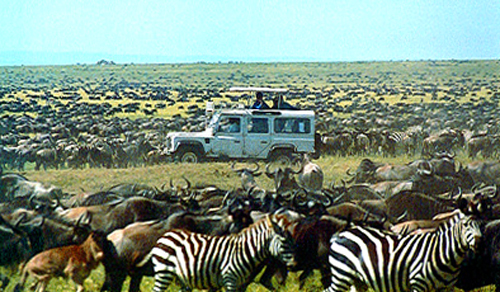
Scientists might pale at the biocount of these wildernesses, but tourists are thrilled: On my great migration safari of 11 days in northern Tanzania, we saw 61 lions, 2 leopards, 5 rhino, and I don’t know maybe 500 elephant and a quarter million wildebeest? And perhaps several hundred thousand zebra, a hundred giraffe, and – very important by the way – fewer tourists than in Botswana.

This last observation, that my safari clients in East Africa encountered fewer other tourists did my safari clients in Botswana, is not the norm. Most East African tourists on the lodge circuit will definitely encounter more tourists than a similarly budgeted trip in southern Africa.
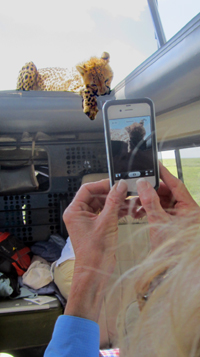
Who's looking at whom?
But I don’t like the lodge circuit, and the safaris I guide are expensive. This lets me remove my game viewing from heavily used tourist areas into the East African wildernesses that are truly less used than virtually any wilderness in the south.

The unmanaged, some say chaotic, out-of-balance wildernesses of Chobe and much of East Africa result in greater numbers of larger animals at the expensive of many smaller ones that have gone extinct.

Theoretically, this situation is not sustainable. And this tension of nature trying to preserve itself is likely the reason for the much greater drama usually experienced on an East African safari.

It’s certainly a bitter sweet reminder that urgent action to preserve these great East African wildernesses has been grossly neglected. But as crass as it may seem, it also provides at least for the moment (and perhaps at the cost of the future), the “greatest wildlife spectacles on earth.”

Storm Clouds over Kenya

Storm Clouds over Kenya

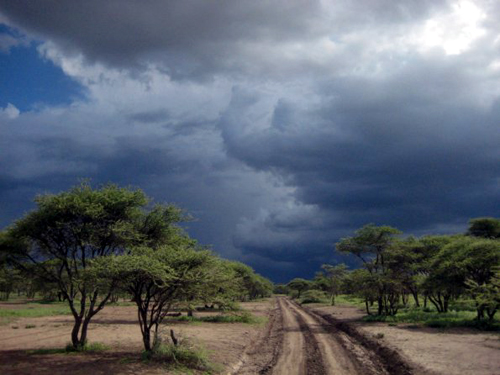
Storm clouds are forming over Kenya. The thunder and lightning and destruction has not yet started, and all of us who love Kenya hope it will not, but the anger is palpable and as a safari broker I must advise all considering Kenya for the moment to stay clear.

My blog yesterday about the election went viral and the hate, death threats, invective and dirty speech publically thrown back at me as comments on the blog and Facebook are chilling.

For the first time ever I changed something that I had written – or rather, photoshopped. I worried that the photoshopped picture was being misconstrued, that I was suggesting that the current election had experienced violence.

It didn’t. There was an incident in Mombasa on election morning that left six dead, but that was it. The rest of the day, and up to this very moment as I write, has been peaceful, and as I wrote on the day after the election, joyously so.

So I have changed yesterday’s blog picture to eliminate the possible connotation otherwise. In Facebook I post twice: once for the full picture and once for the link to the blog. Facebook entries cannot be edited, only removed, so I simply removed the full-size picture. But the other has to remain, so if you wish to see what the picture was that worried me, go to AfricaAnswerman on Facebook.

I do not want to contribute to the growing anger. But as Mwirigi posting the first comment to the respected columnist Macharia Gaitho in today’s Daily Nation says, “I am against any attempt to muzzle free speech. This is how it starts, we have come from a time where it was a crime to imagine the death of the president. Many people have fought long and hard for us to have the ability to express ourselves freely.”

I read Gaitho religiously. He’s an outstanding columnist. Today he says, “The level of malevolent hate, ethnic bigotry, incendiary words and totally criminal incitement [on social media] would put to shame the infamous hate media outlets of the Rwanda Genocide, the newspaper, Kangura, and Radio Télévision Libre Mille-Collines.”

So I am hardly alone. In fact, my few thousands of hits and comments are minuscule compared to the extraordinary traffic on Kenyan sites.

The second comment on Gaitho’s column by Njamba says, “We should differentiate between freedom of speech and abusive and hate speech.” But she continues to incorrectly conclude this means we as individuals can’t come to conclusions or predictions about the future.

And therein Njamba and thousands other Kenyans hit the slippery slope, giving only lip service to free speech by inhibiting it from reasoning to points of view. Unless, of course, it’s their point of view.

“Right now I feel let down,” Gaitho continues today, “and very ashamed to be a Kenyan, for the level of post-election violence assaulting my eyes and ears every day is worse now than it was before and during the elections.”

Words cut ideas. Machetes cut throats. How close are we today to the latter?

My opinion: too close to plan a trip there. As a safari broker professional, I cannot let anyone go to Kenya, now. If the Kenyan Supreme Court invalidates Kenyatta/Ruto winning the election, as I think it will, and calls for a run-off election, all hell could break lose.

Gaitho: “Any time there is bloodshed in Kenya, you will never see Raila Odinga, Uhuru Kenyatta and William Ruto or their families in the line of fire… They will be swilling champagne and cutting business deals in … members’ clubs.

“Their children and grandchildren will not be wielding weapons in the battlegrounds, but will be safely squirreled away in some posh boarding schools in England, Switzerland or South Africa; or if of age, gambling and drinking away a fraction of daddy’s fortune.

“A cursory look at the social media war will indicate that the “principals” are not typing out a single word in anger. They leave that to their rabid followers and hired guns who… will throw all caution to the wind and put their bodies on the line.”

I so hope this doesn’t happen. But how can I feel otherwise, now, than it might?

Africans have an art of patience that far exceeds ours. As travelers and brokers of travel, we now have to be patient. We have to wait before returning to Kenya. We have to wait for a certain peace.

Kenyan Nightmare Continues

Kenyan Nightmare Continues

Kenya is peaceful but disturbed. A famous national analyst Saturday said the country is “on the brink of implosion.” The loser in the presidential election is challenging the results in court, but if he loses the president and vice-president of Kenya will be international criminals indicted for crimes against humanity. This is not acceptable.

“An uncomfortable silence pervades the public sphere,” Godwin Murunga wrote this weekend in Kenya’s largest newspaper, the Daily Nation. “We are afraid of our feelings.”

So the country waits on pins and needles and does so by being quiet. A once robust media discusses fashion and school tests while the Joker and his prime assistant prepare a government of iniquity. A fabulous new constitution sits like an butterfly in a cocoon waiting for a dictator to roast it before it hatches.

And the world holds its breath, so happy there’s not another war or revolution, hoping perhaps beyond hope that the New Kenya will right itself.

But how?

The mistake came long ago when in the many wonderful and difficult things the country was doing to recreate itself, it allowed indicted international criminals to become candidates. What else could it do? Does not democracy revere the right of the accused to be considered innocent until proven guilty?

And, in fact, multiple accused by the World Court in The Hague have been ultimately released or original charges dropped before trial.

But I think the more important fact is that the World Court’s standards for irrefutable evidence is so great – so much more substantial than country courts around the world including the U.S. – that just to be indicted is at the very least reason to prohibit the indicted from assuming national office or responsibility.

Even as a contradiction to democracy and the purity of law that governs it. The interlude between indictment and conviction was the loophole that put Kenya in the mess it finds itself, today.

And that’s the point. So even while people like myself are convinced that Uhuru Kenyatta and William Ruto will be convicted by The World Court, their simple indictment should have prevented Kenya from allowing them to become candidates.

Uhuru Kenyatta and William Ruto, the current president-elect and vice-president-elect, are not nice guys. They are greedy, conniving politicians whose families have looted the poor Kenyan for generations.

Their success was brilliantly created. Singly they couldn’t survive, because they come from tribes that are historical arch enemies. Together they combined their enmity to defeat all that was good in Kenya.

Raila Odinga, the challenger who lost, is not purity incarnate, but he is considerably less corrupt, untainted by scandals, and was not the least bit implicated in engineering the violence of 2007 as the ICC has charged Kenyatta and his running mate, William Ruto, were.

Odinga’s challenge of the outcome of the election in the Kenyan courts is substantial. Kenyatta was declared the winner by less than 8,000 votes of more than 12 million cast. The election was bungled. One of Kenya’s finest analysts called the election “shambolic.”

The list of counting grievances includes districts whose vote tally exceeded the number of people registered there. It includes up to a half million votes that were declared spoiled by incorrect marking, even while the intention of the voter was clear.

It includes thousands of discrepancies between parallel methods of counting that were intended to confirm one another.

It is, in a nutshell, a mess. And it is that mess that even if too complicated to untangle stands as a powerful reason to claim that .07% of the votes cast might not be legitimate.

Yet at the same time peace has been sustained and security prevails, today. “Many Kenyans… have spent the last 5 years trying to avoid a repetition” of the violence of 2007, writes Magnus Taylor, a South African who reported daily from Nairobi on the election. But he adds:

“Kenya is far from being over the nightmare.”

On Safari: Great Migration

On Safari: Great Migration

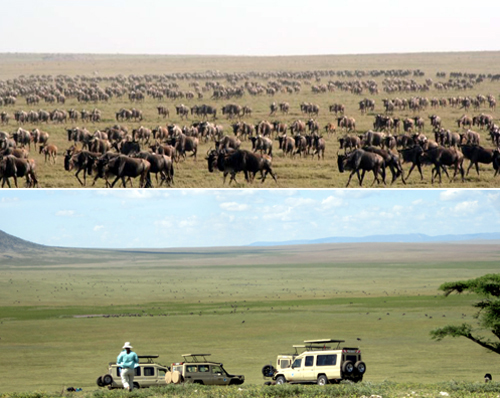
This year’s Great Migration is an almost constant sea of animals from the eastern Serengeti plains to the western and beyond, one of the most placid and easiest to see that I can remember.

Seeing the migration is like seeing the stars. You can never see them all, and you can’t even see at once all those that might be in your field of vision. The sky is just too large, and so is the Serengeti. Two million animals might not seem like a lot when you’re atop Naabi Hill, but it is.

I figure that at the very best views of the Serengeti, one of which is atop Naabi Hill, when pointed in any one given direction the most you can see is about 25 square miles, and if the animals in the migration were packed into every crevice of that view, you’d maybe see 150,000 animals, a tenth of the great migration.

The migration for us this year is not sardine packaging.The veld is green and beautiful across almost the entire southern Serengeti, and so the grass is abundant everywhere. The animals are dispersed much more than they would be during drier years.

We started seeing wilde right after leaving Shifting Sands outside Olduvai. We saw them continuously, although sparsely, over the plains between Shifting Sands and Lemuta Kopjes.

We had lunch atop one of the unique kopjes opposite Lemuta where the view was incredible. To the south was the giant Ngorongoro on our day covered by a super storm. But while we could see the lightning, the rest of the sky – probably 80% of our sky view – was clear and beautiful.

At lunch the density of the wilde increased. As we moved west towards Ndutu it fluctuated but we were never out of sight of large groups of wilde, and as we approached the main road the density was quite high.

We also saw many other animals, of course, including many hyaena, jackal and as a great bonus, nearly 200 eland. That’s especially beautiful as the world’s largest antelope (1600 pounds) when in a truly wild situation is especially skittish.

This massive and beautiful antelope runs at breakneck speeds and leaps nearly 8′ into the air, and unbelievable sight.

And of course we saw several kills, or possibly deaths caused during bad childbirth, covered with birds and hyaenas. This is the season for birthing, and one day we spent nearly an hour just watching a nearby female herd of wilde give birth.

That’s why this is my favorite time for the migration. It isn’t as dramatic as the racing across rivers chock full of crocodile that starts in June and continues through September (at different parts in the Serengeti and Mara), but those events are very irregular and hard to intersect.

Whereas the birthing time is when the entire herd comes to feed on the new nutrient grasses brought by the heavy rains. So everybody is together, more or less, even if more widely spaced and much calmer.

And unlike the “racing time” where the herd is fractured into innumerable smaller groups, now it is more or less uniformly on the southern grassland plains. And seeing the newborn gives an added dimension to the experience.

Nothing can ever be guaranteed in the wild. A shift in weather, an insect blight, and even an over- or under-population of animals can result in radical changes in numbers and locations. But this year everything was – more or less – normal, and we witnessed what is absolutely the greatest spectacle in the natural world.

On Safari: Crater Delight

On Safari: Crater Delight

Our full day game viewing Monday was extraordinarily productive: 5 rhinos, 34 lion (one pride finishing a kill), and lots more.

The crater was greening up following several days of heavy rain and so was particularly beautiful.

As Nancy Weinstein said, “Seeing the rain on one side and the sun on the other with all the magnificent light” produces the ethereal reality of the crater, as if you’re in some controlled smaller space where so many different things are happening so fast.

The Up Road is closed for repairs, so everyone has to leave the crater on the Sopa Road.

This makes game viewing for some of the opposite side lodges, like Serena and Crater Lodge, particularly long.

We were staying at Gibb’s Farm so were prepared for the lengthy time getting in and out.

We also went in using the Sopa Road and weren’t a few minutes out of the Lehai Forest when we saw our first pride of lion.

I was pretty sure it was the Mti Mkubwa pride (“Big Tree”) and they were incredibly fat and sassy.

We figured there were five of them, but they were pretty far in the distance and totally sacked out. Patience is the key to exceptional game viewing and we waited for a while and sure enough, they began to get up one by one and walk towards us.

With more to view as they approached, it was clear they had hunted last night. Their bellies were bulging. And I noticed not far from where our cars were on the road that there was a gully, and with all the rain we’ve had, undoubtedly plenty to drink.

And that’s exactly what happened! After lions feast on their kill, they have to drink copious amounts of water or the 15% increase in body weight resting mostly unchewed in their tummies would clog their entire GI system.

Undoubtedly they had drunk once at least, but they were now returning to drink again. And after they did, they continued towards us onto the road! So there was more to their moving than just thirst.

I figured they were either returning to the kill or perhaps returning to where there were cubs waiting.

Lionesses “den” their cubs somewhere during the hunt, and the cubs obey. Sometimes an adult female will be left behind to baby sit, but not always, and it’s always amazed me how those little critters know not to follow mom.

That was just the beginning! We then proceeded to find rhino, huge families of buffalo, of course lots of zebra and wildebeest and even hartebeest and eland. Just before lunch, we went to the hippo pool near the central lake.

Lunch was great fun in front of the Loitokitok lake, which had more hippo in it than I remember in times past. The great treat was watching a grey heron standing on the back of a slightly submerged hippo, moving through the water as if slow water skiing!

(Our picnic lunch from Gibb’s Farm was specially outstanding, but of all the goodies included I’ll never forget the brownie! Amazing.)

We saw more rhinos on our way back, and more prides of lion, and golden jackals, serval cat and a number of great birds. The large numbers of Abdim and White storks are getting ready to migrate back to Europe, so there was a lot of colorful soaring.

And it was on the way out that we once again encountered the Mti Mkubwa pride, and this time a female was dragging around the skin of a young buffalo. So it had been the kill they were returning to.

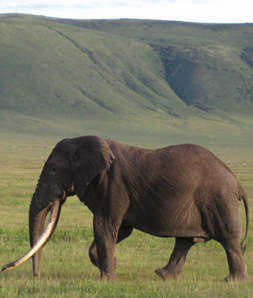
And our last glimpse of activity in the crater as we raced to get out of the park in time was one of the giant tuskers that are dying off fast.

About 30 giant tuskers went into the crater when poaching became severe in the 1970s. The crater affords a natural protection to wildlife that makes poaching very difficult. But the crater isn’t a good habitat for elephant: there aren’t enough bushes and trees; it’s almost all grass.

But the Big Tuskers learned to eat grass and have stayed ever since. But they’re now well into their 60s and dying quickly. I expect they’ll all be gone in 2 or 3 years.

** And just a little aside about our game drive Sunday in Lake Manyara National Park. See the picture below. Manyara is known for lots of baboon, true.

But we watched a young bushbuck walk with them in near lock step, stopping when they did, moving when they did and where they did. For all the world it looked like it had been adopted by the troop!

And now into the Serengeti!

On Safari: Kenyatta Wins

On Safari: Kenyatta Wins

Confusing, remarkable situation in Kenya.

As I write this Sunday night in East Africa, a man indicted for crimes against humanity is Kenya’s 4th president, and the place is quiet if solemn.

None of the foregoing may last long.

Uhuru Kenyatta was declared the 4th President of Kenya by the election authority, having won 50.07% of the vote. His nearest rival, Raila Odinga, had less than 44%. Nearly 85% of the registered voters participated.

If less than 10,000 votes are reversed, and nearly a half million are being challenged in court right now, then a run-off election will be mandated. In Kenya if less than 50% of the votes are received, the top two of the original 8 contenders must vie in a run-off election.

What that would mean is that Raila Odinga would have to command nearly all the votes that were cast for the other six candidates combined, and that seems to me unlikely. However, note that I also thought it unlikely Kenyatta would win.

The strength of Kenyatta’s polling rested heavily on his success in getting out the ethnic voters in the Rift Valley. I’m sure he would be similarly successful a second time around.

If Kenyatta remains president, or is confirmed in a run-off election, he will be the first sitting president in the world to be on trial for crimes against humanity in The Hague.

Those charges stem from the World Court’s assessment of years of fact-finding that Kenyatta was instrumental in provoking and sustaining the horrible violence that followed the 2007 elections.

The U.S. and Britain have already warned Kenya that Kenyatta as president would have “repercussion” on bilateral relationships.

It doesn’t really matter whether Kenyatta fulfills his promise to attend the trial.

The very fact he stands accused in a criminal court system which rarely arrives at the point of a trial without substantial evidence to convict is alarming.

Kenya is still peaceful.

Raila Odinga is aggressively challenging the decision in the courts, and he has substantial evidence behind him, but he is also constantly telling Kenyans to remain peaceful.

So what now?

What is a peaceful Kenya with a rogue president?

Oh, and by the way, his Vice President, William Ruto, is on trial with him, and from my point of view, is evil incarnate, by far worse than Kenyatta.

I don’t know. I don’t know whether to trust the people of Kenya so long as they remain peaceful and work within the system they so tirelessly created, or to trust the world system whose suspicions about Kenyatta and Ruto are deep and severe.

We must let more time pass. That’s the African way.

On Safari: Tarangire Cats

On Safari: Tarangire Cats

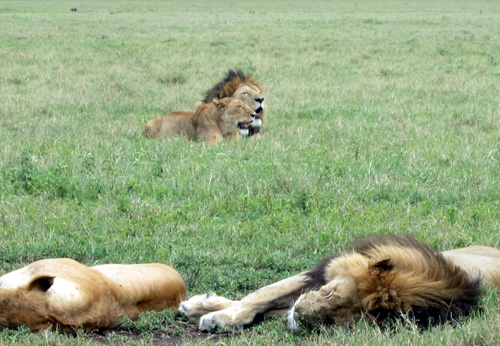
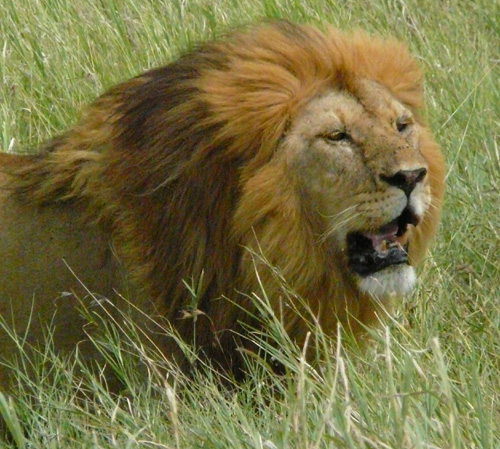
Four lion brothers together for life is not unheard of, but quite unusual and we watched them in Tarangire today after they had mastered a huge kill.

The childrens books’ rendition of lion or the incomplete TV documentaries make people believe that every lion belongs to a pride headed by a grand master who only occasionally does temporary work for MGM.

But that’s not really the case. Lion prides are composed of almost any permutation of males and females of almost any number up to and sometimes exceeding twenty. Females once together generally stay together their entire lives, unless something like a harassing male forces one away perhaps while attempting to eat the lioness’ cubs.

But take any number of lions, any combination of male and female, and you constitute a pride. And today in Tarangire we saw four brothers, fat and sassy from the night’s kill, drinking in the Silale swamp.

Their bellies were bulging, their manes grand and disheveled, and several faces bloodied by the battle of the kill. One limped. One was tailless, perhaps the result of losing a colossal fight to one of his brothers for the right to go into a pride and mate.

We had not too much earlier seen two male cheetah – all of this along the Silale swamp. The cheetah struck me as unusually anxious, and that seemed odd as they are among the friendliest of the cats. But discovering the lions right down the road explained that.

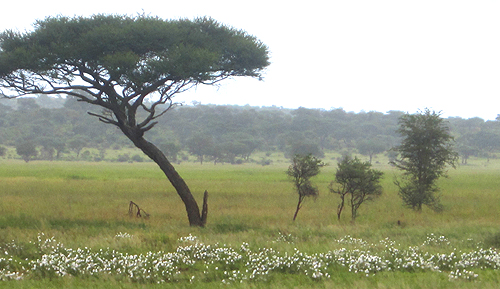
Hartebeest, dozens of birds, and the inimical landscapes of Tarangire at dawn and sunset and even during the day. It’s been raining hard and the white morning glories are covering the veld, altering the somber view of a misty morning with absolute radiance.

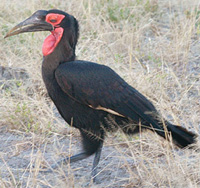
One of my favorite moments early this morning was not just coming upon a family of ground hornbill, but arriving while they were still piping their organs! The sound of the ground hornbill carries for miles, so I’ve often heard it, but not up close. It’s usually only in the very early morning.

But here they were piping away hardly 20 meters from us, the deep organ note sound resonating so loudly there was nearly a fizz after each note. The commotion we learned was prompted by an aging juvenile who wanted the giant bullfrog his mother was carrying, and mom had decided he was old enough to get one himself.

So we watched as he complained and complained then finally with the speed of a cheetah darted at his mom practically turning her over and tearing the frog out of her mouth!

The organ pipe stopped.

On Safari : Still Too Many Ele

On Safari : Still Too Many Ele

Tarangire National Park is the perfect place to demonstrate there are too many elephants in the wild right now, and it didn’t fail to confirm the theory this time! We had exceptional game viewing based from a new, luxury lodge called ChemChem.

Our day and a half of game viewing in Tarangire probably encountered 500 or more elephant, but it’s so difficult to estimate. In one panorama I challenged everyone in the group to count the elephants we saw, and the numbers ranged from 120 to 180.

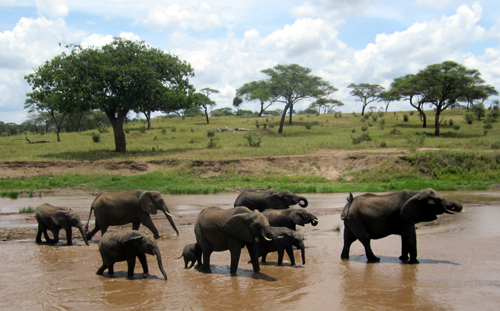
Traditional elephant behavior breaks down in Tarangire because there are so many elephants. Families don’t separate themselves from one another but often travel, forage and frolic in the river together.

We saw week-old babies and octogenarians. We saw good tusks and many bad tusks or little tusks. We saw many babies and watching the rest of the family protect these little guys is absolutely wonderful.

And protecting them is so hard to do! Especially when they get down to the river and insist on rolling well beyond when mother thinks it’s time to leave.

We stayed at a new lodge outside the park for our first several days in Tarangire, before moving into the park and staying at a great place inside. The lodge is called ChemChem and it’s the dream of several French investors and old African hands.

Placed between Tarangire and Manyara, the ChemChem property extends all the way to the shores of Lake Manyara, and the activities my group enjoyed were really fantastic.

They included a walk where we got remarkably close to impala, giraffe and zebra. I don’t allow walking if there are predators or elephants around, and ChemChem assured me there weren’t.

A fabulous bush breakfast, Maasai sundowner chorus and sundowner along the lake are all a standard part of the ChemChem fare.

We’ve had some very heavy rains. According to the folks here, it’s just the rebeginning of the rainy season which starts in November/December and continues straight through May, with a noticeable letup in February. Well, the letup is over.

It was wonderfully exciting to go to sleep in ChemChem’s marvelous tents to the performance of lightning, thunder and tumultuous rain. I’m of course glad for this, because it means the migration in Serengeti (if the rain continues that far) will start to concentrate.

On our first game drive towards our second camp in Tarangire, Swala, we encountered again numerous elephant, lion mating, leopard, hartebeest and I’m sure I’m forgetting lots more. It’s been a wonderful two days so far, with another to go, in Tanzania’s elephant park, Tarangire.

On Safari: Kenya’s Election

On Safari: Kenya’s Election

There were 44 observers from the Carter Center watching the Kenyan election last night but all they observed was joy and glory! As I write this in East Africa the winners are not yet known, although Uhuru Kenyatta has a significant lead for president. But so far only 5 million on an estimated 10 or more million votes have been counted.

I was in Kenya when the polls closed, for just a few hours on my way to guiding my first Great Migration Safari.

The whole world watched as Kenya masterfully pulled off the first national election under its new and fabulous constitution. Final results will be some time in coming, because the constitution mandated that the winners achieve minimum support from all of Kenya’s 47 counties, denying any victory based exclusively on ethnicity.

This means despite Kenyatta’s lead another election between the leaders could well occur within 30 days in order to finalize the results. But based on last night I’m already creating a “Celebrate Kenya Safari” return trip!

Kenya knew that it had to prove to the world that the debacle that followed the last election in 2007 would never happen, again, and that it has truly emerged into the modern world. Moreover, it displayed a transparent democracy I don’t even think America could rival.

It wasn’t perfect, but no election is. In fact, it began ominously with an early morning attack on police poll watchers in the troubled second city of Mombasa, and 4 policemen and 2 poll workers were gunned to death.

The authority governing the election had assured that anyone in line before 5 p.m. would be allowed to vote, no matter how long the line was, and in some places it stretched for nearly a mile. But in Kilifi, north of Mombasa, election authorities ended the process at 5 p.m. even with a long line waiting, because of reports of imminent attack.

The coast remains a troubled area for a number of reasons, most importantly that it’s mostly Muslim and seriously impacted by Kenya’s occupation of neighboring Somalia.

There were long lines in many places, and some polls didn’t close until 10 p.m. In a number of areas poll officials with legislated authority simply kept the polls open even for late comers.

Kenya has more cell phones per capita than the U.S. and a free app was available that voters would use to report irregularities. And needless to say, with 10+ million voters there were many. It will take many weeks to sort them all out, but ???

I’m sure that many tour operators like EWT were waiting with baited breath. We could not restart Kenyan safaris without a positive result, and it was beyond our best hopes.

There were 14.4 million registered voters. In addition to the executive president, the election chooses governors and one senator from each of the new 47 counties, 290 national assemblypersons, 1450 county representatives and 47 “women’s representatives” who have a remarkably unique role in the new constitution.

There were 53 political parties, of which there are 8 major contenders, that fielded 12,752 candidates. The country managed 33, 400 polling places with 6-10 poll workers each, secured by 99,721 security personnel including police and … even rangers from the Kenya Wildlife Service!

Voter ID – a contentious issue in the U.S. – was mandatory, and there were two steps checking it. Approximately 20,000 fraudulent voters were stopped from voting, and although that’s insignificant statistically, it underscored how important Kenya felt legitimate democracy must be.

Elderly, disabled and pregnant women could immediately go to the front of the line. Anyone at all who wished assistance could vote with an assistant who pledged “secrecy” regarding the person’s vote. This is a brilliant addition to a country still not yet at 100% literacy.

Voting machines were high-tech, but there were parallel methods of hand counting when the machines failed, which inevitably some did.

So we won’t know for a while the final outcome, but the start is nothing less than stupendous! In a way, the fact that the process worked is what achieves the real victory.

Mali: The Good, the Bad, and the Ugly

Mali: The Good, the Bad, and the Ugly

by Conor Godfrey

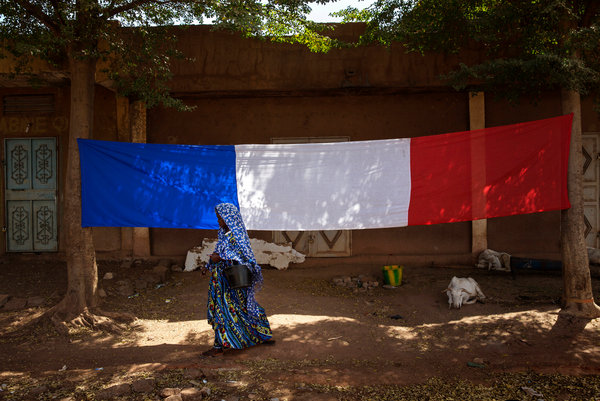
For how long? Photo by New York Times
This is my last blog before turning the reins back over to Jim, so I thought I would sign out with the state of play in Mali, a country near and dear to my heart.

4,000 French troops, along with several hundred Chadians, and smaller contingents from Benin, Burkina Faso, Nigeria, and Senegal, have retaken the three main Northern cities of Timbuktu, Gao, and Kidal, and pushed the main body of insurgents northward into the Adrar des Ifoghas mountains on the border with Algeria.

Estimates put total insurgent numbers, spread among three or four different groups, around 4,000 – 6,000, and French forces report the rebels are well armed and better trained than expected.

The Good:
– The hardcore Islamist leadership is dropping like horses in the Tse-Tse belt. A mess of confirmed and unconfirmed reports claim that French and/or Chadian forces killed two leading figures in the assorted extremist groups currently fighting in Northern Mali.
– These leaders— Mokhtar Belmokhtar and Abdelhamid Abou Zeid—are committed international Jihadis from outside Mali, with long histories of murder and kidnapping. (Disclaimer: Belmoktar’s death remains unconfirmed)

As much as some readers may hate force, or the idea of the French using it in West Africa, I would argue that brute force helps separate the committed jihadis from opportunistic locals.

Joining a rebel movement seems like a much better play when they run your hometown, claim to fight your traditional enemies, or pay the best of any employer in town.

That line of work looks far less attractive when your foreign (likely Algerian or Mauritanian) boss is running for his life through the dessert.

The Bad:
– So far, diverse Northern communities are broadly receptive of the French intervention.

However, this is horrendously complicated and could turn at any moment. A few things you should keep in mind regarding about popular opinion in Mali:

Anti-northern attitudes are hardening in Southern Mali—especially negative feelings toward Tuaregs.

This xenophobia will complicate the post-conflict scenario, as Southern elites will come under serious pressure to punish the North. In the North, communal divisions make coalescing behind moderate representation nigh impossible.

See this great post by Bamako Bruce exploring the historical roots of inter-communal antipathy….

Essentially, the Tuaregs have been slavers for most of the territory’s history, so the former slaves find it rather difficult to see Tuaregs as victims.

The Ugly:
– There is no centrifugal force currently capable of creating a unified, functional Mali. Watch this two-minute Stratfor video on Mali’s geographic challenge.

Nothing has changed.

A military occupation by a superior force can enforce a temporary peace, but not make a state. The French are facing intense domestic pressure to make good on Hollande’s claim that this would be a short term operation, and every French soldier that dies (three so far) makes Mali look more like Iraq to the folks back home.

Optimism…?:
– Sure. But really just for optimism’s sake.

Mali needs representative, viable, and politically palatable representation in the North that can lead a constituent assembly, or at least claim to speak for Northern communities in negotiations with the South.

An armed peace held together by regional forces and or the (proposed) UN Peacekeeping mission might give Northern elites time to bargain over such a coalition.

However, I don’t think any of the current groups would be acceptable to the entire Northern population – the MNLA are too Tuareg centric, and the others are mostly too extreme.

The international community – especially the French – should immediately begin using whatever leverage they have to kick-start the bargaining process before the extremists come get back from the mountains.

On Safari: Chobe Today

On Safari: Chobe Today

Chobe National Park in Botswana provides the most spectacular elephant experience on the planet. Is it a realistic experience of elephant in the wild, or a tourist fantasy?

We concluded three wonderful days here with a deep morning excursion into parts of the park few tourists visit, down the main road to Savuti. It reminded me of the old days in Botswana, when there weren’t fancy lodges and … well, paved roads.

For fear of sounding like a nostalgic old man, those were the days! This was wild Africa, when animals ran from the sound of your car, and when Landrovers traveling on Botswana’s deep sand roads felt more like sailing in a fast-running estuary than driving.

Not today. Things have changed. Finding 50 elephants ten minutes after leaving your air-conditioned lodge is normal. For elephants, and for tourists, that’s probably a good thing. Yesterday I wrote about the serious challenges too many elephants in Chobe presents, but their accessibility and sheer numbers is breath-taking to virtually all of us visitors.

The panorama of the Chobe River as it divides Botswana from Namibia and begins the awesome confluence of the great Zambezi is itself worth the ticket price. The entire ecology of Botswana is so weird and spectacular that in itself seems unreal. We were here for only three days. In that short time the river rose three feet as the great flood from Angola begins in earnest.

And this is no small river. Although broken by islands and sand bars that streak through its middle and edges providing habitat for ridiculously colored malachite kingfishers and stupendously beautiful carmine bee-eaters, the river is about 4 miles wide. So for this to raise 3 feet in three days is kind of overwhelming.

It’s a bit above average, but not too much, and nowhere near as dramatic as it was last year. This is nature flexing its rather striking biceps, and it’s humbling.

In three days how many elephants did we see? A thousand? Fifteen hundred? We stopped counting. They walked around our vehicles either as if we weren’t there or with little interest. When one did stop to flap its ears, we knew he was a newcomer, perhaps transiting from Namibia, but not one of the hundreds if thousands who spend a good portion of their lives playing in the water.

When inevitably one of these magnificent creatures dies, the shore of the river grows the ancient mole-like bumps of silent crocs, turned perpendicular to the shore, waiting for everyone to leave but them. We saw hundreds of crocs. We saw crocs tearing apart a dead baby hippo. We saw crocs stalking black heron. We saw impala worried about taking a drink from this unmeasurable amount of water.

The elephants have cleared the forests and impala and baboon have filled in the gaps. We also saw puku and lion, giraffe and kudu. It was the Lion King stage and the script was endless. I’ve rarely seen smiles glued on my clients for such a long time.

Yet I think back to the old days when part of the experience was fear. There was concern that a 6-ton beast might suddenly appear and tip your rover. There aren’t any 6-ton beasts anymore. The elephants are smaller, weaker than before, but still the world’s largest land creature and nothing to sneeze at.

I think back to the sounds of the late summer winds, the sounds of the river rising and gushing through the marshes. Today there are sounds of airplanes and cars, and boats and houseboats.

Life goes on, and my goodness, whether real or unreal or natural or somehow naturally contrived, Chobe is nothing less than magnificent. Yes, there are some real problems here for elephants and the wild in toto, but the moment is symphonic.

And whether it’s better or worse than before, it is what it is. And it’s nothing less than magnificent!

On Safari: Dead Elephant Walking

On Safari: Dead Elephant Walking

Chobe’s elephants are legendary, but what I saw this time is disconcerting. They are tame, inbred, their many broken tusks are like toothpicks, their family behaviors have broken down and they are destroying the Chobe forests. Is it time to cull?

There is a growing consensus in the affirmative. Even the conservation organization Elephants Without Borders, which can hardly be blamed for skirting the issues of culling, has come round to accepting it at least when human tragedies are caused.

These ‘problem elephants’ should be culled, according to a September, 2007, white paper written by EWB researcher, Dr. Michael Chase. Chase’s argument at that time was that a culled elephant would discourage other elephants from repeating the offense.

But that has proved untrue. And elephants causing injuring a person or destroying a small farm is hardly the major problem; it’s simply the one that gets the most attention. It’s the easiest to understand.

But there are far more serious consequences of too many elephant. It starts with the elephant itself. And the problem isn’t and wasn’t the elephant; it’s us.

Today we watched spectacular displays of multitudes of elephants in Chobe, playing in the water (actually swimming!), young adolescents sparring harmlessly, and at least three newborns just discovering the world. How can we not but simply sit back and enjoy this?

Chobe's toothpick elephants.
Because when looking a little closer, the scene ain’t so cute. It’s absolutely remarkable how many of Chobe’s elephants have broken tusks, an obvious reflection that if not eating themselves out of house-and-home, they’re at least so far eating themselves out of calcium.

And the tusks which remain are pitiful. We know that smaller tusked elephants throughout the continent are a result of the years of cataclysmic poaching in the 1970s and 1980s, when “small tusks” become a survival mechanism. Only big-tusked elephants were wanted by the poachers.

But large, healthy tusks are essential to a sustainable elephant population, which uses them for all sorts of things, like digging for salt and in dry times, water. So throughout the rest of Africa we’ve seen the slow improvement in the size of tusks.

But not in Chobe. Quite the reverse, and whatever makes for strong, healthy tusks is now jeopardized.

And then there’s the elephant’s important family behavior. Males that reach puberty are kicked out of the family unit. Females remain with the unit forever with their children, and a grand matriarch leads the family. In Chobe, that seems to have disappeared almost altogether, simply because there are so many elephant they can’t separate themselves into any type of grouping.

I hesitate to quote numbers, because elephant population studies are notoriously wrong, skewed by the bias of the organization making them, and official government conservation numbers can be even worse.

Moreover, elephant are difficult to count, because they travel such enormous distances so quickly and do not necessarily repeat travel routes. But suffice it to say there are lots of elephant in northern Botswana and similar habitats in surrounding Zambia, Angola and Namibia.

I have been visiting Chobe since 1978. Hardly is my analysis scientific, but my photos speak volumes. Most of Chobe was a forest in 1978. Today, every excursion from Kasane into the park that was once a dense forest will encounter meadows and eroded cavities with fibrous grasses.

Chobe is a resilient ecosystem, sitting along the rich river systems that eventually form the Zambezi, and in an area with relatively high rainfall. But while it may be true that ecosystem recovery is more possible here than in other places in Africa, it is clear the degradation of the ecosystem in the last 30 years has been severe.

What we can see is only the tip of the iceberg. The loss of biodiversity in grasses, trees and other plants leads to a loss of biodiversity in avifauna and much more.

Why will no organization undertake a definitive biomass study?

Because everyone knows the outcome, and no one wants to author it.

Even the official government site for Chobe National Park concedes, “Damage caused by the high numbers of elephants is rife in some areas of the Chobe National Park. In fact, concentration is so high throughout Chobe that culls have been considered, but are too controversial and have thus far been rejected.”

I think we’ll have to leave it to the younger and less prejudicial scientists yet unencumbered by worries about funding and tenure from a public obsessed with the “little bunny” syndrome. But for better or worse, young scientists taking the issue head on are concluding that culling is now not a viable option.

Benjamin Golas of the 2013 class of graduates of the University of Pennsylvania veterinarian school is one of them. He writes about Chobe:

“Too many elephants…”

“I would hardly be a good conservationist if I did not bring up [the fact that] the region, which can happily and sustainably hold a few thousand pachyderms, is home to upwards of an estimated 140,000… and it shows.

“Trees become scarce… Baobab that remain… look sick and scarred.”

Golas sees the most terrible situation looming. He believes that we have avoided culling for so long that now “the sheer numbers of elephants have made responsible culling impracticable” and there is no viable alternative.

No viable alternative? So then, what?

Perhaps the natural crashing of the population, a Biology 101 phenomenon that every college student learns: Left to nature’s devices, too many of one species will ultimately result in its cataclysmic decline, suddenly and often without warning.

It could be a virus that spreads like wildfire. It could be a syncing of estrus cycles caused by unusual weather. It could be a a new political shift in local human populations that just get fed up with the problem. But something will ultimately cull the elephant, now that we haven’t.

For years I espoused this position: let nature take its own course: Hand’s off. But now I see the danger of so doing, that as the elephant takes itself down, it may take much of the biomass with it.

Is it time to cull?

It’s too late.

On Safari: A Precious Fragile Delta

On Safari: A Precious Fragile Delta

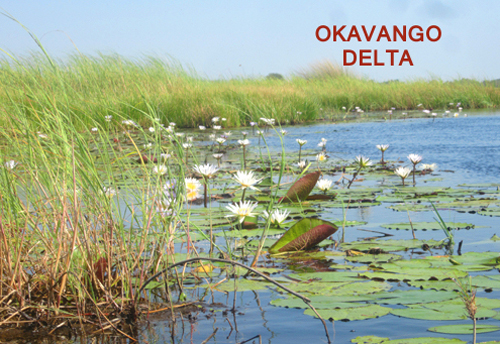
The one-of-the-kind Okavango Delta in far off Botswana, like every other part of the world, is threatened by the unusually rapid global warming caused by Chinese factories and soccer mom’s SUVs in Minneapolis. It makes our trip now even more treasured.

Numerous studies as early as 2007 from a variety of high-tech government organizations around the world have established that the Okavango is in for a mighty wallop. I experienced it myself last year when the flow from Angola was so severe we were flooded out of our first camp.

Numerous tourist businesses in Botswana suffered from that flood. This year it’s better. The flow seems to be ordinary, but that’s not the end of the story. The rains, which generally have had minimal impact on the water levels of the Delta, have been so intense in the region that rivers, roads, lagoons and lakes are overflowing.

The ice cap has to go somewhere.

Few places in the wild world are studied as intense as The Delta. This is because it’s so unique. No one is happy with what’s happening or is expected to come, soon. Too much water in The Delta will change it significantly.

But what does this mean for animals and plants, for the system as a whole? I’ve often written that the ecology of Africa is marvelously adaptable. The problem is what will that adaptation be? Retreat from man? A part of the downwards spiral of increased carbon emissions?

I worry about that for the Delta. The storms have been so intense, all sorts of lighting fires have been started this year. Add to that increased human pressures, particularly from honey harvested in wilderness regions, and fires are spreading through the Delta as if it were San Bernadino in August.

And then there’s elephants. So many. Too many? Elephants contribute to the loss of forests, and forests recycle carbon gases.

For my clients this time it was magnificent. In one game drive alone we saw the Big Five, mainly because rhino reintroduction throughout Botswana by a number of organizations has been so remarkably successful. I’ve often seen the Big Five Minus Rhino on a game drive, but I can’t remember the last time I’ve seen them all on a single several-hour game drive.

So for the time being and thanks to such wonderful projects as rhino reintroduction, the Delta remains spectacular.

But, for how long?

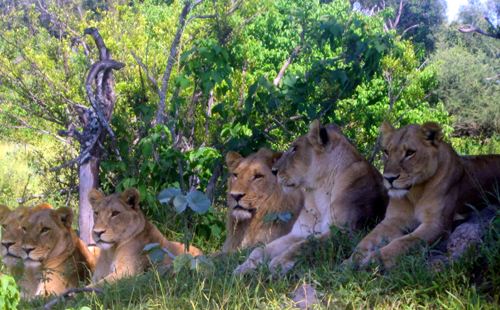
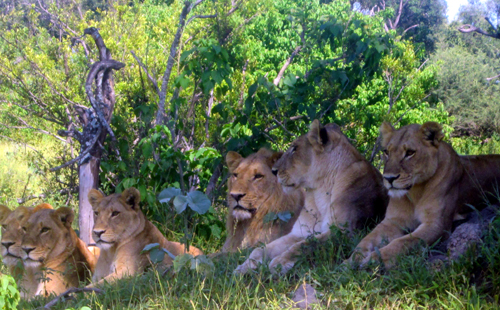
Six of the 10 lion in one pride that we saw yesterday.

Borders and Blood

Borders and Blood

by Conor Godfrey
I’ve been accused of being a relentless Africa booster… this is almost certainly true.

To fight back, however, I am going to offer a scarier version of the continent’s next thirty years that has taken up serious mind share recently.

This idea will hopefully pass muster as a research topic, so I would certainly appreciate your feedback as I am just getting the full proposal together now.

From the late 90s to the present, we have seen tremendous agitation around African intra and inter-state borders.

I would argue that this started with the Ethiopia Eritrea war (1998-2000) and would include the escalation of civilizational conflict inside Nigeria and Mali, the 2006 Ethiopian and the 2012 Kenyan invasions of Somalia, and, of course, the separation of Sudan and South Sudan.

Dozens of conflicts—including many in the DRC—do not make this list because they did or do not fundamentally challenge the status-quo colonial borders.

You can quibble with or add to my list – that is not the point.

Before this decade the Colonial borders exhibited nigh unprecedented durability. Here is a list of African border changes post WW1… 90% of them were trades between colonial powers.

My point (or wild hypothesis if you will) is this… from independence to 2000, most African states did not possess the material capabilities to mount a sustained challenge to the territorial status quo; doing so requires states to centralize political control, neutralize domestic opponents that pose a threat to the state, and have the material resources necessary to take, hold, and administer territory.

As the U.S. knows well, this requires lots and lots of money (not to mention a professional military and a tolerant domestic audience).

For this entire period, states concentrated on papering over the inconsistencies built into their illogical creations, and, if hostile foreign action were required, they relied on cheap and effective proxy militias and other irregular activity rather than large-scale mobilization.

The Council on Foreign relations writes —not totally persuasively in my opinion—that keeping colonial borders gave African leaders “reciprocal insurance” against invasion, and that leaders were more concerned with arguing over who controlled state resources than fighting over borders.

So why are things coming apart at the seams (pun very much intended)?

This could, after all, just be a blip, a decade long aberration on an otherwise century long consolidation along the lines drawn on a cocktail napkin in Europe.

Here is what I think:

1) Differential Growth: The continent is booming, but not everywhere feels the love.

As some countries outpace their neighbors they will be tempted to acquire the military capabilities to favorably alter the territorial status quo.

Colonialism left hundreds of potential territorial flash points, and for the first time since independence, some African states can likely do something about them.

Differential growth also exacerbates tensions within countries.

As globally connected and well endowed regions grow faster than other provinces inside the same country, resentments build and fuel long simmering separatist ambitions.

This narrative plays itself out most visibly today in Mali, Nigeria, and Cote d’Ivoire, and to a lesser extent in Kenya and Uganda.

2) Resources: As mentioned in this post, Africa is massively under prospected and companies are racing to catch up.

A powerful country may have let unfavorable borders lie when no rents could be extracted from the disputed territory, but what happens when billions of dollars of oil and gas hang on a few lousy kilometers, and investing in a miniscule navy would be sufficient to enforce a fait accompli on the border?

There are a number of possible mitigating factors—colonial withdrawal, regional integration, economic integration, etc… — but I will save those for some future post.

This is worth getting right. I would hate to see a decade of phenomenal growth and progress undone in an orgy of territorial revisionism, and reasonable precautions could help stop spirals of security competition before they begin.

On Safari: Moremi Game Reserve

On Safari: Moremi Game Reserve

On the drive from Chief’s Camp airstrip we saw elephant, kudu, hyaena, impala and giraffe. That took about 30 minutes. The Okavango Delta at this time of year is truly magnificent!

The veld is beautiful right now. Everything is lush and green. It’s a bit late for the blooming trees and flowers, although I did see one acacia still flowering and a beautiful wild iris of the most delicate pink color seen from time to time throughout our drives.

The juvenile carmine bee-eaters are just getting their full color, and the migrants – like the yellow-billed stork – are still here in large numbers, so to a certain extent we’ve got the best of both seasons as far as birding goes.

It’s the end of the Delta’s summer, temperatures today began in the mid 70s and would rise throughout the day to nothing more than the upper 80s. A huge cold front has moved into the southern part of the continent, so we were lucky. But even without this front, it would hardly be ten degrees higher.

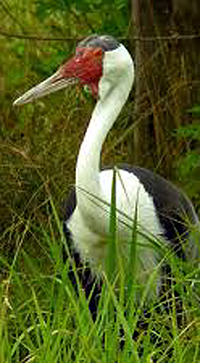
The highlight for me on the morning drive was seeing a pair of wattled cranes. These magnificent birds were almost extinct less than a decade ago, and according to the Wattled Crane Rescue Foundation there are now 235 in South Africa. (There are no good number estimates for Botswana, but I imagine it’s higher.)

The crane was challenged by what challenges most of Africa’s wildlife, today, growing human settlements, and in particular, power lines. Baby wattled cranes fly up to six weeks before they can walk, so if knocked out of the sky on their juvenile flights, they’re often doomed.

Like whooping cranes and California condors saving the crane fell to a consortium of private groups which raised the funds and enthusiasm for a sustained recovery effort that began with collecting eggs and raising chicks in safe facilities for later reintroduction.

Fortunately, normal behavior of the crane is to lay two eggs but to raise only one chick, so pilfering the nest of a single egg had little impact on the status quo.

Always a highlight is the incredible numbers of elephant, everywhere. Today we encountered 20-30 on the drive of all ages, and several groups of large males. During lunch at Chief’s Camp everyone was treated to 24 elephant in two families and a male following at some distance.

They moved into the swamp behind camp and found a channel where they watered and played, and then a secondary mud hole where the young especially spent a long time rolling and playing. It was an extraordinary course to an otherwise exceptional meal!

We’re here at Chief’s for three nights. Stay tuned!