Similiar Social Circles

Similiar Social Circles

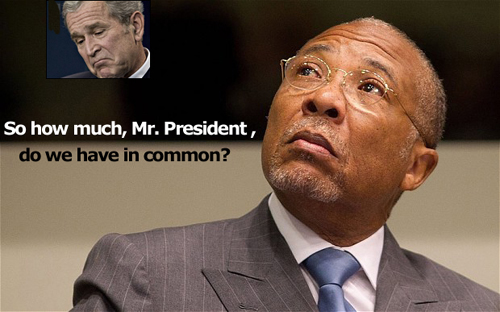
Charles Taylor’s demand that the World Court try George Bush is neither hair-brained or facetious and demonstrates the growing globalization of justice.

Shortly after Liberia’s former strong-man was sentenced by the World Court yesterday to 80 years for “crimes against humanity” he remarked to the press:

“President Bush… ordered torture and admitted to doing so. Torture is a crime against humanity. The United States has refused to prosecute him. Is he above the law?”

Well, the answer of course is, yes.

The World Court is playing increasingly pivotal roles in African justice, and thereby, African politics. Taylor was the strong-man now found responsible for the long blood diamond and blood resource war that devastated much of West Africa in the 1990s. His apprehension and prosecution in The Hague was fundamental to West Africa’s current fragile peace and stability.

Right now the Court is negotiating conducting a similar prosecution against Seif al-Islam Gadhafi, the son of Moammar. Seif is being held by a remote militia group in the south of the desert country, and they refuse to surrender him to current Libyan authorities. But they might just surrender him to The Hague.

Also right now, the Court is trying four prominent Kenyans – two of whom may become presidential candidates. Remarkably, the four are willingly traveling back and forth to The Hague for their trial, although there is wide speculation that as soon as proceedings become threatening to them, their schedules might just become too tied up for further international travel.

So it is really not just banana republic hyperbole regarding Bush. (Important to note, of course, that America is one of the minority of countries in the world that doesn’t recognize the World Court.)

Both Bush and Cheney have canceled multiple trips abroad in the last few years for fear of global prosecution. So even if we don’t recognize this new global justice, it does impact us.

Bush first found his travel restricted on what seemed like an innocuous trip to Canada in October, 2009. While speaking in Calgary, Canada, a warrant for his arrest was issued, but higher courts vacated the warrant allowing him to leave.

Bush then laid low for a couple years before trying, again, in October, 2011. He returned to Vancouver in the company of Bill Clinton. Once again the warrant was issued, and this time he snuck out of Canada by the skin of his teeth. An unusual “higher intervention” stayed the British Columbia’s court action hours before he left.

Bush has made no trips since.

But it was in neutral-grounded, ideologically-bereft Switzerland where both Bush and Cheney faced the most serious possibility of actual arrest. Both canceled previously announced visits when it became apparent authorities would actually apprehend them.

Cheney’s last cancellation was only two months ago, once again testing the presumed friendship if obsequiousness of our nearest neighbor and dearest ally, Canada. The mounting evidence of Cheney’s involvement in torture may have breached the threshold of “higher authorities” power in Canada to prevent his apprehension.

The growing evidence against Bush and Cheney specifically with regards to Guantanamo torture, as well as torture abroad during the Iraq war may not rise to the level of slaughter that Charles Taylor conducted in Sierra Leone.

But this isn’t a body counting analysis. Some actions like torture are no less wrong once than a thousand times. Taylor’s ordered massacres of tens of thousands may indeed be more horrible than Bush and Cheney’s torturing a hundred terrorists. And within that perspective the World Court has sentenced Taylor to 80 years, one of the greatest sentences ever levied by the Court.

So perhaps George Bush should be sentenced to 10 and Cheney to 20. Or something like that.

The point is that the world is developing a sense of global justice around a few top human rights’ issues like torture and innocent massacre about which there is little debate. Africa is taking the lead using the World Court, thereby contributing in a fundamental way to defining exactly what justice means in our increasingly compacted world community.

Whereas we, in America, risk global conflict by berating China for its poor stewardship of human rights, while our former leaders tiptoe across the world careful not to breach the lines of decency. It would be terribly embarrassing were Bush or Cheney arrested for torture, wouldn’t it?

Great Power. Greater Hypocrisy.
Be Careful What You Wish For

Be Careful What You Wish For

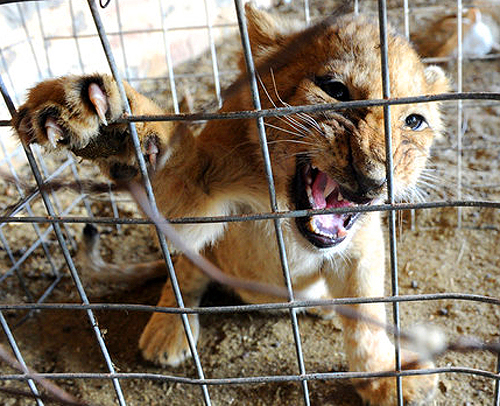
Lion road kill, baby lion attack … two examples this week that we must stop thinking of Africa’s wild animals as human incarnations.

Like a hundreds of other tourists daily, at dozens if not hundreds of similar sites throughout Africa, Madelein Querk was looking forward to that special moment this past weekend when she could actually pet a wild animal. The lion cub bit her in the neck threatening her life, not just her holiday.

A proactive organization studying and promoting lion conservation in northern Kenya called for more “speed bumps” or road impediments on the relatively new Samburu-Marsabit highway after a one-year old lion cub was killed trying to cross the road this weekend.

The two incidents are in some ways dissimilar. The cub attack is the epitome of poor judgment, the logical extension of anthropomorphizing a wild animal into a pet and maybe even a cute little furry baby. The second incident is an excellent example of human/wildlife conflict, but with an error on the side of human.

But they are also strikingly similar in illustrating how we unsuccessfully try to commercialize the wild at great risk to both the wild and us. The wilderness, wild animals and spaces with little or new human intervention, can be protected and conserved to be sure, and generating revenue from those tourists fortunate enough to be able to pay to experience them is a legitimate way of doing so.

But both these examples show this dynamic going too far.

A lion cub is cute in part because we project babyness onto it, the same cuteness of our own experiences with human infants. Sensing helplessness especially is a strong effusion of empathy, and a cynic might even argue an elixir of personal power.

But why don’t we feel the same way when a baby snake hatches? It’s just as helpless. Or a baby shark or baby black widow. Because they’re deadly? So’s a lion. Ask Madelein Querk.

For some reason our non-Maasai culture has codified lions as cuddly but pythons as not. Point is, neither are.

But we commercialized the cuddliness into Teddy Bears and Lion Kings with this haughty notion of generosity filled with forgiveness and redemption until there are piles of childrens’ books affirming the true goodness of Aslan.

Well, lions are good. But not because they obey their mothers and do their homework and help invalid ladies across the street. Their goodness is affirmed when they tear apart a baby wildebeest and eat it alive.

The second example this week is bit harder to understand, and I concede before trying to do so that you need to share my bias first that humans are more important than wild animals. And that is not a bias I came to quickly or easily, and I respect those who differ. Nor am I saying Buddhism be damned. But in the competition of natural selection, I route for man.

The Samburu-Marsabit highway was built by the Chinese to get oil from the desert. They pay well for that privilege and Kenyans welcome the revenue which significantly exceeds the sales of entrance fees into Samburu National Park.

It is also a dangerous place, particularly since the conflict in Somalia came closer. The Northern Frontier has become quite lawless in the last few years. From one sanguine point of view, putting speed bumps on this highway would exponentially encourage shifta, bandits that are notorious in the area.

If Ewaso Lions can demonstrate that this is an integral crossing for lion in the area (as they implied in the article linked above), then build an over- or underpass tunnel as is regularly done for wildlife crossings worldwide. Slowing down the flow of traffic is routing against humans.

In my long career in the wild I’ve grown more and more fond of it. But at the same time I’ve grown more and more angry with attempts to commercialize the wild by either pretending that it is less wild or actually making it less wild against its own nature. And I get particularly furious at efforts to exploit our fantasy empathy at the expense of man’s preeminent needs.

Enjoy the wild for what it is, not what you wish it could be.

Big Gay Brother

Big Gay Brother

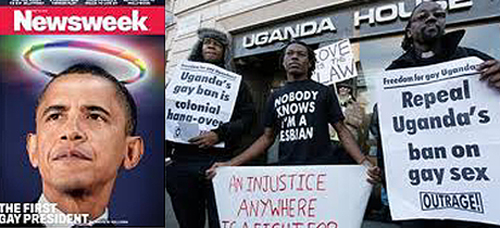
Many African reactions to Obama’s gay marriage statement focus on the hypocrisy of the “small government” stand taken by so many conservative Americans.

Social issues like marriage percolating to the top of a political campaign for president of the world’s yet most powerful country confuses many in Africa. America is among all known for “freedom” and “small government.” But you can’t have a small government that enforces laws on social habits like sexual orientation or marriage.

Consider the strong anti-gay forces in places like Uganda, that among many other legislative attempts are still trying to criminalize knowing that someone is gay and not advising authorities.

This is government intrusion of the greatest sort, of course, yet it is supported whole-heartedly by America’s right: AIM’s Cliff Kincaid argues that Ugandan is simply trying to “create a Christian society.”

Enlightened Ugandans see forcing any social ideology onto society as too much government:

Religious intellectual, Ugandan Kizito Michael George, argues that emphasis on social issues like gay rights is not the purvey of the government. He goes further: keep the church out of the state, at the church’s peril.

But Kizito and many other pro-gay rights’ advocates recognize that the current Ugandan regime is publically pro-big government. It’s one of the only ways that the dictator president Yoweri Museveni can stay in power.

So it reveals the incredibly irony of America’s right that argues for “small government.”

Many Africans see additional hypocrisy in America’s constant push for human rights in China and elsewhere, with such forceful attempts by America to limit the rights of gays and women.

“Africa is hardly what we consider a progressive continent at the forefront of human rights,” says one person commenting on South Africa’s News24. “However we seem to be far ahead of the USA.”

The Africa that is maturing through its Spring Awakenings is forcefully for small enough governments that human rights are aggressively protected. Universal suffrage and freedom of expression are considered no more important than freedom of expressing one’s sexual orientation.

Both the new South African and Kenyan constitutions replaced “man and woman” as the definition of marriage with “spouse.”

Those youthful societies have little intolerance of sexual orientation left. South Africa has been tolerant of gays for centuries. Its famous early politician and Prime Minister of the Cape, Cecil Rhodes, was openly gay.

Kenya is newer to the opening and so there is still some vocal resistance, although its fading in the face of the public’s wide-spread support for gay rights.

As a result analysts in both countries see Obama’s move as political:

John Ngirachu reporting this weekend from Kansas City explained to Kenyans back home that Obama’s move “boils down to the electorate.. Both candidates know the issue can cost them the election in states where the conservative Christians are influential.”

Ngirachu and others in Kenya and South Africa see the whole episode as a scripted ploy that began with Biden’s announcement. It’s particularly poignant in Kenya where the presumed successful candidate for President next year has begun to disassociate himself from the man who had been presumed the successful candidate for Vice President.

I think it fair to point out, too, that many in Africa see America’s religious right as something akin to a social flash-in-the-pan, and that with less time than many African societies took to become truly free, America’s right will fade into history.

The hypocrisy is just too stark.

Leave It To The Kids!

Leave It To The Kids!

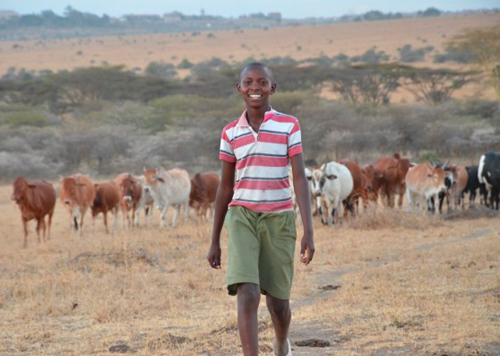
A 13-year old Maasai boy (genius) who rigged up an electric light device that seems to successfully protect his boma from lions is no longer herding his family’s cows. He’s got a scholarship to one of Kenya’s best private schools!

Richard Turere like all young teen Maasai boys was principally responsible for taking care of the family stock. Fortunately, he found time to go to a local school as well, and the little time he had uncorked his genius.

He put what he learned about electricity and lighting to work for himself! Lions are becoming an increasing bother throughout Kenya, as their habitat dwindles, as agriculture explodes and as prey diminishes. They are more and more often preying on cattle and goats.

The traditional Maasai response is to kill the lion, and in fact that’s happening quite a lot. I’ve written about the horrible poisons that are sometimes used in bait traps, and simple gang spearing is turning into something of a national sport.

In Richard’s own area near Nairobi national park, cattlemen had lost 18 cows, 85 sheep and goats and 14 donkeys since November. Their response was to kill three lion in a single week.

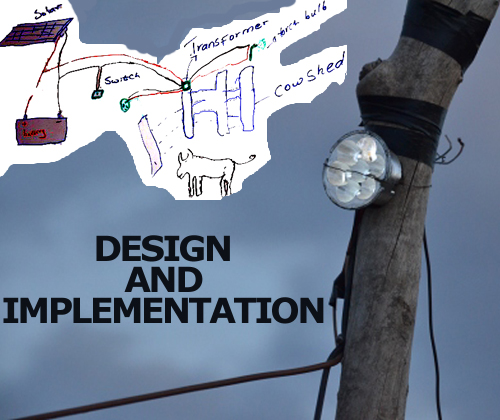
Richard didn’t like that idea, because school had also taught him the importance of wildlife to Kenya’s economy. So he rigged up a series of lights around the kraal in which the stock spent the night, which flashed intermittently and were powered by the same solar panel that ran the family’s TV.

Guess what? No lion! Even while neighbors were still being bothered.

Richard began his experiments when he was 11. He told teachers that he noticed that the lions never struck when people were walking about, including at night with flashlights. Lion won’t come near stock when people are active, so Richard concluded that he could fool the lion into thinking people were around his stockade all night long!

He wired four then five sets of flashlight bulbs around the stockade and connected them to a switching box powered by an old car battery charged by the same solar panel that runs the family’s TV.

The result was a random flashing of lights throughout the night. It seems Richard was right: the appearance is one of people being awake in the area. And while six neighboring farms were attacked by lion in the last several years, the Turere farm was spared!

Richard’s successful and very practical science project got immediate attention country-wide. When the National Geographic Big Cats Initiative found out about it from Wildlife Direct in Kenya, Richard became an instant celebrity. And his genius was doubly rewarded. Not only did he save his family’s lions, but enough patrons came together to send him to one of Kenya’s finest private secondary schools.

The plight of wildlife in rapidly urbanizing Africa looks dim at best to me. But with enough Richards lighting up the darkness, who knows?

Down Now Up Later

Down Now Up Later

Americans increased their travel to all parts of the world for the first few months of this year, except to Africa. Africa stood out like a sore thumb, declining about 5%. Why, and what does the future now look like?

Two months of a statistic does not a trend make, but what is critical is that Africa was the only sector to decline. Even volatile areas like the Middle East increased (19%).

Travel is a fickle thing, and a leading indicator of the economy. 2009 was a robust travel year by statistical analysis, but that was because 2008 was so dismal. 2010 was what we call a correction year, but that was rudely uncorrected by increasing instability of Europe. So these statistics are hard to analyze.

Since most travelers to Africa from the U.S. come through Europe, Europe’s situation constantly effects African travel from North America. This year saw an increase in European instability. I believe Africa would be in the black if it weren’t for Europe.

But not by much, and certainly not as high as the 19% increase to the Middle East or the winner, Central America, with nearly a 25% increase. My conclusion is that Africa is definitely under performing most world tourism sectors after all outside considerations (like Europe’s economic health) are factored out.

It’s likely that Africa will end 2012 with overall tourism down about 10% from 2011.

Why?

Africa has had some bad press this past year, particularly from East Africa with widely reported droughts and wars, an unsettled Sudan, and intense civil turbulence in Uganda. Some of this is set to turn around if the March election in Kenya goes off quietly, and if Somalia continues to improve.

And because we aren’t looking at a huge fluctuation I think at least some of the decline in African tourism can be explained by what I call the ping-pong effect. In volatile economic times we tend to see a back-and-forth, year-to-year, in travel statistics. If Year 1 is better, Year 2 tends to be worse, and so forth.

Moreover, American travel is trendy, particularly to exotic destinations like Africa. So if 2011 relative to 2010 is better for Indonesia, it will likely be worse for Greenland. Because Africa was the lone winner (excluding the MidEast) in 2011, it may be the lone loser in 2012. Does this mean it will bounce back for 2013?

(The Middle East’s linear progression over the last decade bucks this analysis and is specifically linked to the rapid growth in MidEast airlines like Qatar Airlines and Emirates Air, and to the rapid development of their main cities. Excising the MidEast from long-range statistical analysis, and the ping-pong effect holds true.)

IF (and it’s a big IF) there are no disruptive events like Kenya’s scheduled March election and South Africa’s rumbling strikes, and provided the aftermaths of the Arab springs continue on relatively positive directions, African tourism should improve in 2013.

So keeping in mind those big IF’s, I project the following growth in American tourists to these African sectors for 2013 relative to 2012:

North Africa: +12%
West Africa: +6%
East Africa (excluding Uganda): +8%
South Africa: +10%

This is tricky stuff, folks. Weather, politics, European economies and even the outbreak of whooping cough in Washington State can effect the fickle flights of U.S. travelers. But we all need a baseline, and above is mine.

Hola Hollande! Following Africa?

Hola Hollande! Following Africa?

Africans are generally pleased with Sarkozy’s defeat by Hollande. To them it suggests that right-wing western policies are on the decline. Virtually all of free Africa is to the left of most western countries.

Africa’s incredible economic growth, now an astounding 2-3 times the west, is likely to remain 1 or 2 points higher than world growth for the foreseeable future, making it among the best areas in the world to invest.

But the growth comes not from the austerity that the Sarkozy-Merkel alliance has thrust on Europe with disastrous consequences, but rather from aggressive infrastructure development and stimulus. Once working the economies were polished up with modest tax increases that nonetheless reduced corporate taxes while redistributing tax burdens onto the wealthy.

This is not a westerner’s right-hand cup of tea.

And this is hardly “socialist.” The widely respected conservative business quarterly, McKinsey, was among the first to notice Africa’s working formula for economic success:

McKinsey acknowledges that the resource revolution mostly spurned by China in Africa, with new technologies that dig deeper and probe further, account for nearly a third of Africa’s growth. And this is what westerners constantly highlight: Africa’s newly rich commodity markets.

But the other two-thirds is twice as important! And according to that McKinsey report, is linked to social policies that include “government action to end armed conflicts… trimming foreign debt…shrinking budget deficits… and privatizing state-owned industries.”

This was accomplished initially by additional government spending and debt, stimulus. The cash for this stimulus came mostly from China. As the recession pulled China back from its high investment in Africa, governments turned to luxury items, in particular cars, for increased taxes. Even as free trade agreements were being negotiated, new tariffs were smacked on imported alcohol and cigarettes, for example.

The result was an increased tax base, even as middle class individuals felt taxes go down and growth continued right through the west’s recession.

This all began more than a decade ago when Africa was sucking up aid like a dry sponge. I remember the forlorn remarks in those days regarding Africa’s “black hole.” But it was precisely this added spending in a time of no growth that ultimately produced the economic powerhouse Africa seems to be, today. Growth, unlike Sarkozy and Merkel (and Romney and Paul) claim, comes not from austerity but from stimulus.

Everything always seems to begin with economics, but sooner or later social ramifications are inevitable. Sarkozy like Romney is an anti-immigrationist, so to speak. And France has no fewer immigration problems than America. For generations France welcomed Africans from its former colonies with wide abandon. But in the last decade exacerbated by the recession immigrants have become the same whipping boys they are now in the U.S.

In 2007 Sarkozy dropped a nuclear bombshell during a speech in Dakar, the capital of one of France’s former most important colonies, Senegal. He was arrogant, patronizing and insulting, and it marked the start of his anti-immigration policies.

“There’s talk that Hollande will give a rebuttal to Sarkozy’s infamous Dakar speech of 2007.” writes an influential African blogger in Paris, but “the essential point is that Sarkozy is gone.”

Social ramifications will take longer to measure. But Hollande has already called Merkel to aggressively advise her of his public’s serious message: stimulus not austerity.

It’s the Africa way! Perhaps Hollande could make a call to Obama, now? Would Bernanke take the call?

Better Visit The Selous Soon

Better Visit The Selous Soon

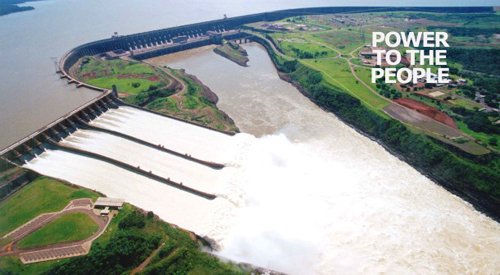
Bruised but recovered from the embarrassing loss of the Serengeti Highway project, Tanzania looks truly set on creating one of Africa’s largest dams over currently one of its largest game parks.

Friday, Energy and Minerals minister William Ngeleja announced during a visit to the area that “This is not a ghost project…Tanzanians will see it kicking off this July.”

The visit was perfectly timed. Heavy rains throughout East Africa have been flooding large agricultural areas and destroying many smaller villages. Not only would the dam produce more than twice the electricity Tanzania projects needed within the country, it would control the devastating flooding that seems on the increase with global warming.

When first proposed in the 1980s the project had a price tag of a half billion dollars. Today the cost is $2 billion, and most of this will come from Brazilian banks.

Environmentalists seem resigned to the project finally happening. The huge outcry raised when the project was first proposed, equally as vociferous when rebirthed the first time in 2002, is today totally lacking.

The best environmental study for the area was conducted by FAO in 1981. At that time there was concern that the large project would seriously disturb the water ecology of the area.

Other studies focusing on the then developing Tanzanian tourist industry in The Selous Game Reserve in particular were more equivocal. The impact area is so large, and the tourist area so small, it’s very hard to predict how these will intersect.

But there’s no question that the area effected will be huge, greater than the Colorado river basin that was effected by the construction of the Hoover Dam. The flood lake itself could exceed 100 sq. miles. The controlled water flow that would absolutely benefit area agriculture and provide stability for dozens if not hundreds of area communities would likely drain another several thousand square miles of wetlands.

Such an impact in the 1980s was deemed too consequential, and the World Bank pulled out of the project in the 1990s. The Norwegians stepped in, then fretted over the impact for several years before also stepping aside after pouring about $25 million into environmental studies.

The uncertainty of how the project would impact Tanzania’s inland fishing industry was the basis for local political opposition that when then allied with environmentalists worldwide effectively eviscerated local support. But it seems now that even while there could be catastrophic impacts to freshwater fishing, local sentiment has swung in favor of more power and less flooding.

Although the World Bank and western agencies remain cautious about resupporting a project they once ditched, Brazil, China and South Africa (the new “BRAC” countries) have no such qualms. The money is there.

It remains unclear how the project would effect the relatively small area where nearly 80% of all tourists visit, the “Lower Selous.” It’s possible this area will see little change other than the greater fluctuation of the Rufiji River along which most of the camps are built. This is something camps in Zambia’s Lower Zambezi have been dealing with for years, as the great Kariba Dam performs similarly.

But the half dozen or so new camps in the “Upper Selous” near Stiegler’s Gorge will likely be drowned away. This includes Serena’s new and popular Mivumo River Lodge.

The world has changed considerably in the last 40 years since the Stiegler’s Dam was first proposed. Global warming was not well understood then and even though development has lagged last century’s predictions, growth is accelerating, today.

A project of this magnitude could have enormous local benefit. What concerns me is that the Tanzanian government and parastatal authorities managing electricity remain corrupt and unprofessional. Yes, there will be new power, but will anybody get it?

But if the Tanzanians can get their own disheveled house in order, then I think it would be unconscionable to trade off the social and economic benefits of the project to save the beautiful, wild and otherwise unmanageable Selous. Unlike with the Serengeti Highway, there is no alternative.

Food and jobs.

YouTube Won’t Believe

YouTube Won’t Believe

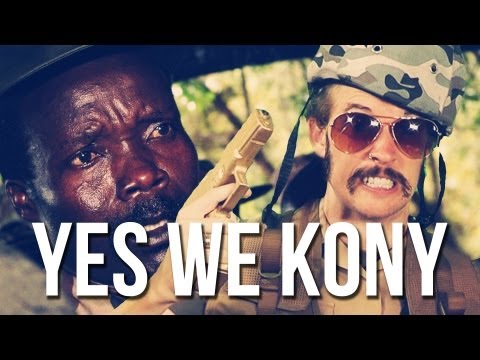
The combined viewers of YouTube videos mocking Invisible Children’s video about Joseph Kony has now exceeded the viewership of the original video. What an infamous mess.

But has YouTube corrected a terrible wrong or simply added more wrongs? I really don’t know how to parse my feelings of disgust, anger, sadness, confusion ….

I was first attracted by a heavily viewed parody on YouTube by TheJuiceMedia. This hilarious video is funny and right to the point: Invisible Children’s million viewer video was a scam and essentially racist. Hopeful there were other creative attempts, I started the YouTube search.

But there weren’t any others as professional and poignant, which satirized facts but that were real facts. I moved quickly into tunnels of the pathetic to the dungeons of absolute horror.

There are the namby pamby self-appointed talking heads like ThioJoe who apparently has a regular following of thousands and who is principally known for his recently rediscovered bedroom closet where he “found a bunch of military gear that I had bought at military surplus stores over the years.”

Thio just talks to you about everything he doesn’t know, among that tome of ignorance Joseph Kony. Easily dismissed if it hadn’t received over 20,000 views of which I of course contributed. Did I watch the entire 2:18 hoping for something worth watching, or just to reenforce a world view of an apocalyptic society?

In ThioJoe’s expressionless face are millions of faceless people, whose brains have been replaced by nonsense videos.

But ThioJoe’s and dozens others like him are not particularly offensive per se, more of a curiosity to me. I kept wondering if he were real or a robot. But the list of offensive videos is actually greater. I can’t even bring myself to link them here for you. Just make your own YouTube search of “joseph kony spoof.”

They include Finish productions that are the most racist photoshoped pieces I’ve every seen, British private school projects that would have been banned when I was in high school for gross indecency much less intellectual bottom feeding, and actual attempts at selling grenade launchers!

I’m flabbergasted. Has Marshal McLuen’s “the medium is the message” gone viral, too? At least restricted to the demographic of people who watch YouTube, does nothing mean nothing anymore?

But we’re talking about more than 10 million people, conceivably many more, who have watched junk, nonsense, idiocy or whatever you want to call it featuring Joseph Kony! Kony, Invisible Children, the LRA, African wars and misery and our responses to it should not be junk, nonsense or idiocy.

This is incredibly troubling. The Joseph Kony/Invisible Children story is not yet well understood. It’s driving American foreign policy and using my tax dollars in ways I don’t approve. It’s harnessing the generosity of millions with bad ideas and falsehoods, essentially exploiting good intentions rendering them pointless if destructive.

But how on earth do we untangle this mess when the intellectual attention span of the world can get no further than these unbelievable YouTube videos?

Rally Round the Rig, Boys!

Rally Round the Rig, Boys!

Chen Guangcheng overshadows a great diplomatic partnership between the U.S. and China succeeding right now in Sudan.

Yesterday in coordinated diplomacy that worked faster than a ping pong match, the U.S. moved a resolution through the United Nations Security Council that would impose harsh sanctions of both the North and South Sudan if they don’t meet certain goals in two weeks. With Chinese support.

Then China walked the resolution over to the African Union and asked them to deliver it as a reminder of a much older resolution passed by the African Union: North Sudan’s leader is under indictment from the World Court of the United Nations and since refuses to recognize the world body.

Then minutes later (and this is through a wizardry of time zones) the North “agreed in principle” with the mandates in the UN resolution.

This is no ordinary thing.

I’ve written several times in just the past week about the growing catastrophe in the Sudan as a poorly demarcated border between north and south that runs right through the oil fields erupted in war.

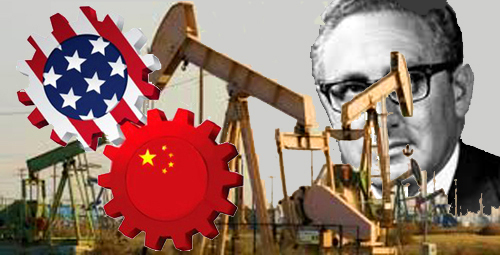
For one thing the U.S. – whose interests in South Sudan have been popularized as a George Clooney star movie — backed off as lead negotiator to let China figure it out better, and China did. The U.S. would never have found the time, the interest, or the politics to transport the idea through what it considers a weak and often corruptible African Union.

Many wince at the notion that diplomacy is so practical: It’s all about oil. We especially in America like to believe that goodness is simply an elongation of god, and that we pounded Iraq and Afghanistan and liberated Kuwait and got tangled up in Iran for any number of reasons except oil.

But remember it was that burrowing wolf hound Henry Kissinger who made mince meat of morality and elevated national “self-interest” above the Ten Commandments. And the criminal Richard Nixon was praised yesterday by Hillary Clinton for his overtures to China 40 years ago.

It’s called the Real World.

Yes, Chen should be given asylum in the U.S. Yes, China should reverse policies restricting human rights. Yes, the U.S. should stop lying about its motivations for wars in deserts where the population densities approach that of the arctic circle and day time highs outperform Roundup. And yes, the two should continue to work for harmony in the world.

Get the damn oil flowing in the Sudan, OK? Peace follows.

Kenya & America Joined By Anger

Kenya & America Joined By Anger

Warped democracy in both Kenya and the U.S. shows citizens will vote against their own self-interest. It amazes me.

In Kenya a poll released today shows a virtual tie between the current Prime Minister, Raila Odinga (the good guy) and his yet to announce opponent, Uhuru Kenyatta (the bad guy). The polling results are frighteningly similar to the virtual tie between President Obama (the good guy) and Mitt Romney (the bad guy).

Yet how different you’d otherwise think the races are!

On the surface, the American race is between progressive and conservative policies. The surface analysis of the Kenyan race is ethnic: Luo (Odinga) and Kikuyu (Kenyatta). There couldn’t be two different dynamics: political and ethnic.

And in both cases the large number of independents (15%) will decide the election .. Or so the polling goes. In the U.S. this is construed as independent political thinkers. In Kenya it’s any of the 41 other ethnic groups that compose 1/3 of the electorate, but the reason this is twice as large as the undecided independents identified in the Kenyan poll is because many of those ethnic groups are very remote and illiterate and probably won’t vote, or if they do will vote their “closest ethnicity.”

So what’s going on? Why is the bad guy so close?

Don’t laugh. Blogs use shorthand and avoid politeness. Bad in the U.S. is a man who has changed his positions with the wind of politics, a monsoon of hate and deception. Bad in Kenya is a man who is currently on trial in The Hague for crimes against humanity. Hope I’ve convinced you.

Yet political ideas drive one, and ethnic ideas drive another?

I guess we have to examine the similarities rather than the differences.

The bad guy’s family is not going to desert him. In Kenya that larger family is the ethnic group. In America it’s the 1%, or those-who-have-a-lot. Obviously there are exceptions in both places, but the rule looks good.

The bad guy castigates the media. Again, exceptions (Fox News & Limbaugh in the U.S. and certain Kikuyu-owned radio stations which are very important in Kenya). But the rule stands. The bulk of the media in both countries, which I believe is still founded in as much truth as can be unearthed, is broadly pro-good guy.

(I thought it particularly revealing yesterday that NPR aired a segment squarely blaming Republicans for the current political mess. Foolish to assume that NPR is always so patently progressive; they aren’t. This time one of their sources came from the very conservative American Enterprise Institute.)

The good guy compromises too much. My opinion, of course, but you could alter that to just compromises while the bad guy doesn’t. Presumably this is to attract the independents who determine the outcome, but is it really?

In Kenya Odinga compromised from the day he signed an agreement 5 years ago that conceded his obvious victory in national elections and which while insuring a hunk of power for himself gave more of it to his opponent who had lost but was the incumbent.

In the U.S. Obama’s compromises are legend, now. Did you hear Jimmy Kimmel’s joke at the recent White House Press Correspondent’s dinner? The compromise section is about 2min 30sec into the YouTube link.

This is very important. Both these men compromised to the point they lost supporters, and if they lose their respective elections it’s likely the loss will be small enough that it could easily have been reversed had they not compromised.

And the inverse is true of their opponents. Both would not be where they are in the polls had they compromised at all. And this is likely the explanation for why they also flip-flop so much once their opponents in their primaries have been defeated. Their only hope for achieving independent support is to reverse intransigent positions.

(Kenya doesn’t have primaries, but it does have a primary-like process.)

The good guy had many more careers than the bad guy.

Obama was an organizer for urban groups, a practicing lawyer and a law professor before entering politics. Odinga was a very successful mechanical engineer before entering politics, and was a professor at the University of Nairobi before that.

Neither Romney or Kenyatta has done anything all their lives except business deals and politics.

The good guy was born poorer; the bad guy was born much richer. Nuff said.

Finally, and fundamental to my thesis, the only way the bad guy has gotten even to the point of being a legitimate challenger much less a possible victor is that the bad guy garners the support of the people he hurts.

In both Kenya and the U.S. the bad guy has a litany of deeds to live down, business actions that put people out of work essentially. Romney’s pinnacle was Baines. Uhuru’s was his indictment by the World Court.

While the good guy loses the support of the people he helps.

Progressives are abandoning Obama in droves. From my point of view this is their problem, not Obama’s. They read way too much into the man. Similarly Odinga has lost the support of key ministries and their lock-step constituencies because of his policy compromises he couldn’t refuse to make were he to remain in power. Again, his supporters expected more than he ever suggested he could deliver.

A corollary to my thesis, then: too much is expected of the good guy; too little of the bad guy.

Putting this all together I don’t think the dynamic is entirely that people believe lies, although with the right TV ad they might. I think rather it’s anger. I don’t think intellectuals vote against their own self-interest (Obama’s independents and original progressive supporters deserting him at their peril of a conservative administration winning) just because they want another change, just to be different.

And I don’t think Odinga’s supporters abandon him just because they want a change, just to be different.

And I don’t think Romney’s supporters vote to end social programs on which they direly depend just because they want a change, or even because they believe him when he says he won’t. Or that Uhuru’s supporters vote to elect a man who might be given a life sentence in The Netherlands just because they want a change or because he tells them the World Court is crazy.

The implications of a wrong vote, against one’s self-interest, are too severe for a willy-nilly decision. Something stronger is motivating this: anger.

And why there is so much anger, and why it’s directed as it is, is beyond my job description. But anger is a powerful tool in elections. And unfortunately, it’s pronounced in both Kenya and the U.S.

Pity it’s something that connects us.

Partnership for Peace & Oil

Partnership for Peace & Oil

The time has come for China and the U.S. to become allies to stop the war in The Sudan and get oil pumping, again.

The U.S. must immediately nominate China as mediator in the North/South Sudan conflict with wide powers to demarcate borders. Yes it’s agonizingly obvious it’s all about oil, but China unlike the west has never pretended otherwise.

There is now a movement in Congress to implement this as a resolution urging the State Department to do exactly this. Tomorrow Hillary is in China. Unfortunately a Chinese dissident is dominating the issues, so this may not be the moment. But a moment we need.

Yesterday a Dutch journalist confirmed that very nearly all-out war had begun along the border areas. The North declared a State of Emergency which in Bashir-speak is a declaration of war.

This war was started by The South, the dandy of the west, and recently independent from the North. But in typical colonial style, the freedom the west engineered for the south from the north is incomplete and unworkable.

Throughout the last several centuries of western war, colonization then independence, the net effect of the west’s efforts have been to create weak and corruptible states with immature political systems. The recent Arab Spring and Twevolution is rectifying this for much of Africa, but it’s taken more than a half century.

Global events move too fast today to wait 50 years for the Sudans to become friends. China, the U.S. and the west need the oil sooner.

The Director of the World Peace Foundation, Alex de Waal, spelled it out brilliantly in a lecture to the Royal African Society in London as a simple two-step process which is laughingly obvious:

(1) Stop the fighting; and

(2) Adjudicate the borders, which are the oil fields.

But it was de Waal’s eloquent explanation that unlike so many other past conflicts these two imperatives are relatively easy and within reach of the world community.

He explained that there are plenty of UN and African Union troops on the group in South Sudan to stop the fighting and police a cease-fire. It would take minimal resolutions from both organizations to effect this policy. It could happen, tomorrow.

And I’m supplying the implementation of the second imperative: China.

Even as the conflict unfolds, the president of the South was in China accepting an $8 billion loan. And China is about the last friend on earth of the North.

The only obstacle to the above, really, is America. Obama has 100 green berets and support within a few hundred miles of the conflict zone, a rather poignant statement. But current Obama policy isn’t bad. The problem is the lingering militarism of America’s last 40 years.

The president Bushs’ singular expert on Africa, Jedaya Frazer, (who I praise by the way for her handling of the 2007 Kenyan turbulence) essentially argued recently to the Council on Foreign Relations that the North should be bombed out of existence.

Frazer has become the intellectual mouthpiece for the Right Wing. What she says is either what they believe or will. It’s a dangerous sign that once again polarized politics will wreck this otherwise slam dunk solution.

Frazer’s Bush’ pre-Obama militarism to be applied to every conflict in the world had lasting effects on many of our allies. Britain, for example, follows America’s lead on foreign policy and shifts less nimbly than we do ourselves.

But it’s time to bury the ideological hatchet. The west cannot afford another major war in the world any more than China can lose a drop of oil.

I see a real partnership, here.

Bipartisan Balderdash in Africa

Bipartisan Balderdash in Africa

We in America can’t agree to increase taxes for better education or health care, but we can all agree to pay an extra ten million or two to obsess about a fallen Africa criminal.

The absolute farce with Invisible Children reached the otherwise empty halls of Congress this week. The viral YouTube video based on much false information, laced with syrupy emotive gimmicks, and which caused riots of disapproval in the country in which it was all supposed to have happened, brought America’s otherwise vicious opponents together in a marvelous Spring Love Fest.

Blood enemies Sen. John Kerry (D-Ma) and Johnny Isakson R-Ga) held hands before the camera and announced new measures to increase the bounty on criminals in Africa while Dept. Asst. Secty. Amanda Dory applauded herself, her country, her State Department and the world for having “significantly degraded” Joseph Kony’s murderous and barbarous crusades against humanity.

The man is probably dead.

They can’t find him.

“It’s a very challenging terrain in which to find a small number of needles in a haystack,” Dory said. She Kony is now in an “evasion and survival mode.” And then she delighted in explaining how Obama’s 100 special forces were pursuing the criminal through “through hanging vines” and “crocodile-infested rivers.”

I just can’t believe this. I can’t believe the 100 million saps who watched the Invisible Children’s video and the good percentage of them who then complained to their elected officials about this fantasy.

But I can believe the response by our elected leaders. They can’t pass a budget, but by god they’re going to send the calvary out after the bad guy, and what better place to pursue a figment of their imagination than the crocodile-invested jungles of deepest, darkest, dimmest Africa.

The power of fiction.

Click the video below to see Ugandans’ attempt to respond to all this nonsense. What the Ugandans want us to know is that the legacy of Kony, not Kony, is the problem. They need Sen Kerry’s bounty money to rehabilitate children, distribute grain seeds, provide counseling.

They above all know we don’t need 100 special forces at a half million dollars or more daily to pursue a man who might be dead, and if he isn’t, is long gone from the scene.

Correction, as I get rather emotional about this. Kony’s dwindling maniacs who probably number around a 100 is a horrible, brutal criminal gang that rivals the 1930s Chicago mob. With or without Kony, whether he’s a live or not, the left over gang has found an occupation that provided they can continue to buy bullets and machetes will continue some blood letting.

And just the thought of that continues even greater terror. I don’t mean to suggest anything Obama or a Green Beret wants to do to reduce the 100 to 90 to 50 to 10 isn’t a good idea. I’m just saying that in terms of the use of available resources, American money, I think the Ugandans have a better idea.

Watch below.

Why Do Cheetah Drop Spots?

Why Do Cheetah Drop Spots?

By Guy Combes
Does a cheetah lose its spots as an adaptive strategy? Can recessive genes play a larger part in natural selection than we thought?

Lately there’s been a lot of research and argument about what rolls color and color patterns have in the natural selection of wild animals. The color of giraffe, the striping of zebra — it’s not just that it’s in vogue, there’s been a lot of exciting research.

Now new discussion about a spotless cheetah that was photographed nearly a year ago in Kenya is provoking some really challenging questions about natural selection.

Many animals and even more birds routinely display generations of weird coloring that is usually the result of the expression of recessive genes: the chance that both parents’ recessive genes combine in the offspring.

But studies of black squirrels in particular confounds that notion. Entire populations of grey squirrels will suddenly all be black and may remain that way for multiple generations before turning back to grey.

That has led scientists to believe that while it is true that the expression of blackness is linked to recessive genes, that perhaps those genes have a more dynamic function in natural selection than just chance.

Color in animals, particularly black and white, does have correlations to body heat control. Could it be that certain populations of animals in response to rapid climate changes somehow manage to “stack the deck” and get a recessive gene progeny that expresses itself?

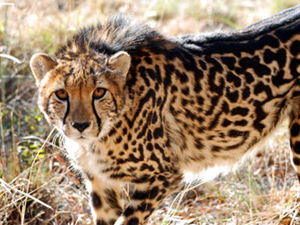
It’s a fascinating question that was highlighted this week when a photograph of a spotless cheetah, taken about a year ago, suddenly began circulating around the internet.

The photograph and exciting account of the cheetah incident was made by Kenyan Guy Combes. The spotless cheetah was photographed near Tsavo National Park in Kenya.

The area in which it was found in Kenya is becoming increasingly drier. The dry areas of Namibia where cheetah have been extensively studied has determined that many of the cheetah there have fading or lost spots. Namibia is, of course, one of the driest places on earth.

All animals can have varied coloring as a result of genetic mutation, and all of the foregoing is different from albinoism, which is very rare in animals. A true albino animal will have no coloring, including in its eyes.

King Cheetah

Black leopards, snow leopards, black cougars and jaguars are all melanistic phenomena similar to what happens to squirrels. There never seemed to be any “point” in this varied coloration. Cheetah, too, have been reported to have melanistic phases.

But cheetah have many other color variations as well. The most famous is the King Cheetah, where spots turn into swirls and brown into black. Cheetah are also known to have nearly completely white coats with black spots.

(This is not albinoism. A true albino of anything has no color whatever, including in its eyes.)

So scientists are now looking at the varied coloration of the cheetah in “new light.” If the spotless cheetah is a natural selection reaction to dry climates, then might the darker King Cheetah be in response to wetter or cooler climates?

Stay tuned!

Breakup Brokers need China

Breakup Brokers need China

Only China can stop the Sudanese war. This is the first great test of its diplomatic strength and savvy in Africa.

Last week South Sudan restarted a generation-old war with its former northern master, Sudan, by invading an oil field on the common border which remains disputed territory.

Five days later the South retreated having been whipped to smithereens by the North, and the North then began aerial bombardments of the South which continue today.

South Sudan’s invasion of the disputed oil field at Heglig was the height of abject stupidity. The young country, dandy of the west and George Clooney, is revealing a personality its supporters hadn’t expected: a militant immaturity.

What on earth led the idiots in the South to think they could whip the North, which for a generation had clobbered them from 500 miles away?!

According to a Reuters report today petrol pumps were running low last week in the South and the idiots in Juba decided they had to come up with an excuse to get more oil.

This was likely because the South is running out of foreign currency, a failing of its own fiscal management combined with the international community having not lived up to its donor obligations, including the United States.

But instead the South decided to use PoliWarSpeak and claimed it was because the oil fields on the 20% of the two territories which remain in dispute were being mismanaged or pilfered by the North. Clearly the only option left was to invade and get slaughtered.

The huge swath of rich oil territory which remains in dispute between the two countries is a festering wound of an incomplete breakup, governed essentially by international oil companies. But it was nonetheless producing oil.

And both countries were receiving some revenue, although drastically less than they could if the areas weren’t in dispute. Now oil production is stopped. Dead bodies litter the oil fields.

The western powers led by the United States brokered the breakup, then turned quiescent way too soon. The South has lost all faith in its original supporters.

So the President of the South went hat in hand to China two days ago.

China needs oil more than any other single political entity in the world, and it has warm relations with the North, unlike the western powers which are remembered mostly for sending missiles onto northern pharmacies under Clinton and removing the cash cow from the barn.

So it’s China’s move, and the poor giant is generally not wont to direct politics from afar, preferring a status quo in situ as the perfect state of life.

If it wants oil, it’s got to broker peace. Paradoxical historical imperative, eh?

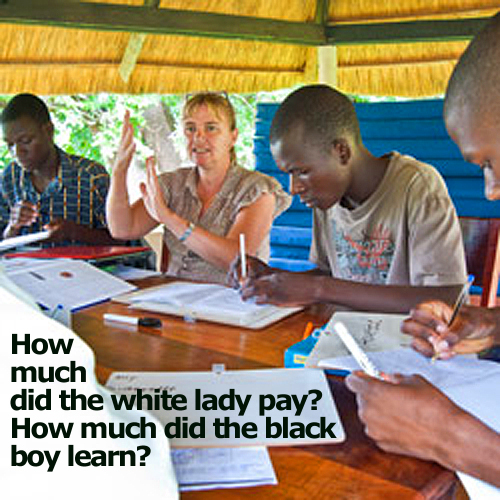
How Much did the White Lady Pay?

How Much did the White Lady Pay?

The main motivation for the vast number of foreigners who wish to volunteer in Africa – including religious-based “missions” – is not to help Africans but to help themselves.

That in itself is not necessarily bad. And it was as true of David Livingstone as it is of an early adult in Britain trying to figure out what to do during her “gap” year.

Usually, it’s bad.

Most of Africa’s problems, today, are the same that plague the foreigner’s own turf: poverty, adequate health care, literacy and education and particularly how those who suffer are not equitably distributed throughout the society.

So that begs the question: why, then, volunteer so far away from home where the same problems exist? Doesn’t charity “begin at home?” Shouldn’t we “clean our own house” before attending to others?

There is a compelling argument that a specific given improvement in the worst sector of a global problem (Africa) will improve the entire global arena more than that same given remedy if applied to a better sector of the global problem (at home). And there is the corollary that more skills and training are required to impact an already partially improved situation (at home) than abroad (in Africa).

But this is a dangerous if finely tuned game.

A Google Search of “volunteering africa” brings up multiple pages of foreign organizations competing for and selling volunteer programs in Africa. It commercializes charity, and has reached the point in my estimation that it’s not just distasteful but immoral.

Project Luangwa in Zambia is an antidote to this rabid capitalism exploiting misfortune. I can’t say that I wholeheartedly support it, because I remain convinced that independent volunteer tourists achieve little more than personal satisfaction.

I remain certain that only government-to-government aid projects, or projects organized by huge world organizations like the United Nations are capable of effecting meaningful global change for the better.

But Project Luangwa is infinitely better than foreign companies or churches or aid organizations purporting similar outcomes in Zambia. The reason is simple. It’s Zambian.

That also makes it more difficult for me to challenge its mission, although I believe a certain motivation comes from the fact that Project Luangwa is created by tourism providers who are perforce enhancing their basic tourism products by managing a growing market demand for volunteer tourism.

Nonetheless it’s better they do it than someone from Britain or the U.S.

And their website cuts off the enthusiasm at the pass with cold facts about costs, living conditions and necessary skills. It’s an excellent first-level model for any tourist area in Africa trying to deal with willy-nilly foreign volunteers.

I’m particularly impressed by the consortium of otherwise aggressively competing local Mfuwe area vendors that have come together, recognized their common problem and concluded that only by working together can they address is.

The “problem” Project Luangwa addresses is the free market response to a growing demand for volunteerism in Africa. This includes thousands (if not hundreds of thousands) of poorly prepared small foreign organizations like churches and Rotary Clubs, as well as hundreds (if not thousands) of mercenary capitalistic predators like good website designers providing products to assuage the volunteer first, with little thought to solving Africa’s problems, second if we’re lucky.

Project Luangwa is a local filter that foreign organizations don’t have. It funnels foreign generosity into specific areas (even though their website purports very common and general needs). It makes no compromises on costs.

Since all the money from the volunteer goes through no foreign intermediary, less due diligence is required by the volunteer, who is otherwise legendary for undertaking no due diligence whatever.

The greatest flaw I see is the acceptance by Project Luangwa of short-skilled volunteering. It just doesn’t dare discourage wannabee painters of school room walls not to come. Even though this irritates communities who have legions of unemployed wall painters.

But Project Luangwa’s careful organization of primary and secondary school volunteer teachers, particularly in close partnership with the Zambian educational system, is good.

I still don’t like it. Above all because it still provides a way for individual westerners to coopt their otherwise difficult personal responsibilities to engage meaningful political paths towards meaningful remedies, with a very temporary band-aid effort.

But I like it a lot better than foreign alternatives.