China vs. America

China vs. America

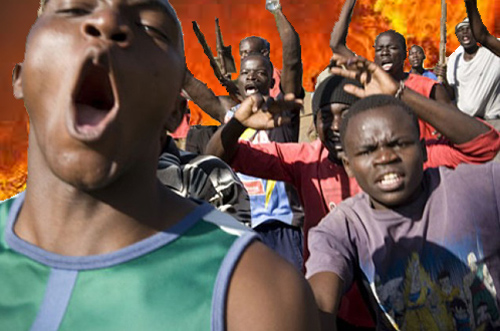
China and America are fighting on the streets of Kenya’s third largest town.

Kenya is preparing for its first election since the debacle and violence of 2007. Scheduled for March 4 most Kenyans hope for a peaceful and simple event that will be the crowning achievement in the creation of a new constitution.

But ghosts of the past haunt every Kenyan. The older generation – from which most of the candidates come – is still fiercely tribal. The hope for a peaceful and successful election rests squarely with the youth.

The younger educated generation is truly non-tribal. Most higher secondary education and above is composed of schools with a complete hodgepodge of Kenya’s tribes. The younger business class, the new entertainers and certainly the country’s vibrant media is without any tribal identity. Since more than half the population in Kenya is under 21, even statistics point to a hopeful future.

But in the Lake Victoria town of Kisumu, it is the youth turning tribal and violent. Kisumu is Kenya’s third largest city and its situation is at the intersection of two historically warring tribes, the Luo and Luhya.

Gang violence – not so dissimilar to the same type of gang violence found in America’s larger cities – is not new, but it’s becoming more powerful. In Kisumu the two principal rival gangs call themselves “America” and “China.”

It doesn’t matter which is which, the point is that young and angry Kenyans looking for a fight – perhaps because they are few jobs and little of a future – revert to tribal identities. And in their limited global lexicon they see the two greatest world enemies as China and America.

There is nothing ideological about either group that allies them with either China or America. The commonality is paramount power. Nothing is better or more powerful, richer or stronger, than America and China.

But what strikes me as saddest is that to be adopted by these warring youth gangs the labels have to carry an ultimate component of irreconcilability.

The darker skinned Luo boy may indeed see as much physical difference between the yellow Chinese and the pale-faced American as between himself and the browner Luhya. The languages are much different. The customs are different.

Read the comments that follow this news story about last weekend’s violence. The vitriolic references to “cuts” and “cutting” are referring to the ancient tradition that one tribe circumcised and one tribe didn’t. This is ultimate, primitive animus.

It all seems irreconcilable.

The fact is that the irreconcilability is truly much greater among these young tribal gangs in Kenya than between America and China. I hate to deflate their mutually assumed perfect labels, but America and China may be adversaries but they will never become enemies.

Despite what one of our presidential candidates might some day declare, the world’s two greatest economies are too interdependent upon one another to start a battle. Each is too involved in the other’s lives.

Perhaps these wayward Kenyans can learn from this. Perhaps they can understand arch rivals need not be arch enemies.

PETA vs MING

PETA vs MING

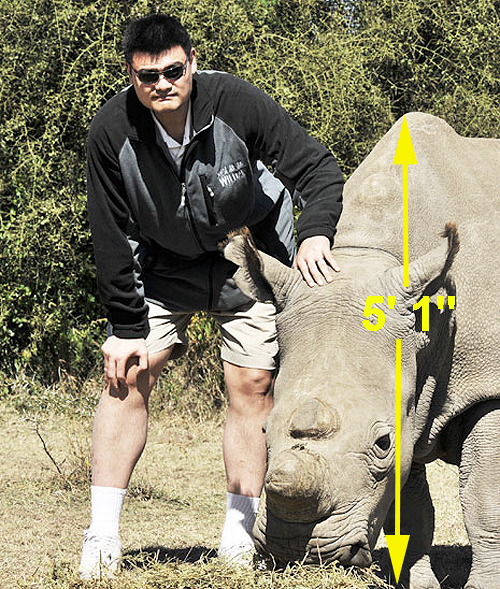
Yao Ming, the former Houston Rockets skyscraper, is trying to do what no Chinaman has done before : sensitize his countrymen to African conservation.

Ming retired as the awkward but successful 7’6″ basketballer last year and has been judiciously investing in a way definitely not characteristic of most sports stars. His current job is filmmaker, but it’s hardly more than a vehicle to deliver an unsavory message to his fellow Chinese: stop consuming animal products.

Ming is well known for his home town generosities and stardom throughout China. Injuries forced an end to his career last year, but injuries that many sports figures would have surgically corrected for a short-term sprint that ends them in a wheelchair when they’re 45.

Ming, instead, walked away from a salary that ESPN claimed would have been $17,686,100 for another 2012 season. Since then his endeavors have included buying a Napa vineyard and starting a wine export business to China, buying and coaching a Chinese basketball team and now, starting a film career.

Ming is currently in Kenya where together with American producer, Jay Cohen, he is producing a wildlife film mostly for Chinese consumption with the rather cliched title, “End of the Wild.”

Bundle this together with his decision to be an ambassador for WildAid and his appointment to a Chinese communist party committee in his hometown, Shanghai, and I think we have a man who is tall enough to bring two worlds together.

Wildlife conservation is not a Chinese passion. In fact, most of Asia has never viewed nature with the same reverence or awe as we cowboys. These older and more established cultures have sort of put nature in a picture frame rather than accepted it as something untamed.

For probably a millennium the unique characteristics of many animal horns and antlers have provided accomplished Asian sculpturers with a media that can be found nowhere else on earth. Ivory is the only natural substance that allows such intricate sculpting.

And similarly for a millennium and probably longer, traditional Asian medicines have relied heavily on rare animal parts: bear feet, rhino horn, rare bird livers.

I think that one of the reasons contemporary wildlife conservation has had such a hard road into Asia is that the most vocal of western conservationists are evangelical ideologues. Not that their foundation that preserving any form of life is not a viable first principle, but it completely ignores or at least leapfrogs the compelling science for animal conservation.

And that ideological position at the level of first principle does nothing but start a fight with opponents who cherish other first principles, like the preeminence of man.

You might call it PETA vs Ming.

More patient science shows us that even the simplest of life forms is so incredibly complicated not even Watson can replicate it. And this means we don’t know everything about it. And this means if we wipe it out, we’ll never know. And this means all sorts of knowledge, and knowledge specifically beneficial to humankind is lost for good.

Once that horror is truly understood there is a reverence for “what is living” that might come full circle to PETA’s mania. But it is the evidential science that will win over the majority of the world to wildlife conservation, not the simpler battle cry.

That’s why Ming’s old hat title of “End of the Wild” may mean something to a Chinese society that is only recently emerging from their cocoon.

The Undemocratic Election

The Undemocratic Election

South Africa like the U.S. allows unlimited campaign financing but Kenya has moved to severely regulate it. Which democracy is likely to last?

These two democratic powerhouses both have progressive constitutions but differ radically on candidate funding. Kenya has yet to hold an election under its new constitution but South Africa is well along, yet I think it’s already clear that Kenya’s much greater regulations will lead to fairer outcomes.

South Africa and the U.S. have essentially unregulated candidate financing. Don’t be fooled by those who argue otherwise, because “essentially” is the formative adverb. There are filings and partial disclosures, but “essentially” a candidate can solicit and distribute unlimited amounts of cash to promote the campaign.

Kenya, on the other hand, is severely restricting such financing. In fact the regulations are so tight that there is public concern that the commissioners regulating the campaign could themselves become instruments of unfairness.

And that’s the current debate in Kenya. There is no debate about whether there should be stiff regulation. Everyone supports in principal rules for limiting campaign spending based on the population and individual earnings level of the electoral area.

Kenya also prohibits corporate financing of individual campaigns as well as severely limits how much a candidate himself can contribute to his own campaign.

It takes no rocket scientist to know why. Money buys votes.

I remember my grandfather in Chicago talking about the rigged elections for mayor. Once we even visited a bar where the alderman was buying drinks for potential voters and … passing out cash.

Later I remember living in Kenya where exactly the same thing happened: Local politicians in a bar buying drinks and votes.

Getting a free beer or pocketing some cash doesn’t in itself guarantee that voter will even go into the ballot box and then if he does tick off your name. So a bit of cleverness was required in those days long past, and it basically came as follows:

“What’s the other guy giving you?”

The answer was rarely “nothing” and more often was always “not enough.”

And that’s the hook in today’s world, too, whether it be South Africa, Kenya or the U.S. Of course there is never enough so long as more is possible. And as evidence that I can provide you with more, here’s a beer.

Or a promised tax cut. Or a promise of “deregulation” intended to mean more cash in your pocket. Ultimately a promise to make you richer, like those who are already rich buying you off.

South Africa after twenty years of new independence is feeling the effects of such unregulated financing. The country is far richer than Kenya and in that regards much like the U.S.

But one party has dominated South African government since Mandela became its first president, the ANC, and the cogent argument today is that money has made it that way.

U.S. election lawyer, Michael Lowry, describes precisely how unregulated financing in South Africa has led to the dominance of the ANC. And like the U.S. it’s more onerous than just the election of a single candidate:

Once unrestricted campaigns elect rich politicians, the dynamic quickly moves to the actual levers of power. In other words, only the rich begin to earn cabinet posts and even military positions.

Soon a single class – or party – is not just controlling the outcome of elections, they are controlling the society.

And democracy no longer exists.

Rich Kids Can’t Run

Rich Kids Can’t Run

Kenyan runners are set to win 9-10 Olympic medals but their path to victory is ridiculously different from their competitors.

Any child athlete anywhere in the world who aspires to the Olympics has to first demonstrate winning.

And in many countries like Kenya, being chosen for the Olympic Team is not by winning a formulated try-out as it is in America. Rather, a professional committee makes the decision based mostly on recent victories achieved outside Kenya.

In large part this is because the country doesn’t have the high-tech equipment or venue good enough to actually measure global performance. They’re unable to produce a try-out with global standards.

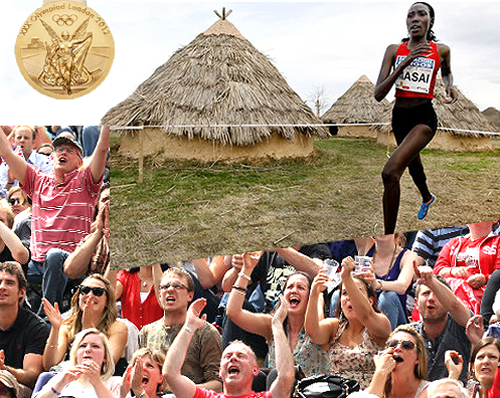
So global excellence has to be measured by the contests abroad that the individual applicants enter. The Kenyan stars on the team this year include the marathon winners of Chicago, London, New York, Berlin, Boston and a number of other cities around the world.

(I remember introducing a softball league to western Kenya in the early 1970s. You can’t imagine what we did for bats and balls, and I’m sure that my star hitter might have performed differently if he was using a regulation bat.)

So how do you get that first win?

According to Forbes magazine, an aspiring Olympian starts spending $15-20,000 per year before even becoming a teenager.

That’s impossible in a country where the average annual wage is less than a tenth of that. And consider that two current Kenyan Olympians, a Maasai brother and sister, Moses and Linet Masai, come from such a poor village that without birth certificates they simply chose for their surname their tribe.

Forbes reports that early money for an aspiring Olympian goes primarily for coaching. The bulk of the twenty grand may actually be the coach’s salary, but there’s also living, schooling and travel expenses since you go to the coach, the coach doesn’t come to you.

In Kenya the coach works for free. For the world’s greatest runners he’s an Irish priest and the story about Father O’Connell is one of the most wonderful stories of the Olympics this year.

And the training area as you’ve already guessed is a high mountain village above the Great Rift Valley. Getting there from nearly anywhere in Kenya is expensive by Kenyan standards. Once there, the kid needs food and schooling, and all of this is provided by Father O’Connell and his mission.

The contrast is stark with an American child glamorously walking into a famous Denver gym with parents in toe.

Now Father O’Connell has no stage-of-the-art timing devices; he still uses a stopwatch. There are no perfect surface running tracks; kids run on dirt. The first day at his mission they aren’t fitted with $800 training shoes; usually they start barefoot.

And when they finally achieve his blessing to go compete on the world stage, his order has no money to buy them bus tickets to Nairobi. So who does?

The other successful Kenyan athletes. There is an unwritten code among Kenyan winners that they must fund the up-and-coming, even those who might ultimately beat them at the Olympics. Can you imagine Roger Federer doing that for Andy Murray? Yet that’s exactly what happens in Kenya.

Wilson Kipsang Kiprotich vowed recently he will smash the marathon world record at the Olympics currently held by Kenyan Noah Ngeny, who paid for Kiprotich’s first trip outside Kenya.

The three fastest men in the world, Kipsang Kiprotich, Silas Kiplagat and Nixon Chepseba – as professionally clocked in marathons the last two years — are all competing for Kenya in the Olympics. Together.

Father O’Connell’s village travels straight out of the Great Rift Valley to the London arena. It’s a sense of community worth all the gold in the world.

“Rich kids can’t run,” Moses Masai recently told the BBC.

May I add there’s a lot of other things they can’t (or won’t) do, either?

Black and White

Black and White

Flip it, white man. What if you were, well you know, the other… color. They sang in London, but they were from Africa.

The difference between black and white, between slaves and slave masters, is the ultimate difference between race, although I agree with many that it isn’t that much different than between Kikuyus and Zulus. But it is the ultimate. You can’t go further down the spectrum.

My take of the many excellent bands and singers in South Africa is with this constantly embedded theme of difference, separation, oppression. From most of the rest of the world, it’s flipped. But today, in South Africa, it’s arguably the white who feels oppressed.

Last month in London the annual concert brought together contemporary music from South Africa to the white disaspora outside.

South Africa’s White Diaspora is one of the most interesting floating cultures in the world. Formed mostly by the 1800 people monthly that fled the country in the 1980s, it’s created huge footprints in Australia, Canada, the U.S. and England.

While some have returned, most have not, but unlike immigrants and refugees from other parts of the world, white South Africans find it difficult to integrate into other western societies.

I’ve often met, for instance, the children of those who immigrated speak with a South African accent even though they’ve grown up outside.

The tribalism of white South Africans is as strong as any black tribe on the continent.

Let the music tell the story:

Who’s the Most Advanced?

Who’s the Most Advanced?

It’s been nearly a month since the complete bonobo genome was published, and it’s absolutely astounding how American creationists dispute the science.

This is the last of the great apes to be sequenced and completes a body of data that can significantly increase our understanding of human evolution.

Bonobos live in central Africa, an endangered primate now proved no closer to humans than chimpanzees. This first great discovery contrasts with primatologists’ presumptions based on anatomy and to a lesser extent, behavior, that had held bonobos were the closest of the great apes to man.

Confirmed is that great apes — chimps, bonobos, orangutans, gorillas and man — are remarkably closely related. This was never in doubt, at least not by rational thinkers. So the excitement of the genome is the evidence now being dissected that will more exactly draw the evolutionary timeline of primate divergence, and the possibility that complete genomes can provide evidence for behaviorial evolution.

The initial theories are pretty exciting. They suggest that the divergence between the common ancestor of all existing primates, including man, was as early as 4½ million years ago. This confirms further that quite a few stars of early hominid development, including the earliest Australopithecines, were not our ancestors, but divergent dead-ends from even earlier common ancestors to our common primate extant ancestor.

And much more interesting information is on the way. Such as the importance of rivers as effective separators of hominid evolution. Or whether the most successful hominid behavior is either “Make Love, Not War” or “Make War, Not Love” as the eminent University of Wisconsin scientist, John Hawks, told the Los Angeles Times.

But the sad story in all of this is how warped America has tried to deny the findings. The leading idiocy is from the heavily funded Institute for Creation Research.

Their resident “scholar”, a Ph.D. of no significance, Jeffrey Tomkins, berated the Nature article and all the corresponding good reporting about it as “misrepresented.”

In what even to this humble laymen was just plain dumb, Tomkins focused on the genetic difference that was shown to exist between the existing great apes, then tried unsuccessfully to extrapolate the notion that they are therefore not of the same stock (have no common ancestor).

As has been the case for the last several decades, scientists mostly ignore this stuff. But I did find one scientist, Ricki Lewis, whose personal analysis of the Nature paper specifically debunks Tomkins.

And has also been the case for the last several decades, Tomkins’ scientific-sounding article was picked up by literally hundreds of religious journals, which then propagated even more blatant misrepresentation and poor analysis of the facts. You can’t exactly call it a lie, but it’s very close.

Do a Google search on Tomkins’ article, and you’ll be amazed with the endless number of mouthpieces – all American – for this nonsense. It’s truly depressing.

Facts and science, today, are being cast aside by this quirky segment of America, and it’s one thing simply to call them out and move on. But we’ve tried that. And while fortunately polling is on our side, and scientific facts like global warming and evolution are miserably slowly making their way into the normal fabric of American life, the outlanders are tenacious and vicious.

So while the actual number of creationists may be slowly reducing, those that remain are getting more and more powerful. They are “cleansing” school textbooks of science, for example, and packing it with their nonsense.

Belief in the simply untrue leads people into weird behaviors, not least of which is voting against their own self-interest. So rejoice that the completion of the great ape genome project gives us so much complete science about evolution that it will be even harder to dispute.

But beware the powers amassed to suppress it. And not just because of the denial of evolution, but for the integrity of all science in America.

Circumcise or Die

Circumcise or Die

Kenyan rappers are being prosecuted for hate speech in the run-up to March’s election. We don’t prosecute MnM but these guys should be clamped.

There is a wide range of laws prohibiting hate speech around the world. We in the U.S. are among the most liberal but developed cousins like the U.K. have rather sophisticated laws prohibiting it.

Most people would agree that there should be no freedom to shout “kill” or “fire” but the dispute begins when crazies picket the military funeral of a fallen hero with signs and chants, “God Hates Fags!” It should be regulated, just like hedge funds.

The theory is pretty simple. “God Hates Fags!” is not the same as “Kill the Gay!” We all so stipulate. But (1) is our sophisticated media delivery purporting the same idea, or (2) is there evidence that raising the tempers of these warped supporters will trigger violence?

Yes to both counts, your honor.

In Kenya three of the country’s most popular rappers, millionaires (in shillings) for the sales of their CDs and one even a gospel singer, have now sold tens of thousands of copies of songs that clearly incite the same ethnicity that nearly brought the country down in fire in 2007.

Although the firecrackers that started the holocaust was the age-old friction between the haves and have-nots, the rightests and the leftists, the pyres were ethnic. It always seems to be that way: the poor versus the unpoor in Ireland; the oppressed versus the rulers in Arabia.

I began blogging at that time, because it was an unbelievable undoing of Kenya. The silver lining came 3-4 months later as Kenya was forced to recreate itself from the ashes, and the recreation has been nothing short of magnificent.

The design is done. The scaffolding is being torn down as the structures are in place, and the election that will complete the process is on March 4.

Click here to listen to this most egregious rap. You’ll have to scroll forward about 2min 16sec to get to the actual song that was sold as a CD.

This Kikuyu rapper is trashing the leading candidate for president in the March election, from the arch rival tribe of the Luo. We had hoped the ethnicity would now be incidental, but it isn’t. It is for the younger generation, but not for the older.

It doesn’t help, either, that the Kikuyu’s choice is Uhuru Kenyatta, the son of the Father of the Nation, Jomo Kenyatta. It doesn’t help because Uhuru is currently on trial in The Hague for Crimes Against Humanity. There is evidence that he was personally involved in torching the country in 2008.

It’s Kikuyus’ failing they won’t come up with anyone better, but a stark statement about how many of them still feel about democracy and other such foolish notions. Many, many Kikuyu would rather blow up themselves and the country to boot than lose power.

And now it seems one of their spokesman is a gospel rapper.

Here is some of the song, Uhuru ni Witu (Uhuru is Ours) by gospel rapper, Kamande wa Kioi, as translated by one of the thankfully many younger Kenyans who despise what’s happening, Amkeni Ndugu Zetu.

(Important background reminders: “Uhuru” is Uhuru Kenyatta, presumed candidate for President and son of the father of the nation and on trial in The Hague. “Raila” is Raila Odinga, the current Prime Minister and front runner in the current campaign for President, a Luo.)

“I bring you a message from all Kikuyu musicians. This is a message from God. Uhuru is the Moses of the Kikuyu nation. He is meant to move Kikuyus from Egypt to Canaan. Do not agree to be divided. Let all votes go to him. He is ours. He is anointed by God, poured oil on.
“Raila, there is a call.
“You thump your chest about Hague, is Hague your mother’s? There is a curse from God. Philistines who do not circumcise cannot lead Israel. When Abraham stressed God, he was told to go get cut, even you General of Migingo, your knife is being sharpened.”

Kikuyus circumcise; Luos don’t.

I can’t image a more egregious lyric. Wa Kioi is not especially young, I imagine he’s in his late 30s. He may be on the dividing line between Kenya’s inspired and educated youth and the Old Guard, but his influence extends far and wide. Many young people of all tribes listen to him; he’s a super star in Kenya.

Together with two others the country’s election oversight board has now charged them with hate speech under a criminal code that requires jail time if convicted.

And there’s a horrible twist to the story as it plays out in Kenyan courts. Wa Kioi’s clever lawyer asked the court to read aloud some of the lyrics of the song under question. Court is held in English, because of the many tribal languages in Kenya.

The lawyer chose a portion which was simply repeating Bible scripture, and as it was translated into English, the court room broke into laughter. The intention, of course, was to fool the court and it seemed a successful ploy:

A second-rate digital media story about the testimony was picked up by major global news sources as if it, too, were gospel.

But hopefully Kenyans won’t be fooled, especially its youth. And hopefully, this so-called man of faith will be slammed behind bars to contemplate the Golden Rule.

All Sparrows Are Weavers

All Sparrows Are Weavers

Saturday South African flags will fly at half mast as a bushman of the Kalahari receives a state funeral, a fitting tribute to a noble but conflicted lifeway in an increasingly modern world.

Did you laugh hilariously at the beautiful movies, “The Gods Must be Crazy”? The star and the cultural consultant for several of them was Dawid Kruiper, the San man who will be buried Saturday in desert dunes next to his wife.

The fame and fortune bestowed on him when the movie was released augmented an already proactive life dedicated to saving the bushman life style. In fact Kruiper’s activism began in the 1930s when as a little boy his family was evicted from its traditional lands.

He joined his family then in performing “folk ways” for tourists and his humiliation grew.

A Bushman’s humiliation is never external and rarely effects the sun-creased smiles.

The indigenous peoples organization, Survival, quoted him as having said:

‘I am a natural born. I have something inside of me that no one can take away. I am there always for my community, but I do things the natural way. I would say that our traditional lifestyle was much better… I am most comfortable like that, like the weaver bird. I can move anywhere any time. I can collect my home, my grass and rebuild my home… Like that bird, if I can just have freedom and rights, I would be happy.”

But to achieve the successes Kruiper attained, he had to change.

He took an Afrikaans name, to begin with. He studied Afrikaans and worked closer and closer with the modern community of Uppington, South Africa. His children are fully modernized. Only his wife continued to join him in the desert.

Yet he achieved many of his goals, and in 1999 South Africa ceded nearly 40,000 acres for “natural use” to the remaining Khoisan bushmen in Kruiper’s old clan. In effect the government deeded over a massive hunk of land to a handful of individuals.

Kruiper was also successful in getting both South Africa and Botswana to allow the remaining San people to continue to pursue traditional life styles in some shared Kalahari national parks.

These and many other San civil rights issues would have achieved far less prominence and chance of resolute success had Kruiper not crossed the line in the sand between purist living and modern politics.

His children will not carry on his traditions. Traditional San are disappearing. As he died in a modern hospital that helped him attain the ripe age of 76, schools, roads and enterprising little businesses are now found where endless savannah used to be.

There’s no reason to mourn this change. The house sparrow is also a weaver.

How The Hayes is Pitted

How The Hayes is Pitted

Exclusion and redundancy are today’s evil culprits, not exploitation, says South African Richard Pithouse. And American Chris Hayes thinks this dollhouse is ready to collapse.

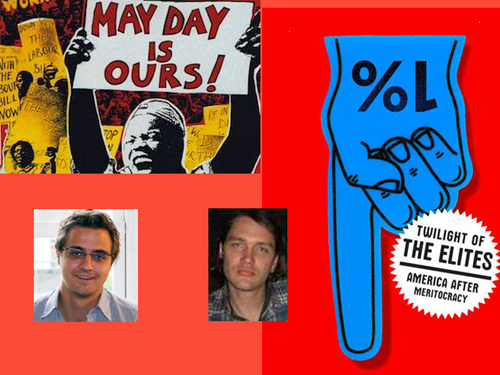
Two extraordinary thinkers both a generation younger than society’s current overlords, a half world apart, portend the end of capitalism … in my life time?

Pithouse almost says so, Hayes wouldn’t dare, even though it’s the essence of what they both believe. The difference between two privileged whites, one South African and one American. Yet both fear the consequences of making predictions.

I expect that you like me — whatever your political inclinations — are getting extraordinarily tired of politics. And politics dominates everything. I’ve been an obsessed NPR listener for decades, but now I find myself switching off the morning radio. A news junkie incarnate, I’m beginning to miss the opening of the evening news.

When I scan the web, or browse the cover of the too many magazines that still arrive my doorstep, I look hopefully for little doggies jumping up and down or beautiful ladies smiling unabashedly under their Easter hats. I haven’t yet subscribed to the National Inquirer.

And then, crashing through my ennui and disintegrating the daydreaming of being a little boy, again, march these two whippersnappers, like terminators of spring time, tornadoes ushering in a horribly long and hot summer.

Hayes’ book Twilight of the Elites has just been published and is a masterful history of what Marx portended as the last stages of capitalism: when meritocracy (a favorite Hayes’ term) excludes (Pithouse’ favorite term) all those qualified from any endeavor unless they’re a part of the in-crowd.

Hayes does a nice job of creating this theory carefully substantiating how in America meritocracy has come to be defined more by inherited wealth than anything contextual like knowing how to add numbers.

“And,” writes Pithouse,” the authoritarian and predatory nature of some factions in the ‘political class’ [read: ‘meritorious rulers’] cannot be denied.”

What really bothers me about these guys is that they are phenomenal observers and accomplished historians and I’m tired of both. Hayes has a weekly weekend TV show on MSNBC that is catapulting him into a limelight he might currently be disavowing. The show describes itself as “interviews, and panels of pundits, politicos … from outside the mainstream” even as he becomes mainstream.

Pithouse hasn’t the luxury of becoming a famous white man in South Africa, today, so he burrows within the academic community (Rhodes University) writing enticingly provocative blogs that need considerable editing.

Earlier theorists might have characterized these personal struggles as dialectical. That thought’s enough to send me back into dreaming about milkweed.

Alas to the rescue Alexis Goldstein.

Goldstein is the author and guru of HTML5 which will show you “how to use CSS3 without sacrificing clean markup or resorting to complex workarounds.”

This no nonsense approach to building your website has honed his mind. No fluffy HTML4s or 3s or phps or any of that junk. Just get to it.

And his critique of Chris Hayes is similarly just-get-it-done and right on:

“My great hope for “Twilight of the Elites,” is that readers will put down this book, and join us in the streets. Beginning with Hayes himself.”

But Pithouse suggests the two of them might not be seen in the street, soon:

“…tactics like occupations, road blockades and vote strikes are central to the grammar of the new struggles,” but are “being forged by people who have been rendered surplus to capital rather than exploited by it.”

It remains to be seen if Hayes’ book or Pithouse’s tome of published literature will make either of them rich. But I doubt either of them will be considered surplus.

I’m tired, guys. My generation is tired. You aren’t saying anything that we didn’t scream in the sixties. You’re incredibly smart and you’ve found remarkable new paths to the same conclusions good folk have made for generations, but … where’s the meat?

You aren’t in the streets, and I don’t want you to be in streets, because then you might be killed or maimed like Rodney King and you wouldn’t be able to explain why we should all be in the streets.

So both can be pardoned for not exactly saying what they mean or doing what they should say. And both can be excused for their periods of confusion as they navigate their personal lives to achieve some prominence so that their ideas matter.

And who knows if either will ultimately embrace their own principals. But it’s very good fortune for those of us with some hope that things really will change. (But not by them, right?)

Whose Creation of the World?

Whose Creation of the World?

A Congolese ballet currently moving through Europe’s summer festivals strikes a remarkable difference between American and European compassion to Africa. Maybe compassion per se.

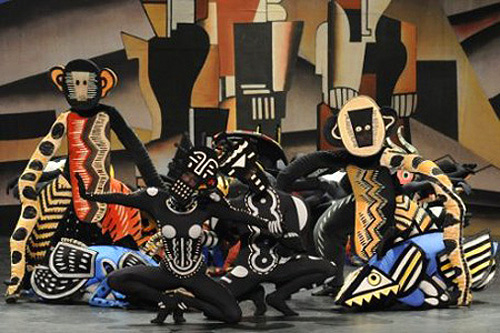
Congolese choreographer Faustin Linyekula is currently restaging a near century’s old ballet called “The Creation of the World” that was first produced in France between the world wars. At that time it was widely called “The First Negro Ballet” since its depiction of emerging humankind was black, and as such, included pioneering black performers at a time when blacks worldwide were pretty much confined to trumpets and drums.

It became impossible then, and remains impossible now, to view this ballet as anything more than white people’s fantasies about black people’s existence. Racism in its most theoretical forms.

The ballet’s storyline is basically biblical, but the world that emerges is not flowering with white lovers under a perfectly formed apple tree. Instead, mankind births into something rather depressingly horrible: skin without bodies, torsos without hearts, and babies in abject suffering. Essentially, mankind without a soul.

And in the Bible’s remarkable way of accepting suffering as simple destiny, it prevents the viewer from leaping to any remedy. There is no hope things will get better in the ballet. The story ends in misery.

Linyekula’s thundering question is “How could they not see the suffering?” The English translation was made by Radio Netherlands after Wednesday’s performance in Amsterdam, and it’s right on.

More exactly Linyekula means why did they not react to the misery during the colonial age, and now, why are non-Africans not assisting Africa more than they are?

The question begs the question about compassion. And it’s logical that those who are responding most compassionately (Europeans) will also be challenged more often (than Americans who are doing less) that they are still not doing enough. That’s what Linyekula is trying to do: tug on the European’s guilt, egg them on to even greater compassion.

“The Creation of the World” wouldn’t succeed in America, today. Like anything troubling, there is a threshold of assumed responsibility, and I believe Europeans have a greater tolerance for heavy lifting in Africa than Americans. A greater compassion.

It would take me a book to dissect the cultural facts of current European antipathy to immigration vis-a-vis its greater compassion to mankind as a whole than American’s. But I do believe that:

Americans are fast losing their compassion, compassion for almost anything but themselves. Whether Europeans in contrast are growing more compassionate and tolerant is hard to measure on its own, but in contrast to America they most certainly are, despite the wave of anti-immigration sentiment polluting Europe, today.

The ready measures of this regarding Africa specifically are foreign aid and private investment, government engagement (military or otherwise) and free trade agreements. In all these areas, Europe is racing past America despite Obama’s attempts to stay even.

Europe is in a much worse economic situation than America. Why, then, is Europe reaching out to Africa more than America? The first reason is because of America’s current obstructionist Congress. But there are deeper reasons as well.

Europe is closer to Africa than America, so trade and investment is easier. It has more immigrants from Africa and it has a more pressing problem of refugees from Africa than America. But there’s an even more important reason in my view: there’s more guilt.

Few societies in the world used and profited from slavery as much as America, and we all know where they came from. But that’s perhaps too long ago for any residual guilt to move us in any contemporary fashion to greater compassion. The colonial period in Africa which emerged as slavery was being ended was dominated by European powers and lasted for a very long time. It’s not “so old.”

That was a mostly wretched period in world history. Parliaments in Portugal, Belgium and France have all apologized and paid reparations for their society’s unjust colonial involvements. The Catholic notion of repairing past wrongs by dropping a penny in the church’s collection box is a very European notion.

(And, by the way, it often works and has a much greater impact than lovely speeches about morality and compassion.)

To be fair, though, the production is not being swallowed whole in Europe. Linyekula actually extended the ending of the original production exaggerating the “misery.”

A respected French arts critic, Marie-Valentine Chaudon, asks “Does Linyekula go too far” implying European disinterest with the African suffering she accepts was in large part caused by the colonial period.

Perhaps. But what saddens me is that “maybe too far” in the European mind is outright “extra-terrestrial” in America’s, today. And while I’m no dance critic, I think the art Linyekula clearly has turned for political and social purpose is extremely valuable.

And I sorely wish we in America could achieve the same level of self-inspection with regards to racism, with regards to our lack of compassion.

Memorial Day Holiday

Memorial Day Holiday

Especially for my readers in Africa, I wanted to explain the absence of a normal blog, today. It’s Memorial Day in America, Monday, May 28, 2012.

The holiday is intended to honor the memories of U.S. soldiers who have died in action. It’s similar to the Remembrance Days celebrated in many parts of Africa, and like in South Africa, directed mostly to freedom fighters for independence.

America’s Memorial Day honors all dead soldiers, so in that regards our own revolutionary fighters are to be in our memory as well. But it began as “Decoration Day” right after the Civil War, following a petition by recently freed slaves (mostly who came from Africa) to honor the Union soldiers who had freed them.

After World War I, it was changed to “Memorial Day” and extended as an honor to all soldiers in all conflicts.

As a young boy it was a big red-white-and-blue festival. We decorated our little red wagons and bikes, just as we would hardly a month later for July 4th. And in those days we were remembering mostly the two Great Wars.

Since then my own personal regards for Memorial Day has diminished. The numerous wars my country has begun have mostly been unfair and unjust. And with the end of the draft when I was in university, the military has changed radically. It no longer represents society as a whole.

Today, the military is composed either of young men who can’t get any other kind of job, or who need the benefits once the service is finished, or avowed militarists. We need them both, by the way, but it has drastically altered America’s weapon users, and the military is today more easily manipulated by politicians than it used to be.

I do stop during the day and think of my relatives in the Great Wars. I think of the way the country ultimately came together to fight world tyranny. But in my life time, there is little in America’s wars to be proud of. They are mostly memories I wish we didn’t have.

Big Gay Brother

Big Gay Brother

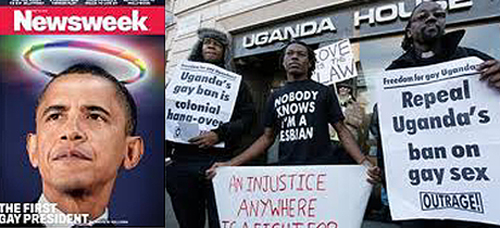
Many African reactions to Obama’s gay marriage statement focus on the hypocrisy of the “small government” stand taken by so many conservative Americans.

Social issues like marriage percolating to the top of a political campaign for president of the world’s yet most powerful country confuses many in Africa. America is among all known for “freedom” and “small government.” But you can’t have a small government that enforces laws on social habits like sexual orientation or marriage.

Consider the strong anti-gay forces in places like Uganda, that among many other legislative attempts are still trying to criminalize knowing that someone is gay and not advising authorities.

This is government intrusion of the greatest sort, of course, yet it is supported whole-heartedly by America’s right: AIM’s Cliff Kincaid argues that Ugandan is simply trying to “create a Christian society.”

Enlightened Ugandans see forcing any social ideology onto society as too much government:

Religious intellectual, Ugandan Kizito Michael George, argues that emphasis on social issues like gay rights is not the purvey of the government. He goes further: keep the church out of the state, at the church’s peril.

But Kizito and many other pro-gay rights’ advocates recognize that the current Ugandan regime is publically pro-big government. It’s one of the only ways that the dictator president Yoweri Museveni can stay in power.

So it reveals the incredibly irony of America’s right that argues for “small government.”

Many Africans see additional hypocrisy in America’s constant push for human rights in China and elsewhere, with such forceful attempts by America to limit the rights of gays and women.

“Africa is hardly what we consider a progressive continent at the forefront of human rights,” says one person commenting on South Africa’s News24. “However we seem to be far ahead of the USA.”

The Africa that is maturing through its Spring Awakenings is forcefully for small enough governments that human rights are aggressively protected. Universal suffrage and freedom of expression are considered no more important than freedom of expressing one’s sexual orientation.

Both the new South African and Kenyan constitutions replaced “man and woman” as the definition of marriage with “spouse.”

Those youthful societies have little intolerance of sexual orientation left. South Africa has been tolerant of gays for centuries. Its famous early politician and Prime Minister of the Cape, Cecil Rhodes, was openly gay.

Kenya is newer to the opening and so there is still some vocal resistance, although its fading in the face of the public’s wide-spread support for gay rights.

As a result analysts in both countries see Obama’s move as political:

John Ngirachu reporting this weekend from Kansas City explained to Kenyans back home that Obama’s move “boils down to the electorate.. Both candidates know the issue can cost them the election in states where the conservative Christians are influential.”

Ngirachu and others in Kenya and South Africa see the whole episode as a scripted ploy that began with Biden’s announcement. It’s particularly poignant in Kenya where the presumed successful candidate for President next year has begun to disassociate himself from the man who had been presumed the successful candidate for Vice President.

I think it fair to point out, too, that many in Africa see America’s religious right as something akin to a social flash-in-the-pan, and that with less time than many African societies took to become truly free, America’s right will fade into history.

The hypocrisy is just too stark.

YouTube Won’t Believe

YouTube Won’t Believe

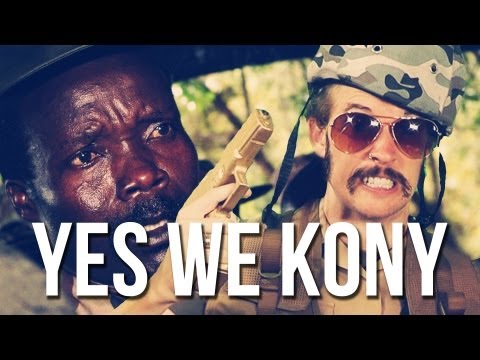
The combined viewers of YouTube videos mocking Invisible Children’s video about Joseph Kony has now exceeded the viewership of the original video. What an infamous mess.

But has YouTube corrected a terrible wrong or simply added more wrongs? I really don’t know how to parse my feelings of disgust, anger, sadness, confusion ….

I was first attracted by a heavily viewed parody on YouTube by TheJuiceMedia. This hilarious video is funny and right to the point: Invisible Children’s million viewer video was a scam and essentially racist. Hopeful there were other creative attempts, I started the YouTube search.

But there weren’t any others as professional and poignant, which satirized facts but that were real facts. I moved quickly into tunnels of the pathetic to the dungeons of absolute horror.

There are the namby pamby self-appointed talking heads like ThioJoe who apparently has a regular following of thousands and who is principally known for his recently rediscovered bedroom closet where he “found a bunch of military gear that I had bought at military surplus stores over the years.”

Thio just talks to you about everything he doesn’t know, among that tome of ignorance Joseph Kony. Easily dismissed if it hadn’t received over 20,000 views of which I of course contributed. Did I watch the entire 2:18 hoping for something worth watching, or just to reenforce a world view of an apocalyptic society?

In ThioJoe’s expressionless face are millions of faceless people, whose brains have been replaced by nonsense videos.

But ThioJoe’s and dozens others like him are not particularly offensive per se, more of a curiosity to me. I kept wondering if he were real or a robot. But the list of offensive videos is actually greater. I can’t even bring myself to link them here for you. Just make your own YouTube search of “joseph kony spoof.”

They include Finish productions that are the most racist photoshoped pieces I’ve every seen, British private school projects that would have been banned when I was in high school for gross indecency much less intellectual bottom feeding, and actual attempts at selling grenade launchers!

I’m flabbergasted. Has Marshal McLuen’s “the medium is the message” gone viral, too? At least restricted to the demographic of people who watch YouTube, does nothing mean nothing anymore?

But we’re talking about more than 10 million people, conceivably many more, who have watched junk, nonsense, idiocy or whatever you want to call it featuring Joseph Kony! Kony, Invisible Children, the LRA, African wars and misery and our responses to it should not be junk, nonsense or idiocy.

This is incredibly troubling. The Joseph Kony/Invisible Children story is not yet well understood. It’s driving American foreign policy and using my tax dollars in ways I don’t approve. It’s harnessing the generosity of millions with bad ideas and falsehoods, essentially exploiting good intentions rendering them pointless if destructive.

But how on earth do we untangle this mess when the intellectual attention span of the world can get no further than these unbelievable YouTube videos?

The Children Are NOT Invisible

The Children Are NOT Invisible

Invisible Children has produced a viral YouTube video that is dangerous. Like other U.S. organizations embracing an African cause they exploit part truths to make a buck.

My young hero, Conor Godfrey, wrote an incredibly balanced and unemotional blog about this that you must reread to understand the facts of the case. That way I can just continue screaming in good conscience.

I’ve written disparagingly about Invisible Children before. Among their most outlandish accomplishments was accepting money from naive high schools in America’s heartland for a cause that no longer existed. IC did this by teasing emotions and grossly ignoring details.

IC’s raison d’etre is to tell the stories of child soldiers who played such unspeakable rolls in mostly Uganda and The Congo in the 1990s, while under the control of a still wanted fugitive, Joseph Kony. That’s true.

But when the Windsor Colorado high school (and presumably others, too) raised money for the effort at the behest of IC, the cause was already over. There have been no child soldiers or Joseph Konys or Joseph Kony wanabees in Uganda since 2006.

IC’s response was to change its website slightly and go on accepting money from lots of naive high schoolers, much less pensioned widows and disabled truck drivers. The teachers, administrators and even local newspaper reporters in Windsor refused to comment on my blog or even talk to me about it.

I am so incensed by this exploitation, and watching the video that’s gone viral on YouTube makes my blood boil. IC is continuing its false cause campaign by generalizing to the point that details be damned!

Of course we all care about children! Can’t criticize the palsy filmmaker Jason Russell for spending two minutes at the beginning of the video showing baby pictures of his son, followed by a minute segment showing the birth of a very white child. Warm us up, so to speak.

The entire video is so tweaked with these generalized but irrelevant emotive gimmicks that I feel I’m watching a drug company commercial on the evening news. Russell’s honey coated commentary belies a very disturbed psyche, someone whose deepest soul is daring pushback against a blind evangelical drive to tell a story … that really isn’t.

The true story, as Conor reviews above, actually has parts with happy endings, not particularly conducive to a charity campaign.

Joseph Kony is a fugitive, probably in the Central African Republic (CAR), not Uganda. He hasn’t been there since he was roundly defeated by the Ugandan military in 2006.

We should presume Kony continues his sadistic ways of conscripting, drugging and brainwashing young children to be killers – the heart and soul of IC’s craven drive for wealth and fame. But we have little hard evidence of a scale anywhere near his robust days in Uganda.

Voice of America reported in March of his redeveloping presence in The Congo near the CAR. But as one of my all-time favorite journalists, New York Times reporter Jeffrey Gettleman explains in his March essay in the New York Review of Books, Kony is involved in only one of “dozens of small-scale, dirty wars” that while absolutely terrible doesn’t begin to achieve the magnitude of murder and destruction Kony leveled on Uganda in the 1990s.

But if IC owns up to the facts it might kill the golden goose.

The warehouse of emotion that IC has harvested from an unwitting American population, much less its cash charity, corrodes to the core the intention of every good person donating to it.

IC is especially being denounced in Uganda, where it all began. Ugandans are proud that they’ve routed Kony, so when the video was shown there last month it nearly caused a riot.

The excellent blog, Upworthy, tells a more sinister fiscal tale about IC in the recent post, “Share This Instead of the New Kony Video”:

IC recently accepted $750,000 from the National Christian Foundation (NCF). The NCF designed then funded the campaign in Uganda to pass a “Kill the Gays Bill” about which I and so many others have written. NCF gives other big sums of money to “The Call” which sends youthful missionaries into “dominions of darkness” like San Francisco to retrieve gays from their purgatory.

Also on NCF’s big recipient list with IC is the Family Research Council and The Fellowship. These mega right-wing organizations are well known and so dangerous, not just to Uganda but America. Just spend a few minutes on Google to build your Darth Vader tome.

This is the recipient pool that IC shares. And its message, methods and racist causes are also the same.

Weep when you watch the video. But let the tears dry before besmirching a check. You’ll realize that your clenched fist is packaged for IC not Kony.

The ERA is in Africa

The ERA is in Africa

Many societies in Africa are daring to challenge the oppression of women in a way that if even partially successful will leave America in their dust.

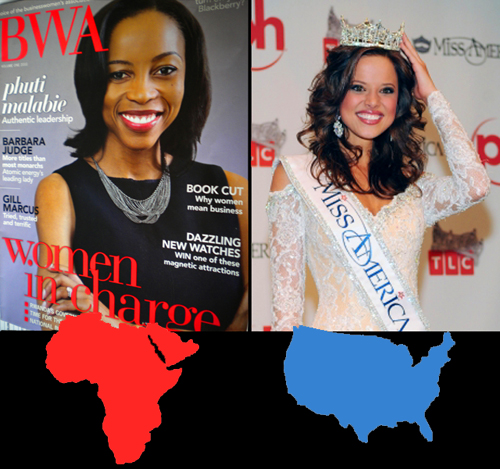
Both the young Kenyan and South African constitutions mandate up to a third of public positions be filled by women and many of the other African countries are not far behind. This is government policy that America refuses to adopt: the ERA was past by Congress in 1972 but withered on the vine for wont of enough States ratifying it.

Last year House Republicans barred women from testifying in hearings to examine contraception. Numerous States like Virginia are thumbing their noses at women while forging proudly ahead with obviously unconstitutional acts of total repression against one gender.

You would think we live in some parallel universe with the modern world. European clients who I guide in Africa simply can’t fanthom what’s happening in America. “I consider myself a conservative,” a recent British client told me, “but America is regressing back to the Stone Age.”

Sunday’s Daily Nation newspaper in Nairobi featured a story about a Somali refugee woman who suffers the same kind of oppression that women in Virginia do. It made me realize why Somalia will be so hard to put back together, and why the American poles are fracturing so far apart.

It was published as a true story, but not one ferreted out by a journalist, rather the result of a letter sent to a columnist. First-person stories are often suspicious, but from my experience in Africa this one rings true. And even if it isn’t true, it gives me personally an explanation for the lunacy running through America, today.

“My name is Khadija Hussein,” the letter to Nation columnist Murithi Mutiga began. “I fled the fighting in Hawl-wadaag district of Mogadishu due to the tribal civil war in 2006.”

Khadija explained that her husband was lost in the fighting, that she was pregnant, and she described the difficult 100 km trek to the Kenyan border to escape. The first person she saw over the Kenyan border was a Ugandan businessman, a Christian, who took pity on her. He helped her get to Nairobi, monitored her pregnancy and actually returned to Nairobi when she gave birth.

They then married. When the Somali community in Kenya learned of Khadija’s marriage to an “unclean kaffir” they vowed revenge.

This revenge wasn’t just the threat of throwing acid in Khadija’s face. The power of the extremist Somali culture went all the way to Uganda, where Khadija’s husband’s business was burned to the ground. This was the way Khadija’s kinsmen restored her lost husband’s “honor and dignity.”

“I won’t and can’t separate from my husband even if he is a Christian,” Khadija ends her story.

Honor and dignity. Which side in this story truly has it, and which doesn’t? Clearly Khadija sits atop the moral high ground, but at great peril.

In America it’s the same. Honor, dignity, freedom … these are the words used by Virginia legislators to mandate vaginally intrusive searches of Virginia citizens to enforce a hyped ideology. They are words that meld into little meaning except selfishness so severe morality is twisted upside down: those who refuse honor, dignity and freedom to all but their own powered elite. This is government intrusion so severe it cripples the culture, much less simply being immoral.

The intransigence of belief becomes the essence of evil.

Fortunately for Africa, Somali is widely considered in the “Stone Age” by the youthful politics and governments governing most African society, and that was exactly how columnist Mutiga framed it: Khadija’s story is unique and alarming by the standards of most modern Africa. For America? Where ranks Virginia?

Given given all the extraordinary women in America in the halls of politics to corporate boardrooms, when Forbes magazine chooses its woman of the month as the creator of panty hose, I fear that Virginia will never become the pariah Somalia is in Africa.