All’s Well That Ends

All’s Well That Ends

happyfromgomaHere’s something profoundly light and happy. Contradiction? Try it out for your Friday. This is what happens when a generation of war ends.

With all the turmoil going on today in the Mideast to Iraq and Ukraine, it may be hard to fast forward your interest to when it’s all over. But I think that’s what’s happening today in The Congo.

Take a listen.

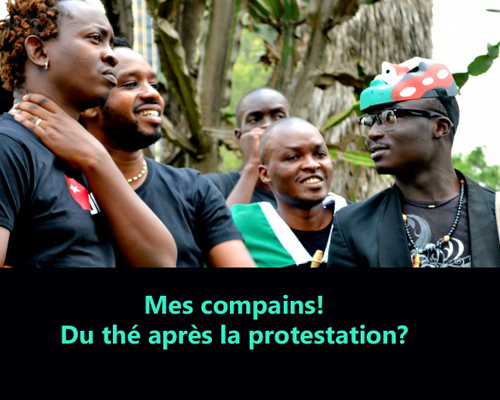
The brains behind this and many other similar good feeling videos is a diminuitive if shy Congolese, Kelvin Batumike. With help from UN agencies and the Congolese diaspora, he persists in the belief the eastern Congo is becoming peaceful.

I think Batumike is right. Peace is coming, although slowly. Less than a hundred miles north of Goma, still a part of the giant Kivu province, warlords still effect daily lives, although they do seem to be fading further into the jungle and becoming weaker.

A little bit further north towards the troubled Sudan, warlords are still fully in control. Yesterday they announced the execution of three priests who refused to convert to Islam.

The horrible conflict in central east African which includes The Congo, Burundi, Rwanda, western Uganda and little parts of both The Sudan and South Sudan, is incredibly complex. Nearly a century of horrible Belgium rule and exploitation ended when extremely rich rare earth resources were discovered here.

The end of the colonial era, which I believe came far too early and prematurely, turned over all its unfinished business to the greed, terror and rightist ideologies of The Cold War.

Strong Congolese ethnic groups pitted against one another in colonial times were let loose with new found wealth that was quickly transformed into weapons.

When the Cold War ended this part of Africa was in such a mess that the newly empowered West and the newly subdued East just walked away from it. One of the typical results was the Rwandan genocide of 1994.

A century of exploitation included the following gifts to the developed world: the (tires on your) automobile, the cell phone, the xBox and personal computers. None of these items would exist without the resources first found then exploited from this troubled region.

Do you feel guilty? You should.

The half century of serious fighting in the eastern Congo began with the assassination of its first democratically elected leader, Patrice Lumumba, on January 17, 1961. Even today the complex details of the 1960 coup against Lumumba by Moshe Tsombe and the terrible despot Sesi-Seko Mobutu, who subsequently ruled The Congo for almost 40 years, remain uncertain.

But the apology ultimately given and the reparations ultimately paid by the Belgian government to The Congo admitted that the coup, and the assassination, were not only planned but actually carried out by the secret services of Belgium and the United States.

The U.S. has never joined Belgium in the admission, but neither has it denied it.

That likely horrific act by America and Belgium was because Lumumba was an avowed socialist with policies of nationalization which attracted the support of the electorate. Of all the elections that have followed in Africa since 1960, this one was probably the freest, fairest and most democratic.

But 1960 was frozen in the Cold War. The world was seen in simple contrasts, then. Socialist was communist was the Soviet Union.

If only … There are so many “if onlys” in Africa. As one of my favorite clients says, “All’s well that ends.”

Long Live The Toad!

Long Live The Toad!

longlivethetoadQuick! Hide! The toad’s approaching!

Like kudzu, loose strife, wolves and coyotes, garlic mustard, Asian beatles and now even Asian carp, this week poorly trained biologists are focusing on the newest of the worst “invasive” species, the “Asian Common Toad.”

“Invasive Species” is bad nomenclature. Most of what hyper, reactive biologists refer to as “invasive” is intended to mean “bad.”

In other words, if some form of life begins to dominate an ecosystem, it’s wrong and “invasive” when its doing so perilously threatens other established species in that ecosystem.

And that’s the rub. “Perilously” is subjective and darn it, give me several examples where so-called “invasive species” have radically and lastingly altered an ecosystem.

You’ll have a very hard time. There’s no question that there are “super” specious, like the toad I discuss below that scientists worry is now threatening Madagascar, but rarely have the alerts proved as prescient as they appear when announced.

(The best example of invasive species is native Americans wiped out by the smallpox brought by European colonists, and even historically I haven’t heard much of an argument that we shouldn’t have come.)

Like my strong but nuanced argument that poaching elephants isn’t the main problem, this takes some intellectual juice to understand, and the best example right now is the alarm that conservationists are raising against the Duttaphrynus melanostictus.

That alarm is sounded by none other than National Geographic, Nature, and pointedly, the BBC.

Nature called the event a looming “ecological disaster.”

It isn’t.

The toad is native to much of southeast Asia where it evolved. It’s toxic, so when eaten by other animals (and lots of other animals eat frogs and toads), they get sick and some die.

Discovered recently at a port in Madagascar, conservationists went ape. Madagascar is one of the most precious, unique ecosystems on earth, with up to 90% of the species found there endemic.

There’s no doubt that if left to prosper, Mr. Toad will impact Madagascar’s ecosystem. Just as the Lutherans did on the Iroquois. My point is that these alarms soliciting urgent responses to “control invasive species” are pointless, unnecessary and a scandalous misuse of resources.

“Pointless” because they don’t work. You might have been successful keeping garlic mustard out of your flower garden, but you’ll never get it out of your forest.

“Unnecessary” because mainly it’s pointless. Our failures to control invasive species have consistently and increasingly been spectacular defeats. And even if you believe that this series of defeats is reversible, would it be good for the planet?

Would the world have been better had kudzu really been eradicated? Would teepees be better than arched bell towers?

There are a couple examples in the world, the Galapagos being one, where I concede had the rat not gotten into the shed, or had been exterminated quickly enough, things would be better. But those examples are confined to rare and very small ecosystems of which the world just isn’t mostly composed.

Whereas the alarms of invasive species are overwhelmingly rung in large ecosystems, like North America.

Yet the resources allocated to these efforts, and the machismo with which it infuses the conservationist is not simply unbecoming and unscientific, it’s nonsense.

Take the toad.

The toad “invaded” Australia in the 1930s from climes north.

The fear then, as now in Madagascar, is that birds, snakes and everything precious would eat the toad and die. And many did.

Rachel Clarke and other scientists commissioned by the Australian Government to finally conclude what the toad actually did to Australia in the last century, decided that it had done really very little.

Paraphrasing the scientific report, a frog advocacy group in Australia claimed that Clarke and colleagues basically concluded that it was the “Yuk Factor” rather than any real threat to the ecosystem that drove the initial alarms.

“What’s the evidence for all this talk of ecological catastrophe and biodiversity impacts?” the organization asks then answers, “surprisingly little.”

Yes, many snakes died when eating the toads at first. That resulted in an explosion in the native frog population that was very positive for many other species as for a while there were fewer predators of them. And then, the snakes stopped eating the toads and prospered.

Yes, birds ate the toad and died. And then birds learned to eat only parts of the toad and didn’t die. And some birds, like the sacred ibis, developed an ability to eat the toad and not get sick.

In fact up to 90% of the species of some animals were initially wiped out by the toad in Australia. But then? They came back, learning or evolving how to live with them.

Madagascar is 13 times bigger than the demarcated political land and water area of the Galapagos Islands, but it is no less precious an island ecology. I think it reasonable to try to inhibit the invasion of the toad.

But there are a host of other more serious problems facing Madagascar, both ecologically and socially. If the toad is not stopped, Madagascar will not over time be considerably changed.

And it just isn’t unseemly, it’s unscientific, to scandalize what is actually the virtue of successful natural selection.

Long live the toad!

On Safari: Bottoms Up!

On Safari: Bottoms Up!

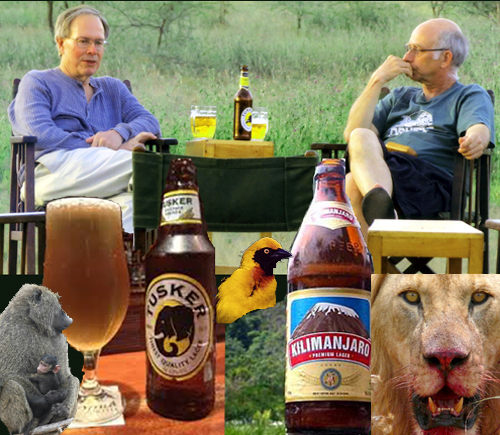
beeronsafariYou might not find a lion. You might strike out on the migration. But you’ll never not be able to end the day with finding a good beer!

Good beer is something East Africa has had since colonial days, and for good reason, of course. The colonists were some of the finest brew makers in the world.

In the very early days, of course, the Cape of Good Hope was a “vitualling station” for the long voyages to Asia. Vitualling, or victualling, or however you want to apply a Herman Melville accent to a nonword, was how sailors recouped and if possible, prevented scurvy.

So you ate fruits. And since water was never ever safe to drink, you drank wine and beer!

Beer in East Africa in every epoch has been less expensive per glass than a similar amount of fresh fruit juice.

Today it’s about 80% the cost, but in the olden days it was far higher. Fruit was plentiful, but the individual efforts of squeezing were never mechanized or industrialized as quickly as beer making.

And long before the original Coors or later good microbreweries, East Africa’s brew was the best!

The two champions are Tusker in Kenya and Kilimanjaro in Tanzania. Both are considered very IPA in today’s race for depth and color, and both are moderate in alcohol content.

But what strikes me as so important is that they haven’t changed. In all the 40 years I’ve been living and coming here, they taste as good and exactly as good as they always have.

(Don’t think that new Tusker import stuff does it, either.)

So just remember that no matter how your day goes on safari, it can always end perfectly!

Spring is Here

Spring is Here

novioletbulawayoWith my own novel set in Africa now being published, I was incredibly chagrined to meet (through her writings) Noviolet Bulawayo, certainly Africa’s best writer by far.

In my book, Chasm Gorge, I try to paint a story in the troubled areas of northern Kenya and southern Sudan, but I’m necessarily doing it as an outsider.

Ms. Bulawayo is an insider, and for so long I’ve been waiting for an African writer to step forward and tell “it like it is.”

There’s no holes barred in her tales set in very troubled Zimbabwe. She is reticent about linking these tales to politics which irritates me, but I’m sure folks will find my linkages overbearing and irritating in the reverse way.

It’s been a long time coming. Until now, in my opinion, African writers have been harnessed to their colonial past, extremely reluctant to call a spade a spade, a racist gang of African thugs a racist gang of African thugs.

But that’s what Ms. Bulawayo does.

The market for African literature has been dominated by either landscape artists or patient, wise old men. Africa has been considerably more complex than that for several generations. But except for a few hiphop artists now behind bars in Angola, African artists have shied away from the controversial nature of their uniquely personal trials.

Thirty years and a half continent divide myself from Ms. Bulawayo, yet I’ll be so immodest as to suggest we share a couple things, the most important being a love of African languages.

In creating my novel, Chasm Gorge, there were many who criticized what I felt was the relatively sparse use of Swahili without further explanation in the text.

As one of my characters points out in the book, “There’s no poetry in the language” of the west. But Africa is filled with it. You don’t have to study iambic pentameter to be a poet. You just have to say hello and goodbye.

Ms. Bulawayo was criticized when returning to southern Africa from her studies in America for “not having an American accent,” something that is an increasingly stylish component of an African educated abroad.

Fessing up to the personal struggle of leaving her home to become educated in order to better understand her home, Ms. Bulawayo told This Day, “I have to look backward at home with a new set of eyes that have made me embrace my language as a true identity.”

At the ripe age of 33, she has won more awards – in both Africa and the west – than most writers could hope for in a life time.

Her newest book, We Need New Names, is available on Amazon.

It’s hardly over. The promising future of her writing, that is. It is definitely over, the winter of no real African writing.

Be Good to A Samaritan!

Be Good to A Samaritan!

Don’t look a gift horse in the mouth, say some. Others? Perfect example of cooptive liberation. Confused? Read on.

There are good and bad everything, although readers of this space know that I think most charities are bad. I argue that most charities afford a way that their supporters can believe they’re doing good, when they aren’t really, or when the amount of good that the supporters’ resources could have done is squandered.

And so believing that they are saving the world, the supporters of the charity lose interest in their own governments’ foreign aid programs. Worse, they start to believe they can do everything well that really it takes a huge government to do.

Ergo, charter schools, pay-as-you highways, subcontracted prisons and the list goes on and on.

I’ve said it so much, but here goes again:

The world is too big and too complex to be run by a school committee.

The problem is that often the governments, as is the case in the U.S. today, are shrinking and able to do less and less. So what the old aid agencies used to do be able to do with their own staff, they can’t, because they don’t have enough staff.

So they hire a contractor … an “NGO” – nongovernmental organization. They are, in effect, hiring a charity.

At this point things often get squandered just as hopelessly as they do with a individual church or Rotary project.

“Samaritans” is a fabulous new TV comedy series that takes my feelings to the sarcastic extreme. It’s hilarious.

It explains so perfectly Herbert Marcuse’s “cooptive liberation” concept while keeping you laughing at each moment. The creator told AfricaIsACountry recently that he was inspired when he learned of a charity in the U.S. that held an auction to raise money to save the rhino.

The auction was of a rhino hunt in Namibia.

The other story, of course, is how professional Kenya’s entertainment industry has become. Conceived, written, produced, directed and using Kenyan actors. Incredible accomplishment and as good or better than most stuff we see here at home.

Ever since Buzzfeed carried the story last month the show has gone viral.

You can rent the first two episodes for as little as $5! Click here.

Take a look! Then, please, take a think.

Karibu Kidepo

Karibu Kidepo

kidepovalleyIt is dangerous, now, to visit Uganda. Dangerous for the tourist, and dangerous for those Ugandans who would have to serve the tourist.

A groundswell of travel professionals, media publications and not-for-profits is moving in the direction of an all-out boycott of Uganda tourism. It’s happening so fast that even nimble dictator Yoweri Museveni has been caught off guard.

Yesterday he visited one of Uganda’s national parks, decimated recently by elephant poaching. Typical of a man under increasing siege, he lashed out at the “Turkanas of Kenya” and the “Toposas of South Sudan” for exterminating the reasons that tourists come to his country.

“Anybody who enters Uganda with a gun must be shot,” Museveni shouted. Later he issued a directive to the parks service and the military authorizing shoot-to-kill anyone suspected of poaching.

Obviously the elephant poaching problem is not confined to one country’s nationals or another. There are just as many reasons Ugandans would poach as Kenyans or South Sudanese. Museveni is feeling the diplomatic and traveler pinch beginning that could destroy his economy, but foreigners really have no choice, now, but not to visit Uganda.

Under Uganda’s new laws a casual reference to “gay” can technically put you behind bars.

Moreover if uttered in the presence of Ugandans, wittingly or not, those Ugandans are suddenly in a dangerously compromised situation: The law requires that they snitch on you, and if they don’t and it’s later presumed they could have, they too can be jailed.

Of course it remains to be seen how seriously these laws will be enforced, but based on the horrible rhetoric exchanged between Uganda and the west over the weekend, there’s every reason to fear the worst.

Simply put, vacation travelers don’t need the worry that they might say something that would put them or their Ugandan help staff in jail.

A safari is an exciting and intense experience, and rarely are tourists not in the presence of local Ugandans. The driver/guide is an Ugandan. The staff in the lodges is Ugandan, and that means meal service and bellhops among many others.

Rangers and other park authorities are Ugandan.

Shop owners, roadside hawkers, other local tourists are all Ugandans.

Under the law if your conversation mentions LGBT, homosexuality or gayness in any form or in any context, you are to be reported to authorities, the authorities are supposed to arrest you and interrogate you.

I remember well the Cold War days when we instructed all of our travelers visiting places then as controversial as South Africa or Burma, never to mention politics. That was hard.

But this goes further. Ugandans supporting the dictator Museveni are loaded for bear. Their pride has been damaged, their integrity challenged by Obama. Museveni as I said Friday is setting up a David & Goliath situation and casting himself as the moral David.

The anti-gay law was not the only axe to fall. Other laws, including an so-called anti-pornography law have now created what amounts to a dress code in Uganda.

The confusing legislation has led to multiple incidents of women in particular being beaten on the streets of Kampala.

So must the tourist conform as well?

Travel Weekly, an industry standard for travel agents for nearly last half century, dared to suggest yesterday that it would call for the first boycott of travel ever against a specific country:

Travel Weekly executive Arnie Weissman recounted his own interview last year with the Ugandan president who told him “he would not sign legislation that carried stiff penalties.’”

Weissman emphasized that Travel Weekly has never called for a travel boycott anywhere.

Now, however, the journal will call for a boycott if gays in Uganda ask it to.

It’s not at all clear, though, they would dare. That alone could get them jail for life.

Privilege Plays

Privilege Plays

oscarlupitaMany celebrities like Leonardo DiCaprio don’t have an Oscar, a jubilant Nairobi commentator wrote today, “It is therefore a big achievement for a first timer to win!”

Kenya’s gone wild. The President of the country sent Best Supporting Actress Lupita Nyong’o several messages just before the Oscars began wishing her luck.

It’s very Kenyan to savor the moment before it happens. In a world with so much defeat, the simple possibility of success carries extraordinary joy.

President Uhuru Kenyatta wrote, “I hope that Lupita wins the recognition that she so richly deserves… I also believe that the fact that Lupita is where she is today is already a massively gratifying milestone.”

Many in Kenya were on their way to work. The sun was just rising in western Lou where Lupita’s family is from when the award was announced.

Another Kenyan commentator filled with hope wrote Sunday, “The first time it happened in India, when Slumdog Millionaire won, or when the South African film, Tsotsi, achieved the same feat, the success appeared to be dreams made in another world… Now, Kenya could have its moment of glory too if the gods of creativity and achievement smile on Lupita.”

Smile they did.

But they are dreams made in another world.

Lupita, as she will now forever be referred to rather than by her surname in Kenya, was born in Mexico when her very politically powerful father was a visiting professor in Mexico City.

Later he would rise to several cabinet positions in the government and like virtually every politician that has ever succeeded in Kenya, become quite rich. Lupita attended privileged private schools in Nairobi and had the resources to succeed abroad.

Her Yale education in the performing arts was instrumental in her later film career.

The rags to riches story doesn’t apply. Jared Leto and even Cate Blanchett are better nominees for that category.

But Kenya and so much of Africa is sustained on hope, and the only thing that’s wrong with that is that it comes so cheaply. Lupita’s talent is undenied. Financial and social resources can take an artist just so far, and she’s made the jump.

She’s proved that a trajectory to success in America, anyway, can all be wrapped into a single lifetime. And that is most Kenyans’ greatest inspiration, today.

LGBTP?

LGBTP?

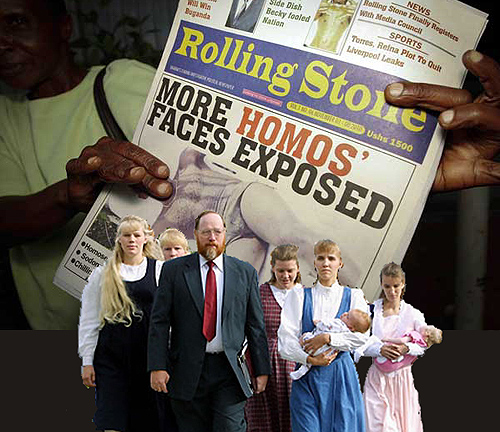
rollingstoneAnti-gay and women-suppression is sweeping through much of the non-Muslim world of Africa with a poignant argument against America.

Today Uganda’s dictator signed a long anticipated anti-gay law in an unusual public ceremony with much fanfare.

Immediately after signing he delivered a very provocative speech saying his actions were a response to “western arrogance” and attempts by countries like America to change Ugandans’ way of life.

The law has been several years in the making and received crucial legal and financial support from conservative American lawmakers unable to impose such nonsense on their own country.

The original called for execution of anyone found to be gay. That’s been changed to life imprisonment. But other parts of the bill are draconian and criminalize the knowledge that someone is gay if not immediately reported to the police.

Uganda has been spiraling into oblivion for several years, and this fire-brand piece of legislation follows a whole series of less known laws that criminalize certain dress like mini-skirts.

Hardly a day after that law was best, hoodlums beat poorly dressed women in the streets of Kampala under the noses of approving police.

Uganda is certainly the most extreme example in Africa of massive reversals of human rights Africans had gained this last half century. But it’s hardly the only one.

Anyone convicted as gay in Nigeria now faces up to 14 years imprisonment, after a much controversial law was passed in January.

Nigeria’s President Goodluck Jonathan couldn’t be more different from Uganda’s Yoweri Museveni. Jonathan is considered progressive and worked closely with western governments in the pursuit of BokoHaram and other terrorists groups.

Totally unlike Museveni he has led a fight against government corruption, rocketing him to popularity. But just as in America, pressed by his right and now facing an unexpectedly close election, Goodluck reluctantly signed Parliament’s bill.

Nigeria is a much more diverse and educated society than Uganda, and the two countries literally span the continent’s diversity. But all over Africa, even in such presumed liberal places as Kenya, anti-gay sentiment is building rapidly.

I cannot find a single country in sub-Saharan Africa where there is not a public campaign to criminalize homosexuality. Even in South Africa with a constitution that more forcibly protects gays than in America, and with same-sex marriage legalized since 2006, a campaign is on.

What’s going on? Why Africa?

The highly popular and respected Kenyan commentator Charles Onyango-Obbo says it’s all about women, not gays.

In a society that condones gayness, women would not have to submit to male authority: “Once you dismantle the sexual hierarchy…then you cannot maintain a political system in which men monopolize power and women have little or none.”

While the light tike Museveni swings his fist at the big guys like America, he’s buttressed by a powerful argument also swinging through Africa:

If same sex relationships are afforded equality in modern societies, why aren’t polygamous ones?

Both deviate from the norm. And Africa not just with its modern Muslim cultures but its centuries of traditional cultures validates polygamy. South Africa’s extremely modern government that has legalized same-sex marriage at the federal level has also legalized polygamy.

So Museveni and similar demagogs around the continent have a hard time criticizing South Africa. But not America.

Has this vicious little tike exposed a flaw in our own reasoning?

In The Cover of Darkness

In The Cover of Darkness

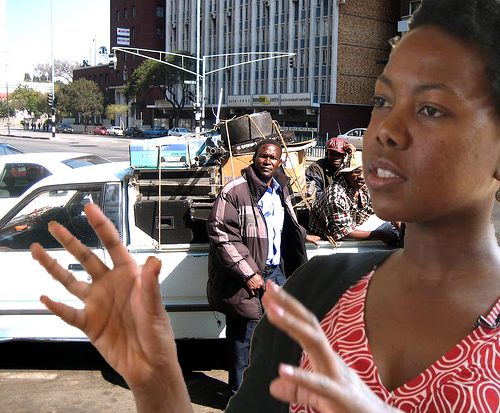
nairobiprotestA pitifully small yet very well organized protest in Nairobi yesterday was squashed by dozens of police using teargas as Kenya moves more and more into the darkness.

The protest was mounted by a group of sophisticated, highly educated and talented older Kenyan youths including some local music celebrities and disgruntled journalists, who seem well organized and funded.

In fact the Kenyan foreign ministry immediately accused the U.S. government of bankrolling the protests as soon as police had dispersed them.

The U.S. strongly denied the accusations and called for an immediate meeting with government officials to officially clear the air. Yet I found in the ambassador’s remarks a slight nod to the protestor’s complaints if not actions:

It’s true, our ambassador said, “we work with a variety of social organizations.”

What’s going on?

The protest looked extremely professional. Usually African protests are characterized by flimsy handwritten placards carried by angry youths in ragtag wear.

This group was in Gucci outfits with perfectly minted protest signs and some impressive props: giant SpongeBob like balloon things that were supposed to represent corrupt officials.

Despite their “business persons smart-casual” look, the protesters used rather juvenile tactics. Diapermentality.com was the ostensible organizer of the march. Spyce magazine was another supporter. These two very new and very sophisticated sites are technically polished, very well funded and well, just sort of juvenile.

Some of the phrases on the protest signs like “Who Killed Mboya?” represented generation-old issues that really have little to do with the present. Leaders, however, were trying to form a theme that Kenya is 50 years old but still in diapers, in part because these old issues were never resolved.

The titular heads of yesterday’s protests were a punk cleric, Timothy Njoya, and a former Kenyan journalist on a rampage, Bonny Mwangi. The two are perfect examples of where Kenya’s protests are going today … to the bank.

Joining the minister and journalist leading the protest yesterday was a famous Kenyan band leader, Sarabi. Together the three represent a highly privileged and successful but increasingly frustrated class of soon-to-be middle-aged Kenyans truthfully fed up with their government.

And incapable of doing anything about it. Even as they personally prosper.

But the Kenyan government’s reprise that the western world and America are to blame is comic. The last thing the Obama administration wants to do, now, is jeopardize its drones over Somalia, dependent completely on Kenya’s full participation.

The police response to this pitiful protest is troubling. It’s equally troubling that Kenya’s largest newspaper didn’t cover it (except in a photojournalism essay), leaving it to newer and more courageous local media and one good radio station.

An effete protest it was, in a troubled and darkening society.

Last Hope for Africans : Israel

Last Hope for Africans : Israel

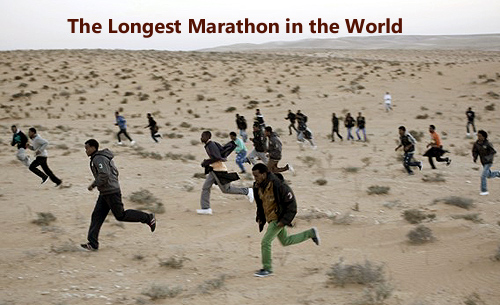
refugees fleeing to israelThe cancerous conservatism and nationalism pumping through the developed world is slamming African refugees hard. Israel may be their last hope.

The Swiss example this weekend is only the latest example. Despite heroic European political leaders trying to open the welcome gates to the new flood of refugees, the electorates are shouting back: get rid of the colored!

The best microcosm of this global phenomenon is in Israel. Few countries implement the necessary safeguards and support for refugees as are enshrined in the Israeli constitution.

Giant caveat: Palestinians aren’t considered refugees – however they end up in Israel – and that remarkable hypocrisy if not hyperbole shows how schizophrenic the Jewish state is.

But excise that bit of nonsense and Israel’s constitution and constant judicial reaffirmation of it guarantee that a refugee who arrives and is not a Palestinian will be cared for. At least until now.

Between 50-60,000 African refugees currently reside in Israel as “illegals” but with considerable state support. Treated much better, for example, than they would be in refugee camps operated by the United Nations, they are given housing, living allowances and schooling.

The majority of these non-Palestinian Africans are smuggled in from Egypt where the potential fugitive from home pays as much if not more than Latinos coming into Arizona and Texas from Mexico.

According to the New York Times, 90 percent of these come from Eritrea or The Sudan.

Except for Syria, whose refugees can much more easily go to Turkey or another closer European country, The Sudan has produced more refugees annually than any other country in the world and for a long time.

Israel’s very active if under-the-table involvement in The Sudan for the last 30 years has likely caused many of the nationals to flee. Many of the weapons in Sudan’s multiple and bloody civil wars have been supplied by Israel.

As one analyst put it, “the chickens are coming home to roost.”

Be that as it may, for the first decade of this century African immigrants coming from The Sudan and Eritrea, Libya and even Egypt have been not only cared for but actually welcomed by most Israelis. The growing conflict with the Palestinians shrunk Israel’s manual labor work force. As in America, these persons of color were needed for menial jobs.

But the wave of anti-immigration flowing across Europe has moved south into Israel. Twice in the last year alone, the Israeli Supreme Court has had to strike down the Knesset’s moves to restrict refugee assistance.

The latest move by Israel is to erect refugee camps modeled after those commonly operated by the UN throughut the rest of the world.

Located in the Negev desert – atypically removed from the populace of the country which is technically the host – refugees are contained in fenced encampments.

This is very different from Israel’s past policy of open house and social integration.

Struck down once by the Israeli Supreme Court, the country has moved to lower the height of the fences and add a few services, and is trying to build the camp, again.

Other methods being used include paying refugees handsomely to return home, but that’s finding an obstacle in the market dynamics. You have to pay a Sudanese an awful lot to return to Darfur.

“The Israelis do not want to forcibly deport the “infiltrators,” as they are called here,” the Washington Post wrote recently, but “Nor do they want them to stay.”

Deportation which would be used by most other countries in this situation of growing citizen complaints is usually not an option for Israel. The countries to which deportation applies – the home country – won’t take anything from Israel, least of all citizens it refers to as spies and traitors.

In this nether-nether world between wanting to get rid of a growing number of “infiltrators” before right-wing Israelis start vigilante action, and upholding their idealistic constitution, and possibly wearing the guilt on their sleeves that they are responsible for the situation in the first place … Israelis are in one of the most difficult quandaries of their existence.

This has given a period of freedom to the refugees who are starting very public and near disruptive protest rallies in Tel Aviv and Jerusalem.

It shouldn’t seem the least bit counter-intuitive that the world’s growing backlash against refugees is played out most succinctly in Israel. Israel is, in a very real sense, a nation of refugees.

So if Israel turns away from its own fundamental principles, the African refugee in particular is pretty much doomed.

The Kikuyus Will Rule Again

The Kikuyus Will Rule Again

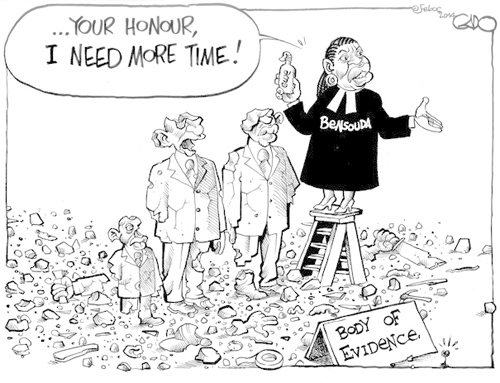
newgadoThursday the ICC trial against the President of Kenya will likely stop, the trial against the Vice President will proceed and for all the world this looks to me like a setup by one tribe to demolish another in Kenya, replaying centuries of vicious racism.

A year from now, the Kikuyus will once again rule the Kalenjins.

It’s hard to connect the obvious dots in this story without massive restraint. The alliance of the current president’s and vice president’s tribes that now rules Kenya, an historic burying of bloody hatchets, is on the surface nothing less than a society maturing and rising above petty politics and racism.

President Kenyatta is Kikuyu. Vice President Ruto is Kalenjin. There are 43 tribes in Kenya and most hate everyone else, but there are few Hatfield/McCoy gun rivalries as great as the Kikuyu/Kalenjin. I can’t think of a good analogy to America, but something like a Elizabeth Warren/Liz Cheney alliance.

Unbelievable.

The president was the king of his tribe, and the vice president was the king of his tribe, and in the 2007 election they were pitted against one another. After the election they started massacring each other.

1300 people were killed but even more notable, nearly a quarter million were displaced. The genocide would have been much worse if the outside world hadn’t quickly stepped in. The settlement forced on Kenya by the recently retired UN Secretary General, African Kofi Annan, was a triumph of international diplomacy.

Part of the complex, tedious settlement included determining the masterminds of the violence and punishing them. As if they weren’t known, and that was the problem: Everyone knew the masterminds: William Ruto and Uhuru Kenyatta.

But shortly after the settlement brought peace and prosperity to Kenya, many especially educated Kenyans were ready to move on beyond racism and fear. A commission was created by Kenyans to investigate the violence.

The Waki Commission was impressive. Drawing on the most prominent professionals in the country, it determined by volumes of evidence who was to blame (no surprises) and suggested they be prosecuted. But its tome of evidence and accusations were sealed by law until Parliament created a judicial process for proceeding.

Parliament couldn’t. Twice it defeated legislation to create the tribunals. Time was passing. The horror of the violence was receding from those in power and the quarter million displaced persons were being swept into the dustbin of history.

So by default in the Annan agreement, justice fell out of Kenya into The Netherlands. The World Criminal Court (ICC) was now mandated with the investigation and trial.

It was a singular disappointment for the African mastermind of the settlement: “Politicians hungry for power have long exploited Kenya’s ethnic divisions with impunity,” Annan wrote in the New York Times. Annan knew exactly what wasn’t going to happen.

The ICC had to fight tooth and nail just to get the details in the Waki Commission, and absent of much of its evidence began its own investigation in Kenya.

The chief ICC investigator, Moreno Ocampo, was an Argentinian well experienced in dealing with the big guys. He was the lead prosecutor of the Argentinian generals who had devastated his own country in the horrible post-Peron era.

After five years of investigations and the unbelievably expensive collection of evidence, the trial began in The Hague last year. Witnesses were whisked and hidden in secret places in the world to protect them. The indictments included Uhuru Kenyatta and William Ruto.

So far so good? Not exactly. In typical Machiavellian fashion the two kings of the arch enemy tribes struck an alliance against … against what? Against justice.

They ran on the same ticket for President and Vice President. And they won. The country of Kenya freely elected as its leaders the very people who had murdered and displaced them.

Speaking out for the first time since term limits forced him to retire last year, Ocampo told Radio Netherlands recently:

“Kenyatta and Ruto were allegedly killing each other, their groups, and then they were smart. They made an alliance and they presented themselves as the reconciliation process.”

Ocampo is depressed that justice as such will now never be served. But he is realistic, too, and he believes that the role he played forced a reconciliation between two leaders who would never have dared to sit in the same room together, before.

But now, there’s a new twist.

For some reason – who could possibly concoct why – the ICC’s witnesses against Kenyatta have all started to disappear. The reason given is that they have withdrawn their stories. The real reason is as Ocampo knows, “… the defence has the right to know them. And after that, it’s much more difficult because they can go to see them in London or wherever they are. And people can threaten their families.”

Kenyatta has the power of the Kenyan government to go anywhere he wants. Ruto as unpowerful as vice presidents everywhere, doesn’t.

The case against Kenyatta is falling apart. Thursday I expect a “status meeting” of the ICC will drop the case against Kenyatta.

But the cast against Ruto proceeds.

One tribe will be convicted. One tribe will be released. Opposites again, the Kikuyus will rule the Kalenjins.

Power Up Da BodaBoda!

Power Up Da BodaBoda!

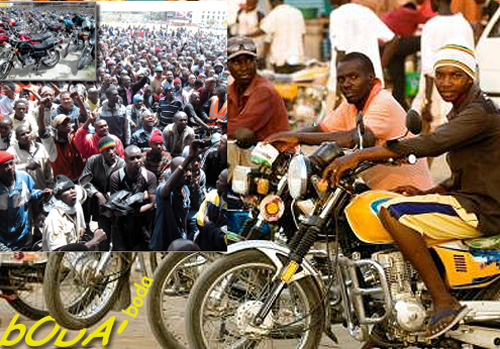
BODABODABad BodaBoda. Don’t think the morning commute is necessarily better if cars are replaced by bikes. What you might get is “Mayhem in Arusha.”

The first place my wife and I worked and lived for two years was Paris in the 1970s and the traffic compared to what I’d see later in Bangkok in the 1980s or today in Nairobi and now Arusha couldn’t even compare.

Yet my wife went to work and about town in a “moped” and it scared the living daylights out of me. In those days there were no regulations about helmets or carbon emissions or anything else, and a French moped was hardly more than a small bike with a lousy motor.

My wife and hundreds of others wove in an out of traffic lanes, sneaking between buses, dodging pedestrians as if their greatest challenge wasn’t staying upright but stopping. And it often was. You stopped and it might herald the end of an era. It might never run, again.

More than once I watched from my safe haven in a bus one of these contraptions sail right below me at breakneck speed and continue unabated right through a red light.

They were loud, dirty, dangerous and above all, defiant.

And she always got to work before me.

Fast forward nearly a half century into the little metropolis of Arusha, Tanzania.

“Motorcycles … have been causing lots of inconveniences … due to frequent cases of reckless riding, accidents and unruly behaviour,” claims Arusha’s only newspaper.

Arusha is Tanzania’s main northern city, and mopeds have joined forces with Harleys and Kawasakis to make my 1970s experience in Paris seem like child’s play. The machines are rarely the monster varieties, mind you, and usually hybrids of the most amazing sorts.

In fact a snapshot of the collection of “motorbikes” on the increasingly congested streets of Arusha could easily come out of the imagination of a kindergartener told to draw a motorbike rally.

“BodaBoda” they call them.

Two weeks ago the city councilmen of Arusha in their imminent wisdom banned BodaBoda from the city center “because of their chaotic nature.” The move by Arusha planners followed a successful ban of bodabodas in May by neighboring Rwanda.

Rwanda is a horrific dictatorship. They could ban breathing and the entire city of Kigali would collapse. Let me tell you, in any semi-free place in the world, don’t try to unboda your spouse.

Monday, the “Arusha fathers” rescinded their ban… “For a while.”

In the free (for-all) society of Arusha, traffic management will no longer include laned traffic, speed restrictions, pedestrian right-of-ways, or traffic lights.

When the ban was announced several weeks ago, BodaBoda bikers struck the city hard, blocking traffic with their protest. Worse:

“The riders also threatened to beat up any motorist, pedestrian or any other person who stood in their way…”

And most revealing of all, they said that “police officers have been targeting them with exorbitant fines for …both real and imaginary offenses.”

“They also vowed to beat local leaders of the bodaboda associations who they accused of betraying them,” the newspaper report continued.

The elected “bodaboda union” leaders responded:

“As their leaders, we did not take part in their protests because they threatened to beat us, saying we were siding with the government, though in reality we have been trying to remind them that they were not above the law to an extent of causing anarchy.”

Power to The People!

Power Up Da BodaBoda!

The Irresolvable Divine

The Irresolvable Divine

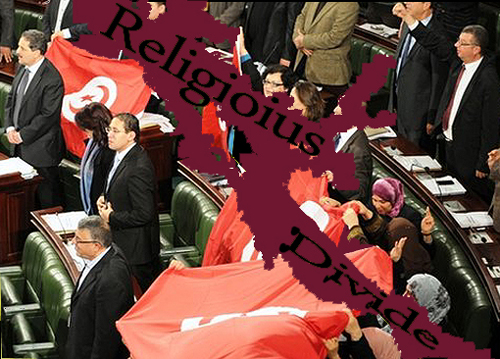
IrresolvableDivineIs last night’s passage of a new constitution in Tunisia a real positive turning point in the struggle for African democracy? Many believe so, but Islamic fundamentalism still has a hook in the document.

As democracy warrants it should. Like Egypt, majority rule government placed very fundamental Islamists in control of Tunisia’s legislature. Like Egypt, the government moved further and further towards Islamic extremism.

As democracy warranted. As the majority of Tunisians wanted.

The new constitution, however, is far more progressive than Tunisia’s population would like. It is more progressive than the failed Egyptian one under the Muslim Brotherhood and more democratic than Egypt’s new constitution that restricts religious influences.

The Tunisian document enshrines Islam as the “state religion” but also guarantees many freedoms that conservative Muslim regimes would ban, like parity for women throughout society.

But the constitution forbids “attacks on the sacred” which gives wide latitude to religious leaders to legislate doctrine, despite constitutional human rights. The dilemma is that neither is preeminent.

A very popular national journalist and cartoonist remains in jail for a political cartoon criticizing the Islamists. Although promised early freedom and an executive pardon, he has been kept in jail until arrangements can be made for his deportation to Sweden.

The conundrum for Tunisian politicians is obvious: He should not be jailed under the new constitution, but were he released unequivocally, there would be riots for condoning “attacks on the sacred.”

Although Tunisian legislators are ecstatic and the world mostly supportive (even Human Rights seems pleasantly positive) I see this as the fundamental flaw that will ultimately crack the nation, again.

Tunisia is one of the smaller, one of the most highly educated, and one of the most developed countries in Africa. There is a real similarity to Lebanon, which has also balanced extreme religious positions and human rights over nearly the last century.

But like Lebanon grand periods of peace and prosperity have been continuously interrupted by terrible civil wars and mass disturbances. I think that’s what will now happen in Tunisia.

The problem is that democracy won’t work when opposing beliefs mutually exclude one another. You can’t have a “state religion” and a state without a governing religion, yet that is precisely what Tunisia and other liberals in the Arab world are trying to do.

Ultimately it emanates form our own democracy.

I believe most of our founders were atheists, far ahead of their times. But religion in America in the late 1700s was so diluted by successive immigrants from widely different religious sects, so attacked for being allied with the British king, and so criticized by the secularists in Frances supporting our revolution, that our constitution’s reference to the divine is incredibly scant.

Almost a courtesy rather than a belief.

But as weak a contradiction as it may be, it is not a dialectic. It remains a contradiction and one that now plagues our own society, again, and most certainly terrorizes emerging societies like Tunisia.

Until developed and developing societies discard religion as having any place in democratic government, democratic government will fail.

Between Life & Death

Between Life & Death

bodyorgansforsaleTanzania has embraced a Wall Street Journal suggestion last week that a free market should be created to buy and sell human organs.

“It is none of our business,” Tanzania’s Minister for Health and Society Welfare said yesterday affirming the Tanzanian government’s position that it would not oppose such a market. He then confirmed that it’s perfectly legal for Tanzanians to sell their organs to the highest bidder.

The Journal’s Saturday essay argued that kidney transplants add more than 20 years of life to those in need, and that two kidneys aren’t necessary for a healthy life.

“How can paying for organs to increase their supply be more immoral than the injustice of the present system?” the journal asked.

The authors estimated that an open market for selling kidneys would result in an expected cost of $15,000 per kidney.

That’s approximately triple Tanzania’s average annual income.

In acknowledging the Journal article more quickly than the Tanzanian government normally acknowledges a health epidemic on its own soil, the Minister pointed out that there are already robust donor markets in Iran and India.

Two kidneys might not be necessary for a healthy life, but removal of any organ, even the redundant second kidney, is not without risks. Even if those risks are small the notion of literally selling part of yourself for cash belies desperation.

And in a “free market,” one that is truly global, there’s little doubt that the most desperate in the world would quickly become the suppliers. Suicide bombers and all sorts of other criminals are often little more than lives for sale. Reducing humanity to a commodity is the basest form of oppression.

The Journal article touched on alternatives that such countries as Denmark are employing, called “implied consent.” This presumes that everyone who dies naturally allows whatever viable organs remain to be taken and reused.

But such a policy if adopted worldwide would decimate the capitalist alternative suggested by the Journal. As shocking as it may sound, there are likely far fewer natural deaths that would result in viable organ donating worldwide, than there are living persons in the developing world willing to sell their organs.

Imagine if the going rate for a kidney in the U.S. was $150,000? That’s the equivalency with Tanzania’s economy. Imagine advertising this in Appalachia or Flint, Michigan. Imagine white buses with ambulance attendants and Brinks Trucks behind them.

There’s something terribly wrong with this scenario, whether it is in Flint, Michigan or Arusha, Tanzania.

Yet the Journal article is not ground-breaking. HBO Producer of the “Tales from the Organ Trade” and three-time Emmy winner, Simcha Jacobovici, is an aggressive advocate for allowing anyone to sell their organs for the highest price:

“For my part,” Jacobovici writes in the Times of Israel, “I am no longer a dispassionate reporter on the issue… Some suffering we cannot alleviate, but this suffering has a simple solution. While tens of thousands need kidneys, tens of thousands want to sell them. We each have two kidneys. We only need one.”

The fact of the matter is that voluntary organ selling has been occurring throughout Africa for a long time, widely reported from Kenya to Nigeria. But there has been little comment about it until now and virtually no criticism.

The Journal article has forced the topic out, giving advocates of live donor selling in the developing world significant credence to the position that there is nothing immoral to the practice.

It is an incredible dilemma. My first reaction is that there is nothing baser than turning humanity into a commodity. My second reaction is that authority over one’s own physical body is inalienable: how can we the rich tell them the poor not to sell themselves?

Religious doctrine is pretty consistent:

“The answer is a definitive ‘No.’ The selling of an organ violates the dignity of the human being,” according to the Catholic Church, and virtually all major religions argue similarly.

But religious doctrine in my opinion is largely responsible for the multitude of dilemmas Tanzanians currently find themselves in, today:

From the historical condoning of slavery in the pre-colonial era, to the submission to greater force in the colonial era, to the oppression of vicious dictators in the post-colonial era, religion has not been a very good guide for the development of Tanzania.

For many millions in the developing world selling an organ is the difference between life and death. Twice.

Hurrah for The Ban!

Hurrah for The Ban!

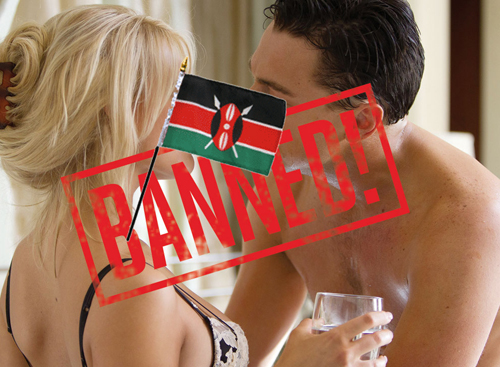
THE WOLF OF WALL STREETThe Wolf of Wall Street has been banned by Kenya and Uganda, along with much of the rest of the world, and as a result will probably be the most watched movie this year in Africa.

Free speech isn’t relative, it’s immutable in Africa’s young societies. In contrast for example with China where government institutions are strong and decisive, Africa’s societies are run by weak governments.

They have a hard time collecting taxes and an even harder time banning films.

In fact, they aren’t really banning films. They’re banning the collection of film royalties, really, and so I say, “Here! Here!”

Last Thursday just before the scheduled weekend premiere in Kenya, the country’s film board banned the film. For the Kenyan film board, this was pretty harsh. It has banned only a handful of films, most of them outright porn.

In Uganda where banning films is a pastime, the global Cineplex theater in Kampala had the film on its marque Saturday and had actually sold tickets and seated customers when an announcement came that the film had been banned there, too.

The film will likely be banned in more than half the world’s countries, almost all in the developing world, Africa, Asia and the Mideast. In many others editing out scenes has been negotiated with the film producer to allow the performance, notably in India.

According to a spokesman for the Kenyan Film Board, the film’s producers didn’t reply to their request for special editing “leaving them no choice” but to ban the entire film.

India is a much bigger market than Kenya.

The irony in all of this is twofold. First, the result is that more people will see the film.

“I am actually watching it right now,” a Kenyan Facebook user posted after the ban. “Maybe the Ayatollahs in your board should come to the year 2014 and discover something called the internet.”

Not just the internet, either. Pirated copies (which are actually very decent in Kenya, I know) were selling like hotcakes.

“The pirates went into overdrive,” wrote Kenya’s favorite journalist, Obbo. He talked with an “underworld” pirateur who “dashed to make 25 copies, sold 20 within minutes – a record.”

Sold at about Ksh50/ or 50¢.

That’s the second irony. The film will now be seen by more people than ever. Many millions of Kenyans cannot afford the $7 it would have cost to see the film in the theater, and while that by itself would not have stopped pirating, there would simply not have been the demand.

So in underworld off-the-chart internet sites and on every corner of Nairobi the film is being passed from one person to another to another. It’s providing a reasonable income for unemployed techies and Scorsese, well, he won’t get his share.

The Kenyan Film Board is useless, the producers of Wolf are out of pocket.

Hurrah for Free Speech!

To watch a grilling Kenyan television interview of a spokesman for its Film Board, click below