Important Stories for 2013

Important Stories for 2013

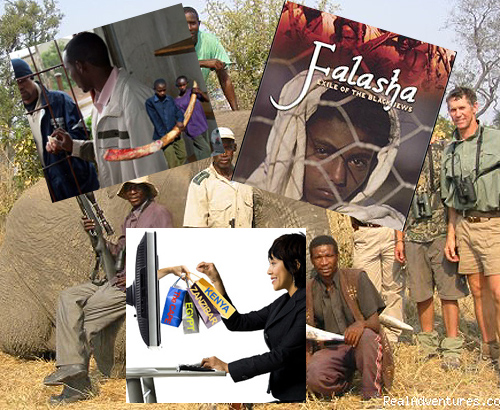
Important 2013 StoriesMisreported elephant poaching, a changed attitude against big game hunting, enduring corruption, a radical change in how safaris are bought and sold, and the end of the “Black Jews” in Ethiopia are my last big stories for 2013.

#6 is the most welcome growing opposition to big game hunting.

It’s hard to tell which came first, public attitudes or government action, but the turning point was earlier this year when first Botswana, then Zambia, began to ban big game hunting.

Botswana banned all hunting in December, 2012, and a month later Zambia announced a ban on cats with an indication they would be going further. Until now big game hunting revenues in Zambia were almost as much as tourism’s photography safari revenues, that’s how important these two countries are to hunting. (Kenya banned all hunting in the 1980s.)

The decision to ban a traditional industry is major. While some animal populations are down (lions and elephants) many like the buffalo are thriving, so this is not wholly an ecological decision. Rather, I think, people’s attitudes are changing.

Then in October a movement began to “list lion” on CITES endangered species list, which would effectively ban hunting of lion even in countries that still allow it. There was little opposition in the media to this, except surprisingly by NatGeo which once again proved my point the organization is in terrible decline.

The fact is that public sentiment for big game hunting is shifting, and from my point of view, very nicely so.

#7 is the Exaggerate story of elephant poaching. I write this way intentionally, to buff the hysteria in the media which began in January with a breaking story in Newsweek and the Daily Beast.

Poaching of all animals is showing troubling increases, and elephants are at the top of that list. But in typical American news style that it has to “bleed to read” the story has been Exaggerate to the point that good news like China’s turnaround is ignored and that the necessary remedies will be missed.

Poaching today is nowhere near as apocalyptic as it was in the 1970s, but NGOs are trying to make it look so, and that it infuriates me. Poaching today is mostly individual. Unlike the horrible corrupt poaching that really didn’t nearly exterminate elephants in the 1970s and 80s.

Poaching today also carries an onerous new component that has nothing to do with elephants. It’s become a revenue stream for terrorists, and the hysteria to contribute to your local NGO to save elephants completely masks this probably more urgent situation.

And so important and completely missed in the headlining is that there are too many elephants. Don’t mistake me! I don’t mean we should kill them off. But in the huge difference in the size of African people populations in the 1970s and those of today, the stress of too many elephants can lead to easy local poaching, and that’s what’s happening.

#8 is a tectonic change in the way safaris are being bought and sold.

The middle man, the multiple layers of agents inserted between the safari and its consumer have been eroding for decades. But in one fell swoop this year, a major South African hotel chain sold itself to Marriott, leapfrogging at least the decade behind that Africans were in selling their wares.

Most African tourism products are not bought by Americans, and so how safaris were are has mostly been governed by buying habits in such places as Europe. America is far ahead of the rest of the world in direct tour product buying, and the sale of Protea Hotels to Marriott signals to all of Africa that the American way is the world trend.

#9 is a depressing tale. After a number of years where Africa’s overall corruption seemed to be declining, last year it took a nosedive.

The good news/bad news flag came in September, when France’s President Hollande ended centuries
of deceitful collaboration between corrupt African leaders and the Élysée Palace.

Many of us jumped on this as a further indication of Africa’s improving transparency, but in fact, it was just the reverse and Hollande beat us to the punch. In November the European union gave Tanzania a spanking for being so egregiously corrupt.

And then Transparency International’s annual rankings came out. It’s so terribly disappointing and I’d like to think it all has to do with declining economies, but closer looks at places like Zimbabwe and South Africa suggest otherwise. I’m afraid the “public will” has just been sapped, and bad guys have taken advantage … again.

#10 is intriguing and since my own brush with “Operation Moses” in the 1980s, I’ve never stopped thinking about it. The last of Africa’s “Black Jews” were “brought home
” to Israel October 31.

A tribe in Ethiopia referred to as the “Falashas” has an oral history there that goes back to the 3rd century. Israel has always contended they were migrants from the land of the Jews, possibly the lost Tribe of Dan. Systematically, through an extreme range of politics that included the emperor Selassie, to the Tyrant Mengistu to today’s slightly more democratic Ethiopia, Israel has aided Ethiopia.

For only reason. To get the Black Jews back home. And whether they all are or not, Israel formally announced that they were on October 31.


Making Holiday Lists

Making Holiday Lists

BloodDiamondsAs the holidays approach, consider carefully what your gifts may be financing.

A controversial meeting ended today in Johannesburg ostensibly to curb the market in blood diamonds, but there is little evidence it’s working.

The “Kimberly Process Certificate Scheme” (KPCS) was set up about a decade a go by a number of countries deeply involved in the diamond trade as a response to growing public awareness that diamonds were being used to fund horrible wars and human rights’ abuses.

Much of this was popularized by the famous movie, “Blood Diamond“ which starred Leonardo DiCaprio and depicted the civil wars in west Africa that were the motivation to create the KPCS.

The convention was partially successful in the beginning and seems to actually have stemmed the trade of blood diamonds that were financing the Sierra Leone and Liberian civil wars. When those ended just before the movie was released, more than 81 countries with mining or marketing interests in diamonds had joined the KPCS.

Essentially the convention manages certification of all exported diamonds. If a dealer sells gems that don’t have the certification, it’s presumed they could be blood diamonds.

There is no country legislation or treaty enforcement; this is an entirely voluntary process, but in the beginning it seemed to be working.

Diamond sellers, particularly wholesalers, became quite sensitive to having the proper KPCS certificates.

But as the great West African wars ended that prompted the formation of the organization, so did enthusiasm for its job.

But the use of blood diamonds did not end.

Just as with ivory, coltan and other precious materials, the nexus of the illicit diamond trade has moved into central Africa, in the DRC-Congo and CAR.

But either dealers were being disingenuous or simply were too ignorant to have realized that these new areas of conflict were serious areas for black market diamonds. Whichever it was, fewer dealers are today interested in certification.

And there were other situations in Africa that KCPS should have outed besides wars. Political maneuvering between South Africa and Zimbabwe resulted in Zimbabwean diamond dealers getting certification, even when it had been proved they were using child labor.

This year’s South African chair politely referred to the internal controversies by remarking about the pressure the industry has been under since the Great Global Recession.

A coalition of civil groups proved unsuccessful as the convention closed today in trying to make mandatory what remains of the voluntary KPCS certification. Shamiso Mtisi described the convention as moving “very slowly” on such long-time proposals as certifying not only sellers but miners as well.

A variety of other groups had difficulty even being heard. Accusations were levied at Venezuela and Lebanon that those governments were turning a blind eye to blood diamond trade, but the convention did nothing in response to these charges.

And surprise, the new chair of the convention is Chinese. They’ve done such a great job in stemming the ivory trade, which after the earlier West Africa wars succeeded the blood diamond industry as the principle financier for illicit African conflicts.

Blood diamonds seem to be on the comeback, and not because there are fewer conflicts in this post Recession world, but because there are fewer regulators of the capitalist system.

Veterans Day

Veterans Day

VeteransDAyToday is an American holiday. Banks and other federal agencies are closed and most American school children are also staying home. It’s known as “Veterans Day.”

First declared by President Woodrow Wilson after the end of World War I and later codified by The Congress, it’s a holiday in America that evokes many different emotions from different groups of people.

During my life time, which began just after the end of World War II, America has fought far too many wars. And when someone like myself becomes critical, it’s an intellectual challenge to praise the soldiers who carried them out.

Immediately on the other hand, however, foreigners should realize how radically different our armies are today than when I was a boy.

Today America’s fighting forces are entirely voluntary (with the subtle distinction that “reserve” soldiers, those who have technically retired or enrolled mostly as home guards are now being routinely called upon as active troops).

This differs radically from when I was young, when the bulk of the armies were conscripted from young men. It was a mandated responsibility for young men approaching their third decade to be prepared to serve in the military if called.

The transition to an all-volunteer force was accomplished fairly easily by raising soldier pay and benefits. As America became more of a war fighting country, the rich also become more powerful, the poor parts of society enlarged, and for much of this time unemployment remained high.

Joining one of America’s armies not only provided reasonable and regular pay, but gave the recruit enormous valuable training in all sorts of skills, and at least until recently, when released from even the shortest contracts also provided excellent extended benefits, such as healthcare and higher educational subsidies.

Much of America’s armies, like ancient Rome’s and Persia’s, are opportunities for the oppressed and downtrodden to break out of an endless cycle of hopelessness. It’s therefore hard to criticize these young people for joining the American military.

So today there are many of us reluctant to celebrate anything that has to do with America’s wars. Yet we can’t ignore the life stories of those that have become conflated with them.

Just the Keys to His House

Just the Keys to His House

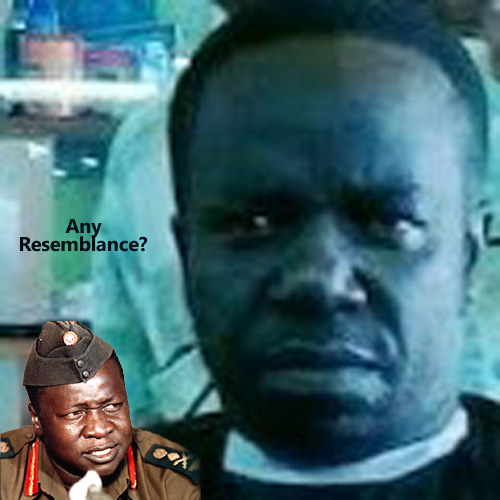
AminAndSonIn the dark and dangerous hole that Ugandan dictator Museveni has cut out of his country, a new face has emerged to challenge him: the son of Idi Amin.

Yesterday, Hussein Juruga Lumumba, announced his candidacy to become Uganda’s next dictator.

Well, not exactly. What he did was write an open letter to the current dictator, Yoweri Museveni, published in the country’s main newspaper as a lead news story, requesting the Ugandan dictator to return to him the homes and other properties confiscated from his father.

Seemingly benign enough, in the feudal Shakespearean politics of otherwise modern Uganda this is better than Ted Cruz spending a weekend in Iowa.

It appears to be the only letter ever written the current dictator, although anyone else who tried this would likely never write, again.

Let’s stipulate a few things quickly, first.

Uganda would be better without any dictator. Kenya has demonstrated that freed from oppressive politics, a country can bloom, grow incredibly fast, and truly become both an economic and cultural powerhouse for modern Africa.

Ugandans were just as well educated, maybe better than Kenyans. They were the colonial favorite of Britain (that considered Kenya a simple stepping-stone to Uganda), and in the short few years of independence before Uganda slipped into its endless dictators’ cycle, it was forging well ahead of Kenya.

And even during the rest of my lifetime in Africa, even when under the repeated oppressions of horrible leaders, Ugandans wrestled up some wonderful accomplishments, including vanguard research and implementation of many public health initiatives including malaria control.

All that keeps Uganda down is its love affair with dictators.

No credible representative leader has ever made it to any of the top echelons of Ugandan government. Rife with ethnic divides (but so is Kenya), shackled with an urban population that still reveres an ancient monarchy, Uganda just can’t break the habit of being oppressed.

My wife and I lived for two years on the Kenyan/Ugandan border during the height of Amin’s terror. The fear that every sane person felt, no matter how secure they might have been inside Kenya, was horrible.

The two weeks that we spent driving from one end of Uganda to the other during Amin’s regime might have been one of the most foolish things two 25-year olds had ever done. But what we saw and heard and experienced became fundamental to my understanding of Africa thereafter, that the continent’s enormous potential was hamstrung by its inability to shake paganism.

And now, forty years later, it comes back to haunt that poor country.

Times have changed. Hussein Juruga dresses nicely, writes and speaks with the fluency of a privileged child educated in both France and Britain. And lacking any actual job, he lists his occupation as “politician” in his blog.

His resume includes being a “media consultant.” And while it’s difficult to find many in Uganda willing to write Op Eds in the country’s newspapers, Juruga often waxes eloquently therein on the modern media, espousing greater freedoms.

Sounds pretty right on, no? And the country’s main newspaper, arguably the mouthpiece for the current dictator, gives him a glowing recommendation
as a former employee.

But dig into his prolific blog, and you find that’s he’s homophobic and dangerously militaristic, and he avoids ever discussing other current challenges to the current dictator, except his own.

Kizza Besigye and Erias Lukwago, for instance, are the two most prominent dissidents in Uganda and fairly well known outside the country. But Juruga hasn’t mentioned either of them, ever.

But the overriding evidence of Juruga’s intentions is the bone-chilling defense he constantly mounts for his father.

Claiming that all the bad stuff attributed to his father is rumor mongering, Juruga insists the smear campaign “is peddled mostly by individuals who want to access political support and for others to try and maintain political relevance today.”

He argues that it was actually the Tanzanians (whose army ultimately deposed Amin) — not his father — that caused the most misery and destruction in the country.

He admits threatening Giles Foden, the author of The Last King Of Scotland, with a libel suit.

He may be more polished than his father. His power is indisputable, given the public nature of his rages within Uganda’s current clamp on media freedom.

And a simple change, it seems, is all that he wants: Just give him the keys to his house.

The Real Disneyland

The Real Disneyland

pathtoparadiseThe Westgate Mall attack was al-Shabaab’s dying gasp. There will be more attacks in East Africa, in London, in the U.S., but not from the old al-Shabaab. Not from what was left of the group that was wiped out in Westgate.

Many British analysts believe the attack was led by a fellow Brit, Samantha Lewthwaite. If this is true, it means the organization al-Shabaab has imploded.

The “White Widow” as she was called was essentially the last well-known al-Shabaab commandant. All the others had been killed over the last year.

Possibly less than a month or two ago, an Alabama citizen, al-Shabaab leader Omar Hammami, was killed in an internicine fire fight. He died along with a British compatriot, Osama al-Britani.

So three of the fragile top leadership of al-Shabaab who remained after Kenya routed the group from Somalia are dead. Two Brits, one a woman, and one American.

On PBS yesterday, Kenya’s foreign minister said there were an additional “two or three” Americans fighting as jihadists in the Westgate battle who were killed.

Think about this. Think about this carefully.

Few true journalists or analysts of anything will ever predict the near end to some movement, for fear they’ll be wrong and lose their position. I don’t have to worry about that. I hired myself.

And yes I could be wrong and by so saying I’m honestly diminishing my conviction, but my gut nevertheless tells me otherwise.

Reports that al-Shabaab still controls much of Somalia are incomplete. Al-Shabaab was rarely a coherent single organization, although it did coalesce for several years.

What I suspect is that the warlord society of Somalia, part of which loosely allied itself to al-Shabaab, may be doing so, again. If that’s true, al-Shabaab today is not a trans-national affiliate of al-Qaeda but rather a local political movement, retracting into what it was more than a decade ago.

The Council on Foreign Relations has prepared an excellent and brief primer on al-Shabaab that demonstrates this possibility well.

Does it matter that this one terrorist organization is expiring?

Yes, but it hardly ensures Kenya or the rest of the world that there will be no future attacks. What was left of al-Shabaab were foreigners, not Somalis and many weren’t even Arabs. They may have been Muslims but not even that is certain.

What they are, CBS reported yesterday evening, are wayward kids from developed countries like the U.S. and Britain.

The end of al-Shabaab does not bring an end to wayward kids from Minneapolis.

And that’s the second thought I want you to revisit. A terrorist act is pretty easy to pull off, today. It’s a rush for someone depressed. It’s a mission for someone ungrounded and otherwise uninspired.

“It’s the real Disneyland,” one al-Shabaab fighter told CBS.

Fighting clubs exist all around the world. The normal amoralism of a criminal is easily coopted by some ideology, whether that’s jihadism or some other cultism, and I seriously doubt that any of the actual fighters have studied Zen or Marx.

They’re looking for action and meaning, something they’re unable to get at home. And when they do something bad, we tax our poor to fund a megalothic war machine when we should be taxing the rich to fund schools that inspire young people.

When they pull off a mission at a poorly protected Westgate that a inner city gang from Chicago could have pulled off just as well, we respond by sending a dozen generals and Navy Seals when we should respond by sending social workers and community aid.

And when things go south for the jihadists, their amoralism becomes nihilism. They go out with a bang.

“It’s the real Disneyland,” one al-Shabaab fighter told CBS.

Black Holes Widening

Black Holes Widening

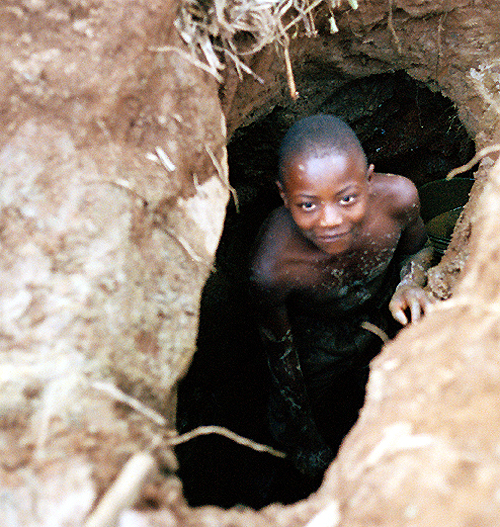
blackHoleEight-year olds – lots of them – are dying agonizing deaths in Tanzania as the government and world turn a blind eye to child gold-mining.

This morning Human Rights Watch issued its long anticipated report on child mining in Tanzania.

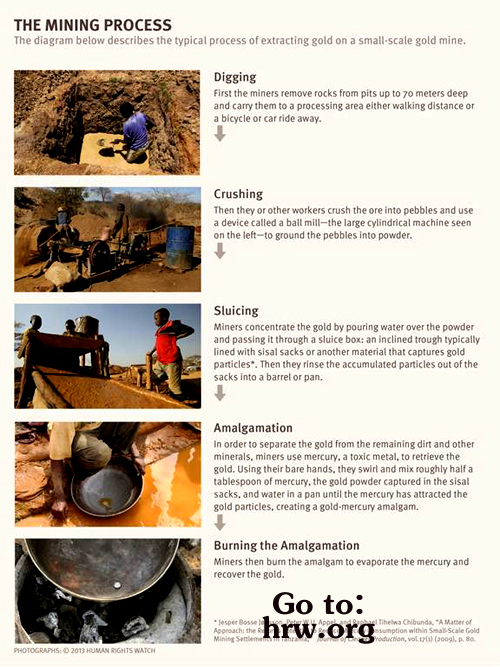
Not that we didn’t know there were “thousands” of children involved, that the Tanzanian government has consistently denied a problem, or that unacceptable levels of toxic wastes equal to biochemical weaponry cause the most grief.

I wrote myself about this less than two weeks ago.

I guess we just needed this respectable report to figure out what to do. So what do we do, now, we who are not Tanzanians but love Tanzania no less than children anywhere … what can we do?

Start a petition? Contact your tone-deaf congressmen? Divest yourself of multinationals in Tanzanian mining (see below)? Increase your black-hole tithing? Support NGOs working for better alternatives?

Or own up to the reality that nothing will stop this defamation of humanity except serious redistribution of wealth.

My reading of the 96-page report is a horrifying recognition that the increasing gap between rich and poor is the real cause of this calamity.

How the hell can you stop a child who is almost always sick with a cold and diarrhea who knows that a pill she can buy for a quarter will make her feel better, from sticking her hands into a plate of liquid mercury, when she knows that there’s a chance of 1 in 6 of pulling out $10?

She knows the mercury is bad. She knows that doing this enough times will make her unendingly sick. But she’s sick, now! She wants to get better!

What on earth will you tell a kid who has no father, whose mother is a prostitute for wealthier miners, who at best eats one meal of porridge a day?

Most of the child laborers interviewed by Human Rights Watch said they used their earnings “for basic necessities such as food, rent, clothes, and school supplies such as exercise books, pens, and uniforms.”

The incredible horror stories in the report of children getting sick from chemicals and hard labor were compounded by many documented cases of sexual abuse, blackmailing and outright physical abuse including murder.

Tanzania has laws on the books against all of this. But … few Tanzanian laws of any kind are regularly enforced: Tanzania is a lawless land where social order is sewn together by bribes and sometimes the goodness of local officials.

Tanzania is now the 4th largest gold producer in the world. The $2.1 billion dollars earned annually contributes 3-5% to the entire GDP of the country.

Ninety percent of this is from large-scale, big-machine, high-tech commercial mining. Roughly three-quarters of the commercial mining in Tanzania is controlled by African Barrick Gold (ABG), a UK held multinational; and AngloGold Ashanti, a South African company. The remaining quarter to a third is held by smaller multinationals, the largest of which are the Australian mining company, Resolute Mining Limited, and the German Currie Rose Resources Inc.

Ten percent, though, comes from this off-the-books, theoretically illegal artisanal mining involving the children.

The artisanal mining is usually pursued on the periphery of the commercial mining in areas the big machines just haven’t gotten to yet, or in areas that the multinationals have determined isn’t rich enough for their interest.

Most of it is surface or near-surface mining, and that’s what lends itself to individual prospectors.

Like mining throughout the ages, there is little guarantee of striking it rich by anybody, but the allure is what keeps the miners going. But in Tanzania, “striking it rich” is phenomenally greater than it is for an Alaskan miner, today; or even those involved in the great western gold rush a century ago.

In Tanzania, a child who finds a gram of gold will be able to sell it, once processed through the toxic mercury process in his pan, for more than $40. In many of the regions in Tanzania where this now occurs, that’s enough to keep a family of five alive, well fed for a month, with some left over for used clothing.

When a child strikes out in the mines, there’s other horrific work. HRW documented children as young as ten earning up to $3 for crushing a pile of rocks, $1.23 for mixing the mercury and gold for another prospector, all of which compounded could earn a kid more than $12/day.

That is roughly what a well groomed doorman, janitor or telephone operator in a safari lodge in Tanzania makes.

The story created here is of a society struggling to be simply clean, healthy and not hungry, putting their lives on the line starting as children, day after day, to reach a goal – a level of existence – in economic terms that is around one one-hundred-thousandth (.001%) of the average earnings ($90,000 annually) of workers for African Barrick Gold living the U.K.

Or one-ten-thousandth (.01%) of the average cost of a gold bracelot. Or should I go down a bit? Do you have any gold earrings? OK. Maybe one-tenth percent of the average cost of your gold earrings? So a thousand chilren work-days in Tanzania equals your gold earrings?

That gap is the problem. Tanzania should be getting a much larger proportion of its gold wealth, and the citizens and children of Tanzanian should be getting a much, much larger proportion of the money its own government earns.

But we know that gap is not getting smaller; it’s getting bigger and bigger as the years drip by. And the children get less and less and sicker and sicker.

Was slavery better?

miningprocess

As Africa Sees The Dream

As Africa Sees The Dream

AsAfricaSeesTheDream“Tens of thousands” gathered in Washington, a fraction of the original march fifty years ago. In Africa it was hardly noticed. Why only a sputter, now?

The answer may be the same in Africa as here at home. National spirits have been whipped to death by the Great Global Recession and the Right’s successful control of its recovery.

King’s Legacy when compared to the struggles in Africa seems unfulfilled if now not outright desperate.

Obama’s first election in 2008 was a time when Martin Luther King was evoked almost daily in the African press. Even before Obama’s election, Africans began constructing King’s legacy as leading directly to Obama’s accession:

Kenyan scholar, Jerry Okungu writing on the 40th anniversary of King’s death as Obama’s elections were being excitedly anticipated, called King “first among equals” in civil rights movements for “Americans and indeed the world.

“Many Africans at the time got inspiration from King’s movement as freedom fighters in Africa,” Okungu continued.

But today?

Almost nothing. As Obama has seemed to sputter out, so has the King Legacy:

The more important fiftieth anniversary is being reported and analyzed only as republications of global news services reports.

Searches I made in major newspapers and journals throughout sub-Saharan Africa turned up little to nothing.

Only the Times of South Africa (Live edition) and South Africa’s main television network carried more than a single story.

But those two outlets do provide some explanation for the weak interest throughout Africa:

“Despite big gains politically and in education,” Times Live reports, “far more needs to be done to achieve the colour-blind society that King envisioned.”

In the second filing, Times Live explains that one of the great accomplishments of the 1963 March was the Voting Rights Act, and now, “The future of that law has been called into question [by] the US Supreme Court.”

That same story continues, “[Black American’s] 12.6% seasonally adjusted unemployment rate in July was double the national figure.”

South Africa’s state-owned and largest television network had a correspondent at the rally, and she reported, “Social and economic gaps between whites and African-Americans have only widened over the last five decades.”

She ended her single story filing: “nowhere is [the] commemoration felt more accurately than in Washington DC itself which is still a deeply segregated city.”

South Africa, in particular, is not even a generation from its significant revolution that ended apartheid and created a fabulous new constitution for the modern age.

America is seen as dragging its feet as it bumbles its way socially into the modern age. I don’t think there’s any disrespect at all for Dr. King, quite to the contrary.

But when seen through African eyes – particularly South African – the story of Martin Luther King, Jr., is one at best a tragically unfinished and stretched out story. One, in fact, that is being rolled backwards, not forwards.

Africans are extremely polite and remarkably restrained especially when it comes to criticizing good will that’s just not working.

That, in my opinion, is how enlightened Africans saw this weekend’s march. “A dream is a wish your heart makes” but that the body America can’t quite accomplish.

Just Give, Damnit!

Just Give, Damnit!

googlesearchfoodSometimes, a week can’t end better: a long-held belief, a life-long mission, an endless struggle to prove the obvious … it just all comes, together. And so it did, today, for me:

GiveDirectly proves in real time in Kenya why charity is usually so bad. (Thanks to NPR’s Morning Edition for finding this one.)

Every time I criticize charity I have to quickly qualify the remark as a vital generalization that, of course, has exceptions. And then equally quickly, however, I have to point out how few exceptions there are.

My experience with charity has been mostly in East Africa, where for much of my life I fostered lots of it. When I was younger I was flattered, chagrined, grateful and often very proud of the projects that I created and which were generously funded by lots of organizations, especially Rotary International.

But as I got even older and looked back, I realized how bad most charity is, including I dare say, my own.

I came full circle, so to speak:

Long before I had the experience or equity to muster anybody to do anything, several of my first jobs were with international organizations in Paris, including the OECD and UNESCO.

Barely into my third decade of life, I was no analyst. I began as a typist, but over my two years I was given more responsibilities, and above all I had the remarkable opportunity of (not just typing the words of) but meeting people like Noam Chomsky and Jean Piaget.

These were the pioneer thinkers in world development, and from my point of view, they remain so, today. Their positions never changed. Mine have.

What I learned and discounted all too quickly back then was that to help the world, you had to first study Galileo.

You had to understand how big the world was, and how infinitesimally small any individual is.

That was a hard lesson for a young American in the early 1970s, particularly one who felt empowered by helping in a small but real way to end the Vietnam War.

And while the roster of thinkers in Paris at that time was overwhelming and diverse, I’d take a stab at summarizing an area of common ground: only governments can affect anything good and meaningful for societies to develop in the modern age.

Only governments. Not Rotary, or your church or your favorite foundation, or Toys for Tots. This doesn’t mean participation in those efforts is meaningless – not at all. The valuable fruit from the efforts of this type of charity is the possibility of creating a range of expertise.

(Theoretically, by the way, governments could also create this expertise if they had the latitude and unchecked funds to do so. But they don’t. In my radical older age I believe they should, and will, someday. But not yet.)

But that qualification which defines what private charity is capable of doing, creating expertise, means that most charities don’t.

The mission of most charities is not to learn from what they do, but to teach what they know. And that’s when they become destructive.

To summarize a myriad of thoughts and ideas on this, suffice it to explain that most charity work contributes to a culture of dependency. It becomes self-perpetuating in a most terrible way.

And this isn’t because the will or spirit isn’t there to do otherwise. It’s simply that you can’t engineer today’s modern society with toothpicks. It requires giant cranes and tunnel blasters and gargantuan staffs of people. You can’t build a skyscraper with a class of high schoolers.

And even the most affluent of us, even the Bill Gates of the world, aren’t big enough.

I’ve elaborated on this in particular, recently, as we learned about awesome breakthroughs in preventing malaria, a cause celebre for the Gates Foundation. But these breakthroughs have all come from government institutions, not private organizations like the Gates.

The perfect charity for an individual is thus:

Moved by the moral unacceptability of homelessness, a high schooler from the Brooklyn Heights takes the subway to South Bronx and helps Habitat for Humanity build a house for someone. She works her tail off, and at the end of the weekend feels pretty good as she stands back and looks at the new abode. She then walks back to the subway past hundreds of homeless and realizes how pitiful her effort was. She then votes progressive and dedicates much of her new free time to human rights organizations lobbying government for more subsidized housing.

That’s not the story of most donors.

Most givers are motivated if not principally at least significantly by the belief that no one knows better than themself and their small community how to help others.

This egocentric-mania leads to decrying government as a bad idea, since government is the ultimate reverse of egocentrism, the “we”. I suppose it’s based on the mythical American dream, that fantasy created by super American optimism that chooses to remember only the good at the expense of recognizing the bad.

The world is far too complicated for any single one or small group of us, or even wisely led foundation for us, to develop must less manage. If we are moral people, we must allow ourselves to be subsumed by the society we define.

We must trust government even as we work tirelessly to make it good.

That calls for an extraordinary effort, life long. And the beautiful antithesis of that is GiveDirectly, as simple as its website. You don’t have to click around very much, and you don’t have to think about a damn thing.

Just give.

Must Be Something Better

Must Be Something Better

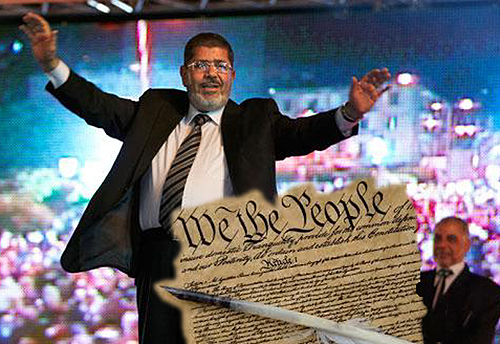
APTOPIX Mideast EgyptThe western world is in denial about Egypt as pundits and politicians alike desperately try to boost the failing image of democracy. It’s time to throw in the towel.

President Obama’s remarks this morning fall short of what I, the New York Times and Washington Post among hordes of others believe should be done: cut off aid. We all hope Obama’s dances of concession and moderation work better with Egypt than with Congress.

Remarkably, the facts are pretty well understood by everyone. Politico has summarized them best.

(1) The Arab Awakening was mostly brave, progressive movements started by intellectuals who believed authoritarian regimes (which had essentially nurtured their own development) were no longer needed and were, in fact, inhibiting better economic growth and social progress.

(2) The success of the Egyptian awakening enfranchised millions previously suppressed.

(3) A truly democratic election in Egypt brought extremists to power. The Egyptian election removed power from secularists and gave it to non-secularists.

(4) Almost a year into the new regime and the original revolutionaries began to experience similar repression to what those now in power had experienced for decades previously.

(5) The original revolutionaries demonstrated through really remarkably large peaceful protests that they wanted to replace the current regime.

(6) The Egyptian Army, equally educated, privileged and intellectualized as the original revolutionaries, agreed and staged a coup.

Democracy by the ballot died in Egypt.

Today is cleanup of hundreds killed and thousands more hurt. Tomorrow, prayer day, could be worse.

So … if the ballot box doesn’t work, use guns? The Egyptian army has a lot more guns than any other faction in Egypt, so ergo, the Egyptian army runs the country.

What if the Egyptian army supported the salafists? Like the Iranian army supports the ayatollahs? Would this globalize the situation sufficiently, so that someone with more guns, like NATO, could prevail?

What is an acceptable justification for undoing the workings of democracy? Promotion of “Human Rights”?

Yes, but who defines these rights? Who determines the limits of eminent domain, conscription, voter registration, and all sorts of other civic responsibilities?

What we are being forced to understand is that there is no such practical thing as democracy. Africa – Egypt in particular – has revealed that to the world.

A wonderfully thoughtful Lebanese explains it best:

Democracy is a goal that will never be attained. Eyad Abu Shakra explains that the times “requires us to be both realistic and honest.”

“Honest” that we don’t care the regime came to power legitmately; it must be replaced. “Realistic” that democracy caused this mess in the first place.

His understandings of so-called democracy will shake western politicians to their core, and so they should: There’s no quick trick to best government and democracy is no better a way than communism or authoritarianism. There’s much fallacious in the concept of democracy:

“History is rife with examples of authoritarian regimes that … came to government through the ballot box. In the U.S., four presidents have been able to enter the White House despite securing less overall votes than their electoral opponents.”

No society – not even the U.S. – operates anything near real democracy. While illiteracy undermines most democratic initiatives in Africa, money does in the U.S.

Shakra believes the Egyptian example is the best example in history to prove how bad democracy can be. In the first round of elections Morsi received less than a quarter of the votes. But by the rules of democracy he was cast in a second round contest with an opponent equally unpopular.

It was an election for most Egyptians of “the lesser of two evils.”

How often have we heard that? Does that kind of situation lead to best government? Of course not. Does it at least give us adequate government? Apparently not in Egypt.

Or throughout the entire Levant, according to Shakra, which “is inclined to intolerance, extremism, exclusion, and trading accusations of apostasy.”

Shakra fails, though, when he cites “true democracy” (which I don’t believe possible), “as incompatible with extremism” which is perhaps true enough.

It’s all summed up, Shakra explains, with Winston Churchill’s witticism:

“The best argument against democracy is a five-minute conversation with the average voter.”

Great. Democracy isn’t very good.

Now, what? Might democracy itself be the “lesser of other evil” forms of government? Not in Egypt. Or in Russia. Or in a superpower that devastated the Middle East with a ten-year war, powered by the democratic convictions of its population and leaders that there were WMD.

There must be something better.

Africa Finally Covered

Africa Finally Covered

telecommunicationbreahthroughWifi and cell phone frustration in Africa is set to ease soon when the gigantic, new Alphasat telecommunications satellite comes on line.

The frustration with broadband in Africa is just an accentuation of broadband frustrations worldwide: reliability. And it’s pretty reliable, really, at least by my own experience in sub-Sahara Africa.

There’s hardly a place on safari where I don’t have cell phone reception. The exceptions are large parts of northern Botswana and much of Uganda, but in total I’m amazed at how extensive the coverage is.

And like the millions of users, I become used to it. So when it goes down, which seems like often and likely isn’t, I’m not prepared. Someone’s waiting for an answer. The blog has to publish. Should-haves smother me in guilt, like why didn’t I confirm the charter flight yesterday instead of waiting to the last minute?

Because, obviously, that’s what instant communication allows us to do: wait until the last minute. We simply discount its reliability as something to worry about.

But, in fact, Africa has been at a disadvantage compared to other parts of the world. There are today 23 communication satellites in geosynchronous orbit, which means they are dedicated to principally commercial communications. (The number of military and non-private satellites is probably much greater, and they stealthily move all over the place.)

Of those 23, there is a very small one for Egypt, another small one for Nigeria and a European operated one that covers some of Africa. Not much, and it’s the reason all African telecommunications has been developed so far using underwater cable.

Now, that will change with the deployment of Europe’s largest ever telecommunications satellite that will operate with the world’s fastest and most advanced technologies.

Alphasat was launched last month and opened its wings this week. Everything so far has been flawless, and tests are continuing. Deployment onto the commercial world will likely begin next month.

The satellite will be operated by the British telecommunications company, Inmarsat.

Until now the London-based operator’s customers were big broadcasters like the BBC, shipping concerns, oil and gas multinationals, airlines and various militaries. The fact this current satellite will be dedicated mostly to Africa means it will be dedicated mostly to cell phones and internet traffic.

That’s an enormous statement on the economic importance of Africa’s use of the internet and cell phones. Both on a unit basis are trivial in economic terms, and it’s an affirmation that shear quantity of use will produce a viable business.

In fact Alphasat’s technology is among the first that can handle an individual cell’s communication, rather than as massive bundles. This type of capacity requires multiple motherboards, so to speak, each that operate at 22 gigabytes per second. That ought to burn your head.

Like economies in general, a single big communications satellite over Africa, when there are 5 over Israel and 20 over the U.S., doesn’t seem impressive. But for those of us who live in Africa and rely on modern communications, it’s a huge boost.

And it’s kind of nice to note that this grand increase in capacity is for texting irrelevant information about the weather and talking endlessly with your girlfriend, as opposed to aiming a nuclear arsenal at a town in Syria.

The Demons of Democracy

The Demons of Democracy

democracyfailesmorsiwinsTwo African elections this week clearly show how democracy fails in societies with powerful chief executives.

Like the U.S. But more about that after discussing Africa.

This week’s elections in Zimbabwe and Mali have failed both their societies, for different reasons, and the result is arguably worse than had there not been elections at all.

In Zimbabwe the rigged election process reaffirmed the country’s despot, Robert Mugabe, and ensures the country will continue to slide into poverty and greater dependency upon its neighbors desperate that it doesn’t totally fail.

It’s interesting that Mugabe and thugs mastered the democratic process so well that despite this week’s travesty of popular expression, observers from as divergent organizations as the African Union and reporters for Reuters gave the process a pass.

It absolutely wasn’t fair. Imagine an election – officially stated – with 99.97% of the rural population voting, and only 68.2% of the urban population voting.

Get it?

What Robert Mugabe has become is an evil despot. This is pretty easily defined as an individual who concentrates power around himself and his thugs, and distributes whatever wealth can be extracted from the country into this small core of individuals.

At the expense of everyone else in the population, even those who supposedly voted for him.

He absolutely does have solid support from Zimbabwe’s poor and rural populations, who are thrown pieces of bread (the land of white farms) just like Marie Antoinette did to stave the French revolution.

And essentially uneducated and untrained, a piece of land is a gold mine, but what it means for the tens of thousands of rural Zimbabweans who have benefitted from this policy, is that they will never have tractors, will never have schools, will never have hospitals or roads or a better life beyond their tiny plot of land.

Yet their ecstacy at this gift from Daddy is profound. And their xenophobia and racism is ripe for plucking. And even so, even with 99.97% of them “voting,” they wouldn’t have been the majority if the more educated urban populations were given their voice.

And, of course, 99.97% of them didn’t vote. Many of them can’t read and there weren’t enough polling stations in the country to handle that number of actual voters. The irregularities in this “election” were profound.

Yet it was “democratic.” Zimbabwe’s urban population rolls were restricted by techniques strikingly similar to dozens of new American voter registration laws. If it’s democracy in Texas, it’s democracy in Zimbabwe.

In Mali – often championed as a model for democracy by westerners – another near perfect election process has resulted in an effective tie. This is something democracy can’t handle. It screwed it up in Bush v. Gore, and it screwed it up in Kenya’s recent election, and now Mali’s future becomes terribly problematic.

Ibrahim Boubacar Keita (IBK), a former prime minister in better times, seems to have received 50.+% of the vote, which would effectively make him the chief executive without a second run-off election.

This, by the way, is the identical situation that occurred in Kenya in March, where the victors were ultimately declared the winners with 50.07% of the vote.

In Mali, the election process was truly fair in my opinion. If there was any fault to the process, it was that the serious opposition from the desert peoples and those involved in the recent insurgency was not voiced. In part, because the insurgency continues and the insurgents didn’t want to participate.

But of the society held together by the French Foreign Legion, a sort of muscular gerrymandering, the elections were remarkably free and transparent.

But now what? Within the margin of error of any scientific study, no one really won, but democracy mandates that someone win. If this were in Europe or Israel, it wouldn’t matter so much, because the chief executive for whom the election was held is not so powerful.

But in executive democracies, where the chief executive like President Obama holds so much power, one of the sides wins and one of the sides loses. Definitively.

And down the road that leads to polarization, friction and radicalization of power blocks that might otherwise be able to compromise.

Had America had a parliamentary democracy rather than an executive presidency, I believe that we would never have gone to war in Iraq and Afghanistan. The challenge of modern democracy is to create workable amalgams of power in societies with large and nearly equally opposing views. That’s not possible in societies with a powerful chief executive.

This is the case as well in Kenya, where ethnicity and corruption is now on the rise after decades of decline, and where Mali is likely now doomed to become a war zone for generations.

Neither Kenya or Mali will be able to traumatize the world as much as America did after Bush v. Gore. But all three examples show how ineffective, perhaps counterproductive, democracy is when the society has a powerful chief executive.

The analysis seems much simpler with Mugabe. When evil masters the process, in this case democracy, the ends justify the means and essentially emasculates the idealists who proclaim the process. Yet on closer reflection it’s clear had Zimbabwe not had a powerful chief executive style government, Mugabe may not have lasted.

The lesson seems starkly obvious to me. Democracy is a bad idea for societies with a powerful chief executive. Parliamentary democracies may be good; presidential democracies are not.

Just Justice

Just Justice

willweeverknowthetruthThe bizarre story of the world trials of Kenya’s leaders grew ever the more bizarre yesterday and when bundled with incidents like Trayvon Martin shows just how fluid, uncertain and perhaps even meaningless justice is.

Whatever else you concluded about the George Zimmerman trial, you must agree that its outcome was based as much on technicalities as “justice.” And by that I mean that Zimmerman shouldn’t have shot Martin, but somehow, he got away with doing just that.

Kenya’s president and vice-president are widely presumed world-wide, by diplomats and journalists and scholars alike, if not directly causing the terrible violence of 2008, certainly encouraging it. They’re widely presumed responsible in some significant measure for the deaths of more than a thousand people and the displacement of a quarter million.

The distinction between “causing” or “encouraging” is the point of the trials. Causing is criminal. Encouraging may not be criminal. And that’s the task assigned to the World Court in The Hague … finally, by the Kenyan Parliament.

But even were a successful trial in The Hague to find both President Uhuru Kenyatta and Vice President William Ruto innocent of “causing” the violence, real democratic societies would not allow them to continue as leaders.

Real democracies do not tolerate leaders whose citizens those leaders allowed to be massacred. Historically they could be seen as having tried to begin a civil war, but if so they lost that war. Kenya is still Kenya, whole if scathed. Jefferson Davis did not become the President after Lincoln. Kenyatta and Ruto shouldn’t be Kenya’s leaders. They are. And they might be for a long time.

Two of innumerable cases worldwide where justice has been lost.

The George Zimmerman trial is over. The just concept of double jeopardy makes it impossible that he be tried for murder or manslaughter, again. But the trials of the Kenyan leaders haven’t even yet begun.

The President’s trial has been rescheduled to begin November 12. The Vice President’s trial has been rescheduled to begin September 10.

The legal manuvering in the World Court has been considerable. The most significant of many unexpected twists and turns are the reduction of the witness list and the adjudication of whether these national leaders need necessarily attend their trials in person.

The former is much more salient to achieving some level of justice than the latter, and besides, who in their right mind believes if found guilty either of the men will resign, take the first plane to Amsterdam and let themselves be incarcerated?

It’s a foregone conclusion that regardless of the outcome of the trials, Uhuru Kenyatta and William Ruto will never be behind bars in The Netherlands.

But many of us would like to know if they really are culpable. We could be wrong, couldn’t we?

Africa is rife with Shakespearean mysteries. Perhaps the defendants’ claims that each and every one of the witnesses against them is either lying or being extorted is true. It seems unlikely, but “beyond a reasonable doubt” is something that only a good court can ascertain.

And that part is becoming less and less likely. Witnesses have been dropping out like flies. The reason given by The Court is that they fear for their security.

There’s every reason to presume this true. Kenya’s most historic murder trial was of the politician Robert Ouko, likely killed in the then Kenyan dictators’ residence. Witness after witness either dropped out of the trial .. or was murdered.

But this time there’s hope we will know. Kenya’s own parliament declined holding trials or other judicial investigations to determine those responsible for the 2008 violence, and so conceded that right legislatively to the World Court in The Hague.

So we want to know. Kenya’s Parliament wants to know. We know whatever the outcome, Kenya’s current leaders will not go to jail, they will avoid that justice to be sure. But that doesn’t mean we don’t want our own theories validated, or shown to be incorrect.

We want justice, at least the first step of discerning the truth. And I can’t imagine why every single Kenya wouldn’t want the same.

Beware The Blackened Honey!

Beware The Blackened Honey!

killerbeeracismRacism on the march, from Trayvon Martin to African Killer Bees … again. From rhino horns that are not aphrodisiacs to setbacks to immigration reform.

It’s a depressing Monday in the free but dumb world.

I know a lot more about inappropriately named “African Killer Bees” than about the Trayvon Martin case, but the fact is that it doesn’t take much for anyone to know about either to realize the implications.

As has been pointed out time and again, there is no such thing as an “African Killer Bee.” It is the same honey bee, the exact same genetic honey bee, as lives all over the world. The behavior of this creature in equatorial Africa developed a bit differently than in the non-tropic world … obviously, don’t we all?

And yes, the behavior of the equatorial bee can legitimately be called more aggressive than its sisters and brothers that have to deal with winters. The best and least disturbing explanation of this was a PBS interview of bee expert, Justin Smith, several years ago.

The bottom line is that the difference in aggression is not considerable enough to even begin to warrant the panic and racist fears that still continue, today. Just as some pet dogs are more aggressive than other pet dogs, you deal with it:

Whether you’re the owner, or the neighbor. Neither dog, and neither bee, is going to kill you if you don’t try to bite it.

But alas, what do facts have to do with any of this? Truth? It just doesn’t seem to matter.

“Beekeepers attribute the aggressive nature of [African Killer] bees to their origins in Africa, where predators range from birds to honey badgers to humans,” wrote Michael Lollar in Memphis’ main newspaper, the Commercial Appeal, just last month.

Where predators range from birds to honey badgers to humans. That sounds like Memphis.

But no, it isn’t. It’s those dastardly creatures whose “origins in Africa” make them so bad.

Lollar’s story was picked up all over the south and his wild and unsubstantiated claims spread pell-mell.

Lollar claimed that Tennessee authorities had determined that one local honey bee they tested proved 17% African. (How much is Obama?) But the Tennessee Department of Natural Resources has no such test available and has a much more realistic appraisal of bees in the State than Lollar.

That appraisal in the link above was for January, 2008, and the department has found no need to make any change.

If anything, we should be grateful for the arrival of the African honey bee, because there’s every evidence they contributed to the successful turnaround against the horrible virus that was decimating bees in North America this decade.

But here’s my real scoop, today, are you ready?

There are worse bees in Africa than the honey bee! More aggressive, better pollinators, probably more dastardly and with a stronger sting! Ouch!!

See below pictures taken just in the last few weeks in Kenya and Tanzania by dudu sleuth Dino Martins!
beautifulbees

And Beware! They’ll be in New Haven by Labor Day!

little screen America, Big Screen Africa

little screen America, Big Screen Africa

African films are exploding onto the Cannes Film Festival, opening Wednesday, as youthful African societies continue to develop this important art which is being so grossly neglected in America.

The decline in the American film industry is today’s hot topic, but I think everyone’s got it wrong. The emphasis has been on America’s growing and exciting new hand-held technologies and all the products that support them like YouTube.

Undoubtedly that has much to do with it, but I think more so it has to do with the American film industry transforming itself into making money in malls from teenagers.

There’s nothing wrong about making money. And there’s nothing wrong with malls. There’s only a little wrong with teenagers.

Film-making provides the modern world with the best way to transform imagination into reality: it’s the conduit, not the transformer. It’s the best catalyst. Nothing better.

So when that focus is placed on vampire love stories the powerful conduit is twisted towards another universe, not ours. It’s no longer relevant to our reality, and in that instance, it loses almost entirely its preeminence as an art form. Its value becomes dollars and sense, little else.

Africa is stepping into this remarkable void left by the American film industry.

This week in Cannes there is a massive representation of South African films, an excellent collection of Nigerian films and especially Nigerian writers, and from my point of view, the best dose of creativity the world’s seen for some time from Kenya.

Real stories playing into real rapidly changing worlds are American films like Hugo, Midnight in Paris, Lincoln, and Avatar – among my favorite recent American movies.

But they are so few and far between.

Nairobi Half Life and The First Grader are recent Kenyan films produced on a pittance of the budget of a single episode of American Rival, create through the Grecian act of acting and the majesty of writing stories a real and lasting impact on the world.

Madagascar 3 doesn’t do that. Nor do the Terminators or apocalypses or thousands of cars flying into the Grand Canyon. And certainly not vampires.

Good films, and by that I mean films with value to society, films that contribute to art and not just livelihoods, convey moral messages in realistic characters, characters that if we can’t identify with ourselves we can through someone we know well.

And here are several important reasons Africa is displacing America in the film industry:

Of the 150 South African filmmakers attending Cannes this year with some sort of accepted entry into the festival, twelve of them were penniless before sponsorship by the South African government.

That’s right, government involvement. Government is a reflection of society; it’s usually in the forefront – good or bad – of society’s extravagances. Without government involvement many of the best films from Canada and France would never have been made.

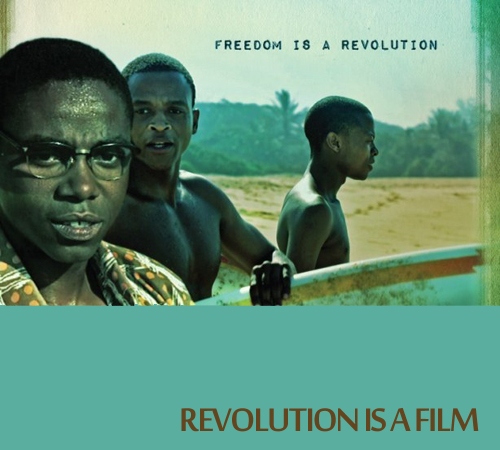
Two: African films fuel controversy: they take a point of view and proudly so and at the peril of failure. They dare to retell history, like Lincoln did in America recently. But Lincoln is the exception. Otello Burning is the mainstay of South Africa’s brilliant film industry.

Third and most importantly, film at its best is art. Film in America is business. Shortly before he died, Roger Ebert said this better than anyone.

Africa is developing film as art. It learned how from America. But today business eats art in America. Let’s hope the other side of the world documents this carnage rather than chooses to partake.

Africa Art This Instant

Africa Art This Instant

Contemporary African art has had a niche among American collectors for several decades, but young artists in Africa are abandoning traditional media completely, and wholeheartedly embracing strictly digital art.

I have several precious oil canvasses bought decades ago in Africa which have been fortunate enough to appreciate in value commensurate with the unique quality. But it’s time to move on. The best young artists in Africa are no longer taking out a canvas and mixing colors with a brush. They’re doing it digitally.

Certainly digital art includes filmmaking, which we tend here at home to separate out as an entire media in itself. But it is by no means the end-all and be-all of African digital art, which includes all varieties of media translated through digital media.

Kennyan Wangechi Mutu is renowned for her dramatic female figures. Mutu’s work has been featured in some of the finest museums and galleries in the world including the San Francisco Museum of Modern Art, Tate Modern in London, and the Centre Pompidou in Paris.

Egyptian Miriam Ibrahim (one of her most famous pieces is shown at the bottom of this blog) describes her passion for digitally altering her portrait photography as one of a “deviantart.” Her often haunting portraits suggest women beset by overwhelming fears, oppressed and lost.

Saidi Ray begins and often ends with traditional acrylics but he sells the finished work not as pieces of canvas but as digital art. From Tanzania, he takes what only a few years ago would have been considered quite traditional primary color renditions of traditional subjects, like native tribes, and whisks them into modern media, a contemporary surrealism.

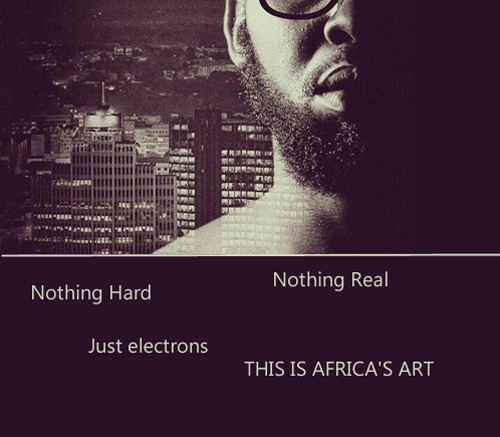
But of them all Kenyan Mutua Matheka epitomizes the ultimate in digital art: instagram. (His signature piece titles this blog.) His remarkably creative and powerful images are as expansive or focused as the movements of your fingers spreading on the iPad. Above all, Mutua represents what African art has become today.

For many more examples from artists across the continent, click here.