Circumcise or Die

Circumcise or Die

Kenyan rappers are being prosecuted for hate speech in the run-up to March’s election. We don’t prosecute MnM but these guys should be clamped.

There is a wide range of laws prohibiting hate speech around the world. We in the U.S. are among the most liberal but developed cousins like the U.K. have rather sophisticated laws prohibiting it.

Most people would agree that there should be no freedom to shout “kill” or “fire” but the dispute begins when crazies picket the military funeral of a fallen hero with signs and chants, “God Hates Fags!” It should be regulated, just like hedge funds.

The theory is pretty simple. “God Hates Fags!” is not the same as “Kill the Gay!” We all so stipulate. But (1) is our sophisticated media delivery purporting the same idea, or (2) is there evidence that raising the tempers of these warped supporters will trigger violence?

Yes to both counts, your honor.

In Kenya three of the country’s most popular rappers, millionaires (in shillings) for the sales of their CDs and one even a gospel singer, have now sold tens of thousands of copies of songs that clearly incite the same ethnicity that nearly brought the country down in fire in 2007.

Although the firecrackers that started the holocaust was the age-old friction between the haves and have-nots, the rightests and the leftists, the pyres were ethnic. It always seems to be that way: the poor versus the unpoor in Ireland; the oppressed versus the rulers in Arabia.

I began blogging at that time, because it was an unbelievable undoing of Kenya. The silver lining came 3-4 months later as Kenya was forced to recreate itself from the ashes, and the recreation has been nothing short of magnificent.

The design is done. The scaffolding is being torn down as the structures are in place, and the election that will complete the process is on March 4.

Click here to listen to this most egregious rap. You’ll have to scroll forward about 2min 16sec to get to the actual song that was sold as a CD.

This Kikuyu rapper is trashing the leading candidate for president in the March election, from the arch rival tribe of the Luo. We had hoped the ethnicity would now be incidental, but it isn’t. It is for the younger generation, but not for the older.

It doesn’t help, either, that the Kikuyu’s choice is Uhuru Kenyatta, the son of the Father of the Nation, Jomo Kenyatta. It doesn’t help because Uhuru is currently on trial in The Hague for Crimes Against Humanity. There is evidence that he was personally involved in torching the country in 2008.

It’s Kikuyus’ failing they won’t come up with anyone better, but a stark statement about how many of them still feel about democracy and other such foolish notions. Many, many Kikuyu would rather blow up themselves and the country to boot than lose power.

And now it seems one of their spokesman is a gospel rapper.

Here is some of the song, Uhuru ni Witu (Uhuru is Ours) by gospel rapper, Kamande wa Kioi, as translated by one of the thankfully many younger Kenyans who despise what’s happening, Amkeni Ndugu Zetu.

(Important background reminders: “Uhuru” is Uhuru Kenyatta, presumed candidate for President and son of the father of the nation and on trial in The Hague. “Raila” is Raila Odinga, the current Prime Minister and front runner in the current campaign for President, a Luo.)

“I bring you a message from all Kikuyu musicians. This is a message from God. Uhuru is the Moses of the Kikuyu nation. He is meant to move Kikuyus from Egypt to Canaan. Do not agree to be divided. Let all votes go to him. He is ours. He is anointed by God, poured oil on.
“Raila, there is a call.
“You thump your chest about Hague, is Hague your mother’s? There is a curse from God. Philistines who do not circumcise cannot lead Israel. When Abraham stressed God, he was told to go get cut, even you General of Migingo, your knife is being sharpened.”

Kikuyus circumcise; Luos don’t.

I can’t image a more egregious lyric. Wa Kioi is not especially young, I imagine he’s in his late 30s. He may be on the dividing line between Kenya’s inspired and educated youth and the Old Guard, but his influence extends far and wide. Many young people of all tribes listen to him; he’s a super star in Kenya.

Together with two others the country’s election oversight board has now charged them with hate speech under a criminal code that requires jail time if convicted.

And there’s a horrible twist to the story as it plays out in Kenyan courts. Wa Kioi’s clever lawyer asked the court to read aloud some of the lyrics of the song under question. Court is held in English, because of the many tribal languages in Kenya.

The lawyer chose a portion which was simply repeating Bible scripture, and as it was translated into English, the court room broke into laughter. The intention, of course, was to fool the court and it seemed a successful ploy:

A second-rate digital media story about the testimony was picked up by major global news sources as if it, too, were gospel.

But hopefully Kenyans won’t be fooled, especially its youth. And hopefully, this so-called man of faith will be slammed behind bars to contemplate the Golden Rule.

Derecho Doom

Derecho Doom

The heat, fire, floods and storms are not normal; we did not evolve to live in this. Finally it’s hitting us the way Africans have been clobbered for years.

Wake up! The Washington Post today had the courage to say it: This Is Global Warming.

The meekness with which we morphed “global warming” into “climate change” amazes me. Call a spade a spade! Kudus to the Post and everyone with the courage to speak the truth.

Our increased technology has shielded us from the suffering that undeveloped peoples have felt for decades. Natural disasters impact us less than undeveloped regions, for the obvious reasons that our shelters and rebuilding apparatus is so much better.

But maybe now the tens of thousands of disbelievers without a/c unable to watch the quarter finals at Wimbledon might now understand what the less fortunate in the world have been dealing with for decades.

Global Warming Causes Natural Disasters. Unlike increased levels of CO2 and the inevitable suffocation it might cause us in oh 200 years, earthquakes and landslides and derechos (what is a derecho?) are here and now.

Today in Sendai City, Japan, world leaders meet to figure out what to do about the increased level of natural disasters since 2000. It’s a fitting location because yesterday Japan restarted a nuclear reactor.

According to the UNDP, natural disasters since 2000 have killed more than a million people and affected over a quarter of the global population. And they’ve cost upwards of US$1 trillion.

Most of this suffering has been in Africa. And the UNDP is necessarily polite and unprovocative. The conference could not have been arranged if fingers pointed to those guilty, but there are those who are guilty:

(1) Carbon Emitters. Global warming is easily blamed for flooding: (ice melts). But melting leads to boiling, cracking and all sorts of other wanton destruction.

(2) Baby Makers. Mankind is growing faster than he’s learning to take care of himself. And yet we rile over China’s one-baby policy.

Africa has joined many prominent nations in trying hard to find remedies. Remarkably, the continent has cut its birth rate even while the developed world bellows it’s not enough. But when Africa points out how wasteful and dirty are the world’s principle carbon emitters, there is a deafening silence.

Africa and the developing world has suffered for a generation mostly because of nothing they’ve done or could have done. Global warming comes from development, from factories and cars and airplanes. It doesn’t come from subsistence farming.

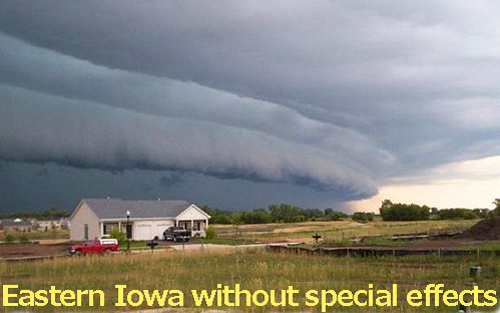
Have you heard the TV guy say, “not in a generation”, “hottest on record”, “never before” more and more? It’s not a fluke, Joe. Hurricanes and sharks in Cape Cod. Snow storms in Mobile. It’s hotter than we can stand for very long. We’re using Spanish words to describe storms that alone can take down Twitter.

Maybe the blind eye is ready to open up.

Too Much Kenyan Terror

Too Much Kenyan Terror

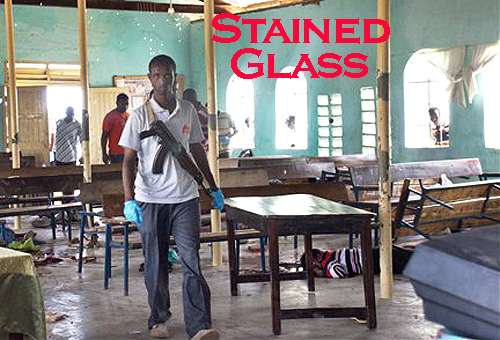
The biggest terrorist attack yet in Kenya against two frontier churches Sunday is the straw that breaks the tourist’s back.

At least 17 congregants were killed and more than 60 injured by two carefully orchestrated, simultaneous grenade and gunmen attacks Sunday on Christian churches in Garissa during morning services. Garissa is a large and fairly developed town about 150 miles inland from the Indian Ocean coast half-way between Malindi and Lamu.

The coordination of the two attacks by uniformed masked al-Shabaab fighters seriously increases the instability of the region and demonstrates a level of terrorism not experienced in Kenya before.

While al-Shabaab has not yet taken responsibility, it is a signature terrorist attack, capable only by organized fanatics. Shabaab is increasingly fractured in Somalia as Kenyan and OAU forces sweep through the country creating a stability there that hasn’t been seen for decades.

There are reports Kenya is ready to take the Shabaab capital of Kismayo shortly. This long awaited military victory would effectively end al-Shabaab control of almost all of Somalia.

But I guess one inevitable result is that those most fanatic of the fanatics will truly seek martyrdom as their own earthly kingdom crashes before them.

So while the news is good for even the mid-term in Kenya, as for Somalia, it’s terrible for tourism. The fact remains that Kenya has achieved good security outside the coast and the area which borders Somalia in the northeast. There have been attacks in Nairobi and elsewhere, but for more than a year they have been small, mostly bungled and of little more note than near random terrorist attacks happening throughout most of the world.

Nothing outside the Kenyan coast, for example, has begun to achieve the spectacle or precision of the Shabaab terrorist attack in neighboring Uganda.

Religious terrorist attacks, whether by the IRA in a London subway or al-Shabaab in a Kenyan church, cannot happen without local involvement. Somewhere close to the attack the devices must be assembled. The cars must be fueled or the subway tickets must be purchased. The eyes of a wary public always discover the suspicious.

The question is always whether the public eyes will unmask the perpetrators, call the police, or let them pass.

The Kenyan coast is Muslim. To be sure, Kenyan Muslim leaders condemn the attacks without exception. So this is totally different from Yemen or Afghanistan or even Pakistan where religious leaders are not uniform in their condemnation of the terrorists.

But this gives brother Muslims an edge; they look, act and speak similarly. And of course in a large population there will always be sympathizers, likely relatives. And the horribly stressful Dadaab refugee camp now approaching a half million users inside the Kenyan border becomes its own terrorist base. One of the ironic but inevitable outcomes of helping those dispossessed is that it also helps those who chased them away.

But a vacation, as wonderfully educational and enlightening as the better ones should be, should never be so worrisome about security that all the good parts are diluted. Kenya (of the coast) is Kenya (of the highlands) is Kenya (of Nairobi). The level of terrorism evidenced by the Garissa attacks Sunday is empirical escalation.

I’m afraid Kenya is just not the place to go, now.

Dipolar Biplomat

Dipolar Biplomat

Obama fires few, but he just fired our ambassador to Kenya, Scott Gration. Was it over the Mombasa warning last week?

The news is that Ambassador Gration “abruptly resigned.” But we all know what that means.

Several weeks ago, his boss, Kenya’s former ambassador Johnnie Carson, arrived to discuss the future of this high profile diplomat who has courted the Kenyan press, staged humiliating performances (such as when he carried a bag of U.S. donated grain off a cargo ship in Mombasa in defiance of a dock workers’ strike there), and fired more than a few salvos about Kenya’s parliament off command.

Most informed and educated Kenyans loved Gration and his “honest” style. Just take a minute to read the comments that followed Nairobi’s leading newspaper story about the resignation.

The problem is that these readers are so used to politicians who do nothing in the open, that Gration’s style was refreshing, and I suppose, encouraging. The problem is, dear Kenyan readers of the Daily Nation, it might also have been counterproductive.

What was so ironic about his tenure in Kenya was that it was the exact opposite of his previous assignment, as the U.S. special envoy to The Sudan. Then, he was widely criticized as being too soft. In fact it was widely reported the Kenyan job was a way of getting him out of area before the two-country election.

So this suggests someone who marches to his own tune. And you don’t get bin Laden or defeat al-Shabaab by marching to your own tune. It’s a team effort, and Gration may have been a one-man show.

He seemed perfect for Kenya. He was born in The Congo, grew up speaking Swahili, and could tunnel into Kenyan politics in a way few outsiders can.

The bomb blast last weekend in a bar in Mombasa which killed three people (no tourists) and which today seems to have all the hallmarks of an al-Shabaab terror event may have been the straw that broke the camel’s back.

The U.S. alert was pretty expansive, and remains in place today. It prohibits all American government travel to/from the Mombasa area through Sunday. It advises all Americans not to travel there.

Now that seems reasonable enough, doesn’t it? I mean after all a bomb went off.

Yes and no. Yes because a bomb went off. No because two other bombs went off in Africa last week with no American warning even to tourists:

* Abuja, Nigeria and also * Gari, Bauchi, Nigeria. Abuja is where the American embassy is located. And the U.S. has recently contributed to the development of tourism in Bauchi.

And no, because the U.S. has already warned everyone who’s listening not to go to local Kenyan bars. And Kenyans don’t listen to American travel warnings, and it’s not our job to instruct them, anyway.

(Oh, and there was also a bomb in San Francisco, possibly “ecoterrorist,” with no warning. Apologies for being flip, but there’s a point here.)

The U.S. public warnings on Nigeria as a whole and Kenya as a whole are about the same. And quite possibly Gration learned of the potential bombing in Mombasa while his counterpart in Nigeria learned nothing in advance of those bombings.

But the effect of the quick fire, high alert warning in Kenya has devastating consequences for its tourism and what exactly happened? Were one of the 40+ luxury tourist resorts bombed, or the airport bombed, or a main highway bombed, or bridge or port? No, a local bar was bombed. Exactly as has happened multiple times in Nairobi recently and last week in Gari.

This is the signature terror of Boko Horam and al-Shabaab. They’re after locals, not tourists. They’ve said often they don’t mind bumping off a few of those, too, but their targets are local.

Now that doesn’t mean that my company EWT will send anyone racing to Mombasa, quite on the contrary. Several times this week I discouraged inquiries about beach holidays in Kenya. But we aren’t discussing where you should go for your vacation. We’re discussing the appropriate diplomatic response to terror intelligence.

Kenya is actually doing a yeoman’s job against terrorism. As I’ve often written their invasion of Somali goes beyond impressive, almost capable of changing my world view about fighting terrorism. So far, God Willing, foreign visitors out of the fight zones have been untouched. Kenya’s cooperation with America has led to multiple terrorists leader eradicated or arrested.

So actually, in the War Against Terror, Kenya’s doing pretty well.

This doesn’t mean you should take a beach vacation in Kenya. But it is probably good enough for firing the man who jerks to warn his citizens about an event whose odds are won’t effect them.

All Sparrows Are Weavers

All Sparrows Are Weavers

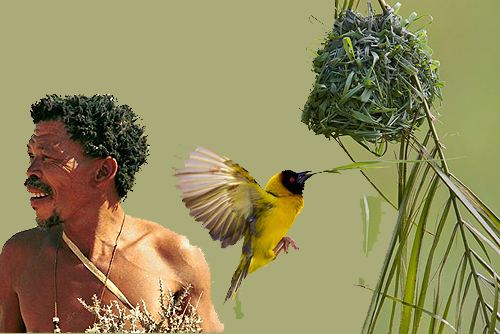
Saturday South African flags will fly at half mast as a bushman of the Kalahari receives a state funeral, a fitting tribute to a noble but conflicted lifeway in an increasingly modern world.

Did you laugh hilariously at the beautiful movies, “The Gods Must be Crazy”? The star and the cultural consultant for several of them was Dawid Kruiper, the San man who will be buried Saturday in desert dunes next to his wife.

The fame and fortune bestowed on him when the movie was released augmented an already proactive life dedicated to saving the bushman life style. In fact Kruiper’s activism began in the 1930s when as a little boy his family was evicted from its traditional lands.

He joined his family then in performing “folk ways” for tourists and his humiliation grew.

A Bushman’s humiliation is never external and rarely effects the sun-creased smiles.

The indigenous peoples organization, Survival, quoted him as having said:

‘I am a natural born. I have something inside of me that no one can take away. I am there always for my community, but I do things the natural way. I would say that our traditional lifestyle was much better… I am most comfortable like that, like the weaver bird. I can move anywhere any time. I can collect my home, my grass and rebuild my home… Like that bird, if I can just have freedom and rights, I would be happy.”

But to achieve the successes Kruiper attained, he had to change.

He took an Afrikaans name, to begin with. He studied Afrikaans and worked closer and closer with the modern community of Uppington, South Africa. His children are fully modernized. Only his wife continued to join him in the desert.

Yet he achieved many of his goals, and in 1999 South Africa ceded nearly 40,000 acres for “natural use” to the remaining Khoisan bushmen in Kruiper’s old clan. In effect the government deeded over a massive hunk of land to a handful of individuals.

Kruiper was also successful in getting both South Africa and Botswana to allow the remaining San people to continue to pursue traditional life styles in some shared Kalahari national parks.

These and many other San civil rights issues would have achieved far less prominence and chance of resolute success had Kruiper not crossed the line in the sand between purist living and modern politics.

His children will not carry on his traditions. Traditional San are disappearing. As he died in a modern hospital that helped him attain the ripe age of 76, schools, roads and enterprising little businesses are now found where endless savannah used to be.

There’s no reason to mourn this change. The house sparrow is also a weaver.

Ethiopia Journey

Ethiopia Journey

Dear EM,

First of all, read carefully the British travel advice to the country at this site:
http://www.fco.gov.uk/en/travel-and-living-abroad/travel-advice-by-country/sub-saharan-africa/ethiopia

Then, note that Ethiopia is one of the strictest dictatorships in Africa. Police and military are all-powerful. Tourists who have failed to comply with local laws and police directives have been jailed.

The above two cautions understood, the popular game viewing areas in and around Gambela and Konso are probably not advised. But the great wilderness areas with some game in the Simien Mountains, which include some of Africa’s finest treks, should be fine.

The two weeks you have scheduled there are perfect for what is known as the “Historic Route”, the triangle that includes Bahar Dar, Gonder and Lalibela. There may even be enough time to include Axum. I consider Lalibela one of the greatest sites in Africa.

Because accommodations are very limited once you’re outside Addis, you won’t have any choices as to where to stay when traveling in the hinterland. For that reason I’d trust your journey with a local agent as opposed to a reseller in whatever country you’re coming from. You’ll save a lot of money and be closer to the source of planning. You can find a number of reputable local agents using the internet.

Regards,
Jim Heck

On 6/27/2012 2:55 AM, EM Widmark wrote:
> EM Widmark wrote:
> Suggestions for 15-30 August 2012 in Ethiopia?

Tourist Killed Dot Com

Tourist Killed Dot Com

Saturday the U.S. and French governments issued special advisories warning their citizens about an imminent terrorist attack in the beach resort of Mombasa. Sunday the bomb went off; three died.

A few days earlier in neighboring Tanzania, bandits held at gunpoint all 40 tourists in a downmarket camp just outside the Serengeti, robbed them then killed the assistant manager and one Dutch tourist.

Also recently an Australian tourist was killed in a robbery attempt in Phuket, an American was shot during a robbery in a Belgian airport, a Belgian tourist was found killed in Nepal, an Israeli tourist was shot dead at the Israeli/Egyptian border, and backpackers were assaulted and knifed while hiking a famous North Island track in New Zealand.

These and 93 more tourist attacks are documented on the new website, touristkilled.com, under the rubric “Most Recent 100 Events.”

The site is updated every 10 minutes.

I don’t mean to minimize the significance of the two events last week in East Africa, but I want to point out in today’s world travel to virtually any place carries risk. Would you have worried about trekking in New Zealand before?

All countries provide travel advice. The U.S. site is seriously flawed, heavily restricted by Congressional funding and politics. I believe the best site in the world is the British site, and really the only one you need to refer to.

Mostly restricted by Congressional bickering, and heavily influenced by politics (neither Egypt or Israel is as safe as the U.S. claims for tourist right now) the U.S. site is limited to either actual or expected terrorist incidents, or to warnings that our embassies or counsels in certain places can no longer assist Americans for one reason or another (such as having been booted out of the country).

The British site on the other hand is not restricted by Parliament or politics. And it broadens the definition of “tourist safety” to include such things as disease outbreaks or strikes.

In 2009 the British Foreign Office ranked 73 countries most visited by British tourists in order of their likely safety should you choose to visit them, scored mostly by the percentage of tourists who died as a tourist.

Albania, Belarus, Hungary, Singapore, Ireland, Latvia, Slovenia, Belgium, Sweden and Austria were the safest countries in the world in that order. (By the way, the U.S. was 13th out of 73 ranked.)

The deadliest ten countries were Botswana, Burma, Ethiopia, the Philippines, Namibia, Ecuador, Venezuela, Thailand, Qatar and Uganda, in that order, and all of these received their bad rating because of violent acts against tourists or terrorism. A remarkable 1 in every 833 British tourists to Botswana in 2009 was killed.

Kenya and Tanzania were not among them, although Kenya was close.

But I dare suggest that travelers dissuaded from visiting East Africa were unlikely to have considered that a vacation in Botswana, Namibia or Thailand would have been more dangerous.

One of the reasons I think that Botswana and Namibia rank so high in Africa, is that more and more travelers are visiting these countries in self-drive vehicles. This, in fact, is the source of the violent acts against those tourists in 2009.

By the way, the FCO ceased simple compilations in 2009 of the “Best Ten” and “Worst Ten” believing it was misleading. The most recent report for 2011 will take you a bit longer to analyze, and with more data (such as arrests, deaths in hospitals from natural causes, drug violations, etc.) it’s not as clear as before 2010.

And I have to admit that I agree with the FCO. Scoring safety based on such few parameters as robberies and murders would leave my city of Chicago as the worst place in the world to visit, and I highly recommend you get there this July for the annual Blues Festival.

But I felt given the current stories out of East Africa this week, deaths from violent acts in tourist spots, we needed this perspective.

Violence against tourism is on the increase. This is because the world economic situation is on the decrease. The two have always been correlated; it’s common sense. The second most important reason for tourist incidents is the political and social stability of the region.

Those two reasons you should consider when planning your vacation. But just as I hope you’ll visit Chicago this July, they should not be the only reasons. Understanding the threats, traveling with guides and friends who know where to go and where not to go, exponentially increases the safety of your voyage.

The incident last week in Tanzania was isolated. Traveling to Zanzibar in Tanzania requires some caution, now, as a result of widespread religious riots there last month, but elsewhere it’s safe, certainly on the tourist circuit and certainly if you know where you shouldn’t go. The camp attacked last week is not a well policed camp and is on private land, not secured by national park rangers.

I continue to believe that Kenya requires special vigilance. It’s important to note that the incident last week was at a sports bar that while frequented by some tourists was mostly attended by local Kenyans. This is identical to the blasts in Uganda nearly two years ago, which was when al-Shabaab (al-Qaeda in Somalia) began to lose grip there.

Shabaab threatened these attacks and has continued to carry them out quite regularly, now mostly in Kenya as Kenya takes the lead in routing the terrorists from Somalia.

This coordinated terrorism has been augmented by banditry and other common crime including kidnaping exacerbated by the world economic downturn.

Vigilance is required is you rent a car in Orlando. Much more vigilance is required if you take an East African safari.

It’s always been that way.

Jack Daniels not Withstanding

Jack Daniels not Withstanding

So far, so good. The outstanding question about Egypt remains how extremely Islam doctrine will be woven into the new society. And we aren’t going to know that for a very long time.

When my wife guided a group of intrepid Americans to Egypt at the start of this year, she heard first hand presumptions from local Egyptians that tourism was incidental to most of their hopes and inspirations, especially to those held by the Muslim Brotherhood.

“Tourists will have to adapt or not come,” a pessimistic tour official told her, insisting that the new Egypt could choose to ban alcohol and inappropriate dress, two essentials of most tourists.

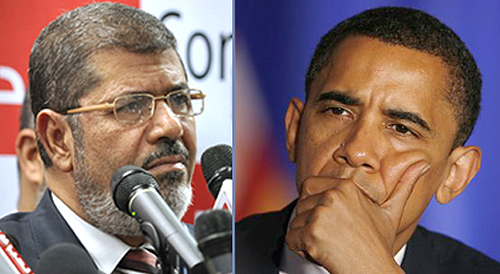
There are few national leaders whose surname is spelled so many different ways as Mohamed Morsi, the Muslim Brotherhood leader elected as Egypt’s first democratic president this weekend.

This is because few have bothered to translate it out of Arabic until yesterday, when his election was final. Arabic translations are transliterations. It will take a while for the English-speaking dominated world to agree on Morsi, Morsy or Mursi; Mohamed, Mohammed or Muhamed.

Perhaps, he’ll tell us what to do, and that’s been the problem until now. Senator Kerry has made two stealth visits to Egypt this year both times reportedly to talk to Morsi. The results of those meetings have been as unrevealing as the Brotherhood itself.

The Brotherhood has kept quiet counsel not just since the revolution but for the decades previously under Mubarak. They learned how to survive an oppressive regime by keeping quiet.

But there is little question what the most vocal of their supporters want – like the young student who spoke to my wife in January. They want a strict Islamist society, sharia law, abrogated treaties with Israel and Jordan and renewed ties with Iran.

But frankly I don’t think this is what Morsi wants. Extremists are not stealthy. The many decades that the Brotherhood matured under Mubarak tempered it. Morsi is a Ph.D scientist (engineering) who held a faculty position in the California State University system for three years. Two of his five children were born in California and are U.S. citizens.

He taught at Northridge in California, which to be sure is an area of extreme religions. So I don’t doubt his dedication to his own religion. And his veiled wife who has never appeared publicly with her husband allows herself to be characterized as “active in the Brotherhood.”

Well, Ann Romney is active in the Republican Party.

There are many of us good ole American liberals who believe the Israeli power grid needs radical redesign. Many liberals such as myself believe that Iran will change more quickly the more it’s left alone. And who among us will denounce campaigns to cleanse corruption?

If these are the issues that Americans most fear then we should fear Morsi. And if tourists are unwilling to save a bit of money by forfeiting evening wine, I wonder how awe struck the Karnak Temple would make them, anyway.

The methodical, unextreme way the Brotherhood has come to power in Egypt presages no quick, clear indication of their vision for a future Egypt. It reflects only their dogged struggle for power. But if Morsi’s cliched announcement that he is now the “president of all the peoples of Eypgt” is to be believed, I think the cruise ships on the Nile will be sold out in a couple years.

Jack Daniels not withstanding.

From the outside looking in we learn that democracy does not always achieve our preferences yet while hardly discounting our ideals. Now if we could only achieve that prescience from within.

Africa Bails Out Europe

Africa Bails Out Europe

How do you feel during the Holiday Season when you see a homeless person drop a coin in the Salvation Army’s tin?

A deepening world economic downturn, caused mostly by Europe, is having violent effects in Africa even as poor Africa helps to bail out Europe.

It was hardly two years ago that the American stimulus and Ireland’s spectacular comeback from the cliff had markets and spirits alike rising. And Africa seemed to be on a steady path of growth and prosperity. The Arab Spring, modestly violent in Egypt and Tunisia, was good news.

Africa’s situation couldn’t be more different, today.

Mali is essentially two countries, with a violent stalemate between extreme Islamists and a corrupt traditional government in Bamako. The Congo is blowing up, again. Nigeria is near catastrophic civil war in the north. Angola’s strengthening dictatorship provoked widespread demonstrations, yesterday. Uganda’s miserable leader yesterday took advantage of an eviscerated opposition by banning 38 organizations that had refused to denounce homosexuality. That’s the short list.

There’s some good news: Somalia, Kenya. But then there is bad news again: Egypt.

What’s going on, of course, is that the global economy is turning south.

That’s not an oversimplification, nor a rationalization. Even something as complex as Egypt can be explained as the generals’ growing confidence that their naughty ways won’t be interdicted because the big guys have more pressing business to attend to at home: their economies.

When the economy is improving, especially after the depression the world just experienced, no one wants to rattle the boat. The status quo reigns supreme. And that was the situation in much of the world and Africa in 2008-2010.

But when the economy goes sour, the prosperous hibernate, the middle classes begin to panic and the extremists forge strong alliances with the poor. The only salient political power that emerges is extremism. And that’s the situation, now.

So the culpable are those who did nothing, or did something wrong, in trying to remedy the world economic downturn. We’re well beyond what caused it; the new blame shifts now to those who did nothing to remedy it.

Europe.

You can’t tighten your belt while you’re losing weight and hope to put on some pounds. An undernourished kid has to reach critical mass before starting to exercise and build muscle. It’s called stimulus. (Athletes call it steroids.) The U.S. did it. China did it. South Americans did it and Africa did it big time, and they all struggled out of the hole.

But Europe didn’t, and now the world suffers. So what does poor Africa do? At the Los Cabos conference, South Africa pledged an additional $2 billion for the IMF fund designed principally as an European bailout. It did not go over well back in South Africa. But South Africa, the continent’s giant, knows that if Europe falls everything in Africa falls, too.

South Africa is unique among African countries to be considered a “developed country” instead of a “developing country” by world institutions. The classification was made shortly after World War I when the League of Nations appointed South Africa as the custodian of then Southwest Africa (now Namibia) taken from the defeated Germans.

It was a marginal call. In those days societies were seen as defined by their elites and upper class. South Africa’s huge and neglected black populations were seen more as a problem similar to America’s native Americans than as intrinsic to the society as a whole.

Nevertheless South Africa is significantly richer than most African nations and most visitors to its main cities and attractions find it little different from developed world cities and attractions everywhere. But since the end of Apartheid South Africa could have lobbied world institutions to reconsider its classification.

That wouldn’t have been easy, either. It’s not just a matter of pride, but of foreign investment, interest rates and much more. In the end South Africa’s new black rulers decided to retain the global classification.

And now they are fulfilling their responsibilities. And bailing out Europe who couldn’t figure out how to do it themselves.

The Discriminate Marketing of Death

The Discriminate Marketing of Death

Today Tanzanian officials confirmed that a pesticide banned in the US but still produced by an US agrochemical giant is killing elephants and people in East Africa.

The pesticide Aldicarb, responsible for a wave of child deaths in California in 1985, is banned from use in the U.S. and 60 other countries, but the EPA agreement with the manufacturer, BayerCrop Science, allows the company to still market, license and distribute it worldwide.

(As you can see from the comment section below, I over-simplified when referring to BayerCrop Science as an “American company.” When the drug was first found to be too dangerous to use in the United States, it was being manufactured by Union Carbide. But in 2002, more than 15 years after the litigation was in process, a newly-formed German consortium, BayerCrop Science, bought many parts of Union Carbide, including the manufacturing plants for Aldicarb. Aldicarb continues to be manufactured in the United States. It is simply that the ownership of the company has changed from American to German.)

So children and elephants are now being killed in Africa, because the American company continues to market and license it.

Again and again EPA agreements with big agrobusiness stop their murdering in the US but don’t shut down the production to stop the killing worldwide.

I wrote earlier about children and lions being killed in Kenya’s Maasai Mara with Carbofuran, manufactured by the US FMC Corporation. Like Aldicarb, Carbofuran is banned in the US and many other countries.

Of the 9 elephant poached in the Manyara and Ngorongoro regions of northern Tanzania this year documented by the Wildlife Conservation Society, officials presume watermelons and corn poisoned with Aldicarb were responsible. The Arusha Times reports that 14 elephants have been poisoned by the drug.

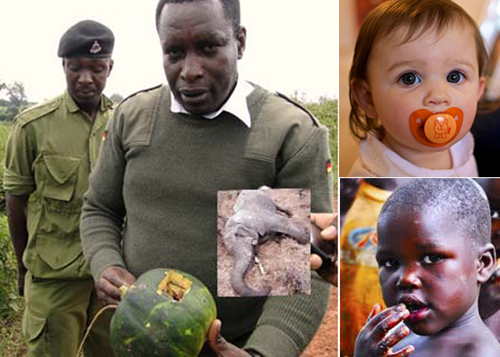
Today the Communications Manager for the Ngorongoro Conservation Area Authority, Adam Akyoo, stated unequivocally that Aldicarb was responsible for poached elephants found two weeks ago. At a news conference he displayed a watermelon that had holes drilled in it that was found near the killed elephants, and he presented a government chemist’s report confirming the holes were filled with Aldicarb.

Powerful pesticides like Aldicarb and Carbofuran are cheap and effective, as any strong poison is. In places like urban India both are used to control rats in the home. Aldicarb has proved specially successful in killing insects that threaten cotton crops.

In the developing world there is a heart-wrenching understanding that the use of such dangerous materials might be better than letting farmers’ marginal livelihoods be threatened or children getting plague and other rat-born diseases. A major debate in the world right now is whether developing countries should use DDT to eradicate malaria, as many in the developed world had done decades ago.

Part and parcel to the DDT debate, and near identical to the debate on global warming, is that the developed world must transfer wealth in some form each time the developing world concedes strategies that it otherwise believes remains overall beneficial to its society.

Yes, of course, this should be done. And it has been done on numerous occasions and continues to be through numerous debt relief programs between the developed and developing world. There’s no reason that pesticides like Aldicarb and Carbofuran can’t be included in these agreements.

In 1985 2000 people, mostly children, fell ill in California after eating watermelon on the 4th of July that had been dusted with Aldicarb, and this is what began the process that ultimately resulted in the pesticide being banned in the U.S.

Certainly that many, if not exponentially more, have died in Africa.

Advocates of the pesticides, most prominently the agrobusiness manufacturers themselves, argue that it is the prerogative of the each independent country to ban, or not ban, the product for sale. And that we have no right to force our beliefs on them.

Balderdash.

DDT, Aldicarb and Carbofuran are indiscriminate killers, and American companies should not be allowed to produce or profit in any way from them. Like many nuclear weapons, the method of manufacturing these pesticides is public.

If Indian companies want to make Aldicarb, they don’t need BayerCrop Science’s permission to use the company’s patent. They can figure it out themselves and would, if global patent law didn’t prevail – which it doesn’t when the US patent holder is finally stopped from any manufacturing.

American corporations should not profit from making murderous stuff and spreading it around a desperate world. If this is capitalism, then it’s time to dump capitalism for something less deadly.

How The Hayes is Pitted

How The Hayes is Pitted

Exclusion and redundancy are today’s evil culprits, not exploitation, says South African Richard Pithouse. And American Chris Hayes thinks this dollhouse is ready to collapse.

Two extraordinary thinkers both a generation younger than society’s current overlords, a half world apart, portend the end of capitalism … in my life time?

Pithouse almost says so, Hayes wouldn’t dare, even though it’s the essence of what they both believe. The difference between two privileged whites, one South African and one American. Yet both fear the consequences of making predictions.

I expect that you like me — whatever your political inclinations — are getting extraordinarily tired of politics. And politics dominates everything. I’ve been an obsessed NPR listener for decades, but now I find myself switching off the morning radio. A news junkie incarnate, I’m beginning to miss the opening of the evening news.

When I scan the web, or browse the cover of the too many magazines that still arrive my doorstep, I look hopefully for little doggies jumping up and down or beautiful ladies smiling unabashedly under their Easter hats. I haven’t yet subscribed to the National Inquirer.

And then, crashing through my ennui and disintegrating the daydreaming of being a little boy, again, march these two whippersnappers, like terminators of spring time, tornadoes ushering in a horribly long and hot summer.

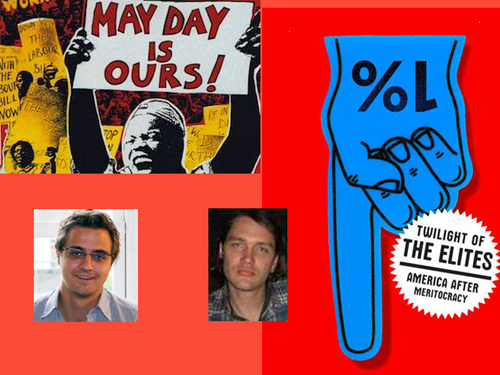
Hayes’ book Twilight of the Elites has just been published and is a masterful history of what Marx portended as the last stages of capitalism: when meritocracy (a favorite Hayes’ term) excludes (Pithouse’ favorite term) all those qualified from any endeavor unless they’re a part of the in-crowd.

Hayes does a nice job of creating this theory carefully substantiating how in America meritocracy has come to be defined more by inherited wealth than anything contextual like knowing how to add numbers.

“And,” writes Pithouse,” the authoritarian and predatory nature of some factions in the ‘political class’ [read: ‘meritorious rulers’] cannot be denied.”

What really bothers me about these guys is that they are phenomenal observers and accomplished historians and I’m tired of both. Hayes has a weekly weekend TV show on MSNBC that is catapulting him into a limelight he might currently be disavowing. The show describes itself as “interviews, and panels of pundits, politicos … from outside the mainstream” even as he becomes mainstream.

Pithouse hasn’t the luxury of becoming a famous white man in South Africa, today, so he burrows within the academic community (Rhodes University) writing enticingly provocative blogs that need considerable editing.

Earlier theorists might have characterized these personal struggles as dialectical. That thought’s enough to send me back into dreaming about milkweed.

Alas to the rescue Alexis Goldstein.

Goldstein is the author and guru of HTML5 which will show you “how to use CSS3 without sacrificing clean markup or resorting to complex workarounds.”

This no nonsense approach to building your website has honed his mind. No fluffy HTML4s or 3s or phps or any of that junk. Just get to it.

And his critique of Chris Hayes is similarly just-get-it-done and right on:

“My great hope for “Twilight of the Elites,” is that readers will put down this book, and join us in the streets. Beginning with Hayes himself.”

But Pithouse suggests the two of them might not be seen in the street, soon:

“…tactics like occupations, road blockades and vote strikes are central to the grammar of the new struggles,” but are “being forged by people who have been rendered surplus to capital rather than exploited by it.”

It remains to be seen if Hayes’ book or Pithouse’s tome of published literature will make either of them rich. But I doubt either of them will be considered surplus.

I’m tired, guys. My generation is tired. You aren’t saying anything that we didn’t scream in the sixties. You’re incredibly smart and you’ve found remarkable new paths to the same conclusions good folk have made for generations, but … where’s the meat?

You aren’t in the streets, and I don’t want you to be in streets, because then you might be killed or maimed like Rodney King and you wouldn’t be able to explain why we should all be in the streets.

So both can be pardoned for not exactly saying what they mean or doing what they should say. And both can be excused for their periods of confusion as they navigate their personal lives to achieve some prominence so that their ideas matter.

And who knows if either will ultimately embrace their own principals. But it’s very good fortune for those of us with some hope that things really will change. (But not by them, right?)

Tusks For Terrorists

Tusks For Terrorists

Until recently Republican obstructionism in Congress hurt few but us Americans. Now, it’s seriously hurting Kenya and harming Somali peace while supporting al-Shabaab!

This is a no brainer. Kenya Wildlife Service (KWS) director, Julius Kipng’etich, told the Senate foreign relations committee last week that Senate Bill 1483 (if it became law) would drastically reduce elephant poaching in Kenya and dramatically escalate Somali peace.

Senate Bill 1483 has no chance of passing. Only 3% of the Senate bills this Congress have passed, and despite widespread bipartisan support, and a bit of chance it would pass in the Senate… no chance in the House.

So even before we discuss what the bill means, who presented it, who supports it, what it does … even before anything substantive about the bill, we know it won’t pass because the House won’t pass anything.

And even before I tell you what it means, I’m going to tell you that the Wall Street Journal, not exactly a bastion of progressive ideas, coyly supports it.

But here’s what it would do, if it could:

The bill is an amendment to the Homeland Security Act that would require all U.S. corporations to reveal their “beneficial owners.” Right now business entities are created under state laws, and those laws do not require the individuals who control the corporation be named. They only require the officers of the corporation or the agents of the corporation to be named.

In money laundering scams, “shell corporations” are created with officers and agents who are beholding to the true overlords who remain unidentified. For example, Somali al-Shabaab opens a bank account in the Canary Islands. Canary Island bank law is so lax that there is nothing in Canary Island records to show this. Instead, for example, John Doe is shown as the CEO.

Like a Swiss bank account, the manipulation of that account is done by number keys.

Next, a “shell corporation” is opened in Delaware, with Jim Heck as CEO, you as treasurer, and so on. This “shell corporation” sells consulting services to Sheik al-Doe in Somalia. Sheik al-Doe, an al-Shabaab leader has just slaughtered an elephant and sold it to Asians for cash. He wires the cash to the “shell corporation” and the corporation moves the money into the Canary Islands account controlled by the al-Shabaab leader.

The terrorist now has easy and legal access to his safeguarded funds, and because the deposits into the account come from an American corporation, the illicit money trail is disguised.

1483 would put an end to this. It would require the “shell corporation” to name its beneficial owners, which are the individuals who control the Canary Islands account, i.e., the terrorist.

Kipng’etich explained that al-Shabaab is poaching elephant and rhino from Kenya’s Arwale and Meru national reserves, selling them on the Asian black market for enormous sums, remitting it illicitly into American bank accounts that transfer it to foreign off-shore accounts, thus safeguarding the funds in the global banking system.

It’s quite interesting that Senator John Kerry, the committee chairman, brought Kipng’etich to Washington do this. There were plenty of other experts on hand to say the same thing.

Of the many who testified, Tom Cardamone of Global Financial Integrity was the most comprehensive, presenting sheaves of evidence about money laundering in the U.S., a good portion of which is through the sale of drugs and ivory.

So Sen. Kerry is digging to the very source, and notably, not a single Republican Senator challenged Kipng’etich’s testimony. But …

… the bill won’t pass. Needless to say it would do us all a lot more good if it did, and it would provide a specially powerful tool for Kenyan anti-poaching.

But it doesn’t matter. Nothing seems to matter. The answer these days is always NO.

Whose Creation of the World?

Whose Creation of the World?

A Congolese ballet currently moving through Europe’s summer festivals strikes a remarkable difference between American and European compassion to Africa. Maybe compassion per se.

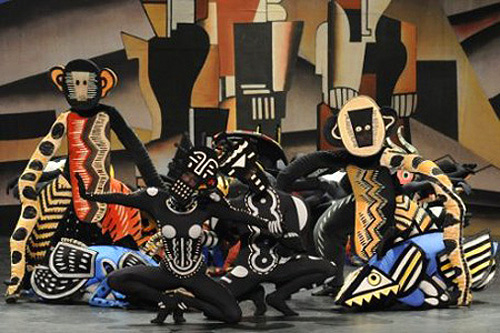
Congolese choreographer Faustin Linyekula is currently restaging a near century’s old ballet called “The Creation of the World” that was first produced in France between the world wars. At that time it was widely called “The First Negro Ballet” since its depiction of emerging humankind was black, and as such, included pioneering black performers at a time when blacks worldwide were pretty much confined to trumpets and drums.

It became impossible then, and remains impossible now, to view this ballet as anything more than white people’s fantasies about black people’s existence. Racism in its most theoretical forms.

The ballet’s storyline is basically biblical, but the world that emerges is not flowering with white lovers under a perfectly formed apple tree. Instead, mankind births into something rather depressingly horrible: skin without bodies, torsos without hearts, and babies in abject suffering. Essentially, mankind without a soul.

And in the Bible’s remarkable way of accepting suffering as simple destiny, it prevents the viewer from leaping to any remedy. There is no hope things will get better in the ballet. The story ends in misery.

Linyekula’s thundering question is “How could they not see the suffering?” The English translation was made by Radio Netherlands after Wednesday’s performance in Amsterdam, and it’s right on.

More exactly Linyekula means why did they not react to the misery during the colonial age, and now, why are non-Africans not assisting Africa more than they are?

The question begs the question about compassion. And it’s logical that those who are responding most compassionately (Europeans) will also be challenged more often (than Americans who are doing less) that they are still not doing enough. That’s what Linyekula is trying to do: tug on the European’s guilt, egg them on to even greater compassion.

“The Creation of the World” wouldn’t succeed in America, today. Like anything troubling, there is a threshold of assumed responsibility, and I believe Europeans have a greater tolerance for heavy lifting in Africa than Americans. A greater compassion.

It would take me a book to dissect the cultural facts of current European antipathy to immigration vis-a-vis its greater compassion to mankind as a whole than American’s. But I do believe that:

Americans are fast losing their compassion, compassion for almost anything but themselves. Whether Europeans in contrast are growing more compassionate and tolerant is hard to measure on its own, but in contrast to America they most certainly are, despite the wave of anti-immigration sentiment polluting Europe, today.

The ready measures of this regarding Africa specifically are foreign aid and private investment, government engagement (military or otherwise) and free trade agreements. In all these areas, Europe is racing past America despite Obama’s attempts to stay even.

Europe is in a much worse economic situation than America. Why, then, is Europe reaching out to Africa more than America? The first reason is because of America’s current obstructionist Congress. But there are deeper reasons as well.

Europe is closer to Africa than America, so trade and investment is easier. It has more immigrants from Africa and it has a more pressing problem of refugees from Africa than America. But there’s an even more important reason in my view: there’s more guilt.

Few societies in the world used and profited from slavery as much as America, and we all know where they came from. But that’s perhaps too long ago for any residual guilt to move us in any contemporary fashion to greater compassion. The colonial period in Africa which emerged as slavery was being ended was dominated by European powers and lasted for a very long time. It’s not “so old.”

That was a mostly wretched period in world history. Parliaments in Portugal, Belgium and France have all apologized and paid reparations for their society’s unjust colonial involvements. The Catholic notion of repairing past wrongs by dropping a penny in the church’s collection box is a very European notion.

(And, by the way, it often works and has a much greater impact than lovely speeches about morality and compassion.)

To be fair, though, the production is not being swallowed whole in Europe. Linyekula actually extended the ending of the original production exaggerating the “misery.”

A respected French arts critic, Marie-Valentine Chaudon, asks “Does Linyekula go too far” implying European disinterest with the African suffering she accepts was in large part caused by the colonial period.

Perhaps. But what saddens me is that “maybe too far” in the European mind is outright “extra-terrestrial” in America’s, today. And while I’m no dance critic, I think the art Linyekula clearly has turned for political and social purpose is extremely valuable.

And I sorely wish we in America could achieve the same level of self-inspection with regards to racism, with regards to our lack of compassion.

Rhino RipOffs

Rhino RipOffs

Despite my better reasoning I can sympathize with poachers just trying to survive. But when rangers and other paid officials participate in the crimes, my blood boils.

Several weeks ago Serengeti officials admitted that two of the Moru area’s 31 black rhinos had been killed by poachers… in April! We probably wouldn’t even have learned of this if the Member of Parliament for the area hadn’t announced the killings at an irate press conference the end of last month.

There’s only one reason park authorities kept the lid on the story: they’re a part of it.

When the Minister of Natural Resources & Tourism read about the MP’s press conference, he immediately fired 4 park officials and suspended another 28.

And I won’t be the least surprised if all the posturing, firings and elaborate news conferences are simply part of a smokescreen to hide the culpable.

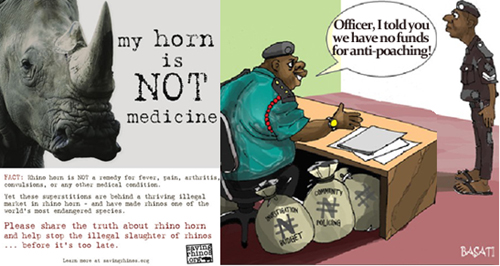
The demand for rhino horn is skyrocketing as Asian economies emerge from the recession. The main markets for rhino horn are Vietnam and China, where apothecaries use them in combination animal powders primarily as fever reducers. Ever heard of aspirin?

The great irony is that the rhinos which were killed were progeny of black rhinos removed from the Serengeti more than 20 years ago and nurtured in South Africa as a strategy to protect the species when poaching was simply out of control.

I remember in the early 1980s when I was with one of my photographers in Lake Manyara on a routine photo shoot. He was an ex-Marine and hunter and as we were inconsequentially continuing down the lake side road we saw a mid-size rhino dead in the grass.

Ken, my photographer, got out of the vehicle and examined the very recent kill. The horn had been sliced off, but he believed he could tell the type of gun which had successfully made the heart shot.

We raced back towards park headquarters and passed some rangers walking along the road. I stopped the vehicle to explain to them that a rhino had been poached several miles back, but they insisted they knew about it and that it was a natural death.

Meanwhile, Ken was whispering in my ear that they carried the guns that killed the animal.

The temptation of insiders to stage an in-house crime increases as the loot does, and right now the loot is high as regards rhino horn. It was back then, too, when ranger salaries were so pitifully low. By our standards they’re still low, but nowhere near where they were, and now many would argue quite reasonable.

But what isn’t reasonable is what Asian consumers will pay for pulverized carotene of priceless, endangered animals, to use as medicines that don’t work. Much less the governments complicit in their crimes.

There are many more people wrapped into this evil doing than the simple poor two rhino that were killed.