Not Paleontology’s Waterloo

Not Paleontology’s Waterloo

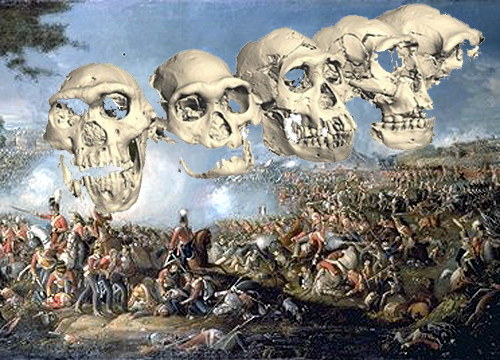
EpicPaleoBattleBe cautious about the headlines out this week regarding new early man finds in Georgia (former Soviet Union) suggesting there was only one species of early man.

A 1.8m-year old early hominin found in Dmanisi, by a team from the Georgian National Museum looks like “the earliest form of Homo erectus,” according to the current star of paleontology, Tim White, but was found together with four other hominin that previously would have been considered separate species.

This suggests, the Georgian team argues in this week’s Science that there was really only a single lineage of hominin and not the multiple branching lineages we’ve presumed to date.

In other words, the nearly two dozen named separate species and sub-species of early man that define current hominin paleontology is wrong, and there was only one species with great physical variation.

The Georgian team suggests the variation in physical appearance and brain size of currently living humans supports this view as well.

A number of respectable journals like National Geographic and the Economist Magazine are saying as much, too.

Be wary. Not everyone agrees. Tim White’s pronouncement at a glance of the evidence that the find is a homo erectus suggests he doesn’t believe so.

“I think they will be proved right that some of those early African fossils can reasonably join a variable Homo erectus species,” Chris Stringer told London’s Guardian. He continued:

“But Africa is a huge continent with a deep record of the earliest stages of human evolution, and there certainly seems to have been species-level diversity there prior to two million years ago. So I still doubt that all of the ‘early Homo’ fossils can reasonably be lumped into an evolving Homo erectus lineage. We need similarly complete African fossils from two to 2.5m years ago to test that idea properly.”

The recent paleontological star, American Lee Berger from the University of Witwatersrand who discovered Australopithecus sediba answered “No” to London’s Guardian’s question as to whether the Georgian find will radically alter the early man ancestral tree.

“This is a fantastic and important discovery, but I don’t think the evidence they have lives up to this broad claim they are making,” Berger continued.

I find it incredibly exciting how beautiful the now five finds from the Georgia site are, and certain in the years to come they will provide enormous science.

And maybe it’s just because for 30 years I’ve been telling my clients a story as we stand in Olduvai that could be significantly changed, if some of the more radical claims prove true, that makes me so skeptical.

But I don’t think so. Rather, I think it’s a reflection of our increasingly conservative times and scandalous media that otherwise respectable publications like NatGeo and the Economist will leap to such early conclusions.

It’s quite possible that the science from Dmanisi will simplify an admittedly too complex branching tree popular today: It’s quite possible that Homo erectus had far more variation than we previously thought.

But the notion that there weren’t multiple species of homo is not yet supported by the science, despite the attempts of the Georgian team to imply such. There is nothing yet to suggest that these finds were the same species as Homo habilis or Homo sapiens.

Ultimately, of course, it would only be the ability to analyze whatever nano traces of DNA might still be extracted from these stone fossils that could tell us for sure. The nature of fossil creation makes this highly unlikely, but I think the likelihood of such is greater than the claims currently being echoed in the popular media.

It heralds back to the epic battle of the 1980s between Donald Johanson and Richard Leakey. Johanson, discoverer of Lucy, was certain the hominin line was linear. Leakey was the champion of the multi-branching theories.

That battle ended in 2000 when Johanson conceded his mistake by writing in Time’s millennium addition why Leakey was one of the most important men of the 20th century.

So stay tuned, dear reader. And you’ll have to stay tuned for quite a long while, because while this won’t take quite as long as it did for erectus to be replaced by sapiens it’s not going to be a battle that ends soon.

My Brother’s Slave

My Brother’s Slave

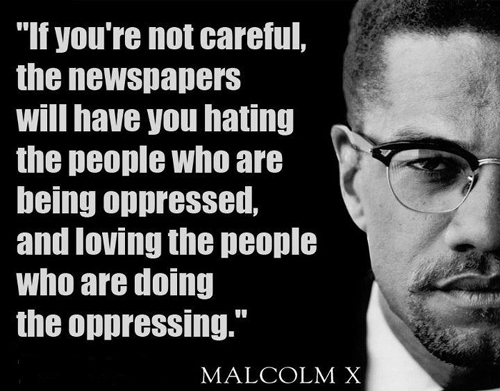
malcolm-newspapersAfricans mostly blame Republicans but more so blame America’s political system for the catastrophe that could have destroyed them last night.

Of all Africa’s 54 countries, South Africa has the largest economy, and it’s roughly one-twenty-fifth the size of the United States economy. After South Africa comes Nigeria and Egypt. Together those three economies are roughly ten times larger than the combined economies of the remaining 51 countries.

For further example of the importance of scale and how disastrous the debt ceiling catastrophe could have been to Africa, consider East Africa (Kenya, Tanzania, Uganda, Ethiopia, Rwanda and Burundi).

The largest of these economies is Kenya. Its economy is roughly equivalent to the economy of the greater St. Louis metropolitan area, roughly one-two-hundredth the size of America’s economy.

Why does this matter?

Because despite the wide variation of political systems that govern the various African economies, they are all totally and mercilessly dependent upon the dollar.

The value of South Africa’s currency, the Rand, leaped and plummeted in near lock-step with the U.S. stock market, valuing the potential of a deal. When it was finally reached late last night, the Rand increased to its highest level in months.

Most of the world’s gold and diamonds come from southern Africa, and their belly fundamentals are slowly becoming linked to the Rand. In one fell swoop last night, when Obama signed the law to reopen the government and raise the debt ceiling, South Africa’s GNP projections rose by nearly 3%.

A South African considering a vacation to Disneyland could now possibly afford it, where as Tuesday, it was out of the question.

For the much smaller economies like Kenya the catastrophe could have been apocalyptic. The undeniable sudden end of AID and other financial instruments that keep these emerging countries operating day to day, would be switched off.

No petrol for cars. No food for the slums. No spare parts for the hydroelectric damns that produce the country’s electricity. And no extraordinary measures to be sure of the less clear but well known security to contain terrorism, like al-Shabaab.

It was no small deal for Africa. To say those countries’ businessmen and financial leaders had stopped breathing waiting for Obama’s signature is no exaggeration.

“But, the political deal reached on Wednesday does little to set the world right again,” wrote a South African analyst this morning. “Too little, too late. Once again, the symptoms have been addressed, rather than the problem.”

Africans don’t understand this, either:
“Numerous polls show Republicans have taken a hit in public opinion. A Rasmussen poll on Wednesday showed that if congressional elections were held today, 78 percent of Americans would like to see the entire Congress thrown out and replaced.”

That was a widely published report from Africa by Reuters. It’s confusing because in most of the world democracy is run by Parliamentarian systems, and mechanisms would already be functioning for an immediate new election, and we could, in fact, throw all the bums out right away.

But not in America.

“The vote was weird.”

“Drama queens the lot of them.”

“It appears this whole shutdown was so that Cruz could get some votes in his home state.”

“62 percent of House Republicans oppose deal: Bolded bit for those who think both parties are the same.”

The above from an active chat site in South Africa.

“Talk about leaving it on the late side,” wrote South Africa’s FSP Invest’s principal editorial today.

Last week Warren Jeffrey of FSP Invest wrote, “America’s playing chicken with your money…”

Now I know there are a lot of Americans who could care less that distant African nations will really be the ones to feel the tumult of our actions before we do ourselves.

There’s this widespread selfishness in America that what we got we deserve, and what they got is because they did something wrong.

Despite that being ridiculous, it doesn’t even matter if it were true. America for no other reason than its size and success has a responsibility to the rest of the planet, to the universe in which it finds itself king.

Fate or hard work, it doesn’t matter. The world depends upon us. Just as the poor sop on Wabash Avenue out of work for 9 months depends upon us all. DEPENDS UPON is a concept most of the world gets and lots of Americans don’t.

Charity begins at home. And if we just get that one right, we’ll automatically be extending charity to the rest of the world.

A little compassion, eh?

Beware Mami Wata

Beware Mami Wata

westafricanmanateeSome very deep West African superstitions may be the last great barrier and yet also the last great hope for saving the rare African manatee, a creature on the brink of extinction.

The manatee and elephant share a common ancestor they evolved from about 100 million years ago. Their evolutionary story is pretty well known, but unlike the South American (Trichechus inunguis) and West Indian (T. manatus) cousins, the West African manatee (T. senegalensis) has only recently attracted conservation efforts. In part this is because so little was known about the animal and some scientists had long ago thought it extinct.

The South American manatee lives in fresh water; the other two in salt water, and it’s the West African manatee’s habitat mostly among coastal mangrove swamps and inland marshes that so threatens it.

All three types are slow moving and big, so easily hunted. They feed on certain vegetation also preferred by a number of other marine species that are widely harvested for food, so are usually considered competitors with local fishermen.

For the last seven years saving the West African manatee has been led by a single woman, Lucy Keith Diagne, born, raised and educated in Florida among the State’s prized marine mammal.

It’s been an uphill battle for Lucy, particularly because much of the manatee’s West African range extends into politically troubled areas.

Lucy and others have discovered, though, that the population might be protected at a critical bottom level by local superstitions.

West African spirit beliefs and myths are still very powerful forces in most rural cultures. In ancient times they provided the basic beliefs to all the early societies along the Niger River, which became the basis of Brazilian voodoo, for instance.

So while war is the most formidable obstacle to researching and protecting a wild animal, Lucy discovered that superstition might be, too, but in a surprisingly positive way.

Mami Wata” is a complex female spirit in West Africa that remains powerful throughout much of the manatee’s range, and frankly, the manatee looks a lot like what I would imagine Mami Wata to be!

Mostly positive and protective, Mami Wata can nevertheless be angered and raised into terribly destructive engagements with people, cursing them to death. For this reason she is mostly left alone and intentionally ignored.

In many parts of rural West Africa it’s presumed the only people who dare to engage Mami Wata are fugitives, renegades and show-offs who usually meet a dire fate.

For this reason, few in these rural areas of West Africa will help researchers locate much less study a manatee, but at the same time the attitude affords a natural protection for the animal.

It will be a long time before this barrier to greater understanding might be developed into sustainable conservation the way Florida has. Manatee in Florida are most often associated with Disneyland and other family fun vacations where certain attractions advertise swimming among them.

They are gentle if bumptious creatures, sometimes called underwater Teddy Bears. In the numerous places in Florida and the West Indies where they’ve been habituated to human swimmers, they are curious enough to produce exciting encounters, but too slow moving to be considered anything but gentle despite their size.

Declining populations in Florida and the West Indies were turned around by making the animal a tourist attraction rather than a hunted animal. The State of Florida designated the manatee as its state marine animal in 1975 and since then a number of programs have so well protected them that the population is now stable.

But it will be a long time before traditions change enough in West Africa that an estuary owner will agree to bring tourists into his pond to swim with Mami Wata.

But that may also be the reason Mami Wata still exists.

Columbus Would Have Turned Back

Columbus Would Have Turned Back

Today is Columbus Day in the United States, a federal holiday.

“Columbus Day” for my African readers has always perplexed them. After all, we know that Columbus didn’t land in America, but in the West Indies. So it absolutely strikes non-Americans as a fickle holiday in a country that’s known to not have many.

This year, though, it has special meaning. We in America normally take long weekend breaks much deserved and anticipated around days like this. For those of us living in The North it’s always a beautiful time as the trees change color and the frost of winter appears on our morning windows.

But this year we aren’t relaxing a bit: Americans are glued to their TVs and radios anxiously wondering if our elected leaders will keep us from the abyss of complete financial collapse … due Thursday.

All but a handful of states suspend many elective services, schools are closed, all banks in all states must be closed, and there’s no mail delivery. The holiday was proclaimed in 1937 on the 400th anniversary of the arrival of Christopher Columbus into the Americas. So this year, with so much of the federal government also closed, America is really chilling out.

Many large cities, including New York, have huge parades. Over the years the celebration has taken on an ethnic tone, celebrating Italian heritage.

Many of us would normally take short road trips to country house BnB’s and tiny towns further north to enjoy the fall colors.

But this year the only color we see is red. The country is angry, today.

A Horizon of Peace

A Horizon of Peace

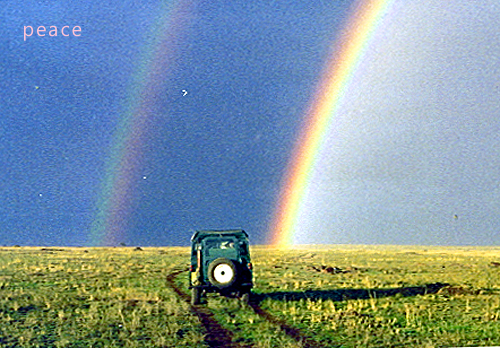
peacedoublerainbowMilitarism in Africa is growing fast, started almost the day Obama began his first term, and now totally out of the closet. Across the continent, successful wars – both waged from abroad and locally – are bringing stability to a continent known for its instability.

News this week from probably the most troubled place on the continent, the DRC-Congo, suggests that ace South African troops and Tanzanian soldiers are cleaning up a place that has been known for nothing but blood and brutality for nearly 40 years.

With enormous French involvement, Mali is once again stable, its terrifying short submission to al-Qaeda in the Maghreb completely ended.

Yesterday, the UN Security Council approved strengthening its military involvement in the CAR, which descended into chaos about six months ago, a perfect domino example of Obama’s chasing what was left of al-Shabaab through Uganda and the DRC.

And Kenyan forces (trained, guided and funded by Obama) has pacified most of Somali. And we all know about Egypt, where that country’s short flirtation with real democracy was ended by its own military.

Africa is the second largest continent in the world with more than a quarter of the world’s countries and about a sixth of its population. But there is no question it is the most widely troubled continent.

There are places like Korea and the Mideast where conflict is more intense and concentrated, but look over a period of a decade or more, tabulate the casualties and miseries of wanton guerrilla war and untold brutality, and Africa wins.

Lack of strong governments and the consequential lack of development that follows has kept the Dark Continent darker than we could ever have imagined. Until, perhaps, now.

I think that the fatigue of war is the reason we see new stability. African societies are exhausted by conflict, and this is hard to explain, because it isn’t as if a single individual like you or I closes his eyes and throws the back of his hand onto his forehead in exasperation as we recount the chapters of conflict in the past.

Many people in these conflict areas die as children. More live an entire life in conflict, navigating their daily routines through competing authorities that are usually swiftly brutal if disobeyed.

In many cases like the DRC-Congo, multiple generations have plowed through their lives in a virtual anarchistic state, learning to submit to nothing but violence. Concepts like democracy or peaceful change are foreign if laughable. You do what the man with the gun tells you to do.

But as these conflicts were not settled for so many years, they festered and grew. At the periphery were more developed societies that were suddenly impacted by refugees, disease and trade disruptions.

That’s what’s happening in the DRC-Congo, now. “Peacekeeping is changing,” writes South African analyst Liesl Louw-Vaudran, because “there was no peace to keep.”

So the UN Security Council’s attempt to send peacekeepers into the Congo wasn’t even good enough to stop the M23 rebels from earlier this year taking over the main city of Goma where the UN peacekeepers were garrisoned.

The South African and Tanzanian brigades aren’t as polite, receiving their mandate not from the Security Council but from the African Union. Not satisfied with protecting any status quo, these guys – like Obama – are chasing the bad guys away.

Obama’s strong and sustained hunt of terrorists has cleaved the continent with war, as American and French covert forces, with their Kenyan and Ugandan proxies, disrupted one terrorist group after another.

But five years into the exercise, with drones like birthday balloons all over the place, it seems to be working.

The spectacular terrorist attack on the Westgate Mall in Kenya several weeks ago, much less the less spectacular but terrifyingly frequent smaller attacks the country has been suffering almost on a weekly basis, is the expected reaction to this growing militarism.

And it will continue. As the bad guys are routed from the cities, they will regroup in the hills. And then as they’re chased from the hills, they’ll regroup in virtual space as we learned when investigating the Westgate attack.

And while they don’t command attack helicopters, they’ve figured out pretty awful IEDs.

So it’s hard to see an end point. Yes, the conflict points have been pushed much further away from most of Africa’s peoples than ever before, and this is why the continent is becoming more peaceful. But they aren’t gone.

And until the fundamental motivations for those conflicts are more fully resolved, they will never disappear.

Halloween is Early

Halloween is Early

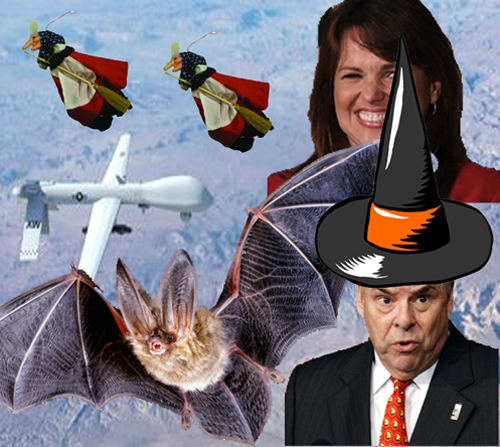
Halloween is EarlyFew commented on Swaziland’s serious law banning flying witches in May, but this week a Zimbabwean newspaper took up the issue as an editorial.

Don’t laugh.

Swazis believe in witches, and the misaligned hill of a country, surrounded by South Africa and still ruled by a monarch, has been neglected by the world and this is the result. Zimbabwe, on the other hand, has had almost as much global attention as climate change, so what’s going on?

First, the facts. Swaziland has one airport, Manzini, at its capital, and until the end of apartheid it was something like an Indian reservation is in the U.S. With unregulated casinos and call-girls, the morally strapped South African used Swazi as an erotic escape.

With the collapse of apartheid in the mid 1990s together with many of its morally constrictive laws, Swazi’s popularity descended rapidly. One could argue it started to reverse itself altogether and revert to the precolonial period.

Recently, South Africa bailed out Swaziland the same way the U.S. bailed out Chase. The country is riddled with scandal and corruption and ruled by a highfalutin king who may, in fact, never be on earth any more than the witches that apparently beset his sovereign land.

The May law goes much further than just banning witches from flying higher than 150 meters above the ground. It also bans toy helicopters and kites. This because a wicked activist protesting the king’s behavior, Hunter Shongwe, was caught with a toy helicopter that had a video camera on it. Drone.

Zimbabwe, on the other hand, has so many awful problems of its own, why would it descend into the unprovable abstract? Exactly. An “editorial” in Zimbabwe is capable of getting its writer hanged or tortured, and there’s just so many things you can say pleasantly about one of Africa’s most ruthless dictators of all time.

So Zimbabwe Standard editorial writer, Leo Igwe, produced this earth shattering opinion that “we should disabuse ourselves of belief in flying witches” and castigated neighbor Swaziland for ”embarrassing” itself.

“Embracing superstitions should call into question a people’s mental state and cause others to question their claim to rationality. Making superstitious claims should reinforce the idea that some human beings are backward, trapped in the pre-modern age and still down the ladder of human civilization, in an unenlightened state.”

Talk about the pot calling the kettle black.

Forgive me, but this got me thinking. You can’t prove there aren’t witches. Well, actually, you sort of can. By aeons of no proof of a flying witch, it’s reasonable to deduce that there aren’t any.

Similarly, by repeated attempts from the American Right to suggest the economy grows by trickle-down economics and then it doesn’t, you can also surmise it won’t work if tried, again.

But Swazis clinging to their superstitions because they haven’t been definitively disproved, and Republicans believing they will create jobs by strangling the government, are ideas grasped by poorly educated folks with an imagination as big as a pea.

And yet it continues. So much so that the Zimbabwes in the world, like the Peter Kings in the Republican Party, decry such foolery to deflect attention from their own short comings.

Witches won’t crash. Economies crash.

Revealing the Terrible Truth

Revealing the Terrible Truth

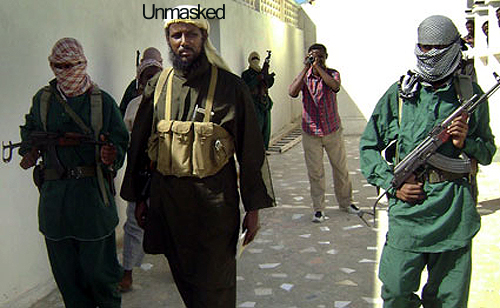
ShabaabfightersThis past weekend’s Navy Seal operations in Libya and Somalia mark a turning point in the Obama Administration’s successes against terrorism in the U.S: the Somali raid in particular has made America more vulnerable now to terrorism.

I’ve not been a particular fan of the five years of growing American military involvement in Africa, but as I’ve written my judgment was suspended because it seemed to be working … for America. It was definitely not working for Africa.

The Westgate Mall attack, and a year before an even great attack on a bar in Kampala, were all announced revenge attacks for military successes ostensibly achieved by Kenya and Ugandan armies.

They were more fundamentally military actions by France and the United States, using Ugandans and Kenyans as their proxies. That fact alone is disturbing. It’s a bitter return to Cold War mentalities on how to resolve conflicts.

But the covert operations, in spite of lots of good professional journalism that unmasked the French and American involvement, seemed to be making America safer as Obama systematically took out his enemies one by one through drones and targeted battles.

But last weekend’s operations, intentionally or not, have been brought into the front of the public conscience, in both the U.S. and Somalia. Five years of covert action seem to be over. It’s now admitted and explained, with scant regards for the sovereignty of African nations.

The New York Times detailed explanation of the Barawe attack followed by the BBC report of the Liby capture mean that either the Obama Administration is no longer capable of keeping a secret, or that journalistic interest has just become too intense.

Either way, the cat is truly out of the bag, now. No longer covert, in my opinion, hardens the terrorists’ resolve and challenges them for a response.

It’s academic whether this change is a result of sequester stressed by a government shutdown, or more conspiratorially an attempt to deflect criticism of Obama in general at a critical time for American politics, or just plain journalism finally catching up with public interest.

You see I don’t believe terrorists are all that aware, so to speak. I don’t think they’re news junkies like us or have any more of a sense of geography of America than Americans do of Africa. I believe, for example, that the Nairobi airport fire was definitely an act of botched terrorism, and that likely most acts terrorists attempt are botched and never heard of.

In part this is because of the West’s increased security, but it’s also because the main terrorist organizations are falling apart.

There is little left of al-Qaeda or al-Shabaab. As we saw several weeks ago in Nairobi that doesn’t mean there won’t be more dramatic terrorist events. It just means that it’s less likely, and unlikely that such events will further the power goals of their organizers.

This will be particularly true if like the Kenyans it’s understood that a response of the sort American organized after 9/11 is counterproductive. And I think most of the world, maybe even America, gets that now.

Terrorists today are unorganized. We’ve learned how transnational they are. We’ve discovered that many are truly deranged and that political or religious aspirations are no longer their principal motivating forces.

That’s why I can’t understand the change from covert to overt action.

The terrorists and their local supporters were as shielded from the truth of American involvement as Americans were. There was less of a chance when operations remained covert that any response would be against America.

But we’ve taken off our boxing gloves and mask. We’ve invited them to fight.

I still think their remaining reach is far more limited than it was before 9/11, for many good and for many bad reasons. But my judgment is no longer suspended about America’s militaristic involvement. I don’t think there’s a possibility of a net good from the type of operations which concluded last weekend in Africa.

Truly Helpful Volunteers

Truly Helpful Volunteers

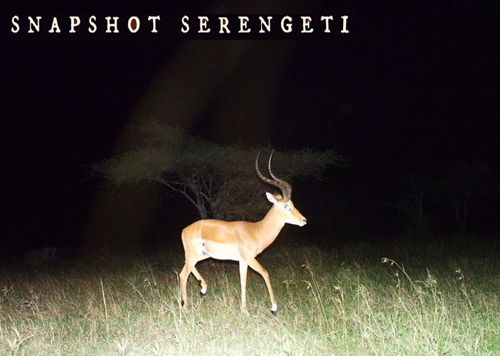
snapshotserengetiSnapshot Serengeti is working masterfully, and not just to help the science of the Serengeti but to unmask once and for all the increasing fraud of quasi tour experiences purporting to need the traveler to accomplish some scientific or cultural mission.

A plethora of tour companies selling travel experiences supposedly to help usually unqualified researchers or exotic project managers will never satisfy consumers’ demand to validate their experience by other than just enjoying or learning.

That’s often perplexed me. Curiosity should be enough to motivate travel. A good guide can in 20 minutes convey, inspire and make memorable a foreign experience a thousand times more successfully than a poorly fed grad student desperate to create a published study.

Indeed, learning first-hand is an even greater motivation to travel, and to be sure there are times that without actual participation in the mechanics of a situation, the understanding is scant. But as I’ve often written, that scant understanding is worth it, and attempts at full understanding by volunteering is usually compromised entirely by the amount of time the volunteer is willing to give.

EarthWatch is usually the single exception, particularly in Africa, but it is not always so. WorldTeach, International Volunteer, Cross Cultural Solutions and Full Center are examples of basically well marketed tour companies purporting to do good work abroad by organizing short vacations towards “giving” rather than “receiving.” And they are basically frauds, doing little good other than satisfying the guilt of travelers and building the equity of their companies.

In many many ways, they are identical to the tens of thousands of small church missions with very dedicated volunteers whose projects are tenuous as best, destructive more often, and usually producing a very bad culture of dependency.

But in addition to the early EarthWatch programs and a core of good ones the organization produces regularly, there really isn’t another pay-to-volunteer experience in Africa worth commending. Until now.

Snapshot Serengeti is brilliant.

The dean of African lion research, Craig Packer painted himself into the inevitable researcher’s basement of too much data. Like so many scientific projects, as money is raised for a goal it’s spent immediately, so Packer raised the money for 225 robotic cameras throughout the Serengeti that were motion or heat triggered.

The goal was to acquire so much definitive research about the whereabouts of various species throughout the year, that a truly definitive study of the Serengeti’s very fluid ecosystem, driven primarily by the great wildebeest migration, could be started.

But suddenly the study had 4.5 million photos, certainly enough to reach some at least initial conclusions, but no way to digest such voluminous data.

Nor has Google Recognition achieved the ability to distinguish between a topi and a hartebeest at 100 meters from less than a high quality lens.

Zooinverse to the rescue: “Real Science OnLine”

And yes, you can actually make a difference. And it doesn’t cost anything.

Packer using Zooniverse signed up 15,000 volunteers (in ten days) on line who felt they could identify African animals. A few, more qualified programmers wrote an algorithm created from the initial detailed study of volunteers to determine the likelihood that the identification is correct.

So by giving a certain multiple number of individuals the same packet of photos to identify, and correlating their answers with the algorithm specifically created for this specialist project, real data is mined at phenomenal speed.

In fact so fast, that the cameras are having a hard time keeping up with the refined results produced from the volunteers.

This works. There’s no fraud involved, and everyone involved can be assured that what they’re doing has real scientific value.

Congratulations to the InfoAge, the Serengeti Lion Project and Zooinverse!

Best Time To See The Falls

Best Time To See The Falls

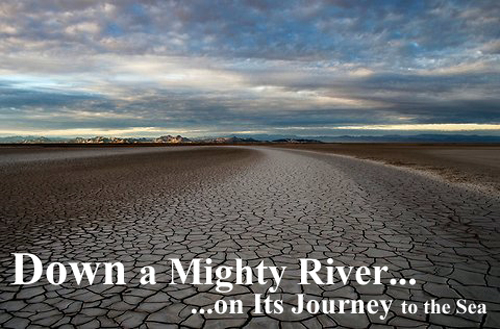
colorado riverThe photo above of the Colorado “river” as it meets the ocean is being used by African environmentalists to stop Botswana from its planned new take of Zambezi water for irrigation.

The Zambezi forms on the border between Namibia and Botswana, where a number of other large rivers like the Chobe and Kwando converge. These rivers are formed in the mountains of Angola after seasonal rains at the end of the year.

Geographically odd, the mountains of Angola are the continental divide for this part of Africa, meaning essentially that the western portion of the divide is hardly more than a quarter the width of the eastern portion. Which means that most water and all major rivers flow eastwards across a large section of Africa into the Indian Ocean.devils.vicfalls

Such is the Zambezi River, which after forming and leaving Namibia and Botswana, runs past Zimbabwe, Zambia, Malawi and finally, Mozambique.

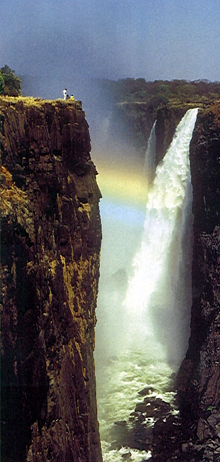
And I’m sure you’ve heard of Victoria Falls, which is only 60k east of Botswana on the border between Zimbabwe and Zambia, where the then magnificent Zambezi tumbles over a mile-wide cataract forming one of the wonders of the world.

It’s a rather important tourist attraction.

Now Botswana has announced to the other countries downriver that it plans to extract a sizable amount of the Zambezi mostly for new irrigation projects.

Food, that is.

Which is exactly a part of the explanation for the Colorado running dry.

Now contrary to enthusiastic tourists who believe they can get up and go at any time to see Victoria Falls, that’s not the case. The Zambezi is an incredibly seasonal river. It never stops flowing, but its flow changes radically with the season.

In November, December and January, an extremely popular time for travel, as the waters are only just forming after the Angola rains, the flow is so small that people who view the falls then see mostly rock.

And by March when the flow is in full swing, the falls are so massive you can see hardly anything but mist.

The best time for viewing the falls is February, June, July and depending upon the water, August. That’s when the photographs were taken that first inspired you to view them.

And the eradicate flow of the Zambezi was so destruction to agriculture downriver from the falls, that years ago the massive Kariba Dam was built. Not only does it control about half the Zambezi’s length (from the middle of the continent to Indian Ocean) but it provides enormous electricity for the area.

So Botswana’s move, Botswana says, is not so radical after all.

But the Zimbabwean Minister of Water Resources Development and Management, Samuel Sipepa-Nkomo, is not so sure. He thinks the idea would be a “great threat” to downstream Zambezi communities. (Likely as great a threat as the current Zimbabwe government is to those communities.)

But try as it might have, the Zimbabwe government has been unable to effect the flow of Victoria Falls. This project will.

There would also be a benefit, if this extraction were accompanied by the building of a dam, which is also being suggested. The area is in dire need of more electricity.

It’s important to note this was long in coming. A Dartmouth University study predicted the impending conflict in 1998.

That study recommended that not just in Africa but everywhere that water is precious (like the Colorado) it should be proportionately paid for. In other words, if there are a 1000 cubic meters on average running through a checkpoint, then if projected use would take 10% of that, that government should pay 10% of what the water was valued.

I kind of doubt that will happen. It didn’t happen with the Colorado, where an elaborate inter-government agency lead by the EPA determines appropriate water use for the States.

A united Africa could also create such endeavors. But …

Meanwhile stay tuned for the altered best times to see the falls.

Hedgefunds Hurting

Hedgefunds Hurting

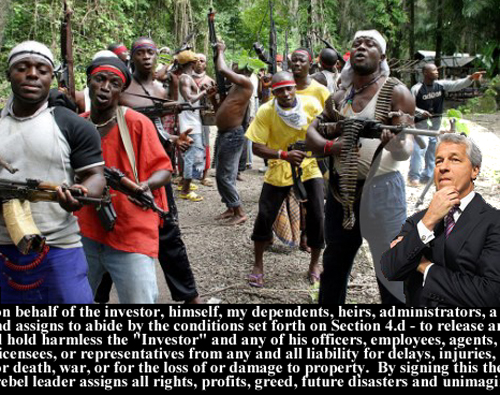
investmentOK, here’s the deal. Invest a thousand dollars to extract minerals from Africa, today, and your return will be $150,000 … after the rebels win the civil war.

Kilimanjaro Capital is a Belize-based company, with a Canadian website, and European capital listed on some Danish and other northern European exchanges. The CEO, Zulfikar Rashid, was born in Uganda and believes the best way to make money in Africa is to bet on civil wars.

I remember once trying to get into the business center at the Norfolk Hotel in Nairobi, before we were all drowned in wifi, and became a part of a congested line of anxious and poorly dressed white businessmen who were courting the then president of Somalia.

There have been many presidents of Somalia, until the recent spat of stability brought on by the Kenyan invasion last year. This was probably ten years ago.

The poorly dressed white businessmen had contracts coming out of their wazoo, busting briefcases and literally shoving one another to get this mercurial and previously unknown individual to sign his name on a contract for various and many mineral rights.

I’m sure in turn he was paid something on the spot, because I also picked up a few loose Euros at my feet in the line to the photocopier.

I got only a fleeting look at Abdul. He seemed a very thin if frail individual with very large black eyes and a scraggly, narrow black beard. He was dressed in native Somalia, all white robes with a white turban, and was dwarfed by two handlers, or body guards, who looked southern Italian and overfed.

As our line into the business center seemed to stop while one poorly dressed white businessman seemed to be copying the last ten Somalia constitutions, I started a conversation with the pretty rotund slightly dressed poor white businessman in front me.

He was a jolly Scotsman. Just flew in from Heathrow when he heard Abdul was going to be in town. He wanted the fishing rights just off the coast from Kismayo that were currently being pirated by French fishermen.

At the time Kismayo was the capital of world pirates. But this jolly dressed, poor white red-faced Scott was beaming. He wouldn’t tell me how much those rights would cost. Nor did he express sufficient confidence from my point of view that he would be able to fish in the sea dominated by professional pirates. But for some reason, it didn’t seem to matter.

Kilimanjaro Capital, though, is the first of such venture renegades that has achieved such respectability. And its still rather small portfolio is quite diversified, including some normal mineral rights claims even in North America.

But its success depends upon rebels, which are mostly today terrorists, taking control of African land rich with minerals but poor with organized society. Like Kivu province in the eastern DRC, or Biafra in Nigeria, or southern Cameroon.

These are all areas which have seen conflict for more than a half century. The mineral rights are critical to funding the rebel movements.

One of the biggest accomplishments of the Obama Administration from my point of view was a provision in the Dodd-Frank Act that made illegal such dealings with American interests.

It’s probably why Kilimanjaro Capital is located in Belize, has a website in Canada, is listed on a Danish exchange and is run by an Ugandan. I don’t think Dodd-Frank extends quite that far.

Betting on misery is, of course, nothing new. The Great Recession was caused by many such components. But more germane to the moment, I think that Director Rashid is doomed to fail, because rebel movements … well, they just aren’t doing too well lately.

Terrorism, yes. But actual regime changes or national secessions … no. And a contract with Osama probably wouldn’t work.

So let’s just marvel at how amoral, greedy and maybe just crazy part of the investment world is. And let’s just hope that there’s more and more Dodd-Frank worldwide to keep these renegades from spreading.

I’ve got a much better lead on a penny stock, anyway.

No Big Deal … Yet

No Big Deal … Yet

no big dealWhat Africans realize better than Americans is that for the last several years America has had to be run almost like an African dictatorship, as Congress closed itself down.

As a result, most of Africa shrugged off the U.S. government slowdown, today, not considering it very important to world affairs or economies. Still trusting in President Obama.

African newspapers and blogs were replete with excellent reporting filed mostly by Reuters and Agence France Presse. Both services specified all the areas where the slowdown will apply, and very little seems to impact Africa or abroad.

For example, a major concern was the processing of U.S. visas, and that will not be curtailed, since the White House has named foreign embassies and consultants as vital services.

Much of Africa’s media has pointed out how Obama like a beneficial African dictator simply declared most foreign services essential, so they aren’t effected.

The Federal Reserve and most foreign aid agencies will stay open.

Financial markets in India and most of Asia, as well as the U.K. also shrugged off the slowdown.

Only currency and commodity markets seemed to react in Africa, and they actually reacted well.

The ailing South African Rand firmed slightly and the price oil dropped slightly.

South Africa, which is so dependent upon the gold price, seemed to think gold would continue a slow recovery in price after tanking several weeks ago.

So what’s the big deal?

“Just to warn you… we will see yet another deadline on 17 October,” reports the influential FSP Invest from South Africa. The author also said South African markets “generally follow global markets” which will depend on U.S. news, especially this week’s non-farm payroll numbers the government (if the spokesman comes to work) announces Friday.

With Congress in virtual paralysis for some time, the U.S. economy has been driven mostly by fundamentals in place and Obama’s presidential directives that he’s been forced to use.

His recent Presidential Policy Directive (PPD) directed towards Africa to build trade has worked well. This would normally have been a part of legislated trade legislation, but with Congress in paralysis, Obama moved alone.

“More trade between Africa and the U.S.” was the recent headline in South Africa’s online “fin24″ financial newspaper.

Supported by recent figures released by the IMF, the head of DHL in South Africa attributed the increased trade to Obama’s PPD.

Of course, everyone knows it shouldn’t be this way. Or rather, this is the way African dictators work, authoritarian rulers that don’t have democratically elected governments.

Like us?

Child of 9/11

Child of 9/11

fu“While these terrorists have visited unbelievable savagery on us, we must collectively avoid the temptation towards unthinking revenge, the path the US took after 9/11.”

Those remarks published this morning in Nairobi actually made me reflect on our own looming national crises coming up this midnight and again and again right through the end of the year.

The American Right’s paths since 9/11 have been terribly “unthinking,” reflexive and self-destructive to be sure, but also a great misery for us all.

I began to wonder if the stew we’re in right now in America really has its roots in the bad policies which came out of 9/11, and if Kenya will avoid that same destructive path.

Both societies had regular terrorist attacks before these great ones. Kenya, in fact, has suffered as many deaths and injuries as Westgate from nearly three terrorist attacks monthly in the last two years, and more in the single 1998 bombing of the American embassy. American had an almost regular series of attacks starting all the way back to the Achille Lauro and Pan Am 103.

But like 9/11, Westgate was different. The difference with 9/11 in America was its scale. The difference with Westgate was its savagery:

“The killing of young children in cold blood, and the reported acts of torture constitute a new level of barbarity with which terrorism [in Kenya] is usually not associated,” George Kegoro reflected today in Nairobi.

The American Congress made historic, incorrect decisions in the 15 years since 9/11. The loss of national resources wasted in useless wars, and the diversion of attention to our own needs at home combined to produce a vengeful, angry, hard-nosed and “unthinking” America.

And so we arrive at today, where legislators don’t legislate and politicians defined by the political system want to shut it down. They want to eliminate themselves and replace it with nothing.

Like some child incapable of saying, “Sorry,” they lash out at everything.

Self-destruction supreme. Are we punishing ourselves with all the misdeeds of the last one and half decades?

Don’t follow us, Kenya. So far it looks like you won’t.

In fact, lead this angry child into something better. Please.

Whiteness over Westgate

Whiteness over Westgate

soldierWhiteWidowThis horrible week is ending. Finally, whiffs of smoke have stopped coming out of the Westgate Mall. But some facts must be tidied up before we surpass the media’s modicum of attention.

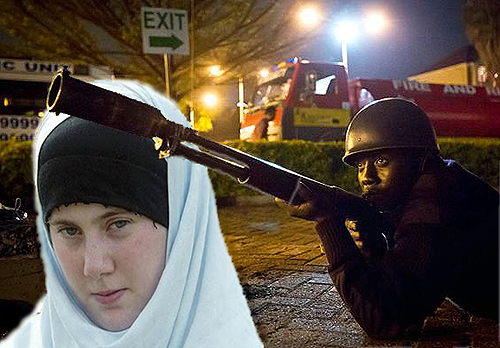
Technically, the White Widow is not yet implicated, but I believe she is. Britain’s arrest warrant for her yesterday is the clue. Conceivably she was not there as reported by several witnesses, as she is devious enough to have ordered one of her henchmen to masquerade her. But I for one believe she was the mastermind.

Given the secrecy of the investigation it will be a long time before we have hard evidence of who led the attack. But enough has already leaked out to seriously suggest westerners from the U.S. and Britain were involved, if not leading the effort.

Just as the attackers were likely from around the world, so were the victims. This morning 33 of the victims have been identified, including 3 Canadians, a famous Ghanian author, 2 Indians, a physician from Peru, a South Korean woman who had recently moved from Dubai, 3 Australians, a tourist from China, 2 tourists from France, a man from Trinidad & Tobago and 3 South Africans.

As happens with so many tragic events in Africa, this is a global story as much if not more than an African one. Its causes, strategies and ultimately its implications are pointedly universal in nature. Thinking of this as a Kenyan or African “problem” is intellectually juvenile.

Al-Shabaab is not resurgent. It drives me nuts the way American media and politicians believe this is some clarion call to urgency that rabid Muslims are again on the crusade. Rather, it looks to me like a dying gasp of an organization in great disarray that has received a spark from wayward westerners. But that’s far too complicated a story for a 4-minute segment on the evening news.

The subsequent attack in Wajir was not unusual, I’m terribly sad to say.

Fox News was not the only one to grossly exaggerate this event and irresponsibly tie it to Westgate. More than 70 people have already been killed this year in this troubled border region of Somalia where fighting has gone on more or less nonstop since 1993.

Life will return to normal in Nairobi and Kenya much faster than it did in New York and the U.S. after 9/11, and not because 9/11 was so much larger an event. Remember that Kenya suffered 3 to 4 times as many people killed and injured in the 1998 bombing of the American embassy as it did last weekend.

But last weekend truly had a greater impact on Kenya than 1998 and I think it equal to 9/11’s attack on America. The country is far more educated, interconnected, cosmopolitan and developed than in 1998. There is a greater shock because the attack interrupted a life routine that is so much more complex and modern than in 1998.

Life will return to normal more quickly, because that’s the African way. As I said in yesterday’s blog, that’s why ultimately terrorism as we know it today will be defeated by the African’s remarkable compassion and forgiveness.

“Forgiving is not forgetting; it’s actually remembering–remembering and not using your right to hit back,” Desmond Tutu said.

A long journey to break the endless cycle of violence.

Now That It’s Not Over

Now That It’s Not Over

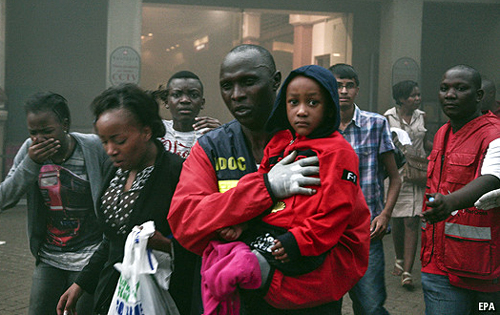
mallexitingThe wound is still raw. Healing has hardly begun. But one of the most powerful and critical lessons ever for America to embrace is being taught right now: Mwalimu Kenya.

Al-Qaeda “won its war against America,” Kenya’s famous writer Obbo said today. But in Kenya in stark contrast al-Qaeda has released “the compassionate side of the nation” and by so doing, has already lost its battle.

How simply true. Please follow the link above and read Obbo’s column that appeared today in Kenya’s main newspaper.

Obbo meticulously details the aftermath of 9/11, carefully enumerating deaths and money spent on our retaliation in Iraq and Afghanistan, but also reminding us of equally vindictive actions that ultimately backfire:

“Thousands of students could no longer get into America. Many ended up in Canada, whose universities now have an edge over America’s in scientific research.”

He joins the large global body of scholars and analysts who refer to the years since 9/11 as “America’s imperial overstretch.”

The sadness/grief that I’ve been walking around with since the weekend has a pretty simple explanation and is, of course, nowhere near as great as Nairobi residents. We can’t find some people, and that’s the current breathless fear that they are among those lost.

But there is a unique character to this sadness that is uniquely African, something I’ve been trying to understand all my life. We in the west often call it fatalism and sometimes with even greater denigration, nihilism.

It’s neither. It’s what Obbo understands as compassion. It’s counterintuitive to us in the west to link compassion with sadness, but how simply true! If you are truly empathetic to suffering you can’t help but be saddened by it.

That’s the African way. And it’s the excruciatingly depressing reason that slavery flourished there, that colonialism raped its lands, that the Cold War treated states as puppets, that western pharmaceuticals considered it hardly more than a mad scientist’s lab.

And that now it is destined to take the brunt of the War on Terror. And take it, it will, and by so doing, it will defeat terror, just like Obbo says.

The west is already revving up its war cries. There’s nothing our hell-bent right would like better than another war.

And that, as Obbo so beautifully points out, is exactly what the terrorists want. If you invoke the Israeli mantra of an eye-for-an-eye, you lose, they win.

Obama should read Obbo. There are as many fatalities and injuries from the “collateral” damage of a few drones attacks as in the single attack on Westgate. This back-and-forth retribution will never end. America will never get weaker. The terrorists will never be eliminated. It is an endless cycle of violence.

So do you just turn the other cheek?

Yes, sort of. Security will improve in Kenya, now. The west who started the wars on terror will perforce be more involved and that will, in fact, likely better protect at least urban Kenyans.

But it’s going to be a long, hard slug for Kenya, a miserable journey that in fact started several years ago. Although the scale of the many smaller attacks throughout the country was not as dramatic as Westgate, there have been many of them. As in Nigeria, and Pakistan, and of course now Iraq and Afghanistan, a week hardly passes without some kind of terror attack.

Obbo’s right that in the end compassion prevails over terror. There is no other civilized alternative.

But it’s also time to get real, folks. This isn’t the 17th century. Nairobi is no further from Chicago using a cell phone than your neighbor down the street.

Kenya is far less capable of uplifting the world than America: of building not just bridges over rivers but between countries. It’s time that we tone it down, realize our global responsibilities and do so with the type of unqualified compassion that Africa has miraculously sustained through the entire modern era, a period of history where Africa is never more than a victim.

It’s time that change. It’s time that the entire world recognize that the enduring compassion of Africa is the final solution for attaining world peace.

The Real Disneyland

The Real Disneyland

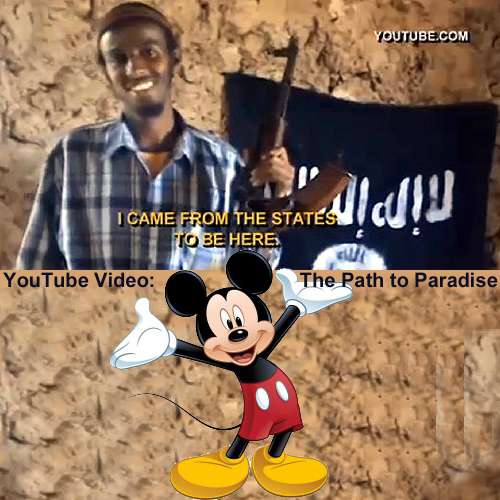
pathtoparadiseThe Westgate Mall attack was al-Shabaab’s dying gasp. There will be more attacks in East Africa, in London, in the U.S., but not from the old al-Shabaab. Not from what was left of the group that was wiped out in Westgate.

Many British analysts believe the attack was led by a fellow Brit, Samantha Lewthwaite. If this is true, it means the organization al-Shabaab has imploded.

The “White Widow” as she was called was essentially the last well-known al-Shabaab commandant. All the others had been killed over the last year.

Possibly less than a month or two ago, an Alabama citizen, al-Shabaab leader Omar Hammami, was killed in an internicine fire fight. He died along with a British compatriot, Osama al-Britani.

So three of the fragile top leadership of al-Shabaab who remained after Kenya routed the group from Somalia are dead. Two Brits, one a woman, and one American.

On PBS yesterday, Kenya’s foreign minister said there were an additional “two or three” Americans fighting as jihadists in the Westgate battle who were killed.

Think about this. Think about this carefully.

Few true journalists or analysts of anything will ever predict the near end to some movement, for fear they’ll be wrong and lose their position. I don’t have to worry about that. I hired myself.

And yes I could be wrong and by so saying I’m honestly diminishing my conviction, but my gut nevertheless tells me otherwise.

Reports that al-Shabaab still controls much of Somalia are incomplete. Al-Shabaab was rarely a coherent single organization, although it did coalesce for several years.

What I suspect is that the warlord society of Somalia, part of which loosely allied itself to al-Shabaab, may be doing so, again. If that’s true, al-Shabaab today is not a trans-national affiliate of al-Qaeda but rather a local political movement, retracting into what it was more than a decade ago.

The Council on Foreign Relations has prepared an excellent and brief primer on al-Shabaab that demonstrates this possibility well.

Does it matter that this one terrorist organization is expiring?

Yes, but it hardly ensures Kenya or the rest of the world that there will be no future attacks. What was left of al-Shabaab were foreigners, not Somalis and many weren’t even Arabs. They may have been Muslims but not even that is certain.

What they are, CBS reported yesterday evening, are wayward kids from developed countries like the U.S. and Britain.

The end of al-Shabaab does not bring an end to wayward kids from Minneapolis.

And that’s the second thought I want you to revisit. A terrorist act is pretty easy to pull off, today. It’s a rush for someone depressed. It’s a mission for someone ungrounded and otherwise uninspired.

“It’s the real Disneyland,” one al-Shabaab fighter told CBS.

Fighting clubs exist all around the world. The normal amoralism of a criminal is easily coopted by some ideology, whether that’s jihadism or some other cultism, and I seriously doubt that any of the actual fighters have studied Zen or Marx.

They’re looking for action and meaning, something they’re unable to get at home. And when they do something bad, we tax our poor to fund a megalothic war machine when we should be taxing the rich to fund schools that inspire young people.

When they pull off a mission at a poorly protected Westgate that a inner city gang from Chicago could have pulled off just as well, we respond by sending a dozen generals and Navy Seals when we should respond by sending social workers and community aid.

And when things go south for the jihadists, their amoralism becomes nihilism. They go out with a bang.

“It’s the real Disneyland,” one al-Shabaab fighter told CBS.