On Safari: This is Really The Top!

On Safari: This is Really The Top!

CapePoint.14Apr.640We didn’t “do” the Cape Point like most people “do it.”

My intrepid group of certainly retired if still adventuresome folk decided to pretend they were 35 years old.

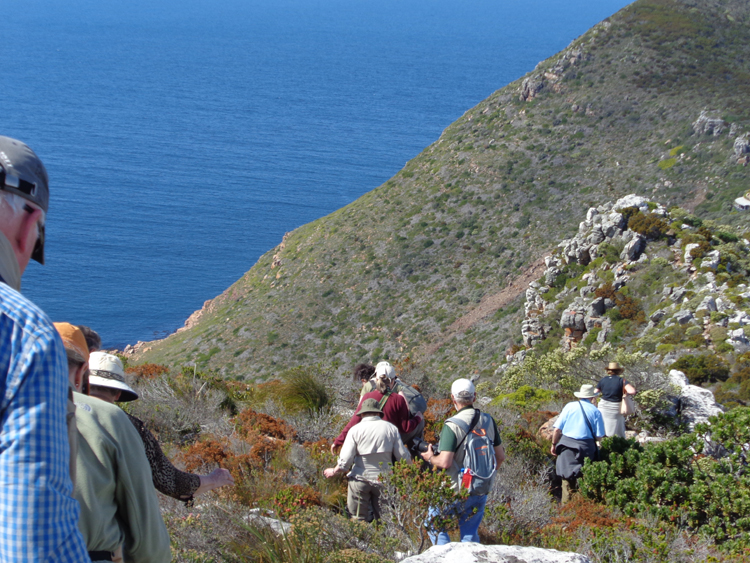
hike.CapePt.14apr.640Together with our 74-year old guide, John James from Fishoek, we decided to hike from the southwestern most point on the continent, to the visitor’s center where the funicular is.

But hold on. Not that ordinary mostly level beach hike that takes about an hour and has streams of people, albeit young and fit. No, John James chose for us the Pinnacle Hike, the one that goes up and down 1000 to 1400 feet above the sea, over the crests of the jagged granite mountains.

Everybody succeeded!

South African and rugged individual John James said it would take less than 2 hours. Well it did take less than, but not two hours. More like three. But we had given ourselves plenty of time, and traveling slowly, with no disruption to any other hikers because there weren’t any other hikers, we conquered the Cape Point with views to die for!

In fact at the end of the hike no one was the least bit interested in taking the funicular. We’d actually looked down at the lighthouse at the top of the funicular from one of our peaks!

JackAssPENGUINIt was a most invigorating day.

We began with the breath-taking ride on Chapman’s Peak, with plenty of stops at shark flags and view points, especially overlooking Hout Bay.

We carried a fabulous seven baskets of overwhelming gourmet food prepared by Cape Town’s outstanding “Dial-A-Picnic“. Fortunately there was an overwhelming amount of food, since several guests we hadn’t expected tore the sandwiches from us: baboons!

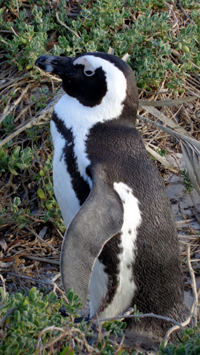
Then we traveled to Boulders to see the Jackass penguins. Interestingly the penguins normal June nesting habits have all changed, a probable mixture of global warming and conservation protection. So we got to see new nests, new eggs, new and old chicks.

And the day ended with the beautiful drive down Baden Powell into Stellenbosch where we now spend the next several nights.

Exhausted but proud!
CapeGH.640.14apr

On Safari: The Top of the Bottom

On Safari: The Top of the Bottom

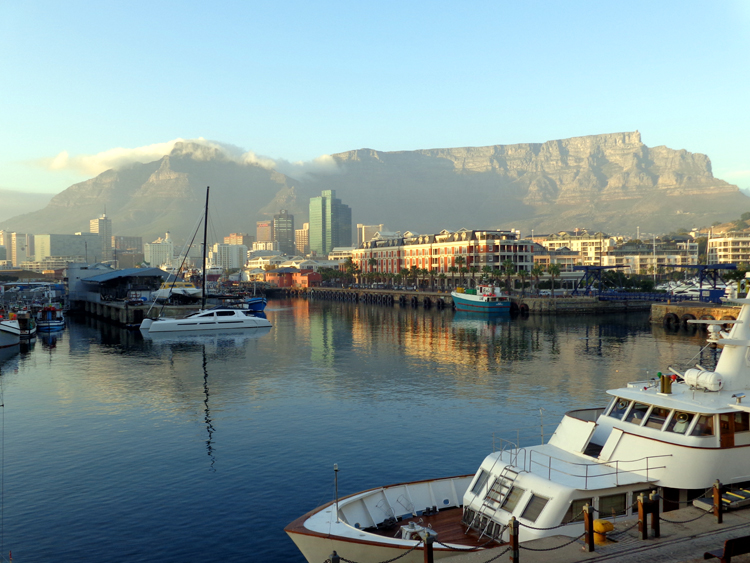
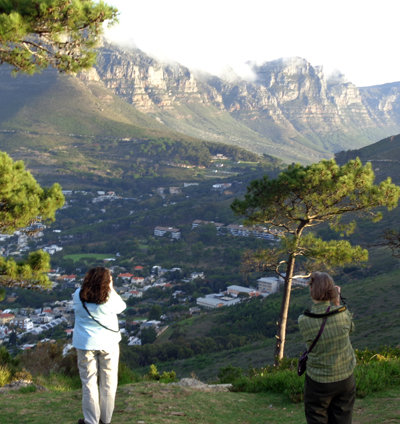
View from V&A of MtnFrom our breath-taking viewpoint atop Table Mountain the brass map showed us the most direct route to Sydney: south. And to Hawaii: south. And to paradise? Well, we’d already arrived there.

Many of us had five days in Cape Town, others only four, and it wasn’t enough.

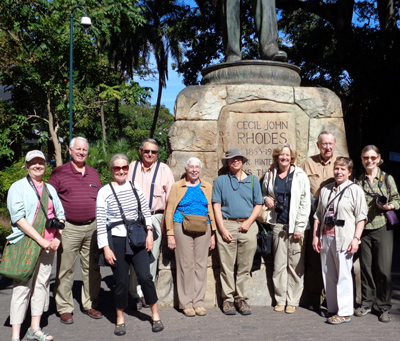
group gardenAs soon as everyone was gathered I began the orientation with the traditional walk through the Company’s Gardens, a perfect situation for encapsulating South Africa’s complex history in terms of the creation and development of its Mother City.

Modern South Africa began as a way station for “revictualizing” 17th century ships tearing the loot out of East Indonesia and China. It grew slowly and methodically into a complex multi-racial society rife with every human problem on earth.

The Cape was bantered back and forth between Holland and England as its settlers moved away from their heritage into the wilderness of the karoo, creating a whole new society, the Afrikaner. And weirdo geniuses like Cecil Rhodes complicated the human cocktail with the certainties of British imperialism.
sunsetsignalhill
All this and so much more is on display at some monument or garden nook or ancient tree or beautiful stone pathway in the Garden. After the orientation everyone dispersed with personal interests to the several excellent museum exhibitions on around the Garden, to the famous Slave Lodge and to the colorful barter of Green Market Square.

Then a very quick trip up to Signal Hill for an absolutely glorious sunset!

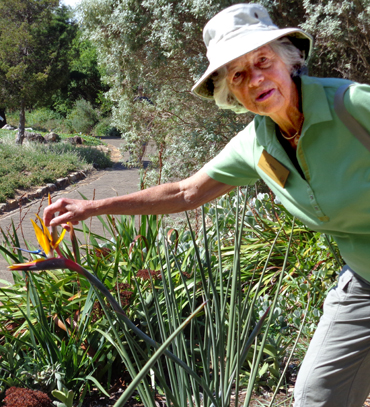
Sunday we spent the morning in the Kirstenbosch Gardens. Local guides make or break a trip, and the legendary Dot Malan took us through the garden with every one waiting on her every remark.
dot malan2
Dot knew so much about everything, from science to the history of the institution, to the anecdotal stories that brought us onto the grave site of a former director, buried beneath an “invasive” oak tree.

We saw the extinction garden, the 1000-year old cycad, the birds of paradise that have to be hand pollinated because the sunbirds here are just a little too short! Kirstenbosch is one of the real wonders of Africa.

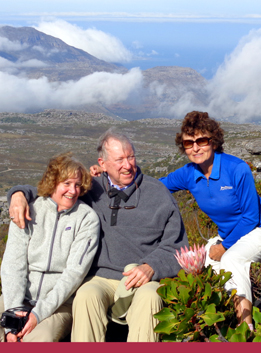
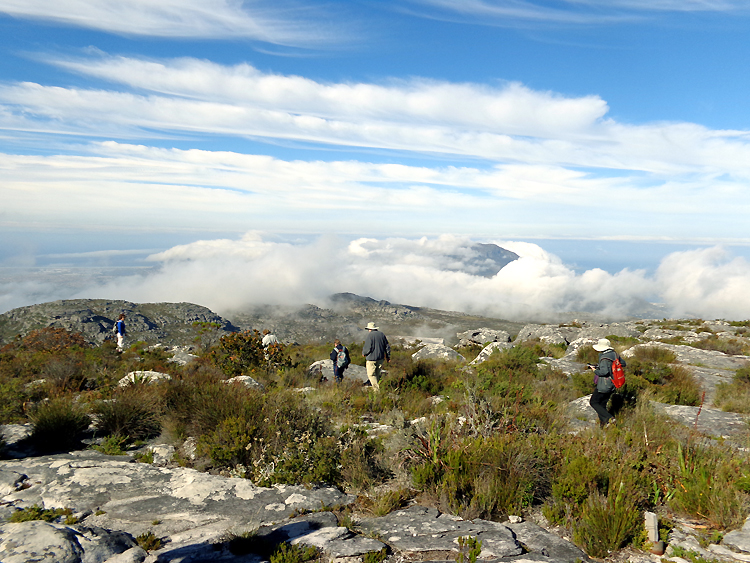
Monday another outstanding guide, Pam Knipe, raced us around the top of Table Mountain proving that seventy year-olds is simply a theoretical concept. Everybody hopped rocks like klipspringers, sat next to rare Proteas, and learned of the ridiculously rare floral kingdom that decorates the mountain.

Joan & John von Leesen with guide Pam Knipe.

Afterwards I guided the group through Bo-Kaap and District Six with its curious if nagging history of alliance then departure through apartheid, ending with lunch at Bo-Kaap’s most famous restaurant.

The two “working class neighborhoods” with considerably different histories lie next to one another in the Cape Town City Bowl. During apartheid, District Six suffered much more seriously than Bo-Kaap, and the the residents of Bo-Kaap today indeed include the progeny of some of the earliest Cape slave workers of the 17th century.

Four days isn’t enough. Exhausted and breathless, tomorrow we head to Cape Point.
walking across tbl mtn.14apr.640

Fifty Years Later

Fifty Years Later

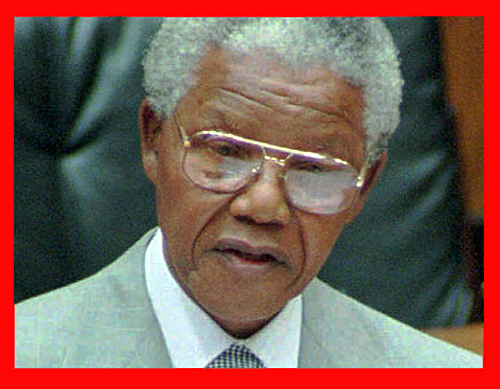
mandelaFifty years on Sunday, one week after the merciless white mercenary Ian Smith wrested control of independence in Rhodesia (Zimbabwe) from the British, Nelson Mandela delivered his greatest speech.

He was in the docket in Pretoria following two years in jail for a variety of charges including murder and sabotage.

Both John F. Kennedy and Lyndon Johnson supported the apartheid regime that brought Mandela to trial. America’s practical diplomacy, which Kissinger would later name realpolitik, needed South Africa’s trade, its uranium, its ports and four missile sites as a contra validation to Russia and China’s inroads in the continent.

The Secretary of State, Dean Rusk, blocked the U.S. from joining the economic sanctions increasingly coming from Europe, warning that weakening white rule would lead to “Communist infiltration.”

Communist infiltration. Inferior race. Slavery. Concepts at one time or another trumped all the glorious democratic principles on which the U.S. was supposedly founded.

And even more ironic that Lyndon Johnson’s great 1964 legislative achievement was the Civil Rights Act.

Alone in America stood Robert Kennedy, who after being denied a visa to visit South Africa in 1965 got one in 1966 and raised all sorts of hell. But not even this was necessarily exemplary morality. Kennedy hated Johnson and seemed positioned to beat him in national elections.

The Founding Fathers were out to lunch in 1964.

During my lifetime I have dedicated my life to this struggle of the African people. I have fought against white domination, and I have fought against black domination. I have cherished the ideal of a democratic and free society in which all persons will live together in harmony and with equal opportunities. It is an ideal for which I hope to live for and to see realised. But, My Lord, if it needs be, it is an ideal for which I am prepared to die.

There have probably been many historical personalities who valued their convictions as strongly and who then, died, and who then, we know little about. The fact that Mandela was not sentenced to death as he could have been likely reflected the apartheid regime’s belief that killing Mandela would have sparked an irrepressible revolution.

I’m not so sure. But I am sure that’s what the Bothas and Verwoerds thought would happen. They were not nice men.

I’m not sure that unwavering conviction is always a good thing. Consider the evil doers of the T-Party or the loonies in the Creationist Movement. Consider the Joseph McCarthy’s or the Klu Klux Klan. Belief just for its own sake can be wretched.

Mandela knew he was not going to be sentenced to death. He knew the white regime better than any of his colleagues, since he had practiced with them as a lawyer. He had felt the bitter racism of his jailors.

He knew that to challenge them with killing him was an ace in the hole. It flipped their own puritanical certainties on their buff. I don’t think Mandela believed the non-white population of South Africa would explode if he were killed. He just knew that his white oppressors thought so.

So I agree that this is a great speech but not because of what it said, but because of what it didn’t say.

He didn’t dare them to execute him. He played on their fears of black domination, based on their own visceral understandings of white domination.

Mandela was a great compromiser. He was not T-Partyish. He was the consummate politician who nevertheless managed to live by a set of principles. And that’s why when he came to power, the whites who remained in South Africa prospered.

Jim posted this blog in Cape Town.

SA Election in Balance

SA Election in Balance

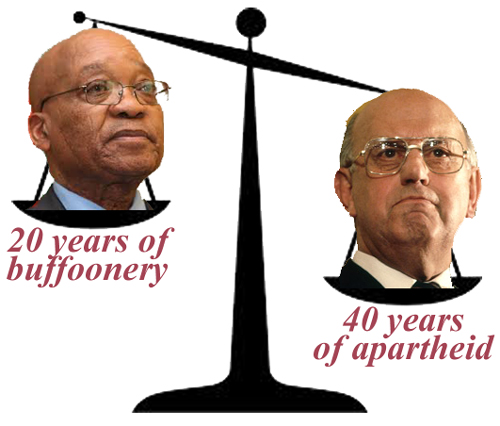
sascaleofjusticeIn three weeks South Africans will likely reelect the ANC to power, but it will also likely be the last time.

Standing for a second term, President Jacob Zuma, wouldn’t have a chance in most any other open democracy. His playful life style and his list of scandals would doom any earnest candidate in any place but South Africa.

In fact in his last two political rallies he was booed, and people in the audience started throwing stones at cars.

So why will he prevail?

Twenty years since the end of apartheid memories of white rule during the oppressive years of apartheid still run strong. Apartheid began with the Nationalist election victory in 1948, and the insidious laws that began implementation in the early 1950s. That was more than 40 years of politics that was arguably worse than Zuma, today.

So it is remarkable to think that the ANC might not have the staying power that the apartheid regime had.

In 2004, the ANC won 70% of the votes. In 2009 it was 65%. I predict that this time it will be under 60%.

The ANC knows it’s in trouble. In fact, ANC candidates have pledged if they can wrest control of the Western Cape (Cape Town) – which is extremely unlikely – that half of all white civil servants will be immediately fired.

This play on racism marks the desperation of the failing ANC, and Zuma’s ineptitude in particular. It’s typical of banana republics like Zimbabwe, not of mature democracies of the sort South Africa can be.

It hinges on the belief that “you had your 40 years of oppression, we now get ours.”

To be fair ANC officials at lower government levels seem to be doing a decent job. It’s the heavies at the top like Zuma who are creating the aura of buffoonery. And the old adage that all politics is local is also a significant reason that the ANC is expected to win, again, this time.

But their support is dwindling, and with Mandela gone, and with the years clicking by, the end of the ANC can be imagined. The next national election will be in 2019. I expect the ANC will lose, then, unless the antics of their leadership change radically.

Or as many suggest, a palace coup takes place that ousts the old revolutionaries for the technocrats being produced, today.

The South African president is not directly elected by the populace, but by the lower house of parliament. The process is nearly identical to the election of America’s Speaker of the House.

A party convention that disapproved of a sitting president would likely be sufficient for that person to resign or face a humiliating election whipping by his comrades. The magic number being bantered around for Zuma’s survival is 60% or more of the May 7 votes for the ANC. Less, pundits say, and Zuma’s out.

It’s going to be close.

Jim filed this blog from Cape Town.

On Safari: Rain Reigns

On Safari: Rain Reigns

migrationmaasaikopjesMy final safari of the season in Tanzania gave us an extraordinary picture of the beauty, majesty and drama of the rainy season.

For this is the rainy season. While there continues to be a lot of misinformation about “short rains” and “long rains” (an appropriate Kenyan differentiation that doesn’t exist in northern Tanzania), April is always a month of rain.

May is often heavier, and then the spigot turns off in June.

This is my favorite time for East Africa. It’s amazing how so many tour companies and guide books suggest this isn’t a good time to visit: ask my clients for 40 years! Here are some of the pluses for visiting at this time of the year, all of which we just finished experiencing:

1. The Migration
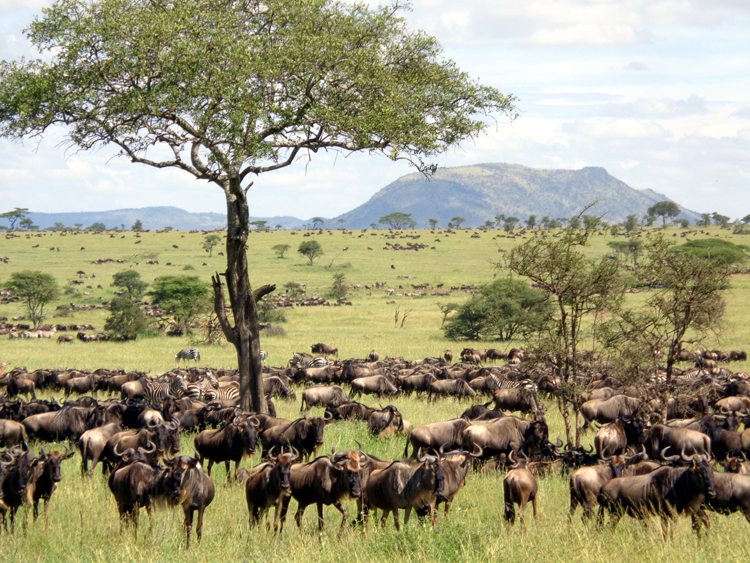
At no other time of the year, anywhere in Kenya or Tanzania, does such a large congregation of animals occur. The 1.5 million wildebeest begin to gather in the southern plains at the end of the year, and indeed there could be horizons filled with wildebeest in the southern Serengeti on any of the first five months of the year.

But never with the span that we witness in April. This safari was in the migration for nearly six hours of steady, not slow travel, as we moved from Lemuta to Ndutu. The next day we continued in a different area north of Ndutu, the Kusini Plains to Hidden Valley, and the wildebeest were solid every inch of the way.

That only happens, now. When we then went atop Naabi Hill and used our binoculars to sweep the southern grasslands, it was clear we’d only seen a tip of the iceberg. What we saw from Naabi would fill two or three Maasai Maras.

2. Youngsters
Wildebeest calve starting at the end of February. Most other animals calve year round, but we saw hundreds if not thousands of baby zebras, gazelle, giraffe, buffalo and impala. It makes perfect sense. The veld is at its most fulsome in the rains. This is the easiest time to begin raising offspring.

3. Scenery
At one point I held 26 different wildflowers in a bouquet in my hand. Every color and shape imaginable. The grasses, too, were bountiful and glorious. Many of the acacias were blooming. The baobabs were all in leaf. At certain points in the veld, the yellow biden bidens wild flower had exploded over everything! It was magnificent.

4. Dramatic Landscapes
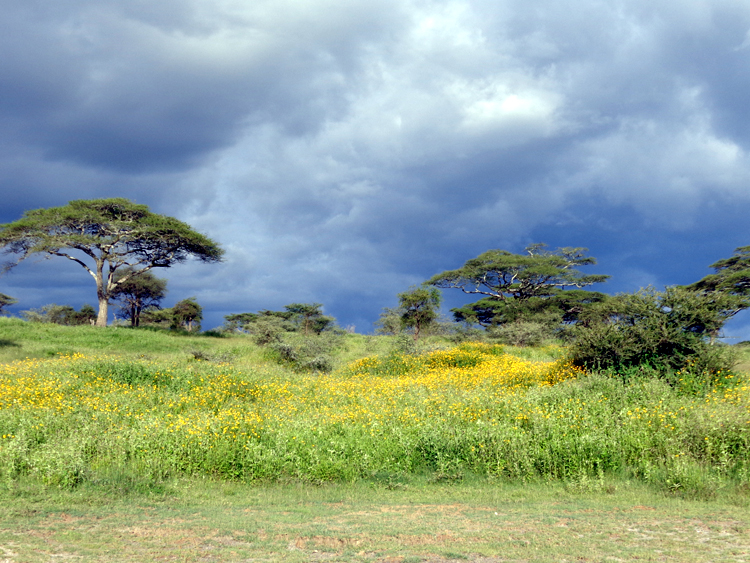
Three of every five days the afternoon around 3 p.m. was punctuated with a magnificent storm. Now oftentimes we watched it but weren’t under it. In the tropics, storms don’t move consistently and rapidly as they do in the temperate zones.

Unusual morning storms never disrupt our game viewing because we simply go where they aren’t forming. And I often scheduled intense game viewing in the morning packing a picnic lunch that would last 7-8 hours before the afternoon storms would begin.

But with brilliant skies unfettered by buildings or tall mountains, our front row seats of the power of nature over the magnificent African veld is an unmatched experience.

5. Climate
Hardly ever over the mid-eighties during the day and wonderfully crisp and cool at night with … no dust!

To be fair, there are good points to every different season in East Africa, just as I imagine you would ascribe to your home. We do have to plan extra carefully in the wet season, and single vehicle safaris cannot enjoy the wide freedom of itineraries possible for them in the dry season.

But never let someone tell you “don’t go in the rains!”

They have no idea what they’re talking about and certainly have never experienced it themselves!
landscapes

On Safari: Dangerous Elephants

On Safari: Dangerous Elephants

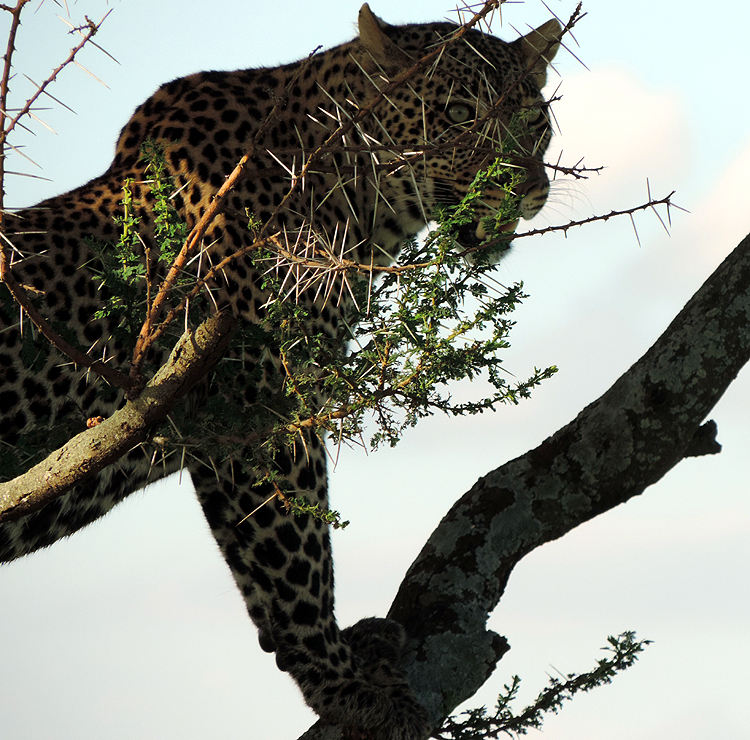
leopardintreeThis safari is spending six fantastic days in the Serengeti, traversing it from bottom to top, and guess what’s dominating game viewing.

Lions, leopard and cheetah of course, and with no surprise as the Serengeti is probably the best place in the world for big cats. See Chris Kordash’s photo above.

But what was a surprise is the close second: elephant.

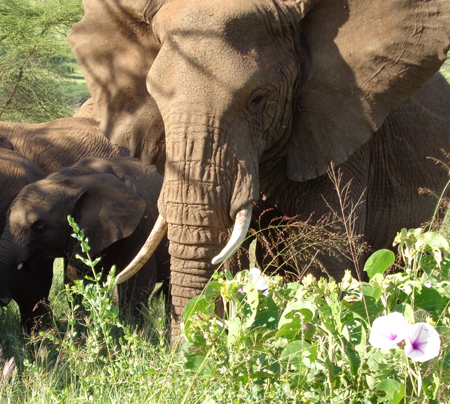
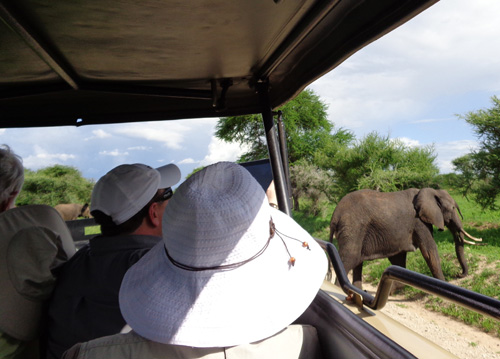
I’m beginning to rethink the “elephant problem” after our experience in the Serengeti and the Crater. I’m convinced now that the ele are acting as if poaching has increased substantially.

While we were at Ndutu, Howard Buffet was, too. He was announcing a $24 million grant to the Tanzanian government for increase elephant anti-poaching efforts, including a new helicopter and the requisite training for rangers to use it.

Charging us near Klein's.
Charging us near Klein’s.
A day or two before, when we were in the crater, I counted 107 very large all male elephants collected on the western side. Although their tusks were not as big as the old tuskers that came down to the crater in the 1970s and 1980s, they were among the larger of today’s.

It was clear they weren’t acclimated yet to the crater, or to each other. I didn’t see them on my last safari, and I’m sure they weren’t here last year. So this is a relatively new development, quite contrary to normal elephant behavior, and almost identical to what the big tuskers of the 1970s and 1980s did.

The crater is not a good place for elephant, because there isn’t a lot of browsing; it’s almost all grazing. But the 1970/80s elephants learned to live with it and were protected from poaching by the unique geography of the crater.

The elephants we saw were fighting, as big bull elephants are wont to do. The old tuskers don’t fight, anymore. They’ve learned to live with one another, and I suspect that’s what will happen with the current crew.

I continue to be very critical of much of the media’s reporting of elephant poaching, however. (Please see my numerous previous blogs.) Recently, for example, Emily Kelting in the Huffington Post misstated the total number of elephant by several hundred thousand and continued the scandalous suggestion that in ten years they will be no more elephant.

It’s that kind of juvenile reporting that further complicates the problem. Yes, poaching is on the increase and my own observations just on this safari support that.

But no, extinction is not imminent, and there is a more serious problem than poaching: regardless of the horrible poaching, there are still too many elephant.

C. Kordash Seronera.

It’s a difficult issue, because poaching must be stopped, and efforts from Buffett and others to do so are exemplary.

But Tarangire is no longer the only place to see huge numbers of elephant whose normal behavior is stressed.

Coming in today to the far north Serengeti near the Kenyan border, we counted over 100 elephant in one mass group, so collected it was hard to discern families. They were at the very edge of the park, adjacent Maasai farms.

These huge numbers seem to be almost everywhere we went on safari: from of course Tarangire, to even Manyara, to the crater, to Ndutu, to Seronera … everywhere. It’s quite possible elephant numbers are seriously declining because of poaching, but it’s also absolutely true that there are too many of them in the space that’s left.

And that distorts their behavior and makes them dangerous.

So let’s try to take a deep breath, thank Howard and others, but recognize the problem is very serious and unsolvable unless the overpopulation of elephants is also addressed.

On Safari: The Great Migration

On Safari: The Great Migration

migrationToday was my “longest, hardest” day and always among its best. After ten hours we’d seen so much that the exhaustion wasn’t from the bumps but the sights.

Lots of people go to Olduvai Gorge when leaving Ngorongoro Crater, just as we did. And a few of them then continue to the site where Zinj was found, and fewer still continue as we did to the mysterious Shifting Sands.

I won’t give away the secret as to why these seven large hills walk themselves across the grassland plains, sometimes 20 meters a year, sometimes 200 meters. And we were further surprised by the arrival of some legitimate Maasai warriors who bumbed some water off us.

But very, very few people then know how to continue off the tracks altogether into the southern grassland plains between Olduvai and the Lemuta Kopjes. Two weeks ago the plain was filled with wildebeest. Today it was nearly wildebeest empty, because it had dried out.

But there were still literally tens of thousands of Thompson’s Gazelle. These beautiful plains creatures don’t migrate; they don’t have to. They eat the roots of the grass, and they rarely drink after suckling and then it’s usually for salt, not water.

But the unexpected twist to the day game when our lone two vehicles on the plane were intercepted by a white Toyota sedan car!

It was a German couple trying to drive themselves, and they were understandably lost. I was beside myself with anger and worry. The last thing East African tourism needs is a reported lost of two casual tourists.

They were using a map that was about 40 years out of date and large enough to direct them to Morocco, in other words, useless. They had come from a cheap camp in the northern Serengeti and wanted to go to Lake Natron.

They had missed their turn three hours before. We explained all this to them and told them the safest thing to do was to continue in the direction they were heading, since that was only two hours from Ngorongoro, and they were at least 6 hours from where they wanted to go.

But now, the woman driver said, they didn’t want to “go back” to Ngorongoro. After some questioning, it seemed they were reluctant to spend the extra $100 in fees it would cost them to reenter the Conservation Area.

I offered to give them the $100. As I said the last thing I want is for some tourists to hit the headlines as having been lost in the Serengeti.

But she refused, and there was nothing we could do. They turned around and headed back to where they’d come from, and we continued on our journey onto the Lemuta Kopjes for lunch.

And right after lunch we intercepted the herds. It meant they had shifted about ten miles west of where I had seen them two weeks ago.

Understandably, people think the “great migration” is some strictly defined circle of movement, but of course it isn’t. Although wildebeest can’t stand still and will act like they’re moving all the time, if the grass is good, there’s no reason they need to move.

And the grass was phenomenally good. Today the migration is mostly in a rectangle, 40 x 20km that begins just west of the Lemuta Kopje and angles southwest to the Kusini Plains at Hidden Valley. I’d dare say that probably half or more of the 3 million animals currently composing the wildebeest, including young and zebra, are in this rectangle.

It is a sight to behold. And for the first time in nearly 12 years, Hidden Valley is once again open to us, the rhinos that were reintroduced here considered totally acclimated.

So we gingerly slid the cruisers into the valley to watch a large female cheetah stalk Grant’s gazelle. To no avail, as is the case with the majority of hunting attempts, but still a wonderful drama.

We set our elaborate breakfast, the best in all of Tanzania prepared by Ndutu Lodge, off the edge of the herds to avoid some flies. But even as we were eating, the herds started to envelope us.

We headed back to the lodge about six hours after we began, stopping to watch a magnificently beautiful and very full lioness grudgingly lift herself and her belly out of the grass to look quizzically at a line of wildebeest passing her bye.

She was just too full to hunt but too young to go back to sleep!

There is no natural spectacle on earth as great as this. I’ve been so fortunate that it has continued and prospered even during my forty years of guiding. I just hope that it will be so for the generations to come!

On Safari: Survival in The Crater

On Safari: Survival in The Crater

hyaenachasebuffOur fantastic morning in the crater demonstrated what crazy and simplistic ideas are propagated by entertainment media about wild animals.

Many of you probably think that every time a lion wakes up and takes a stroll he comes back with a wildebeest in his mouth.

Wrong. His success ratio of course varies from place to place but essentially is around 1/6, and often worse in stressed environments. Lions die of starvation as much as disease.

Hyaena was our demonstration animal, today, and what an experience!

There’s no question in my mind that the hyaena is the most dangerous predator. I believe this because of their maddening persistence and herding instincts which transform them from a scavenger into a vicious hunter.

Predators are mostly opportunistic, but even so it’s possible to dissuade a lion from bothering your abandoned calve by screams and stones. Not so for the hyaena committed to the chase. It will kill or be killed before abandoning its prey.

Only the prey itself can stop it: by running, by fighting or outwitting it, which is so much easier than a television special normally suggests.

We were looking at a line of buffalo in the far distance early this morning in the crater. It was our first great sight of the morning after getting to the floor shortly after dawn.

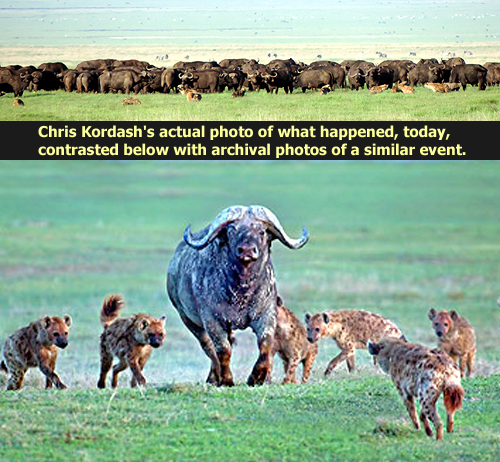
Then I saw more than just the line of about 50 buffalo, one of the Big Five and usually considered the most dangerous prey by man, the hunter. About two dozen hyaena were racing back and forth along the line, tails buffed and held high, their whooping becoming laughing. This was incredibly puzzling and surprising.

The hyaena were clearly in kill mode, but buffalo as their prey? One buffalo can weigh 4,000 pounds and it’s almost all muscle and meanness. I’ve seen a 350-pound wildebeest thrown to the sky by the powerful rack of a male buff.

So what was going on?

More and more hyaena came racing to the “battle” if that’s what it was, and the buffalo lagered. The big males came to the front and stood side by side swinging their racks as if clearing the land.

But the hyaena continued and soon we could see some of the crazed and furry beasts racing around the end of the line to the other side of the buffalo. Although we couldn’t see exactly what was happening on the backside, we could tell by the buff’s agitation that the battle was truly engaged.

Then the buff family began to run with dozens of hyaena in pursuit on all sides of the herd.

We raced our cars around some roads to try to get a better view, but the buffalo had been dispersed by the hyaena and we couldn’t see the outcome. Then about 20 hyaena came running over a ridge to the side of us quite near the car, and we raced with them down the veld wondering what was going on.

Then their whooping slowed and their tails unbuffed and they start to walk and wander like hyaena normally do.

We followed them best we could on roads and with our binocs and from time to time they reorganized and molested herds of zebra and wildebeest and soon it seemed like the whole western side of the crater was in turmoil with animals running everywhere.

And just when we thought everything had calmed down, nearly 90 minutes after it all started, we saw a single lone buff running from a line of hyaena.

His chest was bloodied. His left leg was seriously injured, but he managed to outrun or outwit or both the hyaena and after disappearing behind a ridge, the pack stopped their attack.

I’m not sure how many “packs” we probably saw, but the whole crater was churning with hyaena kill.

Yet we couldn’t see one successful take-down.

Hawana mipango is the Swahili expression we attached to these seemingly failing killers: “no plans” and that exactly describes what we saw: incredible killers having organized their power but unable to effect success because their attacks are so reactive, unplanned.

The crater calmed down and we headed to lunch. In a dip near the only spring-fed lake in the crater, a beautiful location with a few hippo and high lustrous elephant grass, we saw the old buff that had been attacked.

Alone and dying. He was bleeding to death and so weak that his left leg was gnarled under his body in a horrible position. He would die. And there were no hyaena anywhere near him to claim the prize.

That’s truly the wild: heartless to be sure, but almost amateurish; random possibly and nothing but opportunistic. From time to time the coincidences in the wild converge and there is a kill.

But more likely, there isn’t. Just another day, another hour, for another opportunity. Survival, after all, is what keeps us all going, and that’s been much more successful in our legendary history than defeat.
On Safari: Manyara Rebounds

On Safari: Manyara Rebounds

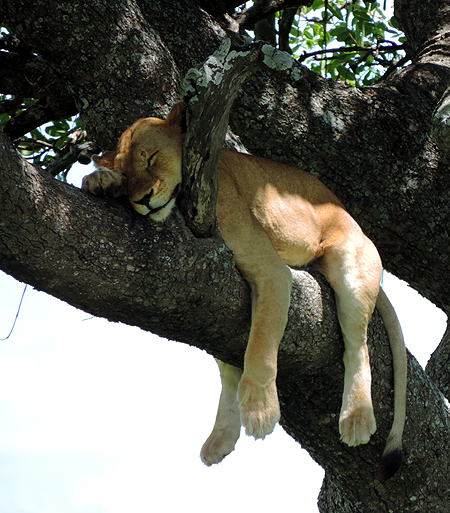
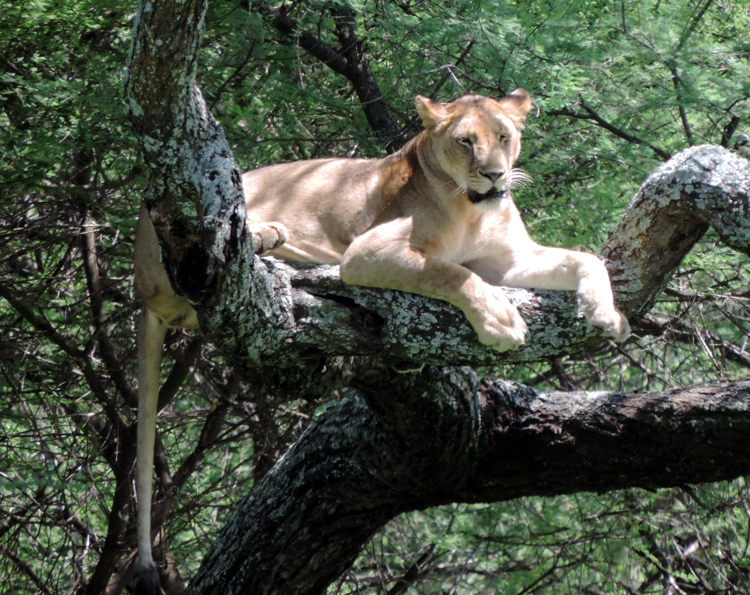
lionintreeYes! We saw the lion in the tree that Manyara is so famous for! My client, Chris Kordash, took the excellent shot above. And we saw the hippo pool that until this week had been erased by last year’s devastating floods and mudslide!

Manyara is one of my favorite parks in all of Africa, but it’s hard to arrange well and often hard to sell. I think today managed both those problems well.

The park is very small, hardly 40 sq. miles of ridiculously diverse jungle habitat that falls off the high escarpment of the great rift valley and then rolls over small savannah grasslands into the salt lake itself.

There is so much diversity in this radical altitude shift in such a short distance that the biodiversity in this little place is greater than in any other similar area in East Africa.

What leaps out at you immediately when entering (other than the baboons) are the trees. The park is dominated by varieties of giant and some ancient mahogany as well as a dozen varieties of giant fig. But there are numerous others, like the ironwood or “rhino ribs” and spiraling rocket ship trees that tower into the sky.

Varieties of trees and forest habitat means there are hundreds of kinds of birds, and the dinosaur like silvery-cheeked hornbill greets most early visitors as if they had just entered Jurassic park.

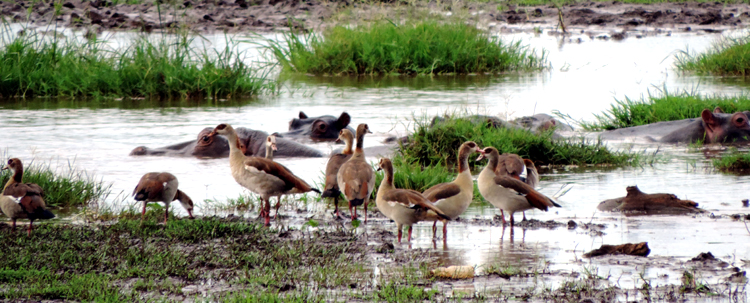
Last year this little treasure, an UNESCO biosphere, was nearly destroyed by a flash flood and mudslide. Today it’s recovered and literally today we were among the first visitors to use the new walkway above a new hippo pool, displaced after last year’s flood.

So the hippos are back! And the numerous birds at the lake’s edge, including the precious spoonbill, dozens of kinds of plovers and storks including the magnificently colorful spoon-billed and dozens of grey crowned cranes.

Frankly I don’t think you need animals for a dramatic experience in Manyara, but that’s been part of the problem. Now that the walkway and new tracks have been cut, we again saw lots of giraffe, buffalo and zebra. And …

… yes, we did see, the lion in the tree!

Manyara has always been famous for lions in the trees. While many travel companies like to keep it a mystery, it’s a simple fact that lions don’t climb very well.

So when you have as diverse a park as Manyara, with its many types of trees, many which have low horizontal branches, the clumsy lion can finally find something it can climb!

So our half-day exploration of Manyara was a complete success! And congratulations to TANAPA and UNESCO for rebuilding this magnificent park!

Photo by Chris Kordash.
On Safari: A Real Work of Art

On Safari: A Real Work of Art

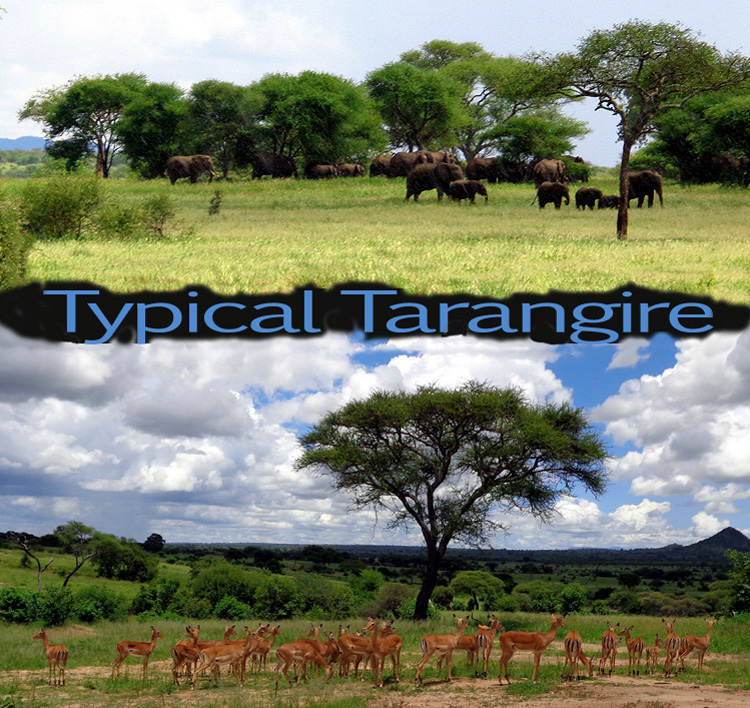
typical tarangireTarangire is the best elephant wilderness in all of Africa, but it carries the burden of enormous controversy.

Last year I was trapped inside Tarangire with my group and had to go suffer the logistical and financial horror of chartering two aircraft for a 9-minute flight from the central Tarangire airstrip to the Manyara airstrip.

It began to look like a decision had to be made: the best possible migration experience (which is now) and therefore, no Tarangire. We were trapped because the park’s bridges are not designed to work in the middle of the rainy season, which is when the migration is at its best.

But it kept gnawing at me that here we would be, in northern Tanzania, yes poised to experience the most dramatic wildlife spectacle on earth (the great wildebeest migration), right next door to Africa’s best elephant wilderness.

So I decided to arrange a “tentative day.”

I hired two sets of vehicles for Monday morning. My set went the night before to Tarangire to scope out the situation, to try to cross the problematic river and to let me know the next day if it was safe to come.

The second set took us all to the West Kilimanjaro airstrip near our beautiful Ndarakwai Ranch where we’d begun our trip.

And I would tell the pilot where to fly us!

It worked!

Tarangire was open, the river was down, and we flew into the center of the park on a short 35-minute flight. The rest of the day we spent exploring the northern half of the park.

Needless to say, we saw elephants. I estimated at least five hundred, but if we included the ones we could see in the distances, it could have been twice that.

There are too many elephant in East Africa, and there are too many elephant in Tarangire. But what a beautiful sight!

The scene and the fundamental problem causing it are as disjunct as any spectacular art work from the value a collector will pay for it.

We knew there were too many elephant as we left the park and saw the pitiful attempts by local farmers to discourage elephant from destroying their land and crops. “Scarecrows” that could hardly keep out an ostrich much less an elephant.

As I’ve often written, the “elephant problem” when seen from the point of view of a Tanzanian is quite different than the poaching problem perceived by the outsider.

While there is a poaching problem, there is also the problem of there being too many elephant, and that to the local Tanzanian, is the main problem. No one wants to discourage tourists and scientists who are helping to save their fragile environment.

But you’ve got to consider the kids walking to school, the farmer who depends year to year on a good crop, and the village counselor trying to connect his borehole to the citizen homes.

So the “scene” is today almost indescribably beautiful. But there is a problem that scene portends, and it’s a very serious one.

We saw much more in Tarangire, of course, than just the spectacular elephant. Hundreds of impala, dozens of giraffe, hundreds of baboon, zebra, wildebeest, mating lion … all in one of East Africa’s most expansive landscapes.

And at the end of the day we left the park before the rivers kept us in! It was a beautiful, color rich day. On to Manyara!
675.elewalkbuy

New Ways for Africa

New Ways for Africa

qatarIf you’re planning a trip to Africa, you might be surprised to discover the way you’ll get there is not through London or Amsterdam, but Doha.

China and Europe are retreating from a long period of heavy investment in Africa, and it seems that Middle Eastern countries are racing to fill the gap.

The global economic climate does not bode well right now for Africa. Even though America seems to be doing alright, almost every other part of the world is teetering on the brink of another recession.

Europe’s growth is stagnating and a crisis of the sort occurring in the Ukraine could send it further downhill.

China’s economy is slowing Chinese investment is retreating from the African continent.

Since China has been Africa’s principal investor for more than a decade, this means Africa will suffer terribly, especially South Africa. At the same time it means that opportunities in a wide variety of industries become available for new players, and that right now seems to be the oil-rich MidEast countries.

In my own industry the most obvious indication is air travel. Although airlines are thought principally as people movers, much of their revenue comes from cargo. The two are inextricably linked in any good business plan.

Recently, the longest supporter of East Africa transport to Europe, KLM, announced a serious cutback in its service to Kilimanjaro airport in northern Tanzania.

While this may indeed reflect a decline in passenger traffic, it also reflects a decline in the cut flower market in Holland as the KLM jumbos transport enormous amounts of cut flowers to Europe.

British Airways has also announced cutbacks into Africa.

Taking up the slack has been Turkish and Qatar Airlines. Both airlines are doing well and expanding rapidly and much of the expansion is into Africa.

With the airline comes business and the MidEast is not suffering a recession. Africa has its whole modern history relied on foreign investment and its cultures have often moved with those who invest most heavily.

Are we poised to see a whole new and large Africa/MidEast alliance?

Jim filed this post from Arusha, Tanzania.

Joining The Club!

Joining The Club!

strictconstructionCongratulations, America! You have now joined the exclusive club of despotic African societies!

Yesterday’s Supreme Court decision aligns America with numerous African dictatorships and sequesters us from virtually all the rest of the developed world.

The increasing number of despots and autocratic lawmakers in Africa is directly linked to democracies which “freely and fairly” elect them. “Freely and fairly” is governed by individual African constitutions and laws, as everywhere in the world.

Constitutions and laws in Uganda, Zimbabwe, Cameroon, Angola, Ethiopia – among others – require their leaders and lawmakers to be democratically elected. The most recent atrocity was in Zimbabwe, where even the European Union could not find mistakes in the democratic process which brought the dictator Robert Mugabe to power for his 34th year:

“The EU congratulates the people of Zimbabwe for a peaceful vote and for turning out in high numbers. It welcomes the generally peaceful and orderly manner in which the elections were conducted.”

Zimbabwe’s election was hailed as free and fair by South Africa, that was appointed by several world agencies as the principal moderator, and the African Union.

Here’s the point: Mugabe is horrible for his people and somehow, they are fooled into thinking otherwise.

That’s what money does. That’s what television advertising that tells lies which cannot be challenged in court does. Most people can be convinced by repeated lying.

The specific successful social mechanics that create such a bad outcome were perfectly documented by Human Rights Watch analyzing Zimbabwe’s January elections:

– voter intimidation;
– “ghost” or duplicate voters;
– citizens prevented from voting in opposition areas; and
– state media support for incumbents.

While I think there are plausible arguments that America does similarly, that’s not the point, either. All the HRW infractions cited are legal in Zimbabwe.

If a so-called “democratic society” allows practices clearly intended to dupe or otherwise undermine the free will of its people, the elections can nonetheless be “free and fair.”

So it’s hard to fault our Supreme Court for the decision. It was a logical one. What is the problem is not the Supreme Court, it’s America’s constitution that the Court is “upholding.”

Money rules. Drill down to all the horrible practices in Zimbabwe or any African country, and you get to “influence” which is “money.”

As soon as a certain oligarchy in any society is able to control a certain large percentage of that society’s wealth, they can sustain themselves “freely and fairly” using democracy.

That’s what yesterday’s Supreme Court decision affirms. The American constitution was created more than 200 years ago to protect independent landowners from British domination: to protect the oligarchy capable of ruling distant America.

Albeit that these great men might have been beneficent, they had no intention of ceding any power whatever to slaves or other minorities, much less women or the poor. They constructed a government to protect themselves as better than their British overlords.

The chances of changing the American constitution right now are less than changing Zimbabwe’s, yet that is exactly what has to happen to remove America from the putrid stagnation of a despotic future.

Jim filed this post from Karatu, Tanzania.

Update: Is Kenya Safe?

Update: Is Kenya Safe?

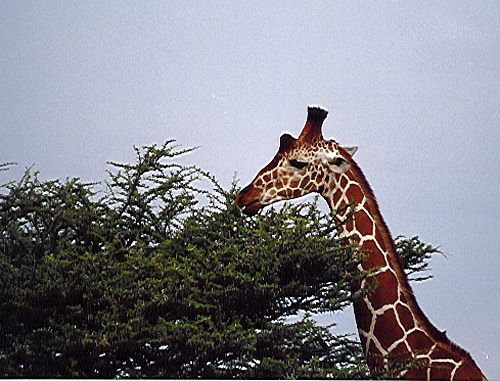
Found only in Kenya: the reticulated giraffe.
I’m not a contrarian, and for the past three years I’ve restrained to near zero EWT’s brokerage of Kenyan tourism. But despite the bad news yesterday, I see Kenyan tourist security improving.

Monday night one of the most deadly terrorist blasts (after the Westgate Mall incident) rocked the Eastleigh neighborhood of Nairobi. It was incorrectly reported by many agencies, however, that this area was “downtown Nairobi.”

Seven people were killed and another 25 injured (ten seriously) when terrorists threw hand grenades into two popular evening restaurants. This Eastleigh area of Nairobi is often known as “Little Mogadishu.”

A week ago Sunday gunmen entered a church in Likoni, Mombasa, and sprayed gunfire on the parishioners killing four.

And I wrote a month ago about the tourist attacks that failed in Zanzibar.

These are all closely related incidents, horrible if you are an East African, and completely predictable.

I’ve written extensively how the Obama/Hollande war on terrorism in Africa is founded on having made Kenya a military force to be reckoned with. This new military power has dislodged al-Shabaab and other al-Qaeda influences from Kenya’s neighbor, Somalia.

For the first time since Clinton’s foreign policy failures embodied in “Blackhawk Down” Somalia looks hopeful. America and France and all the western world is much, much safer.

Drones above the Somali, Kenya and Tanzanian coasts have wiped out more than two dozen terrorist leaders. U.S. special forces have chased those that remain into the interior of Africa where France is sealing their fate in the C.A.R. and Malawi.

But Kenya’s taking the hit for all of this.

Unable to create any significant retaliation to Obama’s wars in Africa, the much weakened terrorist cells in the horn of Africa are creating terror in the last places they’re able to:

The Somali communities in East Africa.

These communities, whether in and near Mombasa, Zanzibar or “Little Mogadishu” in Nairobi are overwhelmingly supportive of the war against terror and the Kenyan military occupation.

But simply because of the ethnic makeup of these communities, the remaining terrorists have entrees they don’t have elsewhere in Kenya or Tanzania.

And their anger is only slightly less against their fellow Somalis who they consider traitors than to Obama and the greater war on terror.

Kenya’s worst terrorist incident since the 1998 bombing of the American embassy was the Westgate Mall attack last September. But as I wrote at the time, these were latent global terrorists likely including Somalis not from Somalia, but Minneapolis.

That kind of terrorism is the real threat to tourism. The other horrible more recent acts are just too highly targeted ethnically to threaten tourists.

The Westgate Mall attack resulted in incredibly draconian Kenyan government responses, undoubtedly supported by America and others, that has hugely restricted a number of freedoms in Kenya.

I don’t think that’s good. But in the irony of the times, where America is so much safer than Kenya, tourists are now safer than ordinary Kenyan citizens.

And in my anxious estimation, tourists are increasingly safe.

Previous years’ tourist kidnapping and armed robberies of tourists in places like Lamu, Samburu and Shaba have ended. And the Kenyan government response to Westgate has been an iron fist.

Those are the facts that make the rarity and beauty of the reticulated giraffe and the legendary attraction of Kenya’s Maasai Mara safer for tourists than they have been for nearly five years. I’m not suggesting that tourism safety is the only obstacle to enjoying a vacation in Kenya.

While I’m willing to plan safaris again in Kenya, the main cities of Nairobi and Mombasa and Stone Town (Zanzibar) are out for the time being. Anyone for whom we make arrangements in Kenya also knows that we’ll pivot in an instant if the situation changes.

There are plenty of wonderful places for safaris in Tanzania. And if optimal game viewing is not the only goal, multiple great safaris are available in Zambia, Botswana and South Africa as well.

But for someone asking me now, is Kenya safe enough for a safari, my answer is the above qualified yes.

Jim filed this post from Karatu, Tanzania.

On Safari: Yes, the Greatest

On Safari: Yes, the Greatest

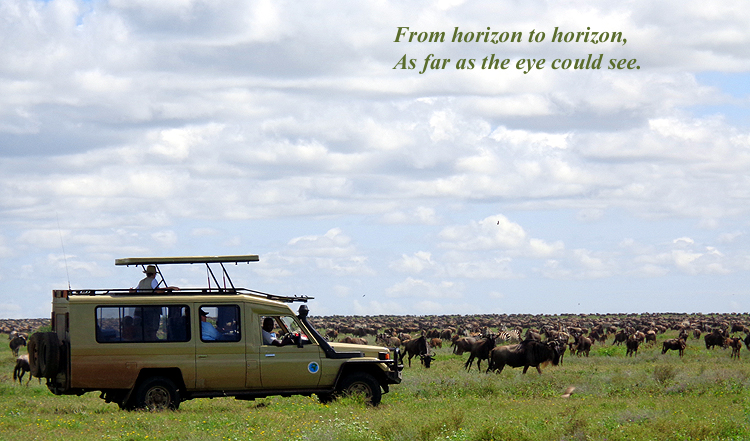
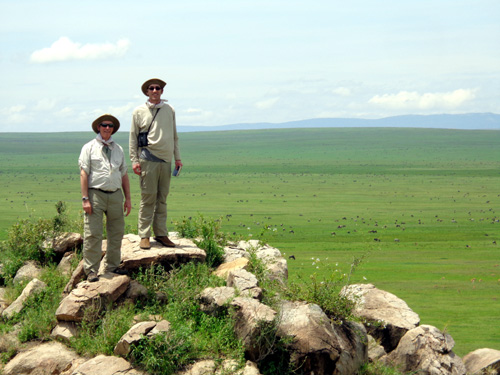
The great landscapes of Africa are incapable of being shown on a photo.  The dots behind Mort and Jared are some of the half million animals then on the veld.
The great landscapes of Africa are incapable of being shown on a photo. The dots behind Mort and Jared are some of the half million animals then on the veld.
Our game viewing was exceptional, as I expect at this time of the year, but what was uniquely special was lingering for so long among the great herds, truly the greatest wildlife spectacle on earth.

Yes, we saw hundreds if not thousands of the world’s largest mammal and hundreds of its largest antelope, the eland, and dozens of its smallest, the dik-dik.

Yes, we saw Africa’s smallest owl, the pearl-spotted owlet; a mating dance of Africa’s largest owls, the Verreaux Eagle Owl; and the rare and funny crepuscular marsh owl hopping among the thick grass.

Yes, we saw nearly 50 lion and several kills, and yes, we watched a male cheetah stalk, run, kill and eat a baby wildebeest.

Thank goodness Peter is so strong!
We saw hundreds of hippos and lots of crocs, 16 black rhino, goshawks and bateleurs hunting, giraffes galore, warthog and jackal (three kinds) and lots and lots of menacing hyena.

We saw a really weird white rupell’s (Nubian) vulture (which I’ve never seen before since the bird is always black) and at least a dozen bat-eared fox, steenbok, reedbok and even oribi. Waterbuck, impala, buffalo, grants gazelle, oodles of ostrich and we were inundated with erupting termite mounds after a heavy rain.

But what I’ll remember is the great migration.

The “great migration” is a much misused term, and I admit to being one of the most egregious users. Many tens of thousands of kinds of animals migrate, and each migration is different.

Some animal migrations like with most birds are precise and predictable, year after year. Many more, as with the great wildebeest migration, are triggered by available food sources and much less precise.

In the case of the great migration through the Serengeti ecosystem, 1½ million white-bearded gnu (wildebeest) constantly move in search of better grasslands. But sometimes I think they just move because that’s how they’re hard-wired.

I’ve often seen tens of thousands of wilde leave a beautiful area of new grass with no earthly reason why or linger among the dust when the horizon is filled with rain.

Each year’s wilde migration is different. Roughly clockwise, roughly beginning in the southern Serengeti with the birth of new wilde, they’re joined by more than a half million zebra in a year’s trek north and back south again, following the better grasslands which bloom with the rains that slowly recede into Lake Victoria.

The entire first half of the year in Tanzania is the bountiful rainy season that draws them to the southern grassland plains of the Serengeti. There the young ones feast on nutrient grasses, growing strong enough for a raced migration north when the rains stop.

But where exactly in this 2000 sq. mile southern plains area the millions of wilde and zebra are at any given moment is impossible to predict.

They could be scattered in groups of twenty thousand in twenty different places. They could be spread out, 100 to the mile, when the grazing is at its optimum.

Or, as with us this year, they could be concentrated. I think the entire two million plus animals are right now concentrated in an area hardly 20 miles long by about ten miles wide in the south eastern Serengeti.

We found them the moment we turned into Olduvai having left the crater, and we were among them as we traveled more than 50 miles up and around and back to Lake Ndutu. Until we reached the main Serengeti road, we were driving off-road completely, seeing the entire day a single other vehicle, but millions of animals.

And we were never not surrounded from horizon to horizon by the animals.

It was a migration to be remembered. It was provided by a good measure of luck and a lot of common sense about when the right time and right place to be is. We played the averages, and this time was bingo.

Having lunch about 2000 feet above the grassland plains we could see about 30 miles in all directions. And there it was, mother earth’s greatest wildlife spectacle on earth.
mistoncrater

On Safari: But in the Wild?

On Safari: But in the Wild?

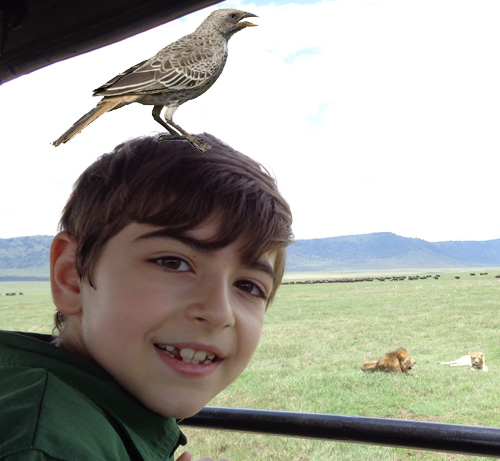
birdonmaxWhy did the rufous-tailed weaver perch on Max’s head? Why did we see 14 black rhinos together? Why were we pinned in the crater’s only forest by over 100 elephant?

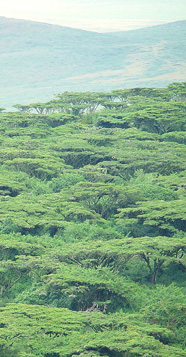
The crater has always been outside the wild. This unbelievable natural structure, the remnants of what was once the world’s highest structure ended by what must have been the most catastrophic volcanic event in the history of the planet, has always defied natural balance.

Here was where the British authorities first placed restrictions on how you could hunt. The animals were just too tame, it seemed in he 1950s. It was just too easy to shoot them.

Several times yesterday I had to contain myself from slapping the behind of a zebra, and that ridiculous opportunity has presented itself every one of the hundred times I’ve been to the crater over the last forty years.

Yet when that same zebra walks over the Senego trail out of the crater onto the Olduvai plains, it won’t let us get anywhere near him.

Wild animal behavior, like the mystical micro-climate that dances around the 1800-foot high 37-mile crater rim, defies logic in the crater. Researchers have stopped studying animals in the crater; they just don’t act normally.

But I think that’s presumptive, frankly. What I see from the crater is the more profound fact that nature is no longer in balance and hasn’t been for a long time.

When the Gibb’s guide Pascali took the kids on a forest walk a few days ago, they asked him about the elephants and school houses. He was discreet. He said yes we love the elephants, but we also have to go to school.

The last of the rare lehai, by Dan Peron.
When I asked Isabelle what a farmer should do when an ele walks over his fields, and when I asked Peter and Max what a school teacher should do when an elephant destroyed his school room, their first immediate response was to “relocate the elephant.”

It’s pretty easy to explain that won’t work. Then, like the rest of the world’s scientists, politicians and lovers of animals, even these American school kids and lovers of animals throw up their hands and ask me, “So what do you do?”

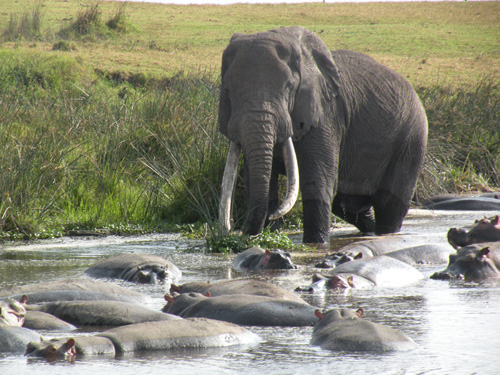
Hybridization of the golden and black-backed jackal probably began here. The last of the world’s greatest elephant with tusks like they’re supposed to be, stretching from a 12-foot high eye down to the ground, will die with the last of the giant tembo in the crater.

The crater is like a wormhole into the future of wilderness. While many casual visitors see the field scientist’s Elysian Fields, it is in fact one of the most stressful places of any wilderness on earth. It’s a moment by moment documentary of the ending of wilderness.

What should we do? Do we shoo the weaver off Max’s head or give it a piece of breakfast muffin? Do we cull the elephants or let them plow down the very last of the beautiful acacia lehai, a tree like none other doomed to extinction?

Do we separate the golden and black-backed jackal the way the Bronx Zoo separates its unintended bird hybrids in the zoo?

Do we add more ranger cars to protect the “wild” black rhino, that would never have dared to stand next to another rhino except to breed but today clusters in “packs” of more than a dozen?

Do we consider, as grandpa Mort suggested in an email he sent around today, that we get rid of all the zoos?

What is to become of the wild?

I really, really don’t know. But I know in this dynamic, stressful and indescribably beautiful crater, there’s a clue. I just don’t get it, yet.

The last of the big tuskers by Steve Taylor.