Muddled America

Muddled America

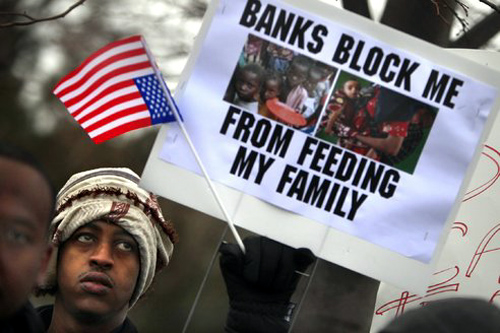
banksblockmeAnother bank stops money transfers to Somalia as American business continues to foment terrorism in The Horn of Africa.

As of this morning Merchant’s Bank of California will no longer process customer wire transfers to Somali .

This leaves fewer than a dozen mostly small banks left in the U.S. that still process wire transfers to Somalia.

I don’t know if it’s uncontrollable fear, explosive ego or just abject stupidity, but it’s so clear that this action will increase terrorism and any threats to America as a result.

According to Oxfam
, $215 million annually is sent by Somalis in the U.S. to relatives in Somalia, equaling or exceeding the total annual U.S. foreign aid to the country.

“… millions of Somalis … are dependent on this for their daily lives,” Degan Ali, the founder of a Somali support group in Kenya told Reuters today. “We’re talking about food, shelter, medical needs, education …” she explained.

I remember my own grandfather each Saturday wiring much more than my grandmother thought appropriate to his relatives in Croatia.

Large banks like Wells Fargo and Citibank stopped the service a decade ago, citing U.S. government regulation as the reason.

In a message last week to its intermediary agents, Merchants said it had received a “Consent Order” from the Department of the Treasury requiring new procedures to ensure that the wires did not end up in terrorist’s hands, and that the procedures were either impossible to comply with or to expensive to pursue.

So which is it? Is it the U.S. government incapable of managing a regulation that determines the numbers of zeros after “$5” used either to buy a month’s worth of cornmeal or a SAM missile, or is it the banks who just don’t want to be bothered by a few more checklists?

Last April two Congressman from Minneapolis where America’s largest Somali community resides, one Democrat (Keith Ellison) and one Republican (Erik Paulsen), introduced legislation in The House to clarify and simplify these regulations.

Guess what? Boehner and company dumped it as increasing government involvement in the banking industry.

In December Oxfam published a timeline of American regulatory agency involvement in this, documenting so clearly how confused and contradictory it is.

So whether it is messed up self-destructive ideology, or messed up poorly created regulation, or both, once again America is shooting itself in the foot.

There’s no question that too much money is getting into the hands of terrorists. But the significant conduits are Saudia Arabia and other of our allies! Not expatriates in Minneapolis or Los Angeles sending chip change to struggling relatives!

That presumption is the success of terrorism. There are so few American expatriate Arabs and Muslims who feel anything less than outrage against terrorism that I feel embarrassed every time I write this sentence! Americans don’t – or don’t want to – believe this.

So the system on all sides gets muddled, we make the situation worse and worse with cockamamy wars and stops on bank transfers.

We act against our own best self-interest. Isn’t that terrorism’s first objective?

Terrorists will never defeat America. America will defeat America.
More Than Goodluck

More Than Goodluck

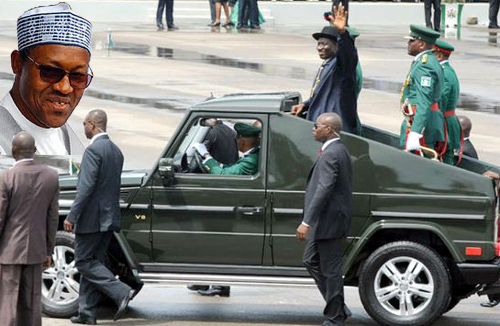
goodluckvsbuhariAfrican democracies are not doing well in the face of growing terrorism, and next weekend one of the biggest tests occurs when Nigerians go to the polls.

Secretary of State John Kerry made an unannounced visit to Lagos a day ago on his way to Kiev. His message was unequivocal: pursue, protect and keep clean the upcoming elections. None of the three are likely.

The presidential election is too close to call. President Goodluck Jonathan is seeking a second term. His unexpected best challenger, Muhammadu Buhari, is seeking a return to power.

Jonathan is an avowed Christian. Buhari is an avowed Muslim.

Jonathan at least talks democracy and claims he champions it. Buhari was one of Nigeria’s most ruthless military dictators currently being investigated by the International Criminal Court for crimes against humanity.

Neither candidate talks much about the ineffective war against Boko Haram, which controls about an eighth of the country.

Both candidates publicly disavow the possibility of a military coup. Both candidates’ advisers say otherwise.

There had hardly been a more popular man in Nigeria before Goodluck Jonathan came to power in 2011. His first few years were a love fest with the nation, and Nigeria was doing very well.

As with other popularly elected Nigerian leaders, Jonathan’s most important task was to keep the military at bay. The military has ruled Nigeria for more years than civilians since Independence in 1960. Occasionally those periods have been reasonably fair and peaceful; Buhari’s was not.

Almost all the military rulers, beneficent or tyrannical, looted the country. Nigeria is only now emerging from a state of constant corruption.

Jonathan carefully emasculated his own army so that when Boko Haram emerged, a dilemma of unexpected proportions did as well.

Foot soldiers were rarely paid because the military budget was systematically reduced or reallocated. Military leaders remain firmly in control, though, so what money was left was hoarded at the top. Foot soldiers get fed and clothed and are provided with enough aura to build egos instead of pensions.

But it’s the reason Nigeria’s military mostly fled Boko Haram, rarely fighting. All the successful military operations against Boko Haram in northeastern Nigeria have come from the Chadian Army.

Which both Jonathan and Buhari say is just fine.

Despite Secretary Kerry’s noble visit, democracy is not working in Nigeria. Certainly for the moment it is not working for Nigeria’s Muslim community who is adamantly opposed to Boko Haram but getting no help from the central government.

A Buhari victory could come at the ballot box or the barracks. Either path is paved by Nigerians of all dispositions increasingly afraid of Boko Haram.

Next weekend’s elections will be unable to justly determine a winner. Jonathan’s democratic presidency achieved that goal the last time because he last won by such massive margins.

That won’t happen this time. It’s too close.

Each side has enormous resources for “getting out the vote” which means “getting out the vote as many times as you can.”

A contested election is certain and it’s hard to imagine anything peaceful. Bush vs Gore, or more appropriately, Kenyatta vs Odinga, are not models for this massively powerful and divided country besieged by terrorism.

So rumors now flourish in Lagos that Jonathan is courting military leaders to fracture any support that may exist for Buhari.

No irony ever before would match Jonathan installed in power by a military coup after losing a democratic election. That reality may be fanciful, though, as I expect the election will be inconclusive.

Let the strongest man win.

Besting Barbie

Besting Barbie

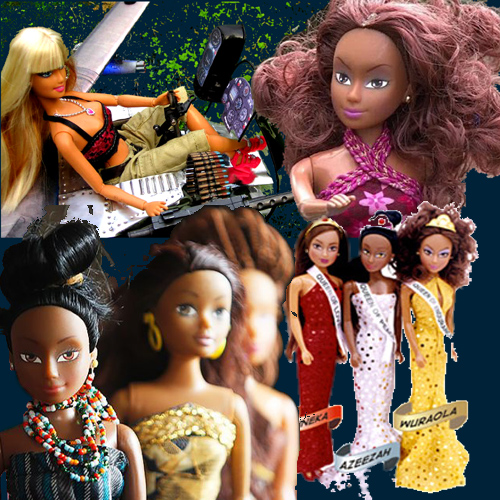
QoAvsBarbieBaz Luhrmann said it all, and Nigerian Queens of Africa dolls are now outselling barbies.

Nigeria is a complex place, among the most difficult African countries for a westerner to visit and enjoy, much less understand its foreign or social policies. Yet Nigeria often best embodies the contest between The West and Africa. Today in Nigeria, barbie dolls are losing.

Think about it. What toys do little Russians buy? What do those cute little primary school girls in Shanghai do after school? After all those primly dressed little Indian kids get home from their expensive Delhi boarding schools, what do they play with?

Other than smartphones and xBoxes, what do nonwestern kids play with?

I know images are developing in your minds of poverty struck barefoot Africans rolling the frame of a canabalized bicylcle wheel down a dirty path. (It happens in Appalachia, too.) It happens less and less in Africa, where the majority of the population – including kids, by the way – are growing up in cities that often don’t have dead grass.

Do you remember your toys? I bet if you tried hard enough you’d be able to create a narrative of your life, today, that begins with your toys as a child.

The Queens of Africa dolls intentionally challenged the barbie doll market in Africa, and they’re winning.

They’re beginning to sell well in Brazil as well, and they would probably sell well in America if the barbie cartel weren’t blocking them. What are we afraid of?

“The ‘Queens of Africa’ [dolls] … represent progressive qualities such as endurance, peace and love, while developing literary potential in children as well as enhancing their career development for the future,” doll creator, Taofeek Okoya, told Elle Magazine.

Moulin Rouge film producer, Baz Luhrmann nailed it: “It’s not about turning into a blonde Barbie doll or becoming what you dream of being; it’s about self-revelation, becoming who you are.”

Exactly as with barbie, Queens of Africa come in upteen different styles with upteen different outfits and upteen different accessories.

Hip culture digital magainze, TakePart, said: “As Barbie sales continue to plummet, another doll is aiming to slide in and take her place,” but then unfortunately added, “– in Nigeria, that is.”

Therein lies the battle between The West and Africa. TakePart is a creation of Jeff Skoll, the first president of eBay. Skoll who is Canadian sees the world from a much more global perspective than most Americans, even though he’s now firmly entrenched in the L.A. scene.

But he can’t fanthom a future in which Africa betters The West.

Even though with dolls for kids it already has. Averaging a quarter of the cost of a barbie, and with no other discernible functional differences, Queens of Africa would devour barbie in the American market.

After all, for years black kids in America played only with white barbie dolls.

“Okoya is starting to ship more of his dolls overseas, which means it could only be a matter of time before toy shelves in America are filled with African Queens and Naija Princesses,” according to the Atlanta magazine, BlackStar.

I have some reservations, by the way. The dolls are modeled after Nigeria’s three major ethnic groups … not helpful for anti-racism. Okoya is something of a playboy, the son of a Nigerian billionaire and few Nigerian billionaires are nice people… not helpful for moral capitalism.

But I probably could find similar reservations about Mattel.

So if you got one Barbie Rambo in a ring with one Queen of Africa Sheba, who’d be on the turf first?

Uber Alles

Uber Alles

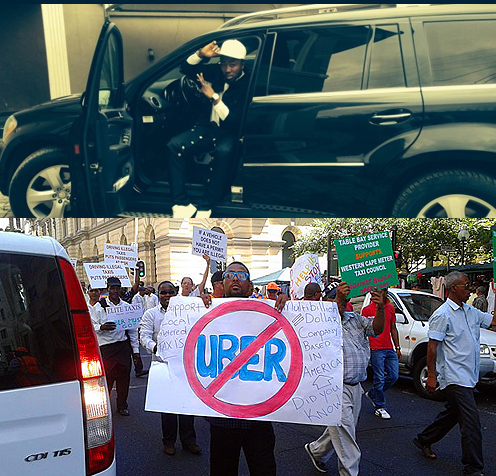
uberafricaUber is rolling over Africa despite growing protests in Cape Town and Nairobi.

Last month Uber launched in Nairobi, its third African market after South Africa and Nigeria.

In my opinion Uber’s genius is principally its app. I think if yellow cab or Marvin’s Machines in Keokee had had the foresight to move with the times, it would be Uber Over.

Uber, however, claims otherwise. It claims its genius lies in contracting with independent drivers who get their own licenses independently of any company, but the fact is there’s nothing new about this.

Limo drivers do essentially the same thing. Shuttle services, too. No, Uber’s genius is in its app.

Cab service throughout the world is one of the most uniform, corrupt and nepotistic services in the world. So essential and never sufficient, travelers stand in lines for ridiculously long times, get drenched waving their appendages into the rain and oncoming 18-wheelers and argue endlessly to keep their cab going on the shortest route.

The cabals that provide workers to the cab cartels across the world are a multi-layered no-contract service licensed by metropolitan cities whose nature of doing business is rarely transparent and never fair.

The only place in the world that I enjoy riding cabs is in London. Of course a cab ride from Heathrow to a hotel in Piccadilly costs almost as much as the flight to London. You get what you pay for.

Other than London? It’s one of the most stressful parts of a trip.

Enter uber. Nigerians love it. The response “has been overwhelming,” according to an Uber executive in Lagos.

Uber plowed over Nigeria. It launched with one of the country’s most famous hip-hop stars, Ice Prince, and then it devoured an earlier similar startup, EasyTaxi, by offering up to $12 to every person for the first ride. It moved from Lagos to Abuja faster than Boko Haram.

EasyTaxi just can’t compete. It doesn’t have the snazzy app or the tech behind it. That’s the wizardry of Uber.

Negotiations continue in Cape Town where over the weekend Uber claimed to have a licensing deal that was then denied today by a city official.

Uber Kenya launched recently in association with the very popular Restaurant Week in Nairobi, offering to give free or reduced rides to certain restaurants.

Resistance is severe in Kenya where living and working successfully means mastering a network of dependency.

The universal argument against Uber is that there is no systematic driver training or qualification. The widely cited Indian rape case is forever mentioned.

One wonders, though, how many rapes and other incidents of abuse routinely occur in regular cabs around the world.

Last month as a hostage situation developed in downtown Sydney, Uber jacked up its fares by 400% as terrified customers tried to leave the city center. (It has since offered refunds.)

Uber’s market-driven pricing rather than set pricing determined by expensive citizen commissions is one of the novelties attracting Africa’s new entrepreneurs. And they need cabs.

In Nigeria Uber usually costs more than EasyTaxi and many conventional cabs, but provides snazzy cars and well-dressed drivers that appeal to a huge segment of this trendy populace.

In South Africa and Kenya, as through much of the rest of the world, Uber costs the same or less.

Who’s making that decision? Uber will say “the market” but then, who’s got their statistical fingers on the market pulse?

Uber Up There.

A Greener Melancholy

A Greener Melancholy

kengreenentrepreneur

Even the poorest places in Africa are trying to reduce carbon emissions. Will shame change our behavior?

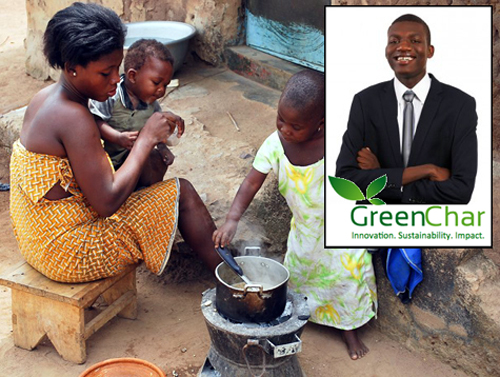
I was incredibly touched with a heavy dose of admiration and melancholy when I read recently about 19-year old Tom Osborn of Kenya, the founder of a “green” charcoal briquette company in Kenya.

As a high school top performer Osborn mastered the internet and found international and local foundations concerned with Africa’s struggles, and particularly how it might develop in a “greener” fashion.

The vast majority of Africans today cook using charcoal. The unit devastation to our planet for making a meal using charcoal is significantly greater than using more refined fossil fuels like propane, but that’s simply beyond the economics of the poor.

“I randomly came across a report saying smoke from … charcoal killed more people than AIDS, Malaria and TB combined,” Osborn told an African magazine.

“That really shocked me and made me start thinking of my mom, and that maybe she was slowly dying from all the times she had cooked for us. So I wanted to try to help her.”

Osborn linked with MIT students who had published studies of turning agricultural waste into charcoal briquettes. They confirmed that briquettes from discarded sugar cane stalks, for example, produce 90% less smoke and 60% more heat than an equal amount of charcoal.

Networking was the key and one link led to another. Osborn was named as one of the “30 under 30 Forbes entrepreneurs” which gave him enormous credibility that this creative kid turned into lots of startup money.

He received $80,000 from Echoing Green and another $10,000 from the Anzisha Foundation which gave him enough getup and go to partner with Envirofit that makes energy efficient charcoal stoves.

His company now bundles the energy efficient stove with his sugar cane briquettes and has so far sold to several thousand customers.

Osborn’s GreenChar benefits from great IT assistance and has a fabulous, modern website. Osborn has mastered networking with all the right people.

Osborn is a brilliant kid.

It is completely unlikely that this company will succeed: Admiration and melancholy.

Envirofit’s stove is fabulous, but very expensive by African standards. Osborn has admitted that he has achieved his first market niche by selling below or near costs, funded by his grants.

The world is cleaner. A young man is learning the ropes. And the western world is applauding him for trying so hard, but the crashing hammer of capitalism means the effort continues only as charity or dies.

I’m elated that one day when Osborn is 30 years old he might be sitting in the CEO chair for Kenya Airways or IBM – South Africa. It’s fantastic that this kid in rural Kenya has tunneled out of poverty using in the beginning nothing more than the internet.

But hold your applause.

The day will come when unfettered cooking in Africa is achieved either by violent revolution or the radical global redistribution of wealth that prevents it. None may be in a better position to help make that choice than Tom Osborn.

Admiration and melancholy. Maybe, too, a little bit of hope.

Bad Bloomberg Bit

Bad Bloomberg Bit

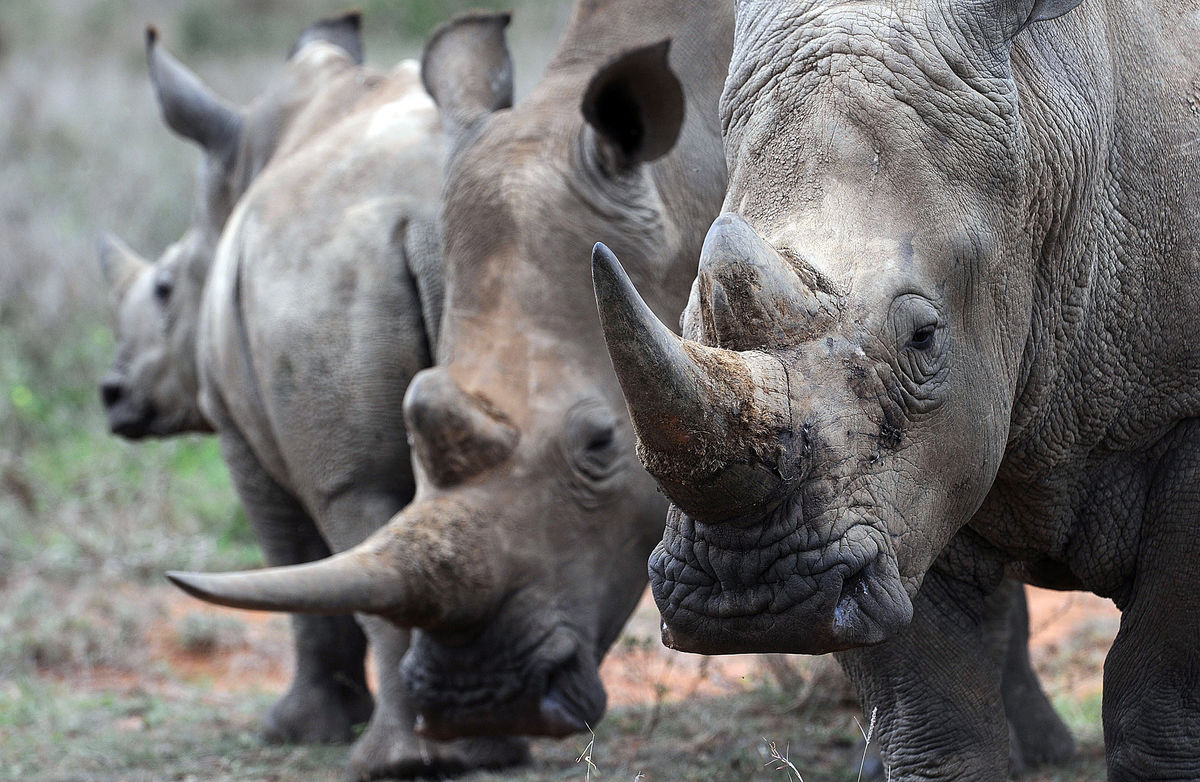
rhinoFive years ago I suggested the only way to save the northern white rhino was “DNA deep-freeze.” This week scientists agreed and Bloomberg confused the world.

The media was abuzz this week with reports that the remaining five “northern white rhino” in existence might now be saved by invitro fertilization, a report widely circulated by Bloomberg News.

If only the world had disseminated Nairobi’s Daily Nation report
instead:

“Past attempts at artificial insemination of northern white rhinos… have failed… Stores of frozen sperm and eggs could be used to revive the animal [in the future] artificially, but ….the northern white rhino will likely disappear, at least for a while.”

Let’s try to parse the facts. Stick with me.

The first is that many of the repeats of the Bloomberg Bit were so short and so incomplete that people started to think the news was about all rhino:

We aren’t discussing all the critically endangered rhino in general, which definitely includes at least five gene-separated anatomical cousins:

There are about 5000 black rhino (Diceros bicornis) left in the world. Very few are actually wild. Numbers are hard to come by, but probably less than 500. The others are mostly in private protected sanctuaries and reserves in sub-Saharan Africa and in zoos.

There are over 20,000 white rhino (Ceratotherium simum) mostly in heavily protected wilderness in southern Africa like the completely fenced-in Umfolozi-Hluhluwe national parks in South Africa, or in private reserves and sanctuaries and zoos. Like the black rhino very few actually live in the wild or unfenced national parks.

More critically endangered are the remaining three species, all of which live in near fortress protected sanctuaries: 44 Javan Rhino (Rhinoceros sondaicus) found only in Indonesia’s Ujung Kulon National Park; less than 100 Sumatran Rhino (Dicerorhinus sumatrensis) in disconnected wildernesses in Indonesia; and the 3300 Greater One-horned Rhino (Rhinoceros unicornis) found in eastern India and Nepal.

My first trek with this week’s media blitz was that many publications didn’t make the differentiation above and the suggestion hung out there that only a half dozen rhinos were left in the world.

This story is not about all rhino but about a possible subspecies of one of the five species of rhino: the “northern” white rhino (ceratotherium simum cottoni).

By the way some scientists do want to call this animal a separate sixth species, rather than a subspecies, for the astoundingly absurd reason that this animal might soon go extinct.

So whether this animal is actually the 6th species of what we commonly refer to as “rhino” or whether it is a subspecies (ceratotherium simum cottoni) of the white rhino (Ceratotherium simum), it is anatomically different enough that its loss would be another extinction catastrophe.

In 2009 four of the remaining 8 still alive in the world were shipped to Kenya from a Czech zoo, and I was critical of that. At the time, two remained in that Czech zoo and two in San Diego’s Wild Animal Park. One animal has died since in both those places, leaving the four sent to Kenya, one in the Czech Republic and one in California.

I was critical at the time because I felt there was so much poaching in Kenya that it was a death sentence. Wildlife managers obviated that by cutting off their horns, a very controversial strategy that had not been announced prior to the relocation.

I understand why dehorning wasn’t announced at the time, since it’s extremely controversial. Particularly in Zimbabwe dehorned rhinos contracted massive infections that often killed them, and when they survived, the horn often grew back. There hasn’t really been sufficient time in the last five years for a large enough horn to grow back on the ones dehorned in Kenya.

So for the moment we can recognize the strategy as being successful.

The reason for the risky move to Kenya was the hope the rhinos would breed once they were in a more natural habitat. Many of us knew they wouldn’t. Rhinos held in captivity for long periods of time don’t breed no matter where they’re moved. (Wild rhinos relocated into large wild reserves like Lewa Downs in Kenya are another matter, and often then breed well at least at first.)

These relocated rhino had been in a less than stellar zoo for decades.

They haven’t bred in Kenya.

In vitro fertilization was tried and hasn’t worked, either. Bloomberg News got it wrong:
“A Kenyan wildlife conservancy said it’s considering using in-vitro fertilization to try and save the northern white rhino from extinction, after an attempt to get them to breed naturally failed.”

BBC – as usual – got it right:
“The eggs will be stored with a view to being used for IVF in the future.”

Bloomberg and thousands of outlets re-reporting them suggested a simple dairy cow procedure. It’s been tried and it’s failed. So the only hope now, as I suggested 5 years ago, is the “DNA-deep freeze” where eggs, sperm, and embryos from combined eggs and sperm, are all frozen until scientists can figure out how to take these to the next level, a fetus.

In vitro fertilization doesn’t work with these animals possibly because there’s a physiology that’s reflected in their lack of interest to mate, a chemical if you will prevention not of fertilization but of subsequent pregnancy.

The bad Bloomberg bit disseminated round the world generates very long and often boring explanations like this. Does that move learning forward? Which really helps the rhino? Which helps Bloomberg?

Shush! You’re in Tanzania!

Shush! You’re in Tanzania!

tanbansspeechThe Tanzania government is inviting violence as it cracks down on all dissent prior to two upcoming elections.

Tanzania has never been a model of transparency. European governments suspended aid more than a year ago because of shady, under-the-table mining deals, and despite some demanding young mavericks in Parliament, the government continues to stonewall all requests for basic information.

But now it’s getting very serious. For the first time the government has banned a major newspaper.

In times past the government has banned smaller papers and blogs, but the East African newspaper is a large regional publication that has been popular in Tanzania for twenty years.

The paper is one of the most aggressive in East Africa. Its investigative journalists recently published details of the government’s fraudulent passing of a new proposed constitution to ready it for a national referendum in April. This is likely what provoked the ban.

The outcry was immediate and from all points in sub-Saharan Africa.

Yesterday evening in an unusually harsh statement, the European Union condemned the move.

The Media Institute for Southern Africa further reported that the East African’s principal bureau chief in Dar-es-Salaam was detained and questioned by police.

The government is running scared. National elections are scheduled for October, and a referendum on the disputed new constitution is scheduled for April 30.

Neither are expected to go well. The proposed constitution was approved by a Parliament that was boycotted by virtually ever member of the opposition. Critics are especially angered by mechanisms intended to keep the party which has ruled Tanzania since independence firmly in control.

Among the mechanisms that would do this is the subjugation of Zanzibar, which was one of the reasons a new constitution was to be considered in the first place. It was presumed that a federal system would give Zanzibar considerably more autonomy and that would help calm the civil disobedience afflicting the island.

The East African aggressively reported these criticisms by the vocal and youthful opposition.

Last October the fractured opposition to the government announced a coalition to oppose the government candidates in the upcoming national elections. Today that appears to be evaporating, and in this moment of weakness I think the government wants to regain control.

It won’t work, of course.

As one of the comments to the story in Nairobi’s Daily Nation pointed out, most everyone reads the East African today online. The government has no way of banning that.

So the act of trying to do so is likely to do little except further inflame the situation.

At the same time if the opposition is unable to reconstitute its coalition I think it deserves to lose. There could be no better opportunity than right now to dislodge the ruling party. If this moment is missed, expect Tanzania to grow more and more repressive.

Firing The Light

Firing The Light

FiringTheLightA California company is building plants and producing huge amounts of solar power for South Africa. Why not here?

In collaboration with a Saudi financing company (and Google!), SolarReserve will produce almost 350mW of electricity from four solar plants in South Africa’s sunny Karoo (from Kimberly west into the northern Cape).

In fact SolarReserve does have a single operation in Nevada, but the new operation just announced in South Africa will be its fourth just in that country.

Both our countries use fossil fuels at about the same percentages: 70% of American electricity is fossil fuel generated, 67% for South Africa.

Traditional fossil fuel plants produce more electricity once operating than comparable solar operations. American nuclear power plants, for example, proudly insist that they generate around 500 mW and a typical coal-fired electric plant generates around 550mW. This is up to three times what a typical solar plant creates.

More importantly, coal-fired and nuclear plants sustain their rated output far better than alternative energy plants like solar, which of course don’t produce at night.

Is South Africa simply “greener” than America?

No, unfortunately. The flip side of output is the cost of building a plant. Solar plants are much less expensive than traditional fossil fuel plants and can be up and running in 16 months, half as long as a coal-fired plant. Nuke facilities can take a decade to build.

That’s the key for South Africa, and it’s the reason such a fertile market exists there right now for solar energy providers. Last year the country experienced its first rolling outages and more are expected this year.

Africa’s rapid growth demands alternative energy sources in a way America does not. It costs less to build and can be operating in a fraction of the time. Politicians, I’m afraid, and not environmentalists are driving the process in South Africa.

Inevitably, though, Americans will benefit. As expected when South Africa’s first solar plants came on line they produced far less than projected. Any new technology is going to experience such growing pains.

Working through these engineering issues gave rise – at least in SolarReserve’s case – to a whole new alternative to PV (photovoltaic) solar electricity production.

PV is what we all understand: a cell hit by the sun produces electricity. It’s what’s on the top of your home and it’s what we use to create a bit of power in our camps in the African bush.

SolarReserve is now a leader of a new almost scifi technology referred to as CSP (concentrated solar thermal power): Ten thousand tracking mirrors, rather than cells, circled onto a 1,500 acre field direct laser-like sun onto the top of a 550′ tower at the center, melting salt at temperatures as high as 1,000F.

The salt is then used to heat steam to power generators. The reason the Saudi company has joined these ventures is because an easy by-product of this process is fresh from salt water.

By the way, the Australians just announced a breakthrough in the old PV technology. Traditional PV cells are rated as low as 18% efficiency. The new Australian methodology increases efficiency to 33-40%.

The answer to the question I poised at the top is urgency and capital. There is more of the first and less of the latter in South Africa than the U.S.

Those of us who look long-term, though, see the present urgency and poverty in South Africa vis-a-vis the U.S. as an opportunity to help us all.

Does this mean “green” is “poorer” and more “reactive” than non-green?

For the time being. That’s the point: only for the time being. As crass it is, we non-greeners are using green South Africa to work through the glitches before we handily adopt the new technology.

It’s the way of the (capitalist) world.

Waterworld

Waterworld

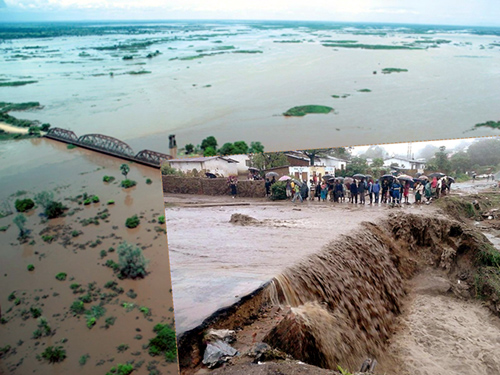
thiswasfarmlandThe devastation of the torrential rains now falling on southern Africa is an unprecedented catastrophe of global warming.

“The worst flooding in the history of Malawi,” according to Bloomberg News,
has forced the president to declare more than half the country a disaster zone.

Southern Tanzania, northern Mozambique and large parts of Zimbabwe and Zambia are also seriously effected.

The number of people displaced may soon exceed one million. Already a quarter million have lost their homes.

Professional climatologists in South Africa today said there’s not enough time left to adjust society, and that all that’s left to do now is to educate the population so they can better understand the weather warnings as they come:

Global warming has no less effect on the United States than southern Africa: we all know this well by now. The difference is that our infrastructure might be capable of absorbing the catastrophes. We might be able to build sea walls the way the Republicans want us to build border fences. We might keep the rising sea at bay.

The developing world has nowhere near the resources for that kind of response.

The mega deal between China and the U.S. will take decades to have an impact. It seems to me problematic that it will positively impact even our own future, but there’s no question the developed world will not benefit from it.

Just look at Africa right now.

By the time reduced emissions by the developed world produce any noticeable benefit, the number of seasons of catastrophic flooding and drought in Africa will have devastated the continent.

It doesn’t take a rocket scientist to know what this means.

Material destruction leads to human misery. Diseases spread quickly, infrastructure like health facilities is destroyed, crop production is massively interrupted, so there is an exponential rate at which misery develops.

The dissatisfaction which then breaks down the societies will leave weak ones obliterated and stronger ones, like South Africa, with serious public uprisings.

Developed countries like our own will be unable to provide enough assistance to seriously turn things around. Just as we’re learning that wars in the Levant don’t work, we’ll learn that disaster response in the developing world won’t work.

As we accept that cruel truth, we’ll draw back into our own levies to watch the world outside our high tech shores dissolve away.

That’s the real possibility for man’s legacy. If the developed world survives, it will not have a pretty face.

It’s Just a Joke, Right?

It’s Just a Joke, Right?

xenophobiaXenophobia triggered by the slaughter at Charlie Hebdo has devolved in Africa from Christian/Muslim into primitive and very dangerous tribal racism.

The demonstrations, lawlessness and violence we saw last week in places like Algiers and Niger was a direct response by Muslims to French secular dogma featuring Charlie Hebdo’s mocking Muslim cartoons.

That grew in Europe to vigilantes against any foreigners. Particularly in Dresden and Birmingham xenophobia was ignited.

Back in Africa ethnic tensions are rising dramatically throughout sub-Saharan Africa. Today’s presidential election in Zambia, for instance, has been inflamed by ethnic tensions that had long since been curtailed.

And yesterday in Soweto, youth gangs looted foreign-owned stores, killing two and injuring more, mostly Somali and Pakistanis.

I suspect this is happening all around the world. We know it’s happening here in America.

In Algiers, Niger, Soweto, Birmingham, Dresden or Texas, xenophobia today in particular is the manifestation of people feeling they’re getting shafted, unfairly denied what their televisions are telling them is a “recovery.”

Economic statistics are improving and truly fewer people are on the skids. It’s as true in Soweto as it is Dallas.

But the “improvement” is horribly lopsided towards those who were better off to begin with. It’s also likely lopsided to those who have a greater experience with adversary, like immigrants.

In Soweto the shops that were looted were owned mostly by Somali and those killed were Somali. Few people in the world have had to endure the life of a Somali. Even fewer still have found the wherewithal to migrate an entire continent to try to etch out a more productive life for themselves.

Those are the kinds of people who will likely bounce back first, since they’ve already achieved the skills of survival in adverse situations.

And those below them who linger, like the supposed out-of-work truck driver in Texas, thrash out at a Muslim in a suit-and-tie because it’s a difference that’s clear enough for him to understand, a sort of Limbaugh economics.

There will always be xenophobia and ethnic racism, because there will always be differences that seem unfair to those who have less.

But today that unfairness is particularly sharp. The rich are unfairly rich, whether that be in South Africa or the United States. But unlike in the past, the rich are also in seeming total control.

Whether it is the Koch and Murdoch in the U.S. or the Zuma-ists in South Africa, the rich and powerful control much of the media with skills which include deceiving the poor and less informed that the problem is with “foreigners.”

The beauty of America is foreigners, the “melting pot” of the free world. Clearly this is where most of our creativity and ingenuity has come from. To a great extent, it’s a dynamic happening in South Africa, too.

Charlie Hebdo had no idea. Humor is sometimes so provocative it actually accomplishes something.

The Price of Democracy

The Price of Democracy

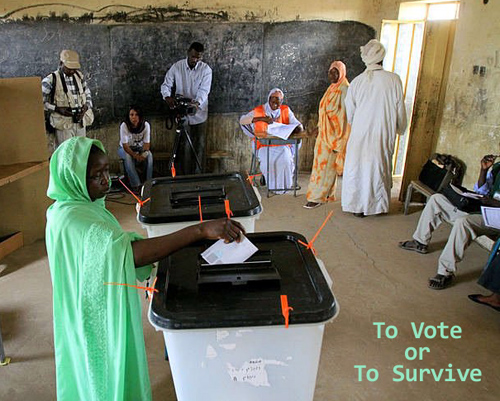
tovoteortosuriveChad and Cameroon are defeating Boko Haram while Nigeria is losing. What’s going on?

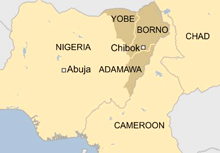
Cameroon shares a 500 km border with Nigeria on the east and Chad shares a much smaller border above the Cameroon/Nigerian border from Lake Chad north.

Boko Haram controls virtually all the Borno State of Nigeria, which is its far northeastern province. Parts of two other Nigerian states, Yobe to the north of Borno and Adamawa to the south, are also contolled by Boko Haram.
chadnigcammap
Both Chad and Cameroon are holding Boko Haram at bay and, in fact, freeing hostages and securing border posts that Nigeria has abandoned. The few times that Boko Haram has tried to enter either country, it’s been pushed back into Nigeria.

Both countries are less powerful than Nigeria on paper, i.e. in terms of available military hardware and defense budgets. The U.S. which has strategic military arrangements with all three countries has a far greater one with Nigeria than the other two.

Why, then, is Nigeria incapable of defeating Boko Haram?

While the Chadian army is less powerful than Nigeria’s on paper, it’s a much better fighting force. It led the charge, so to speak, in the successful fight against Mali Tuareg Islamists last year, taking a role there second only to France.

Despite its much longer border with Nigeria, many fewer refugees are fleeing into Cameroon than into Chad. This is because the thrust of Boko Haram’s military advances has been to the northeast, driving directly towards Lake Chad.

So the refugee problem, which is a trigger for all sorts of conflicts worldwide, provides Chad with all the rational it needs to ratchet up the fight, and Cameroon – and possibly even Nigeria – don’t mind a bit.

Chad is the most militaristic society of all three countries and that’s essentially the short reason that it’s succeeding in fighting Boko Haram as it would – and has – any insurgency.

Last year when trouble in its neighboring Central African Republic erupted, battles spilled over into Chad for a very short time. Chad’s military response was so severe that while the CAR remains very unstable and its capital in constant turmoil, the fighting has been contained at the border by the Chad military.

Nigeria was once a country like Chad. It became independent from Britain in 1963, but within three years it was a military dictatorship. Military dominance continued in Nigeria right through its bloody Biafran Civil War and after, with several weak and unsuccessful attempts from time to time to move towards civilian democratic rule.

The 1980s were pivotal for Africa because of America’s president, Ronald Reagan. He insisted that all embassies throughout Africa have a chief “Democracy Officer” and that any aid be contingent on moves by that country towards democracy.

Nigeria was dependent almost completely upon British and American investment. New discoveries of oil were being made daily, and a rich future looked possible but only if the west would invest.

The military agreed to Reagan’s initiatives and elections in Nigeria were held in 1993, but as often happens the man who won was quite radical. The general who had agreed to the elections annulled them, and the U.S. and Britain promptly suspended aid.

Not until 1999 was a truly democratic government in place.

Ever since then Nigerian politicians have had a tricky balance: the educated mostly urban populations thrive on democracy. They depend upon goods and investment from the west which insists on democracy.

The rural populations – particularly in places like Borno State – are marginalized, ethnically divided and with local governments mastered by little dictators. They are supported by insurgents and increasingly, radical Islamists.

Most importantly, though, the Nigerian military has been systematically eviscerated by the Lagos civilian government so that it cannot return to power. Defense budgets have been cut and military commands intentionally fractured.

Nigeria is in the midst of still another national election. The last thing that the current president running for reelection wants is to empower the military. In essence, that means ceding at least for now large swaths of his country to Boko Haram.

Democracy is not everything that it’s made out to be: definitely not a one-size fits all. If democratic Nigeria is to survive, it will probably mean so will Boko Haram.

Martin Luther King

Martin Luther King

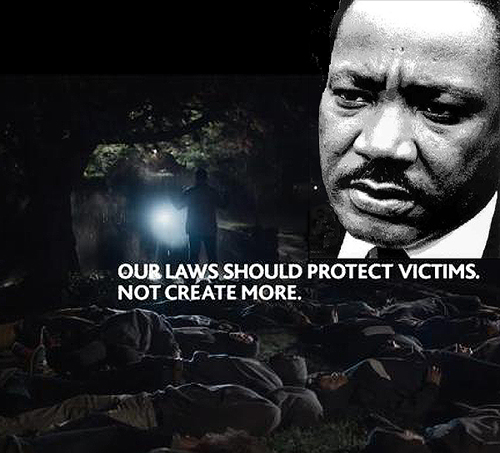
MLKDay14Today is one of the most important benchmarks in the American calendar, the Martin Luther King federal holiday.

Yet in America in recent years King’s dreams have retreated into the fog of self-righteousness. His detractors, America’s Right, has rolled back many of the voting freedoms he had fought for a half century ago, assisted by a conservative if vindictive Supreme Court.

King’s supporters were certainly re-energized this past year by a number of horrible police actions against innocent blacks. There have been massive demonstrations in Ferguson, Missouri and New York, where cops were absolved of culpability for people they had murdered by grand juries.

But there has been little follow-up, and legislative remedies seem nearly impossible with both houses of Congress firmly in the control of Republicans.

Dr. King is ascribed in history — like Ghandi – as a champion of non-violence. But what I most remember of King’s turbulent last days was unbelievable violence. My most vivid memory is as a very young journalist penned under a burning El Stop in downtown Chicago while the city raged in reaction to King’s assassination.

I remember gun fire was a regular sound in my low-rent apartment in Washington, D.C. during the summer of 1968. Or the unending sirens and tear gas around my apartment in Berkeley that fall.

Those days ended in victory for my side. The Vietnam War came to an end. Civil Rights and Voting Rights leaped forward. There is much violence in America, today, but it seems to occur without a cause.

Gun violence in America is horrific, today. While the number of households with guns has been declining, the actual number of guns has been skyrocketing. There are now almost a quarter billion guns in private citizen hands and countless murders daily.

This is not what Dr. King had in mind. So today we celebrate his 86th birthday, wishing sorely that he were still here to explain.

Free Hate

Free Hate

freespeechIs Charlie Hebdo hateful, and if so, should it be banned?

In the U.S. hate speech is constitutionally protected, but acts motivated by hate can be deemed illegal. It’s an extraordinarily complex if subtle distinction.

It’s not surprising that the political and religious leaders of Africa are near universally condemning this week’s European terrorism, but their societies are not expressing any such agreement at all.

Some of the most Muslim of Africa’s countries, including Morocco, Egypt, Mauritania and even Somali walked in lockstep with their condemnation of the terrorists but without, however, bringing up the subject of free speech. These and many more government statements seemed almost like they were all written by the same person.

But dig into social media and it’s a completely different situation:

“Discussions on social media are incensed,” Deutsche Welle sums up, today.

Moreover, government policy as opposed to government statements in Africa is quite different. The same governments above – as with almost all African governments – have strict laws against free speech.

In Egypt a person can be detained indefinitely whenever suspected of terrorism, and in Egypt today terrorism is defined as simple as speaking the words, “Muslim Brotherhood.”

In countries like Morocco where authoritative pro-western regimes are balancing a growing populist-Muslim movement, free speech and assembly is often banned and insults of the King result in imprisonment.

In less authoritative regimes like Kenya and South Africa, current legislatures are grappling with new laws that seriously restrict the press and other forms of free speech.

So don’t believe the government statements. I believe that Africans of almost all persuasions view the terrorism this week in France and Belgium as an understandable outcome of excessive “free speech.” The question is whether the outcome is worth it.

Free speech in Africa is a powerful weapon and those in power are unanimously wary of it.

With the less stable (Somalia), less developed (Mauritania) or more contentious governments (Morocco and Egypt), inhibiting free speech is used against Islamic militants because that same interdiction is used against any criticism of the existing regime.

With more stable and progressive governments like Kenya and South Africa, where political criticism is vibrant, the debate over Charlie Hebdo is quite unsettled. Earlier this week I wrote about this.

My own view is that we need to value the “worth” of hateful criticism. In an educated and tolerant society this value can be truly understood as an important test of free speech.

But in less educated and tolerant societies the value flips and reflects not a freedom but the oppressive power of the subjugator. Thems fighting words.

“Just like there is no such thing as unfettered capitalism, there is no such thing as unfettered free speech,” writes a New York muslim using an anonymous penname (touché!).

So when we as westerners condemn curtailments of free speech elsewhere, without criticizing our own hate speech/crime laws, are we simply claiming to have achieved the perfect standard … universally?

That’s the cardinal mistake of the West: presuming not just that they know best, but that no one else anywhere knows better.

It’s just not true. It’s not possible, and if we can excise this egoism from the argument, I think we’ll begin to empathize with the movers and shakers in the developing world who have very few riches to be taken from them, but enormous amounts of dignity.

Oiling The Works

Oiling The Works

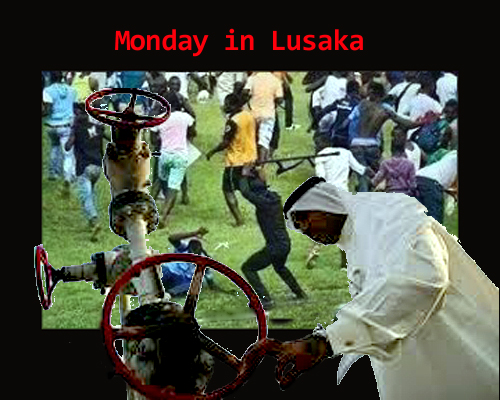
MondayinLusakaZambia, copper giant and Zambezi River namesake, is fraying at the seams, torn by a global recession manipulated by Sandia Arabia and an educated society intoxicated by democracy.

What’s happening in Zambia today is a preview of the trouble hanging over much of developing Africa, and Zambia is in the focus just unluckily because of the unexpected death of its leader.

At 77, popular Michael Sata was right around the age of many African leaders and his health was OK. His death in October came as a surprise.

If Sata had died a year earlier before copper prices had tumbled and oil began to decline and the Eurozone started to fray, again, I doubt anything unusual would have happened. The country was doing well.

But Sata didn’t die a year earlier, he died in the early preview to a new global recession caused by the forced decline in oil prices, which has triggered a decline in commodity prices of all sorts including copper, Zambia’s one and only and very important resource.

I wrote earlier about the peculiar transition of power to a transitional government Sata’s death abroad caused: A white man, Guy Scott, became acting president but was barred from becoming president even as he oversaw the process for new elections.

Immediately fissures began in all political alliances, and yesterday violence peaked with car bombings and sporadic gun fire in the capital. Read the comments to the brief article to see how high tensions are.

This would not have happened a year ago. Yesterday alone copper prices tumbled and are now almost 10% below a year ago. The Canadian stock market sank miserably, because of copper.

“Copper [has] an uncanny ability to predict turning points in the global economy,” a Dubai asset manager wrote recently.

It isn’t that the people exploding cars or throwing rocks or issuing threats in Zambia understand the economics of global commodities, just as the new disaffection with Nairobi university students doesn’t mean every single one of them understands the mechanisms that provoked Chinese companies to stop drilling for oil in Kenya.

But everything is so intricately linked, that disaffection spreads like a virus. In Africa’s small if previously vibrant economies, a wrinkle in future outlook is a tsunami of potential misery.

President Zata died unexpectedly as the storm clouds that were gathering began to rumble. The event alone was socially disruptive to be sure, but in normal times it would not have led to the violence in the streets of Lusaka currently seen.

Zambia is one of sub-Saharan Africa’s better educated countries, and though it’s struggled with an above average amount of corruption, it should have been able to make the current power transition pretty easily.

But Sandia Arabia opened the spigots. We’re told the reason is to force America out of the top spot in world oil production. The ramifications are startling and severe.

Combined with an untimely power transition in developing Africa, it creates a maelstrom of discontent and unease.

The Zambian election process begins in earnest in a week. As copper is a barometer of the global economy, what happens in Zambia next week will foreshadow much of Africa for next year.

When None is Too Many

When None is Too Many

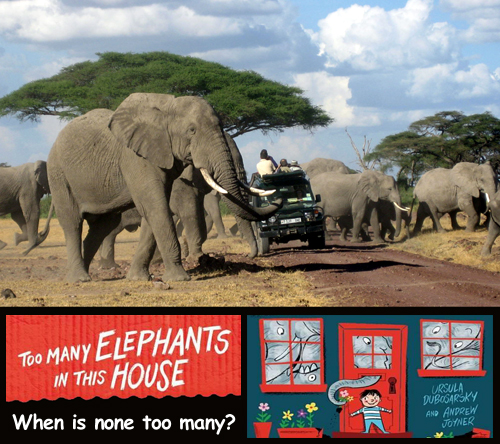
toomany eleZimbabwe has rejected an U.S./European entreaty not to sell 60 baby elephants to unnamed, likely disreputable buyers abroad.

Just before Christmas the Zimbabwean Tourist & Natural Resource Minister said the country would sell the baby elephants, and he named China, U.A.E. and France as the destination countries.

The actual buyers, though, were not named. The outcry was immediate and resulted in a joint petition by the U.S. and the European Union to Zimbabwe to rescind the sale.

Separately, a worldwide petition drive continues to stop the sale. Click here to sign that petition.

There is nothing illegal in the sale, as the CITES convention which governs international commerce in elephants allows countries to relocate endangered animals to other places in the world provided due diligence is undertaken.

That “due diligence” is supposed to carefully assess the need for reducing the animal in the habitat from which it’s being taken, and equally with the capability of the buyer to humanely safeguard the animal.

All the above is in serious dispute in Zimbabwe, but there are no mechanisms within the CITES convention to monitor individual government determinations.

“We are sure there are 25,000 elephants in the Hwange elephant Park,” Colin Gillies, of the Zimbabwe Wildlife and Environment Association, told South African reporters, whereas the Zim government has claimed from 50 to 75,000 elephant exist in the park.

There is nothing within CITES to mediate this dispute. 25,000 could suggest far less than capacity in Zimbabwe’s largest national park, whereas 75,000 would indeed be too many.

Zim’s action is brutal. The country is the most corrupt in sub-Saharan Africa, its national parks are a mere shadow of the greatness that existed before the current regime began 35 years ago, and I have little doubt there may, indeed, be too many elephants.

In poorly managed wildernesses, some animals literally take over. In war zones, for example like the DRC, you can find literally tens of thousands of hippo.

Moreover, southern African wildernesses require considerably more management than East African wildernesses, and one of the tools that has been used for decades are bore holes, wells.

Most of Hwange National Park’s elephants get their water from manmade and sustained water wells. The cost of drilling and maintaining is high and the current Zim regime has allowed a number of these wells to die.

In that regards, without working wells, there may indeed be too many elephant regardless that the figure might be as low as 25,000.

Elephant census are unreliable to begin with, virtually impossible in ravaged Zimbabwe. In other parts of sub-Saharan Africa I’ve argued there are too many elephants, and not scientifically but socially and politically.

It may seem odd from a conservation point of view to argue something from other than a scientific point of view, but the situation in Zimbabwe is a perfect if ironic validation of my reasoning.

Until the people in control of a society feel a need to conserve their natural resources, it simply won’t happen. In most other places in sub-Saharan Africa other than Zimbabwe, there are legitimate debates over the cost-benefit of elephants to local populations, and many of these are sophisticated conversations that include global responsibilities to preserving our biospheres.

But in Zimbabwe it’s been reduced to the roughly $35,000 per baby elephant that someone in the Zimbabwe government is going to pocket. That’s because Zim society has allowed this dictatorial corruption.

In Tanzania it’s more subtle corruption. In Kenya it’s a public movement to protect, against corruption.

Ultimately among those three countries, the elephant will survive and prosper in Kenya, its future is questionable in Tanzania, and elephant in Zimbabwe are on the skids right now.

Yet in all three countries a legitimate tension exists between man and elephant, a dynamic often overlooked by outside conservationists who become obsessed with the end-game.

There’s more to do, and the first move is the local citizen’s. Outsiders with noble concerns must nonetheless engage and respect these local concerns as paramount or nothing good will happen.