The last day that human slavery was legal in the civilized world was June 19, 1865, and every day since extraordinary efforts to understand and document the horrific practice have been unrelenting. Now Tanzanian scientists are debunking several established concepts about the origin and explosion of slavery in the 17th century.
Amistad and Goree Island lead most explanations of the incredible increase in slavery in the 18th and 19th centuries as principally motivated by America’s rapid development, especially the growth of the cotton and tobacco industries.
Most black Americans are descendants of West African slaves held on southern agricultural farms, and until now, documented slave trading from East Africa seemed incidental to the millions taken from West Africa for the Americas.
Last week Tanzanian scientists announced several years of ongoing work in the northern coastal regions of the country has uncovered evidence that the slave trade flourished in East Africa from as early as the 13th century, long before the West African commerce began.
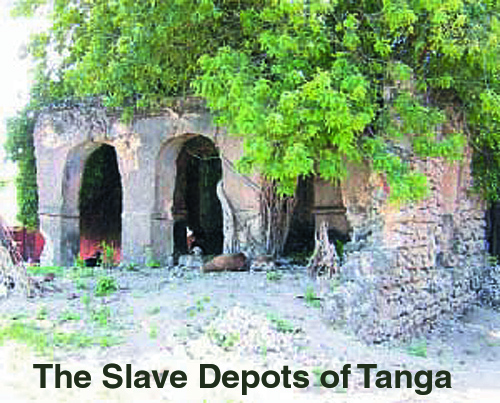
Prof. Edward Mgema has discovered more than 42 sites along the Tanzanian Indian ocean coast near Tanga that appear to be ancient slave trading depots, and likely ones that were used for more than 500 years.
Mgema is challenging older established theories which hold that little slaving occurred in East Africa relative to West Africa, based mostly on the journals of ships trading into the area that rarely listed slaves in their manifest. This fact still remains to be explained if Mgema is right.
The holding areas Mgema reports were nearly all associated with ancient mosques, and the inference is that slaving in East Africa was organized or at least condoned in a religious way that might have kept it off the ship’s commercial records. This has yet to be established.
Slaving was known to exist from nearly all ports in Africa from the earliest times, but none as commercially dynamic as evinced by the slave depots and holding sites like Goree Island, and now, the mosque depots in northern Tanzania. Moreover, if corroborated by further study, the 42 Tanzanian sites predate by hundreds of years any such sites in West Africa.
Several elephant researchers, including Tanzania’s Charles Foley, have contended for some time that slaving was a natural outcome of harvesting elephant ivory. Foley contends that once the ivory was cut from the elephant, the only way to transport it to the coast for its ultimate delivery to Asia and Arabia was by catching slaves to carry it.
There is now and has always been much larger elephant populations in East than West Africa.
Whether slavery was born or ivory harvesting or as a religious practice, or both, Mgema’s recent archaeological discoveries put some real teeth into the notion that East Africa, not West Africa, was where slaving began and likely where over all time the most slaves were harvested.
Mgema has been working in the Tanga area of the north Tanzanian coast for some time. He is also the discoverer of hominid footprints that are thought to be 1.5 million years old.
It will be interesting to see if this extraordinary work by an extraordinary Tanzanian scientist can crack open some misconceptions about the origin and motivation for slavery. It isn’t often that a developing world scientist can effect a massive academic body of work mostly built by westerners.
Congratulations to Mgema and his team. No matter how this is accepted in the west, one thing has certainly been discovered at a more contemporary level. There are some really smart people in Tanzania!
Today is an American holiday, Martin Luther King Day. I am a white man who has spent nearly half of every year of his working life in black societies. I am witness to the change that King’s type of philosophy has made in Africa and at home.
King was America’s black civil rights champion, and what I and probably most people remember of his turbulent last days was nearly unspeakable violence. My most vivid memory is as a very young journalist, penned in under a burning El Stop in downtown Chicago as the city raged following King’s assassination.
I remember gun fire as a regular sound in my low-rent apartment in Washington during the summer of the 1968. Or the unending sirens and tear gas around my apartment in Berkeley in 1969.
King is duly revered for radically changing American society with non-violence? When what I remember most is fire, bullets and ambulances?
It’s been more than 40 years since then. Trauma has a way of finding its small berth among the many more ordinary memories of earlier life. My young student years were lived in Jonesboro, Arkansas. Of the more than 1000 students in public middle and high schools when I was there, there was not a single black. Less than a decade after I graduated, I returned to Jonesboro for a wedding, and learned that almost half the town was black.
I lived in Jonesboro for 5 years. I went to school, groomed pretty dogs at a vet’s, shopped on main street, sipped sodas at the donut shop, cheered at school sports’ matches, went to church socials. I remember regularly seeing only one black, Bessie Mae, our maid.
I left that society for the turbulent 60s, then left the turbulent 60s for Africa, and when I returned how things had changed!
King’s philosophy of non-violence, like Gandhi’s and to a much smaller but significant extent, Mandela’s, were not eras of no violence. There was incredible violence, and this violence, as with the sizzling El Stop that nearly fell on me, will be blazoned in our memories forever. But with time we’re able to reflect that that violence was the reaction to those heros’ methodical, unswerving actions for a freer, fairer society.
Those movements as a whole were not violent. But the reactions to them were hideously violent, and then sometimes when Watts or Chicago burned, the frustration of the oppressed boiled over. But mostly it was not that. Mostly it was unarmed hundreds of thousands of peaceful demonstrators being tear gassed and shot by police.
And why? Because it was the desperation of trying to stop the inevitable. I really believe there is more good in the world than bad. Justice will ultimately prevail.
We are a deeply rooted Chicago family. My father was sent from Chicago to Jonesboro to start a factory owned by an Illinois company to avoid the growing union movement in the north. One of the first things he did was pack up us three young kids in the car and drive us into the cotton fields west of Memphis, stopping the car, saying nothing, and making us watch black share-croppers toiling in the summer sun.
Try as I may, that and Bessie Mae, are the only blacks I remember as a teenager, living in the midst of them.
Today, my President is black. My Attorney General is black. My closest friends, many in Africa, are black. My rare return to Jonesboro encountered many blacks. Memories created of life, today, are no longer monochrome or technicolor, they are just wonderfully vivid.
Social justice does prevail. In some places, throughout Africa for example, it seems to take longer than in my more developed society, and perhaps that’s the reason. The messages get around more quickly. So in my life time, the personal sacrifices of Africans are understandably greater than here at my home.
But the sacrifices of each individual are the same. And what King taught us is that they’re effective. All you need to do is rise to the needs of your community above the needs of yourself.
I am so fortunate to have lived long enough to see King’s work transform the bad in my society to good, almost as an imperative. An imperative that I believe I now at this very moment see happening throughout so much of Africa.
Happy Birthday, Martin! You’d have been 82, today!
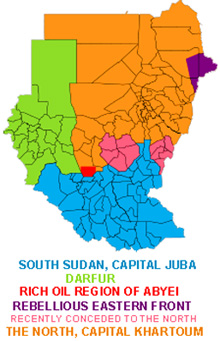
Half way through the referendum election process, the birthing of South Sudan is going well. Folks are voting, militias are firing, and U.S. celebrities have egg on their faces. (Or should I say, posho on their jowls.)
There is fighting along the proposed border near the oil-rich Abyei oil fields, and this should not be discounted but it is not yet significant enough to alter the ongoing referendum and certainly doesn’t presage George Clooney’s warning that a new civil war is about to begin.
The irony at the moment is that the two militias involved, Abyei’s Dinka Ngoc tribe, and the alleged attackers, the Arab Misseriya militia, began fighting not to disrupt the referendum but over who will be allowed to vote in a planned but not yet scheduled future referendum into which country (north or south) the disputed Abyei region should be assimilated.
Right now, neither the Khartoum government or the SPLA (the south’s military) are involved, and UN Peacekeepers are rushing to the scene as mediators. Clooney’s claim has some validity, and that is that the Darfur genocide has been conducted by militias as well, and it’s true that Khartoum often carries out its dirty work through militias.
But it just hasn’t reached the scale of Darfur fighting, not yet. And unlike Darfur, serious fighting in the south before the cease-fire agreement five years ago was mostly between the two armies, not militias.
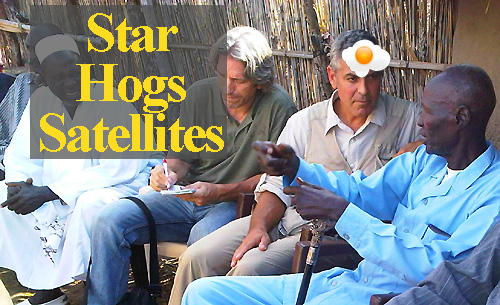
Perhaps the greatest controversy is whether the presence of George Clooney and his battalion of friends and additional celebrities is good or bad. Read my earlier blog about Clooney and South Sudan.
The excellent NPR reporter, Joshua Keating, wrote rather disparagingly about Clooney, yesterday. His piece is very much worth reading.
The NGOs on the scene are very critical of Clooney. I had to stop reading most of the blogs, because, in fact, they started to become rather juvenile, although Clooney’s made-for-movie macho response is just as bad.
My feeling is that in balance Clooney helps, although as I said in my earlier blogs, I’m very concerned why this is true, and I very much worry that celebritizing a conflict might emasculate its solution. Once it’s no longer glitter and stars, the world could pull back the long-term and methodical support required.
Clooney and friends are probably overdoing it, now. And it’s the height of irresponsibility to warn of a war that at the moment really doesn’t appear likely. At the moment, I hope for the foreseeable future, Clooney has egg on his face in this regards.
And fortunately, for the moment anyway, the greatest heat in the conflict zone seems to be from the overwrought satellites as Clooney & Co. compete with Agence-France Press and World Vision for their use.
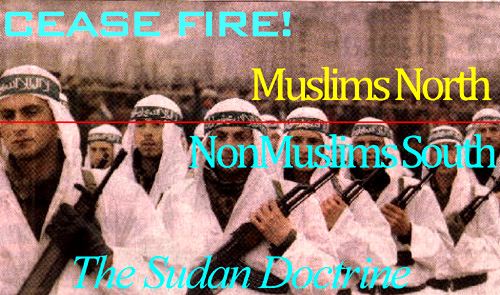
Until now many efforts towards peace in troubled parts of Saharan Africa have focused on fomenting coexistence betweenf Islam and competing religions. What the Sudanese referendum says is that coexistence of Muslim and non-Muslim ideologies won’t work.
When the election in The Sudan ends this weekend and shortly thereafter South Sudan declares itself sovereign, Muslims will be in power the north and non-Muslims in the south. But that’s not the end of it.
I expect a migration is going to begin in both directions between the two entities not so dissimilar to what happened in the Hindi/Muslim breakup of India and Pakistan (later, Bangladesh) after World War II. In fact the Sudanese migration began when it became apparent that the process was going to end in partition. More than 50,000 immigrants already turned up in the south in just the last few months.
This migration won’t be as large as the one following India and Pakistan’s partition, because there aren’t as many people to begin with. But it will be substantial enough to notice. And it will further polarize the individual societies at each end.
In America we often read about the religious competition as between Islam and Christianity, but that’s not the case. The perception comes mostly from the large presence of Christian missionaries and aid societies in The South, but the fact is that the majority of The South is not Christian, despite a half century of Christian proselyting.
Neither do I think it fair to call it “animist” as is often read as much as “Christian”. In fact, the two are often combined. I don’t think it fair-minded to say “animist” because that label carries a ton of derogatory inferences from the colonial era.
The fact is that most southern Sudanese are not religious in any regards by modern standards. They revere their family ancestry and create religious ideologies often unique to very small geopolitical areas.
Christianity is probably the largest single recognized religion in the south, but it is far from being a dominant ideology among the majority of southern Sudanese.
What it is truest to say is that the majority of southern Sudanese characterize themselves as anti-Muslim. And this characterization of oneself as anti-something, rather than something-something, is telling.
It is the basis for the conflict not only in The Sudan, but in Chad, Mali, Spanish Sahara and to a lesser extent elsewhere throughout the Saharan belt of the continent.
Religious ideology always tries to dominate government, even at home in America. Less modern societies are less capable of keeping this motivation at bay in part because emerging societies need forms of government that will be readily and quickly accepted by their people.
Muslim ideology with its male-dominated, polygamous hierarchy fits perfectly into many more traditional African societies. This week a Nairobi newspaper published a feature article on how the well-known and very traditional Maasai tribe was accepting Islam in surprising numbers.
The current president of Sudan, Omar al-Bashir, is a deft survivor of a number of court schemes and military coups, and his current long reign can be linked directly to his decision to make Islam’s Sharia law the law of Sudan in 1983. There’s no question in my mind that this is what has kept him in power since.
And quite unlike a legalistic foundation — even one as entrenched as I feel the U.S. constitution is — the opportunities for amending law in Muslim formulated societies are infinitely less. Some may argue impossible.
This draws a line in the sand, (and in the case of the Sudan, that line goes right through the oil fields). Muslim above the line. Non-Muslim below the line.
There is a huge problem in dividing up the world by religious ideology. It tends to divide not only ideas and faith, but wealth and health. But as with India and Pakistan, the motivation to minimize conflict was a vital one that has been served more or less well, even while they haven’t exactly become bosom buddies.
So if this experiment with The Sudan is successful, which I think it will be “more or less”, then a new formula may emerge for reducing Africa’s troubled conflicts.
Sunday is the beginning of the end of one of the most monumental conflicts Africa has ever experience, and Sen. John Kerry was there this week to gently help see it through.
Sen. Kerry arrived in The Sudan on Tuesday and returned home yesterday. Today Jimmy Carter arrived with his wife to monitor the election. Amazingly, there’s very little in American news about this watershed event. There’s not even anything on John Kerry’s own website. But thank goodness he and Jimmy are there.
Kerry has been pivotal in shepherding a half century struggle in southern Sudan to some peaceful conclusion, untangling the mess the British created during the colonial period. His latest carrot to the Sudanese masters in Khartoum was a stunning one: that he could support removing the north from the “States that sponsor terrorism” list if all goes well this week in the South.
There’s no doubt about the outcome of the election which begins Sunday and goes on for a week. The outcome will officially express the will of The South to secede from The North. Everyone knows this and has known it for years. Diplomats have been in training for more than a year. Western donor nations have built the rooms that the new Parliament will use. Even the neutral U.N. has a presence of presumed Peace-Keepers along the contentious potential border with the North.
The question is what happens afterwards.
The election calls for formal succession by July. But that means between now and then a number of contentious issues must be resolved that haven’t been, yet. Such as the border line. How much of Sudan’s current $36 billion dollar debt will be assumed by The South. And probably most dangerous of all, who gets the oil.
The proposed dividing line between North and South goes right through Sudan’s most productive oil fields. The irony is that they haven’t produced very well, because for nearly 50 years there’s been shooting going on. In 1981 I was myself given an offer by a giant oil company to help ransom oil workers being held hostage in the area, who were later killed in the fighting.
But as I’ve been saying for some time, I think this is going to happen, and pretty peacefully. And there is such hope in the air at the moment, that there is a nearly giddy presumption the success of next week’s election will spill over with goodness into regions like the troubled Darfur. Sen. Kerry arrived Tuesday.
Here’s an extremely simplified time line of the history of Sudan:
The British annexed The Sudan in 1899. They didn’t really want to because it was considered a desert wasteland, which it looked at the time. But The Nile runs right through the country, and Britain was in a contentious and globally sensitive battle with France over control of Egypt. So with reluctance and little real interest the outposts along the Nile raised Her Majesty’s flags.
Seventeen years later in 1916 with World War I as a backdrop the massive Sultanate of Darfur was absorbed by the British into the hodgepodge of what they called The Sudan. This was a terrible mistake which prevails until today. Darfur was a kingdom relatively progressive by the standards of those days, and distinctly non-Muslim. This defined a religious battle that until then simply hadn’t existed.
The British had almost two decades of training Sudanese in Muslim Khartoum as government officials, and as they wrongly did everywhere, they sent into foreign lands the officials they trained in the African capital city. In Kenya, they sent Kikuyu to Luo. In The Sudan, they sent fanatic Muslims into animistic regions like Darfur. That mistake is still bleeding.
The next generation was relatively peaceful. The colonizers of Africa I believe actually did their best work as “colonizers” in the period of 1920-1940. In part this was because of an enormous emphasis on education, but also in part because of the troubled world economies that resulted in a sort of benign interest in things overseas. World War II changed all that.
The end of WWII left a crippled Britain on the world stage, bankrupt and exhausted. Winston Churchill said it was time to end the colonial era. Not much had happened in the colonies over the last 20 years and there was not much hope anything could. The exit from the era of colonialism was a pragmatic, not a moral one. Independence would save money.
And this driving western motivation, saving money, is a theme that has caused so much havoc in Africa. Just collect as many jobs as you possibly can afford and give them as large a responsibility as possible. Forget the hodgepodge of eons of cultures and societies that you’re instantly integrating: just do it, be done with it, and get out.
Britain had essentially neglected all of The Sudan for a half century. Now it was giving it eight years to reach Independence, a collection of tribes, more than 200 language groups, and viciously antagonistic religions. This wasn’t oil and water, it was refined uranium and explosions of the sun.
Independence was set for 1956. Imagine the millennia of battles between gallant horse-riding knights and primitive tribes over Sharia, Jesus Christ, palm nuts and women, between 200 groups of people who understood nothing about one another except the length of each other’s spears. They were in 8 short years to create a modern nation, with … a single leader.
War broke out in The South in 1955.
The South which lies over the rich agricultural regions of Uganda was populated by non-Muslim tribes from the Lake Victoria region, the same groups of people who would form the country of Uganda in 1963. In fact, that was what they were fighting for in the beginning, to become a part of Uganda, not of The Sudan.
The Sudan was independent according to British prescription for all of two years: 1956 and 1957. The country was being torn asunder. A military coup in 1958 held it together. All vestiges of British idealism about self-government were gone.
In 1962 as Uganda was about to achieve independence, military leaders of the south declared their own country, South Sudan. The world took no notice. I can imagine JFK looking towards Cuba and finding a second to ask his ambassador to Britain how things were going in the former colonials and not listening to an answer that never came.
Britain didn’t like these upstarts disturbing its jet age plans for African independence. No, Britain said to The South, you can’t join Uganda.
And for that matter, Uganda wasn’t really interested, either. No one knew about the oil, yet.
In Khartoum in the North, one military coup after another essentially destroyed the place until a real strongman, Gaafar Mohamed El-Nimeiri, started a holocaust in 1969 of the most brutal and extreme ever known in this part of Africa. When the dust settled (it took two years), Nimeiri was firmly in control and terrified the world.
But he was pragmatic. He wanted to get rid of the distant war in The South, so in 1972 in Addis Ababa, he signed a Peace Agreement with southern rebels that ended the fighting for nearly a decade, giving them autonomous control of their region.
Things might have stayed that way. Except for one unexpected development.
OIL. 1978.
Chevron began building rigs throughout the Sudd region that exactly today will divide the North and South. It’s a swampy, ridiculously hot, horribly unnice area for human beings. Except for a few areas where nomadic tribes did herd hoofed stock, it was a wasteland. But, of course, no more.
For five years Chevron pumped more and more oil out of the region, paying royalties usually to warlords rather than any established government officials. Niemeri watched millions of dollars creeping away.
Most of these bucks crept south, admittedly. They strengthened the “autonomous region” of the south by, well, providing guns. Oil companies have a way of doing this.
Niemeri was now a dictator growing a heart. The Cold War wasn’t over, but it was cooling. He was growing more acceptable to the West. In a move that at the time meant nothing to the west, he declared Sharia law the law of the land, and this essentially empowered him even further. In 1983 he sent troops into the Judd to secure the oil fields.
All hell broke lose.
And the South prevailed. The north lost the battle. And Niemeri was deposed and killed by fellow officers in 1986. After a few insignificant military coups later, the current president, Omar al-Bashir comes to power in 1993.
The battle rages on in The South. The North grows indebted having lost its Cold War patrons. War has now been going on for nearly 50 years. In 1998 Bill Clinton sends a missile into Khartoum and blows up a factory he claimed was making terrorists’ weapons.
The North is further weakened. Lots of leaders are killed and jailed, but Bashir survives another coup and emerges as a peace-maker in 1999, pledging to end the horrible travail Sudanese in The North have experienced for generations.
In 2002 he signs a peace deal with the South. Rebels in Darfur begin fighting, emboldened by Bashir’s apparent concessions in The South. The North is further weakened as it tries desperately to manage the growing war in Darfur.
In 2005 Bashir and John Sarang of The South sign a comprehensive understanding that would lead to an election for succession the second week of January, 2011.
East Africa is booming, so many of the stories of 2010 were terrifically good news. But there were the tragedies as well like the Kampala bombings. Below I try to put the year in perspective with my top ten stories for East Africa for 2010.
1. Populace democracy grows.
2. Terrorism grows, as does the battle against it.
3. Huge stop in the mercenary purchases of Coltan.
4. Momentum for peace in the runup to establishing a new South Sudan.
5. Tourism clashes with development, especially with the proposed Serengeti Highway.
6. New discoveries of fossil fuels produces new wealth and a new relationship with China.
7. Gay Rights grow public but loses ground.
8. Rhino poaching becomes corporate.
9. Hot air ballooning’s safety newly questioned in game parks.
10. Newest early man discoveries reconfirm sub-Saharan Africa as the birthplace of man.
#1: POPULACE DEMOCRACY GROWS
Theoretically, all the East African countries have operated as “democracies” except for the torrential years of Idi Amin in Uganda. But the quality of this democracy was never very good.
Tanzania was a one-party state for its first 20 years, and that same party continues to rule although more democratically today. Kenya, Uganda, Rwanda and Burundi experienced one dictator after another, even while democratic elections at regional levels challenged the executive.
But the end of the Cold War destroyed the alliances these developing countries had with super powers. Purse strings were cut, and political cow-towing ended. All of them moved towards a truly more democratic culture.
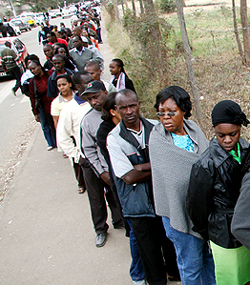
And in 2010 huge leaps were made in all the countries towards more truly representative government. The most important example by far was the overwhelming passing of the new constitution in Kenya in a national referendum where more than 75% of registered voters participated.
And like the U.S. election which followed shortly thereafter, and like support for national health care in the U.S. and so many other issues (like no tax cuts for the rich), Kenyan politicians dragged their feet right up to the critical moment. They tried and tried, and ultimately failed, to dissuade Kenyans from their fundamental desire to eliminate tribalism in government and more fairly distribute the huge wealth being newly created.
I see this as People vs. Politicians, and in this wonderful case, the People won!
And there was some progress as well in Tanzania’s December election, with the opposition growing and its influence today moving that country towards a more democratic constitution.
(It was not so good in Rwanda or Uganda, where stiff-arm techniques and government manipulation of the electoral process undermined any attempt at real democracy.) But the huge leap forward in Kenya, and the little hop in Tanzania, made this the absolute top story of the year.
#2: TERRORISM GROWS
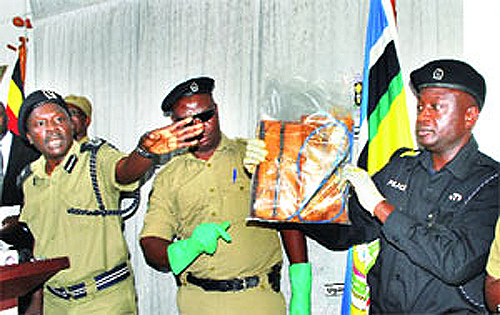
Four smaller bombings in Nairobi’s central business district over the year were eclipsed by two horrible simultaneous bombings in Kampala bars on July 11 while patrons were watching the world cup. Police display an unexploded suicide vest.
Al-Shabaab, Al-Qaeda in Somali, claimed responsibility. And throughout the year Shabaab grew increasingly visible along the Kenyan border as its power in Somali increased.
I’ve written for a long time about how the west has had its collective head in the sand as regards terrorism and Al-Qaeda in particular. Long ago I pointed out that the locus of Al-Qaeda terrorism had moved to the horn from Afghanistan, and this year proved it in spades.
The country with the most to lose and most to gain in this war on terror is Kenya, because of its long shared border with Somalia. And the year also marked a striking increase in the Kenyan government’s war on terror, and with considerable success.
With much more deftness and delicacy than us Kenya has stepped up the battle against Al-Shabaab while pursuing policies aimed at pacifying any overt threats to its security, by such brilliant moves as allowing Omar Bashir into the country and not arresting him (on an international U.N. warrant). As I said in a blog, Kenya Gets It, and the story is therefore a hopeful one.
The Dodd-Frank Act is our victory!The Congo Wars continue but are abating, and in large part because of a little known provision in the Dodd-Frank Wall Street Reform Act which now makes it almost impossible for major corporations in the U.S. to buy the precious metal Coltan on the black market.
A black market which has funded perhaps Africa’s most horrible war for more than a generation. Hundreds of thousands – perhaps millions – have been killed and raped, and more than 20,000 children conscripted into brutal wars, funded by purchases of Coltan and other precious metals by Intel, Sony and Apple.
It certainly wasn’t just this little legislative move. The U.N. peace-keeping force, fabulous diplomatic initiatives by Uganda and a real diplomatic vigilance by the U.S. all were instrumental. But the year ended with the least violence in the region in more than two decades.
#4: SOUTH SUDAN
I may be jumping the gun on this one, because the referendum to create a new country, the South Sudan, is not scheduled to occur before next month. But the runup to the referendum, including the registration process, while labored looks like it’s working.
Allied loosely with the Congo Wars, the civil war between the North and South Sudan had gone on for generations until a brokered peace deal five years ago included the ultimate end to the story: succession of the South into a new country.
The concept is rife with problems, most notably that the division line straddles important oil-producing areas. But in spite of all of this, and many other ups and downs along the way, it looks to me like there will be a South Sudan, and soon. And this year’s new U.N. presence in Juba, donor-construction of roads and airports, all points to the main global players in the controversy also thinking the same.
The creation of a new state out of a near failed one is not the be-all or end-all of the many problems of this massive and powerfully oil-rich area. But it is a giant leap forward.
#5: THE SERENGETI HIGHWAY & TOURISM
Last night NBC news aired a segment on the Serengeti Highway controversy, elevating an East African story into American prime time. Good.
But like so many reports of this controversy, the simplification ran amok. NBC’s reporter Engels claimed the motivation for the road was to facilitate rare earth metals like Coltan (see above) getting into Chinese hands more quickly.
While there may be something to this, it’s definitely not the main reason, which is much more general and harder therefore to fight. As I’ve often written, the highway as planned will be a real boon to the Maasai currently living to the east of the Serengeti, as much if not more than to the Chinese.
And as far as I know, Maasai don’t use Coltan.
Roads bring commerce and may be the single quickest way to develop a region. This region is sorely in need of development and recent Tanzania politics has aligned to the need for this regional development.
The highway is just one of many such issues which came to the fore throughout 2010 in Kenya and Tanzania. Concern that the west is just interested in East Africa as a vacation destination with no regards for the struggle for development, has governed quite a few local elections this year.
The whole concept of tourism may be changing as the debate progresses. I believe very deeply that the Serengeti highway as proposed would hinder rather than help development. But as I’ve pointed out, alternatives are in the works.
And the real story of which the highway story is only a part, is how dramatically different East Africans have begun to view tourists in 2010.
#6: NEW RESOURCE DISCOVERIES ALTER GEOPOLITICS
For years I and other African experts have referred to East Africa as “resource-poor.” Kenya, in particular, had nothing but potash. Boy, did that change this year!
Although only one proven reserve has been announced in Kenya, several have begun production in Uganda and we know many more are to come.
China has announced plans for a pipeline and oil port in northern Kenya at a cost of nearly $16 billion dollars, that’s more than twice the entire annual budget for the Kenya government! Deep earth techniques have matured, and China knows how to use them.
More gold has been found in Tanzania, new coal deposits in Uganda, more precious metals in Rwanda… East Africa is turning into the world’s rare earth commodities market.
A lot of these new discoveries are a result of technology improving: going deeper into the earth. But 2010 freed East Africa from the shackle of being “resource-poor” and that’s a very big deal.
#7: GAY RIGHTS ON THE HOOK
African societies have never embraced gay rights but as they rapidly develop, until now there was none of the gay bashing of the sort the rightest backlash produces in the U.S. U.S. Righties manipulating East Africa.
That changed this year, and in large part because of the meddling of U.S. rightest groups.
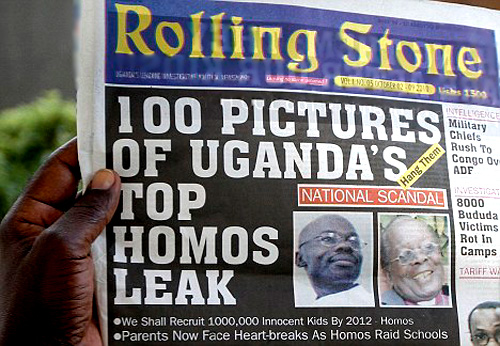
In what appears to now have been a concerted many year effort, support from U.S. righties is leading to a vote in Uganda’s parliament that would make homosexuality a capital offense, and would jail for long terms those who failed to out known gays.
This extreme is not African, it is American. Mostly an insidious attempt by those unable to evince such insanity in their own society to go to some more manipulative place. The story isn’t over as the vote has yet to occur, but it emerged and reached a crescendo this year.
#8: RHINO POACHING EXPLODES
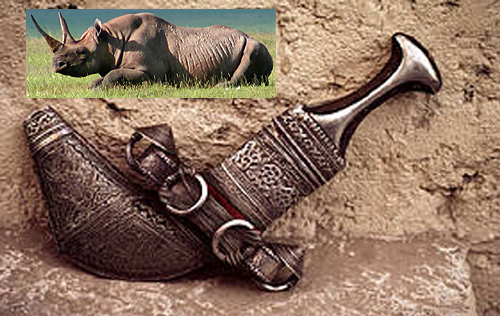
Poaching is a constant problem in wildlife reserves worldwide and Africa in particular. Rhino are particularly vulnerable, and efforts to ensure safe, wild habitats have been decades in the making. Dagger from rhino horn.
This year, they seemed to come apart. It’s not clear if the economic downturn has something to do with this, but the poaching seems to have morphed this year from individual crimes to corporate business plans.
This leap in criminal sophistication must be explained by wealth opportunities that haven’t existed previously. And whether that was the depressing of financial goals caused by the economic downturn, increased wealth in the Horn of Africa where so much of the rhino horn is destined, or reduced law enforcement, we don’t yet know. But 2010 was the sad year that this poaching exploded.
#9: IS HOT AIR BALLOONING SAFE?
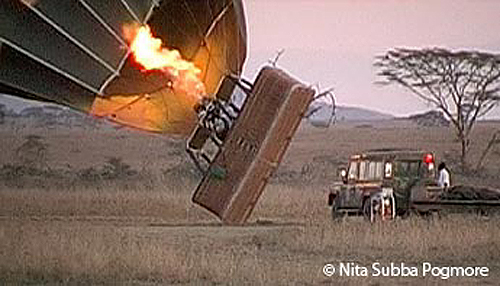
Hot air ballooning in Africa’s two great wildernesses of the Maasai Mara (Kenya) and the Serengeti (Tanzania) has been a staple of exciting options to visiting tourists for nearly 30 years. That might be changing. Is it Safe?
A terrible accident in the Serengeti in early October that killed two passengers and injured others opened a hornet’s nest of new questions.
After working on this story for some time I’ve personally concluded 2010 was the year I learned I should not step into a hot air balloon in East Africa, at least for the time being!
#10: EARLY MAN WONDERS
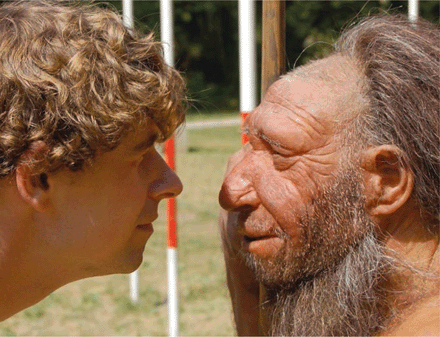
There were not quite as many spectacular discoveries or announcements about early man this year as in years previously, but one really did stand out as outstanding and you might wonder what it has to do with East Africa! Representation by Tomislan Maricic.
DNA testing of Neanderthal proved that early man from Africa didn’t wipe them out after all, but absorbed them into the ever-evolving homin species.
And that absorption, and not massacre, happened outside Africa to be sure. But it finally helps smooth out the story that began in Africa: It’s likely that Neanderthal were earlier migrants from Africa, and absorption was therefore easier, physiologically and biologically.
It’s a wonderful story, and fresh and exciting, unlike the only other major African early man announcement about Ardi which was really a much older story, anyway.
****************
HAPPY NEW YEAR to all my loyal readers, with a giant thank you from me for your attention but especially your wonderful comments throughout the year. See you next year!
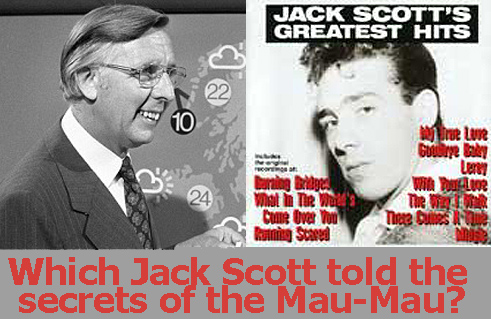
Not sure if it was the British or Kenyan rebels who were listening to rock ‘n roll or whether a Royal Air Force officer later to become the UK’s most famous weatherman was the scribe, but a near half-century old document just discovered sheds fascinating new light on Kenya’s independence struggle.
The “Jack Scott List” was just discovered in a musty old cabinet in Kenya’s National Museum. The secret List revealed the names of Kenya’s rebel leaders plus a lot more.
Coming from the 1950s that can mean only one of two things: it derogatorily linked Kenyan rebels to what proper British most despised: Rock ‘n Roll. Or it was compiled by a Royal Air Force pilot who found himself briefly in Kenya who later became Britain’s most famous weatherman.
Since predicting weather remains as exciting as hibernating wood chucks, I will make the unilateral determination that Jomo Kenyatta and Pio Pinto were swingers!
The list was in an old cabinet transported from Lamu in 1981 but never opened until last month. The drawers housed the confidential files of the curator of a Lamu prison where freedom fighters were incarcerated in the 1950s.
No xerox machines in those days in Kenya. These are originals.
Crisp, some moldy, ready to disintegrate into dust, they tell fabulous stories. And the question immediately comes to the fore: why from here? Lamu is an ocean island near the border of Kenya and Somalia. It was far from the bit of fighting that was occurring in central Kenya.
Careful investigation of the documents has only just begun, but we can surmise that Lamu would make the perfect place not only to house secret war documents, but as already known, some of Kenya’s most prominent rebel leaders.
The Brits correctly understood in those days of poor communication that removing the leaders as far away from the action was the most effective imprisonment. Jomo Kenyatta, later to become Kenya’s first president, for example was held for a long time in a prison in Kenya’s far northern deserts.
Kenya is waiting on pins and needles to see what the documents reveal about the British that isn’t already known.
Recent pride in the economy and new constitution has provoked in my opinion a new nationalism. For example, a coalition of local leaders in southern Kenya has just announced plans to sue the British for forced relocation of their relatives and confiscation of their land in the 1950s to form Tsavo National Park.
“The [Jack Scott] files are a real treasure as they explain in detail how the detainees were treated,” says Athman Hussein of the National Museums of Kenya without yet revealing the details.
Museum officials have, however, revealed the story of Pio Gama Pinto, an Indian who later became an important political advisor to Oginga Odinga, Kenya’s first vice-president and father of the current prime minister.
Pinto was one of a number of Asians deeply involved in the independence struggle, something many Kenyans still refuse to concede. The Jack Scott List papers describe how Pinto refused Brit “efforts to turn him over” to their cause as a spy.
But museum officials have not yet explained exactly what these efforts were: i.e., was Pinto tortured or just bribed?
The List papers reveal that the Brits were concerned about local Kenyan women, many of them also Asian from the coast. It describes in detail how a rebel, Said Mgunga, was organizing women and women’s demonstrations in the coast that were attracting British scorn.
Another woman rebel, Sarah Sarai, drew extraordinary infective from the Brit author of the List. She was described as “a close associate of the worst criminal elements on record…She is, fanatically anti-European and anti-government and an extremely dangerous character. A powerful dictator … Seeks to use Kikuyu women as a buffer between Kikuyu violence and police authorities.”
Sarah Salai Thara Njomo, born in 1913, has long been a champion of Kenyan women but has never achieved the status that the List papers might now finally raise her to. She died in July, 2003, after a long career of activism that the British found despicable as much for its success as its gender.
“Even under torture, she refused to buy her freedom…and she almost died from the effects of torture and food poisoning at Kamiti [prison]” her 2003 eulogy explains.
It will take a long time to parse the poor handwriting and faded type of these old documents, and while many Kenyans today are criticizing their officials for having displayed “a lack of curiosity” in not having opened the cabinet before now, I say who cares?
A very tense calm reigns over Kenya, today, following The Hague’s naming of the six most responsible for the violence in 2008.
The vast, vast majority of Kenyans today, rich and poor, want this chapter turned over. I don’t predict any wide scale violence, but the streets of Nairobi, today, are extremely tense.
Phones, email and internet and even satellite connections were flooded from the outside world, and much of East Africa was in a communications logjam by the end of its day.
Five prominent politicians and one media personality were charged by the same global authority that tried Slobodan Miloševic’ and the Rwandan instigators of genocide as the principals who caused Kenya’s 2008 violence.
The six represent several different tribes whose alleged unsavory alliance doesn’t seem to make a lot of sense at first. It includes a very powerful Rift Valley politician and former important minister, William Ruto – a Kalenjin – and from a rival tribe, the Kikuyu, Uhuru Kenyatta, the son of the “Father of the Country.”
But that was the point of The Hague’s investigations, not to name everyone who was violent, but to single out those who actively prepared then stoked it.
Three of the six were already widely suspected: Ruto, former (since resigned) national police chief Mohammed Hussein Ali, and Henry Kosgey.
There had been rumors that Uhuru Kenyatta, son of the first president Jomo Kenyatta, was implicated, but many had considered him too westernized to have become so mired in the darker side of Kenyan politics. Kenyatta spent a good portion of his younger life outside the country being educated and was widely considered at one point a modern future leader.
In fact both Ruto and Kenyatta had announced interest in running for president.
Two were surprises: Radio personality Joshua Sang, and Kenya’s secretary to the cabinet, Francis Muthaura.
Three of the six are currently serving ministers in the coalition government, and Muthaura is something akin to the President’s Chief of Staff. President Mwai Kibaki was quick to follow the announcement by insisting they not yet resign public duties. Kibaki also suggested the government might now reopen the question of whether to hold the trials in Kenya, effectively emasculating the power of The Hague.
The Hague issued what amounts to two indictments. The first – against Ruto, Kenyatta, Ali and Kosgey – is for “alleged murder, deportation and persecutions.” The Hague considers the four to have prepared in advance for the violence, knowing full well that the results of the 2008 election would be contentious.
In a horrible additional twist, Kenyatta is alleged to have orchestrated his violence through the underworld using Kenya’s mafia, the Mungiki.
The less severe (if such a comparison is possible) indictment against Sang and Muthaura is for pouring fuel on the fire once the violence began.
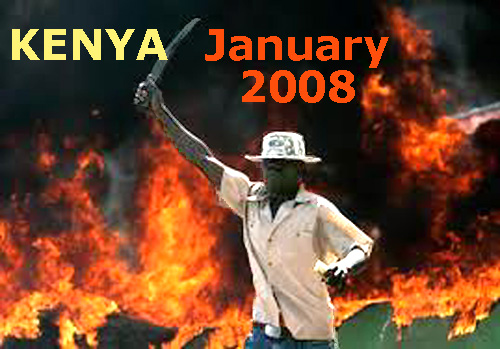
It’s widely known that many more people were involved. The number of people actually killed was somewhere between 1300 and 1500, and those displaced as high as 350,000. It took Kofi Annan and the full press power of the U.S. and the U.K. to stop the January, 2008, violence. This resulted in a now wonderfully working coalition government that just successfully passed through national referendum an excellent new constitution.
The net result of this announcement is to weaken substantially the political side led by Kikuyu President Mwai Kibaki and improve the standing of Luo Prime Minister Raila Odinga. One complication in this simplification is that the Kalenjin, and Ruto in particular, are close allies of Odinga.
Reduced even further, the Hague’s charges if presumed correct corroborate the widely held analysis that Odinga’s election to president in 2007 was stolen by the fortress of Kikuyu power.
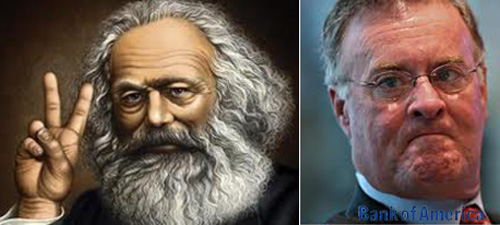
But the violence that began was absolutely not ethnic, although that’s how it quickly morphed. But it began because Odinga was a champion of the poor, a true socialist; while Kibaki was the godfather of the establishment, a capitalist to the core.
The violence began in the slums where the poorest in the country had worked so hard to elect Odinga. The ethnic division in Nairobi’s slums is much less clear.
One of the most conservative banks in the world has just stated that the fundamentals of liberal East African economies are better than the U.S.’ capitalist one.
I’m certainly oversimplifying Standard Charter Banks “Outlook for 2011” and I don’t pretend to suggest I’ve combed carefully its 128 pages. But there are certain conclusions this world economic expert was forced to make that beg any more complicated explanation.
Standard Charter is important, because its involvement in sub-Saharan and East Africa in particular is among the greatest of any world bank. There are, of course, many other analyses of the global recession and annual predictors of world financial situations. But Standard Charter is most relevant to East Africa.
The bank starts by predicting GDP growth world-wide: East Africa will grow between 6.5 – 9% per annum, while the U.S. will be between 2-3%.
“Emerging economies account for one-third of the world economy but are accounting for two-thirds of its growth. This shift in the balance of economic and financial power looks set to continue, driven by their better fundamentals, policy actions and increasing confidence,” the report contends.
The detailed explanation of what “better fundamentals” and “policy actions” are reads like a text book description of Marxist/Leninism:
— China seems to be doing everything right to stay on top by its capacity to shift economic policy at a moment’s notice, unburdened by democratic dynamics, even if it is “unfair” and risks collapse if its economic domination isn’t secured worldwide.
– Emerging economies like Kenya, Tanzania and Uganda are certainly benefitting from newly discovered and mineable natural resources, but also from an aggressive and liberal monetary policy that discounts the importance of inflation and prints lots of money so that banks can loan out infrastructure development.
There is, of course, much more. But even a stiff collar Scrooge sitting on Bank Street had to state the obvious. In this economic downturn, the economies that are doing best are those that could be maneuvered quickly in ways that are not popular with electorates. Ergo, non-electorate societies will prevail.
At least for now.
This is good news for East Africa, where fiscal and monetary policy is still tightly held by those in power and not really subject to the democratic process. Debt, interest rates, currency policy and even trade and tariff policies are simply not a part of the public lexicon in the way they are in the U.S. and the U.K. In fact these government policies are much more likely to be controlled by western institutions like the IMF than by local opinion.
And normally conservative IMF, like normally conservative Standard Chartered Bank, cannot now impose western values on economies that are doing two, three or four times better than western ones.
It remains to be seen if this is a global economic game changer, or just the anomaly of the sort that appears after a major world economic trauma.
And even if the latter, I believe the sacrosanct presumption that unfettered capitalism is the best the world can do — especially the developing world — is on its way to the proverbial graveyard of antique thoughts.
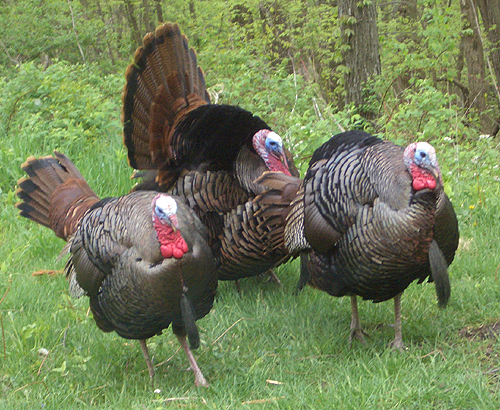
Wild turkeys outside my office in Galena.
One of the hardest things to leave behind when Kathleen and I first moved to Kenya many, many years ago was Thanksgiving.
No matter what your religion or politics, Thanksgiving is a major American holiday, all-American so to speak. And even before a third of our society was obese, it was a day of gluttonous consumption. You were just proving how well off you were, even if you weren’t.
So when we finally got settled in a very remote village 3 days travel from Nairobi we immediately began making plans for Thanksgiving. We sent out messages through the bush grape vine that we wanted two turkeys.
Most people had never heard of turkeys, and it was a great mystery to Jozani, our house boy/translator/money market manager and cook. Although he cooked chicken well for us, he was part Maasai, and fowl was taboo.
He could understand we Mzungu eating chicken. Mzungu had eaten chicken ever since Britain had a king. Many Africans back then accepted without aversion all sorts of habits the white people had carried with them into Africa. So chicken was OK. He often burned to a crisp our chicken, but he cooked it.
So when we first asked him to find a turkey, I’m sure he had no idea what it was, because he enthusiastically immediately replied that of course he could find us two turkeys. Jozani never said no. If he said no or asked further what I meant, either I might get angry with him (he thought) or make his day far too simple. So he said, of course bwana, he would find and cook for us two turkeys for our American holiday of giving thanks.
I’m not sure how many Thanksgivings passed before Jozani announced one morning with great pride that two turkeys had been found and were coming. At rather extraordinary expense. I had completely forgotten about it but apparently I was the only one who had. That same morning on the walk to the school where I taught, every one was asking me when the turkeys would arrive.
In fact a week or so later, two hours before the turkeys actually did arrive, a holiday was declared at school, and the children lined up as they did for morning assembly to greet the turkeys.
It was hard for me to call these fowl turkeys. They were young birds, true, but they looked more like weasels than turkeys. After close inspection I did approve them, paid the king’s chicken ransom, and turned them over to Jozani to rear. I think we had 5 months or so before Jozani had to cook them.
Turkey dinner turkeys are supposed to grow fast, remarkably fast. The wild turkeys that now live outside my office take more than a year to get large, and two years before the Toms are really large, but turkey dinner turkeys can reach massive maturity (12 pounds) in 5 months. What a ridiculous hope.
At first I was going to name them, and to do that, it was necessary to know their gender. Jozani insisted, however, that they had no gender, so we left them unnamed.
They grew, but not as fast as they ate. They became bold and strong and rather offensive, chasing anyone who came into our compound until one day I saw Jozani walking around the house with a large flattened stick.
“What is that for?” I asked him as he was scrambling eggs.
“It is to beat the turkeys, bwana, they are growing rude.”
They were growing rude. They would try to come into the house and peck at the screening when we refused. Jozani didn’t stay the night, and you’d think that a day time bird would go to sleep. But they seemed to freak at the dogs in the area that barked when hyaenas or jackals were in the neighborhood so gobbled the night away.
The time finally came to roast the birds. Jozani was equivocal. He had decided they were wizards incarnate. And of course it’s either impossible or catastrophic to kill a wizard. But we had invited nearly several dozen colleagues in a wide area to celebrate this so important holiday called Thanksgiving. So I let Jozani know that I’d kill the birds if he wouldn’t.
He killed the birds. And sort of defeathered them.
Kathleen spent days making stuff – or more correctly, like Jozani think he was making stuff. Like Stuffing. Which Jozani felt was the epitome of evil. Throwing a chicken in a frying pan was one thing, but “dressing” a fowl and doing such wizardry things as sticking bread and wine in its hollow stomach sack must have seemed extraordinary.
It was a grand holiday evening. Candles which we now use for effect was all we had. The smell of savory rice, good wine that someone had managed to bring up from South Africa, wondrous puddings and breads infused the evening of delight with the merriment of the finest of Thanksgivings.
And as if on queue it began to rain. The start of the rains had been delayed for all sorts of mysterious reasons, and there was concern that it would become a drought. But lo and behold, that late November evening in far western Kenya, the rains arrived just as the two turkeys did.
The rains proved much more successful than the turkeys. They looked OK if a bit shrunken. But the meat had the texture of something already worked into a piece of clothing. There was a not knife to be found capable of slicing it. We set it aside for a later soup.
So everyone was happy. Our guests probably because of the wine and Kathleen’s remarkable savory rice. Jozani because we didn’t eat the wizard. And the world because the rains had come. So though I don’t know to this day where our two Kenyan turkeys came from, nor for that matter where they went (there was never a soup), I know it was because of them that we celebrated Thanksgiving far, far from home.
OK, You Guess. Which country in the world is soon to pass sweeping Cap & Trade legislation requiring new buildings provide hot water from solar panels, massively increasing taxes on industries that break CO2 standards, double the funding for two government EPA-like agencies to among millions of other new responsibilities individually audit every single larger business’ energy efficiencies every three years for violations.
Canada? No.
Japan. No-no. And certainly not the U.S. Our Cap & Trade legislation is dead. Republicans crushed it.
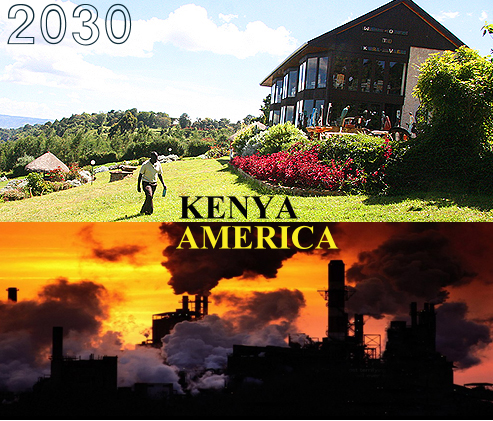
The answer is Kenya. Because environmentally aggressive government policies have spurned growth to record levels.
Shall I repeat that?
Little Kenya, whose GDP is skyrocketing, whose unemployment is at near record lows for a developing country, who is grappling with those ancient problems of inflation and too much demand for small business loans, and gridlock in city traffic – KENYA.
Because every era has drivers of the economy, and important ones right now are industries that peer into a future of no oil. (Even as – remarkable, this is — Kenya has just discovered relatively large amounts of oil!)
The draft Climate Change Bill 2010 is the first of its kind for any country in sub-Saharan Africa. Reading between the lines of the proposed legislation, Kenya’s business newspaper began its story today stating that the main purpose was to … stimulate the economy and provide business growth!
The bill was not just an edict from On High. It was the result of a working group created by the Government in April which was mostly composed of business leaders and advocates.
And try as I have, I haven’t been able to find a single professional, government or scientific voice in Africa that believes climate change must not be aggressively addressed by government legislation.
Africa is effected by climate change nearly as seriously as the islands floating away in the Pacific. Newly erratic and destructive rains and floods have immediate effect on its food source, the result of the ice caps melting too fast.
Africans believe that climate change can be slowed through active government legislation. But the government approach is more pragmatic, self-serving:
“We have been flooded with inquiries from financial institutions like HSBC Bank and JPMorgan, but we cannot engage them now until we have set rules and regulations,” Kenya’s Economic Secretary, Geoffrey Mwau told the African Business Review in that same article.
Alas, let’s now ponder what is happening in “little Kenya” with what is happening in “Big U.S.”
All legislative initiatives at the federal level have been crushed by Republicans. Giant corporations are suing the State of California to stop implementation of its own climate change legislation.
Indeed, a ThinkProgress analysis found that 50 percent of the incoming freshman GOP class deny the existence of manmade climate change, while a shocking 86 percent are opposed to any legislation to address climate change that increases government revenue. Meanwhile, all of the Republicans vying to chair the House Energy Committee — which handles climate and energy issues — in the new Congress are climate change deniers. They include Rep. Joe Barton (R-TX), who infamously apologized to BP shortly after the company’s catastrophic oil spill in the Gulf of Mexico this summer.
I just wish sometimes that we lived in the age of StarTrek. That we could beam our leaders out of America and make them look down at the real universe to see what is happening in the Real World.
A little more than twelve years ago I sat in my room in the Norfolk Hotel and listened to our embassy in Nairobi being blown up. Now, our ambassador at the time says we knew it was going to happen.
Prudence Bushnell, U.S. ambassador to Kenya in August, 1998, listed 8 reasons in a July interview with the Washington Post that contributed to bad intelligence sharing that prevented her from knowing at the time that the Nairobi and Dar embassies were going to be blown up. But it was only last week that she got frighteningly specific, during a radio interview on WBEZ’s WorldView program.
A man walked into the Nairobi embassy in December, 1997, identified himself as a scared Al-Qaeda recruit and said he wanted to warn the embassy that it would be blown up with a truck bomb. (That was how it was done eight months later.)
Dismissed as a “flake” by embassy staff, the man was later apprehended in Tanzania and tried for his involvement in the Dar embassy bombing. He wasn’t convicted, but deported back to Egypt where he’s disappeared.
Bushnell is obviously quite bitter. Her rants and raves against the intelligence service then and now fluctuate between on-point and churlish. But the truth seeps out.
Bushnell wasn’t very good. I remember thinking that at the time, comparing her diplomatic capability to the caliber of binoculars that carry her name. She morphed as a career civil servant into high diplomatic brass when Bill Clinton was elected president.
She was immediately thrust into two failures as Assistant Secretary of State for African Affairs. First, Blackhawk Down, and second, the Rwandan genocide. She complains often viciously of being placed in public positions of prominence, but never being let into the circle of real intelligence that knew she was going to fail. Sort of propped up to the be the fall girl.
Her ultimate excuse for not stopping the African embassy bombings was that the growing intelligence that something was going to happen was buried by the Monica Lewinsky affair.
But cut through her whining and you find some terrible news. There was enough intelligence to stop the Rwandan genocide, we’ve known that for years. But there was also plenty of intelligence to stop the Kenyan and probably Dar bombings five years later; that’s news.
Not only didn’t we learn from our mistakes, but apparently, doomed to suffer them, again.
And let her personal vindication settle out and she describes an America we know all too well: inebriated with its successes, blind to the future.
She accurately explains how the end of the Cold War fooled the government, mostly a Republican Congress, into thinking the world was now hunky dory.
“Many Congressmen didn’t think we needed embassies, anymore,” she claims. So funding was slashed for the State Department.
The 1986 truck bombing of our Lebanon embassy resulted in new regulations requiring all embassies to be off-set from main thoroughfares. Had those regulations been implemented in Nairobi, 224 people would not have been killed and more than 4000 not wounded.
But they weren’t. Because Congress denied the funds.
I think it’s important that we keep in mind this happened during the Clinton administration. I’ve always been skeptical about his popularity. Today, he’s championed as the democrats White Knight, saving Obama from himself.
But my feelings about Clinton have always been tainted by his failures in Somali, Rwanda.. and now, apparently, Kenya and Tanzania. The guy oversaw an exploding domestic economy and did implement a few home policies that seemed progressive.
But he was a failure when it came to intelligence and was unable or unwilling to correlate these failures with the growing threats to America, much less the world as a whole.
So long as he could get top billing with Jay Leno for wiping out welfare services, Clinton seemed pleased as puddin-pie as the world was being subsumed by Al-Qaeda. Bushnell claims that the Clinton Administration considered Nairobi a “backwater” not worth paying any attention to.
After wards, Clinton became a real Afrophile, apologizing profusely for his negligence in Rwanda and throwing untold millions into East Africa, almost as reparations for the bombings, implying if never saying, “If Only I’d Known.”
And in that context, Bushnell comes right out of his mold. Capable of complaining and apologizing, she nevertheless reflects blame elsewhere.
Later this swirl of evil hits the Twin Towers. We now know that Bush II also ignored important intelligence, thrust the world into wrong wars in reaction and probably never read John Le Carre.
Has this ostrich head in the sand ended? I hope so, but just for insurance I think I’ll trust Kenyan diplomacy over American diplomacy when it comes to dealing with Al-Qaeda.
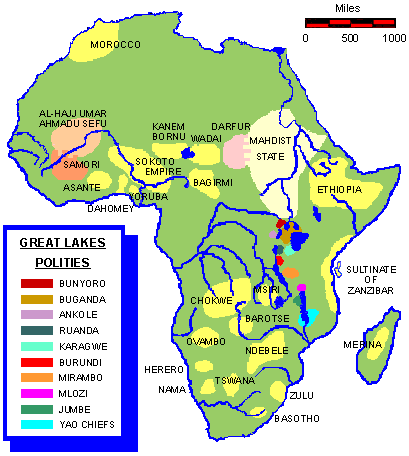
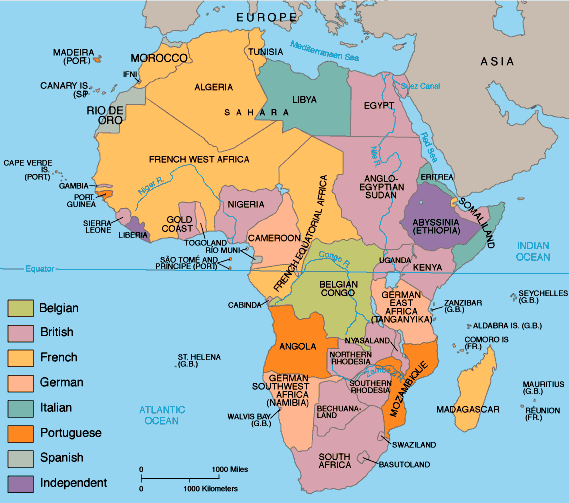
African Ethno-Political Divisions Before the Berlin ConferenceAfrican Political Division After the Berlin Conference 1885
By Conor Godfrey
In 1884-85, European governments essentially drew a map of Africa on the back of a cocktail napkin in Berlin. This map carved Africa into a series of illogical states and spheres of influence that took little stock of realities on the ground and laid the framework for more than a century of civil strife.
Last week, the artificiality of the African political map was thrown into sharp relief by a series of tragedies.
Following the violence in central Nigeria, Muammar Gaddafi, well known for his misguided remarks and absurd costumes, suggested that Nigeria split into two states– one for the mainly Muslim North and one for the Christian and animist South.
On the other side of the continent, violence erupted in Sudan ahead of the planned referendum on an independent South Sudan.
Absurd borders are the rule not the exception in Africa. Europeans carved some of the great pre-colonial empires into unruly hodgepodges of people-groups who often lacked a shared history and had competing interests.
Look at the Gambia!
As the Europeans entrenched their rule, they imbued these imaginary lines with more and more meaning until state borders became faits accomplis. So what now?
The borders have created facts on the ground and there is no going back.
Mr. Gaddafi suggests Balkanizing the state(s) in question and equitably sharing resource wealth.
He uses the separation of India to substantiate his argument, but conveniently omits the ensuing civil strife and eventual civil war that took the lives of hundreds of thousands of people in that region.
He also appears to forget the previous attempt by the Igbo people to form their own state in South Eastern Nigeria. This event led eventually to the brutal Biafra-Nigerian war.
If Mr. Gaddafi wanted to partition every state in Africa that contains people groups deeply divided by tribe, ethnicity, or faith, he would quickly run out of fingers and toes.
This strategy would make more sense if religion and culture were truly at the core of these conflicts– but they are not.
Grazing rights, water rights, and land rights.
Access to political power, access to education, and access to jobs.
These are the flash points that drive conflicts in Africa.
Religion and culture will only fuel conflict when trampled on.
Even denying people a place to worship or undercutting some other important aspect of cultural identity rarely boils over into large-scale violent conflict unless people fear for the economic rights I listed above.
As conflicts persist, people tend to re-characterize resource based conflicts along ethnic or cultural lines, but I think that solving the resource and power-equity issues at the core of a dispute will eventually succeed in neutralizing the ethnic component.
The most effective way to deal with the fallout of the Berlin conference would be to strengthen regional bodies. ECOWAS, SADC, COMESA, even the Arab League, and especially the African Union.
This will build regional and continent-wide capacity to enforce treaties, mediate between parties, commit peace-keepers to patrol sensitive territory, and knock heads together when necessary.
Currently the various regional groupings in Africa play an important but limited role. I think this might be changing…
While ECOWAS’ response to the recent slew of coups in West Africa drew criticism from some quarters for its inconsistency, its mediation eventually proved crucial to diffusing tensions.
SADC’s attempt to mediate in Zimbabwe (spearheaded by South Africa) has not had the desired result thus far, but even the lack of progress demonstrates the need for a regional body in Southern African with more clout.
Regional stakeholders in ECOWAS urgently need to enter the scene more forcefully in Nigeria. Perhaps Burkina Faso’s Blaise Compaore could build on his successful mediation in Guinea and the Ivory Coast by wading into Nigerian politics.
The upcoming elections in Sudan will also offer the African Union a chance to prove its worth.
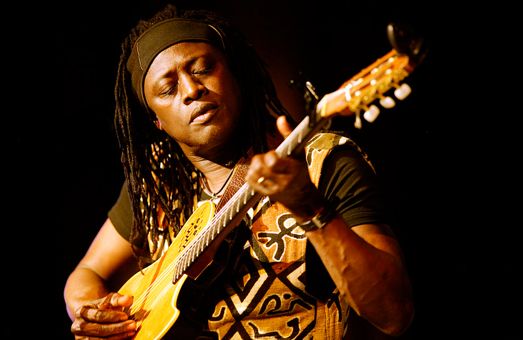
This month Habib Koite and his group Bamada will be playing in venues across the U.S.—you must not miss them.
Before I rave about Habib’s music, we should talk about the Griot tradition he comes from.
When I first arrived in Guinea, I stayed with a Malinke family (an ethnic group prevalent in Northern Guinea, Southern Mali, and the Northern Ivory Coast).
As an adopted son of this family, I was given the name Mamadi Dioubate. Mamadi is simply the name Mohamed re-engineered to fit the phonetics of the Malinke language. The history of Dioubate however, is the history of the West African Griot.
The following story was first related to me by another Peace Corps volunteer baptized a Dioubate, and subsequently recounted numerous times by Guineans and Malians with both major and minor variations to the story.
Listen to some balafon music while you read the story…
‘Sundiata Keita was the founder and most celebrated king of the Malian Empire. He also possessed the most famous balafon in the whole of the empire.
His balafon was made of ebony from the Central Africa forest, ivory, teak, and all the best materials the empire could offer, and no one could touch the balafon but Sundiata.
One day as Sundiata and his retinue rode out from his compound they heard stunningly beautiful balafon music coming from the Emperor’s compound.
Two things were immediately apparent. First: the music was coming from the Sundiata’s personal balafon. Second: the doomed soul playing it was beyond a doubt the best player in the empire.
So Sundiata and his followers turned around and followed the music back to the compound where Sundiata planed to kill the upstart. The emperor left his retinue outside and entered the room with the balafone.
There he confronted a peasant playing the balafon with such skill and beauty that even he, the emperor, could not have hoped to compete. Eventually the music petered out as the player realized his time was up.
Just as Sundiata opened his mouth to condemn the man the player took up the balafon mallets and started praising the emperor in time with the music.
He sang about how just Sundiata was, and how generous. He sang about how healthy the empire was, and how well Sundiata guided his people.
After a few minutes of this effusive and articulate praise, Sundiata made up his mind. He would not kill this peasant.
Instead the man would become his official praiser, following him across the emperor to extoll Sundiata’s virtues to his subjects. And thus was born the Griot tradition….
According to my older Malinke brother, Dioubate is a modern corruption of this original Griot’s family name.
Today numerous “Griot” families claim this legend or one of its variations as their founding myth.
Whether Dioubates or Cissokkos or Sussos formed the original caste of Griots, the Griot tradition is alive and well across West Africa.
From Mali down to the Ivory Coast all the way up to Western Sahara, Griots act as the keepers of oral tradition, entertainment at weddings and baptisms, and current affairs pundits.
In my village on Thursday nights, people showed up at the local youth center in droves to dance the Marmayia to traditional music played by Griots. (Until the local elder banned them; village rumor mill said his wives were having too much fun at the dances)
Habib Koite and countless other West African singers keep this tradition alive.
He sings mostly in Bambara (a Malian national language), and to a lesser extent in French, though he experiments with other Malian dialects and sometimes will even switch into English.
Habib blends regional styles from across Mali as well as incorporating flamenco rhythms and guitar from the Afro-Cuban tradition.
He is the darling of American stars like Jackson Browne and Bonnie Raitt, has been featured in Rolling Stone and Vanity Fair, and he even made an appearance on David Letterman.
I saw Habib & Bamada in Bamako, Mali and it was one of the best live performances I have ever seen.
Most Americans listen to world music because it intrigues them; the music uses new sounds and might produce a new and interesting mood.
People play world music in the kitchen while doing something else, or in the background of a cocktail party to lend the apartment a certain exoticism.
Habib’s music goes well beyond the merely ‘different’, or ‘interesting’—it will blow you away. You will soon be reaching for his CD in your car and trying your best to sing along in Bambara.
Anyone who followed African news in the 1960s, 70s, or 80s, would be forgiven for thinking that a coup d’état once every five to ten years was written into West African constitutions. Yet, like small cars and women’s boots, shooting your way into the presidential palace is back in style.
Last Thursday in Niger the Supreme Council for the Restoration of Democracy followed in the footsteps of neighboring Guinea and Mauritania by seizing democratically elected President Mamadou Tandja at gunpoint.
So why are West African governments falling like dominoes? Oil and drugs.
I do not mean to ignore the host of possible global and local factors that may also bear some responsibility (global downturn, commodity prices, localized disputes), but I think we are seeing the first bubbles of instability rising from a torrent of illicit cash derived from the drug trade and the prospect of mind-blowing oil profits.
Drugs first: For some time predominantly South American drug cartels have been using weak West African states as transit points for Europe-bound product. Guinea-Bissau has the honor of being labeled Africa’s first “Narco-State,” but its southern neighbor, Guinea-Conakry, is in contention for that dubious distinction.
In 2009 the Guinean government exposed “drug labs” in Guinea used to facilitate this narcotics trade. That same year a smuggling ring involving former President Conte’s son was shut down in the southern city of Boke.
According to the Center for Strategic and International Studies, drug cargoes make the trip from coastal countries by convoy through Mauritania to Niger and beyond.
Notice that every country along that route has experienced a coup in the last two years. The revenue streaming in from cartels to corrupt officials dramatically alters the calculus of those in power and those who would see them ousted.
Let me put the problem in its appropriate financial context: when I worked in Guinea as a teacher I made $220 per month. This dwarfed the official salary of my Guinean principal and roughly equaled the official salary of his boss the superintendent. Imagine what a South American drug cartel could do with several thousand dollars, or several tens of thousands? It would be a tag sale of epic and disastrous proportions.
Oil: Experts predict that the Gulf of Guinea will soon account for 7% of the world’s total oil reserves. Exploration is underway in all but two West African countries (Burkina Faso and Cape Verde), and Ghana will become an oil producer as early as the last quarter of this year. Oil money, much like drug money, lends itself to secrecy and corruption.
Could the prospect of such easy-to-pocket money underlie the recent decisions by several West African leaders to stage ‘constitutional coups’ by amending their countries’ constitutions in order to serve additional terms? Nobody wants to leave office the year before money literally starts exploding out of the ground.
There is blood in the water, and the sharks will not be denied. The coup d’etat is back in vogue, and investors and policy makers should expect this fad to last through the season.
Related Reading
This instability map of Africa also shows the location of significant mineral extraction points. The correlation between mineral wealth and instability jumps out immediately. Imagine what might happen when oil-producing icons start to pop up all over West Africa? If you are more of a concrete thinker, just look at Nigeria.
 The last day that human slavery was legal in the civilized world was June 19, 1865, and every day since extraordinary efforts to understand and document the horrific practice have been unrelenting. Now Tanzanian scientists are debunking several established concepts about the origin and explosion of slavery in the 17th century.