Finders Keepers?

Finders Keepers?

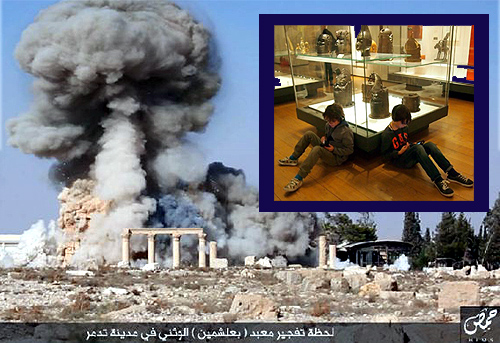
SavingArtifactsShould the obelisk and Rosetta Stone in France be returned to Egypt? Should tens of thousands of artifacts held in western museums be returned to their origin?

The debate is not new but acquired a new edge recently with a proposed new German law and with the upcoming ten-year birthday celebration of Paris’ Musée du quai Branly.

The relatively new Parisian museum was an amalgamation of two older museums in order to consolidate the city’s most precious African artifacts. But according to critics:

“Westerners and their museums seem very keen to tell the history of Africans but they do not seem to understand … that Africans might also want to tell their own history,” explains African artifact expert, Kwame Opuko.

The point is how can Malians tell the story of Timbuktu when it’s under a threat of destruction by terrorists?

Germany is reconsidering its law to tighten ownership of foreign artifacts after a Chilean who had acquired a massive collection of African artifacts slipped into the country to avoid prosecution from authorities at home … with his collection … and then slipped out before the Germans could decide what to do about it.

It’s not clear yet whether Mr. Patterson did anything illegal. But his accumulation of rare artifacts (particularly from Benin) and his popping in and out of a variety of countries to avoid possible prosecution has opened wide the conversation whether it’s ethical to hold any foreign artifacts outside their place of origin.

No, says Yale University. Yes, says the British Museum.

This is a question that really taxes the intellect and it’s particularly timely with the trouble in Syria and Mali.

The Timbuktu library holds the largest collection of very early African manuscripts in the world. Remarkable efforts by people who lived there saved many of them from the destruction ordered during the recent brief occupation of radical Islamists.

But many probably were lost, and had that single hero not intervened all would have been lost. Timbuktu and most of Mali was “liberated” from this 21st century occupation by the French, and the argument continues in France whether the treasures of Mali should be exported there, now.

We see the wanton destruction to many of Syria’s ancient ruins. It seems to me this is example enough that Mideast treasures in the British Museum should stay right where they are.

But once Syria is peaceful, again, should they be returned?

Who will decide that “Syria is peaceful, again”? How long a period of peace is required? Is autocratic peace or dictatorial peace … peace enough?

When it gets down to it, are we just saying that only the west is capable of making this judgement? Might not Donald Trump or a new Adolf Hitler fund their infrastructures with looted artifacts from Mexico or France just as ISIS is doing now?

I believe very strongly that artifact preservation is essential to understanding ourselves. It applies mostly to our evolution but when understood in the context of the time it was created, social insights crucial to our long-term survival may become evident.

Something of this importance can’t be left to chance survival. Artifacts should not be returned to unstable areas, and the threshold of stability must be high.

Who should make the determination? The past.

That’s the best gamble. Yes Adolph Hitlers and Donald Trumps might lose the bet, but wherever artifacts have been well kept for the longest time resides the right to make the determination whether their return is safe. So, yes, the British Museum is a good place and no, Timbuktu is not.

Egypt isn’t as clear. Many precious Egyptian artifacts are held in France, yet to date none in Egypt have been destroyed. On the other hand it came very close during the April Spring.

The Arab Spring fires, looting and wanton destruction occurred right at the edge of the Egyptian National Museum. Its exterior was damaged. It’s now up to the French authorities to determine whether Egyptian artifacts should be returned.

It’s not a comfortable position, but antiquity must be preserved.
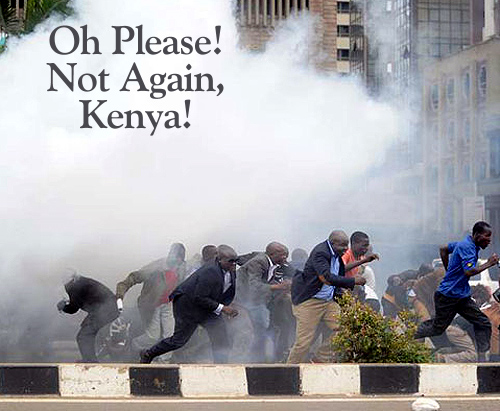
Not Again, Kenya!

Not Again, Kenya!

teargasinnairobiThe news is not good out of Kenya. Not totally worrisome yet but troubling.

Several public demonstrations which I see as markers of robust democracy have been met with too much government force. We all know the counter reactions this brings, and that’s what worries me.

If the Kenyan authorities don’t soften their act soon, all the progress Kenya has made in the last 12-15 months will be lost.

It began last month with university demonstrations. In the last few days two completely separate incidents, one involving a protest of the election commission and another regarding the arrest of a Muslim cleric both degenerated into a real mess when the police unnecessarily fired teargas, shot into the crowds and starting beating protesters.

We know what using too much force does: spawns more violence. This morning more protests continued in the streets of Nairobi and so far, anyway, the police are behaving themselves.

The issues aren’t really the issue. University demonstrations are chronic through Africa, protests over election officials seem endless, and the mounting religious tensions all over the continent are leading to religious demonstrations.

Nothing’s wrong with all of that. Healthy protest is a reflection of a healthy democracy and is supposed to generate a mediation or negotiation process that leads to lessening tensions.

But in Kenya recently, just the opposite is happening.

The government is clamping down like never before. Police action is brutal. At least five protesters in the demonstration against the arrest of the Muslim cleric were killed by police. Photographs suggest some police state in creation.

In the case of the protests over the election commission, there were less than 80 or 90 people protesting, almost the same number of police who confronted them.

That one is particularly troubling as it could be harbinger for the 2017 national elections, and even more poignant because among those tear-gassed was Raila Odinga, the leader of the opposition.

Almost simultaneously other small violent protests erupted in other parts of western Kenya where Odinga commands the polity.

Even a hint of upcoming election violence could doom all of Kenya’s progress in the last few years.

Kenya has enjoyed remarkable peace over the last year compared to the terrorist inflicted violence that destroyed tourism several years ago. Its economy is good and the people seem prosperous.

It’s all on the table, now, and it’s all a simple matter of how to deal with opposition.

The answer is not police batons and tear gas.

Bird That Proves Climate Change

Bird That Proves Climate Change

climatecarmineIn North America we’re currently documenting the fascinating “Spring Migration.” Almost 4,000 birds fly up here to breed as spring begins.

Two months ago I was in Africa documenting a different migration. Of all the birds I’ve watched going and coming in both hemispheres of the world, one story really stands out: Africa’s carmine bee-eater.

This “migrant” makes three separate migrations, changing its direction three separate times and it tells us probably more about long-term climate change than any bird in the world.

Read more

The Old Man Won’t Nod

The Old Man Won’t Nod

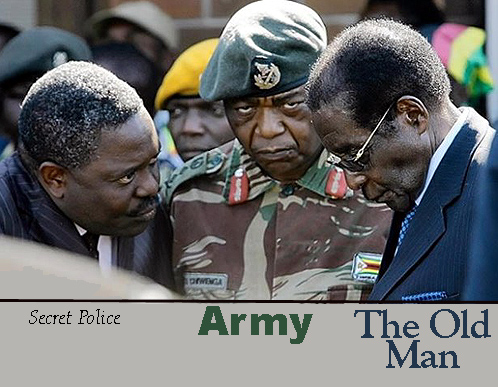
mugabe consentReading the Inyanga tea leaves, studying the day-old photographs, it appears to me that Robert Mugabe wants to turn control of Zimbabwe over to the Army but just can’t. He just can’t give up the reins of power.

If he did it could avoid more bloodshed but at the same time might even further perpetuate Zimbabwe’s sad oppression. Never in my life has there been a country in Africa so raped of its potential by its self-imposed leaders as Zimbabwe.

The possibility that Zimbabwe’s North Korean-like behaviors and criminal neglect of its educated population, natural beauties and rich natural resources might continue for another generation takes my breath away. It just seems so unfair.

Mugabe is 92 years old and feeble, possibly suffering from dementia. The single greatest indication that the time is nigh is how quickly this week Zimbabwe’s false and always artificial economy started unraveling:

There’s no cash in ATMs. More and more gas stations are closing. Food deliveries are growing scarce.

But Mugabe’s power is so absolute that until a change of power is signaled by him publicly, or until he dies or effectively loses control of reality, those waiting in the background won’t move.

Until recently his wife, a generation younger and allied with the secret police, was arranging a transfer of power from Mugabe to herself. Apparently, though, the old man didn’t approve. She’s fallen from the limelight.

So in stereotypical Cold War, despotic fashion, the sidelines are drawn: the secret police vs. the army. Each desperately wants the old man’s nod, so that they can obliterate the other. They have begun the inevitable posturing.

Waiting for the old man’s nod.

The fictitious political “opposition” which over the last several decades has done little but provide another reality TV show drama is powerless. Citizens of Zimbabwe are so beholden to the system which oppress them that like the citizens of North Korea it’s arguable they have little sense of the outside world.

Which is amazing because unlike North Korea Zimbabwe simply doesn’t have the resources to block the internet, for example. But when the time comes, there is no political opposition organized enough to do anything but present their scarred bodies to more police brutality.

If the old man doesn’t nod and simply fades further away, the secret police will ultimately battle the army and it will be bloody.

For how long? A day? A month? An hour?

No one knows and no one knows who will emerge as the new despot. The shorter the conflict, the more powerful the despot who follows.

The longer the conflict, the more lives lost and resources plundered, the greater the chance the world and especially Zimbabwe’s South African neighbor and benefactor might sit up and do something proper. But I don’t see that happening. I think it will be short and deadly.

And the second generation of a Lost Zimbabwe will begin.

Young Discontent

Young Discontent

africandiscontentYou know, it’s not just US. Enormous discontent is sweeping across the most important countries in Africa with a heavy involvement by the youth.

Such generalizations are dangerous, so I’ve thought about this a lot. I’ll stop making conclusions: you make them. Let’s just survey today’s news.

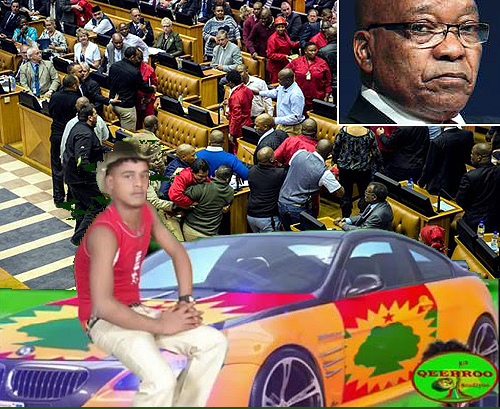
Yesterday was budget day in South Africa. In Parliamentary fashion, the president is supposed to submit the annual budget, say a few words and then Parliament retires for a day before beginning a classic debate. That’s not what happened.

South Africa is a mess. The session was six hours of mayhem :screaming, fisticuffing, security officials pulling out MPs while those just pulled out snuck back in. The budget was never discussed.

The South African’s polity’s mess has a lot to do with one old peculiar man, Jacob Zuma, and one old revolutionary movement, the ANC, but many insist that it was the university students in the country who brought it to a head.

Last year’s country-wide student protests regarding fees and instructional language have moved into virtually all universities, even technical colleges.

Last year Nigeria elected a controversial old politician/general to clean up one of the most profoundly screwed up societies on the continent. I was skeptical but for the first few months things seemed to be going well.

They aren’t now. Leaks that the new president has sanctioned arresting the old president, a very public and questionable trial of a former Senate president, rising unemployment because of falling oil prices … and police and the military now battling not only Boko Haram, but students.

Tanzania’s good-guy president is suddenly behest by a host of unexpected protests, including support of indicted government officials, growing Islamic fundamentalism, and more which all probably began with the government’s stupid move to close all universities and colleges before last years presidential election.

In an attempt to avoid the turmoil of its neighbors, the president of Kenya announced yesterday he would remain neutral in the growing student protests in his country.

But what really caught my interest is the protests of youth in countries that … well, don’t allow protests.

A week of horrific student protests in Khartoum, the capital of one of the most dictatorial, autocratic countries in the world, ended today with tear gas and police shutting down the country’s main university.

And in neighboring Ethiopia, which tries hard to rival Sudan for in violating human rights, IT savvy government officials have so far failed at shutting down this internet music protest by youth of Oromo: click here.

My apologies if by the time you read this the Ethiopian government once again succeeds.

My take? The world is unsettled and it is largely the impatience of youth anxious for justice.

A Stable, Stagnant World

A Stable, Stagnant World

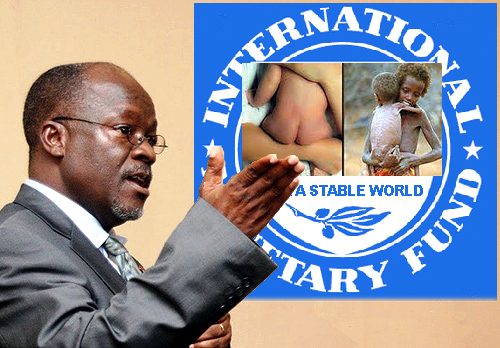
for a stable worldTrickle-Down economics slams Africa and its leaders line up like misbehaving school kids to take the paddle.

President John Magufuli of Tanzania just reduced taxes. There’s no worse move at a time when Tanzania needs stimulus not austerity. All the creativity and imagination Africa has shown in the last several decades has been smothered by western starlight.

The “spring meetings” of the IMF and World Bank confirming that African growth is tanking so scared African leaders that they’re now doing exactly the wrong thing: playing capitalism at its worse.

The global economic system is stacked against the poor. It’s why China ultimately embraced it but also why China, India and Brazil will always play second, third and fourth fiddle to the puppeteers in the west.

The reason Magufuli’s move is so illuminating is that it exactly reflects what China did multiple decades ago: give in.

Tanzania’s economy never performed in any outstanding way, especially relative to its neighbors like Kenya and Ethiopia. Corruption is the main reason, but as I’ve often proved, corruption is western Trickle-Down. To bribe a Tanzanian official to build a ridiculous anti-missile defense system there has to be a briber. The briber is always from the west.

So it doesn’t matter that Tanzania is sitting on the world’s second largest streak of gold, or that it has some of the finest uranium deposits on earth. It doesn’t matter, because the capital that it takes to exploit this rests solely in the west.

And the dosey-doe game Tanzanian officials play with their bribing counterparts stalls development.

Modern Tanzania was born of Cold War China. Listen, that didn’t work, either, but the initial goals of humanism above capitalism still strike me as profoundly correct.

The first president, Julius Nyerere, was such a wonderful person. He began swimming in Chinese capital that allowed him to revolutionize education in at-the-time terribly illiterate Tanzania. He still wears proudly his nickname, Mwalimu, “teacher.”

But humanism grew doctrinaire, too, in China then Tanzania. Mwalimu tried to collectivize villages almost at the same time that they were failing in China. So the experiment didn’t work. The Cold War ended. China changed faces and Tanzania went flat out broke.

Well, like any good ole radical, Tanzania now seems to have flipped completely.

Humanism was and in most cases still is African’s main mission, and I remain hopeful that Africa can demonstrate this lesson to we egocentric capitalistic westerners.

Tanzania like Ethiopia and Nigeria should slap the western banker in the face. A one or two penny drop in payroll taxes is nada.

The government’s own mouthpiece, the Daily News, pointed out that “its effect on disposable income is insignificant.”

But its effect on education, tourism, mining and road building will be profound. So Tanzania will remain beholden to the west yet again, for aid and miserly capital. It will be incapable of generating its own wealth.

Wake up Tanzania.

You Can’t Burn Ivory Towers

You Can’t Burn Ivory Towers

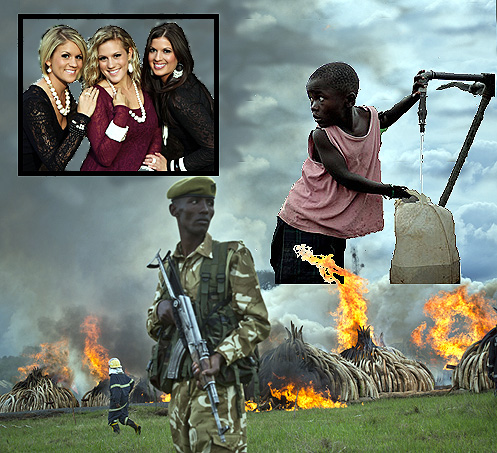
width=No matter how much ivory Kenya burns or how widely NPR publicizes it, the poaching of elephant will not stop until individuals stop buying ivory and until rich people cede much of their wealth to the poor.

Conservation will not succeed if its implementation is so narrow as to neglect those who it could hurt or destroy.

It’s true that some of the earliest ivory ever used was for purpose not beauty. Its unusual molecular strength keeps it from splintering or breaking even under the most stressful conditions yet it has a “softness” that mutes rapid or forceful contact.

Ivory was plastic, before plastic was invented.

So what was useful for elephants and walruses undoubtedly was useful to early man.

Until seven millennia ago early elephants roamed China nearly as much as they are found in Africa, today. As they disappeared, ivory became a luxury item as much as a component of tools.

The “art of beauty” is often defined by levels of scarcity. Perhaps this contributed to ivory becoming a currency of the rich.

After more than a half century of very global and very public movements to save elephants and restrict ivory sales, even the Chinese are coming round. But demand for ivory, as with demand for old paintings or rare artifacts from Alepo, is not going to abate even as the Chinese public changes its attitudes.

The demand for ivory is global, not just Chinese. So long as there are rich people willing to pay for stolen treasures of the Mideast or blackmarket Picassos, there will be ivory seekers worldwide.

The supply side is equally daunting.

Today’s poaching of elephant is not the corporate business it was in the 1970s and 1980s. Virtually all the elephant killed today are lost to itinerant gangs unsupported by Emirate sheiks with their Sikorski helicopters and private ships.

These gangs risk the enormous hazards of killing an elephant then having to find some scumbag broker because they have no better way of surviving.

They have no jobs, no livelihood and the sustenance their ancestors eked out of their lands is no longer viable. The land is leeched or confiscated or over grazed, and sustenance living can’t provide the capital to be successful in a modern world.

It’s terribly disturbing to me that so many truly well-intentioned conservationists express “feeling sick” when they see a pyre of tusks being burned but are not similarly demonstrative over the destruction of Alepo or systematic reductions in U.S. foreign aid.

You just can’t separate the phenomena. It’s OK to “feel sick” seeing that media picture of burning tusks provided you in your mind also know how sick and neglected the children near that burning pyre actually are.

You must realize that the father and brother and uncle of that little girl care about her, that they care so much about her that they will commit a crime to feed her.

You’ll notice once you affect that understanding that things get more complicated, that your “sickness” isn’t quite what you thought. It’s cure isn’t quite as simple.

Kenya is doing the right thing. They are doing it possibly for duplicitous reasons, that tourism needs a boost, but I also really believe that young, educated Kenyans have seriously embraced conservation. That’s wonderful.

But it just … doesn’t matter.

It won’t stop poaching. Rich people alone can stop poaching. They can stop buying and hoarding ivory, and their wealth alone redistributed can eradicate global poverty.

Otherwise, the wild elephant is doomed.

Of Shoes & Planes

Of Shoes & Planes

slave-statesWhile one current election debate is about the immorality of American multinationals using slave labor abroad, it’s time to understand how entire societies are now doing this.

America’s alliance with the Gulf States is preeminent foreign policy. But the Gulf States are enslaving Africans as if it were the 18th century, again.

Gulf States need labor. They are cash rich and muscle poor. Seventy percent of Kuwait and 84% of Qatar’s population is composed of foreign laborers who have no rights, lured by the prospect of a job – any job.

An Ugandan journalist, Yasin Kakande, will soon publish a scathing account of such African labor in a new book, Slave States: The Practice of Kafala in the Gulf Arab Region.

In the preview to publication one of several personal stories is being circulated, that of “Harriett” from Uganda.

Harriet earned an advanced degree at a respectable Ugandan university but could find no job. Lured by recruiters from the Gulf States, she paid an agent $600 for a visa and air ticket to Dubai.

Part of the agreement includes a “sponsor.” This is very similar to what is required by immigrants into the United States. In Harriett’s case, it was a company, an airline.

The airline needed lots of unskilled laborers to clean its aircraft between flights. Kakande doesn’t name the airline, and he I think he should, but virtually all the Gulf airlines are expanding incredibly rapidly.

With fares and service that the more established carriers are finding hard to match, these companies do not use other Gulf States citizens for their employees because … there aren’t any.

So to give you the fine service and remarkable fares, these companies hire people like Harriett.

Harriett was offered a salary of $215 per month. That isn’t bad by Ugandan standards so she took it. What she learned, though, was that it hardly kept her alive in Dubai.

The only lodging she could find was to share a one-room apartment with three other foreign workers. The apartment didn’t allow any cooking, so all meals had to be purchased as take-outs, and that was expensive.

The apartment didn’t allow any laundry, except when using the apartment’s laundromat, and that was expensive.

When Harriett developed terrible rashes determined to come from the harsh cleaning agent the airline was using, Babacon, she was taken to a hospital and treated. When she left the hospital, the airline reduced her salary from $215/month to $54/month to cover the medical treatment.

The only way she could try to get another job was to get a “NOC” letter from the airline. This “No Objection Consent” from the sponsor was required, but the airline refused.

Harriett’s personal story actually ends better than this, but many don’t. Few workers have the savvy, intelligence or skills that Harriett had.

So I find it annoying that while our current election debate properly engages the question whether Nike is using Bangladesh labor, the liberal reply that they oppose such policies doesn’t address the current liberal administrations alliance with the Gulf States.

Much less the increasing number of Americans using Gulf States airlines.

Hypocrisy seems a part of all politics, but in today’s age a clarity of meaning is being demanded. Some say that’s why Trump is so popular – he might be wrong, he might be dangerous or dumb, but he says what he means.

I’m not sure I agree with that. But I understand the thirst for clarity of meaning, and criticizing American multinationals for subcontracting foreign labor is no more important than recalibrating our immoral alliance with the Gulf States.

Or deciding which airline you’re going to fly.

The Year of the Beast

The Year of the Beast

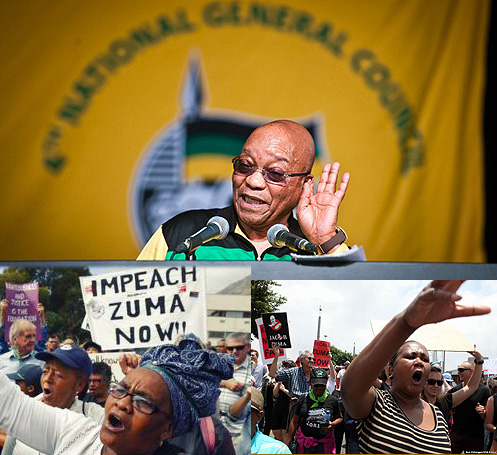
impeachzumanow“T’is the autumn of treason.” Things are heating up in South Africa:

“Twenty-two years into democracy and nearly three years after Mandela’s death, the air is again thick with political paranoia… of high treason … sedition and betrayal, with talk of mysterious foreign… agents who have “infiltrated” the mass media, business, foreign multinationals, NGOs, religious bodies, opposition parties and student movements and who … threaten the state.”

The administration of Jacob Zuma is running scared and has begun to defy democratic institutions. This is new. Previously he was something of a lone gun. Now, he seems to be organizing his government into a fortress of ignominy.

From afar one wonders if a global malaise is sweeping the world. Demonstrations, impeachments and lots of name shouting in South Africa is exactly what’s happening in Brazil.

But the South African story has been building for a longer while, and I think that Jacob Zuma and the ANC party that led the country out of apartheid is sinking fast.

Here’s a quick timeline:

The current president, Jacob Zuma, was pegged a failure from the start and it was remarkable that the ANC actually brought him to power. He was instrumental in the revolution and Mandela originally named him a Deputy President.

But he was sacked from the government in 2005, ostensibly when prosecutors charged him with rape (acquitted by the High Court) but more so because he nearly destroyed a Burundi peace process that was underway at the time.

Two years later in 2007 a high court rules that there is sufficient evidence to prosecute him for a variety of corruption charges, including bribery. Most people thought his story was over.

Then, remarkably, the ANC nominates him into a position to become the third president of the country after the end of apartheid, after Mandela and Mbeki.

Although South Africans were aghast I saw it very much as our first several presidents who all came from the revolutionary movement. Maybe, I thought, he’d now clean up his act.

Anything but. He built himself a gigantic mansion using public funds in broad daylight, flaunted his public duties and appeared like playboys all around the world with a different girl at his elbow every night, sacked and appointed people at will and let cronies siphon off millions of public funds and probably worse of all, ordered in police to massacre mining demonstrators.

To call the man a buffoon is generous. What he is a too typical African potentate dictator, and that doesn’t fit modern South Africa.

Jacob Zuma is now officially on the way to being impeached. Not quite as far along as his colleague in Brazil, but far enough that he’s now lashing out, threatening arrests and implying even more if the opposition continues with its program to get rid of him.

Even more severe, the ANC is considering “recalling” him, which in the arcane and rather old-fashioned communist way forces his resignation. The ANC would do so to avoid the more public impeachment.

Like elsewhere around the world, the ANC as a dominant political party may be in trouble partially due to this global political malaise. It may indeed be “down and out” in the same way the American Republican or Brazilian Worker’s Party seem to be tumbling down. And that is, of course, an incredibly interesting story.

But the main story in South Africa is squarely the story of Jacob Zuma. Whether it’s coincidental that his buffoonery dove-tails with global revolution, or whether he is organically a part of the virus bringing revolution to the world, right now Jacob Zuma is in deep trouble.

And for the good of South Africa and its revolution, he better fall quick.

Symbol Savvy

Symbol Savvy

Trump as a symbolAccording to a successful white South African male progressive, “Anyone who cares about gender equality [should vote for] Hillary Clinton, irrespective of her policies and …whether Donald Trump is the alternative.”

Jarred Cinman argues on a number of fronts, but the one that struck me right away was, “Her symbolism is more powerful than her presidency ever will be.”

Cinman is head of NativeVML, an up and coming South African ad agency whose impressive clients include many of the high-end spirits (like Chivas Regal) and several important banks (like Nedbank). His Hillary endorsement appeared yesterday in South Africa’s most popular, out-of-the-mainstream digital media, the Maverick.

Few understand discrimination as those who live in South Africa, and few can wrestle with their guilt as well as a white South African male.

But Cinman’s principal argument, that Hillary Clinton is a symbol of womens liberation, is the sort of the argument I’ve been using for Bernie: Don’t despair that he won’t get anything done, it’s what he represents.

So if we reduce our support to symbols, then which is more important? A Woman President. Or a Socialist President?

Cinman comes from a part of the world considerably more socialistic than we are. That might explain why he doesn’t see the matchup as I do.

Many, many well educated people I meet around the world don’t know, for example, that America doesn’t provide universal health care.

But for the sake of argument, presuming Cinman is not one of these foreigners with American starlight in their eyes, what is so powerful about the symbol of a Woman President?

First, he presumes correctly that the “male power elite” runs everything, runs the whole world for that matter. Well if a Woman President is so powerful, why is the male power elite still running India and Brazil, or framed a different way, how much really will a single Woman President change this?

Slap, slap. How much would a single Socialist President change this?

Symbols often fade quickly when too easily thrust into importance. Cinman himself discusses this unintended emasculation. When symbols finally make it, they:

“do not have the resources, self-esteem, networks and context to actually take control.”

Further he argues that this starts to institutionalize the original discrimination:

“The truth is many black people in South Africa still believe themselves to be inferior.”

The oppressed take on the character of the oppressors: “They strive toward the same prizes… This striving often benefits the very people they sought to outmanoeuvre.”

So let me get this right.

Vote for Hillary because she’s a woman. You don’t need any other reason. The symbol of a Woman President is so important, that:

1) She won’t be able to accomplish anything.

2) Other women will be marginalized or ensconced in their previous roles.

You see, this isn’t totally fair of me. Cinman’s argument is poorly made and ridiculously vacuous. Mostly, it’s incomplete.

Had he simply also pointed out that Hillary is an incredibly accomplished person, whose list of political accomplishments is very impressive and who has bucked the establishment and won (Benghazi Hearings), the symbol starts to shine.

And because he neglected doing this, even eschewed doing so, I think his brand of thinking may be similarly being applied by Bernie’s opponents to Bernie.

So let’s move beyond the symbols, OK?

Bioinformatics BS

Bioinformatics BS

talkingtoomuchRemarkable disarray at the moment among paleontologists, a virtual Guy Fawkes day for creationists.

Findings about homo naledi, continuing excavations at Dmanisi, even a new thesis that dinosaurs started to die before the meteor struck have just been waiting for something for creationists to exploit. Well, they got it.

Last October the respected journal Science published evidence that our closest ancestors didn’t migrate out Africa into Europe, but rather, migrated out of Europe into Africa.

In other words, white men came from white ground.

Here’s the point: it was wrong, a “bioinformatics error” according to the authors.

But now the authors are refusing to retract it, claiming instead that their original thesis was “not affected.”

That would be true if the original thesis had not been quantified. But the headline on the original research, “First ancient African genome reveals vast Eurasian migration,” is totally and completely and absolutely wrong.

“Vast” it can no longer be. There is indeed evidence for this tantalizingly fascinating “reverse migration” of some early men, but it might just be itty bitty.

Since the “respected” journal “Nature” has not decided yet whether to publish a retraction, it’s clear that all science is treading compromised.

I don’t see any disarray in paleontology, quite to the contrary. What I see is growing evidence that our previous models were far too simple.

The greatest taxonomist of all times, Ian Tattersol, recently explained it this way in Discover Magazine:

“In the 1990s, on the family tree of hominins, we had maybe 12 species. Now there are 25…. The family tree is even more bushy than that, but people are still trying to fit things into pre-existing categories.”

Things get bushier and bushier all the time, and that’s exciting and reflects how fast science is advancing. The fact that new research at Dmanisi suggests the first early man migrant was habilis not erectus, or that dinosaurs started to die out before the meteor … that’s all wonderful news for those of us who have always believed that paleontologists were reductionists.

It’s understandable. Galileo thought that the sun was the center of the universe even as he recognized himself as a heretic for his radical discoveries.

The problem occurs when a mistake made is not fully owned up to.

We aren’t splitting hairs, here. Research is not just in the neurons of scientists. It is the culmination of their thinking, of course, their toil and tools and neutral computer analysis, but it’s more than that.

It’s what it says it is.

“First ancient African genome reveals vast Eurasian migration,” is incorrect. It needs to be retracted or restated and republished and not sugar-coated in self-aggrandizing hyperbole about “what we really meant.”

COP21 Obfuscation Detritius

COP21 Obfuscation Detritius

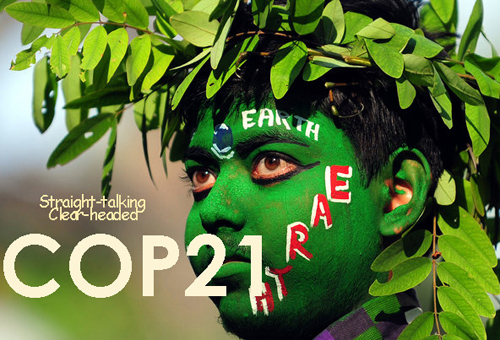
COP21Today on Earth Day only one major head of State (from France) attends the signing statement at the United Nations of COP21, the breakthrough global climate agreement negotiated in Paris last year.

French President François Hollande is the star. He was instrumental in negotiating African developing countries into the deal, but there aren’t any African Heads of State here to sign with him.

John Kerry signs for the U.S. Obama is not here as he’s telling Cameron who’s not here, either, not to leave the EU.

Should we worry?

COP21 is good, but its worst part is another acronym, INDC, Intended Nationally Determined Contributions, that was created at the behest of the developing world and negotiated principally by Hollande.

The premise is that development cannot be compromised in the poorer countries of the world.

As Bolivia and Ecuador explained in a joint statement during the negotiations, “These climate reparations would give to economies relying on progressive extractivism the necessary resources to transition to clean energy without having to sacrifice their social and redistributive policies.”

Translate: pay us not to burn fossil fuels. The implementation in nicer language will be written in each country’s INDC.

In other words, Kenya will forge head with additional solar, wind and other non-fossil fuel methods of making power, but primarily only if Britain, the U.S. and Japan – its principal aid givers – pay them to do so.

I think this is remarkably fair. But it’s politically dicey.

Most Americans (69%) now support efforts to reduce greenhouse gas emissions, BUT … they do not believe (45%) that climate change is a “serious problem.”

What was that?

That’s the same position in 10 of the major 17 countries who pushed through COP21. Only in India, Germany, Canada (only barely, 51%), Mexico, Brazil, Italy and France does the public accept that climate change is a “serious problem.”

So that’s how dumb the world is, and that’s why Hollande is at today’s signing ceremony. France, he is saying, is not as dumb as America or China where (get ready to scratch your head) 71% of the public supports international treaties to reduce greenhouse gas emissions, but only 18% believe that climate change is a serious problem!

I would love for some data from Africa, but except for South Africa (56% support reducing greenhouse gas emissions, but only 45% believe climate change is a serious problem) polling in other African countries doesn’t exist.

You see if you stripped out the motive for reducing greenhouse gas emissions, climate change, then what replaces it?

In developing countries it’s pollution. Pollution is as much an issue in Nairobi as Beijing.

In the developed countries it’s … what? Support for fracking? I just don’t know.

Here’s another take. It’s likely today that most Africans, and maybe even most Americans, recognize that climate change is real. Whether you elevate climate change to a “serious problem” is the key.

There are so many problems in Africa with greater priority, like food and water and poverty, that even if it’s plausible climate change contributes to these, it isn’t as important so the moving goal post of “serious” might not be reached.

In America I think it’s more contentious: it’s political.

Alas for the straight-talker Trump and the clear-headed Sanders, our only solutions to sweeping away the detritus of obfuscation?

Facebook Reject

Facebook Reject

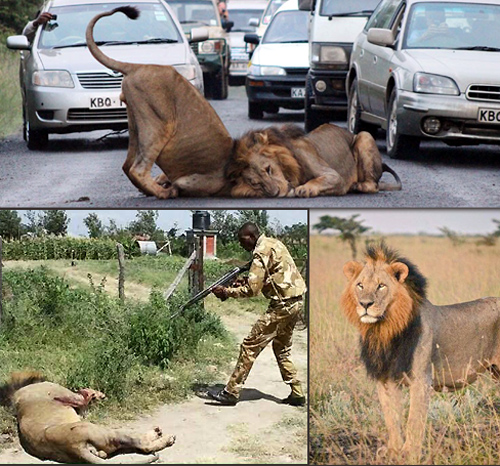
mohawkWhen a wild animal kills a person, should it be killed?

Kenyan park rangers killed the lion Mohawk last week after he killed a man. But zoo authorities in Palm Beach didn’t dispatch the tiger that killed its keeper.

The protocol especially since the days of the Man-Eaters of Tsavo has been to kill any wild animal that kills a man. Presumption: it likes the taste.

The 35 or so lions that live in Nairobi National Park are very unusual. Their territory is strictly defined — something truly wild lion would never accept — and many, many photos exist of these lions testing this limit otherwise known as Ngong Road.

Rarely yet nevertheless captured on at least 200 cell phones at the same time, the lion stroll out of the forest onto the street during rush hour! Cars stop – which they do routinely in Nairobi’s rush hour anyway – and the lions pad their way down the highway for a while before returning to the forest.

Last week one of these celebrity lions attacked a man in a market and was then shot by a ranger.

Mohawk it was, indisputably. His name comes from his unusual hairdo (naturally, by the way, not as sculpted by Nairobi mall professionals). He had wandered ten miles out of the park, the opposite direction of Ngong Road.

Mohawk traveled out of the park onto a prairie which more or less begins a massive wilderness that stretches into the great Tanzanian parks of Ngorongoro and Serengeti. But then, he made a sudden left turn and strutted into a very distant suburban/rural town called Isinya. Truly wild lion would never strut into a town but Mohawk’s a celebrity. He needs people!

The rural people of Isinya aren’t like the Benz-driving, hipster Galaxy Tablet crowd commuting on Ngong Road who need increasingly imaginative excuses for being late too work. Maybe the farmers of Isinya weren’t quite as “enthralled” as the young execs in Nairobi? Nobody took his picture? So …Mohawk killed a man!

And rangers then killed him.

Half way round the world at about the same time a much larger cat bit the neck of its young woman keeper.

Authorities didn’t kill the tiger but tranquilized it, and so it took up to five minutes before medics could untangle the cat from its prey.

The multiple investigations now going are specifically targeted to the question whether the keeper died while waiting for the tranquilizer to take effect.

African lions will soon be listed as endangered, because their population has decreased from 30,000 to 9,000 in the last two decades. There are fewer than 400 Malaysian tigers, already listed as endangered.

In my opinion both cases are the result of humanizing wildlife, which we snobs prefer to call “anthropomorphizing.”

Mohawk directed traffic. He posed at last count for more than 100,000 photographs. His death is now a Twitter hashtag, #JusticeForMohawk, there was a Memorial Service for him, and today’s opinion page in Nairobi’s major newspaper vilified the public for not giving wildlife enough space.

Less aplomb among the Palm Beach Zoo authorities who are in a terrible balancing act between conservation and common practice. Few wildlife authorities will dispute that the Palm Beach Zoo tiger is now more dangerous, but with so few left…

And … was trying to save an endangered species justification for delaying saving a human?

These should not be the enigmas they seem. If we didn’t think then treat wild life with human considerations and affection, if we accept the common sense that because wildlife cannot save us but we can save wildlife that we are more important, then we might move out of this fairy tale universe of pirouetting hippopotamus and friendships between warthogs and hyaena into the reality of ecological wonderment.

By believing we “love” the lion, we never really learn what a lion is. We bury its awesome behaviors and biological complexities under notions of humanness.

Humanizing wildlife invites them onto highways and disarms their keepers. Flash: Don’t try, Mohawk didn’t have a Facebook account.

Discounted Business Class

Discounted Business Class

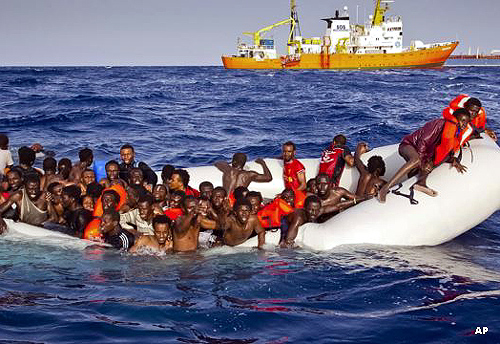
eastafricanboatThe Somali war began in 1993; Ethiopia’s various versions of terror started in 1979. Yesterday, more than 450 mostly Somalis and Ethiopians drown in the sea when their refugee boat capsized near Greece.

It seems this is the first large “migrant” incident with mostly East Africans.

Why now?

I don’t doubt that many of those on board led lives as tenuous as those fleeing Syria. Over many past decades we’ve grown calloused to the sufferings in Africa. Many westerns think it’s just a “way of life” for Africans.

But on the other hand there’s no actual fighting or bombing in Ethiopia right now. Particularly why in Somalia – where it’s more peaceful than in the last 30 years – are people taking these huge risks now?

It’s simple. Europe has opened its heart, since it was unwilling or unable to open it’s military hanger. Europe is passing through a period of great guilt and it’s a piece of melancholy but hope as well for mankind.

Another reason is that ever so slowly East Africans are amassing bits of wealth. Under reported almost to the point of immorality, every migrant you hear about or see flailing in choppy seas has paid upwards of $10,000 for the chance of making it to Europe.

Many Americans couldn’t wrestle up that cash. Syrians were a rich people. Doctors, lawyers, professionals of all sorts compose the migrant diaspora.

Last August I wrote fondly of a young, educated and professional Somali refugee who made his way all the way to South Africa.

The risks he took were manifest and he undoubtedly had quite a stash of bribes available.

Now, the prospect of reaching a welcoming European coast despite all the tragedies we hear of daily is worth a man or woman’s life savings and possibly, life.

We’ve got to understand this story. We’ve got to think about why someone, anyone – anywhere in the world – would leave the place they were raised or born in and risk everything, that they would pay the equivalent of a roundtrip business class air fare from New York to Sydney to be packed into putrid suffocation on a rickety boat likely to capsize in high seas.

It’s not so far fetched to imagine a Latino American citizen, a professional with some wealth and status, fleeing a Trump America.

But how would they get over the wall?

Conservation vs. Development

Conservation vs. Development

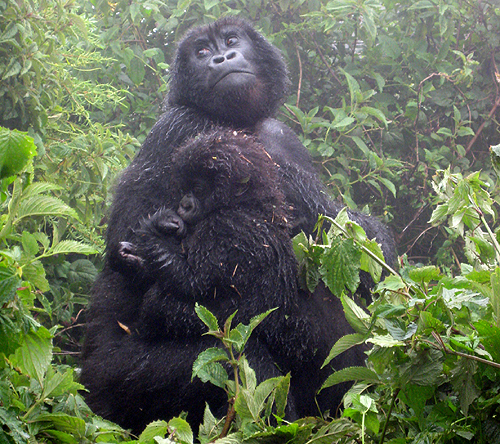
Mom.gorillaIs conservation just? Not always, according to a study in Uganda’s Bwindi National Park.

“Conservation [needs] to get serious about environmental justice,” a September study from the University of East Anglia claims, one of the world’s top universities for developmental studies.

This is just one of lots of recent intellectual fistfights between sociologists and conservationists. Conservationists, on the one hand, are presumed to want to protect the earth at nearly any cost. Sociologists, on the other hand, put people first and claim that contemporary conservationists don’t.

The argument surfaced at the beginning of this decade but by 2014 the New Yorker called the debate “vitriolic.”

Finally at the end of 2014 the highly respected scientific publication, Nature, allowed two scientists to publish an article about the fight: “We believe that this situation is stifling productive discourse, inhibiting funding and halting progress,” they wrote.

Stop whining. This is an important debate and nothing that I’ve seen is offensive or immature. Quite to the contrary: The East Anglia study continues this debate on the side of sociologists, and I believe appropriately so.

I know Bwindi pretty well. It is the Ugandan section of the volcanoes national park in which the mountain gorillas live. Like the other sections in Rwanda and the DRC-Congo, mountain gorillas have enjoyed a wonderful rebound from near extinction at the end of the 1970s.

The main reason is tourism. It will cost you a hefty $750 for one permit to be with the mountain gorillas in Rwanda for one hour, and one of the 56 daily permits are often hard to get.

It’s less expensive in Bwindi, but that reflects the unsettled political situation in Uganda. But even in Uganda’s untroubled days, Bwindi’s operations were never on the up-and-up.

Bwindi was terribly corrupt. If you had trouble getting a permit, the right bribe to the right ranger would get you one, and if in fact the day was truly booked up, someone would find a way to take you to a gorilla research group which was technically off-limits to tourists.

The East Anglian study touches on this but in fact sticks mostly to the non-corrupt, stated policy issues. Their main criticism is that the original peoples of the area, the Batwa, have been intentionally excluded from the benefits of Bwindi’s growing gorilla population.

The main benefit to the growing gorilla population is tourism: revenues from the permit tax which supposedly go directly to the government; and jobs created in the tourist industry: staff for lodges and transport and guides.

The Batwa do not benefit from any of these. The Ugandan government has always been openly hostile to these progeny of “pygmies,” their land was never properly deeded to them so they were unable to participate in the leasing arrangements for the tourist lodges, and few if any tour companies hire them at any level.

Prior to the interest in conserving the gorillas, the Batwa’s lifeway was bush meat hunting in the forest – not gorillas, but mostly monkeys, and also duikers and other small forest creatures. This is now prohibited in the interests of gorilla and ecological conservation.

So without benefitting from the growth of tourism and conservation while being restricted from the forest which was their traditional lifeway, the Batwa have grown more poor and more estranged from modern society. Implicitly, of course, it’s presumed they become poachers.

“Successful” conservation policies lead directly to poaching.

The East Anglia study suggests that scientists should adopt certain principals of manifest justice that could delimit conservation goals, but which in all cases would ensure justice for the local peoples like the Batwa.

This no-brainer is often neglected, the authors claim, because conservation goals appear “to be driven by faith in a particular (utilitarian) model of justice that holds that conservation consequences justify their means.”

I’m glad to have this “vitriolic” debate: I’ve always believed in Africa that people must come first, that conservation is not anathema to that at all, but that stitching the two together is imperative.

Imperative to conservation, not to the peoples’ will and that’s the key. The people have the sovereignty. Conservationists do not. It’s clear who must sew the seam.