Poaching Politics

Poaching Politics

PoachersRichard Leakey’s conservation organization just announced that “poaching rates [in Kenya] have decreased dramatically” and that “Kenya’s elephant populations are now on the rise.”

This is, of course, good news but the May 25 press release was bereft of references or statistics. “Dramatically” needs to be substantiated, and frankly what I intuit here is that wildlife organizations are resyncing to reality: e.g., poaching was never as “dramatic” as had been suggested.

The group, Wildlife Direct, is one of the most respected in Africa. Leakey’s involvement goes way back to when he was the Wildlife Czar for the country in 1989 when poaching really was out of control. More than almost any other individual in Africa, he was instrumental in stopping that horrendous decimation of elephant.

He was integrally involved in Kenya’s collaboration with the U.S. prior to that which created the CITES treaty, which remains the mechanism worldwide for regulating the conservation of endangered species.

The recent Wildlife Direct report that monitored the creation, passage and implementation of wildlife laws in Kenya gives very positive ratings to the system in Kenya now used to prevent poaching.

It points out that many more persons are being prosecuted, including major black marketeer distributors, and that many more have gone to jail and that these represent “significant improvements.”

The group actually credits itself as well, claiming that its courtroom monitoring team is the principal motivation (for the courts, anyway) to implement the laws and put poachers behind bars.

But the battle’s not over, the group points out:

“The team of lawyers also warn that endemic delays and corruption mean that too many criminals are still walking free from the courts… The undermining of wildlife trials by corruption is the elephant in the room.

“Numerous cases are failing due to … the loss of evidence, witnesses fatigue, loss of files, wrong charges, wrongful conclusions, and illegal penalties. What’s worse is that there are no consequences for those involved in undermining these cases.”

Those criticisms apply to almost everything prosecuted in the Kenyan courts. Anyone remember why the President and Vice President of Kenya were let off their International Criminal Court prosecution for crimes against humanity? Loss of evidence, loss even of witnesses.

Wildlife Direct’s actions continue the long and uninterrupted integrity of Leakey’s involvement in all aspects of his native country, and bravo to that.

But when the stats arrive as they must, and as they trickle in from elsewhere in Africa, I think we’ll learn a couple very important things:

First, poaching in the last few years – as horrible as it is – was never as bad as we were told. I wonder how many media groups are publishing this current finding, that things are improving, compared to a couple years ago when anecdotal statistics were used to suggest an apocalyptic decline in elephants.

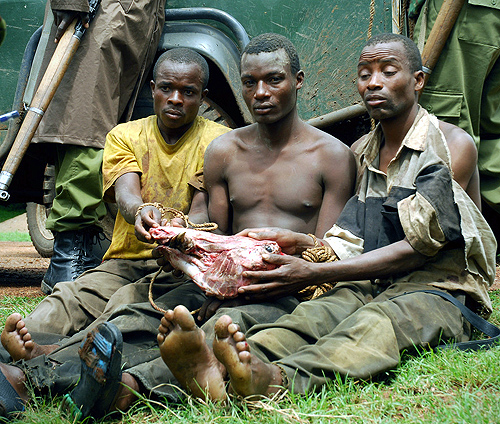
Second, as the individual stories of poachers get reported — as journalists study those who are prosecuted and jailed — I think we’ll learn that most poachers are ad hoc individuals just trying to survive: Criminals, if you will, forced almost against their will into illegal activity simply to get food and provide for their families.

Poaching is not cut-and-dried, and now we’re learning, it’s not even well documented.
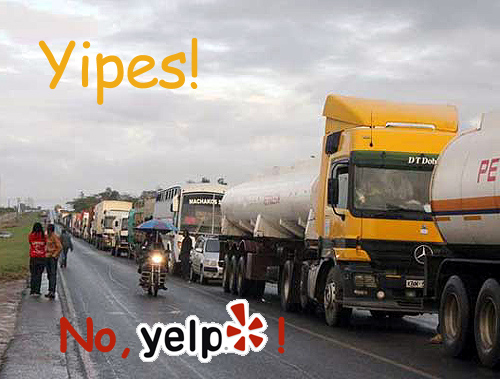
Yipes! No, Yelp!

Yipes! No, Yelp!

YipesNoYelpHow do we get rid of bribing? We get rid of tipping. Use your cell phone!

Bribing is a universal, world-wide phenomenon … sometimes called tipping. Africans have been unfairly cited by westerners all my life for bribing while it’s actually they who bribe ten times more each day than an African ever could.

We sugarcoat a lot by calling it tipping: Journeymen’s gifts at Christmas, an apple for the teacher, flowers on Secretary’s Day, or how about those popcorn baskets to truculent vendors at the end of the year or Godiva candies to past clients?

“Expressing our thanks,” replaces decent pay and benefits, or put another way, ensures there isn’t decent pay or benefits.

Social media powered by cell phones is getting rid of bribery … and tipping … in two ways. In Nairobi as in New York, Uber and Yelp and a dozen other media sites are bringing sanity back into service, while mass demonstrations are sealing the deal.

Big tippers get cabs in Manhattan. I spoke to a cabbie recently in Brooklyn who said he can spot a big tipper across the Hudson. Their jacket is unbuttoned. They’re looking uptown even if they want to cut a hard right just ahead and go downtown. They step out into the traffic lanes. He said sometimes they even wave dollar bills in the air.

Same in Dar-es-Salaam or Lusaka. Look rich, ooze currency, and you’ll get a better deal in the end. At least until … Uber.

No charade. No cash? To comply with the reality that a lot of Africans don’t own credit cards, Uber now takes cash there! But… no tip! Often, no wait.

Big restaurant tippers tend to be loyal customers. Tipping levels often were the best rating restaurants had … at least as far as the owners were concerned. No more. TripAdvisor be damned. Looking for the best grub in Joburg? Go to yelp.

In Kenya they’re falling all over themselves to get the Yelp franchise… stay tuned.

There is no question that this is grass roots change and that the cell phone facilitates it. You can’t really optimize either Uber or Yelp without a cell phone at the time you need their advice and service.

But cell phones are working from the top, too.

Kenyan truckers are among the best paid, best educated and roughest individuals on earth. They often speak softly but could crush you with their thumb. They have to be this way in order to bring food into war zones or plastic pipe into a desert without gas stations for 300 miles.

It’s not a happy life, though. One of my top guys in Nairobi started as a trucker. It’s how he got his capital to buy his first vehicles. But he hesitates speaking about those days the same way a cousin I have who was a PT boat captain in Vietnam hesitates speaking about the war.

About the only thing that can disrupt a Kenyan trucker is … Kenyan police.

Kenyan police are generally fatter and less muscular, so in a brawl they’d lose. But they have power and saw horses that stop traffic. Ostensibly this is to check the safety of the vehicles: the tires, mufflers, etc. In reality it’s the way they get paid.

Truckers call these “road-block” taxes.

So to start the week in Kenya, today, thanks to Kenyans’ massive mobile phone networks, the entire country is coming to a halt as truckers turn off the engine on major highways.

The actual demonstration was prompted not by police bribes, but by the deaths of 37 truckers carrying cargo into troubled South Sudan. Truckers want Kenyan military escorts.

But they also want the end of road-block taxes.

So happy start of the week, Kenya! Make sure your phone is charged!

Trump TP

Trump TP

Increasingly worried by Trump, Africans are beginning to explain his errant behavior in terms of all of America, not just one crazy individual.

“We thank madman Trump,” writes Nairobi journalist Charles Obbo, editor of the influential Mail & Guardian. “He has opened the eyes of many.”

What Obbo and others are arguing is that Trump is not just … Trump, but an embodiment of America.

“He has millions of passionate followers… If Trump were an African politician, the international community would be threatening him with the International Criminal Court. The national integrity commission would be investigating him for hate speech.

“But in the US, the leader of the free world, he has cowed many. Some people, even very rich ones, are afraid of him and speak of the real estate tycoon anonymously.”

Obbo concludes: “Trump is beginning to suggest to us that what we see in the West is … the acquiescence of the public” to his madness.

Trump has been particularly hard on Kenya. Last fall in Iowa he called the Kenyan Beijing Olympic winners “cheats and con-men.”

When Kenyan president Kenyatta went to Paris to negotiate the climate deal, Trump claimed the president’s main purpose in going was to shop at Paris’ malls.

He so infuriated Kenyans that they created the #SomeoneTellTrump hashtag, and one of Kenya’s most successful businessmen is currently marketing toilet paper with Trump’s photograph on it.

It’s hardly only the Kenyans who are worried.

“So it is time to start thinking the unthinkable,” a South African journalist writes from Washington. “IT IS now entirely conceivable that Donald Trump will be the US’s next president.”

Obbo and others worry that someone like Trump is completely capable of ignoring all the institutions of democracy intended to check the crazy.

“The idea that institutions in developed countries work to prevent dictators from abusing power and becoming dictators might be a lie.”

Why do they think this way?

Because hardly 6 months ago the country’s most astute analysts broke into hysterical laughter on a Sunday TV talk show when a Congressman from Minnesota suggested Trump would be the Republican candidate.

For my entire life time The West purported to know what was best for Africa. Is that remotely possible when The West clearly doesn’t even know what’s best for itself?

Blame or Responsibility?

Blame or Responsibility?

CingorilladeathNeither Rin Tin Tin or Baloo are real, folks. The gorilla was and it had to be killed. The mother was negligent. And the Cincinnati Zoo’s gorilla display isn’t safe enough.

A good portion of my life has been spent teaching the dangers of anthropomorphization: Everyone involved from the zoo to the mother and child, to the authorities now conducting investigations are guilty of treating animals like people.

A human is more important than a gorilla. It’s unfortunate that situations like this force this distinction to be emphasized, because animals are one of the best conduits for leading us to better understandings of our planet’s ecologies. But like many good things sometimes it goes too far.

As a zoo director friend told me yesterday, “That gorilla can crush a coconut with his hand.”

Criticism of the zoo’s crisis response unit comes mainly from animal rights groups with exaggerated or incorrect arguments:

Harambee was not a “mountain gorilla,” of which there are fewer than a 1000 left. He was of the lowland gorilla species, of which there are 50,000 -90,000.

That’s still a critically endangered animal but it’s not the imminent threatened mountain gorilla that many are claiming.

Harambee was not captured in a West African jungle. He was born in the Gladys Porter Zoo in Texas. The vast majority of animals seen today in zoos have been born in zoos.

This is hardly the first time something like this has happened. The most recent was three years ago when a 2-year child fell into a pack of wild dogs in the Pittsburgh Zoo and was mauled to death.

Like with the current Cincinnati gorilla incident, the public was quick to judge the mother was mostly at fault in Pittsburgh. She sued, anyway, and the zoo settled.

Other recent incidents include a loyal animal keeper killed by the tiger she had cared for.

In all cases blame spreads pretty equally between the victim or the victim’s guardian, and the zoo. Zoos’ attempts at modernization have included better exhibits, but these exhibits probably compromise safety for entertainment.

But while the blame may spread around, the responsibility for an incident like this stops squarely at the zoo. They are the organizer, they invited the people with their children to come, and they must prepare for every conceivable eventuality.

Cincinnati did not.

I’ve written before that zoos have neglected safety for gate receipts and media. It was totally appropriate that Pittsburgh paid the family of the killed child thousands if not millions of dollars, even though they were not only to blame.

It’s an awesome responsibility zoos have assumed, and it begins by letting the visiting public understand the danger, and if that means a slightly worse view of the animal, so be it.

What is curious in this most recent Cincinnati case, though, is that it is so similar to the Pittsburgh case with the exception of the animal involved. This was a lowland gorilla. The Pittsburgh case involved wild (painted) dogs.

Wild dogs are actually more endangered ecologically than lowland gorillas, yet the outcry with this incident is considerable sharper.

I think that has to do mostly with the video. There was no video of the Pittsburgh incident. That suggests a large portion of our population doesn’t read, only watches.

That, by the way, is one of the distinctions between a person and a gorilla.

Anti-Teach

Anti-Teach

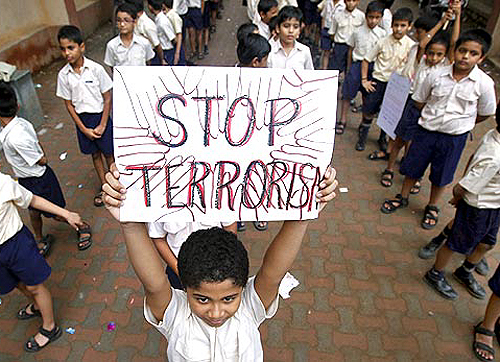
stopterrorismPolitical extremism cannot be taught against.

There is a huge movement right now, from Kenya to St. Paul, to teach “anti-extremism” in schools.

Last week a number of media outlets featured a finalist for this year’s Global Teacher Prize, a man in Nairobi who promotes school programs designed to convince teenagers to stay clear of terrorist organizations.

Ayub Mohamud’s programs begin with pretty standard stuff, the challenge to students to withstand “brainwashing.”

It’s not long after that, though, that he gets kids to promise to finger possible radicals to the police, or if they can’t do that, at least to confide in him or other trusted adults.

Tempered with a good measure of evidential platitudes on the ability to change society for the better through non-violent, law-abiding means, Mohamud and scores of others around the world are pushing an equally doctrinal lifestyle that for all practical purposes strikes me as simply a new religion: anti-extremism.

I’m not sure there’s anything intrinsically wrong with this, any more than teaching Catholicism or Judaism or love-of-country, all of which expressly disavow violence as a means to their ends.

What’s wrong is to think it works. The greatest flaw in doctrinal religions is that they believe in their infallibility. If nothing’s wrong, it will never be fixed.

Belief that the best way to inhibit extremism is to teach against it destructively blindsides advocates to the root causes of terrorism: poverty and despair.

The photograph in the New Yorker of Mohamud in his Nairobi Eastleigh school suggests he’s preaching to the choir. Eastleigh is not one of Nairobi’s legendary slums from which most terrorist recruits come.

It’s certainly “working class” as the New Yorker points out, but it’s a long way from the day-to-day survivors of the Kibera slum, for example, where the vast majority of al-Shabaab recruits come from.

Of course we’ll learn of this middle-class girl or that boy from an upstanding working class family who join ISIS because because they’ve been mesmerized by some hand-thumping mullah. How many enter Liberty University each year?

Programs like Mohamud’s may indeed discourage these youngsters. But these teens hardly represent the mainstream of young terrorists. In fact, they’re a very small minority. The vast number of recruits would never find themselves in the pleasant looking schoolroom in which Mohamud teaches.

But Mohamud and others like him would never dare teach their program in the Kibera slum. It would take hardly a nano-second before some still clear-headed kid with a distended belly challenged him with the bare facts of life. Everything in poverty is survival. Nothing is done, or believed or otherwise accepted without an equal or greater quid pro quo.

“What will I get?” I can imagine a teenager in the slum asking, “for turning in Odhiambo?”

There’s nothing inherently good about non-violence if there’s no alternative: It’s the reason we accept revolutions and wars, the death penalty and all sorts of other less extreme but violent acts. It would be another thing if Mohamud were teaching pacifism, but he isn’t.

The New Yorker captured the following exchange from Mohamud’s class:

Mohamud: “What does Islam say about killing?”

Student: “It’s only for God.”

‘Brainwashing’ or the determination of what constitutes ‘an act by God’ are deeply subjective. What Mohamud and others are trying to teach is that their way is the right way.

Absent of any inherent truth such teachings become terribly oppressive.

Last year Britain mandated that secondary school instruction include programs that promote anti-terrorism. The Counter-Terrorism and Security Act places a legal duty on schools to “prevent people from being drawn into terrorism.”

A rash of suggested programs and techniques from Britain’s Department of Education which followed the Act has many British teachers up in arms.

The National Union of Teachers demanded the government withdraw the Act, claiming it “created suspicion and confusion rather than safety in schools.”

Getting it much more correctly, St. Paul educators are using federal funds to “cultivate and fund youth programs, job training, and expand after-school programs intended to facilitate mentorship.”

There are components in the St. Paul programs that also teach against extremism, but personally I think that was slipped in as a compromise to get the ideologues on board. Everyone in St. Paul knows that the real problem is that there are too few jobs for the large number of Somali immigrants.

Anti-extremism can be taught and has even been legislated as in Britain, and it may indeed discourage a few well-off kids from joining ISIS, but it will do nothing to stop the flow of the poor and despairing to the battalions of extremists.

And in its worst and more mature form, it will do exactly what the terrorists want it to do: foment dissent.

Mowing down the weeds does not get rid of them. You’ve got to get to the roots.

Memorial Day 2016

Memorial Day 2016

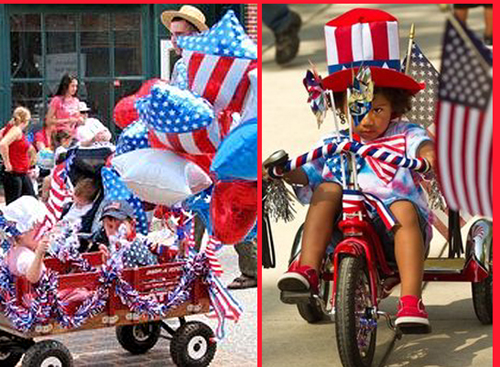
memorialweekendToday is the Memorial Day holiday in the United States.

The holiday is intended to honor the memories of U.S. soldiers who have died in action. It’s similar to the Remembrance Days celebrated in many parts of Africa, and like in South Africa created primarily to honor the freedom fighters for independence.

But America’s Memorial Day has grown to honor all dead soldiers, not just those who fought in the 18th century revolution. In fact it wasn’t started until after the Civil War when it was first called “Decoration Day,” following a petition by recently freed slaves (most who came from Africa) to honor the Union soldiers who had freed them.

After World War I it was changed to “Memorial Day” and extended as an honor to all soldiers in all conflicts.

As a young boy it was a big red-white-and-blue festival. We decorated our little red wagons and bikes, just as we would hardly a month later for the July 4th Independence Day Holiday.

Since then my own personal regards for Memorial Day has diminished. The numerous wars my country began during my life time have mostly been unfair and unjust. The end of conscription, which happened when I was in university, changed the military so radically that it is no longer a people’s army; it no longer represents society as a whole.

Today the military is composed either of young men who can’t get any other kind of job, or who need the benefits once their service is finished, or avowed militarists.

I do stop during the day and think of my relatives in the Great Wars. I think of the way the country ultimately came together to fight world tyranny. But in my life time, there is little in America’s wars to be proud of. They are mostly memories I wish we didn’t have.

Underground Brilliance

Underground Brilliance

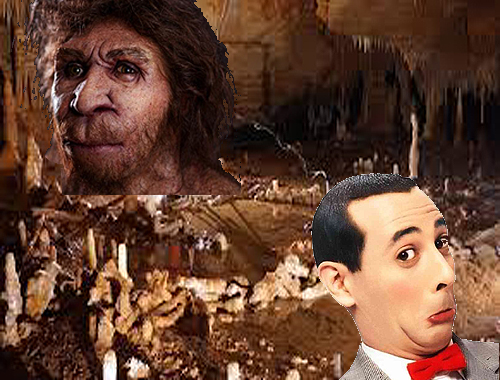
undergroundbrililianceWhen the first great human civilizations developed in Africa 200,000 years ago, Neanderthals were also socializing in Europe.

Neanderthals were anatomically distinct from humans, even more than Yao Ming and Jimmy Durante.

They were bigger, not necessarily taller, more robust and likely much more muscular. Their face was much different with a protruding nose and receding chin and forehead. The best explanation for these differences is that they were adaptations to a much colder environment than in Africa where we humans evolved.

But they also had a larger brain, although this remains contentious among some scientists who argue that brain size alone is meaningless and that for comparative purposes needs to be taken in the context of the creature’s overall weight. Even this data of ratio is muddled, but I’ve always felt that skeptics in this area were humanogynists, persons biased against Neanderthals simply because they weren’t us.

But the two creatures have a remarkable amount in common. They are, after all, the last creatures to survive the great hominin experiment that began 6-8 million years before and which had birthed a dozen or more separate “man-like” species.

So they both had hands and feet that were similar, they were both entirely bipedal, their teeth suggested similar diets, and they both had very large brains relative to their body size.

And they both used fire and tools, created jewelry and primitive art.

Africa’s climate changed for the worse and the Africans left the continent seeking the greener pastures of Europe. Contact with the Neanderthals finally happened maybe 50,000 years ago, and not long thereafter the Neanderthals disappeared.

The great hominin experiment was over. Only one species remainded.

Why the immigrant prevailed over the native has intrigued us for years, and the popular notion presumed the Neanderthals were the dumb-ass thugs, since obviously, aren’t we the smartest thing that ever showed up?

Presumptions about self taint all social science, and that’s specially been the case with the Neanderthals for a long time. We’re discovering they were anything but dumb-asses.

A French discovery published in Nature this week details a Neanderthal boma 1000′ feet down a cave. Using the stalagmites of the cave the creatures formed a structure remarkably similar to the “bomas” that characterized traditional African nomadic peoples.

On the arid plains of Africa nomads created a circular kraal or homestead usually with thorn trees and other small bushes, primarily to protect livestock from wild animals.

The Neanderthal structure is remarkably similar, although there’s no indication and it seems difficult to suppose that they were protecting livestock.

There was evidence of fire within the Neanderthal boma, just as with more modern African nomads.

Commenting on the discovery, a Leiden University archaeologist Marie Soressi writes that “their discovery indicates that Neanderthals exhibited more complex social behaviour than was previously thought, and suggests that these hominins used the underground environment.”

We never thought to search for Neanderthal meaning … underground. Yet it makes perfect sense in a frigid environment since deep underground warmth can be conserved.

And keep something else in mind. As with all hominins sight is critically important. There is no light underground … unless you make it.

The need to govern our over estimation of ourselves has been a struggle vis-a-vis the Neanderthal since it was first discovered. Even today religious crazies concoct the most amazingly warped analysis to claim the creature didn’t share a similar evolutionary path as ours.

We’re winning that battle, I’m sure. But the battle to not stereotype is a tougher one. We could one day, for example, determine that the Neanderthal was smarter, fairer and … nicer than us!

Because “us” has changed radically since the days of thorn tree bomas, and had some random event not given us the advantage over the Neanderthals, then it might have been we pee-wees showing up in Sunday cartoons, not the “dumb-ass” Neanderthal.

Traffic Problem

Traffic Problem

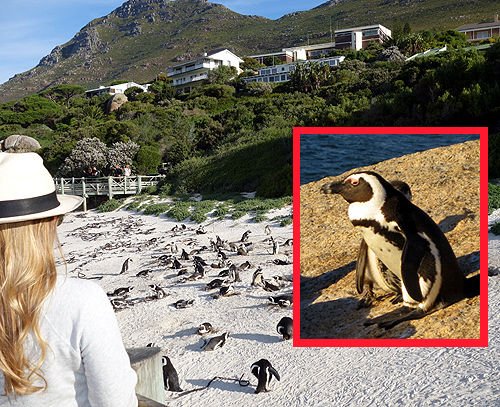
bouldersHuman/wildlife conflict isn’t limited to dangerously powerful elephants walking over an impoverished Tanzanian farmer’s watermelon field. Several days ago in a thoroughly modern city in The Cape one of the world’s most endangered animals suffered a serious blow from … car traffic.

There are few animals in the world as endangered as the African Penguin (Spheniscus demersus), sometimes called the Jackass penguin.  Just over 25,000 breeding pairs remain of a sustainable population of 1.2 million birds that existed only a half century ago.

This is a far greater catastrophic decline than that of elephants or lions, and it shows no sign of abating.

Read more

Trial of Tribalism

Trial of Tribalism

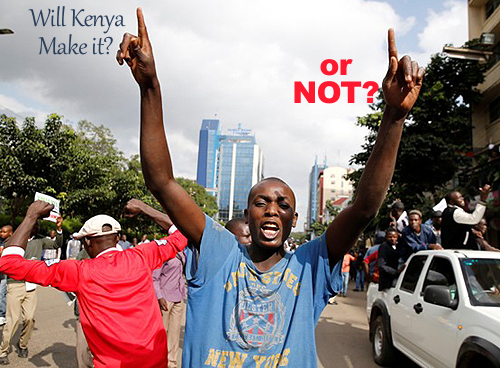
KenyaMakeitOrNotKenya did better yesterday. Three people were killed in demonstrations near Lake Victoria. There was teargas in Nairobi; part of the city closed down in the afternoon, but the police in Nairobi seemed more restrained.

Kenya’s problem is tribalism. Forget about all the momentary issues (the current is over legitimacy of the IEBC). Get to the core: the battle between the Kikuyu and Luo.

Tribalism doesn’t lend itself to modern social engineering. It’s ingrained and stubborn, like a bad habit. It’s not easy to shake.

Yet more than any other African country in history, Kenya has the potential to resolve this incredibly difficult problem.

Kenya is the one country in the large quarter of the continent known as eastern equatorial Africa that is most advanced: most educated, most worldly and most integrated into the world community.

If “Kenya can do it,” then maybe Tanzania and Uganda can, too. If Kenya can’t do it, then a lot of us are going become terribly pessimistic about eastern Africa.

Kenya stands with only two other countries in sub-Saharan Africa, Nigeria and South Africa, where social and political conditions are similar.

It’s probably the most junior member of those three countries, and that’s the reason right now democracy is so violent. Remember that Nigeria was an extremely violent place starting with the civil war in Biafra, and the anti-apartheid struggle in South Africa was far more violent than outsiders remember.

The question for Kenya is whether it will emerge from this period as Nigeria and South Africa did from theirs, more democratic and free.

(Please don’t exaggerate me: the problems in Nigeria are enormous and South Africa is currently flirting with ascension into a fantasy world, but by the measures of sub-Saharan Africa, they are both solidly democratic and stable.)

Rwanda went through the most catastrophic trial ever in this regards in 1994. A millennia of bitter rivalry between Hutu and Watutsi turned into genocide.

Rwanda came out squeaky clean, a horribly totalitarian state where you really can leave your car doors unlocked on the streets of the capital, but you dare not even whisper a criticism of the president. In cases like this, only one tribe can enforce peace. The Watutsis rule. The Hutus live peaceably.

It’s hard to criticize Rwandans for this after what they went through, but it really could have been different: Nigeria – at least its eastern parts – had just as awful a history as Rwanda, but they didn’t choose the level of authoritarian rule that exists today in Rwanda. They don’t imprison every journalist, politician or blogger who dares express an opposite point of view.

Freedom is unequivocal. By its very nature it allows violence; some would argue it foments violence. It’s a terrible trade-off that we who live in more mature societies don’t have to live with: our predecessors did that.

So we sound rather solicitous when we tell others to suffer the moment for a better future.

None of us want the Rwandan solution for Kenya, yet that is exactly the potential direction if the current period through next year’s elections doesn’t work itself out in a peaceful way.

Read the thousands of comments on the Facebook edition of my blogs and you’ll see the incredible rancor and hate of tribalism in Kenya. You’ll understand what an enormous task is presented Kenya.

Kikuyu vs Luo. What’s so interesting is that it once was Kikuyu vs. Kalenjin, but in a masterful political move last election, the Kikuyu and Kalenjin formed a coalition to defeat … the Luo.

This is a powerful suggestion that politics might be as powerful as tribalism. So let’s hope that politics this time can pull out another win.

American Privilege

American Privilege

trumpemigrationThe African diaspora in North America is a vital component of today’s modern African societies, and Africans are now worried that Trump could change that.

The possibility that a large number of Americans will emigrate to Canada in reaction to a Trump presidency is not a sarcastic joke, but a realistic threat to many Africans.

Concerned that Americans will be able to ‘break the queue’ getting residency rights to Canada, Africans worry they’ll be displaced from the pipeline.

Sunday, Nairobi’s main Sunday newspaper published a page 3 story assuring concerned Kenyans this was probably not the case.

Discounting several new websites in the States like “Maple Match“ the article interviewed “businessman Neil Katz,” a well-known agent who helps Kenyans obtain dual citizenship, for his take on the possibility that ‘Americans will flee to Canada.’

Katz told the Daily Nation, “Americans opposed to Trump hardly meet the UN definition of a refugee.”

Katz assured the interviewer that Canadians would not alter their policies for fleeing Americans, although he conceded that the Canadian “break the queue” loophole allows anyone with $100,000 to invest to go to the head of the line.

This could be someone who uses that money to buy a home, and this is the type of “mass emigration” that worries the Kenyans.

Diasporas are something quite foreign to Americans, since as of yet there really isn’t an American diaspora anywhere. In contrast, the 80,000 Kenyans, 40,000 Ethiopians and 120,000 Nigerians with residency in the U.S. are integral components to their homeland’s economy.

Jobs in North America pay roughly ten times the wage for a similar job in their African homelands, and many more jobs are available in North America than Africa.

Many of the jobs taken in North America by African immigrants are in nursing, home care and maintenance for which there aren’t enough American applicants. But there are also many very successful business people.

These folks create networks that stretch back home, bringing everything from high tech startups to simple manufacturing industry skills to these rapidly emerging economies.

Expecting the “largest increase in housing values” for years, one of American’s favorite Canadian holiday destinations, Cape Breton, is enjoying a remarkable housing boom.

A controversial Cape Breton website explicitly inviting Americans to emigrate was widely circulated in February, and has toned down in reaction to concerns like those expressed this Sunday in Kenya. It now emphasizes that it welcomes everyone around the world, not just those fleeing Trump.

It remains, however, the perfect example as to why foreigners considering emigrating to Canada are worried that Americans will displace them.

The average housing price in Canada is just over $80,000. The average home in Cape Breton is 50% higher, reflecting a genteel, modern and up-scale community. But that price is actually well below what most retirees in America considering emigration already hold as equity in their current home in the States.

The $100,000 threshold to break the queue in Canada is thus no big deal at all for these retiree ”asylum” seekers.

Note that a similar move by the well-off, older middle and upper class occurred in the Weimar Republic, not long before a populist became the leader of Germany.

When More is Too Much

When More is Too Much

MoreGorillaHelpWhat do Mother Jones and the African Wildlife Foundation (AWF) share in common? They’re always broke?

Yesterday, tens of thousands of persons on Mother Jones’ mailing list received an appeal from AWF to add their signature to a petition against oil drilling in the Virunga mountains. Virunga is home to the endangered mountain gorilla and a host of other lowland rainforest species.

Ostensibly the one-click link within the email adds your signature to a petition telling the Ugandan government not to issue oil licenses in the area, but in fact the page looks remarkably like a signup sheet for the AWF newsletter.

Like the “Stop the Serengeti Highway” which continues nearly five years after the Serengeti highway was stopped, aggressive development of Virunga for oil was stopped three years ago after Leonardo di Caprio’s remarkable documentary, “Virunga” was nominated for an Oscar.

Di Caprio was incensed when a British oil company began exploitation of the Virungas in 2013. Together with an aggressive campaign by the World Wildlife Fund which collaborated slightly on the film the original oil companies developing the area pulled out.

That was more than a year ago.

There were probably many reasons major oil companies pulled out of the area. We were on the brink of the decline in the oil price, so if anyone was aware of the upcoming glut, these companies were.

The new peace that came to the Virunga right about that time remained fragile, and it was and remains actually Uganda, not the DRC where most of the reserves have been located, that is trying so aggressively to sell its rights. Without clear collaboration with the DRC, development would be incomplete and probably too costly.

Without the major oil companies’ interest, the Ugandan government’s possible imminent assignments of exploration blocks in the area isn’t quite as serious as it seems.

This kind of global pandering is typical of the Museveni government as he thumbs his nose at an increasingly critical foreign community. Last week western ambassadors walked out of his umpteenth inauguration ceremony when he deviated from published remarks into a tirade about the west and the World Court.

AWF is not alone in the current campaign. It’s joined by Greenpeace. Both organizations have had a long history of positive work in the Virungas but this current campaign rings a bit hollow.

Not because it lacks merit, but because it carries a very obvious ulterior motive: fund raising. Fund raising for all not-for-profits is a never-ending struggle and there’s nothing negative about it per se.

But there are thresholds of “urgency” when asking for money. AWF in particular has recently initiated a number of crisis campaigns, from elephants to lions, with increasingly short intervals.

It’s hard to get attention in these days of Trumped-up reality. But the right way to do it isn’t just by increasing the volume.

Happening Right Now, Folks!

Happening Right Now, Folks!

obamawarAstounded. Shocked. No mainstream or even maincreek media covered today’s military conference in Arusha called by and hosted by the U.S.

Even the Army’s own publications buried the story. Talk about a society burying its head in the sand… First, the news…

General Mark Miller, head of Obama’s Africom, hosted 37 of Africa’s land chief heads of force in Arusha, Tanzania, today to talk about … what? Gender mainstreaming?

You have to go to the Army’s Africom twitter account to get what’s really going on. Africom’s website might suggest it’s a conference about gender mainstreaming, but their twitter account revealed the truth.

No, they aren’t gathered primarily to talk about gender mainstreaming. The agenda is obviously secret, but here’s some suggestions:

● Drone Assassinations
● Al-Shabaab & Boko Haram
● Military budgets and hardware
● U.S. Navy docking privileges

As I’ve often written AFRICOM is the mendacious brainchild of Obama. The command’s operating budget is currently a quarter billion dollars. (Navigate to the pdf page 107, document page 104.) This does not include, of course, an equal or greater amount through the CIA or direct country-to-country assistance.

For example, in 2015 Kenya was given around $100 million to fight terrorism and undoubtedly that much or more through other agencies.

It’s a complete guessing game, but I imagine that there’s at least $5-6 billion annually for Obama’s proxy militaries in Africa.

Congress likes AFRICOM, one of the few things that Congress likes from Obama and 2017 funding is expected to increase, and that’s why there are 37 educated leaders with their hands out in Arusha today.

As I’ve conceded, AFRICOM has made America safer for the time being. And, the TV asks, isn’t that the President’s job?

The key qualifier here is “for the time being.” I know from history and common sense that budget-creep, gun-creep, militarism-creep will stifle terrorism in the short term, but terrorism is impossible to extinguish altogether.

So when a relative period of peace and stability arrives, and the budget and the military aid and the overall militarism is toned down, the ugly terrorist raises his head yet again.

Newly reborn with new technologies and a period of good night’s sleeping.

If in this interim period during which the terrorist has been suppressed, the people of the forest terrorized by the terrorist have improved their lot, they probably will support the terrorist less. If their lot has declined, they will all wholeheartedly become terrorist martyrs.

We decry the notion of “nation-building” and it is so historically loaded with baggage I suppose we should. But I can’t really think of a better moniker for what has to be done to avoid this constant cycle of greater militarism and greater terrorism.

It isn’t happening now and that’s why AFRICOM is so mendacious. All it does it rev up this terrible cycle.

And nobody, it seems, cares even to know.

Kenyan Crossroads

Kenyan Crossroads

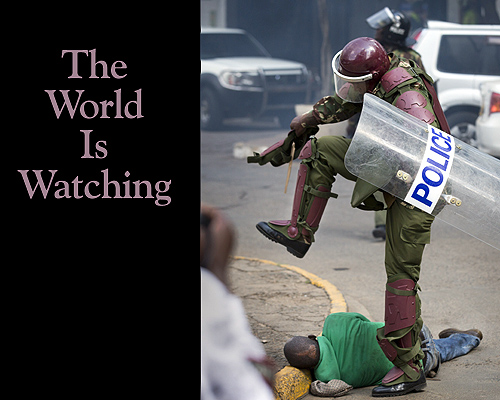
kenyanpoliceIf the Kenyan police don’t clean up their act for next Monday’s protests, tourists should pull out.

Yesterday’s police brutality in Kenya is unacceptable. Property can be protected and citizens safeguarded without beating to death someone who has fallen helplessly onto the street. It’s a despicable, cancerous mentality.

The police action yesterday was worse than in Ferguson or Baltimore or anywhere in the U.S. It reminds me of the late sixties during the anti-Vietnam War and Civil Rights’ demonstrations.

According to Kenya’s respected religious leaders a “volatile political environment” now threatens to undo the country.

Societies go through these difficult times. I’m very proud of having participated in the protests of the sixties and the result of those protests makes me even prouder and made my country stronger. I wish the Kenyan protesters well.

But now as then, in Kenya as worldwide, police action must be kept just and measured.

Kenya’s main opposition party, Cord, announced some time ago that every Monday until the August-2017 national elections, it would stage a demonstration outside the Nairobi downtown offices of the IEBC, the government entity that oversees elections. Cord opposes the current commissioners who it claims are biased against them.

Until the last several weeks these marches attracted hardly a few dozen people. They grew with the police action that clobbered them to a pulp and choked the city with tear gas.

Political leaders made an absolutely wrong decision to meet these rather benign protests with such force. Only now – possibly too late – are the leaders acknowledging negotiations over the IEBC should begin.

But riots are popping up all over the country now: in Kisumu, in the Kibera slum … even shutting down Nairobi university over an issue as pitiful as whether the students should be allowed to cook in their dorms.

Seemingly random police gunfire even broke a window in the government run coffee exchange office.

Yesterday the Nairobi mayor demanded the prosecution of police caught acting mercilessly brutal on hundreds of cameras and phones.

It’s too late to return to the simple issues that triggered all of these demonstrations. The central issue now is police brutality.

Good politicians and astute public leaders don’t allow issues to fester like this. Kenyan leaders did, and they’re now boxing themselves into a situation of relying more and more on the police.

Most of Kenya’s leaders are old, perhaps too old and arthritic to act with the deliberation and speed now needed to restrain the police.

If they don’t, the situation will spiral out of control. No amount of new police violence will stop it.

Broken Tool

Broken Tool

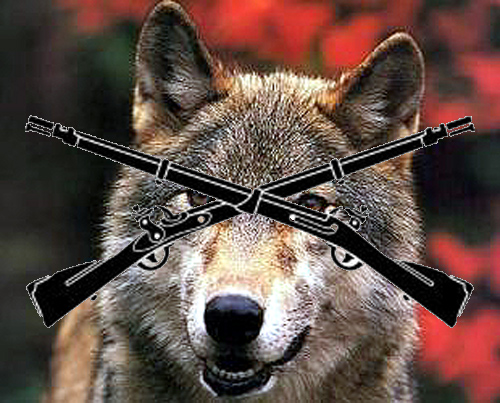
donthuntwolvesLegal hunting increases poaching and damages conservation.

Specifically, culling wolves in Wisconsin increases the illegal hunting of wolves, according to a breakthrough study published Wednesday.

Sports hunting enthusiasts from Africa to North America are wrong: regulated hunting is not a good tool for managing wildlife populations. If it once was, it’s now broken.

I once believed that big game hunting in Africa helped conservation. I listened first-hand to wannabe poachers who refused to enter the Maswa game reserve where big game hunting was sanctioned for fear of capture.

That was thirty years ago and has radically changed. Big game hunting in Tanzania became so commercial – so competitive – that it turned political and then corrupt. Good policies that regulated big game hunting thirty years ago are no longer applied. Bush meat poaching in Maswa is now widespread.

Understandably, African government attitudes towards hunting and conservation are often linked to foreign aid and tourism. Over the last thirty years world opinion on spots hunting has moved distinctly in opposition even while the number of sports hunters increased.

So African governments are beginning to ban all sports hunting. Botswana made the decision two years ago. Kenya banned hunting in 1986.

Zambia banned hunting, then unbanned it, now is considering rebanning it, together with Namibia.

It’s not a great leap to go from the specific Wisconsin study of wolves to the broader generalization that sports hunting everywhere is hurting conservation.

The study was jointly conducted by two professors from areas with controversial wolf predation: Wisconsin and Sweden. They carefully analyzed a lot of public data collected in Wisconsin over a period that included both complete wolf protection (no hunting at all allowed), to sanctioned government culling, to proposed regulated sports hunting.

At the very least, “We’ve undermined several pillars of the argument that hunting helps conservation,” the New York Times concluded from an interview with one of the scientists.

According to the study synopsis: “We show that allowing wolf … culling was substantially more likely to increase poaching than reduce it.”

The study has already raised a lot of ire and less than a week after its publication public institutions like the University of Utah are threatening to conduct studies to counter the conclusions.

Sports hunting has become so emotional exactly because public policy became so political. It’s plausible that Bernie Sanders won’t make the finish line because of his position on sports hunting and gun ownership.

So I find it difficult to present the topic within the confines of conservation, because reactions and positions become so emotive. I find myself sucked into the political arena even though I know the overwhelming motivation should be conservation.

On the other hand if my firm belief like this study is correct, that sports hunting in a modern world hurts conservation, is the politicization simply a successful ploy to delay urgent action?

Leave the whirlpool of politics then take a careful look at this study (and others). Climate change is happening so fast, wildlife management policies are so political, that never the twain shall meet … in time.

Wolves is a perfect example. Overall public policy in the U.S. in the last conservative era has seriously jeopardized the wildlife management plans that brought wolves in North America back from the brink. Now with populations regaining some health, hunters are regaining control, just as Climate Change is gaining control.

Today, in our marred and fractured world, hunting hurts conservation.

Smelly Puffball Trumpets

Smelly Puffball Trumpets

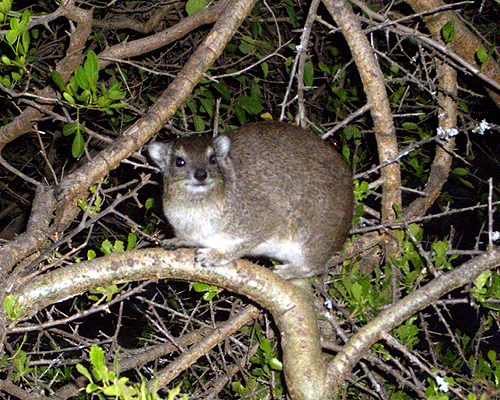
hyrax.650.jimToday, Friday the 13th, I formally apologize to all my readers and past misinformed clients. Turns out that, in fact, elephants are related to hyraxes.

Fifteen hundred rock hyraxes of average weight equals one elephant of average weight but in terms of actual volume, the tree hyraxes’ screeching call approaches the same decibel level of a juvenile elephant trumpeting.

The old safari guide’s myth, sui generis, is reborn! Let it forever prosper. Be damned further negative attempts at phylogenetic propaganda, or put another way remove the whiskey from the camp fire.

I don’t have to tell anyone what an elephant is, (except perhaps a Republican but that’s a different blog). Hyraxes, also known as dassies, are ugly looking little fat African rodents characterized by an ability to freeze in situ with no fear of predation because they smell so bad.

For years and years and years, for longer than old men prefer to recount, we safari guides delighted customers when we discovered one of these smelly unmoving puffballs on a rock.

“So what do you think that is?” we’d ask with delight.

A rat? A giant guinea pig?

“No!” we exclaimed. “The relative of the elephant!”

No!!!!!! they countered, how magical is Africa anyway!

Very magical. We can say anything we like and it’s true! Anyway, that’s the way this story seemed to end about a decade ago when genetic analysis began to clarify the real world.

But the problem is that we safari guides prefer stories to studies, and we don’t read past a scientific title: Discordant Results.

“These discordant results suggest that the species diversification event that defined the three orders of Paenungulata occurred over a relatively short evolutionary time period,” remarked the study that made us all retreat quietly back to the camp fire.

“Discordant” is a big word, but we guides understood that one. We thought, incorrectly, that it was contradicting one of the first DNA studies which did, in fact, link hyraxes and elephant.

But … it really wasn’t.

Thanks to a loyal client and friend, who also fortunately happens to be a scientist, Stephen Farrand recently sent me a phylogenetic tree reinstating the great Safari Myth. It took only a few more exchanges of emails for me to realize how stupid I had been.

Now that I’ve returned to the scientific studies that originally turned all us guides away from story-telling, armed with a real scientist’s perspective, I can affirm that science is right.

About 99-96 million years ago in the late Cretaceous period (when dinosaurs were becoming supreme) there were three animals very closely related: an aquatic thing not similar to a dugong or manatee, the precursor to the mastodon, and an ox-size hyrax.

Those three animals certainly had to have had a common ancestor. Their snouts, trunks, toes and digestive track were all similar. They were and remain in the collective grouping or clade of taxonomic categories known as Paenungulata, or “almost ungulate.”

Then there were at least two radical evolutionary “pulses.” This means there was rapid evolutionary divergence, and believe me, Donald Trump can change his position six times in a minute, so you’ve got to believe that in the ensuing 90 million years they started not to look alike.

But the vestiges of shared holidays remain: that little smelly puffball with a ridiculously screeching voice has a 6-month gestation period. It still has the same number of toes as an elephant. Its extended snout is almost a trunk.

And it is, and forever will be, one of the best stories we old guides have!