Pathetic Fear of the Wounded

Pathetic Fear of the Wounded

East Africa: beware! You are reacting to the fall of bin Laden like a Republican U.S. politician, and you should know by now that’s absurd.

Until now I’ve felt that East Africa had handled terrorism threats – particularly from Al-Qaeda and its franchises – better than the U.S. But that may be changing now that bin Laden is dead and East Africa is emerging as a powerful young society.

East Africa has probably suffered as much if not more from the machinations of Al-Qaeda than the U.S. Don’t forget: it was the embassies in Kenya and Tanzania that were blown up in 1998 by Al-Qaeda that presaged 9/11.

Fringe Muslims had been blowing up things in Kenya since the early 1960s when the then Block Norfolk Hotel was bombed because it was owned by Jews. Somali shares a 500k border with Kenya, and Al-Shabab (Al-Qaeda in Somalia) controls much of it. During the World Cup last year almost 100 people were killed when two sports bars in Kampala were blown to smithereens because Ugandan troops aid a UN peacekeeping effort in Somalia.

And there’s much, much more. I won’t be foolish enough to count up the bodies, East Africa vs. the U.S. from Al-Qaeda, but the comparison is serious.

And until Obama, American politicians used terrorism incidents to beef up the military industrial complex and prop up their own careers. Sounds harsh? Yes, it is terribly harsh, but it is not spurious, it’s true.

The incredible difference in the way the Obama administration has handled the end of Osama, compared to previous (mostly Republican) administrations that used torture, disseminated grizzly pictures and turned our national security into a contest for new MnM colors, tells me that we’re finally getting it right.

Ideas, Joe, not guns and their human debris. Plans, not fear.

But now I’m worried that East Africa is following the same wrong course that America followed in the past.

“As the world celebrated the killing of Al Qaeda leader Osama bin Laden in Pakistan Sunday by US Special Forces, East Africa stared at a possible new political nightmare,” warned popular East African columnist Charles Onyango-Obbo in an OpEd this weekend.

Onyango went on to terrify his readers with the same balderdash dumb politicians have used for centuries: fear of the wounded devil. Wounded but not killed, his vengeance becomes greater than ever.

“Most analysts agree that the Al Qaeda threat has not been buried with him,” Onyango writes of the obvious, even though it isn’t. Many analysts believe this and many other successes against terrorism recently herald the beginning of the end of Al-Qaeda.

Terrorism expert Peter Bergen claimed on CNN the bin Ladens’ death marked “the end of the war on terror” and a number of experts as critical as Foreign Policy’s Daveed Gartenstein-Ross cautiously agree.

I don’t think it’s necessarily that definitive, but my point is that there is not universal certainty among those who should know, that bin Laden’s death increases the threat level of terrorism anywhere .. including in East Africa.

The most repressive government in East Africa, was the most enthusiastic about the “new threats.” Details hadn’t even been released about Osama’s demise when on May 2 the Ugandan government “stressed the need to beef up security following the killing of al-Qaeda leader Osama bin Laden. Matia Kasaija, the internal affairs state ministersaid Uganda should not be caught unaware.”

It’s an old tactic, for morally bereft governments and uncreative journalists: scare the hell out of the audience to get their loyalty and attention.

It’s what we did in America for nearly a generation, and we now realize what a terrible mistake that was.

East Africa, beware. Don’t jeopardize reality just to score some extra points.
How Much is One Worth?

How Much is One Worth?

A movie deal? A bale of cotton? One Lost Generation?
No trillion dollar wars got Osama. Somebody ratted. Some chink in his anti-$25 million fortress cracked and it wasn’t from a drone and sure wasn’t from water boarding. The African Awakening is the same. It’s ideas, Joe, not guns.

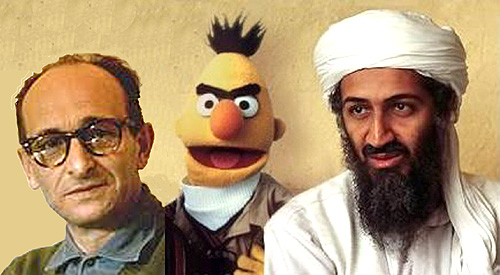
Adolf Eichmann killed a lot more people than Osama bin-Laden and Israel knew he fled to Argentina, which was not exactly a stable country in the 1950s. In about the same time it took us to find Osama, Israel found Eichmann, put him on trial and hanged him.

Neo-Nazi sentiment was running high in Argentina at the time. In fact, you could argue Senator Joseph McCarthy tried to import it to the U.S. In fact, neo-Nazi sentiments in pockets around the world from Russia to South Africa was not so dissimilar to the so-called “franchises” of Al-Qaeda that created shoe bombers and Times Square crazies.

How many wars did Israel fight to find him? None.

How much money did Israel use to bring him to justice? Probably not a trillion dollars.

How much did Israel’s education, cancer research, foreign policy initiatives, high speed rail suffer to find Eichmann? (They don’t have high speed rail, sorry.)

Radio Free Europe’s Robert Tait puts it right this way:
“The timing of Osama bin Laden’s passing [coincides] with the collapse … of hated autocratic Arab regimes in the face of popular demand.” Tait sees Osama’s discovery and death, and the African Awakening as a “confluence of events.”

Let’s go one step further. It isn’t coincidental, as confluences could be. It’s causal. It’s a reasonable outcome of the world changing in a really good way.

What ISI or Pakistani military thug decided to if not rat on the monster at least ratchet down some of his protection, because Darth Vader was having trouble paying protection?

What double-agent spilled the beans last September, because he really didn’t want to become a martyr, after all.

Martyrs? What’s that? How much do they get paid an hour?

Good lord, how much American energy and lost opportunities have been lost in my lifetime pursuing military and ideological black holes? Who really cares, today, that Vietnam is communistic? Call me, I’ve got a great deal on a Mekong Cruise.

Give it up, Senator Graham. The world will be a better place, and America might just be able to reemerge.

Linguistic Source Code

Linguistic Source Code

By Conor Godgrey on April 29, 2011
An article recently published in the journal Science on linguistic diversity echoes an earlier article about the decline of native languages in South Africa.

Linguists had long since decided that searching for a root ancestral language, the mother of all languages if you will, was either ridiculous or moot.

Until now.

Renowned linguist Dr. Quentin D. Atkinson applied techniques usually reserved for studying genetics to the study of language.

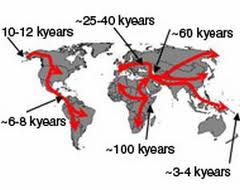
Migration from Africa
His theory goes something like this: it is well documented that genetic diversity decreased as human beings moved further from the African continent.

This occurred because small (genetically more similar) sub groups would break off of the main thrust of the various migrations and settle a specific area.

Dr. Quentin posited that language might have experienced a similar homogenization as languages traveled further and further from Africa.

He did not measure this using words, but phonemes, the basic building blocks of language.

A phoneme is the “smallest segmental unit of sound employed to form meaningful contrasts between utterances.”

In other words, the basic sounds that make up more complicated utterances like syllables and words.

It turns out that linguistic diversity, as determined by the number of phonemes, does indeed decline in relation to how far a language developed from Africa.

The New York Times cited several examples from the full study: “Some of the click-using languages of Africa have more than 100 phonemes, whereas Hawaiian, toward the far end of the human migration route out of Africa, has only 13. English has about 45 phonemes.”

Fascinating stuff.

Now 50,000 years later, the genetic offspring of those migrating ancestors have released the phoneme-inferior but immensely powerful English language to homogenize the source language(s)!

As noted in the Economist article, native (an incredibly relative term) South African languages are jeopardized by the ubiquity and power of English (mother tongue for 8% of South Africans).

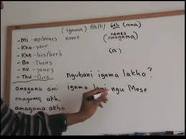
Zulu Lesson
Khosian and Bantu languages alike are unlikely to survive as the mother tongue of most South Africans in six or seven generations unless the government acts on its rhetoric and takes steps to enforce their use in schools.

I am unsure this is even a good idea.

It would only work in incredibly homogenous parts of South Africa, and there is no denying that English offers more economic advantages than Zulu or Khosa—who is the government to tell people that they cannot educate their children in the most economically favorable conditions possible?

For me, thinking about Africa as a “source” is incredibly inspiring; but modern adults should not be saddled with the burden of protecting the source code while missing out on real-life opportunities.

La Francophonie

La Francophonie

By Conor Godfrey on April 21, 2011

Today was the final day of a festival for La Francophonie in Washington, DC.

Story tellers-book signings-movies-wine- food-you get the idea.

La nuit du Conte, or story telling night, was especially good.

I enjoyed several of the events, but my time in West Africa made me struggle with the entire concept
of la Francophonie.

I mean—why celebrate shared pain? Was France not the colonizer, the unlawful, insensible oppressor?

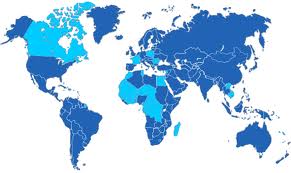
In theory, la Francophonie refers to communities all over the world united by the use of the French language (either in the home, or politics, or school, or commerce, etc..), and further, posits a sense of shared identity based on language and other cultural traits.

La Francophonie

I have been to a number of far flung parts of la Francophonie—several countries in French speaking West Africa, Cambodia, Montreal, and France, and through work I have met Cajuns and Burundians, Belgians and Swiss, and several other Francophones to boot, and it is 100% true that speaking French binds these communities together on a level that exceeds simply ease of communication.

For whatever reason, I bond with people from Togo or Burkina far faster than people from Ghana or Nigeria even if the French speaking Togolease and/or Burkinabe converse fluently in English.

However, the notion of La Francophonie makes West Africans schizophrenic.

The same educated Guineans or Senegalese who berate the French every chance they get for interfering in West African politics, or for the crappy job they did colonizing West Africa, also place tremendous stock in their personal ability to speak the French ‘de Moliere’.

The wealthy send their children to France to be educated, and congregate at France-Afrique cultural events.

What about the rest of la Francophonie?

What do older Cambodians and Haitians have in common?

What do Cajuns from New Orleans share with Belgians?

Or Burundians with Caribbean islanders?

I ‘m tempted to say nothing, except that I have seen the magic of the French language work time and time again.

I can’t bring myself to call la Francophonie a scar held in common, nor can I explain it as a shared memory of pain—it is more complicated than that.

From the very beginning, the French colonies understood la Francophonie differently.

Léopold Sédar Senghor (President of Senegal), Hamani Diori (President of Niger), Norodom Sihanouk (Head of State Cambodia), Jean-Marc Léger (Leading party member, Canada) all yearned to belong to the French community, even as they all struggled with their own national identities.

Seku Toure (President of Guinee) and several others staked their reputations on separating themselves form anything smacking of French-ness

Seku even banned French in schools, and attempted to teach Guinean school children in their local languages.

This of course led to a half generation of children torn between French and their mother tongue and achieving a high level in neither.

I suppose there is nothing intrinsically abnormal with celebrating shared ties even when those ties are buried in psychological wounds.

Many U.S. elites aspired to British culture long after the American Revolution ended.

I guess I was so convinced in the intrinsic value of West African cultures that I lost sight of the fact that culture is never static—societies evolve and adapt to new influences, be they good, bad or indifferent.

The fact that the French exerted tremendous influence on West African societies might simply make those tapestries richer.

When I think of the Bambara civilization in Mali, or a number of Fertile crescent or South American societies, I always think of them as being diluted by foreign (usually European) invaders, but the truth is those societies were being invaded or influenced by numerous other societies long before Europeans set foot on their shores.

La Francophone can be repossessed and re-defined by the communities that belong—it does not have to be a shared memory of subservience.

Lutheran Miracles in Tanzania

Lutheran Miracles in Tanzania

Is it faith that heals?
Does unmitigated faith cure, kill, lead or mislead to victory? Ask the tens of thousands of people flocking to a faith healer near the Serengeti. Or ask the ragtag fighters pushing into Sirte. It’s all the same. And who are we to interrupt the jihad?

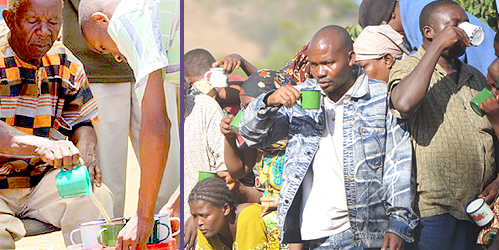
An endless line of cars, bikes, walkers trekking into a remote mountain location near the Serengeti in Tanzania has caused turmoil in Tanzania’s government, eight traffic fatalities, more than 50 deaths of those waiting for the “miracle cure,” and raised serous questions about the role of traditional medicine in Africa.

It may be hard to believe 76-year old Lutheran pastor, Ambilikile Mwasapile, that he can cure everything from AIDS to diabetes to all forms of cancer for a 30¢ cup of herbal medicine “touched by God”, but nothing seems to deter an unprecedented pilgrimage into the Tanzanian bush.

Tanzania is a very superstitious society, and there are healers and medicine men everywhere. But to my knowledge this is the first time that established, traditional clerics have supported such an individual. Monday, Mwasapile gained support from the Evangelical Lutheran Church in Tanzania (ELCT). Western trained Bishop Thomas Laizer told one of Tanzania’s major newspapers that he would begin raising funds to build a large healing center that could better serve the thousands of people seeking treatment daily.

This ideological breakthrough followed Sunday’s decision by the Tanzanian government to send paramilitary troops into the remote area to stop further lines of cars, trucks and helicopters from visiting “Babu,” as Mwasapile has been affectionately named. The government said this was only a temporary halt. Needed to bring some kind of stability to a pilgrimage clearly getting out of hand.

But the humanitarian move by the government may have backfired. Not only did the established Lutheran church then issue its unequivocal support, but Parliament got uncharacteristically rattled. Member of Parliament Steven Ngonyani told the government “Hands off!” the work of the healer.

“The government …should show its support to him and not break his heart by imposing modern methodologies… What has Tanzania Food and Drug Agency to do with regulating the works of a traditional healer?”

According to Nairobi’s Daily Nation 24,000 people were lined up and waiting for the cup of elixir Saturday night. The BBC said the line of cars, trucks and bicycles was more than 15 miles long.

People wait for days to pay Tsh 500 (about 30 U.S. cents) to drink a cup of tea brewed from a root more commonly used as a poison, personally handed to them by Babu himself. In fact, Babu claims that if anyone else brews the tea or hands it out, it won’t work.

There are no hotels or hostels in the area and sanitary conditions are appalling. Businessmen from the cities have set up tent camps offering bottled water and places to sleep at outlandish prices.

The deaths and injuries to those waiting forced the government’s hand. Most of the deaths are of persons who were dying and had been whisked out of traditional hospitals by relatives and transported into this rugged, remote and mountainous area of northern Tanzania.

Reports that all of Tanzania’s main government officials, including President Jakaya Kikwete, as well as officials from Oman and the Emirates had come to take the cure, remain unconfirmed yet strangely undenied as well. And helicopters do arrive regularly with persons who break the queue by paying ten times the normal rate (Tsh 5000, about $3.50).

I cannot find a single published testament that the cure works, despite my own employees in Tanzania recounting many stories of relatives and friends who have been cured of a whole range of disease. But no one will come on record. Neither will the President of Tanzania deny the widely circulated rumor that he’s taken the cure.

On record are physicians decrying the hoax (see YouTube below), but none have so far published their skepticism locally.

The 76-year old cleric has a Facebook page that is – remarkably – well serviced for an old man who is supposed to be handing cups of cure to supplicants for 12 hours a day. All the entries I could translate were requests for the cure; I didn’t find one testament to being cured.

Nor have journalists diligent to gather evidence found any that the cures are working.

On my safari last week into the Serengeti, we saw trucks and cars stuffed with clearly sick people in an unending journey into this remote wilderness.

Tanzania is a very superstitious place. The most educated Tanzanian remains worried all his life that he’ll be cursed. My Mzungu (white, European) boss for many years in Tanzania regularly visited Maasailand for herbs. Some of the finest tourist lodges in the country refer to themselves as “Spas” dispensing herbal remedies.

The tsunami of optimism breaking over earth at the moment comes not without the turmoil of death and destruction. It is this same dialectic that infuses the thousands of sick people making the pilgrimage to the Serengeti.

Wandering children run over by cars, dying patients left on the side of the road, children “wailing and flailing as they were forced by their mothers to swallow the concoction.”

What the heaven does this mean?

That faith heals?
That people are desperate?
That the spirits rattling the world at the moment are alive and well?
That freedom and democracy will follow the slaughter of Tiananmen Square. That transparent and uncorrupt government will now rule Egypt. That despots like Gaddafi will be replaced by Mahatma Gandhis.

That faith in the struggle is the single most important ingredient to victory?

Is there anything wrong with this?

Facebook

Facebook

by Conor Godfrey on March 25, 2011

I hate to give Facebook anymore publicity then it already gets, but a post on Online Africa was interesting enough to bring to your attention.

In 2010, Facebook gained its 3 millionth member in South Africa.

That means that Facebook use has been growing at near 25% for at least the last two years. See this post by Eshaam Rabaney for a more detailed breakdown.

Predictably, this growth has been most intense among 18-25 years olds.

However, U.S. readers should remember how quickly Facebook spread from young socialites, to their parents connecting with old friends, and even to the grandparent generation connecting with their tech savvy grandkids.

African Presidents are even adopting Facebook! Goodluck Jonathan in Nigeria is particularly active, as are a number of South African politicians.

Scroll to the bottom of this Online Africa post to connect directly to the FB pages of African leaders. I would go ahead and friend all of them with public profiles.

Presidential Facebook Shots:

Lets check out the two latest posts from President Goodluck Jonathan of Nigeria:

“In keeping with promising less and delivering more, I promised revival of our railways. If you live near tracks, you may have noticed that promise is now a reality. Trains are now gradually getting back on tracks. We met a rail service requesting attention and gave it support. It is the same way that we will bring life to every sector in Nigeria with your help. GEJ”

This post received 2498 comments, and 1798 “likes.”

“There are only two types of people in Nigeria: Good or Bad and not Northerners or Southerners.Assess people by their character which they control not by their place of origin which they cannot control. God made us and placed us in the locality where we were born. To discriminate against any human based on place of origin is to question the wisdom of God. And the wisdom of God is beyond the wisdom of man. GEJ”

This post received 3122 comments, and 3201 “likes.”

Embattled Ivorian Laurent Gbagbo has also been rallying the troops on FaceBook.

South Africa is far ahead of the rest of the continent in terms of usage (Egypt excepted), but some other countries are catching up fast—very fast. Ghana’s number of FaceBook users grew by 9.6% from February to March 2010! Morocco (7.6%) Tunisia (7.7), Nigeria (6%), Kenya (2.4%). As internet penetration increases these numbers are likely to increase dramatically. Find all the data here.

So what does this mean to Africa? Is it really important that South African teenagers are even more aware than they already were of the minute details of each other’s lives?

Yes – absolutely.

Anecdotally, the need to get Facebook is in many ways driving internet adoption among the younger generation.

These Internet and communications skills will make young Africans far more competitive in the information economy.

While the primary motivation for adopting Facebook may be social, the commercial implications of this trend are immense.

In more developed markets like the U.S or U.K. Facebook advertising is already drowning out traditional media.

The site is also more then simply a distribution channel.

Modern consumers want to feel a connection with the people behind the products they buy.

Facebook allows companies to post videos introducing potential consumers to their employees, or pictures and profiles that capture the company spirit.

Creating this type of connection with customers is no longer just a nice touch—its required.

The political implications of this type of media have already been discussed in this space, but I can’t resist one parting shot…look here for status updates from Monsieur Mubarak.

So You Want to Write on Africa…

So You Want to Write on Africa…

by Conor Godfrey on March 17, 2011

I was going to continue exploring why some people, or states, support pariah regimes (this time with a more sympathetic view towards the supporters), but I was side tracked by a wonderful article from GRANTA magazine entitled “How to Write About Africa”. (The article is actually from a while back)

Please read it. It is not so long, and it will make you laugh, and maybe cry a little on the inside.

“How to Write About Africa” is a spoof how-to for would be journalists or novelists writing on Africa.

It offers advice like; “Never have a picture of a well-adjusted African on the cover of your book, or in it, unless that African has won the Nobel Prize.

An AK-47, prominent ribs, naked breasts: use these.”

These are taboos; “ordinary domestic scenes, love between Africans (unless a death is involved), references to African writers or intellectuals, mention of school-going children who are not suffering from yaws or Ebola fever or female genital mutilation”.

One last excerpt.

After forbidding would-be writers to discuss normal African family life or run-of-the mill dreams and ambitions, the author states that…”Animals, on the other hand, must be treated as well rounded, complex characters.

They speak (or grunt while tossing their manes proudly) and have names, ambitions and desires.

They also have family values: see how lions teach their children?

Elephants are caring, and are good feminists or dignified patriarchs. So are gorillas.

Never, ever say anything negative about an elephant or a gorilla.”

You get the idea.

In the last few years I think serious journalists have begun to realize their Africa play book was not only out of date; it was absurd.

African authors, inventors, artists and other public figures have brought actual African perspectives to the fore, and BBC and RFI programs on Africa now routinely feature African commentators. From time to time BBCs African perspective podcast is quite good.

I remember the first time an African-American friend of mine took me through Disney movies and pointed out how all the lazy, slovenly but good natured characters with bad diction had southern African American accents, all the hyper, overly risky and violent prone characters had Latin American accents, and suspicious, shifty eyed traders inevitably sounded Middle Eastern.

I wondered how my entire childhood this blatant negative stereotyping escaped me….

(By the way- Disney heard this criticism loud and clear, their modern stuff has been much better. But if you haven’t been given this tour, go back and check out the classics like Jungle Book, Dumbo, Aristocats, Aladdin, the Little Mermaid…you will cringe.)

I get that same feeling now when I read articles on Africa that fit the GRANTA piece’s spoof advice.

But Africa writing has come a long way in the last five or so years…

This is what New York Times writing on health looked like in 2004.

This is the tone of 2010.

This is what an article on African education looked like in 2004.

This is what it looked like in 2010.

I am obviously cherry-picking from hundreds of articles, but in my opinion these are reasonably representative samples.

When you read the 2004 pieces you might say- “well how can someone talk about this awful situation, be it health or education, in a positive way?”

That is not the journalist’s job. The state of health and education in many African countries was, and still is, in need of serious work.

But in 2004 the journalists rolled around and wallowed in the helplessness and misery of it all.

The 2010 pieces touched on the barriers to health and education, and then went on to evaluate what people are doing about it.

In other words, I am not asking that people write only positive articles about Africa, simply that they use the same intellectual and investigative tools that they apply to other regions of the world.

A nuanced description of the problem- a 3d portrait of some of the people it affects—a briefing on the obstacles—and an overview of how people/institutions are dealing with it.

Spare me the wallowing.

As always, I am exempting the horrible situations in some conflict zones where misery over-rides other aspects of life. These are, thankfully, few and far between.

Testament to the Twevolution!

Testament to the Twevolution!

Remember the joke about grandma asking JoJo how to use her remote? Well, get ready you old fogies. Here’s a cheat sheet for the software powering the current Twevolution, and take stock: it comes from Kenya!

That’s right, the Twevolution of Tahrir Square, Pearl Square and likely now even Tiananmen Square is powered by open-source (that means “free”) software from Nairobi. Called Ushahidi (“testament” in Swahili) it is the technical foundation of the revolutions organized throughout Arabia, today.

This remarkable software – and its clones and offshoots – is readjusting world order and I try to simplify it for you grandmas and grandpas below. But the important point of this story isn’t how it works. It’s how it caught world order “off guard.”

I use that cliche, off guard, to represent the dozens of other cliches the media, our government, and most world authorities used to express their surprise at what is happening in Arabia .. (and perhaps much further abroad, like China).

It was a surprise, because this readjustment of world order isn’t being accomplished by tanks and fighter bombers, or even by soldiers or police. It’s being fought and won by the deft manipulation of information. And that is something with little capital cost and virtually no military history. You don’t have to own an oil well to power a street protest.

But you probably now have to have Ushahidi.

Ushahidi was created by several Kenyan kids, spearheaded by the IT genius Ory Okollah, after the 2007 election violence. Okollah is currently the manager of policy for Google in Africa.

What that basic still open-source software does is collect information feeds, organizes and analyzes them.

So, for example, tweets on Twitter, SMS from phones, good ole emails from Google, pictures from Flickr, etc., etc. The software collects them, usually creates a map showing where they come from, and lets manipulators generate outcomes from the analyzed information.

Are protesters being fired on? Where should volunteer medics go? What part of the city do the thugs hold? Who has the hot dogs? Is there a safe place for kids? Has the weather front with rain started in the north?

The more sophisticated software allows organizers to anticipate outcomes based on “if” situations. (In computer jargon, we call it “run scenarios.”)

“If we block the north street into Tahir Square, will we be able to hold the Square?” Ushahidi and its offshoots quickly calculates from the hundreds of thousands of digital feeds that no, in fact, it’s the west street that is most vulnerable and also most able to be secured.

And beyond street strategies, these families of software ask very sophisticated questions.

How many serious sessions has Representative Pete Sessions missed after slipping sideways out of his swearing-in? How did he vote, who voted with him, did it matter, and are yellow lollipops still being sold at his 7-11?

“If we remove the mandate from the Health Care bill, will there still be enough support to make it work?”

FrontlineSMS, Foursquare, Maemo, Waze are some of the hundreds (thousands?) of open-source (remember that means “free”) software that organizes vast amounts of information sent in bit by bit from individual users.

The easiest example is Waze. Waze is used by the under-thirties who commute by car in urban areas. Iinfinitely better than the over-thirties 5-minutes-after-the-hour talk radio report created from an expensive helicopter above the highways, Waze simply collects the real-time whereabouts of its users, figures out who’s getting to work fastest and tells everyone else how to do it!

Ushahidi in its more sophisticated forms organizes all these software organizers. Into one gigantic people power unit.

The manipulators of these sets of software that organizes other organizers are the kids who started Twevolution and ultimately secured Tahrir Square and toppled Hosni Mubarak. They are the possibly poor, possibly underfed, pointedly unarmed but indisputably smart youth of today.

They are our new leaders.

Thursday, what this all means for us old folks. It’s quite astounding!

Twevolution in South Africa?

Twevolution in South Africa?

South African President Jacob Zuma dancing with his wife, Ms.
.... oh, sorry can't remember which one.
Twevolution is sweeping Africa’s dictators away. But could it go further? Is there a chance that pretty boy South Africa is next in line?

South Africa? you wonder out loud. Didn’t I say that South Africa started all this almost twenty years ago? [Yes] Haven’t I often hailed the new country’s constitution as nearly perfect? [Yes] Didn’t I write that its domestic policy was nicely redistributing wealth [Yes] and that its foreign policy particularly towards its neighbors was deftly professional?

Yes-Yes-Yes…but.

It could be that South Africa is trying to be such an exemplary modern society that the last vestige of nondemocratic states will be swept away by the Twevolution. And this last vestige is the authoritarian if not autocratic power held by the majority party in the government, the ANC (African National Congress).

And this nearly impenetrable wall of power (the ANC has continually held two-thirds or more of Parliament since Nelson Mandela first became president) might just be cracking by some of the most juvenile political pandering ever imagined.

It’s hard to fault Mandela for anything, much less astronomical majorities in the government he brought to power. But Mandela was not without his own political nasties. The relationship (or not) that he held (or not) with his wife, who at the time was almost equally powerful, we now recognize as tools to constrain the masses.

By most accounts Winnie Mandela would have been right up there with the Mubarak thugs that stormed Tahrir Square on camels. Winnie was convicted of murder and kidnaping but never served a day in jail.

And Mandela’s favor placing went unchecked for a long time. His close revolutionary associate, Cyril Ramaphosa, was set up in new South African businesses
with a patent disregard for either skills or capital once it was clear he would never become president.

Mandela was followed by another ANC miracle worker, Thabo Mbeki. Thabo was less star-strutted than Mandela so less scrutinized, but whatever good he did will forever be eclipsed in history by his paramount achievement: discovering that AIDS was not a virus.

Mbeki told his fellow countrymen to shower well after sex to avoid AIDS. Some claimed this was so he could more easily adjudicate claims against international insurance companies but I think it was to please the masses, develop their support. Whatever it was, it was criminal.

But today we have the biggest oaf of all: Jacob Zuma. Number Three President is famous for having ten wives, but the fact is it may be eleven or twelve. Protocol officials around the world never know what the state dinner place cards should read.

Zuma hails his ancient culture, but I’d put it otherwise: he hails vote getting.

And now Zuma has topped the charts . Last week while Egypt was readjusting world power, Zuma was creating his own eternal life.

“When you vote for the ANC,” he told a rally near Cape Town last week, “you are choosing to go to heaven. When you don’t vote for the ANC, you should know that you are choosing that man who carries a fork… who cooks people.”

Pardoning (or not) a powerful wife, setting your cronies up to be billionaires, denying the science of the disease AIDS that’s killing your people, flaunting culture and preaching eternal life only to those who follow you … none of these juvenile if neurotic acts has managed to derail South Africa’s basically good trajectory into the modern world.

But Twevolution is youth driven, and youth in Africa are incredibly intelligent. You can take just so much nonsense before realizing how distracting it can be from dealing with the pressing issues at hand.

Twevolution may not topple the South African system, but there are growing sounds that it just may topple the idiots at the top

Peace is IN!

Peace is IN!


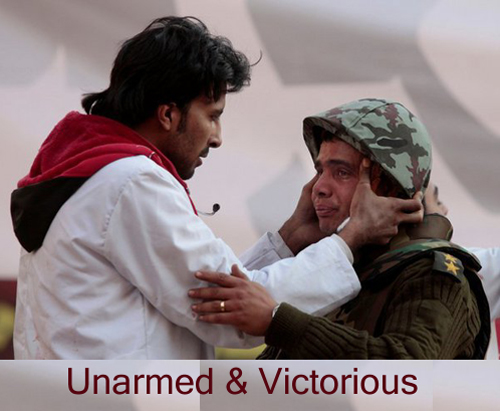
There were people hurt. There were people killed. But the victims were not the losers in a fight, because…they didn’t fight. They protested. Peacefully. Martin Luther King would have been proud. The successful Egyptian revolution was one of peaceful protest.

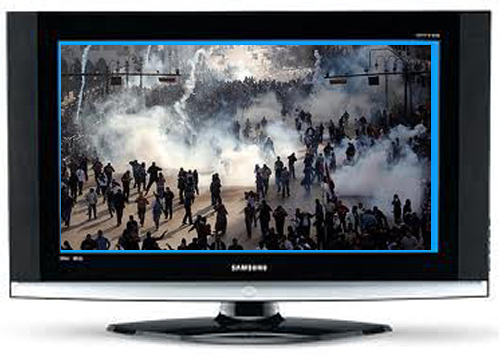
I know you’ve seen pictures of bloodied faces and bodies being carried, and tear gas wafting through the scene. But please keep in mind there were millions of people protesting. The “death toll” is around 400 and a significantly large proportion of these were actually outside Cairo where (a) there are far fewer educated people and (b) any kind of meaningful protest means anything at all.

Americans have a difficult time analyzing and gauging political change, because our own system is so befuddled by confusion. Take the health care issue, for example. To me and I hope the vast majority of sane onlookers, this is a baby step towards a society that guarantees the health of all its citizens. But I don’t have to remind you of how many think radically differently.

So we tend to listen to change that is evident and obvious and immediate, and I think we also sort of fear it. We are worried that change will take away or at least restrict the rights we currently enjoy, which are wonderfully substantial. So for the vast millions of Americans who still don’t know who Mubarak is much less Elbaradei or Wael Ghonim, they pay attention only when something of ultimate drama happens: death. That’s what TV is made of.

But the fact is that there were very, very few deaths compared to the demonstrations that took place. This is remarkable. Imagine the hundreds of thousands of unarmed and determined individuals who so believed in human rights that they stood upright against heavily armed security forces. Who were ready to sacrifice their safety for an idea. Fortunately, a ridiculously small proportion had to. In fact, it’s something of a testament to the restraint of the security forces and particularly the army that so few were hurt.

I remember my own days as a youthful protester in the 1960s, unarmed as the Egyptians were, charged by police as the Egyptians were, tear-gassed as the Egyptians were, shot at as the Egyptians were. And our few friends who were hurt and died were unarmed, as the few Egyptians who were hurt and unarmed.


There are literally hundreds of videos like the one above, showing hundreds and thousands of protesters, unarmed, demonstrating against highly armed government forces. But by their sheer numbers and naked sacrifice, they won. They’ve won round one.

In America especially we tend to focus on the violence of any event, for two main reasons: it’s wrong, and it makes good TV. But what every person must take so far from the Egyptian revolution is that given the hundreds of thousands of people involved, the millions ultimately, the amount of violence was unimaginably small.

It’s hard for Americans to imagine a dictator falling with so little violence. We are told our wars are waged against dictators, and the level of violence that follows our policy is legend. The number of our own soldiers killed much less locals in Afghanistan and Iraq to topple that regime numbers in the tens if not hundreds of thousands.

We can’t believe Egypt has changed regimes with fewer deaths in a month than America sustained monthly in Afghanistan and Iraq for years.

But it’s true. Grasp it and embrace it. Only good will come out of this. There will be many skeptics and cynics out there now saying, “Yes, but what will come next?” I’m not so naive as to suggest this revolution is over, completed. But I’m idealistic enough and optimistically hopeful enough to command the axiom that only good can come out of the power of peace.

Revolution on TV

Revolution on TV

So what’s more important: water or security? Egypt is as critically important to East Africa as to America, but it is America that is consumed with watching real-time developments there.

The infamous 1917 Balfour Declaration, which is arguably one of the diplomatic starting points for the current drama in Egypt, was not a singular British act. A series of British treaties about the use of the Nile River was thrust on East African countries about the same time as well.

The notorious 1929 treaty, and the brazen 1959 treaty (I say “brazen” because by 1959 Britain had already decided to give independence to most of East Africa) ceded the use of Nile waters, which arise in East Africa and flow through it, to Egypt.

Water use may be the most critical development tool left in the world. Yet as it stands now, Egypt has successfully enforced its treaties with East Africa, effectively denying Tanzania, Kenya, Uganda and the Sudan, sovereign use of the river.

Everyone in East Africa knows that a new Egyptian regime, particularly a democratic one, will be more disposed to reconsidering these one-way, counter-intuitive agreements.

So what happens in Egypt could have a much greater impact on the lives of East Africans than the lives of Americans.

Americans don’t have to worry about water. So we have found other things to worry about, the principal being terrorism. What happens in Egypt now is an intriguing chess came the outcome of which we fear will effect our security.

Yes, probably, but not as much as how it will effect the use of water in East Africa.

So why are Americans so much more consumed with what’s happening in Egypt than East Africans?

Because like so much in American life, we have turned the event into one of entertainment, and that it seems is our paramount endeavor.

And because the rest of the world struggles more. They know on a daily basis how to deal with true threats and denials of basic needs.

In America, today, nothing gets learned except as entertainment. Everything from new cancer drugs to space discoveries is presented as a movie. Incidental perhaps to what are truly our daily needs like a meal and a few breaths of fresh air, we have become so well off that to get our attention about anything we need good graphics and Dolby surround sound.

And this is also why we’re so obsessed with “security.” Because security guarantees uninterrupted entertainment.

I confess. I’ve got Aljazeera streaming in the office right now, and I flip between CNN and MSNBC waiting for the figurative pyramids to fall. And then?

Anti-America Sentiment Grows

Anti-America Sentiment Grows


As Egypt’s struggles continue anti-American sentiment grows in places as far away and dear to me as Kenya. Some of this is envy of the powerful but some of it legitimately derides an unfair world order.

Yesterday a widely read blogger in Nairobi associated with one of its main talk radios warned Kenyans of “the rude awakening that has visited the people of Egypt” that their leaders have been “serving a foreign master’s agenda.”

And that master was, among a few others, America.

With bitterness that verged on vitriol, Solomon Gichira writes, “We all know one or two reasons as to why the world came running to our rescue after the 2007/8 election crisis… because they feared losing supplies from our flower or dairy industries among others. However, they will never package their interests that plainly.”

Gichira is referring to the massive intervention by mainly the U.S. and Britain following Kenya’s fraudulent 2007 elections. Led by Kofi Annan the international rescue of Kenya included more than $10 billion and supported first a power sharing deal between the two rival candidates for president and a range of incentives that led to Kenya’s new, excellent August 2010 constitution.

Gichira is dead wrong when he gets specific yet important because he represents a huge swath of public opinion in the educated developing world. Moreover, his general contention is right: world powers don’t do anything altruistically; it must be in self-interest.

U.K. and U.S. interests could care less if Manchester flower markets don’t have enough roses. A more important reason, “strategic interest” in polispeak, is Kenya’s geopolitical position in the war on terror. Kenya’s often superficially irritating actions in this regard, like allowing Omar al-Bashir into the country, detaining radical mullahs without trial, and letting military equipment sneak overland into the South Sudan, are all applauded silently in the halls of Westminster and Washington.

And Kenya’s overt actions with regards to the South Sudan and its constant border squabbles with whatever is left of Somali receive constant praise from the west.

These are the west’s true interests. But Gichira is right: it is an agenda dictated from abroad, one that is not necessarily wholly in Kenya’s interests.

Gichira’s account of the modern history of Egypt and its neighbors leaves something to be desired, but he basically underscores the botched handling of the “Jewish question” and the poor way that both Israel and subsequently Palestine were created by world powers. He rightly conveys in my opinion how Britain deftly relieved itself of Jewish prejudice by exporting it to the Middle East where it ferments worse today.

And he’s right on when berating Britain and France’s manipulation with the U.S. in the security council of the nascent Arab revolutions to overthrow potentates like Farouk, how this led to anti-American sentiment and Cold War support by Russia. That led, by the way, to those “revolutionary” regimes being subverted still again … just by the east, instead of the west.

So basically while I think like so many revolutionary enthusiasts Gichira misuses facts at his peril, his conclusions reflect the feelings of many of us progressives in the west: Developing world peoples have been mistreated mostly by being ignored, and when not ignored, by being used for “self-interest.”

The problem is that I don’t know how this could ever have been different. Big guys bully small guys. That’s our world order. And try as we do to elevate this morality, we just haven’t been able to yet.

“What is not told to the ordinary reader is that the Camp David agreement” Gichira writes “brought with it huge American goodies to the Egyptian leadership” including “financial and military support” and “America’s blind eye to oppression and suppression of any conscious or dissenting voices” in Egypt.

And so now for “the US and Tel Aviv administrations, the chicken have finally come to roost.”

Gichira now tells us that we will “painfully watch as you lose your Mubarak. Not to your well equipped American-Anglo-French-Jewish military muscle, but to the unarmed power of a dissenting population that has had enough of your meddling. At that point, you will remember that the silence Egyptians over these years of your misdeeds and myopic interest was not anything like an acceptance but a big lie.”

Powerful stuff.

I don’t like feeling the whipping boy in a geopolitical contest of David vs Goliath, but I am the American and Gichira is the Kenyan. In the global context of world history, I am the villain simply because I’ve been the privileged, and Gichira is the victim, simply because he’s been the less privileged.

I could apologize for my ancestors’ misdeeds, but I don’t know what would have been better, so I can’t apologize. I don’t know that there would have been a better way.

But what I do know now, thanks to the transparency and intellectual stimulation that gives rise to voices like Solomon Gichira, is that we can begin to act responsibly in a global way, right now. We can stop any overt or tacit support of the Mubarak regime. We can let the streets play out, because now, those Egyptians, like Gichira, are totally capable of handling their own affairs.

Let them come to power, and then let them deal with us. We, too, were once revolutionaries.

Government by the Smart Phone

Government by the Smart Phone

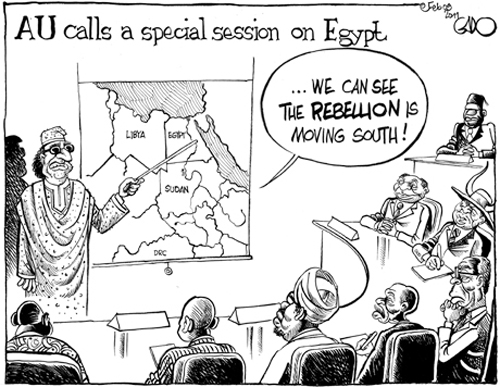
Nairobi cartoonist GADO mocks the African Union's gathering to discuss Egypt.
African governments are toppling because of smart phones. So what happens next? Are taxes set by tweets?

In the last several years significant revolutions happened in Kenya, the Sudan and Ivory Coast, and now Tunisia and Egypt. Africa is on the move; it’s changing faster than we understand.

No surprise to me. Just how fast it’s happening is what boggles the mind. It all seemed to begin with the end of apartheid in South Africa. That was a journey for those liberating that struggle that spanned a lifetime – not exactly fast.

Next in line was the Sudan, a troubled place to be sure, but the actual revolution that has led to a new country started only 6 years ago – again, not supersonic, but speeding up.

Then came Kenya. It’s revolution started in December, 2007, after a failed election and essentially came to fruition with a radically new constitution in August, 2010. Getting faster.

A failed election in the Ivory Coast has that country yet in the throes of radical change. Then Tunisia changed over a few weekends, and now Egypt, yet to play fully out.

The momentum for change has snowballed. And there are quite a few countries left. Tremors are being felt in Tanzania, Uganda, Algeria, Jordan and even sleepy cozy Morocco. If there were more people in Botswana, they would already have had a revolution, there, but instead a shouting match in Parliament will have to do.

What is happening? Dare I ask if Obama’s IT techniques to excite youth is now a model worldwide?

Writing in Kenya’s Daily Nation last week, Catholic University of East Africa professor Maurice Amutabi answered, “Though … Obama is the first known leader to successfully use the Internet … to ascend to power, his success is being emulated all over.”

“Students of history and political science are thrilled by the people power in Tunisia and Egypt. We have not seen anything like it before. It makes the Storming of the Bastille during the French Revolution look ordinary.”

Amutabi delves into this a little bit further. Motivated by less than 144 character tweets, it’s not exactly possible to rally an ideology. People power grows around very narrow goals:

Amutabi knows that the new, youthful forces “have nothing to do with religious zeal or fanaticism.” In fact, he claims, “These crowds do not have any ideology, apart from the fact that they want a change…”

YES WE CAN
CHANGE WE CAN DEPEND ON
.. are both sweet little tweets.

I was so intrigued by Amutabi’s oped that I emailed him for a further analysis. If such narrow goals can bring down governments that have been in power for portions of centuries, and if they’re done so by tweets, what comes next? What happens once people power succeeds?

Amutabi believes that the “tech-savvy” youth will continue to use their technique to vet leaders with greater depth “who are progressive enough to represent the interests of a wider of spectrum of society. The youth have a better chance to consult and reach a consensus on who is a good leader, largely because of ICT.”

Amutabi believes that current leaders arose to power on a series of misrepresentations of themselves. We all know the slogans of politicians worldwide: “This is what the people want me to do” etc etc. “I was elected by the people to” whatever.

Amutabi believes that today’s “information flow is faster and leaders cannot hide their true selves… People get to know about them long before they become prominent.”

So not just a small coterie of investigative journalists and their elite readers would have known that George Bush was a drunk and bankrupt sports club owner? And that would have done the trick?

Perhaps. Although I fear Amutabi’s enthusiasm for the current revolutionary change might discount too heavily an entrenched politic’s capacity to ignore the truth. In America even today there remains a sizeable portion of society who believes Obama was not born here.

But what I found most exciting if unsettling about Amutabi’s beliefs is once people power succeeds and puts its leaders in power, then what?

Must internet polling be used to pass every piece of legislation, for instance?

Will the populations expect to be consulted on every major issue that previously governments decided on their own?

“Yes,” Amutabi answered without hesitation. “The populations are alert to any changes and would demand accountability and transparency…. They have acquired new meaning of their power and gained a taste of strength in numbers and will not look back.”

Wow. This makes California referendums look like grade school elections for what dessert should be served for lunch.

“I believe they will push all the time until they get what they want,” Amutabi concludes. “The political landscape in Africa might never be the same again.”

Or anywhere there’s a smart phone.

Feed the Beast to Sleep

Feed the Beast to Sleep

What the fizzled Egyptian revolution tells us is that the power of the people rises not so much for freedom as for bread. And who am I but a fat and comfortable American to think there’s anything wrong with that?

Today’s demonstrations are pitiful by last week’s standards. It’s also more rigidly organized, capable of orchestrated violence. It’s a quickly maturing opposition that lost Round One. Round One’s heart and soul was people power; that’s gone. Next moves – if they exist at all – must be contemplated without people power.

People power has retreated to homes and businesses. Many workers want to start spending the 15% pay rises announced over the weekend by the Egyptian government. The more effete have the promises of political reform to solace them at night. “Free” is an adjective being attached to everything from the continuing protest to Hare Krishna dancing.

We know different, of course: our media celebrities are now confined to describing their confinements: the press has been muzzled as never before. There’s internet, again. There’s even the Google executive let out of jail. Yet Egypt progressives write feverishly of a crackdown of dissidents in serious high gear, now directed by the so-called people friendly army not police.

My style carries gloom, but also guilt. I fret about which is more important: the crackdown, the disheartened revolution, the recovery of most power by Mubarak with the same indecision about which kind bagel I should pull from my well-stocked pantry to toast.

Mubarak can’t afford 15% pay rises to a huge section of his population with pipe lines being blown up, tourists fleeing the country and capital evaporating. But don’t forget sugar daddy sitting just to the southeast. I suspect some remarkable new alliances between Egypt and Saudia Arabia are being worked out right now.

If sugar daddy runs out of sugar, that’s another story altogether. Bread digests quickly. If there’s not more in the days ahead, people power will rise, again.

But feed the beast long enough and it will go to sleep. The emasculation of rapid ideological change is a longer process. Sometimes it works quickly, like in China. And sometimes it works slowly, like in Zimbabwe.

But it always seems to work.

Twevolution in Egypt!

Twevolution in Egypt!

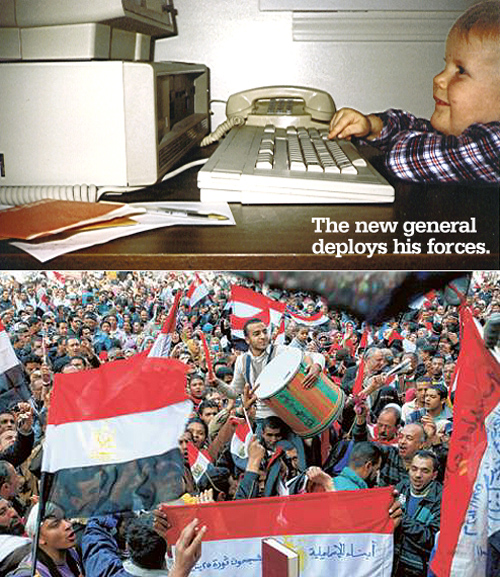
As this blog goes to press millions are at Tahrir Square just ending prayers. This mostly and remarkably peaceful revolution is a new kind. No longer revolution, but Twevolution!

Click here! This is a live twitter feed of the Revolution!

Peaceful attempts to topple governments in my lifetime have been mostly failures. The one possible exception was the toppling of Peru’s President Fujimora in 2000 although it was not just the people in the streets but Peru’s other arms of government including its military that wanted him gone.

But in all the other cases, government change only came after tremendous violence often involving foreign governments.

This appears to be different. Really different.

Woe to Boeing and Lockheed, but it seems that fighter bombers might have been replaced by….

Twitter. Facebook. YouTube and so much more!

The amateur video which follows was picked up by AlJazeera and probably did more than any other video to really fuel the revolution. It shows the first street confrontation on January 28 between protesters and police, finally won by the protesters.

The video below was created a week earlier by a single, courageous woman pleading with everyone to join her in protest. She challenges watchers with the memory of Mohammed Bouazizi, the Tunisian who self-immolated himself.

Peaceful protest in the past seemed to be destined for failure. How many bodies must fall in front of a tank before the phlanx of bodies succeeds? Buddhism and nonviolence has thus had a checkered history.

But until now, Buddhism and nonviolence lacked a winning tool.

There is an answer to “how many bodies” and Tahrir Square may just have them at this very minute. There is a calculus where not even a nuclear bomb can suppress a united protest.

When NBC reporter Richard Engel was asked on a live internet feed Wednesday night what strategy the anti-government protesters could possibly employ to counter the armed and carefully organized thugs fighting them, he hesitated, but then answered enthusiastically, “Information!”

That’s it! America is discombobulated by competing media pretending to report social will but actually governed by a need to produce entertainment. So even while we are in possession of the greatest technology skills and assets in the world, and while those were used to elect our first black president, I see them mostly coopted by our commercial priorities.

But not a place like Egypt. Desperation is very subjective. It’s completely fair to say that many in the U.S. feel as desperate trapped by the socio-economic system as Mohammed Bouazizi felt within his Tunisian society before he set himself on fire. But as that first video by that courageous young woman explains, there are alternatives in this highly connected world to removing yourself from society.

Mohammed’s action galvanized the desperation in his society. But not with steel and bullets, just with … Nielson Ratings!

Finally enough voices fell in line that their universal message could not be defeated even by overwhelming force.

Alive in Egypt is a consolidation site of videos, audio and tweets.

More skilled videos being created from around the world about the revolution can be found at Mibazaar.

“We Are All Khalid” is among Facebook’s most influential pages.

There are hundreds of sites like this one, and this one.

Was it Richard Engel who said it? This is the Information Revolution?