Acting Right

Acting Right

groove theoryWhy in America do we have national student sports contests, national science fairs, national spelling bees … but no national performance contests?

Africans know why: Because the American entertainment industry is a monopoly of big money and nepotistic connections and the arts are no longer being taught in schools.

“In Kenya,” Dr. Hassan Wario explains, “students become performers because of talent” nurtured in school.

Dr. Wario is the Kenyan Minister for Sports, Culture & the Arts. His portfolio in the cabinet is equal to that of any other cabinet minister.

The devastation Americans have wrecked upon the public school system in my life time is equivalent to the nukes dropped on Hiroshima and Nagasaki.

In fact, forget about the arts curriculum. America “is $46 billion a year behind what it should spend on building and repairing K-12″ just to have safe school rooms!

This week ended the massive student national drama festival in Kenya. In February my safari was passing through the town of Nyeri north of Nairobi and I wondered if there was a revolution going on.

It turned out it was a regional high school drama festival! It was the middle step in national competition held annually, just like for soccer and science.

Today the President of Kenya greets the national winners at Statehouse to congratulate them. This year’s national contest just ended yesterday.

The final round of plays, films, dance and musical performances drew 50,000 contestants! According to a local paper, it turned the relatively sleepy town of Meru in the Kenyan highlands into a “beehive of activity with hotels being fully booked and businessmen making a kill.”

It was, simply, as important a function of student growth as sports or science.

But in America we’re now decades away from this conversation. Kenya spends 21% of its federal budget on education. In America it’s less than 13% of the total budgets for the federal and all state governments.

So, yes, too little money is a part of the problem. Putting it a different way Americans believe that less of their resources should be spent on educating their children than Kenyans do. Finally, arts gets the shaft in America.

As a father and uncle to several successful entertainers I’ve often been grateful to their schools for getting them going. But they were among the privileged. They attended schools that – at least back then – sustained the arts. Even back then, many schools didn’t.

So Americans bifurcated potential entertainers into the haves and have-nots. This created a homogeneous pool of individuals from the privileged classes that now dominate American entertainment. No wonder we blame our media for our politics!

No question that the American performance industry is mammoth compared to Kenya’s, for example. But neither in my mind is there any question that today dramatic arts in Africa are more creative, less prone to formula, capable of greater risks and ergo, greater rewards. Moreover, the average Kenyan consumer nurtures an incredible range of performance, from lining up for Shakespeare festival tickets or improv comedy, or falling in love with vampires and Nobel Prize laureates at the same time!

I’m no entertainment critic, but I’ll tell you, Kenyan TV is much more creative and fun to watch than American TV.

Kenyans, well, just love …the arts!

Because – like here – it all begins in school.
Let the Animals Live

Let the Animals Live

girlionFor sure a melancholic tale: Lions survive by growing tame enough to live side-by-side with people.

Last night’s PBS premiere of ‘Wandering Lions’ is one of the best nature documentaries I’ve seen recently. It tells a hopeful story of India’s critically endangered lions.

The lion population in India for my entire life time has been contained to a small 100 sq. mile sanctuary in southern Gujarat state called Gir. Also over my life time a huge periphery, another 400 sq. miles, was created where people and wildlife coexist. So today you’ll read of the 500 sq. mile park, somewhat misleading.

But it worked is the point. In 1968 the number of remaining lions in India was 168. Gir lions today number around 540, a remarkable success story that seems on track to continue.

Gir lion have been snatched from the brink of extinction into a genetically diverse enough population to be self-sustaining.

The Nature film documents a few days in the life of these lions, which also documents the life of Indian farmers who coexist with them.

I’m a bit skeptical about the partnership between man and beast that the film tries to convey: that Indian farmers have come to rely on the beasts to kill the antelope that would otherwise maul their cows or eat their grain crops.

It’s not possible for even the most demanding lion to harvest enough of Gir’s wildlife to make any kind of significant dent in the boar’s or antelopes’ effects on farming. I think that the real story is that the farmers won’t kill animals, whether antelope or lion.

A more important scene in the film documents a night of three Indian farmers who walk into their fields with sticks ostensibly to chase the antelope away. Instead they watch lion do it.

I don’t think that establishes the relationship the film suggests.

What is more telling is another part of the film that describes a lioness who killed a person, was captured but then released and not herself killed as would be the case almost anywhere else in the world.

The reason given was that the investigation determined that she was not, in fact, a “man-eater” but simply a mother protecting cubs.

I suspect that was determined during the deposition part of the investigation?

Regardless the outcome is absolutely positive for lion. And apparently over my life time nowhere near the animosity towards lion developed in Gujarat as in sub-Saharan Africa.

Why? Not because of tourism. As the film points out there’s no tourism in Gir: no lodges, no tour companies, no vehicles, and the difficulty in getting to the area is manifest.

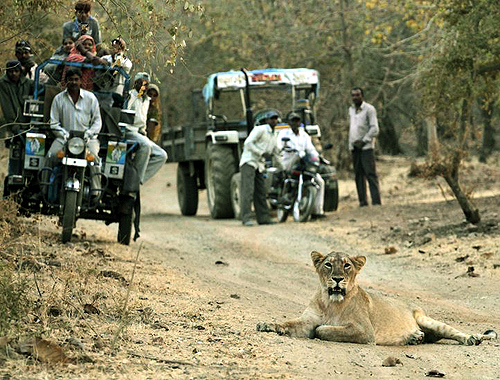
That isn’t to say the people living there wouldn’t love to have tourism. It’s just that the place is too remote and the animals … well, in a sense, too tame. The film has numerous scenes of cars, motorbikes and even villagers on foot right next to lions.

Prior to 1968 there may have been animosity towards lions, because the numbers of lion were tanking then. Shortly thereafter the Indian government began partnering with a number of wildlife organizations to save the wildlife. The numbers attest to this success.

But let’s go further, be clear: Government programs in India are notoriously unsuccessful. What’s different about this one?

The film and virtually all the materials that promote Gir National Park always reference the fact that Gujaratis are vegetarians. It’s actually a bit more serious than that: they’re vegetarians because their culture forbids killing life even for food.

That’s the key to this successful interdependence: a culture that has existed forever, a first principal of Gujarat peoples: let the animals live.

* * *
When I first started in this business the Gir lion was presumed a separate sub-species.

But “Asiatic lions” don’t actually exist, according to the world’s authority on taxonomy, the International Union for the Conservation of Nature.

DNA research proves they are not a sub-species. There is a yet to be confirmed suggestion in that research that the Gir lions when viewed with the handful of northern African lions that still exist might then constitute a subspecies, but that remains unsettled.

Fanciful photos of thirty years ago tried to portray Gir lions as physically different, with strange manes that didn’t begin until their neck, but those photos have now been debunked as anomalies. Genetically for the time being all lions on earth are close enough to be lumped into the same species.

Click or Bang

Click or Bang

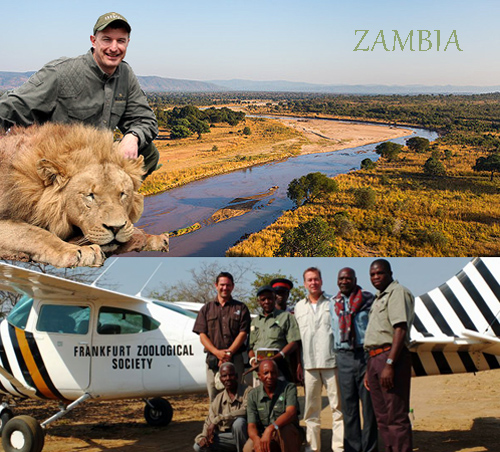
NorthLuangwaThe tug between conservation and hunting has reached a crescendo in Zambia where 30 years of effort by the Frankfurt Zoological Society (FZS) is in jeopardy.

The vast wilderness of eastern Zambia is divided into two great reserves, North & South Luangwa. Like the Serengeti some of the land at the periphery of the these national parks is used for sports hunting.

But unlike the Serengeti Luangwa can well nigh afford hunting. While it contains the richest biomass in Zambia, it’s scant compared to the Serengeti. So as tourism demand increased over the last thirty years Zambian officials correctly reduced leases for hunting.

But in the last 4-5 years tourism has declined continent-wide while there has been a marked increase in demand for sports hunting. So Zambian officials are reversing themselves and allowing more and more hunting.

The most dramatic reversal came in August, 2014.

There was an outcry from the public. This remark taken off the Zambia National Park’s Facebook page is representative:

“Trophy hunting for rich foreigners will not bring tourists to Zambia, it will deter them from coming… I can assure you, I will not visit any country which squanders its wildlife for the pleasure of a few disturbed individuals.”

Immediately the parks authority reversed the reversal, but immediately after that the umbrella state agency above tourism reversed back to the original reversal. The state of confusion has never been resolved.

I see two obvious forces at work here: The first is that sports hunting is on the increase, particularly from Russia and the United States, with very strong increases from a number of South American countries like Argentina. The revenue lost from tourism hurts. From a business point of view, it makes sense to increase capacity in response to increased demand.

But second is probably more significant: the rank confusion reigning between Zambia’s various authorities suggests corruption is rampant. Hunters tend to be quite rich and professional hunting guides are the government pay masters.

Three weeks ago the German embassy hosted a party in Lusaka to celebrate three decades of partnership between FZS and the Zambian government conserving North Luangwa.

A recent elephant survey showed that North Luangwa has the densest elephant population in the country and the most promising black rhino programs.

“I think it is fair to say that 20 years ago no one would have anticipated this development,” the project leader, Ed Sayer, told the guests.

In fairness one of the reasons North Luangwa’s elephant population is the most dense is because there has been so much poaching in the country’s other reserves.

According to Katarzyna Nowak, a South African elephant researcher, Zambia’s Kafue reserve lost almost half its elephant population to poaching since 2004.

North Luangwa is the most remote of Zambia’s reserves. That applies equally to tourists, hunters and poachers. Kafue is much more accessible.

Moreover, hunters themselves are disparaging of Zambia’s reduced game:

“…the quality [of lion and leopard hunting in Zambia] is on the decline due to hunting pressure and one needs a good deal of time to be sure of a good trophy,” writes safariBwana.com which labels itself “The African Hunting Authority.”

Last year neighboring Botswana banned all hunting, and until then it had been a significant hunting destination.

Scraping the old barrel to get the last bit of honey out of it might just crack the barrel.

Shell Games in Africa

Shell Games in Africa

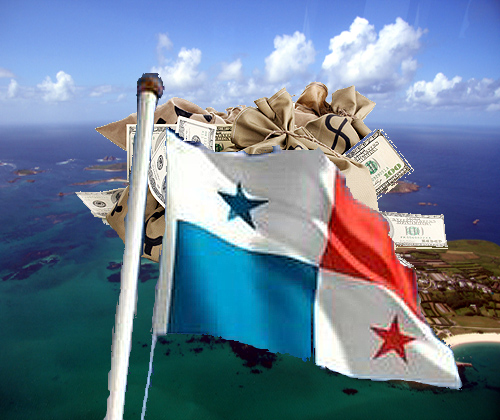
panamapapershidemoneyEver since the leak last week Kenya’s Daily Nation has published multiple stories of hanky panky exposed by the Panama Papers. One of their best is about a shady Danish character who has terrorized Kenya for some time, and the story makes Agatha Christi look like a children’s author.

Peter Bonde Nielsen arrived in Kenya some 30 years ago and learned quickly the political racket. (In the U.S. we call it “lobby.”) He was often seen among the most powerful politicians.

Then, he was rich.

His penultimate scandal was a few years ago just as Kenya was designating a huge amount of land near the town of Kajiado for a massive industrial and high-tech development scheme. Surprise, Nielsen owned a lot of the land.

But as often happens with tricky surveys, the airstrip was laid over various plots owned by different people before they were contacted or bought out. Nielsen, who had built a luxury private lodge in the area to woo his politicians was so furious that he turned his anti-poaching unit into a fully armed militia.

Meanwhile the true owners of the place, two different clans of Maasai, began to argue over the ownership of this increasingly valuable land and challenged Nielsen’s militia. Skirmishes, gun battles and fatalities ensued.

Not good for PR. Nielsen’s influence began to slip.

Nielsen’s official Kenyan company was called Avon.

[Important Digression: there are more “Avon” companies in the world than under any other name. Guess why?]

The address of Nielsen’s “Avon” was Titan Hangar, Wilson Airport. As the heat on Nielsen increased he bought a company, called Titan Worldwide Ltd. (TW) [no website] through Mossack Fonseca, the law firm central to the Panama Papers.

Don’t confuse TW with Titan Aviation that owned the hanger which was the address of Avon, and please don’t confuse it with Atlas Air Worldwide, the actual owner and parent company.

Backed by references from Kenya’s reputable Stanbic Bank Nielsen transfers the shares of the companies that previously owned Titan, Europan and Lespian [no wesbite], to Avon. So he now owned Titan, technically didn’t own Avon, which was now owned by the people who previously owned Titan.

Confusing? Intentionally so.

Then two years ago Avon is sold to a Mossack Fonseca law firm in the British Virgin Islands, Harneys, allowing Avon to remove all its assets and records from Kenya. There is now nothing left in Kenya with which to investigate Nielsen.

This story shows that illicit fund transfers aren’t simply theft, but masterful paths for all kinds of deceit.

Developing countries – especially those in sub-Saharan Africa – are losing a greater percentage of their GDP to illicit financial transactions than any other part of the world.

As journalists throughout Africa delve into the Panama Papers it becomes clear once again that Africa’s being hurt the most. And it’s not as detractors would presume only or even mostly African potentates stealing people’s money, although they figure well enough in the scandal.

Instead it’s mostly shady foreign investors like Nielsen taking advantage of Africa’s weak currency and financial laws.

“African states need cash for development, but their tax revenues are lower by the billions than they should be because of illicit financial flows,” South Africa’s Daily Maverick explains.

It’s absolutely true that it takes two to tango. Nielsen needed corrupt Kenyan politicians, and they are – or at least were, a dime a dozen. But Africa is replete with these morally depraved opportunists from the western world. They come in all forms from evangelical preachers to crooks like Nielsen.

But note: Without a Mossack Fonseca skilled in taking advantage of the terrible weaknesses of our global capitalist system it would be a lot harder for these guys to make their scam.

Revolutionary Religion

Revolutionary Religion

mboroThe world is itching for a fight. Not another war – although they seem inevitable – but fights within societies, bangers and busters, revolutions, civil wars. This is how some South Africans see the world today.

Recently Nechama Brodie of South Africa’s “Mail & Guardian” charged a highly respected American research organization with promulgating controversy and hate through media manipulation.

M&A charged that the widely respected Pew Research Center inflamed religious tensions in the U.S. by republishing a research study they didn’t do and giving it a more provocative title.

Pew – which concentrates much of its research on social and religious trends – reported on a 2015 study by the Demographic Institute and retitled it as a Pew Report, “Why Muslims are the world’s fastest-growing religious group.”

M&A pointed out that the original studies – a behemoth of research by a huge collection of social scientists – had no intentional focus on what particular religion might or might not become the dominant one. The report’s mission was specifically to study persons who consider themselves unaffiliated to any religion.

But PEW took that research and rebranded it in an inflammatory way. It didn’t skew or misinterpret the research, it simply looked at it from an unusual angle differently from what the original designers intended. Brodie calls this “hyperbole” and I agree.

I expect Pew will simply argue this is creative mining of data. But to what end? To the same end that media excuses itself from all such inflammatory reporting: it’s what the public wants.

That means the public wants inflamed religious tension. That means the public wants disruption, bangers and busters, revolutions, civil wars.

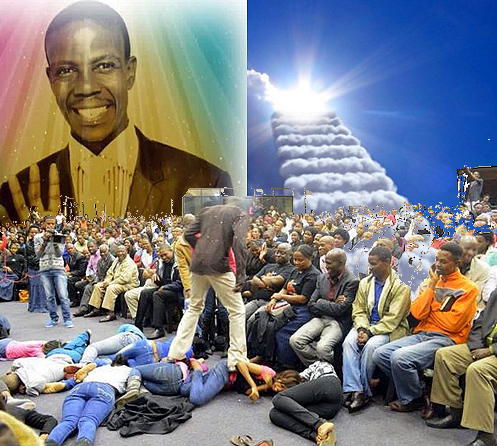
In another closely related South African story, Pastor Mboro was snatched from his Easter service in Johannesburg by a beam of light that took him to heaven where he took selfies of himself and Jesus ‘hot’ Xhosa wife.

The Prophet Mboro later recanted his story when confronted by South Africa’s CRL Commission. The Commission was set up specifically to counter the growing fanaticism among South African religious groups.

So South Africans know a little bit about religious ridiculousness and we should take heed. Prophet Mboro earned a tidy sum from his journey to heaven by selling a lot of his selfies for $350 each!

That exceeds most Americans’ monthly tithing to their churches, but it’s a lot less than Pew researchers get paid daily! By the way, Pew is funded by the Pew Charitable Trust, an endowment of oil company heirs.

Got enough kindling? Feel the Bern?

Pesa Millions!

Pesa Millions!

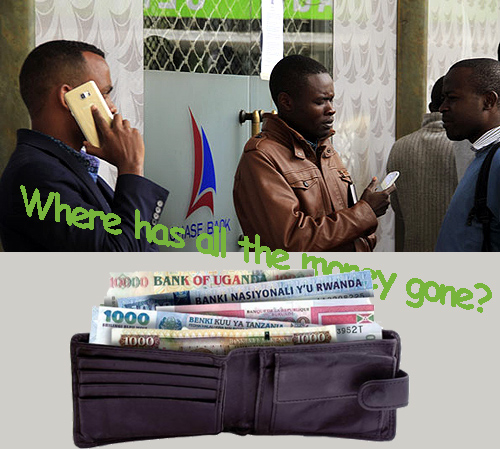
wherehasallthemoneygoneThe third major bank within a year has gone bust in Kenya, further evidence that global capitalism has serious problems.

The main cause for the bank’s failure was over lending. That doesn’t sound too onerous to us maverick socialists until you realize that most of that over lending was to the bank’s directors.

Big bonuses for failing performance. Heard that before?

Kenya’s economy is teeny-weeny : roughly the size of St. Louis’. But proportionately banking is just like at home. The seven largest Kenyan financial institutions hold 80% of the country’s cash.

Whether in the U.S. or Kenya human beings who call themselves bankers find themselves swimming in a bunch of money and getting giddy or scared or both and start to gulp some of it in especially after the pool cracks and the water’s pouring out.

Capitalism isn’t what it’s ranked up to be when left uncontrolled whether in Kenya or the U.S. But because Kenya is so small relative to the U.S. the shenanigans are easier to see.

According to Bloomberg, Chase Bank-Kenya restated its liabilities Wednesday: twice as high as filed under tax law less than a week ago. Half of the exploding debt was to directors and employees, originally filed as $3.2 million revised Tuesday to $13.6 million.

Chase is the third large Kenyan financial institution to go belly up recently: Imperial Bank and NBK fell earlier last year. (Chase is not linked to any American bank. Its private stockholders come mostly from Luxembourg and Germany.)

It’s remarkable how this is being explained in Kenya.

The country’s main newspaper simply reported official bank statements claiming that underperforming loans and high interest rates implied as government policy, compounded by “rumors” of the bank’s imminent demise were to blame.

One of the bank’s former executives blamed corrupt government executives who have been charged with stealing an educational agency’s funds, which were held by the bank!

As always the small depositors are the ones to suffer. The Kenyan Government would give no date for the bank’s reopening.

(Bills due Friday.)

In July Global Credit Ratings, a reputable South African financial rating institution, assigned Chase Bank an A- rating with a stable outlook. Heard that before?

This little story in little Kenya won’t gain much traction in the world press. The accumulated losses of this one bank in Kenya are less than what my state loses every five hours.

But we should take note. Big scale or little scale, capitalism kicks the little guy in the butt with a Salvatore Ferragamo. Justice won’t apply, because justice is funded by the same foot. So no one goes to jail, no one does anything but start the whole thing over, again.

I’m not blaming Zafrullah Khan or Jamie Diamond. They’re just necessarily plug-ins to a rotten system. The hydra’s head has many buds.

Kenya and the U.S. have upcoming elections. The U.S. is first. Kenya modeled its banking system on America’s, so maybe it will follow the U.S. election outcomes in the same way. Always has in the past.

Ray of hope? Feel the Bern?

Our Endless Drought

Our Endless Drought

ennuitrumpLike Donald Trump unexpected and near violent political events across Africa are dying down but not going away.

I suppose it’s natural to make comparisons between where you’ve been for a long time and your home, but I’m incredibly struck by how Africa and America seem to have stopped moving. At least the places I know:

Lots of poignant news in Africa – like Donald Trump running for President in the United States – broke around the middle of last year:

Student protests across South Africa, the final end of ebola, the certain pacification of Mali and Somalia, the certified end to Boko Haram’s rule in northeast Nigeria (in fact, the possible essential ending of terrorism continent-wide), the final criminal verdicts in Kenya’s leaders’ trials, and perhaps most representative of all: the imminent death of 92-year old Robert Mugabe.

Mugabe is not dead, although he’s uncharacteristically quiet.

Student protests continue in South Africa, although no longer as disruptive. There is certainly some peace in Mali and Somalia, but there are also incessant suicide attacks. Today the criminal court in The Hague will likely string out further the Kenyan Vice-President’s trial.

And so it goes. Donald Trump is still in the race, but … less so?

What is it about our times that reflects such ennui? “Are everyday women suffering from a bout of fashion boredom?” a reporter in South Africa asks.

“There is a sense of ennui and foreboding,” one of South Africa’s tourism consulting companies says.

It elaborates:

“Last year’s feel good combination has now changed to one of wait-and-see in the United States… Experts indicate that there are multiple clouds on the horizon: …an unstable European economy, recession in Brazil, low employment rates, a slowing down of the Chinese economy.”

I randomly picked a grad student’s dissertation at Stellenbosch University, submitted in December. Stellenbosch was where some of the most violent and successful student protests were launched last year:

“…many of us are struggling with the questions of meaning and purpose. And, like the Hamlet from Act One, we conclude that there is no meaning, no purpose, only vague and arbitrary laws and expectations (formed by God or society, which may end up being the same thing) that keep us on the beaten track of existence.”

A tad grim.

One of Africa’s most vocal revolutionaries is a professor at Rhodes University in South Africa. I have followed Richard Pithouse for years. He is quick witted, extraordinarily articulate and until recently … hopeful.

But lately his calls-to-arms have morphed into unsettled poetry that belies malaise:

“People are gathered on the street, the street that became the primary site of insurgent student assembly over the last week. Four women, two students, an academic and a priest speak on… The ancient, it seems, is entwined with the hip.

“New possibilities are opening, new possibilities forged in struggle by courageous young people, new possibilities that, like the songs of sadness, are as real as the promise that comes with the smell of rain on dry earth.”

There is a lingering drought in South Africa. There is no new rain on the dry Karoo.

Let’s hope this is simply all impatience and not dismay. Today is yet another media-insisted Waterloo Day for Donald Trump. Jacob Zuma might wake up tomorrow and resign. Students at Stellenbosch might have their fees waved. The real culprits of Kenya’s 2007 violence might confess. Tanzanian legislators might pass a new, wonderfully democratic constitution.

It will start raining, again.

Or not.

Den of Thieves not in Africa

Den of Thieves not in Africa

Clive Khulubuse Zuma, nephew of Jacob Zuma
No surprise that Jacob Zuma’s family is named in the Panama Papers, and a sorry story it is raping Nigerians of their oil. But here, take my bet: When all is said and done there won’t be that many Africans implicated. Corruption is almost exclusively a western world disease.

Over the weekend the biggest money laundering scandal in history was revealed by the International Consortium of Investigative Journalists (ICIJ).

Well who knows? It may not be the biggest money laundering scandal in history, but it’s the biggest money laundering scandal in history … proved.

More than 140 bigwigs, most of whom were publicly elected top leaders of countries like Russia and Argentina and Iceland, many of whom continue in office right now, are proved to have stolen millions from their country’s treasure chests.

The finely strewn paths of deceit led from the bigwig to one or two intermediaries to a single German law firm that managed the end-game by arranging that the money be hidden in tax havens in places like Switzerland and the British Virgin Islands.

This is likely illegal in almost every case, although the law firm’s actions are not illegal.

That’s what corruption is all about. It’s about … loopholes: creative manipulation of existing law so that the actual implementer of the illegality – in this case the German law firm, Mossack Fonseca – remains free to strike another dirty deal.

It’s illustrative to study Mossack Fonseca’s defense of its actions:

“For 40 years Mossack Fonseca has operated beyond reproach … Our firm has never been accused or charged in connection with criminal wrongdoing.” Spokesman Carlos Sousa said that the firm “merely helps clients incorporate companies.”

How many billions if not trillions of dollars have been kept from the societies in such desperate need of them?

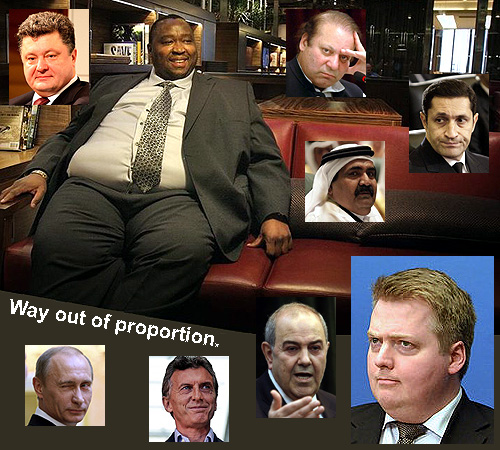
Note how many black faces there are in the picture above. It drives me crazy when almost everyone points to Africa and cites corruption as its biggest problem.

“Biggest” in what sense? In amount of money? In percentage of social assets? Of course there’s corruption in Africa, because Africa is often a conduit for the corruption that begins elsewhere, but no reasonable measure of total corruption in Africa can begin to compare with the corruption outside Africa.

No contest. A drop compared to an ocean.

So why then do we continue to cite corruption as Africa’s greatest failing?

I think I know the answer and it isn’t all that horribly scathing; it’s actually helpful. Africa’s economies are teeny weeny compared to the rest of the world. The entire GDP of Kenya is about that of St. Louis.

So there are fewer significant transactions to begin with. So the paper trail is easier to investigate. It’s more defined and easier to pinpoint.

Moreover, the incidents of exposed corruption in Africa are easily linked to specific harm of its society, because every single penny is precious.

So ouch, corruption hurts a lot in Africa. Law abiding Africans protest far more about corruption than law-abiding Americans, do, for example. So corruption is actually exposed more in Africa than elsewhere.

But get off Africa’s back! It didn’t begin there, for sure. It starts with bloated capitalism poorly regulated. In today’s conservative global world I think that’s intentional.

Safari Favorites

Safari Favorites

SafariAfricaWhat were my favorites in the two-month safari I just completed in Africa?

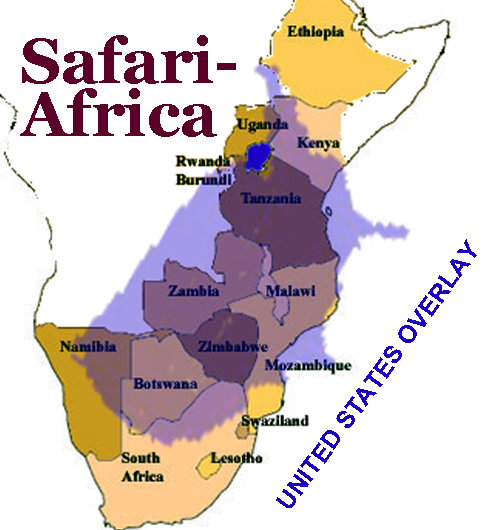
I guided 40 different people on six different itineraries into the part of the continent I call “Safari-Africa.” It was my 40th year guiding and nothing we did was new to me. In fact for quite a few of these very special clients, it wasn’t entirely new to them, either.

That gives me a special edge critiquing safari choices because I can meld my own lengthy experience with the reviews expressed by my own experienced clients.

One thing struck me as it never had before: Air schedules and regional airlines have improved so dramatically that I’m dropping my long-expressed recommendation that you not mix and match widely separated areas.

Of course any time you step onto an airline – even the best of them – you risk delay and disruption, but no longer as certainly in Safari-Africa as only ten years ago.

And any time you step onto an airline your cost goes up.

So if you accept the added risk and cost, then visiting Victoria Falls and the Serengeti in the same trip is as reasonable as visiting the Grand Canyon and New York city in the same trip.

My personal preference continues not to do so, since I know despite protestations from potential clients that this is “likely the only trip they’ll ever take to Africa,” statistics don’t bear them out. The majority of safari travelers from America take multiple trips to Africa.

I also prefer slower, more extended visits wherever I go in the world to “if it’s Tuesday it’s Brussels.” Yet I concede that “if it’s Tuesday it’s VicFalls” now fits into reasonable travel planning.

Several of my long-held views about where you should go on safari were confirmed:

(1) For the most wildlife, it’s East Africa over southern Africa.

(2) For the more varied experience go to southern Africa. Most every day game viewing can be substituted with great cities and fascinating history or trains, spas, museums, good dining and entertainment.

(3) If accommodation and service — overall stressless touring is very important, stick to southern Africa. Don’t get me wrong: Stressless touring is a lot more likely in East Africa than most travelers expect, and from time to time it even exceeds the norm in southern Africa. But as a general rule southern Africa is more reliable and provides better services.

(4) It’s expensive. I wish this weren’t the case, and it wasn’t in the past. But today a safari is one of the most expensive vacations you can take. Like any expensive destination there are cheap offers, but avoid them. They get you little more than being able to say, “I’ve been there.”

If you can’t afford $500 per person per night, don’t try. That’s the minimum. Most game viewing safaris today approach $1000 per person per night.

(5) Finally need I say it? A well-organized holiday to any part of Safari-Africa is today as safe as traveling to Europe. In fact given the tragedies in Paris and Brussels, it’s fair to say right now it’s safer.

Below is where I’ve been and what I’ve just done. I’ve shown my own favorites, but they might not be yours! Every traveler and trip is different. My favorites might change at a different season for a different set of clients.

Email and I’ll be happy to help you design your perfect safari!

Favorite Places:
1. Serengeti
2. Samburu
3. Kalahari

Best Game Viewing Countries:
1. Tanzania
2. Kenya
3. Botswana

Best Game Viewing Parks:
1. Serengeti
2. Ngorongoro
3. Maasai Mara

Best Wilderness Properties:
1. Ndutu Lodge
2. Saruni Samburu
3. Governor’s Camp

Best non-Wilderness Properties:
1. Gibb’s Farm
2. Lanzerac
3. Tongabezi

Least Stressful/Most Comfortable:
1. South Africa
2. Botswana
3. Kenya

Most Friendly Countries:
1. Botswana
2. Kenya
3. Tanzania


February & March 2016 Safari:

KENYA
Nairobi/Karen: Norfolk Hotel, House of Waine
Amboseli: Tortilis Camp
Tsavo West & East: Galdessa Camp
Aberdares: Aberdare Country Club, The Ark
Samburu: Saruni Lodge
Maasai Mara: Governor’s Camp

TANZANIA
Arusha: Rivertrees Country Inn
Taranagire: Oliver’s Camp
Manyara: Gibb’s Farm
Ngorongoro: Sanctuary Camp
Serengeti: Ndutu Lodge, Angata Camp
Kili Airport: KIA Lodge

SOUTH AFRICA
Johannesburg/Sandton: Michelangelo Hotel
Blue Train: Pretoria to Cape Town
Cape Town: Victoria & Alfred Hotel
Stellenbosch: Lanzerac Hotel

BOTSWANA
Kalahari: Tau Pan Camp
Okavango/Moremi: Camp Moremi
Chobe: Savute Safari Lodge

ZAMBIA
VicFalls (Livingstone): Tongabezi

Reviewing Two Months on Safari

Reviewing Two Months on Safari

TRevTitleI’ve just returned from two months in Africa, my 40th year of guiding there. I took consumers into five different countries in sub-Saharan Africa, toured three of its big cities and 14 of its most famous big game areas.

We stayed in hotels, lodges and tented camps from mid-market to super luxurious. Sometimes we used our own vehicles driving from place to place, and at other times we flew from place to place and used the property’s vehicles.

Tomorrow I’ll compare it all for you.

But before I do I want to explain why I think this is so important. We travel professionals are being marginalized by the internet, and consumers should know better.

Internet travel reviews like those found in TripAdvisor are often if not usually grossly inaccurate. This is because single event analyses are rarely fair. You wouldn’t want a real estate agent brokering your purchase of a home, or a doctor operating on your gall bladder for their very first time.

2oldersYet this is exactly what most travel reviews are: first-time consumer impressions. Strong reviews – good or bad – might be reflections of random events like unusual weather or public events or machinery breakdowns, or unusual personal interactions with an unrepresentative employee. None of these things might be recognized by the consumer as being unusual.

Moreover, most consumer reviews contain no measuring sticks of experience. They don’t know what it’s like next door or down the street, or at a different season. It’s a one-off experience that’s highly unlikely to be representative of the normal consumer experience.

And because many consumer reviews are from people who used consumer reviews before they planned their own vacation, mistake compounds mistake. Expectations might be way too high or way too low to begin with.

anniversaryBut of all the many reasons that consumer travel reviews are generally so wrong the single most obvious is consumers’ overwhelming demand for a low price. Especially among Americans price is the single-most driving factor in travel purchase.

Price should be an important consideration, but so many travelers believe they are due more than what they paid for. When price becomes this important it tends to erode performance and quality for a presumed gained “value.” This is the reason we’ve gone through such a horrible era of airline inconveniences.

RiverWalkPut all these things together and the typical consumer travel reviewer is not the type of person I would want to recommend a trip.

What I want is a person sufficiently experienced in the area of travel I’m considering. Indeed there are consumers just as good as travel professionals. When I find one of those it’s a bonanza, because that person isn’t saddled with the constraints of making a living out of her reviews and recommendations. But either way, a professional agent or a sufficiently experienced traveler is what will render a meaningful recommendation.

What constitutes sufficient experience? In my opinion there are four critical prerequisites for rendering a meaningful travel review:

capegoodhope✓ Multiple visits to the same place or property: More than two or three, the more the better, enough visits that both an array of seasonal weather and economic cycles are experienced, and enough visits that an anomalous situation can be recognized.

✓ Competitive selection. By this I mean experiencing a range of hotels, or beaches, or yachts, or trains in the same area so that the judgment rendered is contextual. You can’t apply the same standards to an Amazon jungle lodge that you would apply to the Peninsula in Hong Kong, or a kids’ family vacation to Disneyland to a week at the opera in Milan.

kathyk✓ Consistent purchasing. The “Honeymoon Weekend” purchased on LastMinute.Com won’t give you the same quality of rooms or package that buying it directly from the Niagra Falls Hotel will. It gets even more complicated: the same hotel room purchased directly from the Niagra Falls Hotel could render different qualities, frills and service depending upon how and when you made the purchase and what you actually paid for it.

✓ Minimize expectations. This is the hardest thing for a consumer to do, and understandably so. You don’t buy a vacation without expecting certain things from it. But the more this is the case, the less likely you will be able to render a meaningful review.

This doesn’t mean that you shouldn’t heed the good advice of trusted friends and family. They’re like you: They know probably better than a random professional what you might enjoy best.

But at the same time you better give that travel professional equal if not greater weight for all the reasons I’ve explained above.

Tomorrow I’ll try to do that for safaris in sub-Saharan Africa at this time of the year. Please come back!

GrandpaDriving

OnSafari: Elephant Explosion

OnSafari: Elephant Explosion

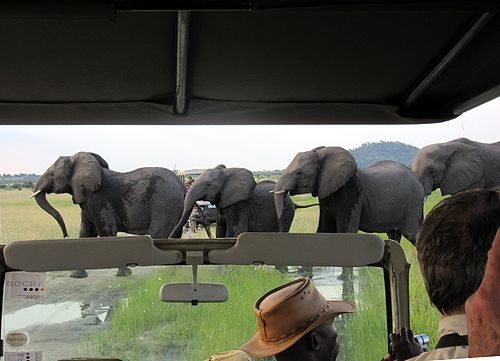
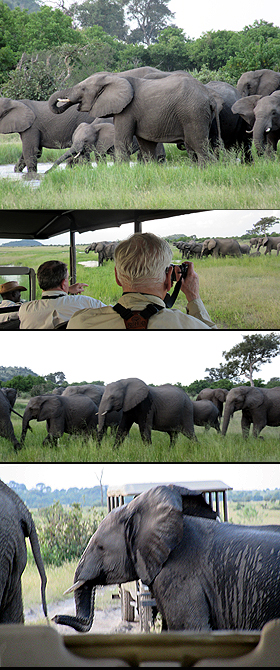
eleTitleTwenty-five elephants exploded out of the forest about 400 meters away from us and cantered quickly directly at us. We were in open Landcruisers. No sides and a simple canvas top.

They stopped about half way. Not having had the time to look at the area with our binocs none of us at first realized it was a watering hole. My heart slowed down a bit. They weren’t coming at us; they were headed anxiously to water.
eleBAR
After light and late rains constrained by El Nino Savute has enjoyed some heavy rainfall recently. We were in an open meadow, but the grass was high and green and camouflaged the pond.

We watched them for a number of minutes as they sucked up huge amounts of water with their trunks then squirted it into their mouths, jostling for position. It was likely 3 or 4 families.

During our entire time in Botswana we hadn’t seen many elephants. At Savute we’d seen a group of about 20 scattered across a field, but they were all male! Before us now were real mixed families, although I noticed there were only a few juveniles and no babies at all in the group.

Then again out of the forest to the right exploded another group! This group had two youngsters under one year old. As they all gathered and jostled at this little watering hole I counted 67 elephant, with a couple huge bulls hanging slightly behind.

They didn’t linger drinking for very long. In fact I imagine many didn’t drink at all. As anxious as they seemed to get to the water, they now were equally anxious to leave.

Past us.

Our excellent driver/guide, Metal, had briefed everyone to keep quiet. The wind was in our favor. Most elephant can’t see very well or at all after they’ve reached their teenage years, but their sense of hearing and smell are acute. Our being quiet and the fortunate direction of a strong breeze meant they probably didn’t know we were there at first, or at least that we were anything too unusual.

There were two cars from our group about 70 meters apart on the road, pretty equidistant from the watering hole.

The assembled group began moving … quickly towards us. One family immediately pulled away to the right, but the big majority of them headed straight for the space between our two cars. The group to the right then circled back behind our car, and within moments, we were encircled.

When they realized that we weren’t trees or mountains or abandoned vehicles, there was some hesitation and confusion. We could hear a loud of rumbling. Humans can hear only 10% of elephants’ normal vocalization: the remainder is below our decibel level of hearing.

The big mamas pushed the babies forward anxiously with their trunks, and younger males flapped their ears at us. One very large matriarch stopped in the road and faced us as the great line of pachyderms moved quickly passed us.

Then, with a slight step or two towards us that made all our hearts stop and a flip of her ears, away she went, too.

There was no trumpeting and no real panic … on either side! It was an absolutely splendid event for our last game drive in Botswana!

Readers of my blog know that I believe there are too many elephants in Africa, today. This is particularly true in East Africa, but even here in Botswana the evidence is mounting.

Normal elephant behavior does not include large males congregating as we saw. Those males looked like residents, animals who had settled in to their environment and made peace with what normally would be a stressful living condition.

This happened during the years of heavy poaching in Ngorongoro Crater in Tanzania. Then the big tuskers took refuge in the caldera which was a safe haven from poaching. They learned to live together and never left, even when the poaching ended.

I don’t think this group in Savute has congregated for safety from poaching. It may have something to do with climate change and the radical weather all of Africa is experiencing… or something else. But it isn’t normal elephant behavior, and whatever the explanation I think a root cause is … too many elephants for whatever unusual situations exist today.

The beautiful group that passed between our two vehicles were not residents. They were traveling as elephants have been doing for millennia. When they travel it is normal for families that would normally stay well apart from one another to congregate as we saw.

The mystery remains why of so many elephants there were only 2 babies and no juveniles. The next youngest elephant I found in the group was in his teens.

Wild Africa is a never-ending source of drama and beauty. How lucky we’ve been!

OnSafari: Ending with a Bang!

OnSafari: Ending with a Bang!

DoginSavuteThe great prize on safari today is to see wild dogs. We saw them twice, once in Moremi and once in Savute.

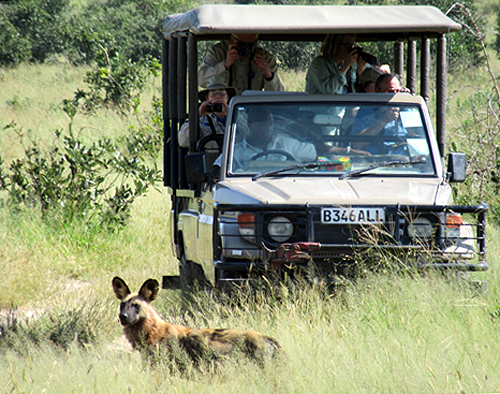
We watched them hunt – and miss a reedbuck – in Moremi. In Savute we came upon them about a half hour after they had killed a young kudu. They were in a pond flooding their already distended bellies with water.

At first we thought they must have killed an impala, because the alpha female had serious puncture wounds in her face. But we learned from a film crew that was following them that the impala kill had been several days ago.

The story of today’s hunt was fascinating; the film crew lucked out and got it all:

The dogs spotted a kudu family about 400 yards from them and raced through the cover of tall grass. But another predator had also spotted the kudu: a leopard.

When the dog sensed the leopard, a few of them began popping up above the grass until the leopard recognized them and gave way, finally running up a distant tree. Even the largest leopard is no match for a pack of wild dogs.

The kudu, of course, had also seen the dog jumping, but some of the pack had been dispatched to surround the suddenly alert kudu.

All of this happened very quickly. The actual attack started only moments after the leopard fled. It was a large family of kudu and the dog quickly out ran and surrounded the youngest. Although almost every wild animal mother will try to defend her youngster, this doesn’t apply when wild dog are the attackers. Dog are the most gruesome and successful of the hunters.

There’s no hope for the animal once surrounded by dog.

The 9 dogs then tore the kudu apart eating it while it was still alive. According to the filmers in twelve minutes the roughly 220-pound kudu was gone.

Almost literally. When the dog tear apart their victim they will often run away with parts, so the remains of the kudu were scattered far and wide.

While we watched the dogs watering the sky began to fill with vultures. In a remarkably short time there were about 300 vultures circling above trying to focus on the kill site, but because the dogs scatter their kill, the vultures were at first confused.

Then a black kite dove into the grass and before a few moments passed vultures were landing all over the field: whitebacks, hooded, white-headed and lappet-faced.

The hunt, the take-down, the consumption and clean-up with a wild dog event is the quickest of any predation in Africa.

What an end on our final day on safari!

The Botswana trip has been fabulous. We sampled all its unique ecosystems: the Kalahari, the Delta and Moremi, and Savute.

Savute is the southern end of the massive Chobe National Park, a huge trapezoid that begins at the Zambezi River and extends more than 150 miles south towards the Delta. The vast majority of this area is incredibly arid, although heavily wooded, so there aren’t usually a lot of animals in its interior.

But along the Zambezi and where we were, on the opposite end in Savute, there is always some water and excellent grasslands. Many of these grasslands have been formed relatively recently, in the last half century for example, by the increasing numbers of elephant that destroy forests.

We saw quite a few elephants, but they were all male! Elephant behavior is changing as their densities increase and human/elephant conflict grows. It’s likely that most of these are traveling, north to south or vice versa, and Savute is a nice way station on these longer, stressful journeys between the fecund north of the country and the Delta.

Overall our game viewing these last 8 days has been fabulous. We saw nine lion and some of the group a few more. We saw a cheetah and glimpses of leopard. On our last day in the Delta, some of the group saw the rare sitatunga!

That’s a peculiar water-based antelope with webbed feet that makes a nest of reeds in the Delta.

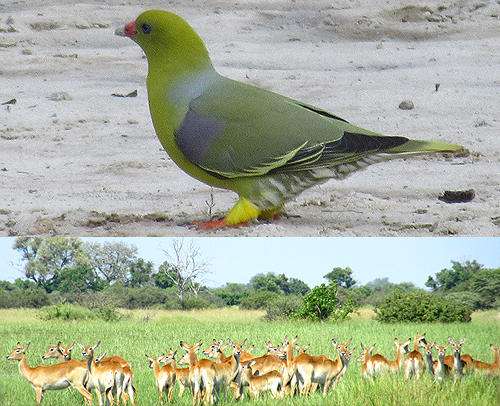
Most of the group got gorgeous views of large families of lechwe and kudu, and of course, impala. We also saw reedbuck, steinbok and uncountable numbers of hippo often accompanied by crocs.

The group was fantastic. I don’t think anyone skipped a single game drive!

Most of the group now continues to Victoria Falls. Along with a few others, I’ll be returning home and my two months in Africa has been truly astounding. I’m so grateful to all my many clients!

See my next set of blogs where I summarize and compare the vast and many different parts of sub–Saharan Africa I’ve been so fortunate to experience again on this extended 40th guiding anniversary safari!sundowners1

OnSafari: Not Just a Little Botswana

OnSafari: Not Just a Little Botswana

Pigeon & LechweI can’t understand traveling to Botswana without visiting the Kalahari. The Kalahari is literally the heart of Botswana, the ancient home of the San People, the foundation for the Okavango Delta.

Traveling to Botswana and not visiting the Kalahari is like taking a vacation to New York City but not visiting Manhattan.

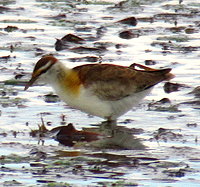
Rare Lesser Jacana
Rare Lesser Jacana

We began our Botswana safari with two fabulous days at Tau Pan in the Kalahari. The summer rains and hot temperatures were moderating. We had no rain and temperatures never got higher than the upper 80s.

The Kalahari is an enormous scrubland not really a desert. There are a variety of large bushes which provide birds, animals and the San with all sorts of food and medicines, as we learned on our “Bushman Walk.”

Around its “pans” are found the largest concentration of animals, because this is where the heavy summer rains pool. Admittedly this is not a Serengeti, but during our game drives around the 20 sq. km. Tau Pan we saw hundreds of springbok, many dozens of gemsbok, dozens of red hartebeest and wildebeest, a couple giraffe, lots of bat-eared foxes and jackals, a couple eland, some waterbuck and a few steinbok.

Oh, and 9 lion of which we watched 5 magnificent males come off their successful hunt, and a cheetah coming off its successful hunt.

The birdlife was terrific and the Kalahari (northern black) Korhaan provided the most fun. It’s a spectacular bird that was breeding, which means screeching itself to death whether or not a female is around! There were also kori bustards, the second heaviest bird in the world, and numerous other colorful weavers, seed-eaters, chats and others.

One of the great highlights in coming to the Kalahari is learning about the San People. That means learning about their current political battles with the Botswana parliament for greater control of the reserve, of their successful protests of some overly patronizing lodges that want them to pretend to still live as they did before.

But also learning how they lived in the old days, because the traditional San’s manipulation of the Kalahari ecosystem is actually mind blowing. There is not a bug, root, leaf or piece of dust that traditional San did not use for some practical purpose.

What all this meant was that probably three-quarters of the things we saw and learned at Tau Pan were not available anywhere else in Botswana.

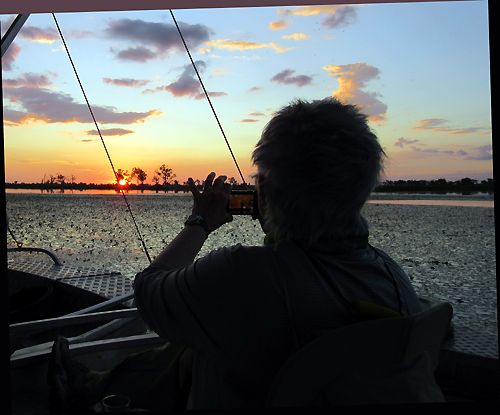
Equally unique and much more famous and popular, of course, is the Okavango Delta. We spent a half day boating deep into the Delta. In a nutshell the Delta is the Kalahari in flood! Ridiculous amounts of water gushing out of the mountains of Angola spill onto the Kalahari ecosystem which is essentially almost all of northern Botswana, and then spread out creating channels and islands.

The ground and substrata is the same as around Tau Pan, but of course with so much water a new ecosystem is formed.

We saw water antelope like the red lechwe, river otters, learned of the many grasses, reeds and papyrus that define this ever changing swampland, and saw some incredible things like the painted frog and infinitesimally small reed frog. (You can place 5 or 6 side-by-side on your thumbnail.)

Birdlife is fabulous, and we were fortunate enough to find the rare lesser jacana as well as the headliners like the malachite kingfisher and fish eagle.

In the adjacent Moremi Game Reserve we were introduced to “Big Game” and what an introduction our first morning when we encountered wild dog hunting reedbuck! What a thrill!

Moremi was where the birdlife was most spectacular, with varieties of colorful storks, bee-eaters, starlings, larks – you name it! Have you ever seen a green-capped eremomela or out-of-this-world green pigeon? We did!

Our five days here in Botswana have been breath-taking, and we’ve seen its three great ecosystems: the Kalahari, the Delta and the big game woodlands of Moremi. We’re going to cap it off with some more big game in southern Chobe starting tomorrow.

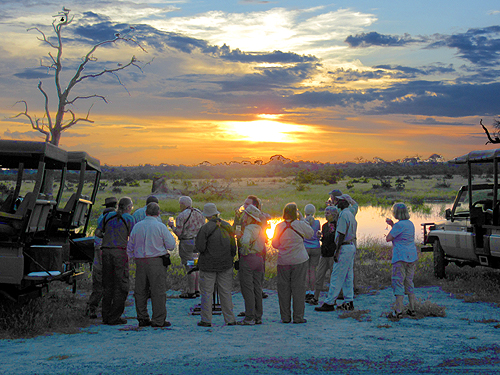
Stay tuned!OnTheDelta

OnSafari: The Cape

OnSafari: The Cape

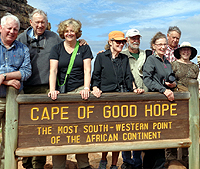
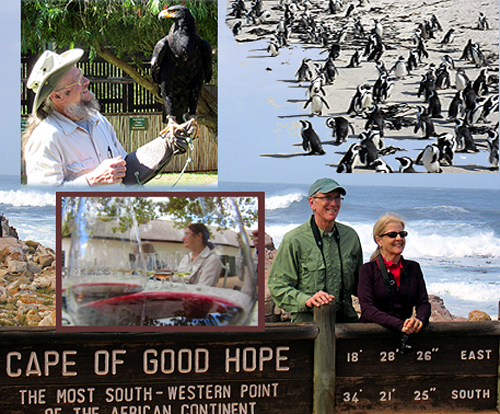
CapeStellOur final days in The Cape included wonderful touring of the Cape of Good Hope and the wine country.

Although it was overcast for most of the day at The Cape, that doesn’t reduce too much the fantastic scenery. Starting at Cape Town’s popular Camp’s Bay, the group spread out wide getting pictures of this wide and beautiful white-sand beach.

Although I know that most Cape Townians think of Camp’s Bay as their principal swimming beach, I can also tell that the vast majority of people on it are foreigners and snowbirds from Europe. There are hundreds if not thousands of time-shares and luxury rental condos here, and tons of coffee shops and cafes.

This was a particularly vibrant weekend as it’s the week before Easter when many of the long-distance visitors first arrive.

We then began the spectacular Chapman’s Peak Drive. This cliff-hanging tourist route to the Cape of Good Hope passes over Hout Bay, and as usual, the black “shark” flag was waving, so the massive white-sand beach was mostly empty. The scenery here is breath-taking.

But there were remnants of last year’s fires, and while I’ve been coached by people that this is a normal cycle, I think it’s fair to say last year’s was extreme. It canceled the Cape Mountain Bike Marathon – the first time ever, and later we would here from some wineries how they were devastated.

But today it was drizzling! The drought is broken, although there is still a moisture deficit as El Nino slowly fades.

We rode the “Flying Dutchman” to the overlook of the two great oceans, and I recounted to everyone the “Age of Discovery” and fascinating history of the 1400-1500s culminating in Bartolemeu Dias’ rounding of these turbulent seas.

Everyone gazed into the vast ocean that continues to Antarctica, a distance nearly ten times that from where Antarctic ocean voyages leave Ushuaia in Argentina!

We then went to the penguins at Boulders and that’s always so much fun! They were out in full force, if you can say that of a dismal looking and slow-moving penguin! The place was packed, nearly shoulder to shoulder with tourists, but there were hundreds of penguins on display, completely oblivious to their admirers.

Today we visited Eagle Encounters, one of my favorite stops in The Cape. This remarkable raptor rehabilitation center has literally saved the endangered Cape Vulture. Our special private tour by falconer Donald is such fun!

Starting with the Jackal Buzzard, Donald flew Cape Vultures, a barn owl, a gymnogene, a rock kestrel and finally the not-native American vulture that was confiscated from a collector in Cape Town.

As he himself said, the birds all “love him” and that’s why he can show them off – how they fly, how they look and how obediently they stand on our heads!

We had two wine tastings, one at the Cape’s second oldest vineyard and a full cellar tour at the lovely Lanzerac where we’re staying. The group also had several hours in the lovely Afrikaans town of Stellenbosch, so they could visit restored homes from the 17th Century and enjoy some real Afrikaans food for lunch!

Tomorrow we finally get into the bush of Botswana. Stay tuned!