A Flowering Relationship

A Flowering Relationship

ProteaMeetRoseLast week America’s Marriott announced it was acquiring South Africa’s Protea, a fireworks signal of how tourism is changing in Africa: Fewer groups, fewer inclusive guided trips for individuals, and much more opportunity for the independent traveler.

It’s no surprise and continues the long-term trend powered by the internet that brings consumers closer to their travel product, slowly but surely reducing the use of a travel agent.

It further reflects the shortening span of a vacation in America, and the near hysterical price competition Americans bring onto the world market. Marriot will become the largest single hotel player on the continent, a revered market position that will be able to control price with manipulations of capacity.

Protea Hotels in its current form began in 1984. In those days, still deeply shackled by apartheid, South Africa’s hospitality market to survive had to develop a home-grown component rather than strictly relying on foreign visitors.

The growth of foreign visitors to South Africa in the 1980s was inhibited by apartheid, not just by the policy which many travelers found distasteful, but by a growing number of sanctions which, for example, excluded South African Airways from easily refueling anywhere on the continent.

Ronald Regan’s sanctions on much of South Africa’s businesses extended to its hotel and hospitality industry as well.

Protea was a creative solution. In the beginning it marketed strictly to South Africans. The famous and then ingenious Protea Hotel Pass, which would later be adopted and expanded in such places as New Zealand, allowed frugal travelers to buy a certain number of nights, then use them anywhere throughout the chain.

South Africa had a vibrant internal domestic tourism, as well as considerable business travel especially between the main cities of Cape Town, Johannesburg and Durban. The Protea chain exploited what was then the South African business culture: hell with the rest of the world, we can go it alone.

And they did it quite well. The hotels were simple but much more attractive and comfortable than a comparable American motel chain like Holiday Inn at the time. The rooms were more colorful, more completely furnished, more individualized, but smaller and more compact than a traditional hotel’s.

Restaurants and bars were functional and well priced but served much more fresh food, for example, than an American motel restaurant. All told, it was a very pleasant, warm and inviting environment.

Most importantly, though, was Protea’s direct marketing. Even back in the 80s, when practically every tour and hospitality vendor gave handsome commissions to travel agents and tour operators, Protea was stingy. Its business plan didn’t allow for a large margin, so it was clear the hotel had to hook the customer directly.

That isn’t to say it didn’t partner with other components of the industry, like at the time large local tour operators such as Springbok Atlas, but it did so with hesitation.

When EWT was a very large wholesaler in the 1980s, sending several thousands of Americans annually into Africa, and when I had a personal office in Johannesburg preparing for the end of apartheid, one of my main tasks was to find a South African hotel partner.

Protea just wasn’t interested. Or I should say more honestly, not interested in serious commissions. At first I felt we were positioning ourselves incorrectly, but then I learned from my colleagues that it was the same across the board.

It seemed very strange at the time: And it was a bad idea for the eighties and nineties and was probably the reason the company’s growth stalled with the end of apartheid.

But the business model that relied nearly exclusively on cutting out the middle man is now the way of the world, and whether Protea was prescient or just enjoyed a lot of dumb luck really doesn’t matter, anymore.

Protea succeeded. In some ways you can argue that Protea anticipated the internet.

When apartheid ended Protea snuck into neighboring countries. It never blossomed anywhere outside South Africa, and I think that’s because direct consumer transactions in places like East Africa simply didn’t exist until recently.

So in places like Nairobi, Arusha and Dar-es-Salaam Protea staked its fortune on South Africans traveling there, and that was never a large enough market for sustained growth. Nevertheless, Protea has stayed in East Africa, and the new endorsement by Marriott is a certain affirmation that both companies believe that even in these less developed parts of Africa, direct consumer sales are coming.

Most hotel bookings, today in America, are done directly by the consumer, and so in that sense Marriott isn’t changing its game plan. But the earthquake statement Marriott is making is that American consumers are now ready to use that style when traveling to Africa. Anywhere in Africa.

And there’s no better quick way to reap that market than acquire Protea. They’ve been doing it for years.
The War by Climate

The War by Climate

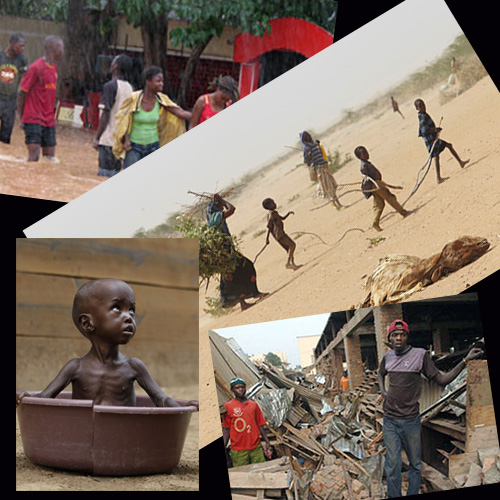
climatecalamityThe season is changing all around the world. Unusually heavy rains are pounding sub-Saharan Africa. It snowed early at my home near the Mississippi River. Typhoon Haiyan may be the world’s biggest storm. Is Africa, or any of the developing world, ready for climate change?

NOAA estimates Hurricane Sandy’s final economic destruction approached $65 billion. Originally, Bloomberg estimated it at $20 billion.

Today Bloomberg estimates that Typhoon Haiyan will destroy 5% of the Philippine annual economy, which if adjusted to America’s economy would represent more than a half trillion dollars. If Bloomberg’s current estimate is as low as it was for Sandy, the representative destruction to America by a similar situation would approach a trillion dollars.

It’s a simplistic comparison, I know. Half of Sandy’s destruction was insured; less than 10% of Haiyan’s destruction is insured. Virtually none of sub-Saharan African destruction outside South Africa is insured.

And climate destruction in the developing world is far more devastating because there is so little preparatory relief, so much difficulty in rebuilding much less just clearing the debris.

November is when the monsoon changes in sub-Saharan Africa. The change ends a long dry season, not so completely different from spring in the northern hemisphere ending the relatively dry winter.

Every year we waited with utmost impatience for the rains in November. We were ready to plant our gardens, the endless heat which grew steadily was tedious, and I remember sitting on a small boulder behind my house looking up hopefully at the sky.

The first rain was usually a good, hard rain. There was immediate change. Temperatures dropped, as did tempers. The dust was cleared from the air. We had to close the doors to keep the snakes out, and literally overnight new grass grew.

But it’s much different, today. The “good hard rain” is now a torrent.

Robin Pope Safaris in Zambia reported yesterday that Zambia’s Luangwa National park “received an inch in just over an hour – a lot of water created a lot of mud!”

In Rwanda, unnaturally high winds combined with excessive rain Friday destroyed 120 homes.

An area that normally gets very little rain all year long in northern Kenya was so flooded over the weekend, relief efforts are stalled.

And in another desert area of Somali, 100 were killed by rain and wind over the weekend by a freak cyclone that made it up the Red Sea.

Any one of these stories would be unnaturally big news ten years ago. Now, it’s just one of dozens if not hundreds of news reports of climate calamity. Nothing is “freak” anymore.

It snowed at my home, yesterday. This is two weeks earlier than normal. No big deal, right? The temperature was 13F when I walked the dog at dawn. The normal low is 31F. Nothing to worry about, right?

Maybe not in northeast Illinois. Maybe not even in New York City right now with its elaborate weather disaster plans and remarkable disaster insurance.

Not quite the same for the guy who would like to get his millet planted in Somalia, or the young businesswoman in Tacloban. Or for the child trying to go to school in Mfuwe.

There are other ways to dominate your adversaries than by war.

Veterans Day

Veterans Day

VeteransDAyToday is an American holiday. Banks and other federal agencies are closed and most American school children are also staying home. It’s known as “Veterans Day.”

First declared by President Woodrow Wilson after the end of World War I and later codified by The Congress, it’s a holiday in America that evokes many different emotions from different groups of people.

During my life time, which began just after the end of World War II, America has fought far too many wars. And when someone like myself becomes critical, it’s an intellectual challenge to praise the soldiers who carried them out.

Immediately on the other hand, however, foreigners should realize how radically different our armies are today than when I was a boy.

Today America’s fighting forces are entirely voluntary (with the subtle distinction that “reserve” soldiers, those who have technically retired or enrolled mostly as home guards are now being routinely called upon as active troops).

This differs radically from when I was young, when the bulk of the armies were conscripted from young men. It was a mandated responsibility for young men approaching their third decade to be prepared to serve in the military if called.

The transition to an all-volunteer force was accomplished fairly easily by raising soldier pay and benefits. As America became more of a war fighting country, the rich also become more powerful, the poor parts of society enlarged, and for much of this time unemployment remained high.

Joining one of America’s armies not only provided reasonable and regular pay, but gave the recruit enormous valuable training in all sorts of skills, and at least until recently, when released from even the shortest contracts also provided excellent extended benefits, such as healthcare and higher educational subsidies.

Much of America’s armies, like ancient Rome’s and Persia’s, are opportunities for the oppressed and downtrodden to break out of an endless cycle of hopelessness. It’s therefore hard to criticize these young people for joining the American military.

So today there are many of us reluctant to celebrate anything that has to do with America’s wars. Yet we can’t ignore the life stories of those that have become conflated with them.

Charging Up

Charging Up

AfNukePowerWorried about Iran’s nuclear power plants? How about Nigeria’s?

I think America’s frantic concern of Iran’s nuclear capability is linked to two irrational fears: that Israel is threatened by Iran and to the even more irrational fear of nuclear power itself.

Let’s calm down and take a look at the African experience, and maybe begin to see modern nuclear power as ordinary and necessary.

Large uranium deposits in Namibia, Niger, Malawi and most recently Tanzania are attracting good amounts of foreign investment ever since raw uranium surged in price to more than $100/pound several years ago.

(Canada is the world’s main source of raw uranium with Australia a close second. But the four countries in Africa exceed both Canada and separately, Australia.)

But today’s market for uranium, the use by nuclear power plants, is concentrated in places like America and France. And yesterday uranium’s spot price fell below $35/pound.

As an index as to how Americans and others in the developed world feel about nuclear power, the uranium spot market is excellent. The fact it sits at about a third of what it once was is a clear statement that there is only a third as much support for nuclear power today as only five years ago.

Until Three Mile Island, Chernobyl and Fukishima there was only minor although very vocal resistance to nuclear power reactors.

But each one of these events garnered more public antipathy to the idea, and for some anti-nuclear activists, Fukishima was the nail in the coffin for further nuclear energy development in the west.

Personally, I think this is terribly short-sighted. When time allows us to quantify the human and economic damage of those three major accidents compared with the same for the extraordinary emissions of coal-fueled power plants, I doubt there will be much of a contest.

But meanwhile, “.. almost all [African uranium mining] projects have been on hold since the collapse in prices that followed Japan’s Fukushima nuclear power plant disaster.”

African officials remain optimistic. One South African called nuclear power “inevitable” this week in an on-going dialogue within Africa that riases this whole topic onto a completely new level: perhaps Africa should use the uranium for itself. Like Iran.

South Africa has had nuclear power since probably the 1980s, and four new nuclear power plants are planned to go online by 2020 or so, with additional plants under study.

Note that South Africa remains a leader in new coal technology, and that there is a vocal minority among South African leaders against nuclear power.

There’s lots of coal in South Africa and throughout the whole of the continent. Right now almost 90% of South Africa’s power comes from coal, but even post-Fukishima there’s a growing sensitivity to carbon emissions, and more importantly, just the long-term costs.

Minister of Public Enterprises Malusi Gigaba told a group in Cape Town this year that the South African government believes that the cost of nuclear electrical power eventually “evens itself out” especially when set against carbon emission savings.

I think what we have to learn from South Africa in particular is that the fear of nuclear power is very introspective, and that when more properly considered in the framework of a greater society, there really is no alternative.

South Africa is head and shoulders in development above the rest of Africa, but it is still Africa. Its public needs are far more desperate than in the developed world. That mix of development with desperation for minimum standards is exactly the right social culture in which to best weigh the good and bad of nuclear power development.

Africans throughout the continent are realizing this. And since they sit on most of the raw material needed for this power it’s not irrational to imagine a world a century from now where the center of global power, literally and figuratively, is in Africa.

A century is a long time. But Africans are already anticipating the day. The best, most completely and sometimes most daunting detail of how the world thinks about nuclear power is compiled and published in Cape Town.

So while the developed world, which is comfortable enough to believe its myths and run from its fears and still have a good meal and nice bed to go to sleep on every night may criticize nuclear energy, the developed world is moving right along.

And if America or China or Britain don’t want Niger’s uranium, well gosh, maybe Niger will just use it itself.

Although it has not yet moved beyond grand announcement, Nigeria of all countries says that Russia is ready to build a nuclear power plant there.

Wednesday’s UN General Assembly’s press release hailed the development of more than 400 new nuclear power plants scheduled to go on-line this decade.

Nor is it surprising that four of the world’s leading scientists on climate change would mount a huge PR campaign this week to promote nuclear power.

Africa is already over Fukishima. The disaster there pales in comparison to the disaster that might just be ending after 53 years in The Congo.

I see the current dip in uranium prices an opportunity for all sorts of good investing. Let’s just hope the developed world gets some of it.

Plant the Corn

Plant the Corn

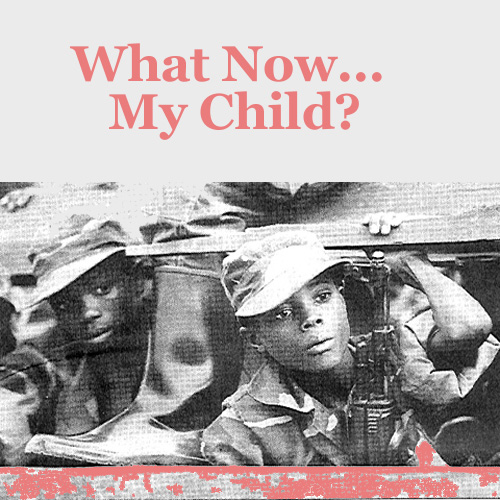
what now my childDon’t turn away from the DRC-Congo just because NPR says peace is imminent. There’s much more to the story.

I, myself, predicted a type of peace would come to the DRC-Congo just about a month ago. And this morning on NPR’s Morning Edition, former Senator Russ Feingold in his capacity as Obama’s special envoy to the region, said fighting was ending.

Good. We’re all glad, and the story behind why this decades-old fighting might, in fact, be ending is an extraordinary one that goes all the way back to when Belgium and the US colluded to disrupt the first democratically elected government of the newly independent Congo in 1961. I called that “Where Terror Was Born.”

The many fascinating chapters of barbarism and war that have followed have included X-Boxes and your cell phone.

To understand the current “peace” it would be helpful to understand all the foregoing but that’s challenging. Let me try to simplify it not too much.

The decades-long fighting in the eastern Kivu province of the DRC-Congo is very much unlike anything in the rest of Africa. The rest of Africa’s wars (excluding those that involved South Africa) are mostly guerila-based, al-Qaeda, Boko Haram jungle and mountain fighters, characterized by suicide bombings and village terrorism.

Traditional military action is pretty new for modern Africa. Obama started it when he came to the presidency and it became apparent to all the world when Kenya invaded Somalia in October, 2011.

Kenya, armed anew by America, trained by America, advised by America, we even saw American soldiers, was America’s proxy. And they “did well.” The Kenyan Army effectively disrupted and ultimately dislodged al-Shabaab from Somalia.

But prior to that 2011 action, organized military action of the sort undertaken by the OAU and UN in such places as Somalia, Rwanda, Angola and so forth, either suffered from a total lack of training (the soliders just didn’t know how to fight, didn’t want to, or just didn’t), or there was no good equipment.

That changed with Kenya’s action in Somalia and it radically continued this year when the UN Security Council approved an aggressive military unit to enter the DRC-Congo, the first ever for the UN in Africa.

And that unit was immediately joined by crack and very well trained and equipped South African troops.

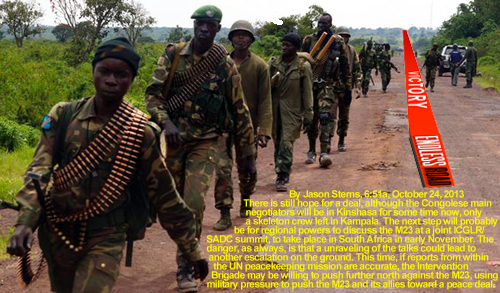
And that’s what defeated the main military group in Kivu, the M23. On Monday they announced a cease-fire and on Tuesday they surrendered.

That’s good, as Feingold said. But it’s hardly the end of the story.

There are many rebel groups in the area, although the dominant one was definitely M23, and I don’t mean to minimize the good news this is. But keep in mind that M23’s leaders have all escaped.

The respectable Think Africa Press said today that M23’s “senior command has dispersed to Uganda and Rwanda,” while many of the expert soldiers of M23 have “gone into hiding, whether fleeing out of the DRC or dispersing into the Virunga forests.”

NPR’s foolish question about accountability, whether the M23 leaders will be tried for crimes against humanity, begs the question whether they will be first captured.

And even if they are, the OAU has already ordered all member states to cease cooperating with the ICC in The Hague, and Kenya’s two leaders on trial there have both been given extraordinary passes from attending their own proceedings: The ICC is falling apart and Africa is instrumental in bringing Humpty Dumpty’s walls down.

Rwanda is furious. Rwanda is ruled by a minority ethnic Tutsi dictator who came to power after the genocide that tried to wipe out his people by the opposing Hutu majority in 1993/94. M23 was formed by Tutsis fleeing Rwanda at that time.

So Rwanda has been supporting the rebellion in The Congo led by M23 for some time. It has facilitated not only an increased clamp on its own oppressed Hutu minority, but an extremely profitable rare earth mining industry overseen by M23 commanders in Kivu.

Here’s what will determine the next stage:

If the UN reaffirms its unusual aggressive mission, peace will be maintained. That itself is so unusual for this area that I wonder what exactly will then happen. Consider that there have been three generations of Congolese in Kivu who have known nothing but warlords.

Peace means fewer people will be killed. That means more people need to eat, have jobs, become somehow productive in a society that has not existed for 53 years.

And that’s where current global and western society fails so miserably. Once the field is cleared of tanks, no one plants the corn.

Just the Keys to His House

Just the Keys to His House

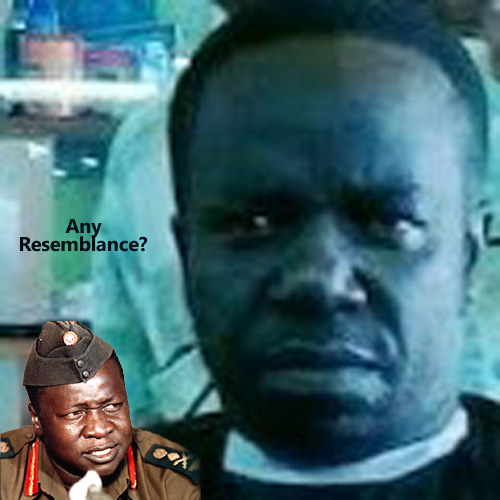
AminAndSonIn the dark and dangerous hole that Ugandan dictator Museveni has cut out of his country, a new face has emerged to challenge him: the son of Idi Amin.

Yesterday, Hussein Juruga Lumumba, announced his candidacy to become Uganda’s next dictator.

Well, not exactly. What he did was write an open letter to the current dictator, Yoweri Museveni, published in the country’s main newspaper as a lead news story, requesting the Ugandan dictator to return to him the homes and other properties confiscated from his father.

Seemingly benign enough, in the feudal Shakespearean politics of otherwise modern Uganda this is better than Ted Cruz spending a weekend in Iowa.

It appears to be the only letter ever written the current dictator, although anyone else who tried this would likely never write, again.

Let’s stipulate a few things quickly, first.

Uganda would be better without any dictator. Kenya has demonstrated that freed from oppressive politics, a country can bloom, grow incredibly fast, and truly become both an economic and cultural powerhouse for modern Africa.

Ugandans were just as well educated, maybe better than Kenyans. They were the colonial favorite of Britain (that considered Kenya a simple stepping-stone to Uganda), and in the short few years of independence before Uganda slipped into its endless dictators’ cycle, it was forging well ahead of Kenya.

And even during the rest of my lifetime in Africa, even when under the repeated oppressions of horrible leaders, Ugandans wrestled up some wonderful accomplishments, including vanguard research and implementation of many public health initiatives including malaria control.

All that keeps Uganda down is its love affair with dictators.

No credible representative leader has ever made it to any of the top echelons of Ugandan government. Rife with ethnic divides (but so is Kenya), shackled with an urban population that still reveres an ancient monarchy, Uganda just can’t break the habit of being oppressed.

My wife and I lived for two years on the Kenyan/Ugandan border during the height of Amin’s terror. The fear that every sane person felt, no matter how secure they might have been inside Kenya, was horrible.

The two weeks that we spent driving from one end of Uganda to the other during Amin’s regime might have been one of the most foolish things two 25-year olds had ever done. But what we saw and heard and experienced became fundamental to my understanding of Africa thereafter, that the continent’s enormous potential was hamstrung by its inability to shake paganism.

And now, forty years later, it comes back to haunt that poor country.

Times have changed. Hussein Juruga dresses nicely, writes and speaks with the fluency of a privileged child educated in both France and Britain. And lacking any actual job, he lists his occupation as “politician” in his blog.

His resume includes being a “media consultant.” And while it’s difficult to find many in Uganda willing to write Op Eds in the country’s newspapers, Juruga often waxes eloquently therein on the modern media, espousing greater freedoms.

Sounds pretty right on, no? And the country’s main newspaper, arguably the mouthpiece for the current dictator, gives him a glowing recommendation
as a former employee.

But dig into his prolific blog, and you find that’s he’s homophobic and dangerously militaristic, and he avoids ever discussing other current challenges to the current dictator, except his own.

Kizza Besigye and Erias Lukwago, for instance, are the two most prominent dissidents in Uganda and fairly well known outside the country. But Juruga hasn’t mentioned either of them, ever.

But the overriding evidence of Juruga’s intentions is the bone-chilling defense he constantly mounts for his father.

Claiming that all the bad stuff attributed to his father is rumor mongering, Juruga insists the smear campaign “is peddled mostly by individuals who want to access political support and for others to try and maintain political relevance today.”

He argues that it was actually the Tanzanians (whose army ultimately deposed Amin) — not his father — that caused the most misery and destruction in the country.

He admits threatening Giles Foden, the author of The Last King Of Scotland, with a libel suit.

He may be more polished than his father. His power is indisputable, given the public nature of his rages within Uganda’s current clamp on media freedom.

And a simple change, it seems, is all that he wants: Just give him the keys to his house.

Dēmos Gravitas In Spades

Dēmos Gravitas In Spades

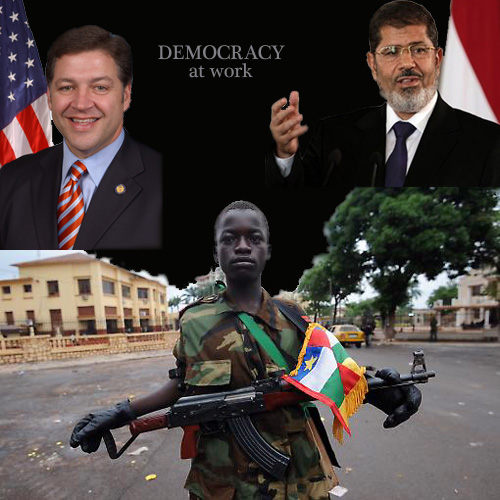
USEgyptCARfailing democracyThe trial of deposed Egyptian president Morsi, the bloodbath looming in the Central African Republic (CAR) and the new tribulations of Pennsylvania Congressman Shuster are all linked by the power and failure of democracy.

I’m not giving up on democracy, yet. But it needs some work. Here are the facts:

EGYPT
If ever there was a “Show Trial” in our lifetime it began today in Egypt, where the deposed president Mohamed Morsi is charged with murder. He and his co-defendants were defiant, shouting until their voices were hoarse. The trial, which carries the death penalty, next convenes on January 8.

CAR
The country of 5 million in the middle of Africa will likely soon be the world’s next site of major genocide. NPR, the BBC and others interviewing UN staff in the country report today that genocide is imminent.

PENNSYLVANIA
Seven term Congressman and committee chair, Bill Shuster, a man about as conservative as you can get, faces a credible challenge from a Pennsylvania T-Party right-winger for having voted to end the government shutdown.

My take on the three ongoing events:

EGYPT: I’m glad Morsi was deposed by the military. He was destroying everything progressive in Egyptian society, defying the constitution including the judiciary, and essentially wrecking vengeance on a society for the long oppressed Muslim Brotherhood of which he was an important leader.

He had not yet quite started “rounding up the Christians” as former military leaders including Mubarak did to Muslims like himself, but he moved modern Egyptian society radically backwards, away from representative governance towards a dictatorship of Muslims that was polarizing society and aggravating the Christian/Muslim cleavage in society.

There was no mechanism in Egypt to get rid of a bad president, and that is the mantra used by progressives in Egypt today to justify the military coup. The irony, of course, is that had there been such a mechanism, Morsi would have prevailed over it since the fairly elected majority of the country and their elected representatives would never have voted to convict.

From far away, though, I feel the generals are going too far. They do not seem to believe that any compromise with the Muslim Brotherhood is possible, and that bodes very badly for the future of Egyptian stability.

CAR: What is happening, today, and going to happen in far worse measure very soon in the CAR is a failure of global institutions precisely because global institutions can’t navigate well the growing enmity between Christians and Muslims.

Note with great importance that in such a deep part of Africa, “Muslim/Christian” is actually a misnomer for any conflict. The ethnic divides, which are at the root of the conflict, existed long before Islam was born and perhaps before Christianity was born.

And as in Rwanda, all these various ethnic groups have lived together and intermarried and even shared languages for generations.

The Banda, Hausa, Fulfulde, Runga and similar ethnic groups in the north of the country, consider themselves “Muslim” especially in the current conflict. This is true even though practicing Muslims of the sort that pray regularly towards Mecca are rare. Many of these tribe were pretty undeveloped, remote jungle villages.

Almost all the rest of the ethnic groups are “Christian,” and they roughly occupy the south of the country and represent about two-thirds of the overall population including the only legitimate city and capital of Bangui. But they have no military support. The French long ago abandoned them.

The Muslims have no state support, either. But as the Obama/Holande alliance to crush al-Qaeda and its affiliates in Africa succeeds, the CAR is where the last guns, missile launchers, grenades and IUDs get dumped, and they are being dumped by fugitive Muslims on those in the CAR who call themselves native Muslims. So the one side is armed, and the other isn’t.

And the way it looks right now, nobody really cares. It seems the general consensus in the world is to just let everyone in the CAR destroy themselves. The UN Special Representative on Genocide said over the weekend, “We are seeing armed groups killing people under the guise of their religion…and decisively I will not exclude the possibility of a genocide occurring.”

PENNSYLVANIA:
Rep. Bill Shuster, like the father before him, represents a very rural part of southern Pennsylvania. Like so many other nonurban areas in America, it has not done well over my lifetime.

Median income has fallen, traditional life ways like independent farming have declined, even health statistics are worse than they were. In a nutshell, a father can no longer presume anything except that his children will be worse off than he was.

The reason for this is clear to me: a redistribution of wealth to the top of the pyramid. A cluster of power at the top oppresses those below with feudal outcomes like Walmart and phony mortgages followed by foreclosures.

But armed with money, the forces in power manipulate these folks to such a degree that they work constantly against their own self-interest. The most poignant example is how school referendum after school referendum is defeated.

Education is compromised to the point that no one in southern rural Pennsylvania has a clue as to why they’re more miserable than their folks. So…

… they blame the government. Add a pinch of “it couldn’t get worse than it already is” and a rather healthy American dose of revolution, and why not just close the government down?

All three of these examples are outcomes of failed democracy. Because all three situations are the result of democratic institutions paving their paths.

Egypt is clear. It was truly a fair and free election that brought Morsi to power.

In the CAR, which suffered ethnic conflict short of genocide for centuries, ethnic conflict is now oiled by the democratic processes of the west that permit if not encourage the sale of arms, by the “democratic choice” of Presidents Obama and Hollande to allow the CAR to be the “fire that burns out,” and the democratic (if highly filibustered) UN Security Council that has decided this spot on the world isn’t worth saving.

And in Pennsylvania it is people manifesting power in such a way that it returns to oppress them.

In each case, the value of self-determination turns against itself and democracy ends up destroying itself. Self-interest is compromised not for the betterment of the whole, but to destroy self-interest.

As I said, I’m not abandoning democracy. But someone with a really good stethoscope needs to take a look at it.

Mega-Mess Getting Beautiful

Mega-Mess Getting Beautiful

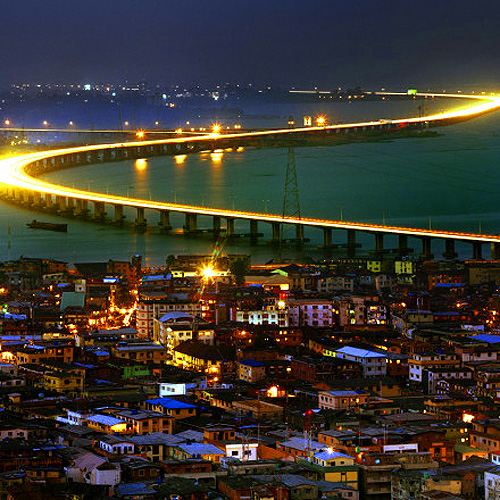
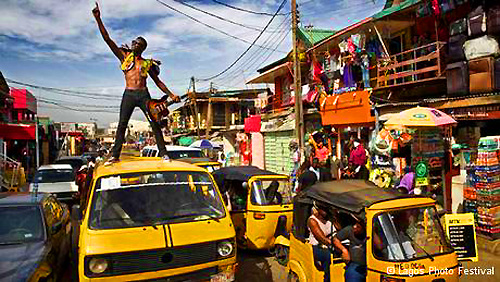
LagosArtFestivalWhat’s going on in Nigeria is Art: The Art of Life in a mega-city after the village. The Art of Survival in the age of Snowden. It’s a mega-mess, beautiful and getting better. By most accounts there’s less of a chance you’ll get killed, now, but if you do it’s likely your coffin will be fusia colored.

The Lagos Photo Festival opened last weekend and will run through the middle of the month in, yes gulp but then reconsider, Lagos.

Lagos is doing better. Let’s start with the worst: it’s 15 million large and growing (the actual gazetted city is 10 million; surrounding areas that are indistinguishable from this core, another 5 million). There are frequent power outages, although they’re brief. There’s still widespread crime at all levels, from pickpocketing to kidnappings, and the huge police presence is basically there to institutionalize it all.
blackking
But truly, the locals, both Nigerians and some of the near 40,000 paid expatriates, think in just the last two years things are definitely improving.

“Vibrant chaos,” is how one of dozens and dozens of expats blogging about “Life In Lagos” puts it.

And practically everyone points to the new governor, recently reelected with 81% of a totally fair and democratic vote, as the reason.

Babatunde Raji Fashola (San) has crushed much of the mafia, reformed much of the police and significantly improved delivery of public services in a short two years. How? By stopping so much of the corruption that siphoned off public funds.

Nigeria can easily be Africa’s richest country. Yes, even richer than South Africa, and that’s a simple calculation of the amount of oil it can still produce.

The Lagos Photo Festival seems to me to embody all that’s good and exciting about this very recent transition from crime and moral oppression into a legitimate society.

What I’ve seen digitally is definitely in the forefront of photo art. Much of it understandably builds on color, as a given characteristic of almost anywhere in Africa. Another central theme among the 50 artists being exhibited is order from chaos, somewhat embodied in the festival’s title, “From Village to MegaCity.”

roomWhen Guernica magazine asked the LPF founder, Azu Nwagbogu, why he created a festival dedicated to photography, he replied, ”[That is] the fastest growing art tool on the continent, and it’s perhaps the easiest to gain access to.”

Nwagbogu is not any more a photographer than a musician. In fact, what he really is is a trained public health official who almost became a professional boxer. Rich enough to wander through Lagos’s new social scene easily, he’s able to command the network that can create something meaningful in a sea of 15 million.

It’s a sad fact, today, in Africa that capitalism is exploding so fast that the trajectory of the rich leads them quickly away from their roots. Many of the artists Nwagbogu has collected for this festival are unknown, precisely because they weren’t rich enough to emerge out of the hoards.

A great example is Afoso Sulayman, born in Makoko, one of Nigeria’s biggest slums. His work is definitely inferior to many of the others, but he’s only begun. He claims to have been photographing for less than a year.

That type of affirmative action in an art festival is something only Africa dare do. And it may ultimately lead not just to new amalgams but new definitions of what art in the modern world really is.
bottomart

On the Wings of a Dove

On the Wings of a Dove

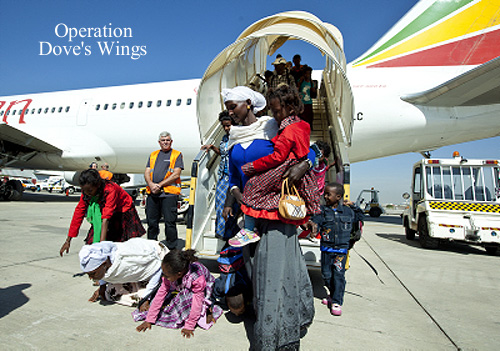
.This month marked the last planned charter flight of presumed African Jews from Ethiopia to Israel, capping a generation’s long program that “repatriated” more than 40,000 Ethiopians.

(Some reports put the number as high as 92,000.)

Referred to as “aliyah,” the collection and immigration of disparate Jews from around the world into Israel is public policy, but is mostly funded privately. Once in Israel the state apparatus provides various educational and financial assistance.

The stated policy of Israel to provide citizenship and security to any Jew anywhere in the world is referred to as the “Right of Return” and imbedded in the entire raison d’etre of Israel.

Many impoverished around the world, however, wishing to invoke the Right of Return are unable to do so on their own. And many who are simply among the throngs of Africa’s impoverished who long to immigrate to someplace with a better opportunity, try to invoke the Right of Return with little evidence they are Jewish.

Avi Bram writing in Think Africa Press this week called the end of Operation Dove’s Wing “A page … turned in the history of Jews in Ethiopia. But despite what Israel may think, the page doesn’t mark the end of the book, but merely a new, uncertain chapter.”

The Ethiopians returned to Israel in Operation Dove’s Wing had to demonstrate seven generations of Jewish lineage to be eligible for aliyah. Over the last ten years large numbers of Ethiopians migrated to the town of Gondar where various Jewish agencies were supporting temples and Hebrew education programs.

But in the end as many as 7,000 Ethiopians claiming to be Jewish were left behind. Now that Operation Dove’s Wing has ended, almost all of the Jewish agency support is ending, although other NGOs to some extent may replace them.

But the dynamic of Africans wanting to be considered one thing or another, so that they can be brought to a better world, and then examined by a stated government policy to credential lineage, verges on institutionalized ethnicity if not outright racism.

In the case of the Ethiopian Jews, the four major programs in 1984, 1985, 1991 and the last ending this month, were funded largely from American, South American and European Jewish communities.

I witnessed the 1984/85 “Operation Moses” which was the first program in Addis, and it differed considerably from what I watched happening this month.

Back then the tarmac of the Addis airport was filled with white tents, El-Al 747s, and many professional Israelis, especially doctors. Busloads of very traditional Ethiopians would come onto the airfield, be examined and were often so naked that they had to be clothed as well before boarding the aircraft.

That operation, by the way, differed in many respects from subsequent ones. Technically these Ethiopians were refugees being bussed in from Sudanese refugee camps through the country they had fled.

The toppling of Haile Selassie, the last emperor, led to a very turbulent period in Ethiopia known as the Red Terror. Large numbers of refugees were sent into mostly The Sudan. The Sudan wasn’t kind to them, being one of the most anti-Israeli countries in the world.

So there was some real humanity in Israel’s program to bring those refugees into greater safety. To be sure, the ruthless dictator of Ethiopia at the time, Mariam Mengistu, had no love for them, and it was also a deft diplomatic effort of Israel that organized the exodus from Addis.

But that being said, I remember thinking from conversations with several Americans who were with me at the time and who were associated with the operation, that quite a few non refugee Ethiopians were squeezing into the mix that was being transported to Tel Aviv.

Regardless, everyone I saw looked like they desperately needed help. If not sick, they were certainly destitute. Contrast that today with the YouTube video of the last charter flight arriving Israel from Operation Dove’s Wing.

Part of the explanation for this difference is simply the good news that Africa has developed so rapidly in the last generation. But that’s the point of contention.

If these Ethiopians who were relatively well dressed and well, well-off, were being given this extraordinary boost of opportunity by now becoming citizens of Israel, while millions of their fellow countrymen remain certainly destitute and impoverished, is this fair?

Many analysts like Avi Bram question if it even well conforms to Israeli policy. But the question I’m posing is whether the Right of Return in today’s world is an anachronism that contributes to racism.

If not, how far back must history stretch to justify such policy. Should Norway facilitate a Right of Return to anyone demonstrating a Viking Heritage through the DNA testing that can now pretty well determine that?

We don’t need more separation in Africa, today, much less anywhere in the world. I applaud Israel for the remarkably humanity the state is giving people in need, but I wonder if the choice of who that humanity is given to is a moral one.

We Need Shrinks not Generals

We Need Shrinks not Generals

CongoMarchUnder the noise of Snowden, dysfunction of Congress, frantic media and lackluster personality of Obama, the War Against Terrorism is being massively ratcheted up in Africa.

The French Foreign Legion was dispatched last week to the remote deserts of Mali, to support a freely elected government that is being newly challenged by rebel groups in its most outlying cities.

Crack South African troops added to increased United Nations peacekeeping forces and ruthless Congolese government troops newly armed by the west, have been crushing the last of the known rebel groups in the eastern Congo, an area of conflict for nearly a half century.

How’s it going?

Hard. The unspoken but terribly obvious Hollande/Obama alliance to make Africa the last great military battleground against organized terrorism began five years ago in Somalia. American advisers were everywhere in northern Kenya and the port of Mombasa, and French warships were just off the coast of Somalia.

Drones were added and the war begun. Kenya was enlisted as the visible front army and Somalia was “liberated.” Its al-Qaeda affiliates were scattered and what was left of anything organized raced through Uganda into the center of the continent.

The world watched 90 U.S. soldiers chase them across the Uganda.

But Hollande and Obama miscalculated the arsenal of weapons that liberated Libya would make available, and scattered groups in Mali benefited enormously. France’s end-game mission to America’s chasing of the rebels into the center of the continent was to crush them in the Central African Republic (CAR).

But instead, it had to focus on Mali, far northwest of the CAR. So today the CAR is essentially anarchistic. A report published this morning by Amnesty International describes the CAR in the most horrific, barbaric terms. Every civilized person seems to have abandoned the country, making it ripe for organized terrorist control.

Hardly two years ago the focus of visible battles between the west and its proxies, and al-Qaeda and its proxies was in Somalia. Only a few months ago it reemerged in Mali where it persists. And the riffraff, disparate, heavily armed leftovers of a dozen so-called al-Qaeda affiliates or older rebel groups (like the LRA) are now duking it out like barbarians in the CAR.

You cannot eliminate terrorism, Mr. & Monsieur President.

You cannot eliminate unless you had global gun control the likes of which evades my most fanciful dreams. Where there are weapons and the materials for making them, there will be terrorism.

The question is, Are We Safer Now?

Before I give you my opinion, don’t you think it’s important to also ask, Is Africa Safer Now? What right does the west presume in order to use Africa as the backforty into which the wolves are chased and kept at bay?

If the world ever runs out of weapons, we’ll be forced to deal with conflicting ideologies, as well as crazy terrorists, in ways we should develop, now.

Modern force is so omnipresent, as easily mastered by an internet keyboard, that it can’t possibly end conflict, today. It will only interrupt or delay it.

Consider this, first. The conflict in the DRC’s Kivu Province is a half century old. It’s based largely on the same ethnic divisions that caused the Rwandan genocide. Those divisions are festering. The calm in Rwanda is the calm of a benevolent strongman. Once his biceps snap, all hell is going to break loose.

Consider this, second. Organized terrorism is fanatical. Unlike ethnic conflict, terrorism may have no other explanation except the obsession to rule and control.

Both turn men into beasts eager to die – to kill themselves – for reasons they don’t wholly understand. Hypnotic or simply psychotic.

You can’t get them all. We don’t need any more generals. We need shrinks.

Beating The Wrap

Beating The Wrap

beating the wrapWhile the trial of Kenya’s Vice President in The Hague continues it’s increasingly difficult to believe that Kenya’s President will actually show up for his trial on November 9.

The future of the International Criminal Court hangs in the balance, and it’s a bum wrap for a good global institution based on noble ideas.

But western powers are lobbying that the trial of Uhuru Kenyatta, Kenya’s President, either be postponed or that Kenyatta be excused from the proceedings in The Hague, because of the national crisis that followed the Westgate Mall attack.

Pressure particularly from the U.S. seems to be winning the day, and if Kenyatta does attend, it may be only briefly for the opening session. The world’s obsession with security trumps everything, and it seems this simple equation is that “crimes against humanity” are less important or severe than terrorism.

Over the weekend a BBC analyst put it this way:

“Many experts in international law believe that his case reflects the apparently incompatible demands of historical restorative justice versus future global security.”

Those of us who believe – and there are many if not a vast majority of Kenyans – that Kenyatta and Ruto are, in fact, guilty as accused, are not getting much support from the ongoing process of the ICC.

The trial hasn’t gone well for the prosecution. Many witnesses have been dropped, and of the first half dozen on the stand, there were flip-flops and easily rebutted innuendos.

It just hasn’t seemed a very tight prosecution. Moreover, so far all the evidence has been circumstantial. Ruto has been implicated in lots of hocus pocos similar to Free Masonry or other quasi secret organizations. He’s been implicated in funding groups of known thugs and referenced as giving a pass or nodding to illegal actions.

But no witness has accused him of killing anyone or of specifically telling anyone else to kill anyone.

The reason so many mobsters in the U.S. ultimately went to jail was for tax evasion, a strange wrap for murder. But it’s unlikely that the Capones, Genoveses or Salermos would ever have been convicted of crimes against humanity.

The fact of the matter is that Uhuru Kenyatta has probably less blood on his hands than Dick Cheney, or a bunch of top American politicians long since dead and forgotten.

That shouldn’t be a reason for Kenyatta getting pass, it should be a reason for trying Ronald Reagan rather than letting Oliver North go to jail for him.

The World Court is a magnificent idea. And the handful of people it has so far tried and jailed include some of the worst monsters in modern history. But none of them were nationally elected to lead the countries they were accused of previously destroying.

I’m convinced that Ruto and Kenyatta are culpable of the crimes they’re accused of. But The Court has so far not presented an air-tight case, the west (not much less Kenya itself) is now newly worried about terrorism in Kenya, and I’m just not sure that the people of Kenya would not rather have these two men as leaders than jailed criminals.

I’m not saying the country has forgiven them, because it’s still deeply split tribally and socially. But where Kenyans do seem to have come together is that the election process should be considered paramount, even more important than the judicial process.

Kenyatta and Ruto were fairly elected although the contest was phenomenally close. But the country truly seems, from all sides of the aisle, to be rallying around that concept that the election was fair.

And if criminals have been duly elected, they should duly rule. And no one presumes this can be done from a jail.

It’s been true of not but a few of our own top politicians.

BACKGROUND
Kenyatta, Kenya’s president, and its VP William Ruto, have been charged with crimes against humanity by the World Court in The Hague. Ruto’s trial is ongoing. Kenyatta’s is scheduled to begin in two weeks.

Before they won Kenya’s presidential election last March, they were powerful men within political parties that were closely linked to various tribes. When Kenyatta’s party lost the election to Ruto’s party in 2007, horrible violence broke out throughout Kenya.

About 1300 people were killed, some brutally, and anywhere from 180-250,000 people displaced. Many of these displaced persons remain in state-run camps, today.

The peace treaty brokered by the U.S., the U.K. and Kofi Annan worked magnificently and included a provision that the perpetrators of the violence be named and tried.

The Kenyan Parliament, unable to agree on a process for trials, asked the World Court in The Hague to undertake the trials, which is now happening.

Meanwhile, the two arch enemies formed a political alliance and won the election.

Save it By Killing it

Save it By Killing it

Background photo by Dan  Pero.
Background photo by Dan Pero.
Sports hunting’s opposition to “listing” the African lion as an endangered species is a battle royale that unmasks the industry’s indifference to real conservation.

The Asian lion, nearly extinct in India and Nepal, was declared an endangered species in 1970. In July of this year the U.S. Fish & Wildlife Service (FWS), the agency charged with implementing America’s Endangered Species Act (ESA), announced it was considering listing the African lion in the same way it had listed the Asian lion in 1970.

(FWS, ESA, CITES are all magnificent but confusing. After this blog, below, I try to untangle them for you.)

FWS is acting in response to a request by five U.S. organizations: International Fund for Animal Welfare, Humane Society of the United States, Humane Society International, the Born Free Foundation/Born Free USA, and the Defenders of Wildlife and Fund for Animals

These organizations are reacting to a steep decline in lion populations documented especially over the last decade. The decline is related to a number of factors, some of which I’ve discussed in earlier blogs, but basically it boils down to a squeezing down of the size of the African wild as African countries develop so rapidly.

If FWS does “list” lion, it will have several immediate effects. The first is that zoos, circuses and a few individuals who own and possibly breed lion in the U.S. will be further regulated in how they do so.

There is little opposition to this, because the regulations are already pretty tight and zoo organizations are well allied to the EPA.

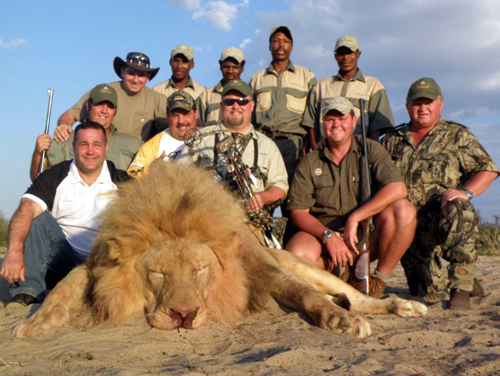
The second, though, has caused an explosion of opposition: Sports hunters will no longer be able to bring their “lion trophy” home.

As with elephant, today, a hunter could still go over to Africa and shoot a lion where a given country allowed it, but anything but the photograph of his hunt would have to be left behind.

A third but possibly the most important effect of such an FWS “listing” would come a bit later: That would be the similar “listing” of African lion as endangered by a world treaty, CITES. That would essentially end lion hunting throughout the world.

The opposition has exploded. I won’t cite all the sports hunting, NRA related and other organization that have gone ballistic. Just give Google a few words and you’ll spend your next month reading through them.

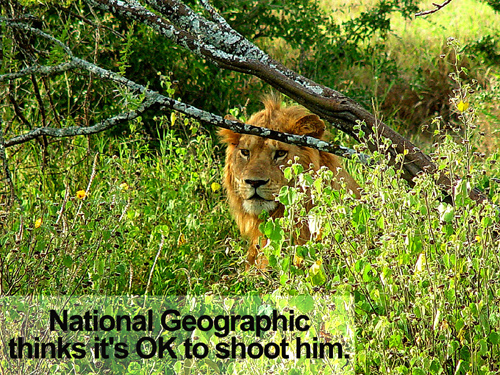
But I am appalled, however, that National Geographic editorialized against “listing” by citing a Tanzanian game reserve that it claimed was dependent upon “$75 million dollars annually from lion hunting.”

NatGeo took up the most prevalent argument around that listing the lion will turn off a spigot of development funds derived from hunting that is essential for conservation, and lion conservation in particular.

The research center NatGeo quoted is a part of the remarkably corrupt Tanzania Wildlife Department, and there’s not a scientist on earth that trusts them.

NatGeo cited three lion experts in the editorial. Paula White, director of the Zambia Lion Project, was one. Zambia as a country has just banned lion hunting and prior to that ban it was earning as much if not more than Tanzania in lion hunts. Kenya has banned all hunting since 1979, and both its lion population and its tourism has grown substantially since.

The second expert cited is the widely respected Craig Packer of the University of Minnesota. In 2010 Packer and two others published a paper in Conservation Biology that gave the Tanzanian government five steps that it must undertake if it were to continue allowing the hunting of lion.

The government has taken none of them.

But what is most of an affront to those of us who read NatGeo in the crib is that the editorial is written by an official of Safari Club International, the world’s largest hunting organization.

NatGeo, as I’ve said before, has gone the way of the Wall Street Journal and Congress. Just survey its weekly fare on its cable channel to confirm this.

Even the New York Times on its op-ed page allowed un-fact-checked statements by a Tanzanian official that were quickly pointed out fallacious by LionAid in the UK.

As any scientist will confirm, animal numbers in Africa are very hard to come by. Government statistics are poorly collected and compiled and often just made up. Tanzania is probably the worst example. So it is hard to wholeheartedly embrace LionAid any more than the Tanzanian government as they duke out numbers.

But the best statistics documented, by researchers like Packer, whose studied recommendations for lion conservation are then wholly disregarded by Tanzanian officials, suggests that those officials are the least likely to present good evidence.

My point in this blog is to argue that “banning hunting” is not going to harm conservation. I think Fish & Wildlife is well advised to consider that banning lion hunting will, in fact, promote conservation. It’s hard to imagine why banning the killing of a species in decline won’t be of some use, if not serious aid.

The recent moves by Botswana and Zambia, and the long history that Kenya has with banned hunting, provide warehouses of proof that banning hunting is a good conservation tool.

The pitiful attempts to enlist academic support for the opposition, as evidenced in the fallacious articles in NatGeo and on the op-ed page of the Times, is just further proof that facts mean little to an industry, which like those supporting the NRA, may be severely hurt by the listing.

So their real colors come out, their ire is fired, when their principal goal, hunting, is challenged.

No, you cannot save lion by killing them.


Endangered species is a somewhat complicated topic. America’s current Endangered Species Act (ESA) of 1973 was signed by President Nixon as a replacement of a 1969 law which had a rough start and rocky judicial test.

The ‘73 law went all the way to the Supreme Court where it was strongly affirmed, and it has been the law governing the protection of endangered species in the U.S. ever since.

Parallel to the American experience, the world as a whole was formulating a treaty that would protect species worldwide. Its first draft was in 1963, but after the American law was affirmed by the Supreme Court in 1973, CITES was also formed in 1973 and now has 180 subscriber nations including the U.S.

While it’s not wholly true that CITES walks in lock-step with ESA, particularly in the last decade, it does tend to “list” species after ESA does.

This only makes sense, because what CITES does is ban the international trade of the species listed. ESA, on the other hand, has much more power within the U.S. It can stop the development of a dam, for instance, or forbid hunting even in a private forest, if it finds a species is being threatened by that action.

And because America remains the largest economy in the world, whatever ESA “lists” becomes easier for CITES to enforce if it “lists” the same species.

Ban East African Hunting

Ban East African Hunting

LionHuntSports hunting has long been characterized as a conservation tool. That is absolutely not the case in East Africa, where all trophy hunting should be outlawed.

Kenya banned all hunting in 1977, then later allowed some bird hunting. But the other nations of East Africa promote sports hunting.

This article shows why sports hunting throughout all of East Africa should be banned. I think it likely with time the ban should extend throughout all of sub-Saharan Africa.

Botswana recently banned hunting, and Zambia recently banned the hunting of cats. I think it inevitable even the big hunter destination of South Africa will finally also ban trophy hunting.

But right now the evidence is so compelling to end hunting in East Africa, that’s where this article focuses.

The power of the sports hunting industry and the gun manufacturing industry cannot be overstated as we approach this debate. Sports hunting, even big game hunting in Africa, is far less contentious than gun control in the United States, for example. But the industries and lobby of wealth organized to promote gun ownership has virtually fused itself with the issue of sports hunting.

Americans constitute the largest single group trophy hunting in Africa. So American institutions, money and lobbying are integral to this African debate. “Americans are by far the most keen to spend around $60,000 on trophy hunts in Africa,” writes Felicity Carus recently in London’s Guardian.

The balance of American money and power supporting hunting is woefully unfair, and it isn’t just the NRA. Sportsmen’s Alliance and the National Shooting Sports Foundation are both funded by multiple large foundations whose donors are kept secret. Journalists shy away from reporting negatively about these monoliths and politicians give them a wide bay.

My intention, here, is not to take on sports hunting per se, nor gun ownership. The issue of big game hunting in Africa specifically has reached a uniquely critical threshold. In Africa – right now – big game hunting is a threat to conservation and rural development.

I fervently believe there are philosophical and ethical arguments against many types of sports hunting. But that is actually secondary to the more compelling reasons today in Africa that big game hunting should be ended.

The main reason big game hunting should be immediately ended throughout almost all of Africa is corruption and bad policy. The same reasons that conservatives use to deplore even humanitarian aid to emerging nations is grossly evident in Africa’s management of sports hunting, today.

We’re reaching a critical point in Africa’s wildness. It’s a tipping point. The growth of African societies is exceptional, and basically good. Bigger human populations are developing at breakneck speed. It’s hard for an American to imagine how fast, for example, Kenya is developing.

Many of my clients are repeat visitors to Africa. It’s amazing to watch their jaws drop when they return after even as few as five years. Highways, factories, residential developments .. it’s an unending serious of hopeful and modern progress.

And at what cost? At the cost of the wild, of course. That’s not a surprise and it’s not new. But it is changing.

Only a decade or two ago, safari tourism was critical to the economic health of Kenya, vying with the production of coffee and tea for the top spot on Kenya’s GDP. Today, tourism overall in Kenya represents only 5.7% of GDP (2011) and arguably half that is non-animal, beach tourism.

And while it’s likely Kenya’s tourism is falling behind other sectors of its economy because of recent terrorist acts, neighboring and quite peaceful Tanzania’s trends are even more exaggerate.

Tourism as a part of the Tanzanian economy is expected to drop to 7.9 per cent by 2020 from 8 per cent recorded in 2010. Like Kenya, by the way, it is likely that the single biggest growth within tourism in Tanzania is the beach, not animals.

This emphatically doesn’t mean that safari tourism isn’t growing. What it means actually is that so many other sectors of the economy, like oil production, are growing much more rapidly.

Oil is more important than lions. It wasn’t in Teddy Roosevelt’s day.

So the threat to the wild is severe in Africa. While the U.S. continues to debate whether the keystone pipeline should be laid over our wild lands, there’s not a moment’s hesitation about a new dam project cutting a chunk out of Africa’s largest wildlife park or slicing away protected marine environments for deep-sea drilling.

It is not surprising, then, that in most of the protected wildlife reserves in Africa, animal populations are falling, often because those reserves are either being reduced in size or because the pressures on their periphery are growing so great.

Sports hunting in Teddy Roosevelt’s day hardly disturbed the ecosystem. The technology of guns was far more limited than today. Animals in rural areas at home and in Africa were truly pests, because there were so many. Most sportsmen (including TR) killed very much for the meat that was essential food for them.

But as societies developed, as Africa is developing today, hunting too quickly began to deplete animal numbers (bison, pigeons, wolves, etc.). Wild environments were protected, and most hunting banned within them. And where it isn’t completed banned, it’s heavily regulated.

The reason is terribly simple: there’s little contest between a hunter and a wild animal, and over time, wild animals lose the number’s game.

Africa has proved itself incapable of banning or regulating. Well managed (regulated) hunting is often considered a buffer against poaching, and so it was in Africa thirty years ago. The outskirts of protected areas were declared hunting preserves, and the symbiotic relationship with the protected area was a healthy one.

Along or within some protected areas in Africa hunting was used as the culling tool, as wildlife managers tried to establish a carrying capacity balance within an areas biodiversity. Hunters paid royally to kill “excess elephants” that lived at least part of their time in Kruger National Park in South Africa, for instance.

All of this worked, once. It doesn’t, now.

“Presently… the conservation role of hunting is limited by a series of problems,” according to two African and one French conservationists writing the definitive scientific paper against hunting published in Elsevier six years ago.

After meticulously detailing all the potential good that sports hunting in Africa could do, the authors take a fraction of the article to document how it sports hunting in Africa fails because of government mismanagement and corruption.

The list of corruptible acts linked to sports hunting in Africa would take a month of blogs to document. Whether it’s Loliondo in Tanzania, where land has been arbitrarily taken from both the Serengeti and Maasai farmers for Arab hunting, or ranches in South Africa recently unmasked as poaching rhinos, the list seems endless.

There are so many pressures on Africa’s wild, today, that it is nonsense to continue to allow a contentious one, sports hunting. The trophy hunting industry is tiny, in monetary terms, compared to overall tourism.

Its effect as explained in the Elsevier article is negative. So why continue it? Just so people can get a rush killing an animal? What other reason remains?

We are fighting the dam in The Selous, uranium and gold mining in the Serengeti, off-shore drilling in Lamu and highways through Nairobi National Park. There is absolutely little reason we shouldn’t also be fighting sports hunting, which provides even less benefit to Africa or its wilderness than mining natural resources or moving morning rush hours.

The time for Africa trophy hunting is over.

(Tomorrow, I discuss a very specific sports hunting issue that is now Africa’s hottest wildlife topic: should hunting lions be ended by listing them as an endangered species.

Stay tuned.)

Culling & Killing

Culling & Killing

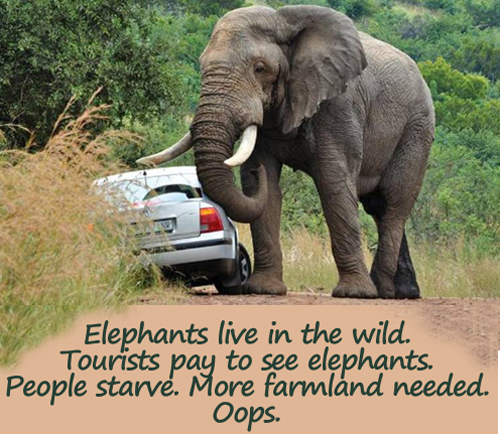
elephant-attacks-carHunting and culling are acceptable in certain cases to protect the lives and livelihoods of people. In Africa this is a complex and difficult topic.

In my series on hunting this week I argue that hunting is no longer a good conservation tool and that in most cases should be outlawed. But there are reasons beyond conservation that make hunting and culling reasonable in limited cases.

The obvious first one is to protect people and you may think it silly to even note this. But I do so to point out how easily the concept is abused.

In June a visitor near a trail head at the Denali Park headquarters shot and killed a moose that he claimed was charging his family. Although the Park Service decided it was a justified killing, it’s hard to imagine so.

Similarly and also because of Congress’ recent act to allow tourists to carry firearms into national parks, bears are now being killed.

Having been in Denali often, and often enjoyed the crowded visitors center, as well as a number of its well patrolled tracks, the authorities have a pretty good record at advising people how to remain out of harm’s way.

Until the Congressional law allowing firearms, it was not by shooting the animal that a tourist protected herself. Simply moving away from it has proved time and again the most effective defense. In fact there is every concern now that animals fired upon will grow increasingly aggressive.

So the specific cases in the foregoing represent abuse of an otherwise reasonable cause for killing an animal.

In Africa these human/animal conflicts are exponentially greater than here at home, and there are many more bigger and destructive animals.

It isn’t tourists being threatened in Africa, it’s farmers and school children. And as human population centers increase and necessarily compete with areas previously wild, these conflicts grow faster than even neutral policy makers are able to deal with.

There are no statistics in East Africa as kept by American parks or the State of Alaska. But everyone knows there are dozens of human/animal conflicts weekly just in the northern game area of Tanzania.

“The animals just cause problems. During the rainy season the lions and hyenas attack us all the time,” one Maasai farmer told London’s Guardian newspaper.

Because tourism, derived from these big animals now accounts for nearly 15% of Tanzania’s GDP, the acts of farmers to protect themselves, their livelihoods and families is technically illegal.

But in the same Guardian article, a Tanzanian field worker for one of the world’s most radical animal conservation organization, African People & Wildlife (APW), conceded “ “It’s not easy, there are lots of problems, but we must try to understand the villagers instead of just punishing them.”

So both Kenya and Tanzania have passed laws that compensate farmers and landholders who can document destruction by a wild animal. But documentation is difficult and corruption caps an absolute inability to effect this as workable policy.

APW is not yet up to my reasoning that given the lack of workable policy, villagers should be able to kill an animal that threatens them, but I think the mounting number of incidents in East Africa will ultimately make this policy.

Culling is a more delicate issue, and for years I felt it unnecessary, but now I don’t. It had been a standard practice throughout all of southern Africa until the mid 1990s when animal rights’ activists prevailed.

Culling was stopped throughout much of southern Africa when the most used and famous park, Kruger, banned culling in 1995. But then it was reinstated in 2008.

Arguments for culling are often flawed. Similar to those used to promote deer culling here at home, bad arguments are often proffered that extreme population densities of one species crowd out another.

Evidence of this doesn’t exist. I don’t subscribe to the notion of “invasive species” because there is no documented case of invasive species categorically pushing another species to extinction – not kudzu, not garlic mustard, not Asian carp or Japanese beetles … or any of the other similar species’ claims in Africa.

I see “invasive species” as the heroes of natural selection, and as best evidenced by the long-term results of the kudzu invasion, nothing bad really happens in the long-term. In fact, it’s usually a good outcome.

The initial invasion of kudzu produced visible declines in other plants, but after long-term studies many of those competing plants have returned, and researchers obsessed with the notion of “invasive species” had to result to chemical harms to the atmosphere, something much harder to refute but similarly much more oblique.

Many argue kudzu is now saving forests. After years of trying to insist kudzu was going to take over the world, southerners have come to grips with its advantages conceding the any destruction was insignificant.

See a documentary film produced at the University of Alabama.

An extreme theory of invasive species leads to the South African concept known as “Carrying Capacity” which claims to determine the most perfect balance among all species in an ecosystem, and then prunes and imports species to maintain this balance.

“Carrying Capacity” was the original reason used by Kruger park scientists to cull before giving in to to animal rights activists in 1995.

But it was something quite different that tipped the scales and allowed them to reverse their decision 13 years later. The compelling argument became “human-elephant conflict” according to parks’ studies.

To be fair, Kruger and South Africans still embrace “Carrying Capacity” which is, of course, allied to notions of controlling invasive species. Both arguments might be useful when managing a defined area natural wilderness. But neither is compelling when applied to larger areas or the wild as a whole at which point it becomes as destructive as the impetus for considering it.

Human/animal conflicts, though, are compelling enough. That’s when hunting and culling are justified.

Thursday, I’ll examine why sports hunting is no longer a viable conservation tool in Africa or here at home.

HUNTING

HUNTING

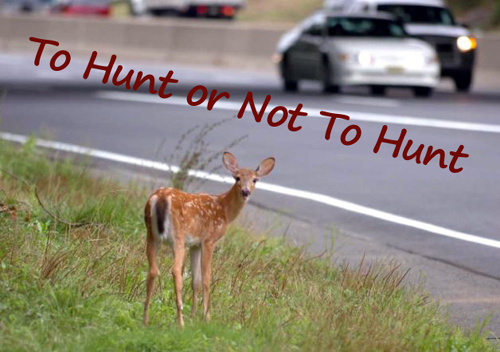
HuntOrNot“This is the first in a series of articles aimed at showing how wealthy American hunters are a force for evil in the third world.”

Those are not my words. They were published recently by two of the most respected South African conservationists alive today, Bev Pervan and Chris Mercer.

Big game hunting as a useful conservation tool in Africa, in my opinion, has run its course. In my 40-year career I have mostly defended hunting though never hunted myself, but I’ve changed my mind. Its use as a conservation tool is no longer viable.

To many people, probably to the majority of people, hunting worldwide from everything as tiny as pygmy ducks to Africa’s elephants is considered a sport, and a rightful one at that. I suppose the genesis if not historically at least of the idea is that vermin threatened home and livestock, ranchers shot vermin to protect themselves and skill cured by professionalism became sport.

I just finished again reading my first edition copy of TR’s “African Game Trails.” I read it for the between-the-lines insight to the man and the times, because the tome is literally otherwise nothing but a journal of what big game animal he killed where and how.

But so much has changed since Teddy’s time, and in fact, so much has changed just during my own life time, that I think we need to rethink hunting altogether.

First, the manhood and physical fitness of the accomplished sportsman in day’s past has been replaced by rich, fat-bellied voyeurs. No one goes to Africa – indeed, no one goes out to the Wisconsin woods – to hunt to prove their manhood or physical stateliness.

Manhood is reached today by mastering the IRS website, not by tuning your Chevy’s carburetor.

Physical fitness is available at every corner gym, the increased running trails and sports centers and by such simple things as watching your diet.

The skill of a good sportsman comes not from being able to down a ten-pointer at 200 yards but from navigating Class V rapids or scaling Mt. Kilimanjaro. The technology has advanced so ridiculously since TR’s times, that “shooting” is little more than telling Siri to kill it.

I fully expect a barrage of hunters to protest otherwise. And to be sure, the tracking aspect of hunting remains a wilderness skill that takes concentration to learn and time to master. But the ultimate killing of the animal today is little more than abject waste.

It’s why, guys, we do catch-and-release. Try that with a lion.

And where Ducks Unlimited was once a champion for conservation, it and other organizations like it are no more.

The non-hunting so-called “conservation programs” by organizations like Ducks Unlimited today are too little, too late, meager attempts at white-washing.

It didn’t use to be like that, here or in Africa.

But it is, now, and my next several blogs will examine these issues about hunting more carefully. And by refusing to confront these issues, we endanger not just “sport hunting” but the wild in whole:

“Lions have become alternative livestock,” Mercer writes. “Trophy hunters and useless … conservationists have allowed the ‘wild’ to be taken out of our wildlife.”

Stay tuned.