And the MU’s Have It! … All!

And the MU’s Have It! … All!

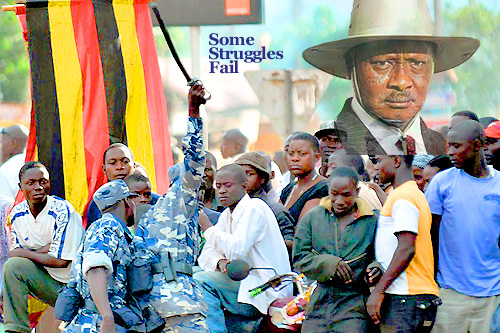
Time is running out on Uganda. Slowly drifting into dictatorial oblivion, its soul is being bled to death by its vampire ruler. Uganda is becoming the next Zimbabwe.

Zimbabwe is so exhausted it will not respond to the African Awakening. And Uganda is on the very threshold of being unable to as well. These two once beautiful places have been laid to waste by power-crazed dictators: MUgabe and MUseveni.

Understandably, the world news about Uganda is almost exclusively about the unimaginable “anti-gay” bill floating like invisible toxin in Uganda’s Parliament. For us in the tourist industry it’s a death knell. If passed, simple knowledge unreported of a gay person becomes a crime.

Casual chatter in a safari vehicle about gay friends or gay society, or god forbid, a gay customer must be reported by the driver to the police, or the driver can be imprisoned. It’s unclear what would happen to the foreign visitor.

And that’s hardly the most draconian aspect to the bill which in one form proscribes the death penalty for certain gay acts.

But I think this horrid legislation is being used as a distraction by Yoweri Museveni from the final cementing of his dictatorship, his swearing in for a 6th term as Uganda’s president.

His elaborate ceremony yesterday was replete with tumbling fighter jets that nearly crashed into the presidential stadium, out-of-tune competing bands, tens of thousands of supporters, and a remarkable list of other Heads of African States gingerly trying to avoid being photographed by the few journalists left in the country.

Museveni is now the longest ruling dictator after Robert Mugabe of Zimbabwe, who has ruled that enervated society for 31 years. Now I’m not one to believe in term limits, but give me a break.

Mugabe – who last year was allowed to travel only into the Vatican and Malaysia – arrived the swearing-in ceremony to raucous and well orchestrated jubilation before taking THE privileged seat next to Uganda’s powerless Chief Justice Odoki (who swore Museveni in), who sat next to the First Lady, who sat next to The Emperor.

Like in Zimbabwe, Museveni came to power legitimately. In fact his recent 6th election was probably fair enough that democracy technicians are required to anoint him (although by nowhere near the two-thirds he claims).

But the election campaign was not fair or democratic. The government controlled the media, imprisoned or killed opponents, dispersed demonstrations in hellish ways, and broke, tortured then temporarily exiled his main opponent, Kizza Besigye, by refusing to allow Kenya Airways flights into the country.

And while all the world bites their lip about what’s happening with the anti-gay bill in the Ugandan Parliament, the fact is that the Ugandan Parliament is becoming a pitiful and powerless entity. No journalist could figure out, today, what procedures are in play with regards to the bill. No one could even say if Parliament were over, or not.

This is because it’s Museveni pulling the strings, and he’s dangling this putrid piece of legislation to distract the world’s interest from the iron crown he just forced the Ugandan population to place on his head.

What happened in Zimbabwe is happening in Uganda. An educated, respectful population torn by recent ethnic conflicts is being manipulated into submission by a heathen dictator. It’s too late for Zimbabwe. It might be too late for Uganda.
Brainwashing U.S. & Nigerian Kids

Brainwashing U.S. & Nigerian Kids


The first job I got fired from was after I reported to my Yugoslavian boss (during the Cold War) that UNESCO’s proposal for funding Sesame Street for Cuban National Television could be used for political, not only educational purposes. Guess what? USAid is now funding it for Nigerian State television.

And guess what else? Besides the Washington Post which originated the story, the only other major city media that carried it was the Kansas City Star. And Kansas is one of a handful (but growing number) of States that impede the teaching of evolution and promote creationism.

So would you please click here to sign the petition promoted by 17-year old high school student, Zack Kopplin of Baton Rouge, who is trying desperately to stop his state legislature from doing what Kansas has done. After which, I’ll put all these paragraphs into a meaningful idea.

Done?

Nearly 40 years ago when working for UNESCO in Paris, I realized that despite my liberal leaning that there were powerful tools that governments could use to attain acquiescence to almost anything. We dared not call it “brainwashing” but that was exactly what they were.

USAid is funding Sesame “Square” on Nigerian state television. There are 13 independent television stations and networks in Nigeria, but none can compete with NTA, the massive state-controlled network which unlike PBS or the BBC is a real mouthpiece for the government.

Mouthpiece. Nigeria has a lot of explaining to do, both currently and historically. And one of its most effective devices is NTA.

And now, it can develop in its children – with U.S. help – a tool for imbibing its messages.

America’s problems are manifold but I think easily reduced into this statement: we have empowered the ignorant.

The ignorant of America are wealthy, know how to spell well enough, and have developed social and political tools to lord over us infidels while flagrantly promoting contradictory ideas, and worst of all, embracing nonsense like creationism.

We can’t – we shouldn’t – outlaw ignorance. It’s our own fault. We didn’t pay the teachers in Oklahoma or Kansas, or for that matter anywhere, enough to do a good job. We created a generation of ardent believers … in nonsense.

The only skill you need to believe deeply in nonsense is how to read. Especially in today’s unreal, surreal and political contrary world.

Learning tools like literacy are not the same as acquiring analytical skills. That’s what’s lacking in America, and now possibly in the next generation of Nigerians. Masses of skilled kids will be made just literate enough to believe the nonsense of their autocratic rulers.

USAid could have funded Sesame Street in Nigeria in other ways – on competing networks clamoring for a voice in the country. But they didn’t. They propped up a corrupt and secular regime with a powerful additive: brainwashing.

Deserts Awakening Everywhere!

Deserts Awakening Everywhere!

The African Awakening is unstoppable, even in Libya and Syria, and maybe coming to China after Saudi Arabia. But did you ever expect it to emerge full force in little Botswana?

Well Botswana isn’t little in terms of geographical size: about the size of Texas, but whereas Texas has about 25 million residents, Botswana has only 2 million. And Botswana is undoubtedly used by those infamous Texas high school textbooks as a model of stability.

Well… not quite.

Botswana is in the midst of a very successful national strike that among other things is closing hospitals, schools and borders. Tourists, for example, may not be able to travel overland into neighboring countries from April 18-29.

“There are different ways to take over governance, and that includes by force,” Agence France Presse reported today that the strike leader, Duma Boko, told a rally in Gaberone.

“If we can come together we can take our government as it happened in Egypt and Tunisia.”

As it happened in Egypt and Tunisia there was a lot of violence, and that won’t happen in “little Botswana.” But change will, and for Botswana it could be quite profound.

The current topic is over wages, not governance. Government jobs account for a sizeable portion of Botswana’s otherwise diverse and historically vibrant economy. The wages have been frozen for 3 years, and strike leaders are demanding a 16% wage increase just as the Botswana government must go sheepishly to the world markets increasing its public debt.

Botswana is not skilled at raising debt. Diamonds, especially, and other mining makes it one of Africa’s richest countries (in terms of GDP or percapita income.)

But the world depression hit luxury goods like diamonds very hard. The industry has been relatively slow to recover.

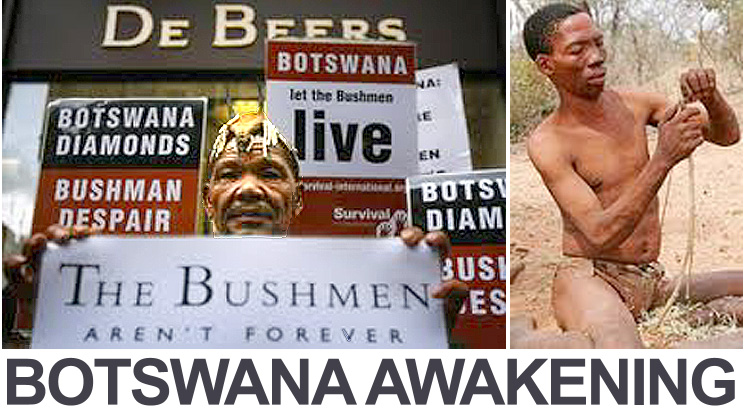
But the history of the current political turbulence is not strictly economic. A side issue which threatens to emerge as the most potent political outcome is the struggle by bushmen to regain control of their ancestral home in the Kalahari.

It’s a long battle whose ideological complexities are being highlighted by the current strike. In 1996, the London-based Gem Diamond Company discovered a huge streak of diamonds in the central Kalahari; in fact, inside the already proclaimed Central Kalahari Reserve, Botswana’s largest protected wilderness.

The government then leased an area to the company, in contravention of its own law, and later offered the mega tourism company, Wilderness Safaris, a lease to develop the first camp in the Kalahari, also otherwise illegal without Bushmen consent.

The Bushmen sued and prevailed in Botswana’s high court in 2006. Gem then threatened to sue the government of Botswana. Wilderness Safaris (working hard to create a good “ecotourism” image) stuck its tail between its legs and moved to another part of the giant reserve and has only sporadically operated a semi-permanent camp, there.

But the Botswana government continued to harass the Bushmen. As recently as last year the government was still trying to forcibly move out the Bushmen.

This “political” issue has gained new traction with the country’s unions and likely could be the ideological basis of bringing down Botswana’s government for the first time since its Independence from Britain in the 1960s.

This is a great story. It’s filled with ideas, not guns or commercial lies. It’s the epitome of what the African Awakening is all about: significant nonviolent political change.

Pathetic Fear of the Wounded

Pathetic Fear of the Wounded

East Africa: beware! You are reacting to the fall of bin Laden like a Republican U.S. politician, and you should know by now that’s absurd.

Until now I’ve felt that East Africa had handled terrorism threats – particularly from Al-Qaeda and its franchises – better than the U.S. But that may be changing now that bin Laden is dead and East Africa is emerging as a powerful young society.

East Africa has probably suffered as much if not more from the machinations of Al-Qaeda than the U.S. Don’t forget: it was the embassies in Kenya and Tanzania that were blown up in 1998 by Al-Qaeda that presaged 9/11.

Fringe Muslims had been blowing up things in Kenya since the early 1960s when the then Block Norfolk Hotel was bombed because it was owned by Jews. Somali shares a 500k border with Kenya, and Al-Shabab (Al-Qaeda in Somalia) controls much of it. During the World Cup last year almost 100 people were killed when two sports bars in Kampala were blown to smithereens because Ugandan troops aid a UN peacekeeping effort in Somalia.

And there’s much, much more. I won’t be foolish enough to count up the bodies, East Africa vs. the U.S. from Al-Qaeda, but the comparison is serious.

And until Obama, American politicians used terrorism incidents to beef up the military industrial complex and prop up their own careers. Sounds harsh? Yes, it is terribly harsh, but it is not spurious, it’s true.

The incredible difference in the way the Obama administration has handled the end of Osama, compared to previous (mostly Republican) administrations that used torture, disseminated grizzly pictures and turned our national security into a contest for new MnM colors, tells me that we’re finally getting it right.

Ideas, Joe, not guns and their human debris. Plans, not fear.

But now I’m worried that East Africa is following the same wrong course that America followed in the past.

“As the world celebrated the killing of Al Qaeda leader Osama bin Laden in Pakistan Sunday by US Special Forces, East Africa stared at a possible new political nightmare,” warned popular East African columnist Charles Onyango-Obbo in an OpEd this weekend.

Onyango went on to terrify his readers with the same balderdash dumb politicians have used for centuries: fear of the wounded devil. Wounded but not killed, his vengeance becomes greater than ever.

“Most analysts agree that the Al Qaeda threat has not been buried with him,” Onyango writes of the obvious, even though it isn’t. Many analysts believe this and many other successes against terrorism recently herald the beginning of the end of Al-Qaeda.

Terrorism expert Peter Bergen claimed on CNN the bin Ladens’ death marked “the end of the war on terror” and a number of experts as critical as Foreign Policy’s Daveed Gartenstein-Ross cautiously agree.

I don’t think it’s necessarily that definitive, but my point is that there is not universal certainty among those who should know, that bin Laden’s death increases the threat level of terrorism anywhere .. including in East Africa.

The most repressive government in East Africa, was the most enthusiastic about the “new threats.” Details hadn’t even been released about Osama’s demise when on May 2 the Ugandan government “stressed the need to beef up security following the killing of al-Qaeda leader Osama bin Laden. Matia Kasaija, the internal affairs state ministersaid Uganda should not be caught unaware.”

It’s an old tactic, for morally bereft governments and uncreative journalists: scare the hell out of the audience to get their loyalty and attention.

It’s what we did in America for nearly a generation, and we now realize what a terrible mistake that was.

East Africa, beware. Don’t jeopardize reality just to score some extra points.

Ice Cap Covers Botswana

Ice Cap Covers Botswana

April 26, 2011, southwest Okavango Delta. These are supposed to be dry roads.
The ice cap is moving onto Botswana and the Kalahari Desert. No, this is not a Fox News report.

I just returned after nearly two months (on separate trips) into Botswana, and I’ve watched with trepidation albeit excitement a natural event which has not been recorded before. The Okavango Delta, one of Botswana’s most important tourist attractions and one of the most unique ecosystems on earth, is going bananas.

It isn’t a surprise. This is the third year running that the Delta has reached dangerous levels but the latest predictions made in mid-April suggest this year will be the worst ever and that it will continue to get worse and worse in the years to come.

This is extremely dangerous mostly to the fragile human populations eking an existence on the trail of water leading back to the Angolan Highlands, where it all originates.

But dangerous as well to the serious investments many have made in Botswana’s tourism industry.

And dangerous or at the least very disrupting to tourists. My account on this is first-person.

First, some necessary background:

The Okavango Delta is essentially the Kalahari Desert flooded. Excuse the non sequiturs, but it’s not my fault, it’s the vernacular that called central Botswana a desert. The Kalahari isn’t really a desert. It gets more rain per year than much of America’s southwest. It’s a Mojave plains, or high sierra butte that doesn’t get a lot of rain, but lots more than a desert.

But unlike the Mohave or high sierra, its ground base is grey-white powdery sand, the result of millennia of flatness and repeated rapid evaporation in a severe climate where summer temperatures can exceed 110F and winter temperatures can sink below freezing.

This has led to an extraordinary unique ecosystem, with plants fantastically adapted to grabbing and conserving the rain that does fall.

And every year unbelievable amounts of water spill into its upper regions. And as global warming melts the ice caps, there’s more and more water. Where the water spills onto the Kalahari is the Okavango Delta.

The Delta doesn’t dry up when the surge of water coming out of the Angolan Highlands ebbs as it does every year with the end of the Angolan Rains. The effect of millennia has been cumulative. At all times of the year there is a marshy, swampy, river run Delta. It has grown or receded over the centuries but it always bloats the first half of the year and shrinks back a little the second half of the year.

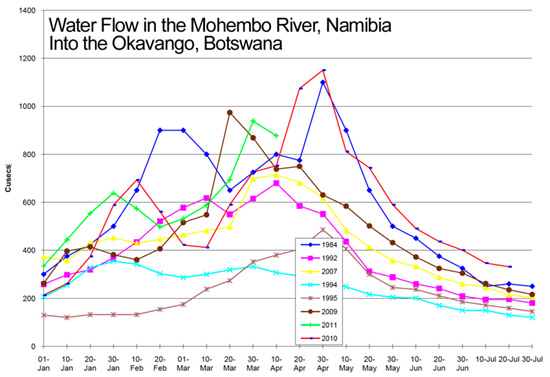
The UN Office for the Coordination of Human Affairs (OCHA) issued the latest comprehensive scientific report several months ago, and the more recent and detailed graph below is now in circulation.

This year will exceed the highest ever flow of water into the Delta.
All indications point to worse years in the future.

The bottom line is that many of the camps, campsites and tourist lodges in the Delta may be in peril this year.

In early March I visited the northeast Delta. The airstrip at Kwara camp was flooded. The managers made the mistake of trying to keep the camp open by transporting passengers 2½ hours from the next nearest workable airstrip.

But the tracks from that airstrip to the camp were also flooded. The vehicles flooded out. In one incident, water was above the floorboard as we stared a small crocodile in the eye.

The edge of my cabin in the Delta. Note the gardening hose normally used to water the grass is under water.

A month later I visit Jao Camp in the southwest Delta. Twenty-four hour pumps and a three-foot high ring of sand bags around its airstrip barely kept it functional. I watched a Cessna 208 slip as it landed. The water lapped at my cabin deck and game drives were as if in partially submersible military vehicles.

Both these camps are operated by very good companies, and their experience is shared by virtually every camp in the Delta. It’s critically important these two camps not be singled out from the other 53 in the Delta that all face the same problem.

True “water camps” as Delta camps are locally known, are understandably positioned to experience the unique delta floods. It’s just that no one expected the ice cap to melt this quickly.

This is quite serious. Two of the three “pushes” or surges of flood waters that occur each year are over, but the third is yet to come. So even as the rainy season ends in southern Africa (usually right about now), the flooding of the Delta will continue. Last year waters did not begin receding until August.

I have great sympathy for Delta camp owners and investors. Kwara, in fact, has rebuilt both the airstrip and camp to higher ground.

But will it be high enough?

How Much is One Worth?

How Much is One Worth?

A movie deal? A bale of cotton? One Lost Generation?
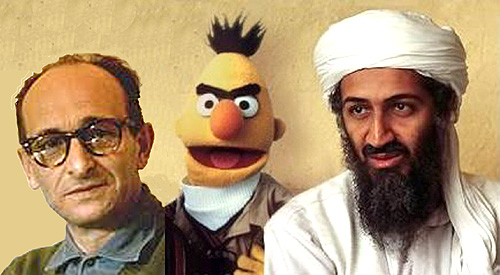
No trillion dollar wars got Osama. Somebody ratted. Some chink in his anti-$25 million fortress cracked and it wasn’t from a drone and sure wasn’t from water boarding. The African Awakening is the same. It’s ideas, Joe, not guns.

Adolf Eichmann killed a lot more people than Osama bin-Laden and Israel knew he fled to Argentina, which was not exactly a stable country in the 1950s. In about the same time it took us to find Osama, Israel found Eichmann, put him on trial and hanged him.

Neo-Nazi sentiment was running high in Argentina at the time. In fact, you could argue Senator Joseph McCarthy tried to import it to the U.S. In fact, neo-Nazi sentiments in pockets around the world from Russia to South Africa was not so dissimilar to the so-called “franchises” of Al-Qaeda that created shoe bombers and Times Square crazies.

How many wars did Israel fight to find him? None.

How much money did Israel use to bring him to justice? Probably not a trillion dollars.

How much did Israel’s education, cancer research, foreign policy initiatives, high speed rail suffer to find Eichmann? (They don’t have high speed rail, sorry.)

Radio Free Europe’s Robert Tait puts it right this way:
“The timing of Osama bin Laden’s passing [coincides] with the collapse … of hated autocratic Arab regimes in the face of popular demand.” Tait sees Osama’s discovery and death, and the African Awakening as a “confluence of events.”

Let’s go one step further. It isn’t coincidental, as confluences could be. It’s causal. It’s a reasonable outcome of the world changing in a really good way.

What ISI or Pakistani military thug decided to if not rat on the monster at least ratchet down some of his protection, because Darth Vader was having trouble paying protection?

What double-agent spilled the beans last September, because he really didn’t want to become a martyr, after all.

Martyrs? What’s that? How much do they get paid an hour?

Good lord, how much American energy and lost opportunities have been lost in my lifetime pursuing military and ideological black holes? Who really cares, today, that Vietnam is communistic? Call me, I’ve got a great deal on a Mekong Cruise.

Give it up, Senator Graham. The world will be a better place, and America might just be able to reemerge.

Osama Bid Laden: Irrelevance in the Islamic Maghreb

Osama Bid Laden: Irrelevance in the Islamic Maghreb

By Conor Godfrey on May 3, 2011

Osama Bin Laden affected almost everyone’s life in some way over the last twenty years.

Maybe you lost a family member in 9/11, or maybe the 1998 bombing in Tanzania drove your tourism company out of business, or perhaps you lost a friend when U.S. troops raided your house in the middle an Iraqi night.

The death of Osama Bin Laden is both momentous and meaningless depending on how Osama touched your life.

For the families of his victims, his death might bring some satisfaction.

If you are a mid-level Al-Qaeda operative in Yemen, his death means very little in practice, seeing as Osama Bin Laden has not been operationally involved in al-Qaeda activities for years.

What about for Africans in Mauritania, Algeria, Tunisia, Mali or Morocco, where al-Qaeda in the Islamic Maghreb (AQIM) continues to launch deadly attacks?

Well, I would guess that the death of their figurehead sheik will cause very few ripples for two reasons: one, all politics are local, and two, the Arab spring has smashed the ideological foundation for violent extremism in the Maghreb.

AQIM is a hodge-podge of local players who imported the Qaeda brand name.

I don’t doubt that some of these fighters are committed to the global jihad, but I think the grievances that radicalized them have more to do with their own government’s failings and foreign influence in their home region than the international jihadist agenda.

In this light, the fact that ordinary Arab youths can topple governments where radical fringes have repeatedly failed should also deal a death blow to the notion that blowing up cafés filled with foreigners is the best way to affect change.

In the short term, the turmoil of North African politics will open up space for radical groups to use violence.

However, Osama’s ideology in the Maghreb was mortally wounded before he took a bullet in the head.

He lost the battle for hearts and minds the moment Ben Ali flew out of Tunisia.

The die-hards will fight on: kidnapping tourists, moving drugs from Guinea-Bissau to North Africa, and detonating the odd bomb in touristy cafes.

But without the passive support of those Arab youths that have now found their voice another way, the radical moment will fizzle.

National armies will kill more and more mid-level al-Qaeda commanders, the more moderate Islamist movements will form parties and contest elections, and, one hopes, rising prosperity will help entrench these new political norms.

In Somalia, or on the Arab peninsula, the Qaeda brand still has real traction.

In the Maghreb, Osama was already on his way to irrelevance.

Linguistic Source Code

Linguistic Source Code

By Conor Godgrey on April 29, 2011
An article recently published in the journal Science on linguistic diversity echoes an earlier article about the decline of native languages in South Africa.

Linguists had long since decided that searching for a root ancestral language, the mother of all languages if you will, was either ridiculous or moot.

Until now.

Renowned linguist Dr. Quentin D. Atkinson applied techniques usually reserved for studying genetics to the study of language.

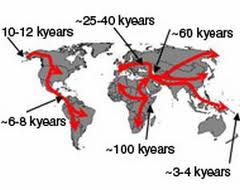
Migration from Africa
His theory goes something like this: it is well documented that genetic diversity decreased as human beings moved further from the African continent.

This occurred because small (genetically more similar) sub groups would break off of the main thrust of the various migrations and settle a specific area.

Dr. Quentin posited that language might have experienced a similar homogenization as languages traveled further and further from Africa.

He did not measure this using words, but phonemes, the basic building blocks of language.

A phoneme is the “smallest segmental unit of sound employed to form meaningful contrasts between utterances.”

In other words, the basic sounds that make up more complicated utterances like syllables and words.

It turns out that linguistic diversity, as determined by the number of phonemes, does indeed decline in relation to how far a language developed from Africa.

The New York Times cited several examples from the full study: “Some of the click-using languages of Africa have more than 100 phonemes, whereas Hawaiian, toward the far end of the human migration route out of Africa, has only 13. English has about 45 phonemes.”

Fascinating stuff.

Now 50,000 years later, the genetic offspring of those migrating ancestors have released the phoneme-inferior but immensely powerful English language to homogenize the source language(s)!

As noted in the Economist article, native (an incredibly relative term) South African languages are jeopardized by the ubiquity and power of English (mother tongue for 8% of South Africans).

Zulu Lesson
Khosian and Bantu languages alike are unlikely to survive as the mother tongue of most South Africans in six or seven generations unless the government acts on its rhetoric and takes steps to enforce their use in schools.

I am unsure this is even a good idea.

It would only work in incredibly homogenous parts of South Africa, and there is no denying that English offers more economic advantages than Zulu or Khosa—who is the government to tell people that they cannot educate their children in the most economically favorable conditions possible?

For me, thinking about Africa as a “source” is incredibly inspiring; but modern adults should not be saddled with the burden of protecting the source code while missing out on real-life opportunities.

Why the Chinese Succeed in Africa

Why the Chinese Succeed in Africa

By Conor Godfrey on April 28, 2011
If you are worried that your event on some esoteric aspect of policy will not draw a big enough crowd, just add some combination of “China,” “Threat,” “Rise,” “Beijing consensus,” “US,” and/or “Decline” to the title, and the number of RSVPs is guaranteed to skyrocket.

I have recently attended a number of meetings on Sino-African relations, and the fear is palpable among US policy makers and business people.

I just came out of one particularly good talk and thought I would share a few of the speakers’ insights mingled with some of my own.

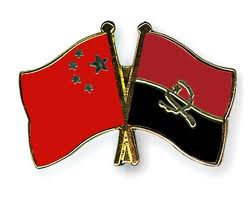
This most recent speaker spoke very articulately about the “Angolan Model” of Chinese investment that has been replicated around the continent.

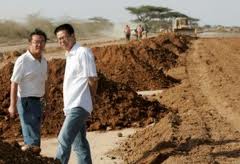
Essentially, the Angolans tell the Chinese that they want to build the following 25 roads, 10 bridges, 3 ministry buildings, refurbish a railway, build a basketball stadium, and deepen the port.

The Chinese say—“Good choices—infrastructure was key to our development as well– and while we’re talking about this, we have Chinese companies that can build every one of those projects for you, and can build them cheaper than any other international bidder.”

China continues…”So here is the deal—our companies will build all those projects before your next election cycle, we’ll do it cheaper than anyone else, and you can simply pay for it over time by shipping us oil at market prices.”

For Angola and China, it is a win-win-win-win. Angolan citizens get roads, Angolan politicians get to take credit for them, Chinese companies make money, and China gets a reliable supply of vital oil.

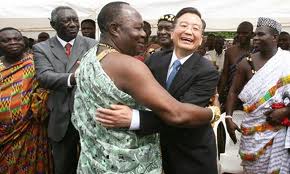
Wen-Jiabao, Premier of China, embraces a local Ghana chief
This works well if your country has an immensely desirable commodity such as oil, copper, or cobalt with which to pay down your debt, but not so much if you need to pay back $2.5 billion in loans using tea, coffee, or sesame seeds (cough cough Ethiopia).

That being said—Ethiopia doesn’t seem to mind.

This speaker pointed to a recent interview with an Ethiopian minister who raved about Chinese investment.

The minister claimed that whenever there was a problem with the work Chinese companies were doing, he would just summon the ambassador and point out the problem.

The Chinese ambassador would salute, and within a short period of time, the problem would be fixed.

When he called on a Russian, European, or U.S. politician to solicit help in regulating a commercial dispute, the problem would be tied up in court for months if not years.

All Roads lead to China
How do you compete with that?

Also, are Bechtel executives willing to stay in sub-par accommodations, away from their families for months at a time, working on a project somewhere in rural Africa?

Will other U.S. construction or engineering firms accept the 5 or 6% margin on an African project necessary to compete, as opposed to the higher margins that they are used to in North America?

The US and other donors have pumped a massive amount of money into African relief and development over the last fifty years, and some of the results (around HIV/AIDS in particular) have been astounding.

But the Chinese, and also the Indians, Brazilians, and even the South Koreans, understand the African operating environment in a way that Western decision makers simply do not get and I don’t think ever will.

It has been too long since we were a developing country.

King Mswati III

King Mswati III

By Conor Godfrey on April 27, 2011
The worst ruler on earth gets a classy invite.

Up until yesterday, I had successfully avoided learning anything about the royal wedding in Great Britain.

(Full disclosure—I once argued at a family dinner with several small children present that we needed to overthrow the princess culture that dominated the minds of our young women at an early age—I may be an outlier.)

I failed because the royal wedding sneaked in the back door—through Africa.

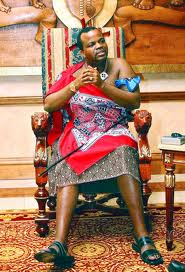
King Mswati III of Swaziland

It turns out that King Mswati III of Swaziland has received an invitation, and will be attending the show with 50 of his closest friends.

It’s a little bit like a reward for being the worst ruler on the planet.

King Mswati III has an impressive record…other would-be governing catastrophes would do well to study his techniques.

Let’s have a look at King Mswati’s resume:
1. Swaziland has the highest AIDS rate in the world
2. 50% of adults in their 20’s have HIV
3. Life expectancy is 32 years
4. 60% of people live on $1.25 or less a day

Money is not so much a problem though—all 51 members of the royal entourage will be sleeping at the Dorchester Hotel for about 500 pounds per night during the wedding festivities.

King Mswati III in England

King Mswati’s personal fortune (estimated at more than 70 million Euros) is also put to good use beating and jailing protestors.

Labor unions, teachers, and the country’s president have all been targets during the recent unrest.

This makes me angry enough to go through the futile effort of finding someone to blame (besides Mswati III himself of course).

First—South Africa and the other members of the Southern African Development Community.

If governments continue to hide behind pan-African solidarity to avoid cleaning house, then a few bad apples like King Mswati III are going to make pan-African-ness synonymous with rotten.

South Africans are great with political cartoons—here is one that describes how I feel about Zuma’s mediation efforts.

The next culprit is unfortunately colonialism.

As you know, the colonial powers did not have near enough people to rule the colonies directly.

They were forced to empower local power brokers and co-opt traditional checks and balances on tribal authority.

This created a class of rapacious local elites who became the oppressors, conscriptors, and tax collectors on behalf of their colonial masters.

Swaziland was in the British colonial orbit for almost all of the colonial period, excluding a brief period when South Africa administered Swazi affairs.

Eventually, the British claimed Swaziland as a autonomous protectorate, and thus empowered the local autocrats to maintain the status quo.

As in most now independent African countries, once the pressure mounted, Britain fled Swaziland in disarray and left radical parties to take control.

In the 1970s, after a sweeping “electoral” victory, King Sobhuza disbanded the democracy that had haphazardly come into being in 1968.

The ‘electoral’ interlude emasculated traditional checks and balances, and the restored monarchy had more power than their royal ancestors would have dreamed of!

None of this really matters though, and I do not pretend to have a perfect understanding of the nuances of Swaziland’s colonial experience.

At present, the problem is that King Mswati III is quite possibly the worst national ruler on the planet, and I think that the country seems too small and insignificant for anyone to do anything about it.

Fela!

Fela!

Fela
By Conor Godfrey on April 25, 2011

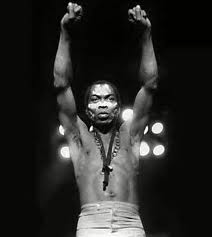
Before we talk about Fela! I feel like its only right that you put on some music from the larger-than-life band leader Fela Anikulapo Kuti.

If you don’t like that—try “Water Don’t Get No Enemy.”

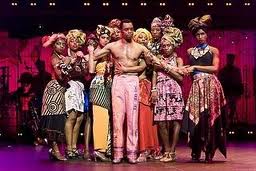
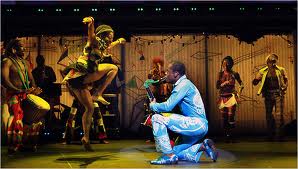
On April 21st, the musical “Fela!” brought the Lagos crowd to tears during the debut Nigerian performance of this headline grabbing and phenomenally reviewed Broadway hit.

Here is a sampling of reviews from the New York Times, Chicago Tribune, and the Associated Press.

After a two year run in New York on Broadway Fela!, will become the first Broadway show to be performed in Sub-Saharan Africa.

This is one of the thousands of little signs that Africa is emerging on the U.S. radar like never before.

Fela Kuti was a bonified international mega-star for almost three decades, but was of course unknown to a Broadway crowd “where theatergoers’ idea of African music might begin and end with “The Lion King.” (New York Times)

Fela Kuti defined Afrobeat for an entire generation of musicians.

As for Fela’s musical genealogy, commentators have posited influences as diverse as Coltrane and Calypso, Sinatra, Ghanaian High-life Jazz, and native Nigerian Yoruba rhythms.

The main Fela! webpage lets you listen to a long list of songs performed for the show for free.

The real Fela Kuti was not simply a celebrity—the impression I get from reading about him and speaking to Nigerians is that Fela existed on a different scale—he proclaimed an autonomous republic in his club, he married 27 woman, he smoked and drank prodigiously, and he railed against the arbitrary and oftentimes brutal Nigerian dictatorships that had cowed most of the country—everything was in excess.

Whether you loved him for his brash unorthodoxy, or hated him for challenging the moral majority—you did so with a passion.

I do not have space here, but you should read this short biography of Fela to understand a bit more about the man himself and the passions he aroused.

He certainly aroused the passions of Muhammadu Buhari—the military dictator who beat, jailed and otherwise victimized Kuti, and who is now protesting the present election in the North.

Fela Kuti believed his primary goal was to resist European cultural imperialism. In this way, he echoed his contemporary larger-than-life star Bob Marley.

Pursing this mission, he blasted everyone and everything—he hated capitalist greed, and communist autocracy.

He hated the moral conformity of Arab-Islamic or Judeo-Christian values.

He hated corrupt African elites that imitated Europeans and undermined African values.

He even hated tribalism and traditional African social mores that he found constricting.

His remedy— a modern set of African values, taking some wisdom from the past, but mainly looking toward the future.

I love the fact that this extraordinary person finally washed ashore on Broadway, and get a bit of an emotional tug when I think of a sold out crowd in Lagos getting the chance to love or hate Fela Kuti one more time.

In some ways, Fela! allows the late great Fela Kuti to reach from beyond the grave and help the continent he loved engage the modern world on its own terms.

“Shoot the Boer” is Hate Speech–Period

“Shoot the Boer” is Hate Speech–Period

By Conor Godfrey on April 22, 2011

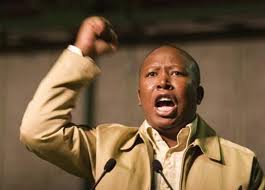
Julius Malema

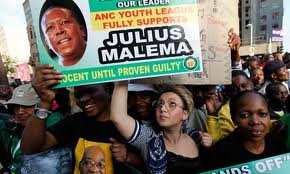
Julius Malema took the stand for the last time in Johannesburg today.

It has been the most colorful of trials.

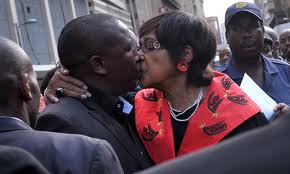
Most days it seemed more like a star-studded South African concert than a trial, as cabinet members, poets, and even the controversial Winnie Mandela have all paraded through the halls of justice.

Winnie Mandela

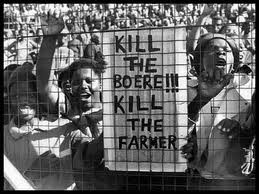
At issue is ANC Youth League President Julius Malema’s refusal to stop singing “Dubul’ Ibhun” (isiZulu for “Kill the Boer”…depending on whom you ask, the name could also be “Ayesab’ Amagwala or “Cowards are Scared”).

Here are the first couple lines:
“yasab’ amagwala (the cowards are scared)
dubula dubula (shoot shoot)
ayeah
dubula dubula (shoot shoot )
ayasab ‘a magwala (the cowards are scared)
dubula dubula” (shoot shoot)

An Afrikaner interest group had the audacity to suggest that Malema’s repetition of “Shoot the Boer,” or “One Settler, One Bullet” constituted hate speech, or an incitement to violence.

How could they possibly have got that impression?

If a bunch of former Black Panthers staged a rally in Time Square and began singing—“One Bullet for Every WASP!,” or “Shoot the White Capitalists!,”–how would people react here in the US?

I imagine not to well. But maybe that is not the right analogy.

Malema and his star-studded defenders argue that the song is a part of history, a testament to the struggle if you will.

They claim that the lyrics are proverbial—aimed at the system of oppression as opposed to individual South Africans of European descent.

This argument is too pedantic for South African realities.

Racial violence is not a long forgotten moment in history.

It happened yesterday, and the day before, and on a massive scale, just two decades back.

In France, the national anthem (La Marseillaise) is a violent, bloody affair:

To arms, citizens! Form your battalions, let’s march, let’s march! Let impure blood Water our furrows!

But people are not arming themselves after hearing it sung at a football match and then going in search of the nearest wealthy people.

It also turns out that “Shoot the Boer” was not even an integral part of the struggle.

Some members of the Pan African Congress (PAC) sang the song in the 90’s, but it was never one of the rousing struggle anthems that Umkhonto we Sizwe (Spear of the Nation- armed wing of the ANC) heavy-weights like Ronnie Kasrils, Baleka Mbete and Pallo Jordan helped compile into a definitive album of struggle songs.

See here for a list of the 25 songs on this Album.

Malema is loose cannon and his mere presence ratchets up racial tension: if the court rules that the speech is protected by South Africa’s wonderfully liberal constitution, than the ANC should clean its own house.

The ANC is a big tent, with room for almost everyone—but not racists.

La Francophonie

La Francophonie

By Conor Godfrey on April 21, 2011

Today was the final day of a festival for La Francophonie in Washington, DC.

Story tellers-book signings-movies-wine- food-you get the idea.

La nuit du Conte, or story telling night, was especially good.

I enjoyed several of the events, but my time in West Africa made me struggle with the entire concept
of la Francophonie.

I mean—why celebrate shared pain? Was France not the colonizer, the unlawful, insensible oppressor?

In theory, la Francophonie refers to communities all over the world united by the use of the French language (either in the home, or politics, or school, or commerce, etc..), and further, posits a sense of shared identity based on language and other cultural traits.

La Francophonie

I have been to a number of far flung parts of la Francophonie—several countries in French speaking West Africa, Cambodia, Montreal, and France, and through work I have met Cajuns and Burundians, Belgians and Swiss, and several other Francophones to boot, and it is 100% true that speaking French binds these communities together on a level that exceeds simply ease of communication.

For whatever reason, I bond with people from Togo or Burkina far faster than people from Ghana or Nigeria even if the French speaking Togolease and/or Burkinabe converse fluently in English.

However, the notion of La Francophonie makes West Africans schizophrenic.

The same educated Guineans or Senegalese who berate the French every chance they get for interfering in West African politics, or for the crappy job they did colonizing West Africa, also place tremendous stock in their personal ability to speak the French ‘de Moliere’.

The wealthy send their children to France to be educated, and congregate at France-Afrique cultural events.

What about the rest of la Francophonie?

What do older Cambodians and Haitians have in common?

What do Cajuns from New Orleans share with Belgians?

Or Burundians with Caribbean islanders?

I ‘m tempted to say nothing, except that I have seen the magic of the French language work time and time again.

I can’t bring myself to call la Francophonie a scar held in common, nor can I explain it as a shared memory of pain—it is more complicated than that.

From the very beginning, the French colonies understood la Francophonie differently.

Léopold Sédar Senghor (President of Senegal), Hamani Diori (President of Niger), Norodom Sihanouk (Head of State Cambodia), Jean-Marc Léger (Leading party member, Canada) all yearned to belong to the French community, even as they all struggled with their own national identities.

Seku Toure (President of Guinee) and several others staked their reputations on separating themselves form anything smacking of French-ness

Seku even banned French in schools, and attempted to teach Guinean school children in their local languages.

This of course led to a half generation of children torn between French and their mother tongue and achieving a high level in neither.

I suppose there is nothing intrinsically abnormal with celebrating shared ties even when those ties are buried in psychological wounds.

Many U.S. elites aspired to British culture long after the American Revolution ended.

I guess I was so convinced in the intrinsic value of West African cultures that I lost sight of the fact that culture is never static—societies evolve and adapt to new influences, be they good, bad or indifferent.

The fact that the French exerted tremendous influence on West African societies might simply make those tapestries richer.

When I think of the Bambara civilization in Mali, or a number of Fertile crescent or South American societies, I always think of them as being diluted by foreign (usually European) invaders, but the truth is those societies were being invaded or influenced by numerous other societies long before Europeans set foot on their shores.

La Francophone can be repossessed and re-defined by the communities that belong—it does not have to be a shared memory of subservience.

Reforme.ma

Reforme.ma

By Conor Godfrey, on April 20, 2011
Oh the internet.

Sometimes it helps homophobic crazy people find other homophobic crazy people; sometimes it organizes revolutions to topple dictators; and sometimes, just sometimes, it organizes an orderly, open debate on the challenges facing a rapidly changing society.

For the last several centuries, Morocco has been the sleepy cousin of the Arab world.

Their Arabic dialect is difficult for other Arabs to understand; their beautiful country is better known for rugs and hashish then political turmoil; and for the most part, they have mostly stayed off Al-Jazzera during the putative Arab Spring.

Well, it turns out that Moroccan internet users, of which there are 10,442,500 – 33.4% of the population, have been channeling some of their political energies into a novel website created by two Moroccans– http://www.reforme.ma/en.

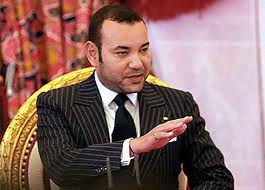
On this website, Moroccans can explore the proposed constitutional changes proposed by King Mohamed VI, and comment on any of the articles of the constitution.

King Mohamed VI

ANY of the articles are up for discussion; including the first– “Morocco shall have a democratic, social and constitutional Monarchy.”

A bit of a sensitive one, that.

In fact, Moroccans have taken to online political commentary with gusto, leaving comments about article one left and right—Jeune Afrique reported that to date about 6,000 people have voted for the text of the first article , and nearly 2,000 users have voiced dissatisfaction.

I assume there is a bit of web censorship to make sure people don’t leave extreme comments, but I spent some time reading the various comments and I assure you that the debate is real, and the exchange of ideas meaningful.

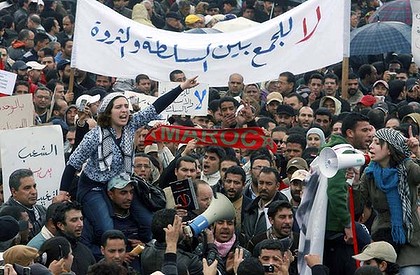
When Morocco has made the news for public protests. the demonstrators have been fewer in number, peaceful, and full of better-than-average poster slogans such as “No to the Economic Oligarchy,” and “All citizens, no subjects.”

Moroccan Protesters

Many of the demonstrators openly support the monarch—very very few call for his downfall.

There are two ways to look at this I suppose.

Either:
A) King Mohammed VI manipulated the public expertly, offering just enough reform to calm public anger, but escaped without having to make substantive changes to his position,
or
B) this is simply how peaceful change comes about.

Actually, I think it is both.

Power concedes nothing voluntarily.

The bureaucracy of changing the constitution might water down the impact of the change over time, but there is no going back.

King Mohamed saw how quickly calls in the Bahraini or Yemeni streets turned from “Reform! Reform!” to “Get ‘em out!”

When history writes the story of the Arab world’s modern awakening, Morocco might just emerge as the country that gradually liberalized and developed while everyone else was looking the other way.

Mr. Jega

Mr. Jega

by Conor Godfrey on April 19, 2011

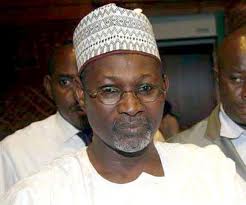
Attahiru Jega

I had been waiting to write a blog about Attahiru Jega for quite some time, and over the last few days the international acclaim over Nigeria’s relatively free and relatively fair elections made it seem like I would have the chance!

As I write this, however, violence is escalating in the North where aggrieved Muslim supporters of losing candidate Muhammadu Buhari have taken to the streets alleging electoral fraud.

You know what—I am going to go out on a limb and say this unrest is transitory—this election was a success in the Nigerian context, and I want to celebrate one of the people that made it happen.

So back to the original story….

57 percent of Nigerians have asked for Goodluck Jonathan of the Peoples Democratic Party (PDP) to stay for another four years!

This looks to be sufficient to avoid a runoff with General Muhammadu Buhari, but that will depend on the Electoral Commission’s investigations into vote rigging.

How can we trust the Electoral commission you ask?

Wasn’t the electoral commission a problem in that other North-South divided African country, Cote d’Ivoire was it?

Ah-ha: Enter the Miracle Maker.

Attahiru Jega

On June 8th Goodluck Jonathan asked Mr. Jega to leave his comfy academic life and make this Nigerian election different by heading up the head of the Nigerian National Election Commission.

At the time, the international community and Nigerian pundits were exerting tremendous pressure on the newly minted president to deliver credible elections, and appointing someone with Mr. Jega’s anti-corruption zeal was the only way to deliver on that promise.

Read Mr. Jega’s address to the nation when he accepted the office—good rhetoric at a minimum.

As soon as he took office, Me. Jega scrapped the ridiculous Nigerian voter registry and created a new one. He then instituted a voting system where voters check in locally to register on election day, and then stay there to observe the entire process right up until the results are posted.

That means a long hot day in the sun, but it is harder to stuff ballot boxes, and then publicly announce false results, when all the voters are milling outside the building.

So for the last two weeks, Nigerians have confidently and peacefully voted in peaceful, fair, parliamentary and presidential elections.

Let me say that one more time. During the last two weeks, Nigerians have voted in two sets of free and fair elections.

This is a big deal! If a country of 160 million people with intense, divisive social fractures can pull this off, then how can other African leaders claim that they do not need to be accountable to their people?

The system is still a bit ridiculous of course.

The ruling People’s Democratic Party is a platform-less ‘giant smoky back room’ where Nigerian elites gather to split up the pie.

But they actually lost ground in the parliamentary elections…how novel is that?

Over the last decade, Nigerian elections have been conducted by bringing duffel bags of cash into party caucuses for distribution to PDP power brokers.

I would encourage anyone to read the Nigeria chapter in Richard Dowden’s creatively titled book, Africa.

His anecdotes will make you realize what a success this election was.

Or, you can read this informative Q&A with Nigeria expert Peter Lewis.

I just checked the headlines again before publishing this piece…the violence is still getting worse in the North.

Still, I say it mostly blows itself out over the next week. I will write a blog eating my words next week if I’m wrong.
.