Weeding the World

Weeding the World

The loss of wilderness critically impacts our lives. African compromises known as “same species intervention” and “protected wilderness” may be bitter sweet solutions.

I just returned from a visit to the Amazon where I saw first hand the destruction of the planet’s jungles, the transformation of its rivers into commercial pathways for man’s insatiable consumables, and the slaughter of its wildlife.

But as sad as this is to see, it’s nothing new. I’ve watched it happen my whole life in Africa.

The human/wildlife conflict is well known and less contentious, really, than simply troubling. When a decision must be made to choose between man or wildlife, or between man’s survival or the destruction of the wilderness, there’s no question in my mind that man must prevail.

Many have argued that conflict doesn’t exist: that man and the wild are never completely at odds with one another, that both can be preserved. But I think that’s either nonsense or simply employing impractical logic. We cannot reverse quickly enough our use of fossil fuels, our need to eradicate poverty, or our endless warring ways, to abate the destruction of the wild in any macro economic way.

More reasoned intellects argue that we are essentially crippling ourselves each time we cripple the wilderness. And there is powerful evidence to support this, not least of which are the many organic drugs discovered in the natural wild. But this becomes an odds game. What are the chances we’ll find another cancer drug in the Amazon before Rio’s favelas either waste away in cholera or typhoid or explode in revolution?

And the finally there’s that ludicrous notion that we can make wild, wild. Pull out that garlic mustard plant, John, and save the wilderness from itself!

What we don’t get is that the wild nature of the wilderness, its own ability to decide what to do with itself, is critical to the very nature of man; after all, we are an organic beast. If we disown the wild by claiming we know better than its intrinsic self how to preserve itself, we disown part of our own essence. Is that necessary?

It’s taking an enormous risk. We’re gambling that we don’t need to know the things of the wild that for the moment remain its mysteries. Pluck that garlic mustard and who knows what else you’re plucking from existence!

I think Africa may be providing a couple compromises. They aren’t holistic solutions, but it may be the best we can do.

Yesterday “Gorilla Doctors” treated a festering wound of a silverback who had been in a fight with another male. They did this by darting the animal with a powerful antibiotic.

The group also reported a rather quiet start to June, with “few interventions” that nonetheless included anti-biotic treatments of juveniles and darts of anti-inflammatory drugs to relieve pain.

Gorilla Doctors is a new phenomena in my life time. I remember in the mid 1980s when scientists argued for months over whether to intervene in two crisis situations in the wildernesses of east and central Africa.

The first involved the mountain gorillas. One of the animals was identified as suffering from measles. The only possible way that could have happened is that a tourist had transmitted it to them. The question was, do we use the simple and available medicines we have available to cure the disease, or do we let the baby gorilla die?

There were two compelling arguments to treat the baby gorilla. The first was that man himself had upset the balance of the wild, since it was man that introduced the disease. The second was that the disease had an epidemic potential. If not treated, the entire population was at a greater risk of extinction.

The decision to intervene is not reversible. It sets the stage for an uncommon relationship between man and the wild he wants to protect. Once the vaccine was used, every baby gorilla that was subsequently born would have to be vaccinated. Just like humans. And that’s exactly what’s happened.

Not too long thereafter, mange raced through the population of cheetah living on the East African plains. This beautiful cat is highly inbred, which means that throughout its wild population any disease can be devastating. Mange is ridiculously easy to cure. Just puff a bit of antibiotic powder pretty randomly over some part of the animal near an orifice and poof, cured.

And that’s what was done.

Since these first two breakthrough interventions in the wild, intervention has developed exponentially. And the justifications for them have become less and less simple. Successful vaccinations of pet and feral dog populations on the periphery of wild dog populations proved successful in increasing wild dog populations. But now, it appears the wild dogs must be vaccinated, too.

Each one of these interventions alters something that was wild into something less so, but ensures the preservation of that alteration with much greater certainty than its original wild form. We call this “same species intervention.”

This stands in marked contrast to plucking garlic mustard from county preserves. Same species intervention attempts to preserve a life form (mountain gorillas, cheetah) without altering the biomass around it. The second presumes to prevent destruction of other life forms by eliminating the first (garlic mustard for who knows what).

I find the first strategy tolerable; the second not. Both strategies tamper with the mysteries of the wild, but the second strategy tampers with too many mysteries, it exceeds the threshold of destroying one thing for another.

But these examples of deciding how to preserve life forms are only a part of the story. In fact, perhaps the smaller part.
Human/wildlife conflict is more pronounced than ever. It comes as no surprise but our preparation for its arrival was negligent. Elephants destroying farms, schools, threatening bicyclists and cars; lions worse than coyotes or wolves for taking down farm stock; Asian carp or zebra mussels screwing up our sewage systems much less redactional fishing!

Fences.

Africa is fencing all its wilderness. It began years ago with such mammoth projects as the 22,000 sq. mile Etosha National Park in Namibia, or the legendary Kruger National Park in South Africa (where part of the fence has now been removed, by the way).

More recently and at great local expense, Kenya’s huge Aberdare National Park was completely fenced. There are now calls for Kenya’s best park, the Maasai Mara, to be fenced.

“Fence” is a loose term. It could be moats or other types of semi-natural divisions that nevertheless bind the wild in specific containers we can try to preserve from man’s ruthless development.

Putting a boundary on the wild makes it wild no longer. The dynamic system becomes contained. The chaos and mystery of being undefined and unknown ends.

There are many spiritualist’s who believe this is doomsday:

“We perfect perfection to the point of
complete destruction.
And in the end, we will lose it all
as the weeds grow over our fallen creations
and the wonder of the wilderness returns.”

This final paragraph of Lisa Wields’ poem, “Loss of Wilderness Means Loss of Self,” believes this tact will not prevail.

Unfortunately for the past but inevitably compromised for the only possible future… I believe it will.
Wants to volunteer and travel in Africa

Wants to volunteer and travel in Africa

Stacy Candaria writes:

Hello,

I am looking to travel to Africa in the next couple of months. I would like to
start in South Africa where I am keen on a volunteer program working with lion
cubs.

After that i would like to find a volunteer program that has the most “hands on”
with Gorillas and Chimpanzees. If I cant get into a program I would at least
like to do a tour.

Could you advise me on Programs and Tours. I will also be on my own so safety is
obviously necessary.

Many Thanks,
Stacy Candelaria

Jim responds:
Stacy –

Thanks for your email. It’s my understanding right now that untrained volunteers will not be accepted for any primate research programs in east or central Africa. (There are no primate research programs elsewhere.) Click below to better understand why and also to get some advice regarding gorilla touring:

Volunteerism not always good

Paying to volunteer a bad thing

Good intentions gone awry

And regarding gorillas in particular:

Click here and click here

Just A Little Misunderstanding?

Just A Little Misunderstanding?

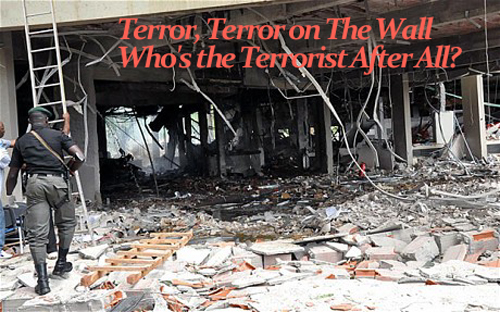
Recent Boko Haram Bombing in Abuja, Nigeria
By Conor Godfrey

Jim has often written about the unpredictability and downright irrationality of U.S. State Department’s travel warnings. But that’s hardly the end of our State Department’s equivocating.

Much more than travel advice, the State Department’s “Foreign Terrorist Organization” designations significantly impact world trade and local development in particular, and I find those designations horribly confusing.

A good example is why West Africa’s Boko Haram has yet to receive the designation despite their constant and increasing terrorist activity.

If suicide bombers driving explosive laden trucks into U.N. buildings doesn’t get you labeled a terrorist organization I don’t know what will. The sect’s string of terrorist attacks have killed more than 1000 people since late 2009 including two deadly attacks on Christian churches yesterday in the northern Nigerian town of Bui.

The seeming ridiculousness of our State Department not labeling these killers as terrorists sent me scrambling for the State Department’s official definition.

The definition is so detailed that many terrorist governments, militias, gangs, etc. can avoid the label… if the State Department is so inclined.

The definition is so comprehensive and all encompassing that almost any martial organization could be called terrorist– including professional armies at war: hijacking, kidnaping, assassination, the use of chemical, biological, or nuclear weapons, and, in the most general clause, the use of explosives or firearms with the intent to cause harm to individuals or property.

“Terrorist organizations” are those entities that train for, plan, finance, or actually carry out “terrorism.”

Oh, and of course, you will see on the State Department website that the Foreign Terrorist Organization designation only applies to groups that threaten U.S. interests, property, or personnel. This allows broad subjective (and likely political) conclusions. Consider, for example, how organizations like the IRA or Mexico’s various drug lords backed by local state governments there could be classified.

You’d think, though, that Boko Haram couldn’t wiggle out of the classification – kidnaping, assassination, and intent to harm for sure. They also, in my opinion, threaten U.S. interests more than the four outfits in Africa that were on the list circa January 2011:

Moroccan Islamic Combatant Group (GICM)
Al-Shabaab
Gama’a al-Islamiyya
Libyan Islamic Fighting Group

Congressmen and many Justice department employees have pressured the State Department to pass judgment on Boko Haram, but State continues to refuse despite the group’s numerous and increasingly spectacular attacks.

The take away here is that labels are political tools and not dictionary definitions. Apparently, the Nigerian government has strenuously requested that Boko Haram be kept off the dreaded list of foreign terrorist organizations.

Why? Well that depends on who you ask. Nigeria’s Ambassador to the U.S., Prof. Adebowale Adefuye, said because such a designation would open to the door for U.S. drone strikes like those in Yemen and Pakistan.

Our reputation precedes us.

Other Nigerian sources claim that such a designation would lead to the harassment of Nigerian citizens abroad, and/or would deter U.S. investment.

This entire debate upsets me because such vagaries leave room for gross manipulation; do some countries get to tell the U.S. who is a terrorist and who is not?

I get the feeling that the Uighurs or the Kurds are either nationalists or terrorists depending on how the political winds are blowing from the U.S. to China, or from the U.S. to the Middle East. What will happen if a weakened Al-Shabaab strikes a power sharing arrangement with the Transitional Government in Mogadishu? I wonder if they will suddenly cease to be terrorists, semantically anyway.

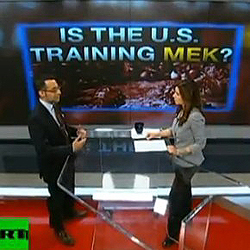
Congress can’t even make up its mind regarding Iran’s Mek.

The haphazard designations of terrorism bring back feelings from the Bush era “War or Terror” where designations were key in the cowboy ‘with us or against us’ mentality.

I am also uncomfortable with the fact the U.S. military has been guilty of many of the sub-clauses defining terrorist activity. We have assassinated foreign citizens, financed foreign militias, and used overwhelming force against legitimate targets even when they are nestled within civilian populations.

Many of these acts (certainly not all) might be legal, but playing politics with simple definitions like “terrorist activity” just increases the ugly feeling that the U.S. creates the rules and then applies them selectively.

I would be interested the hear anyone’s thoughts comparing Boko Haram’s eligibility for the terrorist label with a group like the National Movement for the Liberation of Azawad in Mali. I think there is a substantive difference – do you?

Peaceful Somalia or Warring Kenya?

Peaceful Somalia or Warring Kenya?

Has Kenya accomplished what the world’s great powers have been unable to do for the last generation: Is Somalia really headed towards peace?

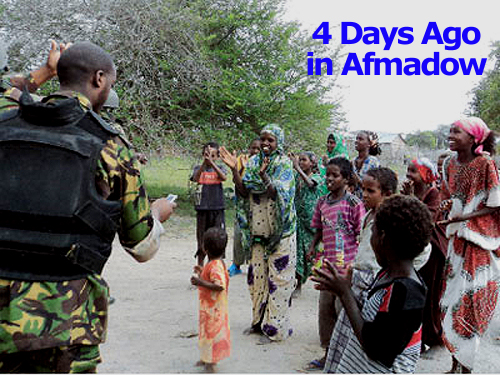
Last week, Kenya successfully routed the insurgents from Afmadow, the last insurgent front before the rebel coastal capital of Kismayo. Today, Kenya’s major newspaper reported that “Al-Shabaab leaders are reported to be fleeing Kismayo, heading back to Puntland or leaving the country for Yemen.”

And all sarcasm aside, America’s NPR asked in a quick headline this morning “Has peace really come to the Somali capital of Mogadishu?” and implied yes, because a new dry cleaning service just opened up there this week.

Before this little business opened up, NPR went on to explain, businesspeople had to get their suits cleaned in Nairobi!

I was very skeptical of “Linda Nchi” the name Kenya has given for the operation, which roughly translates as “Protect the Nation.” Click on the Somali link to the right to read my pessimistic report after report. Will the occupation of Kismayo by the Kenyans – now widely expected – prove me wrong and Kenya right?

Before any mea verbum I have to increase my potential humiliation by also pointing out that America seems to be the principal paymaster (if not quarter master as well), info supplier and stealth assassin of top al-Qaeda and -Shabaab leaders.

Without U.S. assistance, money and assassinations, Kenya probably would have been dead in the mud last fall.

Does this make Kenya the lackey of the U.S.?

Many have argued this since this beginning. But that rude presumption I discount out of hand. One of the greatest motivations for war, or no war, around the world is the incredible cost of the host country’s dealing with refugees from a neighboring country’s violence.

It’s why South Africa continues to prop up Zimbabwe, why China continues to pander to North Korea and why Turkey is so aggressive in its stance against Assad’s Syrian regime. And there is no stronger example than the nearly million Somali refugees that have been taxing the Kenyan government for several years.

And much of this time has been exacerbated by drought.

Without America’s help, I think Kenya would have made the move.

So we won’t call Kenya America’s lackey. But I will insist that America is Kenya’s paymaster, info supplier and stealth assassin. And I don’t think there’s any question that without this assistance that Linda Nchi would not be the success it is, today.

As an American, I’m not necessarily proud of this. As a self-adopted Kenyan, I’m thrilled and scared.

Guantanamo is still open; Afghanistan still bleeds profusely and any day, now, we’re going to see a drone over Syria.

I don’t like war. And let me be practically immoral: I don’t like wars we can’t win.

And the reason America has lost or bungled so many wars, is because the people it fights are locals who have gone to the ballot box with their lives. What right do we have to impose our ideas on others? Human rights? Is our definition of individual human rights, or the UN’s, sacrosanct? Absolute enough to kill someone local who believes otherwise?

No. We are learning better than ever right now that democracy is terribly flawed. What’s the point in democracy if you can be swindled to vote against your true self-interest? It’s so easy it’s criminal. The right wing in America is the most successful brainwasher since Mao.

But it isn’t easy to lay down your life for what you believe.

Josef Kony’s child soldiers were brainwashed, and when they laid down their lives it was a tragedy, not a heroic statement of their beliefs. But the vast majority of al-Qaeda and al-Shabaab fighters are not brainwashed. They may be economically subverted, but I have little doubt that their reasoned beliefs carry them to war.

When they blow up the Twin Towers, we should retaliate, and we did. Because the Golden Rule Analog prevails: If we let you alone, you let us alone.

But the extent that we then go to insure it against happening again, is as insane as the amount of money an American must spend for medical insurance.

America is obsessed with everything being black or white, Left or Right, Progressive or Conservative, and compromise in my generation has become a naughty word. This obsession has led to an inability to discern the truth, a paranoia of failure, a self-cycling decline in happiness. It has taken America to war too many times.

And from my point of view, Obama has not changed that. He has been coopted by America’s obsession with war.

But Kenya, sweet Kenya? Are you really accomplishing what America never could? Have you been crafty enough to use America’s obsession for a war so that you can really win one?

Oh I so hope so. But it isn’t over until the Fat Lady Sings. And as far as I know, the work hasn’t yet begun on the opera house in Kismayo.

Does Al-Qaeda Now Own Territory in the Maghreb?

Does Al-Qaeda Now Own Territory in the Maghreb?

By Conor Godfrey
The situation in Mali gets more complicated every day.

As predicted in an earlier blog, regional and national bodies are moving (slowly) toward a negotiated solution to the governance crisis brought on by the March 22nd coup.

The North, however, is a total mess.

The French defense minister called Northern Mali a West African Afghanistan.

That is too alarmist, but the situation certainly calls for some alarm.

There are half a dozen players in Northern Mali at the moment, but they can generally be corralled into two camps – Tuareg nationalists, and Islamic fundamentalists.

(This obviously soothes over some nuances.) Of course, to confuse matters, all of the Tuareg nationalists are Muslim, and many of the fundamentalists are Tuareg.

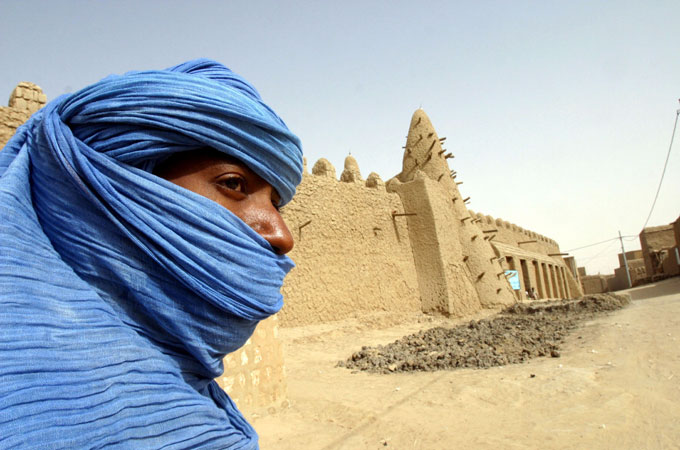
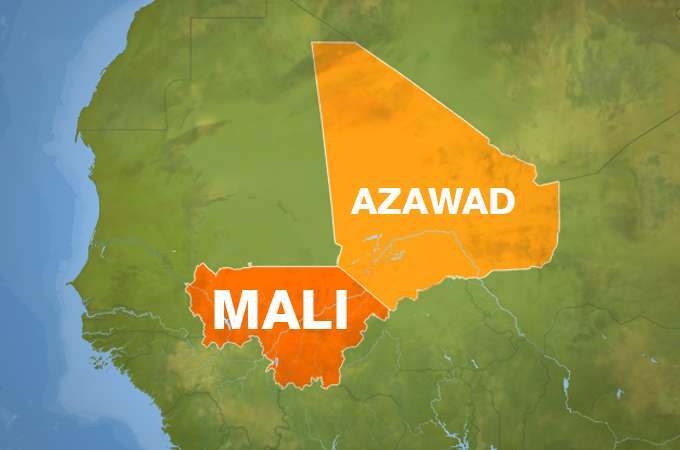
Put simply, the Tuareg nationalists, led by the National Movement for the Liberation of Azawad (MNLA), demand recognition of the independent republic of Azawad in Northern Mali as the Tuareg homeland.

The Islamic Fundamentalists, led by Ansar Dine (loosely “Defenders of the Faith”), demand the implementation of Islamic law across Mali.

They have also declared allegiance to al-Qaeda, and can be seen as a Qaeda franchise similar to AL-Qaeda in the Islamic Maghreb (AQIM).

So the obvious compromise was tentatively reached on May 26th – the two groups merged and declared independence for the independent state of Azawad, and announced that the Koran would be the basis for Azawad’s legal system.

The point here is that a group openly aligned with al-Qaeda now controls territory the size of France.

Luckily or unluckily, I think the marriage between the Tuareg nationalists and the Qaeda sympathizers will collapse under the weight of its own contradictions.

No sooner had their deal been signed did the two sides begin spinning the agreement to their respective constituencies. (In fact, there are rumors as I am writing this that the pact has already been called off.)

One spokesperson for the Tuareg nationalists (MNLA) hedged as follows: “The Koran will be a source of the laws of the state…but we will apply the things we want and leave aside those we don’t. It will not be a strict application of the law.” (Source)

While the MNLA spokespeople were all assuring domestic supporters and foreign analysts of their moderation and anti-terror agenda, their new partners Ansar Dine were busy beating female protesters, whipping people out of bars, and banning soccer.

Banning soccer of course led to the largest protests.

In this power struggle, any sane person is routing for the Tuareg nationalist elements to prevail.

Once the government stops imploding in Bamako they will at least be able to negotiate with the MNLA.

Conceivably, a strong government in Bamako backed by an implicit ECOWAS or French military threat could make the Tuaregs settle for drastically increased autonomy and other perks. (Whether this is fair or not is a different question.)

If Ansar Dine and AQIM marginalize the Tuareg nationalists however, then Bamako and/or the region will be obligated to solve the conflict by force.

There is little room for compromise with abject fundamentalism.

Using force will spin off other problems such as increasing the distrust and dislike between Tuareg civilians and the rank and file of the Malian army.

The MNLA has about 1,000 fighters at its command, while Ansar Dine and AQIM have approximately 500 a piece.

Unfortunately, the Islamists are much better armed and funded than their MNLA partners cum rivals. (Source)

The main hope for the MNLA and other Tuareg nationalists is that the civilian Tuareg population in Northern Mali (or Azawad if you wish) has no interest in Ansar Dine’s social program.

They may have welcomed Ansar Dine momentarily as a cure for the total lawlessness of the military campaign, but in general, Tuareg Muslims like to attend a soccer match from time to time, and have little appetite for returning to 7th century Islamic social law.

It will also be interesting to watch the U.S., France, and regional bodies debate intervention: will they really let an al-Qaeda aligned group control three airstrips and that much territory?

The Malian army will not be ready to handle the crisis any time soon.

I think this would be a wonderful opportunity for ECOWAS to show its teeth, but I have an awful feeling that France might end up wielding the stick.

The End of the Gacaca Era

The End of the Gacaca Era

By Conor Godfrey
Earlier this month the last of the Rwandan Gacaca (‘Lawn’) courts closed down.

These communal tribunals, chaired by a council of elders in each community, have processed over 100,000 cases pertaining to the Rwandan genocide.

Since 2001, almost all of the civilian cases have been heard in Gacaca courts, while the International Criminal Tribunal for Rwanda has dealt with abuses committed by the military and other high-ranking officials.

The closure of this judicial chapter has prompted a number of retrospectives from supporters and detractors alike.

If you are unfamiliar with the Gacaca system, read the first two pages of this report for a very evocative depiction of a typical proceeding.

Imagine 9 village leaders elected for their ‘moral character’ arrayed in the village square.

A proposed genocidaire is then marched in front of the elders, with the entire community looking on.

The perpetrator confesses to one or several acts of violence, and then the elders query the crowd to see if anyone else has any other charges to bring against the accused.

After the community has weighed in, the elders determine the punishment and the matter is closed.

These courts were empowered to level sentences of up to life in prison.

My “made in America” mind immediately jumps to all the possible ways that this arrangement could go wrong, but the more I think about it, the less confident I feel condemning the Gacaca system.

Sure- the opportunities for local corruption are huge.

Witness intimidation and other forms of extra-judicial pressure, along with highly variable sentencing, probably led to many miscarriages of justice.

Read this Human Rights Watch report for a really negative view of the whole affair.

And yes, I think it is a rather horrid idea to deal with sexual violence in such a public manner.

However – how else could a country process hundreds of thousands of victims and hundreds of thousands of perpetrators?

Also, as flawed as this process might have been, the public airing of accusations seems to have had a cathartic effect on Rwandan society.

This largely laudatory article points specifically to the fact that many relatives were able to learn where their relatives were buried—a long festering obstacle to reconciliation.

When Americans use the word justice in an international context they really mean western justice.

Western countries also financially underwrite many of the international community’s judicial institutions, thus further entrenching one form of justice as the international norm.

However, that particular system’s focus on free will, individual responsibility and retribution jive poorly with communal conflicts and systemic abuse of any particular group. (Just think of how poorly the U.S. justice system has dealt with racial issues over the last century.)

The truth and reconciliation model allows more people to participate, lends itself to resolving communal conflicts as opposed to punishing aberrant individuals, and, on a more mundane level, is financially and logistically feasible in a country with hundreds of thousands of cases and very limited legal resources

Gacaca courts were far from perfect, but I am glad that 130,000 ex-combatants are no longer rotting in jail waiting for a trial, and hundreds of thousands of victims have been able to yell their accusations out in public.

A Tale of Two Safaris

A Tale of Two Safaris

By Conor Godfrey
I have the good fortune to be writing this from a stunning lodge in the town of Aguas Calientes just a few hundred meters below Machu Picchu.

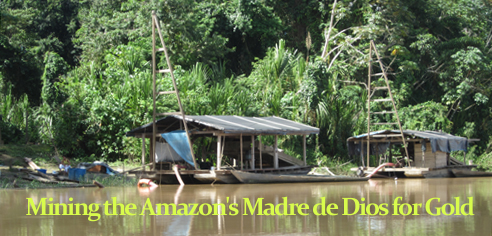
For the last week Jim has led myself and 10 other souls on a trip through Peru and Bolivia that included a week in the dense jungles of the Amazon basin and a week in gorgeous Andean highlands of the former Quechua/Inca empire.

This is the second safari I have taken with Jim and Explorers World Travel (EWT), and the two experiences could not have been more different.

I thought I might compare the previous East Africa trip with this most recent experience for the benefit of anyone considering a guided trip.

Remember, these are simply my amateur comments as a consumer, and do not reflect the opinion of Jim or EWT. (Look here for the official descriptions.)

Most Safari goers are not professional botanists, anthropologists, geologists, or masters of some other sub-specialty that would skew their interests toward any one particular type of experience. (There is, however, a wonderful microbiologist on my current trip).

If you fall into the plurality of consumers that want a little natural history, some great flora and fauna, and luxury to wash it all down, then East Africa will meet and likely exceed your expectations.

On my East African safari spectacular game viewing was never more than twenty minutes away from any given lodge.

By the end of the Safari you might realistically be bored of elephants charging your car and giant crocs taking down wildebeest.

That being said, the emphasis in East Africa was squarely on the game viewing.

Amazonia and the Andean highlands offer a more holistic experience.

The variety of flora in the jungle is unparalleled, and your guides will bring each plant to life by tying it into the jungle tapestry – the fire tree hosts the fire ant, the papaya seeds kill stomach parasites, the giant termite nests provide homes for bats and birds, etc…

Both the jungle and the highlands also offer the more culture-minded traveler much food for thought.

I was shocked and intrigued by the cultural interplay between the mountains and the lowlands in Peru, and two short weeks were sufficient to give me a grounding in the Peruvian cultural dynamics.

Jim offers great cultural tidbits throughout the East African safari, but most of your mental energy will be devoted to understanding big cat behavior as opposed to delving into the East African cultural landscape.

The jungle is not deficient in charismatic game (especially not in birds), but it makes you work much harder to find it.

A fleeting glimpse of a Tapir, or, if you are lucky, a jaguar, will likely require a long trek through a humid jungle with mosquitoes nipping at any exposed skin and sweat soaking the ‘lightweight’ pants you bought before the trip.

If East Africa feels like a wild zoo, than the Amazon feels like a bona fide bush hunt.

The excitement does not come from overwhelming numbers of game, but from the thrill of tracking paw prints, listening to the Jungle, and using your newly learned jungle lore to track the elusive animals.

(There is still a cold beer at the end of your day to chase down the parasites you’ve acquired.)

This feeling extends to the jungle lodgings.

No amount of money is going to make your room totally impregnable to big spiders, or guarantee you hot water (as opposed to the opulent lodgings available in East Africa).

Trekking deep in the Amazon trades luxury for a unique learning experience; I think for some travelers the trade off would be well worth it.

My two cents: If you are unsure what you are looking for, and want to guarantee a fabulous, restorative vacation, go to East Africa with Jim.

The lodges and the big game will blow your mind.

If big game is not your end all and be all, or if luxury is not required for your personal brand of relaxation, then a joint Andes – Amazonia trip might be just the ticket.

Safari Njema!

Farmers Driving Lamborghinis

Farmers Driving Lamborghinis

By Conor Godfrey
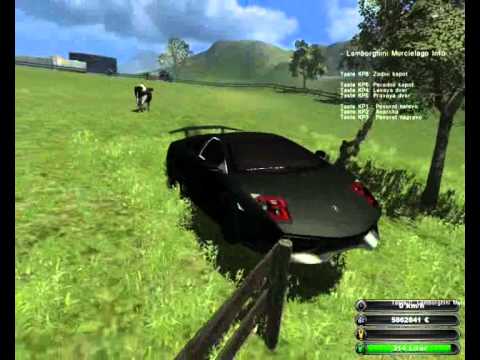
Yessir. One of the world’s foremost Agriculture oracles, Jim Rogers, recently claimed Agriculture is the oil of the twenty first century on HowwemadeitinAfrica.com.

More evocatively, he quipped that investors should consider indirect plays on agriculture investment such as opening Lamborghini dealerships in farm country, because soon, “farmers are going to be driving the Lamborghinis; stock brokers are going to be driving tractors.”

Jim sees big things in the future for all the world’s breadbaskets: the American mid-west, the Australian outback, and a number of South Asian deltas for example.

But I wouldn’t be writing this blog unless he was the most bullish on Africa.

He summed up the potential for African agriculture like this – “In some of the African nations you don’t even have to farm, just sit by the side of the road long enough and something will grow.”

I have heard very similar sentiments from American farmers in Uganda, Sierra Leone, Guinea, and Angola.

In Uganda for example, the expats marvel that you just have to throw some seeds over your shoulder, turn around, and they will have grown into a forest.

A few weeks ago I wrote a blog post about the perceptions and mis-perceptions of land grabs in Africa.

In short, to coin an old cliché, Africa is the Saudi Arabia of uncultivated, highly arable land, and everyone wants in.

There are two meta trends involving agriculture at the moment that will have a huge impact on Africa for better or worse.

First – prices for commodities that Africa can or already does produce are trending upward for the very long term.

Unless science makes food obsolete or disaster reduces the planet’s population by a few billion, food prices will stay high in historical terms.

The equal and opposite counter trend regarding African Agriculture is climate change.

The African Development Bank and other multi-laterals predict harsh declines in African land productivity over the next 50 years due to changes in rainfall patterns (About 4% decrease annually as a continental average.)

It seems like the smart money – whether you are in development or in the private sector – is on agricultural technology that will mitigate climate risk while taking advantage of superior soil and other factor advantages.

While Lamborghini dealerships in Abidjan are probably still a risky play, irrigation equipment, low-water varietals, and agricultural inputs are all highly lucrative and sustainable ways to think about African agriculture moving forward.

After all, global supermarkets are already increasing the proportion of produce coming from the continent.

If you have ever had an “Out of Africa” fantasy – now is the time to move to the continent and start your farm.

Does Your State Have Your Back?

Does Your State Have Your Back?

By Conor Godfrey
This poetic essay by Nigerian professor Pius Adesanmi helped me consider the nature of the citizenship I enjoy.

I may rail against certain U.S. policies and politicians, but I know that Uncle Sam has my back abroad.

If I get hurt, arrested, detained illegally, kidnapped, or otherwise physically or legally incapacitated, my blue passport means that someone somewhere is going to do something about it.

(I am however very sympathetic to the argument that not all citizens are equal in terms of state services.)

Nigerian Professor Adesanmi tells his Canadian students that he has “never experienced the psychological comfort of a citizenship considered sacred and inviolable by a state.”

He continues, “ I have never in my life gone to bed with the psychological comfort of knowing that a state has got my back.”

He uses the Yoruba expression “second calabash” to describe how the elite views the citizenry; the expression connotes someone or something of little import, an after thought.

The most recent and vivid manifestations of this are the U.S. and Nigeria’s respective responses to having nationals kidnapped by Somali pirates.

The U.S. exerted tremendous military muscle to rescue one man – Captain Phillips.

Somali pirates held Nigerian hostages on the other hand for 302 days before releasing them to make room for hostages from countries that would actually pay.

In the professor’s words, “The Somalians broke the number one rule of international hostage taking – the life of your hostage must mean something to a particular state – because they believed that anybody in the rulership of Nigeria was even remotely interested in the lives of Nigerian citizens.”

This is harsh stuff.

Obviously military resources might play a larger role than respect for citizenship in determining these outcomes, but symbolically, the images are still potent.

I don’t know if the majority of Nigeria’s 160 million people are second “calabashes” or not, but his argument was convincing in one other respect – Nigerians are treated horribly all over the diaspora, especially in other African countries.

Negative Nigerian stereotyping was rife in every country I ever visited in Africa, some of it laced with simple envy toward a larger and in some respects more successful neighbor.

Nigerians face legal discrimination abroad, and are often targeted by police and security services.

Are Nigerians treated this way abroad because their own state treats them similarly? Because perpetrators know that no one is going to stick up for Nigerian diaspora communities? Maybe.

Recently, South Africa improperly deported over 100 Nigerians on the unfounded suspicion that their Yellow Fever vaccination certificates were fake.

The Nigerian elite reacted with uncharacteristic outrage at this incident, and South Africa was forced to apologize. The South Africans seemed humbled and surprised by the reaction from Abuja. This proves prove the professors point, offered through an adapted proverb – “If you carry piss in your calabash, so will your neighbors when you lend it to them.”

Memorial Day Holiday

Memorial Day Holiday

Especially for my readers in Africa, I wanted to explain the absence of a normal blog, today. It’s Memorial Day in America, Monday, May 28, 2012.

The holiday is intended to honor the memories of U.S. soldiers who have died in action. It’s similar to the Remembrance Days celebrated in many parts of Africa, and like in South Africa, directed mostly to freedom fighters for independence.

America’s Memorial Day honors all dead soldiers, so in that regards our own revolutionary fighters are to be in our memory as well. But it began as “Decoration Day” right after the Civil War, following a petition by recently freed slaves (mostly who came from Africa) to honor the Union soldiers who had freed them.

After World War I, it was changed to “Memorial Day” and extended as an honor to all soldiers in all conflicts.

As a young boy it was a big red-white-and-blue festival. We decorated our little red wagons and bikes, just as we would hardly a month later for July 4th. And in those days we were remembering mostly the two Great Wars.

Since then my own personal regards for Memorial Day has diminished. The numerous wars my country has begun have mostly been unfair and unjust. And with the end of the draft when I was in university, the military has changed radically. It no longer represents society as a whole.

Today, the military is composed either of young men who can’t get any other kind of job, or who need the benefits once the service is finished, or avowed militarists. We need them both, by the way, but it has drastically altered America’s weapon users, and the military is today more easily manipulated by politicians than it used to be.

I do stop during the day and think of my relatives in the Great Wars. I think of the way the country ultimately came together to fight world tyranny. But in my life time, there is little in America’s wars to be proud of. They are mostly memories I wish we didn’t have.

The Pen..is Mightier

The Pen..is Mightier

By Conor Godfrey
Sex, art, and politics.

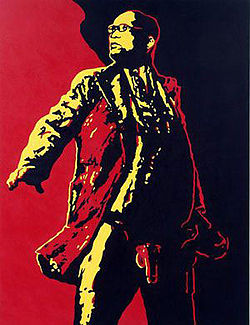
“The Spear,” a painting of South Africa’s President Zuma with his genitals hanging out of his pants, has all three in spades.

Go ahead…look at it. It is art, after all.

Provocative South African artist Brett Murray painted the work, in his words, as “an attempt at humorous satire of political power and patriarchy.”

I enjoy the circus surrounding the painting way more than the painting itself.

First, President Zuma guaranteed every South African in the country saw the painting by suing the artist and the gallery, and demanding it be taken down. (When will rulers learn that censoring any particular piece is the only surefire way to make sure everyone sees it?)

He also propagates the most damaging interpretation of the painting by claiming, in his defamation suit, that the portrait “depicts [him] in a manner that suggests [he is] a philanderer, a womanizer and one with no respect. [That] it is an undignified depiction of [his] personality and seeks to create doubt about [his] personality in the eyes of fellow citizens, family and children.”

Talk about an own goal. You might as well just write and pay for the opposition ads yourself.

The de rigueur charges of racism were of course thrown about as well.

The circus moved into its next phase when two Zuma supporters defaced the painting (Don’t worry, they used oil based washable paints), and another artist painted a response work that depicted 5 recognizable naked white figures (including the leader of the opposition) being inspected by a black South African with a clip board.

I agree with the Times’ blogger Alex Perry that the real take-away here is just how thin-skinned Zuma and his coterie are.

The big chair has a big target on it.

Get over it.

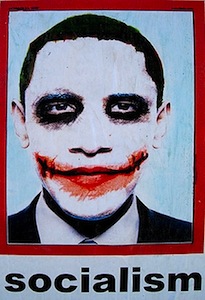
Check out the infamous Obama Joker image.

I understand that many South Africans are rightfully sensitive with regard to slurs on African dignity, but this could have been a total non-issue.

Instead, the whole scene just reinforces all the key points of the anti-Zuma narrative. Womanizing, self-indulgent, overly sensitive big man who is intent on crushing media freedoms.

After all, as the Time’s blog mentions, if Zuma has trouble dealing with one bad portrait in a random art gallery, how can he be trusted to react with poise to more strident criticisms of his personality and policies?

Of course, maybe in Western discourse the never-ending stream of lurid affairs and insinuations has desensitized me to sexuality-laden attacks on political figures.

Watching a few hours of the John Edwards trial makes this painting seem rather trivial, but of course the Edwards trial does not have centuries of racial oppression clouding the nature of insinuations.

The BBC’s Andrew Harding pseudo quotes a former South African Chief Justice as saying the following in regards to “The Spear” circus…. “I know we are too thin-skinned. We should just let it go. But we can’t. You must remember where we have come from.”

That sounds about right.

In Africa We Trust

In Africa We Trust

By Conor Godfrey
Musical selection for today’s blog: Sexion d’Assaut, Africain

The experienced traveler or cultural connoisseur must take ever more drastic measures in 2012 to experience something new.

A form of cultural convergence driven by globalization and increased wealth has smoothed out many of the wrinkles that once made Confucius’ sphere of influence look and feel different than Locke’s or Chingus Khan’s.

Cultural differences certainly exist below the surface today, but consumerism and urbanization are the norm, and even music, fashion, and architecture tend toward a global median with regional varieties.

This is why Africa can be so intoxicating.

Even though American R&B often blares from Lagos bars, and East African businessmen wear western style suits, African cultures still feel substantively different than the pseudo-Western global norm that prevails in most corners of the globe.

For everyone plagued by the sense that the current world order is still letting too many people down, or that the structures supporting the current order exclude too many people, the notion that Africa might take a different path makes us hope, in spite of ourselves, that Africa’s rise will give rise to new institutions, and inject powerful new ideas into international conversations on rights, justice, equality, and human potential.

This phenomenon is accelerating as we speak. Africa’s special if not unique needs have already moved the world forward.

Its unique history and demography have created the world’s most progressive constitution in South Africa.

The combination of traditional justice and modern conflict has given rise to various forms of truth and reconciliation as alternative judicial processes to Western inspired punitive justice focused on individual agency and responsibility.

The illogical borders of African states are forcing the continent’s governments to innovate appropriate governmental tools to manage impossibly diverse polities.

The world may soon look to Kenya as a model balance of federalism and social inclusion.

I am most hopeful with regard to how Africa will innovate around social and economic inequality.

Gross inequality is often treated as an unfortunate side effect of the transition to a market economy.

However, in many Africa states and societies, organized labor played a key role in chasing the colonizers out, and historically, many leaders in local traditions maintained their position and prestige by giving away wealth.

Controlling the means of production was only powerful in so far as it allowed leaders in some cultures to bestow gifts on important power brokers in their communities.

How will these deep-seated cultural attitudes toward inequality mesh with the notion that inequality is inevitable?

Perhaps South Africa will square this circle over the next 15 years, and the world will be a much better place for it.

I often hear people compare Africa in the new millennium to China in the 1970s.

Favorable demographics, massively improved governance and stability, filthy rich in natural resources, etc…

The same people will compare Nigeria, or Kenya in 2012 to Indonesia or Malaysia 30 years ago, and in so doing communicate that this is ‘the time’ to invest.

These comparisons are useful to a point, but they assume a common trajectory for all societies. A ladder with the same rungs if you will.

I, for one, hope that Africa’s ladder has new and different rungs. I hope that just as a tourist in Africa today might truly find something ‘new’ in culture or art, scholars of government and society will soon visit Africa to learn how African states and societies innovated to overcome intractable, globally applicable issues.

Deleterious or Dynamic Delta?

Deleterious or Dynamic Delta?

There is no set price in travel. Prices change constantly, and a question I constantly get is “Should I buy now?”

The controversy last month when a Minneapolis television station discovered that Delta Airlines was charging its frequent flyer customers more for the identical booking than (presumably) newer, non-frequent flyer customers underscores how fluid travel pricing has become.

The pricing discrepancy is uncontested. Two different people side-by-side on two identical computers accessed the Delta site and searched for a ticket price in exactly the same way and for exactly the same flights.

The person who signed in as a frequent flyer customer was charged more. In fact, in one case on multiple attempts to confirm the anomaly, a first class ticket from Minneapolis to Los Angeles was $1000 higher to the frequent flyer customer.

Delta insists it was a computer glitch but according to a reputable global travel watchdog, ETN, “Anyone fluent in software development and deployment knows that these kinds of issues [require] careful coding and thorough testing. The fact that Delta admits that this situation has existed for some time suggests that the issue was not a mistake…”

I doubt it was a glitch, and even if it began as such I suspect the IT department began to cultivate it.

“Dynamic pricing” is sweeping the travel market. Even hotels now sell the same room for the same date a hundred different ways, depending upon where the request comes from, how well the hotel is doing that day, and what the competition is doing.

According to American Airlines, there are 100,000 changes in its prices every day.

This is not done by 100,000 different clerks typing in new numbers. It’s done with computer algorithms and artificial intelligence designed to get absolutely the most out of you possible.

Airlines lead all travel pricing. Hotels follow immediate suit. And right afterwards, cruise companies, safari chains, and even amusement parks adjust their business practices to reflect what the airlines do.

Even the cost of a safari.

“Dynamic pricing” is the golden mantra of travel businesses today. And in the unregulated market that we live in, there really is no other way for a travel business to succeed.

Technically there’s nothing illegal about this. Travel is a commodity just like gas and potatoes, and the market demand begins to set the price. Some argue that Delta could be brought to court based on its own advertised commitments, but if you take the time to read the small print, I doubt it.

But the problem with travel is that you generally pay a lot earlier than when you fill your car or buy dinner. And this long delay between paying and getting opens up wide areas of ethical controversy.

The Obama administration’s careful and Congress-motivated increase in airline regulation this year has helped a lot. It’s in fact a miracle in these days of swaggering politicians decrying any regulation whatever.

But new rules no longer allow the airlines to fool you about ticket prices by claiming after market increases are taxes, for example.

That’s what I see is the fundamental problem, today, with travel: too little regulation. The result is utter confusion for the consumer and chaos for the travel business. The start of American deregulation of travel, which began in 1984, is the direct reason for so many large airline bankruptcies and the economic dislodging of the industry as a whole.

Had this regulation not started and never been implemented, we most certainly would have higher airline ticket prices, today. BUT…

The airlines would be more on-time and reliable…
Seating would be more comfortable…
Food would be better…
Information and scheduling would make more sense…

Lots of communities, like Cleveland and Nashville and Flagstaff, would be guaranteed multiple airline services. And smaller communities like Dubuque and Fargo and Centralia would not be at the whim of so many seasonal changes.

And in the end, travel would be more valuable for less money.

So the question, “Should I buy now?” is one that has no pat answer. If you think demand is going to go up with time, then buy now. If you believe we’re headed into a double-dip recession or war that would restrain travel, then wait.

Travel is a leading indicator of the economy, so it usually moves in the direction good analysts predict the economy will move. Although in my long tenure in travel, I still pretty much believe in a certain maxim:

If you know you’re going, buy the ticket!

Great White Fool

Great White Fool

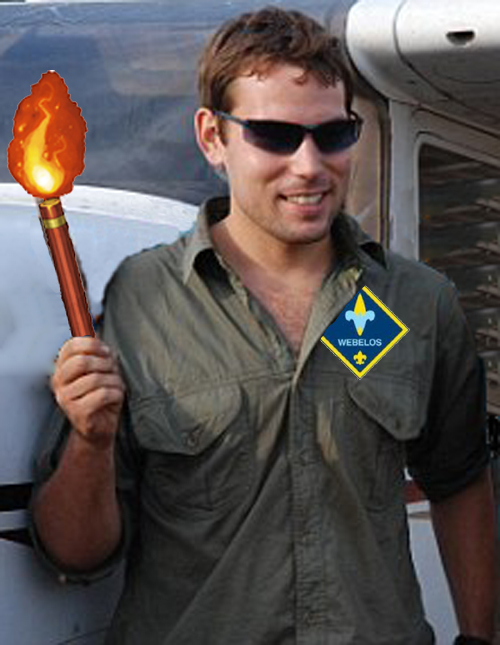
My sarcastic PhotoShop impression of David Simpson.
The Central African Republic is one of the most lawless and corrupt countries on the continent and known mostly today as the presumed home of LRA fugitive, Joseph Kony. Turns out he has some interesting company.

The reason Kony is probably in the CAR, routed from Uganda and being hunted down by a posse of 100 green berets recently sent by Obama, is that the CAR is ungovernable and unmanageable, in part because so much of it is remote, thick jungle. The other part of the reason is because its leaders are thugs.

What a wonderful place to raise a family and run a business, right?

Wrong. Unless… you’re a hunting company.

Hunting companies are extremely small, highly lucrative businesses. Compared, for example, to the overhead of a photography safari company, today, a hunting company of similar size may require a tenth of the capital investment, have about the same operating costs, and yet provide a return ten times or more of a photography safari company with the same amount of assets and staff.

The product sale price, which is ten times or more that of a photography safari company, is justified because of the company’s … “guts.”

Macho. Bravado. Boldness. Courage. Daring.

This is mostly because the service and “plant” (actual tents, food, equipment, and even staff) is of much lower quality than in a photography safari company. In the old days this was reversed, but today a hunting camp is just above OK and maybe even not OK.

Flush toilets, for example, are unusual. Solar lighting or lighting of any kind other than kerosene lanterns is unlikely. Simple spring beds replace four-poster rosewood sculptures. Frankly, I prefer this kind of camp, but I’m old and nostalgic and something of a penny-pincher.

But the food is only so-so because the cooks aren’t well trained. The staff is pulled from a line of relatives in need of work, both African help-staff (always black) and so-called poorly named professional hunters (which are almost always white).

And while the principals may know how to shoot, the younger hunters generally portray hardened biceps and much less, have little upstairs, and generally can’t get any other kind of work. Their resumes are short descriptions of Macho. Bravado. Boldness. Courage. Daring.

And sometimes, simple stupidity.

Such is the story of the erstwhile Swedish hunting company, Central African Wildlife Adventures. (Oh, did I fail to mention that their websites are on par with an eighth grader’s weekend project?)

This brilliant enterprise decided to set up business just about the time that Kony was fleeing north from Uganda, incapable of resting his fugitive soul anywhere in Africa with a teaspoon of stability, so we deduce he’s set up camp in the CAR.

We don’t know specifically what shenanigans the company produced to get its plot of land in the CAR, but we do know that the bribes were apparently not good enough. Because last month the principal and general manager were arrested for the slaughter and murder of somewhere between 13 and 18 people in a situation that reeks of Joseph Kony’s calling card.

According to the 24-year old general manager, David Simpson, who has languished in a CAR prison just long enough to get another cub scout badge of courage and whose brother reported him as being “upbeat” about the situation, he was flying the company’s small plane when he noticed the massacre site below him and so did what every good cub scout is taught to do: report it to the trusted authorities.

Listen, David Simpson, there are no trusted authorities in the CAR. What were you expecting? That they would send you a letter of commendation?

Full disclosure: I am no hunter. But in my long career I have known and worked with good hunters, a very rare breed, rarer than the bongo which companies like CAWA offer to assist making extinct.

But in the main, and especially today, hunting companies are not only bad businesses but directed by if not bad people pretty dumb ones. Bribing is second nature and those who play the game in places like the CAR generally get called out.

The media is filled with sympathetic reports, and I’m a bit surprised by the amount of sarcasm I feel. It would otherwise go without saying that Simpson and the company owner are not guilty of this, and that only the basest and most corrupt justice on earth would dare pursue this case against them.

But read between the lines of the current volume of sympathetic media and you’ll learn that the British Foreign Office is not quite as involved as it was when British tourists were kidnapped by Somalis, or is currently now involved in the great Chinese scandal of the century. And not for want of class, I don’t think.

I prefer to believe that the British Foreign Office, like me, realizes that someone so stupid as to invite their arrest in the CAR is quite likely to do something equally stupid once sprung.

That doesn’t mean Simpson et al should be abandoned. But we’ve got to overlay some reasonable perspective on this story. Not every African country is so barbarous and primitive as the Central African Republic.

And I think I could count on one hand the number of colleagues in African tourism that would have done something so stupid as report a Kony massacre site in the CAR to CAR officials. David Simpson and CAWA owner, Erik Mararv, are apparently two. I won’t name the other three. There’s always hope.

Play with the pyre and you generally get burned.

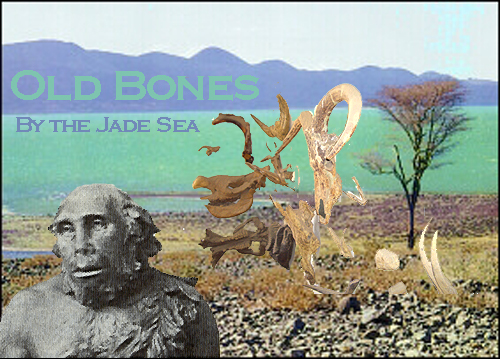
Old Bones Age Well

Old Bones Age Well

Mostly praise for PBS’ brilliant production “Bones of Turkana” with only a few important criticisms.

It was specially good to see Richard Leakey so relaxed and forthcoming. He is a man who has lived much of his life under attack or siege and a significant part of his non-paleontological public life remains clouded and unexplained. And until now, anyway, he has been withdrawn and reticent to assume such a grand public mantel.

In the darker days of Kenya under the dictator Daniel Moi, Leakey held two important government posts. The first was head of the Kenya Wildlife Service (KWS) and the second was head of an anti-corruption unit created in conjunction with the World Bank to rid Kenya of enough back room dealing that aid organizations would feel comfortable working with the country, again.

Both public positions ended in disaster, although there’s little doubt Leakey’s tenure at KWS was enormously good.

I do take issue with the documentary’s claim from Leakey that his pyre of ivory fire almost single-handedly ended the ivory market, thereby saving elephants.

It was much more complicated than that, and certainly Leakey’s strong-man tactics in the KWS, using every power given him by an exceedingly powerful and corrupt dictator, did enormous good to stop the extinction of elephants in Africa.

Before Leakey came to power in the KWS, Kenya had lost 90-95% of its elephants. There was wide speculation that the wife of the first president, Mama Ngina, was involved in the most massive poaching operation.

Leakey definitely stopped this, and the pyre episode was more than emblematic. But Kenya was not the only place in Africa where the problem existed; it was continent-wide. And the largest share of the credit goes to the CITES convention and treaty, initiated by the U.S. and Kenya well before Leakey’s involvement.

And Leakey’s abrupt dismissal (actually, his resignation just prior to dismissal) from the KWS was primarily caused by his stepping on the toes of one very powerful man, Ntimama, who was an ally of the president. And it just shows you, you don’t act like your boss to your boss.

Later Leakey would become the much celebrated head of the “Dream Team” set up to stifle corruption in Kenya. A version of that agency still exists in Kenya and isn’t doing too badly. But his brief tenure there and abrupt departure left many wondering:

(A) Was he just too frustrated without the authority denied him to clean house, or worse (B) was he corrupt, too. Did the head of the snake come round to bite the tail?

That damning accusation remains unanswered and many close to Leakey insist he won’t address it for fear of legitimizing an absurdity. I think that was wrong. Leakey never explained why he left the Dream Team and the accusations remain unanswered.

Leakey was never the affable and sometimes flamboyant star that his father, Lewis, was. From the beginning he was much shyer, assuming I believe the shadow that most white Kenyans lived under during his generation. After all, remember that he lived not just through a global era of emancipation, but in a newly independent country previously ruled by a twelth of the population of which his ancestry played a significant part.

It was actually his mother, Mary, who was the discoverer of Zinj. Yet it was not until after her death in 1980 that scientific publications credited her, rather than her husband, Lewis, with the find.

And to be white, in a newly independent black country, must have been difficult.

And the family was one of the most dysfunctional on earth. There were three feuding sons. One fled to Europe. One became an idiot politician in Kenya on the side of the dictator. And that left Richard as the only publicly sane figure. When Richard needed a kidney to stay alive, the idiot politician balked for months before agreeing to the operation.

I first met him at Jane Goodall’s second wedding in Dar-es-Salaam in 1981. Later I got to know him better when I was working with a Chicago filmmaker, Dugan Rosalini, who tried unsuccessfully to make an early documentary about him. I then lost touch with him until meeting him again at a reception in Chicago honoring the 100th birthday of his father.

Throughout these many years he remained withdrawn, terribly scarred I felt from the two public disasters in Kenya. Yet also during these years his successful scientific battles became legend, and his several books and other publications baseline studies for all paleontologists, today.

So another slight criticism I have with the film is that Leakey’s own explanations of our human origins suggest to the less informed that humans evolved in some linear fashion, from say Australopithecus to habilis to erectus to ourselves.

That had never been Leakey’s position. It was the position of his arch-rival, Donald Johanson, the discoverer of Lucy. Lucy was the closest rival to Turkana Boy in terms of completely found anatomy.

It brewed a terrible and bitter fight between the two men, finally resolved when Johanson conceded in Time magazine’s millennium edition that he had been wrong, and Leakey right.

About what? That human evolution is not linear.

I don’t really think that Leakey intended to imply linear evolution, but the film failed in this regards to highlight how important his opposite view is and was.

There is no doubt in my mind that Leakey is a great man. And not just as a paleontologist. His love of Kenya and attempts to become a valuable civil servant and later politician there were perhaps ahead of his time. And the actual service he provided was probably necessary and beyond realism to suppose anyone else could have performed, then and there.

But the sum total of his life made him an inward man. And this film may have changed that.

Some good wines improve with age. Particularly when left in the dark for a while.