Backfires at the West Gate

Backfires at the West Gate

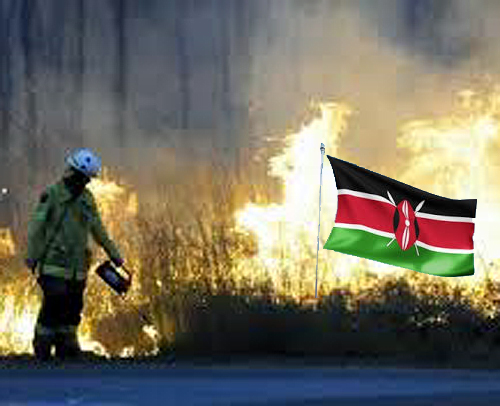
settingbackfiresKenya didn’t deserve this, but as America’s proxy in the war against terror in Africa, it was all but inevitable. This is Kenya’s 9/11.

It didn’t have to be this way. Until little more than a year ago, Kenya stayed out of the fray between terrorists and The West that was combating them worldwide. With the greatest terrorist state to its side, Somalia, it managed peaceful coexistence.

Not that it was easy. The massive Dadaab refugee camp on the border with Somalia was numbered in fractions of a million people and was putting enormous strains on the Kenyan economy and security forces.

Home grown sympathizers of the Somalia terrorists, particularly in the heavily Muslim coastal areas of Kenya, had carried out small grenade attacks and kidnapings, several of tourists.

But compared to the steady and growing breadth and scale of terrorism throughout the country all this year, culminating with Saturday’s attack on the Westgate Mall, it was almost par for the course in the age of world terrorism.

What changed a year ago?

It is widely called the Kenyan invasion of Somalia, and Kenyan troops remain in Somalia having successfully ousted al-Shabaab from power. But it is more accurately America and France’s war, using Kenya as our proxy.

And I don’t mean only ideologically or symbolically. If you’ve read my blogs since the October, 2011, invasion, you’ll have followed the growing presence of American troops and advisors, the large number of drones and the many French warships in the area.

This is all going to plan. And the plan, Obama’s and Hollande’s, was to make the west and their own countries in particular, safer. And they’ve done that.

At the expense of Kenya.

I am an American with my past and part of my soul in Kenya. Do I feel safer? As an American, yes.

But Kenyans have taken the hit, so that we Americans didn’t. And the garbage we heard this weekend from the hate-mongers in Congress and the T-Party people like Steve King of Iowa, make my blood boil. They are so intensely ignorant of the facts, and so wholly unsympathetic to misery, I’m not sure what those of us with reasonable minds can possibly do.

Kenya had been dealing with terrorism – as painful as it was – in a much more correct way until America and France got heavily involved in the last several years. Now, like America in the aftermath of 9/11, Kenya has no choice but to increase the fight they didn’t start.

And that will intensify the battle in Kenya even as worldwide terror diminishes painfully slowly.

It is so sad and such a replay of history. The age of slavery, the period of colonialism which followed and the subsequent Cold War dependencies foisted on new African states … all of these seemingly endless periods of African misery enormously benefitted the developed world with little regards for the African human being.

And so it happens, again.

Terrorism against America and France is much diminished for all sorts of reasons, but in very large part because we’ve found a way to keep it keep it far from our shores. Obama may be ending America’s great fires of war, but he’s done so in part by starting back fires.

If the Kenyan gate burns down, the fire comes home. So don’t worry, Kenya, we’ll be sure to help… you burn some more.

A Real Gem of a Guy

A Real Gem of a Guy

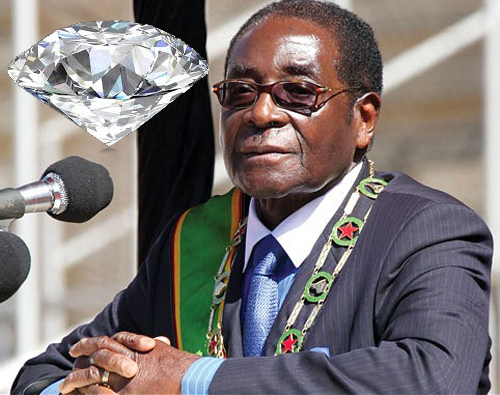
GemofaguyAfter several decades of trying to reel in Zimbabwe, the European Union just gave up. Sanctions beginning with mining and diamonds will soon be lifted. Who’s running the show up there in Brussels?

Most Europeans consider Zimbabwe one of their greatest diplomatic failures. The country remains a rogue state ruled by a ruthless dictator who has managed to all but destroy an economy that had one of the greatest potentials in Africa.

Robert Mugabe is 90 years old and has been in power since 1980. He was a freedom fighter much admired in the west when he led a major faction against Ian Smith, the white man who lead “UDI” – Unilateral Declaration of Independence – from Britain in 1962.

Rhodesia, as it was then called, was the brainchild of Cecil Rhodes, who in the last half of the 19th century made the country with brute force. Rhodes was probably the richest man in the world at the time who believed to insanity that Britain should rule Africa from bottom to top.

Britain wasn’t all that adverse to the idea, despite public protestations, so they let the rogue Rhodes into the wilds to massacre tribes, build railways and demarcate his own country.

Rhodesia became one of the most productive, beautiful, peaceful countries in Africa. Its economy blossomed with modern agriculture, mining for a variety of ores including diamonds, and tourism. Although pointedly, all this production was run by whites, British settlers who also believed like Rhodes that Westminster was Olympus.

But when it was time for Independence in the early 1960s, there was only 1 white for every 16 blacks. Ian Smith and his white Rhodesians didn’t need to hire Nate Silver to predict an outcome.

So they took over the country from Britain in 1962. Yes, that’s correct. British settlers took over a British colony. Remind you of anything? Ian Smith more than once called himself the George Washington of Africa.

Times had changed, and the war which followed wasn’t with Britain. It was with blacks like Robert Mugabe, and after 18 years and a lot of European sanctions on white Rhodesia, Britain and the U.S. brokered a peace agreement.

The agreement fixated a constitution for ten years that didn’t give the whites any more power than blacks, but institutionalized the power that they negotiated in the agreement in a way that couldn’t be changed.

For that ten years Robert Mugabe was a very good president … at least we all thought so, and frankly, so did many of the whites. It was a time of tourism explosion in Zimbabwe – since it was now peaceful after so many years.

I was deeply involved with two companies run by two white Senators. They loved Mugabe.

But after that ten years and the constitution could be changed by majority vote, Mugabe did. And his vindictiveness started to show.

He began redistributing land, mostly from white farmers. OK. To be expected, right? But with time it became more and more gruesome and the distribution was hardly fair. The land was given not to people of need but to his supporters. Then his cronies. Then his ministers.

Today the next richest and most powerful man in the country is the head of the army, Minister of Defense, Emmerson Mnangagwa. He is the richest because the land which was given to him by Mugabe includes Zimbabwe’s diamond mines.

Mnangagwa is rich despite European sanctions, and that’s the point of those who argue the sanctions became useless. But the EU itself has estimated that Zimbabwe revenues will increase by Euro 400 million annually as the diamond sanctions are lifted.

Others claim that a major motivation is that Belgium wants the business of cutting the diamonds.

“Too late,” says Zimbabwean spokesman, Rugare Gumbo.

Whatever the reason, Zimbabwe is poised to get much richer. And as time goes on, Zimbabwe is little more than a smaller and smaller and closer and closer group of thugs.

ÇA SUFFIT!

ÇA SUFFIT!

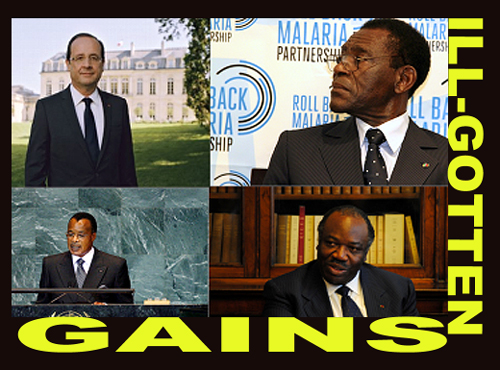
illgottengainsOne white European president is battling three black African despots in what might be the world’s biggest attack on corruption ever seen. Fast cars, Bond’s jet yachts, secret logging of rainforest jungles and the plight of Africa democracy are all at stake.

President Francois Hollande is the first French leader to refuse the cozy, often illegal and until now mutually beneficial relationships French Presidents have developed with Francophone African leaders.

Moreover, he has given the nod to French prosecutors and judges to continue massive investigations into the “ill-gotten gains” by three corrupt African despots.

These ill-gotten gains game from former French presidents. They are the proceeds from business deals removed from regulation by presidential decree, from aid that intentionally required no accounting, and from outright illegal money laundering that former French presidents forbid prosecutors from pursuing. That was the French way.

Says Hollande: “Ça suffit!’

Endorsing the legal nit-picking that a number of progressive French NGOs have been doing for years (see one of the most prominent, Sherpa), Hollande has reversed French policy of nearly the last century.

France’s role in Africa has been huge. Twenty-three of Africa’s current 53 countries were French colonies (compared to only 18 for Great Britain) and the total 2010 per capita GDP in those countries is about a quarter greater than the former British colonies.

America tends to concentrate on the former British colonies like South Africa and Kenya, but France’s role especially in the big oil-producing countries has been huge.

For all the years since African independences in the 1960s and 1970s, French politicians have benefitted enormously from the growing wealth of their former colonies.

In direct contrast with the British, backroom deals and presidential waivers for regulation and other prosecution have developed an incorrigible relationship that has enormously increased corruption at the top, both in France and Africa.

That’s really changing, now.

Hollande is actively going after the “ill-gotten gains” of many African despots, and focused current attention on three: President Denis Sassou Nguesso of the Republic of Congo, President Teodoro Obiang of Equatorial Guinea and the now-deceased President Omar Bongo of Gabon.

There are others. But these three have enormous financial holdings in France, and there is a good chance the French government will now prevail in taking those back.

It is an enormously positive step for the French to have taken.

Bon chance, Hollande!

Poaching? Who’s Poaching?

Poaching? Who’s Poaching?

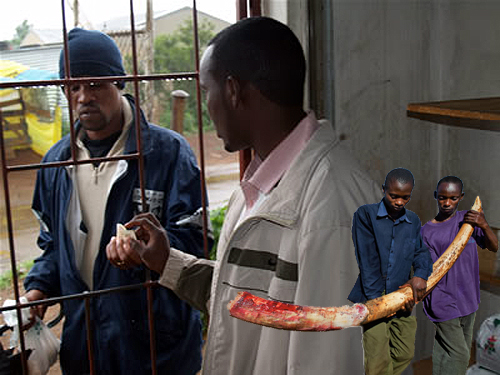
poachingwhosepoachingElephant poaching is increasing, unorganized, ad-hoc and much more likely organized by corrupt Ugandan and Congolese government soldiers than rebels or militia.

Although rebels like what’s left of the LRA also poach, they are not the principal poachers. In fact, they probably have an extremely minor role. And news reports suggesting otherwise make it increasingly difficult for us to solve the problem of increased elephant poaching.

So says Kristof Titeca after more than a year of field work in Garamba National Park in The Congo, a young post-doc from Belgium, in an article posted today.

It’s only work and analysis like this, which rarely percolates into the world media, that gives us a handle on how to deal with the current increase in elephant poaching. It’s equally important in suggesting that established news media has more interest in fanning dying embers of scandals than digging for the truth.

Titeca’s research and analysis is about ivory poaching. But he can’t help but wonder why not-for-profits out raising money, like the established world media find it so necessary to make these untrue links:

“One cannot help thinking that these reports are primarily concerned with trying to bring the LRA back into the limelight, in a context where its reduced violence makes it much harder to do so.”

And so Titeca veers slightly from his field work about elephants and ivory to find a couple references showing how diminished the LRA has become. His own work has concluded the same.

News delivery is so entrenched and institutionalized that reality is fixed like photograph. Often today in Africa, you have to turn to young kids outside the media system to get the real story.

There are a few precious sources in established media, and Titeca for example applauds Jeffrey Gettleman of the New York Times. But he doesn’t applaud any NGO or charity organization, and I expect because there aren’t any to applaud.

Titeca’s research is comprehensive. He details the trail from the initial killing to the traders and middleman to the airports that finally export it. Although established media focuses on Dar-es-Salaam and the Kenyan coast of Mombasa as major exit conduits, Titeca’s own research points squarely to Uganda.

As I’ve often written elephant poaching today is totally different from the plague that nearly exterminated the beast in the 1970s and 1980s, but those days gave rise to public awareness and the birth of numerous then good charity organizations.

Those organizations just can’t get it right, this time. In part because their very successful method of helping to end the extermination forty years ago won’t work, today, and they seem incapable of changing their focus.

Back then raising awareness and putting pressure on certain governments successfully led to the creation of CITES and the international ban on trading ivory.

That’s done. And it’s no longer working, because most governments are wholly convinced of the need to ban the ivory trade (even, I sometimes think, China) and because the world is widely aware of all kinds of animal poaching.

As Titeca and so many others point out, the trouble today is small ad-hoc groups of poachers and more organized middlemen, and many, many of them.

The mischievous attempt to put the rap on rogue organizations like the LRA is a terrible distraction and untrue: hard for the public to disconnect because the LRA is so horrible, and hard for CNN because it makes such a good story.

Ivory poaching today in East Africa is hardly different than robbing a 7-11 in the U.S. And it’s on a dangerous increase, yes, but the solutions are much more complicated than when Mama Ngina collaborated with the Emirates and used Sikorsky helicopters over the Serengeti.

The world’s complicated, folks. There’s no solution in your newspaper headline.

Better Watch Out

Better Watch Out

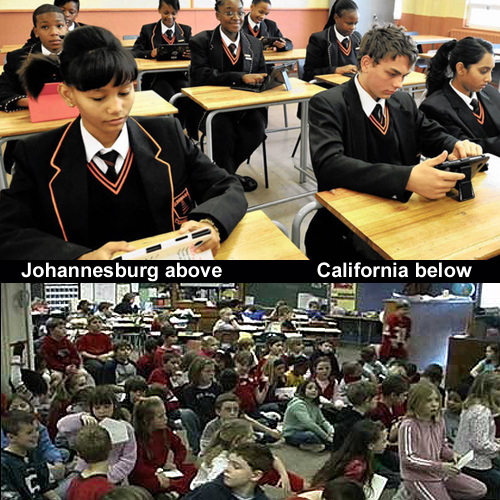
AfricavsUSeducationBetter education does not come by rewarding school performance, according to an African study, but by rewarding the underlying causes of that performance.

America’s method is not going to help it get better. Africa’s method is already helping it to get better, and quite fast, too.

Fifteen countries in sub-Saharan Africa fund a regional organization that evaluates those country’s educational system and produces recommendation for improvement. SAMEQ is essentially the Department of Education for sub-Saharan Africa.

Unlike our Department of Education the most recent comprehensive study of primary and secondary education suggests that teacher and pupil evaluations are meaningless and become entrenched without a broader and more detailed look at that data.

Let me explain:

The Obama administration focuses on school performance and teacher evaluation. What the SAMEQ report discovers is that while performance is the ultimate metric, giving funds or withholding funds based on that performance is pointless, which is what the Obama administration does.

SAMEQ delves into the causes of current performance, and I dare say that they’re the same the world over.

And this simple type of analysis leads to unfettered conclusions.

“Pupil socio-economic status, background, sex, age, grade repetition, absenteeism, homework, and speaking the language of instruction at home” are the greatest determinants of a pupil’s performance, and thereby, the pupil’s school’s overall performance.

(The report later reveals a tantalizing analysis of grade repetition that suggests this is counter-productive. In other words, poor pupils who were retained did poorer in the long haul than poor pupils who were retained and matriculated, anyway.)

And the main contributors to these individual factors are “school resources, school location, pupil–teacher ratio,” and finally, Obama’s focus, teacher evaluation (which the report calls “teacher score”). But it’s critical here to place teacher evaluation on no greater a pedestal than the other important factors.

The report adds that secondarily but still very important, school location seriously correlates with overall educational performance, and that is essentially a wider metric supporting the importance of socio-economic background.

So what does all this mean?

First, I have to say that the study was outstanding. Read the study to see the care with which data was mined, the finesse with with which contributing factors were parsed out, and the enormous relevance of carefully determined variants. Unlike our own government studies which tend to top-load a study with a goal (like school performance), this was a legitimate scientific exploration.

SAMEQ must tread much more carefully on political toes than our own government agencies, so there was little outright recommendation. But it’s there not just between the lines:

Pupils aren’t going to get better until their socio-economic status improves, and schools aren’t going to get better until pupils get better.

The one agreement with Obama policy is that teachers matter a lot, and that teachers can become as entrenched as socio-economic policy. Certainly figuring out a way to enhance teacher performance would be dynamite in improving education.

But so importantly, this must not be the principal concern.

What SAMEQ shows is that government resources – far more restricted in Africa than in America – are poorly used when thrown at the schools themselves.

Using the fact that grade repetition has no effect on student performance, SAMEQ explains further: “High levels of grade repetition have been blamed for increasing the overall cost of schooling, because if many pupils repeat each year, school systems need to employ more teachers and build more classrooms.”

Thus, attempts to work within the system can backfire.

SAMEQ is comfortable with certain remedies that would be not so comfortable in the U.S. “Home Intervention” as successfully implemented in Malaysia, and to a lesser degree in Mauritius and the Seychelles, improves performance.

This means greater funding of social work, something currently anathema in most of America.

And SAMEQ pulls no punches in recommending outright that more of Africa’s limited resources for education should be directed to poorer areas than richer areas.

That’s a direct opposite from America, where school resources are mostly local, so are circular and support themselves. Redistribution is what’s required.

As with immigration, taxation and employment policies, Africa is way ahead of America on educational reform.

And Africa is improving … fast. Is America?

Good Morning, Nairobi!

Good Morning, Nairobi!

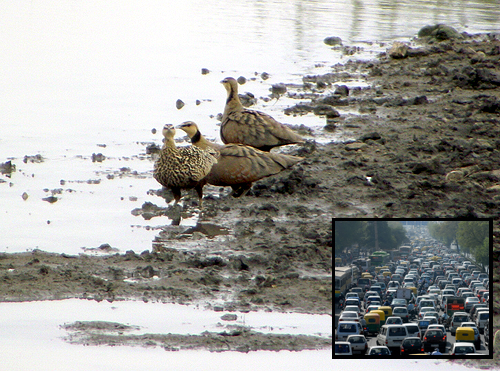
NairobiGrouseThis morning Nairobi got good news: the yellow-throated sandgrouse was photographed drinking in Nairobi National Park.

Scratching your head? Let me bring a smile to your face.

Will Knocker’s photograph above is of the three sandgrouse this morning in Nairobi National Park. (The inset is from somebody’s phone this morning, and that somebody must have been on a crane or something at the roundabout starting the street.)

Nairobi is fast becoming the second most important city in Africa, after Johannesburg. With this emergence has come more problems than you can shake your stick at. The city’s growth is unimaginable and not well coordinated. So next week there might be a high-rise being constructed on a site where a railway station is also being built.

Traffic – well, forget about traffic. Recently I was sent a picture of a bicycle pile-up in between two rows of congested vehicles on Uhuru highway. There’s a reasonable chance the inability of vehicles to move will lead to new, alternate forms of transportation, like walking.

It is, by the way, leading to new forms of work days. More and more people are going to work at ridiculously odd hours and coming home similarly, just so that going and coming will “work.”

Carved on one little side – I’d say right now about a ninth of the city’s bulging perimeter – is … absolutely unbelievably … a national big-game park.

Nairobi National Park is a legacy park to be sure. It hasn’t grown in size since it was first proclaimed in 1945 making it the oldest national park in Kenya.

But neither has it shrunk, and that’s the point.

I incorrectly predicted that it would. A highway was announced and work begun that would have transected the park and I offered a sad lament but presumed it was inevitable.

It wasn’t, and I ate crow. (Not pied crow.) Local conservationists prevailed. Yes, they prevailed on a technicality to be sure, but isn’t that how Mohammed moved the mountain?

And with efforts very similar to our American local conservation societies first modeled by Nature Conservancy, tracts of land on the opposite side of the park to the city have been secured as wildlife corridors into some of what’s left of Kenya’s wild Amboseli ecosystem.

The yellow-throated sandgrouse doesn’t come to town. It’s a country bird. In fact, it’s a prairie, massive wilderness bird. It lays 2-3 eggs in a ridiculously unsecured nest made in a slight depression in the ground. It doesn’t like people.

I see it in the Serengeti and the Mara, and cousins of it in Kenya’s Northern Frontier. I don’t see it at the mall.

Well, there you have it, a wonderful Friday piece of unfinished news. If Pterocles gutturalis made it through the morning commute, I guess I won’t give up trying.

The Most Precious Discovery

The Most Precious Discovery

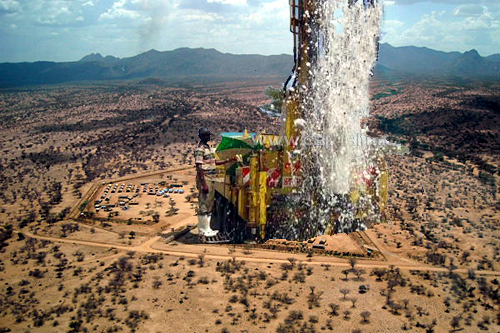
turkanawaterSlowly we are discovering a deeper layer inside earth that is renewing oil and gas, and now, the most important resource of all, water. Africa is jubilant.

February’s initial discovery in the far northwest deserts of Kenya was officially announced yesterday, and it is quickly becoming the most important story in Africa.

If estimates are correct, Kenya’s reserves of clean water have just been multiplied by ten. The daily consumption potential of Kenya’s current fresh water will be doubled.

Fresh water is one of Africa’s greatest problems. More than a third of the estimated 884 million people worldwide without access to clean water live in sub-Saharan Africa.

The aquifer of 250 billion cubic meters of water lies a thousand feet under one of the most inhospitable places on earth, and is similar to and even smaller than an aquifer discovered five years ago under the Sudanese desert.

That aquifer in Darfur has not been developed because of the violence in the area. Although the area in northwest Kenya is not wholly peaceful (my novel, Chasm Gorge, to be published soon is set in this area) there is little indication that tribal squabbles will impede this massive development.

The area is a sparsely populated one and diminishing resources is the friction between three hostile groups, the Turkana, Pokot and Borana. Their enmity has existed for centuries and has been exaggerated by population growth facilitated in part by better services and a modernizing government.

Quick access to large amounts of fresh, clean water in Turkana is likely to ease tribal hostilities in this case, and so would stand in marked contrast to what is happening in Darfur where hostilities have long ago matured into all out war.

Although distant, remote and very deep, the water discovery is so profound that Kenyan officials are looking into the possibility of creating a river as a method of transporting the discovery to more populated areas further south in the country.

But long before that happens, it’s clear that the people of Turkana will have new and sizable access to fresh water. While currently daily water needs in Turkana are almost exclusively for personal and urgent use, this new discovery raises the prospect of significant agricultural irrigation.

As with the earlier discovery in Darfur, it seems the aquifer is renewable and while the process is not wholly understood, the vast desert area may be sponging what moisture does fall onto it rather than give most of it up for evaporation, as previously thought.

The Kenyan discovery was a joint effort between UNESCO and several private companies whose technologies are normally used to discover deep-earth oil reserves.

Without UNESCO’s lead on the project it is likely it would never have happened. These new technologies are being monopolized for the discovery and extraction of oil. Once again, it’s the international community and its organized institutions that are saving lives and working for the ordinary soul.

We must wonder what is happening to Mother Earth as her insides are gutted out. But for the time being, there is only reason for celebration.

The Trials Begin

The Trials Begin

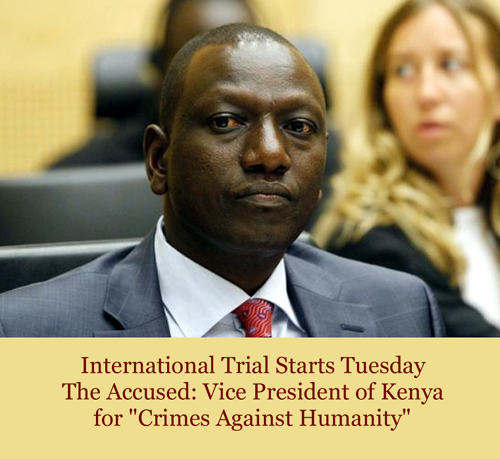
TrialBeginsThe opening day in the trial of Kenya’s Deputy President, William Ruto, lifted the curtains from a gruesome, planned ethnic genocide that he allegedly orchestrated with the precision of an all-out war, including purchases of weapons from Uganda and The Sudan.

Accused of “enlisting political collaborators, former military friends, elders and media allies to commit crimes against humanity,” ICC Prosecutor Ms. Fatou Bensouda said she will call 22 witnesses.

Ruto is being tried simultaneously with Joshua Arap Sang, a radio broadcaster, who is specifically accused of using the radio station KASS-FM to mobilize ethnic forces when requested by Ruto.

“The prosecution alleges that the accused William Samoei Ruto and Joshua arap Sang intentionally exploited to their own advantage these deep-seated political, ethnic, social and economic issues during the 2007 electoral campaign.”

The 64-page indictment is a gruesome, detailed description of backdoor meetings, careful organization of weapons and money, and the meticulous assembly of a chain of command the prosecution is now calling “The Network.” Ruto was the alleged head of The Network.

Former ministers in the civilian government, former Army and police generals and commanders, district commissioners and even local youth leaders were all carefully organized into a chain of command with the sole intention of eliminating “unwanted communities,” in particular, the Kikuyu.

The Network was organized well in advance of the 2007/2008 election and would go into action, according to the ICC prosecution, if the election were lost by Ruto. Ruto was part of a coalition of western Kenyan tribes including the Kalenjin and Luo, contesting the reelection of Mwai Kibaki, who was a member of the country’s largest tribe, the Kikuyu.

As I explained yesterday, the Kikuyu and Luo and Kalenjin were historical blood enemies. Also as I’ve written earlier, the ethnic division over many years adopted social and economic characteristics, just as Northern Ireland became Catholic and poor and southern Ireland was protestant and rich; or as Christian Serbs in Bosnia were far better off than Muslims, there.

So the ostensible election of 2007 was almost quintessentially typical of the modern era: the poor, socialists, redistribute-the-wealth group versus the established, rich, capitalists already in power.

Yesterday’s first day of the Ruto trial did make real news. The ICC prosecutor backed off her public suggestions that Ruto explicitly was involved in the ethnic cleansing and painted him more as the backroom organizer, using Kalenjin proverbs and winks of the eye to order attacks.

That is a serious blow to the prosecution in this world court where proof of guilt is a much higher bar to attain than in most other sovereign courts around the world.

The only judgment issued by the Court yesterday was that the other trial of Kenya’s President, Uhuru Kenyatta, will be held on alternating four-week periods with this one, so that the sovereign nation of Kenya is never without a leader.

Remarkable.

And as you’ve guessed, Kenyatta’s trial will be very similar to Ruto’s. The two, now serving together as Kenya’s chief executives, are accused of trying to eliminate each other through ethnic cleansing.

Talk about Team of Rivals…

But at long last things are beginning to make sense, in the extraordinary Kenyan way that makes Shakespearean dramas look like third grade fairy tales.

Presuming Kenyatta’s strategy is similar to Ruto’s, the accused really believe they will prevail as not guilty. And with the ICC backing off the contention they gave explicit orders, for the first time in public, that seems possible.

And if that comes to pass, and if the two leaders of the historical arch enemies that wanted to kill each other, raise a modern Kenya from the ashes, what does that mean?

That like Obama threatening to bomb Syria was all that was needed to eliminate its chemical weapons, that trying to put the two Kenyan leaders in the clinker for the rest of their lives for trying to kill each other makes them friendly nation builders?

How good are these bad guys? Are miracles real?

“Miracles are a retelling in small letters of the very same story which is written across the whole world in letters too large for some of us to see.” – C. S. Lewis

And Now! Live! From The Hague!!!

And Now! Live! From The Hague!!!

CastofStarsIf you were riveted by the O.J. Simpson trial, you’ll want to adjust your cable contract to get NTV-Kenya: “Tomorrow! Live! The World Trial of Kenya’s sitting President and Vice President for Crimes Against Humanity!”

This doesn’t sound real. Neither Steven Spielberg or William Shakespeare could have concocted this one. This isn’t like a revolutionary tribunal. It isn’t Madame DeFarge and her fellow citizen hookers watching the old king hanged.

William Ruto, the Deputy (Vice) President of Kenya, flew to The Netherlands yesterday … with, by the way, 100 elected members of the current Kenyan Parliament … to stand trial in The Hague’s International Criminal Court (ICC) which the country of Kenya agrees has the authority to imprison those the ICC finds guilty for up to life.

The President of Kenya, Uhuru Kenyatta, will begin his trial on November 12.

Oh, and by the way, the crux of the charges against Ruto was that he tried to kill Kenyatta’s supporters, and the crux of the charges against Kenyatta is that he tried to kill Ruto’s supporters.

The ICC initially was going to try them (and 4 others) all at the same time, but accommodated a Kenyan request that the country’s two top leaders ought not be out of the country at the same time.

How civil.

The bill to the Kenyan government for participating in this ultimate fiasco is astronomical by Kenyan standards. Just consider today’s expense report: Imagine George Bush flying back and forth in Air Force One (and probably Air Force Two to bring Republican Senators and Congressmen) to Amsterdam to allow himself to answer unpressed indictments by the ICC regarding his War in Iraq.

I thought a review of why we’re here might help you.

The court in question is the World Court, the ICC. Americans don’t know much about it, because America refuses to participate:

THE COURT
As of May 2013, 122 states are parties to the ICC, including all of South America, nearly all of Europe, most of Oceania and roughly half of Africa. Another 31 countries, including Russia, have signed but not ratified the treaty.

The progenitors of the ICC originated more than a century ago and include the Red Cross, when the world tried (and failed) to prosecute those responsible for the Franco-Russian War of 1872. The idea was reborn after World War I and then, again, after World War II. The Nuremberg trials finally prompted the United Nations to embrace the idea.

But having studied it endlessly and virtually created it, the UN was stymied
from setting up The Court by the politics of the Cold War.

In June, 1989, in response to worldwide drug trafficking and the imminent Bosnian War, the world more or less (including no America) got together and formed the court as an entity separate from the UN.

So even without America, China and full Russian participation, the Court has grown to represent world justice. Its famous trials include the wicked men of Bosnia, Liberia and Rwanda. These managers of genocide are now behind bars in Holland.

HOW DID KENYA GET THERE?
The democratic election in Kenya at the end of 2007 was miserably mishandled, almost certainly fraudulent and whatever else, too close to call. It was, however, the first truly free election Kenya had ever had, because the two main contestants for the Presidency were so far apart ideologically.

One was for the poor and socialist. One was for the rich and capitalist. And …

…one was from the country’s largest tribe, the Kikuyu; and the other from its second largest tribe, the Luo, who until that moment had basically spent all their history trying to massacre one another.

And so they did, again. This time with the extremely legitimate pretext of a major election gone awry. Within a month of the election, more than 1300 people had been killed but more importantly, in vicious videoed attacks that devolved into ethnic cleansing.

And even more important than that, really, more than a quarter million people were displaced.

The U.S., Britain and Kofi Annan put Kenya back together. Six months after the catastrophe, the two contestants were sharing power, and things were working out. In fact, they worked out so beautifully that Kenya’s then newly written constitution is really a model for modern governance.

Part of the all-party agreement that put the country back together was to determine who had fomented the violence and to prosecute them … in Kenya. It was almost an afterthought that added to the agreement that if Kenya couldn’t get it together to hold the trials, or to mount the investigation, that if Kenya wanted, the ICC would step in.

That’s what happened. Kenya couldn’t get it together. At first it just seemed like too herculean albeit too expensive a task. So the old Parliament that wrote the new constitution hemmed and hawed, debated and ignored, and finally defaulted to the ICC.

Which was really quite reluctant to take the case on. After all, as horrible as 2007/2008 was to every Kenyan, it was nowhere near as horrible as the cases the ICC had been hearing: like the Hutu massacre of 800,000 Watutsis.

The ICC did its work. Among those to be indicted were the leaders of Kenya’s biggest tribe, the capitalists, Uhuru Kenyatta, son of the founder of the country; and the leader of an influential smaller tribe hated by the Kikuyu and who had supported the socialists, the Kalenjin, William Ruto.

For organizing, financing and managing the slaughter of hundreds and attempted slaughter of hundreds of thousands.

Whoa. Embarrassing, to be sure. Kind of riled Kenyans of similar stripes. Parliament exploded but did nothing. Parliament considered giving immunity to these guys, but didn’t. The trials were set.

Then …

William Ruto and Uhuru Kenyatta filed to contest the election of 2012 after they’d been indicted.

Parliament choked. The Presidential Commission authorizing candidates didn’t know what to do. Parliament said do it. The two men indicted for crimes against humanity became candidates.

And then …

… these two murderous rivals combined to form a single party. The leader of the biggest tribe, Kenyatta, would stand for the presidency. The other guy, William Ruto and former arch enemy, would stand with him for the vice president.

And then …

… they won.

Tomorrow, I speculate on what the hell is going on, or, “How Good can a Bad Guy be?”

Don’t Forget Your Popcorn

Don’t Forget Your Popcorn

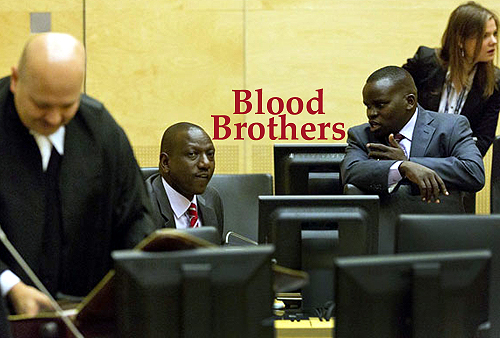
RUTOtrialBeginsTuesday the Vice President of Kenya personally stands on trial in The Hague for crimes against humanity. Two months later, the President will begin his trial, there.

William Ruto, the Deputy President of Kenya, will be accompanied by about 100 recently elected Members of Parliament who obviously support him.

It is, indeed, one of the most curious performances of achieving justice the world has ever seen. A Nairobi commentator put it this way this morning:

“Most international criminal tribunals have been set up as courts of victors to punish the losers,“ explains Luis Franceschi, Dean of Nairobi’s Strathmore Law School, citing the great trials that followed great wars and historic massacres.

This time in Kenya, though, “The accused [are] not past rulers or sitting presidents, but newly elected leaders. We are witnessing one of those uncommon ironies where democracy seems to clash with justice.”

Add to this complexity yesterday’s action by the Kenyan Parliament to withdraw from the International Court that is holding the trials, and you have the kind of governmental and political mess that has stymied Kenya for so long.

There’s more! The International Criminal Court (ICC) is an independent, global judiciary created and supported by 122 sovereign nations. Kenya is one of those. Proposed as a part of the remedial actions taken after World War II to try war criminals, it became a serious global justice tool after opposition to it by Soviet block allies ended with the end of the Cold War in 1989.

The U.S. is one of the few nations to have specifically rejected the Treaty of Rome which formed the ICC. The other two – you guessed it – are Russia and China.

Yesterday in Kenya’s Parliamentary debate, America was invoked time and again as a reason for Kenya to withdraw.

In a finely worded statement the U.S. issued after the Parliamentary debate, undoubtedly hoping no one would read it because of the Syria Crisis and G20 meeting, America urged Kenya “to fulfill its commitments to seek justice for the victims of the 2007-2008 post-election violence.”

This is a major step back from much more severe statements America made earlier, including “severe consequences” to Kenya if action like this were taken.

Kind of hard to tell Kenya to go to trial in The Hague when you intend to ignore your staunchest ally and the rest of the world that are telling you not to bomb Syria.

This is a mess.

It would have been a mess even if the U.S. hadn’t muddled its diplomacy in Kenya or its image abroad, but believe me, that isn’t helping.

There is every indication at the moment that Kenya’s duly elected and pretty popular top two leaders will stand trial in an international court. Last week technicians from Kenya were allowed into the court chambers to hi-tech wire it up, so that people in Kenya could have real time coverage and communications.

The charges against them and three others are that they were the principals in organizing and funding if not actually managing the terrible violence that followed the disputed 2007/08 elections.

More than 1300 people were killed, many horribly, but perhaps more significantly more than a quarter million displaced. The issue of “IDPs” (internally displaced persons) remains a contentious and difficult one in Kenya even today.

The Hague is conducting The Trial because it was asked to by the Kenyan Parliament.

Not the current Parliament. The current Parliament is entirely new, the first one under a wonderful new constitution adopted last year. But the old Parliament that was viced together by Kofi Annan and others who finally brought peace to the country by March, 2008, first accepted that it must hold trials, then wavered, then asked the ICC to take over.

The ICC did so reluctantly and laboriously. But once things got going, they became unstoppable.

Neither the accused current president or vice president held significant power in the coalition government that brought Kenya out of the cauldron of violence into the new light of a really good constitution.

Both were charged by the ICC as being among the main culprits before they even announced they were running for the leaders of the country created by the new constitution.

The old Parliament debated furiously whether as accused they should even be allowed to stand as candidates, and finally decided they could.

Meanwhile, the ICC was rounding up tons of evidence. It takes the ICC years to achieve enough evidence to bring someone to trial, and in this case they did so very quickly. Trial dates were set initially before Kenya’s presidential election.

But it became clear at that time that the two accused were also very popular in Kenya. Negotiations that kept the old Parliament on board with the ICC successfully pushed the trial dates until after the elections.

Then, the accused won by such a slim margin that Kenya’s newly constituted Supreme Court finally had to affirm the razor thin outcome.

As Uhuru Kenyatta, the current president, and William Ruto, the current vice president, solidified their power and control over the country, witnesses that the ICC had assembled for the trial began to withdraw.

Of an original 30 witnesses, there are today less than half that willing to testify. You can imagine why.

And to make this entire blog meaningless, the process of Kenya withdrawing from the Treaty of Rome that it signed fifteen years ago could not possibly conclude before these trials are over.

Sane minds in Kenya implored Parliament not to become “hysterical” and do what they did yesterday, accomplishing essentially nothing but making Kenya look odd at best, juvenile at worse.

I am absolutely fascinated at this whole process. Clearly, Kenyatta and Ruto if convicted are not going to jail. They’d go home, first, and then stay there.

So why go through the antics in the first place?

They believe they can prove innocence. I suppose we should remain open-minded about this. You know, innocent until proven guilty, and all that. And to be sure a guilty verdict in The Hague requires a lot more evidence and certainty than in a normal court.

It is, indeed possible, that despite all the evidence so far assembled against these two men, they could be found not guilty.

Even so, they’re bad guys. We don’t need an international court to sift through the volumes of news reports that have already convicted Kenyatta and Ruto in the international court of public opinion and I believe that judgment has been a fair one. Although the U.S.’ stand is losing credibility, there’s not a single European power willing to engage either of these leaders.

But in the duplicitous world of global power politics, a not guilty verdict from The Hague might make an appointment in Westminster easier to arrange.

Stay tuned.

Don’t Walk on Safari

Don’t Walk on Safari

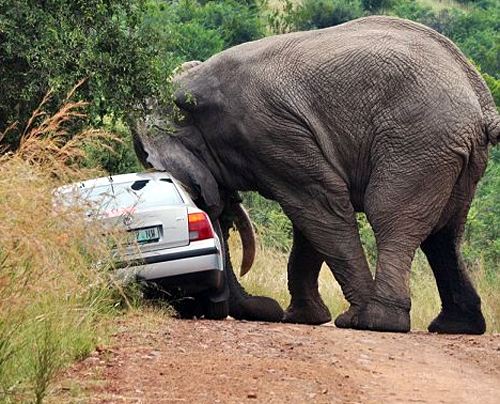
elePushesCarAs my clients well know, I don’t approve of walking safaris anywhere in East Africa, today. Tuesday morning another tourist was killed by an elephant near Tarangire National Park.

Thomas McAfee of San Diego was on a guided walking safari arranged by Tarangire River Camp where he was lodging.

The details are not complete, but reports of the local police report claim the incident occurred at 8 a.m., Tuesday, when McAfee and two others encountered about 50 elephant on their walk.

The report continues that the other two escaped by running away but that McAfee tripped and fell and was then killed by a charging elephant.

Tarangire River Camp is a respectable camp located just outside the park itself. Many similar excellent camps and lodges throughout sub-Saharan Africa located just outside the boundaries of a government reserve are not restrained by park regulations restricting walking. So as a sales tool they offer walking safaris.

Park regulations are strict regarding walking. Walkers must pay a special fee and must be accompanied by an armed ranger, but for the last several years in Tarangire, the main northern ranger post has declined to lead walking safaris.

I can only speculate as to why the rangers have declined to lead walking safaris, since there has been no official reason. But I suspect it’s the same reason I have: there are too many elephants, they are too stressed, and it’s too dangerous.

Be cautious, now, about unqualified criticism of Tarangire River Camp. Virtually every off-reserve camp I know in Tarangire, including my favorite, Oliver’s Camp, promotes walking safaris.

Walking safaris strike consumers as an attractive option to remaining in the car all day, and that’s understandable, and nowhere at no time have they been offered without the understanding of added risk.

The finest and most professional walking safaris in Africa are led by remarkably professional rangers in South Africa’s Kruger National Park.

And even those have had serious incidents, but notably the professional has been the one who has suffered most, and in all cases in recent memory the tourists were uninjured.

And, of course, incidents occur to vehicles, too. Most of these, in fact, are reported again in Kruger National Park, and the reason is quite simple: There are many more tourists, there, and many self-drive cars, unlike in East Africa.

In my long forty years of guiding safaris I’ve been threatened by animals, mostly elephants, dozens and dozens of times. Three times were very serious. Game viewing – anywhere in Africa – is not a walk through your local county forest preserve.

But times started to seriously change 10-15 years ago. Today the risk of an animal attack while on safari is greater than ever. The risk is easily avoided, but it requires a change in tourist behavior from what for so many years has been considered acceptable.

Don’t walk.

There are qualifications, of course. If you recognize the added risk, then there are places where that risk is less and where the professionalism and heroism of its rangers has a long history. And that’s in southern Africa, especially Kruger.

Zambia’s Luangwa Valley is also a place where walking safaris have been the featured form of game viewing for more than half century, and where the guides have avoided serious incidents for a remarkably long time.

And in very remote locations, for example in Kenya’s fine Bush ‘n Beyond camps in the distant Northern Frontier, walking is probably OK.

Why is it less risky in some places? Because of different animal behaviors in different places, and because of the skill and professionalism of those who might guide you walking.

East Africa, Kenya in particular, has made great strides in the skill and professionalism of its rangers. Tanzania much less so, and Uganda is horrible. But no country in East Africa has the training or supervision that passes my requirements for a safe walk in the wild.

And East Africa’s wild animal population is out of control. Both in terms of simple numbers (which is a main reason I enjoy going there), and because of unusually rapid increases in human/animal conflicts that are not occurring in southern Africa.

Last night I was reading my precious first edition of Theodore Roosevelt’s Game Trails. The book is fascinating on many levels but is mostly an account of his incredibly extensive big game hunt through Kenya and Uganda in 1909.

Many, many times he and his professional hunters, Cunningham and Tarlton, approached elephant on foot, and not always just to kill them. Sometimes, just to taunt them, as when Teddy jovially reports throwing sticks and rocks at one.

To be sure Roosevelt was an accomplished hunter and sportsman, but he was careful about hunting without Cunningham or Tarlton with him. But when he accidentally “ran into” his old friend and fellow conservationist, Carl Ackley, on a private journey released from his professional hunters, he didn’t hesitate accepting Ackley’s request to kill an elephant for the New York Natural History Museum.

In those days, with the prairies and forests and velds literally saturated with game, and few if any people living anywhere, including indigenous people, the human intrusion into the animal paradise was a clear and unmitigated risk – not to the people, but to the animals!

Elephant had been hunted for ivory for centuries, and no human approached them except to kill them. It was virtually the same for anything wild, a bird as small as a wheatear was a target. Roosevelt’s arsenal contained a variety of weapons capable of downing a mole rat.

The relationship between animals and man was clear. Hunter and hunted. And man was supreme. The list of hunter injuries was great as world sportsmen defied death by challenging wild animals: Lord Delamere and Governor Jackson enjoyed showing Roosevelt their wounds from great hunts gone awry, and I definitely felt that Roosevelt tried and failed to be so heroically scarred himself.

But every animal on the veld knew that ultimately there was no contest with man. Man always, always won.

That’s changed.

Protecting animals has tamed them. And it’s important to remind ourselves that “tame” is our definition, not theirs. We have manipulated wild animals so that we can approach them more closely and enjoy them, even as they wander in the wild.

We’ve now had more than a half century of this, and that means a good two generations of elephant and far more in the lesser animals. Wild animals in African parks grow up far less afraid of man than their wild and natural behaviors would otherwise intuit.

That worked beautifully for many, many years. But about 15 years ago it became apparent there were too many wild animals too densely packed into these protected reserves in East Africa, where the most exciting and supreme game viewing occurs.

That’s logical, of course. You protect something and it will prosper. And to be sure “too many” is my own assessment and nothing more scientific than that. Reading Roosevelt it’s quite clear there were more animals then, than now, but they were spread all over the place. Roosevelt reports “zebra attacks” within the Nairobi city limits. Nowhere did he wander, even over the volcanic rock of the northern frontier, without encountering herds of animals.

But they were never as densely packed together as they are, today, in a national park.

Over population has its own inherent risks. It stresses the animals as they compete for the same food sources and breeding areas. Tarangire in particular has the most serious problem, because its principal wild animal is the elephant.

Normal elephant behavior broke down in Tarangire about 15 years ago. That’s when we began to see unusually large groups of elephants (more than several hundred together at once), multiple families, feeding, breeding and moving together. That’s not natural for elephants, but it was mandated by their reduced space.

Global warming has radicalized the feeding cycles. Increased human populations on the periphery of reserves primarily pursuing farming exacerbates the human/elephant conflict.

So the tension between man and elephant increased substantially over the last 10-15 years. A terribly frightful incident on one of my own safaris in 2007, when a dear client was pinned on the ground by an elephant was the final determination I needed. (Stephen Farrand suffered only cuts and scratches after professional and quick action by one of my drivers.)

And since then the situation has been aggravated even further as unusual rains increased animal herds too fast, and as the Great Global Recession sparked increased poaching. And the poaching as I’ve often written is quite different from the corporate, helicopter, big-truck harvest poaching of the 1970s/80s.

The poaching today is generally by a small group of raiders on foot, because the value of a single tusk is so great, the small scale ad-hoc poaching proves economically worth it.

Imagine a generation of elephants, tamed to the point of putting their inquiring trunks through the top of my opened vehicles (as often happens), suddenly confronted one night by 4 or 5 men on foot trying to kill it.

Pursuit as was man’s only role in Roosevelt’s time is new to a young elephant in today’s world. Man is supposed to be that pretty admirer in a steel box. Suddenly that man is trying to kill it.

Contrary to many researchers and general mythology, elephant aren’t smart. They’re beasts, reactive, powerful and now … terribly confused.

Don’t walk among these tembo. We’ve known this for a number of years, now. We’ve been unsuccessful stopping the camps from offering the activity. It’s now your responsibility, and an easy one to embrace.

Don’t walk.
All But Nothing

All But Nothing

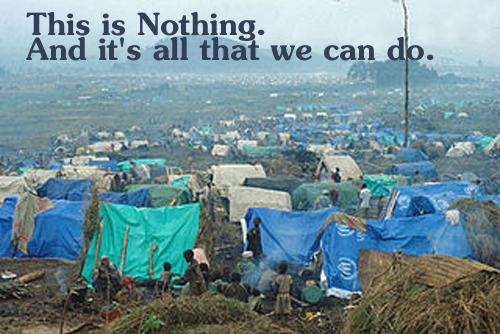
Rwandan_refugee_camp_in_east_ZaireThe West’s recent history in Africa tells America clearly what it should do in Syria.

Twenty years ago the international community led then by Bill Clinton decided to let the mad dogs kill themselves in Somalia, and the international community abandoned a festering civil war that lasted until today.

Somalia is today less lawless than it was with an emerging society and government yet threatened internally by remnants of the warlords who had wrecked havoc of the place, but in sum … peaceful and actually, pretty free.

A year after abandoning Somalia Clinton and his staunch ally, France, blocked the Security Council from stopping the Rwandan genocide. Up to a million people were killed and twice that displaced in one of the most brutal and horrific genocides the world has ever seen.

Today Rwanda is run by a merciless if beneficial dictator and peace is as strong as its many new steel prison gates. The economy fueled by western aid is booming, but be careful what you say in public.

Peace came quickly to Rwanda. It took a generation in Somalia. One is utterly peaceful but not free; and the other is free but not utterly peaceful. Neither outcome is pleasant, but many fewer people are dying miserably.

The west was perfectly able to send missiles, tanks and soldiers into Rwanda and Somalia and create a pacified society, just as it did in the Balkans.

That’s something I wanted to happen at the time in Somalia and Rwanda, and something I might support, now, in Syria.

But anything less than everything is wrong. Clinton couldn’t morally justify intervention in Rwanda or Somalia, he said, because intervention he felt would only make matters worse.

That may have been true in Somalia; it certainly wasn’t true in Rwanda, but regardless, it wasn’t his reason. His real reason having been burned by Blackhawk Down’s failure was that it would be too expensive to be effective, or possibly that such a larger involvement would invoke restraints from other world powers.

Africa is rife with histories of such conflicts that could have been pacified in addition to Rwanda and Somalia: The Congo, Central African Republic, Burundi, Sudan and today, contemporary Zimbabwe. In all these places absolutely horrific situations exist or have existed but did not reach the threshold of western military involvement.

Because in every one of these, however tiny they may seem relative to Syria today, we knew that anything less than a complete occupation and Marshall Plan for rebuilding, would fail. So .. we did nothing.

It was “all” which was not possible, or nothing. I have never forgiven Clinton or his ally France from not going into Rwanda in 1993, but over the years I’ve grown comfortable with having abandoned Somalia, growing to embrace the cogent argument that involvement would only have made matters worse. It was a hard lesson to learn, a very bitter pill to swallow.

Now, for some reason, America is turning away from this learned lesson. Limited involvement in Syria will make matters worse.

America is trying as it does so well to find a loophole, a way around this clear maxim that it is all or nothing. Obama would have us believe that we have an obligation to uphold global human rights, that as the strict parent or stern teacher or Global Policeman, we must punish those who go too far.

In his speech, he called the use of nerve gas “an assault on human dignity” that had to be redressed.

Why are the 1426 people killed last week in Syria by nerve gas more of an assault on human dignity than the 800,000+ that we allowed to be massacred in Rwanda? Or the same number today in The Congo?

Yes, it’s an assault on human dignity in all cases, but selectively applied it loses its imperative force. Presumably nerve gas and the world’s conventions against it violate the ethics of war. That’s rather laughable, of course. Machetes were as effective a weapon of mass destruction in Rwanda, and would have been much easier to prevent.

Obama defined this Red Line, because he believed incorrectly that we have the power to define. We don’t. There is no Red Line. There is massive injustice fueled by ethnic hatred, exacerbated by a capitalistic system gamed by the United States. There is war. There is no point at which that war is bad and then good. Red Lines may have meaning in quantity, but certainly not in quality.

No, the real motivation for Obama to intervene in Syria is the same motivation that kept Clinton from intervening in Somalia and Rwanda: “national security.” Clinton didn’t think national security was threatened. He was right in Rwanda but wrong in Somalia, where al-Qaeda was refueled in the years that followed.

From the amoral point of view of national security, Clinton made one right and one wrong decision. But he did it honestly. No “assault on dignity” was proferred.

Obama should take heed.

Obama and Congress and the military are now obsessed by 9-11. The guilt-ridden ideologues among which are Obama and the second Bush and most of our lot of ineffective politicians are terrified at the notion they might be sitting on their thrones while a 9-11 happens, again.

So they’ll throw the kitchen sink at every shadow of a mouse trying to get into the house. They forget that Somalia and Yemen spawned more terrorists than Syria or Afghanistan:

“The greatest irony of this era in the Middle East is that the two rulers most committed to crushing Islamic fundamentalism in the Arab world, Saddam Hussein and Colonel Gadaffi, were overthrown by the West. And in Afghanistan and Iraq, Western countries won the war but failed to replace the dictators with effective governments,” explains the African analyst, Richard Dowden.

You cannot stop terrorism with itself. In today’s interconnected, high tech world you cannot fight fire with fire. You learn to live with it, stopping it closer to home when you can. Otherwise, anything short of “The All” as was the case in Afghanistan and Iraq, is destined to backfire.

The time has come for America to accept the following:

(1) We cannot stop terrorism against ourselves with preemptive military actions like those currently anticipated in Syria.

(2) We are not powerful enough to reverse a civil war far away from home, without the entire world with us (as it was in the Balkans).

(3) Only the UN is left as world policeman. And it will be a very long time before there is enough unanimity again in the world to so act as it did in Balkans.

(4) America does not have enough power to punish without worse repercussions.

It’s a sad, sad time. But there is no alternative that isn’t even sadder.

Stop Elections

Stop Elections

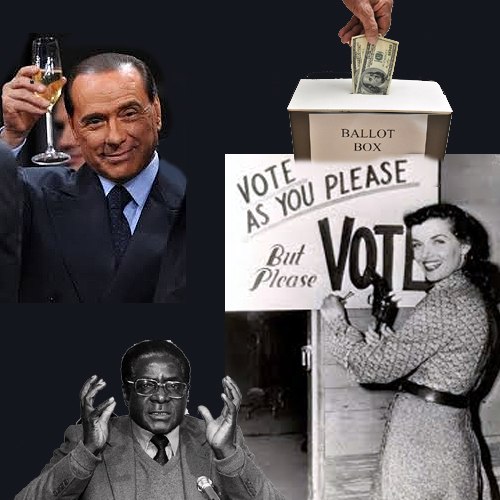
stopelectionsSome may call it growing pains, but Kenyans are having second and third and fourth thoughts about their new constitution.

Invoking “Dream Week,” one of Kenya’s most read analysts wrote this week, “…many will also be thinking of a broken promise. The great new society we were to build has become mired in the same old, tired, dirty, backward politics driven by moneyed ethnic warlords with the support of stupid cheering and jeering masses.”

Amen, brother Macharia Gaitho.

We progressives are just incapable of understanding why everyone isn’t nice. So we build institutions and construct constitutions to promulgate niceness. We support regulations to prevent badness.

Our work is stellar, as is absolutely the case of the Kenyan constitution, and to be sure, the relatively new South African constitution.

Affirmative action is carved in stone until utopia can at least be imagined. Taxing is fabulously progressive. Housing is a guaranteed human right. (And need I mention health care?)

So what is everyone griping about?

“At present what we have is Senate not worth the name, one that would not be missed if it was abolished.”

Amen, Harry Reid.

“Arbitrarily plucking figures out of thin air will not properly address the issue of revenue sharing.”

Wasn’t it Rep. Bachman who claimed that 70% of food stamps funds goes to “salaries and pensions for the bureaucrats” when it is actually less than 5%?

And then her claim was rebroadcast by several Fox news commentators?

But despite the black and white nature of so many issues, today, “A quick and thoroughly unscientific survey tells me that the public right now is not that hungry for a political showdown,” Gaitho concludes.

As do I.

Especially when a new mideast war is right around the corner.

So “we are inured to betrayal, in fact we welcome it and revel in it going by the type of leaders we subject ourselves to.”

It’s a worldwide disease: voting against our self-interest then complaining with the result, either because we’ve been duped or we’re just too exhausted to figure it all out.

The comments to Gaitho’s analysis were charged. Many deduced from what he wrote that the problem was the ethnicity of Kenyan voters. (I’d make a parallel with the “ideology” of American voters.) In KenyaSpeak, today, it’s call the “tyranny of numbers.”

Kazora commented that the “Tyranny of numbers only works against poorly prepared candidates relying on court poets and jesters to bring in the numbers.”

Mkenyamoja13 summarized them all:
“Tyranny of numbers is another name for democracy. If you do not want tyranny of numbers, stop electing leaders.”

That’s the answer. Stop electing.

Black Holes Widening

Black Holes Widening

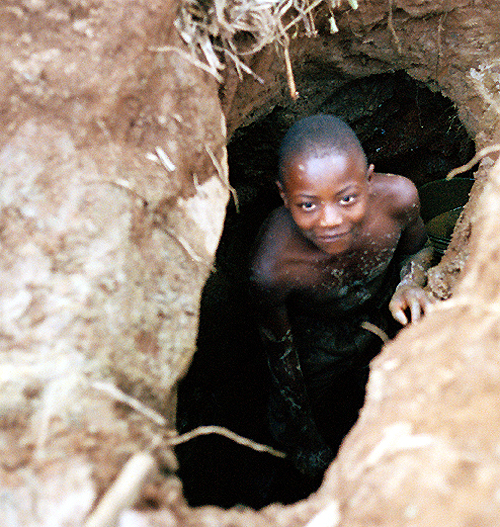
blackHoleEight-year olds – lots of them – are dying agonizing deaths in Tanzania as the government and world turn a blind eye to child gold-mining.

This morning Human Rights Watch issued its long anticipated report on child mining in Tanzania.

Not that we didn’t know there were “thousands” of children involved, that the Tanzanian government has consistently denied a problem, or that unacceptable levels of toxic wastes equal to biochemical weaponry cause the most grief.

I wrote myself about this less than two weeks ago.

I guess we just needed this respectable report to figure out what to do. So what do we do, now, we who are not Tanzanians but love Tanzania no less than children anywhere … what can we do?

Start a petition? Contact your tone-deaf congressmen? Divest yourself of multinationals in Tanzanian mining (see below)? Increase your black-hole tithing? Support NGOs working for better alternatives?

Or own up to the reality that nothing will stop this defamation of humanity except serious redistribution of wealth.

My reading of the 96-page report is a horrifying recognition that the increasing gap between rich and poor is the real cause of this calamity.

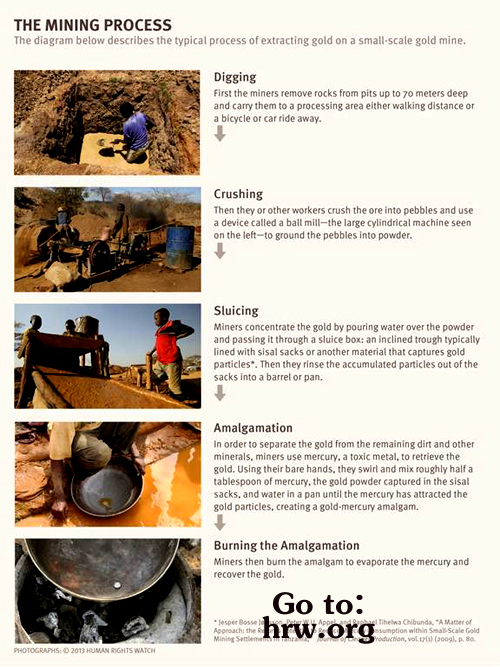
How the hell can you stop a child who is almost always sick with a cold and diarrhea who knows that a pill she can buy for a quarter will make her feel better, from sticking her hands into a plate of liquid mercury, when she knows that there’s a chance of 1 in 6 of pulling out $10?

She knows the mercury is bad. She knows that doing this enough times will make her unendingly sick. But she’s sick, now! She wants to get better!

What on earth will you tell a kid who has no father, whose mother is a prostitute for wealthier miners, who at best eats one meal of porridge a day?

Most of the child laborers interviewed by Human Rights Watch said they used their earnings “for basic necessities such as food, rent, clothes, and school supplies such as exercise books, pens, and uniforms.”

The incredible horror stories in the report of children getting sick from chemicals and hard labor were compounded by many documented cases of sexual abuse, blackmailing and outright physical abuse including murder.

Tanzania has laws on the books against all of this. But … few Tanzanian laws of any kind are regularly enforced: Tanzania is a lawless land where social order is sewn together by bribes and sometimes the goodness of local officials.

Tanzania is now the 4th largest gold producer in the world. The $2.1 billion dollars earned annually contributes 3-5% to the entire GDP of the country.

Ninety percent of this is from large-scale, big-machine, high-tech commercial mining. Roughly three-quarters of the commercial mining in Tanzania is controlled by African Barrick Gold (ABG), a UK held multinational; and AngloGold Ashanti, a South African company. The remaining quarter to a third is held by smaller multinationals, the largest of which are the Australian mining company, Resolute Mining Limited, and the German Currie Rose Resources Inc.

Ten percent, though, comes from this off-the-books, theoretically illegal artisanal mining involving the children.

The artisanal mining is usually pursued on the periphery of the commercial mining in areas the big machines just haven’t gotten to yet, or in areas that the multinationals have determined isn’t rich enough for their interest.

Most of it is surface or near-surface mining, and that’s what lends itself to individual prospectors.

Like mining throughout the ages, there is little guarantee of striking it rich by anybody, but the allure is what keeps the miners going. But in Tanzania, “striking it rich” is phenomenally greater than it is for an Alaskan miner, today; or even those involved in the great western gold rush a century ago.

In Tanzania, a child who finds a gram of gold will be able to sell it, once processed through the toxic mercury process in his pan, for more than $40. In many of the regions in Tanzania where this now occurs, that’s enough to keep a family of five alive, well fed for a month, with some left over for used clothing.

When a child strikes out in the mines, there’s other horrific work. HRW documented children as young as ten earning up to $3 for crushing a pile of rocks, $1.23 for mixing the mercury and gold for another prospector, all of which compounded could earn a kid more than $12/day.

That is roughly what a well groomed doorman, janitor or telephone operator in a safari lodge in Tanzania makes.

The story created here is of a society struggling to be simply clean, healthy and not hungry, putting their lives on the line starting as children, day after day, to reach a goal – a level of existence – in economic terms that is around one one-hundred-thousandth (.001%) of the average earnings ($90,000 annually) of workers for African Barrick Gold living the U.K.

Or one-ten-thousandth (.01%) of the average cost of a gold bracelot. Or should I go down a bit? Do you have any gold earrings? OK. Maybe one-tenth percent of the average cost of your gold earrings? So a thousand chilren work-days in Tanzania equals your gold earrings?

That gap is the problem. Tanzania should be getting a much larger proportion of its gold wealth, and the citizens and children of Tanzanian should be getting a much, much larger proportion of the money its own government earns.

But we know that gap is not getting smaller; it’s getting bigger and bigger as the years drip by. And the children get less and less and sicker and sicker.

Was slavery better?

miningprocess