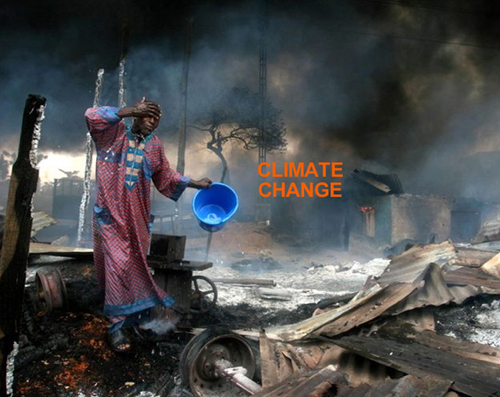
#5 : Climate Change

#5 : Climate Change

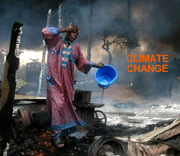
climatechange.13TOP5There are American politicians wallowing in our current deep freeze as evidence there’s no global warming, and there are African farmers planting three times annually who think everything’s just fine.

It isn’t.

Climate change in Africa is my #5 story for 2013 in Africa.

The incremental warming of earth neither stops great variations in weather or singularly increases what was bad before. Still, African farmers seem a lot less stupid than some American Senators.

One effect of incremental global warming is to make the equatorial regions wetter. The equatorial part of Africa is one of its principle food baskets. But it’s only been in this generation that agriculture has grown in any significant way from just a subsistence industry.

So there are fewer good farming techniques and poorer seeds, less mechanization and irrigation, significantly no crop insurance, and basically a farmer’s harvest is beholding to Mother Nature.

I spoke with several African farmers over the last several years in Kenya and Tanzania who know that planting maize or millet three times a year is ruining their soil, but with the added moisture now available, “subsistence” is trumping “sustainability.”

There’s another reason they do it unabashedly. The common effect of global warming around the earth is to make the extreme moments of weather even more extreme.

So when a drought comes to equatorial Africa, as it normally has done forever, it’s worse. In the past small harvests were common in common droughts. Today everything is lost completely.

One could say that global warming is winning the race against modernizing agricultural in equatorial Africa.

Cyclones and typhoons (“tropical depressions” and “hurricanes” in western hemisphere jargon) have always been very rare in equatorial Africa because the spread between very hot and very humid and very cool and dry required to create these phenomena just doesn’t exist.

Not only have they been on the increase, they’ve crawled right up the Red Sea! That’s almost like Hurricane Sandy winding her way down the St. Lawrence into the Great Lakes!

Last year these kinds of unusual winds and storms in Rwanda, Tanzania, Somali and Ethiopia produced enormous devastation.

Farms are destroyed, towns are washed away, whole communities are dissolved … literally. In Kenya and Tanzania, where tourism is still a very important part of the economy, rains so heavy that they were off the charts quite nearly destroyed Lake Manyara National Park.

Farmers are anxious for solutions, and some may be coming. The most talked about one is called “re-greening” which represents numerous small-scale initiatives for dealing with climate change.

But it’s uncertain any techniques can deal with the speed of things changing. There’s just not much you can do when the entrance to a national park is covered by a mud slide.

Victoria Falls is one of the greatest tourist attractions not just on the continent of Africa, but in the world. It has always cycled from low water to high water, but about the only effect was to create a season that was safe for white water rafting.

Now the low water cycles of the falls are so low that many travel professionals are advising against a trip to the falls from September through December, the normal low water period. And conversely as well, the high water which normally comes in March – May is sometimes to great that the mist is so intense you can’t see anything.

That essentially reduces tourism to the falls by a half year!

And this cycles right back from tourism to agriculture. With such a ridiculous variance in flow from the Zambezi River that produces the falls, there is now a serious battle between the countries in the area that want to dam it to better regulate their own needs.

African politicians rightly see global warming as the real war on earth, far more important than the War on Terror.

First, Africans didn’t cause this but they’re being made not to contribute to it, and this stifles traditional development.

The developed world will not invest in African countries to mine coal, for instance. But coal is abundant throughout Africa. But there’s plenty of investment for extracting oil, which can contribute just as much to global warming as coal, because the developed world still lusts for oil.

Second, extremes in weather increase social conflict. There’s a good case to be made that the whole problem in Somalia might never have happened if the area’s agriculture hadn’t been decimated by global warming (and if the country’s fisheries hadn’t been exploited by western powers).

Even on a much more local level, the stress caused by frequent droughts followed by frequent floods leads to considerable tensions. Increased Kenyan police action in the area of the country where the desert meets fertile ground has grown exponentially. This year the military was sent in to keep warring factions apart.

I wonder if a science fiction writer in the 18th or 19th centuries looking forward into today would paint what is simply typical news to us as apocalypse.

The world can no longer deny climate change, but Africa is the poor cousin that fears being sacrificed to save the lovely pumpkin farm in the Hamptons.
#4 : Winter in Africa

#4 : Winter in Africa

arabwinter.13TOP4The great revolutions that toppled dictators and promised democracy that rang throughout Africa are all but dead. Winter has arrived.

The end of the “Arab Spring” is my #4 story for 2013 in Africa.

(Look sideways at the similar current outbreaks in Thailand and Cambodia and it seems their future is similarly doomed.)

What happened?

I’m more sure of the reasons that didn’t contribute to the failure, then completely understanding the failure itself. The reason the Arab Spring didn’t succeed is not as NPR’s continually inept Ofeibea Quist-Arcton reported Friday on NPR’s Morning Edition.

Quist-Arcton’s simplistic notion that a “lack of leadership” explains why the Arab Spring became Winter, or because institutions have been so poorly formed, is wrong.

It’s the same simplistic analysis proffered by such beacons of intellectualism as Fox News.

And this analysis concerns me greatly, because implicit is that the original movements towards democracy, as modeled after us, were undeniably correct and failed not because of some fundamental problem in theory, but in practice.

That’s simply not correct. The elections in Egypt, Tunisia and earlier, Kenya, were in most regards more transparent and fair than in many places in the U.S. The transitions that ceded power to those who had won were as smooth as our own.

Contrary to Quist-Arcton’s central point, the leadership that took over was decisive and bold. While it’s true there was a threat in Egypt of renewing an executive power dictatorship, it had not yet happened. During the short time Morsi ruled, there was more positive transformation in Egypt’s poorer areas than ever before albeit at the expense of the more vocal middle class.

And that’s problematic policy. But it is not a “failure of leadership” or of “institutions.”

I still believe in the ballot box and democracy, but clearly it didn’t work in Africa. In trying to explain Egypt’s remission into dictatorship at the time it happened, I published a favorite cartoon of mine where a student replies to a teacher’s question, “What is democracy?”

“Democracy,” the student quickly explains, “is the freedom to elect our own dictators.”

We need add that the implementation of those dictators’ policies came through powerful government institutions that were working very well.

Tunisia and Kenya are unique examples in the Egyptian mode, but both have slipped into old ways where like Egypt it seems only heavy-handed authority can achieve enough social stability to do anything. And then, if the authority is beneficent, good happens. If not, bad happens.

We’ve learned two very precious lessons over the last few years in Africa’s experiment with democracy:

1. Democracy can be used to end itself.
2. The start of democracy (the “revolutions”) is never democratic.

Morsi may indeed have been trying to dismantle Egyptian democracy completely, yet he was the most freely elected Egyptian leader ever. And the movement that gave rise to his ascension – the Tahrir Square uprising – was nevertheless a minority of Egyptians. They were notable for being only on the fringe of violent overthrow, but their toppling Mubarak was hardly democratic.

Hardly a few weeks after Egypt’s experiment in democracy failed, the remaining holdouts for hopeful change in places like Mali, Zimbabwe, Rwanda and Ethiopia crumpled away.

Africa is today less democratic, more autocratic; less transparent, more deceptive; and far less promising than five years ago. It has tried and failed with democracy.

Singularly important for ourselves and all functioning democracies was that we and our political brothers refused to sanction that undemocratic removal of democratic regimes.

Intellectuals throughout the western world condemned Obama and other leaders for failing to punish those who ended the experiments in democracy.

Because, I suspect, a leader knows when a leader isn’t. Our leader is just too afraid to level with us.

My eulogy for the Arab Spring was published last month. But my sense that the problem wasn’t democracy, but rather capitalism, I explained months before the military deposed Morsi.

It was in May or even earlier that things around the continent began to look shaky. And the tremors were economic at the time, not political.

The failure of any political system is generally measured by its economy. The economies of Africa under the new democracies were capitalist structured, many virtually built by America and its allies. They didn’t work.

Arguments that it was just bad timing, that these political revolutions came at the end of a world recession and would have succeeded in good economic times disregard the fact that places like Kenya were seeing 7 and 8% GDP growth. So this is not a true presumption.

I know no more than the simple fact that capitalism did not deliver the promise held in democracy. Economists will now have to explain.

Clearly, winter has arrived not because of simplistic notions about the poor implementation of a treasured form of government, but because of flaws either in that system to work capitalism, or in capitalism itself.

# 3 : The Death of Mandela

# 3 : The Death of Mandela

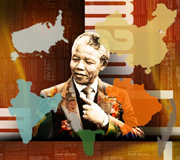
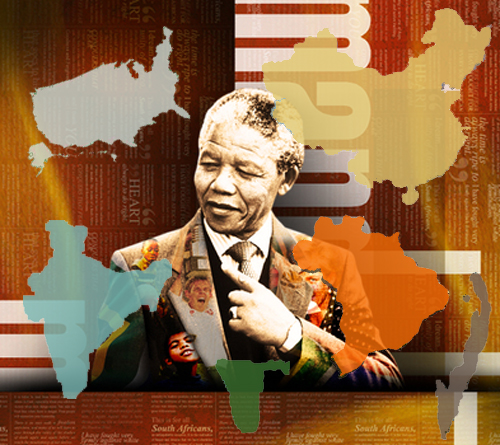
mandela and the worldNelson Mandela’s death mostly marks the end of predictable politics in South Africa, where reverence of him was the only reason that vying political factions didn’t compete on the public stage.

But the period of his dying will be remembered mostly for the crazed man scamming being a signing interpreter at his eulogy and the shake of hands between President Obama and Cuba’s president, Castro.

Mandela’s dying and the end of an era is my #3 story for 2013 in Africa.

As an individual, Mandela exhibited the profound restraint and patience that is the hallmark of his generation – and the many before his – of being an African. It seems so unreal, today, that for so long Africans accepted slavery, then oppressive colonialism, then the strains and inherent oppression of being proxies for Cold War adversaries, even in light of the terrible power of their masters.

I say this not with the vengeance of youthful activists today, but with real fascination. The notion of “Live Free or Die” is hardly uniquely American. Revolutions around the world through all of time were fueled by this ultimate mantra.

But until recently, Africans turned over and gave up. This is a horrible generalization, I know, and there are countless examples throughout African history of heroic rebellions and Mahdi-like successes. But as a judgment over a long term of all of African history, I stand by it.

And Mandela was the epitome of one of its leaders. He steadfastly held to his principles. But he continually negotiated his oppression. When the tide turned in South Africa it was as much because of the world changing, and the super powers levying sanctions against the apartheid regime, as anything that Mandela and his cohorts were doing.

Mind you, the world may not have changed so fast, and sanctions certainly would not have been levied so quickly without the low level revolution and far more important widespread civil disobedience that Mandela and company had orchestrated.

But more similar to his earliest friend Gandhi than one of his later friends, Castro, Mandela believed justice was more inevitable than forced. Human rights were inalienable, and their achievement was only a matter of time.

I’m not sure, though, if Mandela had suddenly found himself in late 19th century Bolivia, or 18th century Paris, or 1950s China if he would have turned out to be the relatively passive revolutionary he was.

Most good leaders throughout time have been very special individuals with enormously deep and unfailing characters, staunch belief systems to which they remain steadfast, tremendous charisma and above all, very loyal and dedicated followers. Mandela fits this to a T.

But there must be many millions of people like that throughout history. Leaders come from this universe of good people, but they rise to power not because they have the potential to do so, but because by happenstance they are manifest by their societies. Power holders are products of widespread grass roots emotions. Rarely if ever has a powerful leader’s personal beliefs or actions alone created a successful social movement.

And that was what Mandela was, and it’s on the one hand heart warming and on the other, frustrating: Heart warming because of its intrinsic optimism and faith in the human condition; Frustrating because it takes so long; Exasperating if, like me, you’re an impatient person.

Patience vs. impatience. Another way of looking at this – a more African way perhaps – was discussed by Obama in his eulogy of Mandela when he invoked and tried to explain “Ubuntu.” Obama worked its derivation as “the tie that binds the human spirit.” Non-violence, shared understandings, a sort of political Zen.

Mandela was the placeholder when South Africa’s apartheid ended and so he will be historically credited with ending it.

But the fight against apartheid in South Africa had begun in the 1700s, and the list of crusaders probably exceeds the population of most South African towns, today. It is so right that we should so wonderfully honor Mandela, but his accomplishments in this age of impatience are not without flaws.

He is, above all, a man of the past.

#2 : Obama’s War in Africa

#2 : Obama’s War in Africa

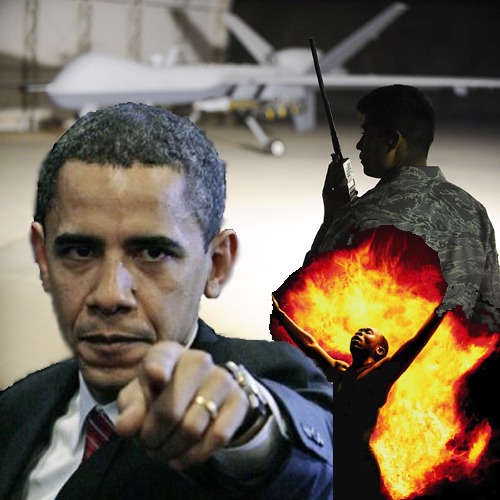
First Reaper aircraft maintenance unit deploys to BaladAmericans have grown so complacent about war and so uninterested in their own country’s military involvements that few have any idea how much fighting America has been doing in Africa.

This is my Number 2 story for 2013, America’s huge military involvement in Africa.

And that involvement was not by a Congressional declaration or even after labored consultations and hearings. It was because it is central to Obama’s anti-terrorist policy.

The intense involvement has been going on for 54 years, and this year seemed to reach a crescendo and possible end-game. As ironic as this may seem, the fact is that Africa warring was a policy created in 2004 under George Bush which has been wholly embraced by Obama.

Bush created AFRICOM, America’s Ninth “Unified Combatant Command.” Its ostensible mission is half protection for multinational developments, especially oil exploration, and half anti-terrorist.

Lately it’s been almost exclusively anti-terrorist, at least as defined by the Obama administration.

AFRICOM was responsible for the 2011 Kenyan invasion of Somalia and the continuing presence of Kenyan troops, there. It was responsible for the small special forces contingent that publicly deployed in Uganda in 2012 which routed the LRA and essentially has caused the chaos currently seen in the Central African Republic.

AFRICOM was instrumental in the massive last-minute UN fights in the DRC-Congo which have resulted in some stability for the moment.

And AFRICOM basically orchestrated the chase of organized terrorist forces and their weapons from Somalia, through Uganda and the CAR into Mali, where together with France, we now intend to exterminate them altogether.

Probably as significant as any of the above are the drone attacks and numerous Navy Seal missions throughout mostly East Africa that have killed so many alleged terrorist leaders.

None of these operations begins to achieve the size of anything like Iraq or Afghanistan. But taken as a whole, from 2004 to the present, they represent significant deployments of troops, weapons and other resources that have radically shifted the organized terrorist map and composition.

No year was as violent as last year.

The result of these actions is a definitely safer America… for the moment. Organized terrorist organizations like al-Qaeda and al-Shabaab among others are being systematically eliminated. So for the near frontier, AFRICOM has served America well and efficiently.

But that’s not necessarily true for the long term, and it certainly isn’t true for Africans, today.

“AFRICOM serves as the latest frontier in military expansionism, violating the human rights and civil liberties of Africans,” according to ResistAfricom, a U.S. citizens group that views the strategy very bad for the future.

The result of the Obama/Bush policy has seriously destabilized Kenya, the principle ally which began the long chase of terrorists through the continent with the war in Somalia. Kenya is dealing with increasing terrorist attacks, a legislature obsessed with security, and an economy that would collapse without American aid.

While the DRC-Congo has achieved some peace after several generations of war, the larger country has been very recently shaken by surprising terrorist attacks and political uprisings.

The presumption that Mali will be the end-game, with French mopping up what’s left of alleged organized terrorism, is threatened by new terrorist outbreaks in neighboring Nigeria.

It seems America just can’t learn. War against terrorism doesn’t work. The current bevy of terrorist arsenals and leaders may be almost eliminated, but we have fomented such anger in Africa, that the subsequent generation of terrorists will be even more committed.

The easiest way to understand this is to roll back history and ask what would have happened if all this military involvement hadn’t occurred:

Somalia would still be controlled by al-Shabaab (al-Qaeda in Africa), and the refugee problem in Kenya would have increased substantially… There would never have been a Mali war, because that conflict was created with the massive amounts of weapons leaked down from disintegrating Libya, which we would have better just left in the hands of Gaddafi.

Dictators would have prevailed… Refugees would have increased…

We, in America, would not be quite as safe at this very moment…

It would not have been a nice world. But it would be a world more effectively developed by strategic use of economic sanctions and national development aid. This would have cost much less than AFRICOM.

And while we might have sacrifice a bit of security for the moment, we would be laying the ground work for much longer peace and security for the future.

In Africa and in America.

#1 : Gotham to Kansas

#1 : Gotham to Kansas

SchizoidKenyaWhat every foreigner remembers is the Westgate Mall attack. But what dominates every Kenyan’s memory of 2013 is the March 4 election. In that divide is an universe of potential and catastrophe.

And such is all of Africa to an outsider: Youthful, idealistic, spectacular, exciting, unhealthy, poor and dangerous.

This is my Number 1 story for 2013: Kenya is Africa.

Kenya has one of the largest populations of poor people in the world, even though its GDP ranking puts it in the top 50% of all countries, singularly distinguishing it from many other African countries.

Income disparity explains this. According to the Heifer Project, the top ten percent of Kenyan households control 40% of the country’s wealth. (In contrast, roughly the same percentage of American wealth is controlled by only 1 percent of Americans.)

But what’s particularly notable in Kenya is that the spread between that 10% and 90% is much greater than in America. The lowest income among Kenya’s growing middle class (the ten percent) averages 6-7 times more than the highest income among the bottom 90%.

This puts income disparity in a brand new light. Unlike in America and the other capitalist champions that have done everything in their history to make Kenya in their image, a rich person is geometrically better off in Kenya than a poor person.

It’s the reason Nairobi is cluttered with Mercedes, Gucci outlets and increasing fashion shows; while rural Kenya still suffers from the highest infant mortality on earth.

And that 10% middle class has begun to flower, and therein lies all the potential seen by outsiders. In films, business, literature and music, and global peace-making, Kenyans are growing more and more notable even as their most neglected people are getting sicker and poorer.

Kenya’s actual capitalist ranking is very low save one critical exceptional component. The World Bank ranks countries’ capitalism as its “Doing Business Metric,” a very thorough dissection of all the things needed to start, operate and succeed in a private enterprise.

Kenya is ranked 129 of 189 countries examined. It would be much lower if it didn’t achieve the rank of 13th in the world for the ease of getting credit. That high ranking comes precisely because of the enormous investment world leaders through their own state and global institutions are making and have always made in Kenya.

And that’s because the country is so strategic in world affairs. It carries the guns to Somalia, the diplomacy to The Sudan and at least the veneer of human rights to its much more despicable neighbors.

So while few investors would normally choose such a troubled society as Kenya, the allure of incredibly easy credit keeps them coming. Capitalist champions like the U.S. routinely sugar-coat the difficulties of transparency, bribing and climate change by comparing Kenya to the rest of the East African region which it dominates.

Whether “Konzo of Kajiado” will ever come to fruition remains to be seen, but investors have secured the capital for large residential and commercial developments that are difficult to organize even in the continent’s behemoth economy, South Africa.

So it’s absolutely undeniable that capitalists believe deeply in Kenya and possibly as a model for long-term business in all of Africa. They may be the greater risk takers in their club, but they may also end up the biggest winners.

I believe poverty is institutionalized in and essential to the current world economic system, even while those who benefit most are often the most vocal crusaders against poverty. And Kenya is the test tube they all use.

And so ironically fueled mostly by Chinese investment and massively topped up by western aid, Kenya receives more attention per capita than any other non-warring country in the world.

Why?

The first reason is because … it always has. The country is now and always has been strategic, and often divided radically opposed forces. Since the earliest precolonial days its excellent harbors provided trade to all of interior Africa instantly bringing face to face the Arab slave and ivory traders with Christian missionaries.

In colonial days it buffered Britain from Germany. In post colonial days it buffered the western powers from China and Russia.

In modern times Kenyan dictators battled Kenyan Nobel laureates for the country’s psyche. And the battles were not all cerebral. More than 1300 people were killed and a million displaced in the violence that followed the flawed, contentious and finally negotiated “democratic” election of 2007.

And today it carries that schizophrenia into economics and politics. The country’s constitution is magnificent, championing human rights in ways U.S. activists can only pine over. Yet its actual record in implementing those magnificent principles is abysmal, and Human Rights Watch is increasingly condemning actual social practices regarding the media, police and most importantly, the “ICC.”

There is no other abbreviation so well known in Kenya as “ICC” which stands for the International Criminal Court. Kenya’s president and vice-president are on trial for crimes against humanity in the ICC at The Hague. Yes, that’s what I said. And to add insult to injury, consider that both men were indicted by the ICC before they were elected last March.

Kenya’s schizophrenia is genetic. It’s known as tribalism and more simply, racism. Despite a youthful population in which more than 70% of Kenyans were born a decade after a “democratic independence,” the country remains incredibly split along tribal lines.

It was tribalism that brought the despot arab Moi to power for a generation. It was tribalism that brought the democratic Kikuyu presidents to power thereafter. Whether by force or ostensible free will, Kenya is ruled by tribal power.

And that tribalism seeps down first to business, then to social institutions and the media, and finally into the schools. Efforts to end tribalism take a far back seat to efforts simply to minimize its more egregious effects.

And so Kenya today shows exceptional promise, creates a “western veneer” of respecting human rights and a insatiable desire for capitalism, but seems unable to emerge from the ruts of poverty and tribalism that have plagued it forever.

Is this what democracy and capitalism is all about? Or is it what foments terrorism?

So we come full circle to the Westgate Mall attack. To the 1998 embassy bombings. To the Nairobi airport incineration. To an average of three horrible deadly terrorist attacks every month.

As I said when describing the Westgate Mall attack for the first time, Kenya doesn’t deserve this. In all its duplicities, masquerades and outright lying, Kenya has nevertheless managed to be … until the embassy bombings … one of the most peaceful countries in the world.

It is no longer. It is one of the least peaceful countries in Africa. “Peace” as defined for example in Rwanda is not something to lust for, so autocratic rule and brutal suppression of human rights is not worth peace. So some would argue that Kenya’s lack of peace is the excitement and hope for resolution of our new world’s competing ideas.

Perhaps so, and that’s noble to be sure. But for the wonderful Kenya I remember as my home for a short time long ago, it’s as different a place as Gotham is to an impoverished Kansas farm town.

I wouldn’t want to live in either. But what, exactly, is in between?

TOP TEN STORIES 2013

TOP TEN STORIES 2013

kenya13TOP1Kenya and democracy. Kenya and war. Kenya and terrorism. Kenya and racism. Kenya and international justice. Kenya and films. The number one story in Africa in 2013 is Kenya, and it’s not all a good one.

#1 in 2013: KENYA
There is no country in Africa as important, dynamic, hopeful and conflicted and in trouble as Kenya. That’s my number one story and much more on this tomorrow, as I review in greater detail 2013’s top stories in the days to come.

thumb.obamawar.13TOP2
#2 in 2013: OBAMA’s WARS IN AFRICA
Starting with the Kenyan invasion of Somali, the chase of the LRA through Uganda, the drones, the coordination with France in the DRC-Congo, the end game in Mali and even tertiary conflicts in places like Western Sahara, there has never been an American president who has used so much force in Africa. Gruesome, powerful details on Thursday.
 
 
thumb.mandela.13TOP3

#3 in 2013: The DEATH OF MANDELA
Not just an icon of freedom, democracy and forgiveness, Mandela was the glue that held the current South African ruling party, together, and in many ways, more important to the past than the turbulent present in South Africa. More on this Friday.


thumb.arabwinter.13TOP4

#4 in 2013: ARAB SPRING followed by WINTER
Egypt, Tunisia and Libya led the revolutions of 2011, and all of them today have slipped into distinct vestiges of themselves before 2010. What was won, what was lost and what’s to come … next week on Monday.


thumb.climatechange.13TOP5
#5 in 2013: CLIMATE CHANGE
Weird weather, yes, and mostly destructive. But also very powerful consequences for global politics and multinational agrobusiness as cash poor Africa tries to decide how to prepare for the coming ecological destruction. Next week on Tuesday.


oppHunting.13TOP6
#6 GROWING OPPOSITION to HUNTING
Increased poaching, recession stresses on tourism, and measurable declines in big game populations have all contributed to a much more significant public opposition to big game hunting. Even with a growing American market, Africans are beginning to realize that big game hunting is a liability. More next week.


sensationalelepoach.13TOP7
#7 SERIOUS ELEPHANT POACHING EXAGGERATED
The media went overboard and I think unethically so in reporting a serious increase in elephant poaching. The most respectable publications like NatGeo are besmirched. There’s a problem but so much different than reported. More next week.


tourismchanging.13TOP8
#8 BIG SAFARI MARKET CHANGES
Marriott’s acquisition of South Africa’s Protea Hotels might not mean a lot to you, but it does to everyone selling Africa tourism. It means the way people buy safaris, what they do on safaris, how big the lodges will be and so much more is changing so fast. More next week.


enduring corruption.13TOP9
#9 ENDURING CORRUPTION
Despite real hope throughout Africa over the last few years that corruption was coming under control, horrible reversals occurred in 2013. From South Africa’s multi-scandal president to the success of global bribing that reduced sanctions in Zimbabwe, Africa’s veil of deceit got miserably thicker. More next week.


falasha.13TOP10
#10 END of the BLACK JEWS
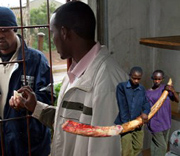
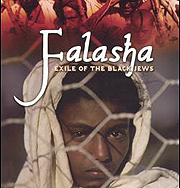
A little reported story of enormous consequences for thousands of Ethiopia’s Falashas, the assumed black Jews of Africa. After nearly a half century of exile recovery, Israel concluded its final jumbo jet missions that removed one of Ethiopia’s ancient tribes to Israel. More next week.

Et Tu Uhu?

Et Tu Uhu?

kenyatta.witlessprotectKenyan politics has infected the World Court. There’s little chance, now, that Kenya’s president will be tried as accused for crimes against humanity.

The trial against the vice president remains on track, for now, and the possibility that one will proceed and the other not opens up a whole new can of worms in Kenya.

I don’t consider the ICC, the International Criminal Court in The Hague, to be so just that a simple decision to go to trial means that the accused are guilty. But close. The standards of the ICC are much higher than for the jurisprudence of sovereign states. And the reason the case against Kenyatta is collapsing is because the prosecution’s witnesses are dropping like flies.

Before advising the court that her case had collapsed, ICC prosecutor Bensouda was quoted by a Kenyan disaspora group as having said, “Witness 4 revealed in May 2012 interview that he had been offered, and accepted, money from individuals holding themselves out as representatives of the accused to withdraw his testimony against Uhuru.”

Whether this unconfirmed report is true or not, the original 11 witnesses against Kenyatta are all now gone. Without witnesses Bensouda’s specific request yesterday to the court was to postpone further proceedings while she tries to get additional witnesses.

It’s not a completely foregone conclusion that the judges will either postpone the trial indefinitely or end it. But close.

The proceedings have teetered from the beginning on the certainty that the witnesses would ultimately testify. That was further complicated when several witnesses actually recounted, claiming that they had been bribed to say untrue things in order to obtain a conviction.

Bribing to convict, bribing to withdraw, it’s all very likely in a Kenya political drama, and I’m not the least surprised it has succeeded so far from home. It’s the way of politics in Kenya.

My sense has always been, and remains, that Kenyatta and his vice-president, William Ruto, are both guilty. I think it fair to conclude that most western world leaders also feel the same way, though they would never say so. But with Kenyatta, it’s all a moot point, now.

And the interest in the affair now turns to Ruto, whose trial is much further on than Kenyatta’s, and whose few witnesses have at least held on. And what’s uniquely interesting is that at the time both men were accused of these crimes, they were accused of attacking each other.

Or more exactly, Ruto’s Kalenjin/Luo alliance supporting candidate Raila Odinga, was in bloody battle with Kenyatta’s Kikuyu supporters of Mwai Kibaki, who was declared the winner of that close election.

Thirteen hundred people were killed and a quarter to a half million displaced.

Why are they now president and vice president … together? Because it was a brilliant political move that won Kenya’s freest and fairest election, and it allied two murderers against their prosecution.

But what now? What if Ruto is convicted and Kenyatta is freed? Does that in itself reignite the tribal enmity that led to the 2007/08 violence? If convicted will Ruto be forced to step down, vindicating the Kikuyu as the all-powerful, forever dominant leaders of Kenya?

Would it ultimately demonstrate that in Kenya you win by hook or by crook?

I wouldn’t be surprised. Can’t be fully convinced of this yet. But close.

Will The Real Maasai Stand Up?

Will The Real Maasai Stand Up?

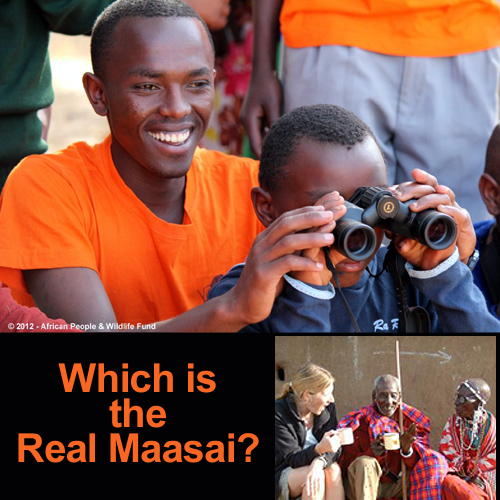
which real maasaiIt’s rare that I admire either a charity or NGO working in Africa, so when I do I let people know. If you’re considering an end-of-the-year donation, consider apw.org.

The African People & Wildlife Fund at less than ten years old at its latest iteration promotes practical solutions to wildlife/people problems in Africa striking a balance for people that is often ignored by more purist wildlife NGOs.

And in the process of so doing has achieved a success that NGOs significantly older and far better funded have failed to do: protecting in an environmentally friendly way at very low cost Maasai stock from predators.

APW’s “Living Wall” is so simple it’s comic, when I think of all the money and science and startups that have come down the line for a generation trying to protect Maasai stock from lions to stop Maasai from killing them.

The Commiphora is a wild bush/tree that grows thick. By creating enclosures fenced with growing Commiphora a remarkable, sustainable barrier is created. And if grown through chain-link fencing (a huge additional cost, of course) the barrier achieves 100% success in keeping out cats.

Although Maasai are rarely nomadic anymore, they still graze their stock often far and wide from their homestead, bringing them home to the coral at night. Traditional thorntree enclosures were fine in the old days, when the human/wildlife conflict was less severe and when pressure particularly on lions was much, much less.

In the last several years scientists have recognized that the decline in the lion population may be more serious than any other large African animal. A number of factors have contributed to this, but the single most important one is likely human/wildlife conflict.

As Maasai grow sedentary and deed their land, they cease being nomads and become ranchers. Traditional boma enclosures are no longer appropriate, for animals or people. And chain link fences that are as high as a Commiphora grows are prohibitively expensive.

APW now documents more than 200 Living Walls working well throughout the Maasai Steppe of Tanzania, protecting more than 50,000 farmed animals.

I think one of the reasons APW was successful when so many other NGOs failed is quite simple: they put the Maasai first, not the lions. Rather than focusing on whether a strobe light or repetitive sound or electric fence was sufficient to deter lions, they started out with what was easy and convenient for the Maasai to use.

And basically they simply enhanced what the Maasai always did: instead of harvested thorn trees, which are too slow growing as live trees and near impossible to cultivate easily, they found a good, easy substitute. In other words, they asked the question, what could a sedentary Maasai use as a thorn tree?

Whereas the traditional animal focused NGO would ask, “What will keep lions away that won’t hurt them?”

Both are important questions, but one leads to a more rapid, practical and complete solution. One puts the Maasai first, the other puts the animal first.

Many NGOs have tried to integrate Maasai, particularly the youth, into anti-poaching and less aggressive pro-wildlife initiatives. APW focused on gizmos, like GPS devices and aps for phones that the kids love, resulting in greater success.

Many NGOs see Maasai as simply a problem: over grazing destroys the environment, wild life doesn’t. I venture to say most educated Africans feel the same way, and there’s this implicit feeling that these wandering farmers ought just put on a pair of pants and learn accounting.

APW dedicates a good amount of resource towards project officers who instruct Maasai on sustainable rangeland management. I’m not sure this is a good long-term strategy, since I tend to side with the majority of experts and Africans who feel there is no way that current East African domestic herds can be sustained. But the reality is that dynamic is not going to change quickly, and in the meantime, any better orientation to rangeland use and management will help.

Once again, APW takes the Maasai side.

There are other good initiatives in the APW program, but finally what I find truly satisfying can be easily seen by anyone visiting their website. So many NGOs and even East African government programs love to display the earinged Maasai resting on his acacia stick with a shuka wrapped about him and a few bracelets or anklets dangling from his appendages while he watches his goats.

APW gets real. They display Maasai kids in Polo T-shirts smiling wonderfully as they focus their binoculars. That’s the real world, today. That’s taking the Maasai’s side.

Vultures & Other Vermin

Vultures & Other Vermin

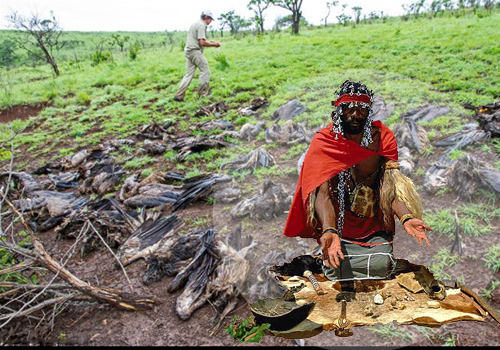
Dead vulturesIt’s been a generation or more since certain animals considered vermin were proudly exterminated in the U.S., and the concept of bounty on nuisance animals is in welcomed, serious decline.

Rather, state governments have undertaken more scientific hunting seasons that try to achieve an ecological balance deemed appropriate. So, for example, this year Iowa added more hunting days for deer because the first “harvest” was considered too low.

I think this is rather presumptuous if not outright arrogant. Call a spade a spade.

Read more

Grim Outlook for Kenya

Grim Outlook for Kenya

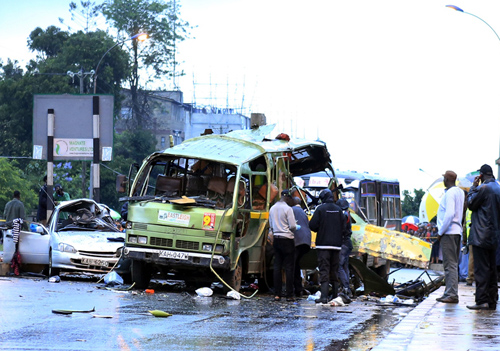
kenyan suicide bomberIs Kenya becoming the new Afghanistan? Another suicide bomber Saturday killed six and injured almost 40 in Nairobi.

The attack was in the Pangani neighborhood of Eastleigh, Nairobi, an area with many Somali immigrants.

The day before on Friday twin explosions in the northeastern town of Wajir killed another person. Thirteen people have been killed this week alone. Panagani was the 4th attack on the 50th anniversary week of Kenya’s independence.

And among the most striking facts about these attacks is that they were hardly headline news. In most of Nairobi’s newspapers, they received scant attention compared to how they were reported in Europe.

And last week a confidential report prepared by the New York City Police Department on Kenya’s Westgate Mall attack analyzed Kenya’s growing violence.

Officers from the NYPD were in Nairobi before the Westgate Mall incident was over, ostensibly to learn from it how to protect New York. Their report confirmed what had been suspected for a long time: the four principal attackers were nearly amateurs by war standards, could have caused enormously more damage if they had better weapons, and apparently all escaped.

One of the chilling aspects to the NYPD report as analyzed in the Daily Beast is how similar the attackers appear in many regards to America’s child terrorists responsible for our growing number of school shootings:

There is only cursory planning. The weapons used are all deadly powerful but often poorly designed for the kind of attack planned, and often, don’t work. Entry and exit for the attackers is easy. And perhaps most chilling of all, worldwide terrorists like those at Westgate are increasingly individualized rather than ideological.

Just like kid shooters in American schools.

This “terrorist war” whatever it has become is usually instigated by individuals who are mentally ill, or who are not ideological but simply angry, often vengeful.

They are not soldiers under some mission command, and they often have no demands. They just want to … kill.

The Westgate Mall attack and the attack this past weekend in Nairobi — as with almost all the attacks these days in Kenya — is basically Somali against Somali. Just as a school shooter is a student against a student.

The Somali terrorists in Kenya claim to be protesting the Kenyan invasion of Somalia initiated in October, 2011. Kenyan troops continue to occupy Somalia.

Kenyan Somalis on the whole very much supported the Kenyan invasion and now the current mission, which as I’ve often pointed out, is really a proxy war for America and France. Kenya would not have been capable of succeeding in that invasion without hardware, training and logistics from America.

And so the targeted terror is at those Kenyan Somali communities. At the same time the police see these communities as harboring the terrorists, which of course they do.

Money, materials for bomb making and suicide mission recruitment is all done within the Eastleigh community of Nairobi. It is often, brother against brother.

So the comparison with Afghanistan ends quickly, as there are far fewer supporters of Kenyan terrorism in Eastleigh than of the Taliban in Kabul.

But like America, which is losing tourism revenue from school shootings and if it continues will likely loose foreign investment, Kenyans are already suffering both.

The promise of the country prior to the Somali invasion of October, 2011, was exceptional. But last year’s election of an indicted war criminal as president, and the growing tribalism that dominates the Kenyan government now threatens Kenya’s growth.

I wrote several weeks ago about Kenya’s falling position with Transparency International. Last week the Thomson Reuters Foundation called Kenya “a thriving underworld aided by political corruption and a large informal money transfer sector.”

Conceding the country could be a financial and services powerhouse for the region, the report concluded the country is “a safe house in a bad neighbourhood.”

So the comparison with America is also flawed. Compared to America’s challenge of just getting guns out of kids’ hands, Kenya’s is far more daunting.

It’s no child’s play in Kenya.

Kenya Tourist Attack

Kenya Tourist Attack

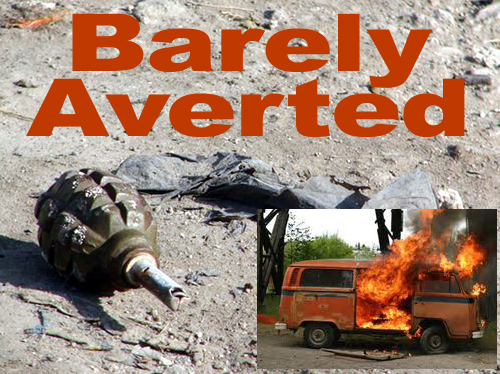
barelyavertedContinued terrorism in Kenya and more public attacks against tourists is resulting in draconian laws that are turning Kenya into an autocratic state.

Kenya’s average of three terrorists attacks monthly continue. Yesterday, ten tourists escaped death when a grenade thrown at them bounced unexploded off their minibus window.

Prior to the Westgate Mall attack foreign investment was growing seemingly undeterred by the increasing terrorist attacks in Kenya. It’s not clear yet if that has changed.

But clearly tourism is down, and tourism remains a fundamental part of the Kenyan economy. Many operators are turning to local and regional tourism. In something that appears desperate to me, the Kenyan Tourist Board is spending considerable funds to lure Nigerian tourists, where terrorism is as bad if not worse than in Kenya.

And not surprisingly, some of Kenya’s most respected tourism companies are now concentrating more of their investment in Tanzania.

Cheli & Peacock, a landmark Kenyan tourist company, announced this week it was opening new offices in Arusha, Tanzania.

The Kenyan government is not an ostrich with its head in the sand. With a string of negative press reports starting with terrorism and extending unendingly to the country’s leaders trials in The Hague, president Kenyatta is growing increasingly authoritarian.

And Parliament seems willing to go along with him.

Increased police powers and a reversal of the decentralization of the police was the most imposing move. Clearly directed against terrorism, there was limited opposition to this fall’s moves, until the courts got in the way.

The Kenyan constitution is a good one, and the government more or less reversed itself on new police laws before an expected challenge in the court. Using Obama’s techniques but for bad ideas, Kenyatta is quietly using his executive powers to take more control over the police and make them less publicly accountable.

Simultaneously, the government wants to muffle the press, and once again Parliament seems ready to go along. I guess the idea is if you can’t wield the power to stop terrorism, perhaps you can stop the reporting of it.

The two laws Parliament may pass next week “seriously restrict the work of journalists and independent media in Kenya and give the government enormous space for censorship,” according to Kenya’s main online newspaper, The Star.

These laws, too, will be challenged in court if passed.

But while we know that tourism is suffering, because the industry is so public and necessarily transparent, we haven’t learned yet that foreign investment may also now be under attack. And if that’s true, Parliamentarians are likely freaking out.

The answer to the end of Kenya’s terrorism begins with leaving Somalia. I’ve been saying this literally since Kenya invaded Somalia in October, 2011. But that’s not in the cards.

Kenya is America and Britain’s proxy in Somalia, and from that point of view, things are going pretty well. If Kenyan troops were to leave, it’s likely the warlords and terrorist would regain control.

So Kenya continues to suffer so that Americans can enjoy their holidays… but not on safari.