Which to Visit? Kenya or Tanzania?

Which to Visit? Kenya or Tanzania?

KenyaOrTanzaniaMy five months in Africa ended this week. If you’re trying to decide between visiting Tanzania or Kenya, I’ve got the answer.

My answer, if you’ve got the cash and time, is both. But if you’re watching your vacation dollars and have limited time, the answer is Kenya.

Here’s why.

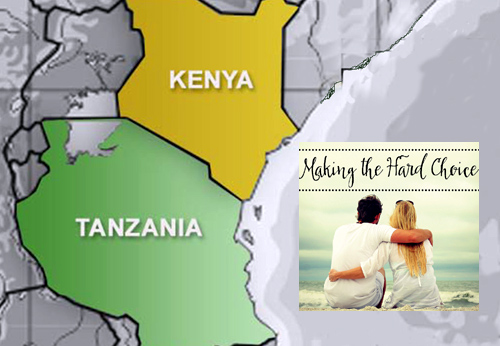
First of all why does it take more time and money to visit both countries? The two countries share almost a 500 mile-long border with quite a few border posts, and much of the border actually goes right through abundant game controlled areas.

This isn’t just an issue of the additional costs of visas or shots.

The answer is because the two countries have intentionally made it difficult for tourists to visit them both on the same trip. Both countries believe if they force you into an all-or-nothing situation, they’ll be better off.

Since 1979 the border posts that fall in game controlled areas have been closed to tourist traffic. So, for example, the most important one, the border between Kenya’s Maasai Mara and Tanzania’s Serengeti, isn’t just closed, it’s now grown over with jungle.

The Sand River bridge which used to deliver tourists between the two countries is ready to collapse. I wouldn’t use if I could. (Click here for my blog that explains why this happened in 1979 and has never changed since.)

So to travel from one game park in one country to another game park in the other country, you have to go back to a border post which allows tourist crossings, and this usually means traveling backwards a lot.

The cost, for example, to travel from a camp on the southern bank of the Sand River in Tanzania, to one you can see across that same river in Kenya, is about $600 per person and at least 8 hours if you fly the whole way.

It will take at least the entire day, and that often doesn’t make sense, because if you try to do it in a day, you’ll have to leave at the break of dawn and won’t arrive in the other country until late in the afternoon/early evening, yet you’ll be paying full game viewing fees (twice!) for each country on a day that you won’t have any time to do game viewing!

So die-hards wanting to see both countries recognize that it’s better to do something else in between, breaking up the long circuitous journey, if that’s nothing more than just seeing a city like Nairobi. And that’s where the concept of needing more time starts.

And then you get into the problem of having to whittle away principal attractions in each of the countries to make enough time to see them both, or if accepting only the very prime attractions in each country, you’re looking at a safari of more than two weeks.

Add to this that “open-jawing” your international air fare (flying into one country but returning from another) is considerably more expensive than simply roundtripping one.

As a general rule, you’ll need 20-25% more time and money for the same amount of sightseeing and game viewing if you visit both countries instead of only one.

Both Kenya and Tanzania have a superb list of incredible attractions, game viewing and otherwise. If they opened their borders a tourist could approach them both as a single country, East Africa.

But they haven’t, and they won’t in my opinion. So I’m beginning to think that most travelers conscious of their travel budget and holiday time ought to choose one or the other and might do so realizing they’ll return another year to see the other one!

The same strategy that most Americans apply now to Europe’s many diverse nations ought to be applied to East Africa.

So if you’re contemplating a “first time safari” for next year – which country should it be?

Kenya.

Here’s why.

1. Kenya is growing more stable than Tanzania.
Safety, and even more importantly, the perception of safety is probably the single-most important factor when people choose an exotic destination to visit.

Last month, President Obama visited Kenya. Last month, the British government removed its travel warnings from Kenya’s most vulnerable area to Islamic terrorists, the beautiful Indian ocean coast.

2. Travel is cheaper and easier to Kenya than Tanzania.
Nairobi’s new airport is astoundingly modern and efficient. You’ll think you’re in Europe. Tanzania’s two airports, Kilimanjaro and Dar-es-Salaam, are losing not only service from Europe and beyond, but they’re losing electricity!

In my many visits in the last five months to Kilimanjaro airport, there were no less than a dozen power outages as I waited for my clients to arrive!

There is much more service to choose from flying into Kenya than Tanzania, and it looks now like Delta will be flying directly to Nairobi starting early next year.

3. Tanzania’s October election could be troublesome.
On the negative side and as I’ve written several times in the last few weeks, Tanzanian politics are heating up. It could be very good for the country, and there are many reasons to think that Tanzania will not go through the troublesome period of political change that Kenya did about ten years ago.

But there are also many reasons to think otherwise. A very contentious national election is scheduled for October 24, and I worry that the main candidates in both factions are talking less about the issues than “keeping the election peaceful.”

Even China — normally an aggressive side liner that never interferes with foreign elections – cautioned Tanzanians Wednesday about violence in the October elections.

4. Kenya is more aggressively conservationist than Tanzania.
Then there are gnawing conservation issues becoming toxic in Tanzania, beginning with the lax enforcement of ivory poaching, the relocation of Maasai just outside the northeastern Serengeti to increase a private Arab hunting reserve, and totally rebuffing conservationists’ attempts to slow down the planned dam and mine in The Selous.

None of these is serious enough for you to cancel a Tanzanian safari, but Kenya in contrast has high positive points on all of these named measures, and so if having to choose one over the other, I think it’s now a slam dunk.

Remember who’s writing this. The Serengeti remains my favorite place in the world, and that’s in Tanzania. My great migration experience these last 8 months in both countries convinces me it’s best in Tanzania.

But the time … money … and safety perception components of creating a great safari are now all tilting towards Kenya.

Vigilance in Tanzania

Vigilance in Tanzania

GoodNewsBNLowassaVigilance in Tanzania, folks. A surprising political situation has developed which might bring enormous benefit to the country or … might cast it into turmoil.

For 50 years the Tanzanian government has been ruled by a single party, the CCM [Chama Cha Mapinduzi]. Although certified by western powers as democratic, it never really has been.

In the early days there was no pretense. For the first 20 years, Tanzania proudly declared itself a socialist nearly communist country. At the end of the Cold War it changed its tune and western powers like the U.S. warmed to their new found reticence.

Be that as it may, it’s always been a core group of central leaders who have chosen the president. In the last 15 years the process has opened up enough to allow for truly opposition members of parliament, but none of them attained any real power in governance.

That may be changing with the announcement a week ago Tuesday that a controversial and very famous politician, former Prime Minister Edward Lowassa, had defected from the CCM to lead the opposition.

That wouldn’t have meant much a year ago, because there are so many fractured opposition parties. One of the strategies of a strong single party state flirting with democracy is to foment so much opposition that alliances between often small regions become impossible.

For example in Tanzania, the ZUF, or principal party of Zanzibar, has never allied itself with any other political group. Considering itself extremely unique, aggressively Muslim and very committed to succession, no other mainland political organization would join forces with it.

That’s changed with Lowassa’s defection, and many in Tanzania see it as a miracle. The heavily Catholic Chadma party, CCM’s principal nemesis, has forged a country-wide alliance with virtually all the opposition parties, including the ZUF.

Lowassa seems to have brought them altogether, agreed that he is the one man in the country that for the first time ever in Tanzania’s history could destroy the single party state.

So what’s wrong with this?

Edward Lowassa until yesterday had retreated from politics after being charged as the kingpin in a terrible 2007/2008 scandal when he was prime minister. More than $120 million dollars was paid to a Richmond Electricity Company in Texas to deliver electrical generators that would massively increase the country’s power.

The company, according to Transparency International, appears to be a shell corporation and no generators were ever delivered. The scandal nearly brought down the then new Kikwete government, which ultimately said Lowassa was principally to blame.

Lowassa until now has only softly denied the charges while disappearing out of public life. Tuesday he claimed he tried multiple times as prime minister to vacate the contract, but that “higher authorities” disallowed him from doing so.

He then claimed he was made the fall guy when the details of the contract leaked.

Anything else? If this scandal can be swept under the rug, what’s concerning about Lowassa forging a real opposition that can actually challenge the one party state?

Technically, nothing. But ghosts of Kenya Past haunt the process.

More or less the same thing happened in 2006 when Kenyan opposition leader, Raila Odinga brought together all of the opposition against the ruling party which had controlled Kenya since its Independence.

He won. At least that’s my take on the situation, but the election judges all from the main KANU party ruled otherwise. The result was incredible civil disturbance which resulted in more than 1300 deaths and 120,000 displaced persons.

It took five years to fix, and fix it well the Kenyans have. The change which seems now to be settling on Kenya strikes me as well and good and extremely promising. But it came about, literally, through revolution not the ballot box.

The Kenyan ballot box instigated the revolution that followed. The parallels with Tanzania are exceptional.

The Tanzanian election is the end of October. Stay tuned.

OnSafari: Kenya vs. Tanzania

OnSafari: Kenya vs. Tanzania

TitleWildeTents.699.aug15The border between Kenya and Tanzania has been closed in the Mara since 1979, but that didn’t stop us!

Historically, the great wildebeest migration has been in the Mara regions of the Ngorongoro/Serengeti/Mara ecosystem from July – September. This is when – historically – the rains have ended in the south while continuing here in the north.

The Mara is Kenya’s best wilderness year-round. After a complex dispute between the two countries in 1979, the all important Mara/Serengeti road and border posts were shut down, and they’ve never been opened since.

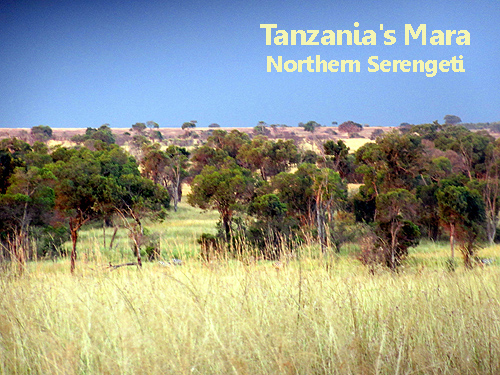
This was our final day in the Mara region of the northern Serengeti, still Tanzania but the Serengeti right to the Kenyan border.

We saw lots of wildebeest, not a lot of zebra, a dramatic river crossing and this morning, two male cheetah just waking up to hunt.

Mara River Bridge
Mara River Bridge

Historically we’d be lucky to see as much as we did these last three days. But the weather’s changing and more of the entire ecosystem is wet for longer than in days past. So I was anxious to know what was happening just across the way in Kenya.

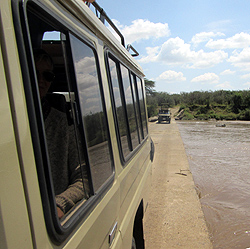
The Mara River is pretty mean, wide and raging where we were staying, and it’s an effective obstacle to going north to Kenya.

There is one cement bridge built years ago when the rivers were all smaller and shallower. It’s usually covered with water, and I expected it would be again today because it rained last night.

Three weeks ago when I was here with another safari there was about three inches of water over the bridge. It’s a false idea that it would be safe for a 1 ton Landcruiser. In fact someone tried (not us). They were fortunate not to be levitated by the water, which is common, but …

… a dead wildebeest was raging down the river, slammed into the vehicle and sent it into the Mara River. The guests were rescued but the vehicle and their belongings were lost.

Today there were about 4 inches above the water, and I was surprised, so immediately off we went towards Kenya!

As soon as we crossed that little bit north the terrain changed considerably and looked exactly like the Maasai Mara I know so well.

There were far fewer trees and bushes, the grass was shorter, and so the vistas were grander. There were lots more visible animals: gazelle, topi, warthog, giraffe – even impala, and of course wildebeest.
LemalaCamp.699.Aug15
Not a lot. Not as many as I expected. But the terrain reminded me that the beautiful savannah before us is a product of elephants felling forests, a primary among several ecological dynamics. The extraordinary corporate poaching of elephant in the Serengeti in the 1970s and 1980s as opposed to the much better patrolled Kenyan Mara had the unexpected effect of prolonging the northern Serengeti forests.

That’s changing, of course. We are seeing more and more elephant in the northern circuit in Tanzania and lots of felled trees!

Anthony Ertle & James Graham

We continued towards Kenya and off to my right I saw a fallen tree in the distance. Underneath resting in its scattered shade were two male cheetah.

Undoubtedly brothers kicked out of their family at the same time, one was clearly agitated, looking all around him and feigning yawns. In the distance was the small group of Thomson’s gazelle that I knew he was contemplating.

His brother was snoozing, but as soon as he stood up, his brother woke up and looked around, amazed to see us.

Nevertheless, cheetah are remarkably docile and friendly animals. They’re no more scared of us than they knew we’re unafraid of them.

We left the brothers to continue to the Kenyan border.

The border is marked by a stone pyramid. Several tracks lead to it from the Tanzanian side, and one from the Kenyan side, down from the Mara Serena hotel.

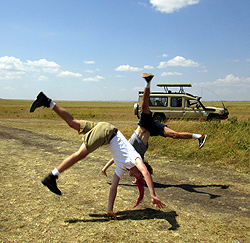
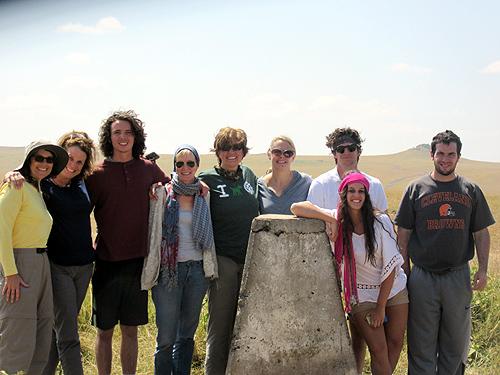
Anthony and James cartwheeled over the border, in complete defiance of visa regulations! Then, we took a group photo on the Kenyan side of the marker!

Then, fortunately, two Kenyan safari vehicles came up and we chatted with the drivers for some time. Such scant information hardly a good report makes, but they claimed there weren’t any large numbers of wildebeest in the Mara … “yet,” they said.

But we’ve been seeing them come across the Mara to the Tanzanian side for several days, now. Still, the amount of wilde we’ve seen – while impressive and much greater than historically would be the case – it was still hardly a big fraction of the two million animals that make up the great migration.

The lack of the Serengeti herds into the Mara was confirmed today by an email sent around by one of the most respectable properties in the Mara, Governor’s Camp. The email said they were “still awaiting” the Serengeti herds.

(Unfortunately, I don’t think waiting will help. The rains are returning early, and those wildebeest on the Tanzanian side are beginning to move south already.

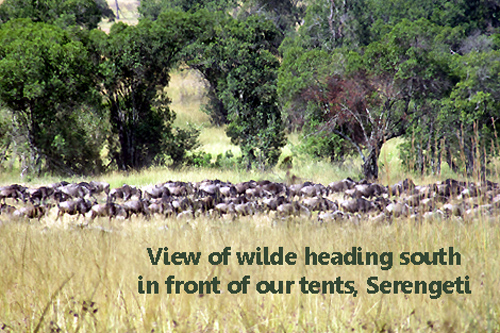
As I sit writing this back in our Lemala Camp, the blarting of thousands of wildebeest which have just crossed south over the Mara River prompted me to take the title picture above. It seems like all wilde are now moving south, away from Kenya.)

So taking our pack lunch we returned over the cement bridge and traveled along the southern and eastern banks of the Mara seeing once again the great carnage of multiple crossings.

We also saw hippo and giraffe, and a cute scene where a just young adult male elephant charged a line of wildebeest.

He’s just had enough of them, I guess!

In Kenya without a visa! Peg Walsh, Ann Ertle, James & Julie Graham, Rosalini Fini, Mary Disse; Anthony, Jane & Michael Ertle.

OnSafari: Great Migration Doubling

OnSafari: Great Migration Doubling

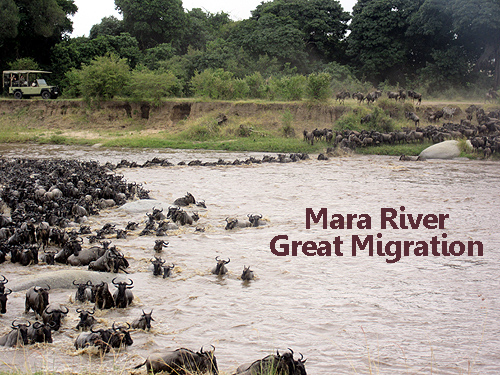
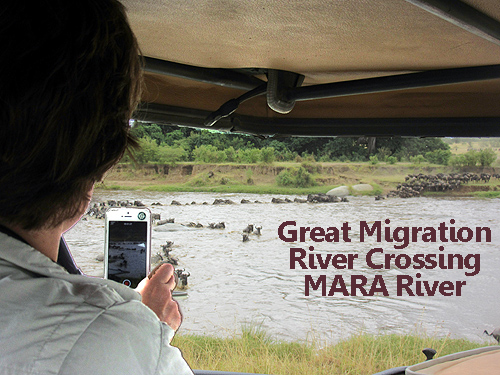
MaraRiverCrossing.699.Aug15Astoundingly, thousands of wilde were amassed on both sides of the river. Were they going to run into one another, increasing the carnage exponentially?

Every day I see new confusions in the wild as climate change accelerates. My safari headed out this morning specifically to try to see a great wildebeest migration river crossing, presuming by the calendar it would be from Tanzania into Kenya.

We were lodging on the Tanzanian side of the Mara River.

1stPlunge.RiverCrossing.699,Aug15Historically, the 2 million animals involved in the Great Migration will be found almost exclusively in Kenya at this time of the year.

That’s because, historically, the rains south of Kenya have ended. Only in Kenya’s beautifully spectacular Maasai Mara does rain almost every day of the year except in October and November.

Wilde don’t need rain when there are such wonderful rivers as the Mara, Sand and Balagonjwe around. They need grass. Lots of grass. So they travel with the rains, because the rains grow the grasses they have to have.

But in the last decade the rains have gone bonkers. See many of my previous OnSafari blogs throughout the year to see how strange the rains have been and subsequently, have fractured and unpredictable the migration is.

Nevertheless, we had just come all the way through the Serengeti, from the very south. We knew first had that the south was desiccated, just massive swirls of dust over the veld. (And, by the way, hundreds of thousands of nonmigrating Thomson’s Gazelle which need no water in the dry season.)

So until we reached the Mara section of the northern Serengeti, I was pretty sure that conditions were more or less normal, and that it would be great luck for us to see many wilde at all, much less a river crossing.
EmassedBothSides.RiverCrossing.699.Aug15
But as we left the western corridor at Ikoma we began to see clusters of wilde, several hundred strong, here and there as we drove quickly north.

More importantly, I saw green in the veld, and even more importantly than that, massive storms forming all around us.

We reentered the Serengeti at Mugumo and even though the grass was shoulder high there were more and more wilde and even greater numbers of zebra.

My hopes improved! We got into camp late, a beautiful property right on the Tanzanian side of the Mara River. We went to sleep with sounds of elephant trumpeting, hyaena howling and one persistent leopard grunting.

Michael Ertle said he slept only about an hour, because of the persistent gnawing of grass at the edge of his tent. It was zebra. When it rains, the tents direct the water over the eaves where then the most nutrient grasses grow.

So after a quick breakfast we headed out along the river. We made numerous stops for giant crocs, dozens and dozens of them. One I spotted was at least 14 feet long.

But I also noticed lots of dead wilde. That in itself isn’t so unusual, but there seemed to be an unusual number of them and in very radically different states of decay.

And the largest congregation of vultures I’d ever seen. Julie Graham asked if I could estimate how many, and I really couldn’t. I’ve learned to estimate animals on the ground, but the swirls of vultures were daunting.
ClusteredRock.RiverCrossing.699.Aug15
Perhaps thousands? More?

These unusual sites meant something unusual was afoot. The obvious conclusion is that the carnage on the river was greater than normal. Why?

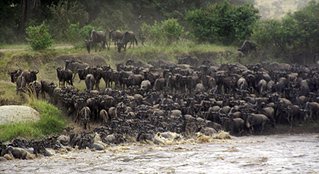
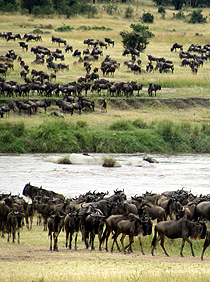
Soon we would learn why. About 15k east of camp we came upon two massive groups of wilde, on opposite shores! Each side looked like it was about to plunge across.

Given the large number of wilde still grazing on the Tanzanian side, clearly the unusual rains had disturbed the predictable course of the migration. Obviously, from our very immediate experience, wilde were crossing both ways, and often.

We parked ourselves about 200m up from the river so as not to disturb the movements. It was around 11 a.m.

Numerous times each side seemed to make a move. There would be agitation and some prancing, wilde moving onto the sand bank but then darting back and drawing dozens back with them.

From the horizon both sides were being pressed by more incoming lines of wilde, migratory files moving in exactly the opposite directions of one another.

It was nearly 12:30p and the standoff continued. Part of group returned for lunch and the lucky die-hards stayed with me.
UnmovedCroc.RiverCrossing.699.Aug15
About a half hour later I saw one wilde put his left hoof into the river and I swear it was less than 5 seconds and dozens of wilde started the plunge.

Soon it was a thick of mass wild, loud blarting, splashing and difficult swimming against the strong Mara current, each pushing one in front of them further into the river towards the other side.

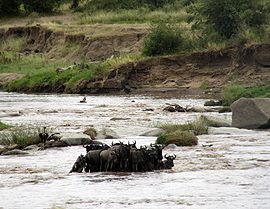
The first made it about 7 minutes after the initial plunge. Mothers would stop and turn back, having lost their young. Some, caught by the strong current, were swept onto rocks unable to dive back into the water without drowning.

But most remarkable of all, no crocodile take-downs. When I’ve seen this before, there are dozens of crocs. This time, we saw crocs resting among the running herds and not moving!

The wild are hard-wired to move aggressively and rivers beckon them as their greatest challenge. If there is good grass on both sides of the river, they’ll cross back and forth without other purpose.

That has led to one of the greatest carnages I can remember on the river. And that’s the reason there were no croc take-downs, today.

They’re all full.
Title.RiverCrossing.699.Aug15
Above Rosalini Fini takes a video of the wildebeest crossing Jim’s safari in northern Tanzania witnessed today.

OnSafari: Lion Kill!

OnSafari: Lion Kill!

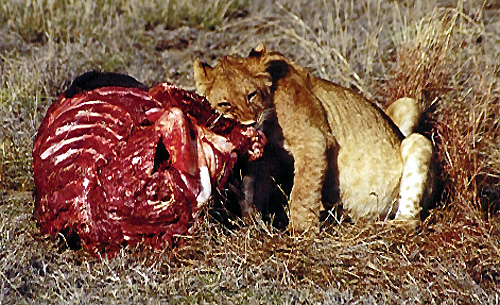
craterlionsIt was just after 7 a.m. and I spotted four lions devouring a wildebeest.

They had obviously just killed it and their faces, necks and front paws and legs were covered with blood and they were eating madly, eating like a cheetah in fact.

Lions don’t go to finishing school, and despite Mary Disse’s wonder if they ever share, they are pretty much gluttons with poor manners. But it’s really only the cheetah that eats as if the world is going to end, because it has such trouble keeping its kill.

Lions are the king of beasts, right?

There were two adult females and two 6-month old juveniles on the kill and they were absolutely frantic, and soon we learned why.

The hyaena were coming in droves.

Whether they anticipated this, or whether the new crater ecology caused by global warming has turned the tables on the king of the beasts, it was now clear why they were eating “like cheetahs.”

The first group of around a dozen cheetah arrived with the tails up, hooting and prancing around in obvious challenge to the small pride on the wildebeest kill. At first the pride took no notice.

When there were 15 hyaena the lions started to get visibly nervous, interrupting their chow-down with raised heads and barred teeth trying to dissuade the hyaena that were coming closer and closer.

At one point everyone was confused as most of the pack of hyaena turned around and chased three new hyaena that were coming towards the kill. That didn’t last long, though, and soon the three that were challenged had joined “the pack.”

There were now more than 20 hyaena and plenty for the attack.

They moved like in thrusts together, all towards the kill. Finally one of the females was bitten on her left hind leg and yelped, and at that point I expected the hyaena to tear apart the lions.

I’d seen it before.

But this time the hyaenas were more hungry than vicious. The lion stood up as if unmolested and walked away from their only partially eaten kill..

The now 25 hyaena pounced on the kill and probably one another, tearing apart every morsel that was left. By the time the lion had walked within 50m of us, found a small rise in the ground and flopped down to lick one another, the kill was practically gone.

I figured the lion had killed the wilde about 20 minutes before we arrived. We were there about an hour, and so in less than 90 minutes a wilde had been killed, eaten and totally consumed.

This is the dry season … I guess. As I’m writing this now, about 5 hours after the event, it’s raining! Reports are that the great wildebeest migration which follows the rains and should be far distant in the Mara in Kenya is fractured and partially still in the Serengeti.

This is climate change. We saw far more wildebeest and zebra in the crater than should be at this time of the year, and they must have grass. Grass only grows when it rains. It’s probably raining in Kenya’s Mara as natural, but it’s also raining here.

Yesterday in the crater we saw a pride of 23 lion near one of the hippo pools. This isn’t normal, either. Certainly there are cases I remember of large prides, but never 23. This absolutely represents a coalition of prides.

I can’t explain it other than to defer to the obvious that things are changing on the veld, and they are changing because the weather is changing. Global warming means more rain for the equatorial regions of the world (and also shorter but deeper droughts in between the heavy rains).

For my clients it was an exceptional morning. After we watched the first kill, we happened upon some juvenile males waiting in ambush for an arriving group of grazing wilde.

As usual, the juvenile males botched the attempt, although it wasn’t completely their fault. By the time the wilde had wandered anywhere near close enough to their ambush spot, there were nearly 20 cars with excited people talking far too loudly.

This is the high season. It’s when there are the most cars in the crater. But because we planned well, and got down onto the floor just after dawn long before most of the cars did, we had a dramatic and splendid morning.

Stay tuned. We’re headed into the far north Serengeti!

OnSafari: Dying Internet

OnSafari: Dying Internet

touristinternetIt’s been some years since the circuit has been so busy. Today my group is in the crater, but I won’t be able to write to you about it because the internet is jammed.

Bandwidth in Africa is fractional compared to the U.S. and hasn’t seemed to be a problem on the tourist circuit until this season. I’ve always been able to post at least every other day.

Cell towers are everywhere and virtually every property, even a tented camp, has satellite wifi. But now according to my manager friends, use especially by Americans and Europeans is so demanding that basic business conducted by the properties on the internet has been jeopardized.

You can hardly fault visitors: they’re doing nothing abnormal. It’s just that there are a dozen more satellites over America than over the entire continent of Africa.

So properties are taking steps to limit high usage. Several new IT companies in major African towns have developed at remarkable speed bandwidth filters that block use for a variety of possibilities.

Most, for example, now block Facebook, Twitter and Instagram. But the more sophisticated filters block usage by usage. In other words, if you’re trying to stream a video or upload a .raw image, you won’t be able to.

iCloud apps and access are blocked.

And so … am I. As soon as a tear opens in the cloud, you’ll hear from me! Stay tuned!

OnSafari: Terrifying Tarangire

OnSafari: Terrifying Tarangire

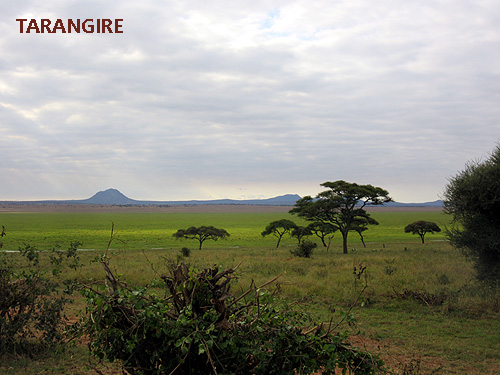
TarangireWe had finished a fabulous afternoon game drive heading back to camp when an incredibly wild family of elephant intersected the road. I hesitated not knowing if we should proceed.

Most of the elephant found in Africa, today, are relatively docile: they’ve been habituated to tourists for generations.

This is not true, though, in the more remote parts of Africa or even in the remote parts of its protected areas. That’s where we were: the southern half of Tarangire National Park.

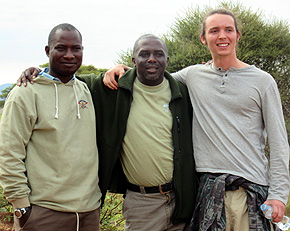
Justin, Tumaini & James Graham
My Walsh Family Safari was staying at one of my favorite Tanzania camps, Oliver’s. It’s located near Silale Swamp almost exactly half way down this 2200 sq. mile, oblong national park. 95% of the tourists stay far north of here in more conventional safari camps and lodges.

According to the great elephant researcher, Charles Foley, about 2800 elephant live in the northern part of the park, and he calls them “sedentary.” An uncountable number – because they change so often – live in the southern part where we were staying and are “transitory.”

The transitory elephant are much wilder, and I think, healthier. They come through the southern half of Tarangire not to start a home, but to get somewhere else: like the eastern savannah which is equally remote.

I can usually tell the difference after just a few minutes of looking at a family. The sedentary elephant have lost many traditional behaviors, such as keeping their distance from other families and flapping their ears by rocking back and forth their head in warning.

This is because, in my opinion, there are too many elephant in this area. They’ve adapted “socially” by changing their customs. So today in the northern part of Tarangire and many other very insular protected national parks in Africa you can easily see 200 or more elephant together, males, young and mixed families.

They no longer shun other families, because — well, there just isn’t enough space to do so.

Not with the transitory elephant of Tarangire! So just as we had finished the afternoon game drive and were trying to get back to camp before dark, this one large, healthy family of 15 blocked us on the road only 40 meters in front of us. We’d watched them come down, heading for the swamp to water, and taking angry note of two other smaller elephant families in the vicinity.

The grand matriarch started some serious vocalization. This doesn’t mean just trumpeting, but deep rumbles of which we can hear only 10%. The remaining 90% are below our decibel level, so if we can hear rumblings, we know a lot more is being said!

We stopped in the road as she pulled her ears out and moved her head back, a precharge signal. So – but for only a moment – did the other two elephant families stop and take note of this swaggering grandma, but then the matriarch of the nearest one seemed to dismiss the challenge, turned her head to go and continued to saunter away.

The grand matriarch of the wild family lowered her head, trumpeted and charged the insubordinate matriarch of the family walking away.
roverzebrawildebeest
The matriarch of the retreating family turned and faced her challenger for all of a second. By then the massive likely near 4-ton wild matriarch was practically upon the sedentary matriarch, who then began to run away from here.

But it was too late. She poked the retreating matriarch with her tusks eliciting a trumpet of pain as that smaller family fled faster and faster away. The grand matriarch then huffed and puffed a couple times before slowly walking back to her family, which had gone dead still.

I had decided we couldn’t move while she was running, because her stride together with her speed produces a 4½ ton projectile we couldn’t possibly outrun.

So began the standoff with us. The rest of her family were as still as possums as she jogged back to their front and faced us square on. The rest of the family as if on queue began moving again, seemingly in no discernible direction, just sort of milling about but suddenly we were surrounded.

Any one of the larger adults could have flipped us over. I have a front roof latch above the driver’s seat in the Landcruiser. It was open and I was standing straight through it, the first human she could sense. My clients were all standing up from the back seats.

My group was amazing. I know everyone’s hearts were beating frantically, including my own, but everyone was dead silent and unmoving.

The matriarch waved back and forth in front of us, her giant ears flopping in rhythm, but the good sign was that there was no vocalization.

Most elephant lose much of their sight after about ten years, but they continue to develop an acute hearing and smell. A brush of my bird book against the open roof, someone who is chewing gum and opens their mouth – these are the kinds of things that a grand matriarch standing only 20 meters away might take offense at.

So we just waited. Finally, she settled down and led her family down to the water away from us.

Mary Disse, who is usually not, was speechless! Everyone got extraordinary pictures, but more importantly, experienced viscerally the excitement of truly wild Africa.

We had a grand two days in Tarangire, Africa’s best elephant park. In addition to the tembos, we saw leopard, cheetah, lion, hundreds of impala, buffalo and wildebeest; thousands of zebra, dozens of bird species, and were incredibly lucky to have also encountered oryx and kudu. It was an extraordinary success.

Now we’re relaxing at another of my favorite places, Gibb’s Farm, before heading to the crater. Stay tuned!

Oil & People

Oil & People

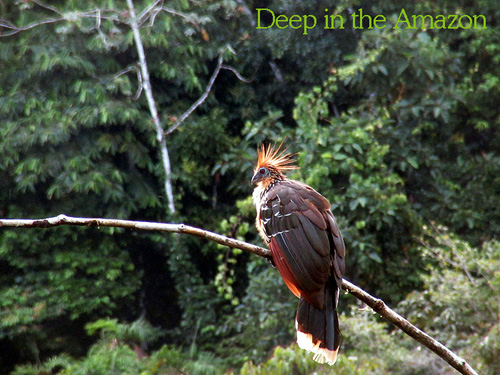
DeepInamazonAs I wait here in Arusha for my clients to arrive tomorrow, I’m haunted by my visit to the Amazon a few weeks ago.

It wasn’t just the goose bumps and occasional terror produced by the massive, towering jungle with its chaotic screaming sounds. I was profoundly moved by the local people who hosted us and who are demonstrating remarkable courage refusing the wealth of oil that sits below them.

Ecuador’s Amazon is one of the richest biomass areas in South America and includes Yasuni National Park, which the Wildlife Conservation Society says is “one of the most biologically diverse forests in the world.”

The area is also the home of several clans of Huaorani people who continue to forcibly resist development, violently opposing all efforts to contact and civilize them.

But controversy with oil companies dominates the area. The first discoveries of huge reserves in the 1960s led to a mini oil boom that was eventually stopped when several massive spills galvanized local opposition. An increasingly leftist government in Quito became incensed by the significant ecological destruction of their Amazon.

One of the tribes in the area, in fact, the Achuar Kapawi, successfully obtained a large judgement against Occidental Petroleum after a persistent six years of expensive litigation in New York (spearheaded by EarthRights International).

But even more significant reserves were discovered in the late 1990s and so the pressure on the Quito regime grew substantially. The Correa administration asked the United Nations to calculate its reasonable return over ten years if it allowed the oil to be developed. The UN came up with a figure of $7.2 billion.

President Rafael Correa then addressed the opening session of the United Nations in 2007 and asked the assembly to create a trust fund that if if subscribed by half that amount, $3.6 billion, would be used by his administration as an alternative to developing the oil in the Amazon.

Correa challenged us global conservationists to put up, or shut up.

Several years later only $110 million had been pledged and less than $13 million actually paid into the trust. So in 2011 Correa struck a deal with a consortium of multinationals for a federal royalty of $17.06/barrel and invited the companies to negotiate final deals with the various owners of the Amazon land where the reserves were located.

Nineteen of the 26 indigenous communities in the Yasuni National Park area have so far struck deals with the oil companies. The Sani-Isla community, which owns about a half million acres including a small portion actually inside the national park, has repeatedly refused deals.

Multiple times oil company representatives have requested and received an audience with Orlando, the 70-year old, democratically elected Sani-Isla leader, who is also a shaman, and who also worked for the oil companies for 20 years in the 1960s to 1980s.

Orlando’s first job with an oil company was as the most menial of laborers, the poor bloke who has to climb inside a giant oil barrel and swab it clean. By the time he left more than 20 years later he was a foreman on an oil rig.

Orlando grew increasingly horrified by the drugs, alcoholism and prostitution that always seems to beset an oiltropolis. He pleaded with management multiple times for rules and regulations to curb the errant behavior so alien to his way of life, but to no avail.

So he led his 600 Sani-Isla people to vote no to oil. Instead, they built a tourist lodge with Orlando’s savings. It’s always hazardous to critique a place you’ve been so soon after leaving it, but my initial impression is that my 7th Amazon visit, this time to Sani Lodge, was the best I’ve ever had in a jungle.

The earnings from Sani Lodge have funded a school, but it’s small and basic and has no bathrooms. They’ve also built a health clinic but it’s very rudimentary, dependent upon infrequent nurse volunteers.

On all sides of the Sani’s half million acres of Amazon, oil rigs are churning. Those communities with negotiated deals have modern schools and health clinics. Some have running water. Some even have sanitation systems. Many of their smarter children are getting scholarships to U.S. schools.

Sani Isla’s children are just as smart as any, and ironically the oil boom trusts created in the 1960s actually provided scholarships for some of the San Isla children.

Javier Gualangi is the principal guide at Sani Lodge and one of Orlando’s chief supporters. He spent three years studying biology at a college in Portland, Oregon, and he traveled across the States, visiting wilderness sites from California to Minnesota to the Everglades, in part on oil company tabs.

It was in the Everglades that his longing for the Amazon grew acute.

“That was when I knew I must come home,” he told me.

At 27-years old he has yet to start a family. He gently refused his parents’ arranged marriage, and he insists that Orlando has the correct vision for his people.

“Before we began our conservation efforts with the lodge,” he told me, “there were hardly any capuchin monkeys left.” This is the case throughout much of the Amazon, by the way. “Today they’re all over!”

We saw many. Javier’s enthusiasm for the wild is almost unbelievable, especially because he expresses it so elegantly in excellent English. What is such a remarkable person doing here? I asked myself, when the modern world is at his fingertips?

Javier showed me more stuff in the Amazon, I think, than I saw in all my combined previous six visits. He found at night the treasured paca. (See this Flickr link for pictures.) He showed us the Great Potoo, many many-banded aracari, lots of caimans, wooly and howler monkeys.

He knew the scientific names of … well, everything: plants, bugs, animals. He explained how trees walk across the ground, how mushrooms invade moths, how eels electrify our imaginations!

Two professional birders who were with us at the lodge said they came here specifically because there are more species of bird than anywhere else in Ecuador’s Amazon.

But – as I cautioned Javier – Sani Lodge as good as it is will never achieve the revenue stream of oil. Was there not a way to negotiate with the companies to protect the community’s social and cultural values?

Javier’s radiant face always seemed to smile knowingly. He said nothing at first, then pointed to a black bird deep in a bush near our canoe that was singing a most haunting Amazon tune.

“That,” he said with pride, “is the plumbeous antbird. You can’t see it anywhere else but here! It’s disappeared from the other communities.”

I listened to the hauntingde-escalating warble, a quintessential Amazon bird song echoed even louder as it sallied through the dense jungle around us. Then suddenly, the great forest fell surprisingly silent for all of a second. My tummy thundered. You could hear albeit from ten miles away the distant low rumbles of an oil rig in the next community downstream.

Obama Visit is Just Fine

Obama Visit is Just Fine

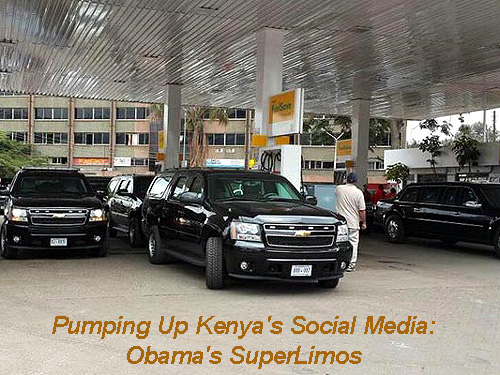
ObamasSuperLimosKenyans have never expressed such glee and excitement as for Obama’s visit Friday, but why is our President coming?

I’m in East Africa to guide my last safari of the year, starting Saturday. Thank goodness my clients aren’t arriving Friday!

Obama’s pragmatism is driving his third visit to Kenya Friday, (with a quick and very controversial stop on the return Sunday in Ethiopia). His previous two visits to Kenya, as a student then as a Senator, were not nearly as important.

City roads – normally congested beyond belief – will be cleared for his motorcades. Social media is overflowing with pictures of his super limousines filling up with gas.

“We have filled the potholes, cleared the garbage, run the homeless street families out of town, aired the drapes, polished the crockery, beefed up security, and for the umpteenth time attempted to ‘beautify’ the landscape on the main thoroughfares into the capital city,” writes Nairobi commentator Gaitho.

The Right claims the visit is proof of Obama’s cavalier foreign policy: They wrongly consider Kenya more dangerous than Ferguson, Texas or Baltimore. And even if it were, better to thumb your nose at terrorists than cower inside Beltway fantasies.

Unshackled by the presidency Obama was outspoken when he came before, which he is not expected to be this time. It’s unlikely he will stake any controversial policy issues.

Many groups in Kenya are hoping otherwise, however, with large demonstrations planned for support of gay rights and separately, for the end to Kenya’s involvement in Somalia.

Both issues are American driven: it’s fair to say that the recent movement throughout all of East Africa to suppress gay rights is the culmination of a number of American programs and policies promulgated under the Bush administration.

It’s widely known here that Obama flip-flopped at least on the extent of his support of LGBT rights. The Kenyan gay community hopes that he will express that tolerance as rectification of a super power, not just as an individual.

Kenya would never have invaded Somalia in October, 2011, without enormous American hardware, support and training. The country has paid dearly for that, with numerous terrorist revenge attacks in 2012 and 2013.

Women Empowerment Kenya” is leading that charge, but has wide support throughout the country.

That’s the point, friends. Obama’s presidency has been so contained by a rightist Republican onslaught on his person and policies that everything he’s done in Africa has been behind the scenes. It’s not his choice to be limited to “symbolic” actions.

It drives me crazy the way respectable media call this visit “symbolic“ implying that he’s capable of more than. Much of the world – even in London – doesn’t understand how hand strapped a president can be by Congress.

The Somali war was never a legislated program in either the U.S. or Kenya, yet it is arguably the single most profound event to have befallen Kenya in modern times.

It was Obama strategy. I’ve often written that I felt it was a bad strategy and an even worse move done as secretly as it was. But the man believes in it, and he comes to Kenya owning up to it and undoubtedly to continue to support it.

The reversal of C-Street machinations in East Africa that so suppressed the gay community was also “behind the scenes.” Obama might reverse that with this visit.

Like all Third World countries, Kenya experienced a horrible crush albeit delayed a few years from the Great Recession. But that also came at a time of civil upheaval after the troubled and violent 2006/07 election, and then the Somali revenge for the invasion near crushed the spirit of the country with nearly continuous terrorist attacks.

All that seems behind Kenya, now. Somehow, this country has emerged if not renewed at least recharged. If Obama’s footsteps onto the country do nothing more than affirm this amazing resilience, it’s worth it … for both countries.

As for Ethiopia, one of the cruelest and most ruthless autocracies on the continent and with which the U.S. really has little in common, need I say more than that China has financed the world’s biggest dam here, one that could seriously stress the flow of The Nile?

At least Obama brings the U.S. to the table. To suggest the U.S. can ignore an issue of this magnitude is lunacy. Surely it’s worth the few hours stop scheduled.

So stop the complaining. I wish we could do more, but until we have more reasonable legislators in Congress, Obama’s doing the best we can.

OnVacation: Best Photos

OnVacation: Best Photos

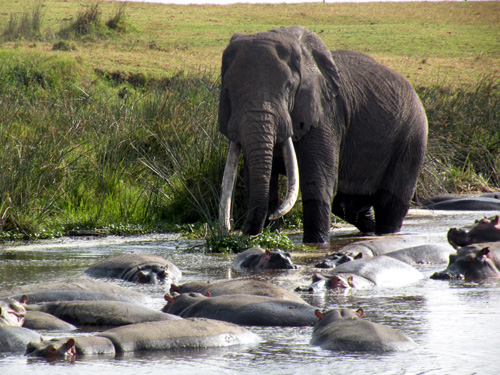
20Jul.OldTuskerHippos.STaylor.303.crater.Sep09EWT Guide and former Cleveland Zoo Director, Steve Taylor, took this precious photo in Ngorongoro Crater in September, 2011. It’s one of my favorite photos of EWT safaris over the last 39 years. Big tuskers like this one are all but dying out, the few survivors of the horrible years of poaching in the 1970s and 1980s. Come back on July 23 as I begin guiding my last safari of the season in Tanzania!

OnVacation: Best Photos

OnVacation: Best Photos

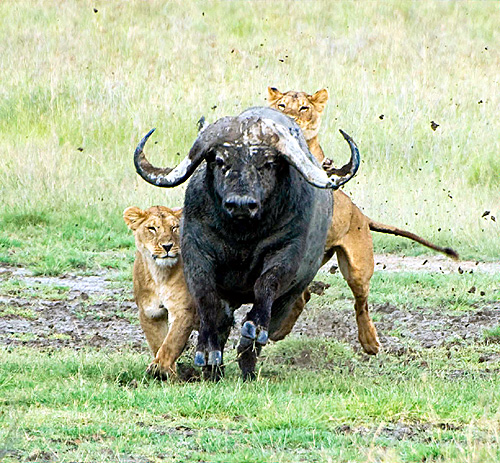
17Jul.RMattas.Mar08.456This remarkable photo was taken on March 19, 2008, by Rich Mattas, while we were game viewing in Ngorongoro Crater. It’s part of my favorite photos from the last 39 years of guiding safaris which I’m posting while on vacation. (BTW, the buf shook off the lions and seems none too disturbed.) Come back on July 23 when I begin guiding my last safari of the season in Tanzania!

OnVacation: Best Photos

OnVacation: Best Photos

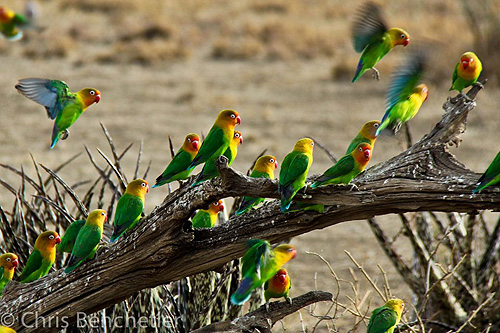
16jul.lovebirds.ndutu.563.11sep.benchetlderYou might think these are parakeets in the Amazon, but they aren’t! They’re Fisher’s Lovebirds coming down to water within ten feet of the dining table at Ndutu Lodge in the southwest Serengeti! This beautiful picture was taken in September, 2011, by Chris Benchetler on one of my guided safaris, as part of my collection of favorite photos from my safaris over the last 39 years. Come back here on July 23 as I begin guiding my last safari of the season in Tanzania.