Big is Beautiful

Big is Beautiful

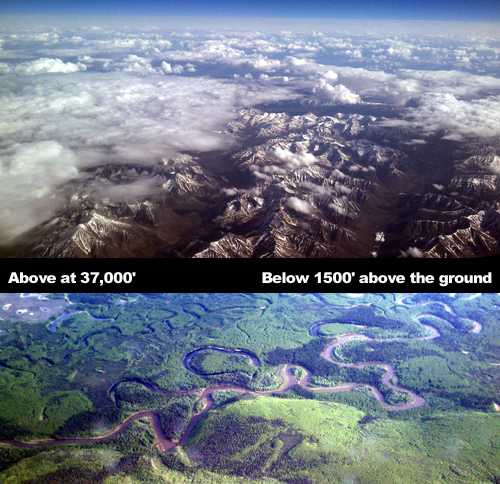
Some things are so big, it’s good to first try understanding them from the air. That’s Alaska, and that’s one big difference with Africa.

Not that Africa isn’t big. In fact I have fun explaining to clients that the distance from Mombasa on the Kenyan Indian Ocean, to Dakar on the Atlantic Ocean – that distance is greater than from Dakar to New York.

But in that massive area there are oceans, deserts, lakes, raging rivers and tiny streams, volcanoes and canyons and really really hot places and very very cold places. There is a biomass variety to Africa that is mind boggling.

And equally mind boggling is how quickly one ecosystem will change into another. Lake Manyara National Park is the best example, a relatively tiny place of around 40 sq. miles with more species of native trees than exist in the entire Upper Midwest where I live! But no single place, no more or less 2 or 3 uniform ecologies, rival the expanse of Alaska.

Alaska is mind boggling in that way. Mostly, it’s just so incredibly big. And hate to say it, but big is beautiful. And obviously there is a difference between the high arctic ecology and Admiralty Island park’s rain forests. But interesting, there’s not a lot in between. There is a beautiful, gradual change from one major ecosystem into another.

I’ve visited Alaska a dozen times, and every time begins obviously with the flight in. Unfortunately, Alaskan weather doesn’t give you very good odds at seeing much until you hit the runway and spray the day’s rain onto your window.

But today was special for me! Good, beautiful, clear and crisp weather. But of the many big things I expect to see with my group of intrepid travelers over the next several weeks, we can hardly cover the whole State. Here’s another GoogleEarth-line: From the Aleutian Islands in Alaska’s west to Ketchikan in its southeast – that distance is greater than New York to San Diego!

So it was a treat for me to see something we won’t on this trip – directly below as the cloud’s cleared and we were about an hour out of Fairbanks was the Wrangell-St. Elias National Park and Tongass National Forest.

At 13.2 million acres, Wrangell is bigger than Switzerland, not only the largest national park in the country, but in the world. And Tongass which adjoins it includes most of southeast Alaska. Add them together and they would be the fourth largest state after Alaska, Texas and California.

And unlike Texas and California, probably 80% of it has not been stepped on. Satellites have mapped its every nook and cranny, but no footsteps of man.

And then I considered… Wrangell is larger than all the national parks of Kenya combined!

That was my first view of Alaska, today. And as we descended the snow-capped mountains revealed some of the lushest earth on the planet, the rich biomass exploding in celebration of the solstice.

Big is beautiful!
Earth’s Greatest Travelers

Earth’s Greatest Travelers

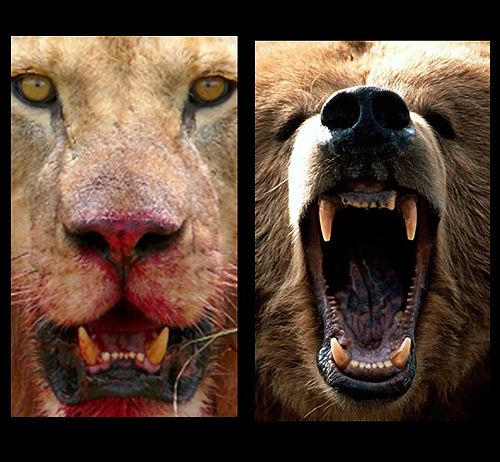
"Lion" by Dena Fairbanks. "Bear" by John Hamill.
I’m off to Alaska. Alaska? The AfricaAnswerman is going the wrong way, no? No. The similarities between Alaska and Africa are manifold. They’re where the last great wildernesses on earth struggle to survive.

There’s nothing extraordinary in the realization that the ends of the earth are wilderness. In many ways it’s why they’re the ends of the earth. In the case of Alaska, it’s radical climate, daylight hours, threatening geology frame the borders of our planet with what’s livable.

A wealth of biomass from the world’s great whales to many of its birds flock here as natural selection would want, to exploit the extreme nutrition that condenses itself in short periods each year. Think of it this way: the amount of sunshine is identical anyplace on earth. It’s just at the poles a lot more of it comes in their summer and none in their winter.

This means life adapts in strange ways, essentially living the life of Riley for about 3 months of the year and sleeping for the rest. Plants, inuit, and I dare say immigrant humans all adapt to that strange lifestyle.

But earth’s travelers aren’t anchored to any spot. So the world’s behemoth, the blue whale, and its most angelic if hyper bird, the hummingbird, make journey after journey here for the privilege of working 24 hours a day for three months.

It’s a work routine lots of young people aspire to!

When I first went to Alaska it was much different than today. The growth of earth has transformed Anchorage from a weirdo’s way station to a magnificent city. The wealth of neglected natural resources made the hillbilly a billionaire. Fairbanks was a cold place for airmen. Today its university leads research in astronomy and natural resources.

And there’s a lot more tourists.

Just like Africa. So our job is to recover, perhaps preserve, the thrills of the past.

Humans need thrills. Adrenalin is not just for avoiding the boss. We need to jolt our physiognomy every once and a while to keep it tuned up.

The scenery of Alaska and Africa is simply incomparable. There are many places in the world as expansive and awesome as Denali, and there are many places in the world as overwhelmingly beautiful as the plains of the Serengeti. But then, there’s also Prince William Sound and the Wrangells, Ngorongoro Crater and Manyara’s cliffs.

The compactness of beautiful, thrilling scenery in Alaska and Africa has no rival.

We get rather boring every now and again. But a lion and a bear are never boring. The natural world is dominated by sheer force buffeted by the brilliance of natural selection. It’s nice everywhere once in a while to be relieved of having to be clever, or make the right decision, or figure out your taxes.

It’s nice to be in a beautiful place where the order of everything is predetermined. It’s something of an intellectual copout – and certainly not what humans were built to do.

But humans are different from everything else, and in these great wildernesses we come to understand exactly how and why.

“Awe replaces anxiety,” Patricia Schultz writes in the New York Times.

Stay tuned! I’ll try to post pictures of our trip, but here’s a remarkable secret: I get less connectivity in Alaska than Africa!

Malaria Attacks Sequestration

Malaria Attacks Sequestration

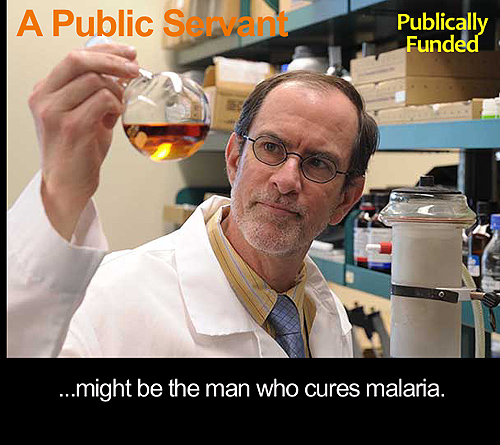
Dr. Michael Riscoe
An exciting breakthrough may have created a new generation of effective, cheap and long-lasting malaria medicine for both curing and preventing the disease.

The breakthrough is exciting, because it came from out of the blue. We’ve been watching a number of malaria medicines and other strategies develop over the last several years, and this was not on the watch list.

It wasn’t on the watch list, because it comes remarkably from a not-for-profit, the Switzerland-based Medicines for Malaria and not from one of the world’s major pharmaceuticals, all of which have been working feverishly on achieving results that the creators of this drug believe they have accomplished.

Neither the Gates foundations or WHO or other major malaria fighting organizations were involved. It was the small Swiss not-for-profit, America’s National Institute of Health, an experimental lab at the Oregon Health & Science University and the Portland VA Medical Center.

These are not your normal worldwide players in major drugs. And kudus to them! These are … to put it mildly … social government institutions hurting from sequestration! They are examples of why government is necessary, and big government can be good government.

“We believe ELQ-300 has a chance to change the landscape of how we fight malaria across the world,” said Michael Riscoe, Ph.D., principal investigator in the research, a professor of molecular microbiology and immunology at OHSU and director of the Experimental Chemotherapy Lab at the Portland VA Medical Center.

Malaria is a highly complex disease with nine distinct stages, four in the mosquito and five in the victim, us. Virtually all previous drugs targeted one stage to disrupt the advance of the disease.

As published in the March 20 issue of Science of Translational Medicine ELQ-300 (or “Quinolone” as it’s likely to be called) targets multiple stages, finds the parasite long before other medicines detect it, can be used for both treatment and prevention with a single dose, and is inexpensive.

March 20? More than two months ago?

I can’t figure out why this news took so long to surface. The scientific report came out in late March, but worldwide media did not pick it up until last week.

When giant foundations and major multinational pharmaceuticals are involved, it can tempt one into all sorts of conspiracy theories. One wonders, for example, which multinational pharmaceutical will ultimately manufacture the drug and under what conditions.

But we may be jumping the gun. Human trials in Africa are only beginning.

But of all the malaria news I peruse, this looks extremely promising.

Nice Nairobi

Nice Nairobi

There is no more simple example of the battle between development and wilderness than a highway. Friday the wilderness won in Nairobi.

Following the successful world-wide opposition to the Serengeti Highway project several years ago, last week’s remarkable effort by local conservationists in Kenya to stop the proposed highway through Nairobi National Park seems particularly exceptional.

This because it was almost entirely local. A combined effort from a number of local wildlife organizations and a few prominent conservation crusaders like Dr. Paula Kahumbu successfully battled several Kenyan agencies that had approved the start of the highway.

Nairobi National Park is an incredibly tiny wilderness that borders one of Africa’s largest and most sprawling cities. The battle to save it over the years has been one of those you think of as lost causes.

Birders never deserted the 40-square miles of grasslands bordered by the Athi River but many big animal enthusiasts did, particularly during droughts.

It just seemed ridiculously pointless to try to preserve a wilderness literally bordering a city that was growing so fast you can hardly move inside it, anymore. A few weeks ago I blogged about the lions that were disrupting traffic!

But I guess that should have been our glimpse into how things were going. Lions? At the edge of a city? Blocking traffic?

Before we get too ecstatic and believe that the natural order of things will always prevail, it’s important to note the judges’ decision to void the Kenyan Highway Authorities plan was also heavily based on the fact it appeared the highway was going to built too close to Nairobi’s second airport, Wilson, violating other agency regulations.

Nevertheless, the wording of the judgment and the invitation by the tribunal that the numerous wildlife authorities bringing the complaint can petition for legal cost reimbursement, suggests it might have been stopped even without this infringement on Wilson airport.

Another remarkable facet to this story is that the judge tribunal was not one in the main judicial arena, but from “NET,” the National Environmental Tribunal. Think of this as Kenya’s EPA, but it has wider judicial powers. While its ruling could be appealed to a higher court, it can’t be sued like the EPA can.

The problem is that Nairobi’s become too big. No one dare suggest a population count, despite a recent census, because the seven slums that surround the city (parts of one which actually abut the national park) make such counts so inaccurate. But many city planners are using something around 5 million.

That makes it seem tiny when compared to Shanghai or Mexico City, but given the fact it has doubled its size in less than a decade gives city planners serious concern.

And no more obvious concern than driving to work. Or for that matter, a tourist driving from the airport. Please note: Do Not Arrive Nairobi on a weekday morning, unless you don’t mind a two-hour commute over about eight miles.

One wonders what type of people can tolerate such nerve-wracking oppression? But that’s been the wonder about Africa for centuries. Once slavery. Now traffic congestion.

But above all this tale should remind us that the most powerful advocates for preserving Africa … are Africans.

Game Viewing in Zimbabwe

Game Viewing in Zimbabwe

After a relatively long period during which Zimbabwe’s national parks seemed to be recovering in spite of Robert Mugabe, tourists reported gunfire in the country’s main national park this week.

And — unfortunately — it was not the gun fire of a revolution. The shots came from hunting rifles.

Hwange National Park is Zimbabwe’s most precious big game wilderness. Located in the northwest of the country, it was one of Africa’s primary game reserves throughout the last century.

You need to be cautious when researching it, though, as is true of everything today in Zimbabwe. The link above to Wikipedia is quite dated, with Hwange’s biomass considerably smaller than the library reference suggests, and its ecology far more fragile.

“…the number of animals being snared for food by local people living on the boundary of the Park has increased dramatically,” reports one of Hwange’s most dedicated tourism operators. This because of severe food shortages throughout the country.

That’s only one of three major problems facing Hwange, today.

The second serious problem with Hwange is its very design. Wildlife filmmaker, Aaron Gekoski, documented this recently in his March production, “Grey Matters“.

When Hwange was created in 1928 it was understood there was not enough water for a real wildlife park. So the government built boreholes, water wells, throughout the park and has been pumping water for the wildlife ever since.

This isn’t unique. The same is done in Namibia’s main national park, Etosha, and in a variety of national and private reserves throughout southern Africa.

It works if maintained. But the last Zimbabwe resource that the current dictator cares about is its wildlife, and the boreholes have not been maintained. Fewer than half of the original ones are operating, and as a result, the animals are dying.

But Hwange’s greatest problem, reflected this week as tourists trying to find an elephant in Hwange instead heard it being shot, is the wholesale looting of its biomass, and not just by corrupt government officials, but by private hunting companies.

Soldiers regularly harvest ruminates indiscriminately, sometimes assisting villagers for their bushmeat. While subsistence hunting elicits some understanding from me, Zimbabwe soldiers are well paid.

And without any study or regards to biology or ecology, the government of Zimbabwe is trading animals for political favors.

Last year foreign wildlife investigators confirmed that the government of Zimbabwe had exported at least four small elephants to China. The act was little more than stupid cruelty by the seller and receiver. Four young elephant removed from their families have little chance of surviving, anywhere, much less in a Chinese zoo.

There was such worldwide outrage at this act last year, that the global treaty which governs the trade in international species of which China is a signatory, CITES, banned any further such transactions between Zimbabwe and China.

China is legendary at publicly accepting such restrictions while finding ways to work around them, or to simple illegally ignore them in practice. But the attention this focused on Zim’s dwindling elephant population provoked a real local vigilance that seems ready to expose any subsequent violation.

But while internationally Zimbabwe may be restrained, internally it’s gone bonkers.

One of Zimbabwe’s most important wildlife reserves is the Save Conservancy (pronounced Sav-hey), in the far southeast of the country that was once scheduled to become a part of a trans-national wilderness withn Mozambique and South Africa wildernesses.

Land grabbing has grown from sport to routine in Zimbabwe, and Save is being eaten away as the Mugabe regime parcels it out to its cronies.

And add to this devil’s den of looters professional hunting.

In the old, good days, Zimbabwe was a preferred destination of hunters, and its wilderness was one of the best managed in the world, with hunters and non-hunters in grand alliances that did much to preserve Africa’s game.

That’s changed. This week tourists in Hwange reported hearing gunfire, and not the kind which would excite us all that the regime was under assault. These were the shots from hunting rifles.

We don’t know if the elephants shot were by hunters from the regime, or hunters from abroad.

But the Zimbabwe Conservation Task Force (ZATF), a proactive and somewhat subterranean wildlife NGO, insists that Zimbabwe professional hunters are now regularly harvesting animals technically illegally from national parks and private reserves, with the tacit approval of the Mugabe government:

Arnold Payne, Ken & Tikki Drummond, all of Impala African Safaris, have been named as the principal thieves.

Worse, ZATF says, “It is suspected that some of the hunters … are US citizens.”

The old adage, three strikes and you’re out, is dangerously close to being true in Zimbabwe’s big game wildernesses: subsistence hunting forced by food shortages, an ecological design of national parks that can’t withstand neglect, and now wholesale looting of the biomass.

Hwange and its other sister wildernesses in Zimbabwe which for so many years were the treasures of Africa now teeter on the brink of annihilation.

Democracy Wins Out in Kenya

Democracy Wins Out in Kenya

Uhuru Kenyatta drawing by James Ferguson
Reports and analyses are completed, and thoroughly so. No candidate rigged the Kenyan presidential election. It was remarkably free for an emerging democracy.

That doesn’t mean that the man with the most votes won; but we’ll never know that. 1.00% of the votes tallied may be illegitimate; Uhuru Kenyatta won with .07% of the votes. But since there was no rigging, the illegitimate votes could likely have spread out if not randomly, probably at the same percentage the candidates received legitimate votes.

The appeal process was fair if overly constrained by time. The concession by the opponent bringing the appeal was gracious and complete.

The implementation of the new Kenyan constitution looks good, albeit a clique of super loyal elites has been wrapped around the new president, taking advantage of constitutional loopholes that allow the president to appoint his cabinet and inner advisors with little advice or consent.

And Kenya is more peaceful than it’s been in several years. There are dark clouds on the horizon of economics and transparent journalism, but I wager many Kenyans prefer the social overcast to insecurity.

The above conclusions, of which I’m now convinced, are contained in a report issued yesterday by the European Union Election Observation Mission (EU EOM) to Kenya and by a less contextual and deeper historical analysis in the New York Review of Books by Joshua Hammer, Newsweek’s long serving African bureau chief.

The one outstanding issue is the scheduled trials of Kenya’s president and vice-president for crimes against humanity indicted by the International Criminal Court in The Hague (ICC). Will they be convicted? Will the trials even take place, now? And, most obviously and critically, are the charges valid?

I doubt the trials will proceed. This past weekend the Organization of African Unity laid a broadside attack on the ICC. Hammer refers to Bush Administration officials who were instrumental in ending the 2007/2008 violence who believe the charges are weak at best.

The Kenyan legislature refused to organize commissions to discern the guilty for the 2007/2008 violence and as a result of the agreement that ended the violence, ceded the investigations and trials to the ICC.

But now the new Kenyan legislature, packed with supporters of the newly elected leaders, wants to revisit that decision, and the ICC has said it’s open to considering such.

The way I can now see the Kenyan situation is not so dissimilar to my American one, Bush vs. Gore. And though at the time of Bush’s election he was not charged with anything criminal, that has certainly not been the case with many other American politicians:

David Vitter would have been a felon by his own admission had he not waited to so admit before the statue of limitations expired. He was subsequently elected and now serves as Senator from Louisiana.

Mark Sanford perjured himself as governor, resigned, and is now the newest representative for South Carolina.

By the way, there were even more important leaders who perjured but prevailed: Bill Clinton (Monica Lewinski), Ronald Reagan (Iran Contra) and George Bush (WMD). And don’t forget Tricky Dick, although most of you reading this probably weren’t born then.

Democracy does not guarantee honest guys get the job. The short list above is a very short list.

What failed in Kenya is what fails here at home: democracy. Imagine – and it’s quite possible to do so – Sarah Palin as America’s vice president or Michelle Bachman as president. More chilling, yet? Bush gets a heart attack and Dick Cheney becomes president.

The situation today in Kenya is much better than those imagined past hypotheticals.

Democracy as practiced by the ancient Greeks might have been better than the Claudius’ which followed, but modern times has seen the astute usually rich politician game the system almost to the point of rendering it useless.

So congratulations President Kenyatta and Vice-President Ruto. You have fully joined the world of democratic leaders.

Too Much To Whom?

Too Much To Whom?

Less than three short years from the Arab Spring, ethnic domination and conflict is growing throughout Africa. Capitalism may be the culprit.

I once felt that education alone could ameliorate racism, but as demonstrated especially in places like Syria, Egypt and Rwanda, that’s not proving true. At least not when that education has occurred over fewer than several generations.

Few countries in Africa have been beset by ethnic turbulence to the extent of Rwanda, and fewer still have enjoyed such rapid prosperity in my life time. The guilt that America and France felt for having allowed the 1994 genocide was followed by such enormous amounts of aid that almost all the country, today, looks very similar to a successful western society.

Unlike the rural areas where my mother lives in Wisconsin, similar rural areas in Rwanda have fiber optic cable and access to high speed internet. The system of roads now rivals both in extent and quality that of places in rural Europe.

While the number of actual doctors is relatively low in Rwanda, the level of health service is high for an African country, as heady social services planners recognize that most of the diseases prevalent in Africa are best handled by nurses and health clinics rather than hospitals.

So as Rwanda’s ostensible peace and prosperity grows, many of its African neighbors find it increasingly difficult to plan policy based on Rwanda’s past of ethnic turbulence. South Africa announced recently, for example, that Rwandans who were given exile in the 1990s must now return.

Even the richest of African countries like South Africa feels a conflict when its national resources are used by foreign nationals. But the Rwandan exiles in South Africa are terrified of the prospect of returning home.

I am the child of second generation immigrants who spent their lives inside their own ethnic communities, and while my parents’ generation intermarried, usually one or the other parent infused us children with a certain ethnic identity. I think this is true for much of America.

And now, as a fourth generation of melded cultures, my childrens’ generation seems truly ethnic free. So it is reasonable to wonder if that’s the magic number: four generations of ethnic melding to emerge from racism.

Yet Rwanda stands as the example this is not true. The Hutus and Tutsis have intermarried for so many generations over hundreds of years, that their language has become the same. But there is arguably no ethnicity in the world that remains as hateful and separating.

The Alewites and Christians of Syria have been the persecuted for centuries, until somehow the Alewites imposed control on a region where albeit they remain a minority, they are free of their persecution. Conflict as open battle was reduced in Syria, but at the cost of many freedoms like speech and political opposition.

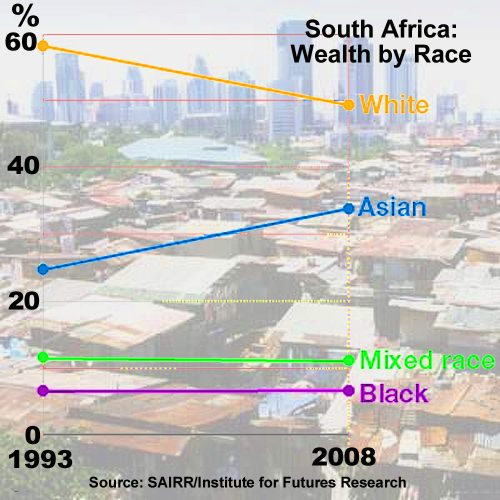
Compared to Rwanda, the South African ethnic problems remain in infancy, even though they were forged more than two centuries ago and reenforced throughout the modern era. Then, presto in 1993, a political system emerged that based upon its constitution remains one of the most just and fair on earth.

But a generation has nearly passed since then, and basic economic inequity has not improved for the majority. There has been interesting change: the two groups of South Africans that have always held most of the financial worth, the whites and the Asians, seem to be trading places.

But the vast majority of South Africans remain stalled out at the bottom. Now it’s important to add that the overall level of all sublevels has improved. There is more wealth all around, but the relationship of the ethnic groups at the bottom hasn’t changed to those at the top, even though it is the bottom group which holds political power.

It seems to me that there is something world-wide that ensures a status quo of racism defined by ethnic domination of politics and/or economies. And South Africa is the place to study this mystery, because this is precisely where the lowest economic classes hold the most political power.

And lo and behold, similarly in America, the middle class holds political power, yet it is mired in stagnation. In America, today, economic classes are acting as if they are ethnic groups.

And in both South Africa and America, political power has not ensured economic progress.

Africa is growing rapidly in economic terms… as its ethnic travails increase. America’s ethnic travails are diminishing, but it’s economic stratification grows stronger and more inequitable.

Is this, then, the universal relation? Capitalism is racism?

Memorial Day 2013

Memorial Day 2013

Especially for my readers in Africa, I wanted to explain the absence of a normal blog, today. It’s Memorial Day in America, Monday, May 27, 2013.

The holiday is intended to honor the memories of U.S. soldiers who have died in action. It’s similar to the Remembrance Days celebrated in many parts of Africa, and like in South Africa, directed mostly to freedom fighters for independence.

America’s Memorial Day honors all dead soldiers, so in that regards our own revolutionary fighters are to be in our memory as well. But it began as “Decoration Day” right after the Civil War, following a petition by recently freed slaves (mostly who came from Africa) to honor the Union soldiers who had freed them.

After World War I, it was changed to “Memorial Day” and extended as an honor to all soldiers in all conflicts.

As a young boy it was a big red-white-and-blue festival. We decorated our little red wagons and bikes, just as we would hardly a month later for July 4th. And in those days we were remembering mostly the two Great Wars.

Since then my own personal regards for Memorial Day has diminished. The numerous wars my country has begun have mostly been unfair and unjust. And with the end of the draft when I was in university, the military has changed radically. It no longer represents society as a whole.

Today, the military is composed either of young men who can’t get any other kind of job, or who need the benefits once the service is finished, or avowed militarists. We need them both, by the way, but it has drastically altered America’s weapon users, and the military is today more easily manipulated by politicians than it used to be.

I do stop during the day and think of my relatives in the Great Wars. I think of the way the country ultimately came together to fight world tyranny. But in my life time, there is little in America’s wars to be proud of. They are mostly memories I wish we didn’t have.

Ancient Waterboarding

Ancient Waterboarding

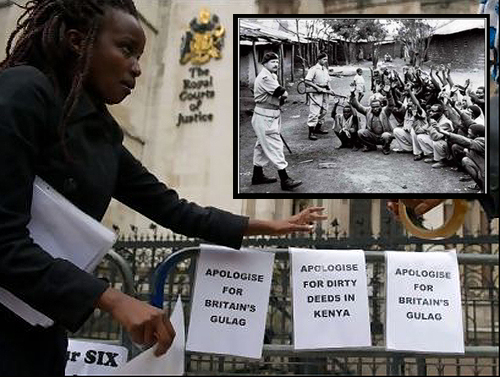
Britain’s invitation this week to Kenya that it seek financial compensation from the U.K. for acts of torture more than a half century ago opens a topic that could be stinging to the United States.

Britain’s highest ranking diplomatic officer delivered to President Uhuru Kenyatta Tuesday a huge report documenting British torture during the Kenyan battle for independence in the 1950s, and invited Kenya to request financial compensation.

The report followed a British High Court ruling last October that allowed Mau Mau (Independence) war veterans to sue the British government for their torture in the 1950s and early 1960s, and the British government’s subsequent negotiations with hundreds of alleged victims.

In fact the release of previously sealed and top secret documents from the U.K. Foreign Office suggested there could be still living as many as 10,000 Kenyans due compensation.

The tedious process of negotiating individual claims began last year, and attempting to get out in front of what could have been an endless line of petitioners, the British government commissioned the report that was handed to Kenyatta Tuesday.

Quite apart from the tens of millions of pounds likely to be paid to the victims of Kenya’s insurection, the released secret documents, court case and Tuesday’s government commission report opens the gates to similar allegations from other foreign colonies.

The British report acknowledge Red Cross archives that documented widespread use of torture techniques including waterboarding and worse, waterboarding with kerosene.

Kenya reacted yesterday by demanding an official apology from the British government:

Britain should “offer a public and unconditional apology to the people of Kenya for all injustices and gross violations of human rights committed by the colonial administration between 1895 and 1963,” the Kenyan response says.

Note that Britain and Kenya right now are not the best of friends. In fact, Kenya has few friends in the world as the world awaits to see if its president and vice-president will stand trials as accused for crimes against humanity scheduled to begin in just a few weeks.

The British report and offer of compensation, however, seems completely unlinked to the UK’s current cold shoulder attitude towards its former colony.

And there is every concern in America that the British action sets a precedent that could severely impact the U.S.

If U.S. violations, including torture and unwarranted war, become issues for compensation, there could be literally millions of claims.

No formal reaction has been forthcoming from the U.S., although Voice of America broadcast this week a story admitting that the “The Mau Mau settlement would set legal precedent.”

The report did not elaborate as to whether it was legal precedent restricted to Britain or one that would be more global in nature.

And of course a number of other warring or former colonial powers would be just as vulnerable to legal attack as the U.S., mostly notably France.

Current American occupations of Iraq and Afghanistan are really little different from the European colonial actions in the past century.

The West has a distinct problem imposing its will. Perhaps a financial slap will bring western morality to its senses.

Tit for That

Tit for That

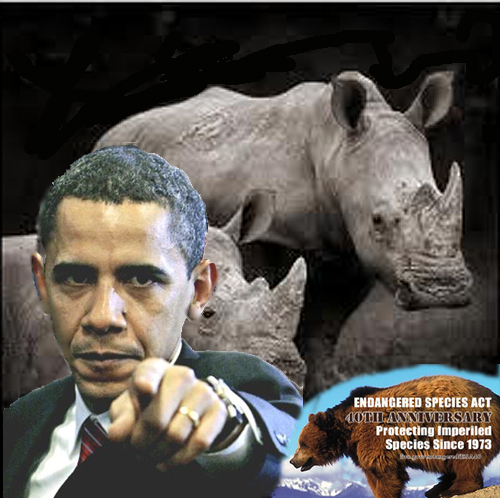
The Obama Administration may have hastened rhino extinction in order to achieve political capital in Wisconsin.

Charity begins at home, and there’s no more powerful example of this than for Americans interested in saving rhinos and no greater reversal in my life time than what the Obama Administration has just done.

For the first time since U.S. laws then international treaties prohibited international commerce of rhino, the Obama Administration has issued a waiver to David Reinke, a big-game hunter from Wisconsin allowing him to import the rhino he shot in Namibia in 2009.

This is the first ever waiver issued by any administration since America’s Endangered Species Act became law in 1973, and may in fact put America in violation of the world-wide CITES treaty of which America was so instrumental in creating.

The action by the U.S. Fish & Wildlife Service has raised numerous eyebrows and not only among wildlife advocates, and occurred right when the European Union enacted even tougher bans on the trade of rhino within EU country borders.

Fish & Wildlife’s explanation is pitiful. It invokes a moral platitude that sport hunting can support conservation, which while sometimes true is absolutely not in the case of any endangered species. And it cites as a positive reason for issuing the waiver the more than quarter million dollars Reinke spent on his rhino hunt in Namibia.

To many of us, this action is patently political: Trade rhino for political capital in the contentious arena of Wisconsin by wooing over a major Republican supporter. This time I’m not only joined by the Huffington Post that suggests as much. So does Scientific American.

Tuesday’s blog about the American Wade Steffen and today’s blog about the American David Reinke and the Obama Administration illustrate how misplaced American support for saving the rhino may be.

Every single save-the-rhino (or save-the-elephant, or save-the-groundhog) group on earth presumes, and correctly so, that commerce of any kind in that animal increases exponentially its black market thereby massively increasing the threat of its extinction.

If Fish & Wildlife argues that Reinke’s quarter million dollars will save the rhino, why not just issue hundreds of waivers each for a quarter million dollars? Or thousands of waivers?

It’s a child’s tease while the Obama Administration plays god with politics. Once a single international transaction of commerce has occurred — as it now has — subsequent transactions become easier and easier.

As my own experience in Africa developed over the years, “charity begins at home” grew increasingly important to me, but in an usually straight-forward manner: Yes, there’s horrible poverty in Africa, but there’s also horrible poverty in America.

What’s worse is that poverty in Africa is declining; poverty in America is growing. I’m an American, not an African. Ought whatever talents or skills I have to mitigate poverty be directed first at home?

But what about saving big-game wilderness, a concern much more African than American?

You have your answer in this blog and my last one, “Dumb Roper Nabbed.”

It doesn’t matter how much money you’ve sent to rhino-saving charities, or how much time or other resources your zoo or conservation society has allocated to rhino protection, your political leader has just reversed much of what you thought you were doing.

Charity begins at home.

Dumb Roper Nabbed

Dumb Roper Nabbed

Many Americans don’t care if something’s going extinct: it’s just “the way it is.” So it’s no surprise that big game poaching is as much an American problem as it is an African one.

“Put bluntly,” writes Australian ecologist Euan Ritchie, current species extinction is an ecological “avalanche” with current rates 1000 to 10,000 times higher than would be normal in a balanced environment.

Most people realize that the extinction of one species has the potential to threaten a whole ecosystem. We might not fully understand, for example, why that little flower in the Amazon jungle keep the canopy from falling down, but most people in the world accept that it might.

But rhino? What purpose, exactly, does this beast have? We know an awful lot about rhino, and nothing suggests it’s integral to the status quo of any particular environment. In fact, it rarely exists in the wild, anymore.

The answers are allusive and often personal. There are probably fewer Americans as a percentage who believe extinction of something like the rhino is a priority than compared to other societies, but likely and fortunately still probably a majority.

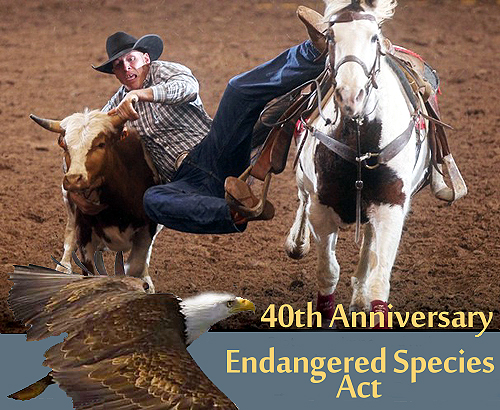
Americans were the ones to formalize the concept of an endangered species with historic legislation in 1973. And shortly after the Endangered Species Act was enacted, the sale of rhino horn was banned.

Almost forty years later, Jarrod Wade Steffen, a poor kid from McHenry Illinois, just wanted to get his mom some money after his rodeo career collapsed, so he started trafficking rhino horn.

There’s more to it, of course, including Mom sneaking out of California with a suitcase of small bills totaling more than $100,000. And there’s a lot we still don’t know, since Wade’s plea agreement with the Justice Department suggests he’s still involved with helping ongoing investigations.

At 21 years old, Wade was struggling to make a living competing in rodeos. He’d won his events in Texas, Iowa, Wisconsin, Illinois, Oklahoma, Minnesota and Missouri and while he certainly wasn’t a star to watch his trajectory was OK.

Then he got injured in the eye by a camel he was trying to train. He started driving a truck, which earned a better living anyway than rodeos, and moved to Hico, Texas.

There in Texas, that wild and rowdy and never wholly moral place, Wade reconnected with old rodeo acquaintances who had rhino horn for sale. Most of them had it legally, usually from old big game trophies shot before the 1976 ban from the Endangered Species Act.

It wasn’t hard to find someone to sell to. Thirty-three times between June of 2010 and just before he was arrested in February of 2012 Wade sent rhino horn to Vinh “Jimmy” Choung Kha in Orange County California and earned hundreds of thousand dollars.

In that 18-month period, the American cowboy, Wade Steffen, trafficked in more rhino than were poached in Kenya.

Kha in turn sold the horn to Zhao Feng, a Chinese national living mysteriously in Orange County, part of the new rich Chinese buying expensive California real estate and not really doing much else. Kha laundered the money he got from Feng through his import/export business and his girlfriend’s nail salon.

The ring was blown apart when Wade, his mother and his girlfriend, were stopped at the Orange County airport with three suitcases carrying around $300,000 in cash.

Wade, his mother, his girlfriend, Kha, Feng and a bunch of others, including an antique dealer in New York, were all subsequently arrested. Federal authorities called it the biggest bust in the history of illegal rhino horn trading.

“These individuals were interested in one thing and one thing only – making money,” said Fish & Wildlife Director Dan Ashe.

Whether that’s wholly true or not, one thing is certainly wholly true:

Wade, his relatives and friends, and all the other people around who knew what he was doing don’t care if something goes extinct.

Extinction, and in particular rhino extinction, is not just an African problem.

Weather Grounds Drones

Weather Grounds Drones

Predictions about African security linked to global warming have proved frighteningly correct. Does weather trump drones?

As the stubborn, not-too bright bully on the block, America has shifted to accepting global warming as human caused, but it took a few Katrinas and Sandys to tip the balance. And experts still spend inordinate amounts of time explaining the obvious to the recent convert:

“Global warming” or “climate change” or whatever you want to call it is manifest most dangerously in extremes, not just increasing temperatures. So terrible winters on top of terrible summers means we’ve screwed up nature. It’s our fault and we’ve altered nature.

Winter and summer are naturally the opponents in a ping pong game. If one hits harder, it sets up the rebound to be harder as well.

And while it’s been predicted for some time that the short-term global effects of climate change could actually benefit America, because America reigns as the world’s principal power, there’s no way we’ll avoid the much more terrible negative effects:

“The U.S…. may benefit from increased crop yields, [but] its military may be stretched dealing with global “humanitarian emergencies,” Scientific American reported five years ago.

The rest of the world has more or less recognized this for a long time, so there are plenty of studies to refer back to. As America’s conversion into reality became policy when the Obama administration came into power, America began to participate in the global studies.

Africa has the largest percentage of unstable societies in the world, and what early climate change studies show is that these misfortunes were mostly predictable, founded mostly if not exclusively on climate change.

Because Africa is the only continent to stretch so far into both hemispheres, it is unfortunately placed to feel the greatest effects of climate change.

Jihad, civil war, violence after contested elections – even the reemergence of debates about social issues like female circumcision – all seem to ebb and flow with the weather. They are all symptoms of climate change.

John Vidal writing last month in London’s Guardian cited a variety of studies showing that the Arab spring had less to do with human rights than food insecurity:

While the self immolation of the Tunisian street vendor “was in protest at heavy-handed treatment and harassment in the province where he lived… a host of new studies suggest that a major factor in the subsequent uprisings … was food insecurity.”

When the rains returned to drought-stricken Somalia, was it only coincidence that the Kenyan army occupied then pacified the country? Or more likely was the Kenyan army decision triggered by an easier time supplying its troops with food?

And now that drought has turned to floods, pacified Somalia is growing restive, again, and this instability is even spilling into neighboring Kenya.

Even in Namibia, among the least densely populated countries on earth, growing instability from climate change motivated the president to declare a state of emergency on Friday.

Record floods in 2011 have now been replaced by record droughts.

The frequency of climate disaster in Africa is increasing so fast that even statistics are lagging. PreventionWeb is a UN agency that simply documents human disasters. From 1980 – 2008, the ten greatest disasters in Africa were all due to drought.

We expect, now, that the top ten disasters when compiled for 2008-2013 will be from flooding.

It seems pretty simple. Forget about proselytizing or promoting democracy and free trade, cut carbon emissions.

Terrifying Nairobi Commute

Terrifying Nairobi Commute

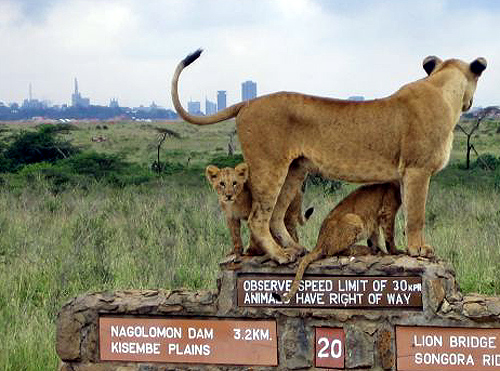
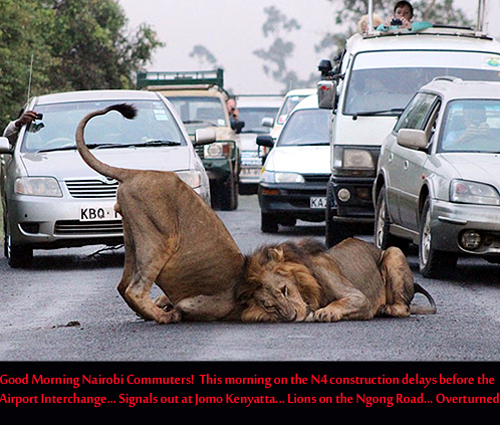
The picture of lions disrupting traffic on the Ngong side of Nairobi is all over the internet, and it’s one of the best examples to date of the terrible predicament big game has in modern Africa.

I must have received the photo above a dozen times from my loyal readers, so thank you! You can easily find a whole gallery of these blokes by simply choosing “images” on your Google search bar, and typing in “Lions Nairobi Road.”

The Nairobi National Park has always been a misplaced natural wonder. The very first thing you see even today when driving out of the Nairobi airport is the national park, pitifully divided from your highway access by a fence that would have a hard time keeping my lab at bay.

It’s always laid beside the city, even in the old days. It’s always touched the airport. Today one of its seven gates is 4½ miles from the center of the giant megalopolis of Nairobi. This is about as far as the main Broadway Theaters are from Central Park.

In the old days, of course, Nairobi was a cow town with lots of grass and trees and not too many people or buildings. The first thing Kathleen and I did after we first arrived Nairobi in the early 1970s was to rent a car and drive into the park.

We paid our fees, drove about 45 or 46 seconds, and stopped in front of a rhino that was not pleased to have been found.

Until four or five years ago the park suffered some serious setbacks, and many of us were pretty sure it wouldn’t last. The city was exploding and today is one of the most congested megalopolis on earth.

City planning lagged building construction, and today’s highways and skyscrapers are turning Nairobi into an architectural nightmare. It reflects the unstoppable growth of Kenya, and this daunting “progress” concerned a lot of local citizens who love Nairobi National Park.

Motivated by a government decision to lay another highway, but this time right through the middle of the park, the concerned citizens formed a foundation.

The Friends of Nairobi National Park has become one of the most proactive local conservation groups. I think we should take pause from time to time and realize that the celebrity foundations that make it onto our TV, like Daphne Sheldrick’s elephant orphanage and the like, are sometimes disconnected from local needs and aspirations.

FONNAP is just the reverse. Its membership, funding and power are all local, and it’s simply because Nairobi citizens want to save the park, the same way New Yorkers want to save Central Park.

Of course there’s a few bigger things in Nairobi than Central Park, and that’s the problem. Like when lions disrupt the morning commute.

That may have been comic relief to some of the mid level executives who missed their breakfast brief that morning because of it, but it is a harbinger of things to come. And in good ways it represents in real, local time the dilemma we understand better from abroad:

People or Animals?

FONNAP is taking a lot of its direction from American conservation organizations. In association with government agencies like the Kenya Wildlife Service as well as supporting NGOs, land on the outskirts of the park on the opposite side of the city is slowly being bought up or leased by the foundation to keep that southeast side unfenced.

This has allowed a good and renewed migration of many animals that continue across wilderness to places like Amboseli National Park.

Local farmers and land owners receive about $4 per hectare per year to keep their land adjacent the park unfenced. For many ranchers this is a no brainer, for they’ve been successfully raising stock among wild animals for generations.

The successful program spearheaded by the African Wildlife Foundation has been a real success story. And together with a great range of other private endeavors, nearly 16,000 hectares of private land has been attached to the park essentially more than doubling its protected size.

So for the time being, anyway, Nairobi National Park survives, and frankly, I’m rather impressed at what the future may hold.

little screen America, Big Screen Africa

little screen America, Big Screen Africa

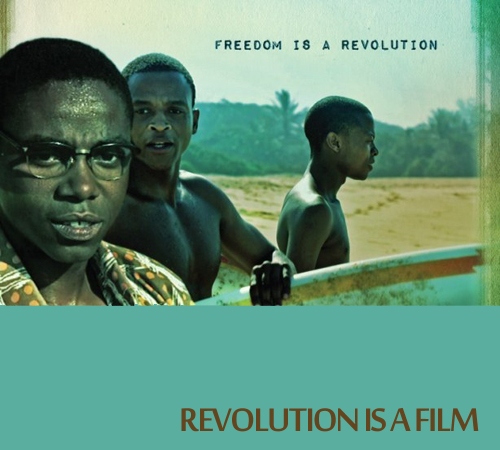
African films are exploding onto the Cannes Film Festival, opening Wednesday, as youthful African societies continue to develop this important art which is being so grossly neglected in America.

The decline in the American film industry is today’s hot topic, but I think everyone’s got it wrong. The emphasis has been on America’s growing and exciting new hand-held technologies and all the products that support them like YouTube.

Undoubtedly that has much to do with it, but I think more so it has to do with the American film industry transforming itself into making money in malls from teenagers.

There’s nothing wrong about making money. And there’s nothing wrong with malls. There’s only a little wrong with teenagers.

Film-making provides the modern world with the best way to transform imagination into reality: it’s the conduit, not the transformer. It’s the best catalyst. Nothing better.

So when that focus is placed on vampire love stories the powerful conduit is twisted towards another universe, not ours. It’s no longer relevant to our reality, and in that instance, it loses almost entirely its preeminence as an art form. Its value becomes dollars and sense, little else.

Africa is stepping into this remarkable void left by the American film industry.

This week in Cannes there is a massive representation of South African films, an excellent collection of Nigerian films and especially Nigerian writers, and from my point of view, the best dose of creativity the world’s seen for some time from Kenya.

Real stories playing into real rapidly changing worlds are American films like Hugo, Midnight in Paris, Lincoln, and Avatar – among my favorite recent American movies.

But they are so few and far between.

Nairobi Half Life and The First Grader are recent Kenyan films produced on a pittance of the budget of a single episode of American Rival, create through the Grecian act of acting and the majesty of writing stories a real and lasting impact on the world.

Madagascar 3 doesn’t do that. Nor do the Terminators or apocalypses or thousands of cars flying into the Grand Canyon. And certainly not vampires.

Good films, and by that I mean films with value to society, films that contribute to art and not just livelihoods, convey moral messages in realistic characters, characters that if we can’t identify with ourselves we can through someone we know well.

And here are several important reasons Africa is displacing America in the film industry:

Of the 150 South African filmmakers attending Cannes this year with some sort of accepted entry into the festival, twelve of them were penniless before sponsorship by the South African government.

That’s right, government involvement. Government is a reflection of society; it’s usually in the forefront – good or bad – of society’s extravagances. Without government involvement many of the best films from Canada and France would never have been made.

Two: African films fuel controversy: they take a point of view and proudly so and at the peril of failure. They dare to retell history, like Lincoln did in America recently. But Lincoln is the exception. Otello Burning is the mainstay of South Africa’s brilliant film industry.

Third and most importantly, film at its best is art. Film in America is business. Shortly before he died, Roger Ebert said this better than anyone.

Africa is developing film as art. It learned how from America. But today business eats art in America. Let’s hope the other side of the world documents this carnage rather than chooses to partake.

At More Than Arm’s Length

At More Than Arm’s Length

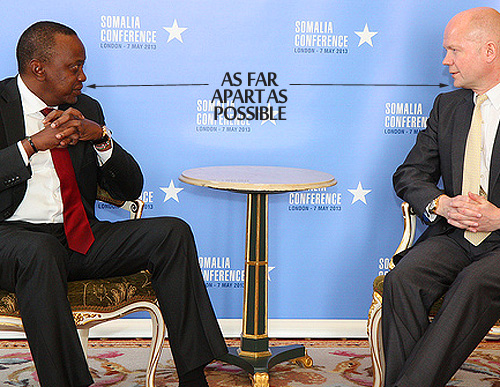
Yes I’m again guiding safaris in Kenya. There is peace and safety throughout the country, again, the best in five years. This does not mean I like the government.

EWT will broker safaris in Kenya, again, for the same reason EWT sent tourists to China and Ethiopia in the 1980s and to South Africa throughout the apartheid era: individuals need to see for themselves, and because those places at those times were safe for tourists.

As Kenya is, again. As Rwanda is, today. But just because it might be safe doesn’t mean I condone the evil and undemocratic policies of the government.

This is not just my assessment, of course. As each day passes, there is more condemnation of Kenyatta and Ruto, most of it from within Kenya.

Over the weekend it became clear that that the Uhruto Mafia might actually weasel out of their trials as still another important witness dropped out of the case. This has infuriated the educated Kenyan public.

It’s important always to make a distinction between government and the people. Especially when “the people” are so closely divided between those who ardently support their government and those who are so ardently opposed to it.

Such was the era of George Bush. And such today is the era of Uhuru Kenyatta. George Bush didn’t last and hopefully neither will Uhuru Kenyatta. But Kenyatta is just beginning his term, and it doesn’t look good.

Twisting the good things of the new constitution onto themselves, Kenyatta has managed to stymie opposition in Parliament. He’s done this by stepping outside civil society and the majesty of his own constitution, and essentially bribing easily coerced members of the opposition.

This is not Lincoln trading a post office to free slaves. It’s Uhuru Kenyatta dolling out money and fancy cars from the national treasury to support appointing his cronies to the most important watchdog committees of Parliament.

And following the lead of Ages Past, a recent High Court judge just stopped the prosecution of Kenya’s biggest financial scandal in its history, with the blessing of Kenyatta.

But such overt actions, skirting the boundaries of legality, are not as disconcerting as the extra-legal ones.

“Recent public pronouncements … suggest that the Uhuru administration might at some point resort to a Russia-style crackdown to silence critical voices,” claimed one of Kenya’s most acclaimed columnists this weekend.

Mr. Otieno explained that the organizations currently being harassed by public institutions on a much more grievous scale than our Right Wingers were called out by the IRS are universally ones that challenged Kenyatta’s election victory in the courts.

Kenyatta is feeling deep embarrassment on the global arena, as world leaders shun him and he becomes increasingly isolated. His problem, of course, is that he’s been indicted for crimes against humanity by the world community, and is due to be tried on July 9 in The Hague.

Cornered beasts tend to lash out, and that remains my worry. I worry that the current Kenyan regime – although I admire them for having established a palpable peace in society for the first time in nearly six years – will become so isolated that violence will return.

If it does, we’ll go away, again. If it doesn’t, I invite you to enjoy the beauty and promise of Kenya, which does not include its current government leadership.