Rain Rain Won’t Go Away

Rain Rain Won’t Go Away

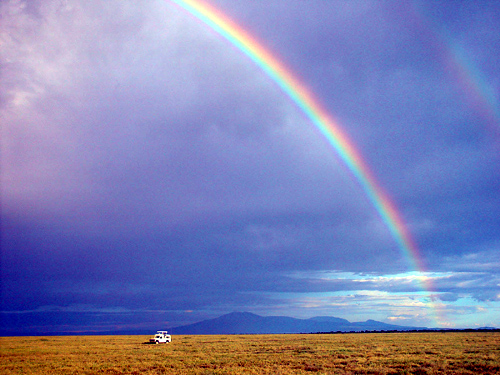
rainbow.serengeti.peronThe rains have come back to the Serengeti; the wildebeest are moving south; all is well.

Last month the travel media went ballistic worrying that the wildebeest migration had been historically altered from eons of pattern and was going to spend the season in Kenya, when they should be in Tanzania.

The rains were late … well, maybe 3-4 weeks late. And there were plenty of YouTube videos and blogs documenting large groups of wildebeest moving north over the Sand, Mara and Balaganjwe rivers, when they should have been moving south.

Well, they’re back on track now.

“Wildebeest on a southerly course,” writes the very respected tour company, Nomads, yesterday. Their blog continued:

“There has been rain in the crater area towards Endulen, Central Serengeti, some in Ndutu and even in Loliondo so we are hoping for the plains to be green soon and the movement to proceed southwards, and by the time Christmas comes they should hopefully all be where they should be.”

And the weather report for the Serengeti is all but boringly normal.

This is tedious.

Whether it is the wildebeest migration, the coming apocalypse or the conversion of Obama as a mullah in Iran, our current world of instant communication takes the least bit of misinformation and spreads it around the world as the gospel truth.

A month ago, travel professionals were lamenting the end of the Serengeti migration. Yes, the rains may have been late, if 3 or 4 weeks is late in today’s crazy climate change world, and what do you expect a half million animals that have to eat grass to do?

They went where it was raining, and that was – for a short period of time – in an opposite direction from the norm.

How has your weather been recently?

But it’s been a very short time that the weather was out of sync in the Serengeti, a very short turnabout, and they’re back on track. And even if it had been longer, it would hardly have been the “end of the migration.”

We’re all adjusting at home and abroad to changing weather. And so are the wildebeest. And for us travel professionals it means certain caution about promising anything that has to do with weather.

But don’t worry about the wildebeest. They’re extremely adaptable.

Which is a lot more than I can say for most travel professionals.

Beyond Wrath and Tears

Beyond Wrath and Tears

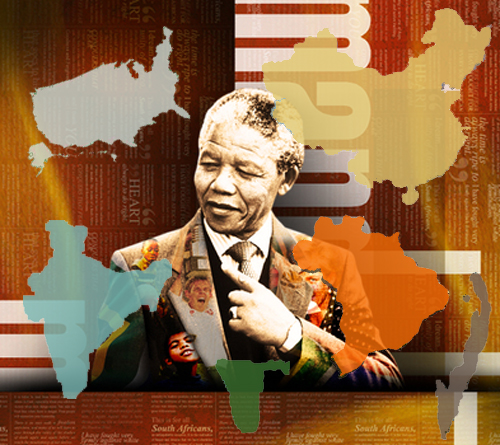
mandela and the worldNone but Mandela were able to get the presidents of the United States and Cuba to shake hands.

According to Reuters, a U.S. official implied it was a planned gesture of reconciliation in the spirit of Mandela’s legacy. As Obama walked from his seat to the podium to deliver his eulogy, he stooped briefly to shake Castro’s hand.

The day was marred by climate change. (Forgive me, that’s quite an exaggeration. But it’s true that throughout sub-Saharan Africa weather is increasingly severe as it is becoming at home.) Rain – heavy at times – competed with the aggressive vocalizations of the crowd in the stadium.

Obama was the most widely cheered. In stark contrast, South Africa’s president and his associates were so widely booed and jeered that the proceedings were interrupted.

And in a twist only explicable as South Africa’s growing frustration with Zuma and their increasingly corrupt government, the great and merciless tyrant from next door, Zimbabwe’s president Robert Mugabe, received thunderous applause.

The tributes at today’s Memorial Service for Nelson Mandela were given by arch enemies and celebrated virtually every political system that exists today in the world.

The first speech was appropriately given by UN secretary general Ban. The second speech was given by the AU Commission chairperson.

The third speech, and the first of six world leaders was given by President Obama.

Obama was followed by the president Rousseff of Brazil, Chinese vice-president Li Yuanchao, Namibia president Pohamba, Indian president Mukherjee and Cuban president Castro.

Obama’s speech was indeed grand, as many of his public speeches have been. He began poetically and gently as you would expect from this gentle academic, acknowledging the sadness which in fact may not exist at quite level commensurate with Obama’s speech.

He then moved chronologically through Mandela’s life, linking him with the life ways of Ghandi and King, taking up the shackles of the oppressed.

Ever the equalizer, Obama referred to Mandela’s ascent during the time of “Kennedy and Khruschev” and then veering into the hyperbolic he compared Mandela to Lincoln for holding the country together “when it threatened to break apart” and completely ignoring the fact that Mandela himself had little to do with his country’s profoundly wonderful constitution:

“he would erect a constitutional order to preserve freedom for future generations – a commitment to democracy and rule of law ratified not only by his election, but by his willingness to step down from power.”

Politicians have a clever way of stinging those listening to them (Castro and Mugabe, both of whom lead dynasties of power that have lasted longer than the life span of an average South African).

Obama then spent too long extolling Mandiba’s self-doubt and humility: “ “I’m not a saint,” Obama quoted him, “unless you think of a saint as a sinner who keeps on trying.” Politicians rarely praise someone without praising themselves.

Obama then explained Mandela’s greatness in terms of his family and closer friends, again a somewhat tenacious bend of history, as for whatever reason, Mandela’s pre-release relationships were rarely strong or lasting.

In a recurring theme in almost all Obama’s speeches that refer to another individual, and a message that I find tiresome but was not the least tiresome on the South African audience, Obama defined greatness in an individual as something to be manifest in the simplest of men and women: Mandela should be used as model for yourself.

Losing himself momentarily, Obama praised Mandela’s “rebelliousness” only to immediately pull back and remind the audience of his team work.

In what I consider one of his greatest and most revealing lines, and one I see as timely and hopeful, Obama said that Mandela “learned the language and customs of his oppressor so that one day he might better convey to them how their own freedom depended upon his.”

It’s an insightful look into the mirror, and one tempered with humility.

Referring to “Ubuntu” which today mostly refers to a widely used computer operating system which like Linux is mostly free to African users, Obama worked its derivation as “the tie that binds the human spirit.” Non-violence, shared understandings, a sort of political Zen.

I don’t think Obama got it wholly correctly, and he certainly misused it as a lead into complementing Mandela for his work fighting AIDS. This may have been intentional, since it’s widely construed as one of Mandela’s greatest failings, his lack of wholly grasping what AIDS was and what South Africa should have done about it during his time.

Courageously embracing the fact that both Mandela and he above all represent victories in the struggles against racism, Obama said “Michelle and I are the beneficiaries of that struggle.”

He then quickly qualified the point that the struggles aren’t over, and while in the same remark he would once again chastise Cuba, Zimbabwe and China for their suppression of human rights, he began instead:

“There are too many of us who happily embrace Madiba’s legacy of racial reconciliation, but passionately resist even modest reforms that would challenge chronic poverty and growing inequality.”

That was when I applauded most.

The end of the speech was magnificent, painting a wonderful picture of a wonderful man and ending with the poem Invictus.

Ninety world leaders plus dozens other dignitaries attended the service. Six world leaders sat on the podium and gave eulogies: China and Cuba are communist. Brazil and India are democratic socialist about equally left of U.S. democracy. Namibia like South Africa is squarely democratic, both a bit right of the U.S.

Obama went first among them, and the applause was thundering. It was much less so for the five who followed.

Mandela almost joined the communist party in South Africa during his youth, and much of his training in the 1960s and 1970s was paid for by China in Tanzania. The Indian icon and revolutionary, Mohatma Ghandi, was close friends with the first Secretary-General of the ANC, John Dube. Their lives followed remarkable parallels in South Africa where Ghandi lived an activist life for more than 20 years.

During the days of the 1980s when the ANC was blacklisted as a terrorist organization, Cuba was a vocal and proud supporter. Travel to the west by ANC executives from Tanzania, where most were exiled, was arranged almost always through Havana by Cuba.

One of Mandela’s few progressive initiatives was to develop a trade alliance that included India to the east and Brazil to the west. This successful trade powerhouse is now beginning to wield incredible influence in the world arena. Brazil’s rapid economic growth in many ways mirrors South Africa’s.

South Africa was given stewardship of the German colony of Southwest Africa (later to become Namibia) by the United Nations after the Nazi collapse in World War II. Enormous international pressure on the apartheid regime granted some autonomy to Namibia that allowed apartheid to effectively end there just before it did in South Africa.

But in return for this autonomy, South Africa retained control and assumed sovereignty over Walvis Bay, the only effective port in the country. One of Mandela’s first actions as president was to return Walvis Bay to Namibia.

The fact that a single world leader can command such tribute from such a range of ideologies and traditions is proof in my opinion that there are far better solutions to crises than war and that maybe the difference between these ideologies isn’t really as great as the proponents within each ideology may claim.

But listening to Obama carefully I realized that neither Mandela or he are capable of truly changing history. The gauntlet of demarcating important changes in history must just be too great a tax on the resources of the individual.

Mandela – and Obama – are artists, one revolutionary, the other an organizer. I wholeheartedly subscribe to their shared world view, one of enduring compassion and justice.

But the implementation of Mandela’s and Obama’s dreams must wait for less gentle souls. Judging from the impatience and enthusiasm of the South Africans applauding Obama, that won’t be long.
Ending Legacies

Ending Legacies

Background image by Justin Ng.
The ANC’s manifestos for what a free South Africa would be is far from what we see, today. Mandela’s vision of the ANC was far from what it was when he was released. White South Africans certainty that a black South Africa would self-destruct was dead wrong.

There’s a lot of myopia in South Africa’s most recent history.

In the rainbow of organizations that confronted apartheid — from the communist party to the almost identical but intensely rival trade unions, to the ANC to the Zulu off-shoots to the white ladies’ “Black Sash” – there were violent disagreements over what a new South Africa should be.

Ending apartheid was the only unifying force. I often wondered while working in a shared office in Johannesburg in the late 1980s and coming into contact on a daily basis with all these different political activists, that if apartheid ended quickly and abruptly, say by some or other group staging a successful coup, that all hell would break lose among the opponents of apartheid struggling for control.

All but white anti-apartheid groups also were unified in desiring a socialist society, one that was fairly tightly controlled from the top, and this was most represented by the certainty that South Africa’s mines would be nationalized.

The gold, diamond, coal and precious metal mines of South Africa is what gives it its wealth.

The communists and most of the trade organizations and radical youth groups also wanted to nationalize the banks. The apartheid government had essentially already nationalized the massive transportation system, so quite apart from equality for the races, education and health, nationalization was a fundamental core of the fight against apartheid.

But apartheid didn’t end abruptly with a coup, but with multiple years of negotiation albeit mostly in secret.

And today South Africa is one of the most capitalistic countries in the world. France, the Netherlands and the Scandinavian countries are far more socialist than South Africa.

The country is also increasingly corrupt. No-bid contracts are the rule of the day for the current government, and that has led to a clique of new age business people that it is assumed either give huge kickbacks or equally valuable political support.

It has compromised the education of young children, the quality of infrastructure, and even the government’s own plans for home construction. This very rich country seems unable to improve the lot of its most oppressed, while its leaders become millionaires.

The country lost a decade or more in the fight and control of AIDS, as both Mandela and his successor refused to believe it was a sexually transmitted epidemic.

The youth of South Africa, those who are called “new borns” for having arrived after Mandela was freed, are understandably angry and impatient. The passing of Mandela will give them new strength.

I believe that one of the reasons South Africa flounders today is because Mandela carried no clear ideology with him into the new South Africa. Like Obama, overwhelmed at the helm of history making a radical change in course, Mandela became the Great Compromiser.

Keeping society at peace during such a serious change overwhelmed everything else. This is completely understandable. For if peace had not been maintained, a revolutionary period would likely have resulted in an even worse situation.

The country’s constitution is a magnificent document, but Mandela had little to do with it (and today’s problems rest squarely in not implementing it fully and well.) The lack of retribution and aura of magnanimity ascribed Mandela was really created by Desmond Tutu and others. The transference of real economic power that was tried in the late 1990s was instigated by the youthful agitators in the mines and the ANC, and by that time, Mandela was already gone.

One of the reasons Mandela did not oversee a major transformation of South African society is because he was a construct of others who were much more powerful than himself.

It’s fascinating today to read of white South Africans’ certainties that Mandela was a maverick operating outside ANC direction, while simultaneously listening to old ANC members claim how they groomed Mandela as their figurehead from the getgo.

The real truth is likely somewhere in between, in that compromise that is Mandela’s greatest and perhaps his only legacy.

“Real Change” remains a political banner. You can change the color of the president in both South Africa and the United States without altering where black people remain on the graphs of economy.

It’s a question that is being asked round the world, not just in South Africa.

But I admit it was a bad time, the early 1990s, to experiment with new social orders. The Cold War had been definitively ended with a victory of capitalism over socialism. It would be several more years before Hugo Chavez would be democratically elected to renew such experiments, and that hasn’t gone particularly well.

Mandela will forever be remembered, and rightly so, for peacefully transferring power from the oppressors to the oppressed. That’s remarkably important and a statement for the ages that retribution never works for any ideology, any idea.

He deserves the great honors that attracted. But the concept of a peaceful transition wears poorly when not enough then changes as a result.

The Cold War has ended. Overt racism at least is grudgingly ending slowly. The Great Recession is ending. From South Africa to the United States, there is an energy in the youth to bring to fruition the symbols their parents created as landmarks out of a terrible past.

It could be an exciting future. And if so, Mandela’s legacy of peaceful transition — and likely Obama’s too — will be an historic moment, the last moment of symbol, a turn towards substance.

Nelson Mandela

Nelson Mandela

NelsonMandela2Last night’s prime time evening news in South Africa featured the trial of a man accused of ordering the murder of his wife.

Other news included current President Zuma’s scandal over use of public funds to build himself a mansion, and South Africa’s deep involvement with UN troops now scheduled to go into the Central African Republic.

So many South Africans went to bed last night twisting and turning over the macabre soap opera husband order to kill, terribly conflicted by their country’s growing militarism in central Africa, and increasingly impatient with their current clown president’s antics.

About an hour later, Nelson Mandela died.

‘There are heros and there are monsters, but most of us are ordinary mortals caught up in events too turbulent for any of us. …when the battle is over, all we will inherit will be the ashes of a once beautiful land.’

The above quote is from Wilbur’s Smith’s novel, Rage, published in 1987. The book purports to foretell the calamity that what would befall South Africa with the end of apartheid.

For years and years doomsayers claimed that South Africa would self-destruct, or at least fall into terrible violence, once Nelson Mandela died.

Today South Africa was blanketed by peace and celebration. 160 individual sites in Cape Town area were designated as “tribute sites” where throughout the day mostly smiling and thoroughly loving small crowds gathered with flowers in their arms. Cape Town’s flowers are unique in the world.

In fact, in one of the world’s most prestigious botanical gardens, Kirstenbosch in Cape Town, the special golden strelitzia genetically engineered in honor of Mandela while he was still living, was laced with the petals of other flowers visitors had arrived with.

Rage was wrong. Mandela’s doomsayers are wrong.

South Africa not only survives in tact, peaceful, but with palpable mourning that leaves the country vulnerable. But the country is strong enough not to worry, now.

It wasn’t, before Mandela’s time.

I count myself among those cynics who dislike attention given to any single individual, no matter how important that individual is. I prefer to think that events linked to any given individual’s actions reflect the overall society rather than that individual’s will.

And similarly, as time passes a prominent individual’s actions are often exaggerated. Heroes are created by the media, rarely in history.

The oft-recounted two dozen years of imprisonment on Robben Island, for example, is usually misconstrued as Mandela had remarkable freedom as a prisoner and remarkable access to those supporting him.

The revolutionary, certainly criminal acts of violence ascribed Mandiba by youthful agitators misstate situations where Mandela actually became involved against his better judgment.

The lack of vengeance regularly referred to shortly after Mandela took power in 1994 was hardly personal. The entire economy of South Africa – huge by Third World standards, the triggers on possible nuclear bombs, the warehouses of secret information on the questionably ethical private lives of the new leaders … they were all in white hands.

What Mandela was and will always be is the embodiment of all the goodness that is the better part of South Africa. He was never alone.

He was an artist more than a revolutionary. Perhaps he was also uniquely perspicacious, perhaps he sensed better than anyone that his society’s four centuries of racism would begin to reverse on his watch.

And yet for “most of us mortals,” our shoulders could hardly have borne the times the way Mandiba did. His greatest struggles weren’t while in Robben Island or on public trial. He was never seriously injured in battle or tortured in prison, as many, many were. He didn’t lose children as many, many others did from the brutal violence of numerous incidents like Sharpeville. He didn’t die, as many, many revolutionaries did for the cause.

But those hundreds if not thousands of real heroes of the moment – long forgotten by almost all of us, now – became all wrapped up in the symbol of the new society’s first leader. That was his greatest accomplishment, carrying the garland of activism woven by the forgotten thousands, and displaying such boggling humility after victory without retribution, with such perfection.

When you think of Mandela, when you read Long Walk to Freedom, when you listen to his speeches and now listen to his eulogies, think “South Africa,” not “Mandela.”

It’s so easy for us to identify with an individual rather than ingest and analyze periods of history. That is the role Mandela performs, and he accomplished it with the finesse of a man-made golden strelitzia standing commandingly within all the many other natural things of beauty.

There are heroes and there are monsters, and they come and go with the fall release of new films. There are societies that make monstrous mistakes and suffer for eons.

And there are societies like South Africa that create wonder and joy with terrifying and heroic reversals of precedent and tradition. The South African who will be long invoked as the symbol of that ending of an unbelievably enduring epoch of human indignity is Mandela.
Strelitzia_larger

Them! Is Here Already!

Them! Is Here Already!

Them! is here already!What does an African country do when Bill Gates says eat it or starve?

Most Americans think that the growing concern over what foods are safe is something that only their privileged, developed world has to suffer, that it is somewhat esoteric and – provided, of course that you aren’t culinarily involved – restricted to … nuts. (Peanuts, that is.)

Well, it’s not. In fact the debate over GMO is reaching a crescendo in Africa where scientists, multinationals, governments and NGOs like the Gates Foundation are in a diabolical battle over GM corn.

It is, literally, a matter of life and death.

Mom might wipe her brow when planning a contemporary Thanksgiving dinner at home, today. She might have to source out a natural turkey farmer and find a grocery store that sells gluten-free pie crust. This is all a lot more work than Aunt Evelyn did when the centerpiece of our holiday dinner was a jello salad.

But in Africa the sweat is over whether some people will starve or not, and my take is that GM foods are not the answer. Bill Gates disagrees.

You’ll have to be patient if using the links I’ve incorporated, because everyone is being quite deceptive. No one wants you to hear them shouting. But the uproar is rising and it’s focusing on a single of many ongoing battles:

Monsanto is one of a couple multinationals that is profiting from the development and patenting of GM crop seed, particularly corn (“maize” as it’s called elsewhere). That story is in itself distressing, as farmers who use GM seed can no longer use their own crop seed. They must buy it year after year from Monsanto.

There are literally tens of thousands, perhaps now hundreds of thousands of GM plants and organisms, and Monsanto owns a hunk of them.

One version of maize for which Monsanto had its highest hopes, MON810, whose appropriate brand name of “YieldGard” is all but ignored in the current debate, is the center of the controversy.

MON810 yields a corn that is remarkably drought resistant. It’s widely used in the U.S. and understandably was imagined as drought-plagued Africa’s savior seed.

About a third of Europe’s countries ban MON810. The most recent science from Norway declared MON810 harmful to humans, pigs, mice and butterflies.

An important European Commission (EFSA) that approves or disapproves GM products was given the task of deciding for all of Europe if Norway’s science was valid. On what many argue was a technical fault, the commission approved MON810.

The EFSA decision allowed multinational agribusiness to sue countries like Norway, France, Germany and Poland to reverse these bans, and Monsanto is succeeding in doing so… sort of.

Europe’s political interface is not yet complete, and so recently France “rebanned” MON810 after “reallowing” it. Other nations are likely to follow suit.

I can’t possibly pass judgment on the science. I can’t even figure out how to decide which science is worth reading; it’s all over the place.

The main crusader against GM foods is Prof. Gilles-Eric Séralini whose arguments verge on the hysterical. But his science is widely used by opponents of MON810.

There are many very respected groups whose approach is more measured but forceful, like the “Occupy Monsanto” crowd.

The problem – and it becomes critical in Africa – is who to believe: crusading scientists, respectable citizen groups or government commissions. No one questions that MON810 produces a much higher yield. Africa really needs a lot of corn, fast.

But I take my lead from South Africa, the most rational and developed of African countries.

Shortly after MON810 came to market about 15 years ago, the South Africans banned it. But that didn’t last long, and many anti-GMO activists in South Africa claim their government’s reversal was as a result of U.S. trade pressure.

During its use in the last decade, South African farmers recognized a need for increased pesticides and fertilizers to keep the crop going. Yes, it needed less water and from a business standpoint with the yields it was producing, it was still a good business decision.

Activists argued that the reason MON810 requires more pesticide and fertilizer is because it produces super insects and bacteria.

Late this summer, MON810 created corn was withdrawn from the South African market. It was a combination of public outcry and government regulation.

Moreover, pressured by the South African government, Monsanto agreed to compensate farmers for their unusual pesticide and fertilizer costs needed to bring MON810 corn to harvest.

It’s not clear whether this ban will be sustained nor if alternative Monsanto GM seeds will not just be used, instead. But what is clear is that the leading African country has decided MON810 is bad.

So what now?

Immediately the battle shifted north to less developed countries like Tanzania and Kenya where the seed is still allowed. But it was anything but certain Monsanto would prevail there, either.

In steps charitable giving.

Monsanto, in its ever creative marketing plans, decides to give the Bill Gates foundation free use of MON810.

And it’s an NGO coup for a foundation deeply involved in helping Africa. The cost of MON810 could be absorbed by South Africans, not by Kenyans. Now, Kenyans get it for … free.

And true to form, Kenya is now in the midst of another Shakespearean government scandal in which a quasi government agency banned MON810 before the Gates Foundation announcement, then summarily reversed itself after the announcement and, of course … nobody can say why.

Of course Monsanto dare not publicize its generosity too directly, so it’s being done through a partnership program created by an African foundation that gets most of its money from Gates.

That’s sufficient enough distance to keep Gates out of the maelstrom.

At least for now. Until we think we see a Dreamliner above the Mara cornfields, when it’s actually a monster locust coming in for the kill.

Corruption Index Disturbing

Corruption Index Disturbing

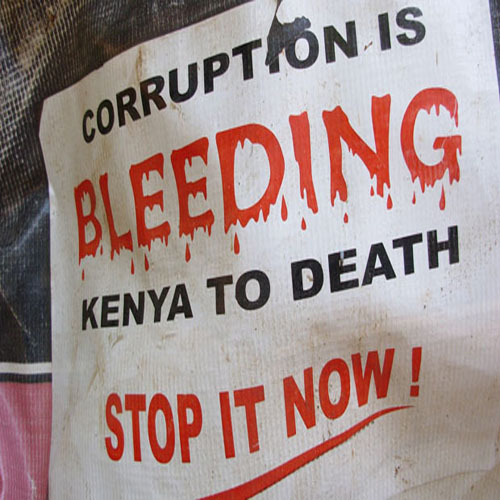
kenyacorruptAfrica remains the most corrupt continent, according to a report released today by Transparency International (TI).

Although Africa’s 54 rated countries represent just less than a quarter of all the countries in the world, Africa’s countries make up more than half of the most corrupt.

TI’s list and voluminous explanations were released today. Technically the list ranks “transparency” as defined by a complex compilation of surveys and parameters. But in a nutshell, it ranks corruption, and TI in fact refers to the indices as CPI’s or “Corruption Perceptions Index.”

TI’s executive, Alejandro Salas, explained to Reuters today that what the index shows best is the implementation of good policies to fight corruption. Many countries have good policies, but many fewer actually implement and enforce them.

Kenya is the quintessential example of this. Despite adopting one of the most progressive constitutions in the world last year, it has proved unable to implement those parts that fight tribalism, nepotism and corruption. Kenya remains stuck in the bottom quarter of the world’s most corrupt nations.

Changes in ranking from year to year reflect not just that own country’s standing, but the standing of the world as a whole. If the whole world becomes less corrupt, then those countries that haven’t changed fall in the list.

In the Reuters interview Salas said there was no significant change in the last decade in the world’s overall corruption except … in Africa, where it has increased although slightly, (and in Central America where the increase in corruption is greater than in Africa).

In the actual incremental changes, 24 African countries improved, 20 declined, 9 stayed the same and one (South Sudan) appeared on the list for the first time in 2013.

However, those that improved had an aggregate increase of 124 position ranks, and those that decreased had an aggregate decrease of 164 position ranks, and this is the key factor. It means overall the continent is definitely getting worse.

The ten most egregious African countries are (in order of least to most corrupt) are Zimbabwe, Eritrea, Chad, Equatorial Guinea, Guinea-Bissau, Yemen, Libya, South Sudan, Sudan and Somalia.

Botswana remained the least corrupt and continued to occupy the most favorable rank of 30. (The United States is ranked 19.) The next 9 least corrupt countries in Africa were Cape Verde, the Seychelles, Rwanda, Lesotho, Namibia, Ghana, Sao Tome & Principe and South Africa.

But there’s much more to the story. Rwanda may indeed be relatively transparent, but it is a horrible dictatorship. It just doesn’t pretend to be anything else.

Senegal had a considerable improvement, increasing 17 ranks. Lesotho, Burundi and Swaziland also saw significant improvement.

Mali and Gambia had considerable declines, each falling 22 ranks. Also falling significantly was Guinea-Bissau, Libya, Yemen, the Congo Republic and Uganda.

While Americans tend to pooh-pooh anything that suggests they aren’t at the tip top of any ratings, I think that wise Africans take this annual ranking very seriously.

“Kenya’s score has remained disappointingly low and stagnant over a long period of time. Evidently whatever efforts that have been put into the fight against corruption have borne little results,” said Samuel Kimeu, Executive Director of TI-Kenya.

“The country’s little-changed score,” South Africa’s Times Live opined this morning, “could be attributed to the level of outrage expressed by the public in the form of service delivery protests and eagerness to report corruption to independent civil society-based organisations.”

TI doesn’t report angst, just corruption. Over my life time I’ve seen a great increase in angst especially among Africa’s youth. There is a feeling of shame, a feeling of outrage, that didn’t exist before.

So we wait anxiously for the mobilization.

Scant Rains is No Drought

Scant Rains is No Drought

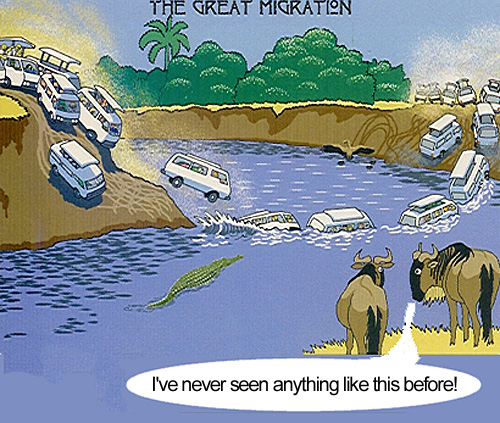
migration.cartoonReports of a massive drought in the game rich areas of northern Tanzania may be exaggerated, although the wildebeest migration is off at least a month. That doesn’t mean several months down the line everything won’t be in sync.

The media, today, operates on the assumption that “if it bleeds, it reads.” It’s no less true of Obamacare than of the Serengeti migration.

In the case of the Serengeti migration, no less reputable media than the BBC report that the unusual weather-related movement of the great wildebeest migration has “never been seen before.”

Hmm. “Before” is a relative term. The BBC was quoting an official overseeing Kenya’s Maasai Mara ecosystem and perhaps he’s young, perhaps he’s inexperienced, or perhaps he’s more interested in promoting tourism than the truth. I’ve seen “it” before.

“It” is when the great wildebeest migration veers from its normal pattern. In this case it’s at least a month off: Right about now the migration should be moving slowly but certainly south through Tanzania’s northern Serengeti. It isn’t. The bulk of the wildebeest are lingering in Kenya’s far north Maasai Mara.

Several times in my career I’ve seen this, as well as a real reversal which this isn’t … yet. It’s proof that the migration is not a neurological hard-wiring, but a response to environmental conditions.

Click here for a fuller understanding of a normal migration.

The reason the migration is lingering in the north is because normal October and November rainfall was missed. NOAA’s satellites show that parts of the northern Serengeti received less than a tenth the normal rainfall for October and November.

Normally, heavy rains occur in November and the first part of December. They then reduce substantially, although the rains do continue right through June. Heavy “normal November” rains don’t normally start up again until March.

This drives the migration, as the great herds go where the grasses are growing.

NOAA’s mid-term (March through May) forecast is for normal or better than average rainfall.

That means all safaris planned for March on — if NOAA is correct as I expect it is — will not notice anything unusual.

But safaris, for example, expecting to see the migration in the Serengeti in November won’t. And safaris planned for December-February will experience difficulties finding the migration as it likely fragments more than normal, depending upon how soon we return to normal precipitation.

(For local farmers, by the way, it could be worse: wildebeest and zebra will now seep out of the national park onto ranches and compete with cows for pasture.)

Remember, too, that most of the animals on the veld don’t migrate. Indeed, they all suffer with scant rainfall, although the predators often prosper at these times. But unless an entire year of abnormal precipitation occurs, most animal life cycles aren’t effected enough that a casual visitor would notice anything significant.

There is even an indication that right now things are getting better. Surveying a number of traveler blogs being posted right now, I find pictures with green grass and accounts of some rain, already.

It’s infuriating when media like UPI misstate the situation, along with much of its historical evidence. Respectable journals like the South African Business Daily were even more off-the-mark.

“If it bleeds, it reads.”

It’s always dangerous to analyze anything that’s dependent on the weather, and I always caution my clients to never presume they’re going to see the migration, ever. But the facts right now do not suggest that migration patterns in just a few months will be anything but normal.

We will certainly lose a fraction of the animal, especially the herbivore population. But that’s the wild.

And it’s hardly the end of the game.

Thanksgiving Holiday

Thanksgiving Holiday

Today is Thanksgiving in the United States. (Canada celebrates it earlier.) Thanksgiving is one of Canada and the U.S.’ major holiday celebrations, characterized by copious amounts of food featuring seasonal recipes and lots of sweets. The traditional meat served at the feast is turkey.

The two-day holiday originates with the first permanent settlers to the New World, people who called themselves pilgrims fleeing England’s restrictive laws on religion and who arrived the northeast coast of America in between 1620 and 1621.

They faired poorly in the beginning until two local native Americans, Wampanoags of the Algonkian-speaking clans, both of whom spoke English (because one of them had previously traveled to England in 1605) befriended the settlers. The “Indians” taught the pilgrims how to farm and build homesteads, and the summer planting season was so successful that the pilgrims invited the Indians to a “Thanksgiving” harvest dinner in November, 1621.

Click here for much more information about the history and meaning of Thanksgiving by a native American school teacher, who dispels not only the myths about the “primitiveness” of native Americans, but also about the pilgrims’ history and beliefs.

Desert Dreams

Desert Dreams

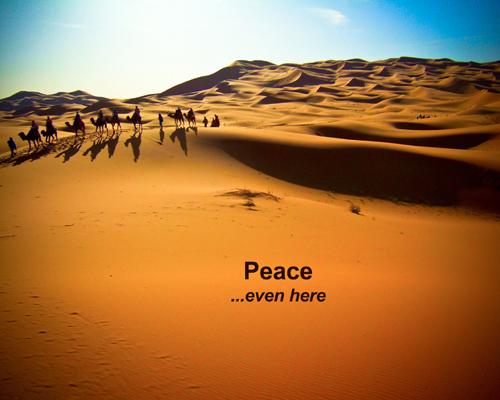
WestSaharaPeaceIn a war weary world, Iran is not the only place that conflict may be subsiding. In the sand blown desert country of the Western Sahara, Obama initiatives may be reducing decades of tension.

It’s hard to give all the credit to Hillary, Obama and Kerry, because I really believe the world is just getting tired of war. But chalk it up to being in the right place at the right time, the Obama administration’s foreign policy is winning a lot of peace.

The Western Sahara is a “non-self governing country” in Africa, a strange but apt name for a disputed and occupied territory whose last peace was brokered by the UN. It is mostly occupied by Morocco and claimed by Algeria, and from time to time, Mauritania as well. These are the three countries which border it.

There are fewer than a half million people who live in this mostly godforsaken land that is essentially little but Sahara Desert.

But in colonial times any piece of Africa that bordered the sea was important, and Western Sahara’s 700 miles of coast where Africa bulges out into the Atlantic were critical for safe passage of the early sea vessels.

Spain finally wrested control of the place from Portugal and administered it until 1977. It wanted to grant independence to this Colorado-size country earlier, but not even indigenous people were interested. Instead, Algeria and Morocco fought skirmishes over taking control.

I can’t understand why either Algeria or Morocco wanted control, but in the half century since their initial claims to Spain, the idea of incorporating the territory into their sovereign nations has become a kingpin of national pride.

Algeria and Morocco have been at each other’s throats for nearly that entire time. Algeria continues to struggle with popular, progressive if revolutionary movements that swing back and forth from military approval. Like Egypt, the military is all powerful in Algeria, and like Egypt, the tension between religious groups is intense.

Morocco, on the other hand, has been a placid monarchy for centuries. Conservative and very western leaning, there couldn’t be a different place from neighboring Algeria.

Spain was tired of administering the place, and forced a settlement in 1977 that resulted in an immediate fight between Morocco and Mauritania, that Morocco won two years later. Since then, Morocco has administered most of the territory, and Mauritania ceded all interest.

But over the decades since Morocco instituted control, a local population has become energized. The numerous little fights between countries and tribes have resulted in major refugee camps, all in Algeria, which are very left-leaning and pro-Algerian.

Basically this is a dustbin of Africa gripes and racism, swept into the desert where conflict has always had an upper limit of destruction.. There’s little there to destroy. But the world moves on, the internet reaches every sand dune, and the local population of now three generations of stateless persons is getting antsy.

The Polasario movement is the only legitimate political movement as a result, based from the refugee camps in Algeria and very anti-Moroccan. While they have had little success in any military action against Morocco, they have successfully rallied much of the world against Morocco’s dictatorial rule.

So it was extraordinary to say the least when the Moroccan King visited President Obama this week and sought assistance for his plan to transform the Western Sahara with massive development.

Whether it caught the other parties off guard or not, one by one the contentious parties started to fall in line. Basically, if America and its allies supply the dough, peace might break out.

The Obama Administration promptly said yes.

The Polasario seemed willing, too.

And together, the Moroccan King promised for the first time to consider autonomous government if only implied in the joint statement with the White House.

And by its deafening silence, Algeria will not object.

This may seem trivial. It is, in the greater context of world conflict. Some analysts suggest the Obama administration’s real interest isn’t so much with Western Sahara, but with getting the until now hostile neighbors of Algeria and Morocco to be civil to one another.

Simply opening the border between them could facilitate enormous international investment, for example.

That might be true. But I think equally true is an indication that a war weary world penetrates even the smallest political quarters on earth, and that for the first time in generations, peace seems to be the default, not war.

Travel Warning on Chicago

Travel Warning on Chicago

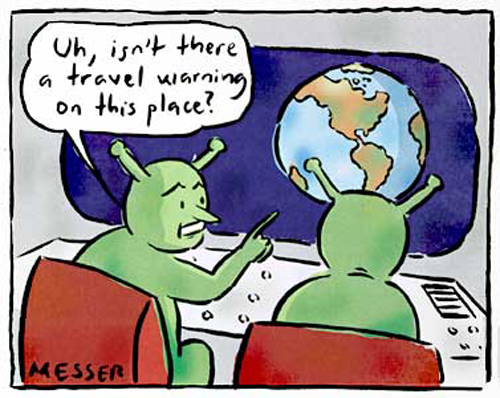
travel warningBefore heading to the Caribbean for world-class big game fishing in Honduras or beautiful beaches in El Salvador, did you check the State Department Travel Warnings? You should.

Both Honduras and El Salvador are much more dangerous than, say, Mexico, according to the State Department. And at last, I agree.

Nineteen African countries are on the U.S. State Department travel warning list. That’s more than half of the 35 countries listed worldwide and a third of all the countries on the African continent. Is this fair?

Yes, it is. And it’s just as “right-on” as last week’s French government warnings to its citizens cautioning them about travel to a number of U.S. cities including Chicago, New York and Washington, D.C., and seven others. I’m not being sarcastic.

For many years I felt that government travel warnings were not fair. In fact, I felt that the warnings by countries like France and the U.S. were sometimes 180 degrees wrong: I fumed, for example, when Kenya was put on the list after a single tourist incident, but Egypt wasn’t after dozens of tourists were killed.

France warned its citizens about travel to South Africa, but said nothing about Haiti, where tourism strife was much greater.

Warnings existed from many countries on travel to Ethiopia, for example, long after conflict had ended. But few warnings were levied on Israel, where bombs were reigning weekly on border areas with Gaza.

It seemed that travel warnings were something other than nice advice for vacationers.

Until the last few years, travel advisories were often political tools used to pressure foreign countries into some policy. Or probably just as likely in the case of the U.S. in particular, the reflection of poorly trained state department officials.

But things have changed, worldwide. Most countries seem to be getting it right.

Slowly and surely under the Obama administration U.S. travel advisories have become imminently fair in my opinion. Under Hillary the professionalism of the State Department took a giant’s step forward from past years. I now regularly refer to the State Department website. We’ve become fair.

As have the French, and that’s an important thing to consider when you decide how much an advisory will effect your own travel.

So when Chicago mayor Rahm Emanuel cut his bitter retort short to the French move with the rude but oblique remark
, “Don’t get me started on the French,” he was tacitly accepted the criticism.

Kenya in particular has been lobbying recently to get the U.S. warning lifted.

That’s not going to happen. The Obama administration has put Israel on the list, as it should be. And so neither Kenya nor Israel will be removed from the list until tensions are reduced there, and from my point of view, that means until they leave the neighboring territories that they occupy.

This is not a political statement, although I realize it could be viewed as one. But Kenya continues to occupy parts of Somalia, as Israel occupies parts of Palestine. The terrorism this spawns is undeniable. Until Kenya and Israel leave the territories they occupy, real danger persists inside their own countries.

Of course there’s more to it when you begin to consider your own travel. While Israel and Kenya may be in very similar situations, Israel is much more capable of managing terrorism than Kenya. Tourists have not been recently harmed in Israel; they have in Kenya.

The French are warning their citizens of traveling to parts of ten of the U.S. major cities because of violent crime. That crime is localized, even in the big rural cities. So if you know where to go and where not to go, your vacation should be safe.

And therein lies the problem for all of us. Knowing where it’s OK and where it’s not. The more foreign the destination is to you, the less you probably you know. The more important your vacation is for you, the less you want to worry about it.

Even the most educationally structured holiday is still supposed to be rest and relaxation. With the great variety of travel options available, today, why “tempt fate?”

If the top of your wish list is to see the great migration and you can only travel during our fall, then there’s only one place you can go to achieve that goal: Kenya. With careful planning, the risks attending a Kenyan visit that are concentrated in certain places in the country and its cities, can be avoided.

Similarly, France is not telling its citizens to not travel to Chicago. It’s telling them to not travel in areas of the city that have a mind-blowing number of homicides.

As Chicago’s Sun-Time newspaper said Saturday, “The French are right.”

Making Holiday Lists

Making Holiday Lists

BloodDiamondsAs the holidays approach, consider carefully what your gifts may be financing.

A controversial meeting ended today in Johannesburg ostensibly to curb the market in blood diamonds, but there is little evidence it’s working.

The “Kimberly Process Certificate Scheme” (KPCS) was set up about a decade a go by a number of countries deeply involved in the diamond trade as a response to growing public awareness that diamonds were being used to fund horrible wars and human rights’ abuses.

Much of this was popularized by the famous movie, “Blood Diamond“ which starred Leonardo DiCaprio and depicted the civil wars in west Africa that were the motivation to create the KPCS.

The convention was partially successful in the beginning and seems to actually have stemmed the trade of blood diamonds that were financing the Sierra Leone and Liberian civil wars. When those ended just before the movie was released, more than 81 countries with mining or marketing interests in diamonds had joined the KPCS.

Essentially the convention manages certification of all exported diamonds. If a dealer sells gems that don’t have the certification, it’s presumed they could be blood diamonds.

There is no country legislation or treaty enforcement; this is an entirely voluntary process, but in the beginning it seemed to be working.

Diamond sellers, particularly wholesalers, became quite sensitive to having the proper KPCS certificates.

But as the great West African wars ended that prompted the formation of the organization, so did enthusiasm for its job.

But the use of blood diamonds did not end.

Just as with ivory, coltan and other precious materials, the nexus of the illicit diamond trade has moved into central Africa, in the DRC-Congo and CAR.

But either dealers were being disingenuous or simply were too ignorant to have realized that these new areas of conflict were serious areas for black market diamonds. Whichever it was, fewer dealers are today interested in certification.

And there were other situations in Africa that KCPS should have outed besides wars. Political maneuvering between South Africa and Zimbabwe resulted in Zimbabwean diamond dealers getting certification, even when it had been proved they were using child labor.

This year’s South African chair politely referred to the internal controversies by remarking about the pressure the industry has been under since the Great Global Recession.

A coalition of civil groups proved unsuccessful as the convention closed today in trying to make mandatory what remains of the voluntary KPCS certification. Shamiso Mtisi described the convention as moving “very slowly” on such long-time proposals as certifying not only sellers but miners as well.

A variety of other groups had difficulty even being heard. Accusations were levied at Venezuela and Lebanon that those governments were turning a blind eye to blood diamond trade, but the convention did nothing in response to these charges.

And surprise, the new chair of the convention is Chinese. They’ve done such a great job in stemming the ivory trade, which after the earlier West Africa wars succeeded the blood diamond industry as the principle financier for illicit African conflicts.

Blood diamonds seem to be on the comeback, and not because there are fewer conflicts in this post Recession world, but because there are fewer regulators of the capitalist system.

Equatorial Success

Equatorial Success

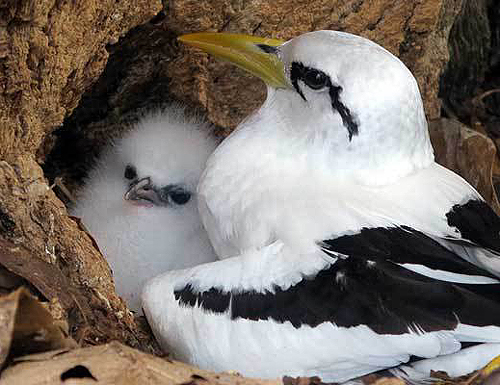
nestingtropicbirdThe short-term, visible effects of climate change on equatorial Africa are destructive to human populations but seem to be less damaging to overall species survival than elsewhere in the world.

Not sure that’s good news, but recent reports from such places as the Seychelles on current equatorial seabird populations suggests they are doing much better than seabirds in northern and southern climes.

Seabirds provide good evidence for relatively short-term effects of climate change. This is because they are most closely associated to the most effected natural phenomenon on earth, the sea temperature.

Worldwide as we would expect, therefore, seabird populations are in a steep decline. In fact, of 346 seabird families almost a third (98) are “globally threatened,” an IUCN term suggesting that intervention will be needed soon to stop extinction.

The most critical of these declines is in the northern hemisphere. Puffin populations, for example, in Maine and tern populations in northern Britain are in currently very critical conditions.

The opposite of these declines — although it’s hardly robust growth — are the seabirds found in the equatorial regions, and in Africa the Seychelles provides an excellent place to study them.

This August count of the white-tailed tropicbird and other seabirds that nest in the Seychelles was encouraging, although the study has yet to be published.

The group performing the study did release an interesting single statistic, though, that 57% of the nesting population survives. This is the most critical period in the life cycle of any bird, because once fledged survivability increases dramatically.

It’s also particularly interesting for the tropicbird, which like many seabirds doesn’t actually build a nest. With feet incapable of balancing the bird (they are designed for swimming and flying), the bird must nest on the ground.

Seabirds choose island nesting sites that are as safe from predation as possible. In Hawaii, for example, the white-tailed tropicbird nests on high cliffs. In the Seychelles, where the islands are mostly predator-free, it nests right on the ground.

This dynamic that’s possibly being clarified by how seabirds are adjusting to rapid climate change, gives us a good insight into the workings of natural selection.

Given enough time, environmental changes allow species to evolve and reposition themselves, and as a general theory, increase. As slow change allows for niche exploration, more specialized species arise.

But when change happens as unnaturally fast as it’s occurring, today, the normal mechanics of natural selection are compromised. Water temperatures are just increasing too fast for the northern hemisphere puffin to adapt or be replaced by other species. So instead, it just dies out with nothing replacing it.

Whereas in the equatorial belt the decline is not as dramatic. Basically, warmer is better than colder for our petri dish of life on earth. But at the fringes of ecological system, the great norths and the great souths where our life forms have specially adapted to colder temperatures, a rapid warmer is dangerous.

In the equatorial regions, it’s almost ho-hum.

At least until some threshold of warmth is reached, of course. But thanks to the Seychelles field workers, we know it isn’t happening, yet.

Getting to the Bottom of It

Getting to the Bottom of It

getting to the bottom of itWhile the battle against corruption in Africa is mostly going well, it’s hit a brick wall in Tanzania. Yesterday, most of the aid-giving free world (less the U.S.) chided Tanzania for dragging its feet.

The donor group, calling itself the “General Budget Support” (GBS) Group, gives Tanzania approximately a half billion dollars annually as direct cash into its general budget fund, about 10% of the country’s projected national budget.

The U.S. in comparison plans to give Tanzania this year approximately $1.15 billion.

The difference with USAid is that it doesn’t flow without conditions into the country’s general fund as is the case with the GBS, but towards specific projects and programs, many of which are outside the Tanzanian government’s budget programs.

Specificity in aid is a hallmark of U.S. assistance, and a controversial one. It’s not only a hallmark of USAid, but of Tanzania’s other principal donor, China.

By specifying what the money is supposed to be used for, the vendors receiving the funds are often U.S. and Chinese companies.

And the U.S. usually does a pretty good job; China often doesn’t.

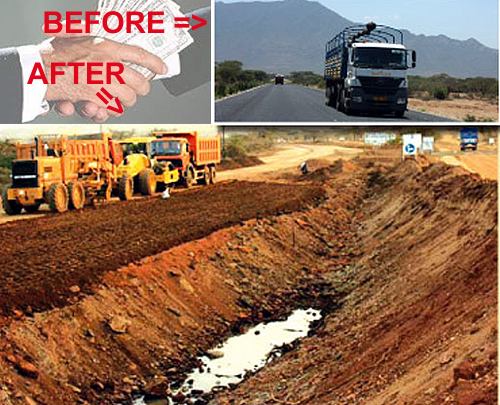
It’s been less than a year since China finished the Namanga/Arusha/Dodoma road, and it’s collapsing already.

I’ve traveled that road multiple times annually since 1973. It’s rare to be in very good shape, but the best period was from about 2000 to 2008, a legacy of Japanese aid and workmanship.

But no road lasts forever, and even less so when a country is developing and its trucks and commerce are growing.

So we were all extremely excited last year, despite the delays of construction, that this “new road” would bring new speed to the country’s prosperity.

Junk aid is the controversy that surrounds specificity of aid, which is the practice of the Chinese and Americans. Many European countries that have developed real expertise in aid to the developing world, like the Netherlands and Norway, prefer to work through world bodies like the World Bank, or directly with country authorities as is the case with the GBS.

So while it may seem counter-intuitive that giving unspecified aid battles corruption, that’s exactly what this does, as evidenced yesterday by the sweeping indignation of the GBS and its threats to hold back some of what is being pledged.

It’s the same policy that the European Union applied to Greece, Italy, Spain and Portugal. There was no specificity to the cash, other than you better get your house in order.

That’s what the GBS is doing in Tanzania, and from my point of view, it has a lot more effect than America and China’s grandiose claims that their aid avoids causing corruption.

An enormous percentage of USAid, for example goes to a handful of corporations, like Halliburton. (The exact percentages take institutions to figure out, and clearly are being intentionally made difficult to determine.)

Just as in Tanzania the Chinese road corporation, China Geo Engineering, received the funds to rebuild the Namanga/Arusha/Dodoma road.

These mega corporations then pay themselves and their country cronies for such things as equipment, and often for expertise and management as well. The Chinese actually are far more guilty of this than the Americans. It is hard to find a Chinese project with any locals above basic laborer.

That isn’t to say it doesn’t help the local economy, but advocates of the GBS form of aid argue it leads to much greater corruption.

And the corruption begins at home. Halliburton, like China Geo Engineering, is rife with nepotism, cronyism and just simple outright graft. Removed from many of the accounting restraints that would attend them for projects within their home country, they are essentially set free to work as they wish.

Bribing is par for the course.

And whether a Chinese or American capitalist monster, the bottom line is what counts. And that doesn’t seem to be effected by where the bottom of the road goes.

Killing Off Fence

Killing Off Fence

canned huntThere’s a growing worldwide link against sport hunting and culling with the world’s fatigue with war.

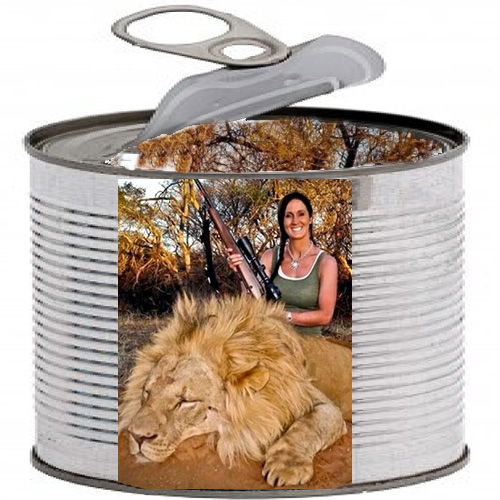
A macho lady, Melissa Bachman (not to be confused with her fellow Minnesotan and not closely related Michelle Bachman) recently drew the ire of much of the world when she proudly Tweeted about the lion she killed recently on a “canned” hunt in South Africa.

Bachman is a long-time cable show producer and presenter for the radical outdoors including sports hunting, although some of her antics finally broke even the now despicable threshold of National Geo’s cable production.

Nevertheless, her fame (and now possibly infamy) was born specifically of her military like approach to sport hunting, out to prove that a dame was just as good as a dude with a big gun.

The specific incident over the weekend has an important nuance to it, though, and it has provoked so much negativity in South Africa that Bachman actually took down her Twitter account, where the trophy was first posted, as well as several of her associated websites.

The specific criticism is that Bachman shot the lion on what is known as a “canned hunt.”

Canned hunting is done all over the world, especially in the United States and South Africa. The hunt is on private land that is beyond the regulation that the larger government may impose on hunting in wild and federal areas.

The South African Parliament is wrestling with a recent court decision enjoining a government regulation that allows canned hunting after a two-month period of “wilding.”

According to that regulation, wild animals like lions may be bought as captive or even tamed onto private land, set free for two months, and then the owner may sell that animal’s hunt to whomever he wishes.

With no regulation: and that’s a big part of the problem. It’s presumed that many of these canned hunts are hardly fair: that the animals aren’t very wild, and in some places, even tranquilized for the inexperienced hunter.

This is hardly a South African disease.

One Texas canned hunting ranch, the Circle ERanch offers the following African animal hunts:
Kudu – $15,000
Nile Lechwe – $8,000
Nyala – too expensive to quote on-line
Sable – too expensive to quote on line
Red Lechwe – $4,000
Waterbuck – $4,000
Wildebeest – $4.750
Zebra – $5,500

You don’t have to study ecology in an univeresity to know that the natural habitats of those animals mentioned above spans nearly an entire continent, and that not even Texas is big enough to provide any kind of natural environment for all of these animals at once. They have to be fed and cared for like cows.

Likely then, their ability and/or desire to avoid being hunted is greatly diminished.

Canned hunting isn’t so different from contrived wars. And we’re all getting sick and tired of them both.

Anti-hunting sentiment is similar to anti-war sentiment. It crosses ideological boundaries. Just as many of Africa’s most prominent big game hunters are now coming out against canned hunting, so do many of America’s most liberal politicians oppose Obama’s militarism.

When Obama announced his “red line” in Syria last September, conservatives like Rand Paul joined liberals like Alan Grayson in denouncing the strategy.

In fact in town meetings right across the country last September, the sentiment against any type of Syrian intervention was overwhelming. The shared position was simply that we don’t want anymore war.

And the coalition “against killing” is growing well beyond American politics. Whether killing be for sport hunting or preemptive national security: offense is no longer defense.

Secure that Terrorist

Secure that Terrorist

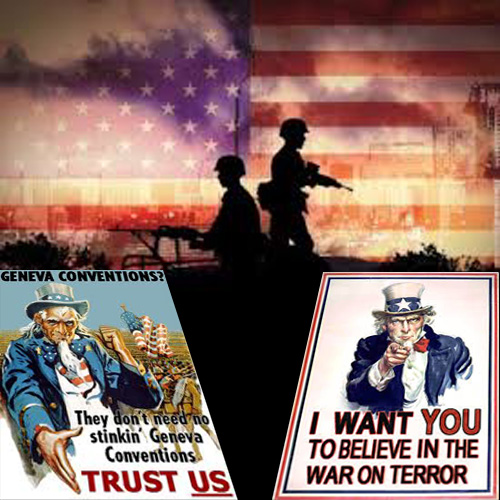
terrorwarNigerians are fiercely divided on whether America’s decision Wednesday to label Boko Haram a terrorist organization is good or bad, but one thing is clear: they don’t like America turning Africa into the principle field in the War Against Terror.

The arcane political moment when the U.S. State Department labels this or that organization a “terrorist organization” doesn’t attract much notice in the U.S., but it should.

The “Foreign Terrorist Organization” (FTO) amendment to the country’s standing immigration law gives the President and State Department wide powers of interdicting U.S. citizens from virtually any type of engagement with an organization so labeled.

Ohio University African political professor, Brandon Kendhammer, sent a letter to Hillary Clinton in May, 2012, signed by twenty other prominent academicians in the U.S. as well as the Council on Foreign Relations, urging Clinton not to designate Boko Haram an FTO:

The professors explained that the law is so sweeping that it would even keep them from contacting certain organizations and individuals in Nigeria essential to their research.

“Now it’s going to be very hard to contact … or even to just work with communities where members [of these designated FTO organizations] might be present,” the letter complained.

What is normally reported on CNN is the top of the law, that financial holdings in the U.S. linked to an FTO organization are frozen and that specific individuals named as leaders are banned from travel in the U.S.

But like so many of America’s terrorist and spy laws, today, FTO goes much further and gets increasingly sinister. Prof. Kendhammer can no longer even send an email to fellow Nigerian academicians, for example, who might be listed in a deep appendix at the State Department as having “connections” with Boko Haram.

The analysts who make these designations are not academicians, themselves, and might designate an individual doing a Ph.D thesis, for example, “connected with” Boko Haram.

It’s unbridled powers like these which are so chilling. They are powers, like those currently being debated around the NSA controversies, which technically cannot be applied within the U.S. or sometimes as well, U.S. citizens abroad.

Nigerian officialdom mostly welcomed the U.S. move, Wednesday. But the Nigerian public is more conflicted. African governments usually approve, because it usually means getting a lot more guns.

But yesterday a group of Nigerian journalists filing a combined opinion in the Leadership newspaper reminded us that only last year, Nigeria’s ambassador to the U.S. urged the state department not to issue the designation.

There is the obvious disincentive to future foreign investment on the national level, but on the individual level the additional scrutiny that will now befall Nigerians traveling in the United States is a terribly daunting prospect to them.

That would seem petty in the scheme of a War Against Terror if the War Against Terror were not so duplicitous and extra-American. By that I mean almost all the great rules and morals that make America great which are supposed to be preserved by a War Against Terror are blown to smithereens by the way America has been conducting this war in Africa and by the powerful use of the FTO law.

Last month Navy Seals or some such Batmanned into Benghazi and jumped out with Abu Anas al-Liby. He has now been charged in New York with masterminding the attack on the U.S. embassy in Nairobi in 1998.

The crack kidnapping would be illegal in the U.S., as by the way it is in Libya. The week-long interrogation which followed by a U.S. ship at sea violates many worldwide war conventions. But, hey, he’s a bad guy.

Or is he? This was not the first time al-Liby was arrested.

One time was in 1999 by British intelligence. But then with American prompting he was released and likely put on the pay of the CIA to assassinate Gaddafi.

This and other similar intrigues, including of course the training of Osama bin Laden by the CIA to fight the Russians, were listed yesterday by Syracuse professor Horace Campbell and other experts to demonstrate that “means justify the ends” in America’s war on terror.

And right now, the means is all in Africa. And it “means” that African don’t know what it means, because it could change.

It’s nice to think that Obama’s steadfast and incredibly militaristic assault on known terrorists that are now being, literally, rounded up in Africa might be making us safer here at home. And that’s Africa’s problem. It’s making us safer by making them less safe.

Terrorism can’t be blown out. It can be contained, and that’s precisely what Obama is doing, and whether by design or happenstance the containment has become Africa. And you can imagine what that means to Africans.

Containment in the War Against Terror has no limits. Bush and Cheney thought torture was OK, so we tortured. Obama thinks snatching al-Liby is OK, so we snatch al-Liby: all the human rights laws and freedom safeguards of great America mean nothing.

Play bin Laden or al-Liby for however you can, but to your advantage. Leftover armaments can be thrown into a Nairobi mall. Start a little war over in Somalia with your Kenyan proxy, ignore the Ugandan dictator’s threat to execute gays so that your Navy Seals can chase a mean guy into the CAR.

Do whatever you want. There are no rules. Means justify the ends.

That’s the essence of the FTO.

Terrorism can’t be blown out. It can be contained and it can minimized by addressing the desperation of the peoples it appeals to so that it loses support. Those are the only two remedies, and only one of them is right.