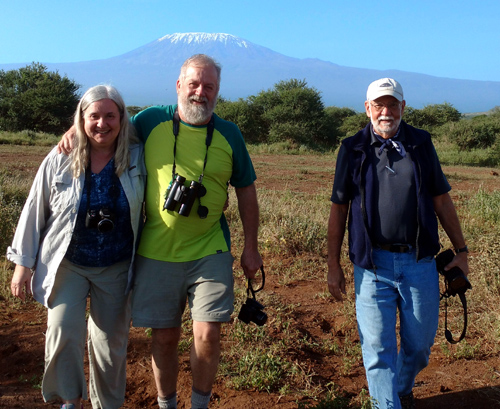
Our six days on Kenya’s Southern Circuit were fabulous, and especially for birders, and believe it or not the entire group are avid birders!
Our six days on Kenya’s Southern Circuit were fabulous, and especially for birders, and believe it or not the entire group are avid birders!
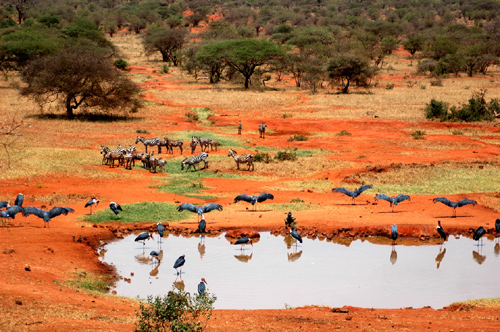 I am out of touch in Tsavo National Park with my 40th anniversary guiding safari. This week will be dominated by elephants. As soon as we get into internet range, I’ll post some exciting news!
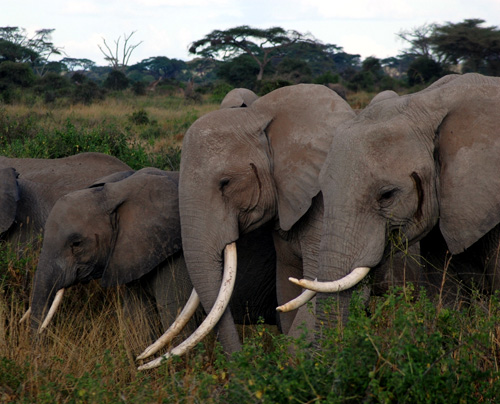 I am out of touch in Amboseli National Park with my 40th anniversary guiding safari. This week will be dominated by elephants. As soon as we get into internet range, I’ll post some exciting news!
 I am out of touch in Amboseli National Park with my 40th anniversary guiding safari. This week will be dominated by elephants. As soon as we get into internet range, I’ll post some exciting news!
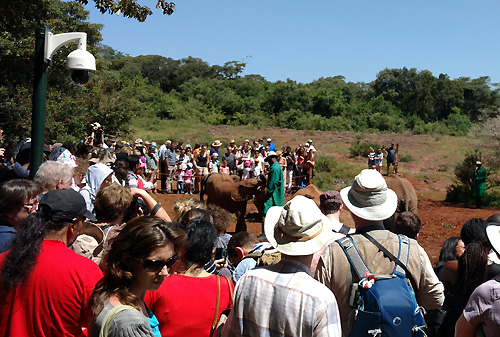 We were among about 400 people at the Sheldrick elephant orphanage yesterday, and I carefully scanned the group noting only five non-white visitors.
The day before we visited the Giraffe Centre and I’d roughly estimate that 50% of the visitors there were non-white.
I presume that most of the non-white were Kenyans or Africans. It demonstrates in clear contrast how the local population views elephant conservation versus some other animal conservation, and the reason is the escalating conflict between elephants and people in developing Africa.
The Sheldrick orphanage and the Giraffe Centre are both top Nairobi attractions. It was Sunday, the only day of the week that there is fast-moving traffic on the city’s many highways and thoroughfares, and it was beautiful dry weather.
Tourists came in droves. Kenyans didn’t come.
I believe that under this quiet de facto protest is a growing and serious animus Kenyans feel against conservation driven by outsiders. Kenyans probably are more conservation oriented than many would presume. Several local organizations have saved Nairobi’s forests and its national park. The legendary Wangari Maathai is among the few conservationists to receive a Nobel Prize.
So the animus towards elephant conservation does not imply a general anti-conservation attitude by any means. But elephants have drawn by far and away the most international attention, and it has been exclusively concern expressed for the elephants … rather than for the “ecosystem” or the “national parks” or anything that might include the people, too.
It’s a terrible failing of western animal conservation organizations to have directed their appeals so exclusively outside the areas for which the appeals have been made. True, the possibility of getting donations from mostly emerging and poor countries is very limited, but it would have conveyed a sense of inclusion. Instead, policies have contributed to exclusion for years.
The most common presumption about the value of big game here in Kenya is that it is a commodity that attracts rich foreigners. Particularly as now when the European and Asian economies are declining, and therefore the bulk of tourists decline, there are fewer positive returns from the endeavor.
What is always behind the scenes moves onto center stage: elephants are big, destructive and enormously expensive to conserve. Only the decadent wealthy foreigner insensitive to the desperate need for all sorts of human conservation has a desire to protect them.
The more fulsome arguments regarding ecosystems and biodiversity have no chance, because no serious groundwork has been laid for these more complicated justifications.
So many of Africa’s problems can be laid squarely on the failure of the developed world to treat Africa as an equal part of the human community, and the current acceleration of elephant poaching is no different.
Until western conservationists recognize the sovereignty of Africa in all things African, including its elephants, there will be no change.
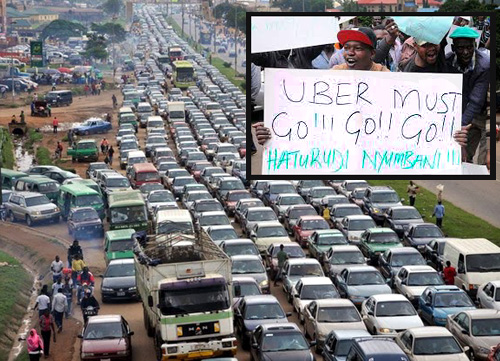 In Nairobi and New York consumers were mad, local government knew what it had to do but claimed not to have the money to do it, so private investors stepped in: Uber Alles.
Today the head of the Nairobi taxi association gave the government one week to “do away with” Uber or they will “grind the city to halt.”
That won’t be hard to do, since the city is more or less ground to a halt already. The 10-12 mile ride from the airport into the city normally takes two hours because of unbelievable traffic.
The government seems to be siding with Uber.
Tension is seriously building. Uber has been here for just over a year, and rates Nairobi as one of its biggest successes. In the beginning it was mostly expats (non Kenyans) who used the service, but very soon thereafter the idea swept the city.
Uber, in fact, was so impressed with the Nairobi response that it reversed the previously strict policy not to accept cash payments for a ride.
Here’s how it boils down in this city of too many cars and truly unimaginable traffic:
A ride from the airport into the city by a registered taxi is pegged at around $50. Few consumers pay that. Bargaining prevails and even the most inexperienced consumer can get $15 off right away. I normally get them down to $25. Uber’s formulaic calculations will render anything from $12-$18, and usually the higher because of traffic congestion.
Uber’s policy excludes tipping, but believe me, Nairobi Uber drivers let you know a tip is most welcome and I expect many users tip here.
Nairobi’s monopolistic taxi service is so similar to taxi services around the globe, and that’s one of the reasons Uber is seamlessly entering every corner of the globe. Traditional taxi service is supposed to be insured and licensed by the government. In Kenya the effective tax is about 3% (60 Ksh per available car seat per day of operation). Union “dues” take another 3%. And the union is in full control of car placement and driver hiring and eligibility.
Of course, it doesn’t work like that. Taxes are rarely paid or massively miscalculated. A driver often splits his fare with others in his neighborhood and even more so, with touts that round up customers from the streets. This is gross speculation: but I imagine when all is said and done the driver takes home about 50% of the fare paid.
With Uber he takes home 80%, but the fare is a quarter to a third less. Bottom line: it’s a scratch for the cabbie.
But the consumer wins big. The technology of near instant service and easy payment – something the cities should have done long ago – is value itself, but the fare is less.
Here’s the problem: it’s a capitalistic race to the bottom.
Before the consumer even discovers that Uber cars are usually as good if not better than taxis, that they are more prompt, that tipping is no longer necessary, they are drawn by the lower price. Particularly in a developing country like Kenya with all the problems this city has, taxi users here would probably complain if the ride were free.
Price is the driver, the raison d’etre for Uber’s success and Uber geniuses have found a way to scrape the little bit of earnings that don’t actually pay for getting from here to there into their own pockets…
… out of the hands of the tout, the politician and who knows who else. Those folks are cut out by Uber to the benefit of the consumer AND …
… the benefit of Uber. Uber takes 20%.
Uber made about a quarter billion dollars last year and is valued around $65 billion, making it larger than America’s largest car companies.
The portion of Uber earnings that came from Kenya has impoverished many, contributed to more crime and now threatens to bust one of the few unions left in the country.
There’s a solution here. Government has to get its act together. Uber claims it would welcome regulation, so let’s regulate. Let Uber take over the taxi business, but let the unions represent all the workers, including Uber drivers. How’s that for a start?
Totally unexpected.
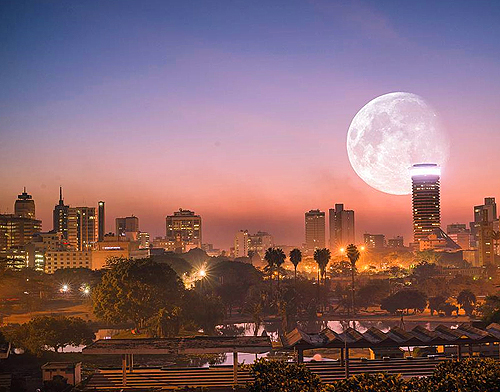 What strikes me about Nairobi – like the slashing ice pellets I just left at home – is that it’s safe here. The bitter reality is that Nairobi is a fortress.
Every shop of any size, every office building, even some petrol stations, are iron or steel fenced boxes. Guards with rather large weapons stand in control of massive gates. As for the hotels, there’s not a diplomat alive who could sneak his wallet or phone in without it being scanned.
Tourists are coming back to Kenya. New hotels planned for Nairobi include a Hilton Garden Inn, Four Points by Sheraton, Radisson Blu and several Best Westerns. These are all designed for the modest businessman or more importantly, the transiting tourist.
Nairobi’s problem is now not so much its security, as its new image.
Talking yesterday with several old friends who reside here I can’t help but share their optimism and excitement. High tech especially, but even a number of global service industry providers are swarming over themselves searching for the best talent to develop business in Nairobi.
The main obstacle? Believe it or not, traffic. Yes, there’s still a rare power outage, digital services are impeded by overuse (an opportunity of its own) and corruption remains serious. Yet as Lagos dwindles with the price of oil, many board rooms are shifting their plans for growth to Nairobi.
Except between 9-11 a.m. or on Sunday, though, it’s … well, hard to move. Yesterday at 7 a.m. it took me two hours to drive the 11½ miles from the airport to the Norfolk Hotel in the city. With a grand chuckle I just referenced Google Maps: the journey is pegged at 24 minutes (“without traffic”) and with traffic? 37, says the very far away Google.
I’m forced to radically rearrange my scheduled guiding of Nairobi attractions. Although the national museum (by Google Maps) is only 1¼ miles by road from The Norfolk, yesterday at 2:15p it took me 40 minutes by cab.
Hardly a decade ago I squeezed in 4 or 5 Nairobi attractions plus a leisurely lunch into a nice day. Now, it’s one attraction …at most.
All the planned new tourist hotels will be near the airport, but even the closest will seem like an arduous journey when there’s nothing else in the area except highways.
This is definitely a problem for tourists. Here are the current workarounds:
1) Arrive Nairobi Saturday night. Suffer a bit of congestion getting into the city or stay out by the airport, and then tour the city on Sunday. Leave your hotel Monday morning by 7:30a for a road journey or transfer to Wilson airport for a local flight somewhere.
2) Arrive any night and go to the suburb of Karen. Decent hotels here are limited and expensive, but you’ll then be able to enjoy a number of famous “Nairobi” attractions in the area virtually on any day of the week. Nairobi city itself would still be restricted to a Sunday schedule.
3) You can still enjoy Kenya’s unique wildlife attractions without starting in Nairobi. You can connect immediately out of Nairobi on one-hour flights to three other cities well positioned for safari travel: Mombasa, Kisumu or Kilimanjaro (in Tanzania).
Mombasa is the most efficient. The city is only 2-3 hours by road south of several excellent wildlife destinations including Tsavo. You can hit the road running after exiting your plane from Nairobi.
Thousands and thousands of mostly European tourists travel to Mombasa for its beaches and never intend to look for wild animals. But unlike my positive feelings about Nairobi’s security, I’d remain cautious about actually staying in Mombasa.
Kisumu might be too novel an idea, yet, because its hotels are just emerging and it’s at least 4 hours by road from the first good wildlife destination. But it has some alluring positives: it’s on Lake Victoria and the hotels are cheap.
Finally, everyone knows about Kilimanjaro, a quick and easy 50-minute flight from Nairobi’s international airport. This is, in fact, the way most East African tourism has run recently so what’s the drawback?
Simple. Once you get to Tanzania, why go to Kenya? There are many good answers to that, but for a first-timer, especially, they’re hard to put forward. Adding a whole new country to your itinerary in Africa, anywhere, is added expense and time, costs and vacation often better used just staying in that one country.
I’d disagree. But then, too, it’s going to be hard for me to realize that my clients won’t enjoy the Norfolk Hotel in downtown Nairobi as much as I do. Nostalgia is a powerful force!
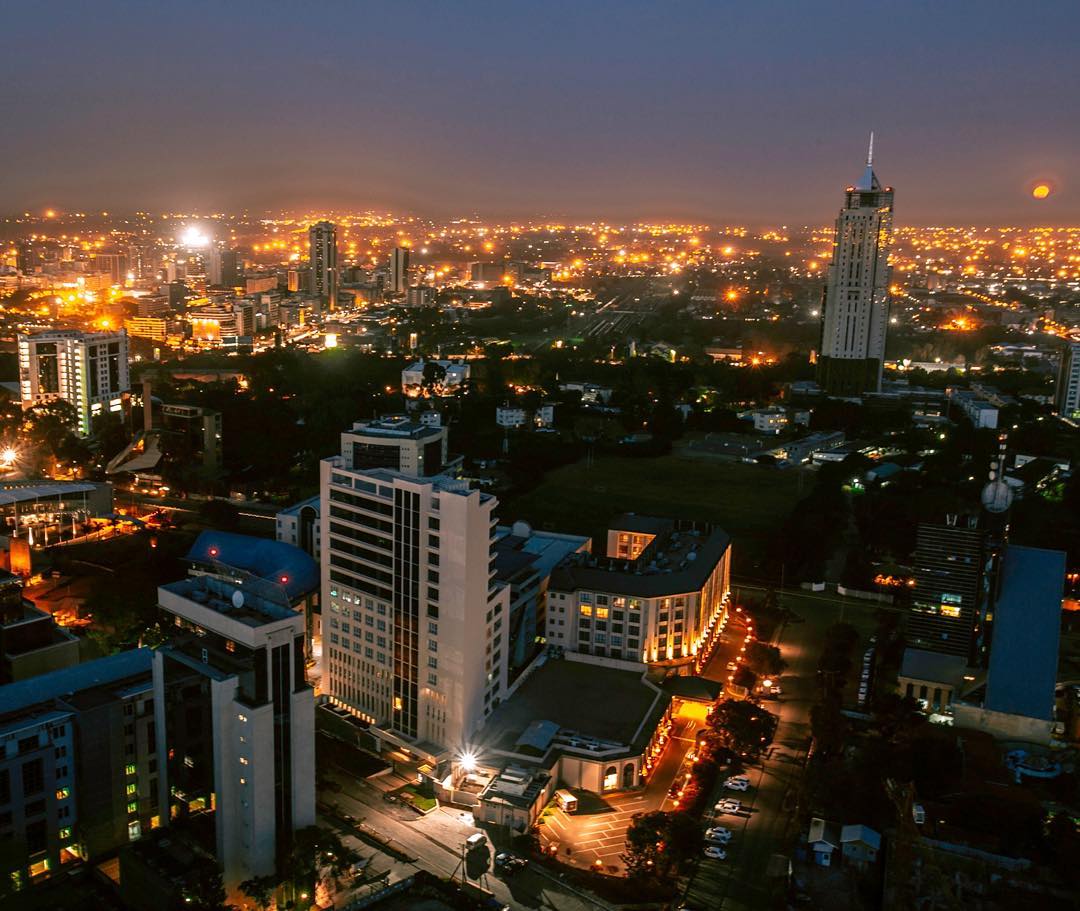
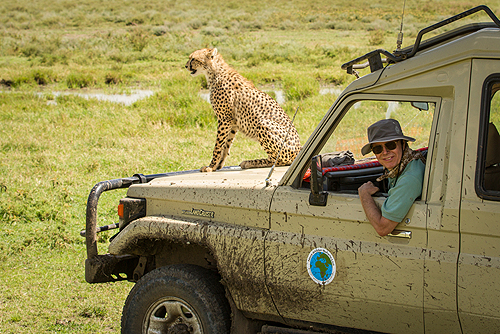
(By the way, the beautiful photo above and below is part of a photo project by Nairobi’s innovative Jambi Forums. Click here to view a stunning range of photos from a great variety of new promising Kenyan artists!)
 Jim is headed to Africa! For the next two months you can follow his journey here at africaanswerman.com. He’ll be traveling and working in Kenya, Tanzania, South Africa, Botswana and Zambia.
NAIROBI
Feb 10-14
Kenya’s capital has transformed itself in just the last few years. It’s rapidly becoming one of Africa’s most important centers for technology and finance.
SOUTHERN KENYA
Feb 15-20
Kenya’s famous southern bush was the original safari venue for almost everyone! It was where Teddy Roosevelt went hunting, where the greatest population of elephant were first found. Jim will be guiding safaris in Amboseli, Tsavo West and Tsavo East national parks.
NORTHERN KENYA
Feb 21-29
Kenya’s north is completely unlike its south. Highland jungles, deserts with rivers and Kenya’s finest game reserve, the Mara. Jim will be guiding in the Aberdare Mountains, Samburu and the Mara.
NORTHERN TANZANIA
Mar 1-11
At this time of the year this is the place for the greatest wildlife spectacle on earth, the Great Migration! Jim will be guiding in Tarangire, Manyara, Ngorongoro and the Serengeti, his favorite wilderness on earth.
JOHANNESBURG
Mar 12-14
South Africa’s grand megalopolis has clawed itself out of the mess that the end of apartheid left it in. Vibrant, modern and exciting. Jim will be visiting its main sites before boarding one of the world’s finest trains, the Blue Train, for Cape Town.
CAPE TOWN
Mar 14-21
Jim’s second favorite city in the world (after Paris). Cape Town is beautiful, comfortable, welcoming and filled with attractions and deep history. Jim will be guiding people to its important museums, gardens and of course into Cape Point and including the nearby wine country.
BOTSWANA
Mar 22-29
Jim considers Botswana the best game viewing in southern Africa, and he’ll be taking people into the Makgadikgadi Pans, Okavango Delta, Moremi and Chobe national parks.
VICTORIA FALLS
Mar 30-31
Always an outstanding way to end an African safari, Jim will be here with his last safari before returning home.
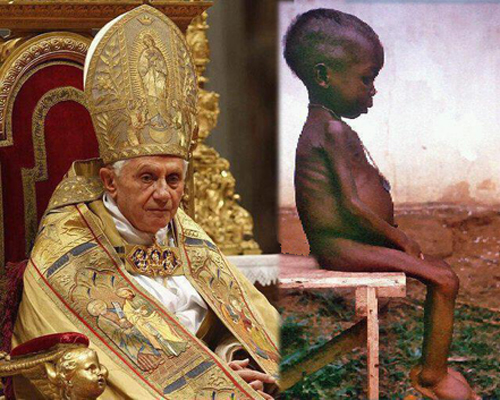 Have you noticed? Income inequality is a hot issue. Ok, try this one. How many billionaires’ net worth equals half the rest of the world?
14000? Maybe be bold and guess 765?
How about… 62.
Kenyan commentator Rasna Warah called this yesterday “a new extreme.”
It’s tough enough when a Kenyan realizes that his country’s entire GDP isn’t even as great as Chicago’s, but inequality like this converts disbelief into abject anger.
It’s no longer a matter of understandable time, time for development, time for industrialization. The collection of wealth among a few individuals has occurred with lightning speed.
In 2010 it was 388 individuals. Five years later, it’s 62, despite the fact that the world’s overall economy has grown substantially in those five years.
The collection of wealth in so few hands is terrifying.
“In a world where one in nine people go to bed hungry every night, we cannot afford to carry on giving the richest an ever bigger slice of the cake,” Oxfam’s chief executive told the Guardian newspaper.
It is the respectable organization Oxfam that published the report several weeks ago.
I find it equally terrifying that I wasn’t able to learn about this from my own media. This strikes me as absolutely astounding: A commentator in Kenya that brought it to my attention.
It’s impossible to presume any logical fairness created this division. It’s just not statistically possible. Even 62 Big Blues would not be able to corner the market or coral capitalism to this level of advantage.
Oxfam, and I, believe it is structural within capitalism, and this is the reason that capitalism needs regulation. We’ve gone through a period of hyper deregulation, and this is the result.
More than $7.6 trillion of wealthy individuals’ net worth is held in off-shore tax havens.
On the one hand you can’t begrudge a wealthy person making herself wealthier. But the loopholes that allow this to occur, allow it to be freed of taxation, is often the result of the wealthy directing politics.
“These elites and über-rich individuals — and often their corporations — exploit the system for personal benefit in a way not possible for the rest of us,” one South African publication claims.
The ability of the wealthy to now direct history is mind-blowing.
Thanks to some Kenyans for letting me know. Clearly it’s not something the 62 want announced just yet.
But when is the horrible question.
 Are you tired of political debates? Join presidential front-runners Donald Trump and self-appointed president-for-life in Uganda, Yoweri Museveni.
Trump and Museveni have a lot in common: similar policies (e.g., none) and style (dismissive, offensive, threatening).
And … they’re both way ahead in the polls.
Museveni’s spokesman told reporters yesterday that he can’t make the last debate (he’s not made any of them) because of a “tight campaign schedule” and because “people he hasn’t addressed are yearning to hear from him and he can’t disappoint them.”
The spokesman added that “most of the questions have [already] been asked” and that answering the same questions “would be a repetition.”
In two weeks Museveni will win another “election” and become Africa’s longest serving dictator after Robert Mugabe.
He has some very Trump-like brownshirt strategies this time around:
(1) Over the last year his government funded 30,000 “volunteers” from around the country that local police have trained in “crime prevention, ideology and patriotism.” I’m not sure if they give out their names, but there might be a Cliven Bundy or two among them.
(2) In past elections Museveni simply sent thugs beat to a pulp his perennial rival, Kizza Besigye, but this year by sanctioning more candidates than he’s ever allowed before, the other candidates are doing the beating!
(3) Museveni is leading in the polls. According to pollsters the overwhelming reason is that the electorate fears Museveni will kill them if they don’t vote for him.
Last night in America we had our first valid presidential debate. Front-runners duked it out while masterfully remaining polite despite media taunts, defining clear differences that could result in meaningful voting.
That was one of how many? A dozen debates so far?
Even in America, like Uganda, like Zimbabwe, like for numerous school board elections or union chapters or government cells in China or Greenland, democracy is horribly corrupted.
Power has shifted from each individual citizen’s one-man vote that reflected her own studied self-interest to manipulators and tricksters. Power today rests solely with collectives of elite.
In some places like China they may, indeed, be intellectuals. In America, it’s corporations. In Uganda it’s a single man: If the guy’s good, things will be OK. If the guy’s bad, tough story. Hard to say whether flipping the coin on a personality or choosing a complex social collective is better. Talk about lesser of the evils…
Is democracy dead?
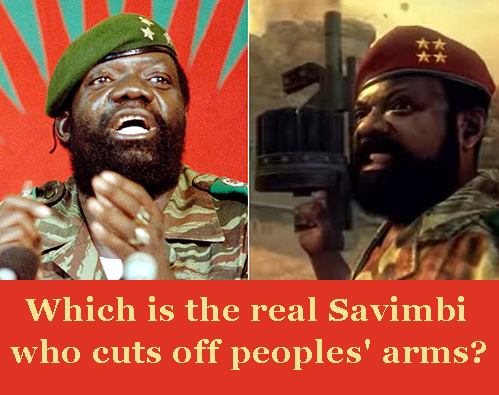 What’s the difference between a video game and a terrorist?
The family of a controversial Angolan rebel leader who died in 2002 is suing the manufacturer of the “Call of Duty” video game for defaming Jonas Sivimbi.
I interviewed Sivimbi in Paris when I was covering the Paris Peace talks (on Vietnam) for several U.S. newspapers. Back then in the 1970s he was a hero to the independence movement as well as the South African anti-apartheid movement, since South Africa was at the time fighting the independence movement in Angola.
Subsequent to my brief acquaintance, though, Savimbi’s reputation declined substantially.
Independence was won by a rival rebel group, MPLA, from Portugal in 1975, and though initially Savimbi was a part of the overall peace process, he immediately started a brutal civil war against the MPLA that lasted virtually until the moment he was killed by government soldiers in 2002.
During that civil war he grew vicious becoming the first warlord to finance his battle with blood diamonds. UNITA and Savimbi were ultimately investigated for war crimes by The Hague.
“Call of Duty” features Savimbi, or for sure someone who looks (and acts) the spitting image.
In answering the Savimbi family suit, the French creator and owner of “Call of Duty” claimed that Savimbi-in-the-game was actually shown in a “favorable light” and a “good guy who comes to help the heroes.”
Seeking 100 million Euros, Savimbi’s now 42-year old son said, “Seeing him kill people, cutting someone’s arm off … that’s not like Papa.”
I haven’t looked at the game. I can’t stand media violence and I know that “Call of Duty” is one of the worst.
NPR featured “Call of Duty” in its series of violence in video games in 2013 as at the time the most popular and most violent.
UNITA is now a franchised part of peaceful Angolan society, and they are encouraging – possibly joining – the Savimbi family in their suit.
The line between moral freedom fighters and amoral terrorists is thin. But there is no division at all between the violence of a video game and the violence promoted by today’s jihadists.
Games targeted to teenagers who have yet to fully develop their moral compass strikes me as one of the most barbaric outcomes of crass capitalism.
Ratings are only rarely useful and require parents or guardians actually capable of enforcing them.
If Republican candidates will blithely suggest carpet bombing the Levant, I guess it’s not radical for me to suggest that video games like “Call of Duty” should be banned.
I’ve no loyalty to my brief encounter with Savimbi, who at the time was a gentle, highly respected and admired grass roots leader. He turned, and so did a bunch of kids from Minneapolis who participated in the Westgate Mall attack and dozens of others from America who appear on jihadist videos.
Carpet bombing them simply cleans the field for new faces. Getting rid of their platform is the only way to end the game.
 Letter to my African Friends:
Last night I watched the first official tallies of this presidential election. I realized that meaningful social change using democracy is something possible in Africa but not very likely in America.
This because in places like South Africa and Kenya you’re tinkering with new constitutions; in Tanzania you’re considering a whole new constitution.
America’s constitution will soon be 250 years old. Unlike Europe where constitutions were changed often radically many times, most Americans believe that our aged constitution remains the best plan for running a society.
That’s because most Americans are afraid of change.
In my short lifetime unexpected hurt has beset us Americans, social pain not experienced since our Civil War almost 150 years ago. Because for most of our 250 years American society was healthier, freer and happier than almost all the rest of the world, most Americans think our current hurt is temporary and unusual, and that we should just “keep on trucking” and ultimately things will get better.
Meanwhile with each passing year our constitution ossifies even more. Every constitution tries to perpetuate itself, and we let ours get away with murder.
Here’s what I want to tell you as you fashion your new societies with democracy:
1) Executive presidencies like America’s are bad. Too much attention becomes focused on a single person. Parliamentary democracies like Europe have a much longer and more prosperous future.
2) Don’t tinker with the media. We did. We allowed oligarchy business crazies like Rupert Murdoch to buy then control our media. Our free and democratic society should have stopped him. He did too many illegal or almost illegal things to gain control, and then with time this control seemed organic, not ordered like it really was. The desperate needs of one man started to grow through the entire society.
3) Don’t be afraid to enforce the truth. This is a touchy subject, and the retort you’ll hear is that there are differing views on what’s true. That’s playing around with the language. Kutekeleza ukweli. Swahili is better for saying this. There is a truth, a reality, an ukweli. Climate change is halisi. Put them together and “ukweli na halisi” is incontrovertible truth, and we’ve lost it in America.
We allowed economic forces to deny reality. I suppose that doesn’t matter in some cases, and the argument is that the “right to say anything” is a part of free speech. But when those forces deny climate change, deny womens’ rights, deny voters’ rights, deny science, it gets rid of truth. That’s what’s happened in America.
I think this is because our system is so old it perforce doesn’t work as well as more modern systems of government, and while that isn’t ukweli na halisi it’s close. Our society is afraid of change, and so much so that it now freely allows denial of the truth.
Finally don’t think you’re without problems or that we Americans don’t have a lot to admire. We’re much less racist and ethnic than you are. Racism and ethnocentricity could very well be your Achilles Heal, just as fear of change is ours.
We are fiercely independent, and you aren’t. Many of you think of independence as courageous but pointless. We equate independence with freedom, and so should you.
Those of you reading this are likely part of the “emerging middle class.” You’re no longer herding goats or trucking Jerry cans from the river. Your society has managed to liberate you personally from many economic hardships.
Lots of your brothers and sisters aren’t where you are, yet. Don’t abandon them for your own stardom, as we so often do in America. Don’t embrace the false notion that “you pulled yourself up” so why can’t they?
There’s not a one of us that did anything alone.
Last night as I watched my hero, an old man rally his young supporters, I too felt like an old man, and that America was an old man’s home. Youth in America is a minority, suppressed and coopted. But in Africa youth is the majority!
Any energy I have left to change my own society comes only when I think of you and the changes that you can bring to our world.
 A South African mayor has reserved part of her town’s college scholarships for virgins.
Concerned with the high rate of Aids and unwanted pregnancies, Mayor Dudu Mazibuko told the BBC that 16 of the town’s 113 college scholarships would go to girls cleared as virgins.
The certification is performed by an elder woman as part of an annual ceremony of homage to the Zulu king. Special intermittent testing would then continue – much like drug testing for sports – and whenever a woman fails the test the “Maiden’s Bursary Award” is terminated.
Even if the recipient has a 4.0?
“Unsurprisingly, this has been met with much controversy,” writes teen reporter Casey Lewis for Conde Nast. Lewis further notes that a college-age virgin is “very, very problematic.”
“Virginity testing is an invasive, flawed, traumatising and sexist practice, that has no bearing on whether or not women should be granted bursaries,” an on-line petition organized by South African university students contends.
The petition points out that the policy doesn’t address the role that young men play in unwanted pregnancies resulting in an “unequal” approach to young women.
With less than a couple thousand signatures so far, the now week-old petition is not doing well by South African standards. Despite the resolute equality provisions of the young South African constitution – which among other progressive components mandates that a certain proportion of publicly elected officials be women – sexism remains strong in the country.
KwaZulu Natal where Mayor Mazibuko’s town is, is a particularly conservative region. In fact towards the end of the anti-apartheid struggle in the late 1980s the region broke away from the growing black power movement to support the white-led apartheid regime.
The fact that the policy was promulgated by an elected woman mayor illustrates a global phenomenon of conservatism beautifully discussed this month in Foreign Affairs’ look into “inequality.”
Michigan professor Ronald Inglehart links the decline of economic equality to “cultural issues [that] pushed many in the working class to the right.”
During a fall meeting with Pullman High Schoolers regarding a proposed bill in the Washington state legislature increasing access to birth control, the very conservative Olympia woman state representative Mary Dye shocked students by insisting the conversation be governed by whether or not they were virgins.
Education and women’s health are global as much as local issues. Economic declines are often surprising, or at least at the start seem uncontrollable at that moment. As Ingelhart implies the anger manifest in those hurt most by an economic decline is often expressed in support for cultural positions and personal values that are clearer to evince than policies for economic recovery.
South Africa has an inequality ratio considerably higher than the U.S.’ already staggering high one. The reasons for this include global factors and are certainly complex.
Mayor Mazibuko’s continued support is not unlike Donald Trump’s.
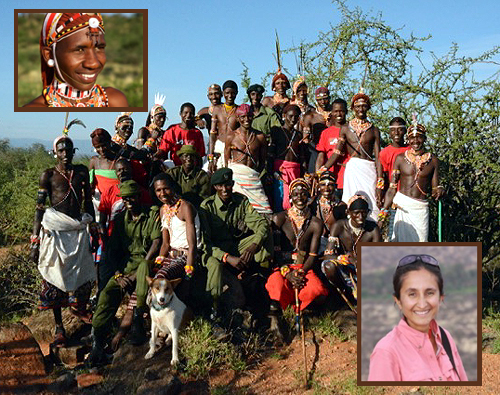 A ranger’s report filed yesterday from northern Kenya explains so perfectly why lions in the wild may quickly becoming a thing of the past.
Ewaso Lions is a stellar NGO working in the Laikipia/Samburu region of northern Kenya, a beautiful semi-arid terrain just north of Mt. Kenya. The small under 25-person group is run by a 4th generation Kenyan Asian, Shivani Bhalla, whose list of prizes from conservation organizations takes up a dozen lines of her resume.
More than half the staff is composed of local mostly Samburu. Jeneria Lekilelei, the Field Operations and Community Manager, won last year’s Conservation and Field Hero Award from the Walt Disney Foundation.
Jeneria’s field report explains that lion/human conflict in his region increases with the onset of the rains. During the dry season lions have a relatively easy time picking off wild game that must necessarily congregate at certain water sources.
With the rains wild game disperses. So does domestic stock: out of their bins where they’re fed hay during the dry season, they seek the same natural pastures that the wild game seeks.
Jeneria recounts one morning when “the lions killed camels in 5 locations so I was getting calls from all over. I raced to one area where Lengwe and his pride killed a camel and its baby…
“Three warriors from the village came and they all had guns. I was sure Lengwe was going to be killed by these warriors, so I sat with them under a bush all day” and talked them out of the killing.
There are several critical back stories to this positive tale.
The first is pretty evident: “I was getting calls from all over.” These weren’t warrior’s whoops, they were cell phone calls. Even the most remote wildernesses on earth are peppered with cell towers and there are generally more mobile phones per person in the developing world than in America.
Cell phones represent increasing connections of everything, including government and people. Killing a lion in Kenya is a crime.
The second back story is of Lengwe the lion. Lengwe would be a goner in the truly wild world of times past. Jeneria first encountered Lengwe when he was nearly dead, incapacitated by a broken femur. Ewaso Lions mobilized a remarkable rescue operation that included not only rounding up vets and federal wildlife rangers to immobilize Lengwe, but even of transporting an X-ray machine into the area for a correct diagnosis.
Lengwe was not exactly nursed back to health, but he was certainly monitored carefully and eventually he became a pride leader. Losing Lengwe to three young warriors would have been a rather sorry end to an otherwise heroic tale.
Finally the third back story was the rationale that Jeneria used to dissuade the warriors from their revenge killing: Where were the kids?
Stock – whether camels or cows or goats – is traditionally the responsibility of young boy herders. As Jeneria recounts asking the warriors, “Have you ever heard of a camel being killed when herded by a proper person?”
The question shamed the warriors. The implied answer is also quite illustrative: lions won’t go anywhere near Samburu or Maasai herding stock and this particular stock was being neglected. Not tending stock doesn’t just remove protection, it essentially cedes ownership.
Because of the good work of Ewaso Lions, the great Northern Frontier’s predator is faring better than it would otherwise. Because of cell phones, Maasai boys herding stock are going to become increasingly delinquent so that they can pass their CPAs.
This wonderful story with wonderful, positive characters ended beautifully, but its lesson is proof things will not go well as currently arranged. Climate change and human progress might be at odds in some places, but in this case they are working hand-in-hand to wreck havoc on this traditional tapestry of life.
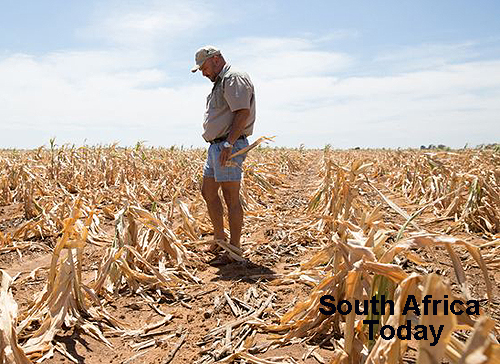 Weather events – like football – keep getting nastier, and the more we comment on them the less attention we pay.
El Nino is flooding away America, but it’s also drying to a crisp much of southern Africa. That’s what severe weather is all about: When part of the world burns up another part freezes solid.
FEWS, the world’s early famine warning system, issued a severe drought alert last week for portions of eastern southern Africa. FEWS is not a weather forecaster per se, but an organization that anticipates what the weather will do:
In this case, a “food security crisis … is considered likely in the latter half of 2016 and early 2017.” ‘Food Security Crisis’ is just a step above “famine.”
Absolutely the world’s best forecaster globally is America’s own and proud NOAA. (That’s only since the Obama administration, by the way. Previous Republican administrations had eviscerated its funding.)
NOAA predicts a moisture deficit crisis for all of Zimbabwe, more than half of Mozambique, much of Zambia, some Botswana and nearly the entire eastern half of South Africa.
NOAA’s predictions further out suggest a return to normal. From FEWS perspective, though, that’s not good, because starting in March “normal” in southern Africa is the start of a long dry season.
Combined with the failure of rains in the past rainy season because of El Nino, food production will be lost over much of the area.
Tourism may also be effected. Earlier this year a number of Okavango Delta camps suspended their water-based activities because the water levels were so low.
There’s been some improvement, but not enough according to the University of Botswana:
“Tourism activities have so far become the first casualties of the on-going drought as water levels go down in the Okavango Delta,” a professor of tourism from the university warned last week.
My own sources suggest it’s not quite that bad yet, but water-based activities are being assessed on a daily basis.
More critical to the wildernesses of southern Africa, though, antelope populations like sassaby, wildebeest, hartebeest and zebra are declining. These great herds are less adaptable to drought conditions than other ungulates like giraffe and buffalo. (From a tourist point of view, by the way, dry conditions usually mean better predator encounters.)
Further east, though, including the great Kruger National Park, its equally famous surrounding private reserves like Sabi Sands, and almost all of Zambia’s reserves could face real trouble next year. When elephants start dying tourism isn’t exactly boosted up.
Humans can’t handle a drought as well as animals.
“Now that the drought has become even more severe, [food] production has nosedived,” the Botswana Agricultural Marketing Board announced a couple weeks ago.
South Africa’s third largest city, Durban, began water rationing last July, and the situation has worsened considerably. By November publicly provided water systems were cut back 50% to both residences, businesses and farmers.
Sunday Durban began distributing bottled water to more than 2 million residents.
Compared to those in the South we in the North handle climate change pretty well, at least so far. Despite the headline news of apartments in mudslides, entire cities flooding down the river and beachfront eroding away, we aren’t starving and we aren’t likely to.
That’s not the case in the South. South Africa is the exception, although the climate situation there is so severe that it’s likely to put the country into a recession. But even that academic economic term carries a certainty that while dinners-out will be fewer, dinners-in will still happen.
Elsewhere in Africa’s south, that’s not the case. With each new climate change event there is greater hurt put on the world. Building walls might prevent the pain from getting to us right now, but someday it’s just going to get too severe.