Biopiracy in Africa

Biopiracy in Africa

STOP!! Don't pick it, honey! It's not yours!
So let’s say you’re enjoying the weeds in your backyard during this warm, beautiful fall when you come across this cute little azure flower. Don’t pick it! It might belong to Pfizer!

Last week’s major COWPEA conference that began in Nairobi and ended in Senegal is the latest of a number of African initiatives to take back their weeds!

Yes, I know, it’s sounds ridiculous doesn’t it? But it happens to be true. In today’s globally managed world of trade, more and more western corporations – mostly pharmaceuticals and agrogargantuans – are stealing magical African life forms that they then patent and make billions from.

These end product treasures include sugar substitutes, many drugs treating everything from diabetes to erectile dysfunction to weight-loss, to plants NASA can grow in space stations for feeding astronauts, to Australian hamburgers!

And the way the world’s closely held patent regulations work allows any corporation that gets its hands on the mother plant first, to look deep inside it for something useful, and then tweak it ever so carefully so that its chemical nature is changed enough to be considered “different.” Then, it patents it. Then, it owns it.

The reason Africa is such a big playground for this game is that the western world has essentially found everything in its own backyard already, and the world’s jungles are too pristine.

Too pristine?

Exactly. Africa has been worked over by growing human populations for millennia, unlike the depths of the Amazon or Borneo. Plants, fungi and microbes have had enough time to evolve into forms with greater associations to humans.

The earliest extant case of this biological theft from the world’s poorest currently benefitting the world’s richest was in the 1980s. Deft little organic theft from one of Kenya’s poorest, most primitive tribes, the Boran, and Zimbabwe’s least developed tribes, the Tuli, led to a current strain of beef used in Australia, an industry estimated to be worth about $7 billion annually.

Australian agro-researcher, Dr. John Frisch, was working to find a way to successfully supply Australian’s growing love of burgers. Australia is basically an arid land, especially where cattle farming occurs.

So he went to Kenya and discovered how healthy the cattle were in the deserts lived in by the Boran tribe. Not quite beefy enough, though. But apparently years before (maybe hundreds of years before) DNA pointed Frisch south, and he discovered in the much more developed country of Zimbabwe the same strain of Borani cattle now selected even better for mass breeding and slaughter among the Tuli tribe of herders.

So then what did these Australian cowpokes do?

Well, first they formed a respectable association, a “joint venture” that allowed Australian scientists into the Boran and Tuli communities doing undoubtedly good work like studying sand and inoculating cows against flu, while … just a bit on the side and very much on the sly… collecting embryos from pregnant cows.

The embryos were quietly taken to Cocos Island in August 1988 where they were implanted into surrogate cows. In March 1990, live calves – parading as ‘Aussies’ – landed in Australia. Since then the now named “Tuli breed” has largely been used as a crossbreed in Australia’s beef industry.

According to the Australian government the introduction of these embryos in 1988 now contributes A$2 billion annually to the value of the beef market.

And now, according to Oduor Ong’wen, director of a prominent Kenyan Trade Think Tank, Australians are selling (note the word, “selling”) pure-bred Tuli embryos on the world market.

And how much have the Boran or Tuli earned from this bio-theft? Zip.

(Much of this post can be attributed Ong’wen’s amazing Biopiracy article published this week in Pambazuka.)

Since that early beefy heist, there have been some victories for the little African guy. The most celebrated case came from the Kalahari Desert.

For thousands of years, the San people (Bushmen of the Kalahari and Namib Deserts) ate the Hoodia cactus to stave hunger and thirst. Unlike western remedies like caffeine or black market drugs, the cactus is a stimulant that doesn’t produce jitters.

In the mid 1990s, South African scientists from the Council for Scientific and Industrial Research (CSIR) identified a previously unknown organic molecule in the Hoodia which they christened P57 (with no equivalent translation into click languages).

CSIR then patented the molecule and sold it in 1997 to Phytopharm plc, which in 1998 subleased the marketing rights to Pfizer for $32 million plus royalties from future sales.

The San people got it together and sued. They sued CSIR, Phytopharm and Pfizer. Pfizer has yet to develop a widely used drug from the source, but it has subsold some of its rights to a number of health food companies and it continues to study the molecule.

Meanwhile, the health food craze over Hoodia exploded and Pfizer easily recooped its initial $32 million investment by selling various rights to health food companies.

Pfizer and Phytopharm have settled with the San Peoples in a questionable agreement. The San are to get 8% of the royalties of any finally created Pfizer product. But there isn’t any finally created Pfizer product yet, even while Pfizer rakes in funds from the health food companies.

Boran/Tuli beef and Bushman uppers are hardly the tip of the iceberg. Current battles are raging in foreign ministries and trade organizations over hundreds if not thousands of life forms being taken from Africa by the western world and turned into lucratively marketed products.

Among the most contested right now, on which western corporations hold patents and Africans are trying to get their fare share, are:

– brazzeine, a protein 500 times sweeter than sugar from a plant in Gabon;
– teff, the grain used in Ethiopia’s flat ‘injera’ bread;
thaumatin, a natural sweetener from a plant in West Africa;
– the Kunde Zulu cowpea, a bean with super protein that grows fast and easily;
– the African Plum from Kenya for treating certain forms of Prostate cancer;
– a bacteria SE 50 found in Kenya’s Lake Ruiru used to treat diabetes in the drug acrobase;
– a bacteria stolen from a termite hill in Gambia used in an anti-fungal and an immunosuppressant, 29-desmethylrapamycin
– the seeds from a Congolese plant used to manufacture Bioviagra

But there are thousands more.

World law is just developing that will license and control this “BioPiracy.” Needless to say, the big firms are on the side of Pfizer.
Safety Concerns hit Serengeti Balloons

Safety Concerns hit Serengeti Balloons

Disgruntled Employee or real Whistle Blower, that is the question.

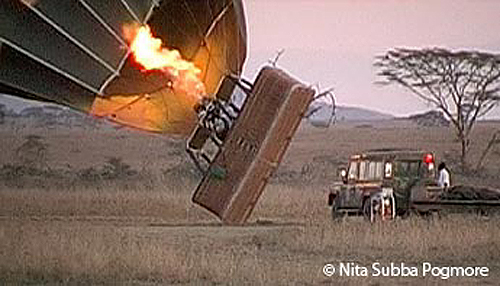
The tragic crash of a Serengeti hot air balloon last week raises some very old questions and puts into doubt the safety of hot air ballooning in Tanzania.

Two passengers were killed (an American and a Dane) and eight seriously injured after the smaller of two balloons lifted off at dawn a week ago Wednesday and then crashed in turbulent winds. The flight of the larger balloon was aborted by the pilot who felt the winds were too strong.

Although no official investigations have been completed, a simple review of the situation suggests neither balloon should have been allowed to fly.

Serengeti Balloon Safaris (SBS) has acknowledged that the winds were 30 mph as the smaller gondola attempted an emergency landing that went very wrong.

Two balloons are scheduled to lift off daily in the Serengeti, and this season ballooning just began in Tanzania’s Tarangire National Park as well. But Tanzania’s total capacity pales in comparison to Kenya’s, where as many as 14 balloons fly daily in a single reserve, the Maasai Mara.

I’ve spoken to principles of balloon companies in both countries, and my gut feeling is that they do it much better in Kenya than Tanzania. This might be simply because the Kenyan industry is so much larger and has had a much longer experience. And extraordinary caution is required when asking someone in Kenyan tourism about Tanzanian tourism, and vice versa, as the rivalry is profound.

But off-the-record Kenyans generally express sympathy with a vengeful website launched by what is certainly a disgruntled former SBS employee, Nigel Pogmore. Kenyans insist that many of Pogmore’s accusations of SBS’s unsafe procedures would never be seen in Kenya.

Pogmore’s long list of what SBS does wrong is mostly ridiculous, as I an untrained pilot, dare to determine. But a few do standout:

Pogmore claims he was fired because he was a “whistle blower” after being appointed SBS’ Safety Officer and then in the course of that job uncovered all sorts of safety irregularities. SBS claims Pogmore was a disgruntled employee with a very short fuse and that his past employment history bears this out.

So I asked SBS Managing Director, Tony Pascoe, why he hired Pogmore in the first place. Pascoe has not answered despite several emails to him.

Pogmore claims SBS balloons fly virtually until they run out of fuel, and therefore violate an industry standard that there be 50% fuel reserves left at the end of a flight.

While this may, indeed, be the industry standard, this is one that many Kenyan companies don’t manage, either. (Although no Kenyan company claimed they would fly until they were out of fuel.) The balloon flights in East Africa are generally short by industry standards and over pretty uncluttered (no power lines) geography. Provided the winds aren’t unusual, they can usually expect to land anywhere along the expected flight path.

Pogmore severely criticized the procedure by which SBS fired up their balloons in the morning, claiming the method they used to raise the pressure in the gas tanks was unsafe and that passengers were boarded in unsafe ways.

He also specified faulty equipment on 5 of the 6 balloons owned by SBS. This included poor or faulty Emergency Rapid Deflation (ERD) capability, fuel gauges and incorrectly maintained fire extinguishers.

Most scathingly, Pogmore claims SBS essentially ignored required safety inspections, insisting that a normal inspection took 2-3 trained staff 4-5 hours, but that his experience proved there were some inspections completed in less than ten minutes.

SBS, of course, is defending itself against all these accusation at their new “answer” site, balloonsafety.info. The problem was that site is very similar to the problem with Pogmore’s site: there’s too much emotion and not enough facts.

I had a courteous phone call with a close relative of SBS Managing Director, Tony Pascoe, and a subsequent courteous email exchange with Tony.

Tony thanked me yesterday when I advised him I had reduced our conversations into a few simple questions I would appreciate him answering.

But when I sent those questions in writing, as agreed, they’ve gone unanswered. Pascoe has suddenly gone silent. A subsequent reminder email also went unanswered.

Please see below in comments. The CEO of SBS finally did answer some of these questions after this blog was posted.

This leads me to believe they have something to hide, or at least aren’t well enough prepared yet to answer some very serious accusations.

Should you take a hot air balloon ride on your safari?

My answer for the time being is, No, not if it’s in Tanzania.

JIM’s Solution to Terrorism

JIM’s Solution to Terrorism

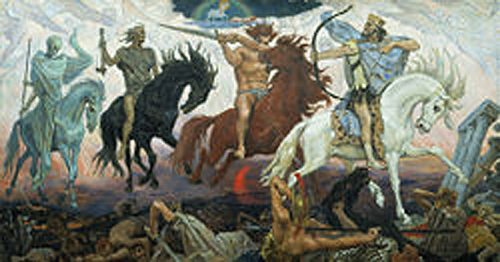
To end terror we've got to deep-six these four guys.
For travelers like us terrorism is nothing new. And it’s well past the time that we should lead our fellow Americans into a fuller understanding of what it means and how to minimize it.

If you can’t stand reading through the rest of my poorly constructed nonsense, just jump to the bottom of this for MY SOLUTION.

The penultimate word in the first paragraph is the key: Minimize. Terrorism will never, ever go away. It never has. Pagan potentates enslaved tasters to eat their food, first. Famine and pestilence were certain outcomes for any misbehaving early Christian. Spies stole children from critics of the gulag. Salman Rushdie, and many of his family and friends, have remained in hiding since the 1989 fatwa ordering his murder.

And leaping into the present, Ugandan citizens are so terrified of the proposed laws against homosexuality, that as many gays may be fleeing the country today as Asians who were ordered exiled by Idi Amin in the 1980s!

By the way, know a Mexican in Phoenix?

1. TERRORISM IS NOT NEW
The first and most important point. And it should not be as powerful news as it is, today that there’s terrorism.

Every time the nightly news headlines a terrorism warning, it’s presented as something remarkably unexpected. Every single night the news is filled with mayhem, war and killing, but a terrorism “threat” elicits greater shock.

Because the mayhem, war and killing was not about you. And because the threat is simply that, something that hasn’t yet occurred and so isn’t yet fully defined, so it might involve you. Suddenly, you’re in the news.

And when it doesn’t happen, or does and doesn’t happen to you, then you recycle your psyche to be just as shocked at the next news broadcast of potential terror featuring you. Americans are all hams and gluttons for punishment.

I hate to tell you, but terrorism is just as ordinary an occurrence as hurricanes, lightning strikes and your regular ole every-year airplane crash over Rochester. It’s a part and parcel of our lives.

2. TERRORISM IS NOT MORE POWERFUL TODAY
Don’t give me that baldersash that yes, there’s always been terrorism, but not with the power of airplanes or nuclear weapons.

How many died in the halocaust? How many ships were sunk by kamikazes? How many specific terrorism deaths in the Balkans, or during the many years of conflict in Northern Ireland? How many are still being raped and decapitated in Kivu, The Congo, or Somalia? How many airplanes or nukes would it take to reach this sum?

That is not to say that the methods of terrorism haven’t changed. As the world is more interconnected, all the good and evil within it move further and more quickly. Terrorism in our generation has adopted a travel component that it didn’t use to have it, and that’s the reason we as travelers are more attuned to it.

1985: the Achille Lauro cruise ship hijacking
1985: hijacking of TWA in Cairo
1988: Pan Am disaster over Lockerbie
1996: Atlanta Olympic bombings
1998: American embassies bombed in Kenya and Tanzania
9 -11
2005: 7-7 city bombings in London subway
2008: Slaughter in Mumbai

All the above specifically and successfully targeted travelers on airplanes or tourist hotels, or used travelers to get to their target. There were scores of other unsuccessful attacks like the shoe- and underpants-bombers. That’s a generation and counting of terrorism redefined to some extent by travel.

3. MOST MUSLIM TERRORISTS ARE NOT IDEOLOGUES, JUST WELL PAID
This nonsense that Mideast suicide bombers are half wits who believe they are tending roses in heaven is more baldersash. It just drives me crazy. THEY GET REALLY WELL PAID!

They are completely unlike the long history of soldiers who went into battle for ideological and religious reasons expecting to die fighting.

The most recent ideological suicide soldier was the kamikaze. And the phenomenon did not begin until the loss of Iwa Jima, after which rational people, including well trained Japanese soldiers, knew there was no hope. Read this for a thoughtful explanation of soldier ideologues.

There have been thousands of reports like the ones above corroborating that today’s suicide bombers in the Mideast do it mostly for money, not mostly for their soul or honor, and yet leave it to Americans to twist this around. This fundamental mistake is something the rest of the world doesn’t make.

This account of suicide bombers as relates kamikazes is accurate, but totally inaccurate regarding current Muslim terrorists. It’s typical of the American Right’s, mostly religious, repositioning of facts. This casts a simple proposition, that Muslim suicide bombing can be valued in dollars, into the heavenly worlds of moral conflict making it much more difficult to deal with.

This is because the current conflicts in the Mideast are all economic ones, not ideological ones. Virtually all the major conflicts on earth have been economic and this is no different. The people with more power need oil currently lived on by people with less power.

This is a tough situation and I don’t mean to belittle it in any way. I don’t think it’s clear that we as the people with more power shouldn’t have equal or more rights to the oil than the people who live on top of it. But that’s a different problem, one with a different analysis.

By redefining an economic problem into an ideological or religious one, the arguments are driven less by facts and much more by emotion. And ultimately the only way to win an emotional argument is to be more fanatic.

Please watch this.
It’s heart wrenching. Sunday’s “This Week with Christiane Amanpour” stripped our current conflict to its reframed religiosity. And it’s so clear there’s no resolution in sight. So long as religion dominates the perspective, this war will never end.

4. THE CERTAIN WAY TO LOSE THIS WAR IS TO INCREASE THE FIGHTING
“War Against Terrorism” is as inappropriate a phrase as the “War Against Drugs” or the “War Against the Lunacy of 13-year-old Boys.” The real war today is a “War Against People Who Live Over Oil They Won’t Give Us at a Fair Market Price.”

It has been the longest war in the history of the modern world. It began when Edwin Drake extracted the first black liquid from Pennsylvania in 1859. The war really heated up when most of the world’s known oil shifted out of Texas and Oklahoma to godknowswhere deserts in the Mideast only about 50 years ago.

It was sometimes a military fight, but mostly a cultural and diplomatic one. We violated all sorts of our own values in this campaign to annex land for ourselves and our European partners so we could have its oil. We bribed, applied our laws to theirs, fixed markets, we tried everything possible until finally, we had to shoot.

And during this lengthy fifty years or two generations, the poor souls living over there noticed how fancy the cars were that were using oil. Before iPhones that was a bit more difficult, but now you can send a picture of a Dodge Ram all over the world in seconds.

We got richer. They got poorer. We got richer because of their oil.

Doesn’t compute, does it?

What would you do, a young, yet vibrant desert youth whose abs haven’t been yet emaciated for lack of proper nutrition? You watched your grandfather and your father die loathsome deaths mostly from smoking Philips cigarettes. And then with your iPhone, you saw what’s under your home made Jenny the prettiest, richest homecoming queen in the world. How come you can’t wear a carnation?

Today’s terrorism is fire. It’s the fire in the soul of two generations of Mideasterners mostly being denied their rightful development.

Terrorism’s fire is fueled by desperation, wont, poverty. What else can you call a suicide bomber? Don’t fool yourself that they all think they’re going to paradise. This is a very attractive job.

Terrorism must be watered down, not fired up. Terrorism will decline only as the desperation in the world declines, and not a second before. Until then, it will increase, and for those of us fortunate enough to not be so desperate, it will be something effecting our lives …always.

JIM’s SOLUTION TO ENDING THE CONFLICT WITH RADICAL MUSLIMS
It’s kind of hard to do this, because the numbers just won’t stay still:

Anyway, let’s give it a try. During my final edit this morning, the number was One Trillion, eight-nine billion, seven hundred and twenty-four million, one hundred and sixty-five thousand, eight hundred and thirteen dollars.

It’s been three thousand, two hundred and eighty-five days since we invaded Aghanistan on October 7, 2001.

That means, roughly give or take a few cents, we’ve been spending
$331,727,295.50 per day.

Now the area of Iraq and Afghanistan is 426,034 sq. miles. So if we divided how much we’ve been spending per day, that means we’re spending $778.64 each day on every square mile of those two countries.

Now if you don’t mind, I’m going to reduce the $778.64 by about one four-thousandths of a penny, one four-hundred-thousandths of a dollar so that my wife’s favorite local state historical site, the Apple River Fort, can be kept open, which has faced possible closure for budgetary reasons.

That leaves $778.64 available each day for every square mile, which I would bundle up in cheerfully wrapped packages using Halliburton‘s Christmas Wrapping Division, and then drop from a helicopter. Over the course of a year, that’s roughly the salaries of ten suicide bombers in each square mile, or in total, way more than whatever total has ever been paid to all the suicide bombers in the history of mankind.

What do you think?

Your Box or Your Trip?

Your Box or Your Trip?

The weekend terrorist alerts issued for Europe are the most extensive and serious in history. What should we do? Personally, nothing.

The best intelligence suggests a coordinated terrorist attack is currently playing itself out, right now. The media is reporting that the plans include something akin to the 2008 Mumbai slaughter where pretty good suicide gunmen fanned out across a city center shooting madly, throwing incendiary bombs.

It’s a race between implementation and prevention. But it’s not easy anywhere in Europe, any more, to pack a weapon and go into a populated area. It’s not even easy to get a weapon, or ammunition… as it is in the U.S.

Alerting travelers and residents alike, there will be more eyes and ears to report unsavory activity. It will increase the chances that nothing will happen.

But shouldn’t I advise you to “just wait a while?” Let things cool down? Sure I could, and so could the terrorists wait a while. (Or following a dreaded success, they could claim another is imminent.)

Don’t exaggerate our own government’s announcement. It’s an alert, not a warning. Were it a warning, I might argue differently.

The risk of being hurt by terrorists in Europe, now, is worth the risk of any travel you have arranged. It’s time for the frequent reminder of the threats you and your children face crossing busy city streets, driving on an interstate, or injuring yourself while playing sports.

All of these are greater than you being hurt soon by terrorists in Europe. God forbid, even if it happens, as car wrecks happen every minute. There’s not the slightest indication, for example, that the target relates to travel or airports, any more than it does to pubs or hotels or hospitals or malls. All that we might surmise is that it is planned for areas with lots of people.

The counter I often hear is that crossing the street, driving, working out, are all essential to your daily lives, but that vacation travel isn’t.

We can just stay home, the argument goes. We don’t have to travel.

For those of us fortunate to have the means to travel, we probably also have nice homes and comfortable life styles that to many may now seem a safer alternative. Five hundred cable channels and sixty types of potatoes chips with three nearby pizza delivery services. And as soon as we nuke all the deer in our city parks, we won’t have to worry about tick fever, either.

It’s precisely because Americans have so insulated themselves from the outside world that we started the wars in my life time that I believe have led to the current level of terrorism. We’ve painted ourselves into a corner, and it’s a very tiny, self-contained corner.

About a third of all American travel is to Europe. Nearly a third of that is by Americans who will never travel anywhere else except on a cruise.

Please, enjoy Europe, now. A life in a box isn’t worth living.

Beautiful Secrets Everywhere!

Beautiful Secrets Everywhere!

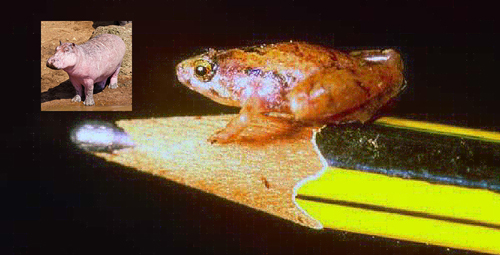
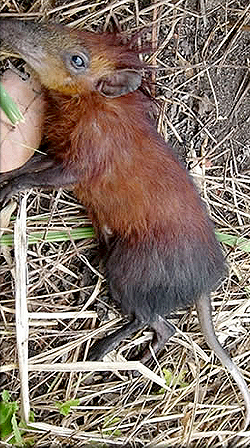
Two newly discovered life forms: it's all a matter of perspective!
Leucitic hippos, pinpoint frogs and the 18th species of elephant shrew crowd the stage as scientists celebrate the UN’s Year of Biodiversity in Nairobi this week and next.

As for any meeting, you’ve got to have that charismatic headliner, and this time it’s the still unnamed new species of elephant shrew found (right on queue) only last month in far northeastern Kenya.

There are about 7,000 new species discovered every year, although only 100 of those are vertebrates, and for sure, you can’t headline a conference with a grease eating microbe. Actually to be fair, most of the thousands are nicely sized plants, and most of the 100 vertebrates found are fish.

The International Institute for Species Exploration at Arizona State is one of three or four of the most important gatherers of this widely dispersed scientific information.

But Kenya’s new little discovery in the Boni-Dodori forest couldn’t have come at a better time, just as the conference began and just as governments and NGOs are reducing their funds for biodiversity research.

All elephant shrews are endemic to Africa, and the other 17 known to science are directly linked to elephants through DNA analysis, going way way back to before the woolly mammoth. In fact, the shrew is a much better remnant of the elephant’s common ancestor with it, than the elephant. Gigantism is an evolutionary trend that effects nearly all new species.

The shrew’s taxonomy is likely closer to the first known mammals about 240 million years ago than it is to the elephant we see today!

And that extraordinary span in time can give us a glimpse into evolutionary dynamics that, who knows, might give us a baseline to analyze the life we might find on distant Gliese 581g!

The shrew’s discovery is also important because it lives in a forest zone that is being rapidly reduced by development, and an area currently in war. The forest is on the border with Somalia.

It’s a weak argument to Kenyan military commanders that they ought to abandon fighting Al-Shabaab in order to save an elephant shrew. But it isn’t as ridiculous as it sounds. Your doubtless reaction is to smile at presumed sarcasm. But ultimately, isn’t that what we’re fighting for on all sides? A better life?

And the more we know about “life” the better we can manage our portion of it.

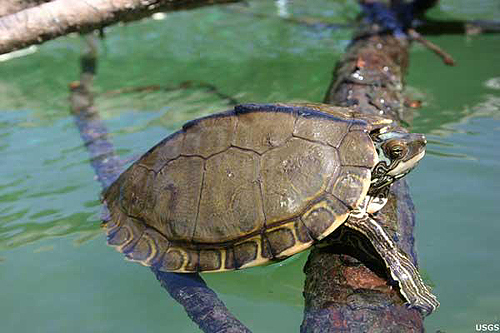
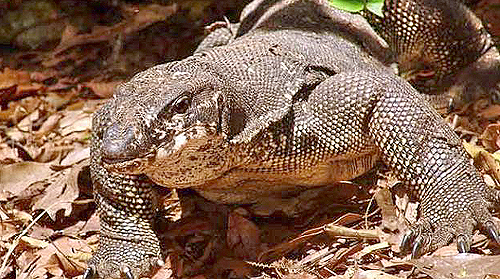
Here are some of the most recent new nonplant, nonfish newly living creatures found on our wondrous planet that will be discussed at the conference.

Smallest Frog in the World
Discovered August 25, 2010 in a pitcher plant in Borneo.
Shown in top picture above.

First U.S. Turtle Species Found in Years
Discovered July 28 , 2010 in the Pearl River in Mississippi

Monitor Lizard
Discovered May 26 , 2010, on Sulawesi, Indonesia

America aches as China & Africa soar!

America aches as China & Africa soar!

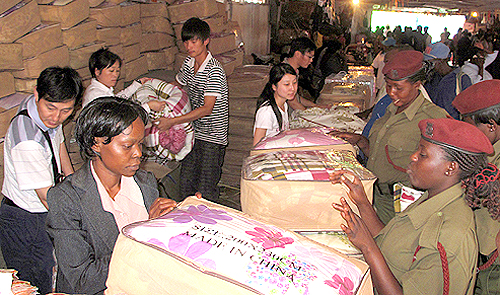
While America groans about the economy, frenzied business in Nairobi on Wednesday.
I know it’s hard for my current and past East Africa safari clients to think of that culture as competitive with our own, but watch out, America, you’re missing the obvious. And by the way, how did you celebrate the Chinese National Day yesterday?

The development in the underdeveloped world is staggering. It’s as staggering as America’s faltering. Once at the top of every metric, today America health care is last among the most developed countries, consistently behind all other developed countries in education, and a continuing slip for more than a decade in personal incomes.

Our consumption increases faster than our production. Bad dynamic. We need to sheath our pride and look to Kenya and China.

These two countries in my life time were once considered abjectly impoverished and underdeveloped. Today they are rocketing into the new world with a potential impact much greater than America’s.

Yesterday, Kenya celebrated the Chinese National Day with elaborate ceremonies in Nairobi. While America was congratulating itself on its constipated legislature passing a law that did little more than slap China on its wrist for currency manipulation, thousands of Kenyans attended a Chinese trade fair in Nairobi on Wednesday, wholesalers buying from manufacturers – it was a madhouse.

The wife of my transport manager in Arusha has a suddenly prosperous business selling Chinese textiles and clothing throughout Tanzania.

And China is getting deep oil, natural gas and precious minerals from areas in East Africa that North American companies abandoned about ten years ago, before China had developed the deep-earth technologies.

The lethargy in America today with local politics, the fatigue with a failing economy and the general overall cultural malaise is a disease of complacency and over confidence.

It’s this presumption that we were always TOP and always will be.

Wake up, America. One of the few metrics we continue to command is military spending and number of wars. And those of us with some experience in the outer world can only keep screaming about what we know: “Foreigners are doing better!” Much better. So it isn’t a problem with the world; it’s a problem with America.

Should we care?

Of course I’m happy for East Africa. But I’m American. I’m not chagrined that I’m being bettered, I’m astounded that we refuse to learn from abroad. That we continue to shoot ourselves in the foot, rather than dare to step forward into a new world.

And that new world is one of Chinas and Kenyas, and if we’re to cure our malaise, we need to look to them.

Electing a Serengeti Highway Auction

Electing a Serengeti Highway Auction

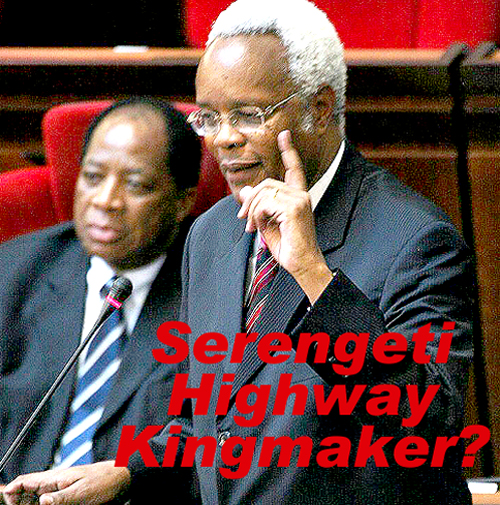
Will this man if elected determine the highway route?
The imminent election of a formerly disgraced Tanzanian politician may determine the route of the controversial Serengeti Highway.

Tanzania’s disgraced former Prime Minister launched his political comeback yesterday by vowing to push through the Serengeti highway despite environmental objections.

But in typical Tanzania PoliSpeak, Lowassa left open which route he supports. I think the man is on track to become the final power broker for how the highway is built and that he’s essentially going to put the route up for international auction.

As with everything in Tanzanian politics, a lot of reading between the lines is necessary. There is a possibility that Edward Lowassa is just a loose canon trying to avenge his disgrace, being carefully rehabilitated by power elites, or just blowing populist hot air.

Lowassa’s flamboyant political rally in Mto-wa-Mbu, specifically where the highway is scheduled to begin, came only one month before the national election on October 31. He is running on a small, opposition party ticket (Chama cha Demokrasia na Maendeleo, “Chadema”) which currently has only 6 of the 295-seats in Parliament and no national officials.

(Chadema may be the biggest threat to the ruling autocracy in Tanzania, although it’s hard to see enough victories in Parliament to impact the balance of power.)

Lowassa cannot run on the ruling party ticket, because he was thrown out in 2008. At the time he was the second most powerful man in Tanzania, its prime minister, but he got mired in one too many scandals.

He resigned as Prime Minister on February 7, 2008, after being implicated in a corrupt deal with the Houston energy firm, Richmond Development, where it was widely speculated he received enormous kickbacks for electrical services that were never delivered.

His resignation and that of other implicated ministers which immediately followed saved him from any formal investigation into the extent of criminality.

Making the Serengeti Highway a primary campaign position allies him with his former friend and now President, Jakaya Kikwete, who is also the man who forced his resignation in 2008.

But unlike Kikwete, he hasn’t specified which route — north through the Serengeti or south outside animal reserves — he favors. And listening to him yesterday at his rally, you’d think the issue wasn’t whether to lay the tarmac north or south, but whether to build a highway for the common man or preserve lions for tourists to see.

“Environmental activism should change. [Activists] should not be more concerned by the welfare of the animals than that of our people who need development,” Lowassa shouted to the cheering crowd.

Lowassa began his career as the area’s police boss, and he remains very popular locally so is likely to win. His opponent is an evangelical minister whose main campaign issue is that the election, scheduled for October 31, should not be held on the Sabbath.

Lowassa is playing both ends of the field. He can win the election and still embrace either the northern or southern route.

And then, he will become the most prominent politician whose constituency is closest to the actual highway area. He will become crucial in any negotiations down the line.

I think this is what Lowassa is doing, sneaking his way into an issue that not even the ruling elite can control, one that is certain to ensure his political rehabilitation on the national level.

He’ll give Kikwete an acceptable path towards changing his own position, which is that the northern route is the best one, while ingratiating himself into the political elite once again.

Lowassa will be up for the highest bid. That’s the nature of the guy. So NGOs, start the fund-raising, because Lowassa’s victory will be a sure sign that the highway’s route is up for auction.

White Man Poaches

White Man Poaches

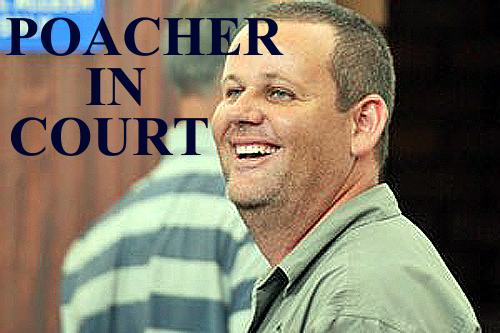
Manie du Plessis, mastermind of grand poaching syndicate.
Eleven professional WHITE people have been arrested and charged with rhino poaching in South Africa. The outcry from their colleagues is deafening and revealing. The story is fascinating.

I’ve written continuously that during hard economic times, poaching increases. Poaching is a relatively easy occupation, a job, a gig, when none others are available. The market is always there: in Yemen, especially, but also in Asia.

The mind set of those who buy poached ivory or poached rhino horn or poached bear feet is pretty simple: these are animals, which like trees to make our houses, are to be used by man. The final consumer feels no remorse and as evidenced by the many street window apothecaries in Kuala Lumpur, does not consider it a crime.

Quite to the contrary, the seller of poached animal products sincerely believes in their medicinal or symbolic value, and often claims that the legal restrictions strongest in the areas where the animal is actually killed are affronts by arrogant cultures.

And the archetypal culprit who kills the animal is usually an individual African down on his luck.

Well, guess what. There’s more to it. What wildlife conservationists have been telling us for years was underscored last week when 11 professional South Africans including veterinarians, professionally licensed hunters and respected local community officials were indicted for a huge poaching ring that South African police spokesman Vishnu Naidoo said was linked to “hundreds of rhino poaching incidents.”

The eleven respected wildlife professionals arrested in a multi-agency sting in South Africa last week included game farmer, Dawie Groenewald; his wife, Sariette; licensed veterinarian, Karel Toed and his wife, Maria Toed; licensed veterinarian, Maine du Plessis; and professional hunters, Tollman Room Erasmus, Dallied Gouws, Nordus Rossouw, Leon van der Merwe and Jacobus Marthinus Pronk; and a game farm employee, Paul Matoromela.

Naidoo told the press Thursday that the suspects are believed to be the “masterminds” behind South Africa’s poaching scourge, which has claimed the lives of 210 rhinos already this year.

White rhinos are flourishing in South Africa. There are many scientists, in fact, who claim there are too many and that culling should be considered in some places. (This in contrast to black rhino which remain seriously endangered. The horns, however, are not differentiated on the black market.)

CITES is the international treaty designed to stop such poaching, and it does a pretty good job. Its mandate, too, is quite simple. Have enough countries in the world sign a treaty that forbids the trade of certain animals across its borders.

That suffocates the market and means that the animal killer becomes much less important than the syndicate of criminals that distributes the animal product as contraband.

That’s why CITES is so important. The many parts of the distribution chain become criminalized, and ultimately when all parts particularly in the Far East are aggressively pursued by legal authorities, then the market dries up, and killing the animal becomes pointless.

Because killing the animal is the easiest thing to do.

A lot has been written about South Africa’s tourist boom this year, linked to the successful World Cup. But the truth is that when football enthusiasts are removed from the numbers, we’re still at revenue levels around 2004, 20% below where they were in 2007.

Game farms in South Africa, from where this particular atrocity was apparently managed, are kind of down on their luck at the moment. Farming a protected animal and butchering it for the black market was an opportunity these “professionals” felt they couldn’t pass up.

We don’t know if these 11 Afrikaners had lost their insurance, or couldn’t pay their kids’ college tuition, or had farms being foreclosed. I don’t know if any situation of this sort would garner them sympathy from you, any more than the poor African in Tanzania who poaches a wildebeest for food might.

That is the other side of the market, the darker one. The side that drives people to the crime. The side that is much harder to remedy.

The other fascinating part of this story is the local reaction. I am privy to an exchange of private emails among professionals in South Africa that I consider somewhat appalling. And there is plenty in the public blogosphere you can google.

Other … whites .. are reacting with ridiculous fury, as if whites would never do such a thing. As if poaching like this is something only the uncivilized black would do. Here is a piece from just such an email I received this weekend:

“Hello —– ,
I am APPALLED, SHOCKED, DEVASTATED, DISAPPOINTED, BLOODY ANGRY!!!!!!! How DARE these people, in positions of trust and responsibility, and WORST OF ALL, our own people, from whom we would LEAST EXPECT this uttterly disgusting and traitorous behaviour.”

The presumption that the criminals involved in poaching are not usually “our own people” unsheathes a terrible racism. It isn’t the animal killer who is most responsible. It is the transporter, contraband arranger and most guilty, the purchaser. These criminals have much more culture in common with Manie du Plessis than the unnamed black man in Tanzania.

And they are much more responsible for poaching in the first place.

Kudus to the South African police and wildlife agencies that managed this sting. Spread the world that poaching is on the rise and that aggressive police action worldwide is required. And most importantly:

Forget that these guys were white. And if you can’t, we’ve got a lot more blogs to write but it isn’t about poaching.

Let Africa Kill the Gays

Let Africa Kill the Gays

The puppet, David Bahati, and the puppeteer, Sen. Jim DeMint.
Can we not stop this insanity?
Polarization, craziness, lies near insanity does not a physical mark make. Until vigilantes bash heads in Cleveland and my safari clients are tortured in Ugandan prisons.

It hasn’t yet happened, but I have reason to worry. Yesterday, I blogged that we should take note of the violence occurring by Kenyan vigilantes as a trend developing here at home, and today we hear that the Ugandan MP promoting a bill to execute gays and imprison any who know of gays (including tourists) rigged his recent re-election.

David Bahati is the crazy, and the confident of President Yoweri Museveni of Uganda, and “Christian brother” of Sen. Jim DeMint (R-SC). Like so much vicious anger in the world, today, he’s the puppet of the American Christian Right.

His story, and his puppetry, is not news. Click here for a video condensing all the news in which he’s been involved for the last several years.

Basically, since our legion of crazy rightists has conceded they probably won’t be able to execute gays at home, they’ve decided to pour resources into Africa so it can be done, there.

If Bahati’s bill becomes law, and I have safari clients trekking gorillas in Bwindi National Forest (like I did last week), and those clients innocently remark about something gay-related, they could be arrested! And god (is there one?) forbid, if one of them mentions that he/she is gay, he/she could be arrested and executed!

And all of this, the polarization, craziness, lies near insanity, AND Cleveland vigilantes AND Ugandan homophobes all comes from the United States’ Christian Right, and pointedly, the “Family” who resides in “C Street” in D.C.

Bahati’s reelection was challenged by someone who was sane, Charles Musekura, who had strong support for a number of reasons not least of which is that most sane Ugandans don’t think you should execute gays!

But Bahati had the money. We can guess from where. And he had the tricks, too:

Michael Mubangizi, a respected reporter for the Ugandan Observer, reports that the recently concluded reelection campaigns including Bahati’s were rigged. They were rigged in quite simple ways. People were selling ballots that were then counted with names that didn’t exist. Up to 5,000 ballots illegitimate ballots may have helped to reelected Bahati.

Led by Sen. DeMint (R-SC), this “movement” that claims the moral high ground is one of the most evil social phenomenon ever seen in the world. I just can’t understand for the life of me why they are so prominent and hold so much power.

Just as I cannot understand why there are vigilantes in Cleveland.

But these machinations of hate are something that we must all try very hard to understand, whether in Cleveland or Uganda. They aren’t just wrong, they’re crazy. Their perpetrators aren’t going to be convinced by logical argument.

And as evidenced by Bahati in his recent reelection, nothing legal or sane alone is going to stop them.

Here is a list of the most prominent C Street players. Unless we stop them, this insanity will continue:

Chuck Colson, Watergate felon
Rep. Bart Stupak (D-MI)
Rep. Chuck Pickering (formerly R-MS)
Rep. Frank Wolf (R-VA)
Rep. Heath Shuler (D-NC)
Rep. Joe Pitts (R-PA)
Rep. Mike Doyle (D-PA)
Rep. Mike McIntyre (D-NC)
Rep. Zach Wamp (R-TN)
Sen. Bill Nelson (D-FL)
Sen. Chuck Grassley (R-IA)
Sen. Jim Inhofe (R-OK)
Sen. Jim DeMint (R-SC)
Sen. John Ensign (R-NV)
Sen. Mark Pryor (D-AK)
Sen. Mike Enzi (R-WY)
Sen. Sam Brownback (R-KS)
Sen. Tom Coburn (R-OK)

Whose Law? Yours or Mine?

Whose Law? Yours or Mine?

Everywhere in the world crazies are sprouting from the misery of the economic downturn. And we should take note particularly with what’s happening in Kenya.

Kenya may be the most dynamic emerging society in the world. It ended a mini-revolution with an imaginative coalition between radically different sides, then passed a new, modern constitution that in my opinion is an universal model for morality, human rights and dignity.

These clarion democratic ideals have empowered even the weakest sections of its society, as they should. And the weakest sections of a Kenyan society are far weaker than here, for example!

We may have an embarrassing one out of six Americans in poverty but Kenya’s is much worse off. It’s likely closer to one out of two!

But poverty in Kenya is a strata quite different from in the U.S. A huge portion of that half of its population still lives relatively calmly in subsistence, not in dependence of society as American poor, do.

But a growing portion of Kenyan poor are amassing in bulging slums surroundings its cities. And in these cesspits of humanity, political awareness and higher education combine in volatile ways.

That was why there was such violence after the contested election of 2007, an election which pitted two very different men against one another. It is very fair to call that an election one of the poor against the rich.

(It is also why the resolution of that conflict was so astounding. Of all the opposites in society, none is as irreconcilable as rich vs. poor.)

Rich versus poor is a pretty simple concept. In Kenya, as this fire burned, it morphed into Luo versus Kikuyu, tribe against tribe. An economic controversy has all sorts of academic qualifiers. Ethnic ones don’t.

What was a panoply of issues with lots of gray between, became black and white. A rich man could argue that the poor will get richer faster if they let him get richer, first! And the poor could argue that their drain on society impedes the rapid growth enjoyed mostly by the rich. So each side is blurred. Each side attracts advocates from the other.

But you can’t change the way you’ve been born. A Luo can’t convince his neighbor the Kikuyu that they share physical genes. That battle was demarcated by god.

That hate is more than visceral, it’s innate.

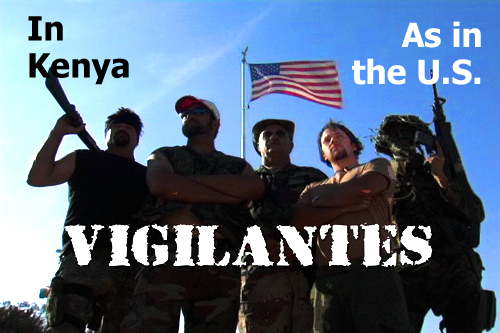
And it has lead in Kenya to vigilante groups springing up throughout the country. This is now Kenya’s greatest social problem.

And when one vigilante group grows very powerful and successful, a remarkable transformation albeit transitory occurs: Society as a whole begins first to tolerate, then later, embrace the thugs. It’s so simple, so nice. No complicated qualifiers, just a mafia leader to tell us what to do.

Mungiki is Kenya’s mob. Born in the slums, its leaders now live in grand houses and control huge businesses. From time to time the government indicts them, or even brings them to trial, and most of the time juries find them guilty of nothing. It started as a Kikuyu-based vigilante group. But today it reins across different cities the way mobsters did in the first half of America’s 20th Century.

There are places in Kenya where it’s impossible to become an elected official without the support of the Mungiki. And you know what that means.

And there are more and more wannabees around the country. Two days ago in a remote area of western Kenya, far from Nairobi and the Mungiki and modern life, 50 youths calling themselves “Sungusungu” stormed a village and hacked to death four people, then trashed their homes.

Sungusungu claims it was avenging the recent murder of a Kenya Assemblies of God church pastor, Mr Michael Onchong’a Nyakundi.

Yes, religion is an easy infusion into these vigilante movements. Ever watch the movie where the mob leader regularly goes to mass?

Kenya has an advantage in this stage of its development that America didn’t have during the years of prohibition. It has more facts, more history, more outcomes that proved how counterproductive the mob was over the long run. Kenya knows from America’s history that vigilante society is self-destructive and ultimately puts itself out.

And while these may be somewhat illusive concepts, they’re real enough I believe to help Kenya get through this period faster than we did in America.

Oh. Did we get through them?

Safaris are getting expensive!

Safaris are getting expensive!

Will increasing safari costs scare away new visitors?
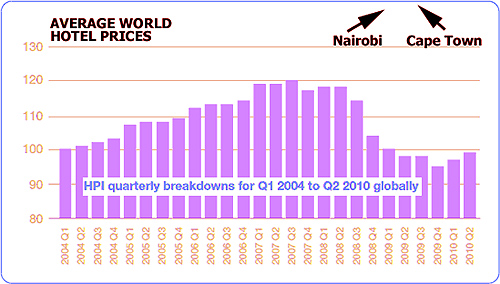
As if you didn’t already know, it’s official! This year Africa (Cape Town and Nairobi in particular) saw the highest hotel price increases in the world!

Last week the HPI Index was released by the UK company, Hotels.com. Their biannual report is one of the most accurate and heavily used in the industry.

Of the 15,750 locations surveyed, the Number One city with greatest increase in cost from last year to this was Cape Town (54%), the second was Shanghai, and the third was Nairobi (31%)!

What is even more telling is that both Cape Town and Nairobi are inching their way up into the top ten most expensive hotels in the world. Right now, Geneva holds that rank ($232), but Nairobi is $216 and Cape Town $180.

Overall, world prices have recovered only to where they were in 2004. They peaked in the third quarter of 2007, at that time 20% higher than 2004. World-wide, therefore, prices remain depressed by about 18% from before the economic downturn.

But not African cities! Why?

Cape Town’s answer is simple: the World Cup. Nairobi’s answer is more complicated but is basically two-fold: China and political stability.

China is investing so incredibly heavily in Kenya that it’s pushing up all prices related to visiting one of Kenya’s principal cities (Nairobi or Mombasa). You can’t build a road or drill an oil well without thousands often tens of thousands of builders and consultants that need a place to stay.

And a close second is the marvelous turnaround Kenya has pulled off in the political arena: a new constitution is in place. The city has attracted some of the world’s most prestigious world conferences as result, with tens of thousands of delegates.

This incredible spike in prices in these two African cities has elevated safari prices in the bush, but that seems counterproductive to me. Because occupancies in the bush are falling, after a short surge in 2009. Nevertheless, most properties in the bush have their offices if not sister properties in the city, and the effect was unstoppable.

My prediction isn’t rocket science. I think Cape Town will slip (there isn’t another World Cup coming into town) and Nairobi will stabilize but continue its slow growth upwards.

As for safari prices, I think they will start to disentangle themselves from the anomalies in their cities. 2011 will be a good year for safari vendors, but not as good as 2010, so I think we’ll start to see an end to increases if not actual drops in prices by the end of 2010.

For those of you thinking of going on safari, though, I’m not sure you’ll notice anything. In fact, American resellers increased their costs three or four times greater than the hotels in 2009. This is because they had so heavily discounted them during the economic downturn.

So for the end-consumer, I predict prices will remain the same. What we may see, though, is a return to the great last-minute deals that characterized 2008 and 2009. These were often restricted to same company safaris or very specific lengths of stay, but if you could tolerate the lack of flexibility, it often meant savings of up to a third.

These were heavily booked especially by veteran safari travelers, visitors who had already been introduced to the safari world and knew what they liked and didn’t. So if you’re one of those, and capable of going within a month or two of an announced deal, keep that computer internet engine fired up!

Our Arthritic Fingers are Still Crossed

Our Arthritic Fingers are Still Crossed

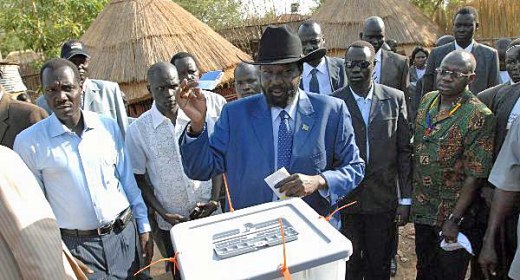
Salva Kiir practicing for an election he has waited for for 27 years.
The years and years of violence, genocide, child soldiers and poverty in the midst of the world’s greatest riches may be coming to an end in The Sudan, even as new obstacles presented themselves this week.

Against all odds and every expert’s prediction, the beleaguered and troubled Sudan, Africa’s largest country and guardian of its greatest length of Nile, agreed nearly five years ago to begin a peace process that should end in a few months.

That final of hundreds of steps and missteps is a national referendum that will allow the non-Arab south of the country to secede. And with it goes 80% of Sudan’s enormous and mostly untapped oil reserves.

Who on earth would have thought that the recalcitrant government of Khartoum, the one which is headed by the only sitting world leader indicted by The Hague for war crimes against humanity, the man who cannot travel anywhere without being arrested, has agreed to excise four-fifths of his nation’s wealth?

The answer is not simple, but the simplest way to convey its myriad of complications is that believe it or not, Gen. Omar al-Bashir finally concluded (as half of his life passed before him) that not to do so would cost him greater than trying to keep it.

Patient world diplomacy, patient sanctions changed this dictator’s mind.

At least until last week.

As we race towards a finish line on this generational marathon, Bashir’s government is stalling. That doesn’t strike me as very odd. Imagine having agreed to settle a class action suit against your drug company by giving 80% of it away. It’s a rather tough decision to come to, and once made, there’s going to be a number of second thoughts.

No one’s taking any chances, though. Next week at the UN one of the few meetings that President Obama will hold, with the UN Secretary General, Ban Ki-moon, are two high ranking Sudanese officials. (They can’t meet with Bashir, because if he stepped foot in the U.S. he would be arrested with an international court warrant.)

Headlines around the world are calling this “Obama’s rescue” and in a sense, I can understand the headline but I think it’s mostly opprobrium.

Patience is the key, patience even as the marathon comes to an end. And when it does, is there a possibility we could apply this masterful patience to places like, oh say, Afghanistan?

Friends Traveling with Friends

Friends Traveling with Friends

An unusual short Saturday blog, just a bit off topic. But yesterday I began to wonder if friends traveling with friends is everything it’s cut out to be.

For African tourism it seems absolutely essential to our survival! In fact, the idea of a “family trip” – now propagated throughout the industry – began in the 1970s with “family safaris.”

But yesterday as I was invited to a presentation at a local service organization of an African safari that one of the members took, I happened to have the most dissimulating thoughts.

Don’t we enjoy vacations in part because we can “get away?” And doesn’t “get away” mean from everything normal, all our normal responsibilities and social chores? Surely “getting away” doesn’t mean eating every single meal at the same table with someone important to your board or next fund raiser.

Or bringing along the kids that you had to kick out of bed for school and reprimand after their first drunk!

Or, for that matter, making sure that Mom or Dad eats a good enough breakfast.

This sounds heartless! It is! Personally, being a bonafide tour guide, there’s no vacation I can think of where I wouldn’t want my friends and family.

But not everyone is like that. Yesterday, I stood next to one of the nicest persons I’ve ever met, who with me was watching this wonderful presentation of a safari, in a packed room where we were just onlookers like everyone else.

And I remembered how “responsible” she had been during the trip to the group of friends she had organized. And I began to ask myself, Was that fair? Did she have any time at all to relax and absorb the wonder?

Saturday morning thoughts. Good with a strong cup of Kenyan tea.

Serengeti Highway Update

Serengeti Highway Update

Keep on trekkin, guys! Relief just over the next ridge!
Unfortunately the American zoo convention ending today in Houston will make no statement about the Serengeti highway, but other news is promising.

You can think of the zoos inaction in either of two ways: (1) this seemingly impressive group of American conservationists is just too amorphous and internally divisive to reach consensus on anything; or (2) like so much of America right now, doing nothing is the greatest achievement possible.

This is particularly true in light of the recent Nature article in which virtually every important researcher in the Serengeti signed on. This included the Americans George Schaller of the Bronx Zoo, Anna and father Richard Estes, Andrew Dobson of Princeton and the adopted American, Charles Folley. They were among 27 prestigious scientists who contributed to an article entitled, “Road will ruin Serengeti.”

And there’s more at home:

Tanzanian media, which while not government controlled is certainly government suppressed, has been growing increasingly bold in opposing the proposed construction.

Dar-es-Salaam’s largest newspaper, The Citizen, today reposted an old story about UNESCO considering withdrawing the Serengeti’s World Heritage status if the road is laid. What’s so interesting about this is that the paper got the permanent secretary, the career civil servant who heads Tanzania’s Ministry of Natural Resources and Tourism, to lie … sort of.

While it takes reading between the lines, I’m absolutely certain this is what the article intended. Dr Ladislaus Komba told The Citizen that UNESCO had “suspended its warning” after being assured that new environmental studies would first be conducted.

That’s probably not true. At least UNESCO will not confirm its true. The last policy report focusing on the Serengeti issued by WHC can be read by clicking here and that was in 2003. At the recent meeting in Brasilia, there was resolution statement that is, indeed, a warning that policy could change if the road is built.

But The Citizen has unmasked Komba for inverting events. The Tanzanian government offer to make new environmental studies came well before the WHC conference in Brasilia last month, where all the news and hearsay, and “warning” was reported.

There has been no official suspension by WHC of that warning. In fact the warning warns they better make good on past promises, which include a better environmental study than currently on the table. So no official suspension of anything, therefore. And page one news in Tanzania, now.

There’s been a lot of dosie-dose going around the ridiculous presumption that forceful opposition will make the Tanzanian leadership close ranks on this issue. First of all, that just isn’t true. There has been much forceful opposition (double-down on that Nature article) from the getgo. And now the Kenyan Government itself has become involved.

The wimps have claimed the Kenyans have been silent, because they too didn’t want to upset the Tanzanians any further. Balderdash. The Kenyans have had other things filling their agenda… like a new constitutional referendum, a World Court investigation of their politicians and war on the border with Somalia.

So I have to admit I was pleasantly surprised when Komba’s counterpart in Kenya, Mohammed Wa-Mwachai, issued a statement last week that said in part, “We have instructed our Tanzanian High Commission to set the stage for negotiations [about the Serengeti highway] and we hope to come up with an amicable solution.”

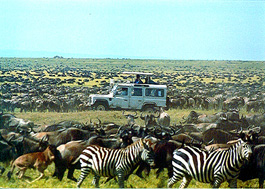
The Kenyans, actually, have the most to lose. Their one great remaining game park with large herbivore herds roaming the plains is the Maasai Mara, the top of the Serengeti ecosystem. The reduction of the current 1+ million wildebeest to less than 300,000 as estimated by the Nature article would cripple Kenyan safari tourism.

So we’re sorry that the American zoos were composed mostly of invertebrates, but keep the pressure up. In sum, the news has been good!

Delta Force not Safe in Kenya

Delta Force not Safe in Kenya

Who looks tougher?
The U.S. still doesn’t think Kenya is safe enough to fly a plane into. And it’s probably right if it’s an American plane.

There was an enormous brouhaha in Kenya this week as Delta Airlines began service into its sixth African city, Monrovia (Liberia). Tempers are still flared from last year’s debacle when Delta canceled service into Nairobi two hours before the inaugural flight was set to take-off from Atlanta.

Delta canceled when the TSA (Transportation Security Administration) exercised its veto authority over Delta’s FAA (Federal Aviation Administration) license to operate into Kenya.

Delta wants to fly to Nairobi. It has been expanding rapidly into Africa and had scheduled service to begin to Nairobi on June 2, 2009. The champagne was stacked on tables, officials were planning to line up on the tarmac, Delta had given 26 free seats to a seventh grade choral group from Atlanta, and an entire Delta business with offices and employees had been set up in Nairobi.

Today the airline flies to seven cities in Africa: Liberia (Monrovia), Accra (Ghana), Abuja and Lagos (Nigeria), Cairo (Egypt) and Johannesburg (South Africa).

But the inaugural flight into Monrovia last week dumped a keg of petrol on the simmering emotions. Liberia is less than ten years out of a near apocalyptic civil war that slaughtered millions. Its leader at the time, Charles Taylor, is currently on trial in The Hague for crimes against humanity.

One of East Africa’s most respected blogs yesterday quoted an unnamed Kenyan government official as saying, “Did Obama’s father not come from here? What issues does he have with us? We even gave him a special paternal home attraction near Kisumu and for what – that we can be pushed around by them?”

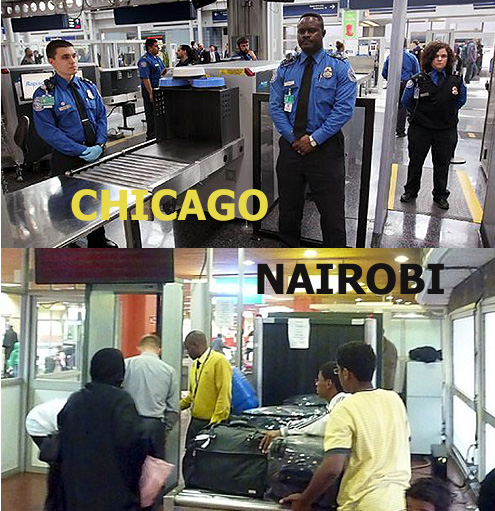
But the fact remains – and I hate to say it – Nairobi airport security isn’t good, and there’s not going to be any flight from America until it is.

Nairobi is an essential market for European airlines, but passengers on British Airways and KLM actually march through security twice before boarding the plane. Both BA and KLM bring down their own machinery and security personnel from Europe, and all passengers after passing through the normal gate security supplied by Kenyan airport personnel, then pass through the individual airline security.

Those second levels are good. The irony, of course, is that this diminishes even further the quality of the Nairobi security. The Kenyan security personnel know it doesn’t matter what they do, that the real security comes later. And these folks rotate between the many other airlines in the airport, carrying their laissez-fare attitude with them.

So it’s sort of a death knoll repeated time and again as far as Delta is concerned. TSA will not accept the airline’s own efforts, as authorities in Britain and the Netherlands obviously do.

But there’s another angle to the story worth considering. I’ve talked to a few people in Kenya who believe despite the posturing, Kenyan officials are quite relieved Delta isn’t going to fly in. They argue that America is so hated in the Muslim world right now, and they point out that Kenya is on the edge of all the controversies.

Delta might attract terrorism in a way British Airways or KLM don’t.

Be that as it may, TSA played the trump. And TSA is only concerned with at-the-airport security. Homeland Security and the FAA are the agencies that could nix the deal for those more global issues. And right now, they have both given a pass to Delta to fly.

I wouldn’t expect a flight from America to Nairobi for a long, long time.