Urbanization: The Rising Tide That Will Lift All Boats…or Sink Them

Urbanization: The Rising Tide That Will Lift All Boats…or Sink Them

by Conor Godfrey on March 22, 2011

When I lived in Guinea I would make a trip to my regional capital once a month to meet with other Peace Corps volunteers, chat in English, and buy beer and toilet paper.

A lot of volunteers would note that coming into the city felt like entering “real Africa.”

This is obviously a nonsense term, but let me explain why it felt reasonable to say it: while I loved my sleepy little agricultural village, there was not a whole lot going on.

The only thing that had changed in the previous century was probably the use of cell phones. Now you could climb a mountain 5 km away for spotty service.

But things were constantly happening in the cities.
Conakary

People watched the news on T.V. and talked about current events; entrepreneurs hawked any and everything on the street; people played live music at cafes and restaurants; and young, sharp looking men and women brimmed with self confidence.

It felt like the “real Africa.”

Statistically, this will be true by 2025, when ~60% of Africa’s population will live in urban areas.
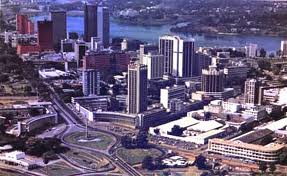
Abijan
Africa is now in the grips of one of the fastest urbanizations in history.

From the turn of the 21st century to 2030, the continent’s urban population will increase by over 150%, rising from around 300 million today to over 740 million.

Read a great Afribiz article on this transformation here.

The economist Africa blog also ran an interesting map on the growth of African. Look here to find out which cities will overtake Cairo as the continent’s largest.
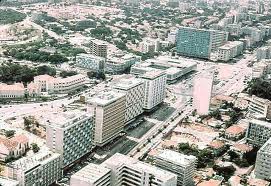
Luanda

Africa is just now reaching the levels of urbanization that fueled growth in China and India.

By 2025 some parts of Africa will actually be much more urban than their Asian counterparts. See the table on the 2nd page of this UN Habitat report for comparisons.

African cities are not ready for this influx.

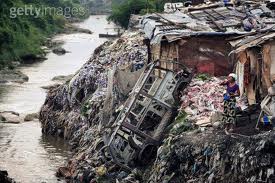
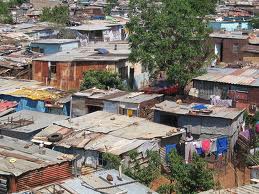
Underserved slums will expand and get slummier.
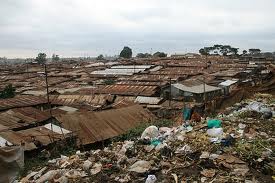
Kibera
The classic examples of sprawling African slums such as Kibera in Nairobi, or this neighborhood in Kinshasa, will multiply.
Kinshasa Neighborhood

There is a chorus of experts who claim that urban design and city planning will top the list of Africa’s challenges from 2000-2050. Find another good blog entry from the Economist here.

The challenges posed by cities are obvious: how can relatively poor countries furnish new city dwellers with adequate health, sanitation, and security services?

How will all those people be fed and educated? And what will this mass of young, often unemployed men do when these services are not adequately provided?

These cities will be hotbeds of everything from HIV to insurrection. They will, however, also be hotbeds of innovation and investment.

One of the largest problems with investing in Africa is the fragmented nature of the markets.

It does not pay to bring a fiber-optic internet cable to a village of 500 people, but supplying the two dozen or so African cites that will be bigger than Rome in the next 20 years will certainly create viable revenue streams.
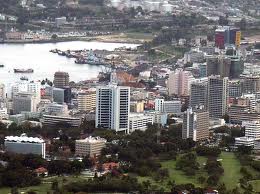
Dar es Salaam
Entrepreneurs will meet financiers in these new cities; financial services will expand to meet the needs of city dwellers; health insurance and other risk pooling schemes will function; technology will become more affordable; and ubiquitous, foreign companies that sell consumer products and services like purses and cell phones will set up shop (as they already are doing) and create jobs….the benefits of urbanization cannot be exaggerated.

The wave is already beginning to crash on underprepared African cities. But- If African leaders can mitigate some of the consequences of urbanization with forward thinking city planning, than I think urbanization on the continent will continue to drive a period of growth unprecedented in Africa’s history.
Intervention is Back on the Menu

Intervention is Back on the Menu

by Conor Godfrey on March 21, 2011

It’s happening.

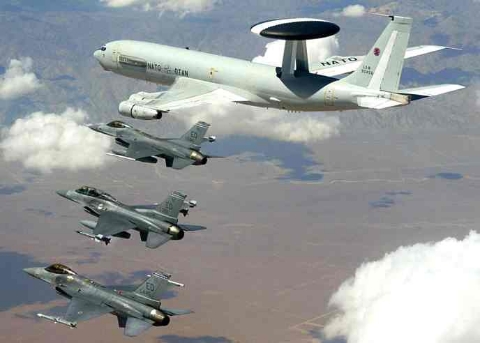
If I had told you four weeks ago that U.S. forces would be bombing another Muslim country in less than a month, you would have said that I was out of my mind.

As I write this, U.S. carriers are beginning a second night of cruise missile strikes against Libyan air defenses to clear the way for Europe’s air forces to halt the advance of Colonel Ghaddafi’s forces toward the rebel stronghold of Benghazi.

What made this ok?

Well, the Security Council resolution made it ok.

But beyond that- which aspects of the situation in Libya made intervention conscionable by all five permanent members of the Security Council?

As I understand it, the following combination of circumstances made intervention in Libya palatable to the powers that be:

1. Clear and present danger to large numbers of civilians. Of course, many of these civilians had taken up arms in a combination of rebellion and self-defense, thus slightly complicating the notion of ‘unarmed civilians’.

2. Acquiescence by the relevant regional/cultural body. In this case, the Arab League.

3. The speed at which events unfolded. Benghazi was going to fall and fall fast. The rebels were outgunned and outmatched, and it was too late in the game for indirect assistance.

4. Nobody cares. Libya, while an important crude supplier, does not have a powerful backer. China and Russia may not be happy about the precedent of interfering in another country’s internal affairs, but we are not talking about North Korea, Bahrain, or Belarus, whose fate is of great concern to China, Saudi Arabia, or Russia, respectively.

5. Plausibility. Libya does not have a nuclear weapon or a massive army. Concerted military action will halt Ghaddafi’s advance. Notice I said plausibility, not likelihood, of success. I think this will most likely lead to a stalemate and short term partition between East and West Libya.

So people were dying, the main regional body agreed with the international community on who the bad guys were, the bad guys were winning, nobody powerful enough to put the kibosh on the intervention had vital national interests at stake, and the Libyan army simply doesn’t have what it takes to shoot down too many Western fighter planes.

Lets apply these metrics to another conflict, say, Cote d’Ivoire.

1) Civilians dying, and likely to continue dying in greater numbers…..check. (500 to date and escalating.)

2) Agreement from major regional/cultural grouping on who the bad guys are…..check. (ECOWAS, and the AU have clearly stated the Gbagbo must step down.)

3) Violence escalating quickly ……..1/2 check. (Clashes are indeed increasing in pro-Outtara districts, but not at the rate that Ghaddafi’s forces were gaining ground in Libya.)

4) Nobody cares………check. (While many countries have major investments in Cote d’Ivoire, none of the Security Council members think of Gbagbo as promoting their most vital national interests.)

5) Plausibility……1/2 check. (Removing Gbagbo would likely require someone’s boots on the ground. In theory, the 10,000 U.N. troops in Cote d’Ivoire should be the ones protecting civilians, but they have not been that aggressive in executing this mandate.)

So what do you think?

Is it just a matter of degree?

Were there simply more people dying in Libya, and dying faster?

Was ECOWAS (West African regional grouping) more divided than the Arab league?

I think these are all reasonable arguments, but I worry that now, as always, ambiguity reigns when deciding when and how to intervene.

This ambiguity affects the strategic calculus of rights abusers like Gbagbo—I think he knows that African countries will not coalesce around major military action.

Yesterday President Ouattara called on the international community to “passer a l’action,” in order to protect civilians and to give him the means to govern the country.

I hope the Security Council can explain why warplanes aren’t on the way.

Is South Africa a “Welfare State or A Developmental State?”

Is South Africa a “Welfare State or A Developmental State?”

By Conor Godfrey, on March 18, 2011

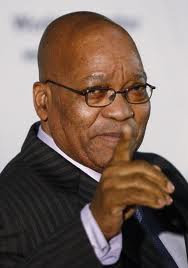
Near the end of Jacob Zuma’s recent State of the Nation address, he made the point, “[South Africa is] building a developmental and not a welfare state..”

Welfare vs. Developmental State. This intrigues me.

Selling South Africa as a developmental state is tough; currently 30% of South Africa’s 50 million people receive some type of social assistance grant—this could be child support, old age support, veteran and disability benefits, etc…

The number of beneficiaries has skyrocketed in recent history—up 300% since 2000.

This led opposition politician Mario Oriani-Ambrosini, of the Inkatha Freedom Party, to claim that “South Africa is a welfare state which dreams of becoming a developmental state.”

But what is South Africa to do?

In 1994 when Nelson Mandela took his long walk to freedom South Africa was two countries—one was among the world’s most developed, and the other among the least.

That is still largely true.

In fact, South Africa is more unequal now than in 1994. (Commentators often point out that inequality usually increases as economic growth increases.)

The Two South Africas

How could the African/Colored/Indian populations just snap their fingers and compete with the white populations who had benefited for so long from schooling, finances, geography, access to political power, skills training—everything?

Thus the South African state began a long term black empowerment strategy that, in its current manifestation, is referred to as the Broad Based Black Economic Empowerment Codes (BEE for short).

This required, and still does require, a degree of intervention in economic and state affairs that would be unthinkable in most other countries.

Almost everyone—conservatives or liberal, Afrikaner or Black, Malay or Indian—agrees that South Africa is a special case, and needs to target previously disenfranchised populations with additional help.

The agreement stops there. How much assistance, for how long, and under what conditions, remains extremely contentious.

***(Last week I was speaking with a South African living in the U.S. who told me that South Africa has had ‘one man, one vote, one time’ for more than 15 years, and if Black business can’t compete yet, then they never will… If I may be allowed a slight exaggeration, that would be similar to telling a Black American family in 1878 that they had been free for 15 years, and now they should be able to compete freely and equally in business and society.)***

Americans have been sharpening their arguments on the role of the government for centuries, but I am not sure our tired tag lines on big and small government relate to a situation like South Africa’s.

There are certainly vulnerable, historically disenfranchised communities in the United States— but it’s all a matter of degree.

The side-by-side nature of South African inequality also makes the situation incredibly volatile. Black townships where most of the population lives far below the poverty line exist only kilometers away from affluent, mostly non-black neighborhoods (not unlike parts of the U.S.).

How can the ANC, whose control of the government depends on massive support from poor, black voters, withdraw social support from Black communities that see everyday how ‘wealthy’ the other South Africa is?

Even if the ANC government thought that money would be better spent on job creation initiatives, or education, or health, projects that might reduce dependency, I don’t see how it would be politically feasible for South Africa to transform itself from a welfare to a developmental state.

In that is the case, South Africa needs to achieve the 6% or 7% growth necessary to bring down unemployment without breaking the social safety net.

I’ll stop here, because at this point readers can just turn on CNN for the rest of the arguments. African political problems really aren’t that foreign after all.

So You Want to Write on Africa…

So You Want to Write on Africa…

by Conor Godfrey on March 17, 2011

I was going to continue exploring why some people, or states, support pariah regimes (this time with a more sympathetic view towards the supporters), but I was side tracked by a wonderful article from GRANTA magazine entitled “How to Write About Africa”. (The article is actually from a while back)

Please read it. It is not so long, and it will make you laugh, and maybe cry a little on the inside.

“How to Write About Africa” is a spoof how-to for would be journalists or novelists writing on Africa.

It offers advice like; “Never have a picture of a well-adjusted African on the cover of your book, or in it, unless that African has won the Nobel Prize.

An AK-47, prominent ribs, naked breasts: use these.”

These are taboos; “ordinary domestic scenes, love between Africans (unless a death is involved), references to African writers or intellectuals, mention of school-going children who are not suffering from yaws or Ebola fever or female genital mutilation”.

One last excerpt.

After forbidding would-be writers to discuss normal African family life or run-of-the mill dreams and ambitions, the author states that…”Animals, on the other hand, must be treated as well rounded, complex characters.

They speak (or grunt while tossing their manes proudly) and have names, ambitions and desires.

They also have family values: see how lions teach their children?

Elephants are caring, and are good feminists or dignified patriarchs. So are gorillas.

Never, ever say anything negative about an elephant or a gorilla.”

You get the idea.

In the last few years I think serious journalists have begun to realize their Africa play book was not only out of date; it was absurd.

African authors, inventors, artists and other public figures have brought actual African perspectives to the fore, and BBC and RFI programs on Africa now routinely feature African commentators. From time to time BBCs African perspective podcast is quite good.

I remember the first time an African-American friend of mine took me through Disney movies and pointed out how all the lazy, slovenly but good natured characters with bad diction had southern African American accents, all the hyper, overly risky and violent prone characters had Latin American accents, and suspicious, shifty eyed traders inevitably sounded Middle Eastern.

I wondered how my entire childhood this blatant negative stereotyping escaped me….

(By the way- Disney heard this criticism loud and clear, their modern stuff has been much better. But if you haven’t been given this tour, go back and check out the classics like Jungle Book, Dumbo, Aristocats, Aladdin, the Little Mermaid…you will cringe.)

I get that same feeling now when I read articles on Africa that fit the GRANTA piece’s spoof advice.

But Africa writing has come a long way in the last five or so years…

This is what New York Times writing on health looked like in 2004.

This is the tone of 2010.

This is what an article on African education looked like in 2004.

This is what it looked like in 2010.

I am obviously cherry-picking from hundreds of articles, but in my opinion these are reasonably representative samples.

When you read the 2004 pieces you might say- “well how can someone talk about this awful situation, be it health or education, in a positive way?”

That is not the journalist’s job. The state of health and education in many African countries was, and still is, in need of serious work.

But in 2004 the journalists rolled around and wallowed in the helplessness and misery of it all.

The 2010 pieces touched on the barriers to health and education, and then went on to evaluate what people are doing about it.

In other words, I am not asking that people write only positive articles about Africa, simply that they use the same intellectual and investigative tools that they apply to other regions of the world.

A nuanced description of the problem- a 3d portrait of some of the people it affects—a briefing on the obstacles—and an overview of how people/institutions are dealing with it.

Spare me the wallowing.

As always, I am exempting the horrible situations in some conflict zones where misery over-rides other aspects of life. These are, thankfully, few and far between.

What Does Success Look Like?

What Does Success Look Like?

by Conor Godfrey on March 15, 2011

What do you get when you spend no money on defense, and instead funnel the vast majority of your budget into developing your population, including huge tranches on universal health care and education?

What if you also embrace intense multiculturalism, and reach out to historical trading partners in India, Europe, Africa, and the Middle East.

Don’t stop there.

What if you also invest heavily in employment absorbing sectors like tourism, ICT, and light manufacturing, thereby creating jobs for your educated and diverse population?

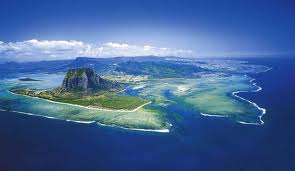
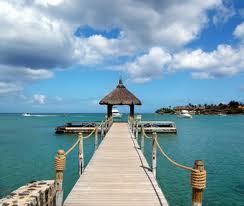
Well then, you would be Mauritius, the African island nation of 1.3 million souls that sits approximately 800 kilometers off the coast of Madagascar.

This week award winning economist Joseph Stiglitz wrote an essay in Slate Magazine about the Mauritian miracle entitled, ‘The Greatest Country on Earth.”

In it he lauds the vibrant Mauritian democracy, their 30 year stretch of ~ 5% GPD growth, relative social equality, and above all, the choices made by successive Mauritian governments since independence from Britain in 1968.

Mauritius deserves the kudos. My only issue with Dr. Stiglitz’s essay was his framing of Mauritius’ successes in terms of U.S failures.

Although he recognizes that the U.S. cannot act like an island nation of 1.3 million (by forgoing a military for example), he spends a fair bit of the essay mocking the U.S. for its inability to empower Americans without causing some sort of financial meltdown.

This makes for provocative reading, but the comparison seems forced to me—scaling is not just a logistical obstacle, it changes the nature of the problem.

A health system that works for 10 people, will not necessarily work for 100 people, even if you increase all the inputs by a factor of 10.

Leaving that aside—what lessons can other African countries, and the U.S. for that matter, take from the Mauritian Miracle?

Versatility.

I have been combing a variety of sources, and talking to a few specialists at work, and it seems that more than any one decision, Mauritian nimbleness has been responsible for its success.

A few historical examples courtesy of Harvard School of Business:

When Slavery was abolished in the British Empire, Mauritian leaders encouraged indentured labor to emigrate from India.

When trade barriers sprung up to make sugar less competitive, Mauritius did two things:

1) They successfully lobbied the EU for trade preferences on sugar, and

2) they read the writing on the wall and immediately started diversifying their economy away from sugar and into light manufacturing.

When those preferential trade terms disappeared for sugar and textiles, Mauritius quickly lowered the corporate tax rate and took advantage of historical connections to India to encourage direct investment in new sectors.

Mauritius exhibits nimbleness in other ways too.

They are part of the Southern African Development Community, the Indian Ocean Community, la Francaphonie, and the League of Portuguese Speaking countries.

This openness creates opportunities that more insular countries do not have.

Mauritian investment in education and human capital means the population can easily re-tool for new sectors and new initiatives. (Though literacy is still only 88%; high for Africa, but not high enough)

The U.S. could use some of this international nimbleness…I read a great essay years ago in Foreign Affairs that argued that the United States’ biggest advantage in the 21st century would be immigration, if policy makers would only take advantage of it.

Immigrants not only start more businesses than non-immigrants, they also bring local knowledge of foreign markets, demand new goods and services from the U.S., and keep the U.S. from falling into a demographic sink hole like Europe.

If U.S. policy makers worked to empower immigrant communities in the U.S. and attract the best and brightest immigrants from other countries, we would vastly improve our international flexibility and competitiveness.

Other African countries have problems that Mauritius does not have—but that does not mean they can’t learn from Mauritius as well.

South Africa now suffers from an incredibly rigid labor market, with major industries surviving on government subsidies.

Their automotive sector is prestigious, but is it economically viable?

Maybe they need to look Eastward to their Island neighbor and invest in forward looking sectors. (I think their new budget attempts to do exactly that.)

Countries fractured by large cultural fault lines such as Nigeria and Cote d’Ivoire could look toward Mauritius as an example of profiting economically from their participation in different cultural orbits.

The people groups in Northern Cote d’Ivoire could benefit from Southern Cote d’Ivoire’s historical associations with partners in Ghana and Togo, while the groups and businesses in Southern Cote d’Ivoire could benefit from Northern Cote d’Ivoire’s relationships with Mali and Burkina Faso.

Obviously this is far easier said than done.

Taking advantage of multi-culturalism requires a centrifugal force at least as powerful as the forces pulling identity groups away from each other.

Countries with economies dependent on a single resource could follow Mauritius’ lead and create incentives for FDI in diverse sectors.

I don’t mean to be glib- investing in the future while meeting the real needs of millions of current citizens is a nigh impossible task.

But that is why each and every success story deserves a good hard look, including small African Islands.

AU Finally Re-affirms Ouattara- Who Were the Hold Outs?

AU Finally Re-affirms Ouattara- Who Were the Hold Outs?

by Conor Godfrey on March 12, 2011

A few days ago the African Union finally issued a definitive statement on the situation in Cote d’Ivoire,

"Me and my warship are totally neutral...."
reaffirming Alassane Ouattara as the winner of the November 28th, 2010 elections.

Why did it take so damn long for the AU to come on board?

Well, up until last week eight African Counties were officially or unofficially supporting Laurent Gbagbo, the intransigent incumbent in Cote d’Ivoire.

Gbagbo’s Foreign minister described seven countries as ‘allies’; Angola, Uganda, South Africa, Democratic Republic of Congo, Gambia, Equatorial Guinea, and Ghana.

I would also have added Zimbabwe to this list.

While Gbagbo’s Foreign minister would not normally be a credible witness, these countries have shown their support with their silence or their actions over the last several weeks.

GhanaWeb does a nice job detailing some of these instances.

Please do not misunderstand me; support in this case did not mean supporting murderous attacks on civilians (though some of those guys might very well have done so. Obiang in E.G, Mugabe in Zim—I’m talking about you)

They simply did not support coercive measures of any kind to force Gbagbo to step down.

In this case, I call that unequivocal support for incumbent Laurent Gbagbo.

South Africa led the pro-Gbagbo camp in the weeks leading up to the AU summit last Thursday. I found South Africa’s claims to be a “neutral mediator in the political deadlock” rather ridiculous, especially when they sent a warship to the Ghanaian coast to act as a “neutral negotiating venue”. Give me a break

Alassane Outtara was the certified winner of the Ivorian election, and Gbagbo the recognized loser by the U.N. and a host of international observers.

This was not a conflict between two equal parties—that was what the election was supposed to be!

By treating both contestants equally, South Africa nullified Outtara’s biggest advantage—his international legitimacy.

So why did these eight countries fly in the face of the international consensus? I think the rumors reveal interesting nuances in pan-African politics.

First we have the autocrats who looked at Cote d’Ivoire and Laurent Gbagbo and saw the parallels to their own situations all too clearly.

Mugabe in Zimbabwe and Obiang in Equitorial Guinea were the clearest cases, but I would also include Yahya Jammeh of the Gambia, and maybe Joseph Kabila in the DRC.

These rulers did not want to see international actors coalesce around the use of force to remove an incumbent, because one day in the future it might have been them on the receiving end of a naval blockade or military intervention.

The next grouping included countries concerned with the growing Nigerian hegemony in West Africa. South Africa, Ghana, and Angola all fall into this category to varying degrees.

Nigeria was at the forefront of the group of nations (Nigeria, Senegal, Kenya, and Burkina Faso) calling for military intervention, and Nigerian troops will certainly constitute the plurality of any multi-national coalition attempting to remove Gbagbo by force.

Nigerian and South Africa diplomats sparred repeatedly over South Africa’s role in mediating the crisis over the last several weeks.

To warp Baron Von Clausewitz’s old adage, I tend to think that politics is just a continuation of economics by other means.

South Africa has traditionally acted as launching pad to the rest of the continent for banks, major multi-nationals, NGOs, tourists, etc…

This is still true, but regional nodes like Nigeria are increasingly usurping this role.

Nigeria has more than 3 times the population of South Africa, sizeable oil reserves, and increasingly competitive multi-national companies.

South Africa sees the writing on the wall and wants to ensure that it retains a seat at the West African table.

If it doesn’t, companies may just start their forays into the continent from Nigeria.

The U.S. should recognize its own situation in South Africa’s dilemma.

The U.S. currently spends vast amounts of blood and treasure maintaining our seat at the table in Asia and the Middle East.

I think the value proposition for these foreign entanglements is becoming increasingly dubious to voters back home.

Is Foreign Aid as Hopeless as Republican Freshmen Say it is?

Is Foreign Aid as Hopeless as Republican Freshmen Say it is?

by Conor Godfrey on 11 March, 2011

The Republican wave has brought a new crop of development aid bashing freshman to the fore, and even among Suzie-Q public, cutting aid is much in vogue.

U.S. citizens appear to be all sorts of messed up when it comes to foreign aid; surveys report that, on average, Americans believe 21% of the total U.S. budget goes to foreign assistance.

The real answer: only 1%.

It is no wonder that 59% of Americans want to cut foreign aid; I would too if I thought 1/5 of my tax dollars were going to programs in faraway places with dubious reporting methods and vague long term goals.

Interestingly enough, those same surveys claim that Americans feel that spending 10% of the total budget expenditure on foreign aid would be justified.

As Winston Churchill famously said, the best argument against democracy is a five minute conversation with the average voter. (I jest, I’m an average voter, please don’t ask me about tax reform or health care, I’m liable to give you just as poor an answer….)

These survey statistics have been fired off willy-nilly on Capitol Hill to justify the agenda du jour—in this case, funding cuts that Secretary Clinton claims will amount to a 16% reduction for the Department of State and a 41% decrease in funds available for humanitarian assistance.

Lets bring this discussion to Africa.

There is currently an extremely lively, and sometimes downright hostile, debate about the efficacy of foreign aid in Africa. As you have read on this blog and probably elsewhere, foreign aid’s detractors claim that most aid creates dependencies in African communities without ever boosting the communities out of poverty.

There are also a number of hilarious posts and whacky youtube videos mocking the self-righteousness of the development assistance world.

These parodies are often warranted, though totally one sided.

On the other side are the hundreds of thousands of reports and anecdotes supporting positive aid outcomes in Africa.

The problem with the these reports is two fold; one, how can donors determine if the outcome would have happened without the intervention, and two, often times the aid agencies themselves are responsible for reporting on the outcomes of their interventions.

Conflict of interest is an understatement.

An example of both fallacies:

1 (Did the intervention directly cause the outcome?):

William Easterly’s blog Aidwatch has ruthlessly gone after the Millennium Village Project (MVP) for misrepresenting the effectiveness of certain interventions.

MVP is a long term, high profile aid project that targets poor African villages with a package of interventions in health/sanitation, education and technology in an effort to accelerate their ascent from poverty.

One intervention was improving access to cell phones through financing and educational outreach.

MVP reported a significant rise in cell phone use in many of their target villages as a significant result of the project.

However, cell phone use has been rising exponentially in villages all over Africa, including tens of thousands of villages where no MVP interventions took place.

Follow this debate here on AidWatch.

2 (Conflict of interest in reporting data of aid effectiveness):

In December of 2010 the Academy for Educational Development (AED), a prominent D.C. based non-profit, was suspended with immediate effect from bidding on USAID contracts because of allegations of exaggerated reporting and other forms of corporate misconduct.

AED was previously a key contractor in Afghanistan and Pakistan, executing over $150 million in contracts across multiple sectors.

The D.C. rumor mill, fueled by former AED employees, claims that the organization’s reporting hadn’t been on the level for years.

This case got so much press because catching this type of misconduct is unfortunately quite rare.

I am sympathetic to aid’s detractors in so far as I believe that aid agencies are guilty of these fallacies quite often.

I also believe that altering international aid incentives, such as who gathers data and reports on outcomes, could transform development assistance into a more transparent, effective instrument of poverty alleviation and U.S. foreign policy.

USAID Administrator Rajiv Shaw, Defense Secretary Robert Gates, Secretary of State Hillary Clinton, and former First Lady Laura Bush all seem to agree.

South Sudanese Safari Anyone?

South Sudanese Safari Anyone?

by Conor Godfrey on March 10, 2011

In the last month, South Sudan has asked neighbors and the international community for teachers to staff universities, for money and logistical help for demobilization, disarmament, and rehabilitation of combatants, for ideas on a new national anthem, for help with their financial sector and several hundred other large and small matters that require more or less immediate attention.

All of these requests did not surprise anyone.

One request did surprise me though– South Sudan also asked for $140 million to begin rehabilitating their game parks as a top investment priority.

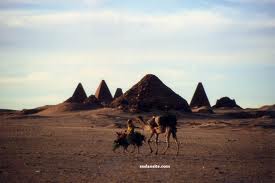
North Sudan

When you think of Sudan, what comes to mind: inhospitable desert, war crimes, tense referendums, oil, refugees, weapons, etc….

Let me offer a few new associations for the soon-to-be-independent South Sudan—jungle, wetlands, teeming with wildlife, and a migration comparable to the Serengeti.

South Sudan is home to one the largest wetlands anywhere—the Sudd—or barrier, in Arabic.

South Sudan

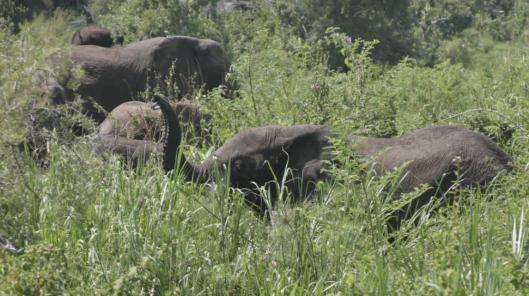
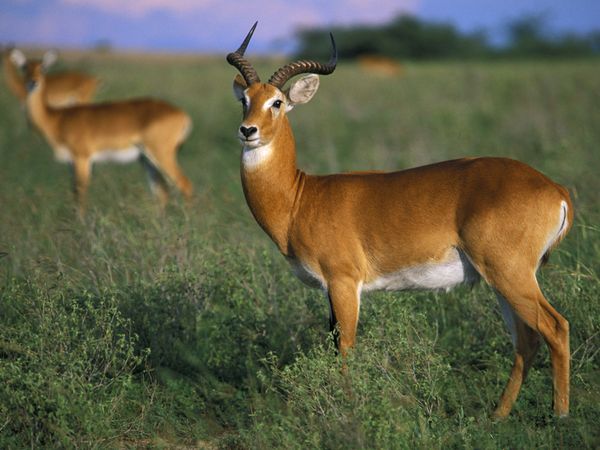
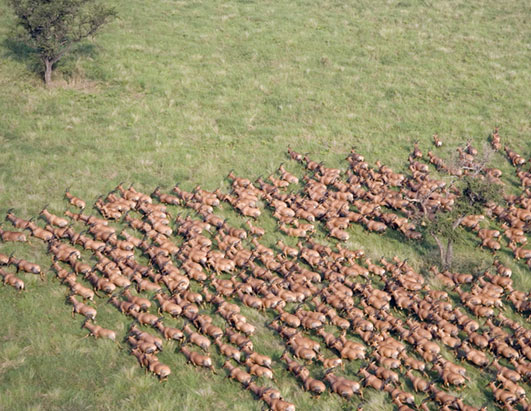
This massive wetland and the Sahelian swathes that border it have traditionally supported all manner of charismatic animals including elephants, lion, hippopotami, and crocodiles, as well as lesser known (at least to a laymen like me) fauna such as the Nile Lechwe (an endangered species of antelope), Tian, Reedbuck, over 400 species of migrating birds, and amazingly, a population of around 1.2 million White-Eared Kob.

The Boma Plateau, adjacent to the Ethiopian Highlands, also supports important populations of wildlife.

In 2007, the United States Agency for International Development and several other international donors worked with the Wildlife Conservation Society to conduct aerial surveys of Southern Sudan, essentially to confirm that the 30 years of intermittent fighting had indeed decimated animal populations.

Against all hope, they found many populations alive and well. Elephants, hippos, and other meaty animals had indeed suffered, but many had weathered the storm.

Elephants have dropped from somewhere in the neighborhood of 20,000 to around 6,000.

Zebra are all but gone, and Heartebeest numbers dropped about 95% in total. Many of the animals that survived did so by hiding out in the Sudd, where swampy conditions provided a measure of isolation.

South Sudan needs tourism revenue worse than most countries.

Currently, 98% of South Sudan’s revenue comes from oil. Production will peak in the very short term before beginning a 20-30 year decline after which the wells will simply dry up.

I would value expert opinions on the viability of a real tourism industry in S. Sudan; is there an adventure market that will relish the ‘untapped’ feel of a safari in South Sudan, will private companies invest long term in such an unstable environment, will oil extraction finish off the animals the war never managed to reach?

Most importantly, how can a country with so much human need spend the required sums on wildlife preservation?

In late 2010 National Geographic ran an interesting short piece on the relationship between the multitudes of identity groups in S. Sudan and the wildlife.

The author claims that history has forged a deep bond between people and wildlife in South Sudan.

For centuries, slavers and poachers, often the same people, came into modern day South Sudan to take away slaves and Ivory.

This linked the elephant and human populations groups together as victims in the minds of the tribes.

More recently, both people and animals took refuge in the deep bush or in the swampy Sudd wetlands to avoid the violence, once again creating a bond between human and animal, this time as fellow displaced persons.

This claim interests me quite a bit—that story resonates emotionally, and has certain logic to it, but my experience in Africa has been quite different.

In West Africa, people viewed wildlife as a nuisance, and from my brief experience in East Africa, it seemed like farmers and pastoralists felt the same way.

I came away with the impression that romanticizing wildlife was a privilege for those whose crops weren’t being eaten.

I digress.

To wrap up, whether or not South Sudan can preserve this habitat for tourists seems immaterial to me. It is one of the most important wildlife habitats on the continent.

Send them the $140 million.

Winners in Burkina

Winners in Burkina

by Conor Godfrey on March 8, 2011

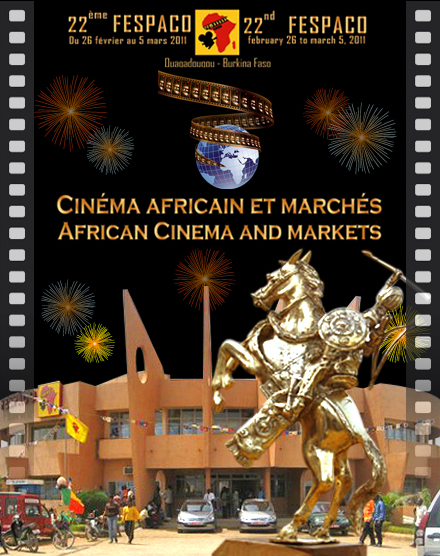
I have led everyone astray by failing to warn you that the bi-annual, Pan African Film Festival in Ouagadougou (FESPACO) opened Saturday, February 24th, and ended this past weekend.

FESPACO is the most important film festival in Africa, and I would go even further and say that the festival is the most important modern, pan-African cultural event on the continent.

Every year since 1969 FESPACO has gathered African and diaspora intellectuals in Burkina to discuss the major intellectual currents washing over the continent.

The festivals highest prize, the Etalon de Yennenga (Stallion of Yennenga), goes to the film that best represents ‘African realities.’

Recent winners include Heremakono, from Mauritania, directed by Abderrahmane Sissako,

Ezra, from Nigeria, directed by Newton Aduaka, Drum, from South Africa, directed by Zola Maseko , and Teza, from Ethipoia, directed by Hailé Gerima.

This year the Golden Stallion went to Moroccan Director, Mohamed Mouftakir, for his film Pegase (Pegasus—trailer only available in French and Arabic) I have not seen it, but the reviews are uniformly positive.

Over 340 films were submitted to the jury; here are a few of the other winners.

The Silver Stallion:
Un homme qui crie
(A Screaming Man), Chad, Director Mahamat-Saleh Haroun

The Bronze Stallion; Le mec idéal (The Ideal Guy), Cote d’Ivoire, filmmaker Owell Brown.

Best Actor; Sylvestre Amoussou, Benin, for his role in Un pas en avant, les dessous de la corruption.

Best Actress; Samia Meziane, Algeria, for her role in Le Voyage à Alger (Journey to Algiers).

The African Diaspora Prize; Les amours d’un zombie (The Loves of a Zombie), Haiti, film by Arnold Antonin.

I’m sorry, but youtube did not come through for most of these trailers. Worse still, the only two films above available via Netflix are Drum, and Un Homme Qui Crie, and neither of those are available right away.

That means that you would probably have to order them on Amazon.com if you wanted to see them.

Be sure to post a comment if you find a way to get a hold of any of these movies.

African film is on the rise from dynamic urban spaces to the smallest villages in West Africa. Read this EWT blog written in February of ’10 about the rise of local African films tackling local issues, especially in Nigeria.

You will notice that Nollywood, the Nigerian film industry that currently produces more films than Hollywood and Bollywood combined, was not well represented on the awards podium.

Most Nigerian directors shoot with handheld or inexpensive digital cameras using a local cast and set.

While these amateur films may not make the cut at FESPACHO, they do sometimes make one thing that most FESPACHO submissions do not—money.

The rampant piracy of African films makes large, expensive productions economically unviable.

This also inhibits the creation of a class of well renumerated actors and actresses, studios, and directors. This very issue was the official theme of FESPACHO 2011—how can Africa create a long term viable film industry.

I hope someone comes up with something soon so that come 2013 we can all see a well financed, professionally produced series of films on the revolutions sweeping North Africa.

Real People Making Real Choices in Cote d’Ivoire

Real People Making Real Choices in Cote d’Ivoire

By Conor Godfrey on March 7, 2011

I am an avowed Africa optimist, but that doesn’t mean we can’t call a spade a spade—the situation in Cote d’Ivoire is a disaster for everybody.

Last Thursday, forces loyal to incumbent Laurent Gbagbo even opened fire on women engaged in a peaceful prayer-protest.

This is a video of the crackdown taken on a participant’s cell phone.

(Warning; the violence that starts about ¾ of the way through this video is very graphic.)

I post the video for two reasons: one, I think it is interesting for a non-West African audience to see what an Ivorian protest looks like, as opposed to an American, or North or East African demonstration.

The second and more important reason is because I have noticed in myself a tendency to treat people in these conflicts as expressions of larger ideas rather than flesh and blood citizens that run mechanic shops and sell bean sandwiches at corner stores and leave grandchildren behind.

If you also sometimes watch CNN and seize on “Pro-Democracy Partisans” in Libya, or “Righteous Demonstrators” in Cote d’Ivoire, this video might help you remember that protesters are best viewed as themselves first and ideologues second.

I needed a visceral reminder.

Watching the brave women praying in the middle of an Abidjan street got me thinking about protests in general.

If violence can not win decisively, and/or the use of violence will merely serve to legitimize a violent response, what options do engaged citizens have?

Some of you may have seen the New York Times article last month about Mr. Gene Sharp.

I had never heard of Mr. Sharp or his ideas–but guess who had–Otpor in Poland, the Muslim Brotherhood in Egypt, dissident movements in Burma, Estonia, Bosnia, Zimbabwe, and of course in Tunisia, just to name a few.

Professor Sharp’s contact with these diverse movement comes mostly in the form of two famous writings—“From Dictatorship to Democracy,” and “198 Methods of Nonviolent Action.”

If you don’t have time to read the entire “From Dictatorship to Democracy” (I confess I did not), the “198 Methods of Nonviolent Actions” makes for snappy reading.

The New York Times article highlights “protest disrobing” as a creative technique; I liked “sky and Earth writing,” “mock awards,” and “mock funerals.”

While we are thinking of protests, next week, I would like to take up the case of Gbagbo and Ghaddaffi’s supporters.

In all of the unrest so far, ‘pro-regime’ has been synonymous with guilty, according to the media. I think it would be worth a few moments to think about whether or not that is always true.

The Great Green Wall

The Great Green Wall

by Conor Godfrey on March 4, 2011

Big projects capture the imagination. They attempt to solve big problems with eye-popping solutions. The Apollo missions, the Panama Canal, the Hoover Damn; these were projects that defined generations.

How about this for a big project– a wall of trees, 15 kilometers thick, stretching 8,000 km from Dakar to Djibouti, interlaced with water retention ponds and plants designed to improve soil quality.

This is exactly the big idea that got its final approval this week in Bonn, at the UN Convention to Combat Desertification.

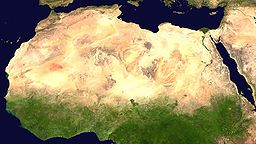
Just as competition with the U.S.S.R. spurred the U.S. into high gear in the space race, the Great Green Wall project also has a nemesis—the Sahara Desert.

This sandy foe creeps south at approx 48 kilometers per year consuming farm and pasture land in a decades long war of attrition.

In some cases, such as Nigeria, the desert claims almost 1,400 square miles of land every year.

Many months ago on this blog I wrote about this very problem; desertification and other forms of environmental degradation have put Nigeria’s identity groups on a collision course, competing for ever scarcer environmental resources.

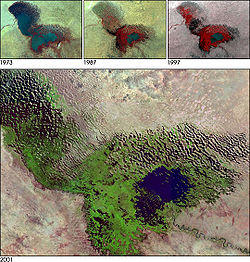
Take a look at this picture of Lake Chad.
The blue represents the actual lake, and the green demarcates the lake’s historical limits.

Lake Chad has shrunk by 95% in the last 50 years.

The consensus view among experts is that about 50% of the water loss was caused by desertification due to overgrazing, and the other 50% to long term climatic changes.

Chad is a major supporter of the Great Green Wall project.

11 desert and Sahel countries–Burkina Faso, Chad, Djibouti, Eritrea, Ethiopia, Mali, Mauritania, Niger, Nigeria, Senegal and Sudan—will collaborate to implement the massive Great Green Wall.

This will require unprecedented collaboration between 11 countries, with 11 environmental/agriculture ministries, teams of international scientists, and thousands of communities in the Sahel speaking a multitude of local languages.

I am skeptical but inspired.

Much like other big projects launched to solve big problems, the three gorges Dam or the Panama Canal for example; the devil will be in the details.

In addition to standard worries about corrupt contractors, the real worry here is simple free riding. Each country faces a threat from desertification, but the threat level varies, and the implementing capacity of each country varies even more.

The funding will mostly come from outside sources, including $119 million from the Global Environment Facility (GEF), and several billion dollars from other international donors, but each participating country will be responsible for educating local communities and managing modern tree nurseries, as well as the logistics involved in continuously transporting saplings and other inputs to the Green Wall.

The projects supporters claim that the wall will “sequester 3.1. million tons of carbon”, reverse Sahel desertification, improve the climate in the semi-arid Sahel region, and offer income generating activities for communities that border the wall.

Detractors question this narrative: they note that the Sahara is not advancing per se, but rather over grazing and deforestation in the border regions have removed the roots that traditionally anchored the soil, leaving the soil vulnerable to wind and other elements.

And how will local communities benefit in the short term?

Even if an education campaign succeeded in connecting changing climate patterns and decreasing pastureland with the absence of trees, how local communities justify taking time from tending their own land, animals, or jobs to manage their section of the wall when the benefits will not be apparent for years?

I would be very interested to hear opinions on this project from conservationist or from people that have lived in Sahel communities.

Note: This has been tried before. In China most recently, and in U.S. back in the 1930s on a much smaller scale in the “Shelterbelt Project”.

North African Film Reviews: Bab’Aziz; The Prince Who Contemplated his Soul, and Outside the Law

North African Film Reviews: Bab’Aziz; The Prince Who Contemplated his Soul, and Outside the Law

by Conor Godfrey on March 3, 2011

Every Thursday in February the Smithsonian Museum of African art opened their galleries for the North African Film Festival, highlighting films from Egypt, Tunisia, Morocco and Algeria.

I would accuse the Smithsonian of war profiteering, but I suppose they had this planned long before Tunisian president boarded his plane for Saudi Arabia.

My favorites this month were Bab’Aziz;The Prince Who Contemplated his Soul, and Outside the Law.

These are as different as two films can be; the first is a beautiful fairly tale that unfolds ever so slowly across the rolling sand dunes of southern Tunisia, while the other is an urban, visceral, action packed guerilla war epic with an elevated body count.

However, I think both put you in touch with the modern fabric of N. African life; one with the whimsical fantasy and mysticism of Sufi Islam, and the other with the legacy of pain and resistance that I have been told figures quite prominently in North Africa’s public consciousness.

Bab’Aziz (The Prince Who Contemplated his Soul)
Director: Nacer Khemir
Writers: Tonino Guerra (collaboration), Nacer Khemir
Stars: Parviz Shahinkhou (Bab’Aziz), Maryam Hamid (Ishtar)

This movie is filled with music—not just the energetic, haunting Dervish music that various wandering souls sing or play throughout the film, but also the music of the wind over the dunes, or the cackle of a fire.

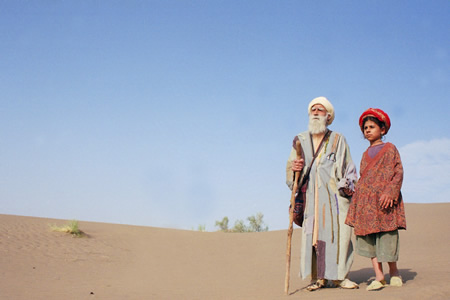
Many reviewers called Bab’Aziz a “visual poem”. The entire movie centers on the Journey of Bab-Aziz, a blind dervish, and his spirited granddaughter Ishtar, as they trek through the desert in search of a gathering of dervishes that takes place once every 30 years.

As Bab-Aziz reminds Ishtar and the viewers throughout the movie, no one knows where the gathering is to be held, but everyone who has been invited will eventually find their way there.

This set up mirrors the quote from the Hadith, or sayings of the prophet, that opens the film—“There are as many paths to God as there are souls on the Earth”.

A quick refresher on Dervishes.

Dervishes are Sufi Muslims following an ascetic path, or Tariqa (Interestingly enough, in the West African Fulani language spoken where I spent my Peace Corps days in the Fouta Jallon, Tarika means tale or narrative.)

Their origins are most likely Iranian and/or from the Indian subcontinent, but today Dervishes are most closely associated with Turkey and to a lesser extent North Africa.

Much like Christian monks, Dervishes can belong to any number of orders whose garb and rituals may vary.

In general, Dervishes take a vow of poverty and seek spiritual purity and enlightenment through humility and dedication to religious principles.

Back to my thoughts on Bab’Aziz.

Time seems suspended as Bab’Aziz and Ishtar wander through the dessert.

The desert becomes a transformative space where normal rules are suspended, and the Dervish aesthetic predominates.

People from the real world that wander into this transformative space throughout the movie are crushed and humbled by the immensity of the desert, and eventually driven onto the invisible path beneath the desert sands that winds, seemingly aimlessly, toward the gathering of dervishes and the unseen conclusion of whatever it was that drove that soul into the desert in the first place.

Young Maryam Hamid puts in a fabulous performance as Ishtar, the grand-daughter, and the supporting cast plays their bit roles well enough to let the “visual poem” unwind without distractions.

Some of my companions found this film beautiful, but slow.

I am sympathetic to that critique in so far as the there is almost no ‘action’ in the film, but it takes time to suffuse the audience with the music and silence of the desert. I think director Nacer Khemir hopes that viewers leave this film feeling crushed and humbled, but with the feeling that somehow they too are on a path.

Outside the Law
(Hors la Loi)

Director: Rachid Bouchareb
Writer: Rachid Bouchareb
Actors: Jamel Debbouze (Saïd), Roschdy Zem (Messaoud), Sami Bouajila (Abdelkader), Chafia Boudraa (their mother), Bernard Blancan (Colonel Faivre)

Do not take a first date to this movie. Outside the Law is 220 minutes of non-stop high drama, with nary a smile for comic relief.

That being said, it is one of the best guerrilla war epics I have ever seen.

The film is also very controversial in France.

Its release drew thousands in protests in Southern France where the war in Algeria still raises temperatures on both sides.

The film opens with a split screen. On one side, jubilant scenes of V-E day in Paris, French women are kissing members of the resistance in the street, and De Gaulle is congratulating the French population on throwing off the tyranny of the Nazi oppressors, while on the other side of the screen, the French military and pied noirs (European Colonists living in Algeria) are massacring peaceful protesters on May 8th, 1945 in the Algerian town of Setif.

This same message is repeated in a myriad of different ways throughout the film.

How can the French, who have just thrown off the chains of oppression themselves, not recognize the righteousness of the Algerian cause?

How can they not see that they have become the oppressors?

In one seat gripping scene, the three brothers at the center of the film kidnap a French colonel who had distinguished himself in the resistance during the Nazi occupation.

They compliment the colonel on having fought on the right side, the side of justice, during the occupation, and ask him to make the same decision again; to fight on the side of justice, in this instance, against la gloire de la France, rather than for it.

The colonel’s decision will ripple through the lives and deaths of the film’s cast for the remainder of the film.

I am neither French nor Algerian, and do not feel entitled to the gut wrenching emotion that this conflict evokes in those whose lives were touched by it…but this film made me feel it anyway.

Where is Africa?

Where is Africa?

by Conor Godfrey on March 1, 2011

For the past several weeks pundits have been scouring the world for countries that might, in any way, shape or form, relate to the events unfolding in North Africa.

Darts have landed on China, Iran, all the countries of the Middle East, as well as the remaining Eastern European and Central Asian despots.

On this blog and elsewhere there has also been a lot of talk about what the revolutions north of the Sahara mean for Africa.

But wait—I thought this all started in Africa?

Is there really any debate as to whether or not Tunisia, Egypt, and Libya are on the African continent?

Let me start with the punch line: Africa is more of an idea than a place.

An idea anchored loosely in geography, but far more in psychology.

To illustrate what I mean, I have mocked up a conversation I find myself in with astounding regularity. I currently work at an organization promoting U.S. – Africa trade.

When pushing the new Africa to skeptical investors the conversation often goes something like the following:

The investor first expresses skepticism that Africa fits their firm’s risk profile.

The Africa expert then points out that the African reality has probably surpassed the investor’s outdated perception of the continent: in fact, 6/10 of the fastest growing economies in the world from 2000-20010 were in Africa.

This will momentarily compete for space in the investor’s brain with the national geographic special he was watching last night as he went to bed.

“Which countries?” he might ask.

“Angola (11.1% GDP growth), Chad (7.6), Mozambique (7.6), Rwanda (7.1), Nigeria (8.7), and Ethiopia (8.4).”

“That is all very interesting” says the investor, but, “…many of those countries are simply benefiting from an increase in oil and commodity prices. And my firm does not like the lack of transparency in most of those nations.”

The Africa expert is undeterred.

Well, “Do you know that Africa boasts a number of countries whose good governance ratings exceed many other countries with whom you already do business?

According to Transparency International, Botswana ranks 33rd in word in terms of transparency, with many other African Countries falling above the median– Mauritius (39th), Cape Verde (45th), Seychelles (49th), South Africa (54th), Namibia (56th), Tunisia (59th), Ghana (62nd).

These countries all outrank China (tied 78th), Thailand (78th), Brazil (69th), Greece (78th) and many other countries in Eastern Europe, Asia, and Latin America. Find the transparency International corruption rankings here.

Still, the investor remains unconvinced.

“Well, those were intriguing comparisons, but some of those island nation’s with good governance are more Indian than they are African, and we all know that South Africa, Botswana and Ghana are outliers in terms of governance. I’m still not sold on Africa”

The Africa expert gives it one more go—“Mr. Investor, do you know that Africa is growing so fast that there are 240 million people who today can only meet their basic needs who will become consumers with disposable income by 2015?

Or, that Africa’s level of urbanization is comparable to those of India and China when those countries’ growth rates began to accelerate?

Or, that North Africa has the most favorable labor demographics in the world, with large numbers of highly educated young people?”

“North Africa?” exclaims the investor. “You mean the Middle East?”

Sigh.

This type of Socratic exchange on nominally African opportunities leaves people with the idea that Africa refers only to the bush, to places with anemic growth, periodic violence, and a rapacious class of elites.

Anything that does not fit that mold on the African continent is ascribed to something or somewhere else—oil, the influence of a former colonial power, similarity to another region, historical idiosyncrasies, anything to avoid the cognitive dissonance generated by the thought of an exciting, stable, growing African economy.

Note: Nothing this archetypal investor said was 100% inaccurate, his comments simply revealed a common bias in our thinking about the African continent.

This is the most diverse continent on the planet, and each of Africa’s 53 (54 with South Sudan) nations manifests that diversity in different ways.

Different historical trading partners, different chief exports, different histories of exploitation and resistance, etc… .

But all of these nations are, to borrow a popular cliché, made in Africa. They are shaped by the geography and cultural heritage of the African continent, from the sands of the Sahara to the waters of Lake Malawi, from teeming urbanity in Nairobi slums to Dogon cliff villages in Mali.

Africa lays claim to all of this—successes included.

Libya beyond the headlines

Libya beyond the headlines

by Conor Godfrey on February 28, 2011

News on the ongoing conflict in Libya continues to head the news on the front page of The New York Times, and thus there is little I can add in terms of late breaking news that isn’t one click away.

What I can do, however, is go a little deeper than the coverage I have read so far on Libya’s unique tribal dynamics.

There is a reason that Reuter’s stringers on fickle and expensive satellite connections, trying not to get in the way of a stray bullet, haven’t been able to do in-depth research on tribal alliances in Libya—they are helluh complicated.

While I’m sure a Libyan eight year old could rattle off tribal histories like my little cousins can the Johnny Appleseed story, it took me a few hours of background reading just to master the basics.

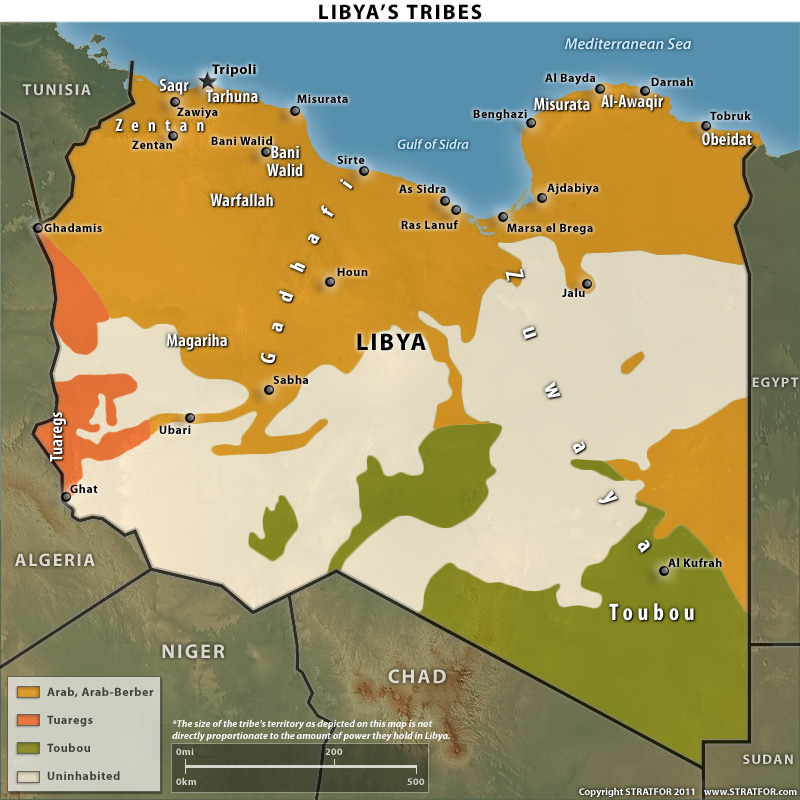
I believe that geography is the defining influence in how individuals and societies develop, so I like to start with a map.

Courtesy of STRATFOR Global Intelligence


This map does not detail the 140 tribes that make up the fabric of Libyan society, merely the large umbrella groupings of Berber, Bedouin (Arab), Toureg and Toubou.

In reality, the overwhelming majority of Libyans are ethnically mixed, especially among the nominally Berber or Bedouin/Arab populations.

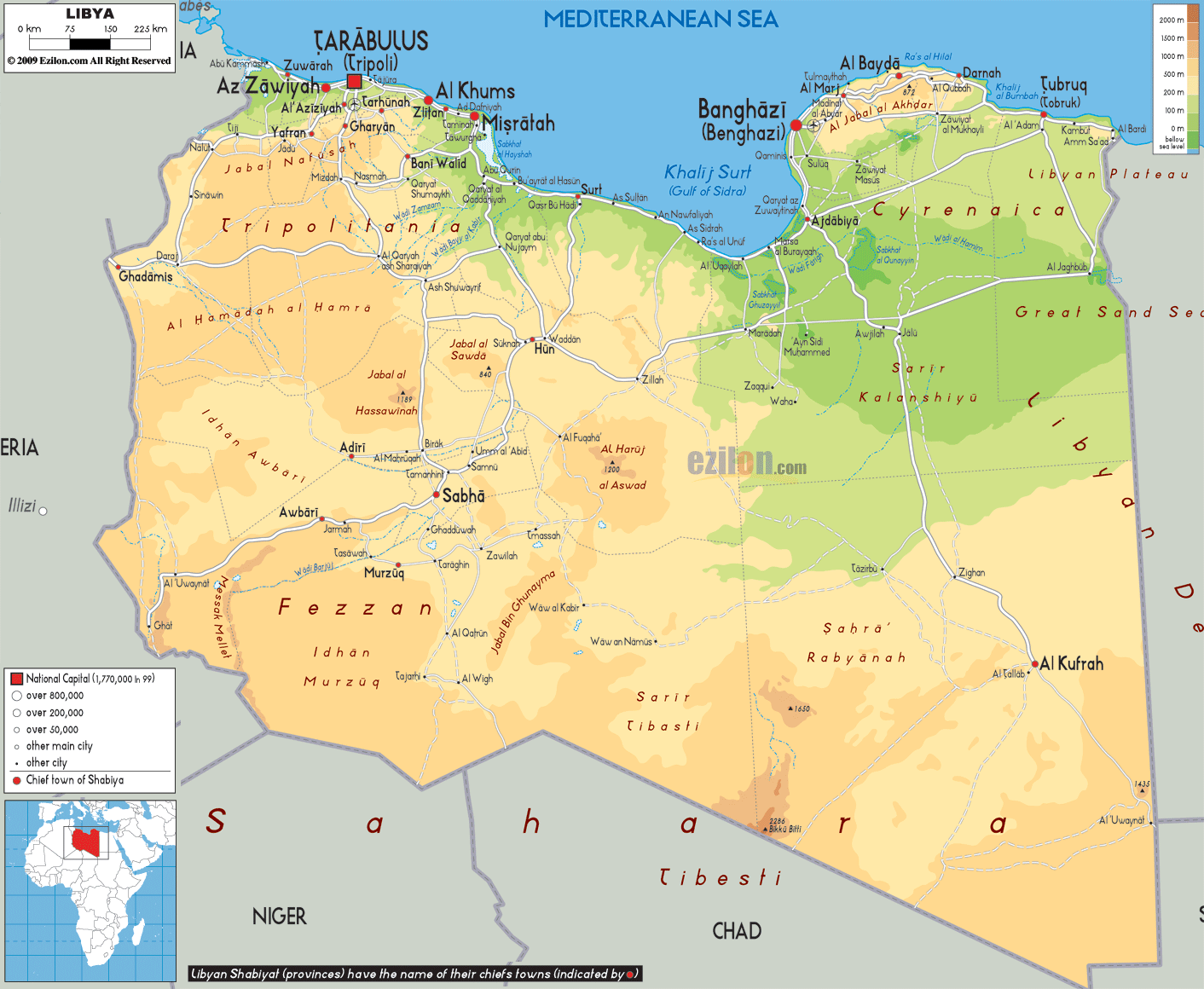
Look at the physical map and note the three natural/historical regions of Libya; Tripolitania in the West, Cyrenaica in the East, and Fezzan in the dessert interior.

The two most densely populated regions—Tripolitania and Cyrenaica—are separated not only by the Gulf of Sidra but also by an inhospitable stretch dessert.
Historically these regions have seen the world quite differently.

For most of the last thousand years, Tripolitania considered itself part of the North African Maghreb, the sandy north western swath of the continent that takes its name from the Darija Arabic word for Morocco — Maghrebi, or land of the setting sun.

Cyrenaica in the East was always oriented toward the Islamic world, with closer ties to neighboring Egypt than to Tripolitania, the West.

This Islamic orientation is the genesis of Colonel Ghaddafi’s seemingly absurd comments about Al-Qaeda infiltrating the Cyrenaica based protest movement centered in Benghazi, Cyrenaica’s capital.

Fezzan, the dessert interior, is home to a variety of traditional dessert peoples whose seat at the negotiating table comes from their ability to sabotage oil fields and equipment in the interior.

Now overlay the politics of 140 tribal groupings on top of this geographic powder keg.

Moammar Ghaddafi is not one Goliath against armies of Davids. Autocrats almost never are.

Dictators exert power and influence by dispensing patronage and maintaining the loyalty of what Professor Graeme Robertson calls “critical elites.”

This class might include military and security services, business people, religious leaders, or influential local leaders.

Momar Ghaddafi hails from the small al-Qaddafa tribe based in Tripolatania, and he has maintained power and influence for 41 years by dispensing patronage to several key tribes including two of the largest, the Warfallah and the Margariha. Both these tribes originate in Cyrenaica, or eastern Libya.

Almost immediately after Ghaddafi responded with deadly force to the first protests in Tripoli, a group of elders representing the Warfallah tribe publically broke with Ghaddafi.

And thus fell one pillar of the tripartite alliance of the al-Qaddafa, Warfallah, and Margariha crashed to the ground.

This set off a series of smaller tribal defections that further weakened Colonel Ghaddafi’s military readiness.

The third pillar of the ruling alliance, the Margariha tribe, originally hails from the desert Fazzan region but today can be found in most coastal cities.

The balance of power currently rests with decision makers in this tribe.

While the tribe has not publically broken with the al-Qaddafa, many of the tribe’s most prominent personages have been seen aiding the rebels.

If the Margariah jump ship en mass, Colonel Ghaddafi will find himself surrounded by enemies with only the al-Qaddafa for support.

If this comes to pass, members of the Colonel’s own tribe may be tempted to assassinate him to stave off the inevitable reprisals.

If you want more information on the 135 tribes I did not mention, check out this special report on Libya’s tribal dynamics by STRATFOR Global Intelligence.

On Safari: Is The Delta Floating Away?

On Safari: Is The Delta Floating Away?

Climate change is effecting Africa seriously, and perhaps nowhere is it as evident as in the Okavango Delta.

The delta is Botswana’s landmark attraction. It’s where the Kalahari ecosystem floods. That’s right, a “desert” in flood.

The unusual continental divide in Africa is very close to its western coast. And the torrential rains of Angola flow regularly east creating some of Africa’s great rivers like the Zambezi, and some of its most famous natural wonders, like Victoria Falls.

And the Okavango Delta, for here the water spills onto a flat scrubland, creating ever-changing islands and massive marshes and wetlands. And the rich nutrients deposited create a fertile ecosystem with as diverse a biomass as found anywhere in Africa.

But the Delta is being stressed by global warming. More water than ever imagined is flowing into it. And this year it’s a double whammy as unusually heavy rains pour relentlessly onto the delta as well.

Our camp’s airstrip was flooded out. The circuitous tracks we had to take from the nearest surviving airstrip challenged our Landcruisers as they submerged well above their floorboards and bubbled through flooded areas like tugboats!

High water time in the Delta is May and June. Yet already in March the water was higher than it had ever been before.

What does this mean? For one, there have been many resident animals like elephant, giraffe, buffalo and sassaby that may be pushed out. For another, reeded wetlands supporting many bird rookeries may be pushed far away towards the radical climates of the pans.

And for populated areas like the important central city of Maun, humans are being relocated away from the rising tide.

The wilderness is resilient. I have little doubt that for many years of stress during our global climate change, plants, animals and birds will adapt. But man’s permanent settlements, including existing camps and lodges much less cities and villages, will be much more traumatically challenged.