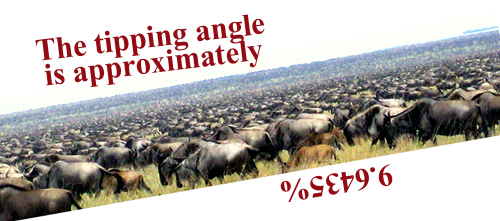
The Mara: Tipping or Tentative?

The Mara: Tipping or Tentative?

Oops. There goes the migration!
A recent study in Kenya has sparked enormous confusion over the long-term future of its wildlife, particularly in the Mara. But a couple things do look certain. Don’t stay outside the reserves and don’t privatize national treasures.

I hate reporting a story like this, but it’s been growing in my conscience like mold on the wall. Time to disinfect.

“Scientific studies” in Kenya just don’t carry the weight of well-funded work elsewhere in Africa, particularly in the south.

Just a few months after rains returned to East Africa late last year, the Kenya Wildlife Service mounted an animal survey that began in Amboseli. KWS concluded that as much as 83% of Amboseli’s wildlife had been lost.

Click here to see the survey. Oops. Gone? It’s been removed. But aha! I saved the paper: click here.

All sorts of bigwig organizations participated in that paper, including some that are now criticizing it.

Evidence is growing that the survey was wrong. Not long after the survey suggested that most of Amboseli’s elephant and wildebeest had died, Cynthia Moss’ ATE
group reported that “most” of the elephant were returning, although with fewer juveniles. And only a few weeks ago, one of ATE’s researchers, J. Kioko, reported that “about 1000 wildebeest have arrived in the park.”

Now, this second damming report might be just as flawed.

The report was funded by the Africa-based International Livestock Research Institute (ILRI) and was published in the Journal of Zoology and essentially painted a catastrophic situation in Kenya’s Maasai Mara, claiming the reserve was on the brink of collapse.

The Mara Conservancy, one of the two authorities controlling the Maasai Mara, issued a stunning denial. The Conservancy called the report “false.”

The report put much of the blame on the explosion of Maasai homesteads in the “private” reserves that ring the Mara conservancies. Specifically, the report claimed there were only four homesteads in 1950 and that there are now 368. And in what I consider a gross indication of the report’s inaccuracy, it claimed there were 44 huts in 1950 and 2735 in 2003.

Homesteads, maybe, but huts are built and torn down weekly. The 1950 data wasn’t sourced, but had to come from colonial authorities, and native statistics in 1950 have been proved time and again to be grossly inaccurate.

Paula Kahumbu, Executive Director of Richard Leakey’s reputable Wildlife Direct organization, remarked as follows on one of the report’s huge claims of wildlife losses:

“For the life of me I cannot find the 95% decline in giraffe in any of the blocks – the greatest decline that I can find is in block 3 where numbers of giraffe decline from 37 to 12 individuals. That’s only a 67% decline.”

I’m not trained or blessed with enough time on my hands to wade through the competing reports to determine in any scientific fashion which are right and which are wrong.

But that’s not going to stop me from making a few conclusions that might help those of you interested in East Africa’s wildlife, or those who are considering traveling there.

First, why are things so confused? Isn’t science… science?

Yes to the second, but as the first, Kenya’s problem is unique; unique even to Tanzania, its nearest and most similar neighbor. The government of Kenya long ago divested itself of full control over a number of its wildlife reserves, including both Amboseli and the Maasai Mara, arguably the two most important ones.

These great tracks of national treasure were seconded to local authorities (Maasai county councils) who exacerbated the problem by privatizing their operations.

The federal Kenya Wildlife Service (KWS) still has some authority in both areas, but the bulk of the authority, including reporting facts on a day-to-day basis, is left in private hands. Even anti-poaching patrols in the Mara are run privately, not by KWS.

And to make a terrible situation intolerable, in the last decade the Mara was divided into two separately operated reserves. One by the Narok County Council, and the other by a sister Maasai community, the Trans Mara County Council.

One of Kenya’s legendary safari guides, Allan Earnshaw, wrote recently for the East African Wild Life Society, “The root of the problem is the fact that whilst the Maasai Mara is called a National Reserve, it is in fact treated and run as a local asset by the two different local authorities.”

(Problem upon problem: I cannot link you to this article, because remarkably EAWLS does not publish anything digitally.)

But Earnshaw is right on. And it gets truly ridiculous, as is the case as I write at this moment, if you wish to visit the entire Mara (which isn’t very big, you could do it in a day), you have to pay two fees: two times $60, to cross the Serena bridge going from one half to the other.

Anti-poaching patrols and scientific study groups are similarly constricted.

Collection of tourists fees, scientific study oversight and anti-poaching are operated by private organizations, separately for the two halves of the Mara, but the building of tourist lodges is a federal decision.

So since 2005, “no fewer than 55 new camps and lodges have been built in the Mara.” In 1997, there were a mere 20 camps and lodges. Today, according to Earnshaw, “there are over 100 and counting – with a bed capacity for 4000 tourists.”

The confusion over the numbers of animals, and the numbers of tourist lodges, is because there is no single authority managing the Mara. Studies and revenue receipts contradict each other. Private companies, competing for business jobs, exaggerate their potential. There is no neutral authority overseeing all this.

This is a Ph.D study of mismanagement at the least. Can’t do that, now. But let me try to glean from this mess three simple conclusions:

The effect on the area’s wildlife by the last drought was not as bad as local “scientific” studies suggested.

It was still bad, but probably not worse than in previous droughts. And with time we’ll know this for sure, but even in this short period of time since the rains returned late last year, things look pretty good to me.

Second, game viewing is increasingly depressed outside the parks. If you want to see a lot of game, avoid the private reserves and stay inside the park.

(Necessary semantic clarification: The Maasai Mara is not a private reserve, it is composed of two separate (County Council) government reserves, but it is privately managed. But ringing the Mara as is the case with almost all parks in East Africa, are adjacent or near adjacent private lands with tourist lodges.)

&Beyond’s Klein’s Camp and the Grumeti Reserve camps outside the Serengeti are examples. Saruni, Sasaab, Elephant Watch Camp are others outside Samburu. Treetops and Kikoti outside Tarangire. Literally all the Bush ‘n Beyond camps, and Laikipia camps like Lewa Downs and Loisaba are outside parks.

This doesn’t mean they aren’t fabulous additions to a vacation with their own unique attractions. It just means if you aren’t close enough to a park to at least enter it during a day-trip, your game viewing will be depressed compared to being inside the park.

Third, privatizing management of national treasures like a wildlife park or national Park (as being considered in the U.S.) is nothing less than stupid.

It transforms good, neutral scientific studies into the components of a cost-effective business plan. It prostitutes moral authority with profit. The decline of American zoos, for instance, I place squarely on the fact that the vast majority were privatized in the 1980s and 1990s.

America, take note. Kenya’s greatest national treasure, if it is in peril, is because it was off-lifted into private hands.
Tanzanian Driver Strike Called Off

Tanzanian Driver Strike Called Off

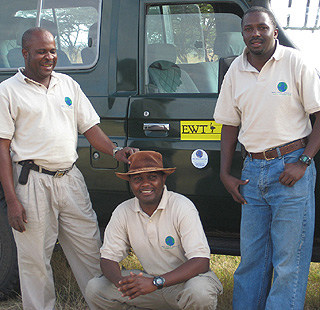
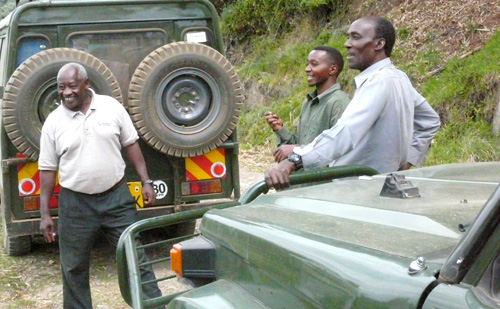
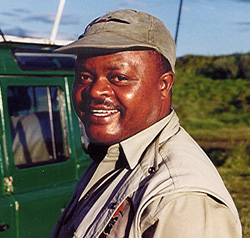
EWT Kenyan driver/guides James, Puis & Bonface.
The planned strike this month by Tanzanian driver/guides has been called off. You didn’t know about it? Thank goodness!

I’m not one to oppose industrial action, almost anywhere. Workers of the World have taken a huge hit during my life time, while Managers of the World have grown fat on their sweat.

But I didn’t tell you about the planned strike of Tanzanian driver/guides – which was known since January – because I knew it wouldn’t happen. And if I had told you, it would have made things infinitely worse.

This was true of virtually everyone I knew who knew. So from the getgo, let me apologize for not telling you, but let’s just agree to put it in the category of not-wanting-to-contribute-to-an-economic-mess.

It’s a bitter/sweet story if ever there was one.

Had we all reported with gusto the planned strike, virtually every foreigner booked into Tanzania this season would have asked to book out of it (into Kenya, instead, for instance). We know the way travelers behave when an airline strike is announced.

And because of the terrible economic downturn that laid off more than half the steady, experienced driver/guide work force in 2008/2009, we all knew that if a strike were called, that there would have been no difficulty finding good replacements. Scabs are everywhere.

So… we all knew that if a strike were called, we could genuinely remark to our clients that it wouldn’t matter, or for all practical purposes, wouldn’t effect them.

While putting our good guys out of work… maybe, forever.

Tanzanian Driver/Guide Joyful
So… we all knew that had we reported a strike, the dismal state that good Tanzanian driver/guides find themselves in today, would have become horribly worse.

It was – unfortunately, bitter-sweetly – a hollow threat. And.. That’s really too bad.

An unofficial “union” of safari driver/guides in Tanzania claims to – and probably really does – represent around 3000 men. This is likely around half to 60% of the steady workforce. It’s hard to know for sure, because only a handful of those thousands are permanently employed.

An East African driver/guide is usually paid by the job, or by the month providing there are a minimum number of jobs, and this has especially been the case since the economic downturn. There is a great variance in salaries, but I think a good guess of an average amount is about $200/month.

That barely reaches what’s considered minimum wage in East Africa, but the fact is that driver/guides are among the richest employees in East Africa because of their tips. A driver/guide who works 20 days can easily earn another $400-800 per month. (A recommended tip is about $10/client/day, although Americans often tip much more and Europeans much less.)

A good, steadily working driver/guide can easily pull in $6000/year. An outstanding guy can make double that and usually the worst of them make $2500. Compare that to a starting employee at the front desk of a major hotel in a city who makes around $500/month. Or a senior marketing (10 years + ) sales person in tourism who mans a foreign trade booth and makes around $1200/month.

So … it’s a good job. AND it’s an essential job for tourism.

There is a change occurring, now, in East Africa which is sidelining driver/guides. Like southern Africa there is a definite trend away from hiring a vehicle to drive you from park to park, to flying from camp to camp. I definitely don’t prefer this because I think a visitor loses a lot when they don’t experience the countryside between the sanitized, westernized game park camps.

And besides, East Africa lends itself to driving much better than southern Africa: the parks are much closer together than in southern Africa.

But the trend is there, in part because of the growing antipathy of foreign visitors with enough affluence to afford a Crater Lodge to driving over a pot-holed road next to open sewers. Nevertheless, this trend is not excessive. Driving in East Africa is here to stay as the main component of a safari for the foreseeable future.

Tanzanian Driver/Guide Winston
And the guys know it. They know that they are the reason a given trip is successful or not. There is a huge variance in how much these guys know : some are Ph.Ds, some are experts in plants others animals, some seem to know everything, almost all of them can fix a blown engine with a toothpick.

But their common denominator is an incredible affability that in a meaningful way introduces the foreigner to Africa. They become a traveling companion, not just a casual guide.

But this dynamic, strangely, has never included allowing the driver/guide into the same accommodation culture of their foreign guests.

The guest spends the whole day with the driver/guide, but after returned to the lodge for meals and overnight, they part ways. Driver/guides eat and sleep separately.

And only very recently have lodges and camps even agreed to be paid for driver/guides at the same rate as clients so that they can be with them in lodges and camps!

Yes! Isn’t that amazing? And this was true more often of the better lodges and camps than the more mainline ones. When we tried to enroll an East African driver/guide as a paid guest, we would simply be ignored. The invoice would be reduced, and only western names would be confirmed into the property’s tourist facilities.

That’s changing, but very, very slowly. This is racism at the core, both ideologically and geographically!

And to complicate matters, many driver/guides don’t want to sleep and eat with their clients. There’s two reasons for this:

First, it’s a relief to be extracted from a 24/7 job and given some down time with your buddies. But more importantly, they know the huge difference in costs. At &Beyond’s Crater Lodge in Tanzania, a retail guest pays $1065 per night while his driver/guide pays around $20.

And at Crater Lodge driver/guides get decent, clean accommodation and excellent meals for that $20. Understandably, if the cost of the safari increases by $1045 for that one night so that the driver/guide can have linen instead of paper napkins and two pillows instead of one, they would much rather get a bigger tip or be paid more. They need money for school fees for their kids, not chocolate mints on their turned-down pillows.

So, in fact, when I’ve tried to bring some of our own best driver/guides into the lodge experience, I’ve encountered huge resistance from them…. understandably. “Pay me more,” instead is the message.

So in a bitter-sweet way the separation of your most important safari component from you is now institutionalized in East Africa. So be it?

Well, not necessarily. Not when the accommodations are as horrible as some have become recently. There is a definite list in my head of the property companies who either never did provide decent accommodation, or that provided no maintenance to what existed before the economic downturn.

Some of the most egregious negligence is with mosquito netting. Those of us who live in East Africa don’t take malaria prophylaxis; over long periods it’s toxic. We rely on physical protection, like mosquito netting and bug spray.

Mosquito netting is about as durable as butter left out on a summer’s day. It easily gets holes, loses its tensile strength and opens up huge gaps. We travel with scotch tape and bug spray, usually, but sometimes the spray is very expensive and the holes too big.

Over the last few years, a number of property companies have been consolidating the bathrooms and showers available in the driver/guide dorm rooms. It isn’t that the existing 4 men/shower average changed – the buildings weren’t rebuilt – it’s just that when a shower or toilet broke, it wasn’t fixed.

As properties tried to manage the downturn, their food stores were one of the disposables that could be reduced. Driver/guides now seem to get the leftovers, rather than the meals planned specifically for them.

So it was no surprise in January that the “union” announced it would strike. And it was no surprise last week when the “union” announced it wouldn’t strike.

Has anything changed?

No.

EWT Tanzanian Driver/Guides Adam, Dixon and Tumaini.

The Left Way in East Africa

The Left Way in East Africa

Kenya's House Speaker Kenneth Marende with US Congressman David Price.
In a huge and welcome change from past American policy, eight U.S. Congressmen are in Kenya to promote democracy. “Change,” I said? Absolutely!

Until the Obama administration, America’s promoting democracy in the Third World was something akin to my own dear old-style Chicago politics. You tell them what to do, and if they don’t, you shoot.

My own grandfather, a “died in the wool” Chicago Republican, stopped voting after he had been told at the voting registration table for the Eisenhower election in 1954 that he was dead.

His named had been removed from the voter registration lists to the corner’s, (presumably in a wool suite in a sealed coffin. At least he lived another ten years.)

The Reagan era was an intensely ideological one, and it was during that time that a “democracy officer” was attached to every American embassy in the world. In East Africa the officer was intensely hated. He meddled in everything, often trumping senior embassy staff because of his unique title.

And rather than promoting democracy, this officer’s function was punitive. When he/she saw something in the country that was undemocratic, local officials were given a tongue lashing, then a lecture, and finally aid was withdrawn.

Not exactly the best way to promote an ideology, if you ask me.

And it wasn’t. There was a terrible backlash that led to young people in particular concluding that democracy wasn’t. Rioting by students in both Nairobi and Kampala were several times linked to anti-American sentiments about meddling in their country’s politics.

Authoritarian leaders like Uganda’s Museveni and Rwanda’s Kagame seemed to fair much better than the outspoken politicians of Kenya and Tanzania.

Well, thank goodness, Obama has changed that. There is still a democracy officer, but much demurred, and hopefully soon to be retired. And instead of some School Mum approach in high Chicago Style, we’re now treating the Third World with respect.

Eight Congressmen led by David Price (D-NC) are in Nairobi to encourage democracy, and specifically, to encourage debate on the upcoming constitutional referendum.

The delegation is the “House Democracy Partnership” newly reconfigured in January, 2009, to reflect the new approaches of the Obama Administration.

Rather than lecturing local officials, local officials are invited to the U.S. Congress to shadow their counterparts. The Kenyan Speaker of the House has already enjoyed this junket.

Rather than telling a country how to run an election (as we did in Kenya’s failed 2007 process), USAid funds neutral components of an election, such as the voter registration process. Or – in the current constitutional referendum – a publicity campaign that does little more than tell people when the election is.

Compare this to the Bush Administration’s failed efforts to effect the outcome of elections throughout East Africa with funds supporting the candidate they felt was “more democratic.”

This is definitely a softer approach. Some might argue it could backfire.

Like in Afghanistan?

Ivory Highways in Tanzania

Ivory Highways in Tanzania

Shamsa's Plan
A courageous legislator in Tanzania’s Parliament has charged Tanzania’s Minister of Tourism with corruption. The pieces to the puzzle seem to fit.

Last week Tanzanian MP, Magdalena Sakaya, publically accused Tanzania’s Minister for Tourism, Shamsa Mwangunga, of deceit with regards to her attempt to sell ivory stockpiles.

This is no small matter. Sakaya is one of a handful of outspoken backbenchers who the government of Tanzania is increasingly suppressing. Just last week, for instance, the Court of Appeals refused to allow any independent candidates in this year’s national election.

Shamsa is one of the most corrupt members of the Tanzanian government. She led the failed effort to obtain permission from the Convention on International Trade in Endangered Species of Wild Fauna and Flora (CITES) in Doha last March to sell a stockpile of elephant tusks.

Sakaya noted that 11 of the 27 tonnes of illegal ivory confiscated worldwide in 2007 came from Tanzania. And in 2009 that number was 12 of 24. (Elephant Trade Information System)

Yet, Sakaya explained, official records by the Ministry of Tourism or any other government department show no such large numbers of confiscated ivory.

Why not?

“Conspiracy to legalize trade of elephant tusks and their products surrounds the request,” Sakaya said in Parliament. “The Opposition camp believes the request is a ploy intended to deceive Tanzanians.”

Sakaya charged “high ranking government officials” with running a syndicate of poaching and suggested that it would be these same individuals who would have benefited from the ivory sale had CITES approved it.

Many of us are wondering, now, if Shamsa’s new push for a Serengeti road is in typical personal retribution for her failed effort to sell ivory at CITES.

In an interview with The Citizen last week, the minister denied that the 40-kilometer stretch of east-west road through the northern Serengeti would disrupt the wildebeest migration.

What?!! What planet does this person come from?

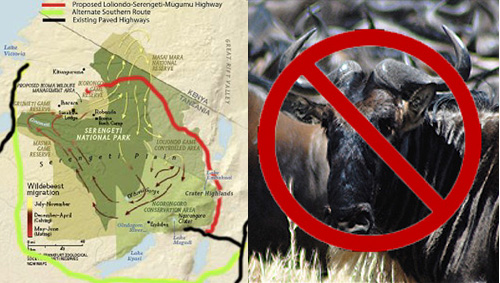
Depending upon the weather as many as a million wildebeest and half again as many zebra and other gazelle funnel north through this relatively small area into Kenya’s Maasai Mara every year.

To the east is heavily populated Kenya; to the west is heavily populated Tanzania. It’s their only route to the fresh and lasting grasses that the Mara provides during the dry season.

If the road is as heavily used as anticipated, this will result in massive disruption of the migration. Consider the extraordinary efforts that were employed by the Alaskan pipeline, including high bridges and deep tunnels, to lessen the effect on the caribou migration in a part of the planet where not another soul lives or needs to drive on a road!

Consider the massive destruction of the wildebeest migration in Botswana when the veterinary fence was built there in the 1980s.

The evidence is the stuff that a 3rd grader can use for a science report.

“Those criticizing the road construction know nothing about what we’ve planned,” Shamsa claimed.

That’s for sure. Kickbacks, new clothes from Zurich, foreign trips….

Click here to join the growing forces opposing the road.

Tanzanian Graduation Class of 2010

Tanzanian Graduation Class of 2010

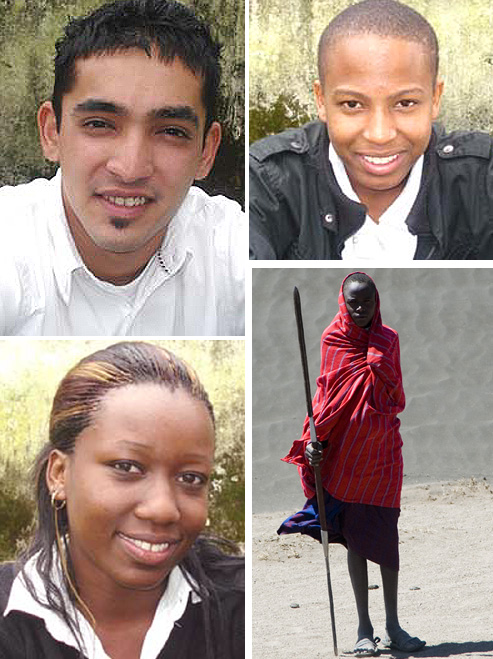
Clockwise from bottom left:
Zita Kamwendo, Ranaf Makhani, Jimmy Masaua and Unnamed Herdsboy.
It’s high school graduation time! A time for celebration, parties and boasting! Here’s a selection of graduates from Tanzania. I’d like to know which you’d like to meet.

These four kids have been born and raised in northern Tanzania, but their stories are replicated continent-wide.

Headed to the University of Cape Town’s engineering school is Jimmy Masaua. He won the top Cambridge exam award in geography. (The Cambridge exams are used more in Africa than SATs for college-bound students.)

Jimmy is destined for a busy career. Tanzania’s infrastructure is set for an enormously rapid development with the new discoveries of oil, gas and gold.

And Zita Kamwendo won the top Cambridge exam award in business studies. She’s headed to either Rhodes or Wits universities in South Africa and wants to become a lawyer. Zita is currently working at a hotel in Arusha, a city which has been growing rapidly and unlike so many cities, in a beautiful way.

Ranaf Makhani, in his own words, wants to be “The savior of Tanzania’s economy (possibly).” He was the top performer in the Cambridge exam’s economics division. He’s headed to the London School of Economics. Ranaf’s humor of “possibly” saving Tanzania’s economy is filled with truth. Many people believe Third World needs an economic revolution to stabilize.

And then, there’s the unnamed herdsboy.

There are probably ten unnamed herdsboy for every Jimmy, Zita or Ranaf. He’s nondescript. His name changes with his dreams. He doesn’t want to be an unnamed herdsboy, but he’s poor. He went to school for as long as his family could support him doing so, which wasn’t for long. There’s nothing glamorous about his life. He’s often sick and usually hungry.

But tourists want to meet him. Tourists want to meet him much more than they want to meet the truly promising kids: Jimmy, Zita or Ranaf. I’ve never understood this.

Africa’s young and well educated kids tower above their western world counterparts. No matter how privileged they may have been, how lucky to have been born into a family with some modicum of wealth, the efforts they put into their studies and upbringing are goliath compared to a typical American kid.

But who cares? Not American tourists. American tourists prefer to meet the unnamed herdsboy. They especially want to see him in his filthy village. After all if you can afford a safari, you probably have your own Jimmy, Zita or Ranaf.

The herdsboy agrees to meet tourists, because they sometimes give him food. Otherwise, he mostly covets their wealth, and then despises himself for doing so, and then becomes very angry.

Jimmy, Zita and Ranaf are destined for glorious futures well deserved and earned with an obsession that a typical American youngster might bring to PlayStation3.

Unlike Jimmy, Zita or Ranaf, the unnamed herdsboy is destined for a miserable, short life. Except for one possible career usually open to him. As a tourist, you wouldn’t want to meet him once he embarks on his job, so make sure you visit his village early.

Spielberg, the paleoWhatever!

Spielberg, the paleoWhatever!

No, this is not King Julien XIII.
I was hired by Dreamworks’ ad agency to help promote the first Madagascar. The original screenplay had lemurs living in Kenya! Well, we got that one corrected, but guess what?!!

Original lemurs may have come from Kenya!

Spielberg’s amazing.

Madagascar’s biomass is more unique than any other area in the world, except Australia which is 13 times larger. There are about 35 species of lemurs and twice that number if subspecies are differentiated. The lemur is a fuzzy little svelte panda-squirrel found only in Madgascar.

In fact, 90 percent of all the country’s mammals, amphibians and reptiles are found nowhere else!

How did this happen?

First, natural selection at its most basic can explain Madagascar’s biological uniqueness. Most of the current life forms on the island began evolving 65-62 million or so years ago.

Isolate any ecosystem for that long and you’re going to get some very neat things.

In fact, lots of neat things began to evolve 65 million years ago, including us! This was right around the time that huge meteorite crashed into the Yucatan ending the reign of the dinosaurs and plunging earth into a nuclear winter for hundreds of thousands of years.

Jay Gould’s still controversial theory of punctuated equilibrium add-in to natural selection can make things even clearer: with so much wiped out, there were enhanced opportunities for rapid evolutionary development.

So if Madagascar was really isolated – like Australia – from the rest of the world but large enough to provide a viable ecosystem, then all sorts of marvelous things could happen!

Ooops.

tku, UofCal - Berkeley
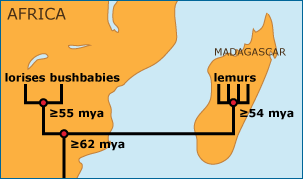
Only about ten percent of Madagascar’s life forms seem to have really started out there. Among them were the ancestors of the dodo bird. But lemurs? Sorry. They’re ancestral to the African continent’s prehistoric bushbabies, the lorises, many of whose fossils have been found in Kenya.

These original conclusions were all originally taxonomic, but current DNA studies have affirmed them.

No one has ever disputed the 1861 assertion by Austrian scientist, Eduard Suess, that Madagascar came from the giant single continent of Gondwana, then broke off from India long before the dinosaur extinction. Seuss’ simple observational deductions have been affirmed numerous ways by modern science.

Madagascar has been a lonely isolated island for almost 90 million years.

So how did the Madagascar’s lemur’s gene stock (and most of its other life forms) from the prehistoric African continent get to the island 65 million years ago?

Rafts. (Sort of like Madagascar, eh?)

The idea was floated (pun intended) as early as 1915, but in 1940 George Gaylord Simpson, a famous paleontologist and geologist, published a detailed rafting theory.

Given the vast periods of time available (nearly 30 million years) during which ancestral bushbaby forms didn’t seem to be evolving very much, Dr. Simpson surmised that it was statistically likely that enough ancestral biota rafted to the island to allow for such subsequent unique evolution of lemurs.

Two problems. Why did the rafting stop? Or more specifically even if it didn’t, why did its effects on evolution in Madagascar stop 65 million years ago?

And oops two. The prevailing winds are off the island to the south and southwest, and climatologists have no reason to believe those jet streams have changed even over the last hundred million years.

Ancestral lemurs should have been rafting to Africa, not ancestral bush babies to Madagascar!

How’d Spielberg know?

Ahoy! exclaim Profs Jason Ali of the U of Hong Kong and Matthew Huber of Purdue in a February article in Nature.

Ali is a plate tectonics specialist, and Huber, a palaeoclimatologist who reconstructs and models the climate millions of years in the past. Their collaboration proves that as Madagascar swam away from all the other continents on earth, it “disrupted a major surface water current running across the tropical Indian Ocean, and hence modified [the] flow around eastern Africa and Madagascar.”

See their complete article in Science.

Huber using his super algorithmic computer modeling genius then proved that just about the time Madagascar started evolving its mythic biota, that these currents were strong enough – like a liquid jet stream in peak periods – to get the animals to the island without dying of thirst. The trip appears to have been well within the realm of possibility for small animals whose naturally low metabolic rates may have been even lower if they were in torpor or hibernating.

And then, well then some 60 million years ago, Madagascar’s movement slowed into its current position where the ocean currents are weaker than the prevailing winds off the island. Whap! The little feisty island shut its door to the outside world of evolution.

And that let all sorts of marvelous things grow and evolve into the magical, near mythic world we know today as Madagascar.

Kudus (or Dodos!) to Dr. Simpson for thinking it up in the first place. And hey, what’s a half century or more for the techies like Ali and Huber to evolve, anyway, in order to prove it. It took lemurs 65 million years to do it in the first place!

And Spielberg? Heh, this meets all Liberty University’s criterion for an honorary degree!

This is not the movie Madagascar.

SerHighway Reveals More Corruption

SerHighway Reveals More Corruption

Mrema blown out?
Public pressure may be working to forestall the Serengeti highway. The terrible corruption of the Tanzanian government is coming to light.

Tanzania has a far less dynamic and transparent media than either Kenya or Uganda, but the “little engines that could” are blowing their whistles as hard as they can!

A tiny on-line publication, This Day, reported today that the World Bank has withdrawn a US$8.4 million offer to finance new government buildings in Dar-es-Salaam, specifically because of the growing controversy of corruption in the Tanzanian roads’ agency.

(The bank’s on-line directory still showed the project was current, today. But This Day has a remarkable record of accuracy.)

If true, it is not clear whether this is in response to the growing outcry against the Serengeti Highway, or simply a response to a lot of dirty laundry the proposed project has aired.

Several publications and blogs – most of them on-line and not widely available to the public in Tanzania – today came down brutally on the CEO of the Tanzania National Roads Agency, Ephraim Mrema, for widespread corruption.

Recently Mrema canceled the specific site for which the World Bank had made its loan to build the TANROADS headquarters, after more than $1 million had already been spent on designers and architects.

“World Bank officials in Dar es Salaam were angered after they discovered that they were misled by the TANROADS management about key aspects of the project and have since withdrawn their funding,” said an anonymous TANROADS official quoted today by This Day.

Mrema was appointed in 2007 by Andrew Chenge, then Attorney-General but since fired, for an appointment of three years ending on June 3, 2010. But Mrema remains in office, today.

Following Chenge’s resignation and later indictments on charges of corruption, a government inquiry began into Mrema’s own dealings. The inquiry has charged him so far with overstepping his authority, clinging to a position since expired, and fomenting a “reign of terror” within the agency.

The Vice-Chairman of TANROADS, theoretically Mrema’s second-in-command, Dr Samuel Nyantahe, has officially called the situation a “serious crisis.”

“…the situation at the agency is very grave as there is a reign of terror … urgent government intervention is needed to forestall further deterioration and decadence,” Nyantahe said in an April 12, 2010, letter addressed to the Prime Minister of Tanzania, made public today by This Day.

“How can a public service official (Mrema) exhibit blatant insubordination behaviour and get away with it?” the letter continues.

Mrema’s answer is that he has been officially sanctioned by Tanzanian President Jakaya Kikwete. The president’s office was silent, today, on the growing controversy.

On May 3 last year, the ministry in charge of roads censured Mrema. Omar Chambo, the Permanent Secretary, formally reprimanded Mrema for a number of contractual and ethical violations. “Implementing [unapproved actions] contrary to my instructions amounts to insubordination,” says part of Chambo’s letter to Mrema.

It must be serious. In December, 2008, Mrema paid Chambo an “honorarium” of $7000 from the TANROADS coffers for seemingly no reason.

In Tanzania you don’t bite the hand that feeds you unless that hand’s ready to be chopped off.

Serengeti Highway Alert

Serengeti Highway Alert

Your urgent help needed to stop this.
The Tanzanian government has approved a major highway construction program that will bisect the northern Serengeti. It’s disaster. We need your help, now.

Click here to join the growing list of individuals and organizations opposing this move.

The US$480 million highway will travel just east and south of Ngorongoro Crater and around the eastern side of the Serengeti, cutting into the park east to west just north of the Kenyan border.

The road will sever a critical corridor for the annual migration of hundreds of thousands of wildebeests, zebra and other animals. It is absolutely reminiscent of the 1980s veterinarian fence that effectively ended the great wildebeest migration in Botswana.

The Serengeti’s principal donor and scientific NGO, The Frankfurt Zoological Society, says, “The entire Serengeti will change into a completely different landscape holding only a fraction of its species and losing its world-class tourism potential and its status as the world’s most famous national park – an immense backlash against the goodwill and conservation achievements of Tanzania.”

(Contrary to many media reports, it will not link the Serengeti with Kenya’s Mara. In fact last week Tanzania’s tourist officials pointedly denied a Kenyan report that the Sand Rivers border post at the Serengeti/Mara junction will open.

The highway will decrease the time it takes to drive from the Serengeti into the Mara through the Isbenia border post. Currently it takes approximately 5 hours to drive from the Serengeti’s Grumeti Gate into the Mara’s Isbenia gate. From the new gate exit in the northwest part of the Serengeti currently planned, this driving time to the Mara’s Isbenia Gate would be reduced to less than 3 hours.

Facilitating easier access between these two giant wildernesses is good, but in no conceivable way could justify this wild atrocity.)

Currently, the Serengeti/Mara/Ngorongoro ecosystem is a certified UNESCO World Heritage Site. This designation would be lost if the highway construction commences. This in turn will decrease ancillary operating revenues for the park and likely jeopardize the fragile anti-poaching programs currently in place.

This terrible development is not a surprise. Human/animal conflicts in Africa are growing and in East Africa were exacerbated by the last three years of bad weather and poor rains. Elections in Tanzania and Uganda, and a constitutional referendum in Kenya are fueling the debate. I concur completely with many politicians in these countries that for far too long the western world has ignored the serious problems arising from supporting tourism parks while not adequately developing the local populations, particularly those on the periphery of these areas.

But this is not the answer.

A modern road is absolutely needed between the city centers of northern Tanzania and Lake Victoria, the mission of this new road. Several alternatives exist for longer highways that would skirt the ecosystem altogether.

Since they would travel through more populated areas, you would think that these alternatives are attractive to the Tanzanian government.

The Frankfurt Zoological Society claims the alternate routes would not cost more, but local media reports have suggested otherwise. The lack of hard data is frustrating, but I think this may be part of a dangerous game of chicken Tanzania is playing with NGOs and foreign donors.

Please help. Click here to add your voice to the opposition, then petition your lawmakers and wildlife NGOs to help Tanzania raise the added funds for the alternate routes.

OnSafari onVacation

OnSafari onVacation

Dear Friends and readers.

That woesome time has come: I’m going on vacation! Keep your eyes on East Africa, for there’s a lot happening: elections in Rwanda and Uganda, referendum in Kenya on a new constitution…

I’ll be back with you in early July!
Thanks for reading!
– JIM

On Safari: Homeward Bound

On Safari: Homeward Bound

There’s no easy way to get home. You just have to grunt and bear it!

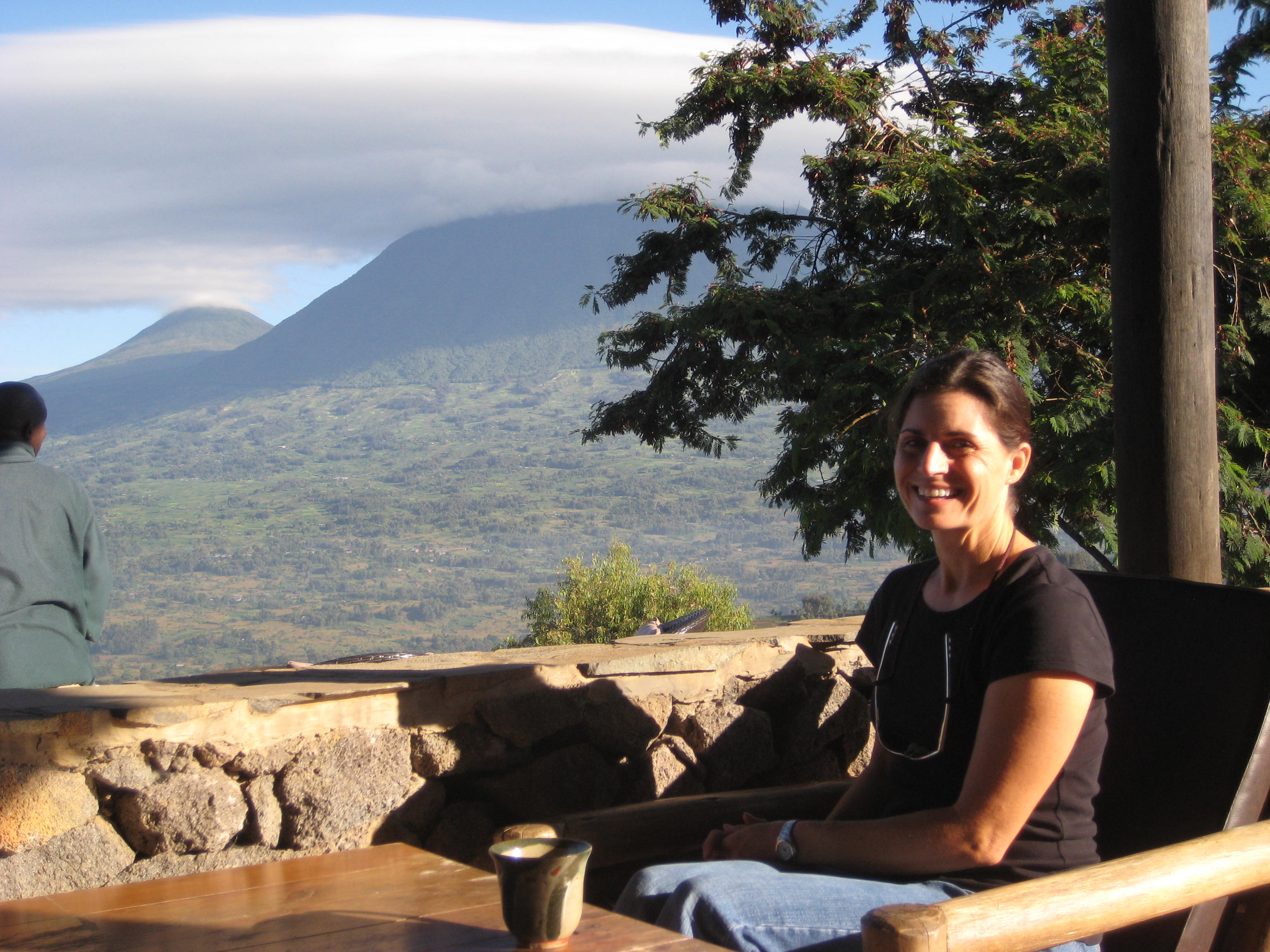
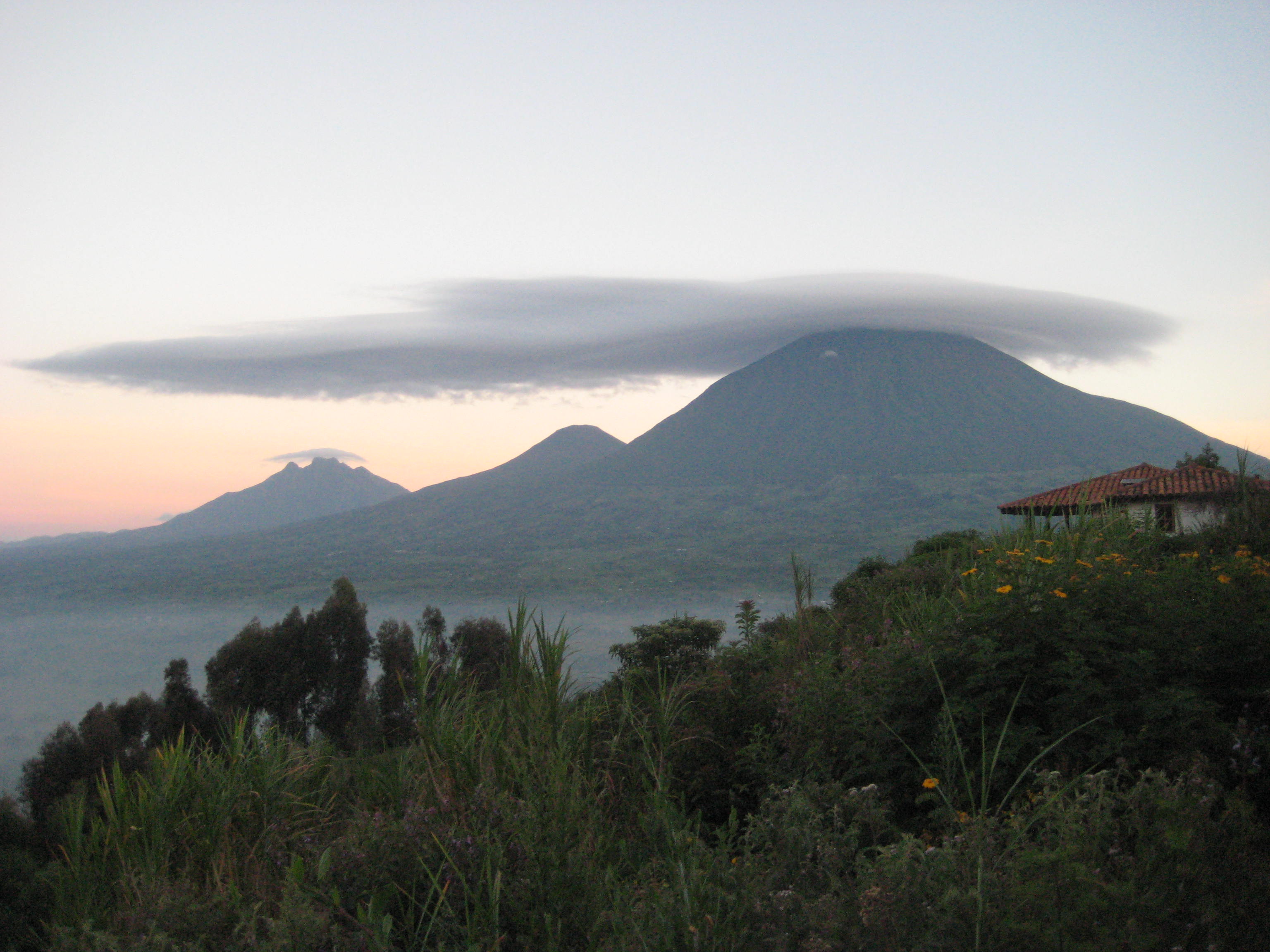
But before leaving Debbie enjoyed a final view out our dining area deck over Muhabura to the volcano Gahinga that she and the others had conquered the day before!

The electricity of having completed the trek and been so close to these magnificent animals slowly recedes as the journey home begins. But actually, I think this is a way of fixing the memory in good ways. You start to think about what you’ve done, about the poverty all about you, about your contribution in fees to hoped for local development.

You drive through cities that look fine, but with people who don’t. You remember all you’ve read about the long history of mountain gorillas, saved from the brink of extinction and yet teetering in an ecosystem hardly politically stable.

It might just take 36 hours of flying and reflection to start to know exactly what you think about it all.

Jiggedy-Jiggedy with the Gorillas!

Jiggedy-Jiggedy with the Gorillas!

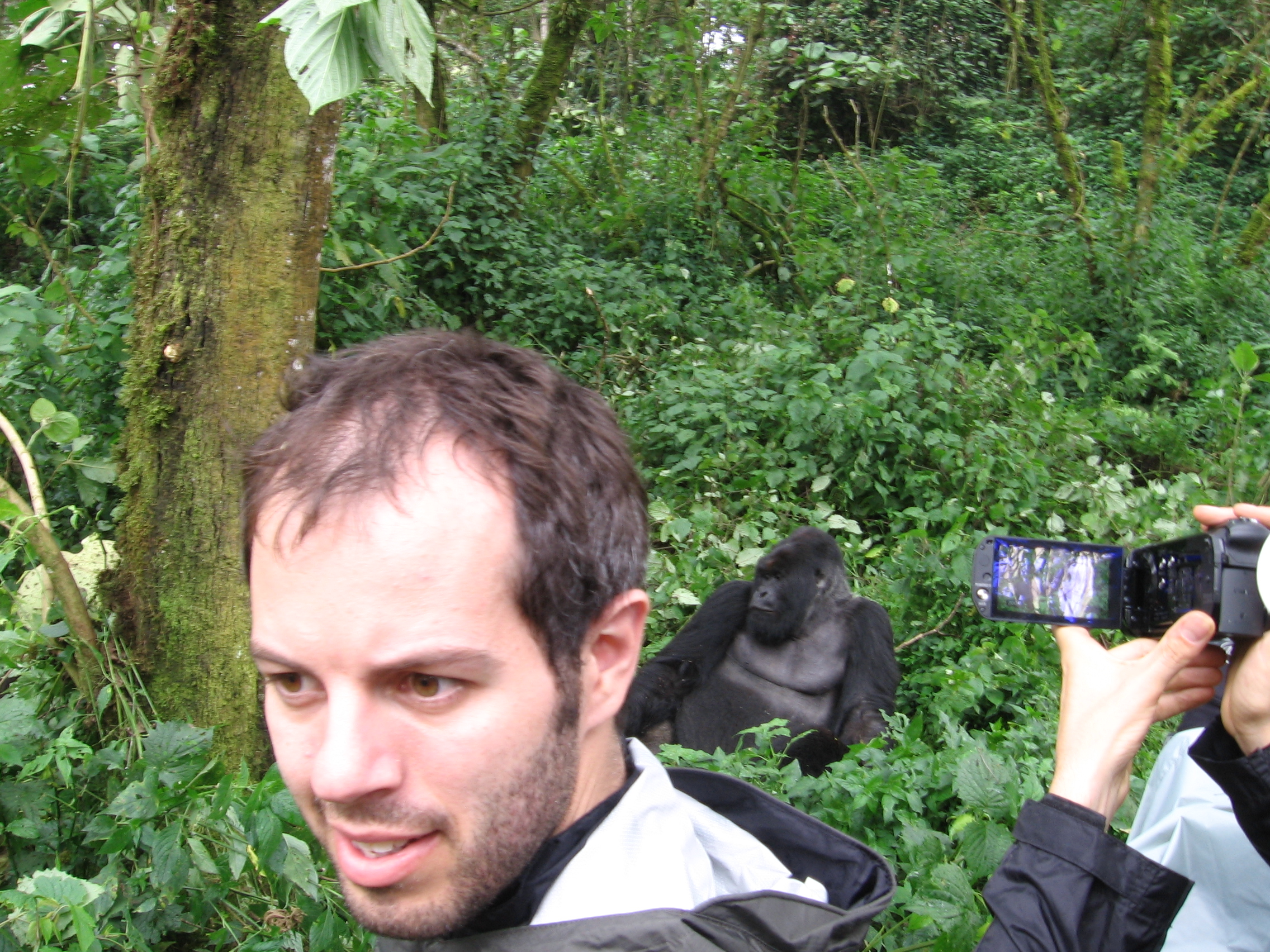
Kwitonda silverback watching Mark!
The Cronan’s gorilla trek saw some jiggedy-jiggedy!

We were staying at Virunga Lodge, the first luxury lodge opened near the park. Although not very near. It still takes about 40-50 minutes to drive to the park gate. Of course this pales in comparison to the earliest days when decent accommodation was 90 minutes away on Lake Kivu adjacent Zaire.

Today, there are several more choices and an excellent luxury lodge near the park, but they were full. But the beautiful views from Virunga Lodge, including a full front face of Muhabura Volcano, are certainly worth the little longer drive.

Everyone is nervous the night before. I think Glen was most nervous as he walked up and down the paths in the hotel constantly missing his relatives, Emily was ridiculously determined to bring final closure on a little cold, Mark was buzzing through cloud nine certain he was dressed as any successful movie star, Debbie called home in the middle of the night here for a final confidence builder, and John – well, John, the Mzee and Dad, just seemed to be taking it all in with great relish.

It was very typical… nervousness. Concern that it would be too hard, or that you would be swallowed up by an anaconda or twilight vampire, or brushed over by giant poisonous plants or even kidnaped by aliens.

When I explained to them the night before that eating at this high altitude greatly increased the time of digestion, most stopped eating altogether. I tried my best to encourage them at our 530a breakfast to chow down, but I think cerebral antigens were winning the battle against hunger enzymes.

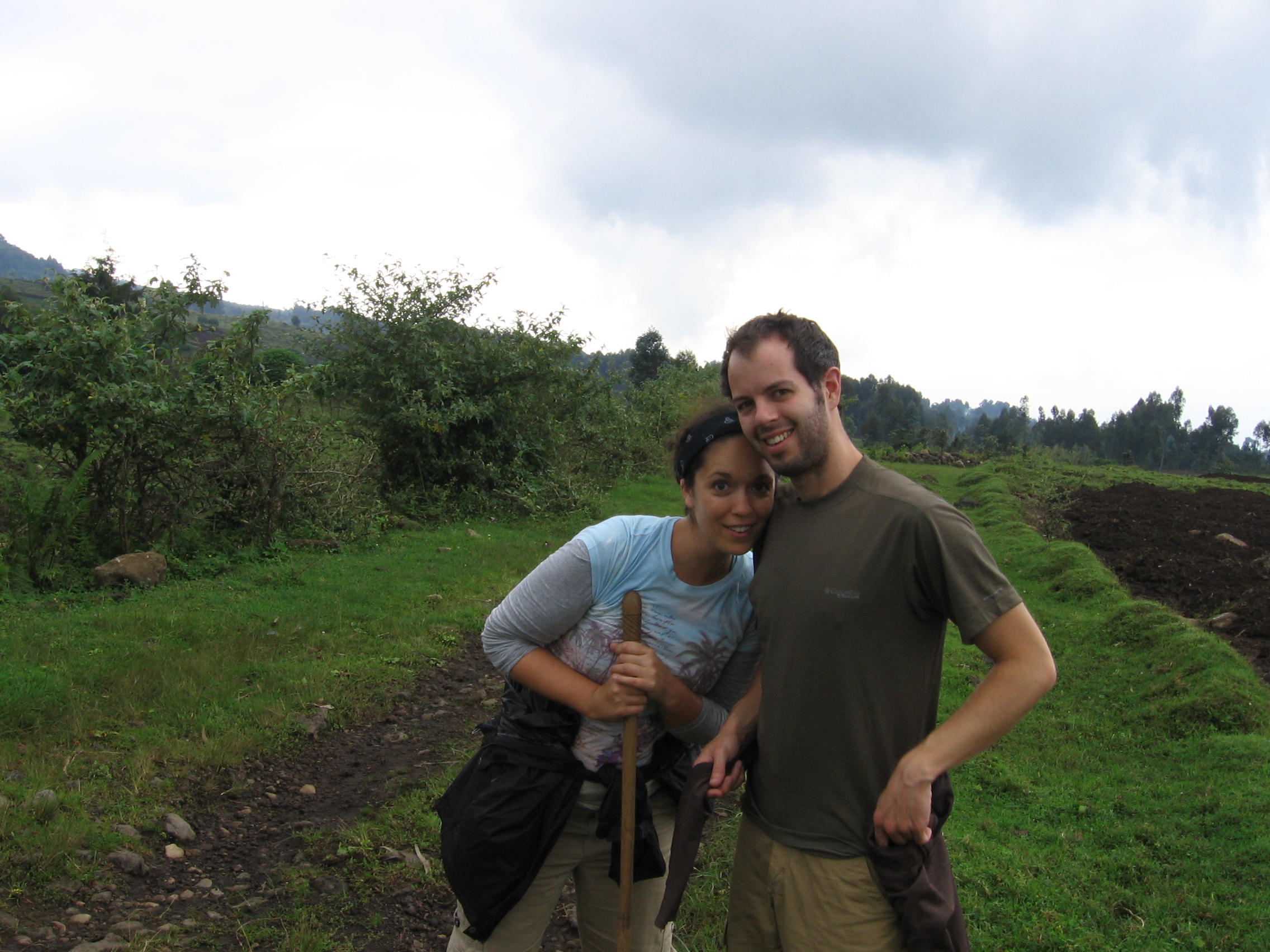
Just starting out?
Off they went at 6 a.m. It was an absolutely beautiful, perfect day, at least from the lodge’s perspective. Very cool but not cold and no rain. Streaks of sunlight even shown through the thick mist over Muhabura.

At the park gate at Kinigi at 7 a.m. the Cronan family was “assigned” the Kwitonda family on Gahinga volcano. This is considered a moderate trek of an interesting family that was divested of an earlier larger family with multiple silverbacks amalgamated during troubles in the Congo.

Today, the mountain gorilla project is so well run and organized that the often lengthy and difficult treks of the past are rare. “Intern hackers” are sent out around dawn to where the gorilla family was known to have been the night before, and they begin their work immediately.

So if the family has moved a lot, the trek will be more difficult than average, but a lot less difficult than it used to be, because the interns will have had several hours lead on the visitors trekking the family’s whereabouts.

When the Cronans left the park headquarters, their guide was already in communication with the intern hackers and knew exactly how far they should drive before starting up the volcano.

“The damn trails were so friable,” John later explained with enthusiasm, meaning the trails were very slippery and the base noncompactable by hikers in the front. And after about 80 minutes of trail walking, the family had to begin hacking through jungle.

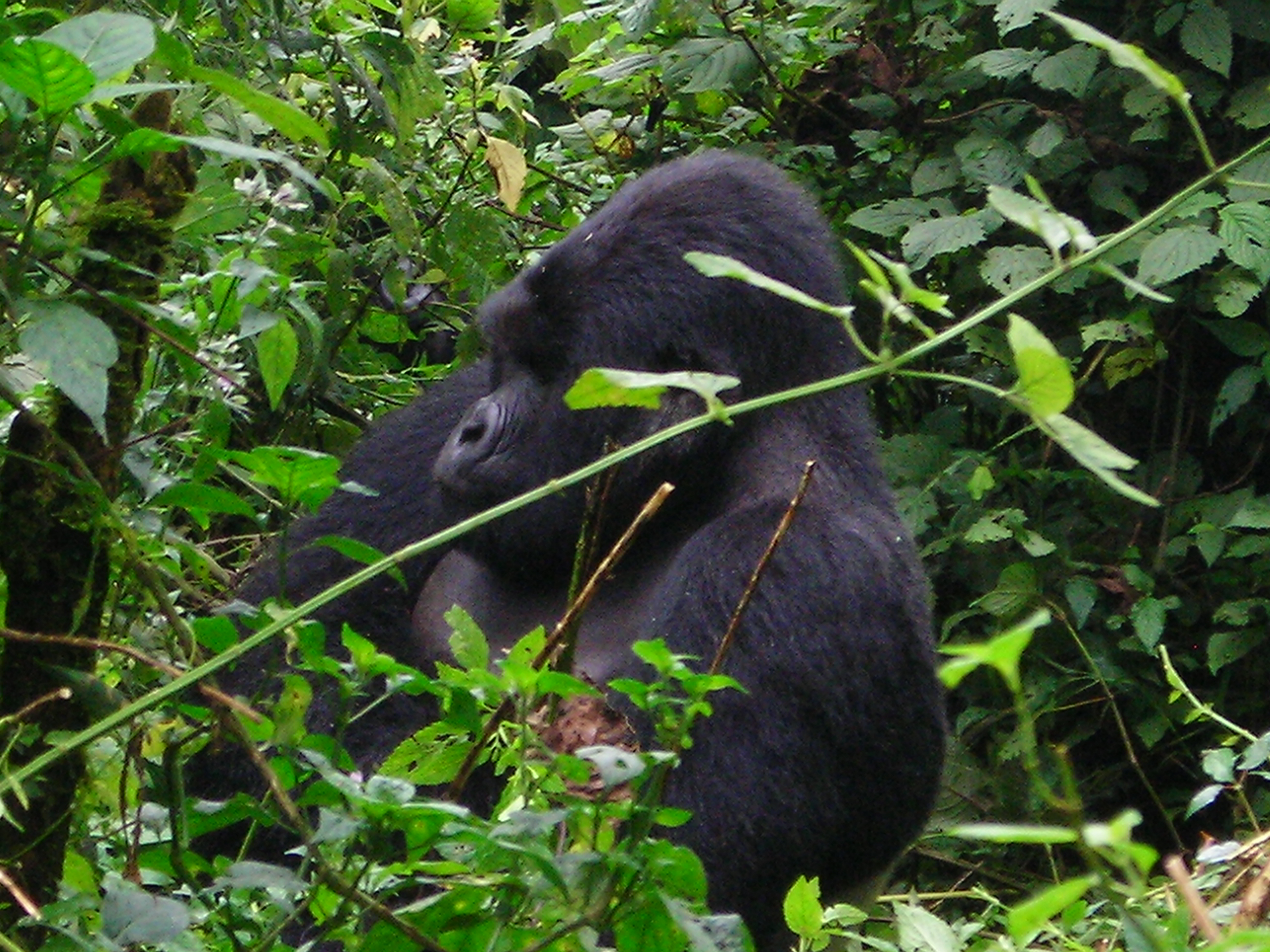
Debbie photographed this magnificent silverback Kwitonda.
But just around two hours after beginning the hike, the Kwitonda family was met in the high jungles of Mgahinga. Trekkers took off their backpacks, laid down their walking sticks and moved in for morning tea with the greatest of the great apes!

Their were adults, silverbacks and juveniles goofing around, their giant black eyes googling at the day’s visitors. The guide routinely moved hikers forward and backwards, but trying to keep the suggested 7 meter distance was impossible.

And much of the hour was dominated by an 8-year female just coming into puberty, in active if humorous solicitation of a junior male just growing his magnificent silver back.

Then the guide whispered enthusiastically, “They’re making jiggedy-jiggedy.”

Normally, the silverback would pulverize any young male trying to breed with his selected brood, but in this case it could have been Birds-and-Bees 101 for mountain gorillas!

It was a very lucky day. There was no rain or mist, and even the overcast was light. The group came down quickly, enjoyed their picnic lunch, and returned to our lodge before 3 p.m.

That night was a night of celebration! It began with really entertaining Itore dances by kids from a local school and ended as do most nights in gorilla lodges, with the sharing of stories and wine between the guests.

The sense of personal physical accomplishment I know is always a big factor in people enjoying the mountain gorillas, but equally is the unique ability to get so close to a wild animal, to step out of your safari car and away from your safari guide with a gun, and commune best our great differences will allow with the greatest of the Great Apes.

Peace, Freedom, Tranquility, Ambition

Peace, Freedom, Tranquility, Ambition

Sabyinyo, Gahinga, Muhabura volcanoes behind our Virunga Lodge.
Rwanda and Uganda, although distinctly East African, display very stark differences to Kenya and Tanzania.

Today, we flew from Nairobi to Kigali, and from my point of view, it was entering a different world. There is no question that the economies of East African countries are inextricably linked – we passed a bus traveling from the Congo to Nairobi on the only road that connects this vast African interior to a port – but the cultures are extremely different.

Rwandans and Ugandans (Hutus, Tutsi, Bugandans and others) have lived in this interior of Africa around Lake Victoria for almost 1500 years. There is evidence that iron ore cultures developed in Rwanda in the 6th Century before they did in Europe.

Kenyans and Tanzanians, with a few important exceptions such as the coastal cultures, are all relatively new arrivals when compared to Rwandans and Ugandans. The Nilotic cultures, such as the Maasai, may have arrived only as recently as 350 years ago.

I think this has led to a fundamental difference in how colonialism effected these areas. Kenya and Tanzania are in many ways as European and colonial, now, as their conquerors were hardly a century ago. Many of the problems they face, such as corruption, poverty and political maturity, are addressed just as their colonial masters did.

As foreigners immigrating to a new land they were as impressionable as a culture as a recent immigrant to the United States. Extremely quickly they adopted the characteristics of their new culture : in this case as their colonizers.

Kenyans and Tanzanians are open, critical, often blunderbusses when trying out new ideas, very capitalistic and like their colonizers, proud of power. Nairobi’s three daily newspapers and two highly competitive TV channels – not to mention the increasingly popular talk radio channels – uncover the tiniest piece of dirt they can find and give no quarry to the offenders.

Ugandans and Rwandans are 180-degrees different. They evince that patience (wrongly called “fatalism” by many early observers) that can be so infuriating to high-tech, modern world people like my fellow Americans… and, for that matter, Kenyans and Tanzanians.

Ugandans and Rwandans are practical to the point of enslavement. Whether it is the Chinese building roads in Rwanda or oil companies encroaching on Ugandan national parks, there is simply no sense of urgency in evaluating long-term effects. They’ve been around for millennia – what could possibly go wrong?!

This passivity and patience is what leads the Ugandan and Rwandan into the incessant ethnic conflict the greater world simply will not ignore any longer. They are easily led and easily misled. While the brazen if rash moves by Kenya and Tanzania – spearheaded mostly by the youth – is what leads these folks into their violent confrontations.

So to an outsider seeing only the outcomes, it all seems the same. But it isn’t at all. As we drove from the Norfolk in the morning to the airport in the opposite direction of Nairobi’s unbelievable traffic congestion, I saw road rage bubble up from impatience with traffic signals, patient if overworked policemen wink at me in a gesture of absurdity, ridiculously happy street vendors smiling as they walked through lines of traffic hawking sun glasses, maps, scratch pads and even vacuum cleaners! It was chaos to be sure, but not out of control and fired by real personal enthusiasm and ambition, and I think, optimism.

But as we drove from Kigali to Parcs de volcans near the Congolese border I saw a placid, peaceful land. But it was so clear that what I was seeing was the tightly organized surface tension of a troubled culture unable to carry its thousand years of social organization into the modern world.

Kigali’s traffic lights all work and everyone obeys them. When we all left our car, no one bothered to lock the doors. Compared to Kenya and Tanzania crime hardly exists in Rwanda, because the punishments are so harsh. Indeed, an American lawyer who flew into the country to defend a current presidential candidate against charges of treason was imprisoned, because his client had been charged with denying the genocide.

This type of social control – mostly through fear and innuendo rather than clear law – is what people of my generation ascribed to the early socialist experiments in Russia and China. Yet defenders of those old regimes claim even today that it kept the peace.

Peace vs. Freedom. Tranquility vs. Ambition. There’s no easy choice, here, although my own cowboy genes lean towards Freedom and Ambition, Kenya and Tanzania.

Catching your Insight in Nairobi

Catching your Insight in Nairobi

What if the tongue missed the pellet?!!!
I have often recommended that people take some time to enjoy Nairobi’s attractions. Today, the Cronan family did just that.

After a final dawn game drive in the northern end of the reserve and a fine breakfast at Olonana, we fly back to Nairobi and the family headed to Karen.

Karen is the suburb outside Nairobi named for Karen Blixen (Isak Dinesen) who wrote Out of Africa. It is today where the rich and powerful live, and where several great attractions are located including the Karen Blixen National Museum.

This is the home that Dinesen used during her failed attempt to grow coffee in Kenya. It is the perfect example of early colonial living. Remarkable for its simplicity and few rooms, it is beautifully furnished with valuable heirlooms that the early colonialists brought from Europe.

They sometimes waited for nearly a year for these trunks to arrive, but in those days there was never a concern that they wouldn’t! “Lost Baggage” hadn’t yet been concocted, I guess.

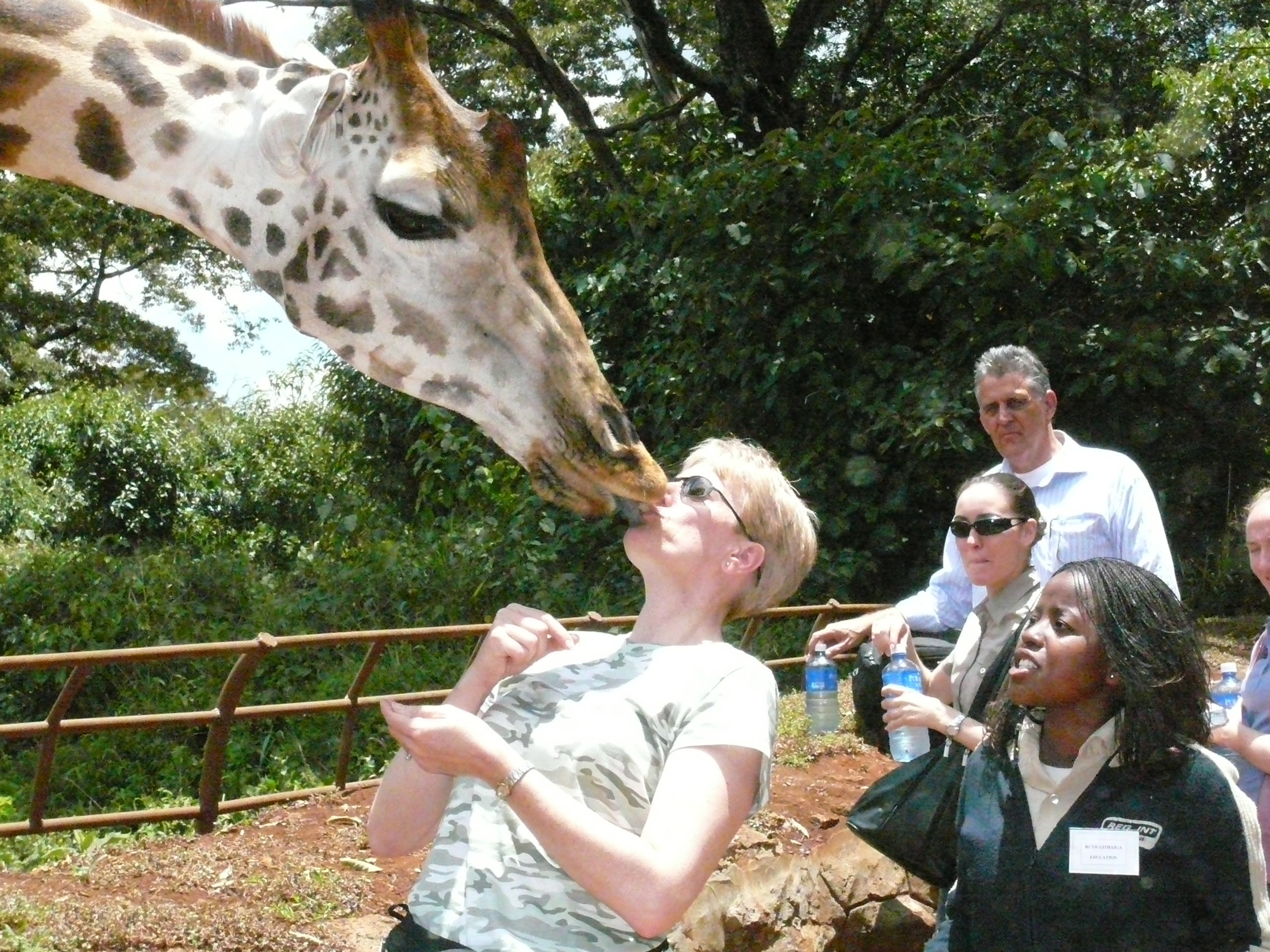
The Cronans especially enjoyed the Giraffe Centre. This is where the endangered Rothschild giraffe is protected, on display for all guests forking out the hefty entrance fee (that supposedly goes for the conservation of the giraffe). Today the giraffe is only found in Nakuru National Park, Kenya’s entirely fenced-in big game park. It is extinct in its original range (Laikipia).

Emily announced with particular pride that a giraffe picked a pellet with its tongue out of her mouth! This trick has become quite popular, but I’ve often wondered what would happen if that giraffe tongue – approximately 18″ long – missed the mark and continued into your esophagus….

The final attraction was Kazuri Beads. This brilliant “Harambee” (‘self-help’ in Swahili) has really taken off in the last few years, supporting dozens of working women who create outstanding jewelry and cutlery. Kathleen and I have so much Kazuri we’re ready to become an outlet. I particularly like the dinner settings in guinea fowl mode.

The Cronans had to return for an overnight to Nairobi before continuing to Kigali for our gorilla trek. That was an extremely convenient way of starting with the city tour, then going on safari, and returning for these attractions in Karen.

Safaris that don’t need an interlude in Nairobi really should have at least one full day (which normally means two nights) to enjoy these fun and informative attractions. Those who just rush in to see the animals and then rush not only miss the much greater overview of Kenyan society, but will be left in the dark when the increasingly important human/animal conflicts appear in the news.

You can’t have a game park without the support of country and its peoples. And these types of visits in Nairobi seem to me to be the bare essentials for beginning to understand this complex and increasingly tense relationship.

Magnificent Mara!

Magnificent Mara!

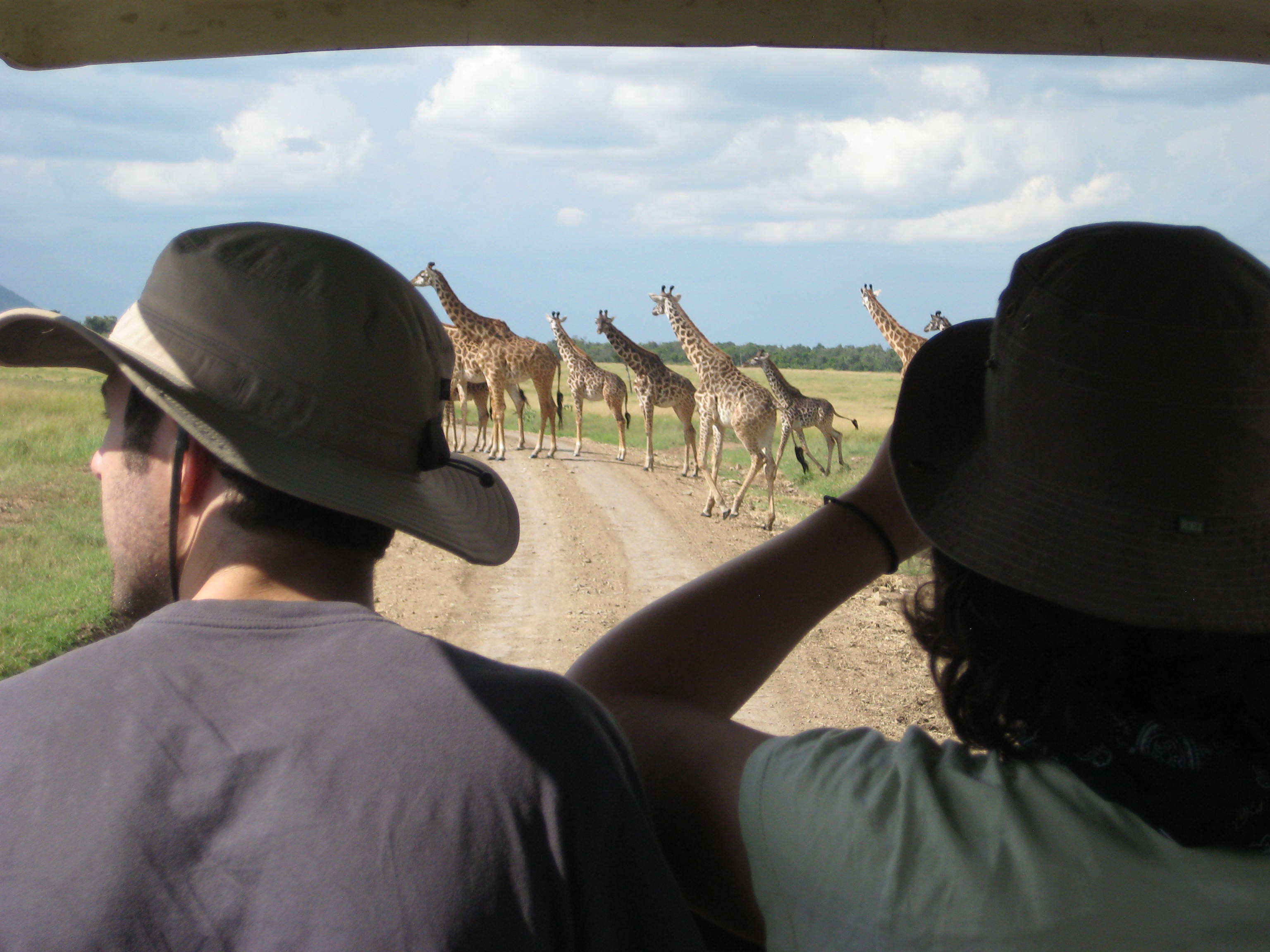
Mark & Emily watch an amazing number of giraffe in the Mara!
John said it was “like a dream” – the best game drive he’d ever had. And he’s had quite a few in several African countries!

We spent a full day in the Mara, bucking tradition but also avoiding the rain!

There are so many hard myths so difficult to break about safari travel, and one of them is the game viewing routine. The fact of the matter is that there shouldn’t be a routine, because conditions change.

Right now is a cold time in Kenya, and in the Mara a time when every afternoon carries a magnificent thunderstorm. So the idea of going out on a dawn game drive, returning for breakfast and “relaxation” until the afternoon game drive, just doesn’t make sense.

We all slept in a bit, got tea and coffee served to us on our private verandahs overlooking the Mara River as the brilliant sun broke into a cloudless sky, then enjoyed a full breakfast before heading out for a day of game viewing.

We began our game viewing as practically everyone else was returning for breakfast! But with more time available, now, we were able to head down the main road all the way to the Tanzanian border.

After checking on our resident pride and seeing that their bellies were still too big for anything dramatic to occur, we meandered through some of the most lovely country in the Mara at its very southwest corner.

These are plains that in a month or two will be filled with wildebeest, but their beauty right now was breathtaking. Lemon green grasses, many beautiful wild flowers and blooming sausage and acacia trees. We made the requisite turn around the Tanzanian border stake before heading back to the Mara River.

I saw a young lion that looked distressed. We went over to him and he slouched away, I don’t think for fear of the vehicle, but almost as if we had discovered him doing something naughty.

Aha! He must have been told not to come with the hunt. Young males are never allowed to hunt with their mothers, even though the young females are. So sure enough a few hundred yards ahead and we saw three females stalking.

Unfortunately the ground was too wet for us to follow them around a hill, but as I said to the Cronans with me, this was a pride that had obviously had a number of failures up to now or they wouldn’t be hunting in the middle of the day. It was quite possible they had nothing in their sites, but were just sneaking around the hill with hope!

We found a beautiful sausage tree on a tiny hill with a grand view for lunch. About twenty elephant were to our north in a swamp and a huge herd of buffalo to our southwest on a hill.

After lunch we tooled up the Mara River, where the wildlife was thick. I think we past more than a thousand gazelle by the end of the day, and hundreds of topi. On the river we found some incredibly large crocs.

And after returning to the main road, the first thing we saw was a mother cheetah with three older cubs! They were perched on the top of an anthill, the mother surveying the veld, back and forth, back and forth. But the kids seemed disinterested and flopped back down asleep.

Later as we wound by the river, James noticed a gazelle snorting an alarm. Following the sight path from the Tommie all we could see in the tall grass was one buffalo. But patience prevailed, the Tommie kept snorting, and a beautiful male cheetah popped out of the grass. Sorry, buddy!

But perhaps the most astounding thing to me on this game drive came towards the end when we encountered nearly 50 giraffe. Giraffe aren’t social beasts. They do congregate from time to time, but rarely in numbers this large. It was truly magnificent.

So we headed home, it began to thunderstorm really badly, and as we slid back to tea and cakes around 430p we passed a number of poor travelers just coming out for their game drive!

Wing it to the Mara

Wing it to the Mara

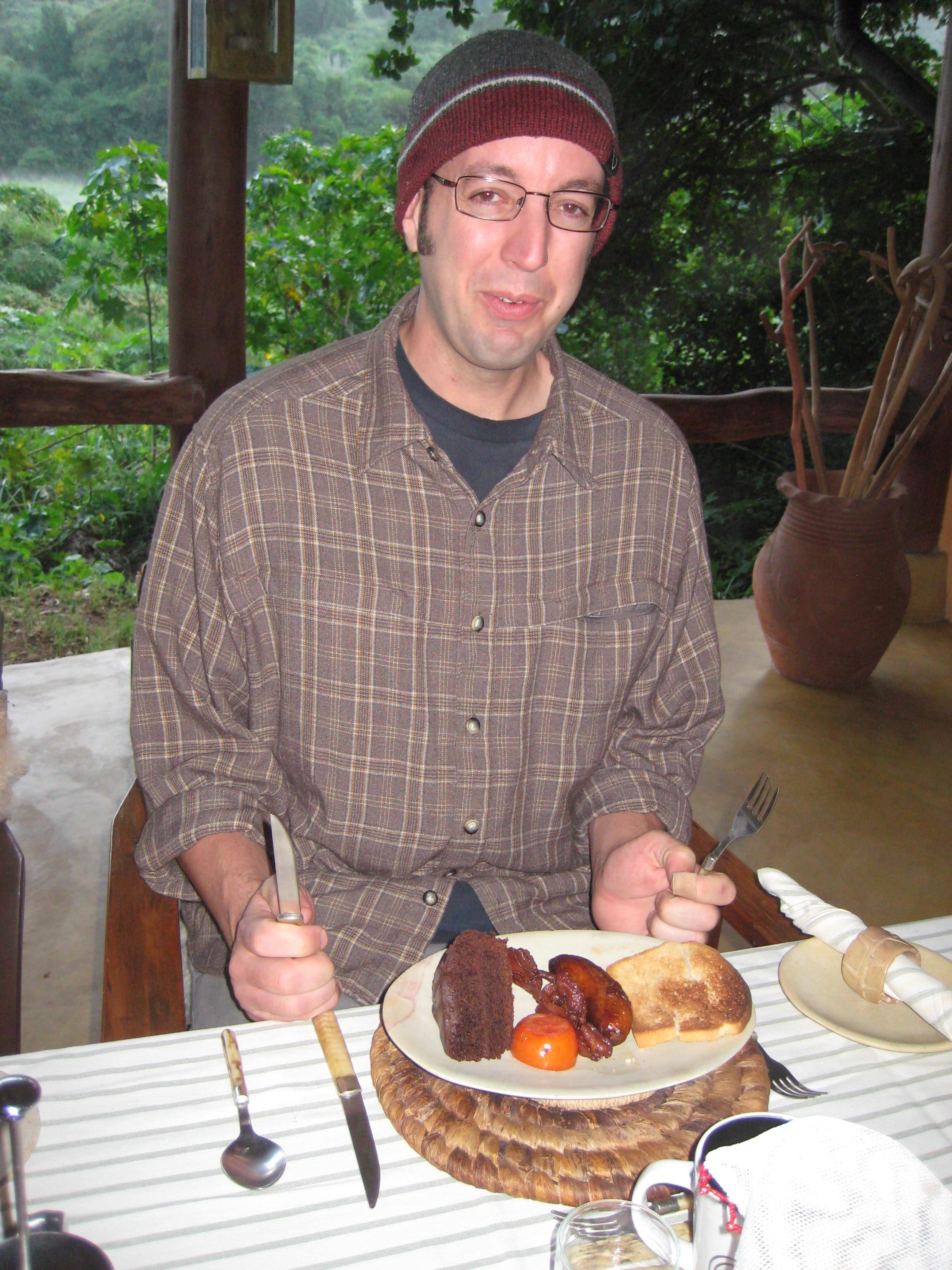
Glen's last breakfast at Kitich. Notice the chocolate cake.
Every good safari will have a significant travel day, but we were still able to get in several hours of game viewing in the afternoon.

The drive from the Mathews Mountains back to Nairobi, even with the great new Chinese road, would take about twelve hours according to the camp manager. I never contemplated it. We took a 35-minute charter to Nanyuki, then scheduled service into the Mara. We left camp at 7:15p and we were in the Mara at noon.

The incredible charter from Mathews to Nanyuki was made even more spectacular by our pilot, Rick of TropicAir, who flew a good ten minutes or more at about 50 feet above the Ewaso Nyiro, winding with it through the Northern Frontier.

It was incredibly spectacular as we saw all the animals and villages outside the park. But on the other hand I got an incredible impression of how terrible the March flood was. Whole sections of the river embankment had dropped away, in some places causing lots of little streamlets and pools. Doum palms were down everywhere.

Then we fly high and got magnificent views of Mt. Kenya, which was completely out, before landing at Nanyuki. Time just enough for a coffee before our Safarilink flight whisked us over Lake Nakuru into the Mara.

James and Sammy were waiting for us, having made the 18-hour journey from Saruni in two days. We took a short game drive past lots of topi, waterbuck, impala and gazelle before checking into lovely Olonana Camp.

After lunch the first game drive was a winner. Out hardly an hour when we came upon a very content pride of lion, including Big Daddy and a number of cubs that were playing around. The presence of hyaena and jackal suggested a kill nearby, but their bloated bellies confirmed it!

Wound all over the area near Olololo gate, and especially near its many swamps where there were all sorts of birds, including wooly storks. That unusual stork has only recently been confirmed to breed in the Mara.

All in all, a great first afternoon in the Mara!