Steel for Anemones

Steel for Anemones

No more Lamu.
Yesterday the Kenyan government invited you to replace the heavenly treasure of Lamu Island with Africa’s largest port.

Lamu, an ancient Arab kingdom and now a quaint beach retreat on the north Kenyan coast will become Africa’s second largest port in less than ten years, and shortly after that, its largest.

The half dozen paradise islands, the nearly two thousand years of quiet peace, the cars-prohibited stone streets, the sweet halva whose recipes have been passed down for generations, the white sands and azure seas will be replaced by supertankers and deep-water berths.

Oil.

Where oh where is cold fusion?

In order to get your piece of the $16 billion Chinese building fund, you have until October 15 to submit bids for:
– dredging 60 miles of coral reefs;
– plowing away several hundred miles of gorgeous sand dunes; and
– staking out the 1,000-acre port facility.

You can then submit bids for:
– surveying 800 miles of high speed rail from Manda Bay on the mainland opposite Lamu Island to Addis Ababa, Ethiopia, to Juba in the southern Sudan;

or, if you’d rather:
– help with Africa’s largest and longest steel pipeline from the oil fields of The Sudan to Lamu.

Any way you look at it, there’s probably a job in it for your nephew.

Those of us who have watched with wonder the highways being pasted down on our sleepy Africa over only the last few years have little doubt this will happen.

We also watch from afar – not far away in distance, but in memory already drowning in nostalgia.

We can’t stop this and shouldn’t. The government white paper Mr Cyrus Njiru, transport permanent secretary, presented last spring is no longer being scoffed at. There are real and live economists in the world who believe the development transforming Kenya will create Africa’s largest middle class in less than two decades.

Right now there is only one deep water port in all of the east side of this huge continent at Durban, South Africa. The three berths scheduled to come on line by 2020 in Lamu will place it second to Durban’s eight. But ten years later (2030), Lamu will grow from 3 berths to 16!

This is not just the mission statement of a not-for-profit that wants to end polio among bonobo. This is the life story of the Chinese, the society quickly becoming the biggest and richest on earth, but a society with little oil of its own.

It’s a race between Chinese consumption and laying pipe, concrete and rail through the deserts and war zones of Africa. And that’s a story in itself, because it might be the first time anyone’s done something that might really bring peace to this war ragged area.

Can you imagine ExxonMobile or preboom BP planning a project of such historic dimensions in Iraq or Afghanistan? Of course, not! In fact, they refused.

This area is probably much worse than Afghanistan or Iraq. The pipeline and edges of the highway will skirt into territory currently held by Al-Shabaab (Al Qaeda in Somalia). The pipeline will transect the oil fields that have contributed to more than a million deaths, many of them child soldiers, in The Sudan.

But the Chinese can’t say, I’m not sure this is safe enough. This is where they’ve found oil and where they control the rights.

I know this will happen. And I hope it brings peace. The Chinese – unlike the moralists in the west – can care less if women are stoned to death for burning the toast or ancient monuments are used to fill potholes. I’m not saying this offers a rosy picture of our next world society; it’s just the facts, ma’am. Chinese are the world’s ace capitalists.

They need oil. Fast.

Kenya’s figured that out and knows how to deliver.

For a price, of course. The price of prosperity. Less infant mortality for a few miles of paradisiacal coastline. Modern agricultural machinery to grow hybrid corn. Fiber optic cable to create Africa’s Bangalore.

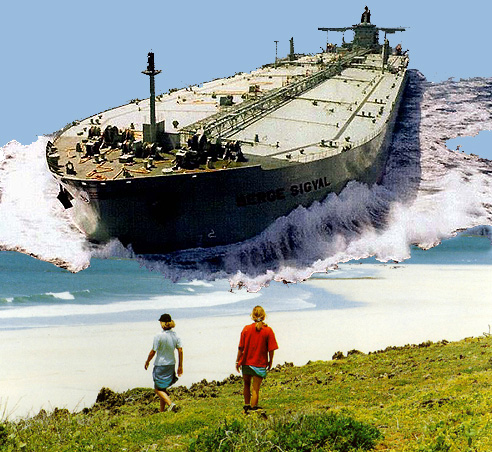
Steel for anemones.

There will still be many wondrous places on the Kenyan coast. Just not Lamu, anymore.
How Much for Censorship?

How Much for Censorship?

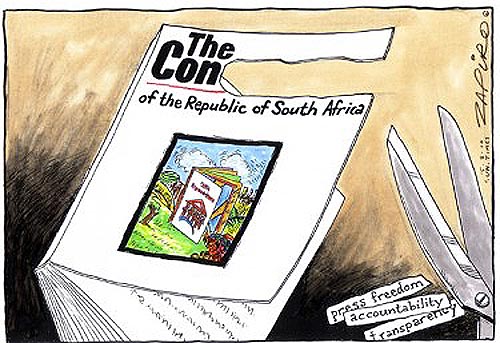
Will the proposed censorship law destroy South Africa?
Crippled and cowering, the South African government is shifting its attention onto the country’s media after essentially provoking then losing the devastating public service strikes.

South Africa’s problem at the moment is that it’s exhausted. Can hardly blame it. The current political framework is less than 16 years old, it keeps chugging along with an economy about 20 times bigger than all the rest of the countries of Africa combined, the divisions between its rich and poor get larger, and a private capitalist economy keeps fighting with socialist leaders.

Everyone on all sides had hoped that a successful performance of the World Cup would somehow have made roses bloom and smog go away. To be sure, an unsuccessful performance would have been dire, and kudus to the government for taking the dare.

But attention to the World Cup was a distraction. Apartheid was the ace capitalist tool. By sequestering rights and setting boundaries among populations, markets were more easily defined then exploited. Wealth was much more easily created, albeit by excluding the majority.

So this is to be sure an incredibly daunting situation, now that the majority is in power, even while the majority knows it can’t just divide the existing wealth without so diluting the economy that it immediately evaporates into the African thin air.

So it’s understandable that this society wants to retire to bed with a plaster.

But a much more serious distraction than the World Cup is now besetting this enervated society.

Press Freedom.

Frankly, I think press freedom is overrated, today. Even in societies with thousands of years of censorship, like China, the news gets out. You simply can’t stop every cell phone, iPad and their partner electrons from zapping around.

Don’t get me wrong. When the battle lines are drawn, I fall squarely with the blobbers. (Sorry, is that blogger or blabber?) I’m just trying to point out that… it’s a distraction.

The proposed “Protection of Information Bill” has not yet passed South Africa’s parliament. It is a bill – with similarities to Kenya’s press control bill passed last year – that in its purest form would punish lying or revealing government secrets.

Of course, that’s the problem. One person’s lie is another’s truth. One person’s secret is another person’s redemption. This is not to say a lie is a truth, or that governments don’t have rights to secrets, or vice versa, just that there are a lot of malicious and ignorant people out there who believe lies and would misuse secrets.

And protection of their right to be stupid seems inseparable from pure freedom. And so it is.

South African leaders have been so quirky and so beleaguered by scandals that it’s quite clear that the law is as much intended to stop the whistle-blowing as it is to keep a fragile society from being rocked apart by lies or taken down by being stripped buck naked.

And so the fight begins anew with this session of Parliament. The original legislation has been softened, a “tribunal” of mediation proposed to define the parameters when previously it was the government itself, but Cry Freedom has lost its resonance.

It would be a mistake to pass this bill. And it may pass because the real problems besetting this ailing country seem insoluble, whereas controlling the press seems so much easier. Passing it is neither going to end press freedom in South Africa or stop journalists from finding out who Jacob Zuma’s next wife is.

South Africa didn’t fare very well in the actual World Cup matches. But it pulled off the event just fine.

Democracy or Bust!

Democracy or Bust!

Yusuf Makamba: No Democracy in Tanzania.
The Tanzanian election is less than two months away and is really heating up. Yesterday, debates were banned!

Opposition candidates are furious, of course, and blogs and articles in the U.S. especially are denouncing Tanzania’s authoritarianism as wrong and archaic. I agree, but I also wonder if the squeaky clean critics understand how they’ve contributed to the mess.

Yesterday’s announcement by the CCM secretary general, Mr Yusuf Makamba, that forbid all party candidates from debates (on television, but there weren’t any scheduled anywhere else) is certainly because the election is unexpectedly moving away from the party central command.

But another reason is more philosophical: the power of opposition in a modern world, the power to … lie.

There is no better example than here in the US of A. Death Panels. A President Born in Kenya. No Global Warming. Weapons of Mass Destruction. And to wit: The Millennium Trade between Burning the Quran and Moving The Mosque.

Lies foul up democracy. Everyone agrees lies are bad, but it’s the bad guys who profit from them. And in this viral internet age, lies can be assumed truths for critically long times. Sometimes, forever.. as those who embrace them lager themselves against being called out.

Democractic Lies gain special traction in bad times when people are so angry. Like now.

Maybe, just maybe America can weather this extreme moment of national lying. But a young and uneducated country like Tanzania maybe can’t.

It’s been a long while since Tanzania has had a real opposition; in fact, almost never. Following the surprise resignation of the country’s first president, Julius Nyerere, after more than twenty years in office in 1985 there was a spark of opposition. It faded quickly.

Today Yusuf’s CCM controls 206 of the 232 seats in Tanzania’s parliament. That’s almost 90%, and the renegades in opposition rarely make it through a single term.

But this time it’s different. Mostly because of what was left of an angered media the government partially shut down, a number of scandals have become public.

Every Tanzanian newspaper is read mostly online, so these scandals went viral:

There were lingering issues with the former attorney general’s million dollar kick back for arranging a missile defense system around Dar.
The Tourism Minister’s side business selling illegal ivory. The World Bank withdrew development funds and the specified reasons of corruption – usually kept under wraps – were leaked.

And local issues, including the proposed Serengeti highway in the north, became contentious issues between the party and opposition candidates.

It was only just before the last election that the Tanzanian government allowed opposition parties. Its legacy is a single-party state.

Yusuf holds as much power as any elected leader. A small cadre of mostly past elected leaders constitutes what we used to call the “central committee.” Yusuf and this group call virtually all the shots in Tanzania.

But democracy is pushing through this old style politics. I feel the internet age makes it inevitable.

It would just be helpful to emerging societies like Tanzania if the veterans of this age-old ideal of democracy had citizens who acted on The Truth, not The Lie.

Burn America! Burn!

Burn America! Burn!

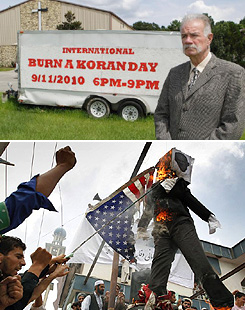
Africa grows increasingly Muslim while America grows increasingly anti-Muslim. Two steps forward to an embrace, then a terrible slip. Here’s my depressed take.

This time Fox News and MSNBC all agree on the facts: Muslims from around the world have joined forces with Sarah Palin et al, or for that matter all right-minded religious persons, to condemn the planned burning of the Muslim holy book by a little church in hicksville Florida later this week.

My first impression is, ‘Jesus Christ! What the hell is going on, here?!”

Jesus would answer: ‘Books are made of paper. Paper comes from trees. We are losing forests in Africa at the rate of an entire country of Jamaica every year. Don’t waste paper.’

Or he might answer: ‘There’s a bigger fire in Afghanistan.’

Or: ‘One out of eight people in America, one out of three people in the world, is hungry right now.’

We are all of us roped into hyperbole and symbol kicking and screaming. There are no tangible issues, here: it’s not a matter of raising enough money for food or finding enough water to put out the fire of war; it’s an …idea.

And then, we grudgingly concede that the reason we want food or water, is to allow us to produce beautiful ideas. And since those of us without food or water can’t think, it’s left to us comfortable ones to think for them. So back to our ideas to govern a fair distribution of man’s food and water.

So my second, forcibly contained impression is: ‘Grow Up!’

Part of America, today, is like an aberrant teenager. Comfortable to the point of decadent, fearful that his/her relationships have the tensile strength of butter, this side of America is thrashing back against itself, against its own ignorance and frustration with not having allocated enough free time for homework.

Yet this part of America claims the moral high ground. In fact, America’s highest point is not Mt. McKinley, it’s the Christian Church. It reaches way up there. It says it touches God.

Well, it doesn’t.

“Such a despicable act of destroying something so holy to another’s faith can never and should never be construed as an act on behalf of Christ himself. In fact, I would attribute such an act as guided by none other than the Devil himself.”

This blog by an average Joe in the world’s largest Muslim country speaks the language of the American Right. And it throws that language right back into their pitiful little faces.

I am angry that once again we are distracted by nebulous ideas that have literally captured the world, even those that desperately need food and water. Some argue that these distractions are just entertainment, a necessary psychological relief from death and destruction.

No. They are the harbingers of death and destruction. Get a grip, America. Go back to your cookbooks and fix-it sheds. Make something. Stop destroying.

Call your zoo NOW!

Call your zoo NOW!

American zoos could help stop the Serengeti highway.
Call your zoo director now and tell him to “Support AZA’s resolution opposing the northern route for the Serengeti highway.”

Towards the end of this week, zoo directors, research coordinators and many other zoo employees will be heading to Houston for the annual zoo convention.

Concerned members are trying to get the momentum going to pass a resolution that will oppose the northern route currently staked out in the Serengeti for a highway. They are encountering great resistance among the membership.

This isn’t because there are members who support the highway, quite to the contrary. I doubt you would find a single AZA member who supports building the highway.

But it’s because the organization is so nebulous. The excuses I’ve heard range from “it’s not our responsibility” to “it will cause a backlash.” Both extremes are ridiculous if not arrogant and presume an unrealistic character of what AZA actually is.

Zoos, today, have morphed into wonderful institutions, so different from what they were when I was a kid. Many of my clients’ jaws drop when I say this, and I have to agree with them that watching a captive animal is not my cup of tea.

But putting animals on display, today, is becoming a secondary role for the best zoos. You would be very hard pressed not to find a zoo in America today, which doesn’t have something to do – some money invested – in the Serengeti.

Zoos are turning into wonderful research institutions. Their captive animal populations have become ever more precious as the world’s biodiversity crashes. They have unleashed a scientific potential that exists in their employees that is doing wonder in Africa.

So they, probably more than any other group of institutions, has a real and immediate interest in what happens in the Serengeti.

What is true is that their association isn’t a very good one. One part of their association, the SSP groups which manage marvelously the placement and movement of one captive animal with another across all zoo borders, is a work of genius. But, I’m afraid, that’s about it.

So it’s time they step up to the plate and make a concerted effort to evince their missions and their ideals. They must join a growing chorus of wildlife NGOs opposing the highway, and it will definitely help.

So please, call your zoo now. Ask to speak to the director, and you’ll likely be able to. If you can’t, get his email address after leaving a phone message.

We must stop this highway.

To read my other blogs about the highway, click below:

Tanzanian President reaffirms doing the project.

Tanzanian Minister of Tourism has questionable links to highway.

World Bank withdraws funding for Tanzanian road building.

Serengeti Highway Alert and summary.

Trampling the Election

Trampling the Election

Running to the right, unstoppable campaign!
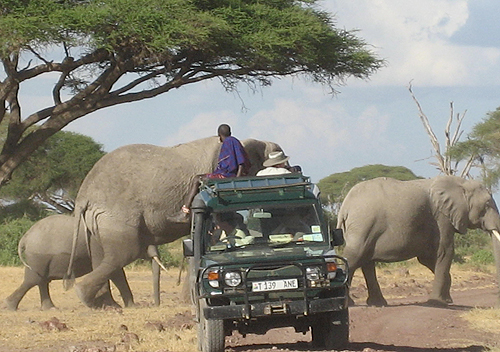
The human/elephant conflict is becoming a major campaign issue in both Kenya and Tanzania. Soon, efforts towards resolution will lose out to the calls for culling.

Western wildlife NGOs and local researchers have been working tirelessly on human/elephant conflicts over the past decade. They haven’t gotten very far. It’s hard to keep six tons from doing what it wants.

Tanzania elections are scheduled for the end of the year and new elections in Kenya for the new branches of its legislature will occur next year. One leading candidate in northern Tanzania, Abdilah Ali Warsama, campaigned this weekend on ending elephant harassment of local farms.

He’s not calling on the government to cull elephant… yet. Right now he’s just demanding compensation to the farmers and second, elephant fences.

I’ve never heard of elephant fences.

What Warsama may actually mean is the extremely expensive trenching or construction of deep moats which in several places in East Africa seems to have worked.

I saw a successful trench for myself at the southern end of Uganda’s Queen Elizabeth National Park in the Ishasha last month. It’s a temporary solution, because the earthen moat erodes with time. But this particular 2-meter deep and 2.5-meter wide trench was working and going into its second year.

The problem with trenches is that their goal is to stop wildlife from moving beyond the trench.

Wildlife purists don’t like that. In Warsama’s constituency (the Tanzanian town of Makuyuni, in between Lake Manyara and Tarangire national parks) the African Wildlife Foundation wants to create a corridor for elephants between Manyara and Tarangire.

No successful trench would allow that.

Nothing else has worked: not pepper spray, electric fences or lead-in corridors that try to direct animals away from human habitations.

Tarangire has long been known as a prime elephant park. One of its current attractions – developed only in the last couple years – are congregations of a dozen or more huge bulls hanging around together near park roads as if modeling for tourists.

Normally this many bulls would’t hang out together.

But they’re resting and enjoying the fruits of a night of hawkish delight. These jumbos move out of the park regularly at night to raid nearby farms. Then, lounging in the protection of tourist cameras, they convene just inside the boundaries during the day.

Wasarama is not happy with Tarangire’s new attraction. He pointed out that 250 acres of his constituency’s food crops have been destroyed in the last season, and that four farmers were killed trying to defend their crops.

I don’t doubt it. Last March as my migration safari was zooming along the Tarangire / Makuyuni road at about 80 kmh, we watched a farmer using a huge bola single-handedly as he tried to chase a family of five elephant out of his corn crop.

Wasarama’s campaign issue in Makuyuni is by no means isolated. Similar situations exist outside Bwindi in Uganda and the Aberdare in Kenya.

I see the day coming soon when the human/elephant conflict gets so serious that culling and contained reserves using trenches is the only solution. It’s hard to imagine an alternative.

Too Big for Africa?

Too Big for Africa?

Will there be no American jets over Africa?
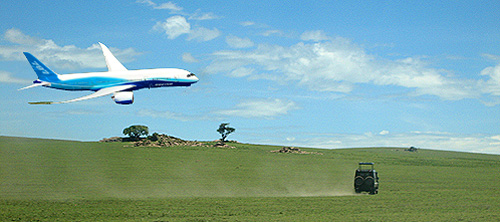
Big Guy against Small Fry. Boeing against Kenya Airways. Heard this story before? But that’s America’s problem: looking only at the short-term.

Last week Boeing stiffed Kenya Airways. Should KQ stiff Boeing back?

Probably one of the most successful companies in Africa, Kenya Airways is ruling that continent’s skies right now, and into the far foreseeable future. It is Kenya’s – indeed, East Africa’s – largest company. Its story is awesome: in a mere decade from a no-nothing local airline to a major carrier:

Its list of awards and accolades stretches from the Economist magazine to Warren Buffet. The two that stand out in my mind are Travel News & Leisure’s designation of KQ as the “African Airline of Preference”, and the 2009 global Aviation & Allied Business Individual Achievement award to its CEO, Titus Naikiuni, a home-grown Kenyan. (That award was notable because it was the first time in its history that the African organization gave such a prestigious award to any airline company other than South African Airways.)

Currently, KQ is listed as a 4-star business class airline by Skytrax which is widely used by commercial flyers for airline comparisons. American and United airlines are currently rated as 3-star, KLM and Brussels (which compete with KQ into Kenya) are rated as 3-star, and KQ shares its 4-star business class status with British Airways, Virgin Atlantic and Emirates.

(Qatar is the only 5-star airline that flies into Nairobi.)

But KQ is small, still, albeit growing by leaps and bounds. So of the 886 orders for Boeing Dreamliner 787s, KQ had only 5 orders with 4 options.

As I’m sure you’ve heard Boeing has delayed for the third time the launch of its 787. This has disrupted the KQ business plan enormously.

So KQ wants some compensation in the form of a renegotiated sales price. This is standard. American Airlines which is ordering 42 had no trouble renegotiating. But to KQ, Boeing said: take a hike.

This is stupid. American industry is simply too big. It’s so big that it can’t see the future. It looks only at the present, and usually, only at other big things.

One day, certainly in my childrens’ life times, KQ will be bigger than American Airlines. But 50 years is just too far too look.

Boeing is cutting off its nose to spite its face. KQ is one of the very few airlines left on the African continent that uses Boeing instead of Airbus. Its partners and part owners, KLM and Delta, are almost exclusively Airbus. It makes double sense, now, for KQ to stiff Boeing and move to Airbus.

And if that happens, it won’t be KQ that suffers. It will be Boeing. Maybe not in the next decade, but with some luck, the world may last longer than that.

California Wildlife Management

California Wildlife Management

Wednesday early morning police (it took three of them) shot (multiple times) and killed a mountain lion found in a residential area of Berkeley, California.

A 90-pound mountain lion (also known as a cougar) is roughly the same size as a cheetah, although stronger. The cheetah is built for speed whereas the cougar is built to bring down a deer, one of its staple foods.

The cougar population in California has been stable and healthy over the last decade, and there are growing calls to allow sports hunting, although Proposition 117 (passed in 1990) designated cougar as a “specially protected species.”

Not too successfully so Tuesday night.

The 911 call went out at 2:23a. Police called emergency California Fish & Wildlife officials, but they were hours away. The three police chased the cat through numerous backyards finally cornering it.

When asked why a wild cougar would find itself so far from a reserve, police admitted that the animal might have been a “pet.”

Alert. Alert. All 90-pound labs, rots, mastiffs, Shetlands, large boas and all Danes, stay inside your house! I’ve been working on my cat, Hillary, but she’s headed in that direction, too.

The public reaction has been mostly negative, based on the comments left on the San Francisco Chronicle story as well as several local blogs. Much of the criticism is exaggerated, although I personally think the police reaction was unnecessary.

The determination that the cat posed a “real and present danger” is hard to support. There are fewer than a dozen attacks by cougars every year, continent-wide. And the claim that professional wildlife officials were too far away to help… well, do the police know of that little institution known as the University of California – Berkeley? Not sure, but I think they do some zoology there.

Compare this to a much more dire situation in East Africa, where real lions, 4 to 5 times as big, are becoming an increasing concern to growing urban populations. Where up to ten people per year are now killed by them in East Africa.

Predator/human conflicts are not considered an American problem. Thank goodness, because this is certainly not the right solution.

Are all Poachers the Same?

Are all Poachers the Same?

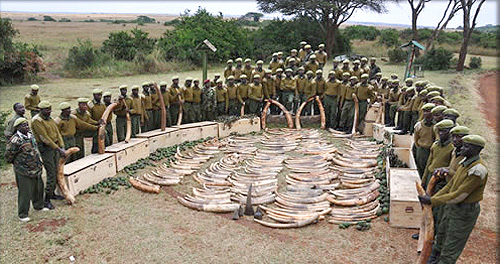
Last week's seizure of 150 tusks by the KWS.
When times get bad, men get bad. But is the Kenyan government’s seizure last week of 150 elephant tusks the work of “bad men?”

Yes, for sure, if you believe that every law promulgated by man should be obeyed. The 317 pieces of raw elephant ivory (weighing 2 tonnes) and the five rhino horn were illegal cargo by both international and Kenyan law.

They were disguised in a container marked as avocados destined for Kuala Lumpur via Dubai on Emirates Airlines.

What’s interesting about this seizure made in Nairobi last week is that all the tusks and horns appear to be from animals that died naturally.

That leads to all sorts of other questions, of course. Is this an inside job, for instance?

Until now anyway, virtually all tusks and horns confiscated from dead animals were made by wildlife authorities. For one thing the park rangers generally know of the elephant and wild rhino that are ready to die, so they’re followed closely usually up to the very death.

And elephant and rhino die regularly to be sure. But the tusks from likely more than 80 elephants, and the horns from five rhino, means the cache was not collected quickly. At the very least we’re talking about a project of several years, and maybe more.

If it isn’t an inside job, then from my point of view these guys aren’t quite as bad as their counterparts who actually kill animals. And so far that’s what KWS is saying. It wasn’t an inside job.

Whoa. I’m not suggesting breaking the laws banning the ivory trade are sometimes OK. The point of the law is that any trade that occurs, whatever, generates a market that motivates more illegal trade. What I mean is let’s go a little bit lighter on the punishment.

Combing the bush for dead animals is a lot different than killing live animals.

Let me know what you think.

Translating the Party in Kenyan

Translating the Party in Kenyan

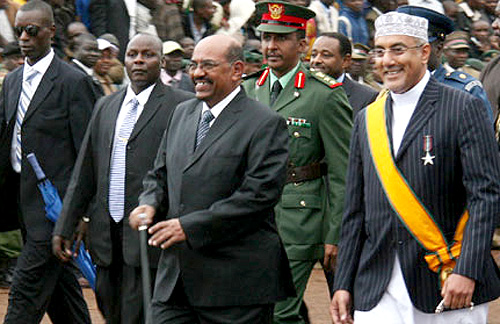
Sudan's President, Omar al-Bashir, (center) at the Kenyan ceremonies.
Several of you asked for a translation of the beautiful music, Daima Kenya, posted Friday. Others, including NPR, might profit from a translation of a little bit more.

Kenya’s weekend parties were glorious, beyond glorious. And I’ve provided a translation of its unofficial national anthem, Daima Kenya, below.

Swahili translations are very difficult. It’s much easier to translate NPR’s irresponsible reporting.

Some day I won’t start these tirades with the qualifier that “I love NPR,” but I do. I think they’ve just stretched themselves too thin trying to report from Africa. The files are glaring for what they don’t say.

Friday and Saturday I listened with pleasure when NPR headlines reported the Kenya celebrations. So Sunday when headlines reported that Sudan’s President had snuck into the dignitaries box to watch the “promulgation”, my interest peaked.

But in fewer seconds than it takes to close this browser, they managed only to say how displeased President Obama and Kofi Annan were. No further explanation.

There’s an old African expression that goes something like, if you’re prostrate on the ground a tiny little thing right in front of you will obscure the tree that’s crashing down on top of you.

Bashir should have been arrested when he entered Kenya. In fact, the decision to allow him to attend must have been very last-minute, because he didn’t fly into the ordinary international airport, where presumably police and immigration officials have him on a most-wanted list.

Instead, he suffered the indignities of a tourist on a longer flight and smaller cabin by flying into the tiny Wilson Airport which doesn’t handle jets.

Bashir has been indicted by the criminal court in the Hague, no less a world legal authority than Kofi Annan’s United Nations. There is a warrant for his arrest in most countries including Kenya. Virtually all sane minded people – and that definitely includes the Kenyans – agree that he’s a criminal who should be tried for crimes against humanity, specifically in Darfur.

Although The Sudan shares a border with Uganda, Bashir didn’t attend this month’s Organization of African Unity conference, because the Ugandans said they would arrest him.

No one even thought to ask if he were invited this weekend. Since he hadn’t been allowed next door into kissin cousin’s Uganda for the OAU, it was unthinkable!

At least for far, far away radio networks.

I very much respect the International Court and I wish that America would sign on to it, rather than sequester itself with those other moral pillars like China. Bashir should be tried and convicted.

But in January there is going to be a very important election in the southern Sudan, in which we all hope (especially the southern Sudanese) that they will cede from greater Sudan and become a separate nation.

This would end two generations of civil war, stop the unbelievable horror of militias like the Lord’s Resistance Army which have plagued the southern Sudan and Uganda for 30 years, and bring a modicum of peace to this tortured area.

So far, because of Kenya, Bashir has gone along with the process. This in itself is absolutely astounding. And it would not have happened without Kenya’s constant political involvement. And it will not happen if Bashir, as the leader of Africa’s largest land country filled with much of its oil, does not agree right up to the moment that new borders are demarcated and different flags raised simultaneously.

Get the picture? NPR is just radio.

Now to the next translation.

Swahili is an incredibly melodic language, essentially because there are five classes of noun which more or less begin with the same letter, and most every adverb and adjective that refers to that noun must also start with that letter. So you usually have this beautiful sentence with every word sounding a little bit like every other word in the sentence.

That’s music or a poem, and to translate that into a language without that uniformity of sound is really very difficult. Yet that’s really most of the beauty of Daima Kenya: it’s poetic melody.

Really, you can enjoy – you can feel — the message just by listening to the sounds.

So here’s a straight translation:

VERSE 1
Umoja ni fahari yetu
Undugu ndio nguvu
Chuki na ukabila
Hatutaki hata kamwe
Lazima tuungane, tuijenge nchi yetu
Pasiwe hata mmoja
Anaetenganisha

Unity is our pride.
Unity is indeed our strength.
Hatred and racism
We can’t afford.
Everyone is needed
To rebuild this country
Every single person.

CHORUS
Naishi, Natumaini,
Najitolea daima Kenya,
Hakika ya bendera
Ni uthabiti wangu
Nyeusi ya wananchi
Na nyekundu ni ya damu
Kijani ni ya ardhi
Nyeupe ya amani
Daima mimi mkenya
Mwananchi mzalendo

I live, I hope,
I’ll always work for Kenya.
Our flag is my beacon:
Black for the people,
And red for the blood.
Green for the land,
And white for peace.
I’ll always be a Kenyan:
Citizens us all.

Verse 2
Kwa uchungu na mateso
Kwa vilio na uzuni
Tulinyakuliwa Uhuru na mashujaa wa zamani
Hawakushtushwa na risasi au kufungwa gerezani
Nia yao ukombizi kuvunja pingu za ukoloni

For the pain and suffering,
For all the sadness
We won our liberty.
Those heroes of old
Who were shot and imprisoned:
Their purpose was
To break the yolk of colonialism.

Verse 3
Wajibu wetu
Ni Kuishi kwa upendo
Kutoka ziwa Mpaka pwani
Kaskazini na kusini

Our purpose now is
To live with love:
From the lake to the coast,
North and south.

They Call it Promulgation Day

They Call it Promulgation Day

Kenya is starting over.
I call it the biggest, loudest, most spectacular party ever held in Africa!

All of yesterday and all of today people didn’t go to work in Kenya: they played. There were soccer matches and bingo games all over the country, Nairobi’s discos wound round the clock, and impromptu marches in the street by mad bands looking like they came from Mars.

There were feasts like you can’t believe: in the countryside fried goats stewed with paw-paw and a touch of Tusker beer! In the cities there were black-ties (that came off pretty quickly) with prime rib and Indian-spiced posho!

It was the most peaceful, exuberant loudly musical, proactive joy Africa has ever experienced!

I wish I could have been there.

Listen to the video above, the unofficial new anthem of the New Kenya: Daima Kenya.

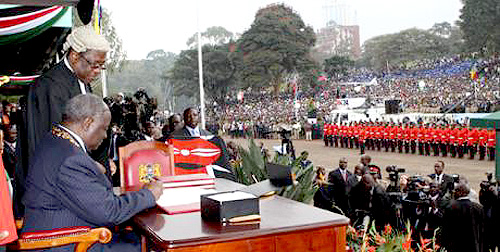
This was the day that the country officially “promulgated” its new constitution. That might seem arcane, and the whole affair has been buried in the world’s other griefs. Kenya’s a tiny place when measured as we seem to do every moment of the day, now, in dollars.

But it has nearly 40 million people, and that raises its position on the list of nations. And the human potential of each and every one of them has been elevated even more by today.

In retrospect I realize that the election violence which followed in December/January 2007/2008 was predictable: the obvious end-result of imposing a western-style democracy on a primitive society in the 1960s that couldn’t handle it.

But there was a silver lining. That jolt to national beingness forced a rate of maturation never seen in the history of mankind. It strained two generations and came to a boiling point in December, 2007.

1300 people were killed and 150,000 were displaced in horrible post-election violence. The terrible events were nonetheless mediocre by the standards of the world’s catastrophes, and so didn’t get the attention deserved. And it was for the wrong reasons that America and the UK took interest: because Kenya lies astride terror-stricken al-Qaeda almost-controlled Somali. A Cold War game plan that didn’t work then, and won’t work, now.

But thank God for Kofi Annan, who took the reigns for the right reason. He knew Kenya was a strategically important place. Not for its geopolitical situation, but for its human potential. Our world needs a lot of human potential.

So Annan manipulated the money from American and the UK, and restrained western impatience, and in typical African fashion, he pulled off a new day a lot later than America and the UK wanted, but for a future much longer than westerners normally consider.

The greatest irony of all is that this new Kenyan constitution “promulgates” a society which is more democratic, more transparent, more accountable to the people than in the U.S..

No judge will be brought to power because of cronyism or without adequate legal training.

Women will never be paid less than men. The disabled, mentally challenged, chronically impoverished cannot be ignored by social services; every single Kenyan that walks this earth now has health care.

Pregnant women whose lives are threatened can get an abortion.

Smaller political regions (like states and counties) can’t trump basic social tenants upholding human rights, or adjust national educational goals for parochial interests. IE: Evolution will be taught in schools!

There’s no chance that the chief executive, the president, or some inner circle of power brokers can go to war without the scrutiny and authority of the legislature.

And a lot more less dynamic but remarkably imaginative stuff like multiple types of civil courts for multiple cultures; full citizenship for all naturally born Kenyans living abroad no matter how long they’ve been gone; full land ownership with extremely limited rights of eminent domain.

These are all modern democratic principles the likes of which have disappeared in much of contemporary America. So I salute Kenya as a beacon to be emulated.

These lofty principles are much more distant from the realities of implementation for a poor country like Kenya than they would be for us. That’s the incredible challenge. Some may say it’s folly to dream so high.

But of all the wonderful words in Daima Kenya, posted here twice: above in the refined version performed today, and below in its original version first produced after the horrible violence of 2007, I’m sure you’ll hear, “Tu-ma-ini” or “Hope” multiple times. “Daima”, too, which means “forever.”

Forever Kenya. Forever Hopeful.

South African Cartoons

South African Cartoons

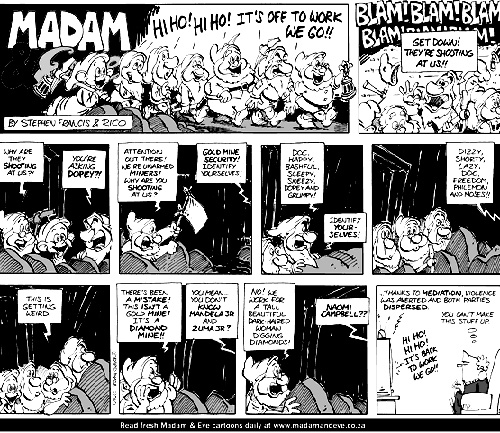
Yesterday’s popular cartoon, “Madame & Eve”, in Johannesburg’s Daily Mail: Naomi Campbell is a SA supermodel who gave blood diamonds to the head of a SA children’s charity, who hid them in his home safe for 13 years before admitting it.
After a stellar performance during the World Cup, the turning fortunes of Jacob Zuma make many of us wonder if the South African presidency will be forever filled by wackos.

South Africa pulled off the World Cup like any grown up country; in fact, better. Infrastructure nightmares, mass strikes, insidious crime waves – didn’t happen.

Now it looks like it’s happening, and what we thought was Zuma’s deft handling of his country may just have been his ability to stick a very large finger into the hole in the dam.

Today is the tenth day of a national strike which threatens to bring the country to a standstill. Schools, hospitals, social agencies and even part of the President’s office are on strike. Late yesterday even the military threatened to join the walkouts!

Workers’ grievances have coalesced into a single demand: an 8.6% basic wage increase and a $130 monthly housing allowance. Zuma dug in his heals at 7% and $100.

So the difference isn’t that big; nowhere near as big as Zuma’s ego.

Zuma is best known as the president with twelve wives. That social embarrassment, though, was eclipsed recently by the revelations that Zuma’s family has profited from questionable government mining leases.

Now with twelve wives Zuma’s family extends over large parts of South Africa, but it’s a principal son who is principally involved this time.

This scandal follows Zuma’s pet legislative agenda this season: nothing to do with wages, housing or social justice. He is promulgating a draconian law that will suppress South Africa’s mighty and free press.

Zuma is the third president of the new republic. Nelson Mandela performed better than any of us could have hoped. The second president, Thabo Mbeki, fell into history as the leader who insisted that AIDS wasn’t a virus.

The interesting thing about both these guys is that under their weird personas appears to be some real talent. They both come from the ANC’s inner circle, were dedicated ideologues and have clearly formed a massive bureaucracy underneath them that is working marvelously.

Their approach to foreign policy, particularly with troubled Zimbabwe at their sleeves and massive illegal immigration, has actually received educated nods from around the world.

So what’s with this clowning around?

In Zuma’s case, his flirtations with the law are getting serious and begin to look like so many African leaders that take privilege beyond legislation. His close brush with conviction for rape (complexly linked to his polygamy) could be his ninth life, and as investigations proceed into the mining deals, he may be on the verge of the beginning of his end.

Freedom fighters are a strange lot of people. Nelson Mandela was the exception, and that’s probably why he was their leader. After a generation of fighting by rules that only a few make together, it must be hard to live in a democracy.

I expect until time sweeps away these old guys we’re going to get plenty of cartoons.

Best Time in Kenya

Best Time in Kenya

Q. When is the best month(s) to go to Kenya for a safari? Would the short rains in Nov. hinder your viewing and getting around in a vehicle?

A:
Roberta –

I feel the best months for Kenya are those which allow you to see the great migration in the Maasai Mara. That is normally August/September and October. The migration begins to return to Tanzania in November, so November is a marginal month hard to predict. As soon as it begins raining, the wildebeest high-tail it back to Tanzania. But as for November in particular, it’s hard to predict. It was only two years ago that the rains never started until January, so the wildebeest remained in the Mara a much longer time than normal.

But that was unusual, and for the time being, it seems like the weather has tracked back to normal cycles.

Rains per se should not be a reason not to go. In fact, my favorite time in Tanzania is during the beginning of the rains, because that’s the best time for the wildebeest migration, and the prettiest time on the veld, and the time when there are the most calves. (Caution: the rainy season in northern Tanzania is different from Kenya. There are no two distinct seasons of rain in northern Tanzania as in Kenya. There’s really only one: it begins towards the end of the year and continues through the first half of the year.)

Hope this helps!
– JIM

Mue or Zoo to the Rescue?

Mue or Zoo to the Rescue?

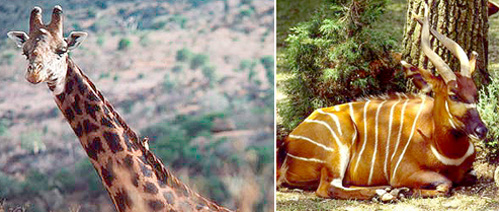
I actually snapped this Rothschild in 1986 along a farm road near Wamba, Kenya.
My bongo pix are all on slides. This one is from the Louisville zoo.
Two beautiful African animals face extinction because wildlife officials and scientists can’t agree on how to reintroduce zoo-bred individuals. And interestingly, it’s now become something of a contest (battle?) between the American zoo-world, and the American museum-world.

According to the IUCN, the mountain bongo and Rothschild giraffe face extinction in the wild if immediate efforts to reintroduce zoo-bred offspring aren’t successful.

I had just started my safari businesses in the 1970s when we routinely saw both animals on each and every safari. The bongo appeared nightly at The Ark and other tree hotels, and we often stopped on any rural road anywhere in Laikipia and could see a Rothschild.

This is as big news for Africa as the demise of the polar bear is to North America. The Aberdare National Park’s insignia continues to be the bongo. So in my life time, two large poster animals have almost disappeared.

There are plenty in zoos. Why can’t we just … put them back? Well, we tried. And failed. So far.

There is more hope for the Rothschild than the bongo. The Rothschild is living and breeding well in several places in Kenya, especially Lake Nakuru National Park. The problem is that these are not truly wild ecosystems: animal movement in or out of Nakuru was stopped when it was fenced more than 15 years ago.

There are 65 Rothschild in Lake Nakuru. There is a population twice as large in the unenclosed Ruma National Park (formerly “Lambwe Valley”) adjacent Lake Victoria in Kenya’s remote western province.

But small 50-square mile Ruma is considered critically threatened by encroaching farmland. It’s hard to get to so draws few tourists and so no revenue for wildlife management. And it’s surrounded either by the waters of Lake Victoria or densely populated areas: not a real fence, but a human fence.

There may be an additional 600 animals in various, remote and scattered places in the wild in Kenya, Uganda and the southern Sudan. But definitely no more. Uganda’s remote Kidepo National Park may hold the healthiest population.

American zoos have bred Rothschild giraffe extremely well but none are being exported back to East Africa, because of the embarrassing debacle of trying to do so with bongo. Eighteen bongo were sent to Kenya for reintroduction in 2004 but they have yet to be reintroduced into the wild.

The bongos came from Busch Gardens, Disney’s Animal Kingdom, the Houston Zoo, the Cape May County Zoo, the International Animal Exchange, the Jacksonville Zoo, the Los Angeles Zoo, the Peace River Refuge, the Rare Species Conservatory Foundation, the San Diego Zoo, the St. Louis Zoo, the Virginia Zoological Park, and White Oak Conservation Center.

Big consortium. Cost lots of money. And six years later the bongo is in worse condition than before. There are now only 103 bongos left in the wild. In 2004 when the zoos made their move, there were about 200.

Half the wild bongo population lives in the Aberdare National Park and I’m still lucky enough about every 3 or 4 visits to see one. The other half of the population is scattered in Kenya’s unprotected forests and on Mt. Kenya.

The penned-up for-reintroduction 18 bongos are something of a sore spot among us non scientific wildlife enthusiasts. But officials argue that simply releasing zoo animals into the wild is a near death sentence. They must be taught to fend for themselves – no easy task – and they must develop an acute vigilance against predation, also hardly a cinch.

But you’d think if six years weren’t enough schooling for zoo animals to learn the wild ways that they wouldn’t have been sent to Kenya in the first place. For Pete’s sakes, give them to Spielberg!

Bongo declined rapidly in the 1980s because of encroaching human populations around the giant Aberdare reserve that forced lions from the savannah into its altitudes. Lions don’t normally live in rainforests: No zebra or wildebeest up there, but the 300 kg bongo is just as tasty.

In less than a decade, the lions were eating the bongo to extinction, until the lion were forcibly removed from the Aberdare, and the Aberdare was then fenced.

So why not just drop them back into the Aberdare, now? The park is fenced and there are no lion!

Because those 18 bongos, (as well as another 500 bongos still kept in worldwide zoos), all came from a single wild population extracted from the Aberdare in the 1960s. It’s feared the inbreeding would be as devastating as lion.

Didn’t anyone know this before buying their airline tickets in 2004?

According to a press statement issued a few weeks ago by the Kenya Wildlife Service, The American Natural History Museum has now become involved, an interesting assertion that American zoos couldn’t muster enough good science to figure this out in the last six years.

ANHM will supposedly run critical DNA science on both the Kenyan-held, zoo-held and wild populations to help KWS decide where to go from here.

I hope it isn’t back to Orlando.

Kenya’s Biggest Party Ever!

Kenya’s Biggest Party Ever!

The joy, exuberance and incredible hope spawned by last week’s election victories in Kenya is absolutely amazing! Get ready for the biggest party ever in Kenya!

The last few years have brought social and political transformations around the world but you would be hard pressed to find a more radical one than in Kenya.

Those who visited Kenya only five years ago would not recognize it, today.

There are 12-lane highways, potable water in some cities, the world’s largest tea-export industry and … peace and prosperity.

Something’s wrong, right?

No. Friday the nation of Kenya holds its biggest party in history: A party to celebrate the overwhelming victory of the election for a new constitution.

Kenya’s long struggle with the exogenous microbes of post-colonialism is, by this self styled official clarion announcement, OVER.

I’m taking some risk here, but I’ve earned the right. I lived on the Kenyan border during Idi Amin’s terrors, I had to tell Purdue Alumni that we couldn’t go as planned into Tanzania when the short war with Tanzania erupted in 1977, I had clients locked down in the Stanley when the 11-hour coup of 1982 was zapping bullets around the nearby Hilton, I heard the embassy bombing in 1998, I snuck in and out to get all clients out of Kenya after the horrible post-election violence of 2007…

And scores of smaller things like being in Kenyan jails and bribing officials to get into or out of the country.

Is this really, really over?

Well, yes, actually I think it might be. Global terrorism won’t go away: it’s closer to Kenya than anywhere: al-Qaeda lives next door in Somalia. But this is a part of every person’s life, no matter where you are in the world except maybe Antarctica.

And I think that we, as Americans, can enjoy a tiny part of the credit. It wasn’t so much a sea-change in American foreign policy, but it was a definite change under President Obama that gave a lot of money (which led to this burst of prosperity) and lot of transparent counsel to the crippled nation of Kenya trying to rebuild itself after the last failed election.

Click here for the VOA take on the election’s meanings.

In a “Gazette Notice” released today, the Kenyan Government published the final results of the August 4 election: 6,092,593 Kenyans voted YES and 2,795,059 people vote NO. The YES’ had it nearly 70/30.

And on Saturday, one of Kenya’s largest polling organizations, Infotrack Harris, said that 91 percent of Kenyans are satisfied with the results.

The poll shows the level of satisfaction very high across the entire country, including in the Rift Valley Province where a majority voted against the proposed law.

Infotrack Chief Executive Officer Angela Ambitho said, “88 percent of those in Rift Valley are actually satisfied with the outcome of the referendum. You actually see less satisfaction in Coast and Central and that may just be due to the fact that they anticipated that the speed with which implementation would take place would be faster.”

Wow. Peace and prosperity can never come fast enough.

There were losers; there are always losers, and frankly, I’m really glad these are the identified losers:

(1) William Ruto & Thugs
This is the current Minister for Education who led the “NO” campaign and who everyone knows is soon to be indicted by The Hague for inciting the election violence of 2007.

(2) Churches
Kenya is an incredibly religious country as African countries go, and until now, I’ve felt that was more a good thing than a bad thing. But this time around the churches were near united in their opposition to two (of hundreds) of constitutional articles.

One “might” allow for legal abortions and the other creates some civil courts for very restricted litigation based on Islamic law.

I’ve written about this before, so won’t repeat the necessarily complex details, but suffice it to be said that I take the August 4 outcome as a near unbelievable boundary between what modern Kenyans feel is the division between church and state.

It does not mean that Kenyans aren’t as religious as they always have been. It just means that they’re modern citizens who have a lot more tolerance for one another than we do in our own country. If only we could master that here in the USA.

(3) The American Right
Did you read that, Right right? Yes, you did. The American Right poured in hundreds of thousands of dollars to defeat the referendum. Righties in Congress even threatened the Obama Administration with legislation to inhibit our assistance with the election.

I’ve written about this, too, so won’t rehash here, but this is one of the most exciting outcomes for me personally as a liberal American who loves Kenya.

Any chance this presages our own November elections?

I really think this is fundamentally new page not only in Kenyan history, but possibly in all of Africa’s arduous history in the last half century.

No, I don’t like Nairobi’s traffic and the pollution is increasing. Its treasured wilderness is threatened like never before. But guess what? Rational people are in control.