The Most Precious Discovery

The Most Precious Discovery

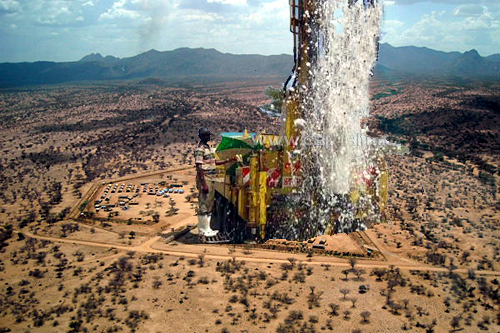
turkanawaterSlowly we are discovering a deeper layer inside earth that is renewing oil and gas, and now, the most important resource of all, water. Africa is jubilant.

February’s initial discovery in the far northwest deserts of Kenya was officially announced yesterday, and it is quickly becoming the most important story in Africa.

If estimates are correct, Kenya’s reserves of clean water have just been multiplied by ten. The daily consumption potential of Kenya’s current fresh water will be doubled.

Fresh water is one of Africa’s greatest problems. More than a third of the estimated 884 million people worldwide without access to clean water live in sub-Saharan Africa.

The aquifer of 250 billion cubic meters of water lies a thousand feet under one of the most inhospitable places on earth, and is similar to and even smaller than an aquifer discovered five years ago under the Sudanese desert.

That aquifer in Darfur has not been developed because of the violence in the area. Although the area in northwest Kenya is not wholly peaceful (my novel, Chasm Gorge, to be published soon is set in this area) there is little indication that tribal squabbles will impede this massive development.

The area is a sparsely populated one and diminishing resources is the friction between three hostile groups, the Turkana, Pokot and Borana. Their enmity has existed for centuries and has been exaggerated by population growth facilitated in part by better services and a modernizing government.

Quick access to large amounts of fresh, clean water in Turkana is likely to ease tribal hostilities in this case, and so would stand in marked contrast to what is happening in Darfur where hostilities have long ago matured into all out war.

Although distant, remote and very deep, the water discovery is so profound that Kenyan officials are looking into the possibility of creating a river as a method of transporting the discovery to more populated areas further south in the country.

But long before that happens, it’s clear that the people of Turkana will have new and sizable access to fresh water. While currently daily water needs in Turkana are almost exclusively for personal and urgent use, this new discovery raises the prospect of significant agricultural irrigation.

As with the earlier discovery in Darfur, it seems the aquifer is renewable and while the process is not wholly understood, the vast desert area may be sponging what moisture does fall onto it rather than give most of it up for evaporation, as previously thought.

The Kenyan discovery was a joint effort between UNESCO and several private companies whose technologies are normally used to discover deep-earth oil reserves.

Without UNESCO’s lead on the project it is likely it would never have happened. These new technologies are being monopolized for the discovery and extraction of oil. Once again, it’s the international community and its organized institutions that are saving lives and working for the ordinary soul.

We must wonder what is happening to Mother Earth as her insides are gutted out. But for the time being, there is only reason for celebration.

Black Holes Widening

Black Holes Widening

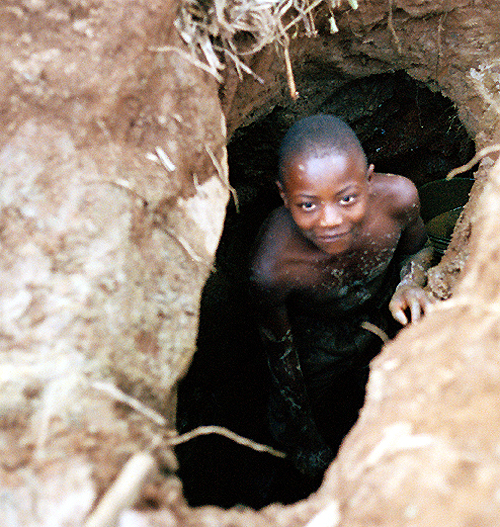
blackHoleEight-year olds – lots of them – are dying agonizing deaths in Tanzania as the government and world turn a blind eye to child gold-mining.

This morning Human Rights Watch issued its long anticipated report on child mining in Tanzania.

Not that we didn’t know there were “thousands” of children involved, that the Tanzanian government has consistently denied a problem, or that unacceptable levels of toxic wastes equal to biochemical weaponry cause the most grief.

I wrote myself about this less than two weeks ago.

I guess we just needed this respectable report to figure out what to do. So what do we do, now, we who are not Tanzanians but love Tanzania no less than children anywhere … what can we do?

Start a petition? Contact your tone-deaf congressmen? Divest yourself of multinationals in Tanzanian mining (see below)? Increase your black-hole tithing? Support NGOs working for better alternatives?

Or own up to the reality that nothing will stop this defamation of humanity except serious redistribution of wealth.

My reading of the 96-page report is a horrifying recognition that the increasing gap between rich and poor is the real cause of this calamity.

How the hell can you stop a child who is almost always sick with a cold and diarrhea who knows that a pill she can buy for a quarter will make her feel better, from sticking her hands into a plate of liquid mercury, when she knows that there’s a chance of 1 in 6 of pulling out $10?

She knows the mercury is bad. She knows that doing this enough times will make her unendingly sick. But she’s sick, now! She wants to get better!

What on earth will you tell a kid who has no father, whose mother is a prostitute for wealthier miners, who at best eats one meal of porridge a day?

Most of the child laborers interviewed by Human Rights Watch said they used their earnings “for basic necessities such as food, rent, clothes, and school supplies such as exercise books, pens, and uniforms.”

The incredible horror stories in the report of children getting sick from chemicals and hard labor were compounded by many documented cases of sexual abuse, blackmailing and outright physical abuse including murder.

Tanzania has laws on the books against all of this. But … few Tanzanian laws of any kind are regularly enforced: Tanzania is a lawless land where social order is sewn together by bribes and sometimes the goodness of local officials.

Tanzania is now the 4th largest gold producer in the world. The $2.1 billion dollars earned annually contributes 3-5% to the entire GDP of the country.

Ninety percent of this is from large-scale, big-machine, high-tech commercial mining. Roughly three-quarters of the commercial mining in Tanzania is controlled by African Barrick Gold (ABG), a UK held multinational; and AngloGold Ashanti, a South African company. The remaining quarter to a third is held by smaller multinationals, the largest of which are the Australian mining company, Resolute Mining Limited, and the German Currie Rose Resources Inc.

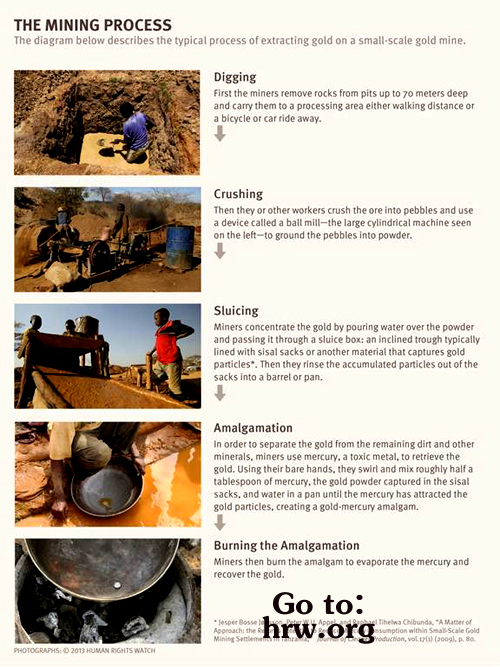
Ten percent, though, comes from this off-the-books, theoretically illegal artisanal mining involving the children.

The artisanal mining is usually pursued on the periphery of the commercial mining in areas the big machines just haven’t gotten to yet, or in areas that the multinationals have determined isn’t rich enough for their interest.

Most of it is surface or near-surface mining, and that’s what lends itself to individual prospectors.

Like mining throughout the ages, there is little guarantee of striking it rich by anybody, but the allure is what keeps the miners going. But in Tanzania, “striking it rich” is phenomenally greater than it is for an Alaskan miner, today; or even those involved in the great western gold rush a century ago.

In Tanzania, a child who finds a gram of gold will be able to sell it, once processed through the toxic mercury process in his pan, for more than $40. In many of the regions in Tanzania where this now occurs, that’s enough to keep a family of five alive, well fed for a month, with some left over for used clothing.

When a child strikes out in the mines, there’s other horrific work. HRW documented children as young as ten earning up to $3 for crushing a pile of rocks, $1.23 for mixing the mercury and gold for another prospector, all of which compounded could earn a kid more than $12/day.

That is roughly what a well groomed doorman, janitor or telephone operator in a safari lodge in Tanzania makes.

The story created here is of a society struggling to be simply clean, healthy and not hungry, putting their lives on the line starting as children, day after day, to reach a goal – a level of existence – in economic terms that is around one one-hundred-thousandth (.001%) of the average earnings ($90,000 annually) of workers for African Barrick Gold living the U.K.

Or one-ten-thousandth (.01%) of the average cost of a gold bracelot. Or should I go down a bit? Do you have any gold earrings? OK. Maybe one-tenth percent of the average cost of your gold earrings? So a thousand chilren work-days in Tanzania equals your gold earrings?

That gap is the problem. Tanzania should be getting a much larger proportion of its gold wealth, and the citizens and children of Tanzanian should be getting a much, much larger proportion of the money its own government earns.

But we know that gap is not getting smaller; it’s getting bigger and bigger as the years drip by. And the children get less and less and sicker and sicker.

Was slavery better?

miningprocess

Necessity is the Mother of What?

Necessity is the Mother of What?

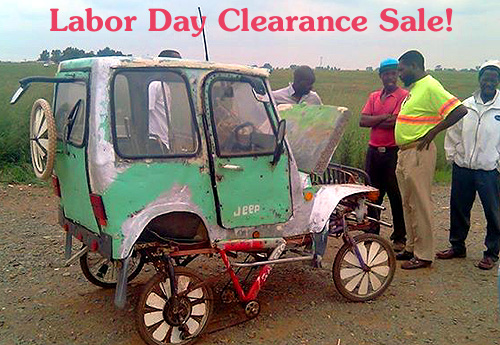
LaborDayClearanceIn places like Africa inventors’ goals are often limited by poverty, but the outcomes may actually be more beneficial!

Perhaps the most complicated involvement that a client of mine preparing for safari must undertake is organizing their air arrangements, their travel.

The complexity grows every day. The plethora of mileage awards and the credit cards which are their principal fuel is confounding. The goal to obtain a “free ticket” has exceeded the ludicrous and become simply debilitating.

So why not build your own aircraft?

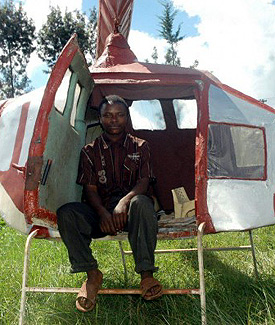
Onesmus Mwangi lives not far from Nairobi and works as a farm worker who earned $25/month until his boss learned of his fame recently and increased his monthly pay to $30.

Because his lodging and food is added to his compensation he was able to use almost all his earnings to fly away … or at least try to. So he built a helicopter for $570.

Mwangi’s “invention” unfortunately won’t travel far.

“I attempted to fly the chopper last week but it refused,” Mwangi said.
helicopter
But lots of people are traveling to Mwangi to see the thing. Travel has been produced to be sure.

“Lots of people,” Mwangi says come to see his dream, revving up their own.

The inventor is a primary school dropout. But the point, he says, is that he doesn’t want to learn reading, writing and arithmetic, which he’s mastered. He wants to learn calculus and metallurgy:

“If the government can educate me in engineering, I can come up with more innovations like a fast moving ship and more cohesive chopper than this one. Professionals should see whether they can improve on it.”

Among recent visitors was the governor of Mwangi’s state. Assistance has been promised!

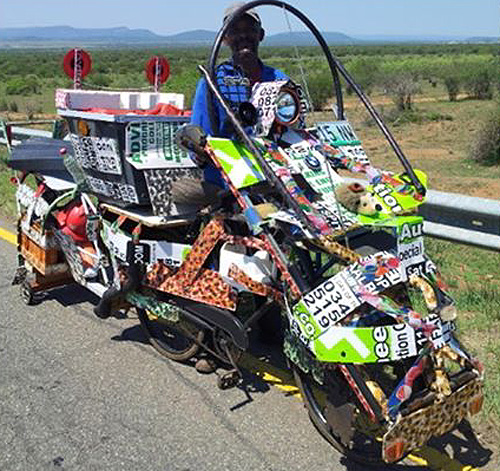
Meet John Pohosoko who lives in Pilanesberg, South Africa. Bikes are used extensively throughout South Africa for obvious reasons, the most important one is that you don’t have to pump gas into them.

But so many bikes on so many streets with so many cars earns South Africa the questionable distinction of an extremely high bicycle accident rate.

John has the solution, a bike that is wrapped with discarded signs.

Designed to warn people of his coming, it’s becoming more and more difficult for John to go anywhere at all because of the weight of his bike. So he’s safe, now!

And then there’s this anonymous creation undoubtedly unclaimed because it gets such terrific mileage!

Yes, in a perfect world Mwangi would learn how to build a rocket ship, and John would have highways with safe bike lanes and anon would actually have a driver.

But in the world of Africa where you make-do, splendid outcomes still occur!
wrappedbike
(Thanks to the site, AfriGadget for first publishing these stunning creations!)

Memory Track

Memory Track

MemoryTrackSafari travelers thirty years ago paid only a little bit less for air fare but only about a fifth as much for their safari!

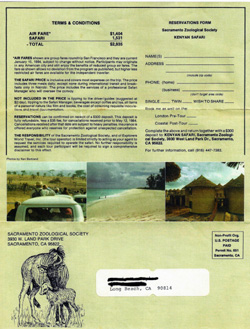
Recently my good friend, the Cleveland Zoo Director Emeritus, Steve Taylor, sent me a copy of the brochure for the safari that my company, EWT, operated for him when he was director of the Sacramento Zoo thirty years ago!

The 15-day Kenyan safari roundtrip Sacramento in July, 1984, cost $2935 per person and from what I can tell there was no supplement for traveling as a single. Back then people were afraid to travel as singles! I remember that one of the services our zoos and other not-for-profit associations provided was teaming up single bookings.

The itinerary was similiar to what a 15-day land program would do, today, although today the average time travelers take on safaris is only 11 days.

And back then there was no flying … it was all driving. And the driving wasn’t so bad, really, because the roads were OK and the traffic was minimal.

Today, travel for example between the Mara and Nairobi is more often by air than road.

To book the safari you had to make a deposit of $300, about the same percentage as you would today. But the deposit was refundable! For this program, which began on July 10, 1984, you could cancel up to May 12 for only a $35 penalty!

Holy Smokes! That would kill us tour companies, today! For one thing back then we held the deposit in the U.S. We rarely paid our African vendors until shortly before arrival, and sometimes not even then. As our reputations grew more reliable, we would be invoiced after the trip for the costs.

So we could extend that refundability advantage to our customers. Today most safari vendors in Africa require up-front payments which are nonrefundable.

1984 was a critical year, as I remember. It was the year that airline deregulation started to be implemented, so when airlines began to become more competitive. But it hadn’t translated into prices, yet. That wouldn’t happen until around 1986 when prices began to drop steeply.

And as those of you who regularly read me, I don’t think that was a good thing. As Steve and many other veteran travelers will tell you, airline travel back then was a dream. Bigger seats, easy check-in, all the luggage you could muster, fantastic attendants, excellent food and wine … not today.

So airline services are reduced so much, today, that they’re almost intolerable … but the price is the same. Safari services, on the other hand, have grown better and better … and it costs you five times as much.

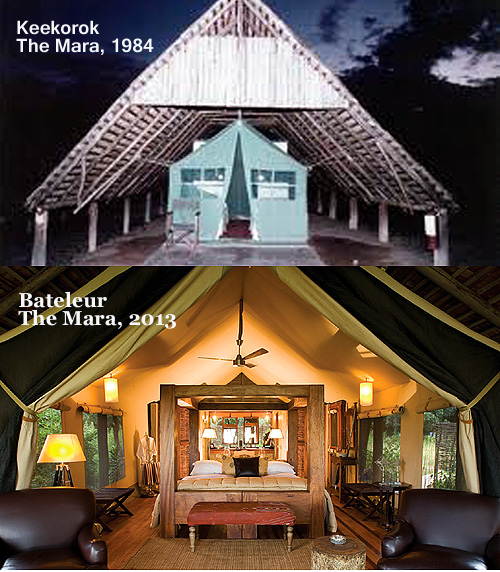
There are, in fact, still some downmarket tented camps that look like the best we had in 1984, but their prices are about twice as much as what we paid for the only (and then, best) accommodation in 1984. And the best accommodation is astronomically higher today than then.

Because .. not only does everyone have flush toilets, today, but in the better camps both an indoor and outdoor shower. Hot water is available 24 hours, not just a few hours during the day. Tents are giant size compared to before, with beautiful furniture and rugs and wonderful, massive beds. There’s electricity! Not just kerosene lanterns. And the food today at the better camps rivals any good restaurant in a big American city. Quite different from our beans and rice and occasional stick of boiled chicken of days gone bye.

And the animals? Well, actually, there are more of them today than in 1984 with the notable exceptions of the lion and a group of smaller animals like duikers that have been sacrificed to the felling of so many forests. But all the animals that thrive on the plains are in greater numbers today, than in 1984.

Which I’ve often written about poses one of the greatest challenges to East African development. If you’re a student or venture capitalist in Nairobi, you don’t want a lion disrupting your morning commute or an elephant traipsing through your garden, and if you’re a farmer – believe me – you’re not going to like tourism.
84JulSMFzoosafari001
But there were definitely things back thirty years that made a safari more wonderful than today: the many fewer vehicles, to begin with. Friendly and safe “little” Nairobi and Mombasa. “Safe” and “secure” weren’t even terms we applied to anything other than wild animals.

And call it nostalgia if you will, but the “wildness” of those endless plains thirty years ago was a thrill hard to recreate, today. At least in the same way. No cell phones. No internet. No Flying Doctors. No way of “checking in” back home meant that you were really stepping onto a landscape where no one but your fellow travelers would know where you were.

And people were willing and anxious to do that back then. Today the safari traveler is infinitely more cautious and I think less inspired by the potential differentness of Africa to alternate vacation spots. It’s one of the reasons prices have gone through the roof even while the average income of a middle class traveler hasn’t.

The ecologically correct shampoo, feather bed and pillows, well delivered ginger snaps with early morning tea and of course a charging station for your smartphone are now essentials.

Times have changed.

Rest in Chaos

Rest in Chaos

stabilityKeita’s victory in Mali, the dozen high-profile arrests for corruption in Ethiopia, Mugabe’s final reign – all African news of yesterday, and much more suggests a return to the past.

I’ve always believed that economy drives politics worldwide. Since America is the largest and most modern economy, what happens here is now mirrored in some fashion every where else in the world.

In America the response to the economic catastrophe was Barack Obama. I’m not out of sync, here. Obama’s ascendency began well before Lehman Brothers, but looking back I’m convinced that his message of “great change” was a prescient notice of imminent economic collapse.

Obama’s message from the getgo was for a more transparent government, a rebirthing of the middle class, regauging the tax structure (taxing the rich), pulling seriously back from military adventures, enfranchising many of the forgotten and certainly wrapping this altogether was the inevitable redistribution of wealth to some degree.

There was nothing obvious in any of that at the time to suggest global economic collapse was on the way, but hindsight is striking. Nor am I suggesting Obama – or any of us – knew he would be the first U.S. president to be nominated by his party when the economy was raging hot and inaugurated as president when the economy was in free fall.

But he was. And now it seems all so clear. We call it a bubble, now. And I firmly believe the tension of that stretching bubble is what facilitated Obama to win the elections.

And mired in an economic collapse he never imagined, Obama’s revolution collapsed before it began.

Progressive redress of the old regimes replaced the blame game. (I guess we get more polite with time.) So instead of jailing Timothy Geitner we made him Treasury Secretary and had him lead the charge to reform the banks. Briefly, society moved forward with passage of things like Obamacare and the Dodd-Frank Act.

Then, it came to a thunderous stop. In America it was the 2010 elections. In Africa it was a year or two later. Whether America foreshadowed or produced the end to change in Africa, I’m not sure. But the “Arab Spring” or “Africa Awakening” or “Twevolution” or whatever you want to call it is coming to its own thunderous stop.

Old faces are reemerging as saviors of their own old ways:

Uhuru Kenyatta, the son of the founder of independent Kenya, is now president there. Ibrahim Boubacar Keita, a politician nearly as old as the tombs of Timbuktu, became president of troubled Mali yesterday. Robert Mugabe has been entombed as president of Zimbabwe. General Sissi again runs Egypt.

And in more socialist regimes modeled after China in The Sudan and Ethiopia, the inevitable pogroms have begun, the cleansing of the less than completely loyal.

Read any of the comments in any African newspaper’s OpEd page and you’ll see why:

Peace or chaos. I chose the peace because after all … everyone is tired, history, that we never learn from, has it that we will again sit together for the peace that we now take for granted. By the way, that is why when one dies we say Rest In Peace. Not Rest in Chaos.”

This is all a flashback to the 1980s. It is happening in the U.S. and in Africa for the very simple reason that following the horrible trauma of 2007/2008, we all now want stability.

At any cost. At home and abroad in Africa. Spurts of real progressive moments drowned in economic failures that turn the societal direction back around on itself.

History repeats itself, but does it circle always slightly moving on? Like a ring of waves of a skipping stone?

Or do we just sink in the vortex of the maelstrom?

Hail to the Victor Valient

Hail to the Victor Valient

goodgovtWe’re getting oh so close to both a vaccine and simple cure for malaria! And both the journey and the ultimate victory will confirm that only governments, not charity or private enterprise, are capable of attaining such success.

Last week the National Institutes of Health (NIH) announced that it had successfully completed preliminary trials of PfSPZ, what it still calls an “investigational” malaria vaccine that was found to be “safe, generate an immune system response, and to offer protection against malaria infection in healthy adults.”

The discovery was published in the August 8 journal, Science.

This isn’t quite New York Times front page material just yet, because the study group of 57 adults between 18 and 45 years old was very small and localized, and the vaccine success depends upon large intravenous injections. But the result was 100% protection, which is unheard of in such early trials.

This comes on the heels of the discovery of another drug a few months ago that is a simple preventative and cure, which I wrote about in an earlier blog.

AND that was announced just before Africa’s first-ever drug was discovered to cure malaria by an institute associated with the University of Cape Town: “MMV390048″ is awaiting a common name but is a completely innovative malaria drug attacking the parasite at the blood stage.

The key ingredient in these three major break-through discoveries is … government funding. The latter two breakthroughs had private help (the Switzerland-based Medicines for Malaria, and the Gates Foundation.) But in both cases it’s likely they would have been developed without this private help.

But the most important discovery, the vaccine, is strictly a collaboration of three U.S. government institutions: the National Institute of Allergy and Infectious Diseases (NIAID), the Walter Reed Army Institute of Research, Silver Spring, Md., and the Naval Medical Research Center, Bethesda, Md.

I have grown increasingly skeptical over the years of private charity in Africa, and more widely, in general. There is no question that the battle to defeat malaria has benefited enormously from private charity, and specifically from the Gates Foundation.

Just as there’s been a lot of very good charity in all avenues of life throughout Africa with many successes.

But when push comes to shove not even Bill Gates’ billions is enough. Precisely because billions is not always the answer, but rather as shown by PfSPZ, years and years of expertise and experience from a variety of large government research institutions that work together.

Actually, that’s the key to the key: working together. Well meaning charity groups tend to be provincial and often secretive of their research, and I know this is particularly true of wildlife and conservation groups within Africa.

And it’s intrinsically true of private enterprise: Glaxo Smith Kline is probably the pharmaceutical that has spent the most money on malaria research. In 2009 they announced their best success yet, a vaccine that has proved about 30% effective in babies aged five to 17 months.

That’s nothing compared to the above three break-throughs.

At this point in the malaria battle it’s almost impossible to claim that any one group, including the government, has any total monopoly on research and development:

The battle against malaria has been energetically pursued by private enterprise and charity for my entire life in Africa, and before that and since the earliest development in colonial Africa, by government agencies.

So the body of research and experience regarding malaria is huge and very intermingled. Still, as demonstrated this week by the U.S. government health institutes, ultimately it is only massive and massively interconnected government agencies which can achieve the ultimate breakthrough.

And this is no less true of the battle against malaria than the battle against poverty or illiteracy or any social problem. And what’s more, when private success is achieved, it’s often only after much earlier public involvement.

Breakthrough drugs in general is the perfect example. Most drugs’ history begins in government funded public institutions, like university labs.

The irony, of course, is that Glaxo Smith Kline will likely be the principal commercial benefactor of the U.S. discovered malaria cure, as our archaic system won’t allow the U.S. government to manufacture and distribute the drug (except to our troops and civil servants).

Which, of course, is wrong. The drug would then be cheaper, and any profits could be plowed into something else … like say education or housing, instead of acid reflux disorder.

What we are learning in this fascinating journey towards eradicating malaria isn’t that there might not be a place for personal initiative or enterprise, but that the world is too large, complicated and interconnected today to achieve real social success except when governments work well.

And true, many, many don’t. But when on balance they do, like our own United States of America’s institutes of health, then yes, Virginia, happiness can be achieved.

Africa Finally Covered

Africa Finally Covered

telecommunicationbreahthroughWifi and cell phone frustration in Africa is set to ease soon when the gigantic, new Alphasat telecommunications satellite comes on line.

The frustration with broadband in Africa is just an accentuation of broadband frustrations worldwide: reliability. And it’s pretty reliable, really, at least by my own experience in sub-Sahara Africa.

There’s hardly a place on safari where I don’t have cell phone reception. The exceptions are large parts of northern Botswana and much of Uganda, but in total I’m amazed at how extensive the coverage is.

And like the millions of users, I become used to it. So when it goes down, which seems like often and likely isn’t, I’m not prepared. Someone’s waiting for an answer. The blog has to publish. Should-haves smother me in guilt, like why didn’t I confirm the charter flight yesterday instead of waiting to the last minute?

Because, obviously, that’s what instant communication allows us to do: wait until the last minute. We simply discount its reliability as something to worry about.

But, in fact, Africa has been at a disadvantage compared to other parts of the world. There are today 23 communication satellites in geosynchronous orbit, which means they are dedicated to principally commercial communications. (The number of military and non-private satellites is probably much greater, and they stealthily move all over the place.)

Of those 23, there is a very small one for Egypt, another small one for Nigeria and a European operated one that covers some of Africa. Not much, and it’s the reason all African telecommunications has been developed so far using underwater cable.

Now, that will change with the deployment of Europe’s largest ever telecommunications satellite that will operate with the world’s fastest and most advanced technologies.

Alphasat was launched last month and opened its wings this week. Everything so far has been flawless, and tests are continuing. Deployment onto the commercial world will likely begin next month.

The satellite will be operated by the British telecommunications company, Inmarsat.

Until now the London-based operator’s customers were big broadcasters like the BBC, shipping concerns, oil and gas multinationals, airlines and various militaries. The fact this current satellite will be dedicated mostly to Africa means it will be dedicated mostly to cell phones and internet traffic.

That’s an enormous statement on the economic importance of Africa’s use of the internet and cell phones. Both on a unit basis are trivial in economic terms, and it’s an affirmation that shear quantity of use will produce a viable business.

In fact Alphasat’s technology is among the first that can handle an individual cell’s communication, rather than as massive bundles. This type of capacity requires multiple motherboards, so to speak, each that operate at 22 gigabytes per second. That ought to burn your head.

Like economies in general, a single big communications satellite over Africa, when there are 5 over Israel and 20 over the U.S., doesn’t seem impressive. But for those of us who live in Africa and rely on modern communications, it’s a huge boost.

And it’s kind of nice to note that this grand increase in capacity is for texting irrelevant information about the weather and talking endlessly with your girlfriend, as opposed to aiming a nuclear arsenal at a town in Syria.

Still Stuck in the Mud

Still Stuck in the Mud

Tremendous new natural resources have been discovered in Tanzania; some say that’s why Obama visited there recently. Isn’t this good news?

Many including myself have lamented African development over the last half century, flipping from feeling totally pessimistic to totally optimistic in the course of a few elections or natural catastrophes.

But always the bugaboo has been the culture of dependency presumed intrinsic to any society deft of natural resources and not yet matured of any of its own technology or innovations.

That has changed dramatically in the last decade with the discovery of so many now extractable resources that were either not known or too deep or complicated to collect in the past.

Almost 20 years ago the world’s second largest gold reserve was discovered in Tanzania near Lake Victoria. And for twenty years we’ve watched the Tanzanians botch one mining deal after another, screw up every national taxing proposal that’s reached the legislature, and kill and main hundreds if not thousands of mine workers.

And now, enormous new natural resources are being discovered in Tanzania almost daily.

The most impressive are new uranium deposits. In fact, such huge reserves have been found that the Tanzanian government quickly created a “Tanzania Atomic Energy Commission.”

(Sad that its website, thrown up in a few days, is better than for the national parks.)

In Arusha recently, President Jakaya Kikwete said, “If all the reserves we have are fully exploited, Tanzania can become the seventh leading uranium producers in the world,” said Kikwete.

Already Mantra Resources and a Russian firm ARMZ have entered into a joint venture to mine uranium. Tanzania has so far confirmed the presence of multiple thick zones of sandstone-hosted uranium mineralization at shallow depths at the “Nyota Prospect” where it is presumed there are 35.9 million pounds of extractable uranium.

That’s a lot.

But there’s more. Coal, and (good grief!), diamonds.

But even more, still:

Unimaginable numbers of deaths and disabilities from the local Tanzanians so far employed to extract these resources. The latest was only several weeks ago. I don’t understand why progressives are livid with the sweat shops supplying Walmart and Nike, but shrug at the horrific deaths and disabilities Tanzanians suffer every single day.

Last week the estates of numerous gold miners who died at the horrendous Barrick Gold mine near Mwanza filed suit for shameful work practices.

Yet there was more support in the media for the mining company than for the miners. Well, I guess it can make sense: After all, gold has declined in value, and the owner of the mines just took a $700 million writeoff on the quarter’s earnings.

Tanzania isn’t handling all of this very well.

I suppose that’s understandable, since the government of Tanzanian doesn’t handle anything very well. But this is, literally, a “gold mine” for the population, if the government can get its act together.

So far, it hasn’t, and it’s incredibly depressing.

Mining licenses are being given out willy nilly at the entire discretion of President Kikwete; there is no vetting process, and currently, there is no national policy regarding taxing or royalties.

Current Tanzanian law, which enshrined local control of local lands (sometimes to a ridiculous extent, see my blogs on WMAs and other big game related lands), is being completely ignored.

Near the capital, Dodoma, a mining company several months ago began digging giant wells without even advising the local community at Bahi Makulo what they were digging for and who they were. An expert has surmised it was Mantra Tanzania, a subsidiary of a Russian mining group.

When confronted by local officials, the management offered a handful of jobs instead of explanations, which were readily accepted. These jobs included handling chemicals that weren’t identified, and without any training.

It’s likely that at least one of the chemicals was mercury. Human Rights Watch has consistently bashed Tanzania for being one of the lone countries that has refused to sign a mercury chemical standard treaty.

Numerous human rights violations by multiple mining companies in Tanzania, and the refusal of the Tanzanian government to enforce its even poor but existing laws, has left the population completely unprotected.

Feeling totally marginalized, many Tanzanians are now desperately trying to mine gold on their own, like the original gold rushers of the 1850s. It’s dangerous and mostly unproductive, and the government is doing nothing to either regulate or discourage it.

It’s a crying shame Tanzania’s been unable to get its act together over the last two decades since Lake Victoria gold was discovered. Now with uranium, diamonds and more, that sadness has turned to desperation.

Imminent Generation of Practicality

Imminent Generation of Practicality

Jim&Cheetah.626.sheilabritz.serengeti.mar13Predicting how you as a consumer or as an investor will successfully choose your properties for the future of safari travel is founded almost entirely on the philosophy of “luxury travel.”

Don’t get ahead of me: I’m not concluding that “luxury” will be the winner, quite to the contrary. But to understand this, you need to first understand what luxury travel has meant for sub-Saharan Africa.

Luxury travelers break down into two categories: those who believe “If you’ve got it, spend it” and who’ve got it; and those who haven’t got it quite as much but want to “treat themselves.”

There are, of course, rich travelers who are eminently practical, too, and who will choose their accommodations after they choose their place. A good example of this is the Serengeti where East Africa’s foremost luxury company, &Beyond built its first two properties in the Serengeti in areas that rarely experience the migration (Grumeti and Klein’s Camp).

Both properties are at the bottom of the company’s performance charts.

But such affluent travelers are rare. That doesn’t mean they don’t exist. I like to think that most of my own affluent clients are more schooled in what they want to see, but for the vast majority of rich travelers, “what” isn’t as important as “how.”

So it was a no-brainer for investors in sub-Saharan Africa over the last two decades, as the world grew more and more divided between rich and poor and the rich became much richer much quicker.

It didn’t matter to these “If you’ve got it, spend it” folks that they would miss the great migration. What mattered was very comfortable beds, good food and service, privacy and space. Of course there had to be animals, but there was little motivation to find the “best game viewing.”

This was a real boon to investors, because many of the choice locales for the best animal viewing had long before been bought by the tried-and-true (Thrun) properties. So this dilemma of not necessarily being able to build in the best place went away.

The other category that considered “treating themselves” during at least part of their safari was attracted by the hoopla associated with the ultra luxury in East Africa, which until it appeared all of a sudden in the late 1990s seemed quite out of context.

I speculate that as many as a third of the those staying at Ngorongoro Crater Lodge do so for the effect, and that likely the rest of the places they stay are much less costly and luxurious.

Crater Lodge has the benefit of being in a good location, too, something unusual for the early luxury properties.

The Great Global Recession aggravated the world’s traveling markets and accentuated the luxury. Luxury travel didn’t really decline much after the initial shocks of 2008. The rest of the markets literally withered up.

But what’s emerging now is quite different from the nineties when use and investment in luxury travel began its prime. Travelers of all market niches are returning to Africa, and the growth is steady and slow just as the economies of the world are growing steadily and slowly.

But the rich market is turning. I know it’s still around, and where it’s going is hard to say. But our anecdotal evidence is that potential safari travelers are much, much more interested in “what” than “how.” And that no matter how rich you might be, value really matters now.

It didn’t before.

I’ll speculate why. I think we’re headed world-wide for higher taxes and a greater redistribution of wealth, and that will certainly trickle down to travel practices. Second, the older generation of wealthy individuals that supported the investment and use of high-ticket travel is dying. That was also the generation of high rollers in derivatives and other nasty things.

Their children know better.

There is some interesting evidence that the luxury companies know this is true.

Wilderness Safaris is an excellent mostly southern African company that basically cornered the market on luxury properties, originally in Botswana and later throughout much of southern Africa.

Last month Wilderness announced it was moving its headquarters from South Africa to Botswana.

The company provided little fanfare with this announcement, and for good reason. There is only reason that any travel company would move from the near-perfect environment of Johannesburg to the only capital city in Africa that has no direct flights from Europe, Gaberone: reduced taxes.

Other up-market companies give us similar indicators. &Beyond is “renovating” Kichwa Tembo in the Mara, which does allow them to champion a million dollar investment. Kichwa was the only non-up market camp in &Beyond’s portfolio, a left-over from its early purchase of Thrun properties from Abercrombie & Kent in the 1990s.

What this means is that &Beyond doesn’t want to conflate the two markets. I suspect they understand the upmarket is shrinking, and that the competition for it will grow more intense. Not a good idea to have a pizza delivered into the kitchen of a gourmet restaurant.

And another wannabe luxury company, Sanctuary Retreats, has just announced a seventh luxury small cruise ship in Myanmar. This means the company which was defined by luxury African lodges will now have more than half as many boats as lodges.

These big, enormously successful companies are doing the right things. They can’t remake themselves into something less for the future, so they are preparing to be more and more competitive for what I think is going to be a diminishing luxury market.

And that means, of course …

… that the Thruns will return. The “thoroughly reliable and unspectacular” properties I wrote about in Thursday’s blog will reemerge, I believe, as the dominant market in safari travel in the next 5-20 years.

A generation of practicality is upon us.

Versailles & The Moso Mantra

Versailles & The Moso Mantra

maasaiversaillesSafari travel beginning at the turn of the century has been increasingly defined by luxury. It’s a trend that’s been fabulously successful for investors and consumers alike.

Broadly speaking there are three types of places to stay in East Africa when on safari: Tuesday I wrote about the “flash-in-the-pan;” yesterday of the thoroughly reliable and unspectacular [“Thruns”] and Monday I’ll predict for both investors and consumers the future opportunities for all three types.

As any tourism market matures and grows more competitive, “luxury” is added to “price” as a sales point. It starts first with existing middle-market properties that are similarly priced as a reason to choose between them.

But with time “luxury” becomes a sales point all to itself, quite apart from price, and with exotic markets like East Africa in particular, it just seems a natural component of a destination that is expensive to begin with.

Everything modern in emerging countries (except mobile phones, it seems) is expensive: Cars are more expensive, modern homes are more expensive, modern clothes and so forth. And so is travel.

This is because all those things depend on imports: Fuel, building supplies and parts, many foodstuffs … and often, even staff, must come from abroad.

As this expense grows with time and relative to similarly distant destinations whose economies are maturing faster and therefore producing those necessary items locally (like China), it becomes more difficult to justify the higher costs.

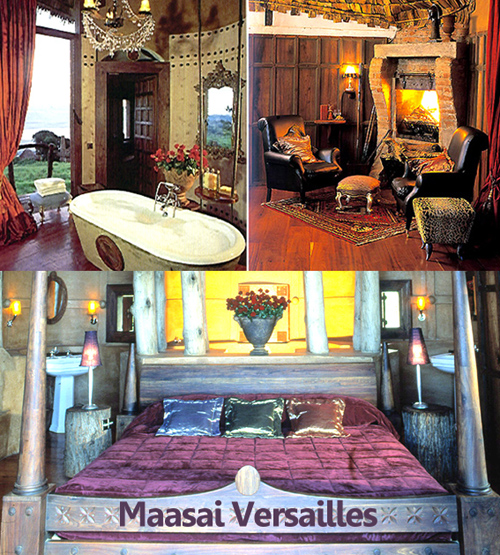
Unless, of course, someone spreads rose petals up to your steaming four-claw Victoria bathtub which is placed beneath a giant chandelier and in front of an 12-foot window that overlooks Ngorongoro Crater.

And then the race to see who can make the most luxurious property is on. And the winners corner that extremely valuable part of the traveler market, the one that is pretty immune to even the near cataclysmic ups and downs of a global recession: the market of the rich.

This is what I call the moment’s splendor [“Moso”] type of East African property, and I choose that descriptor advisedly. Once outside of your four-claw bathtub back on the road, you won’t be able to avoid the innumerable bumps, horrible dust and lack of air-conditioning.

You won’t be able to easily replace your shampoo if you spill it, and the national grid might be down so no matter how good the wifi is in the room, there might be no internet. Plenty of hot water, when there’s water at all if the urban property dares to rely on mainline supplies.

The luxury is very confined to where you eat and sleep at night, and when something goes wrong, like no lights, you suddenly notice the wilderness more than you ever expected to.

And even when everything is going according to scheme (which I’m happy to admit is more and more with every passing day), and you are taking pictures of that magnificent lion pride out on the veld, you as the luxury traveler feels and experiences nothing more than the pensioner staying at a modern hostel who is in that old minibus on the other side of the lion pride.

The splendor can be quite limited.

But it seems to have worked. There have been few “flash-in-the-pans” and virtually no Thrun properties built in East Africa for more than a decade, but there is a plethora of new, luxury places to stay.

The most famous one in East Africa is Ngorongoro Crater Lodge, which we call “Maasai Versailles.” I’ve often stayed there and often written about it, positively in the beginning and negatively with time.

With time you begin to realize how “momentary” the moment is in the context of a good safari, and then the costs start to seem outrageous.

Prices at Crater Lodge vary between $1000 and $1650 per person per day, and when bundled with the other costs associated with a safari (fees, transport, etc.) this can be up to 10 times the cost of staying at a “thoroughly reliable and unspectacular” property, like the Serena Lodge about ten minutes down the road from it.

But it takes time and multiple visits to realize how “momentary” the moment is, and there is little question that the good luxury properties in East Africa do their trick. At least part of it. Reviews are pretty solid and good. What remains to be seen is if they – like the Thrun travelers – return multiple times.

We don’t have statistics for this, but my sense is that they don’t. Thrun travelers are among the most repetitive travelers in the world, returning 3-4 times during their lifetime of travel.

I don’t think that’s the case with Moso travelers, and that’s the part of the trick that might be missing with them. (More about this on Monday.)

Crater Lodge is hardly my favorite in this category. My favorites include Gibb’s Farm (which straddles this category with the Thruns), Dunia Camp (Serengeti, as well as many of its sister camps in the Asilia chain), Sarara (northern Kenya), Sand Rivers (The Selous), and Swala (in Tarangire).

Today, travelers accustomed to luxury won’t give it up just to have an exciting safari. Indeed, they did in the 1970s and 1980s. But times have changed, services have improved: There are no more 19th century aristocrats who dress for catered dinners in Kensington but use ferns as toilet paper while hunting lions. Today, there is a choice, however flawed it can be, for a “luxury safari.”

That’s the Moso mantra, and it’s what drives both investment and use of luxury safari properties in East Africa. But will it last?

See my next blog, Monday.

The Tried-and-True Thrun

The Tried-and-True Thrun

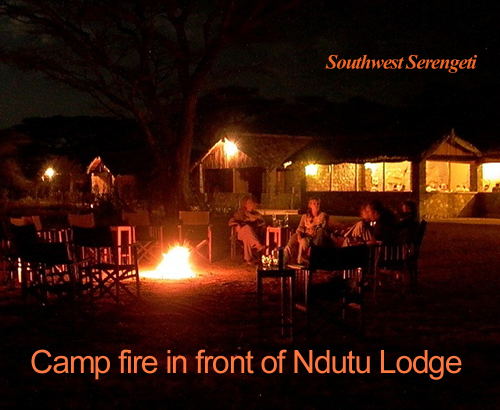
ndutucampfireThe “reliable and unspectacular” places to stay in East Africa [Thruns] are often my favorite, not just because they aren’t overpriced. Like many of the earlier properties built for safari travel, they were built to last and on prime space.

Tuesday’s blog was about the “flash-in-the-pan” properties and tomorrow’s blog is about the moment’s splendor properties. And then Monday I’ll summarize the series and let both investors and consumers know what I think the future holds.

This second category is in many ways my personal favorite, because I’ve been traveling to Africa for years and hope to continue doing so. To me the Maasai Mara is the draw, not Bateleur Camp. So main Governor’s is just fine, thank you.

These are the good ole places, the places that have been around for years and work well. They aren’t fancy, but you know when you go there you’ll be well taken care of, and because they’ve been around for a while and started early, there are usually plenty of them that got the best locations.

My favorite of all time is Ndutu Lodge in the Serengeti. But chain lodges can fit into this category, too, and Serena is the example. Serena Mara is absolutely the best lodge in Kenya’s best game park.

And there are many other examples, and they tend to all divide into this big gap between the single, owner/manager property like Ndutu and the mid-market chain like Serena. What they have in common is their inability to make much money for investors.

Mid-market properties are like the airlines. They cash in big during the good times and they dig into deep pockets during the bad times. They develop very loyal customers, but rarely are the customers very rich.

So right now, when only the rich are traveling as we laboriously recover from the Great Global Recession, things aren’t going very well. Long-term? That’s difficult to say.

What they have going for them is remarkable consumer loyalty.

Single owner/manager Thruns like Ndutu Lodge, Ndali Lodge (in Uganda), Ndarakwei Camp (near Kilimanjaro), Gibb’s Farm
(near the crater), Governor’s Camp (the Mara), Larsen’s Camp (Samburu, which does have a sister mid-market but nonperforming lodge in the Mara), the Aberdare Country Club and The Ark, Galdessa Camp (Tsavo East) are examples of single owner properties that have been around for a very long time and technically serve the mid-market, more or less.

(Gibb’s was seriously upgraded several years ago by its new owners to serve the upmarket. It’s a spectacular, wonderful place, but its location and need to command higher prices is problematic.)

I’m sure I haven’t exhausted the list, because what these Thruns have in common is the most loyal clientele in the market: (So even after 40 years of guiding in East Africa I’m personally unable to learn them all.)

These stand-alone properties were built with lots of equity sweat and love by their original owners, and if they’ve been purchased since (many original owners have died) the legacy continues.

The best story that comes to mind is Ndali Lodge in Uganda, where when the father died, the children returned from abroad to run the place because it is so dear to their hearts.

Like any home that is loved and taken care, you can expect to get more than your money’s worth. Some of that statement may validate itself in the low prices to begin with, so don’t expect filet mignon with premium wines or feather pillows fluffed up by your butler at The Ark. But the excellent dinner buffet and cozy old room with a fireplace is worth more than you paid for it.

And that could be the problem with stand-alone Thruns, as I’ll expound more on Monday. The markets below the luxury market dried up in the Great Global Recession.

Monday I’ll tell you if they’ll be coming back.

There aren’t a lot of mid-market chains that meet this second category criteria for me. In fact, there’s only one, Serena.

That’s because these chains are unable to make money for anything beyond the short-term. Serena has maintained its good service, its compact but always working rooms, and its decent foods, through thick and thin.

And in the East African market there’s been a lot more thin than thick since Serena appear in the 1970s.

The most outstanding feature to me of Serena is its people, in particular its lodge staff. They are exceptionally well trained, well-dressed, speak multiple languages well including the language of assuaging aching backs and packed sinuses that often accompany a dry season safari.

The staff behind the scenes, including the mechanics and cooks, couldn’t be better. And they are pretty well paid. Today, this is where a young person begins on her way up the ladder of hotel management. And remarkably, Serena is able to retain huge numbers of its better staff, through good salaries and benefits.

The reason Serena can command the investment long-term that provides a long-term, reliable service that builds clientele is because it has a deep pocket, the Agha Khan, with a mission so appealing he can get significant capital from places like the World Bank.

His appealing mission is to invest in emerging markets in emerging countries. Serena was one of the first first-class hotels in Kabul, for instance. Serena appeared in Kenya, Tanzania, Uganda and Rwanda when investment there was considered risky.

And they’ve stayed and survived.

Personally, I choose the single owner/manager properties over Serena mainly because Serena lodges are too big for me and too uniformly styled. But Serena is often a bit less expensive than the stand-alone Thruns, and much less expensive when you buy multiple places. And since they are so perfectly located on the safari circuit, an excellent safari can be wrapped entirely with Serena.

Serena will survive for as long as the Agha Khan’s mission is a valid one. The single owner/manager Thruns are of course more problematic, and I’ll have more to say about that Monday.

Built To Tumble

Built To Tumble

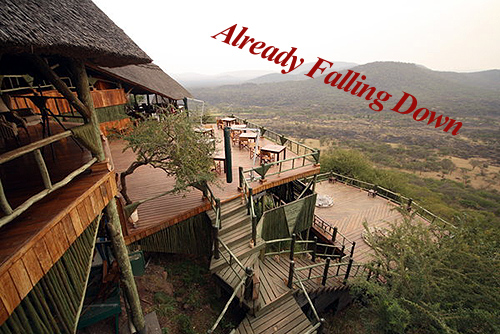
AlreadyFallingDown If you haven’t visited the spectacular Soroi Lodge in the Serengeti yet, you better do so soon, because I don’t think it’s going to be around for a very long time.

The story of Soroi Serengeti Lodge is the story of investment in African safari lodges virtually from the onset of safari travel in the 1960s.

It’s the story of small business trying to cash out quickly on trends, and then always, failing. Only now, as Africa develops its own safari traveler are things looking up … but not for the likes of Soroi Lodge.

Below is my detailed review of Soroi. I stayed there while guiding the Felsenthal Family at the beginning of July for two nights. On Thursday, I’ll generalize in this blog to what’s happening throughout Africa with its lodge investment, tell you which few investors are doing the right thing and why, and what warning signs we’re now getting for the mid-term for safari travel.
pool.soroi
Set about half way between Serena Lodge and the Grumeti airstrip in the southern half of the western corridor, Soroi is one of the most beautiful middle-sized lodges I’ve ever stayed at. The design avoids the cliche of avant garde but is creatively modern with lots of angular twists and turns, multiple levels and daring concepts like putting a pool next to the bar and lounge.
trestle.soroiserengetilodgeSome of this is probably mandated by its limited space, the top of a 600′ high hill 25 kilometers off the nearest road, resulting in an absolutely fantastic and intimate view of the grande dame of African wildernesses.

The 25 thatched cottages and suites are connected by long and sometimes meandering walkways like trestles through outer space, views everywhere.
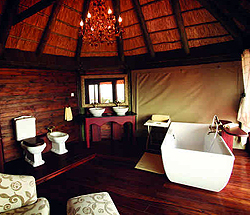
bathroom.soroi

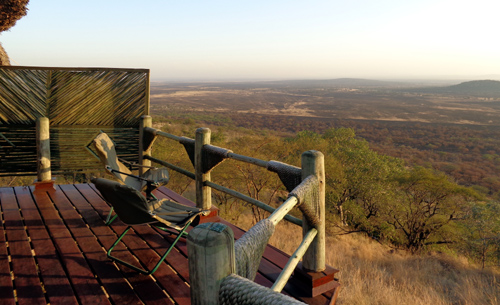
The bathrooms are about the same size as the bedrooms, which are adequate and heavily wooded, and the piece de resistance is that massive deck overlooking the Serengeti. I estimate the view from the deck stretches at least 35 miles over the Serengeti. There are no other lodges and only one track in this immense area, fulfilling every safari traveler’s dream of being alone in the remote beauty of Africa.
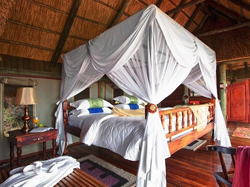
bedroom.soroi
And that’s it folks.

Hardly two years old, this artistic masterpiece is already not working.

Much of the room finishings are breaking off. The thick lustrous wooden stain is already down to the bare wood in the bathroom and there is already significant corrosion on all the brass plated fixtures. The patio doors between the room and the deck no longer close well, leaving a gap for you know what … bugs. The screen meshes on the perfectly designed canvass windows are buckling and tearing.

There is no communication between the distant cottages or reception and management: no phones, no walkie talkies as is often customary. So there is no way to communicate danger, other than a pitifully small whistle attached your key chain, and yes there could be danger. I spotted lion and hyaena tracks regularly on the walk from my room.

There is a bouquet basket of teas and coffees, sugars and sweeteners framed by two lovely china cups on the rather small writing desk in your room, but no tea or coffee maker, and the only way to use them is to order hot water. Staff deliver hot water on demand, but there is no way to order it except to walk up to reception – might as well get it yourself.

And even that is complicated by the lodge edict that you can’t walk around at night by yourself. I learned from an askari who claimed to shoo the lions away every night. But there is no way to call for an askari at night … except your whistle.

And consider the beautiful and large four claw bathtub elegantly described in much of the lodge’s promotional literature. The briefing we got when arriving explained that there wasn’t enough hot water to fill the bath more than … maybe, once. So … don’t use.

Laundry is something that every African safari lodge and camp provides, albeit at various costs from free to outlandish. Soroi’s website and its information packet describes that two pieces of laundry are free and additional will be charged.

But at the briefing we were told there couldn’t be more than two pieces accepted, at any charge. And the complicated maize that management has thrown up to us weary warriors in need of a clean T-shirt included the fact that laundry is only accepted at night, for return the following night. This is exactly half-cycled from what is common virtually everywhere else, morning to that same evening, which further complicated anyone’s laundry plans particularly if they were only staying for two nights.

One of the six rooms my group was assigned didn’t have enough water to flush a toilet.

And my three drivers apologized to me the night after we arrived that they weren’t allowed any water to wash the vehicles.

So what do we have? We have a lodge that doesn’t have enough water, which has not been built to last, and which is declining fast. An investment with a quick R.O.I.

It’s a lovely sand castle, but the engineering won’t withstand the next strong wind.

This beautiful, very artistic but so temporal investment is the perfect example of why investment in African safari lodges is so tricky, and probably so misplaced.

For that, come back to this blog on Thursday.
DeckView.Soroi.500

Cranes & Other Conservation

Cranes & Other Conservation

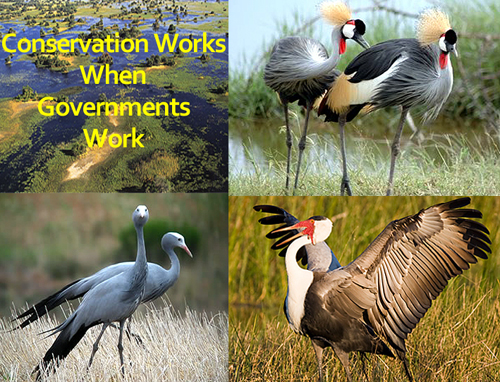
Wattled Crane - Copyright © Grant AtkinsonAfrica’s beautiful cranes have become a maypole for world conservation, but I don’t believe the birds – or the world – will be saved by private initiatives.

Recently I had the privilege of visiting the International Crane Foundation in Baraboo, Wisconsin. Founded on the fairy tale conservation story that saved the Whooping Crane, the Foundation today extends its work around the globe, protecting fifteen species of crane worldwide.

I was particularly interested in their work with the four African breeders, the Black Crowned, Grey Crowned, Blue and Wattled.

Each of these birds is incredibly spectacular; the crowned and the other two types have distinct behaviors, and they all get the attention of my clients even those who are not birders per se.

And all of us guides have watched their decline… and, in the case of the wattled, the promise of a comeback.

Hardly a decade ago, flocks of black crowned cranes were common on every grassland wilderness. Although they peal off in pairs to nest, large flocks were common before nesting and among the fledglings.

Their funny low-decibel honking, very much like a goose, often introduced them long before the explosion of colors and ballet of flying together got everyone’s attention.

But the crane in general is an indicator of much more than beauty alone. Cranes are wetland birds. Like so many birds in a variety of ecosystems, cranes indicate the health of the world’s wetlands.

And wetlands – at least for the time being until new technology is developed – is the way the world cleans itself while simultaneously producing more clean water.

Now Africa’s cranes are often found as I’ve seen in near desert environments – they’ve adapted nicely to the desertification of Africa. But they tend to nest in as wetland an environment as possible.

So we might deduce that Africa’s cranes are in the forefront of the decline of wetlands, managing to adapt historical behavior to the decline of good water resources, because Africa’s wetlands are in a more serious decline than elsewhere on earth.

But we may have reached an untenable point in that decline. Over my forty years I’ve watched the crowns “come and go,” so to speak in terms of their anecdotal visible numbers. But in the last 3-5 years they’ve been going and not coming back.

And this stands in marked contrast to the Wattled Crane of southern Africa, which while more threatened to begin with than the crowned, seems to be making progress, albeit slowly.

And this little bit of evidence is why I don’t believe that despite the invaluable work of organizations like the Crane Foundation, the cranes – or for that matter, any world ecosystem – will be saved without massive government involvement.

A lot of people don’t agree with me. Another recent visitor to the Crane Foundation in Baraboo, Carl Gibson, wrote recently in the Huffington Post, “Cranes and Climate Change: Why Our Survival Depends on Local Solutions.”

In a somewhat convoluted way Gibson claims that private initiatives like the Crane Foundation can ultimately control climate change, which he correctly faults for much of the world’s current conservation crisis.

Gibson lauds “small business” and business green initiatives for being “ahead of the federal government … find[ing] ways to generate our own power, run our businesses sustainably, and conserve natural resources and biodiversity if we’re to survive extinction as a species in the next century.”

Like the leadership of the Crane Foundation and many other good conservation organizations, there’s a belief that government either can’t or won’t address the problems they do.

They’re wrong, and it’s time that we change this destructive attitude that’s arising between well-meaning conservationists and their governments. I find so often today a nihilistic attitude by private conservation organizations towards governments. This has got to change.

The reason the Wattled Crane has a current better trajectory for long-term survival than the crowneds is because the governments of southern Africa have more aggressively dealt with wetland issues. It’s that simple.

The remarkable effort by the Botswana government to create boreholes in the dried up Ngami River and its tributaries … for 26 years until they refilled two years ago!… is a case in point. And it’s just one of dozens and dozens.

Now to be sure the Crane Foundation and similar conservation organizations perform just that type of work. But they are uncoordinated with overall environment strategy and often fall well short of what a government-funded project is capable of.

The Crane Foundation is an outstanding organization. And like many others like it, one of its greatest legacies is the scientific expertise that it builds over the years. That is critical to saving the world.

But so are governments. And Carl Gibson is wrong. Our personal resources and initiatives should be directed first to guiding and controlling our government then towards private organizations.

Without government involvement, there is no hope.

Power to the People

Power to the People

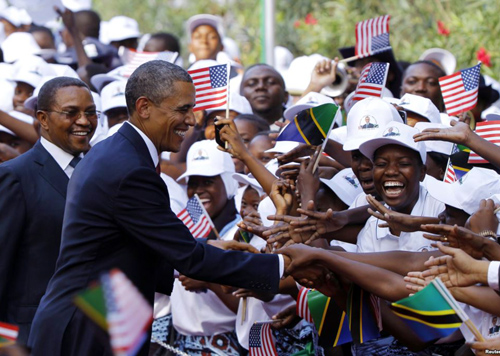
obamatanzaniaAmerican presidents one-upping each other is hardly news at home, but this time round it really is news for Africa. George Bush is personally credited with $15 billion for Africa, now Obama with $16 billion.

This year the Obama Administration requested a total of $7.5 billion for USAid to Africa. Twenty percent of that is for Egypt, with the remaining 43 beneficiary countries receiving $5 billion.

Nigeria is in second place, no surprise. If the country can ever solve its ethnic problems its massive oil reserves will make it literally one of the most important countries in the world.
2013USAidtoAfrica
But what is surprising is third place, Tanzania.

Obama just completed an Africa trip where the signature speeches, most dramatic announcements and largest contingent of Americans traveling with him (800) were in Tanzania. Why Tanzania?

Tanzania’s human rights ranking is terrible. Just before Obama arrived, an opposition rally in Arusha was brutally crushed by police. A month before Obama arrived the Tanzanian government announced wholesale movements of Maasai from their native lands to increase a hunting reserve for Arab princes.

And there’s been scandal after scandal, many centering on the country’s 15-year inability to make money from the discovery of the world’s second largest gold reserve.

Compared to neighboring Kenya, Tanzania is a banana republic with no clear optimistic future.

Why Tanzania?

There are two reasons. The first is because Obama’s predecessor, George Bush, doled out a huge amount of his $15 billion AIDs initiative in Africa to Tanzania. Why Tanzania? Because Kenya wouldn’t have him and South Africa didn’t really want him, either. In fact, because most of Africa did not want to be associated with George Bush.

The Bush Administration alienated most of the world with its invasion of Iraq, Africa included. Its foreign policy was hurtful to emerging countries in virtually all areas, from conservation to economics.

And its missteps were many and severe in Africa. Perhaps the most notable for this discussion was when George Bush became the only leader in the world to congratulate Mwai Kibaki on becoming elected president in 2007. Which he hadn’t been, which was why no other world leader offered the congratulations.

But those congratulations Kibaki immediately published on Kenyan media to consolidate his illegitimate claim to power, and that led to the terrible violence of 2007/2008.

So by process of default, Bush went to Tanzania. Obama has to one-up him. Bush’s $15 billion was for AIDS aid. Obama’s $16 billion is for electrification.

There’s a second reason.

Drones have assassinated no fewer than a dozen terrorists while they were living in Kenya and Tanzania. Kenya doth protest. Tanzania doesn’t.

Aid is a tricky game. I have a sense that Obama has mastered it far better than Bush did, but he’s shackled by his militarism and obsession with killing terrorists, and influenced by not letting his predecessor shine more brightly.

Aid is a tricky game. Morality isn’t. I don’t know how long it will take for America to sync itself into a truly moral stance after our generations of warring, but it doesn’t look like it will be soon.