Making Holiday Lists

Making Holiday Lists

BloodDiamondsAs the holidays approach, consider carefully what your gifts may be financing.

A controversial meeting ended today in Johannesburg ostensibly to curb the market in blood diamonds, but there is little evidence it’s working.

The “Kimberly Process Certificate Scheme” (KPCS) was set up about a decade a go by a number of countries deeply involved in the diamond trade as a response to growing public awareness that diamonds were being used to fund horrible wars and human rights’ abuses.

Much of this was popularized by the famous movie, “Blood Diamond“ which starred Leonardo DiCaprio and depicted the civil wars in west Africa that were the motivation to create the KPCS.

The convention was partially successful in the beginning and seems to actually have stemmed the trade of blood diamonds that were financing the Sierra Leone and Liberian civil wars. When those ended just before the movie was released, more than 81 countries with mining or marketing interests in diamonds had joined the KPCS.

Essentially the convention manages certification of all exported diamonds. If a dealer sells gems that don’t have the certification, it’s presumed they could be blood diamonds.

There is no country legislation or treaty enforcement; this is an entirely voluntary process, but in the beginning it seemed to be working.

Diamond sellers, particularly wholesalers, became quite sensitive to having the proper KPCS certificates.

But as the great West African wars ended that prompted the formation of the organization, so did enthusiasm for its job.

But the use of blood diamonds did not end.

Just as with ivory, coltan and other precious materials, the nexus of the illicit diamond trade has moved into central Africa, in the DRC-Congo and CAR.

But either dealers were being disingenuous or simply were too ignorant to have realized that these new areas of conflict were serious areas for black market diamonds. Whichever it was, fewer dealers are today interested in certification.

And there were other situations in Africa that KCPS should have outed besides wars. Political maneuvering between South Africa and Zimbabwe resulted in Zimbabwean diamond dealers getting certification, even when it had been proved they were using child labor.

This year’s South African chair politely referred to the internal controversies by remarking about the pressure the industry has been under since the Great Global Recession.

A coalition of civil groups proved unsuccessful as the convention closed today in trying to make mandatory what remains of the voluntary KPCS certification. Shamiso Mtisi described the convention as moving “very slowly” on such long-time proposals as certifying not only sellers but miners as well.

A variety of other groups had difficulty even being heard. Accusations were levied at Venezuela and Lebanon that those governments were turning a blind eye to blood diamond trade, but the convention did nothing in response to these charges.

And surprise, the new chair of the convention is Chinese. They’ve done such a great job in stemming the ivory trade, which after the earlier West Africa wars succeeded the blood diamond industry as the principle financier for illicit African conflicts.

Blood diamonds seem to be on the comeback, and not because there are fewer conflicts in this post Recession world, but because there are fewer regulators of the capitalist system.

A Flowering Relationship

A Flowering Relationship

ProteaMeetRoseLast week America’s Marriott announced it was acquiring South Africa’s Protea, a fireworks signal of how tourism is changing in Africa: Fewer groups, fewer inclusive guided trips for individuals, and much more opportunity for the independent traveler.

It’s no surprise and continues the long-term trend powered by the internet that brings consumers closer to their travel product, slowly but surely reducing the use of a travel agent.

It further reflects the shortening span of a vacation in America, and the near hysterical price competition Americans bring onto the world market. Marriot will become the largest single hotel player on the continent, a revered market position that will be able to control price with manipulations of capacity.

Protea Hotels in its current form began in 1984. In those days, still deeply shackled by apartheid, South Africa’s hospitality market to survive had to develop a home-grown component rather than strictly relying on foreign visitors.

The growth of foreign visitors to South Africa in the 1980s was inhibited by apartheid, not just by the policy which many travelers found distasteful, but by a growing number of sanctions which, for example, excluded South African Airways from easily refueling anywhere on the continent.

Ronald Regan’s sanctions on much of South Africa’s businesses extended to its hotel and hospitality industry as well.

Protea was a creative solution. In the beginning it marketed strictly to South Africans. The famous and then ingenious Protea Hotel Pass, which would later be adopted and expanded in such places as New Zealand, allowed frugal travelers to buy a certain number of nights, then use them anywhere throughout the chain.

South Africa had a vibrant internal domestic tourism, as well as considerable business travel especially between the main cities of Cape Town, Johannesburg and Durban. The Protea chain exploited what was then the South African business culture: hell with the rest of the world, we can go it alone.

And they did it quite well. The hotels were simple but much more attractive and comfortable than a comparable American motel chain like Holiday Inn at the time. The rooms were more colorful, more completely furnished, more individualized, but smaller and more compact than a traditional hotel’s.

Restaurants and bars were functional and well priced but served much more fresh food, for example, than an American motel restaurant. All told, it was a very pleasant, warm and inviting environment.

Most importantly, though, was Protea’s direct marketing. Even back in the 80s, when practically every tour and hospitality vendor gave handsome commissions to travel agents and tour operators, Protea was stingy. Its business plan didn’t allow for a large margin, so it was clear the hotel had to hook the customer directly.

That isn’t to say it didn’t partner with other components of the industry, like at the time large local tour operators such as Springbok Atlas, but it did so with hesitation.

When EWT was a very large wholesaler in the 1980s, sending several thousands of Americans annually into Africa, and when I had a personal office in Johannesburg preparing for the end of apartheid, one of my main tasks was to find a South African hotel partner.

Protea just wasn’t interested. Or I should say more honestly, not interested in serious commissions. At first I felt we were positioning ourselves incorrectly, but then I learned from my colleagues that it was the same across the board.

It seemed very strange at the time: And it was a bad idea for the eighties and nineties and was probably the reason the company’s growth stalled with the end of apartheid.

But the business model that relied nearly exclusively on cutting out the middle man is now the way of the world, and whether Protea was prescient or just enjoyed a lot of dumb luck really doesn’t matter, anymore.

Protea succeeded. In some ways you can argue that Protea anticipated the internet.

When apartheid ended Protea snuck into neighboring countries. It never blossomed anywhere outside South Africa, and I think that’s because direct consumer transactions in places like East Africa simply didn’t exist until recently.

So in places like Nairobi, Arusha and Dar-es-Salaam Protea staked its fortune on South Africans traveling there, and that was never a large enough market for sustained growth. Nevertheless, Protea has stayed in East Africa, and the new endorsement by Marriott is a certain affirmation that both companies believe that even in these less developed parts of Africa, direct consumer sales are coming.

Most hotel bookings, today in America, are done directly by the consumer, and so in that sense Marriott isn’t changing its game plan. But the earthquake statement Marriott is making is that American consumers are now ready to use that style when traveling to Africa. Anywhere in Africa.

And there’s no better quick way to reap that market than acquire Protea. They’ve been doing it for years.

The War by Climate

The War by Climate

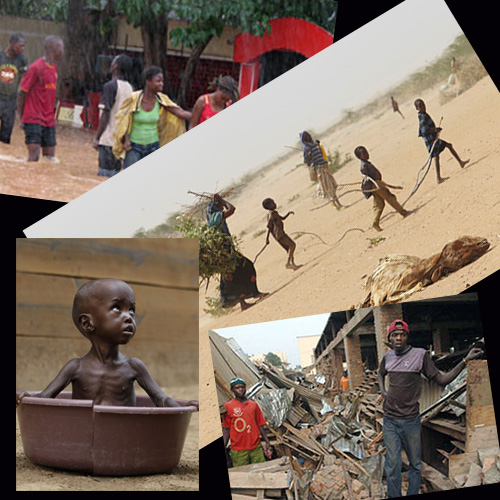
climatecalamityThe season is changing all around the world. Unusually heavy rains are pounding sub-Saharan Africa. It snowed early at my home near the Mississippi River. Typhoon Haiyan may be the world’s biggest storm. Is Africa, or any of the developing world, ready for climate change?

NOAA estimates Hurricane Sandy’s final economic destruction approached $65 billion. Originally, Bloomberg estimated it at $20 billion.

Today Bloomberg estimates that Typhoon Haiyan will destroy 5% of the Philippine annual economy, which if adjusted to America’s economy would represent more than a half trillion dollars. If Bloomberg’s current estimate is as low as it was for Sandy, the representative destruction to America by a similar situation would approach a trillion dollars.

It’s a simplistic comparison, I know. Half of Sandy’s destruction was insured; less than 10% of Haiyan’s destruction is insured. Virtually none of sub-Saharan African destruction outside South Africa is insured.

And climate destruction in the developing world is far more devastating because there is so little preparatory relief, so much difficulty in rebuilding much less just clearing the debris.

November is when the monsoon changes in sub-Saharan Africa. The change ends a long dry season, not so completely different from spring in the northern hemisphere ending the relatively dry winter.

Every year we waited with utmost impatience for the rains in November. We were ready to plant our gardens, the endless heat which grew steadily was tedious, and I remember sitting on a small boulder behind my house looking up hopefully at the sky.

The first rain was usually a good, hard rain. There was immediate change. Temperatures dropped, as did tempers. The dust was cleared from the air. We had to close the doors to keep the snakes out, and literally overnight new grass grew.

But it’s much different, today. The “good hard rain” is now a torrent.

Robin Pope Safaris in Zambia reported yesterday that Zambia’s Luangwa National park “received an inch in just over an hour – a lot of water created a lot of mud!”

In Rwanda, unnaturally high winds combined with excessive rain Friday destroyed 120 homes.

An area that normally gets very little rain all year long in northern Kenya was so flooded over the weekend, relief efforts are stalled.

And in another desert area of Somali, 100 were killed by rain and wind over the weekend by a freak cyclone that made it up the Red Sea.

Any one of these stories would be unnaturally big news ten years ago. Now, it’s just one of dozens if not hundreds of news reports of climate calamity. Nothing is “freak” anymore.

It snowed at my home, yesterday. This is two weeks earlier than normal. No big deal, right? The temperature was 13F when I walked the dog at dawn. The normal low is 31F. Nothing to worry about, right?

Maybe not in northeast Illinois. Maybe not even in New York City right now with its elaborate weather disaster plans and remarkable disaster insurance.

Not quite the same for the guy who would like to get his millet planted in Somalia, or the young businesswoman in Tacloban. Or for the child trying to go to school in Mfuwe.

There are other ways to dominate your adversaries than by war.

Veterans Day

Veterans Day

VeteransDAyToday is an American holiday. Banks and other federal agencies are closed and most American school children are also staying home. It’s known as “Veterans Day.”

First declared by President Woodrow Wilson after the end of World War I and later codified by The Congress, it’s a holiday in America that evokes many different emotions from different groups of people.

During my life time, which began just after the end of World War II, America has fought far too many wars. And when someone like myself becomes critical, it’s an intellectual challenge to praise the soldiers who carried them out.

Immediately on the other hand, however, foreigners should realize how radically different our armies are today than when I was a boy.

Today America’s fighting forces are entirely voluntary (with the subtle distinction that “reserve” soldiers, those who have technically retired or enrolled mostly as home guards are now being routinely called upon as active troops).

This differs radically from when I was young, when the bulk of the armies were conscripted from young men. It was a mandated responsibility for young men approaching their third decade to be prepared to serve in the military if called.

The transition to an all-volunteer force was accomplished fairly easily by raising soldier pay and benefits. As America became more of a war fighting country, the rich also become more powerful, the poor parts of society enlarged, and for much of this time unemployment remained high.

Joining one of America’s armies not only provided reasonable and regular pay, but gave the recruit enormous valuable training in all sorts of skills, and at least until recently, when released from even the shortest contracts also provided excellent extended benefits, such as healthcare and higher educational subsidies.

Much of America’s armies, like ancient Rome’s and Persia’s, are opportunities for the oppressed and downtrodden to break out of an endless cycle of hopelessness. It’s therefore hard to criticize these young people for joining the American military.

So today there are many of us reluctant to celebrate anything that has to do with America’s wars. Yet we can’t ignore the life stories of those that have become conflated with them.

Charging Up

Charging Up

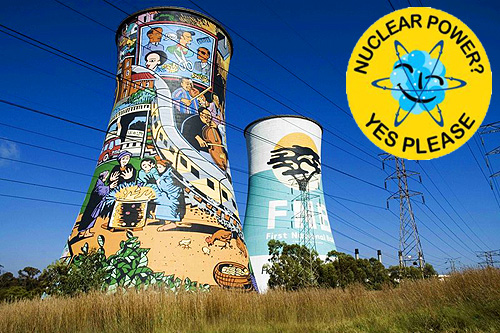
AfNukePowerWorried about Iran’s nuclear power plants? How about Nigeria’s?

I think America’s frantic concern of Iran’s nuclear capability is linked to two irrational fears: that Israel is threatened by Iran and to the even more irrational fear of nuclear power itself.

Let’s calm down and take a look at the African experience, and maybe begin to see modern nuclear power as ordinary and necessary.

Large uranium deposits in Namibia, Niger, Malawi and most recently Tanzania are attracting good amounts of foreign investment ever since raw uranium surged in price to more than $100/pound several years ago.

(Canada is the world’s main source of raw uranium with Australia a close second. But the four countries in Africa exceed both Canada and separately, Australia.)

But today’s market for uranium, the use by nuclear power plants, is concentrated in places like America and France. And yesterday uranium’s spot price fell below $35/pound.

As an index as to how Americans and others in the developed world feel about nuclear power, the uranium spot market is excellent. The fact it sits at about a third of what it once was is a clear statement that there is only a third as much support for nuclear power today as only five years ago.

Until Three Mile Island, Chernobyl and Fukishima there was only minor although very vocal resistance to nuclear power reactors.

But each one of these events garnered more public antipathy to the idea, and for some anti-nuclear activists, Fukishima was the nail in the coffin for further nuclear energy development in the west.

Personally, I think this is terribly short-sighted. When time allows us to quantify the human and economic damage of those three major accidents compared with the same for the extraordinary emissions of coal-fueled power plants, I doubt there will be much of a contest.

But meanwhile, “.. almost all [African uranium mining] projects have been on hold since the collapse in prices that followed Japan’s Fukushima nuclear power plant disaster.”

African officials remain optimistic. One South African called nuclear power “inevitable” this week in an on-going dialogue within Africa that riases this whole topic onto a completely new level: perhaps Africa should use the uranium for itself. Like Iran.

South Africa has had nuclear power since probably the 1980s, and four new nuclear power plants are planned to go online by 2020 or so, with additional plants under study.

Note that South Africa remains a leader in new coal technology, and that there is a vocal minority among South African leaders against nuclear power.

There’s lots of coal in South Africa and throughout the whole of the continent. Right now almost 90% of South Africa’s power comes from coal, but even post-Fukishima there’s a growing sensitivity to carbon emissions, and more importantly, just the long-term costs.

Minister of Public Enterprises Malusi Gigaba told a group in Cape Town this year that the South African government believes that the cost of nuclear electrical power eventually “evens itself out” especially when set against carbon emission savings.

I think what we have to learn from South Africa in particular is that the fear of nuclear power is very introspective, and that when more properly considered in the framework of a greater society, there really is no alternative.

South Africa is head and shoulders in development above the rest of Africa, but it is still Africa. Its public needs are far more desperate than in the developed world. That mix of development with desperation for minimum standards is exactly the right social culture in which to best weigh the good and bad of nuclear power development.

Africans throughout the continent are realizing this. And since they sit on most of the raw material needed for this power it’s not irrational to imagine a world a century from now where the center of global power, literally and figuratively, is in Africa.

A century is a long time. But Africans are already anticipating the day. The best, most completely and sometimes most daunting detail of how the world thinks about nuclear power is compiled and published in Cape Town.

So while the developed world, which is comfortable enough to believe its myths and run from its fears and still have a good meal and nice bed to go to sleep on every night may criticize nuclear energy, the developed world is moving right along.

And if America or China or Britain don’t want Niger’s uranium, well gosh, maybe Niger will just use it itself.

Although it has not yet moved beyond grand announcement, Nigeria of all countries says that Russia is ready to build a nuclear power plant there.

Wednesday’s UN General Assembly’s press release hailed the development of more than 400 new nuclear power plants scheduled to go on-line this decade.

Nor is it surprising that four of the world’s leading scientists on climate change would mount a huge PR campaign this week to promote nuclear power.

Africa is already over Fukishima. The disaster there pales in comparison to the disaster that might just be ending after 53 years in The Congo.

I see the current dip in uranium prices an opportunity for all sorts of good investing. Let’s just hope the developed world gets some of it.

Ban East African Hunting

Ban East African Hunting

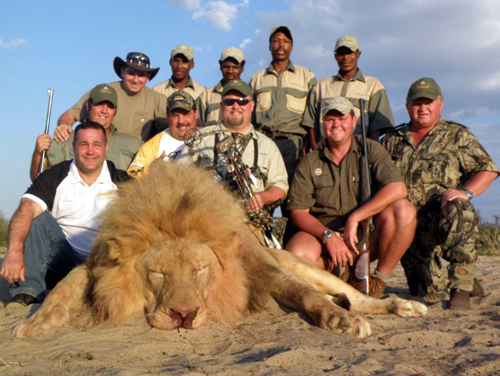
LionHuntSports hunting has long been characterized as a conservation tool. That is absolutely not the case in East Africa, where all trophy hunting should be outlawed.

Kenya banned all hunting in 1977, then later allowed some bird hunting. But the other nations of East Africa promote sports hunting.

This article shows why sports hunting throughout all of East Africa should be banned. I think it likely with time the ban should extend throughout all of sub-Saharan Africa.

Botswana recently banned hunting, and Zambia recently banned the hunting of cats. I think it inevitable even the big hunter destination of South Africa will finally also ban trophy hunting.

But right now the evidence is so compelling to end hunting in East Africa, that’s where this article focuses.

The power of the sports hunting industry and the gun manufacturing industry cannot be overstated as we approach this debate. Sports hunting, even big game hunting in Africa, is far less contentious than gun control in the United States, for example. But the industries and lobby of wealth organized to promote gun ownership has virtually fused itself with the issue of sports hunting.

Americans constitute the largest single group trophy hunting in Africa. So American institutions, money and lobbying are integral to this African debate. “Americans are by far the most keen to spend around $60,000 on trophy hunts in Africa,” writes Felicity Carus recently in London’s Guardian.

The balance of American money and power supporting hunting is woefully unfair, and it isn’t just the NRA. Sportsmen’s Alliance and the National Shooting Sports Foundation are both funded by multiple large foundations whose donors are kept secret. Journalists shy away from reporting negatively about these monoliths and politicians give them a wide bay.

My intention, here, is not to take on sports hunting per se, nor gun ownership. The issue of big game hunting in Africa specifically has reached a uniquely critical threshold. In Africa – right now – big game hunting is a threat to conservation and rural development.

I fervently believe there are philosophical and ethical arguments against many types of sports hunting. But that is actually secondary to the more compelling reasons today in Africa that big game hunting should be ended.

The main reason big game hunting should be immediately ended throughout almost all of Africa is corruption and bad policy. The same reasons that conservatives use to deplore even humanitarian aid to emerging nations is grossly evident in Africa’s management of sports hunting, today.

We’re reaching a critical point in Africa’s wildness. It’s a tipping point. The growth of African societies is exceptional, and basically good. Bigger human populations are developing at breakneck speed. It’s hard for an American to imagine how fast, for example, Kenya is developing.

Many of my clients are repeat visitors to Africa. It’s amazing to watch their jaws drop when they return after even as few as five years. Highways, factories, residential developments .. it’s an unending serious of hopeful and modern progress.

And at what cost? At the cost of the wild, of course. That’s not a surprise and it’s not new. But it is changing.

Only a decade or two ago, safari tourism was critical to the economic health of Kenya, vying with the production of coffee and tea for the top spot on Kenya’s GDP. Today, tourism overall in Kenya represents only 5.7% of GDP (2011) and arguably half that is non-animal, beach tourism.

And while it’s likely Kenya’s tourism is falling behind other sectors of its economy because of recent terrorist acts, neighboring and quite peaceful Tanzania’s trends are even more exaggerate.

Tourism as a part of the Tanzanian economy is expected to drop to 7.9 per cent by 2020 from 8 per cent recorded in 2010. Like Kenya, by the way, it is likely that the single biggest growth within tourism in Tanzania is the beach, not animals.

This emphatically doesn’t mean that safari tourism isn’t growing. What it means actually is that so many other sectors of the economy, like oil production, are growing much more rapidly.

Oil is more important than lions. It wasn’t in Teddy Roosevelt’s day.

So the threat to the wild is severe in Africa. While the U.S. continues to debate whether the keystone pipeline should be laid over our wild lands, there’s not a moment’s hesitation about a new dam project cutting a chunk out of Africa’s largest wildlife park or slicing away protected marine environments for deep-sea drilling.

It is not surprising, then, that in most of the protected wildlife reserves in Africa, animal populations are falling, often because those reserves are either being reduced in size or because the pressures on their periphery are growing so great.

Sports hunting in Teddy Roosevelt’s day hardly disturbed the ecosystem. The technology of guns was far more limited than today. Animals in rural areas at home and in Africa were truly pests, because there were so many. Most sportsmen (including TR) killed very much for the meat that was essential food for them.

But as societies developed, as Africa is developing today, hunting too quickly began to deplete animal numbers (bison, pigeons, wolves, etc.). Wild environments were protected, and most hunting banned within them. And where it isn’t completed banned, it’s heavily regulated.

The reason is terribly simple: there’s little contest between a hunter and a wild animal, and over time, wild animals lose the number’s game.

Africa has proved itself incapable of banning or regulating. Well managed (regulated) hunting is often considered a buffer against poaching, and so it was in Africa thirty years ago. The outskirts of protected areas were declared hunting preserves, and the symbiotic relationship with the protected area was a healthy one.

Along or within some protected areas in Africa hunting was used as the culling tool, as wildlife managers tried to establish a carrying capacity balance within an areas biodiversity. Hunters paid royally to kill “excess elephants” that lived at least part of their time in Kruger National Park in South Africa, for instance.

All of this worked, once. It doesn’t, now.

“Presently… the conservation role of hunting is limited by a series of problems,” according to two African and one French conservationists writing the definitive scientific paper against hunting published in Elsevier six years ago.

After meticulously detailing all the potential good that sports hunting in Africa could do, the authors take a fraction of the article to document how it sports hunting in Africa fails because of government mismanagement and corruption.

The list of corruptible acts linked to sports hunting in Africa would take a month of blogs to document. Whether it’s Loliondo in Tanzania, where land has been arbitrarily taken from both the Serengeti and Maasai farmers for Arab hunting, or ranches in South Africa recently unmasked as poaching rhinos, the list seems endless.

There are so many pressures on Africa’s wild, today, that it is nonsense to continue to allow a contentious one, sports hunting. The trophy hunting industry is tiny, in monetary terms, compared to overall tourism.

Its effect as explained in the Elsevier article is negative. So why continue it? Just so people can get a rush killing an animal? What other reason remains?

We are fighting the dam in The Selous, uranium and gold mining in the Serengeti, off-shore drilling in Lamu and highways through Nairobi National Park. There is absolutely little reason we shouldn’t also be fighting sports hunting, which provides even less benefit to Africa or its wilderness than mining natural resources or moving morning rush hours.

The time for Africa trophy hunting is over.

(Tomorrow, I discuss a very specific sports hunting issue that is now Africa’s hottest wildlife topic: should hunting lions be ended by listing them as an endangered species.

Stay tuned.)

HUNTING

HUNTING

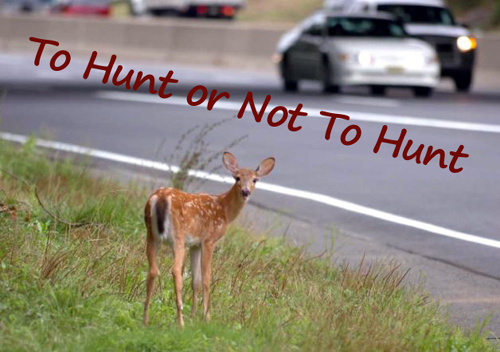
HuntOrNot“This is the first in a series of articles aimed at showing how wealthy American hunters are a force for evil in the third world.”

Those are not my words. They were published recently by two of the most respected South African conservationists alive today, Bev Pervan and Chris Mercer.

Big game hunting as a useful conservation tool in Africa, in my opinion, has run its course. In my 40-year career I have mostly defended hunting though never hunted myself, but I’ve changed my mind. Its use as a conservation tool is no longer viable.

To many people, probably to the majority of people, hunting worldwide from everything as tiny as pygmy ducks to Africa’s elephants is considered a sport, and a rightful one at that. I suppose the genesis if not historically at least of the idea is that vermin threatened home and livestock, ranchers shot vermin to protect themselves and skill cured by professionalism became sport.

I just finished again reading my first edition copy of TR’s “African Game Trails.” I read it for the between-the-lines insight to the man and the times, because the tome is literally otherwise nothing but a journal of what big game animal he killed where and how.

But so much has changed since Teddy’s time, and in fact, so much has changed just during my own life time, that I think we need to rethink hunting altogether.

First, the manhood and physical fitness of the accomplished sportsman in day’s past has been replaced by rich, fat-bellied voyeurs. No one goes to Africa – indeed, no one goes out to the Wisconsin woods – to hunt to prove their manhood or physical stateliness.

Manhood is reached today by mastering the IRS website, not by tuning your Chevy’s carburetor.

Physical fitness is available at every corner gym, the increased running trails and sports centers and by such simple things as watching your diet.

The skill of a good sportsman comes not from being able to down a ten-pointer at 200 yards but from navigating Class V rapids or scaling Mt. Kilimanjaro. The technology has advanced so ridiculously since TR’s times, that “shooting” is little more than telling Siri to kill it.

I fully expect a barrage of hunters to protest otherwise. And to be sure, the tracking aspect of hunting remains a wilderness skill that takes concentration to learn and time to master. But the ultimate killing of the animal today is little more than abject waste.

It’s why, guys, we do catch-and-release. Try that with a lion.

And where Ducks Unlimited was once a champion for conservation, it and other organizations like it are no more.

The non-hunting so-called “conservation programs” by organizations like Ducks Unlimited today are too little, too late, meager attempts at white-washing.

It didn’t use to be like that, here or in Africa.

But it is, now, and my next several blogs will examine these issues about hunting more carefully. And by refusing to confront these issues, we endanger not just “sport hunting” but the wild in whole:

“Lions have become alternative livestock,” Mercer writes. “Trophy hunters and useless … conservationists have allowed the ‘wild’ to be taken out of our wildlife.”

Stay tuned.

My Brother’s Slave

My Brother’s Slave

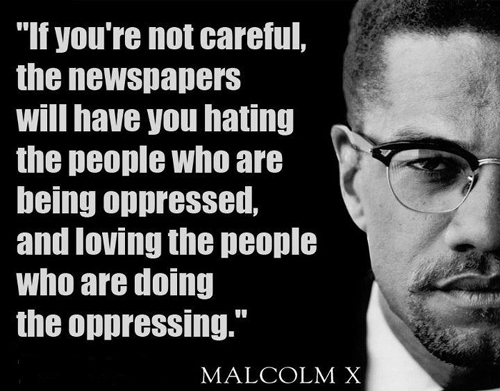
malcolm-newspapersAfricans mostly blame Republicans but more so blame America’s political system for the catastrophe that could have destroyed them last night.

Of all Africa’s 54 countries, South Africa has the largest economy, and it’s roughly one-twenty-fifth the size of the United States economy. After South Africa comes Nigeria and Egypt. Together those three economies are roughly ten times larger than the combined economies of the remaining 51 countries.

For further example of the importance of scale and how disastrous the debt ceiling catastrophe could have been to Africa, consider East Africa (Kenya, Tanzania, Uganda, Ethiopia, Rwanda and Burundi).

The largest of these economies is Kenya. Its economy is roughly equivalent to the economy of the greater St. Louis metropolitan area, roughly one-two-hundredth the size of America’s economy.

Why does this matter?

Because despite the wide variation of political systems that govern the various African economies, they are all totally and mercilessly dependent upon the dollar.

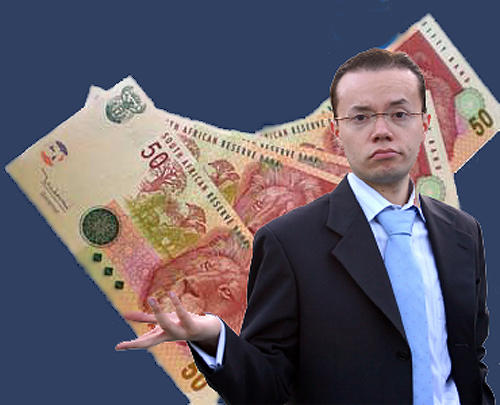
The value of South Africa’s currency, the Rand, leaped and plummeted in near lock-step with the U.S. stock market, valuing the potential of a deal. When it was finally reached late last night, the Rand increased to its highest level in months.

Most of the world’s gold and diamonds come from southern Africa, and their belly fundamentals are slowly becoming linked to the Rand. In one fell swoop last night, when Obama signed the law to reopen the government and raise the debt ceiling, South Africa’s GNP projections rose by nearly 3%.

A South African considering a vacation to Disneyland could now possibly afford it, where as Tuesday, it was out of the question.

For the much smaller economies like Kenya the catastrophe could have been apocalyptic. The undeniable sudden end of AID and other financial instruments that keep these emerging countries operating day to day, would be switched off.

No petrol for cars. No food for the slums. No spare parts for the hydroelectric damns that produce the country’s electricity. And no extraordinary measures to be sure of the less clear but well known security to contain terrorism, like al-Shabaab.

It was no small deal for Africa. To say those countries’ businessmen and financial leaders had stopped breathing waiting for Obama’s signature is no exaggeration.

“But, the political deal reached on Wednesday does little to set the world right again,” wrote a South African analyst this morning. “Too little, too late. Once again, the symptoms have been addressed, rather than the problem.”

Africans don’t understand this, either:
“Numerous polls show Republicans have taken a hit in public opinion. A Rasmussen poll on Wednesday showed that if congressional elections were held today, 78 percent of Americans would like to see the entire Congress thrown out and replaced.”

That was a widely published report from Africa by Reuters. It’s confusing because in most of the world democracy is run by Parliamentarian systems, and mechanisms would already be functioning for an immediate new election, and we could, in fact, throw all the bums out right away.

But not in America.

“The vote was weird.”

“Drama queens the lot of them.”

“It appears this whole shutdown was so that Cruz could get some votes in his home state.”

“62 percent of House Republicans oppose deal: Bolded bit for those who think both parties are the same.”

The above from an active chat site in South Africa.

“Talk about leaving it on the late side,” wrote South Africa’s FSP Invest’s principal editorial today.

Last week Warren Jeffrey of FSP Invest wrote, “America’s playing chicken with your money…”

Now I know there are a lot of Americans who could care less that distant African nations will really be the ones to feel the tumult of our actions before we do ourselves.

There’s this widespread selfishness in America that what we got we deserve, and what they got is because they did something wrong.

Despite that being ridiculous, it doesn’t even matter if it were true. America for no other reason than its size and success has a responsibility to the rest of the planet, to the universe in which it finds itself king.

Fate or hard work, it doesn’t matter. The world depends upon us. Just as the poor sop on Wabash Avenue out of work for 9 months depends upon us all. DEPENDS UPON is a concept most of the world gets and lots of Americans don’t.

Charity begins at home. And if we just get that one right, we’ll automatically be extending charity to the rest of the world.

A little compassion, eh?

Best Time To See The Falls

Best Time To See The Falls

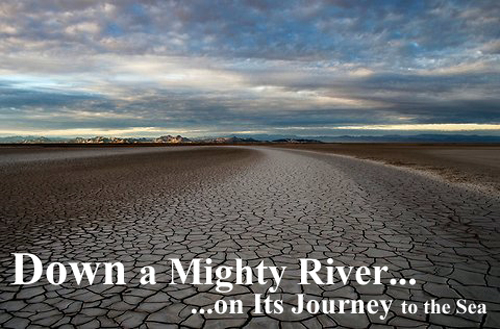
colorado riverThe photo above of the Colorado “river” as it meets the ocean is being used by African environmentalists to stop Botswana from its planned new take of Zambezi water for irrigation.

The Zambezi forms on the border between Namibia and Botswana, where a number of other large rivers like the Chobe and Kwando converge. These rivers are formed in the mountains of Angola after seasonal rains at the end of the year.

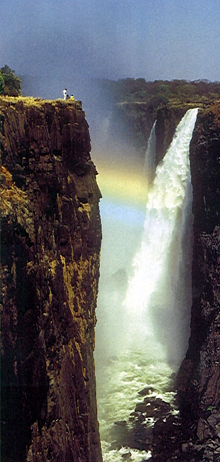
Geographically odd, the mountains of Angola are the continental divide for this part of Africa, meaning essentially that the western portion of the divide is hardly more than a quarter the width of the eastern portion. Which means that most water and all major rivers flow eastwards across a large section of Africa into the Indian Ocean.devils.vicfalls

Such is the Zambezi River, which after forming and leaving Namibia and Botswana, runs past Zimbabwe, Zambia, Malawi and finally, Mozambique.

And I’m sure you’ve heard of Victoria Falls, which is only 60k east of Botswana on the border between Zimbabwe and Zambia, where the then magnificent Zambezi tumbles over a mile-wide cataract forming one of the wonders of the world.

It’s a rather important tourist attraction.

Now Botswana has announced to the other countries downriver that it plans to extract a sizable amount of the Zambezi mostly for new irrigation projects.

Food, that is.

Which is exactly a part of the explanation for the Colorado running dry.

Now contrary to enthusiastic tourists who believe they can get up and go at any time to see Victoria Falls, that’s not the case. The Zambezi is an incredibly seasonal river. It never stops flowing, but its flow changes radically with the season.

In November, December and January, an extremely popular time for travel, as the waters are only just forming after the Angola rains, the flow is so small that people who view the falls then see mostly rock.

And by March when the flow is in full swing, the falls are so massive you can see hardly anything but mist.

The best time for viewing the falls is February, June, July and depending upon the water, August. That’s when the photographs were taken that first inspired you to view them.

And the eradicate flow of the Zambezi was so destruction to agriculture downriver from the falls, that years ago the massive Kariba Dam was built. Not only does it control about half the Zambezi’s length (from the middle of the continent to Indian Ocean) but it provides enormous electricity for the area.

So Botswana’s move, Botswana says, is not so radical after all.

But the Zimbabwean Minister of Water Resources Development and Management, Samuel Sipepa-Nkomo, is not so sure. He thinks the idea would be a “great threat” to downstream Zambezi communities. (Likely as great a threat as the current Zimbabwe government is to those communities.)

But try as it might have, the Zimbabwe government has been unable to effect the flow of Victoria Falls. This project will.

There would also be a benefit, if this extraction were accompanied by the building of a dam, which is also being suggested. The area is in dire need of more electricity.

It’s important to note this was long in coming. A Dartmouth University study predicted the impending conflict in 1998.

That study recommended that not just in Africa but everywhere that water is precious (like the Colorado) it should be proportionately paid for. In other words, if there are a 1000 cubic meters on average running through a checkpoint, then if projected use would take 10% of that, that government should pay 10% of what the water was valued.

I kind of doubt that will happen. It didn’t happen with the Colorado, where an elaborate inter-government agency lead by the EPA determines appropriate water use for the States.

A united Africa could also create such endeavors. But …

Meanwhile stay tuned for the altered best times to see the falls.

Hedgefunds Hurting

Hedgefunds Hurting

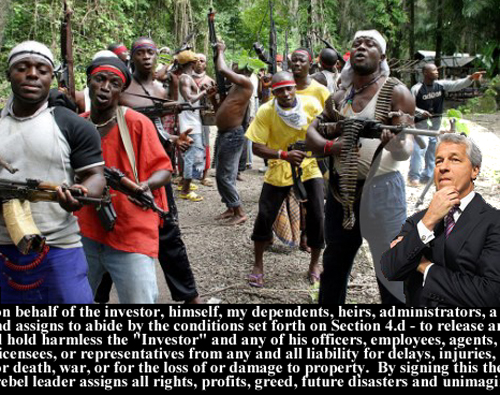
investmentOK, here’s the deal. Invest a thousand dollars to extract minerals from Africa, today, and your return will be $150,000 … after the rebels win the civil war.

Kilimanjaro Capital is a Belize-based company, with a Canadian website, and European capital listed on some Danish and other northern European exchanges. The CEO, Zulfikar Rashid, was born in Uganda and believes the best way to make money in Africa is to bet on civil wars.

I remember once trying to get into the business center at the Norfolk Hotel in Nairobi, before we were all drowned in wifi, and became a part of a congested line of anxious and poorly dressed white businessmen who were courting the then president of Somalia.

There have been many presidents of Somalia, until the recent spat of stability brought on by the Kenyan invasion last year. This was probably ten years ago.

The poorly dressed white businessmen had contracts coming out of their wazoo, busting briefcases and literally shoving one another to get this mercurial and previously unknown individual to sign his name on a contract for various and many mineral rights.

I’m sure in turn he was paid something on the spot, because I also picked up a few loose Euros at my feet in the line to the photocopier.

I got only a fleeting look at Abdul. He seemed a very thin if frail individual with very large black eyes and a scraggly, narrow black beard. He was dressed in native Somalia, all white robes with a white turban, and was dwarfed by two handlers, or body guards, who looked southern Italian and overfed.

As our line into the business center seemed to stop while one poorly dressed white businessman seemed to be copying the last ten Somalia constitutions, I started a conversation with the pretty rotund slightly dressed poor white businessman in front me.

He was a jolly Scotsman. Just flew in from Heathrow when he heard Abdul was going to be in town. He wanted the fishing rights just off the coast from Kismayo that were currently being pirated by French fishermen.

At the time Kismayo was the capital of world pirates. But this jolly dressed, poor white red-faced Scott was beaming. He wouldn’t tell me how much those rights would cost. Nor did he express sufficient confidence from my point of view that he would be able to fish in the sea dominated by professional pirates. But for some reason, it didn’t seem to matter.

Kilimanjaro Capital, though, is the first of such venture renegades that has achieved such respectability. And its still rather small portfolio is quite diversified, including some normal mineral rights claims even in North America.

But its success depends upon rebels, which are mostly today terrorists, taking control of African land rich with minerals but poor with organized society. Like Kivu province in the eastern DRC, or Biafra in Nigeria, or southern Cameroon.

These are all areas which have seen conflict for more than a half century. The mineral rights are critical to funding the rebel movements.

One of the biggest accomplishments of the Obama Administration from my point of view was a provision in the Dodd-Frank Act that made illegal such dealings with American interests.

It’s probably why Kilimanjaro Capital is located in Belize, has a website in Canada, is listed on a Danish exchange and is run by an Ugandan. I don’t think Dodd-Frank extends quite that far.

Betting on misery is, of course, nothing new. The Great Recession was caused by many such components. But more germane to the moment, I think that Director Rashid is doomed to fail, because rebel movements … well, they just aren’t doing too well lately.

Terrorism, yes. But actual regime changes or national secessions … no. And a contract with Osama probably wouldn’t work.

So let’s just marvel at how amoral, greedy and maybe just crazy part of the investment world is. And let’s just hope that there’s more and more Dodd-Frank worldwide to keep these renegades from spreading.

I’ve got a much better lead on a penny stock, anyway.

No Big Deal … Yet

No Big Deal … Yet

no big dealWhat Africans realize better than Americans is that for the last several years America has had to be run almost like an African dictatorship, as Congress closed itself down.

As a result, most of Africa shrugged off the U.S. government slowdown, today, not considering it very important to world affairs or economies. Still trusting in President Obama.

African newspapers and blogs were replete with excellent reporting filed mostly by Reuters and Agence France Presse. Both services specified all the areas where the slowdown will apply, and very little seems to impact Africa or abroad.

For example, a major concern was the processing of U.S. visas, and that will not be curtailed, since the White House has named foreign embassies and consultants as vital services.

Much of Africa’s media has pointed out how Obama like a beneficial African dictator simply declared most foreign services essential, so they aren’t effected.

The Federal Reserve and most foreign aid agencies will stay open.

Financial markets in India and most of Asia, as well as the U.K. also shrugged off the slowdown.

Only currency and commodity markets seemed to react in Africa, and they actually reacted well.

The ailing South African Rand firmed slightly and the price oil dropped slightly.

South Africa, which is so dependent upon the gold price, seemed to think gold would continue a slow recovery in price after tanking several weeks ago.

So what’s the big deal?

“Just to warn you… we will see yet another deadline on 17 October,” reports the influential FSP Invest from South Africa. The author also said South African markets “generally follow global markets” which will depend on U.S. news, especially this week’s non-farm payroll numbers the government (if the spokesman comes to work) announces Friday.

With Congress in virtual paralysis for some time, the U.S. economy has been driven mostly by fundamentals in place and Obama’s presidential directives that he’s been forced to use.

His recent Presidential Policy Directive (PPD) directed towards Africa to build trade has worked well. This would normally have been a part of legislated trade legislation, but with Congress in paralysis, Obama moved alone.

“More trade between Africa and the U.S.” was the recent headline in South Africa’s online “fin24″ financial newspaper.

Supported by recent figures released by the IMF, the head of DHL in South Africa attributed the increased trade to Obama’s PPD.

Of course, everyone knows it shouldn’t be this way. Or rather, this is the way African dictators work, authoritarian rulers that don’t have democratically elected governments.

Like us?

The Real Disneyland

The Real Disneyland

pathtoparadiseThe Westgate Mall attack was al-Shabaab’s dying gasp. There will be more attacks in East Africa, in London, in the U.S., but not from the old al-Shabaab. Not from what was left of the group that was wiped out in Westgate.

Many British analysts believe the attack was led by a fellow Brit, Samantha Lewthwaite. If this is true, it means the organization al-Shabaab has imploded.

The “White Widow” as she was called was essentially the last well-known al-Shabaab commandant. All the others had been killed over the last year.

Possibly less than a month or two ago, an Alabama citizen, al-Shabaab leader Omar Hammami, was killed in an internicine fire fight. He died along with a British compatriot, Osama al-Britani.

So three of the fragile top leadership of al-Shabaab who remained after Kenya routed the group from Somalia are dead. Two Brits, one a woman, and one American.

On PBS yesterday, Kenya’s foreign minister said there were an additional “two or three” Americans fighting as jihadists in the Westgate battle who were killed.

Think about this. Think about this carefully.

Few true journalists or analysts of anything will ever predict the near end to some movement, for fear they’ll be wrong and lose their position. I don’t have to worry about that. I hired myself.

And yes I could be wrong and by so saying I’m honestly diminishing my conviction, but my gut nevertheless tells me otherwise.

Reports that al-Shabaab still controls much of Somalia are incomplete. Al-Shabaab was rarely a coherent single organization, although it did coalesce for several years.

What I suspect is that the warlord society of Somalia, part of which loosely allied itself to al-Shabaab, may be doing so, again. If that’s true, al-Shabaab today is not a trans-national affiliate of al-Qaeda but rather a local political movement, retracting into what it was more than a decade ago.

The Council on Foreign Relations has prepared an excellent and brief primer on al-Shabaab that demonstrates this possibility well.

Does it matter that this one terrorist organization is expiring?

Yes, but it hardly ensures Kenya or the rest of the world that there will be no future attacks. What was left of al-Shabaab were foreigners, not Somalis and many weren’t even Arabs. They may have been Muslims but not even that is certain.

What they are, CBS reported yesterday evening, are wayward kids from developed countries like the U.S. and Britain.

The end of al-Shabaab does not bring an end to wayward kids from Minneapolis.

And that’s the second thought I want you to revisit. A terrorist act is pretty easy to pull off, today. It’s a rush for someone depressed. It’s a mission for someone ungrounded and otherwise uninspired.

“It’s the real Disneyland,” one al-Shabaab fighter told CBS.

Fighting clubs exist all around the world. The normal amoralism of a criminal is easily coopted by some ideology, whether that’s jihadism or some other cultism, and I seriously doubt that any of the actual fighters have studied Zen or Marx.

They’re looking for action and meaning, something they’re unable to get at home. And when they do something bad, we tax our poor to fund a megalothic war machine when we should be taxing the rich to fund schools that inspire young people.

When they pull off a mission at a poorly protected Westgate that a inner city gang from Chicago could have pulled off just as well, we respond by sending a dozen generals and Navy Seals when we should respond by sending social workers and community aid.

And when things go south for the jihadists, their amoralism becomes nihilism. They go out with a bang.

“It’s the real Disneyland,” one al-Shabaab fighter told CBS.

A Real Gem of a Guy

A Real Gem of a Guy

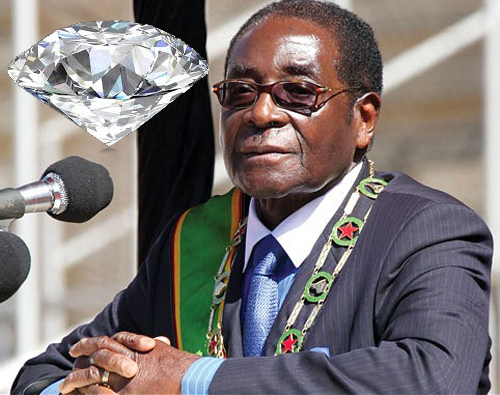
GemofaguyAfter several decades of trying to reel in Zimbabwe, the European Union just gave up. Sanctions beginning with mining and diamonds will soon be lifted. Who’s running the show up there in Brussels?

Most Europeans consider Zimbabwe one of their greatest diplomatic failures. The country remains a rogue state ruled by a ruthless dictator who has managed to all but destroy an economy that had one of the greatest potentials in Africa.

Robert Mugabe is 90 years old and has been in power since 1980. He was a freedom fighter much admired in the west when he led a major faction against Ian Smith, the white man who lead “UDI” – Unilateral Declaration of Independence – from Britain in 1962.

Rhodesia, as it was then called, was the brainchild of Cecil Rhodes, who in the last half of the 19th century made the country with brute force. Rhodes was probably the richest man in the world at the time who believed to insanity that Britain should rule Africa from bottom to top.

Britain wasn’t all that adverse to the idea, despite public protestations, so they let the rogue Rhodes into the wilds to massacre tribes, build railways and demarcate his own country.

Rhodesia became one of the most productive, beautiful, peaceful countries in Africa. Its economy blossomed with modern agriculture, mining for a variety of ores including diamonds, and tourism. Although pointedly, all this production was run by whites, British settlers who also believed like Rhodes that Westminster was Olympus.

But when it was time for Independence in the early 1960s, there was only 1 white for every 16 blacks. Ian Smith and his white Rhodesians didn’t need to hire Nate Silver to predict an outcome.

So they took over the country from Britain in 1962. Yes, that’s correct. British settlers took over a British colony. Remind you of anything? Ian Smith more than once called himself the George Washington of Africa.

Times had changed, and the war which followed wasn’t with Britain. It was with blacks like Robert Mugabe, and after 18 years and a lot of European sanctions on white Rhodesia, Britain and the U.S. brokered a peace agreement.

The agreement fixated a constitution for ten years that didn’t give the whites any more power than blacks, but institutionalized the power that they negotiated in the agreement in a way that couldn’t be changed.

For that ten years Robert Mugabe was a very good president … at least we all thought so, and frankly, so did many of the whites. It was a time of tourism explosion in Zimbabwe – since it was now peaceful after so many years.

I was deeply involved with two companies run by two white Senators. They loved Mugabe.

But after that ten years and the constitution could be changed by majority vote, Mugabe did. And his vindictiveness started to show.

He began redistributing land, mostly from white farmers. OK. To be expected, right? But with time it became more and more gruesome and the distribution was hardly fair. The land was given not to people of need but to his supporters. Then his cronies. Then his ministers.

Today the next richest and most powerful man in the country is the head of the army, Minister of Defense, Emmerson Mnangagwa. He is the richest because the land which was given to him by Mugabe includes Zimbabwe’s diamond mines.

Mnangagwa is rich despite European sanctions, and that’s the point of those who argue the sanctions became useless. But the EU itself has estimated that Zimbabwe revenues will increase by Euro 400 million annually as the diamond sanctions are lifted.

Others claim that a major motivation is that Belgium wants the business of cutting the diamonds.

“Too late,” says Zimbabwean spokesman, Rugare Gumbo.

Whatever the reason, Zimbabwe is poised to get much richer. And as time goes on, Zimbabwe is little more than a smaller and smaller and closer and closer group of thugs.

ÇA SUFFIT!

ÇA SUFFIT!

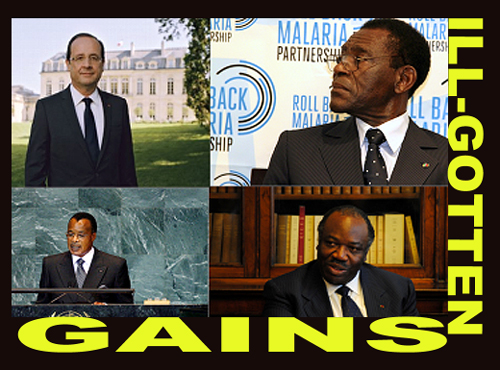
illgottengainsOne white European president is battling three black African despots in what might be the world’s biggest attack on corruption ever seen. Fast cars, Bond’s jet yachts, secret logging of rainforest jungles and the plight of Africa democracy are all at stake.

President Francois Hollande is the first French leader to refuse the cozy, often illegal and until now mutually beneficial relationships French Presidents have developed with Francophone African leaders.

Moreover, he has given the nod to French prosecutors and judges to continue massive investigations into the “ill-gotten gains” by three corrupt African despots.

These ill-gotten gains game from former French presidents. They are the proceeds from business deals removed from regulation by presidential decree, from aid that intentionally required no accounting, and from outright illegal money laundering that former French presidents forbid prosecutors from pursuing. That was the French way.

Says Hollande: “Ça suffit!’

Endorsing the legal nit-picking that a number of progressive French NGOs have been doing for years (see one of the most prominent, Sherpa), Hollande has reversed French policy of nearly the last century.

France’s role in Africa has been huge. Twenty-three of Africa’s current 53 countries were French colonies (compared to only 18 for Great Britain) and the total 2010 per capita GDP in those countries is about a quarter greater than the former British colonies.

America tends to concentrate on the former British colonies like South Africa and Kenya, but France’s role especially in the big oil-producing countries has been huge.

For all the years since African independences in the 1960s and 1970s, French politicians have benefitted enormously from the growing wealth of their former colonies.

In direct contrast with the British, backroom deals and presidential waivers for regulation and other prosecution have developed an incorrigible relationship that has enormously increased corruption at the top, both in France and Africa.

That’s really changing, now.

Hollande is actively going after the “ill-gotten gains” of many African despots, and focused current attention on three: President Denis Sassou Nguesso of the Republic of Congo, President Teodoro Obiang of Equatorial Guinea and the now-deceased President Omar Bongo of Gabon.

There are others. But these three have enormous financial holdings in France, and there is a good chance the French government will now prevail in taking those back.

It is an enormously positive step for the French to have taken.

Bon chance, Hollande!

Better Watch Out

Better Watch Out

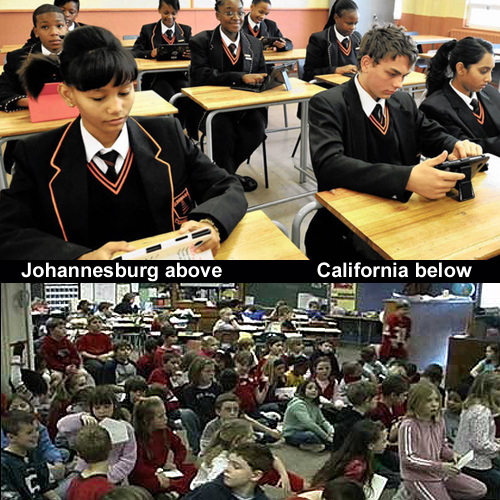
AfricavsUSeducationBetter education does not come by rewarding school performance, according to an African study, but by rewarding the underlying causes of that performance.

America’s method is not going to help it get better. Africa’s method is already helping it to get better, and quite fast, too.

Fifteen countries in sub-Saharan Africa fund a regional organization that evaluates those country’s educational system and produces recommendation for improvement. SAMEQ is essentially the Department of Education for sub-Saharan Africa.

Unlike our Department of Education the most recent comprehensive study of primary and secondary education suggests that teacher and pupil evaluations are meaningless and become entrenched without a broader and more detailed look at that data.

Let me explain:

The Obama administration focuses on school performance and teacher evaluation. What the SAMEQ report discovers is that while performance is the ultimate metric, giving funds or withholding funds based on that performance is pointless, which is what the Obama administration does.

SAMEQ delves into the causes of current performance, and I dare say that they’re the same the world over.

And this simple type of analysis leads to unfettered conclusions.

“Pupil socio-economic status, background, sex, age, grade repetition, absenteeism, homework, and speaking the language of instruction at home” are the greatest determinants of a pupil’s performance, and thereby, the pupil’s school’s overall performance.

(The report later reveals a tantalizing analysis of grade repetition that suggests this is counter-productive. In other words, poor pupils who were retained did poorer in the long haul than poor pupils who were retained and matriculated, anyway.)

And the main contributors to these individual factors are “school resources, school location, pupil–teacher ratio,” and finally, Obama’s focus, teacher evaluation (which the report calls “teacher score”). But it’s critical here to place teacher evaluation on no greater a pedestal than the other important factors.

The report adds that secondarily but still very important, school location seriously correlates with overall educational performance, and that is essentially a wider metric supporting the importance of socio-economic background.

So what does all this mean?

First, I have to say that the study was outstanding. Read the study to see the care with which data was mined, the finesse with with which contributing factors were parsed out, and the enormous relevance of carefully determined variants. Unlike our own government studies which tend to top-load a study with a goal (like school performance), this was a legitimate scientific exploration.

SAMEQ must tread much more carefully on political toes than our own government agencies, so there was little outright recommendation. But it’s there not just between the lines:

Pupils aren’t going to get better until their socio-economic status improves, and schools aren’t going to get better until pupils get better.

The one agreement with Obama policy is that teachers matter a lot, and that teachers can become as entrenched as socio-economic policy. Certainly figuring out a way to enhance teacher performance would be dynamite in improving education.

But so importantly, this must not be the principal concern.

What SAMEQ shows is that government resources – far more restricted in Africa than in America – are poorly used when thrown at the schools themselves.

Using the fact that grade repetition has no effect on student performance, SAMEQ explains further: “High levels of grade repetition have been blamed for increasing the overall cost of schooling, because if many pupils repeat each year, school systems need to employ more teachers and build more classrooms.”

Thus, attempts to work within the system can backfire.

SAMEQ is comfortable with certain remedies that would be not so comfortable in the U.S. “Home Intervention” as successfully implemented in Malaysia, and to a lesser degree in Mauritius and the Seychelles, improves performance.

This means greater funding of social work, something currently anathema in most of America.

And SAMEQ pulls no punches in recommending outright that more of Africa’s limited resources for education should be directed to poorer areas than richer areas.

That’s a direct opposite from America, where school resources are mostly local, so are circular and support themselves. Redistribution is what’s required.

As with immigration, taxation and employment policies, Africa is way ahead of America on educational reform.

And Africa is improving … fast. Is America?