Who Gets The Ivory?

Who Gets The Ivory?

justafewexceptionsA nasty America is emerging in response to new Obama rules to prohibit the sale of ivory within the U.S.

It’s never been fully recognized that the second largest market for ivory sales after China is the United States.

*****
EleStip: My necessary interjection whenever I write of poaching or ivory is to stipulate that I don’t believe that poaching is the most serious problem facing African conservation, today, or even elephants themselves. It’s (a) the human/elephant conflict; and separately (b), elephant overpopulation.
*****

Readers of this blog and other conservationists might not realize that there’s a huge part of America which doesn’t like conservation.

When the Obama administration first proposed the rules in February, there was a huge outcry. Hunters, musicians, retailers and rich grandmothers protested so vehemently that the rules have been toned down.

Fish & Wildlife’s new rules will not formally be implemented until June and can be continually downgraded as the public outcry increases. But I expect they will be severe enough to curtail the ivory market in the U.S.

Sales, auctions, and even gifting of preowned ivory will likely be prohibited.

The theory is that constricting the demand for something reduces its commercial value, which is precisely what conservationists want to happen with elephant tusks.

But the devil is in the detail, and while I applaud the overall move to further regulate ivory, note the alarming exceptions likely to be promulgated with the new regulations in June:
– trophies from shot elephants;
– antique ivory owned prior to 1976; and
– ivory acquired “legally” before 1990.

Those exceptions (and probably others) are so remarkably political in nature that they grossly undermine whatever morality the Obama administration is trying to evince.

It reminds me of the fact that Obama himself is the only chief executive in the history of the world to have issued a waiver to a hunter to bring a shot rhino from Africa back home.

So while the rules are severe enough to massively reduce the trade of ivory within the United States, the few exceptions are the politically powerful NRA, celebrity antique dealers and other rich well-connected families whose inheritances are now more secure.

In other words, big donors.

Worldwide, in fact, the ivory market is constricting. More and more large commercial retailers in Asia are themselves banning the sale of ivory.

This follows numerous moves throughout China over the last several years to ban retail sales of ivory.

I’m sure that these much publicized efforts have their loopholes, too, but it is discouraging that in America, far from where elephants live, the closest to the elite that rule our country and the richest and most powerful are exempt from doing what’s right.

Killer Bee Helpful!

Killer Bee Helpful!

beessaveelesI love this story! African “Killer Bees,” media ingrained mythical honey bees, may be what saves elephants from extinction!

My truck with many conservation organizations today is their scandalous exaggeration of elephant poaching, albeit I stipulate that elephant poaching is a growing problem.

In status quo (which includes increased elephant poaching), elephants are not going extinct.

But if extinction — or even seriously significant decline is postulated, the cause is not poaching. It is the human/animal conflict that is besetting virtually every major African game park on the continent.

Rapidly increasing human populations — particularly agricultural communities around dwindling protected wilderness habitats – is the main cause.

Combined with sluggish economies, massive unemployment, and a growing Asian demand for ivory, the conditions are ripe for increased elephant poaching.

I believe that by minimizing human/elephant conflicts, poaching will decrease.

Despite a couple television specials notwithstanding, elephant poaching isn’t easy. A savvy band of criminals takes considerable risk trying to down a jumbo. Once down the ivory harvest isn’t easy, either.

Many poachers are seriously injured in the hunt, and going to a medical clinic isn’t exactly possible unless the practitioner agrees to overlook the cause of your calve gash, which she isn’t supposed to do.

Many injured poachers get medical assistance from local villagers.

Very special knives and other tools for extracting the full tusk must either be uniquely forged by local blacksmiths or honed by artisans. Again, this requires those tradesmen to “look the other way.”

Community sympathy for poachers facilitates poaching… might be necessary for it to happen at all.

That sympathy comes from two different places:

Foremost are the farmers in those sympathetic communities adjacent wilderness areas who are trying so desperately to grow corn and water melons, two of the favorite foods of wild elephants, today.

Joining them are headmistresses, community leaders and clerics who are incapable of convincing a jumbo not to walk through their building.

Secondly, the sympathy comes from the politico enraged with the government’s inability to compensate farmers and preachers and school boards for their elephant damage, while generously financing more and more upmarket tourist camps.

The threat to elephants is that they live in a place where people no longer want them. Tourism revenue continues to decline as a portion of African countries’ wealth. Agriculture, education and media are now all more important.

So it seems to me that if we can find some wonderful way to keep elephants where they belong, poaching will become harder and harder to accomplish.

We’ve been trying everything:elebarrier

Fences.

Electric fences.

Massive electric fences with big moats.

Pepper spray.

Siren horns.

Air guns.

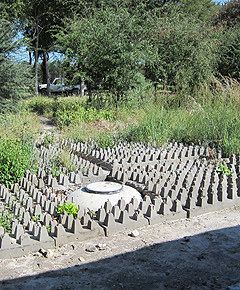
The best ever I’ve found I just experienced a few weeks ago, again, in Botswana’s Nxai Pan National Park: surrounding the toilet and shower complex for the public camp site in the park are a dozen rows of cement blocks fabricated with tiny towers that have a steel rod piercing upwards from the middle.

Elephants really don’t like that. But it’s way, way too expensive for anything but a tourist who has to go.

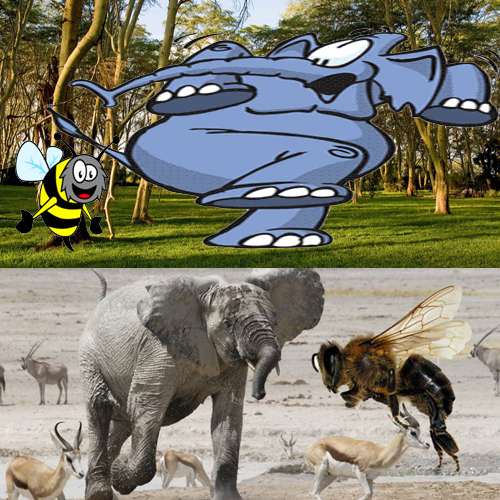
Alas. African Killer Bees!

Beehives every ten meters linked by special trigger wires, so that when an elephant only lightly touches the wire, the bees are enraged.

Save the Elephants, the University of Oxford and the Disney Worldwide Conservation Fund collaborated on this huge and very successful study.

You see, elephants have bought into the myth that these are “Killer” Bees.

Well, actually, researchers noticed a long time ago that elephants avoided eating their most favorite tree, the acacia, if bees were on the blossoms.

“This was followed by behavioural experiments demonstrating that not only do elephants run from bee sounds, but they also have an alarm call that alerts family members to retreat from a possible bee threat,” project leader Lucy King told AllAfrica.

Hey. Anybody out there can design a chip to scream out an elephant bee alarm?

New Ways for Africa

New Ways for Africa

qatarIf you’re planning a trip to Africa, you might be surprised to discover the way you’ll get there is not through London or Amsterdam, but Doha.

China and Europe are retreating from a long period of heavy investment in Africa, and it seems that Middle Eastern countries are racing to fill the gap.

The global economic climate does not bode well right now for Africa. Even though America seems to be doing alright, almost every other part of the world is teetering on the brink of another recession.

Europe’s growth is stagnating and a crisis of the sort occurring in the Ukraine could send it further downhill.

China’s economy is slowing Chinese investment is retreating from the African continent.

Since China has been Africa’s principal investor for more than a decade, this means Africa will suffer terribly, especially South Africa. At the same time it means that opportunities in a wide variety of industries become available for new players, and that right now seems to be the oil-rich MidEast countries.

In my own industry the most obvious indication is air travel. Although airlines are thought principally as people movers, much of their revenue comes from cargo. The two are inextricably linked in any good business plan.

Recently, the longest supporter of East Africa transport to Europe, KLM, announced a serious cutback in its service to Kilimanjaro airport in northern Tanzania.

While this may indeed reflect a decline in passenger traffic, it also reflects a decline in the cut flower market in Holland as the KLM jumbos transport enormous amounts of cut flowers to Europe.

British Airways has also announced cutbacks into Africa.

Taking up the slack has been Turkish and Qatar Airlines. Both airlines are doing well and expanding rapidly and much of the expansion is into Africa.

With the airline comes business and the MidEast is not suffering a recession. Africa has its whole modern history relied on foreign investment and its cultures have often moved with those who invest most heavily.

Are we poised to see a whole new and large Africa/MidEast alliance?

Jim filed this post from Arusha, Tanzania.

Gates Gets Gross

Gates Gets Gross

gatesinafricaBill Gates is a very nice man captured in the last century, and his remarkable generosity grossly misses the mark.

The Melinda & Bill Gates Foundation just released Bill Gates’ “annual letter.” The Foundation continues to seek solutions to two of Africa’s crises, malaria and poverty.

The two, of course, are interconnected. Throughout the world the level of malaria infection is inversely proportional to personal income. I don’t think, though, that this fact drove the Gates Foundation’s mission development.

Gates and most of the world charities tackle problems as crises to the exclusion of remedying the fundamentals.

Don’t get me wrong. It isn’t as if these generous folks make crises out of situations in order to be good philanthropists. Malaria on an individual level is a distinct crisis. Hunger caused by extreme poverty has an immediate simple remedy when dealt with as a crisis: dinner.

But the problem with Gates and most of the world’s charities is that despite how rich they may be, they aren’t rich enough to tackle the fundamentals, and so they default to actions that deal with incidental crises.

Malaria is the perfect example.

Malaria was eradicated from most of the developing world without drugs or bednets. My own Chicago’s Fullerton marsh was a cesspool of malaria right until the great fire of the 1860s.

After the fire and a growing awareness that government had to step up, malaria was systematically eradicated from Chicago by an exponential increase in public expenditures that started with increased urban hygiene (better sewers and drainage) and radical use of crude oil to suffocate marshes.

Even at that time suffocating marshes was an ecological controversy, but the power of the public domain was much greater then than now. The majority ruled.

By the early 20th century, there was no malaria in Chicago. An early NIH study of the eradication found a number of additional socially progressive policies kept malaria from returning to large urban areas like Chicago, such as banning child labor.

By the 1930s malaria in the U.S. was confined to 13 poor, southeastern states that did not have the tax base to successfully eradicate the disease. So government came to the rescue.

The 1947 National Malaria Eradication campaign moved money from the rich industrialized northeast to eradicate malaria in the south, and was successful in doing so in less than a decade.

I suspect similar stories exist throughout the developed world. And the solutions employed then would work today in Kenya or Indonesia. But destruction of the environment (oiling marshes and later, using DDT) is no longer considered a tit-for-tat that might balance in the long run, and modernizing Nairobi’s sewage system is too expensive for even the Gates Foundation.

That example is a bit oversimplified, since in fact the Gates Foundation probably does have both the capital and wherewithal to modernize (at least once) the Nairobi sewage system. What I really mean, of course, is to effect a modernization and cleanliness that like in late 19th century Chicago was achieved by modernization of a public service.

Today Nairobi is exponentially bigger than Chicago was in 1860, and Nairobi is affected physiologically by what happens in Mombasa, Addis, Kampala and Dar, so fixing Nairobi without simultaneously fixing those other great metropolises would be problematic with regards to eradicating malaria.

BUT (and this is a very big but) so is the world’s wealth exponentially bigger today than in 1860, and that’s the point.

Were the public interest as dominant today as it was in Chicago in 1860, Nairobi, Mombasa, Addis, Kampala and Dar would be free of malaria, because the rich world would have fixed their sewer systems… (and of course, a lot more).

What has changed in the last 150 years is a disproportional amount of wealth has become concentrated among a few afraid it will be taken from them. There are not enough people in that pool of the paranoid very wealthy for any truly democratic or benevolent change to take place.

That isn’t to say that a majority of rich people, among which I’m sure Bill Gates is one, are not generous and intelligent enough to ante up. In this year’s letter, Gates castigates Americans for their paltry $30 annually that the U.S. provides in world aid.

But the power brokers within that pool are not the Gates of the world. They’re the Koch’s of the world. And the Koch’s rule. So long as there are Koch’s there will not be more than $30 annually per American spent on world aid.

So what’s left?

Gates. Deal with a problem as a crisis and not a fundamental, and that’s precisely what’s happened with malaria.

In October the huge multinational pharmaceutical Glaxonsmithkline (GSK) announced it would market the world’s first malaria vaccine.

The vaccine is about 60% efficacious. Not bad but incapable of eradicating malaria. It took about 30 years and billions of dollars to develop this. The beneficiaries are not exclusively people saved from malaria. It will probably in equal measure make the rich, richer.

(Note this cynical observation: If there were a vaccine that could eradicate malaria, that could be a big downer for the investors who paid to develop the vaccine.)

When the world won’t step up, when your own government or township won’t tax enough to fix fundamental problems, we have no choice: Gates and GSK become our only hope and it’s a very momentary, transitory solution that’s provided: a stop-gap.

And the powerful in the pool of the wealthy then distort those efforts to suggest they are successful in terms that claim governments can’t be.

And the cycle of mythology is perpetuated. Gates recognizes this. His annual letter is built on a series of “myths.”

I prefer a Warren Buffet to a Bill Gates. Frankly, I don’t prefer either of them in theory. There should not be super rich.

But Buffet often focuses on the fundamentals. Gates is an engineer. Or as a brilliant Dutch satirist pointed out this week, Gates treats aid like he treats Microsoft: self-perpetuating and growing and never completely tackling the problem holistically.

See Ikenna’s video below:

Waiting for Malema

Waiting for Malema

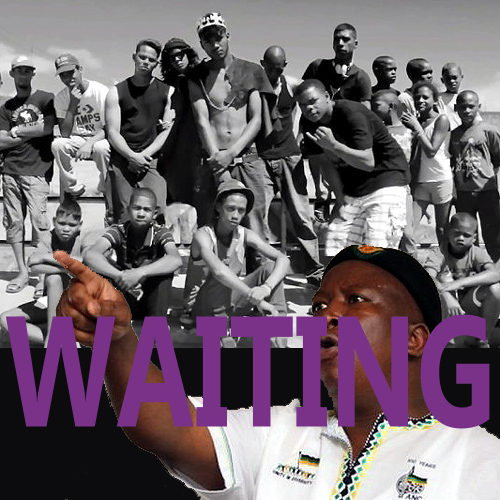
waitingjuliusmalemaSouth Africans are in the lull after the storm of Mandela’s death. But the lull also ends and the future looks troublesome. Elections are in several months.

Of course it may be a worldwide phenomenon. Obama’s Number #1 issue in 2008 was climate change. Anybody hear him speak of that recently?

The Arab Spring is no more. In promising societies like Kenya, politics entrenched in racism has muffled the country like greasy mold. In Tanzania, a new draft constitution reached prime time comedy this week when the only tenant everyone could agree on was an unenforceable edict to “control” corruption.

Mandela’s death coming at the beginning of the end of the Great World Recession was coincidental, but superstitious Africans and me may think otherwise.

The Mandela spirit was a revolutionary one that manifest significant structural change in political control: Power to the people. In today’s fast paced world, though, no one expected every goal to be realized or every project to be completed on time. Africans are uniquely patient.

The South African constitutional guarantee of housing was simultaneously uplifting and dangerous. Something so necessary that is suddenly promised as a human right that must be ensured by government is like a tsunami of common sense. Everyone’s on board. Everyone’s elated.

Except the architects, the engineers, the construction workers that run out of basic building supplies and later, the electricians and plumbers that have neither source or output for their orders.

Ditto for land reform, mining reform, currency reform and a bunch of other things. The New York Times called the mess “Mandela’s Socialist Failure.”

The death of Mandela was the bookend on Stage One of South Africa’s change. Stage Two is growing like a hidden virus in every dark corner of the land.

Politicians know this. The South African poor are among the most educated and aware people on earth. I dare say that the residents of the Cape Flats, Cape Town’s sprawling slum, know more about the world than most well dressed children in Oklahoma.

So after Mandela’s death, the politicians began to scramble.

The stranglehold that Mandela’s party, the ANC, held on the country since Independence began to fracture. Support for the current president and his cortege of rulers-in-waiting began to break down.

An enormous opportunity was born for the multitude of opposition parties. One of the ANC’s strategies all these years was to foment so many singular opposition parties that none were capable of really challenging it.

The most hopeful of the greatest alliances possible broke down last week. The strong party that rules much of The Cape — heavily white and colored – offered to support the presidential candidacy of a rival black party. There was new electricity in the country, but it didn’t last.

Nothing’s left now for the April elections but another win for the ANC.

And that will mark the end of the lull. The South African poor, heavily colored and not at all vastly supportive of the ANC, are building a hiphop agenda that lacks any manners whatever.

A vicious radical and possible psychopath, Julius Malema, would like nothing better than to create a Franco-styled proletarian dictatorship. He is the kids’ current hero, the star of their music videos and their dreams. The man who will redistribute wealth with no fear of economic fundamentals.

South Africa has little time to stave this disaster.

Right On, Alabama!

Right On, Alabama!

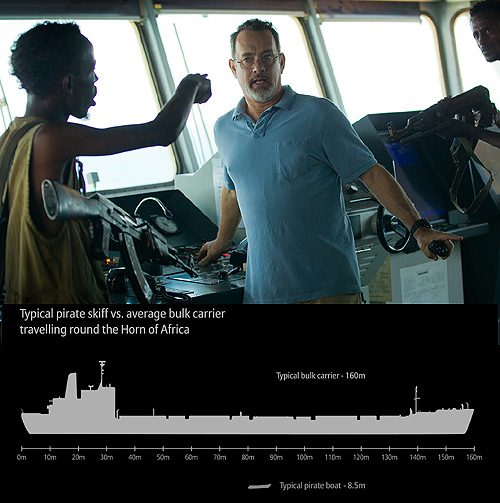
Tom HanksSomali piracy is at its lowest level in years and Tom Hanks helps show us why.

The Oscar-nominated “Captain Phillips” starring Tom Hanks depicts in terrific detail the hijacking of a giant container ship as it traveled through Somali waters in 2009. The film which has already won a screen writers award is up for six Oscar nominations.

Anyone watching the film right from the beginning is going to scream out, “Why doesn’t the crew have guns!?”

Well, most crews do now have guns. The Alabama was hijacked in 2009 when few merchant vessels from any country in the world were allowed to be armed.

That stemmed from a centuries long policy of governments worried that large vessels were capable of coups. Later in history rogue merchant vessels tried avoiding naval inspections as Britain and the U.S. started to police the high seas for contraband.

More recently the government of Egypt banned any type of armed vessel in the Suez canal, where most of the ships in Somali waters originate.

But after large naval task forces organized by the U.S. and European union were unable to stem increasing piracy by 2010 many countries including the U.S. began allowing on-board security. The U.S. remains the most restrictive, but many U.S. flag carriers can now carry weapons or commercial security.

In 2009 giant ships like the Alabama were completely unarmed. The movie details how the captain and crew had to behave without weapons. It shows how tiny little speedboats with a handful of men carrying old Uzis or AK47s could take over a ship 3 times the length of a football field, bigger than five 747s.

As a composite of the 500 ship hijackings that year, I believe the movie does a fabulous job. It may not have been so honest with regards to Capt. Phillips and the Maersk Alabama.

In fact quite to the contrary, the crew of the Alabama is suing the real Captain Phillips and his employer, Maersk, for more than $50 million for malfeasance.

“It is galling for them to see Captain Phillips set up as a hero,” the plaintiffs’ lawyer told the Guardian last October. “It is just horrendous, and they’re angry.”

The crew contends that Capt. Phillips should have done exactly what the film depicts Capt. Phillips doing! If the crew is telling the truth, it’s almost as if Columbia pictures read the litigants’ charges and wrote the screenplay from the depositions!

Water hose defense, engine room retreat, wave action, intentional power failures … all procedures the suit against Maersk contends Capt. Phillips refused to do or bungled.

The film does give one clue to Capt. Phillips’ culpability. U.S. recommendations which Maersk had adopted included keeping ships at least 300 miles and preferably 600 miles from the Somali coast. In the film the ship is about 200 miles from the coast when hijacked.

Because the litigation is current, neither Maersk or Captain Phillips will comment. At least until the Oscars are awarded, neither will Sony or Hanks.

The screenplay also dug into the reality of why there is piracy in the first place. I wish it had been developed more elaborately, but kudus to the writers for bringing up the subject of how the Somalis had been raped of their fisheries by multinational fishing companies.

Most pirates were once fishermen, or more correctly, would be fishermen if their industry hadn’t been plundered by multinationals taking advantage of the implosion of the Somali state.

In the movie there is a poignant scene where Capt. Phillips (Tom Hanks) challenges the chief pirate:

“You’re no fisherman!” Hanks charges and then asks the pirate why with his language skills and obvious other capabilities he doesn’t do something more legitimate.

“Maybe in America,” the pirate answers. “Not in Somalia.”

In 2009 when the Alabama was hijacked, there were nearly 500 hijackings annually. Last year it was about half that.

Piracy is down because of actions as depicted in the film by heroic crew, because of massive operations by European and American navies (including as masterfully shown in the film an exciting operation by Navy Seals), and probably most of all because of the pacification of Somalia itself.

Go see the flick! Hollywood finally gets it right.

Power Up Da BodaBoda!

Power Up Da BodaBoda!

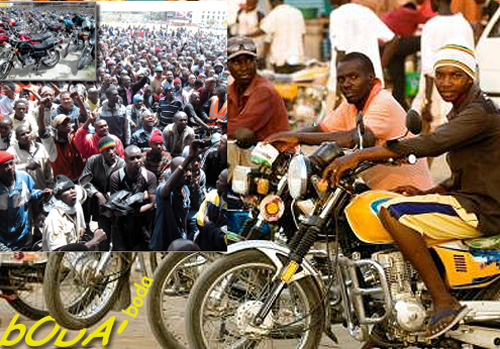
BODABODABad BodaBoda. Don’t think the morning commute is necessarily better if cars are replaced by bikes. What you might get is “Mayhem in Arusha.”

The first place my wife and I worked and lived for two years was Paris in the 1970s and the traffic compared to what I’d see later in Bangkok in the 1980s or today in Nairobi and now Arusha couldn’t even compare.

Yet my wife went to work and about town in a “moped” and it scared the living daylights out of me. In those days there were no regulations about helmets or carbon emissions or anything else, and a French moped was hardly more than a small bike with a lousy motor.

My wife and hundreds of others wove in an out of traffic lanes, sneaking between buses, dodging pedestrians as if their greatest challenge wasn’t staying upright but stopping. And it often was. You stopped and it might herald the end of an era. It might never run, again.

More than once I watched from my safe haven in a bus one of these contraptions sail right below me at breakneck speed and continue unabated right through a red light.

They were loud, dirty, dangerous and above all, defiant.

And she always got to work before me.

Fast forward nearly a half century into the little metropolis of Arusha, Tanzania.

“Motorcycles … have been causing lots of inconveniences … due to frequent cases of reckless riding, accidents and unruly behaviour,” claims Arusha’s only newspaper.

Arusha is Tanzania’s main northern city, and mopeds have joined forces with Harleys and Kawasakis to make my 1970s experience in Paris seem like child’s play. The machines are rarely the monster varieties, mind you, and usually hybrids of the most amazing sorts.

In fact a snapshot of the collection of “motorbikes” on the increasingly congested streets of Arusha could easily come out of the imagination of a kindergartener told to draw a motorbike rally.

“BodaBoda” they call them.

Two weeks ago the city councilmen of Arusha in their imminent wisdom banned BodaBoda from the city center “because of their chaotic nature.” The move by Arusha planners followed a successful ban of bodabodas in May by neighboring Rwanda.

Rwanda is a horrific dictatorship. They could ban breathing and the entire city of Kigali would collapse. Let me tell you, in any semi-free place in the world, don’t try to unboda your spouse.

Monday, the “Arusha fathers” rescinded their ban… “For a while.”

In the free (for-all) society of Arusha, traffic management will no longer include laned traffic, speed restrictions, pedestrian right-of-ways, or traffic lights.

When the ban was announced several weeks ago, BodaBoda bikers struck the city hard, blocking traffic with their protest. Worse:

“The riders also threatened to beat up any motorist, pedestrian or any other person who stood in their way…”

And most revealing of all, they said that “police officers have been targeting them with exorbitant fines for …both real and imaginary offenses.”

“They also vowed to beat local leaders of the bodaboda associations who they accused of betraying them,” the newspaper report continued.

The elected “bodaboda union” leaders responded:

“As their leaders, we did not take part in their protests because they threatened to beat us, saying we were siding with the government, though in reality we have been trying to remind them that they were not above the law to an extent of causing anarchy.”

Power to The People!

Power Up Da BodaBoda!

Dropping The Tuna

Dropping The Tuna

somalifishingI don’t like it but it’s good news. Should a private foundation in Somalia be doing what really should be the responsibility of the U.S. government?

Developing Somalia’s fishing industry is critical to sustaining peace in the region. Piracy was expertly developed as al-Shabaab’s principal source of revenue by enlisting former fishermen who had been systematically raped of their livelihoods mostly by western fishing companies.

Fishing had been Somalia’s main industry prior to the state failing in the 1990s. Numerous studies documented major western fishing companies, the majority from Italy and France, taking advantage of Somalia’s implosion to rape the seas of the Gulf of Aden.

With all the money and effort western powers have spent trying to oust the terrorists from Somalia, I can’t understand why they won’t rebuild its fishing infrastructure. Somehow, I guess, it’s just not militaristic enough.

So the job is being left to the private sector, which could be all well and good of course, but I fear without government to government involvement, here, a free-for-all is going to develop in these nutrient rich waters.

For several years now as the Somali war wound down, there have been reports of private companies violating fishing treaties and dumping toxic waste, in essence taking advantage of the lack of government (including multiple government, regional and UN) regulations.

The Oceans Beyond Piracy project brought together active western partners in Somalia at a Thursday conference in London which was striking for its positive outlook.

Led by a Danish NGO, Somali Fair Fishing, the conference wants to rebuild not only the infrastructure but the human capital of the Berbera port.

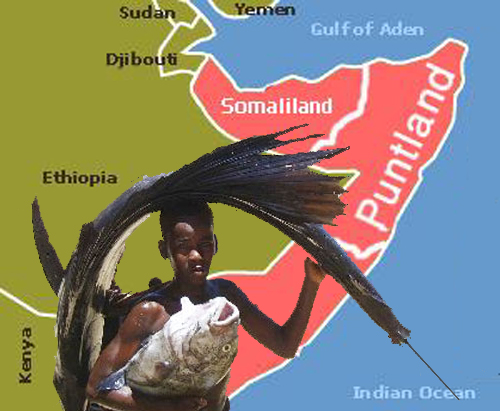
Berbera is Somaliland’s main port on the Gulf of Aden just before the Red Sea. Somaliland and Puntland are autonomous regions of Somalia that have been relatively peaceful for more than a decade.

Functioning as independent states, the two northern regions have seen realistic development over the last decade but been given little outside attention. World aid organizations, for example, are reluctant to promote what would become the fracturing of a former Somalia Republic.

New elections in Somaliland and new policy initiatives in Puntland announced this week, however, suggest that the two autonomous regions of Somaliland and Puntland are newly interested in reintegration.

It makes imminent sense for western powers and world aid organizations to go in full force to develop Somaliland’s Berbera. It’s wonderful what Oceans Beyond Piracy and other small NGOs are trying to do, but it’s just not enough.

There’s no point in developing a fishing industry if there’s no fish. Without reenforcement of existing world treaties about the Somali fishing harvests, and without worldwide enforcement to stop ships treating the Gulf of Aden as the world’s biggest public toilet, there won’t be any fish.

The foundation supporting the Oceans Beyond Piracy initiative is the One Earth Foundation of Colorado. The CEO, Marcel Arsenault, made his fortune anticipating the housing bust of 2008. As a new kid on the block of a growing number of private philanthropy organizations it doesn’t have a long enough track record for any critical appraisal.

But its mission looks good and I wish them success.

As always, though, I worry when private interests trump the responsibility of government institutions.

The Thursday conference attracted a number of giant players, like BP and Maersk. But these mega multinationals are not going to invest fully until western governments decide to invest as much in cranes and drones.

It’s an unending story of failed peace making. Nixon tried lamely to explain to a fatigued America that Vietnam could only be won by building factories, but it was an out of sync suggestion at the time it was made, way too late.

War is expensive. Fishing is much less expensive and far more productive.

Before we lose Somalia again, world powers should see what groups like One Earth and Fair Fishing are trying to do, and learn from them. USAid in Somalia should now be given as much support as AFRICOM.

Between Life & Death

Between Life & Death

bodyorgansforsaleTanzania has embraced a Wall Street Journal suggestion last week that a free market should be created to buy and sell human organs.

“It is none of our business,” Tanzania’s Minister for Health and Society Welfare said yesterday affirming the Tanzanian government’s position that it would not oppose such a market. He then confirmed that it’s perfectly legal for Tanzanians to sell their organs to the highest bidder.

The Journal’s Saturday essay argued that kidney transplants add more than 20 years of life to those in need, and that two kidneys aren’t necessary for a healthy life.

“How can paying for organs to increase their supply be more immoral than the injustice of the present system?” the journal asked.

The authors estimated that an open market for selling kidneys would result in an expected cost of $15,000 per kidney.

That’s approximately triple Tanzania’s average annual income.

In acknowledging the Journal article more quickly than the Tanzanian government normally acknowledges a health epidemic on its own soil, the Minister pointed out that there are already robust donor markets in Iran and India.

Two kidneys might not be necessary for a healthy life, but removal of any organ, even the redundant second kidney, is not without risks. Even if those risks are small the notion of literally selling part of yourself for cash belies desperation.

And in a “free market,” one that is truly global, there’s little doubt that the most desperate in the world would quickly become the suppliers. Suicide bombers and all sorts of other criminals are often little more than lives for sale. Reducing humanity to a commodity is the basest form of oppression.

The Journal article touched on alternatives that such countries as Denmark are employing, called “implied consent.” This presumes that everyone who dies naturally allows whatever viable organs remain to be taken and reused.

But such a policy if adopted worldwide would decimate the capitalist alternative suggested by the Journal. As shocking as it may sound, there are likely far fewer natural deaths that would result in viable organ donating worldwide, than there are living persons in the developing world willing to sell their organs.

Imagine if the going rate for a kidney in the U.S. was $150,000? That’s the equivalency with Tanzania’s economy. Imagine advertising this in Appalachia or Flint, Michigan. Imagine white buses with ambulance attendants and Brinks Trucks behind them.

There’s something terribly wrong with this scenario, whether it is in Flint, Michigan or Arusha, Tanzania.

Yet the Journal article is not ground-breaking. HBO Producer of the “Tales from the Organ Trade” and three-time Emmy winner, Simcha Jacobovici, is an aggressive advocate for allowing anyone to sell their organs for the highest price:

“For my part,” Jacobovici writes in the Times of Israel, “I am no longer a dispassionate reporter on the issue… Some suffering we cannot alleviate, but this suffering has a simple solution. While tens of thousands need kidneys, tens of thousands want to sell them. We each have two kidneys. We only need one.”

The fact of the matter is that voluntary organ selling has been occurring throughout Africa for a long time, widely reported from Kenya to Nigeria. But there has been little comment about it until now and virtually no criticism.

The Journal article has forced the topic out, giving advocates of live donor selling in the developing world significant credence to the position that there is nothing immoral to the practice.

It is an incredible dilemma. My first reaction is that there is nothing baser than turning humanity into a commodity. My second reaction is that authority over one’s own physical body is inalienable: how can we the rich tell them the poor not to sell themselves?

Religious doctrine is pretty consistent:

“The answer is a definitive ‘No.’ The selling of an organ violates the dignity of the human being,” according to the Catholic Church, and virtually all major religions argue similarly.

But religious doctrine in my opinion is largely responsible for the multitude of dilemmas Tanzanians currently find themselves in, today:

From the historical condoning of slavery in the pre-colonial era, to the submission to greater force in the colonial era, to the oppression of vicious dictators in the post-colonial era, religion has not been a very good guide for the development of Tanzania.

For many millions in the developing world selling an organ is the difference between life and death. Twice.

Hurrah for The Ban!

Hurrah for The Ban!

THE WOLF OF WALL STREETThe Wolf of Wall Street has been banned by Kenya and Uganda, along with much of the rest of the world, and as a result will probably be the most watched movie this year in Africa.

Free speech isn’t relative, it’s immutable in Africa’s young societies. In contrast for example with China where government institutions are strong and decisive, Africa’s societies are run by weak governments.

They have a hard time collecting taxes and an even harder time banning films.

In fact, they aren’t really banning films. They’re banning the collection of film royalties, really, and so I say, “Here! Here!”

Last Thursday just before the scheduled weekend premiere in Kenya, the country’s film board banned the film. For the Kenyan film board, this was pretty harsh. It has banned only a handful of films, most of them outright porn.

In Uganda where banning films is a pastime, the global Cineplex theater in Kampala had the film on its marque Saturday and had actually sold tickets and seated customers when an announcement came that the film had been banned there, too.

The film will likely be banned in more than half the world’s countries, almost all in the developing world, Africa, Asia and the Mideast. In many others editing out scenes has been negotiated with the film producer to allow the performance, notably in India.

According to a spokesman for the Kenyan Film Board, the film’s producers didn’t reply to their request for special editing “leaving them no choice” but to ban the entire film.

India is a much bigger market than Kenya.

The irony in all of this is twofold. First, the result is that more people will see the film.

“I am actually watching it right now,” a Kenyan Facebook user posted after the ban. “Maybe the Ayatollahs in your board should come to the year 2014 and discover something called the internet.”

Not just the internet, either. Pirated copies (which are actually very decent in Kenya, I know) were selling like hotcakes.

“The pirates went into overdrive,” wrote Kenya’s favorite journalist, Obbo. He talked with an “underworld” pirateur who “dashed to make 25 copies, sold 20 within minutes – a record.”

Sold at about Ksh50/ or 50¢.

That’s the second irony. The film will now be seen by more people than ever. Many millions of Kenyans cannot afford the $7 it would have cost to see the film in the theater, and while that by itself would not have stopped pirating, there would simply not have been the demand.

So in underworld off-the-chart internet sites and on every corner of Nairobi the film is being passed from one person to another to another. It’s providing a reasonable income for unemployed techies and Scorsese, well, he won’t get his share.

The Kenyan Film Board is useless, the producers of Wolf are out of pocket.

Hurrah for Free Speech!

To watch a grilling Kenyan television interview of a spokesman for its Film Board, click below

Wildly Expensive

Wildly Expensive

cozytentonsafariIf you’re planning a safari next year, prepare for some of the largest price increases in the history of safari travel.

Large new taxes in all but one of the countries in East Africa come on line by July, and safari prices will begin flirting with the $1,000 per person day level.

Newly implemented V.A.T. in Uganda, Rwanda and Kenya, will push 2013 safari prices up a quarter by 2015.

Tanzania remains the lone holdout, and the pressures on that country to join its neighbors Kenya, Uganda and Rwanda are mounting.

Uganda’s 18% began last year. Rwanda’s 18% will begin next July. Kenya’s 16% tax was passed last year then rescinded for many tourism products, but then reintroduced at the end of the year.

Uganda’s was the first tax to come online, and local operators are now convinced it decimated tourism. Uganda has a lot of other problems contributing to its decline in tourism, but these large taxes are absolutely a cleaver to whatever was left.

A normal pricing formula moves a 16-18% in source prices to an increase of a quarter in retail prices. American safari wholesalers have been averaging around $700 per person per day, which would move that immediately to $875. An average 11-day safari that was selling for $7,700 will become $9,625.

“Average” or “midmarket” safaris have been dramatically declining ever since the great recession, leaving much if not most of the American market buying only high priced trips. So average priced safaris are often hard for Americans to find, today.

American wholesalers won’t offer them, so a first-time consumer is usually forced to buy directly, searching for companies in East Africa. That requires additional due diligence, of course, and sometimes may encounter language problems. (Tanzania’s greatest single safari market comes from France.)

In the early 2000s midmarket safaris represented about half the market, with budget safaris representing a quarter, and upmarket safaris representing a quarter. But today upmarket safaris represent more than half the business from the U.S. and budget safaris are nearly nonexistent.

This means that an initial search by a first-time American consumer preferring to buy a trip from an American wholesaler will have difficulty locating a safari under $10,000.

When the taxes were first announced, Kenyan and Rwandan operators said they would absorb some of the costs, but that’s become too difficult.

Most of the profit of traditional safari transactions is earned by the foreign wholesaler. The markup prior to retailing can be as high as 50% in America. (Retail agents have been in decline in America for some time and are becoming an insignificant factor in most safari transactions.) The vast majority of American safari travelers buy directly from an American wholesaler.

Profit at the source in East Africa is very volatile. Property owners rarely have consistent occupancy rates, but even business plans well designed to traditional seasonal occupancy patterns are not meeting their goals as the overall market for safari travel declines.

The result is the safari investors are earning less than 10%, diversifying their interests into other businesses like transportation and conventions, and increasingly relying on the local and regional markets.

Midmarket safaris will be the most to suffer. These are the larger lodge chains like Sopa, Marasa and Serena. These are good, very reliable companies whose package programs still price around $5,000 for an average 11-day program.

If they wish to sell to American consumers, they’re going to have to massively upgrade their websites and begin aggressive direct marketing campaigns. This they are reluctant to do, because while the American market is important, it’s never been as important as the European or Asian markets which continue to rely on more traditional selling patterns.

European and Asian agents would likely dump one of these midmarket vendors for their competitor if it became too obvious they were selling directly.

But they are also the most price sensitive and the ones certain to be hurt significantly by the V.A.T. increases. I don’t think they have any choice but to begin direct marketing.

The decisions by the governments to move ahead with V.A.T. suggests several things.

First, tourism is becoming less important as new natural resource wealth is discovered. Second, there’s a belief that safari prices are already so high, going higher isn’t really going to matter.

To a certain extent that’s true. For the western world budget safari travel has all but dried up. But for the emerging travelers in Asia, budget travel is critical and I think this will have a crippling effect on a market that was growing substantially and fast.

All eyes are now on Tanzania. I think it near impossible for the country to hold back. For the time being Tanzania has an enormous price advantage over its neighbors, although it has been enjoying the advantage of being free of the terrorist incidents Kenya has endured and free of the horrible political turbulence of Uganda.

I actually think that Tanzania’s reluctance to implement V.A.T. has a lot to do with its corrupt tax collection system, and that increasing this type of revenue would exacerbate an already horribly corrupt system at a time when European powers have been specially public about Tanzania’s naughty ways.

Safaris have always been an expensive vacation. But compared with other trips, safari prices have increased far more quickly. Forty years ago when I began my career and right until the middle 1990s, the cost of your safari was about the same as the cost of your airline ticket to get there.

Today a safari averages four to five times the cost of an airline ticket. That metric more than any other shows how exclusive safari traveling in East Africa has become. For the vast majority of travelers it’s now just out of range.

Is there an alternative? Sort of: South Africa provides numerous opportunities for good budget travel. It just doesn’t have the quantity of animals or expanse of wilderness terrain found in East Africa. But for a midmarket budget, that will now become the only available destination.

Important Stories for 2013

Important Stories for 2013

Important 2013 StoriesMisreported elephant poaching, a changed attitude against big game hunting, enduring corruption, a radical change in how safaris are bought and sold, and the end of the “Black Jews” in Ethiopia are my last big stories for 2013.

#6 is the most welcome growing opposition to big game hunting.

It’s hard to tell which came first, public attitudes or government action, but the turning point was earlier this year when first Botswana, then Zambia, began to ban big game hunting.

Botswana banned all hunting in December, 2012, and a month later Zambia announced a ban on cats with an indication they would be going further. Until now big game hunting revenues in Zambia were almost as much as tourism’s photography safari revenues, that’s how important these two countries are to hunting. (Kenya banned all hunting in the 1980s.)

The decision to ban a traditional industry is major. While some animal populations are down (lions and elephants) many like the buffalo are thriving, so this is not wholly an ecological decision. Rather, I think, people’s attitudes are changing.

Then in October a movement began to “list lion” on CITES endangered species list, which would effectively ban hunting of lion even in countries that still allow it. There was little opposition in the media to this, except surprisingly by NatGeo which once again proved my point the organization is in terrible decline.

The fact is that public sentiment for big game hunting is shifting, and from my point of view, very nicely so.

#7 is the Exaggerate story of elephant poaching. I write this way intentionally, to buff the hysteria in the media which began in January with a breaking story in Newsweek and the Daily Beast.

Poaching of all animals is showing troubling increases, and elephants are at the top of that list. But in typical American news style that it has to “bleed to read” the story has been Exaggerate to the point that good news like China’s turnaround is ignored and that the necessary remedies will be missed.

Poaching today is nowhere near as apocalyptic as it was in the 1970s, but NGOs are trying to make it look so, and that it infuriates me. Poaching today is mostly individual. Unlike the horrible corrupt poaching that really didn’t nearly exterminate elephants in the 1970s and 80s.

Poaching today also carries an onerous new component that has nothing to do with elephants. It’s become a revenue stream for terrorists, and the hysteria to contribute to your local NGO to save elephants completely masks this probably more urgent situation.

And so important and completely missed in the headlining is that there are too many elephants. Don’t mistake me! I don’t mean we should kill them off. But in the huge difference in the size of African people populations in the 1970s and those of today, the stress of too many elephants can lead to easy local poaching, and that’s what’s happening.

#8 is a tectonic change in the way safaris are being bought and sold.

The middle man, the multiple layers of agents inserted between the safari and its consumer have been eroding for decades. But in one fell swoop this year, a major South African hotel chain sold itself to Marriott, leapfrogging at least the decade behind that Africans were in selling their wares.

Most African tourism products are not bought by Americans, and so how safaris were are has mostly been governed by buying habits in such places as Europe. America is far ahead of the rest of the world in direct tour product buying, and the sale of Protea Hotels to Marriott signals to all of Africa that the American way is the world trend.

#9 is a depressing tale. After a number of years where Africa’s overall corruption seemed to be declining, last year it took a nosedive.

The good news/bad news flag came in September, when France’s President Hollande ended centuries
of deceitful collaboration between corrupt African leaders and the Élysée Palace.

Many of us jumped on this as a further indication of Africa’s improving transparency, but in fact, it was just the reverse and Hollande beat us to the punch. In November the European union gave Tanzania a spanking for being so egregiously corrupt.

And then Transparency International’s annual rankings came out. It’s so terribly disappointing and I’d like to think it all has to do with declining economies, but closer looks at places like Zimbabwe and South Africa suggest otherwise. I’m afraid the “public will” has just been sapped, and bad guys have taken advantage … again.

#10 is intriguing and since my own brush with “Operation Moses” in the 1980s, I’ve never stopped thinking about it. The last of Africa’s “Black Jews” were “brought home
” to Israel October 31.

A tribe in Ethiopia referred to as the “Falashas” has an oral history there that goes back to the 3rd century. Israel has always contended they were migrants from the land of the Jews, possibly the lost Tribe of Dan. Systematically, through an extreme range of politics that included the emperor Selassie, to the Tyrant Mengistu to today’s slightly more democratic Ethiopia, Israel has aided Ethiopia.

For only reason. To get the Black Jews back home. And whether they all are or not, Israel formally announced that they were on October 31.

#4 : Winter in Africa

#4 : Winter in Africa

arabwinter.13TOP4The great revolutions that toppled dictators and promised democracy that rang throughout Africa are all but dead. Winter has arrived.

The end of the “Arab Spring” is my #4 story for 2013 in Africa.

(Look sideways at the similar current outbreaks in Thailand and Cambodia and it seems their future is similarly doomed.)

What happened?

I’m more sure of the reasons that didn’t contribute to the failure, then completely understanding the failure itself. The reason the Arab Spring didn’t succeed is not as NPR’s continually inept Ofeibea Quist-Arcton reported Friday on NPR’s Morning Edition.

Quist-Arcton’s simplistic notion that a “lack of leadership” explains why the Arab Spring became Winter, or because institutions have been so poorly formed, is wrong.

It’s the same simplistic analysis proffered by such beacons of intellectualism as Fox News.

And this analysis concerns me greatly, because implicit is that the original movements towards democracy, as modeled after us, were undeniably correct and failed not because of some fundamental problem in theory, but in practice.

That’s simply not correct. The elections in Egypt, Tunisia and earlier, Kenya, were in most regards more transparent and fair than in many places in the U.S. The transitions that ceded power to those who had won were as smooth as our own.

Contrary to Quist-Arcton’s central point, the leadership that took over was decisive and bold. While it’s true there was a threat in Egypt of renewing an executive power dictatorship, it had not yet happened. During the short time Morsi ruled, there was more positive transformation in Egypt’s poorer areas than ever before albeit at the expense of the more vocal middle class.

And that’s problematic policy. But it is not a “failure of leadership” or of “institutions.”

I still believe in the ballot box and democracy, but clearly it didn’t work in Africa. In trying to explain Egypt’s remission into dictatorship at the time it happened, I published a favorite cartoon of mine where a student replies to a teacher’s question, “What is democracy?”

“Democracy,” the student quickly explains, “is the freedom to elect our own dictators.”

We need add that the implementation of those dictators’ policies came through powerful government institutions that were working very well.

Tunisia and Kenya are unique examples in the Egyptian mode, but both have slipped into old ways where like Egypt it seems only heavy-handed authority can achieve enough social stability to do anything. And then, if the authority is beneficent, good happens. If not, bad happens.

We’ve learned two very precious lessons over the last few years in Africa’s experiment with democracy:

1. Democracy can be used to end itself.
2. The start of democracy (the “revolutions”) is never democratic.

Morsi may indeed have been trying to dismantle Egyptian democracy completely, yet he was the most freely elected Egyptian leader ever. And the movement that gave rise to his ascension – the Tahrir Square uprising – was nevertheless a minority of Egyptians. They were notable for being only on the fringe of violent overthrow, but their toppling Mubarak was hardly democratic.

Hardly a few weeks after Egypt’s experiment in democracy failed, the remaining holdouts for hopeful change in places like Mali, Zimbabwe, Rwanda and Ethiopia crumpled away.

Africa is today less democratic, more autocratic; less transparent, more deceptive; and far less promising than five years ago. It has tried and failed with democracy.

Singularly important for ourselves and all functioning democracies was that we and our political brothers refused to sanction that undemocratic removal of democratic regimes.

Intellectuals throughout the western world condemned Obama and other leaders for failing to punish those who ended the experiments in democracy.

Because, I suspect, a leader knows when a leader isn’t. Our leader is just too afraid to level with us.

My eulogy for the Arab Spring was published last month. But my sense that the problem wasn’t democracy, but rather capitalism, I explained months before the military deposed Morsi.

It was in May or even earlier that things around the continent began to look shaky. And the tremors were economic at the time, not political.

The failure of any political system is generally measured by its economy. The economies of Africa under the new democracies were capitalist structured, many virtually built by America and its allies. They didn’t work.

Arguments that it was just bad timing, that these political revolutions came at the end of a world recession and would have succeeded in good economic times disregard the fact that places like Kenya were seeing 7 and 8% GDP growth. So this is not a true presumption.

I know no more than the simple fact that capitalism did not deliver the promise held in democracy. Economists will now have to explain.

Clearly, winter has arrived not because of simplistic notions about the poor implementation of a treasured form of government, but because of flaws either in that system to work capitalism, or in capitalism itself.

#2 : Obama’s War in Africa

#2 : Obama’s War in Africa

First Reaper aircraft maintenance unit deploys to BaladAmericans have grown so complacent about war and so uninterested in their own country’s military involvements that few have any idea how much fighting America has been doing in Africa.

This is my Number 2 story for 2013, America’s huge military involvement in Africa.

And that involvement was not by a Congressional declaration or even after labored consultations and hearings. It was because it is central to Obama’s anti-terrorist policy.

The intense involvement has been going on for 54 years, and this year seemed to reach a crescendo and possible end-game. As ironic as this may seem, the fact is that Africa warring was a policy created in 2004 under George Bush which has been wholly embraced by Obama.

Bush created AFRICOM, America’s Ninth “Unified Combatant Command.” Its ostensible mission is half protection for multinational developments, especially oil exploration, and half anti-terrorist.

Lately it’s been almost exclusively anti-terrorist, at least as defined by the Obama administration.

AFRICOM was responsible for the 2011 Kenyan invasion of Somalia and the continuing presence of Kenyan troops, there. It was responsible for the small special forces contingent that publicly deployed in Uganda in 2012 which routed the LRA and essentially has caused the chaos currently seen in the Central African Republic.

AFRICOM was instrumental in the massive last-minute UN fights in the DRC-Congo which have resulted in some stability for the moment.

And AFRICOM basically orchestrated the chase of organized terrorist forces and their weapons from Somalia, through Uganda and the CAR into Mali, where together with France, we now intend to exterminate them altogether.

Probably as significant as any of the above are the drone attacks and numerous Navy Seal missions throughout mostly East Africa that have killed so many alleged terrorist leaders.

None of these operations begins to achieve the size of anything like Iraq or Afghanistan. But taken as a whole, from 2004 to the present, they represent significant deployments of troops, weapons and other resources that have radically shifted the organized terrorist map and composition.

No year was as violent as last year.

The result of these actions is a definitely safer America… for the moment. Organized terrorist organizations like al-Qaeda and al-Shabaab among others are being systematically eliminated. So for the near frontier, AFRICOM has served America well and efficiently.

But that’s not necessarily true for the long term, and it certainly isn’t true for Africans, today.

“AFRICOM serves as the latest frontier in military expansionism, violating the human rights and civil liberties of Africans,” according to ResistAfricom, a U.S. citizens group that views the strategy very bad for the future.

The result of the Obama/Bush policy has seriously destabilized Kenya, the principle ally which began the long chase of terrorists through the continent with the war in Somalia. Kenya is dealing with increasing terrorist attacks, a legislature obsessed with security, and an economy that would collapse without American aid.

While the DRC-Congo has achieved some peace after several generations of war, the larger country has been very recently shaken by surprising terrorist attacks and political uprisings.

The presumption that Mali will be the end-game, with French mopping up what’s left of alleged organized terrorism, is threatened by new terrorist outbreaks in neighboring Nigeria.

It seems America just can’t learn. War against terrorism doesn’t work. The current bevy of terrorist arsenals and leaders may be almost eliminated, but we have fomented such anger in Africa, that the subsequent generation of terrorists will be even more committed.

The easiest way to understand this is to roll back history and ask what would have happened if all this military involvement hadn’t occurred:

Somalia would still be controlled by al-Shabaab (al-Qaeda in Africa), and the refugee problem in Kenya would have increased substantially… There would never have been a Mali war, because that conflict was created with the massive amounts of weapons leaked down from disintegrating Libya, which we would have better just left in the hands of Gaddafi.

Dictators would have prevailed… Refugees would have increased…

We, in America, would not be quite as safe at this very moment…

It would not have been a nice world. But it would be a world more effectively developed by strategic use of economic sanctions and national development aid. This would have cost much less than AFRICOM.

And while we might have sacrifice a bit of security for the moment, we would be laying the ground work for much longer peace and security for the future.

In Africa and in America.

Them! Is Here Already!

Them! Is Here Already!

Them! is here already!What does an African country do when Bill Gates says eat it or starve?

Most Americans think that the growing concern over what foods are safe is something that only their privileged, developed world has to suffer, that it is somewhat esoteric and – provided, of course that you aren’t culinarily involved – restricted to … nuts. (Peanuts, that is.)

Well, it’s not. In fact the debate over GMO is reaching a crescendo in Africa where scientists, multinationals, governments and NGOs like the Gates Foundation are in a diabolical battle over GM corn.

It is, literally, a matter of life and death.

Mom might wipe her brow when planning a contemporary Thanksgiving dinner at home, today. She might have to source out a natural turkey farmer and find a grocery store that sells gluten-free pie crust. This is all a lot more work than Aunt Evelyn did when the centerpiece of our holiday dinner was a jello salad.

But in Africa the sweat is over whether some people will starve or not, and my take is that GM foods are not the answer. Bill Gates disagrees.

You’ll have to be patient if using the links I’ve incorporated, because everyone is being quite deceptive. No one wants you to hear them shouting. But the uproar is rising and it’s focusing on a single of many ongoing battles:

Monsanto is one of a couple multinationals that is profiting from the development and patenting of GM crop seed, particularly corn (“maize” as it’s called elsewhere). That story is in itself distressing, as farmers who use GM seed can no longer use their own crop seed. They must buy it year after year from Monsanto.

There are literally tens of thousands, perhaps now hundreds of thousands of GM plants and organisms, and Monsanto owns a hunk of them.

One version of maize for which Monsanto had its highest hopes, MON810, whose appropriate brand name of “YieldGard” is all but ignored in the current debate, is the center of the controversy.

MON810 yields a corn that is remarkably drought resistant. It’s widely used in the U.S. and understandably was imagined as drought-plagued Africa’s savior seed.

About a third of Europe’s countries ban MON810. The most recent science from Norway declared MON810 harmful to humans, pigs, mice and butterflies.

An important European Commission (EFSA) that approves or disapproves GM products was given the task of deciding for all of Europe if Norway’s science was valid. On what many argue was a technical fault, the commission approved MON810.

The EFSA decision allowed multinational agribusiness to sue countries like Norway, France, Germany and Poland to reverse these bans, and Monsanto is succeeding in doing so… sort of.

Europe’s political interface is not yet complete, and so recently France “rebanned” MON810 after “reallowing” it. Other nations are likely to follow suit.

I can’t possibly pass judgment on the science. I can’t even figure out how to decide which science is worth reading; it’s all over the place.

The main crusader against GM foods is Prof. Gilles-Eric Séralini whose arguments verge on the hysterical. But his science is widely used by opponents of MON810.

There are many very respected groups whose approach is more measured but forceful, like the “Occupy Monsanto” crowd.

The problem – and it becomes critical in Africa – is who to believe: crusading scientists, respectable citizen groups or government commissions. No one questions that MON810 produces a much higher yield. Africa really needs a lot of corn, fast.

But I take my lead from South Africa, the most rational and developed of African countries.

Shortly after MON810 came to market about 15 years ago, the South Africans banned it. But that didn’t last long, and many anti-GMO activists in South Africa claim their government’s reversal was as a result of U.S. trade pressure.

During its use in the last decade, South African farmers recognized a need for increased pesticides and fertilizers to keep the crop going. Yes, it needed less water and from a business standpoint with the yields it was producing, it was still a good business decision.

Activists argued that the reason MON810 requires more pesticide and fertilizer is because it produces super insects and bacteria.

Late this summer, MON810 created corn was withdrawn from the South African market. It was a combination of public outcry and government regulation.

Moreover, pressured by the South African government, Monsanto agreed to compensate farmers for their unusual pesticide and fertilizer costs needed to bring MON810 corn to harvest.

It’s not clear whether this ban will be sustained nor if alternative Monsanto GM seeds will not just be used, instead. But what is clear is that the leading African country has decided MON810 is bad.

So what now?

Immediately the battle shifted north to less developed countries like Tanzania and Kenya where the seed is still allowed. But it was anything but certain Monsanto would prevail there, either.

In steps charitable giving.

Monsanto, in its ever creative marketing plans, decides to give the Bill Gates foundation free use of MON810.

And it’s an NGO coup for a foundation deeply involved in helping Africa. The cost of MON810 could be absorbed by South Africans, not by Kenyans. Now, Kenyans get it for … free.

And true to form, Kenya is now in the midst of another Shakespearean government scandal in which a quasi government agency banned MON810 before the Gates Foundation announcement, then summarily reversed itself after the announcement and, of course … nobody can say why.

Of course Monsanto dare not publicize its generosity too directly, so it’s being done through a partnership program created by an African foundation that gets most of its money from Gates.

That’s sufficient enough distance to keep Gates out of the maelstrom.

At least for now. Until we think we see a Dreamliner above the Mara cornfields, when it’s actually a monster locust coming in for the kill.