Surge Then Peace?

Surge Then Peace?

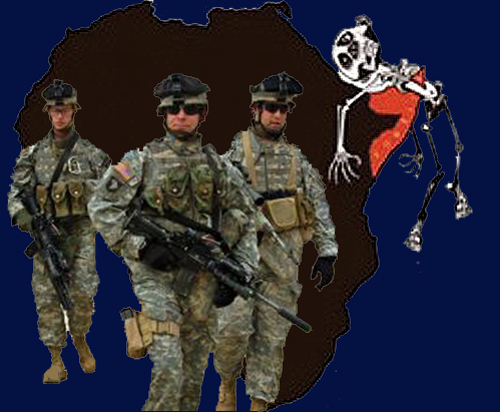
When’s the last time the U.S. fought a war in a foreign land that ended with a better society and government for those people and greater peace for all the world?

Yesterday.

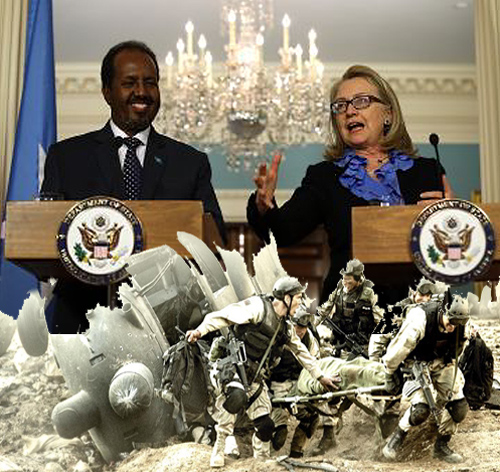
But before that, you have to go back to World War II. But yesterday the U.S. officially recognized the existing Somalia government after 21 years of on-and-off direct conflict.

Although far from tranquil or totally stable there is today a globally recognized Somali government for the first time since 1991, piracy is ending, farmers are planting, schools are open and the economy is growing. None of this since 1991. All this precisely because Obama “surged” our militarism there for the last two years.

He surged a war and won.

Applause?

Them’s the facts, Ma’am. The catastrophe began with Bill Clinton’s cowardly response to Blackhawk Down and then a few years later, the Rwandan Genocide. Clinton escaped a couple close calls with oblivion as President, and I for one think he’s culpable for the last several decades of terrorism in the world. (With a good measure of French obstructionism as well.)

A sweet irony that his wife yesterday was the person in the spotlight recognizing Somali peace.

But Clinton and French responsibility for igniting global jihad had a significant catalyst with the end of the Cold War.

So many African countries were nothing but pawns in the Cold War. They were treated like ivory pieces on a chessboard, spit-polished when they advanced one sides game and ignored to the point of being sacrificed when they didn’t. The frontline battle was in Somalia and neighboring Ethiopia for 20 years before Blackhawk Down.

The U.S. and westerners pulled the puppet strings on Somalia, and Russia with occasional Chinese lace pulled the strings in Ethiopia.

Tens of thousands – maybe hundreds of thousands of people died in regular old tank wars on deserts with no more value than the sand that defines an egg timer. So for 40 years “Somali society” if it still exists was pulled and shoved and bombed and tortured as some unexplained pendulum flinging between good and bad.

The epoch Americans remember most is the one just ended: the epoch of terror when Obama’s surge in Afghanistan forced al-Qaeda principals to flee to Africa. After a short stint in Yemen they went to Somali where their much greater skills and far superior dedication to ideology gave them the tools to conquer the rat pack of warlords that had controlled what had been Somalia with the residue of weaponry left by the end of the Cold War.

The prize in that stealthy battle was the port city of Kismayo, the throne of the pirates, and the loot this provided al-Qaeda rebirthed them with new weapons, new roads, new infrastructure and alas was born, al-Shabaab.

Obama gives no quarter to his enemies. But he doesn’t like public wars. So with more equipment and better technology and not a few real American boots on the ground, America began battling al-Shabaab.

It was just the continuation of the Texas Ranger pulling up his red bandana to disguise his face and sticking his badge in his pocket so he can hunt down the Dallas bank robber who fled into Arkansas. But when it became clear that this clandestine operation wasn’t enough, well, he hired Kenya.

The Kenyan Army invaded Somalia in October, 2011.

Well, that did the trick!

So now the al-Qaeda principals – what’s left of them – have fled into the interior and north of Africa. But don’t worry. The French talk better than we do in that part of the continent, so they’re taking control, now.

I’m of two minds about all this. The world – the whole wide world, including shipping and fishing lanes and air space – it’s all much, much more safe and peaceful today because of Obama’s surge against terror.

But my second mind is whiplashed by the memories of the Cold War, and how we used African societies as pawns in a game that was cruel and devastating to them.

It all remains to be seen. And perhaps my sarcasm is little more than spite of days gone bye.

Perhaps today is better.
Death Knell for al-Qaeda

Death Knell for al-Qaeda

The death knell of the al-Qaeda of Osama bid Laden is gonging in Mali. France is bombing al-Qaeda into oblivion. This is likely the last time you’ll ever hear of the al-Qaeda that blew up the Twin Towers.

The battle today is fierce. There is absolutely no question that this is Afghanistan 2003 in Mali. And I’m convinced that France will win.

Revolutionary guerrillas are never bombed out of existence, whether they’re Mao’s Red Brigade or al-Qaeda in the Maghreb. Guerrillas who survive extermination surface elsewhere, in other revolutions and later wars as many of the old al-Qaeda are Taliban today in Afghanistan.

But al-Qaeda as an organized terrorist force will be no longer and I don’t think anything near as powerful will reemerge in this political epoch. The Taliban, for instance, in either Afghanistan or Pakistan has little power outside its own turf, and that’s what differentiates them from al-Qaeda.

In addition to nine-eleven, al-Qaeda organized a number of global attacks, including the horrible subway massacre of London, the U.S. embassy bombings in East Africa, a Philippine Airlines bombing plot, the Bali massacre, the World Trade Center bombing, tourist hotel bombings on the Kenyan coast, the attempted Manchester airport raid, the shoe bomber, the UPS package bomber, and the attack on the U.S.S. Cole, and this lengthy list doesn’t even include the successful attacks in Afghanistan and Pakistan.

The reach of al-Qaeda has never been seen before al-Qaeda. That doesn’t mean there haven’t been as effective revolutionary movements, just that none except al-Qaeda were truly global. That’s the difference, and I think that global reach of a single terrorist organization will end when the Mali war ends.

What happened in Mali was long expected. The country sits on the bottom of the Sahara Desert, and a huge portion of its north is little more than sand. But for centuries this sand has been ruled by the Tuaregs, a tribe of powerful horseman and cattle traders who controlled the lucrative desert routes that connected North Africa and Europe with the countries on the Atlantic Ocean.

The Tuaregs had never truly succumbed to modern government oversight. And their revolutionary nature, matured in the 21st century with leaders who were schooled in the west and armed by enormous weaponry left from the overthrow of Ghadafi, took over northern Mali more than 9 months ago.

The area is the size of France, and Tuaregs demanded an independent country. It would be nonsense, by the way. As camel thieves and rogue marauders to desert oases, the Tuaregs will never develop on their own. They need development just like peoples everywhere, and nobody in the world – including China or Russia – was going to recognize a country composed of desert tents.

This was the feeling of the very moderate Mali government, a government that was heralded by democratic giants the world over. Even in this blog, written in March by Conor Godrey, there was a sense that the Tuareg “rebellion” would be negotiated down to helping them better than they had been by the Mali government.

But what happened was that al-Qaeda was looking for a new home. I’ve written before about the putsch against al-Qaeda organized by the U.S. and the west.

We pushed them from Afghanistan to Yemen to Somali to the jungles of central Africa, and ultimately into Mali.

We pushed them with local militaries, like the Kenyans, and unbelievably advanced technologies like drones.

Guerilla terrorists flee before making a last stand. Their ideology demands little honor of the sort traditional battles value. When defeated, they run to make a stand another day, and they run to places where they have an opportunity of control. For example, the desert.

So the Tuaregs were usurped by al-Qaeda. There was a period in March and April when several groups negotiated among each other and agreed on an uncomfortable assembly of Islamic law and order. But it didn’t last, really. The land of the Tuaregs, which literally for centuries was ruled by their desert mavericks, was now in the hands of al-Qaeda.

And the Mali government response was weak. So weak that even as the world was calling for serious military intervention, the Mali government balked. Finally its own soldiers mutinied, the weak government collapsed and there was no formal opponent to the new Islamic soldiers ruling its north.

The Security Council, unanimous across its many different state ideologies, authorized military action. The most progressive nearly communist governments and institutions also recognized the need for military action.

This is because Mali is the heart of West Africa. If al-Qaeda establishes a toehold here, Nigeria, Ivory Coast and even Morocco may be threatened.

But France felt waiting until the UN got its act together would be too long. Friday, they started bombing.

Britain has provided air craft for transport. The U.S. has provided transport, intelligence, and undoubtedly, drones.

The Afghan war was bungled by an inept American administration. France is not inept. Since Afghanistan and with lessons learned from it, the western world has been stealthy until now. It is no longer.

The only explanation is that this will be the last and decisive battle against al-Qaeda.

#1 & #2: Whites Fight on Black Soil

#1 & #2: Whites Fight on Black Soil

2012 goes down in history as the first time a modern African military defeated then occupied a terrorist state. Somalia fell to Kenyan soldiers. Except that there’s a lot more to it than that.

My #1 top story for 2012 in Africa is the “pacification” of Somalia by the Kenyan armed forces, and #2 is the less obvious reason why. To see a list of all The Top Ten, click here.

The #2 story, the “less obvious reason why” the Kenyans conquered Somalia is the enormous covert military operations by the west, particularly the U.S. and France.

That assistance actually does include boots on the ground, but the Green Berets and French Foreign Legion are stealthy. They’re only rarely seen.

And while their presence has been most notable in the Somali war, they’ve been seen elsewhere, especially in central Africa in The Congo. About a 100 U.S. forces arrived publicly in Uganda for that effort. The French have a lot more in northern Africa.

These two top significant events on the continent last year have enormous implications globally but of course even greater ramifications locally. But I’d suggest that in a worldwide context they are among the top events of the year.

Somalia has been an anarchic geopolitical unit for 20 years. The implosion began when Bill Cinton abandoned a United Nations effort to hold the country together in 1993, what is commonly known in America as “Blackhawk Down.”

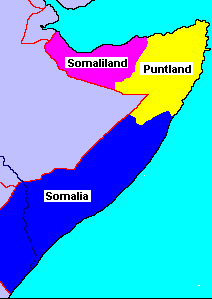
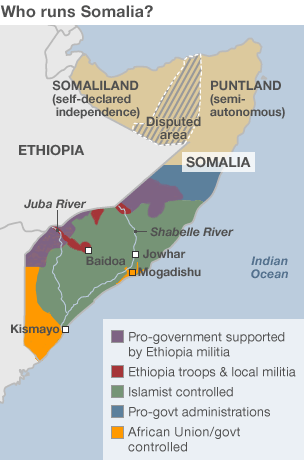
The country quickly broke apart into ethnic and clan-based tiny warlord states originally fueled by the weaponry left by Blackhawk Down. That later was sustained by piracy and other black-marketteering. Although two northern parts, Puntland and Somaliland, managed to organize themselves into something more stable and less onerous than the old Taliban Afghanistan, the majority of the country remained ruled by local warlords.

The Russians left Afghanistan in 1989 and shortly thereafter the country was ruled by the Taliban which welcomed the gang of Thugs led by bin Laden. This was a turning point in global power, a specific outcome of the end of the Cold War.

Perhaps the world was so tired of conflict that the west in particular grew inward desperate for periods of no war. Be that as it may, no president in the history of the U.S. has so dropped the ball on world peace like Clinton did, then.

His early nineties retreat from Africa caused all sorts of mayhem, from the Rwandan war to the Nairobi and Dar embassy bombings. He has since apologized, and some of his advisers at the time say he had been distracted from the growing turbulence in Africa by the Monica Lewinsky affair and subsequent impeachment.

I believe that radicals like bin Laden were emboldened by the subsequent mayhem. The Rwandan holocaust preceded by the implosion of Somalia was a calling card to bin Laden. A few years later, he blew up the American embassies in East Africa.

A few years later, he blew up the Twin Towers.

Terrorism reigned.

And so it has ever since. And America’s extraordinary response, the military involvement in Afghanistan and Iran hasn’t worked. Obama knows this. Like suburbs hiring trained snipers to kill deer eating their city park roses, Bush tried to eradicate terrorism with firepower.

All it did was blast it to the sides: Africa. Deer aren’t as dumb as you think. They sense the sniper’s limits and move out. For a while the city park’s roses bloom magnificently, but roses on the periphery don’t do so well.

For example, Somalia. Bush shotgunned Afghanistan, then Iraq, and many of bin Laden’s thugs were routed elsewhere. Not too many years later they ended up in Somalia after a short stint in Yemen. The al-Qaeda became al-Shabaab and conquered the warlord states of southern Somalia. What had been Afghanistan under the Taliban was now Somalia under al-Shabaab.

One and the same.

So Kenya especially began to suffer the same way all the countries bordering Afghanistan suffered. It starts with refugees. That is a problem of enormous magnitude, aggravated in Kenya’s case because the camps were located in its far and remote northeastern frontier.

And quite apart from the strain of such a responsibility economically and socially, the camps become conduits for terrorists to enter Kenya. Shortly Kenyan bus stops and churches were being blown up by suicide bombers.

So a little more than a year ago Kenya announced it would mount a military operation into Somalia. George Bush failed getting Pakistan to do the same in Afghanistan. Obama succeeded with Kenya. At first we all laughed out loud. But we were wrong.

At first the Number One News that Kenya has pacified Somalia seems so good. Part of it is. A multiple generational war is ending. Good, right? Yes, of course when any conflict ends.

Mop up continues, but when the Kenyan army captured the town of Afmadow we knew it would only be days before Kismayo fell to the courageous Kenyans. As it turned out it was months but it did finally fall and today Kenya occupies most of what only a year ago was troubled Somalia.

Today, Somalia has an effective government and the capital of Mogadishu – while not exactly a tourist haven yet – is peaceful. Kenya, on the other hand, is increasingly troubled.

I believe Kenya is too advanced and mature a society to succomb the same way Afghanistan/Pakistan, Yemen and Somalia did. Yes, folks, Kenya is more socially atune and politically savvy than Pakistan. I’m hopeful that the current bombings and other violence will slowly end as the new constitution is cemented with elections in March.

But this is deja-vu squared, no matter how you cut it. We routed world terrorists out of Afghanistan and they feld to Yemen. We routed world terrorists out of Yemen and they went to, and settled in for a quite a while, Somalia. Now that they’re routed out of Somalia?

The unpleasant conclusion is that for the time being, they’re in Kenya, and so Kenya is not a good place right now to visit.

Obama and Hollande seem to think the terrorist can just be chased into oblivion, and oblivion to them is currently beyond Kenya somewhere else in Africa. Are you following what’s happening in Central Africa, today? Or Mali? Or Nigeria?

I’ve been very skeptical about this policy. I’m not sure the west has enough resources to chase every terrorist into oblivion. I wonder if it’s time to let up.

But I’m uncertain. As uncertain as Clinton and Mitterand in 1994 must have been before a million people were slaughtered in Rwanda.

Us versus U.S.

Us versus U.S.

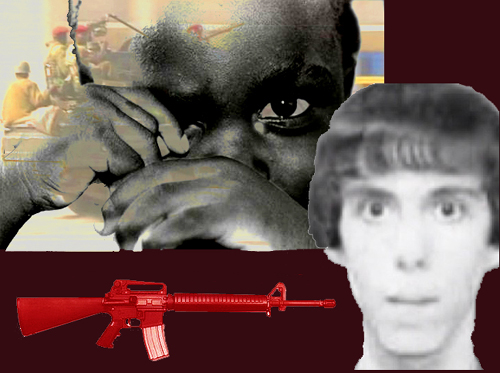
Easily 20 children are violently murdered in Africa every day. Ten Afghan kids were just violently murdered a few hours ago. Why are Americans so uniquely horrified at the events in Newtown?

My daughter is a teacher in the Brooklyn, and as I heard the news Friday I was viscerally distressed in a way I’m not when reporting deaths in Africa. Why?

The explanation is terror. That word has come to assume new meanings in my lifetime, but essentially it means a feeling of intense fear without explanation. Humans don’t like unexplained things, and especially unexplained fear.

When we as Americans read of the murdered African children we feel no terror. First, it is far away, not just geographically but psychically. It’s in a place that we believe is less civilized, much poorer and less capable of protecting itself, and often Americans believe organized by corrupt governments.

The implication is that such horrific events are to be expected in Africa.

But not in Newtown, Connecticut. It’s only 45 miles from New York. It’s an affluent community with layers of security. Its leaders and politicians are all nice, upstanding people, working for the better good.

So it makes no sense in Newtown. We think it makes sense in Baragoi, Kenya, or Otitie, Nigeria but not in Newtown. And even if it didn’t make sense in Africa, Africa’s too far away to matter to us.

What matters to us, is us.

And it’s precisely our definition of “us” that goes to the heart of the matter. Americans so far don’t want to define “us” as much larger than a small community of their own family or neighbors. So they certainly can’t extend the “us” to Africa.

That inability to expand the definition of “us” is partially the cause of the Newtown tragedy and even of the tragedies elsewhere in the world and as far away as Africa.

No sane, decent person anywhere in the world would continence the violence in Newtown or Otitie. And there are fair and just ways to prevent such violence. But prevention in even its mildest form and no matter for what purpose – even prevention from buying bacteria infected food from a grocery store – is only possible when individuals give up some of their own rights.

And that’s where America is so far behind the rest of the world, even Africa. We are so obsessed with individual rights and so terrified that some authority will force us to do something we don’t want to, that we are steadfastly reluctant to sacrifice for the better good of the community.

And it has a horrible corollary. When a handful of men in turbans blow up the World Trade Center, our response is to blow up two entire countries wholesale with their civilizations in a vengeful response. We can’t parse the hundreds of millions of individuals who are “foreign” into the myriad levels of good and bad.

Osama is Afghanistan is Iraq. It’s all one thing: We have to think of society as groups of “us”es with no variation within.

Gun control is an obvious partial solution to America’s epidemic of mass murders. By the way, that’s the same partial solution for stopping African carnage. Since most of the world’s weapons are manufactured in Russia and the U.S., it’s a rather simple coalition.

But gun control – much more than protection against bacterial infected salmon – requires an expanded definition of “us.” Sadly, I just don’t think my America is mature enough yet for that.

I hope I’m wrong. But I know until we can achieve such a small step for ourselves, the chance of our participation in assisting the world order as a whole is next to nil.

Time to Go Home Now

Time to Go Home Now

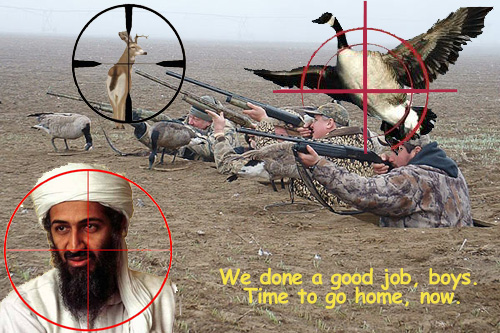
Hey chums, time to end the war on terror! We successfully pushed it into Africa! And they’ll do much better once we get the boots out.

The modern war on terror is like suburbanites trying to eradicate deer and geese. Few homeowners are ever hurt by deer and certainly not by geese, but their gardens are eaten and zoysia lawns defaced.

And “everyone knows” of the dog that was bitten by a stag, or the young oak trees eaten to the ground in the precious county forest, or the toddler nipped nearly to death by the hen’s beak, and – horror of horrors – something so truly horrible it must be given an anagram: CWD.

It is precisely the juggernaut of thought about CWD that tips the balance in the county finance committee to hire that sniper to go into the lagoon and start shooting. After all, CWD does exactly what the suburban homeowner wants it to do: kills the deer.

But fashioning goodness from simple reactive evil, the homeowner begins to feel sorry for the poor wasting away antelope. Euthanasia is wrong, but execution is right.

This is so similar to terrorism.

Nine-Eleven did ultimate harm to 3000+ people, but at the time there were more than 300 million living in the U.S., another billion or so in the countries represented in that awful carnage. So the vast, vast majority of human beings were not effected … except by terror.

By the fear it would, somehow someday, happen to them or those close to them.

The war on terror, though, has much realer consequences for all of us. It’s costly, it allows invasions of our privacies not otherwise possible, and it allows a small handful of people – mostly the president – to assassinate foreigners at will.

The last removed power that the war on terror conveys actually effects us directly. Our own behavior changes when our leader can murder at will.

When you think about, it’s worse than horrible. We have grown complacent about murder.

Numerous analysts last week suggested it’s time for America to end the war on terror. It makes a wondrous peace headline just before the holidays but it carries powerful implications for American policy.

Journalists like Rachel Maddow and Fareed Zakaria have been joined by experts close to the government.

The reason for this is pretty simple: the assault on terrorism carried out especially by Obama has succeeded. Like with deer chomping roses, we have exported the problem to our periphery.

Culling deer or blasting away geese has never successfully reduced either an existing regional population or any population trends. But it does move the problem away – to the edges of your existence.

Culling deer in the Chicago suburb of Skokie moves the problem further out from the city into more rural areas, complicating life there a little bit more as a result.

Obama has successfully routed al-Qaeda and with the weekend’s drone assassination of Abu Zaid al-Kuwaiti in Pakistan, the last of Osama’s Old Boys Network is gone.

With the effective fall of the town of Jowhar in Somali last week, al-Shabaab is nearly gone, too. Somalia, which became the dustbin of terrorists worldwide as Obama’s wars in the Afghan region intensified, is essentially now no longer under terrorist control.

It is under the fragile control of countries like Kenya and Ethiopia, that are now carrying the burden of the war on terror.

Even much smaller and more regional groups like the Lords Resistance Army are on the run, presumably from U.S. Special Forces in the deepest central African jungles.

America’s War on Terror – at least as regards America’s land itself – is over.

The strongest argument against ending the war on terror, is that it isn’t eradicated worldwide, and worse, where it still flourishes (in Africa) the powers there are much weaker than us. I.E.: They Don’t Have Drones.

True TDHD but they will be much more successful wiping up the residue than we were. The so-called terrorists are much closer to them ethnically and historically. There is a much greater need to pacify militants and integrate them into society.

Right now you might think that doesn’t look real good: Terrorists hold half of Mali, most of the CAR and are detonating bombs in Nairobi at the rate of about one per month.

But it’s nowhere near the confusion and destruction that Afghanistan was less than ten years ago, or even that parts of Pakistan are today. Nairobi today is probably nicer than Belfast 20 years ago: Africa will take care of itself, much better and quicker if we withdraw.

That leaves … Afghanistan and Pakistan.

It’s been more than a year since we announced we will be out of Afghanistan in little more than another year. Theoretically we never invaded Pakistan. I’m no expert on the region, but I wonder if eliminating drone assassinations would not actually have a positive effect on our security. When we take our boots out, drones will be all that’s left.

So happy holidays, all. Peace is near at hand?

Just Child’s Play

Just Child’s Play

The Grimm brothers, DOOM II, and the Lord’s Resistance Army all agree: terror is child’s play.

Uganda is a good geopolitical source for understanding terrorists. I don’t mean this is where most of the fighting goes on or is even planned; those places like Somalia and Afghanistan are well known.

But Uganda gives us an entre into the world of terrorism. Uganda keeps one foot in the world of sane civilization and one foot in the underworld, and so it’s a place for those of us who believe we’re soundly placed in sane civilization to try to understanding the other.

Uganda is where the Lord’s Resistance Army began and flourished. The country has been a target of numerous al-Shabaab attacks including the group’s most spectacular one, and it’s run by a old dictator who can’t decide if gays should be executed or not.

Today Uganda’s main newspaper published an interview, “Confessions of an ex-al-Shabaab Fighter.” It’s remarkably pro-forma and stinks to high heaven of considerable editing if not outright alteration. Even if the teenager ostensibly giving the interview is real and can be vetted by better journalists, I doubt he remembers correctly his nefarious life.

It’s not the first time that an “ex” teenage terrorist has dumped what he remembers of his terrorist life into the media. Moses, James, and Robert are among some of the LRA child soldiers whose lives became media stories. There’s even girls: Lily.

The meticulous journalist, Peter Eichstaedt, summed up all the foregoing and more in his book, First Kill Your Family.

What’s interesting about today’s interviewee is that he’s not LRA. Isa Ali Senkumbi went more or less of his free child’s will to Somali to train as a terrorist. It’s about al-Shabaab, Africa’s al-Qaeda.

That’s a significant difference with the LRA and other similar militias in mostly central Africa. The LRA usually abducted and drugged the kids before turning them into killers. The LRA is much crazier than the organizations which bombed the twin towers. It’s really more of a cult than an ideological movement. To this day it’s not clear the LRA has any sort of political or social agenda.

Just like most of the Grimm Fairy Tales and many of the (I consider objectionable) teen video horror and apocalyptic games. But whether you side with me that the Cinderella is OK because she always becomes a princess, and that DOOM II isn’t OK because from time to time the world is destroyed, we’d all agree they’re both terrifying with minimal moralism involved.

Not so with ideological terror. At the least your act of jihad can earn your family considerable money. And at most you get the key to eternity.

The LRA drugged and abducted its recruits because the younger a child is the more likely she will be convinced to do something with candy rather than philosophy. So when Isa decided to join jihad he didn’t actually.

He thought he was going for “Islamic training” and did not realize the older friend recruiting him “was recruiting me into al-Shabaab.”

Isa was 13 at the time, and over the next four impressionable teen years he claims to have become an exceptional fighter and terrorist capable of the most daring escapes and missions. But for some reason not explained, he never fully embraced the ideology. So he left.

I think it likely one of the reasons is that he’s too African despite being a Muslim. The well-discussed antipathy of American Jews to American blacks and vice versa is mirrored in that between African and Arab Muslims. It may be less true the further north in the continent with Boko Haram and similar groups. But in East and Central Africa I think it critical.

Isa is now smiling in front of a computer, reformed and protected by an NGO. His story as portrayed today is far from complete and I doubt much of its veracity. The voice in the interview does not sound like a teenager’s.

But when layered with the many other stories of children embroiled in terror it helps us realize: the understanding of good and evil comes at a very young age.

For Hitler, Claudius, Cheney and bin Laden, terror is but child’s play.

Zap Zanzibar

Zap Zanzibar

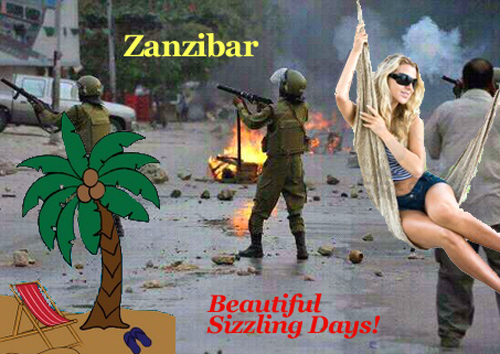
Last night Pres. Obama and Gov. Romney argued whether al-Qaeda was on the run. It is, and it’s central to why Zanzibar is exploding, now.

Yesterday tear gas filled Stone Town as mostly young radicals protested the indictment of a popular extremist sheik who was then held without bail.

The unrest in Zanzibar began last week. There was also significant violence in mainland Tanzania’s largest city, Dar-es-Salaam. Many media reports claimed this was Zanzibar’s “Arab Spring.”

It’s not. Unlike in northern Africa these demonstrations will not succeed in toppling the Tanzanian government. Also unlike in northern Africa, the vast majority of Tanzanians are critical of the Islamic violence.

Mainland Tanzania has shackled Zanzibar ever since the federation in 1964 and most Tanzanians look down on Zanzibaris. This has not been a helpful attitude, in the past and especially now as unrest grows on the island. Be that as it may, the significant point is that mainland Tanzanians are in the vast majority.

But there could be a period now measured in months of unrest not significant enough to stop tourists coming to see lions but enough to seriously effect the beach business. This is because the trouble that’s brewing is on the coast.

And that’s because the coast is where East Africa’s Muslim population is, and much of it has been highly radicalized over just the last few years.

Americans who think of East Africa as big game country don’t understand that more than half of the tourists to East Africa never see an animal larger than a monkey. The extraordinarily beautiful coral coast which extends virtually all the way south of Somalia through Mozambique is East Africa’s real tourist treasure, not wild animals.

Europeans especially use East Africa the same way Americans use the Caribbean, for sun ‘n sand vacations, usually of a week long, and usually transported by charter aircraft that practically land next to your beach view hotel room. There you stay, vegging out on margaritas and reggae bands.

Trouble on the coast is not new. In November, 2002, the Israeli Paradise Beach Hotel was mostly destroyed by a terrorist bomb and a ground-to-air missile narrowly missed an El Al jumbo jet taking off from Mombasa, Kenya.

There has been nothing as dramatic until this year. There had been numerous incidents of small grenade bombs in local bars and several incidents of tourist harassment in the last decade. But none of these critically dissuaded tourists from flooding to Kenya’s beaches almost exclusively from Europe.

But all that changed with the successful Kenyan invasion of Somali just to the north of Kenya. As Kenyan soldiers routed Somali terrorists, the coast began to heat up in much more generic ways that has seriously effected tourism. Tourists were kidnaped and publicly ransomed by terrorists, and virtually all the main beach hotels began to institute extremely strict security procedures.

Then last month, just as the Kenyan forces were about to oust al-Shabaab (al-Qaeda in Somali) from its last great stronghold of Kismayo, all sorts of political turbulence erupted in both Mombasa in Kenya and Zanzibar in Tanzania.

It struck me as an obvious consequence of the successful military action in Somalia. Rebels were running for cover, and the East Africa coast with its radical Muslims provides that, and what assets and hardware they could run with began funneling through East Africa.

Kenya is in the thralls of the last legislation implementing its new constitution before March elections. Suddenly there was a newly reborn political movement in Mombasa that called itself the Mombasa Republican Congress. Its agenda was nothing less than independence from Kenya.

The independent movement in Zanzibar which has been a perennial cause every since federation with the mainland in 1964, suddenly blossomed with new and fancy leaflets, new cars for its leaders and new megaphones for its Friday prayers.

While ostensibly completely separate political movements, the timing of both the emergence of the MRC and the makeover of the Zanzibar autonomy movement struck me as anything but coincidental. Money, methods and Islamic madness was coming from the north.

And then the tinderbox exploded in both Kenya and Zanzibar. Last month the principal radical cleric was killed in a car drive-by gangster-like shooting. And last week, Tanzanian police started rounding up radical clerics. Each incident, though separated by nearly a month, resulted in violent protests.

As I write this blog today Mombasa is calm following the Kenyan government’s very tough actions which involved dozens of arrests and the closing of theoretically unregistered Muslim organizations. The Kenyan President charged Mombasa radicals to “surrender or face arrest.”

But Zanzibar is not calm, today, and depending very much upon what the Tanzanian government now does with its radical Muslims, it may not be calm for a long while. And now what happens in one place is likely to effect the other.

As far as I can see, which is all along the exquisitely beautiful coral coast from Somali to the Mozambique border, this outstanding Indian Ocean venue won’t be a place to vegge out for some time.

When and will all of this calm down?

It depends upon how quickly the Somali mop-up occurs, how peacefully and completely the March Kenyan elections go, and how placated Zanzibari successionists will feel as Tanzania flirts with the idea of a new constitution.

March is the key date. After the March 4 Kenyan elections we’ll have a much clearer picture on which to predict what the coast will look like over the next year.

Until then. Leave your flippers at home. Concentrate on the binocs.

General Ndugu Obama

General Ndugu Obama

Drawing by PSMandrake.
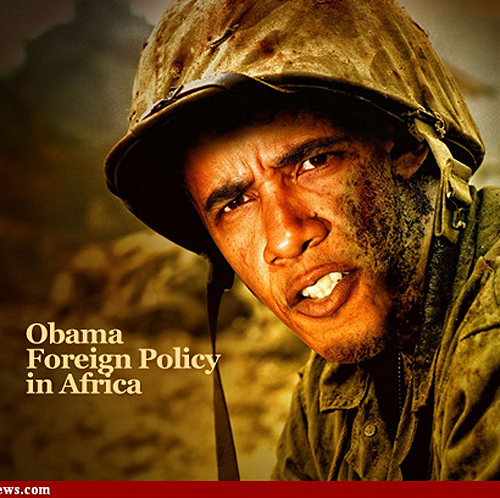
Many will be surprised that America has grown increasingly militant in Africa. Because Africa is where most world terrorists now locate, American policy on the continent is defined overwhelmingly by the American War on Terror.

Obama’s massive military involvement in Africa is mostly covert, so not readily understood. But the policy is public if difficult to ferret out, and Ralph Nader said yesterday on Iowa Public Radio that Obama is far more militant than George Bush, who got us mired in two major wars.

Nader’s right. But Nader neglects to explain that Obama’s militancy is predominantly covert. Using drones, very secret special forces that come and go quickly, and massive support of African proxy armies, Obama has exceeded American military involvement in Africa under George Bush almost exponentially. But not in soldiers. So Americans don’t feel it, and mostly they don’t know about it.

Africom, the Pentagon command for Africa, now has more personnel and overall resources than all of USAid for Africa. The command manipulates deployed drones that have assassinated a dozen African militants and been critical to successful African military operations in Somalia, Uganda, the DRC and the Central African Republic.

That is not, of course, the be-all and end-all of American foreign policy in Africa. There has been continued assistance throughout the continent on a wide range of issues from clean water to malaria eradication; the Obama administration has been particularly supportive of African initiatives in the UN and World Court; and on highly political issues (several regarding Rwanda) the Obama Administration has come down swiftly and correctly on the sides that we progressives champion.

But the bottom line is that Obama looks much more like a general than a philanthropist to Africans, today. It is unlikely he would be nominated today for the Nobel Peace Prize.

I remain certain terrorism cannot be eliminated strictly militarily. That results in two options: (a) don’t try to eliminate global terror, just do the best possible and learn to live with what remains; or (b) simultaneously work towards eliminating the cause of terrorism.

That [b] has gained the euphemism of “nation building” starting as early as the Vietnam War, and it remains hard to define, very open-ended nonmilitary support that is often squandered or misplaced. But there is no question Obama believes in the policy for Africa, despite the emphasis on militarism.

So as the veteran African diplomat John Norris pointed out in Foreign Policy earlier this year, “this president’s approach to Africa look a great deal like business as usual.”

It’s hard to fault a leader who had to dedicate most of his time to staving the collapse of the entire global economic order for being uncreative with new African development policies. But it’s not hard to critique his aggressive militant approach to Africa’s terrorists. That’s not “business as usual.” It is a considerable ratcheting up of war in Africa.

But fatefully or coincidentally “nation building” in Africa is proceeding at a rapid pace as well, albeit with little direct American support. The implementation of a new constitution in Kenya, a recharged South African political debate about basic social and commercial policies, glimmers of constitutional change in Tanzania and Malawi, might all be that is necessary to balance Obama’s militarism.

And it puts us progressives and peaceniks in a compromised position. Terrorism might indeed be on the wane in Africa because of Obama’s increased militarism, but the policies are not the ones we would have advocated in the beginning and the question of their shelf life remains dubious.

Is Obama an African war monger? Yes. But global peace maker, too? That is the crux of today’s African foreign policy debate.

High Road and Low Road

High Road and Low Road

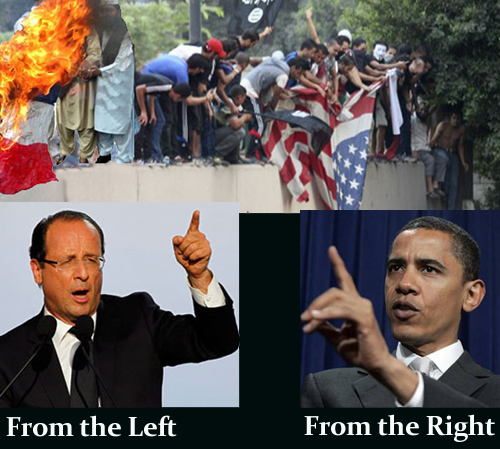
The French president’s push for foreign military intervention in Mali is a true leftist at work and frames Obama as the centrist he is.

French President Francois Hollande’s foreign policy in Africa is nearly identical to Obama, but their methods couldn’t be different.

The new socialist president of France is outspoken and quick to act. In Africa he is pushing for military intervention in many of the hot zones, including against extreme Islamists in Mali. He does not mince his words, either, labeling the Islamists in Mali with “unfathomable stupidity.”

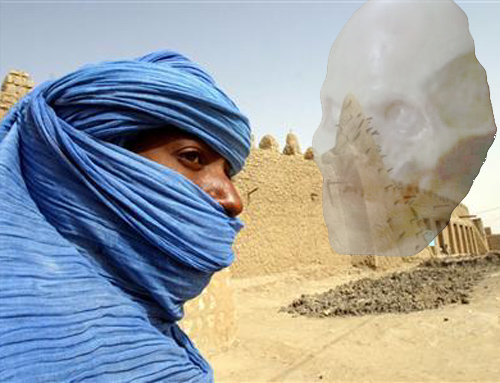
Hollande is referring to Tuareg rebels that now control the historic city of Timbuktu, where reports are filtering out that many of the treasured monuments are being destroyed.

Timbuktu is one of the oldest cities in the interior of north Africa. Its world-famous “library” of ancient texts is an UNESCO World Heritage Site and has been reportedly destroyed. Just before Timbuktu fell from the control of the Mali government, several French were kidnapped and remain so.

So it’s understandable that Hollande will say forceful things, but the man’s wrath at what he considers common sense stupidities is not limited to places where French are held hostage.

He was one of the first to condemn the U.S. consulate attack in Benghazi. He’s one of the staunchest supporters of France’s very controversial rule prohibiting school children from veiling their heads even if they are Muslim. And he is leading the effort to assist the Syrian rebels.

What I find so revealing is how timid and centrist he makes Obama appear in contrast. And as I search for the links of evidence and delve more deeply into Hollande’s simple ideology, I realize it’s not that Obama “appears” to be centrist, Obama is centrist.

Centrist, today, whether in U.S. or worldwide politics is what hardly a decade ago we’d call right. The power of Ronald Reagan and his success in eliminating a huge part of the “socialist” world has manifest itself in extraordinarily powerful and lasting ways.

“Ends Justify Means” was an opprobrium 1960s communist haters placed on world socialists, but typical of far-right and far-left ideologies, they circle about and become each other. Both the communist world and the “free world” embrace ends-justify-means.

What I love about the new African politics producing great constitutions in Kenya and South Africa, for instance, is the utter ignoring of these archaic ideologies. New thinkers, especially in Africa, recognize the old adversaries socialism and free-market democracy are mostly meaningless in today’s interconnected and highly technical world.

And like Hollande, Africans embrace common sense. Ends-justify-means is not common sense, quite the opposite. Its Machiavellian nature means it often trips itself up. Starting a war on a false pretense in Iraq is the ultimate ends-justify-means.

I’m not suggesting Obama will start another war. But here’s the stark difference with someone like Hollande, and you be the judge as to which is better, or more effective:

As radical Islamists flee areas they flourished in only a decade ago – Afghanistan, the Horn of Africa, Yemen and Somalia – they are fleeing to the north of the continent, areas with weak governments and remote locales.

But they’re hugely weakened. The result is a lot of fracturing. Boko Haram, al-Shabaab, al-Ansari are versions of al-Qaeda, but they aren’t al-Qaeda and as best shown in Mali, they often fight one another.

In Mali, today, Tuareg rebels who have through some lone spokesman identified themselves as “Maoists” are actually the ones in control. They have swayed quite a distance from a religious ideology.

In pursuing the fugitives, Obama is relying on drones and secret missions. Hollande is simply straight-forward. He wants to expend no time or energy on deception. He calls for military intervention, he calls the Tuareg stupid and he condemns actions immediately that he sees as immoral.

That’s the difference between a centrist and a socialist, today. Their missions might be the same, but their methods are quite different.

To Preserve & Protect

To Preserve & Protect

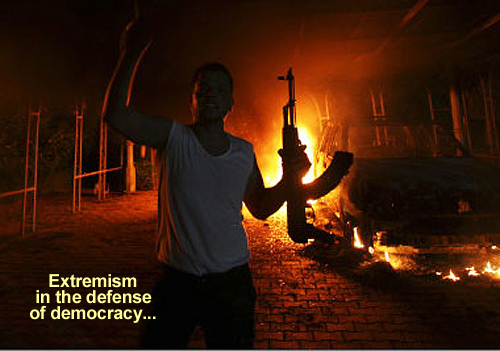
African unrest this week and Tuesday’s attack in Libya are profound indications that democracy is as nuclear as uranium.

The attack of America’s Benghazi consulate was likely coordinated by an al-Qaeda affiliate to mark the 9-11 anniversary. But were the growing protests prior to that just coincidence? Even more eery, was the film by a mysterious American extremist posted on YouTube castigating Mohamed coincidental?

Conspiracy is a nasty game but there are some dangerous fingerprints on that video. The maker has disappeared. New and technologically immature Afghanistan was able to block it from being seen by its population, but vastly more savvy Egypt didn’t.

And much more to the point, how does such symbolism evoke such violence?

The same way white pointed hats in the older South played judge and jury in a single night. Or the way presidential candidates threaten bureaucrats with summary lynching. Or the way Rush Limbaugh raises the blood pressure of 5 million brainwashed Americans every day.

Democracy is not just the freedom to choose your leaders, but the freedom to choose bad and evil leaders, and even the freedom to choose war mongers and genocide organizers. Evil is evil in part because it fools the good into thinking it’s something else.

That’s what’s happening with the growing crowds of protestors in the Mideast, now, throngs of desperate people looking for a fight, anything to blame their misery on.

When strongmen held Egypt and Libya at bay, just as strongmen today in Uganda or Zimbabwe, dissent of any kind is eliminated. Yet these dictators are often tolerated by the world and held to some mythical threshold of human rights violations, some trigger line of so much blood spilled.

We forgive without question their mercenary capitalism that allows them to achieve untold wealth at the expense of their poor. But we kick into action when slow death is replaced by quicker, more violent deaths. And perhaps there’s no other way. We can’t be everyone’s brother’s keeper.

But our mistake is the belief we are ourselves immune to such folly. We, too, are fooled. We, too, are impoverished by our elite leaders.

Consider this. The arsenal of weapons including shoulder-fired missile grenades that blew up our Benghazi consulate are available right now for you to buy on eBay, and while the vast majority of the world forbids their ownership by private citizens, you can receive them legally by UPS in Colorado and Texas.

Democracy, like conspiracy, is a nasty game. It doesn’t always turn out the way you’d like.

Kenya Great But Don’t Go

Kenya Great But Don’t Go

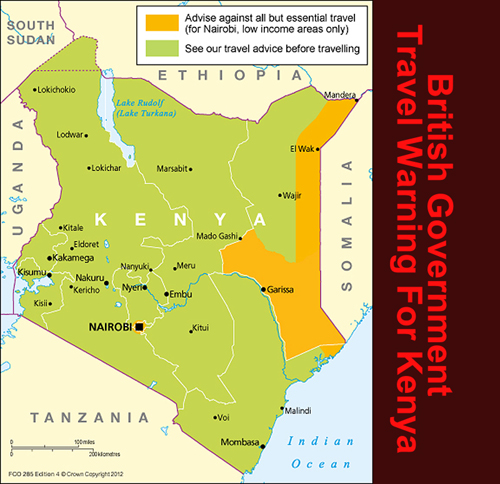
Good news in Kenya is causing extreme turbulence and many countries are cautioning their citizens about traveling there, now.

It’s heart-wrenching, because Kenya depends so much on tourism. It’s complicated, because the potential for disrupting foreign vacations comes specifically from a series of successes in Kenya’s military operation in Somalia and its growing role in the global war against terror.

Britain, France, Australia and Canada among several dozen other countries all issued new advisories to their citizens this week, indicating that travel to Kenya has become increasingly problematic. (The U.S. did not, and that oversight continues a long history of poor and misleading travel advice coming out of Washington.)

All countries said the same thing: don’t go to any part of the northern coast of Kenya including Kismayu and Lamu, and if you travel to Nairobi city, avoid a number of the poorer areas, specifically named.

The reasons for this stem from two major events this week:

A radical cleric in Mombasa was assassinated in a drive-by shooting. As I wrote at the time Sheik Aboud Rogo was a well-known supporter of al-Shabaab, al-Qaeda in Somali, and one the remaining likely fugitives of a number of high-profile terrorist events.

As I said I believe the shooting was done by the very people Sheik Rogo supports as an attempt to incite violence and disrupt Kenya. It worked. Kenya’s second largest town and only port exploded in violence earlier this week.

Secondly, after nearly a year, the Kenyan military is about to invade Kismayo, the final stronghold of al-Shabaab. It’s Somalia’s modern port, largest organized city and the capital of pirates and terrorists the world over. The economy of Kismayo alone is estimated at ten times that of the rest of Somalia.

This week the Kenyan navy continued an unending bombardment of the port, taking out its airport and confirming the death of at least two major al-Shabaab leaders. The Kenyan air force has been dropping leaflets on the town explaining to citizens where and how to flee once the ground fight begins.

After Kismayo falls, al-Shabaab has nothing left but disparate mostly now ungoverned guerilla fighters, and clearly what they will do is attempt strategic acts of terrorism. The Kenyan coast – where 50% of all its tourist revenues are generated – is within day’s walk of Somalia.

And the poor neighborhoods of sprawling, gigantic Nairobi are perfect hideouts for fugitives. This year a number of grenade attacks have already occurred there that were linked to al-Shabaab.

But if you’re a Kenyan, and despite a lot of civil and political turbulence right now (including several major public sector strikes), you’re incredibly hopeful and aggressively behind the government. The march to the historic spring elections under a new and brilliant constitution will become a model for much of Africa.

But fate has dealt Kenya, with its geography and its rapid development, a terrible roll in the world’s struggle to end terror. It’s stepped up to it, and I think it will prevail.

But as much as I support Kenya and hope for its ultimate success and glory, I cannot do anything other than advise potential travelers not to go there, now.

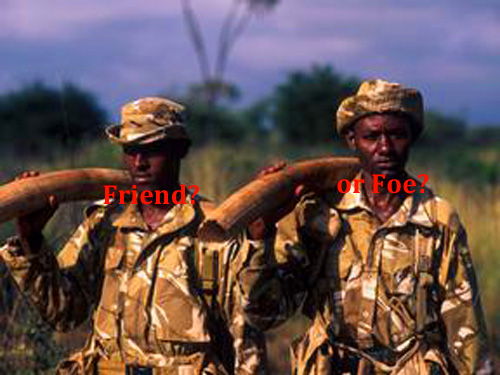
Elephant Friends or Human Foes?

Elephant Friends or Human Foes?

The Times article about escalating elephant poaching rebroadcast by NPR this morning needs more discussion, especially if you’re a sympathetic American.

Jeffrey Gettleman described in exquisite detail typical of his outstanding reporting the rapid increase in elephant poaching in remote places like The Congo.

It was an excellent piece of journalism, mainly because Gettleman pulled no punches. He let others explain his conclusion that the culprits are existing governments and renegade militias, and that the problem wouldn’t exist if China weren’t getting rich.

Unfortunately Americans often don’t read that far into an article, and when reduced by the NPR report this morning, some of these very important conclusions were terribly skimmed over.

I often feel ashamed as an American of our knee-jerk reactions to animal cruelty, for example, when it prompts us to greater action than people cruelty in Africa. And this is the perfect example.

Read Gettleman through to the end, don’t listen to NPR, and then think about it carefully.

Elephants today are nowhere near as threatened as they were in the 1980s when selling ivory in most parts of the world was legal. Then the only impediment to wiping out the species was the impoverished and usually corrupt African government that made it illegal to steal ivory from their wilderness.

But once out, the free market reigned most cruelly. And it was easy to get out. The wife of the president of Kenya, the country that suffered the most rapid decline in elephants, was a kingpin in the market. And there were no extradition treaties for ivory.

Ivory has been considered an exceptionally precious commodity in Asia for literally thousands of years, and that hadn’t changed in the 1980s and hasn’t changed, now. It’s an exceptional media that allows intricate sculpture yet holds its form through unusual strength and goes through subtle and beautiful color changes with age.

Like so much in nature, it is so much more beautiful than anything synthetic.

Tanzanian researcher Charles Foley also argues that the OPEC oil crisis of the 1980s prompted Mideasterners to cache their funds in durable commodities like ivory, and to be sure, many of the poaching syndicates were ultimately traced to the Mideast. That was the middleman to Asia.

The problem wasn’t solved until the world came together and created a global treaty that banned the sale of ivory, CITES. It is that treaty still in force today that is no longer functioning.

And the reasons it’s no longer functioning reveal a deep human neglect that is much more profound than neglecting to protect an animal. There are two equally culpable parties: China and The West.

CHINA’s BLAME
Hillary Clinton is today in China making the case for the first: CITES was successful because China and all of Asia (at the time, critically important Hong Kong) was on board. Today, China is ignoring CITES.

And the market for ivory in China is unbelievable. There are literally hundreds of thousands if not millions more rich Chinese than existed in the 1980s, and as their own economy falters and the world seems momentarily less secure, their passion for ivory has renewed geometrically.

In the 1980s ivory rose to $100/kilo. Today in China carved ivory trades as high as $1000/ounce.

When there is such an incredible demand, where an ounce of a product that comes in 100-pound tusks is greater than the average annual income of an African living in central Africa jungles, imagine the temptation to kill the thing.

China’s inability to curb its effete greed, its inability to develop an art culture that doesn’t lay waste a living thing, is essential to understanding this dilemma.

WEST’s BLAME
The West’s culpability derives mostly from its obsession with terrorism and it is a sweet-and-sour story to be sure.

To our credit America is eking away much of the under-the-table and immoral politics of our past history with Africa, and so is much of Europe. The new Dodd-Frank regulations of how American corporations can obtain precious earth metals from Africa has strangled many African warlords. Reparations by several European countries for the most patent sins of colonialism has reversed a century of denial.

But our continued military involvement in Africa, escalated by Obama especially in Somalia and the central African region, has in its military successes turned warlords and militias on the run into elephant killers.

Starved of precious metals like coltan, turned tail by increasing military losses, African guerillas like the remnants of the Lord’s Resistance Army are now fueling their dwindling operations with the ivory trade. And with the market so ready, it’s an easy call for them.

And worse, the ostensible victors in these military skirmishes, especially the Ugandans, have now been documented by Gettleman of using the military equipment given to them by America to slaughter elephants.

I have no doubt that Obama and his advisers believe that the military successes in central Africa and Somalia are worth the loss of elephant.

So do I.

And that’s the profound understanding you’ve got to acquire from this complicated story. Be patient. Condemn the elephant slaughter, support Hillary in stiff arming China to return with fervor to CITES, but don’t do anything else.

Don’t send a new $100 to Save the Elephants, because you believe the organization which does fantastically good work in Kenya can save an elephant from the Lord’s Resistance Army in central Africa selling to a fanatical China. It can’t.

What will impede the current slaughter is reducing terrorism, making China adhere to CITES, reducing the market value of ivory to something fathomable vis-a-vis an African’s annual wage. And these solutions aren’t easy ones and there is no better way to effect them than to support an American foreign policy on the right track for the first time in a generation.

Nor will elephant poaching be stopped by more guns in anti-poaching, as Gettleman brilliantly reports. It will stop in stages as man’s inhumanity to man stops. It will stop as slowly as greed is reversed and compassion grows.

And plausibly, that might never happen. But if we lose central African elephants we might gain an equally valuable lesson: no animal will be saved in this world, before man saves himself.

Sheik Aside

Sheik Aside

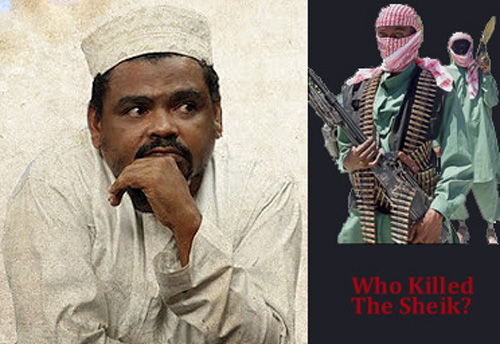
Tuesday’s drive-by killing of the jihadist cleric Aboud Rogo in Kenya marks a small if hopeful turning point in the troubled East African coast.

Real evidence will never emerge so we are left to speculation, but blogs, rumors and common sense seem to converge this time: the murder was specifically intended to stoke religious and ethnic violence.

It did at first, but only at first, and the city did not even fire up like Watts in 1965 or Tottenham only a year ago.

This doesn’t mean that the embers remaining aren’t nuclear. But to me it seems a clear indication that Kenya’s invasion of Somalia, the global “War Against Terror,” and Christian/Islamic confrontation has peaked. In a weak and uncertain way, logic tells me things are going better.

Sheik Rogo was a fiery and provocative cleric, openly recruiting young Muslims in his Mombasa madrassa for al-Shabaab. For years he’s been associated with a number of jihadist attacks in East Africa, including the bombing of the American embassy and several high profile attacks on the coast, including the terrible bombing of an Israeli resort.

He was killed Tuesday in a carefully planned and masterful drive-by attack. The attack car which has not been found, the lack of any leads by police, the particular place the shooting actually began, and the high caliber bullets found at the site and not easily available in Kenya, all point to a very carefully organized murder.

The sheik has been confined to the Mombasa area virtually since 2002 when he surrendered his passport to Kenyan authorities. He remained charged with numerous counts of terrorism, and his legal battles in Kenya are legendary.

But he has never actually been brought to trial, and Kenya has resisted extraditing him to the U.S. for instance, for fear such action would provoke Mombasa’s radicals. So instead Kenya did what a western country can’t discipline itself to do: nothing.

African patience was winning out. The sheik’s prominence peaked. His support was waning. In the most virulent political battle on the coast going on right now, a move by a new but powerful Islamic political party to secede from Kenya, the sheik had no involvement. In fact, it appeared he’d been excluded.

Western detractors tried to pin the assassination on America or the Kenyan police, claiming each was no longer tolerant of the protracted legal battles against the sheik. I seriously doubt this. Obama’s War on Terror is going just fine, in part because people like Rogo have been marginalized. Better to have him contained in Mombasa than Guantanamo.

It’s much more likely that the dying powers in Somalia saw the sheik as a sacrificial lamb. Recruits from his madrassa to al-Shabaab are less important, now that al-Shabaab is being routed.

I think the sheik was killed by a sheik. Disquieting, yes, but when the fighting turns inwards the battlefield grows smaller.

Terrifying Silence in Kenya

Terrifying Silence in Kenya

An awful restraint hangs like a veil over Kenyan journalism today, as civil disturbances continue in Mombasa and Wajir.

In neither area is the trouble as widespread as some international media have reported: the heavily read International Business Times reported “absolute chaos in the city” of Mombasa, which is absolutely untrue.

In fact the disturbances are pretty confined to a four-block area. And in Wajir, the curfew comes as a preventative measure, not in response to growing turmoil.

Nevertheless, I’m concerned at how the mainstream Kenyan press is suppressing coverage. The Mombasa disturbances are as a result of a radical Muslim cleric, on bail but not allowed to leave Kenya for terrorism related charges, being killed by unknown gunmen Monday.

In Wajir two different ethnic groups are in the middle of a spat of revenge killings.

These are two extraordinarily different types of social unrest. The Mombasa trouble is linked to the global war against Islamist terrorism, of which Kenya is an enthusiastic supporter having invaded Somali last October.

The Wajir trouble is ethnic, sparked by dwindling resources.

But my concern is that rather than deal with it robustly as Kenyans normally do, the intellectual center in Nairobi is simply not discussing it.

The city’s major newspaper is providing coverage, but it’s off page one, and the Daily Nation’s battalion of excellent bloggers has ignored both issues completely. But the city’s energetic radio stations, which also provide online coverage, said nothing about Mombasa, today.

The situation in Mombasa is much more serious than Wajir, because of its impact on tourism. Mombasa is where a dozen charter flights weekly arrive with European tourists for Kenya’s world-famous white sand beaches. Half of all Kenyan tourists never see an animal; they’re beach bums.

This will undoubtedly be seriously effected, just as bookings for the important end of the year holiday season become finalized.

And I would be one of those travel consultants who would be telling his clients to go elsewhere this year.

So that’s the likely explanation for the press’ restraint. But it’s not worthy of Kenya’s strong history of truth-seeking and long legacies of critical discussion and self-introspection.

If Kenya falls into denial to deal with its problems, it will surely fail. There are extremely important questions to be explored about the current travails in Wajir and Mombasa.

The most obvious is who killed Sheik Aboud Rogo? It was a typical 1930’s Chicago gangster drive-by assassination. The sheik was speeding in a car taking his wife to a doctor’s appointment when gunmen sped up behind him and sprayed the car, killing him.

One could immediately speculate it was America, trying for months to get the Sheik out of Kenya for trial elsewhere. But it is much more likely a completely internal crime, a Kenyan battle that involves the new and complex politics of leading up to the March elections.

A near internecine battle between the front-runner in Kenya’s presidential race, Raila Odinga, and an arch rival, Miguna Miguna has stirred ethnic and religious unrest throughout the country as Miguna goes campaigning. Miguna has interjected Islam/Christian – Terrorism/Anti-Terrorism into the national debate which disarms many in Kenya’s political elite.

It’s a touchy issue to be sure, but Kenyans have never shied away from dealing with the big issues head on.

Until now.

A Tale of Two Futures

A Tale of Two Futures

Colorado will have fewer tourists, now, after last night’s shooting. Just like Kenya.

A test of Kenya’s security abilities starts tomorrow. Yesterday al-Shabaab announced that increased and renewed attacks on Kenya will begin Saturday, the start of the holy Muslim month of Ramadan. And for the first time, the terror organization specifically mentioned “Nairobi.”

So we have a new real threat, acknowledged by Kenyan officials, and an announced plan to prevent violence from happening. It’s a test if ever there was one, and tourists around the world will be watching.

Colorado, on the other hand, has no desire to test its inability to control home-grown terror. Like so many other states recently, Colorado has reduced gun control including allowing concealed weapons. Unless these absurd tendencies are changed by American lawmakers, shootings like last night won’t diminish.

But Kenya’s gun laws are strict. Kenya’s problem is with foreign terrorism not home-grown terrorism, and Kenya has very strict – some say too strict – security laws. Starting Saturday and through the month of Ramadan, we’ll be able to measure how effective Kenya is at preventing terrorism.

More than a hundred people have been killed in terror attacks this year alone in Kenya, and many more injured. Two large attacks were notable in Kenya’s second largest city, Mombasa, and smaller grenade attacks did occur in Nairobi (not claimed by Shabaab) but the majority have occurred in remote areas near Somalia.

Unfortunately according to Nairobi’s main radio station, “Al-Shabaab is believed …building up to a larger attack.”

What strikes me as so sadly ironic is that Kenya is doing everything possible to prevent terrorism. Moreover, tourism is critically more important to Kenya than Colorado.

Colorado, on the other hand, is being governed by wildly conservative fanatics who we can safely predict will do little more to control the market in guns and explosives. There’s little reason to believe things will get better in Colorado; in Kenya, their chance is about to begin and they have sounded confidence.

Tourism is something earned; there’s no inherent right that any place just because it exists should be visited. Colorado and Kenya are falling to the bottom of holiday makers’ lists of places to visit. And they should be.

So as tourists around the world plan next year’s vacations, Colorado, whose reputation has only declined again and again more than ten years after Columbine, is being scratched out. Kenya is being watched.

Good luck, Kenya.