Dipolar Biplomat

Dipolar Biplomat

Obama fires few, but he just fired our ambassador to Kenya, Scott Gration. Was it over the Mombasa warning last week?

The news is that Ambassador Gration “abruptly resigned.” But we all know what that means.

Several weeks ago, his boss, Kenya’s former ambassador Johnnie Carson, arrived to discuss the future of this high profile diplomat who has courted the Kenyan press, staged humiliating performances (such as when he carried a bag of U.S. donated grain off a cargo ship in Mombasa in defiance of a dock workers’ strike there), and fired more than a few salvos about Kenya’s parliament off command.

Most informed and educated Kenyans loved Gration and his “honest” style. Just take a minute to read the comments that followed Nairobi’s leading newspaper story about the resignation.

The problem is that these readers are so used to politicians who do nothing in the open, that Gration’s style was refreshing, and I suppose, encouraging. The problem is, dear Kenyan readers of the Daily Nation, it might also have been counterproductive.

What was so ironic about his tenure in Kenya was that it was the exact opposite of his previous assignment, as the U.S. special envoy to The Sudan. Then, he was widely criticized as being too soft. In fact it was widely reported the Kenyan job was a way of getting him out of area before the two-country election.

So this suggests someone who marches to his own tune. And you don’t get bin Laden or defeat al-Shabaab by marching to your own tune. It’s a team effort, and Gration may have been a one-man show.

He seemed perfect for Kenya. He was born in The Congo, grew up speaking Swahili, and could tunnel into Kenyan politics in a way few outsiders can.

The bomb blast last weekend in a bar in Mombasa which killed three people (no tourists) and which today seems to have all the hallmarks of an al-Shabaab terror event may have been the straw that broke the camel’s back.

The U.S. alert was pretty expansive, and remains in place today. It prohibits all American government travel to/from the Mombasa area through Sunday. It advises all Americans not to travel there.

Now that seems reasonable enough, doesn’t it? I mean after all a bomb went off.

Yes and no. Yes because a bomb went off. No because two other bombs went off in Africa last week with no American warning even to tourists:

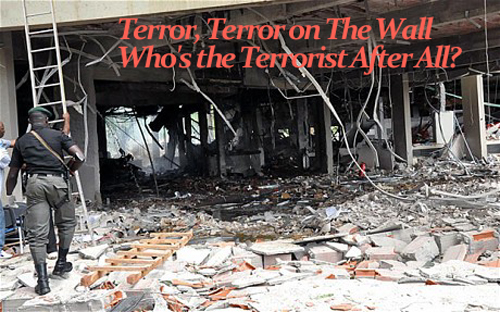
* Abuja, Nigeria and also * Gari, Bauchi, Nigeria. Abuja is where the American embassy is located. And the U.S. has recently contributed to the development of tourism in Bauchi.

And no, because the U.S. has already warned everyone who’s listening not to go to local Kenyan bars. And Kenyans don’t listen to American travel warnings, and it’s not our job to instruct them, anyway.

(Oh, and there was also a bomb in San Francisco, possibly “ecoterrorist,” with no warning. Apologies for being flip, but there’s a point here.)

The U.S. public warnings on Nigeria as a whole and Kenya as a whole are about the same. And quite possibly Gration learned of the potential bombing in Mombasa while his counterpart in Nigeria learned nothing in advance of those bombings.

But the effect of the quick fire, high alert warning in Kenya has devastating consequences for its tourism and what exactly happened? Were one of the 40+ luxury tourist resorts bombed, or the airport bombed, or a main highway bombed, or bridge or port? No, a local bar was bombed. Exactly as has happened multiple times in Nairobi recently and last week in Gari.

This is the signature terror of Boko Horam and al-Shabaab. They’re after locals, not tourists. They’ve said often they don’t mind bumping off a few of those, too, but their targets are local.

Now that doesn’t mean that my company EWT will send anyone racing to Mombasa, quite on the contrary. Several times this week I discouraged inquiries about beach holidays in Kenya. But we aren’t discussing where you should go for your vacation. We’re discussing the appropriate diplomatic response to terror intelligence.

Kenya is actually doing a yeoman’s job against terrorism. As I’ve often written their invasion of Somali goes beyond impressive, almost capable of changing my world view about fighting terrorism. So far, God Willing, foreign visitors out of the fight zones have been untouched. Kenya’s cooperation with America has led to multiple terrorists leader eradicated or arrested.

So actually, in the War Against Terror, Kenya’s doing pretty well.

This doesn’t mean you should take a beach vacation in Kenya. But it is probably good enough for firing the man who jerks to warn his citizens about an event whose odds are won’t effect them.

Tourist Killed Dot Com

Tourist Killed Dot Com

Saturday the U.S. and French governments issued special advisories warning their citizens about an imminent terrorist attack in the beach resort of Mombasa. Sunday the bomb went off; three died.

A few days earlier in neighboring Tanzania, bandits held at gunpoint all 40 tourists in a downmarket camp just outside the Serengeti, robbed them then killed the assistant manager and one Dutch tourist.

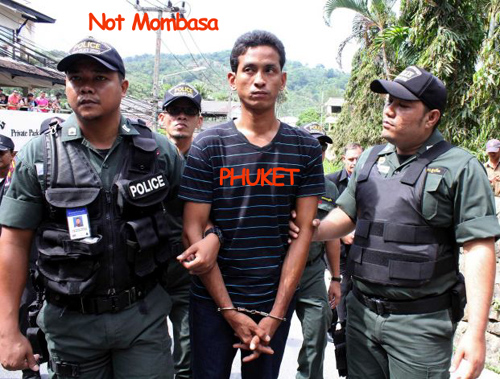
Also recently an Australian tourist was killed in a robbery attempt in Phuket, an American was shot during a robbery in a Belgian airport, a Belgian tourist was found killed in Nepal, an Israeli tourist was shot dead at the Israeli/Egyptian border, and backpackers were assaulted and knifed while hiking a famous North Island track in New Zealand.

These and 93 more tourist attacks are documented on the new website, touristkilled.com, under the rubric “Most Recent 100 Events.”

The site is updated every 10 minutes.

I don’t mean to minimize the significance of the two events last week in East Africa, but I want to point out in today’s world travel to virtually any place carries risk. Would you have worried about trekking in New Zealand before?

All countries provide travel advice. The U.S. site is seriously flawed, heavily restricted by Congressional funding and politics. I believe the best site in the world is the British site, and really the only one you need to refer to.

Mostly restricted by Congressional bickering, and heavily influenced by politics (neither Egypt or Israel is as safe as the U.S. claims for tourist right now) the U.S. site is limited to either actual or expected terrorist incidents, or to warnings that our embassies or counsels in certain places can no longer assist Americans for one reason or another (such as having been booted out of the country).

The British site on the other hand is not restricted by Parliament or politics. And it broadens the definition of “tourist safety” to include such things as disease outbreaks or strikes.

In 2009 the British Foreign Office ranked 73 countries most visited by British tourists in order of their likely safety should you choose to visit them, scored mostly by the percentage of tourists who died as a tourist.

Albania, Belarus, Hungary, Singapore, Ireland, Latvia, Slovenia, Belgium, Sweden and Austria were the safest countries in the world in that order. (By the way, the U.S. was 13th out of 73 ranked.)

The deadliest ten countries were Botswana, Burma, Ethiopia, the Philippines, Namibia, Ecuador, Venezuela, Thailand, Qatar and Uganda, in that order, and all of these received their bad rating because of violent acts against tourists or terrorism. A remarkable 1 in every 833 British tourists to Botswana in 2009 was killed.

Kenya and Tanzania were not among them, although Kenya was close.

But I dare suggest that travelers dissuaded from visiting East Africa were unlikely to have considered that a vacation in Botswana, Namibia or Thailand would have been more dangerous.

One of the reasons I think that Botswana and Namibia rank so high in Africa, is that more and more travelers are visiting these countries in self-drive vehicles. This, in fact, is the source of the violent acts against those tourists in 2009.

By the way, the FCO ceased simple compilations in 2009 of the “Best Ten” and “Worst Ten” believing it was misleading. The most recent report for 2011 will take you a bit longer to analyze, and with more data (such as arrests, deaths in hospitals from natural causes, drug violations, etc.) it’s not as clear as before 2010.

And I have to admit that I agree with the FCO. Scoring safety based on such few parameters as robberies and murders would leave my city of Chicago as the worst place in the world to visit, and I highly recommend you get there this July for the annual Blues Festival.

But I felt given the current stories out of East Africa this week, deaths from violent acts in tourist spots, we needed this perspective.

Violence against tourism is on the increase. This is because the world economic situation is on the decrease. The two have always been correlated; it’s common sense. The second most important reason for tourist incidents is the political and social stability of the region.

Those two reasons you should consider when planning your vacation. But just as I hope you’ll visit Chicago this July, they should not be the only reasons. Understanding the threats, traveling with guides and friends who know where to go and where not to go, exponentially increases the safety of your voyage.

The incident last week in Tanzania was isolated. Traveling to Zanzibar in Tanzania requires some caution, now, as a result of widespread religious riots there last month, but elsewhere it’s safe, certainly on the tourist circuit and certainly if you know where you shouldn’t go. The camp attacked last week is not a well policed camp and is on private land, not secured by national park rangers.

I continue to believe that Kenya requires special vigilance. It’s important to note that the incident last week was at a sports bar that while frequented by some tourists was mostly attended by local Kenyans. This is identical to the blasts in Uganda nearly two years ago, which was when al-Shabaab (al-Qaeda in Somalia) began to lose grip there.

Shabaab threatened these attacks and has continued to carry them out quite regularly, now mostly in Kenya as Kenya takes the lead in routing the terrorists from Somalia.

This coordinated terrorism has been augmented by banditry and other common crime including kidnaping exacerbated by the world economic downturn.

Vigilance is required is you rent a car in Orlando. Much more vigilance is required if you take an East African safari.

It’s always been that way.

Just A Little Misunderstanding?

Just A Little Misunderstanding?

Recent Boko Haram Bombing in Abuja, Nigeria
By Conor Godfrey

Jim has often written about the unpredictability and downright irrationality of U.S. State Department’s travel warnings. But that’s hardly the end of our State Department’s equivocating.

Much more than travel advice, the State Department’s “Foreign Terrorist Organization” designations significantly impact world trade and local development in particular, and I find those designations horribly confusing.

A good example is why West Africa’s Boko Haram has yet to receive the designation despite their constant and increasing terrorist activity.

If suicide bombers driving explosive laden trucks into U.N. buildings doesn’t get you labeled a terrorist organization I don’t know what will. The sect’s string of terrorist attacks have killed more than 1000 people since late 2009 including two deadly attacks on Christian churches yesterday in the northern Nigerian town of Bui.

The seeming ridiculousness of our State Department not labeling these killers as terrorists sent me scrambling for the State Department’s official definition.

The definition is so detailed that many terrorist governments, militias, gangs, etc. can avoid the label… if the State Department is so inclined.

The definition is so comprehensive and all encompassing that almost any martial organization could be called terrorist– including professional armies at war: hijacking, kidnaping, assassination, the use of chemical, biological, or nuclear weapons, and, in the most general clause, the use of explosives or firearms with the intent to cause harm to individuals or property.

“Terrorist organizations” are those entities that train for, plan, finance, or actually carry out “terrorism.”

Oh, and of course, you will see on the State Department website that the Foreign Terrorist Organization designation only applies to groups that threaten U.S. interests, property, or personnel. This allows broad subjective (and likely political) conclusions. Consider, for example, how organizations like the IRA or Mexico’s various drug lords backed by local state governments there could be classified.

You’d think, though, that Boko Haram couldn’t wiggle out of the classification – kidnaping, assassination, and intent to harm for sure. They also, in my opinion, threaten U.S. interests more than the four outfits in Africa that were on the list circa January 2011:

Moroccan Islamic Combatant Group (GICM)
Al-Shabaab
Gama’a al-Islamiyya
Libyan Islamic Fighting Group

Congressmen and many Justice department employees have pressured the State Department to pass judgment on Boko Haram, but State continues to refuse despite the group’s numerous and increasingly spectacular attacks.

The take away here is that labels are political tools and not dictionary definitions. Apparently, the Nigerian government has strenuously requested that Boko Haram be kept off the dreaded list of foreign terrorist organizations.

Why? Well that depends on who you ask. Nigeria’s Ambassador to the U.S., Prof. Adebowale Adefuye, said because such a designation would open to the door for U.S. drone strikes like those in Yemen and Pakistan.

Our reputation precedes us.

Other Nigerian sources claim that such a designation would lead to the harassment of Nigerian citizens abroad, and/or would deter U.S. investment.

This entire debate upsets me because such vagaries leave room for gross manipulation; do some countries get to tell the U.S. who is a terrorist and who is not?

I get the feeling that the Uighurs or the Kurds are either nationalists or terrorists depending on how the political winds are blowing from the U.S. to China, or from the U.S. to the Middle East. What will happen if a weakened Al-Shabaab strikes a power sharing arrangement with the Transitional Government in Mogadishu? I wonder if they will suddenly cease to be terrorists, semantically anyway.

Congress can’t even make up its mind regarding Iran’s Mek.

The haphazard designations of terrorism bring back feelings from the Bush era “War or Terror” where designations were key in the cowboy ‘with us or against us’ mentality.

I am also uncomfortable with the fact the U.S. military has been guilty of many of the sub-clauses defining terrorist activity. We have assassinated foreign citizens, financed foreign militias, and used overwhelming force against legitimate targets even when they are nestled within civilian populations.

Many of these acts (certainly not all) might be legal, but playing politics with simple definitions like “terrorist activity” just increases the ugly feeling that the U.S. creates the rules and then applies them selectively.

I would be interested the hear anyone’s thoughts comparing Boko Haram’s eligibility for the terrorist label with a group like the National Movement for the Liberation of Azawad in Mali. I think there is a substantive difference – do you?

All Global Jihadists Come From Somewhere

All Global Jihadists Come From Somewhere

by Conor Godfrey
Media producers and consumers alike tend to analyze current events using the framework provided by the most recent, similar set of events in the past.

How often did you hear the Arab spring compared to the democratization of Eastern Europe last year?

This is neither good nor bad, just somewhat confining.

I think this is happening with Boko Haram now.

Most western readers have probably heard something about these guys.

They are usually described as ‘Islamic jihadists that want to implement Shari’a law in Nigeria.”

We (middle class American readers like me) are used to these buzzwords – jihadist, Shari’a, terrorist- and they evoke a set of dependable associations.

Whether we are talking about people in Indonesia or Pakistan, Iran or Chechnya, these buzz words still conjure up images of Arabic speaking Middle Easterners that want to kill infidel Westerners for reasons that we cannot fully understand.

However, politics are always local.

Nowhere – not even in pork-laden West Virginia—is that more true than Nigeria.

Even the name, Boko Haram, is a local nick name in the local Hausa language (well, the word Boko anyway).

Perhaps the Boko Haram PR guy realized the media would refuse to cover them if they had to pronounce “The Group Committed to Propagating the Prophet’s Teachings and Jihad on the Air.”

While Boko Haram certainly pays homage to the worldwide phenomenon of political Islam, their roots are as local as hot pepper soup and Tuwo_masara.

The group takes historical roots in anti colonial anti missionary activity in the former Sultanate that covered the parts of Northern Nigeria where Boko Haram now operates.

In modern times, the group cut their teeth protesting endemic violence and corruption in the local government and security services.

These grievances became increasingly violent after the founder, Mohammed Yusuf, was tortured to death in police custody in 2002.

These same practices remain rife today! Read this very emotional blog regarding young, alleged Boko Haram militants in custody,

Boko Haram is also both a pawn and a player in a specifically Nigerian regional power dynamic.

The young men that killed themselves driving trucks filled with explosives into the U.N. compound in Abuja certainly had religion on their mind, but the people paying for the training, giving the organization political cover, or using the group as leverage with the Federal government may not be in it to guarantee their place in paradise.

Richard Dowden does a great job here discussing the morass of motives and incentives that could be driving Boko Haram’s activities.

Dowden also notes a tragicomic list of people and organizations that are using the Boko Haram brand for their own purposes—criminal syndicates: an arsonist churchgoer and northern Nigerian politicians are just some of the groups that have use the name of or affiliation with Boko Haram for purely local shenanigans.

Boko Haram itself might also be guilty of brand profiteering – with al-Qaeda.

While some members of Boko Haram certainly feel sympathy toward the pan-jihadist Qaeda platform, others probably see financial and logistical support.

As Boko Haram morphs into an umbrella for a number of different factions and interest groups, it will become increasingly difficult to negotiate a settlement that will stick.

My opinion is that Boko Haram’s main target is still the Nigerian government, and not the foreign crusaders and infidels identified in global jihadist rhetoric.

This means that solving the problem requires solving local triggers – not necessarily taking all of the militants off the field.

(Though that certainly helps if you can avoid making the local population hate you.)

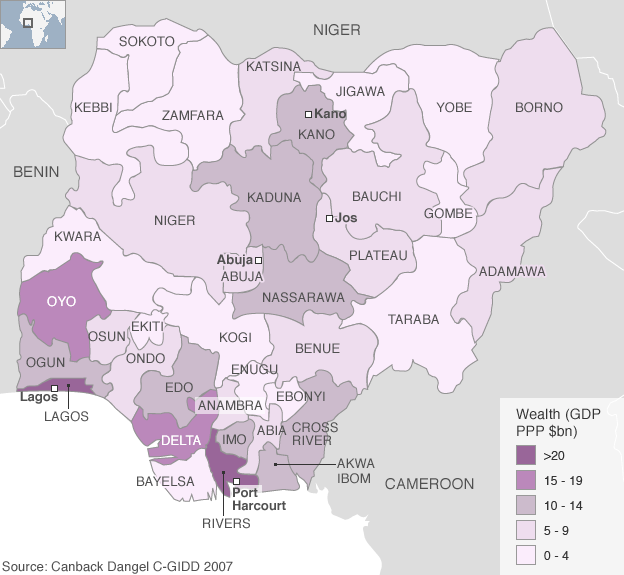
In this case, the local trigger is the massive development gap between Southern and Northern Nigeria that fuels resentment, xenophobia, and radicalism. (see wealth map)

It also means dealing with local flashpoints that feed the anger that in turn feeds Boko Haram – things like conflicts between settlers and so called indigenes, fair policing, and an education system that both moderate Islamists and the government can get behind.

If our mental filing cabinet wants to associate these guys with Middle Eastern jihadists, you can be darn sure that the average Nigerian would like to think of them as foreign too.

But I think societies need to claim the radicals at their margins no matter how unpleasant the thought might be.

These guys are Nigerian, and any global dynamics should be viewed through the local lens first.

Field of Nightmares

Field of Nightmares

Young Uganda school boys amazingly won the all-African baseball championship and thereby an invitation to the U.S. for the Little League World Series in Williamsport this past summer. But they didn’t come. The American consulate in Kampala denied them visas.

So the day before yesterday, the Canadian little league winners who were scheduled to play the Ugandans in the first round last August, played the Ugandan kids in Kampala. And lost.

In times past, which means before 9-11, the Ugandan schoolboys would have gotten visas. But the sloppiness of their application process, and the fact that they didn’t have the money to hire someone locally who could have helped them, doomed them from the start. If I can’t say it was wrong of the U.S., I must just lament how the world has changed.

Personally aghast at what had happened, Phillies super star shortstop Jimmy Rollins bankrolled the Canadian Little League winners who flew into Uganda last week with Rollins. Rollins wasn’t the only American to help the Ugandan kids. The team had long been coached and funded by American, Richard Stanley, who owns several AA minor league teams in the U.S.

The heart-breaking story is a simple one. The goodwill and extraordinary charity, including not only from stellar individuals like Stanley and Rollins but also from several branches of the U.S. government that funds much of school sports in Uganda, all were trumped by …

… national security.

And who is to say it should have been otherwise? We know how children particularly in Uganda’s part of the world have been coopted, or more truthfully brainwashed, by hideous forces like the Lord’s Resistance Army. We know that as unlikely as any of them might have been active terrorists, that the enormous love that would have been showered on them as individuals from unsuspecting Americans could have been so easily manipulated into odious ways.

None of this might have posed an imminent threat, but the level of resources that would suddenly have had to have been dedicated to monitoring the affair and its endless aftermath was simply “beyond budget.”

Do I really believe all that malarkey? Of course not. They were children, easily contained, easily watched. All you had to do was photograph and fingerprint. It’s an absurd and heart-wrenching story.

What exactly was the State Department worried about?

It seems that the principal concern was that birth dates and names didn’t register with the personal interviews of the applicants by the U.S. consulate in Kampala.

African kids change their names all the time, and few know when they were born. That discrepancy is an honest one that would never occur if a double-agent or dedicated terrorist tried to get into the U.S.

Even Stanley said he accepted the State Department’s decision. And a filmmaker instrumental in publicizing the Ugandan kids’ great baseball story, Jay Shapiro, agreed, too, with the Americans’ decision. They’ve both caved.

A kid with a mitt won’t take down the Twin Towers.

Is this a reflection on the Obama administration, on the budget, on the paranoia of America?

All the above.

Top Ten 2011 Africa Stories

Top Ten 2011 Africa Stories

Twevolution, the Arab Spring [by Twitter] is universally considered the most important story of the year, much less just in Africa. But I believe the Kenyan invasion of Somalia will have as lasting an effect on Africa, so I’ve considered them both Number One.

1A: KENYA INVADES SOMALIA
On October 18 Kenya invaded Somalia, where 4-5,000 of its troops remain today. Provoked by several kidnapings and other fighting in and around the rapidly growing refugee camp of Dadaab, the impression given at the time was that Kenyans had “just had enough” of al-Shabaab, the al-Qaeda affiliated terrorism group in The Horn which at the time controlled approximately the southern third of Somalia. Later on, however, it became apparent that the invasion had been in the works for some time.

At the beginning of the invasion the Kenyan command announced its objective was the port city of Kismayo. To date that hasn’t happened. Aided by American drones and intelligence, and by French intelligence and naval warships, an assessment was made early on that the battle for Kismayo would be much harder than the Kenyans first assumed, and the strategy was reduced to laying siege.

That continues and remarkably, might be working. Call it what you will, but the Kenyan restraint managed to gain the support of a number of other African nations, and Kenya is now theoretically but a part of the larger African Union peacekeeping force which has been in Somali for 8 years. Moreover, the capital of Mogadishu has been pretty much secured, a task the previous peace keepers had been unable to do for 8 years.

The invasion costs Kenya dearly. The Kenyan shilling has lost about a third of its value, there are food shortages nationwide, about a half dozen terrorist attacks in retribution have occurred killing and wounding scores of people (2 in Nairobi city) and tourism – its principal source of foreign reserves – lingers around a third of what it would otherwise be had there be no invasion.

At first I considered this was just another failed “war against terrorism” albeit in this case the avowed terrorists controlled the country right next door. Moreover, I saw it as basically a proxy war by France and the U.S., which it may indeed be. But the Kenyan military restraint and the near unanimous support for the war at home, as well as the accumulation of individually marginal battle successes and outside support now coming to Kenya in assistance, all makes me wonder if once again Africans have shown us how to do it right.

That’s what makes this such an important story. The possibility that conventional military reaction to guerilla terrorism has learned a way to succeed, essentially displacing the great powers – the U.S. primarily – as the world’s best military strategists. There is as much hope in this statement as evidence, but both exist, and that alone raises this story to the top.

You may also wish to review Top al-Shabaab Leader Killed and Somali Professionals Flee as Refugees.

1B: TWEVOLUTION CHANGES EGYPT
The Egyptian uprising, unlike its Tunisian predecessor, ensured that no African government was immune to revolution, perhaps no government in the world. I called it Twevolution because especially in Egypt the moment-by-moment activities of the mass was definitely managed by Twitter.

And the particular connection to Kenya was fabulous, because the software that powered the Twitter, Facebook and other similar revolution managing tools came originally from Kenya.

Similar of course to Tunisia was the platform for any “software instructions” – the power of the people! And this in the face of the most unimaginable odds if you’re rating the brute physical force of the regime in power.

Egypt fell rather quickly and the aftermath was remarkably peaceful. Compared to the original demonstrations, later civil disobedience whether it was against the Coptics or the military, was actually quite small. So I found it particularly fascinating how world travelers reacted. Whereas tourist murders, kidnapings and muggings were common for the many years that Egypt experienced millions of visitors annually, tourists balked at coming now that such political acts against tourists no longer occurred, because the instigators were now a part of the political process! This despite incredible deals.

We wait with baited breath for the outcome in Syria, but less visible countries like Botswana and Malawi also experienced their own Twevolution. And I listed 11 dictators that I expected would ultimately fall because of the Egyptian revolution.

Like any major revolution, the path has been bumpy, the future not easily predicted. But I’m certain, for example, that the hard and often brutal tactics of the military who currently assumes the reins of state will ultimately be vindicated. And certainly this tumultuous African revolution if not the outright cause was an important factor in our own protests, like Occupy Wall Street.

3: NEW COUNTRY OF SOUTH SUDAN
The free election and emergence of South Sudan as Africa’s 54th country would have been the year’s top story if all that revolution hadn’t started further north! In the making for more than ten years, a remarkably successful diplomatic coup for the United States, this new western ally rich with natural resources was gingerly excised from of the west’s most notorious foes, The Sudan.

Even as Sudan’s president was being indicted for war crimes in Darfur, he ostensibly participated in the creation of this new entity. But because of the drama up north, the final act of the ultimate referendum in the South which set up the new republic produced no more news noise than a snap of the fingers.

Regrettably, with so much of the world’s attention focused elsewhere, the new country was hassled violently by its former parent to the north. We can only hope that this new country will forge a more humane path than its parent, and my greatest concern for Africa right now is that global attention to reigning in the brutal regime of the north will be directed elsewhere.

4: UGANDA FALTERS
Twevolution essentially effected every country in Africa in some way. Uganda’s strongman, Yoweri Museveni, looked in the early part of the last decade like he was in for life. Much was made about his attachment to American politicians on the right, and this right after he was Bill Clinton’s Africa doll child.

But even before Twevolution – or perhaps because of the same dynamics that first erupted in Tunisia and Egypt – Museveni’s opponents grew bold and his vicious suppression of their attempts to legitimately oust him from power ended with the most flawed election seen in East Africa since Independence.

But unlike in neighboring Kenya where a similar 2007 election caused nationwide turmoil and an ultimate power sharing agreement, Museveni simply jailed anyone who opposed him. At first this seemed to work but several months later the opposition resurfaced and it became apparent that the country was at a crossroads. Submit to the strongman or fight him.

Meanwhile, tourism sunk into near oblivion. And by mid-May I was predicting that Museveni was the new Mugabe and had successfully oppressed his country to his regime. But as it turned out it was a hiatus not a surrender and a month later demonstrations began, twice as strong as before. And it was sad, because they went on and on and on, and hundreds if not thousands of people were injured and jailed.

Finally towards the end of August a major demonstration seemed to alter the balance. And if it did so it was because Museveni simply wouldn’t believe what was happening.

I wish I could tell you the story continued to a happy ending, but it hasn’t, at least not yet. There is an uneasy calm in Ugandan society, one buoyed to some extent by a new voice in legislators that dares to criticize Museveni, that has begun a number of inquiries and with media that has even dared to suggest Museveni will be impeached. The U.S. deployment of 100 green berets in the country enroute the Central African Republic in October essentially seems to have actually raised Museveni’s popularity. So Uganda falters, and how it falls – either way – will dramatically alter the East African landscape for decades.

5: GLOBAL WARMING
This is a global phenomena, of course, but it is the developing world like so much of Africa which suffers the most and is least capable of dealing with it. The year began with incessant reporting by western media of droughts, then floods, in a confused misunderstanding of what global warming means.

It means both, just as in temperate climates it means colder and hotter. With statistics that questions the very name “Developed World,” America is reported to still have a third of its citizens disputing that global warming is even happening, and an even greater percentage who accept it is happening but believe man is not responsible either for it occurring or trying to change it. Even as clear and obvious events happen all around them.

Global warming is pretty simple to understand, so doubters’ only recourse is to make it much more confusing than it really is. And the most important reason that we must get everyone to understand and accept global warming, is we then must accept global responsibilities for doing something about it. I was incensed, for example, about how so much of the media described the droughts in Africa as fate when in fact they are a direct result of the developed world’s high carbon emissions.

And the news continued in a depressing way with the very bad (proponents call it “compromised”) outcome of the Durban climate talks. My take was that even the countries most effected, the developed world, were basically bought off from making a bigger stink.

Environmentalists will argue, understandably, that this is really the biggest story and will remain so until we all fry. The problem is that our lives are measured in the nano seconds of video games, and until we can embrace a long view of humanity and that our most fundamental role is to keep the world alive for those who come after us, it won’t even make the top ten for too much longer.

6: COLTAN WARS IMPEDED
This is a remarkable story that so little attention has been given. An obscure part of the Dodd-Frank Wall Street Reform Act essentially halved if not ultimately will end the wars in the eastern Congo which have been going on for decades.

These wars are very much like the fractional wars in Somalia before al-Shabaab began to consolidate its power, there. Numerous militias, certain ones predominant, but a series of fiefdoms up and down the eastern Congo. You can’t survive in this deepest jungle of interior Africa without money, and that money came from the sale of this area’s rich rare earth metals.

Tantalum, coltran more commonly said, is needed by virtually every cell phone, computer and communication device used today. And there are mines in the U.S. and Australia and elsewhere, but the deal came from the warlords in the eastern Congo. And Playbox masters, Sony, and computer wizards, Intel, bought illegally from these warlords because the price was right.

And that price funded guns, rape, pillaging and the destruction of the jungle. The Consumer Protection Agency, set up by the Dodd-Frank Act, now forbids these giants of technology from doing business in the U.S. unless they can prove they aren’t buying Coltran from the warlords. Done. War if not right now, soon over.

7: ELEPHANTS AND CITES
The semi-decade meeting of CITES occurred this March in Doha, Qatar, and the big fight of interest to me was over elephants. The two basic opposing positions on whether to downlist elephants from an endangered species hasn’t changed: those opposed to taking elephants off the list so that their body parts (ivory) could be traded believed that poaching was at bay, and that at least it was at bay in their country. South Africa has led this flank for years and has a compelling argument, since poaching of elephants is controlled in the south and the stockpiling of ivory, incapable of being sold, lessens the funds that might otherwise be available for wider conservation.

The east and most western countries like the U.S. and U.K. argue that while this may be true in the south, it isn’t at all true elsewhere on the continent, and that once a market is legal no matter from where, poaching will increase geometrically especially in the east where it is more difficult to control. I concur with this argument, although it is weakened by the fact that elephants are overpopulated in the east, now, and that there are no good strategic plans to do something about the increasing human/elephant conflicts, there.

But while the arguments didn’t change, the proponents themselves did. In a dramatic retreat from its East African colleagues, Tanzania sided with the south, and that put enormous strain on the negotiations. When evidence emerged that Tanzania was about the worst country in all of Africa to manage its poaching and that officials there were likely involved, the tide returned to normal and the convention voted to continue keeping elephants listed as an endangered species.

8: RHINO POACHING REACHES EXTREME LEVELS
For the first time in history, an animal product (ground rhino horn) became more expensive on illicit markets than gold.

Rhino, unlike elephant, is not doing well in the wild. It’s doing wonderfully in captivity and right next to the wild in many private reserves, but in the wild it’s too easy a take. This year’s elevation of the value of rhino horn resulted in unexpectedly high poaching, and some of it very high profile.

9: SERENGETI HIGHWAY STOPPED
This story isn’t all good, but mostly, because the Serengeti Highway project was shelved and that’s the important part. And to be sure, the success of stopping this untenable project was aided by a group called Serengeti Watch.

But after some extremely good and aggressive work, Serengeti Watch started to behave like Congress, more interested in keeping itself in place than doing the work it was intended to do. The first indication of this came when a Tanzanian government report in February, which on careful reading suggested the government was having second thoughts about the project, was identified but for some reason not carefully analyzed by Watch.

So while the highway is at least for the time being dead, Serengeti Watch which based on its original genesis should be as well, isn’t.

10: KENYAN TRANSFORMATION AND WORLD COURT
The ongoing and now seemingly endless transformation of Kenyan society and politics provoked by the widespread election violence of 2007, and which has led to a marvelous new constitution, is an ongoing top ten story for this year for sure. But more specifically, the acceptance of this new Kenyan society of the validity of the World Court has elevated the power of that controversial institution well beyond anyone’s expectations here in the west.

Following last year’s publication by the court of the principal accused of the crimes against humanity that fired the 2007 violence, it was widely expected that Kenya would simply ignore it. Not so. Politicians and current government officials of the highest profile, including the son of the founder of Kenya, dutifully traveled to The Hague to voluntarily participate in the global judicial process that ultimately has the power to incarcerate them.

The outcome, of course, remains to be seen and no telling what they’ll do if actually convicted. It’s very hard to imagine them all getting on an airplane in Nairobi to walk into a cell in Rotterdam.

But in a real switcheroo this travel to The Hague has even been spun by those accused as something positive and in fact might have boosted their political standing at home. And however it effects the specific accused, or Kenya society’s orientation to them, the main story is how it has validated a global institution’s political authority.
A Sacrifice So Far Far Away

A Sacrifice So Far Far Away

From far, far away, Kenya is being sacrificed to quell the war on terror. A young and dynamic, growing country with a tremendous future has been thrown to the wolves.

The war in Somalia is not going well for Kenya. The army advance is bogged down, more aid workers and civilians have been kidnaped or killed and many more injured near the front and by two grenade attacks in Nairobi city. The shilling is tanking and local prices are skyrocketing.

But it may be going well for America. Depending on your point of view, of course.

“Several of the missiles fired at jihadist fighters … on the Somali side of the border seem to have been fired from American drones or submarines,” the respected magazine, the Economist reports.

I want to stop al-Qaeda’s terrorism, who doesn’t? But fighting these endless proxy wars is inhumane. Go ahead, fire the drones, but don’t make Kenya the sacrificial lamb.

From the Kenyan border to the stated objective, the coastal city of Kismayo, the path using existing roads and tracks is about 150 miles. After 40 miles, the Kenyan military got bogged down in mud following heavy rains.

Fighting to that point was minimal. Skirmishes by al-Shabaab supporters and guerillas resulted in random and rapid firing by Kenyan troops. At the crossroads of Bilis Qoqani, 45 rebels ambushed the convoy and in the ensuing battle, the first real encounter between Kenya and al-Shabaab, the militants were routed, 9 killed and several Kenyans wounded.

At that point it was learned that an unexpectedly well organized al-Shabaab force was digging in at the city of Afmadow. This is actually north of the planned assault and now means the Kenyans have to confront the militants there or risk being attacked from their flank if they proceed directly to Kismayo.

So while today they are only about 85 miles from their objective, it looks like they must head north for the great battle at Afmadow, first.

And back at home, things couldn’t be worse for the everyday Kenyan. The city’s main newspaper calls it a “Nightmare.”

The world is surprisingly learning that a significant portion of the prewar Kenyan economy was linked to the port at Kismayo that the Kenyan military is now trying to take over.

“Supplies such as sugar, rice, cooking fat and powdered milk” and “even electronic goods and vehicles” come from Kismayo, even though it is controlled by al-Shabaab. Sugar in Kenya’s northeast today costs four times more than two weeks ago.

In the center of the country in Nairobi, the concern is not so much with sugar as shillings. A year ago the shilling traded at about 65-70 for one U.S. dollar. Today it returned to just under 100 after peaking yesterday at 106.

The median interest on a business loan shot up to 20% today, after the government’s request for a $65 million loan from the IMF was answered with only $25 million.

Tourism is being decimated. If everything ends well and Kenya is the super hero, tourism will rebound rather quickly. But that doesn’t look likely to me. I think we’re in a very long period of declining tourism.

More and more Kenyans are beginning to question the war, as I believe they should. “Let Us Rethink Our Somali Intervention” was the lead editorial in today’s Nairobi Star newspaper.

We all want al-Qaeda’s ruthlessness to stop, most of all Kenyans who have lived with it day in and day out for much of their lives. But violent eradication of an entrenched fighting force is not something Kenya can accomplish. If we as Americans have accomplished it in Iraq (which is very uncertain) look at the effort it took. Kenya cannot undertake that.

Obama knows that. Hillary knows that. But their allegiance is to their home. The sacrificial lamb comes from far, far away.

Chant of the Impatient & Vanquished

Chant of the Impatient & Vanquished

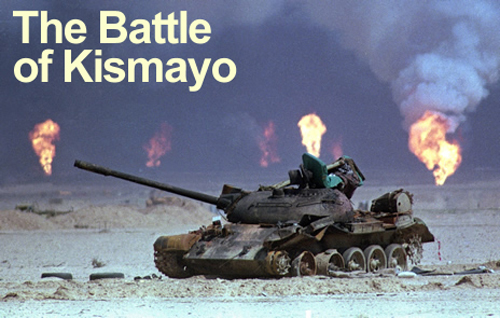
Within a week we’ll know whether the Kenyan invasion of Somalia is the true beginning of the end of al-Qaeda or the start of increased instability and terrorism in Kenya. I’m pretty pessimistic and damn mad. But the outcome of the battle of Kismayo will tell all.

Kismayo is a city. A functioning, wealth-producing large coastal city with a proud university and clean streets. It’s the defacto capital of al-Qaeda in The Horn, the center for terrorist planning, administration and growth.

It’s the only true geopolitical epicenter of terrorists in the world. In Kismayo terrorism leaders don’t hide in caves. They go to work in offices. They collect taxes. They use big computers to concoct strategy, to build internet sites, to train young militants in actual schools, to organize and implement arms deals. This isn’t Wajiristan.

And until this moment, Kismayo was untouchable. Since Sunday, planes have bombed the city. Sea-launched missiles hit the city center. The Kenya military is marching towards Kismayo.

Kenya’s major newspaper called the expected encounter “The Mother of All Battles.” Western terrorist experts see it as a “high stakes game for Kenya.”

There is remarkable calm in Kenya. In fact, it’s absolutely ridiculous! The rest of the region and much of the world is overwhelmed by news from the front, including the first two Nairobi city bombings as al-Shabaab begins its guerilla war inside Kenya. But one reading the Kenyan newspapers today has a hard time finding any war reports at all!

The country is in denial. The diaspora is in denial. Even if the battle is successful, the effort is likely to bankrupt the country. Tourism is doomed for the forseeable future. Even political stability, so creatively accomplished for the last four years, shows the first stages of unraveling.

I hate making this prediction, and I really want to be proved wrong. But Operation “Linda Nchi” will fail. It will likely fail the same way Ethiopia failed five years ago when western powers propped up its invasion of Mogadishu the same way they are currently propping up Kenya’s of Kismayo.

Ethiopia – with a far more sophisticated army than Kenya’s – marched into Mogadishu and installed a very weak government then rapidly returned home leaving behind a mess that was supposed to be cleaned up by 8-9000 non-Ethiopian African Union soldiers in a few months. It’s been three years. It’s still a mess.

Even though Kenya’s military is far less sophisticated than Ethiopia’s, I think this is the likely outcome, because terrorists survive by running away, never by making a stand. Their success comes in suicide and car bombs, subway attacks and shoe bombers. They don’t do tanks well.

The west seems to think that we’ve got al-Qaeda on the run. It’s true that an arm’s length list of al-Qaeda leaders have been wiped out by American drones and stealth attacks by the Obama administration. The question is, is it enough that Operation “Linda Nchi” is the nail in the coffin, or just the positioning of another sacrificial lamb.

If the latter, Kenya will become rocked by terrorism for years and years. Unless it becomes the horribly ruthless, dictatorial regime of Ethiopia where you need permission to sneeze on the streets of Addis Ababa.

Kenya doesn’t understand — which America maybe finally does – that a ground war against terrorism won’t work.

Defense against terrorism is critical and can be successful. Diplomacy and sanctions against terrorists works. Stealth raids and maybe even drones to kill terrorists might even work, but war doesn’t work. Kenya was managing all of these things masterfully! Until last week.

My friends in tourism in Nairobi are near panic. Bookings are canceling in the droves. And no one in their right mind would suggest a foreign vacationer visit the country, now.

This is so damn sad. For so long Kenya tread the perfect balance with regards to its chaotic terrorist neighbor, Somalia. It refused to join African peacekeepers in Somalia. It tolerated but repelled incessant incursions into its Somalia border towns. And it quietly assisted the big guys by rounding up terrorists on its own soil.

But then the Somalia famine quadrupled the size of the refugee camp in Kenya at Dadaab to a third of a million people, in less than three months; the world economic collapse bludgeoned the shilling, and finally the spat of kidnapings was just too much for this until now adroit and up-and-coming new world to take.

“We had to do something.”

The chant of the impatient and vanquished.

No War Games on Safari

No War Games on Safari

Today Kenya invaded Somalia. The speed and size of the mission surprised me and I’m sure greatly pleased Leon Panetta. It’s hard to predict the outcome, but one thing strikes me as certain: this is not a time to take a Kenyan safari.

Most news sources reported the Kenyan military operation as a response to a spat of recent kidnapings, and I don’t doubt this has something to do with it. But it could also be a partial excuse for a more globally organized effort against what appears at the moment to be a successful rout of al-Shabaab from Somalia.

The size of the Kenyan excursion is secret, but there were enough eye witness reports on the ground to confirm a major operation. The BBC and AlJazeera (who has a reporter embedded with the Kenyan forces) reported “lines of Kenyan tanks and trucks” and multiple air strikes against an al-Shabaab base about 75 miles inside Somali territory.

The local Nairobi newspaper The Nation reported at least 32 trucks and tanks and London’s Guardian newspaper reported multiple aircraft bombing al-Shabaab positions to the east.

Africa Union forces led by Ugandan soldiers in the last several weeks have routed al-Shabaab from the Somali capital of Mogadishu. The BBC reporter Will Ross said these forces were now working in tandem with the Kenyans, moving south from the capital towards the conflict area where the Kenyans are, headed to what could be a pincer action to rid a large portion of Somali of al-Shabaab.

Last week the Obama administration sent 100 Green Berets into Uganda for deployment further west into central Africa. The statement of deployment claimed a mission totally separate from this conflict, but last night on CBS Panetta said the operation was integrated with fighting terror in Africa.

With Obama’s long list of al-Qaeda captures and kills recently, we know that the al-Qaeda/al-Shabaab power has been significantly diminished. Is this their last hurrah? Might the Ugandans, Kenyans and Americans actually be getting rid of these terrorist organizations?

I wish I felt the answer was a definitive yes, but frankly I think rather it’s a hopeful maybe. I’m no expert historian, but I just don’t see ridding any part of the world of anything, unless the people actually living there do it themselves.

And the Somalis haven’t. The parallels with Afghanistan and even Iraq are substantial. I don’t even believe that Iraq will be stable in ten years. And if I’m wrong and it is, then the question becomes was it worth the 20 years of war and investment we made to make it so?

That’s the greater, global question. But for those of us much closer to the situation, our lives and our businesses are immediately effected. Tourism must go on hold in Kenya, now, until we see what happens.

It’s been widely reported that al-Shabaab has now threatened Kenya. Last year al-Shabaab killed more than 70 people in two simultaneous bomb blasts in Kampala sports bars where patrons were watching the World Cup. They specifically threatened such before it happened because of Uganda’s lead role in the African Union forces in Mogadishu, and immediately then took responsibility. The parallel with Kenya can’t be starker.

I don’t think it will happen in Kenya. I think al-Shabaab is too much of a spent force and now too engaged outside Kenya. And Kenyan security is better than Uganda’s. So my visceral concern for my own Kenyan employees and friends is minimal.

But you don’t take a vacation where you have to keep looking over your shoulder. That’s not what a good safari is supposed to be. So while I’m not expecting trouble, the chance is more real than before, and equal if not better alternatives are available elsewhere, particularly in Tanzania.

Until the battles end and the dust settles, Kenya has become too troubled a place for tourists.

How Not To Travel

How Not To Travel

As we drove from the airport to the city last night, my newly arrived clients asked about the kidnaped British couple. The news isn’t good for Kenyan tourism, of course, but it isn’t surprising, either.

The couple, Judith and David Tebutt, were vacationing at a lovely beach resort on the mainland opposite Lamu Island off Kenya’s far northern coast. There are several truly beautiful paradise getaways in the area, but I’ve felt for a long time it wasn’t a good place to go.

About two years ago another British couple had been kidnaped while sailing their yacht in the Indian Ocean between the Seychelles and Somalia. Both situations were just too vulnerable to pirate attacks.

Initial news reports suggested the Tebutts’ kidnappers were al-Shabaab terrorists. I knew they weren’t, and later reports confirmed they are likely pirates.

The Tebutts and Paul and Rachel Chandler, the sailing couple, were in places they should not have been. So why were they there?

Both couples were doing little more than believing the advertisements that lured them to these tropical paradises without doing due diligence on the grandiose claims.

The Tebutts obviously didn’t read the New York Times and the many world newspapers that republished that story the day before they arrived of increased trouble in the area.

And if you think that’s unfair that a couple on holiday should be reading about where they’re planning to go the next day, certainly they had looked at maps before leaving England, hadn’t they? The Kiwayuu Resort where they were is less than 20 miles from the trouble in Somalia. Unlike Lamu, a heavily populated tropical island with lots of police, their beach was remote and unguarded.

And as for the Chandlers, the weak claim by Rachel that the Seychelles’ waters were “thought to be safe” is balderdash. Not long before their kidnaping a Greek freighter 1000 times bigger than their yacht was hijacked by pirates.

Don’t think me heartless. I’ve been in similar situations myself and involved in several more. We all would prefer a world where everything you read or hear is true. But my own past mistakes are not justification for others’, now.

I’ve learned, and you as travelers should all learn, that neither pretty picture advertisements or simple recommendations from friends who have been somewhere once stand as solid endorsements that it’s a good place to go. You’ve got to check it out further.

As a postscript, note that the resort from where the Tebutts were kidnaped has been closed “indefinitely.” Seeing as how the Tebutts were the only ones at the resort, it seems a rather de facto announcement. The other few resorts in the same area should follow suit.

What 9-11 Means to Me & Africa

What 9-11 Means to Me & Africa


Nine Eleven was a day of reflection, but in Kenya where I am it exploded. A British tourist was murdered and his wife kidnaped in the far north as southern Somalia imploded further, and Kenya desperately appealed to U.S. Republicans not to undermine its development by making it the victim of the U.S. budget crisis.

It’s all inextricably linked. It might be complicated, and that may be its nemesis with the simple minds of the Tea Party, and there’s too much here for a single blog. Tomorrow I’ll be less ideological and more news specific, but today I want to counter the empathy of yesterday with the horrible reality of the last decade as seen outside the U.S.

Sitting here in a luxury hotel in Nairobi with CNN on during all my waking hours, it’s hard to argue that a clearer perspective is achieved further from home. But it is. The travel through multiple countries and airports, the fellow passengers from all distant parts of the world in stimulating conversation, the foreign newspaper headlines and the incessant chat of the local taxi driver. It takes you far away from the repetitive and often circular news surrounding us in the U.S.

And besides, even CNN isn’t the same. CNN has been fine tuned to its customers worldwide for decades. It’s not the same in China as Dubuque, London or Nairobi. Worldwide, one of its most respected anchors is Jim Clancy, and click here for his own reflections, quite similar to my own. You won’t see this in the U.S.

Let me be so bold as to summarize the rest of the world’s views about Nine Eleven this way: If the U.S. didn’t exercise its power and express its grief militarily, the world – and the U.S. – would be much better off.

To the rest of the world yesterday marked not so much a stabbing memory of abject loss as a tedious decade of wrongdoing.

The number of people who have been killed in military violence this past decade far far exceeds those killed in the initial airplane hijack attacks. Perhaps a third of a million in Pakistan and Afghanistan alone, and hundreds of thousands in Iraq. And these aren’t principally soldiers, but civilians caught in the cross fires of ideology.

Any American who watches the film “United 93” immediately wonders why is this a British and not an American film. It’s the only concise documentary of the bungling of U.S. defense on that day, how probably three of the 4 plane crashes could have been minimized, if only someone in authority could have been found.

This is a British film, not an American one, because Americans seem incapable of admitting this mistake. No American would dare produce it. Watch it.

And this ineptitude was followed by the moral degeneration of a giant reacting to a flea bite by sledge hammering the ground around him, blindly and randomly.

There is no doubt that al-Qaeda targeted us. There is no doubt it was an inept attempt, because al-Qaeda is inept. But al-Qaeda is crazy and dangerous albeit inept, and we knew this years before they acted. We refused to deal with them as deranged, the same way we avoid dealing with our own mentally challenged individuals.

And when they finally ‘lucked out’ we were defenseless.

Thank goodness it wasn’t the Joker or an alien invasion or trained mercenaries from the Comoros, or we might currently be under a foreign military dictatorship. No President or Vice President or other chief political officer could be found to give cogent orders, or perhaps they weren’t found because there weren’t cogent orders to give. Planes that were scrambled flew off in the wrong directions, unarmed.

Our “Homeland Defense” up until September 11, 2001, was to believe we were invincible simply by maintaining nuclear arsenals and giant battleships.

The rest of the world, Europe in particular following the Balkan wars, realized that peace is created by development not destruction.

But we have never nurtured goodwill with the same enthusiasm we nurture military superiority. I think we reacted like the giant squashing the flea not so much to being attacked, as to our own inability to defend against those attacks in any other way. And like a humiliated bully with no social skills, we started scorching the Mideast.

(If oil as the unspoken booty didn’t exist, possibly we couldn’t have mustered the rationalizing to pursue it. But there is oil, there. And oil is needed for the bomber planes.)

And now to today. Sunday talk shows seemed horrified that the Super Committee will be deadlocked and the military required to take a 10% hit. What’s going on? In Africa we have committed 9 billion over ten years to help their medical development. And just before our Nine Eleven celebrations, they were advised this promise might not be kept.

Why might we renege? Because we need that 9 billion for a couple months of war in Afghanistan.

Instead of a decade of improving the health of a billion Africans who are actually on the frontline against terrorism and who are rapidly becoming an economic powerhouse, customers for our iPhones.

I see no starker comment on how wrong we continue to be.

War on Kids

War on Kids

Somalia has been in war for two decades, but it really looks like the pressures on al-Shabaab (al-Qaeda in The Horn) are forcing the game towards an explosive situation, one that the international community will not be able to ignore. Unless we develop new policies for international involvement, right now, the west is doomed to falling into another horrible quagmire.

Yesterday, Amnesty International released a report detailing that both opposing sides in the Somali war are using child soldiers under 15 years old. Primarily this as well as other information suggests to me that within the next year something extraordinary is going to happen in Somalia which will change the political texture of The Horn, and we better be ready.

According to Amnesty, both the Transitional Federal Government (recognized by the U.S.) and its opponent al-Shabaab are now employing the tactics last used by the Lord’s Resistance Army (LRA) in Uganda and the DRC.

The LRA lost in Uganda and much of the DRC, and has fled to the totally unstable Central African Republic in a much wounded capacity. Use of child soldiers in Somali means that both sides are growing exhausted.

It probably means that U.S. and western diplomacy to weaken the bad guys is working, and that therefore such formerly easy necessities as getting guns and ammo is not working.

But it’s been two decades of near incessant, heavy, sustained fighting. Famine
was inevitable.

The war effort is reaching exhaustion, and famine grips the country. Grown ups start to dessert. Men (and women) attracted by violent victories supporting their cherished ideologies pick up and go before they’re defeated or starve to death. 1300 refugees daily have been flooding into Kenya from Somalia for nearly two months.

What’s left?

Crazies who are desperate. And desperate men do desperate things, and that’s the immediate worry. One of the more desperate acts right now is with the others who are left in Somalia: Children. Children have fingers that pull triggers. They’re much more easily convinced to do anything. Hungry children rank a meal as a cherished victory. They’re usually smaller (not always), their aim and reliability is not usually as good, but they’re among the last ones standing. There’s no one but crazies and children left to fight.

The LRA lasted for years, nearly ten years, in Uganda. I don’t think that’s going to happen in Somalia. The point of desperation is too great. Something’s got to happen that changes or redefines somehow the whole messy scene. The international community discarded the DRC long ago. But the international community seems loathe to discard Somalia. The garbage man is al-Qaeda.

Amnesty’s electrifying report details awful war crimes on both sides of the Somali conflict; both sides are coming to the end of the line and getting desperate. Defeats are occurring everywhere, but no victories. With no clear winner, no moral side to fully support, what should we do? Occupy the country like Afghanistan? It’s unimaginable right now, but Somalia left to al-Qaeda is a terrifying prospect.

Yet it seems to me that’s exactly what we have to do: rapid withdrawal by the west. And it would be pointless to withdraw from Somalia if we didn’t also simultaneously withdraw from all the extreme Islamic conflicts of the world. And as terrifying as that might seem, I think it’s less terrifying than what might happen if we don’t.

Let’s get out of Afghanistan with something like a negotiated settlement similar to what happened in Vietnam. Abandon Yemen to the hyaenas. Remove all our special forces and other interests from Somalia and sneak away in the dead of night.

Then, we can lick our wounds, beef up our military, and be willing to draw new moral lines in the sand, if as I would expect countries like Kenya – truly representing their democratic societies – asked us to. No legitimate group of Iraqis or Afghanis or Yemenis ever asked us to send the drones and boots. We can’t just stomp around the world, anymore, telling everyone how to live or presuming that entire societies are culpable for the harm that a handful of crazies inflicted on us.

Get the Osamas, yes, not whole sections of the world surrounding a few bad guys.

We need to reset the playing field and morally refine the rules by which we will fight. That horrible neglect in doing so led us into the quagmire that transformed al-Qaeda from our ally to our enemy. It must be reversed, and quickly before we’re sucked in ever deeper.

Think of the children. As our future enemies.

No Room at The Inn

No Room at The Inn

The Kenyan refugee camp at Dadaab, the largest in the world, is full. 1300 new arrivals daily from an increasing conflict in Somali are being refused services, because there’s simply no more room, no more food, no more medicines… the money has run out.

Dadaab became the largest refugee camp in the world several years ago. It lies in far northeastern Kenya along the Somalia border. The refugees have been fleeing a growing conflict between Somali warlords, the weak UN and AU supported Somali government, and al-Shabaab, al-Qaeda in the horn of Africa.

Dadaab is a city in a desert. It was built after Blackhawk Down to house 90,000 refugees as Somalia began to implode. At the end of last year, they were 350,00 refugees living there, and according to Medecins sans Frontiere, there are now 30,000 people in makeshift shelters that can’t be supported by the camp. “There is nowhere for them to stay.”

CARE, Save the Children, and Medecins sans Frontiere all confirm there are 1300 new arrivals daily in the last few weeks.

The terror of the Afghanistan Taliban, of the Cambodian Khymer Rouge, of the Cultural Revolution and the Stalin Scorched Earth Policy has come to Somalia. It’s no longer just a dysfunctional state. It’s a world crisis.

The refugees flee a war relocated from Yemen, which was relocated from Afghanistan, which was relocated from Iraq, hopping around the Horn of Africa staying one step ahead of western vengeance.

I’m not sure the world is ready for this crisis. And separated by 300 miles of desert from populated areas of Kenya, even Kenyans are ignoring it.

The situation is worsened by drought.

The drought is caused by Global Warming. Global Warming is caused by accelerated levels of greenhouse gases from industrialized nations, mostly the U.S. The refugee crisis is caused by the aftermath of Blackhawk Down, a pitiful American retreat from a mess Clinton caused years ago. The inability of aid organizations to cope any longer is caused by western nations cutting back aid, led by the U.S. Aid is being cut back because of the world economic crisis. The world economic crisis was caused by greedy American capitalists.

It all comes back to us in America. And we can’t even seem to repair ourselves.

I have never sensed such despair in my life.

When my wife and I first worked for the United Nations in Paris in the early 1970s, the agencies there were worried sick that by the end of the decade there would be a million refugees for which the UN would be responsible.

Today, the UN High Commission on Refugees takes care of more than 40 million.

That’s one-eighth of the entire population of the United States.

Nineteen American soldiers were killed in Blackhawk Down and 73 wounded. 2996 were killed in 9-11 and about 6000 others were injured. That’s about 9000 westerners killed or wounded in mired religious battles that if they hadn’t occurred would probably not have resulted in the refugee situation found today in Dadaab.

The UN estimates by year’s end there will be 450,000 refugees and wannabe refugees in Dadaab. That’s 50 for every casualty America suffered from Blackhawk Down and 9-11.

Is that enough?

Genocide in Sudan

Genocide in Sudan

Even as muscled optimism sweeps across Africa and the MiddleEast, I worry that dark history is repeating itself, that the 1994 world-ignored genocide in Rwanda is occurring right now – this very moment – in The Sudan.

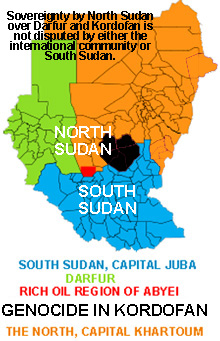
The racist North Sudanese government has started a military ethnic cleansing of Nubian peoples in the North Sudan province of Kordofan. The scale is terrifying. And I don’t think any country in the world will stop it.

The North Sudanese are cleverly mining the world’s troubled situations to pursue their evil. Modern aerial bombardment of Nubian huts, modern weapon assassinations even of traditional unarmed women and children, has all the markings of a well-thought out plan of genocide.

Monday the New York Times characterized the fighting as a “rampage” but the way the Times has issued the reports has confused readers and I fear diluted Jeffrey Gettleman’s fantastic reporting.

Mostly by its headlines, but also by the way it has lined its stories on the web, The Times seems to have confused the fighting in North Sudan with the upcoming independence of South Sudan on July 9.

We should all be effected by the genocide now going on, and none more than the new neighbor country to The South, South Sudan. But the way The Times has streamed the story, one could believe that the south’s Independence in two weeks is in direct jeopardy. It isn’t.

The situation in South Sudan actually improved Monday, while the genocide in the North just revved up. Clearly it is the intention of the evil North Sudanese government to take advantage of this confusion.

So let me interrupt the horrible story of the horrible story in the North with a clear review and separation of these two conflicts:

    Conflict 1: SOUTH SUDAN

Monday, fighting between North and South Sudan forces and their supporting militias finally came to an end with a US-UN brokered ceasefire that will bring 4000 UN peacekeepers into Abyei.

Abyei is literally the spot on the map where huge portions of Sudanese oil comes from, and its sovereignty remains unresolved. It isn’t “on the border” between the two countries, “it is the border,” and both sides claim it.

For the time being, the South while not conceding Abyei has more or less retreated from the heavier presence of military and other North Sudanese officials, there. This is wise, or independence on July 9 really could be jeopardized.

But the South’s de facto concession to the North does not conform with the majority of the residents of Abyei or the workers in the oil fields, there, and it will most certainly return as an area of contention again and again. Once UN peacekeepers arrive this week oil production in Abyei could start up, again, and a prolonged status quo would favor the North’s claim to sovereignty there.

But southern officials recognize any movement whatever of the elephant in the china cabinet could wreck entirely their plans for independence in several weeks.

So for the time being, this conflict has ended. It has not gone away. But South Sudan will become independent on July 9 with a host of problems, but none that include fighting right now with The North.

    Conflict 2: NORTH SUDAN

But even as Abyei settles down if only temporarily, the North Sudan government began a bold if blazoned all-out genocidal war in Kordofan just to the north and east of Abyei, Monday. This is what the Times has been reporting so well, but with headlines and web streaming that confuse it with the South’s upcoming independence.

This conflict in Kordofan has all the markings of a Darfur and could even be worse. It might rival the world’s greatest failing of the last several decades, the unstopped genocide in Rwanda in 1994.

UN press reports estimate that refugees from South Kordofan’s capital Kadugli number 40,000, but the World Council of Churches reported that the number is actually 300,000.

These represent people who have successfully fled the massacre. Do your own math regarding those who didn’t.

The North Sudanese Army has prevented aid workers from reentering the area and has announced that it will shoot down U.N. helicopters that previously had been given permission to bring in humanitarian assistance.

Like President Clinton’s retreat from Blackhawk Down, which led to his timid and delayed entry into Bosnia and his totally abandoning Rwanda in 1994, President Obama is withdrawing forces from Afghanistan to appease a war weary world.

Protests from Syria to Libya seem to be losing steam as conflict presses so heavily on the world.

It is just the time The Joker has been waiting for.

East Africa’s Dots of Terrorism

East Africa’s Dots of Terrorism

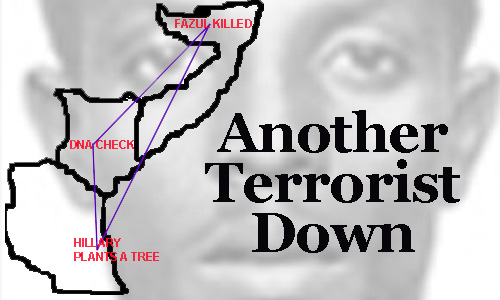
The death of Abdulla Mohamed Fazul last week in Somali was as important to Kenyans as the death of bin Laden himself. It confirms that the Obama administration knows what’s it doing, that Kenya knows what’s it doing, and that Tanzania doesn’t.

Fazul was the avowed mastermind of the 1998 Kenya and Tanzania embassy bombings. He was arrested shortly thereafter in Kenya, but escaped. It was widely presumed, and now confirmed, that he founded and headed Al-Shabaab, al-Qaeda in the Horn of Africa.

Somali is a perfect haven and training ground for terrorism, and like most of the world’s training grounds for terrorism it was first cleared and sowed by Americans. But unlike Afghanistan, where bin Laden was our partner before our nemesis, Somali’s demise was because President Clinton abandoned it after the failed Blackhawk Down mission.

But whether we nurtured terrorism or failed to nip it in the bud when we could have, America’s policies until Obama failed to nail them.

Don’t misunderstand me. Obama is not one of my most favored persons. Domestically I think he’s exchanged the garb of a Badiou for a Mainliner. But events in recent weeks prove that his anti-terrorism strategy is working.

Fazul’s apprehension received limited reporting, because there are so few journalists in Mogadishu. The conduit for the stream of events came from Nairobi’s Daily Nation, and it appeared rather scripted to me.

Presumably Fazul was in a truck filled with everything from medicines to laptops to guns and $40,000 in cash, and made a wrong turn in the city, taking him into a part of the city Al-Shabaab did not control.

Right. I know they don’t have Garmen in Mogadishu, and Google maps is a little behind the times there, but this guy blew up the Nairobi embassy, a few years later blew up a Mombasa hotel, fired a SAM missile at an Israel charter jet landing in Mombasa (admittedly, missing it).

And almost single-handedly Fazul took over 2/3 of what was once the Somali nation, and was remarkably close to taking over Somali’s biggest city and presumed capital, Mogadishu, where Al-Shabaab has been fighting brutally and almost hand-to-hand for nearly 4 years.

He made a wrong turn on a city street? After eluding the world’s posies for 13 years, a $5 million reward, and the scorn of practically every African in the region?

Well, that’s the story fed to the Daily Nation.

I’d tell it differently. Oh and by the way, Hillary just happened to be in East Africa for the event.

And she wasn’t in Kenya to partake of the celebrations, because they really did celebrate in Nairobi. More than 200 Kenyans were killed in the embassy bombing and thousands injured. Read the comments’ section that followed the main on-line story to get a feel to how people there, think.

So unlike Tanzania. And that’s precisely where Hillary was, ostensibly to promote enhancing agricultural development policies. But I bet there were a few staff members accompanying her who weren’t farmers.

Because Tanzania is the problem, still. It has yet to be successfully pried open to greater democracy and transparency, as Kenya. Corruption is a bigger problem than Kenya if simply because the government controls so much of the media we know less about, but what we do know is giant enough.

When Mogadishu authorities announced the story, they refused to let the few reporters there see very much of the evidence against Fazul. His DNA was jetted to Nairobi to confirm it was him, and one picture was given to a Nairobi reporter who said he was shot in the head and breast.

Doesn’t sound like an open battle firefight, does it?

And the one piece of evidence shown to the press was his passport. A fake South African passport with only one visa stamped inside, representing the only country that he has easily passed in and out of in the last 13 years. Any guess?

That’s right, Tanzania.