Update: Is Kenya Safe?

Update: Is Kenya Safe?

Found only in Kenya: the reticulated giraffe.
I’m not a contrarian, and for the past three years I’ve restrained to near zero EWT’s brokerage of Kenyan tourism. But despite the bad news yesterday, I see Kenyan tourist security improving.

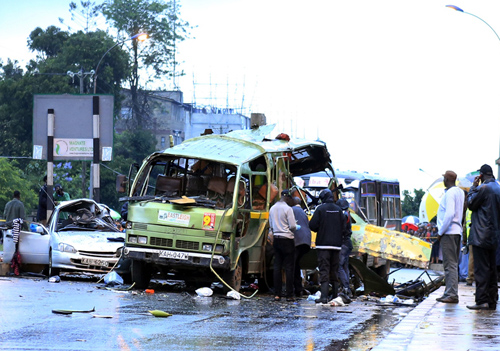
Monday night one of the most deadly terrorist blasts (after the Westgate Mall incident) rocked the Eastleigh neighborhood of Nairobi. It was incorrectly reported by many agencies, however, that this area was “downtown Nairobi.”

Seven people were killed and another 25 injured (ten seriously) when terrorists threw hand grenades into two popular evening restaurants. This Eastleigh area of Nairobi is often known as “Little Mogadishu.”

A week ago Sunday gunmen entered a church in Likoni, Mombasa, and sprayed gunfire on the parishioners killing four.

And I wrote a month ago about the tourist attacks that failed in Zanzibar.

These are all closely related incidents, horrible if you are an East African, and completely predictable.

I’ve written extensively how the Obama/Hollande war on terrorism in Africa is founded on having made Kenya a military force to be reckoned with. This new military power has dislodged al-Shabaab and other al-Qaeda influences from Kenya’s neighbor, Somalia.

For the first time since Clinton’s foreign policy failures embodied in “Blackhawk Down” Somalia looks hopeful. America and France and all the western world is much, much safer.

Drones above the Somali, Kenya and Tanzanian coasts have wiped out more than two dozen terrorist leaders. U.S. special forces have chased those that remain into the interior of Africa where France is sealing their fate in the C.A.R. and Malawi.

But Kenya’s taking the hit for all of this.

Unable to create any significant retaliation to Obama’s wars in Africa, the much weakened terrorist cells in the horn of Africa are creating terror in the last places they’re able to:

The Somali communities in East Africa.

These communities, whether in and near Mombasa, Zanzibar or “Little Mogadishu” in Nairobi are overwhelmingly supportive of the war against terror and the Kenyan military occupation.

But simply because of the ethnic makeup of these communities, the remaining terrorists have entrees they don’t have elsewhere in Kenya or Tanzania.

And their anger is only slightly less against their fellow Somalis who they consider traitors than to Obama and the greater war on terror.

Kenya’s worst terrorist incident since the 1998 bombing of the American embassy was the Westgate Mall attack last September. But as I wrote at the time, these were latent global terrorists likely including Somalis not from Somalia, but Minneapolis.

That kind of terrorism is the real threat to tourism. The other horrible more recent acts are just too highly targeted ethnically to threaten tourists.

The Westgate Mall attack resulted in incredibly draconian Kenyan government responses, undoubtedly supported by America and others, that has hugely restricted a number of freedoms in Kenya.

I don’t think that’s good. But in the irony of the times, where America is so much safer than Kenya, tourists are now safer than ordinary Kenyan citizens.

And in my anxious estimation, tourists are increasingly safe.

Previous years’ tourist kidnapping and armed robberies of tourists in places like Lamu, Samburu and Shaba have ended. And the Kenyan government response to Westgate has been an iron fist.

Those are the facts that make the rarity and beauty of the reticulated giraffe and the legendary attraction of Kenya’s Maasai Mara safer for tourists than they have been for nearly five years. I’m not suggesting that tourism safety is the only obstacle to enjoying a vacation in Kenya.

While I’m willing to plan safaris again in Kenya, the main cities of Nairobi and Mombasa and Stone Town (Zanzibar) are out for the time being. Anyone for whom we make arrangements in Kenya also knows that we’ll pivot in an instant if the situation changes.

There are plenty of wonderful places for safaris in Tanzania. And if optimal game viewing is not the only goal, multiple great safaris are available in Zambia, Botswana and South Africa as well.

But for someone asking me now, is Kenya safe enough for a safari, my answer is the above qualified yes.

Jim filed this post from Karatu, Tanzania.
Dancing with The Devil

Dancing with The Devil

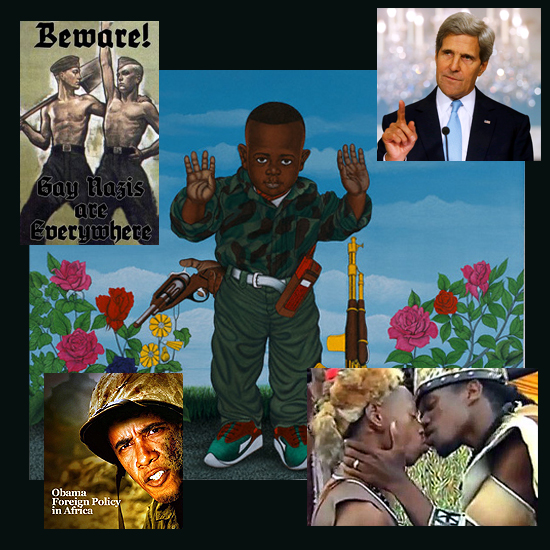
Little Kadogo by Cheri SambaThe U.S.’ complete disengagement from Uganda would seriously jeopardize its already faltering economy, ostensibly but not completely truthfully because we disapprove of the country’s new anti-gay laws.

Together with a variety of European countries that have already suspended aid, the expected U.S. cutoff would reduce the country’s GDP by more than the 2.7% languishing growth it’s currently struggling to achieve.

That will topple the country into recession.

Like Zimbabwe years ago Uganda would become dependent upon its neighbors. Zimbabwe has floated above complete annihilation for nearly two decades because of South African assistance.

Uganda’s neighbor Rwanda is the area’s economic powerhouse. Allied almost exclusively because of tribal reasons, I see Uganda becoming Rwanda’s client state.

Disengaging from Uganda now serves a lot more interests to the United States than just the aggressively stated ones by Secretary of State Kerry regarding human rights.

The U.S. had become somewhat mired in Uganda, starting with Bill Clinton’s forced love affair with the country in the 1990s as a manifestation of his mea culpa with regards to not acting to stop the Rwandan genocide of 1994.

Disproportionately large amounts of aid flowed into Uganda from Clinton’s U.S. Particularly in a country as poorly prepared for business as Uganda, that aid developed a dependency that has been hard to end.

Bush and company nefariously increased U.S. involvement by helping Uganda enact the very law that Museveni signed this week! Bush officials and many more subterranean lobbyists actually lived in Uganda for quite a while ostensibly teaching it “to become democratic.”

The main Ugandan leader of the bill in the legislature was trained by right-wing legislators in the U.S.

All of these cross favors anted up the aid.

Obama could have pulled back, but didn’t. Instead, he used Uganda as the portal to continue the interior chase of terrorists scattered from Somalia’s cleansing. Ugandans cheered the 90 special forces that landed near the capital and marched across the country on Uganda TV, chasing the terrorist Joseph Kony.

That cost a lot.

I ally myself with Norway. The unequivocal ending of its $8 million dollar in aid is a drop in the bucket compared to the U.S., but its morality goes unchallenged:

“Norway deeply regrets that Uganda’s president today signed a new and stricter law against homosexuality,” Norway’s foreign minister, Børge Brende, said Monday. “It will worsen the situation of an already vulnerable group, and criminalize individuals and organizations working for the rights of sexual minorities.”

In contrast, Kerry’s statement comparing Uganda to Nazi Germany has so much anger in it that you know there’s more to it.

And that’s a simple deduction: we want to pull back from mistakes of the past. Clinton’s mistake in Rwanda was compounded by throwing unaccountable aid to Uganda in restitution: that was wrong.

Bush’s involvement in helping Uganda to achieve this anti-gay rights legislation is the wrongest of the wrong.

And Obama’s militarism of Africa is the third wrong. Now that all these missions are accomplished, in typical American fashion, we now disown them.

When we do we’ll be on a more correct path. But it was a moral compromise at many of the junctures that got us to this point, and if you subscribe to Kerry characterizing Uganda as Nazi Germany, then you better characterize America up until now as a House of Chamberlain.

Zanzibar Darkens

Zanzibar Darkens

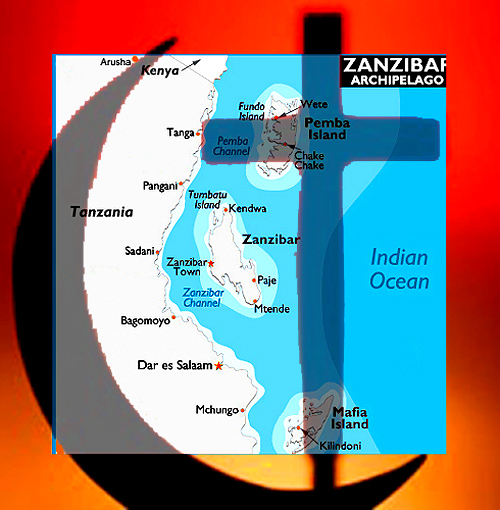
znzconflictYesterday’s coordinated and mostly ineffectual home-made bomb attacks on tourist sites in Zanzibar’s Stone Town is a certain indication that trouble is on the rise in paradise.

Two to four small, home-made bombs were thrown at tourist targets around 1 p.m. Only two relatively small explosions caused any damage, resulting in minor injuries to three or four Tanzanians.

No tourists were hurt.

Notably, I couldn’t find the news reported anywhere in the main stream Tanzanian media, and it was buried deep in Kenyan media. The story was first reported nine hours after it happened by Reuters, then by AFP, then published throughout the European and Chinese media.

A huge hunk of Tanzanian tourism revenue is generated by beautiful Zanzibar beach resorts. The largest single growing market is Chinese.

Initial reports by Reuters were that there were four attacks of small, home-made bombs, all around the same time at 1 p.m. Reuters identified the targets as the Anglican Church/Slave Museum, the Mercury restaurant and bar, and two at “the beach” but that the beach bombs didn’t detonate.

Reports this morning have completely dropped the references to any beach attacks. Reuters reports one person was injured; local reports carried into AFP by a reporter from Tanzania’s often shut-down Guardian newspaper claimed there were four injured and gave the names of three who were hospitalized, none seriously.

The local report suggested that at least one of those injured had picked up an undetonated home-made bomb and only then did it go off.

So I think the important facts are known, and while the character of the home-made bombs seems just a small step above errant teenagers fiddling with giant firecrackers or little rockets, the coordination of the attacks is troublesome.

The Anglican Church is an UNESCO heritage site and Stone Town’s main tourist attraction. One p.m. when the attack occurred usually represents a lull in the day’s constant stream of tourists, since it’s the hottest time of the day on this hot and humid equatorial island, and the primary attraction at the location is the underground and poorly ventilated old holding area for the slave market.

It’s also likely the time that the very poor security is even poorer or altogether absent and asleep.

On the other hand, one p.m. is the main lunch hour at the Mercury restaurant and bar, and there were undoubtedly tourists there yet to come forward.

Zanzibar has had a long and troubled history, and since the federation with then mainland Tanganyika in 1964, there has always been some political turmoil. The mainland is considered Christian and Zanzibar is completely Muslim.

Ever since 9/11 places like Zanzibar around the world have heated up. And particularly since the western world’s last few years of successfully combating world jihadism, youthful movements in these trouble spots have reemerged.

Zanzibar and the Kenyan coast are further aggravated by being near Somalia, where so much of the War Against Terror has played out in the last few years, advantage West. Click on “Somalia” and “Terrorism” to the right to read the many posts I’ve written about this.

My advice to clients to stay away from Zanzibar came in October, 2012, but that didn’t last long. Negotiations with the mainland and much increased police action quieted the island considerably during most of 2013.

There were two serious attacks in 2013, unrelated and at different times, and neither targeted tourists per se. Both were acid attacks, one thrown at a priest, and the other thrown at two teenage girls who were volunteering on the island.

The priest attack was similar to other attacks throughout the world where visible Christian clerics have publicly placed themselves in Muslim areas. I felt that the attacks on the two British teenagers in Stone Town was likely provoked by their not heeding advice to not dress scantily.

Note that yesterday the British Government’s new advice to its many travelers to Zanzibar was NOT not to go, but just increase vigilance.

At this point I think the best thing for tourists to do is avoid Stone Town. Stone Town is on the west side of the island where the bulk of the Zanzibar population is concentrated. This is where the incidents have occurred.

The better beach resorts on the east side of the island have good security. There has not been a reported incident in these eastern areas ever.

But it is a certain blow to tourism in the region, and it’s a continuing reminder that the global ideological wars between Right & Left, Christian & Muslim, Rich & Poor, are long from over.

Tiny Terror

Tiny Terror

ethiopianpilotThe casual hijacking of the Ethiopian plane shows how incidental if useless terrorism can be, and perhaps too, how inured we’ve become to the causes of terrorism in the first place.

Here are the particular facts that caught my attention:

The hijacking was effortless. A 31-year old unarmed pilot who had been flying professionally for only five years was able to go wherever he wanted to go, with 200 passengers in tow foiling a full complement of crew, by engaging mechanisms and techniques designed to thwart a hijacking!

Exactly. Doors to the cockpit now lock so completely that it’s impossible to knock them down short of exploding the plane. This was one of the brilliant ideas of our great thinkers after they were rattled by 9-11.

So the copilot waited until the pilot went to the bathroom, and then locked himself in …control.

Next: The hijacker was not a professional criminal, guerilla or terrorist.

The New York Times account perfectly documents a really scared young man who once in control sort of lost it. Twice the plane “bumped” so hard oxygen masks were deployed, and his voice over the intercom went falsetto with false threats.

We can only speculate who he is. Unfortunately, his very Ethiopian name doesn’t give us much insight into his clan, and the authoritarian Ethiopian government is not going to help us find out.

So speculate I will. Professional Ethiopians tend to get married almost as late as Americans do, today, and many have no children. Young international pilots worldwide tend to explore foreign away relationships long before settling down. So I’d guess he’s not married and has little left attaching him to Ethiopia.

Young people throughout Africa are growing restless. Much more than young Americans, they feel the disappointment of the failures of the Arab Spring and the liberalism that emerged after the Great Recession. There is a sense of hopelessness Americans probably should also feel, but don’t.

Ethiopia is a very oppressive country. It always has been, despite the brief celebrity status of Haile Selassie. It’s very much a top-down society, has never stopped being and probably was among the first of true communist states.

But unlike China, for example, there are no popular opposition movements, no forward-thinking heroic human rights activists or passionate conservationists.

Ethiopia has been around a very long time: It’s the only country in Africa to never have been colonized. It survives on ancient, archaic ideas and is ruled with an iron fist by people who are often only vaguely known.

If you cross someone important, you’re toast.

So I speculate that this young kid pilot, schooled and cultured abroad, told a bad joke or cheated on his tax return or piled up a bunch of unpaid parking tickets, and then … freaked. And with some justification. For all those petty infractions, you could be laid up in a putrid jail cell and tortured for years.

Here are other relevant facts to the story:

When the plane left Italian air space and entered Swiss air space, it was being escorted by French and Italian fighter planes with NATO. Where were the Swiss?

“Switzerland cannot intervene because its airbases are closed at night and on the weekend,” a Swiss official told Aljazeera, adding: “It’s a question of budget and staffing.”

Right. Switzerland is safe from terrorists from 9 a.m., Monday, through 5 p.m., Friday, less maternity leaves and personal days. And so long as France and Italy defend Christian values.

His chances for asylum are “slim” according to the chief Swiss detective assigned to the case. And hijacking is a crime in Switzerland punishable by 25 years in jail, which translates to 10 years with good behavior during which he can train to become an airline mechanic.

A decade in a Swiss jail is likely similar to an extended sabbatical at the hotels at Ethiopia’s popular Lake Langano. The guy has probably stashed away most of his savings for the last five years in some foreign account, and in ten he’ll be able to buy a cab franchise in Minneapolis.

Ethiopian wants him extradited, but that’s very unlikely. As junior a staff member a copilot is, he still has some insight into the cloaked world of Ethiopia. The airline is owned and run by the state. It’s among the state’s most precious assets.

There are plenty of folks in the U.S. and elsewhere who would like to buy him a coffee and hear his tale.

Including me.

Dear Uncle Kony

Dear Uncle Kony

dear uncle konyJosef Kony not Osama bin-Laden is the greatest terrorist of our time and his legacy is destroying Uganda. Osama bin-Laden is dead, Josef Kony is alive and well.

Kony is the infamous head of the Lords Resistance Army (LRA). Since Conor Godfrey wrapped up the LRA history almost two years ago in this space, Obama has sent 90 quite visible and public special forces to hunt Kony down through Africa, and America has placed a multi-million dollar bounty on his head.

Tuesday Kony circulated a letter to the people of Uganda demanding the world stop trying to track him down and urging a negotiated peace with the Government of Uganda.

Which may not be out of the question, as unbelievable as that sounds. Kony’s more-than-a-generation of terrorism structured mostly by child and female abuse in central Africa has become legacy.

In September Uganda’s Youth Minister, Ronald Kibuule, told police to prosecute the victims of rape rather than the rapist if the victim was “indecently dressed” when the abuse took place.

The remark continues to ignite worldwide protest, although little within Uganda or neighboring countries. When pressed the day after he made that remark to affirm or qualify it, Kibuule added:

“Most women currently dress poorly especially the youth. If she is dressed poorly and is raped, no one should be arrested,” Mr Kibuule said. He added any suspect should be released.

Uganda is a miserable dictatorship where police reign in rural areas like feudal lords. In the north of Uganda where the LRA once reigned instead, LRA culture has now infused the era although warring has abated.

If you think an American female soldier is reluctant to report sexual abuse, imagine an 11-year old victim in Gulu, Uganda. And yet nearly 8,000 of them annually muster the courage to report their abuse to authorities although never directly.

They would likely then be killed.

The United Nations, which first monitored and later actually operated the refugee camps for more than 1½ million displaced persons during the reign of the LRA, coordinates the abuse reporting through a variety of agencies.

In 2011 nearly 8,000 little girls found the wherewithal to report their abuse. According to one monitoring agency, not one was actioned by authorities.

Throughout much of Uganda, today, sexual abuse has become men’s new weapon to discipline’ women, the executive director of one of the NGOs in northern Gulu told a pan-African newspaper. “People learned abusive ways from the war; rebels and government soldiers raped women, and men who have become frustrated, do it as a way of life,” she said.

So long as Kony lives and prospers this isn’t going to change. He is living proof to those who believe in him as something near divine, invincible.

Although U.S. special forces chased him into the center of the continent, and that certainly contributed to the current implosion of the CAR, he remains at large, feasting on ivory, chaos and little children.

But worse, as he lives, his legend becomes legacy.

#2 : Obama’s War in Africa

#2 : Obama’s War in Africa

First Reaper aircraft maintenance unit deploys to BaladAmericans have grown so complacent about war and so uninterested in their own country’s military involvements that few have any idea how much fighting America has been doing in Africa.

This is my Number 2 story for 2013, America’s huge military involvement in Africa.

And that involvement was not by a Congressional declaration or even after labored consultations and hearings. It was because it is central to Obama’s anti-terrorist policy.

The intense involvement has been going on for 54 years, and this year seemed to reach a crescendo and possible end-game. As ironic as this may seem, the fact is that Africa warring was a policy created in 2004 under George Bush which has been wholly embraced by Obama.

Bush created AFRICOM, America’s Ninth “Unified Combatant Command.” Its ostensible mission is half protection for multinational developments, especially oil exploration, and half anti-terrorist.

Lately it’s been almost exclusively anti-terrorist, at least as defined by the Obama administration.

AFRICOM was responsible for the 2011 Kenyan invasion of Somalia and the continuing presence of Kenyan troops, there. It was responsible for the small special forces contingent that publicly deployed in Uganda in 2012 which routed the LRA and essentially has caused the chaos currently seen in the Central African Republic.

AFRICOM was instrumental in the massive last-minute UN fights in the DRC-Congo which have resulted in some stability for the moment.

And AFRICOM basically orchestrated the chase of organized terrorist forces and their weapons from Somalia, through Uganda and the CAR into Mali, where together with France, we now intend to exterminate them altogether.

Probably as significant as any of the above are the drone attacks and numerous Navy Seal missions throughout mostly East Africa that have killed so many alleged terrorist leaders.

None of these operations begins to achieve the size of anything like Iraq or Afghanistan. But taken as a whole, from 2004 to the present, they represent significant deployments of troops, weapons and other resources that have radically shifted the organized terrorist map and composition.

No year was as violent as last year.

The result of these actions is a definitely safer America… for the moment. Organized terrorist organizations like al-Qaeda and al-Shabaab among others are being systematically eliminated. So for the near frontier, AFRICOM has served America well and efficiently.

But that’s not necessarily true for the long term, and it certainly isn’t true for Africans, today.

“AFRICOM serves as the latest frontier in military expansionism, violating the human rights and civil liberties of Africans,” according to ResistAfricom, a U.S. citizens group that views the strategy very bad for the future.

The result of the Obama/Bush policy has seriously destabilized Kenya, the principle ally which began the long chase of terrorists through the continent with the war in Somalia. Kenya is dealing with increasing terrorist attacks, a legislature obsessed with security, and an economy that would collapse without American aid.

While the DRC-Congo has achieved some peace after several generations of war, the larger country has been very recently shaken by surprising terrorist attacks and political uprisings.

The presumption that Mali will be the end-game, with French mopping up what’s left of alleged organized terrorism, is threatened by new terrorist outbreaks in neighboring Nigeria.

It seems America just can’t learn. War against terrorism doesn’t work. The current bevy of terrorist arsenals and leaders may be almost eliminated, but we have fomented such anger in Africa, that the subsequent generation of terrorists will be even more committed.

The easiest way to understand this is to roll back history and ask what would have happened if all this military involvement hadn’t occurred:

Somalia would still be controlled by al-Shabaab (al-Qaeda in Africa), and the refugee problem in Kenya would have increased substantially… There would never have been a Mali war, because that conflict was created with the massive amounts of weapons leaked down from disintegrating Libya, which we would have better just left in the hands of Gaddafi.

Dictators would have prevailed… Refugees would have increased…

We, in America, would not be quite as safe at this very moment…

It would not have been a nice world. But it would be a world more effectively developed by strategic use of economic sanctions and national development aid. This would have cost much less than AFRICOM.

And while we might have sacrifice a bit of security for the moment, we would be laying the ground work for much longer peace and security for the future.

In Africa and in America.

Grim Outlook for Kenya

Grim Outlook for Kenya

kenyan suicide bomberIs Kenya becoming the new Afghanistan? Another suicide bomber Saturday killed six and injured almost 40 in Nairobi.

The attack was in the Pangani neighborhood of Eastleigh, Nairobi, an area with many Somali immigrants.

The day before on Friday twin explosions in the northeastern town of Wajir killed another person. Thirteen people have been killed this week alone. Panagani was the 4th attack on the 50th anniversary week of Kenya’s independence.

And among the most striking facts about these attacks is that they were hardly headline news. In most of Nairobi’s newspapers, they received scant attention compared to how they were reported in Europe.

And last week a confidential report prepared by the New York City Police Department on Kenya’s Westgate Mall attack analyzed Kenya’s growing violence.

Officers from the NYPD were in Nairobi before the Westgate Mall incident was over, ostensibly to learn from it how to protect New York. Their report confirmed what had been suspected for a long time: the four principal attackers were nearly amateurs by war standards, could have caused enormously more damage if they had better weapons, and apparently all escaped.

One of the chilling aspects to the NYPD report as analyzed in the Daily Beast is how similar the attackers appear in many regards to America’s child terrorists responsible for our growing number of school shootings:

There is only cursory planning. The weapons used are all deadly powerful but often poorly designed for the kind of attack planned, and often, don’t work. Entry and exit for the attackers is easy. And perhaps most chilling of all, worldwide terrorists like those at Westgate are increasingly individualized rather than ideological.

Just like kid shooters in American schools.

This “terrorist war” whatever it has become is usually instigated by individuals who are mentally ill, or who are not ideological but simply angry, often vengeful.

They are not soldiers under some mission command, and they often have no demands. They just want to … kill.

The Westgate Mall attack and the attack this past weekend in Nairobi — as with almost all the attacks these days in Kenya — is basically Somali against Somali. Just as a school shooter is a student against a student.

The Somali terrorists in Kenya claim to be protesting the Kenyan invasion of Somalia initiated in October, 2011. Kenyan troops continue to occupy Somalia.

Kenyan Somalis on the whole very much supported the Kenyan invasion and now the current mission, which as I’ve often pointed out, is really a proxy war for America and France. Kenya would not have been capable of succeeding in that invasion without hardware, training and logistics from America.

And so the targeted terror is at those Kenyan Somali communities. At the same time the police see these communities as harboring the terrorists, which of course they do.

Money, materials for bomb making and suicide mission recruitment is all done within the Eastleigh community of Nairobi. It is often, brother against brother.

So the comparison with Afghanistan ends quickly, as there are far fewer supporters of Kenyan terrorism in Eastleigh than of the Taliban in Kabul.

But like America, which is losing tourism revenue from school shootings and if it continues will likely loose foreign investment, Kenyans are already suffering both.

The promise of the country prior to the Somali invasion of October, 2011, was exceptional. But last year’s election of an indicted war criminal as president, and the growing tribalism that dominates the Kenyan government now threatens Kenya’s growth.

I wrote several weeks ago about Kenya’s falling position with Transparency International. Last week the Thomson Reuters Foundation called Kenya “a thriving underworld aided by political corruption and a large informal money transfer sector.”

Conceding the country could be a financial and services powerhouse for the region, the report concluded the country is “a safe house in a bad neighbourhood.”

So the comparison with America is also flawed. Compared to America’s challenge of just getting guns out of kids’ hands, Kenya’s is far more daunting.

It’s no child’s play in Kenya.

Kenya Tourist Attack

Kenya Tourist Attack

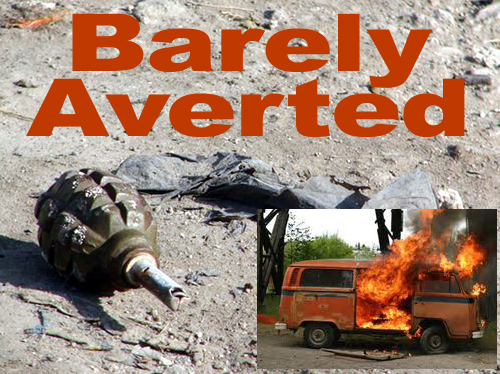
barelyavertedContinued terrorism in Kenya and more public attacks against tourists is resulting in draconian laws that are turning Kenya into an autocratic state.

Kenya’s average of three terrorists attacks monthly continue. Yesterday, ten tourists escaped death when a grenade thrown at them bounced unexploded off their minibus window.

Prior to the Westgate Mall attack foreign investment was growing seemingly undeterred by the increasing terrorist attacks in Kenya. It’s not clear yet if that has changed.

But clearly tourism is down, and tourism remains a fundamental part of the Kenyan economy. Many operators are turning to local and regional tourism. In something that appears desperate to me, the Kenyan Tourist Board is spending considerable funds to lure Nigerian tourists, where terrorism is as bad if not worse than in Kenya.

And not surprisingly, some of Kenya’s most respected tourism companies are now concentrating more of their investment in Tanzania.

Cheli & Peacock, a landmark Kenyan tourist company, announced this week it was opening new offices in Arusha, Tanzania.

The Kenyan government is not an ostrich with its head in the sand. With a string of negative press reports starting with terrorism and extending unendingly to the country’s leaders trials in The Hague, president Kenyatta is growing increasingly authoritarian.

And Parliament seems willing to go along with him.

Increased police powers and a reversal of the decentralization of the police was the most imposing move. Clearly directed against terrorism, there was limited opposition to this fall’s moves, until the courts got in the way.

The Kenyan constitution is a good one, and the government more or less reversed itself on new police laws before an expected challenge in the court. Using Obama’s techniques but for bad ideas, Kenyatta is quietly using his executive powers to take more control over the police and make them less publicly accountable.

Simultaneously, the government wants to muffle the press, and once again Parliament seems ready to go along. I guess the idea is if you can’t wield the power to stop terrorism, perhaps you can stop the reporting of it.

The two laws Parliament may pass next week “seriously restrict the work of journalists and independent media in Kenya and give the government enormous space for censorship,” according to Kenya’s main online newspaper, The Star.

These laws, too, will be challenged in court if passed.

But while we know that tourism is suffering, because the industry is so public and necessarily transparent, we haven’t learned yet that foreign investment may also now be under attack. And if that’s true, Parliamentarians are likely freaking out.

The answer to the end of Kenya’s terrorism begins with leaving Somalia. I’ve been saying this literally since Kenya invaded Somalia in October, 2011. But that’s not in the cards.

Kenya is America and Britain’s proxy in Somalia, and from that point of view, things are going pretty well. If Kenyan troops were to leave, it’s likely the warlords and terrorist would regain control.

So Kenya continues to suffer so that Americans can enjoy their holidays… but not on safari.

Secure that Terrorist

Secure that Terrorist

terrorwarNigerians are fiercely divided on whether America’s decision Wednesday to label Boko Haram a terrorist organization is good or bad, but one thing is clear: they don’t like America turning Africa into the principle field in the War Against Terror.

The arcane political moment when the U.S. State Department labels this or that organization a “terrorist organization” doesn’t attract much notice in the U.S., but it should.

The “Foreign Terrorist Organization” (FTO) amendment to the country’s standing immigration law gives the President and State Department wide powers of interdicting U.S. citizens from virtually any type of engagement with an organization so labeled.

Ohio University African political professor, Brandon Kendhammer, sent a letter to Hillary Clinton in May, 2012, signed by twenty other prominent academicians in the U.S. as well as the Council on Foreign Relations, urging Clinton not to designate Boko Haram an FTO:

The professors explained that the law is so sweeping that it would even keep them from contacting certain organizations and individuals in Nigeria essential to their research.

“Now it’s going to be very hard to contact … or even to just work with communities where members [of these designated FTO organizations] might be present,” the letter complained.

What is normally reported on CNN is the top of the law, that financial holdings in the U.S. linked to an FTO organization are frozen and that specific individuals named as leaders are banned from travel in the U.S.

But like so many of America’s terrorist and spy laws, today, FTO goes much further and gets increasingly sinister. Prof. Kendhammer can no longer even send an email to fellow Nigerian academicians, for example, who might be listed in a deep appendix at the State Department as having “connections” with Boko Haram.

The analysts who make these designations are not academicians, themselves, and might designate an individual doing a Ph.D thesis, for example, “connected with” Boko Haram.

It’s unbridled powers like these which are so chilling. They are powers, like those currently being debated around the NSA controversies, which technically cannot be applied within the U.S. or sometimes as well, U.S. citizens abroad.

Nigerian officialdom mostly welcomed the U.S. move, Wednesday. But the Nigerian public is more conflicted. African governments usually approve, because it usually means getting a lot more guns.

But yesterday a group of Nigerian journalists filing a combined opinion in the Leadership newspaper reminded us that only last year, Nigeria’s ambassador to the U.S. urged the state department not to issue the designation.

There is the obvious disincentive to future foreign investment on the national level, but on the individual level the additional scrutiny that will now befall Nigerians traveling in the United States is a terribly daunting prospect to them.

That would seem petty in the scheme of a War Against Terror if the War Against Terror were not so duplicitous and extra-American. By that I mean almost all the great rules and morals that make America great which are supposed to be preserved by a War Against Terror are blown to smithereens by the way America has been conducting this war in Africa and by the powerful use of the FTO law.

Last month Navy Seals or some such Batmanned into Benghazi and jumped out with Abu Anas al-Liby. He has now been charged in New York with masterminding the attack on the U.S. embassy in Nairobi in 1998.

The crack kidnapping would be illegal in the U.S., as by the way it is in Libya. The week-long interrogation which followed by a U.S. ship at sea violates many worldwide war conventions. But, hey, he’s a bad guy.

Or is he? This was not the first time al-Liby was arrested.

One time was in 1999 by British intelligence. But then with American prompting he was released and likely put on the pay of the CIA to assassinate Gaddafi.

This and other similar intrigues, including of course the training of Osama bin Laden by the CIA to fight the Russians, were listed yesterday by Syracuse professor Horace Campbell and other experts to demonstrate that “means justify the ends” in America’s war on terror.

And right now, the means is all in Africa. And it “means” that African don’t know what it means, because it could change.

It’s nice to think that Obama’s steadfast and incredibly militaristic assault on known terrorists that are now being, literally, rounded up in Africa might be making us safer here at home. And that’s Africa’s problem. It’s making us safer by making them less safe.

Terrorism can’t be blown out. It can be contained, and that’s precisely what Obama is doing, and whether by design or happenstance the containment has become Africa. And you can imagine what that means to Africans.

Containment in the War Against Terror has no limits. Bush and Cheney thought torture was OK, so we tortured. Obama thinks snatching al-Liby is OK, so we snatch al-Liby: all the human rights laws and freedom safeguards of great America mean nothing.

Play bin Laden or al-Liby for however you can, but to your advantage. Leftover armaments can be thrown into a Nairobi mall. Start a little war over in Somalia with your Kenyan proxy, ignore the Ugandan dictator’s threat to execute gays so that your Navy Seals can chase a mean guy into the CAR.

Do whatever you want. There are no rules. Means justify the ends.

That’s the essence of the FTO.

Terrorism can’t be blown out. It can be contained and it can minimized by addressing the desperation of the peoples it appeals to so that it loses support. Those are the only two remedies, and only one of them is right.

We Need Shrinks not Generals

We Need Shrinks not Generals

CongoMarchUnder the noise of Snowden, dysfunction of Congress, frantic media and lackluster personality of Obama, the War Against Terrorism is being massively ratcheted up in Africa.

The French Foreign Legion was dispatched last week to the remote deserts of Mali, to support a freely elected government that is being newly challenged by rebel groups in its most outlying cities.

Crack South African troops added to increased United Nations peacekeeping forces and ruthless Congolese government troops newly armed by the west, have been crushing the last of the known rebel groups in the eastern Congo, an area of conflict for nearly a half century.

How’s it going?

Hard. The unspoken but terribly obvious Hollande/Obama alliance to make Africa the last great military battleground against organized terrorism began five years ago in Somalia. American advisers were everywhere in northern Kenya and the port of Mombasa, and French warships were just off the coast of Somalia.

Drones were added and the war begun. Kenya was enlisted as the visible front army and Somalia was “liberated.” Its al-Qaeda affiliates were scattered and what was left of anything organized raced through Uganda into the center of the continent.

The world watched 90 U.S. soldiers chase them across the Uganda.

But Hollande and Obama miscalculated the arsenal of weapons that liberated Libya would make available, and scattered groups in Mali benefited enormously. France’s end-game mission to America’s chasing of the rebels into the center of the continent was to crush them in the Central African Republic (CAR).

But instead, it had to focus on Mali, far northwest of the CAR. So today the CAR is essentially anarchistic. A report published this morning by Amnesty International describes the CAR in the most horrific, barbaric terms. Every civilized person seems to have abandoned the country, making it ripe for organized terrorist control.

Hardly two years ago the focus of visible battles between the west and its proxies, and al-Qaeda and its proxies was in Somalia. Only a few months ago it reemerged in Mali where it persists. And the riffraff, disparate, heavily armed leftovers of a dozen so-called al-Qaeda affiliates or older rebel groups (like the LRA) are now duking it out like barbarians in the CAR.

You cannot eliminate terrorism, Mr. & Monsieur President.

You cannot eliminate unless you had global gun control the likes of which evades my most fanciful dreams. Where there are weapons and the materials for making them, there will be terrorism.

The question is, Are We Safer Now?

Before I give you my opinion, don’t you think it’s important to also ask, Is Africa Safer Now? What right does the west presume in order to use Africa as the backforty into which the wolves are chased and kept at bay?

If the world ever runs out of weapons, we’ll be forced to deal with conflicting ideologies, as well as crazy terrorists, in ways we should develop, now.

Modern force is so omnipresent, as easily mastered by an internet keyboard, that it can’t possibly end conflict, today. It will only interrupt or delay it.

Consider this, first. The conflict in the DRC’s Kivu Province is a half century old. It’s based largely on the same ethnic divisions that caused the Rwandan genocide. Those divisions are festering. The calm in Rwanda is the calm of a benevolent strongman. Once his biceps snap, all hell is going to break loose.

Consider this, second. Organized terrorism is fanatical. Unlike ethnic conflict, terrorism may have no other explanation except the obsession to rule and control.

Both turn men into beasts eager to die – to kill themselves – for reasons they don’t wholly understand. Hypnotic or simply psychotic.

You can’t get them all. We don’t need any more generals. We need shrinks.

Beating The Wrap

Beating The Wrap

beating the wrapWhile the trial of Kenya’s Vice President in The Hague continues it’s increasingly difficult to believe that Kenya’s President will actually show up for his trial on November 9.

The future of the International Criminal Court hangs in the balance, and it’s a bum wrap for a good global institution based on noble ideas.

But western powers are lobbying that the trial of Uhuru Kenyatta, Kenya’s President, either be postponed or that Kenyatta be excused from the proceedings in The Hague, because of the national crisis that followed the Westgate Mall attack.

Pressure particularly from the U.S. seems to be winning the day, and if Kenyatta does attend, it may be only briefly for the opening session. The world’s obsession with security trumps everything, and it seems this simple equation is that “crimes against humanity” are less important or severe than terrorism.

Over the weekend a BBC analyst put it this way:

“Many experts in international law believe that his case reflects the apparently incompatible demands of historical restorative justice versus future global security.”

Those of us who believe – and there are many if not a vast majority of Kenyans – that Kenyatta and Ruto are, in fact, guilty as accused, are not getting much support from the ongoing process of the ICC.

The trial hasn’t gone well for the prosecution. Many witnesses have been dropped, and of the first half dozen on the stand, there were flip-flops and easily rebutted innuendos.

It just hasn’t seemed a very tight prosecution. Moreover, so far all the evidence has been circumstantial. Ruto has been implicated in lots of hocus pocos similar to Free Masonry or other quasi secret organizations. He’s been implicated in funding groups of known thugs and referenced as giving a pass or nodding to illegal actions.

But no witness has accused him of killing anyone or of specifically telling anyone else to kill anyone.

The reason so many mobsters in the U.S. ultimately went to jail was for tax evasion, a strange wrap for murder. But it’s unlikely that the Capones, Genoveses or Salermos would ever have been convicted of crimes against humanity.

The fact of the matter is that Uhuru Kenyatta has probably less blood on his hands than Dick Cheney, or a bunch of top American politicians long since dead and forgotten.

That shouldn’t be a reason for Kenyatta getting pass, it should be a reason for trying Ronald Reagan rather than letting Oliver North go to jail for him.

The World Court is a magnificent idea. And the handful of people it has so far tried and jailed include some of the worst monsters in modern history. But none of them were nationally elected to lead the countries they were accused of previously destroying.

I’m convinced that Ruto and Kenyatta are culpable of the crimes they’re accused of. But The Court has so far not presented an air-tight case, the west (not much less Kenya itself) is now newly worried about terrorism in Kenya, and I’m just not sure that the people of Kenya would not rather have these two men as leaders than jailed criminals.

I’m not saying the country has forgiven them, because it’s still deeply split tribally and socially. But where Kenyans do seem to have come together is that the election process should be considered paramount, even more important than the judicial process.

Kenyatta and Ruto were fairly elected although the contest was phenomenally close. But the country truly seems, from all sides of the aisle, to be rallying around that concept that the election was fair.

And if criminals have been duly elected, they should duly rule. And no one presumes this can be done from a jail.

It’s been true of not but a few of our own top politicians.

BACKGROUND
Kenyatta, Kenya’s president, and its VP William Ruto, have been charged with crimes against humanity by the World Court in The Hague. Ruto’s trial is ongoing. Kenyatta’s is scheduled to begin in two weeks.

Before they won Kenya’s presidential election last March, they were powerful men within political parties that were closely linked to various tribes. When Kenyatta’s party lost the election to Ruto’s party in 2007, horrible violence broke out throughout Kenya.

About 1300 people were killed, some brutally, and anywhere from 180-250,000 people displaced. Many of these displaced persons remain in state-run camps, today.

The peace treaty brokered by the U.S., the U.K. and Kofi Annan worked magnificently and included a provision that the perpetrators of the violence be named and tried.

The Kenyan Parliament, unable to agree on a process for trials, asked the World Court in The Hague to undertake the trials, which is now happening.

Meanwhile, the two arch enemies formed a political alliance and won the election.

A Horizon of Peace

A Horizon of Peace

peacedoublerainbowMilitarism in Africa is growing fast, started almost the day Obama began his first term, and now totally out of the closet. Across the continent, successful wars – both waged from abroad and locally – are bringing stability to a continent known for its instability.

News this week from probably the most troubled place on the continent, the DRC-Congo, suggests that ace South African troops and Tanzanian soldiers are cleaning up a place that has been known for nothing but blood and brutality for nearly 40 years.

With enormous French involvement, Mali is once again stable, its terrifying short submission to al-Qaeda in the Maghreb completely ended.

Yesterday, the UN Security Council approved strengthening its military involvement in the CAR, which descended into chaos about six months ago, a perfect domino example of Obama’s chasing what was left of al-Shabaab through Uganda and the DRC.

And Kenyan forces (trained, guided and funded by Obama) has pacified most of Somali. And we all know about Egypt, where that country’s short flirtation with real democracy was ended by its own military.

Africa is the second largest continent in the world with more than a quarter of the world’s countries and about a sixth of its population. But there is no question it is the most widely troubled continent.

There are places like Korea and the Mideast where conflict is more intense and concentrated, but look over a period of a decade or more, tabulate the casualties and miseries of wanton guerrilla war and untold brutality, and Africa wins.

Lack of strong governments and the consequential lack of development that follows has kept the Dark Continent darker than we could ever have imagined. Until, perhaps, now.

I think that the fatigue of war is the reason we see new stability. African societies are exhausted by conflict, and this is hard to explain, because it isn’t as if a single individual like you or I closes his eyes and throws the back of his hand onto his forehead in exasperation as we recount the chapters of conflict in the past.

Many people in these conflict areas die as children. More live an entire life in conflict, navigating their daily routines through competing authorities that are usually swiftly brutal if disobeyed.

In many cases like the DRC-Congo, multiple generations have plowed through their lives in a virtual anarchistic state, learning to submit to nothing but violence. Concepts like democracy or peaceful change are foreign if laughable. You do what the man with the gun tells you to do.

But as these conflicts were not settled for so many years, they festered and grew. At the periphery were more developed societies that were suddenly impacted by refugees, disease and trade disruptions.

That’s what’s happening in the DRC-Congo, now. “Peacekeeping is changing,” writes South African analyst Liesl Louw-Vaudran, because “there was no peace to keep.”

So the UN Security Council’s attempt to send peacekeepers into the Congo wasn’t even good enough to stop the M23 rebels from earlier this year taking over the main city of Goma where the UN peacekeepers were garrisoned.

The South African and Tanzanian brigades aren’t as polite, receiving their mandate not from the Security Council but from the African Union. Not satisfied with protecting any status quo, these guys – like Obama – are chasing the bad guys away.

Obama’s strong and sustained hunt of terrorists has cleaved the continent with war, as American and French covert forces, with their Kenyan and Ugandan proxies, disrupted one terrorist group after another.

But five years into the exercise, with drones like birthday balloons all over the place, it seems to be working.

The spectacular terrorist attack on the Westgate Mall in Kenya several weeks ago, much less the less spectacular but terrifyingly frequent smaller attacks the country has been suffering almost on a weekly basis, is the expected reaction to this growing militarism.

And it will continue. As the bad guys are routed from the cities, they will regroup in the hills. And then as they’re chased from the hills, they’ll regroup in virtual space as we learned when investigating the Westgate attack.

And while they don’t command attack helicopters, they’ve figured out pretty awful IEDs.

So it’s hard to see an end point. Yes, the conflict points have been pushed much further away from most of Africa’s peoples than ever before, and this is why the continent is becoming more peaceful. But they aren’t gone.

And until the fundamental motivations for those conflicts are more fully resolved, they will never disappear.

Revealing the Terrible Truth

Revealing the Terrible Truth

ShabaabfightersThis past weekend’s Navy Seal operations in Libya and Somalia mark a turning point in the Obama Administration’s successes against terrorism in the U.S: the Somali raid in particular has made America more vulnerable now to terrorism.

I’ve not been a particular fan of the five years of growing American military involvement in Africa, but as I’ve written my judgment was suspended because it seemed to be working … for America. It was definitely not working for Africa.

The Westgate Mall attack, and a year before an even great attack on a bar in Kampala, were all announced revenge attacks for military successes ostensibly achieved by Kenya and Ugandan armies.

They were more fundamentally military actions by France and the United States, using Ugandans and Kenyans as their proxies. That fact alone is disturbing. It’s a bitter return to Cold War mentalities on how to resolve conflicts.

But the covert operations, in spite of lots of good professional journalism that unmasked the French and American involvement, seemed to be making America safer as Obama systematically took out his enemies one by one through drones and targeted battles.

But last weekend’s operations, intentionally or not, have been brought into the front of the public conscience, in both the U.S. and Somalia. Five years of covert action seem to be over. It’s now admitted and explained, with scant regards for the sovereignty of African nations.

The New York Times detailed explanation of the Barawe attack followed by the BBC report of the Liby capture mean that either the Obama Administration is no longer capable of keeping a secret, or that journalistic interest has just become too intense.

Either way, the cat is truly out of the bag, now. No longer covert, in my opinion, hardens the terrorists’ resolve and challenges them for a response.

It’s academic whether this change is a result of sequester stressed by a government shutdown, or more conspiratorially an attempt to deflect criticism of Obama in general at a critical time for American politics, or just plain journalism finally catching up with public interest.

You see I don’t believe terrorists are all that aware, so to speak. I don’t think they’re news junkies like us or have any more of a sense of geography of America than Americans do of Africa. I believe, for example, that the Nairobi airport fire was definitely an act of botched terrorism, and that likely most acts terrorists attempt are botched and never heard of.

In part this is because of the West’s increased security, but it’s also because the main terrorist organizations are falling apart.

There is little left of al-Qaeda or al-Shabaab. As we saw several weeks ago in Nairobi that doesn’t mean there won’t be more dramatic terrorist events. It just means that it’s less likely, and unlikely that such events will further the power goals of their organizers.

This will be particularly true if like the Kenyans it’s understood that a response of the sort American organized after 9/11 is counterproductive. And I think most of the world, maybe even America, gets that now.

Terrorists today are unorganized. We’ve learned how transnational they are. We’ve discovered that many are truly deranged and that political or religious aspirations are no longer their principal motivating forces.

That’s why I can’t understand the change from covert to overt action.

The terrorists and their local supporters were as shielded from the truth of American involvement as Americans were. There was less of a chance when operations remained covert that any response would be against America.

But we’ve taken off our boxing gloves and mask. We’ve invited them to fight.

I still think their remaining reach is far more limited than it was before 9/11, for many good and for many bad reasons. But my judgment is no longer suspended about America’s militaristic involvement. I don’t think there’s a possibility of a net good from the type of operations which concluded last weekend in Africa.

Hedgefunds Hurting

Hedgefunds Hurting

investmentOK, here’s the deal. Invest a thousand dollars to extract minerals from Africa, today, and your return will be $150,000 … after the rebels win the civil war.

Kilimanjaro Capital is a Belize-based company, with a Canadian website, and European capital listed on some Danish and other northern European exchanges. The CEO, Zulfikar Rashid, was born in Uganda and believes the best way to make money in Africa is to bet on civil wars.

I remember once trying to get into the business center at the Norfolk Hotel in Nairobi, before we were all drowned in wifi, and became a part of a congested line of anxious and poorly dressed white businessmen who were courting the then president of Somalia.

There have been many presidents of Somalia, until the recent spat of stability brought on by the Kenyan invasion last year. This was probably ten years ago.

The poorly dressed white businessmen had contracts coming out of their wazoo, busting briefcases and literally shoving one another to get this mercurial and previously unknown individual to sign his name on a contract for various and many mineral rights.

I’m sure in turn he was paid something on the spot, because I also picked up a few loose Euros at my feet in the line to the photocopier.

I got only a fleeting look at Abdul. He seemed a very thin if frail individual with very large black eyes and a scraggly, narrow black beard. He was dressed in native Somalia, all white robes with a white turban, and was dwarfed by two handlers, or body guards, who looked southern Italian and overfed.

As our line into the business center seemed to stop while one poorly dressed white businessman seemed to be copying the last ten Somalia constitutions, I started a conversation with the pretty rotund slightly dressed poor white businessman in front me.

He was a jolly Scotsman. Just flew in from Heathrow when he heard Abdul was going to be in town. He wanted the fishing rights just off the coast from Kismayo that were currently being pirated by French fishermen.

At the time Kismayo was the capital of world pirates. But this jolly dressed, poor white red-faced Scott was beaming. He wouldn’t tell me how much those rights would cost. Nor did he express sufficient confidence from my point of view that he would be able to fish in the sea dominated by professional pirates. But for some reason, it didn’t seem to matter.

Kilimanjaro Capital, though, is the first of such venture renegades that has achieved such respectability. And its still rather small portfolio is quite diversified, including some normal mineral rights claims even in North America.

But its success depends upon rebels, which are mostly today terrorists, taking control of African land rich with minerals but poor with organized society. Like Kivu province in the eastern DRC, or Biafra in Nigeria, or southern Cameroon.

These are all areas which have seen conflict for more than a half century. The mineral rights are critical to funding the rebel movements.

One of the biggest accomplishments of the Obama Administration from my point of view was a provision in the Dodd-Frank Act that made illegal such dealings with American interests.

It’s probably why Kilimanjaro Capital is located in Belize, has a website in Canada, is listed on a Danish exchange and is run by an Ugandan. I don’t think Dodd-Frank extends quite that far.

Betting on misery is, of course, nothing new. The Great Recession was caused by many such components. But more germane to the moment, I think that Director Rashid is doomed to fail, because rebel movements … well, they just aren’t doing too well lately.

Terrorism, yes. But actual regime changes or national secessions … no. And a contract with Osama probably wouldn’t work.

So let’s just marvel at how amoral, greedy and maybe just crazy part of the investment world is. And let’s just hope that there’s more and more Dodd-Frank worldwide to keep these renegades from spreading.

I’ve got a much better lead on a penny stock, anyway.

Child of 9/11

Child of 9/11

fu“While these terrorists have visited unbelievable savagery on us, we must collectively avoid the temptation towards unthinking revenge, the path the US took after 9/11.”

Those remarks published this morning in Nairobi actually made me reflect on our own looming national crises coming up this midnight and again and again right through the end of the year.

The American Right’s paths since 9/11 have been terribly “unthinking,” reflexive and self-destructive to be sure, but also a great misery for us all.

I began to wonder if the stew we’re in right now in America really has its roots in the bad policies which came out of 9/11, and if Kenya will avoid that same destructive path.

Both societies had regular terrorist attacks before these great ones. Kenya, in fact, has suffered as many deaths and injuries as Westgate from nearly three terrorist attacks monthly in the last two years, and more in the single 1998 bombing of the American embassy. American had an almost regular series of attacks starting all the way back to the Achille Lauro and Pan Am 103.

But like 9/11, Westgate was different. The difference with 9/11 in America was its scale. The difference with Westgate was its savagery:

“The killing of young children in cold blood, and the reported acts of torture constitute a new level of barbarity with which terrorism [in Kenya] is usually not associated,” George Kegoro reflected today in Nairobi.

The American Congress made historic, incorrect decisions in the 15 years since 9/11. The loss of national resources wasted in useless wars, and the diversion of attention to our own needs at home combined to produce a vengeful, angry, hard-nosed and “unthinking” America.

And so we arrive at today, where legislators don’t legislate and politicians defined by the political system want to shut it down. They want to eliminate themselves and replace it with nothing.

Like some child incapable of saying, “Sorry,” they lash out at everything.

Self-destruction supreme. Are we punishing ourselves with all the misdeeds of the last one and half decades?

Don’t follow us, Kenya. So far it looks like you won’t.

In fact, lead this angry child into something better. Please.