Kenya’s Biggest Party Ever!

Kenya’s Biggest Party Ever!

The joy, exuberance and incredible hope spawned by last week’s election victories in Kenya is absolutely amazing! Get ready for the biggest party ever in Kenya!

The last few years have brought social and political transformations around the world but you would be hard pressed to find a more radical one than in Kenya.

Those who visited Kenya only five years ago would not recognize it, today.

There are 12-lane highways, potable water in some cities, the world’s largest tea-export industry and … peace and prosperity.

Something’s wrong, right?

No. Friday the nation of Kenya holds its biggest party in history: A party to celebrate the overwhelming victory of the election for a new constitution.

Kenya’s long struggle with the exogenous microbes of post-colonialism is, by this self styled official clarion announcement, OVER.

I’m taking some risk here, but I’ve earned the right. I lived on the Kenyan border during Idi Amin’s terrors, I had to tell Purdue Alumni that we couldn’t go as planned into Tanzania when the short war with Tanzania erupted in 1977, I had clients locked down in the Stanley when the 11-hour coup of 1982 was zapping bullets around the nearby Hilton, I heard the embassy bombing in 1998, I snuck in and out to get all clients out of Kenya after the horrible post-election violence of 2007…

And scores of smaller things like being in Kenyan jails and bribing officials to get into or out of the country.

Is this really, really over?

Well, yes, actually I think it might be. Global terrorism won’t go away: it’s closer to Kenya than anywhere: al-Qaeda lives next door in Somalia. But this is a part of every person’s life, no matter where you are in the world except maybe Antarctica.

And I think that we, as Americans, can enjoy a tiny part of the credit. It wasn’t so much a sea-change in American foreign policy, but it was a definite change under President Obama that gave a lot of money (which led to this burst of prosperity) and lot of transparent counsel to the crippled nation of Kenya trying to rebuild itself after the last failed election.

Click here for the VOA take on the election’s meanings.

In a “Gazette Notice” released today, the Kenyan Government published the final results of the August 4 election: 6,092,593 Kenyans voted YES and 2,795,059 people vote NO. The YES’ had it nearly 70/30.

And on Saturday, one of Kenya’s largest polling organizations, Infotrack Harris, said that 91 percent of Kenyans are satisfied with the results.

The poll shows the level of satisfaction very high across the entire country, including in the Rift Valley Province where a majority voted against the proposed law.

Infotrack Chief Executive Officer Angela Ambitho said, “88 percent of those in Rift Valley are actually satisfied with the outcome of the referendum. You actually see less satisfaction in Coast and Central and that may just be due to the fact that they anticipated that the speed with which implementation would take place would be faster.”

Wow. Peace and prosperity can never come fast enough.

There were losers; there are always losers, and frankly, I’m really glad these are the identified losers:

(1) William Ruto & Thugs
This is the current Minister for Education who led the “NO” campaign and who everyone knows is soon to be indicted by The Hague for inciting the election violence of 2007.

(2) Churches
Kenya is an incredibly religious country as African countries go, and until now, I’ve felt that was more a good thing than a bad thing. But this time around the churches were near united in their opposition to two (of hundreds) of constitutional articles.

One “might” allow for legal abortions and the other creates some civil courts for very restricted litigation based on Islamic law.

I’ve written about this before, so won’t repeat the necessarily complex details, but suffice it to be said that I take the August 4 outcome as a near unbelievable boundary between what modern Kenyans feel is the division between church and state.

It does not mean that Kenyans aren’t as religious as they always have been. It just means that they’re modern citizens who have a lot more tolerance for one another than we do in our own country. If only we could master that here in the USA.

(3) The American Right
Did you read that, Right right? Yes, you did. The American Right poured in hundreds of thousands of dollars to defeat the referendum. Righties in Congress even threatened the Obama Administration with legislation to inhibit our assistance with the election.

I’ve written about this, too, so won’t rehash here, but this is one of the most exciting outcomes for me personally as a liberal American who loves Kenya.

Any chance this presages our own November elections?

I really think this is fundamentally new page not only in Kenyan history, but possibly in all of Africa’s arduous history in the last half century.

No, I don’t like Nairobi’s traffic and the pollution is increasing. Its treasured wilderness is threatened like never before. But guess what? Rational people are in control.
Serengeti Highways & Monopolies

Serengeti Highways & Monopolies

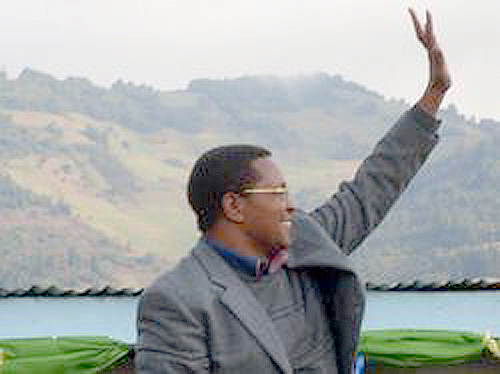
President Kikwete is digging in his heels about building the highway.
Your voice against the Serengeti highway has attracted the attention of the most powerful in Tanzania. Unfortunately, he’s digging in his heels.

During an end of July live television speech to the country President Jakaya Kikwete said that “under no circumstances” will the government be deterred from building the road.

Kikwete doesn’t shy from the limelight, but most keen observers seriously doubted he would enter this fray. Whether the road cuts 40-50k through the neck of the Serengeti as planned, or is rerouted on a more lengthy route as we all would prefer, there are going to be very angry people, locally and foreign. Ethics, conservation and the Serengeti aside (be damned!), this is no good place for a politician.

So what’s his motivation?

I think I know, and I think he has a point (that he hasn’t made), and that point isn’t strong enough for him to really push this calamity through…

It’s already widely known that Kikwete is invested in the newest of the Serengeti lodges, the Kempinski Bilila.

If it weren’t for his intervention in the first place, this lodge would never have been built. It had initially failed to get the necessary permits from Tanzania conservation and wildlife authorities. Kikwete intervened.

Counting Bilila, there are ten principal lodges serving the Serengeti.

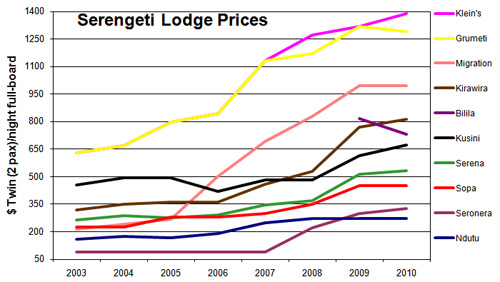
Only one other property, Grumeti, joined Kikwete’s Bilila in the realistic drop in prices from 2009 to 2010. All the other 9 defied market indicators arising from the world recession.

Is Kikwete’s support for the Serengeti highway linked to a belief that the property companies monopolizing the Serengeti are out of touch with markets and need to be forced into greater competition less Tanzania tourism suffer?

Boy, is that giving the fellow the benefit of the doubt! But it’s true. All the other 9 properties have been around for many decades; several of them are approaching the half century mark.

And they all market as if we were in the 14th century. When the good times roll, they raise prices as we would expect. But when a world recession hits, they also raise prices or don’t reduce them. This half-baked theory is “be damned cash flow”, just maintain some modicum of profit.

Before reading on, take a look at the price comparison of the Serengeti Lodges shown just below, then drop down to continue reading.

Based on average tour operator contract prices.
For retail prices add 20-30%.

Raising prices in a declining market reduces cash flow but profits can be somewhat maintain by cutting off lots of operations.

Like jobs.

As much as a third to a half of Tanzania’s tourism employees in 2006 is currently without work.

Tanzania doesn’t have an unemployment security system. There are no legal inhibitions to just telling someone not to come to work today… or anymore. AND those poor folks collect no compensation from the state once “made redundant.” Tanzania has no safety net for the newly unemployed.

That’s the ouch of the policy, but the fact is that it’s a terribly poor business strategy, anyway. It’s a short-term fix and a long-term disaster.

All the training, operational achievements, marketing strategies suddenly hit a brick wall. And to regain them when things get better isn’t just a matter of rehiring those who were fired. That rarely happens.

Serena Hotels built and integrated a modern and very expensive worldwide reservations system in 2007. It took thousands of hours to implement. They adopted an imaginative “Active Senior” program around the same time with some target marketing.

EWT just used Serena Hotels in Kigali and Kampala. It was a nightmare. I personally was at the check-in desk in Kigali untangling a terrible mess. And they seemed to have dropped their “Active Senior” program, just at the time such a program would reap huge benefits: (If any market niche is immune to the world recession, it’s seniors.)

The much better strategy is to follow capitalist principals of supply and demand. Don’t loose your investment in people’s training or marketing strategies that remain viable, and get enough cash flow to see them through the hard times.

Lower prices.

Unfortunately, unlike pricing, we can’t get occupancy rates as they are closely guarded secrets. But there is much anecdotal evidence to suggest that while Bilila is probably the most luxurious lodge in the Serengeti, when it opened in 2008/2009, it drastically lowered its initial asking prices.

And then Bilila dropped prices from 2009 to 2010, to keep its occupancy constant. Kempinski won’t say, but the best anecdotal evidence we’ve collected suggests Bilila has achieved this strategy.

If true, Bilila is reacting to real market forces and maintaining a constant cash flow by doing nothing else than lowering prices. Whereas all the others are laying off staff, closing portions of their properties and extending off-season closures.

Bilila is new, well run, and managed to the current market. There hasn’t been any new lodge in the Serengeti for more than a decade since the out-of-the-way and hodge-podge configured Mbagaleti was built. Before that it was another ten years earlier when Elewana (luxury branch of Sopa Lodges) purchased and rebuilt Migration Camp.

Frankly, that was just fine by me and many, many others. The exclusiveness of the Serengeti is one of its principal draws.

But Kikwete has a point, even if he hasn’t expressed it. The old dogs controlling the existing lodges in the Serengeti: Serena, Sopa, &Beyond and TAHI, are rutted in savoring their monopolies. As with inflexible pricing, Kikwete may see the whole cartel is inflexible to any new notion, good or bad.

Alright, so I’ve made a point, and perhaps Kikwete has, too. But is it germane to this argument about the Serengeti road?

No.

I returned from Uganda, today, and one of the most glaringly obvious difficulties it has in rebuilding its national park system is that major thoroughfares cut right through their wildernesses.

Queen Elizabeth National Park is essentially bisected by a main road, and there are burgeoning little towns at every stop conceded not to be an actual national park proper. The stress on the area’s wildlife is huge.

The tarmac roads that crisscross the great South African reserve, Kruger, absolutely stunt its wilderness growth. Kruger has one of the lowest ratios of migrating herbivores to the rest of its animal population of any park in Africa.

Herbivores constitute the base of the mammalian food chain. It eventually feeds not just the lions but the gerbils and acacia.

Mr. President Kikwete, if I’ve struck a chord with you, let’s work this out another way. I’d be all for disinvesting the monopolies that currently control the Serengeti: Legislate the right for only a single property company in each unique reserve, for example.

But don’t kill the Serengeti. That’s the worst strategy of all.

Celebration & Sanity!

Celebration & Sanity!

The Kenyans dispelled all myths yesterday that they were incapable of stable government. The national referendum for a new constitution passed resoundingly more than 2 to 1.

Although implementation will be arduous, and the time available before the next election poses something of a challenge, it is clear that Kenyans across all spectrums of society want to put the 2007 violence behind them.

The coalition government which has operated so successfully after the Kofi Annan agreement in March, 2008, had unanimously supported the new constitution. Only a handful of renegade politicians, others who will ultimately be prosecuted for the 2007 violence, and church leaders myopically obsessed with tiny provisions regarding abortion campaigned for the “NO” vote.

They lost decisively and resoundingly.

Congratulations, Kenya!

‘NO’ for Violence in Kenya

‘NO’ for Violence in Kenya

Criminal politicians and an old dictator support NO rallies in Kenya.
There’s going to be trouble in Kenya on August 4 and for a few days afterwards, but not as serious as in 2007. Continue on safari, but be vigilant.

A week from Wednesday Kenyans go to the polls for the first time since the violent election of December, 2007. This time they aren’t electing anyone. They’re deciding either YES or NO to a proposed new constitution.

But this time, unlike last time, modern Kenyans and their astute politicians are taking extraordinary preparations to keep peace.

A special commission has been set up by the government to monitor the country’s temperature in the run-up to the referendum.

The National Cohesion and Integration Commission has been active, independent and very useful. They’re also a little bit worried.

Commission member Alice Nderitu yesterday said that the “threat of violence is real.” But she hastened to add, “It’s tense but manageable.”

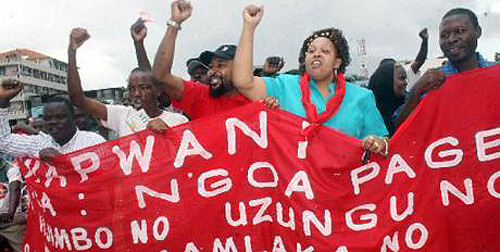
And this time the Kenyan government is buoyed by a Coalition of the World that includes the U.S., the UN and a beautifully created internal Kenyan coalition called “Uwaino.”

The phrase in Swahili used mostly in cooking roughly means blending together, or combining diverse components into something sweet and good.

But the main function of the new organization is to allow Kenyans from around the country to anonymously text any indications of election violence brewing.

Based on nearly 5,000 messages received this weekend, the coalition identified certain areas of the country where tempers are rising.

Those areas are in the west and north, pretty far away from Nairobi and not near any popular tourist areas.

Western and northwestern Kenya are analogous to America’s deep south. Divided ethnically from the rest of Kenya in a similar way that southerners felt disenfranchised from American power centers in the last century, western Kenyans are fearful that their rural, less worldly lifeways will be oppressed by the heavy hand of modern Kenya.

Less educated and less likely to enjoy the benefits of a modern Kenya, people living in places like Kisumu, Kericho up to Eldoret are being ginned up by old leaders like the former President Daniel arap Moi.

Moi, who barely escaped a national tribunal that was going to charge him with a multitude of crimes during his 21-year dictatorship, has been holding NO rallies and focusing on really very small parts of the new constitution that are hot button issues to a less educated electorate.

Abortion and roads, in particular. The new constitution explicitly allows abortion in cases where the mother’s health is in jeopardy (it goes no further; that will be up to subsequent legislatures). And the devolution of power reducing the new President’s powers means that a guy like Moi can’t come in and direct that all new road building be around his home town.

Like at home in America where the real issue (growing health care costs) get subverted by sound-bite absurdities (death panels), Moi is telling his constituents they won’t get any new roads and there will be none to travel to heaven, either.

Ah, democracy by sound-bite.

Uwiano has also identified causes as well. A number of text messages received last weekend identified a little known hate radio broadcast linked to two Members of Parliament, Kiema Kilonzo and Waweru Mburu, both of whom are likely to lose their jobs in a restructured electoral map under the new constitution.

Meanwhile, the government has hired an additional 15,000 national police (who aren’t always themselves the best peacemakers, by the way) and deployed them into areas expecting trouble.

And the U.S. has spent some serious diplomatic capital in this referendum. Vice President Joe Biden was in town last week promoting a “peaceful vote” and the very active U.S. Ambassador Michael Ranneberger has if not crossed the line of neutrality come really close in supporting the YES campaign.

All polling shows the YES will take the day pretty easily. Even the powerful Christian church alliance, which had campaigned for a NO vote, this weekend started to break apart with some very respected clerics coming out full swing for YES.

And notably, the only political leaders supporting the NO vote are those who we now think were responsible for the last round of violence, and who are likely to be prosecuted by the World Court for those crimes. (Education Minister, William Ruto, leads the pack.)

These are powerful men back in their rural constituencies. The fact that Moi is even free is an indication of the power he still wields.

So I doubt this is going to go over as quietly as an election for a Chicago mayor. But I don’t think it will be very disruptive, either.

Church & African State

Church & African State

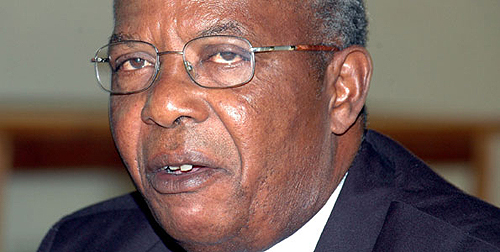
Kenyan John Cardinal Njue is leading a national boycott of taxes.
The conflict between church and state is an abrasive one in the U.S. as it is in Africa. But even as in Kenya when the church is on the right side, it doesn’t belong in the room.

The nearly three centuries of western religious involvement in Africa has had mixed success. There have definitely been periods where religious activism has helped Africa develop, but in the main I think it has had a negative net effect.

And today in Kenya, Christian activism threatens the finely tuned and arduously developed political movements that are otherwise directing Kenyan society down the right path.

This is such a touchy subject that I feel before explaining the previous statement, I need to highlight the good work that has been done by Christian activism.

Outstanding clerics like South Africa’s Desmond Tutu and Nigerian Cardinal Ekandem played sometimes pivotal roles in the peaceful developments of their societies. And during troubled times, such as Kenya’s 1990 street riots, the churches not only offered sanctuary but sanity to a disturbed society.

I don’t believe that Liberia could have survived as it did resulting in the promising situation found there today without a bevy of Christian religious leaders shoring up the little of sane society that was left after Charles Taylor was forced out.

But right now Christian activism is dangerously far too politicized in Africa, and Kenya provides the best example.

Kenya is holding a referendum for a new constitution in August. This is the end of a lengthy process of reconciliation between two warring political factions which caused the violence that followed the December, 2007, elections.

Those elections were so close, and certainly now proved so fraudulent (on both sides), that a clear winner couldn’t be determined. The slums of Nairobi erupted, and violence overtook much of the country. By the time the smoke settled more than 1300 people had been killed, and more than 150,000 displaced.

But credit to those in charge with serious help from Kofi Annan, Britain and America, the two factions formed a coalition government that works well, today. And part of the agreement required that a new constitution be adopted, which at its core would better regulate and adjudicate elections in the future.

That constitution will certainly pass. The process by which it was written was often tortuous but mostly transparent, and every segment of the Kenyan population contributed.

And now, the Christian church coalition opposes the constitution. And this is not just a tacit opposition, but an aggressive one. Every Sunday pulpit has a ranting cleric telling its parishioners to vote NO.

No matter that a NO vote will disintegrate Kenya. The church is opposed to a section – a small section in the constitution that allows for abortion in certain life-threatening situations. (And secondarily, it is opposed to the establishment of Mahdi courts, Islamic courts, for civil cases in Islamic areas, and when requested by all the litigants.)

Like the American right – which is openly and actively funding the church campaign against the constitution – there is little interest in the wider and much more profound issues like executive power and taxes. They cling to this one moral issue as paramount. Paramount to destruction.

And today, the church announced it would organize the country to not pay taxes, if the current legislature raises its salaries.

Now believe me, the move by the current legislature to raise salaries is patently wrong. The country like the rest of the world is in recession and piling up debt. The new constitution, if passed, will disallow legislatures to set their own salaries as they do, now.

And the current Finance Minister, who must approve by integration the bill in the legislature into his overall budget, appears dead set against doing so. In that regards, it’s a mute issue.

But the churches are ringing the church bells in opposition – what could be properly described as unnecessary opposition.

Church involvement in Kenya is not just irritating because of the positions taken. Recently, a coalition of more than 100 Christian organizations, the Micah Network, announced ”a strong statement that the church has no option but to be fully involved in making a difference to reduce carbon emissions and the impact of climate change on particularly the poor and disadvantaged” and “particularly to be lobbying governments to implement legislation to reduce carbon emissions.”
– (Summarized in a blog published by A Rocha Kenya on July 31.)

Wow. I totally agree. Well, I mean with the thing about climate change.

But NOT when it is framed as a Christian (religious) issue, as was elaborately done here. To embrace this methodology would suggest that unless something has a Christian stamp of approval, it’s not vetted enough, not sufficient to become public policy.

So it’s not just a matter of issue: abortion, on the one hand, or climate change, on the other. Christian organizations have every right to support or oppose public policy, but it is dangerous when that position includes “lobbying governments.”

Government is always acts of compromise. Religion is just the reverse. I’m hardly the first to suggest the two should be separated.

Victor & Still Champion

Victor & Still Champion

The victor and still champion, Paul Kagame, flanked by the two other candidates.
(Left) Kayumba Nyamwasa who is in exile. And (right) Victoire Ingabire who is in jail.
Rwanda’s national election occurs in 3 weeks. That has nothing to do with who will win.

President Paul Kagame, the leader of Rwanda for the last 16 years, and prior to that, the paramount general of the Tutsi led RPF army that stopped the 1994 genocide, is the winner and champion.

Kagame has imprisoned all his viable opponents. Members of his military – which are really the political and economic controllers of the country – who have dared to criticize him have either been demoted, exiled or killed. Newspapers have shut down or shut up.

This will not be a free election.

Frankly, I don’t know if there should be a free election. If there were, the Hutu-defined factions would win. The government would be in turmoil. Businessmen would flee the country. It would cause an extraordinarily awkward situation with regards to the brutal war going on in the eastern Congo (led by Rwandan exiled Hutu extremists).

And this tiny, currently peaceful country would go to pot.

Obviously no one knows this better than Kagame. Like so many African dictators before him, he has emerged over a good period of time as a leader who has painted himself into a box of eternity.

He has been essentially benevolent and fair. Particularly in the beginning few years after the genocide, he was remarkably tolerant and forgiving. He has adroitly danced on the world stage, criticizing his donors while getting more of their money (including the U.S.). And he has overseen a ravaged and poor country grow into one of Africa’s most successful economies.

Kagame’s life goal has been to reverse the powerful currents that separate his population into two factions that despise one another. Hutus call Tutsis “cockroaches.” Tutsis – now in firm control – are less derogatory about Hutus. Instead, they ignore them, hire them for slave wages and refuse to matriculate them up the political or business ladder.

So Kagame has suffered the biggest failure of his own stated goals: he has not brought together the warring factions that led to the genocide. If anything, he has presided over an increasing gap.

And as I’ve written before, deep down it is not an ethnic divide. And this incredibly unique and confusing aspect muddies the waters even more. Hutu and Tutsi speak the same language. They have intermarried for nearly a millennia. The physical differences of their ancestry are blurred at best.

But there was enough physical difference at the start of the colonial era, that the Belgians could attempt a differentiation, and that reenergized and refined the division that lasts until today. Still, it is less an ethnic divide than a typical political class divide. The rich and powerful against the poor and disenfranchised.

Were it simply ethnic, Kagame’s task would have been easier. But he entered the modern world like any leader, anywhere. It’s not only old scores that have to be settled, it’s .. Poverty.

So yes, Rwanda is safe, and yes, Rwanda is economically prosperous by African standards. But no, it’s not free.

Which is better?

Bombings in Kampala

Bombings in Kampala

More than 60 people were killed yesterday in two separate bomb attacks in Kampala, a signature Al-Qaeda attack. Curiously, the terrorist organization has not claimed responsibility.

I’ve increasingly written about Al-Shabaab, Al-Qaeda in Somalia, and their increasing power and influence in East Africa. With last week’s peaceful elections in the southern third of Somali known as Somaliland, the Al-Shabaab is consolidating its control of the north-western third outside Mogadishu. Ironically, violence in Somalia is slightly down.

But if the fighting for turf is subsidizing, the fighting for hearts and minds is only growing. The blasts in Kampala, at an Ethiopian bar and the Rugby Sports Club (both packed with guests watching the World Cup), carry all the characteristics of a terrorist organization trying to make a point.

Their point: get out of Somalia.

Uganda and Burundi are the only East African countries that have military forces in Somalia fighting Al-Shabaab. They are a part of a joint UN/African Union force that is doing poorly and has suffered numerous casualties for peace-keepers. The Uganda media is becoming increasingly hostile with the government’s war effort, there.

So all the pointers suggest a premeditated, coordinated attack by Al-Shabaab to get East African forces out of Mogadishu.

Why, then, have they not taken full responsibility?

(1) The nature of terrorism is such that Al-Shabaab may have planted agents in Uganda but without fully knowing their plans. They may simply be waiting for their own confirmation.

(2) The President of Uganda, Yoweri Museveni, is standing for re-election later this year. He has become increasingly authoritarian and has been imprisoning a number of opponents. The biggest attack was at the Rugby Club, frequented almost exclusively by educated and many dissident Ugandans. Regardless of who actually did it, will most certainly quiet to some extent Museveni’s public critics.

(3) Shortly the southern Sudan will be voting for independence from the Republic of Sudan, and the situation just north of Uganda is growing tense. Uganda has been an advocate for southern Sudanese independence. (Uganda President) Museveni has told the Republic of Sudan that if its president comes to Kampala next month for the Organization of African Unity (OAU) meeting, he’ll be arrested. (There is an international warrant on Omar al Bashir for war crimes in Darfur.) Sudan harbors Al-Shabaab.

The horror of what has happened suggests some absurdity in focusing on the perpetrators, but we have been fairly fortunate in the last several years in East Africa to not have suffered these incidents. With some clarity in the days ahead, we may have a clearer understanding if anything new is developing.

Right now, I don’t think so. The evidence is pointing to Al-Shabaab, specifically against Uganda for its soldiers in Somalia, a mission that because of its low international interest has attracted less international security. Thus, more easily accomplished.

The Mara: Tipping or Tentative?

The Mara: Tipping or Tentative?

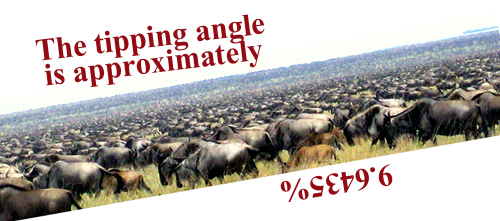
Oops. There goes the migration!
A recent study in Kenya has sparked enormous confusion over the long-term future of its wildlife, particularly in the Mara. But a couple things do look certain. Don’t stay outside the reserves and don’t privatize national treasures.

I hate reporting a story like this, but it’s been growing in my conscience like mold on the wall. Time to disinfect.

“Scientific studies” in Kenya just don’t carry the weight of well-funded work elsewhere in Africa, particularly in the south.

Just a few months after rains returned to East Africa late last year, the Kenya Wildlife Service mounted an animal survey that began in Amboseli. KWS concluded that as much as 83% of Amboseli’s wildlife had been lost.

Click here to see the survey. Oops. Gone? It’s been removed. But aha! I saved the paper: click here.

All sorts of bigwig organizations participated in that paper, including some that are now criticizing it.

Evidence is growing that the survey was wrong. Not long after the survey suggested that most of Amboseli’s elephant and wildebeest had died, Cynthia Moss’ ATE
group reported that “most” of the elephant were returning, although with fewer juveniles. And only a few weeks ago, one of ATE’s researchers, J. Kioko, reported that “about 1000 wildebeest have arrived in the park.”

Now, this second damming report might be just as flawed.

The report was funded by the Africa-based International Livestock Research Institute (ILRI) and was published in the Journal of Zoology and essentially painted a catastrophic situation in Kenya’s Maasai Mara, claiming the reserve was on the brink of collapse.

The Mara Conservancy, one of the two authorities controlling the Maasai Mara, issued a stunning denial. The Conservancy called the report “false.”

The report put much of the blame on the explosion of Maasai homesteads in the “private” reserves that ring the Mara conservancies. Specifically, the report claimed there were only four homesteads in 1950 and that there are now 368. And in what I consider a gross indication of the report’s inaccuracy, it claimed there were 44 huts in 1950 and 2735 in 2003.

Homesteads, maybe, but huts are built and torn down weekly. The 1950 data wasn’t sourced, but had to come from colonial authorities, and native statistics in 1950 have been proved time and again to be grossly inaccurate.

Paula Kahumbu, Executive Director of Richard Leakey’s reputable Wildlife Direct organization, remarked as follows on one of the report’s huge claims of wildlife losses:

“For the life of me I cannot find the 95% decline in giraffe in any of the blocks – the greatest decline that I can find is in block 3 where numbers of giraffe decline from 37 to 12 individuals. That’s only a 67% decline.”

I’m not trained or blessed with enough time on my hands to wade through the competing reports to determine in any scientific fashion which are right and which are wrong.

But that’s not going to stop me from making a few conclusions that might help those of you interested in East Africa’s wildlife, or those who are considering traveling there.

First, why are things so confused? Isn’t science… science?

Yes to the second, but as the first, Kenya’s problem is unique; unique even to Tanzania, its nearest and most similar neighbor. The government of Kenya long ago divested itself of full control over a number of its wildlife reserves, including both Amboseli and the Maasai Mara, arguably the two most important ones.

These great tracks of national treasure were seconded to local authorities (Maasai county councils) who exacerbated the problem by privatizing their operations.

The federal Kenya Wildlife Service (KWS) still has some authority in both areas, but the bulk of the authority, including reporting facts on a day-to-day basis, is left in private hands. Even anti-poaching patrols in the Mara are run privately, not by KWS.

And to make a terrible situation intolerable, in the last decade the Mara was divided into two separately operated reserves. One by the Narok County Council, and the other by a sister Maasai community, the Trans Mara County Council.

One of Kenya’s legendary safari guides, Allan Earnshaw, wrote recently for the East African Wild Life Society, “The root of the problem is the fact that whilst the Maasai Mara is called a National Reserve, it is in fact treated and run as a local asset by the two different local authorities.”

(Problem upon problem: I cannot link you to this article, because remarkably EAWLS does not publish anything digitally.)

But Earnshaw is right on. And it gets truly ridiculous, as is the case as I write at this moment, if you wish to visit the entire Mara (which isn’t very big, you could do it in a day), you have to pay two fees: two times $60, to cross the Serena bridge going from one half to the other.

Anti-poaching patrols and scientific study groups are similarly constricted.

Collection of tourists fees, scientific study oversight and anti-poaching are operated by private organizations, separately for the two halves of the Mara, but the building of tourist lodges is a federal decision.

So since 2005, “no fewer than 55 new camps and lodges have been built in the Mara.” In 1997, there were a mere 20 camps and lodges. Today, according to Earnshaw, “there are over 100 and counting – with a bed capacity for 4000 tourists.”

The confusion over the numbers of animals, and the numbers of tourist lodges, is because there is no single authority managing the Mara. Studies and revenue receipts contradict each other. Private companies, competing for business jobs, exaggerate their potential. There is no neutral authority overseeing all this.

This is a Ph.D study of mismanagement at the least. Can’t do that, now. But let me try to glean from this mess three simple conclusions:

The effect on the area’s wildlife by the last drought was not as bad as local “scientific” studies suggested.

It was still bad, but probably not worse than in previous droughts. And with time we’ll know this for sure, but even in this short period of time since the rains returned late last year, things look pretty good to me.

Second, game viewing is increasingly depressed outside the parks. If you want to see a lot of game, avoid the private reserves and stay inside the park.

(Necessary semantic clarification: The Maasai Mara is not a private reserve, it is composed of two separate (County Council) government reserves, but it is privately managed. But ringing the Mara as is the case with almost all parks in East Africa, are adjacent or near adjacent private lands with tourist lodges.)

&Beyond’s Klein’s Camp and the Grumeti Reserve camps outside the Serengeti are examples. Saruni, Sasaab, Elephant Watch Camp are others outside Samburu. Treetops and Kikoti outside Tarangire. Literally all the Bush ‘n Beyond camps, and Laikipia camps like Lewa Downs and Loisaba are outside parks.

This doesn’t mean they aren’t fabulous additions to a vacation with their own unique attractions. It just means if you aren’t close enough to a park to at least enter it during a day-trip, your game viewing will be depressed compared to being inside the park.

Third, privatizing management of national treasures like a wildlife park or national Park (as being considered in the U.S.) is nothing less than stupid.

It transforms good, neutral scientific studies into the components of a cost-effective business plan. It prostitutes moral authority with profit. The decline of American zoos, for instance, I place squarely on the fact that the vast majority were privatized in the 1980s and 1990s.

America, take note. Kenya’s greatest national treasure, if it is in peril, is because it was off-lifted into private hands.

The Left Way in East Africa

The Left Way in East Africa

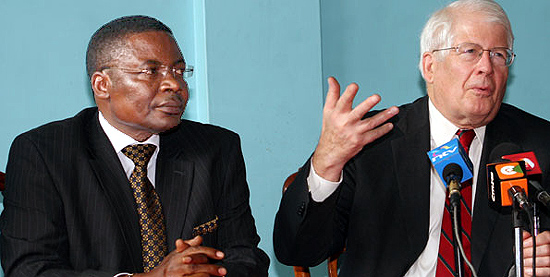
Kenya's House Speaker Kenneth Marende with US Congressman David Price.
In a huge and welcome change from past American policy, eight U.S. Congressmen are in Kenya to promote democracy. “Change,” I said? Absolutely!

Until the Obama administration, America’s promoting democracy in the Third World was something akin to my own dear old-style Chicago politics. You tell them what to do, and if they don’t, you shoot.

My own grandfather, a “died in the wool” Chicago Republican, stopped voting after he had been told at the voting registration table for the Eisenhower election in 1954 that he was dead.

His named had been removed from the voter registration lists to the corner’s, (presumably in a wool suite in a sealed coffin. At least he lived another ten years.)

The Reagan era was an intensely ideological one, and it was during that time that a “democracy officer” was attached to every American embassy in the world. In East Africa the officer was intensely hated. He meddled in everything, often trumping senior embassy staff because of his unique title.

And rather than promoting democracy, this officer’s function was punitive. When he/she saw something in the country that was undemocratic, local officials were given a tongue lashing, then a lecture, and finally aid was withdrawn.

Not exactly the best way to promote an ideology, if you ask me.

And it wasn’t. There was a terrible backlash that led to young people in particular concluding that democracy wasn’t. Rioting by students in both Nairobi and Kampala were several times linked to anti-American sentiments about meddling in their country’s politics.

Authoritarian leaders like Uganda’s Museveni and Rwanda’s Kagame seemed to fair much better than the outspoken politicians of Kenya and Tanzania.

Well, thank goodness, Obama has changed that. There is still a democracy officer, but much demurred, and hopefully soon to be retired. And instead of some School Mum approach in high Chicago Style, we’re now treating the Third World with respect.

Eight Congressmen led by David Price (D-NC) are in Nairobi to encourage democracy, and specifically, to encourage debate on the upcoming constitutional referendum.

The delegation is the “House Democracy Partnership” newly reconfigured in January, 2009, to reflect the new approaches of the Obama Administration.

Rather than lecturing local officials, local officials are invited to the U.S. Congress to shadow their counterparts. The Kenyan Speaker of the House has already enjoyed this junket.

Rather than telling a country how to run an election (as we did in Kenya’s failed 2007 process), USAid funds neutral components of an election, such as the voter registration process. Or – in the current constitutional referendum – a publicity campaign that does little more than tell people when the election is.

Compare this to the Bush Administration’s failed efforts to effect the outcome of elections throughout East Africa with funds supporting the candidate they felt was “more democratic.”

This is definitely a softer approach. Some might argue it could backfire.

Like in Afghanistan?

Ducky Judges Quack

Ducky Judges Quack

Not unconstitutional; rather inconsequential.
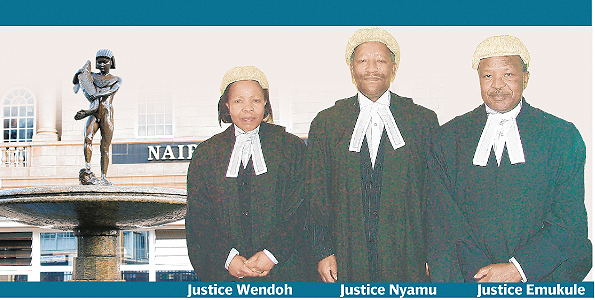
Here’s one for the books. Yesterday, a panel of 3 Kenyan judges said the proposed judicial system in the proposed new constitution is unconstitutional!

Wait, wait, don’t tell me. There isn’t a constitution , yet, because it’s being voted on August 4, so how can something that isn’t, not be?

This is incredibly embarrassing to Kenya, and it’s a patent retrogression to the old days of corruption and nepotism. If the new constitution passes, all judges lose their jobs and must be reappointed to the newly reconstructed judiciary.

These lameducks are trying to … what… how should I put it, be… eternalized?

The ruling is ridiculous but disturbing. The new proposed Kenyan constitution, which I consider brilliant, sets up an admittedly controversial judiciary that includes a second tier of civil courts for Muslims – restricted strictly to personal matters like marriage and only if all parties agree.

The judges called these “kadhi” courts unconstitutional.

Incredible. There is no constitution yet, so nothing yet can be unconstitutional.

Kenyan political leaders have called it for what it is, “inconsequential.”

The Crocodile Attack Alarm

The Crocodile Attack Alarm

An easy distraction.
This weekend officials on Kenya’s coast warned of increasing crocodile attacks on local residents. Nonsense.

If the reports of increased lion and crocodile attacks in Kenya are true, why are they not true in neighboring Uganda and Tanzania? Do those animals not have visas?

Like the incorrectly reported increase in lion attacks made last week in the Mara, the increasing media emphasis in Kenya on wild animal attacks can be explained for two reasons: (1) the boundaries between people and wild animals are growing smaller and more stressful, and (2) because the story makes good politics.

It reminds me very much of the regular conservative attacks on vermin at home, particularly wolves. Generally when the rains are good and the stock is healthy we hear very little about wolf attacks. But the moment there’s a drought or anthrax, wolves start eating babies.

“The marauding reptiles of River Tana are killing villagers, particularly women,“ reported Mark Agutu, a reporter for Kenya’s Daily Nation, this weekend.

The Tana River just came out of an extended drought, and there are now floods and mudslides, and farmers have suffered terribly. An important, somewhat contentious, national referendum is occurring in a few months. Muslim and Christians are in the throes of trying to deal with being near an Al-Qaeda Somalia not far from them.

There’s a lot to bother a farmer on Tana River, and one of the easiest ways to distract him from demanding action from his social and political leaders, is to sound the crocodile attack alarm.

This hysteria is not good for Kenya. Most importantly, elephant attacks are on the increase, and they are often much more destructive than lions or crocodiles, and addressing the issue won’t be easy. Expanding this fact to all predators isn’t simply specious but could really delay the need to figure out what to do with elephants.

East Africa’s wild animals are the most numerous and dramatic on earth, and there’s no question that modern society there has a serious problem figuring out what to do with the conflict caused when the wilderness meets the city.

But brazen suggestions that the animals have risen like vampires against peace-loving villagers is not going to get us anywhere.

Kenya ‘Gets it’ too

Kenya ‘Gets it’ too

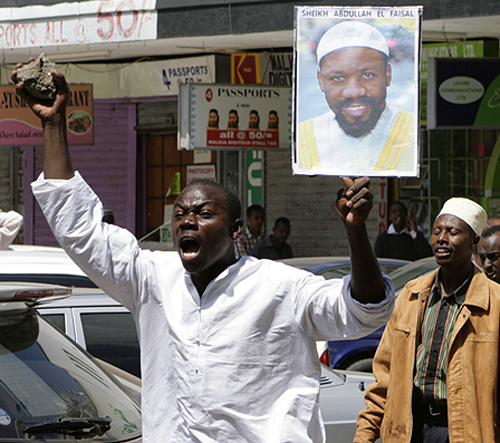
Nairobi demonstrators aroused by al-Faisal.
The Times Square Bomber says his radical Muslim cleric “gets it.” So does Kenya.

NPR reported this morning that Faisal Shahzad, the Times Square bomber, attributed his radicalization to Abdullah Al-Faisal, a convicted felon in the UK who Kenya recently deported to Jamaica.

I wrote earlier about the Al-Faisal controversy in Kenya and how Kenya stood alone among dozens of African countries by arresting then deporting Al-Faisal, who had fled into Africa to preach radical jihad.

Apparently, Al-Faisal made the gross mistake of trying to sneak into Kenya (the only easy way to get to Somalia, his obvious destination). A score of other African countries through which Al-Faisal passed did nothing, despite warrants for the man’s arrest and requests by Interpol to question him.

In fact he had become something of a celebrity in South Africa, where he was received widespread public attention and even some support from the South African government.

But the moment al-Faisal stepped into Kenya, he was arrested.

Today the leaked investigative report that NPR aired shows not just the power of internet clerics, but the obvious side of the so-called War on Terror embraced by Kenya.

(Student) Election Violence in Kenya

(Student) Election Violence in Kenya

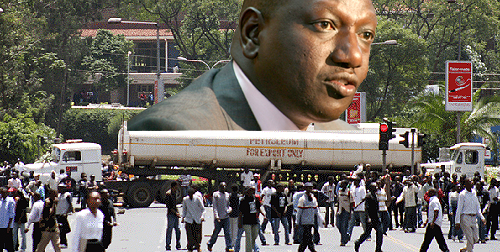
Maestro Ruto looking over the student election violence.
Nairobi students riot over … elections? And the man “solving” the situation is the one who caused the last election riots?

Wait, wait! The elections aren’t until the end of 2012, right? And the national referendum for a constitution isn’t for a few more months, right? What elections are we talking about?

The election for SONU, that’s Nairobi University’s student union.

Riots?

It started Friday when students claimed the results announced for the elections of their student union were rigged by political hotshots.

iPhone fotos showed pretty rough characters, not exactly your liberal arts sophomore, entering student election booths with giant pangas (machetes) and replacing one election box with another that sort of looked similar.

Sunday students really got themselves fired up and on Monday they took to the crowded streets of Nairobi. One car was set ablaze in the city center. The university grounds were trashed pretty badly. Oil tankers were hijacked and stopped in the middle of Nairobi roundabouts virtually stopping traffic in and out of the city.

Guests at the Norfolk Hotel opposite the university had slightly longer drives as taxis went the long way round River Road to avoid the university.

It’s virtually impossible to verify the students’ claims that their student union election was rigged by political bosses in the country, but the circumstantial evidence is pretty much on their side.

It’s definitely been true in the past. Becoming a student union officer at the country’s most prestigious university was a virtual path into national politics. The opposing national parties, in fact, supported slates of candidates until that was banned just a few years ago.

But here’s the clue that it may definitely be true.

William Ruto is one of the most evil men in Kenya. Until recently he was the Agricultural Minister, a pretty high profile position in a government with nearly 70 ministries but only a few – like agriculture – that sit with the President and Prime Minister.

But it is widely known that Ruto is one of the “list of 20″ submitted the World Court in The Hague as a prime suspect for having instigated the horrible ethnic violence which followed the last election. As that formal investigation proceeded, Ruto was dumped down a few stairs from Agriculture to Education.

It’s not a big drop, but a pointed one. Ruto commands a huge following in rural Kenya where he overlords other thugs and mafia, and his clout is just too powerful.

Not until he’s officially named by The Hague will Kenya’s leaders dare dump him.

So now, as Minister of Education, he has told the Nairobi faculty to undo their suspension of the student union.

The faculty had suspended the student union and closed the university. On the first action presumably because the faculty knows the elections were rigged (though none will say so), and on the section action, because the kids were trashing the campus.

That seems reasonable to me, a former student rioter myself. And besides, it’s what the students want! They were rioting against the outcome of the elections of their union.

Ruto’s insertion in this process is by association a pointer to the fact that the student elections were rigged, and probably, by him.

Poor Ruto. As he loses support among matriculated Kenyan politicians, he’s forced to succor among the kids. Good for Kenya. But temporarily not so good for Nairobi University.

Good luck, kids! You will overcome!

Election Nuts

Election Nuts

Can't remember. Was he born here?

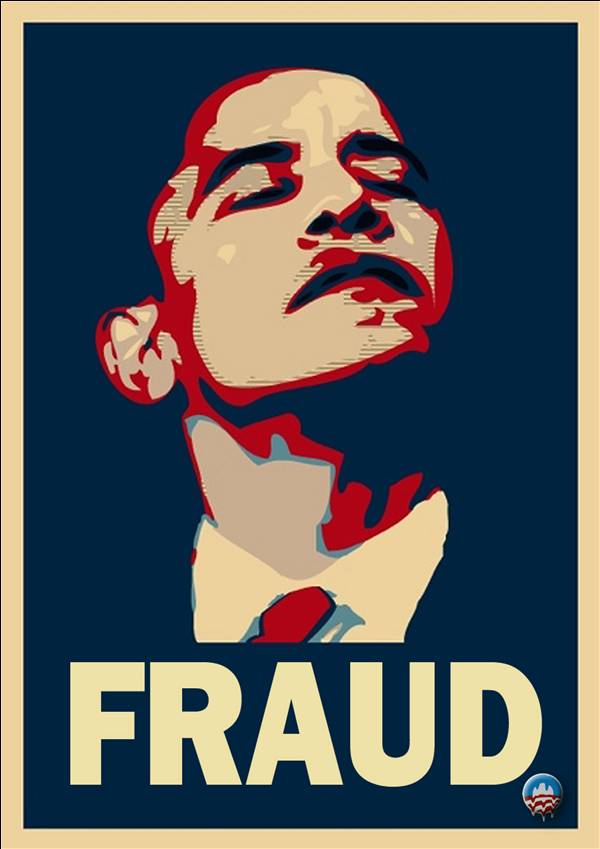
A single case or two of corruption brought down the Kenyan election. But the recently ended UK election, like the notorious Bush/Gore election, was riveted with irregularities.

Daniel Hannan, a Conservative MP for South East England since 1999, and winner of the Bastiat Award for online journalism, writes in his blog that this week’s UK elections were corrupt and therefore inconclusive.

He posits “how much easier electoral malpractice has become in the United Kingdom than in the two banana republics where I have been an election monitor.”

He claims that “Many people were denied a vote.”

And while Hannan looks from the inside out, there were plenty who saw the same thing from the outside in.

Election monitors from the Commonwealth Countries have been fairly unanimous in criticizing the results as unfair, inconclusive and flawed.

Kenya’s Ababu Namwamba of the election commission told UK newspapers, “The allegations of fraud and of voters being turned away threaten the integrity of the vote, especially in marginal constituencies where candidates have a majority of less than 1,000.

“The number of seats the Tories needed for an absolute majority is not that high — this could have made the difference. One candidate told me that the British system is possibly the most corruptible in the whole world,” Namwamba added.

Marie Marilyn Jalloh, an MP from Sierra Leone, added: “There has to be doubt over the legitimacy of the result… [The UK] system is a recipe for corruption; it was a massive shock when I saw you didn’t need any identification to vote.

In Sierra Leone, as in Kenya, voters must present an identity card corroborated by finger prints.

Even observers from places where elections have not been so contested criticized the process. Lisa Hanna, an MP from Jamaica, said: “I was shocked by the lack of checks.”

I dare say that the difference between Brown, Clegg and Cameron is much less than Gore and Bush, although the British may see that differently. But frankly I feel the difference between Gore and Bush was much greater than between Kibaki and Odinga, the two contentious rivals in the Kenyan election of 2007.

And in all three contests, the results were so close that even isolated acts of corruption or inadvertent irregularities could conclusively effect the outcomes.

What does this mean?

For a moment, let’s presume that some system could be put in place that would assure there were no irregularities … not one.

And let’s also presume that like the Dutch, institutions were in place to make everyone vote (the Dutch give out parking-like tickets to offenders who don’t vote).

It would still be close. Do you think that those who lost would concede so easily?

No, of course not. I happen to have been on the aggrieved side of the Bush/Gore outcome: I believe the world would have been a happier, more peaceful place if the results had better reflected the actual outcome.

But would I have conceded had the results been flipped? Would I have allowed the will of my community to proceed to waging decades of what I considered immoral wars? Or would I have sustained an outcome that I might in my inner conscience known was unfair? In order to “save the world from war.”

Elections work only when both outcomes are at some level acceptable to all sides. When compromise, however stinging, works.

Compromise in the world doesn’t work, today. That means elections won’t work. I’m not sure why, but the whole damn world is too polarized for elections, even incorruptible ones.

World is Ending Abortions in Africa

World is Ending Abortions in Africa

American religious fanatics are in East Africa announcing the end of the world and that the Kenyan draft constitution is blasphemous. What’s wrong? Not enough to do at home?

There’s no better object lesson on the futility of debate in America, today, than the stance taken by religious extremists. You can’t argue something that’s a lie except by calling it a lie, and that ends the discourse.

The result simply divides those listening into those who believe the lie and those who are calling out the lie.

And now these intellectually bereft righties have opened up a new battle front in East Africa. While I doubt it will work, their success in East Africa could be catastrophic. Several American religious groups are funding the “No Campaign” against Kenya’s Draft Constitution.

In July the Kenyan population votes on a referendum for a new constitution. The process of creating this draft constitution has been much more laborious and contentious than Obama’s health care legislation, but it represents a fabulous consensus among Kenya’s very fractured politic.

All the sane governments of the world are praising Kenya and the process that created the draft. The U.S. is pouring in considerable funds to help publish the draft and distribute it among the Kenyan population.

It’s a very fair constitution. Like all big legislation (and this is the biggest) it will be modified and reworked with time. But as a start it’s wonderful and should put an end to the potential for violence in the next election.

A powerful coalition of Kenyan churches opposes the draft and is campaigning for a “No” vote, which will throw the country into turmoil. Their justification? The draft constitution allows abortion.

Article 26 empowers doctors to end a pregnancy if it endangers a woman’s life.

The American-funded campaign in typical American extremist end-all-argument fashion extends the Kenyan churches complaint into a patent lie, claiming that the draft constitution allows “abortion on demand.”

Friday, Jordan Sekulow, head of Pat Robertson’s Center for Law & Justice, told the Associated Press that the draft constitution “..opens the door to abortion on demand.

(“Tens of thousands of dollars” have already reached Kenya according to Sekulow’s blog on his site. In addition thousands of brochures printed by New York’s National Right-to-Life Committee are today being circulated in Nairobi.)

The American Center for Law and Justice (ACLJ) is a non-governmental public interest law firm founded in 1990 by the controversial televangelist Pat Robertson well-known for claiming that the Haitian earthquake was because the Haitians made a pact with the devil.

ACLJ gets its word out in Kenya particularly through the Christian Broadcast Network, which spends millions to achieve prime broadcast space throughout Africa.

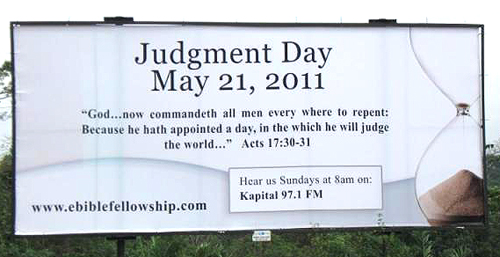
I’ve often wondered why Christian fanatics spend so much energy in Africa. Consider the Electronic Bible Fellowship located in Sharon Hill, Pennsylvania. Their most recent campaign is to alert the world that it is ending on May 21, 2011. Their technique is by erecting billboards. Here is the list of where their seven billboards are located:

Kumasi and Accra (Ghana); Dominican Republic, Addis Ababa, Maseru (Lesotho), Jamaica, and Dar-es-Salaam.

In the U.S. – where they live, or at least where they live until May 21 next year – they only use “moving” billboards – that is, signs on automobiles and RVs.

My brain is just too strained trying to figure this one out. Why do American religious fanatics do crazy things in Africa? I know there’s a reason.

And the best answer I can give right now is in Swahili. Sorry. But really, you don’t have to understand Swahili to laugh at this great Tanzanian comedian and his TV clip about the Dar billboard which eBible erected over a busy bus and matatu station in the center of Dar. Pull the timer button to just over 3 minutes to get to the segment where he “interviews” distraught Dar citizens who work under the billboard.