A movie deal? A bale of cotton? One Lost Generation?No trillion dollar wars got Osama. Somebody ratted. Some chink in his anti-$25 million fortress cracked and it wasn’t from a drone and sure wasn’t from water boarding. The African Awakening is the same. It’s ideas, Joe, not guns.
Adolf Eichmann killed a lot more people than Osama bin-Laden and Israel knew he fled to Argentina, which was not exactly a stable country in the 1950s. In about the same time it took us to find Osama, Israel found Eichmann, put him on trial and hanged him.
Neo-Nazi sentiment was running high in Argentina at the time. In fact, you could argue Senator Joseph McCarthy tried to import it to the U.S. In fact, neo-Nazi sentiments in pockets around the world from Russia to South Africa was not so dissimilar to the so-called “franchises” of Al-Qaeda that created shoe bombers and Times Square crazies.
How many wars did Israel fight to find him? None.
How much money did Israel use to bring him to justice? Probably not a trillion dollars.
How much did Israel’s education, cancer research, foreign policy initiatives, high speed rail suffer to find Eichmann? (They don’t have high speed rail, sorry.)
Radio Free Europe’s Robert Tait puts it right this way:
“The timing of Osama bin Laden’s passing [coincides] with the collapse … of hated autocratic Arab regimes in the face of popular demand.” Tait sees Osama’s discovery and death, and the African Awakening as a “confluence of events.”
Let’s go one step further. It isn’t coincidental, as confluences could be. It’s causal. It’s a reasonable outcome of the world changing in a really good way.
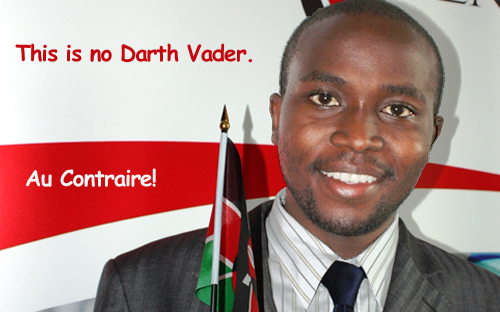
What ISI or Pakistani military thug decided to if not rat on the monster at least ratchet down some of his protection, because Darth Vader was having trouble paying protection?
What double-agent spilled the beans last September, because he really didn’t want to become a martyr, after all.
Martyrs? What’s that? How much do they get paid an hour?
Good lord, how much American energy and lost opportunities have been lost in my lifetime pursuing military and ideological black holes? Who really cares, today, that Vietnam is communistic? Call me, I’ve got a great deal on a Mekong Cruise.
Give it up, Senator Graham. The world will be a better place, and America might just be able to reemerge.
Osama Bin Laden affected almost everyone’s life in some way over the last twenty years.
Maybe you lost a family member in 9/11, or maybe the 1998 bombing in Tanzania drove your tourism company out of business, or perhaps you lost a friend when U.S. troops raided your house in the middle an Iraqi night.
The death of Osama Bin Laden is both momentous and meaningless depending on how Osama touched your life.
For the families of his victims, his death might bring some satisfaction.
If you are a mid-level Al-Qaeda operative in Yemen, his death means very little in practice, seeing as Osama Bin Laden has not been operationally involved in al-Qaeda activities for years.
What about for Africans in Mauritania, Algeria, Tunisia, Mali or Morocco, where al-Qaeda in the Islamic Maghreb (AQIM) continues to launch deadly attacks?
Well, I would guess that the death of their figurehead sheik will cause very few ripples for two reasons: one, all politics are local, and two, the Arab spring has smashed the ideological foundation for violent extremism in the Maghreb.
AQIM is a hodge-podge of local players who imported the Qaeda brand name.
I don’t doubt that some of these fighters are committed to the global jihad, but I think the grievances that radicalized them have more to do with their own government’s failings and foreign influence in their home region than the international jihadist agenda.
In this light, the fact that ordinary Arab youths can topple governments where radical fringes have repeatedly failed should also deal a death blow to the notion that blowing up cafés filled with foreigners is the best way to affect change.
In the short term, the turmoil of North African politics will open up space for radical groups to use violence.
However, Osama’s ideology in the Maghreb was mortally wounded before he took a bullet in the head.
He lost the battle for hearts and minds the moment Ben Ali flew out of Tunisia.
The die-hards will fight on: kidnapping tourists, moving drugs from Guinea-Bissau to North Africa, and detonating the odd bomb in touristy cafes.
But without the passive support of those Arab youths that have now found their voice another way, the radical moment will fizzle.
National armies will kill more and more mid-level al-Qaeda commanders, the more moderate Islamist movements will form parties and contest elections, and, one hopes, rising prosperity will help entrench these new political norms.
In Somalia, or on the Arab peninsula, the Qaeda brand still has real traction.
In the Maghreb, Osama was already on his way to irrelevance.
By Conor Godgrey on April 29, 2011
An article recently published in the journal Science on linguistic diversity echoes an earlier article about the decline of native languages in South Africa.
Linguists had long since decided that searching for a root ancestral language, the mother of all languages if you will, was either ridiculous or moot.
Until now.
Renowned linguist Dr. Quentin D. Atkinson applied techniques usually reserved for studying genetics to the study of language.
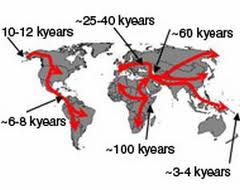
Migration from AfricaHis theory goes something like this: it is well documented that genetic diversity decreased as human beings moved further from the African continent.
This occurred because small (genetically more similar) sub groups would break off of the main thrust of the various migrations and settle a specific area.
Dr. Quentin posited that language might have experienced a similar homogenization as languages traveled further and further from Africa.
He did not measure this using words, but phonemes, the basic building blocks of language.
A phoneme is the “smallest segmental unit of sound employed to form meaningful contrasts between utterances.”
In other words, the basic sounds that make up more complicated utterances like syllables and words.
It turns out that linguistic diversity, as determined by the number of phonemes, does indeed decline in relation to how far a language developed from Africa.
The New York Times cited several examples from the full study: “Some of the click-using languages of Africa have more than 100 phonemes, whereas Hawaiian, toward the far end of the human migration route out of Africa, has only 13. English has about 45 phonemes.”
Fascinating stuff.
Now 50,000 years later, the genetic offspring of those migrating ancestors have released the phoneme-inferior but immensely powerful English language to homogenize the source language(s)!
As noted in the Economist article, native (an incredibly relative term) South African languages are jeopardized by the ubiquity and power of English (mother tongue for 8% of South Africans).
Zulu LessonKhosian and Bantu languages alike are unlikely to survive as the mother tongue of most South Africans in six or seven generations unless the government acts on its rhetoric and takes steps to enforce their use in schools.
I am unsure this is even a good idea.
It would only work in incredibly homogenous parts of South Africa, and there is no denying that English offers more economic advantages than Zulu or Khosa—who is the government to tell people that they cannot educate their children in the most economically favorable conditions possible?
For me, thinking about Africa as a “source” is incredibly inspiring; but modern adults should not be saddled with the burden of protecting the source code while missing out on real-life opportunities.
By Conor Godfrey on April 28, 2011 If you are worried that your event on some esoteric aspect of policy will not draw a big enough crowd, just add some combination of “China,” “Threat,” “Rise,” “Beijing consensus,” “US,” and/or “Decline” to the title, and the number of RSVPs is guaranteed to skyrocket.
I have recently attended a number of meetings on Sino-African relations, and the fear is palpable among US policy makers and business people.
I just came out of one particularly good talk and thought I would share a few of the speakers’ insights mingled with some of my own.
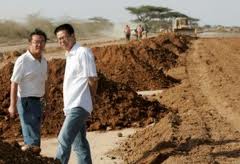
This most recent speaker spoke very articulately about the “Angolan Model” of Chinese investment that has been replicated around the continent.
Essentially, the Angolans tell the Chinese that they want to build the following 25 roads, 10 bridges, 3 ministry buildings, refurbish a railway, build a basketball stadium, and deepen the port.
The Chinese say—“Good choices—infrastructure was key to our development as well– and while we’re talking about this, we have Chinese companies that can build every one of those projects for you, and can build them cheaper than any other international bidder.”
China continues…”So here is the deal—our companies will build all those projects before your next election cycle, we’ll do it cheaper than anyone else, and you can simply pay for it over time by shipping us oil at market prices.”
For Angola and China, it is a win-win-win-win. Angolan citizens get roads, Angolan politicians get to take credit for them, Chinese companies make money, and China gets a reliable supply of vital oil.
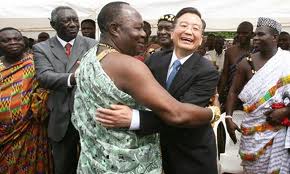
Wen-Jiabao, Premier of China, embraces a local Ghana chiefThis works well if your country has an immensely desirable commodity such as oil, copper, or cobalt with which to pay down your debt, but not so much if you need to pay back $2.5 billion in loans using tea, coffee, or sesame seeds (cough cough Ethiopia).
That being said—Ethiopia doesn’t seem to mind.
This speaker pointed to a recent interview with an Ethiopian minister who raved about Chinese investment.
The minister claimed that whenever there was a problem with the work Chinese companies were doing, he would just summon the ambassador and point out the problem.
The Chinese ambassador would salute, and within a short period of time, the problem would be fixed.
When he called on a Russian, European, or U.S. politician to solicit help in regulating a commercial dispute, the problem would be tied up in court for months if not years.
All Roads lead to ChinaHow do you compete with that?
Also, are Bechtel executives willing to stay in sub-par accommodations, away from their families for months at a time, working on a project somewhere in rural Africa?
Will other U.S. construction or engineering firms accept the 5 or 6% margin on an African project necessary to compete, as opposed to the higher margins that they are used to in North America?
The US and other donors have pumped a massive amount of money into African relief and development over the last fifty years, and some of the results (around HIV/AIDS in particular) have been astounding.
But the Chinese, and also the Indians, Brazilians, and even the South Koreans, understand the African operating environment in a way that Western decision makers simply do not get and I don’t think ever will.
It has been too long since we were a developing country.
By Conor Godfrey on April 27, 2011
The worst ruler on earth gets a classy invite.
Up until yesterday, I had successfully avoided learning anything about the royal wedding in Great Britain.
(Full disclosure—I once argued at a family dinner with several small children present that we needed to overthrow the princess culture that dominated the minds of our young women at an early age—I may be an outlier.)
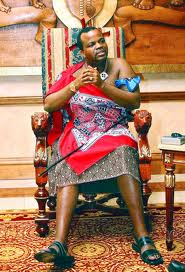
I failed because the royal wedding sneaked in the back door—through Africa.King Mswati III of Swaziland
It turns out that King Mswati III of Swaziland has received an invitation, and will be attending the show with 50 of his closest friends.
It’s a little bit like a reward for being the worst ruler on the planet.
King Mswati III has an impressive record…other would-be governing catastrophes would do well to study his techniques.
Let’s have a look at King Mswati’s resume:
1. Swaziland has the highest AIDS rate in the world
2. 50% of adults in their 20’s have HIV
3. Life expectancy is 32 years
4. 60% of people live on $1.25 or less a day
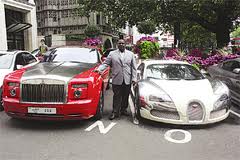
Money is not so much a problem though—all 51 members of the royal entourage will be sleeping at the Dorchester Hotel for about 500 pounds per night during the wedding festivities.King Mswati III in England
King Mswati’s personal fortune (estimated at more than 70 million Euros) is also put to good use beating and jailing protestors.
Labor unions, teachers, and the country’s president have all been targets during the recent unrest.
This makes me angry enough to go through the futile effort of finding someone to blame (besides Mswati III himself of course).
First—South Africa and the other members of the Southern African Development Community.
If governments continue to hide behind pan-African solidarity to avoid cleaning house, then a few bad apples like King Mswati III are going to make pan-African-ness synonymous with rotten.
South Africans are great with political cartoons—here is one that describes how I feel about Zuma’s mediation efforts.
The next culprit is unfortunately colonialism.
As you know, the colonial powers did not have near enough people to rule the colonies directly.
They were forced to empower local power brokers and co-opt traditional checks and balances on tribal authority.
This created a class of rapacious local elites who became the oppressors, conscriptors, and tax collectors on behalf of their colonial masters.
Swaziland was in the British colonial orbit for almost all of the colonial period, excluding a brief period when South Africa administered Swazi affairs.
Eventually, the British claimed Swaziland as a autonomous protectorate, and thus empowered the local autocrats to maintain the status quo.
As in most now independent African countries, once the pressure mounted, Britain fled Swaziland in disarray and left radical parties to take control.
In the 1970s, after a sweeping “electoral” victory, King Sobhuza disbanded the democracy that had haphazardly come into being in 1968.
The ‘electoral’ interlude emasculated traditional checks and balances, and the restored monarchy had more power than their royal ancestors would have dreamed of!
None of this really matters though, and I do not pretend to have a perfect understanding of the nuances of Swaziland’s colonial experience.
At present, the problem is that King Mswati III is quite possibly the worst national ruler on the planet, and I think that the country seems too small and insignificant for anyone to do anything about it.
Today was the final day of a festival for La Francophonie in Washington, DC.
Story tellers-book signings-movies-wine- food-you get the idea.
La nuit du Conte, or story telling night, was especially good.
I enjoyed several of the events, but my time in West Africa made me struggle with the entire concept
of la Francophonie.
I mean—why celebrate shared pain? Was France not the colonizer, the unlawful, insensible oppressor?
In theory, la Francophonie refers to communities all over the world united by the use of the French language (either in the home, or politics, or school, or commerce, etc..), and further, posits a sense of shared identity based on language and other cultural traits.La Francophonie
I have been to a number of far flung parts of la Francophonie—several countries in French speaking West Africa, Cambodia, Montreal, and France, and through work I have met Cajuns and Burundians, Belgians and Swiss, and several other Francophones to boot, and it is 100% true that speaking French binds these communities together on a level that exceeds simply ease of communication.
For whatever reason, I bond with people from Togo or Burkina far faster than people from Ghana or Nigeria even if the French speaking Togolease and/or Burkinabe converse fluently in English.
However, the notion of La Francophonie makes West Africans schizophrenic.
The same educated Guineans or Senegalese who berate the French every chance they get for interfering in West African politics, or for the crappy job they did colonizing West Africa, also place tremendous stock in their personal ability to speak the French ‘de Moliere’.
The wealthy send their children to France to be educated, and congregate at France-Afrique cultural events.
What about the rest of la Francophonie?
What do older Cambodians and Haitians have in common?
What do Cajuns from New Orleans share with Belgians?
Or Burundians with Caribbean islanders?
I ‘m tempted to say nothing, except that I have seen the magic of the French language work time and time again.
I can’t bring myself to call la Francophonie a scar held in common, nor can I explain it as a shared memory of pain—it is more complicated than that.
From the very beginning, the French colonies understood la Francophonie differently.
Léopold Sédar Senghor (President of Senegal), Hamani Diori (President of Niger), Norodom Sihanouk (Head of State Cambodia), Jean-Marc Léger (Leading party member, Canada) all yearned to belong to the French community, even as they all struggled with their own national identities.
Seku Toure (President of Guinee) and several others staked their reputations on separating themselves form anything smacking of French-ness
Seku even banned French in schools, and attempted to teach Guinean school children in their local languages.
This of course led to a half generation of children torn between French and their mother tongue and achieving a high level in neither.
I suppose there is nothing intrinsically abnormal with celebrating shared ties even when those ties are buried in psychological wounds.
Many U.S. elites aspired to British culture long after the American Revolution ended.
I guess I was so convinced in the intrinsic value of West African cultures that I lost sight of the fact that culture is never static—societies evolve and adapt to new influences, be they good, bad or indifferent.
The fact that the French exerted tremendous influence on West African societies might simply make those tapestries richer.
When I think of the Bambara civilization in Mali, or a number of Fertile crescent or South American societies, I always think of them as being diluted by foreign (usually European) invaders, but the truth is those societies were being invaded or influenced by numerous other societies long before Europeans set foot on their shores.
La Francophone can be repossessed and re-defined by the communities that belong—it does not have to be a shared memory of subservience.
By Conor Godfrey, on April 20, 2011
Oh the internet.
Sometimes it helps homophobic crazy people find other homophobic crazy people; sometimes it organizes revolutions to topple dictators; and sometimes, just sometimes, it organizes an orderly, open debate on the challenges facing a rapidly changing society.
For the last several centuries, Morocco has been the sleepy cousin of the Arab world.
Their Arabic dialect is difficult for other Arabs to understand; their beautiful country is better known for rugs and hashish then political turmoil; and for the most part, they have mostly stayed off Al-Jazzera during the putative Arab Spring.
Well, it turns out that Moroccan internet users, of which there are 10,442,500 – 33.4% of the population, have been channeling some of their political energies into a novel website created by two Moroccans– http://www.reforme.ma/en.
On this website, Moroccans can explore the proposed constitutional changes proposed by King Mohamed VI, and comment on any of the articles of the constitution.King Mohamed VI
ANY of the articles are up for discussion; including the first– “Morocco shall have a democratic, social and constitutional Monarchy.”
A bit of a sensitive one, that.
In fact, Moroccans have taken to online political commentary with gusto, leaving comments about article one left and right—Jeune Afrique reported that to date about 6,000 people have voted for the text of the first article , and nearly 2,000 users have voiced dissatisfaction.
I assume there is a bit of web censorship to make sure people don’t leave extreme comments, but I spent some time reading the various comments and I assure you that the debate is real, and the exchange of ideas meaningful.
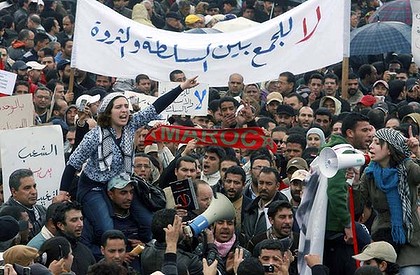
When Morocco has made the news for public protests. the demonstrators have been fewer in number, peaceful, and full of better-than-average poster slogans such as “No to the Economic Oligarchy,” and “All citizens, no subjects.”
Moroccan Protesters
Many of the demonstrators openly support the monarch—very very few call for his downfall.
There are two ways to look at this I suppose.
Either:
A) King Mohammed VI manipulated the public expertly, offering just enough reform to calm public anger, but escaped without having to make substantive changes to his position,
or
B) this is simply how peaceful change comes about.
Actually, I think it is both.
Power concedes nothing voluntarily.
The bureaucracy of changing the constitution might water down the impact of the change over time, but there is no going back.
King Mohamed saw how quickly calls in the Bahraini or Yemeni streets turned from “Reform! Reform!” to “Get ‘em out!”
When history writes the story of the Arab world’s modern awakening, Morocco might just emerge as the country that gradually liberalized and developed while everyone else was looking the other way.
I had been waiting to write a blog about Attahiru Jega for quite some time, and over the last few days the international acclaim over Nigeria’s relatively free and relatively fair elections made it seem like I would have the chance!
As I write this, however, violence is escalating in the North where aggrieved Muslim supporters of losing candidate Muhammadu Buhari have taken to the streets alleging electoral fraud.
You know what—I am going to go out on a limb and say this unrest is transitory—this election was a success in the Nigerian context, and I want to celebrate one of the people that made it happen.
So back to the original story….
57 percent of Nigerians have asked for Goodluck Jonathan of the Peoples Democratic Party (PDP) to stay for another four years!
This looks to be sufficient to avoid a runoff with General Muhammadu Buhari, but that will depend on the Electoral Commission’s investigations into vote rigging.
How can we trust the Electoral commission you ask?
Wasn’t the electoral commission a problem in that other North-South divided African country, Cote d’Ivoire was it?
Ah-ha: Enter the Miracle Maker.
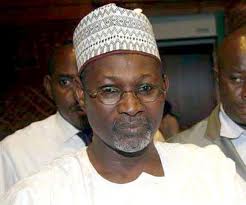
Attahiru Jega
On June 8th Goodluck Jonathan asked Mr. Jega to leave his comfy academic life and make this Nigerian election different by heading up the head of the Nigerian National Election Commission.
At the time, the international community and Nigerian pundits were exerting tremendous pressure on the newly minted president to deliver credible elections, and appointing someone with Mr. Jega’s anti-corruption zeal was the only way to deliver on that promise.
Read Mr. Jega’s address to the nation when he accepted the office—good rhetoric at a minimum.
As soon as he took office, Me. Jega scrapped the ridiculous Nigerian voter registry and created a new one. He then instituted a voting system where voters check in locally to register on election day, and then stay there to observe the entire process right up until the results are posted.
That means a long hot day in the sun, but it is harder to stuff ballot boxes, and then publicly announce false results, when all the voters are milling outside the building.
So for the last two weeks, Nigerians have confidently and peacefully voted in peaceful, fair, parliamentary and presidential elections.
Let me say that one more time. During the last two weeks, Nigerians have voted in two sets of free and fair elections.
This is a big deal! If a country of 160 million people with intense, divisive social fractures can pull this off, then how can other African leaders claim that they do not need to be accountable to their people?
The system is still a bit ridiculous of course.
The ruling People’s Democratic Party is a platform-less ‘giant smoky back room’ where Nigerian elites gather to split up the pie.
But they actually lost ground in the parliamentary elections…how novel is that?
Over the last decade, Nigerian elections have been conducted by bringing duffel bags of cash into party caucuses for distribution to PDP power brokers.
I would encourage anyone to read the Nigeria chapter in Richard Dowden’s creatively titled book, Africa.
His anecdotes will make you realize what a success this election was.
Or, you can read this informative Q&A with Nigeria expert Peter Lewis.
I just checked the headlines again before publishing this piece…the violence is still getting worse in the North.
Still, I say it mostly blows itself out over the next week. I will write a blog eating my words next week if I’m wrong.
.
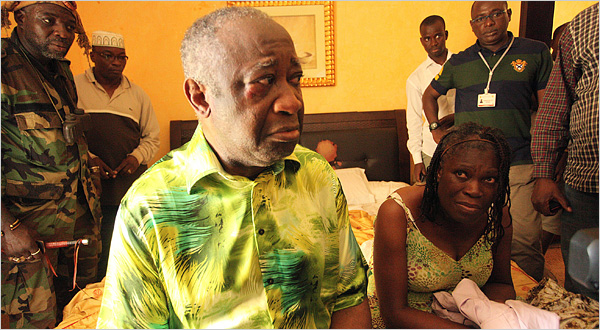
Some combination of French, U.N., and Ivorian forces loyal to President Ouattara captured Laurent Gbagbo in broad daylight at his residence.
The videos and pictures of the arrest show a broken man.
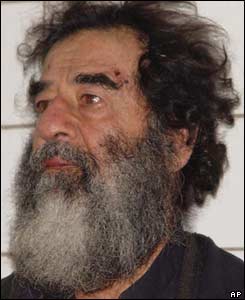
He looks a little better than Saddam did when they pulled him out of the spider hole, but not by much.
Does anyone remember the breakdown of the vote that began this long, murderous process?
In the first round, Gbagbo won a plurality of the votes with ~38% to Outtara’s ~32%.
In the second round, after promising a number of ministerial appointments to major ethnic groups cum political parties, Ouattara won the two-way runoff with ~54 percent of the vote, and this likely included small-scale instances of fraud or intimidation in Ouattara’s Northern strongholds.
Taken together, these two results suggest that 46-49% of the Ivorian population would have preferred that Gbagbo remain president.
Yikes—given the absence of significant political polling and a history of fraud and intimidation, you can see how easily pro-Gbagbo civilians would have felt cheated.
So now Allasane Ouattara will have the pleasure of ruling a country where almost 50% of the population was happy to see him imprisoned in an Abidjan hotel, his forces have been implicated in human rights abuses on their march South, and he is seen by many as a tool of French imperialism thanks to a small dose of truth and an extra large helping of pugnacious Gbagbo’s fear mongering in the weeks leading up to his arrest.
Some triumph…
In the words of Pyrrhus of Epirus—“Another such victory and [Ouattara] will be uttery ruined.”
I have a lot of admiration for the way Ouattara has handled the situation so far—he is making all the right noises about national reconciliation, investigating human rights abuses on both sides, and urging restraint among his partisans.
I also think he needs to quickly distance himself from Paris.
I was not wild about French forces being so deeply involved in Gbgagbo’s arrest. (The French claim they never entered the Presidential residence; Gbagbo’s people claimed it was the French soldiers that actually made the arrest.)
For several decades, the French propped up or toppled West African leaders at will, and whatever the rationale, it doesn’t take a master propagandist to make this look like neo-colonial meddling.
Tiken Jah Fakoly—a super-star Ivorian singer and frequent political commentator had this to say in an interview with Jeune Afrique—“Sarkozy shocked me by saying that Gbagbo and his wife were to leave office within three days. He made a serious error that led many intellectuals to support Laurent Gbagbo. Today’s generation cannot stand this kind of statement that reminds us of when the colonizer or the governor spoke to our parents”. (Find excerpts in English.)
I sympathize with Tiken’s comments, even though I think France’s motives were mostly humanitarian.
Perception is reality, and France should know better.
Ouattara was already battling the perception that he comes from Burkina Faso—the French aid will now add another layer of ‘outsiderness’ to his persona.
I can’t tell whether Ouattara’s prolonged battle has expended or generated political capital, but I certainly do not think he has enough at the moment to make Cote d’Ivoire a functioning, healthy state.
Not yet anyway.
The French can help him bomb Gbagbo into submission, but they sure can’t help him build a country.
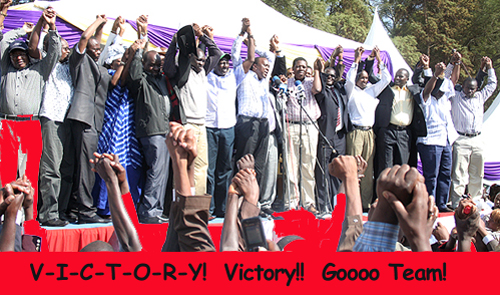
Nairobi Pep Rally, but they aren't headed to a basketball game!Loyal, middle-of-the-road Chinese and good ole Americans heartily agree on the doctrine of noninterference in local affairs. How passe. Listen instead to the New Kenyans.
Yesterday in Kenya pep rallies resembling a Final Four sendoff were being held all over the country. There were bands (marching, although not intended to have been), poms poms (well, bunched up flags), cheers (in Kikuyu, Luo and Kalenjin) and lots of camera flashes from lots and lots of enthusiastic supporters.
Is the World Cup still on? Did a Kenyan outshoot Tiger? Did Michael Jordan come out of retirement?
No, no, no no. This is the start of a murder trial.
And the day ended with four prominent Kenyans boarding an international flight to Europe and they were not headed to a basketball court. They were going to a different kind of a court. Criminal.
Six of what had been Kenya’s most powerful men alive are answering summons by the International Court at the Hague that they organized the widespread violence that followed the 2007 elections which left more than 1300 people dead and 150,000 displaced. If found guilty, they could be imprisoned for 25 years.
That could seriously disrupt their campaigns for national office next year.
These are not political underlings. They include the son of the founder of the country, the former head of the national police, the former head of the civil service, the attorney general and a former vice president.
Why are clever politicians submitting to a process that could ruin their lives, that is orchestrated from abroad?
In fairness to the complexities of Kenya, the answer is more complicated than just “it’s the will of the people.” But in fact, it is the will of the (Kenyan) people and in large part because New Kenyans understand that they are inexorably linked to the greater world order. If they want to impact this order, they also have to submit to it.
The United States and China are two of the few countries in the world that do not recognize the International Court. Kenya, and all progressive countries, do.
A poll released yesterday by Synovate showed a whopping 61% of all Kenyans wanted the accused to stand trial at The Hague.
This is the culmination of a very long process that began more than two years ago. The agreement managed by Kofi Annan that ended the violence following the 2007 elections mandated bringing to justice those determined responsible for it. Kenya had a certain time limit to fashion courts internally to do so, and if unable to do so (as proved the case), the International Court was summoned to do so, instead.
Parliament went back and forth on numerous ocassions trying to set up an internal court, but was unable to do so. In part this was because there was no single ethnic group apparently more culpable than another. They were all involved. It was a sort of melting down pot after the 2007 election. Three or four or five ethnic groups were all fighting each other.
Kenyans as a whole (especially the youth) are emerging above their enthnicities and really thinking of themselves as New Kenyans. They want these old rivalies ended. And clearly, they want them ended in line with a World Order evinced at least in part by the World Court.
Hurrahs for Kenya, once again. And anybody up for starting a movement to try someone responsible for creating the myth of WMD?
Genius Engineer, World Shaker, Kenyan Evans WadongoPeople just don’t get the social tsunami smashing the world right now. Obama’s Old News! Notwithstanding the media starred war in Libya, societies are changing at the drop of a text message. Billionaire industrialists and fat politicians aren’t the only ones running the show, anymore, in fact their days may be numbered. Meet Evans Wadongo.
Wadongo is currently sharing a world prize with Ted Turner (CNN) and Tim Berners-Lee, the man who in 1989 first made the Internet work. The three are the inaugural winners of the annual Gorbachev Award for “opening up society.”
What did 25-year old Kenyan-born, Kenyan-schooled, still Kenyan resident Wadongo do that elevated him to the table of stars?
He turned dark into light without using fossil fuels or electricity. He’s an engineer. But he didn’t invent gyroscoping drone bombing sensors, or infrared seeking document readers, or nano focused skyscraping beam protectors.
He invented a solar lamp that is cheap and efficient so that hundreds of thousands, maybe millions of poor people can see at night without endangering their health and minuscule budgets with kerosene lamps and fumes.
Do you get it?
A simple, efficient, inexpensive solar lamp is as important as the WorldWide Web and CNN.
Because when the potential of millions of suppressed people is illuminated, the world will change, and I for one, think for better. That’s exactly what’s happening, now.
Whether it’s Wadongo, or Ory Okollah, or Wael Ghonim, the movers and shakers of the world today are increasingly:
1) Kids
2) Optimistic
3) Smart
and above all, 4) Compassionate.
It’s a new world, you old fogies! Not sure how we’re going to deal with these new parameters of life, but we better get ready, because it’s going to be a much different world from the one in which we prospered.
So far on this blog we’ve discussed the humanitarian crisis in Cote d’Ivoire, and the merits of military intervention.
Our profile would not be complete without discussing the economic context in which all of this occurs.
This is also true in Libya of course: by Libyan nightfall yesterday, the rebels were back in control of two key oil towns and claimed to have found a gulf state buyer for the 100,000 barrels per day of production currently in rebel hands.
But back to Cote d’Ivoire.
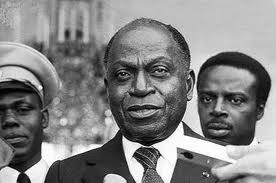
At independence, there was a famous bet between the Kwame Nkrumah and Félix Houphouët-Boigny—the two fathers of independence for Ghana and Cote d’Ivoire respectively. Félix Houphouët-Boigny
They bet on which country would lead West Africa two decades on. Cote d’Ivoire vigorously pursued economic integration with France and allowed capitalism to thrive.
Ghana on the other hand broke most ties with the metropole, and gave the state a much stronger hand in the economy.
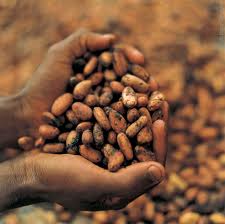
We could write an entire piece on who is ‘winning’ in 2011, but the important thing to note for this piece is that Felix Boigny’s approach allowed cocoa production to soar as French investment and agricultural know-how poured into Cote d’Ivoire.
Cote d’Ivoire exports approximately 40 percent of the world’s cocoa crop, with the West African region, including Ghana (21 percent), Nigeria (5 percent), and Cameron (5 percent), accounting for about 70 percent of international production.
As violence continues to escalate in Cote d’Ivoire, international markets have responded by driving cocoa futures to their highest price in 32 years — $3,586 per metric ton for May delivery.
EU and U.S. sanctions imposed in the aftermath of the disputed November 28th, 2010 election currently forbid companies from conducting business with entities linked to the regime of the intransigent incumbent Laurent Gbabgo.
This includes critical actors in the cocoa industry such as the cocoa regulators and the ports of San Pedro and Abidjan.
On top of these sanctions, President Outtara has attempted to starve his rival of approximately one billion dollars in tax revenue by issuing, and then extending, a ban on cocoa exports.
Taken together, the targeted sanctions and the export ban constitute a virtual embargo on Ivorian cocoa.
The recent extension of the export ban comes at a moment when cocoa shipments from Côte d’Ivoire have all but dried up.
Major cocoa purchasers such as Cargill, ADM, and Barry Callebaut, have either dramatically scaled down operations or stopped exporting completely.
This means that approximately 25 percent of the Ivorian cocoa crop, equivalent to 10 percent of the world’s cocoa crop, is piling up in humid Ivorian warehouses.
Recent estimates suggest that 300,000 tons of cocoa have been stockpiled up-country and an additional 100,000 tons, at the ports.
Ivoirian cocoa is produced in large part by small holder farmers who do not have the funds for proper warehousing, and industry stakeholders fear that the remaining crop will soon spoil if the sanctions remain in place.
Recently less than 5,000 tons of cocoa has been arriving per week at Ivorian ports from farms in the interior, and even that meager flow will likely dry up completely as Ivorian banks shut down operations.
Predictably, the export ban and subsequent banking crisis have exacerbated social tensions in Côte d’Ivoire.
Approximately seven million Ivoirians rely on the cocoa industry for their livelihood. Already thousands of Ivorian farmers have symbolically burned portions of their crop to protest the embargo.
The crisis in Côte d’Ivoire will likely reshape the cocoa industry in ways that even the 2002-2004 civil war did not.
The recent sanctions crippling the Ivorian industry have led to a dramatic upsurge in cocoa being smuggled through Ghana: since the October harvest in Côte d’Ivoire, around 100,000 tons of Ivorian cocoa have left West Africa through Ghana.
The two countries share a 668 km border that runs through the middle of the most productive cocoa regions in both countries.
The Ghanaian government, which fixes the price for cocoa beans, has amplified this trend by raising the price paid to Ghanaian farmers by about 30 percent.
The Ivorian crisis also coincided with a natural increase in Ghanaian production capacity due to better use of pesticides and fertilizers.
This turbulence in the West African cocoa market comes at a time when experts predict a steady increase in demand for cocoa due to the emergence of consumers in India and China. During 2009-10, demand outstripped supply by 82,000 metric tons, according to the International Cocoa Organization.
Volatility in this market will continue, buoyed by uncertainty over the deteriorating quality of the cocoa stockpiling in Ivorian warehouses, and the threat of a price collapse as soon as a solution to the Ivoirian political crisis appears on the horizon.
In the two weeks between October 11 and October 31, 2002, when both sides discussed a truce in the Ivorian civil war, Cocoa prices sank from $2,405 to $2,040 per ton.
The banking crisis precipitated by the political instability and cocoa embargo is the final factor in prolonging the reining instability.
The consensus among analysts is that Mr. Gbagbo needs between $100-150 million per month to pay the military and essential civil service personnel.
His signature is no longer valid at the Regional Central Bank that prints Côte d’Ivoire’s currency, and Côte D’Ivoire missed $30 million in interest payments at the end of January.
Soon Mr. Gbagbo’s financial position will become untenable.
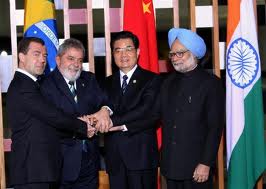
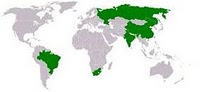
In two weeks, South Africa will be formally accepted into the BRIC grouping of Brazil, Russia, India And China at an economic summit in Beijing.
Just in case you don’t read US weekly—these are the new cool kids on the block.
Gone are the days when the EU was pinnacle of diplomatic achievement.
To be hip now is to be BRIC.
Does South Africa merit this social promotion?
That depends on the criteria.
When Goldman Sacks asset management chairman Jim O’Neil coined the term, he intended it to refer to countries of sufficient size, with favorable demographics, and with an economic environment that would facilitate high growth.
On these measures South Africa does not make the cut.
However …
Terms like these often escape easy categorization.
Do all the European Union member states share a similar cultural or geographic background? (Only if the term “similar” is stretched to the breaking point.)
Does the G20 contain the world’s top 20 economies? (No – South Africa, a G20 member, is actually the 27th largest economy in the world.)
BRIC is no longer merely an economic distinction.
The BRIC club is now a political grouping of countries based loosely on their relative economic influence among developing countries.
In this way, it has the same freedom to act, or to change membership, as any other political-economic grouping, such as the G20, EU, NATO, etc.
The BRIC leadership has shifted its membership criteria away from the founding mantra of large economies experiencing rapid growth to politically important countries whose membership would add value to the BRIC grouping.
This is a well trodden path.
Why did/does the EU extend membership to some of the Balkans?
The Balkans’ economies did not resemble the Western European founding members, nor did the mainly Slavic Balkans’ languages relate to the Germanic or Romance languages spoken in Western Europe.
The EU’s founding members offered membership to select countries in the Balkans in order to encourage the applicants’ respective governments to make the right social and economic choices, and to pacify the zone on traditional Europe’s borders.
Should Turkey be a member of NATO, the North Atlantic Treaty Organization?
Similarly blatant political maneuvering is behind Chinese Foreign Minster Yang Jiechi’s invitation to Jacob Zuma to attend the next BRIC summit.
South Africa’s 50 million people and lackluster 3% growth may lead Jim O’Neil to shoot it down in favor of countries like South Korea, Turkey, Mexico, or Indonesia; but South Africa offers the resource hungry BRIC countries something those other options do not—access.
Access to a continent teeming with ore, industrial metals, and newly minted consumers.
Pundits have been asking the wrong question: they insist on questioning whether or not South Africa merits the BRIC designation based on its size, growth rate, population, etc.
The real question is – does South Africa provide enough value to all four of the current BRIC countries?
That is the ‘merit’ that matters for this lunch table.
If I had told you four weeks ago that U.S. forces would be bombing another Muslim country in less than a month, you would have said that I was out of my mind.
As I write this, U.S. carriers are beginning a second night of cruise missile strikes against Libyan air defenses to clear the way for Europe’s air forces to halt the advance of Colonel Ghaddafi’s forces toward the rebel stronghold of Benghazi.
What made this ok?
Well, the Security Council resolution made it ok.
But beyond that- which aspects of the situation in Libya made intervention conscionable by all five permanent members of the Security Council?
As I understand it, the following combination of circumstances made intervention in Libya palatable to the powers that be:
1. Clear and present danger to large numbers of civilians. Of course, many of these civilians had taken up arms in a combination of rebellion and self-defense, thus slightly complicating the notion of ‘unarmed civilians’.
2. Acquiescence by the relevant regional/cultural body. In this case, the Arab League.
3. The speed at which events unfolded. Benghazi was going to fall and fall fast. The rebels were outgunned and outmatched, and it was too late in the game for indirect assistance.
4. Nobody cares. Libya, while an important crude supplier, does not have a powerful backer. China and Russia may not be happy about the precedent of interfering in another country’s internal affairs, but we are not talking about North Korea, Bahrain, or Belarus, whose fate is of great concern to China, Saudi Arabia, or Russia, respectively.
5. Plausibility. Libya does not have a nuclear weapon or a massive army. Concerted military action will halt Ghaddafi’s advance. Notice I said plausibility, not likelihood, of success. I think this will most likely lead to a stalemate and short term partition between East and West Libya.
So people were dying, the main regional body agreed with the international community on who the bad guys were, the bad guys were winning, nobody powerful enough to put the kibosh on the intervention had vital national interests at stake, and the Libyan army simply doesn’t have what it takes to shoot down too many Western fighter planes.
Lets apply these metrics to another conflict, say, Cote d’Ivoire.
1) Civilians dying, and likely to continue dying in greater numbers…..check. (500 to date and escalating.)
2) Agreement from major regional/cultural grouping on who the bad guys are…..check. (ECOWAS, and the AU have clearly stated the Gbagbo must step down.)
3) Violence escalating quickly ……..1/2 check. (Clashes are indeed increasing in pro-Outtara districts, but not at the rate that Ghaddafi’s forces were gaining ground in Libya.)
4) Nobody cares………check. (While many countries have major investments in Cote d’Ivoire, none of the Security Council members think of Gbagbo as promoting their most vital national interests.)
5) Plausibility……1/2 check. (Removing Gbagbo would likely require someone’s boots on the ground. In theory, the 10,000 U.N. troops in Cote d’Ivoire should be the ones protecting civilians, but they have not been that aggressive in executing this mandate.)
So what do you think?
Is it just a matter of degree?
Were there simply more people dying in Libya, and dying faster?
Was ECOWAS (West African regional grouping) more divided than the Arab league?
I think these are all reasonable arguments, but I worry that now, as always, ambiguity reigns when deciding when and how to intervene.
This ambiguity affects the strategic calculus of rights abusers like Gbagbo—I think he knows that African countries will not coalesce around major military action.
Yesterday President Ouattara called on the international community to “passer a l’action,” in order to protect civilians and to give him the means to govern the country.
I hope the Security Council can explain why warplanes aren’t on the way.
What do you get when you spend no money on defense, and instead funnel the vast majority of your budget into developing your population, including huge tranches on universal health care and education?
What if you also embrace intense multiculturalism, and reach out to historical trading partners in India, Europe, Africa, and the Middle East.
Don’t stop there.
What if you also invest heavily in employment absorbing sectors like tourism, ICT, and light manufacturing, thereby creating jobs for your educated and diverse population?
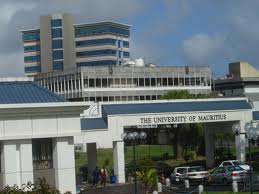
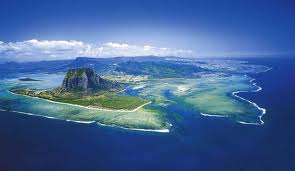
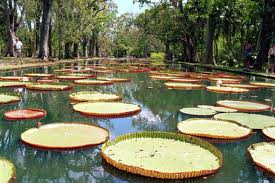
Well then, you would be Mauritius, the African island nation of 1.3 million souls that sits approximately 800 kilometers off the coast of Madagascar.
This week award winning economist Joseph Stiglitz wrote an essay in Slate Magazine about the Mauritian miracle entitled, ‘The Greatest Country on Earth.”
In it he lauds the vibrant Mauritian democracy, their 30 year stretch of ~ 5% GPD growth, relative social equality, and above all, the choices made by successive Mauritian governments since independence from Britain in 1968.
Mauritius deserves the kudos. My only issue with Dr. Stiglitz’s essay was his framing of Mauritius’ successes in terms of U.S failures.
Although he recognizes that the U.S. cannot act like an island nation of 1.3 million (by forgoing a military for example), he spends a fair bit of the essay mocking the U.S. for its inability to empower Americans without causing some sort of financial meltdown.
This makes for provocative reading, but the comparison seems forced to me—scaling is not just a logistical obstacle, it changes the nature of the problem.
A health system that works for 10 people, will not necessarily work for 100 people, even if you increase all the inputs by a factor of 10.
Leaving that aside—what lessons can other African countries, and the U.S. for that matter, take from the Mauritian Miracle?
Versatility.
I have been combing a variety of sources, and talking to a few specialists at work, and it seems that more than any one decision, Mauritian nimbleness has been responsible for its success.
A few historical examples courtesy of Harvard School of Business:
When Slavery was abolished in the British Empire, Mauritian leaders encouraged indentured labor to emigrate from India.
When trade barriers sprung up to make sugar less competitive, Mauritius did two things:
1) They successfully lobbied the EU for trade preferences on sugar, and
2) they read the writing on the wall and immediately started diversifying their economy away from sugar and into light manufacturing.
When those preferential trade terms disappeared for sugar and textiles, Mauritius quickly lowered the corporate tax rate and took advantage of historical connections to India to encourage direct investment in new sectors.
Mauritius exhibits nimbleness in other ways too.
They are part of the Southern African Development Community, the Indian Ocean Community, la Francaphonie, and the League of Portuguese Speaking countries.
This openness creates opportunities that more insular countries do not have.
Mauritian investment in education and human capital means the population can easily re-tool for new sectors and new initiatives. (Though literacy is still only 88%; high for Africa, but not high enough)
The U.S. could use some of this international nimbleness…I read a great essay years ago in Foreign Affairs that argued that the United States’ biggest advantage in the 21st century would be immigration, if policy makers would only take advantage of it.
Immigrants not only start more businesses than non-immigrants, they also bring local knowledge of foreign markets, demand new goods and services from the U.S., and keep the U.S. from falling into a demographic sink hole like Europe.
If U.S. policy makers worked to empower immigrant communities in the U.S. and attract the best and brightest immigrants from other countries, we would vastly improve our international flexibility and competitiveness.
Other African countries have problems that Mauritius does not have—but that does not mean they can’t learn from Mauritius as well.
South Africa now suffers from an incredibly rigid labor market, with major industries surviving on government subsidies.
Their automotive sector is prestigious, but is it economically viable?
Maybe they need to look Eastward to their Island neighbor and invest in forward looking sectors. (I think their new budget attempts to do exactly that.)
Countries fractured by large cultural fault lines such as Nigeria and Cote d’Ivoire could look toward Mauritius as an example of profiting economically from their participation in different cultural orbits.
The people groups in Northern Cote d’Ivoire could benefit from Southern Cote d’Ivoire’s historical associations with partners in Ghana and Togo, while the groups and businesses in Southern Cote d’Ivoire could benefit from Northern Cote d’Ivoire’s relationships with Mali and Burkina Faso.
Obviously this is far easier said than done.
Taking advantage of multi-culturalism requires a centrifugal force at least as powerful as the forces pulling identity groups away from each other.
Countries with economies dependent on a single resource could follow Mauritius’ lead and create incentives for FDI in diverse sectors.
I don’t mean to be glib- investing in the future while meeting the real needs of millions of current citizens is a nigh impossible task.
But that is why each and every success story deserves a good hard look, including small African Islands.