AU Finally Re-affirms Ouattara- Who Were the Hold Outs?

AU Finally Re-affirms Ouattara- Who Were the Hold Outs?

by Conor Godfrey on March 12, 2011

A few days ago the African Union finally issued a definitive statement on the situation in Cote d’Ivoire,
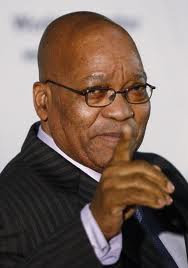
"Me and my warship are totally neutral...."
reaffirming Alassane Ouattara as the winner of the November 28th, 2010 elections.

Why did it take so damn long for the AU to come on board?

Well, up until last week eight African Counties were officially or unofficially supporting Laurent Gbagbo, the intransigent incumbent in Cote d’Ivoire.

Gbagbo’s Foreign minister described seven countries as ‘allies’; Angola, Uganda, South Africa, Democratic Republic of Congo, Gambia, Equatorial Guinea, and Ghana.

I would also have added Zimbabwe to this list.

While Gbagbo’s Foreign minister would not normally be a credible witness, these countries have shown their support with their silence or their actions over the last several weeks.

GhanaWeb does a nice job detailing some of these instances.

Please do not misunderstand me; support in this case did not mean supporting murderous attacks on civilians (though some of those guys might very well have done so. Obiang in E.G, Mugabe in Zim—I’m talking about you)

They simply did not support coercive measures of any kind to force Gbagbo to step down.

In this case, I call that unequivocal support for incumbent Laurent Gbagbo.

South Africa led the pro-Gbagbo camp in the weeks leading up to the AU summit last Thursday. I found South Africa’s claims to be a “neutral mediator in the political deadlock” rather ridiculous, especially when they sent a warship to the Ghanaian coast to act as a “neutral negotiating venue”. Give me a break

Alassane Outtara was the certified winner of the Ivorian election, and Gbagbo the recognized loser by the U.N. and a host of international observers.

This was not a conflict between two equal parties—that was what the election was supposed to be!

By treating both contestants equally, South Africa nullified Outtara’s biggest advantage—his international legitimacy.

So why did these eight countries fly in the face of the international consensus? I think the rumors reveal interesting nuances in pan-African politics.

First we have the autocrats who looked at Cote d’Ivoire and Laurent Gbagbo and saw the parallels to their own situations all too clearly.

Mugabe in Zimbabwe and Obiang in Equitorial Guinea were the clearest cases, but I would also include Yahya Jammeh of the Gambia, and maybe Joseph Kabila in the DRC.

These rulers did not want to see international actors coalesce around the use of force to remove an incumbent, because one day in the future it might have been them on the receiving end of a naval blockade or military intervention.

The next grouping included countries concerned with the growing Nigerian hegemony in West Africa. South Africa, Ghana, and Angola all fall into this category to varying degrees.

Nigeria was at the forefront of the group of nations (Nigeria, Senegal, Kenya, and Burkina Faso) calling for military intervention, and Nigerian troops will certainly constitute the plurality of any multi-national coalition attempting to remove Gbagbo by force.

Nigerian and South Africa diplomats sparred repeatedly over South Africa’s role in mediating the crisis over the last several weeks.

To warp Baron Von Clausewitz’s old adage, I tend to think that politics is just a continuation of economics by other means.

South Africa has traditionally acted as launching pad to the rest of the continent for banks, major multi-nationals, NGOs, tourists, etc…

This is still true, but regional nodes like Nigeria are increasingly usurping this role.

Nigeria has more than 3 times the population of South Africa, sizeable oil reserves, and increasingly competitive multi-national companies.

South Africa sees the writing on the wall and wants to ensure that it retains a seat at the West African table.

If it doesn’t, companies may just start their forays into the continent from Nigeria.

The U.S. should recognize its own situation in South Africa’s dilemma.

The U.S. currently spends vast amounts of blood and treasure maintaining our seat at the table in Asia and the Middle East.

I think the value proposition for these foreign entanglements is becoming increasingly dubious to voters back home.

Is Foreign Aid as Hopeless as Republican Freshmen Say it is?

Is Foreign Aid as Hopeless as Republican Freshmen Say it is?

by Conor Godfrey on 11 March, 2011

The Republican wave has brought a new crop of development aid bashing freshman to the fore, and even among Suzie-Q public, cutting aid is much in vogue.

U.S. citizens appear to be all sorts of messed up when it comes to foreign aid; surveys report that, on average, Americans believe 21% of the total U.S. budget goes to foreign assistance.

The real answer: only 1%.

It is no wonder that 59% of Americans want to cut foreign aid; I would too if I thought 1/5 of my tax dollars were going to programs in faraway places with dubious reporting methods and vague long term goals.

Interestingly enough, those same surveys claim that Americans feel that spending 10% of the total budget expenditure on foreign aid would be justified.

As Winston Churchill famously said, the best argument against democracy is a five minute conversation with the average voter. (I jest, I’m an average voter, please don’t ask me about tax reform or health care, I’m liable to give you just as poor an answer….)

These survey statistics have been fired off willy-nilly on Capitol Hill to justify the agenda du jour—in this case, funding cuts that Secretary Clinton claims will amount to a 16% reduction for the Department of State and a 41% decrease in funds available for humanitarian assistance.

Lets bring this discussion to Africa.

There is currently an extremely lively, and sometimes downright hostile, debate about the efficacy of foreign aid in Africa. As you have read on this blog and probably elsewhere, foreign aid’s detractors claim that most aid creates dependencies in African communities without ever boosting the communities out of poverty.

There are also a number of hilarious posts and whacky youtube videos mocking the self-righteousness of the development assistance world.

These parodies are often warranted, though totally one sided.

On the other side are the hundreds of thousands of reports and anecdotes supporting positive aid outcomes in Africa.

The problem with the these reports is two fold; one, how can donors determine if the outcome would have happened without the intervention, and two, often times the aid agencies themselves are responsible for reporting on the outcomes of their interventions.

Conflict of interest is an understatement.

An example of both fallacies:

1 (Did the intervention directly cause the outcome?):

William Easterly’s blog Aidwatch has ruthlessly gone after the Millennium Village Project (MVP) for misrepresenting the effectiveness of certain interventions.

MVP is a long term, high profile aid project that targets poor African villages with a package of interventions in health/sanitation, education and technology in an effort to accelerate their ascent from poverty.

One intervention was improving access to cell phones through financing and educational outreach.

MVP reported a significant rise in cell phone use in many of their target villages as a significant result of the project.

However, cell phone use has been rising exponentially in villages all over Africa, including tens of thousands of villages where no MVP interventions took place.

Follow this debate here on AidWatch.

2 (Conflict of interest in reporting data of aid effectiveness):

In December of 2010 the Academy for Educational Development (AED), a prominent D.C. based non-profit, was suspended with immediate effect from bidding on USAID contracts because of allegations of exaggerated reporting and other forms of corporate misconduct.

AED was previously a key contractor in Afghanistan and Pakistan, executing over $150 million in contracts across multiple sectors.

The D.C. rumor mill, fueled by former AED employees, claims that the organization’s reporting hadn’t been on the level for years.

This case got so much press because catching this type of misconduct is unfortunately quite rare.

I am sympathetic to aid’s detractors in so far as I believe that aid agencies are guilty of these fallacies quite often.

I also believe that altering international aid incentives, such as who gathers data and reports on outcomes, could transform development assistance into a more transparent, effective instrument of poverty alleviation and U.S. foreign policy.

USAID Administrator Rajiv Shaw, Defense Secretary Robert Gates, Secretary of State Hillary Clinton, and former First Lady Laura Bush all seem to agree.

South Sudanese Safari Anyone?

South Sudanese Safari Anyone?

by Conor Godfrey on March 10, 2011

In the last month, South Sudan has asked neighbors and the international community for teachers to staff universities, for money and logistical help for demobilization, disarmament, and rehabilitation of combatants, for ideas on a new national anthem, for help with their financial sector and several hundred other large and small matters that require more or less immediate attention.

All of these requests did not surprise anyone.

One request did surprise me though– South Sudan also asked for $140 million to begin rehabilitating their game parks as a top investment priority.

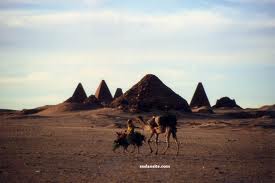
North Sudan

When you think of Sudan, what comes to mind: inhospitable desert, war crimes, tense referendums, oil, refugees, weapons, etc….

Let me offer a few new associations for the soon-to-be-independent South Sudan—jungle, wetlands, teeming with wildlife, and a migration comparable to the Serengeti.

South Sudan is home to one the largest wetlands anywhere—the Sudd—or barrier, in Arabic.

South Sudan

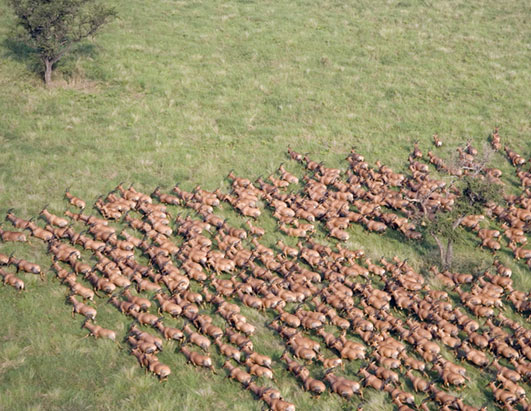
This massive wetland and the Sahelian swathes that border it have traditionally supported all manner of charismatic animals including elephants, lion, hippopotami, and crocodiles, as well as lesser known (at least to a laymen like me) fauna such as the Nile Lechwe (an endangered species of antelope), Tian, Reedbuck, over 400 species of migrating birds, and amazingly, a population of around 1.2 million White-Eared Kob.

The Boma Plateau, adjacent to the Ethiopian Highlands, also supports important populations of wildlife.

In 2007, the United States Agency for International Development and several other international donors worked with the Wildlife Conservation Society to conduct aerial surveys of Southern Sudan, essentially to confirm that the 30 years of intermittent fighting had indeed decimated animal populations.

Against all hope, they found many populations alive and well. Elephants, hippos, and other meaty animals had indeed suffered, but many had weathered the storm.

Elephants have dropped from somewhere in the neighborhood of 20,000 to around 6,000.

Zebra are all but gone, and Heartebeest numbers dropped about 95% in total. Many of the animals that survived did so by hiding out in the Sudd, where swampy conditions provided a measure of isolation.

South Sudan needs tourism revenue worse than most countries.

Currently, 98% of South Sudan’s revenue comes from oil. Production will peak in the very short term before beginning a 20-30 year decline after which the wells will simply dry up.

I would value expert opinions on the viability of a real tourism industry in S. Sudan; is there an adventure market that will relish the ‘untapped’ feel of a safari in South Sudan, will private companies invest long term in such an unstable environment, will oil extraction finish off the animals the war never managed to reach?

Most importantly, how can a country with so much human need spend the required sums on wildlife preservation?

In late 2010 National Geographic ran an interesting short piece on the relationship between the multitudes of identity groups in S. Sudan and the wildlife.

The author claims that history has forged a deep bond between people and wildlife in South Sudan.

For centuries, slavers and poachers, often the same people, came into modern day South Sudan to take away slaves and Ivory.

This linked the elephant and human populations groups together as victims in the minds of the tribes.

More recently, both people and animals took refuge in the deep bush or in the swampy Sudd wetlands to avoid the violence, once again creating a bond between human and animal, this time as fellow displaced persons.

This claim interests me quite a bit—that story resonates emotionally, and has certain logic to it, but my experience in Africa has been quite different.

In West Africa, people viewed wildlife as a nuisance, and from my brief experience in East Africa, it seemed like farmers and pastoralists felt the same way.

I came away with the impression that romanticizing wildlife was a privilege for those whose crops weren’t being eaten.

I digress.

To wrap up, whether or not South Sudan can preserve this habitat for tourists seems immaterial to me. It is one of the most important wildlife habitats on the continent.

Send them the $140 million.

Real People Making Real Choices in Cote d’Ivoire

Real People Making Real Choices in Cote d’Ivoire

By Conor Godfrey on March 7, 2011

I am an avowed Africa optimist, but that doesn’t mean we can’t call a spade a spade—the situation in Cote d’Ivoire is a disaster for everybody.

Last Thursday, forces loyal to incumbent Laurent Gbagbo even opened fire on women engaged in a peaceful prayer-protest.

This is a video of the crackdown taken on a participant’s cell phone.

(Warning; the violence that starts about ¾ of the way through this video is very graphic.)

I post the video for two reasons: one, I think it is interesting for a non-West African audience to see what an Ivorian protest looks like, as opposed to an American, or North or East African demonstration.

The second and more important reason is because I have noticed in myself a tendency to treat people in these conflicts as expressions of larger ideas rather than flesh and blood citizens that run mechanic shops and sell bean sandwiches at corner stores and leave grandchildren behind.

If you also sometimes watch CNN and seize on “Pro-Democracy Partisans” in Libya, or “Righteous Demonstrators” in Cote d’Ivoire, this video might help you remember that protesters are best viewed as themselves first and ideologues second.

I needed a visceral reminder.

Watching the brave women praying in the middle of an Abidjan street got me thinking about protests in general.

If violence can not win decisively, and/or the use of violence will merely serve to legitimize a violent response, what options do engaged citizens have?

Some of you may have seen the New York Times article last month about Mr. Gene Sharp.

I had never heard of Mr. Sharp or his ideas–but guess who had–Otpor in Poland, the Muslim Brotherhood in Egypt, dissident movements in Burma, Estonia, Bosnia, Zimbabwe, and of course in Tunisia, just to name a few.

Professor Sharp’s contact with these diverse movement comes mostly in the form of two famous writings—“From Dictatorship to Democracy,” and “198 Methods of Nonviolent Action.”

If you don’t have time to read the entire “From Dictatorship to Democracy” (I confess I did not), the “198 Methods of Nonviolent Actions” makes for snappy reading.

The New York Times article highlights “protest disrobing” as a creative technique; I liked “sky and Earth writing,” “mock awards,” and “mock funerals.”

While we are thinking of protests, next week, I would like to take up the case of Gbagbo and Ghaddaffi’s supporters.

In all of the unrest so far, ‘pro-regime’ has been synonymous with guilty, according to the media. I think it would be worth a few moments to think about whether or not that is always true.

The Great Green Wall

The Great Green Wall

by Conor Godfrey on March 4, 2011

Big projects capture the imagination. They attempt to solve big problems with eye-popping solutions. The Apollo missions, the Panama Canal, the Hoover Damn; these were projects that defined generations.

How about this for a big project– a wall of trees, 15 kilometers thick, stretching 8,000 km from Dakar to Djibouti, interlaced with water retention ponds and plants designed to improve soil quality.

This is exactly the big idea that got its final approval this week in Bonn, at the UN Convention to Combat Desertification.

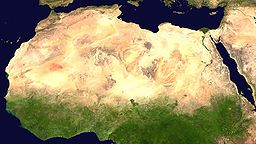
Just as competition with the U.S.S.R. spurred the U.S. into high gear in the space race, the Great Green Wall project also has a nemesis—the Sahara Desert.

This sandy foe creeps south at approx 48 kilometers per year consuming farm and pasture land in a decades long war of attrition.

In some cases, such as Nigeria, the desert claims almost 1,400 square miles of land every year.

Many months ago on this blog I wrote about this very problem; desertification and other forms of environmental degradation have put Nigeria’s identity groups on a collision course, competing for ever scarcer environmental resources.

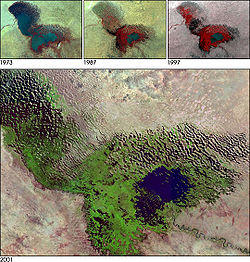
Take a look at this picture of Lake Chad.
The blue represents the actual lake, and the green demarcates the lake’s historical limits.

Lake Chad has shrunk by 95% in the last 50 years.

The consensus view among experts is that about 50% of the water loss was caused by desertification due to overgrazing, and the other 50% to long term climatic changes.

Chad is a major supporter of the Great Green Wall project.

11 desert and Sahel countries–Burkina Faso, Chad, Djibouti, Eritrea, Ethiopia, Mali, Mauritania, Niger, Nigeria, Senegal and Sudan—will collaborate to implement the massive Great Green Wall.

This will require unprecedented collaboration between 11 countries, with 11 environmental/agriculture ministries, teams of international scientists, and thousands of communities in the Sahel speaking a multitude of local languages.

I am skeptical but inspired.

Much like other big projects launched to solve big problems, the three gorges Dam or the Panama Canal for example; the devil will be in the details.

In addition to standard worries about corrupt contractors, the real worry here is simple free riding. Each country faces a threat from desertification, but the threat level varies, and the implementing capacity of each country varies even more.

The funding will mostly come from outside sources, including $119 million from the Global Environment Facility (GEF), and several billion dollars from other international donors, but each participating country will be responsible for educating local communities and managing modern tree nurseries, as well as the logistics involved in continuously transporting saplings and other inputs to the Green Wall.

The projects supporters claim that the wall will “sequester 3.1. million tons of carbon”, reverse Sahel desertification, improve the climate in the semi-arid Sahel region, and offer income generating activities for communities that border the wall.

Detractors question this narrative: they note that the Sahara is not advancing per se, but rather over grazing and deforestation in the border regions have removed the roots that traditionally anchored the soil, leaving the soil vulnerable to wind and other elements.

And how will local communities benefit in the short term?

Even if an education campaign succeeded in connecting changing climate patterns and decreasing pastureland with the absence of trees, how local communities justify taking time from tending their own land, animals, or jobs to manage their section of the wall when the benefits will not be apparent for years?

I would be very interested to hear opinions on this project from conservationist or from people that have lived in Sahel communities.

Note: This has been tried before. In China most recently, and in U.S. back in the 1930s on a much smaller scale in the “Shelterbelt Project”.

Where is Africa?

Where is Africa?

by Conor Godfrey on March 1, 2011

For the past several weeks pundits have been scouring the world for countries that might, in any way, shape or form, relate to the events unfolding in North Africa.

Darts have landed on China, Iran, all the countries of the Middle East, as well as the remaining Eastern European and Central Asian despots.

On this blog and elsewhere there has also been a lot of talk about what the revolutions north of the Sahara mean for Africa.

But wait—I thought this all started in Africa?

Is there really any debate as to whether or not Tunisia, Egypt, and Libya are on the African continent?

Let me start with the punch line: Africa is more of an idea than a place.

An idea anchored loosely in geography, but far more in psychology.

To illustrate what I mean, I have mocked up a conversation I find myself in with astounding regularity. I currently work at an organization promoting U.S. – Africa trade.

When pushing the new Africa to skeptical investors the conversation often goes something like the following:

The investor first expresses skepticism that Africa fits their firm’s risk profile.

The Africa expert then points out that the African reality has probably surpassed the investor’s outdated perception of the continent: in fact, 6/10 of the fastest growing economies in the world from 2000-20010 were in Africa.

This will momentarily compete for space in the investor’s brain with the national geographic special he was watching last night as he went to bed.

“Which countries?” he might ask.

“Angola (11.1% GDP growth), Chad (7.6), Mozambique (7.6), Rwanda (7.1), Nigeria (8.7), and Ethiopia (8.4).”

“That is all very interesting” says the investor, but, “…many of those countries are simply benefiting from an increase in oil and commodity prices. And my firm does not like the lack of transparency in most of those nations.”

The Africa expert is undeterred.

Well, “Do you know that Africa boasts a number of countries whose good governance ratings exceed many other countries with whom you already do business?

According to Transparency International, Botswana ranks 33rd in word in terms of transparency, with many other African Countries falling above the median– Mauritius (39th), Cape Verde (45th), Seychelles (49th), South Africa (54th), Namibia (56th), Tunisia (59th), Ghana (62nd).

These countries all outrank China (tied 78th), Thailand (78th), Brazil (69th), Greece (78th) and many other countries in Eastern Europe, Asia, and Latin America. Find the transparency International corruption rankings here.

Still, the investor remains unconvinced.

“Well, those were intriguing comparisons, but some of those island nation’s with good governance are more Indian than they are African, and we all know that South Africa, Botswana and Ghana are outliers in terms of governance. I’m still not sold on Africa”

The Africa expert gives it one more go—“Mr. Investor, do you know that Africa is growing so fast that there are 240 million people who today can only meet their basic needs who will become consumers with disposable income by 2015?

Or, that Africa’s level of urbanization is comparable to those of India and China when those countries’ growth rates began to accelerate?

Or, that North Africa has the most favorable labor demographics in the world, with large numbers of highly educated young people?”

“North Africa?” exclaims the investor. “You mean the Middle East?”

Sigh.

This type of Socratic exchange on nominally African opportunities leaves people with the idea that Africa refers only to the bush, to places with anemic growth, periodic violence, and a rapacious class of elites.

Anything that does not fit that mold on the African continent is ascribed to something or somewhere else—oil, the influence of a former colonial power, similarity to another region, historical idiosyncrasies, anything to avoid the cognitive dissonance generated by the thought of an exciting, stable, growing African economy.

Note: Nothing this archetypal investor said was 100% inaccurate, his comments simply revealed a common bias in our thinking about the African continent.

This is the most diverse continent on the planet, and each of Africa’s 53 (54 with South Sudan) nations manifests that diversity in different ways.

Different historical trading partners, different chief exports, different histories of exploitation and resistance, etc… .

But all of these nations are, to borrow a popular cliché, made in Africa. They are shaped by the geography and cultural heritage of the African continent, from the sands of the Sahara to the waters of Lake Malawi, from teeming urbanity in Nairobi slums to Dogon cliff villages in Mali.

Africa lays claim to all of this—successes included.

Libya beyond the headlines

Libya beyond the headlines

by Conor Godfrey on February 28, 2011

News on the ongoing conflict in Libya continues to head the news on the front page of The New York Times, and thus there is little I can add in terms of late breaking news that isn’t one click away.

What I can do, however, is go a little deeper than the coverage I have read so far on Libya’s unique tribal dynamics.

There is a reason that Reuter’s stringers on fickle and expensive satellite connections, trying not to get in the way of a stray bullet, haven’t been able to do in-depth research on tribal alliances in Libya—they are helluh complicated.

While I’m sure a Libyan eight year old could rattle off tribal histories like my little cousins can the Johnny Appleseed story, it took me a few hours of background reading just to master the basics.

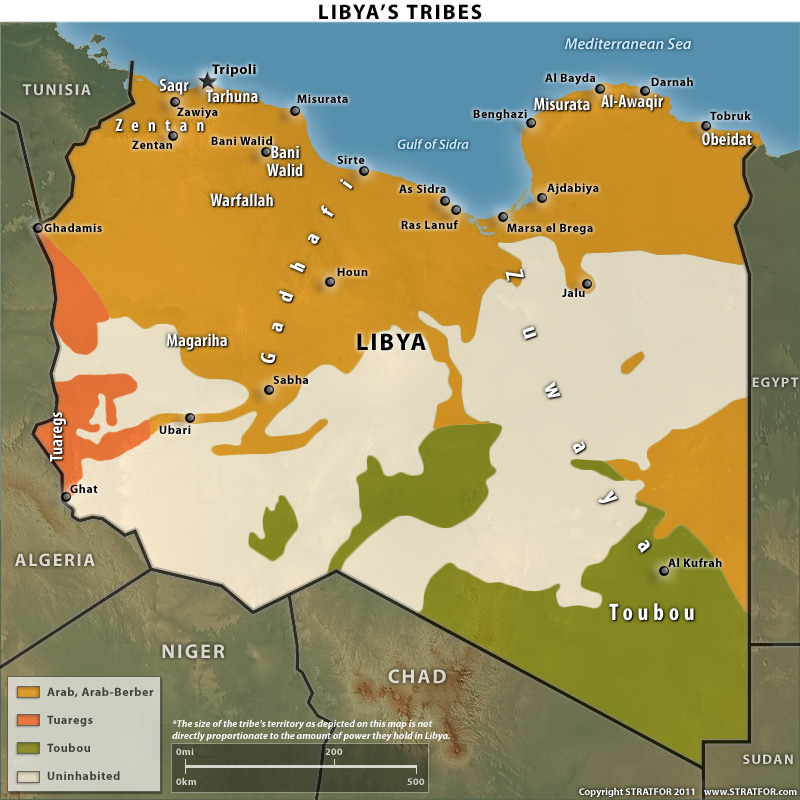
I believe that geography is the defining influence in how individuals and societies develop, so I like to start with a map.

Courtesy of STRATFOR Global Intelligence


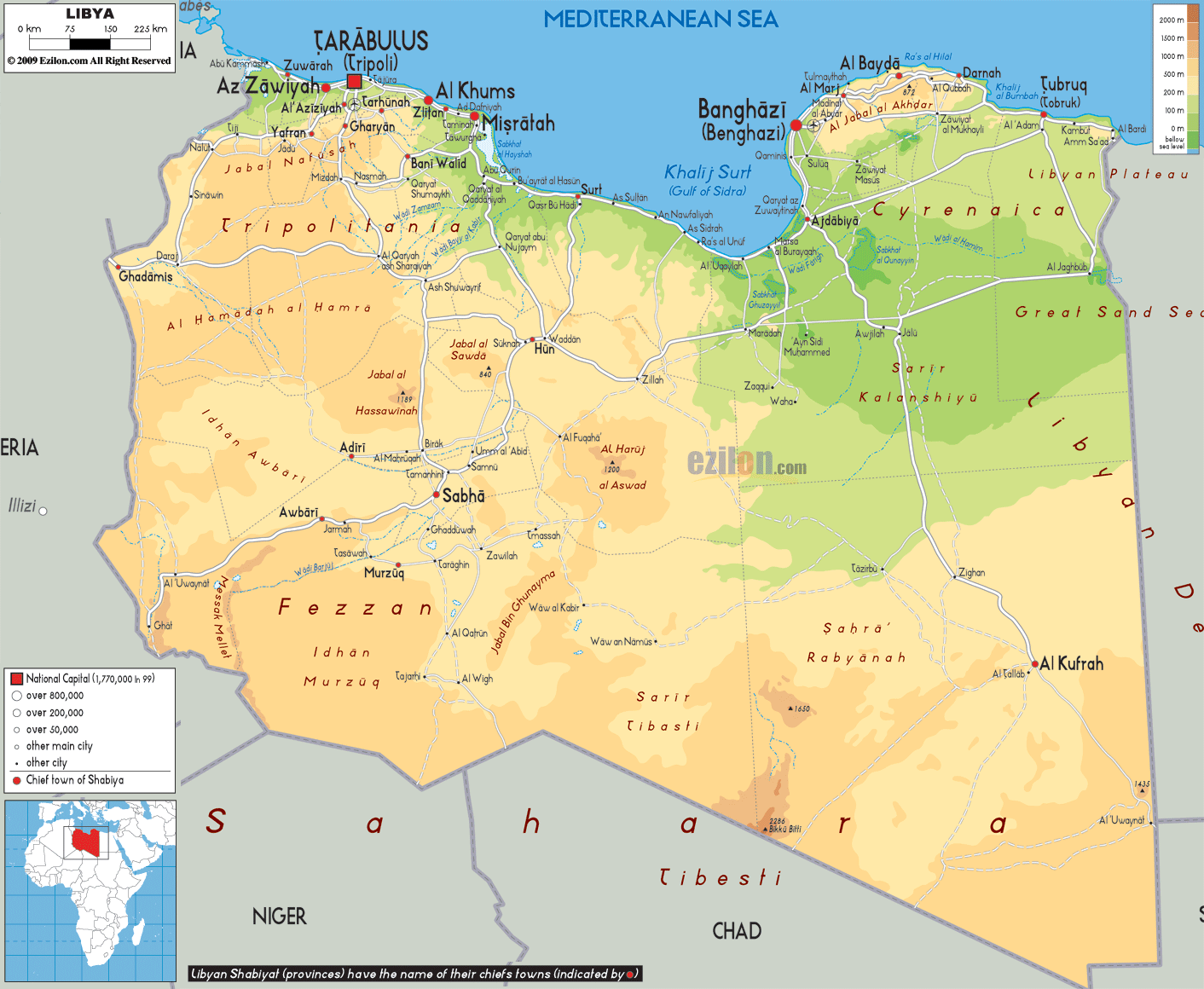
This map does not detail the 140 tribes that make up the fabric of Libyan society, merely the large umbrella groupings of Berber, Bedouin (Arab), Toureg and Toubou.

In reality, the overwhelming majority of Libyans are ethnically mixed, especially among the nominally Berber or Bedouin/Arab populations.

Look at the physical map and note the three natural/historical regions of Libya; Tripolitania in the West, Cyrenaica in the East, and Fezzan in the dessert interior.

The two most densely populated regions—Tripolitania and Cyrenaica—are separated not only by the Gulf of Sidra but also by an inhospitable stretch dessert.
Historically these regions have seen the world quite differently.

For most of the last thousand years, Tripolitania considered itself part of the North African Maghreb, the sandy north western swath of the continent that takes its name from the Darija Arabic word for Morocco — Maghrebi, or land of the setting sun.

Cyrenaica in the East was always oriented toward the Islamic world, with closer ties to neighboring Egypt than to Tripolitania, the West.

This Islamic orientation is the genesis of Colonel Ghaddafi’s seemingly absurd comments about Al-Qaeda infiltrating the Cyrenaica based protest movement centered in Benghazi, Cyrenaica’s capital.

Fezzan, the dessert interior, is home to a variety of traditional dessert peoples whose seat at the negotiating table comes from their ability to sabotage oil fields and equipment in the interior.

Now overlay the politics of 140 tribal groupings on top of this geographic powder keg.

Moammar Ghaddafi is not one Goliath against armies of Davids. Autocrats almost never are.

Dictators exert power and influence by dispensing patronage and maintaining the loyalty of what Professor Graeme Robertson calls “critical elites.”

This class might include military and security services, business people, religious leaders, or influential local leaders.

Momar Ghaddafi hails from the small al-Qaddafa tribe based in Tripolatania, and he has maintained power and influence for 41 years by dispensing patronage to several key tribes including two of the largest, the Warfallah and the Margariha. Both these tribes originate in Cyrenaica, or eastern Libya.

Almost immediately after Ghaddafi responded with deadly force to the first protests in Tripoli, a group of elders representing the Warfallah tribe publically broke with Ghaddafi.

And thus fell one pillar of the tripartite alliance of the al-Qaddafa, Warfallah, and Margariha crashed to the ground.

This set off a series of smaller tribal defections that further weakened Colonel Ghaddafi’s military readiness.

The third pillar of the ruling alliance, the Margariha tribe, originally hails from the desert Fazzan region but today can be found in most coastal cities.

The balance of power currently rests with decision makers in this tribe.

While the tribe has not publically broken with the al-Qaddafa, many of the tribe’s most prominent personages have been seen aiding the rebels.

If the Margariah jump ship en mass, Colonel Ghaddafi will find himself surrounded by enemies with only the al-Qaddafa for support.

If this comes to pass, members of the Colonel’s own tribe may be tempted to assassinate him to stave off the inevitable reprisals.

If you want more information on the 135 tribes I did not mention, check out this special report on Libya’s tribal dynamics by STRATFOR Global Intelligence.

Testament to the Twevolution!

Testament to the Twevolution!

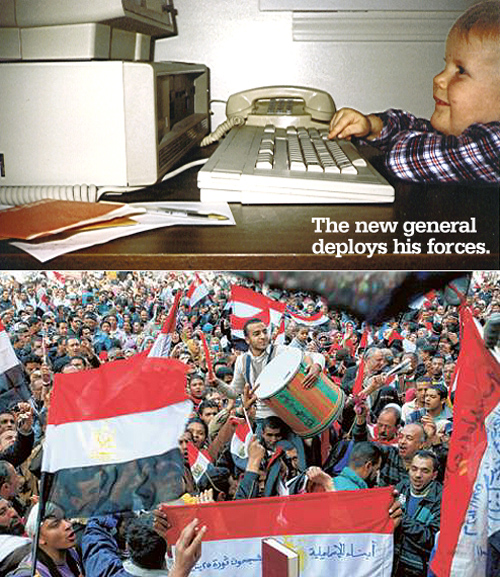
Remember the joke about grandma asking JoJo how to use her remote? Well, get ready you old fogies. Here’s a cheat sheet for the software powering the current Twevolution, and take stock: it comes from Kenya!

That’s right, the Twevolution of Tahrir Square, Pearl Square and likely now even Tiananmen Square is powered by open-source (that means “free”) software from Nairobi. Called Ushahidi (“testament” in Swahili) it is the technical foundation of the revolutions organized throughout Arabia, today.

This remarkable software – and its clones and offshoots – is readjusting world order and I try to simplify it for you grandmas and grandpas below. But the important point of this story isn’t how it works. It’s how it caught world order “off guard.”

I use that cliche, off guard, to represent the dozens of other cliches the media, our government, and most world authorities used to express their surprise at what is happening in Arabia .. (and perhaps much further abroad, like China).

It was a surprise, because this readjustment of world order isn’t being accomplished by tanks and fighter bombers, or even by soldiers or police. It’s being fought and won by the deft manipulation of information. And that is something with little capital cost and virtually no military history. You don’t have to own an oil well to power a street protest.

But you probably now have to have Ushahidi.

Ushahidi was created by several Kenyan kids, spearheaded by the IT genius Ory Okollah, after the 2007 election violence. Okollah is currently the manager of policy for Google in Africa.

What that basic still open-source software does is collect information feeds, organizes and analyzes them.

So, for example, tweets on Twitter, SMS from phones, good ole emails from Google, pictures from Flickr, etc., etc. The software collects them, usually creates a map showing where they come from, and lets manipulators generate outcomes from the analyzed information.

Are protesters being fired on? Where should volunteer medics go? What part of the city do the thugs hold? Who has the hot dogs? Is there a safe place for kids? Has the weather front with rain started in the north?

The more sophisticated software allows organizers to anticipate outcomes based on “if” situations. (In computer jargon, we call it “run scenarios.”)

“If we block the north street into Tahir Square, will we be able to hold the Square?” Ushahidi and its offshoots quickly calculates from the hundreds of thousands of digital feeds that no, in fact, it’s the west street that is most vulnerable and also most able to be secured.

And beyond street strategies, these families of software ask very sophisticated questions.

How many serious sessions has Representative Pete Sessions missed after slipping sideways out of his swearing-in? How did he vote, who voted with him, did it matter, and are yellow lollipops still being sold at his 7-11?

“If we remove the mandate from the Health Care bill, will there still be enough support to make it work?”

FrontlineSMS, Foursquare, Maemo, Waze are some of the hundreds (thousands?) of open-source (remember that means “free”) software that organizes vast amounts of information sent in bit by bit from individual users.

The easiest example is Waze. Waze is used by the under-thirties who commute by car in urban areas. Iinfinitely better than the over-thirties 5-minutes-after-the-hour talk radio report created from an expensive helicopter above the highways, Waze simply collects the real-time whereabouts of its users, figures out who’s getting to work fastest and tells everyone else how to do it!

Ushahidi in its more sophisticated forms organizes all these software organizers. Into one gigantic people power unit.

The manipulators of these sets of software that organizes other organizers are the kids who started Twevolution and ultimately secured Tahrir Square and toppled Hosni Mubarak. They are the possibly poor, possibly underfed, pointedly unarmed but indisputably smart youth of today.

They are our new leaders.

Thursday, what this all means for us old folks. It’s quite astounding!

Salsa for the Torpedo?

Salsa for the Torpedo?

Guns — and guns not wanted by the military at that — instead of food. That’s America’s message to the world.

Republican successes in The House over the last two days are ruinous for the developing world, especially Africa. That’s not to say it will ultimately become law, but it sure doesn’t look good with our weak-minded president not directing any defense.

The House, the White House and the Senate are so far apart from each other right now it’s hard to imagine where this is all going to end up. But it doesn’t look good.

Why is no one – not one politician – talking of raising taxes? Corporate profits are the highest in history. Corporations are sitting on mounds of cash.

So instead of taxing a wee bit little more the rich and mighty, we’re going to starve Africa?

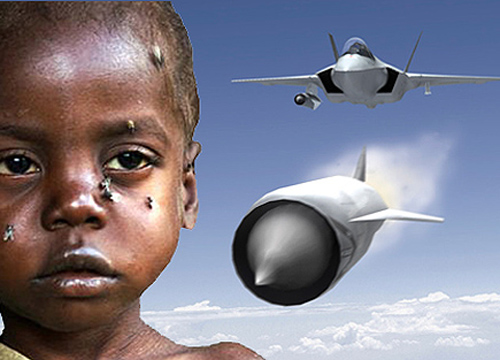
The House bill slashes the Food for Peace program by 40 percent, reducing and sometimes eliminating altogether food for 15 million people in places including East Africa, especially Ethiopian and The Sudan.

The McGovern-Dole Food for Education Program, which currently provides meals to about 4.5 million schoolchildren in poor countries, would be halved.

So, after we starve Africa, we’re going to build an extra jet engine for a plane the Pentagon has pleaded with Congress that it doesn’t want.

The $6 billion for the F-35 Joint Strike Fighter extra engine that the Pentagon doesn’t want is being pushed through Congress, in part because the General Electric plant that builds the engine is near Speaker Boehner’s constituency.

That $6 billion is more than three years of all the food aid programs to Africa put together. In fact, we could raise our food aid to Africa if we didn’t have that program!

This is nuts!

Here’s the problem. In my life time we’ve lost a sense of community, to anywhere. I don’t mean just to the rest of the world, but even to our own communities. We have replaced caring for others with caring for the corporation.

The American has been brainwashed into not just thinking the greatest opportunities occur exclusively in the private sector, but only in the private sector without any community regulation or other involvement.

It’s nuts. It’s ignorant. It’s regressive. Now, it’s America.

Here’s another problem. We think of security as guns, and often as weapons that are so sophisticated they are the be-all and end-all of our engineering genius and private sector job creation programs. The youth of Africa starting in Tunisia and Egypt have discarded this ancient concept. So should we.

Finally, to the battle that looms:

Our failed “progressive” president lost the initiative when he proposed a reasonable budget rather than defining a starting position that could be negotiated down. We go down any further and we’ll all drown. And that’s after we sink Africa and the rest of the world.

Then, all that’s left to sink is ourselves.

Twevolution coming to East Africa?!

Twevolution coming to East Africa?!

Tomorrow’s presidential election in Uganda will either be the most unread news story in Africa, or the start of Twevolution in East Africa.

The current autocrat is expected to win handily, despite election fraud, unfair international support and his highly undemocratic style of overlording that is often brutal. But if he doesn’t … win handily … CNN might have another place for Anderson Cooper to visit.

The election battle is down to Uganda’s two most famous politicians and arch rivals, Dr. Kizza Besigye, otherwise known as the perpetual loser, against the incumbent, Yoweri Museveni, otherwise known as dictator.

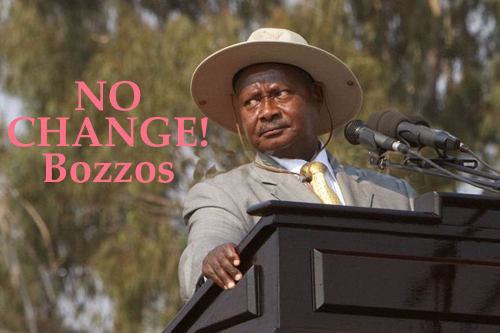
If Museveni wins he will be starting his fifth term and heading towards his 26th year of ruling Uganda. If he wins it’s in part because of long-term support of the American Right. (Get this: his campaign slogan right out of the dimwits of CStreet is, “No Change!”)

Here’s the problem. Kids don’t like grownups telling them what they can and can’t do when they reach their mid twenties.

This is essentially the reason for the Twevolution that’s sweeping the continent. African youth today are sharp, educated and infinitely more connected with the world than the old folks overlording them. That’s particularly true of Uganda.

I’m not saying that youth inherently believe in term limits, but they viscerally know how not changing political rule impedes and inhibits development.

Uganda is rapidly becoming the most backwards country in all of East Africa, when once upon a time, shortly after independence, it was the star. As if slapping this truth into its neighbor’s cheek last week, next-door Rwanda hosted an all-African conference that named Uganda the worst of the five regional East African nations in its capacity to develop.

In fact of all Africa’s 58 countries, Uganda was ranked 21st. That’s pretty awful when you consider that half of Africa’s countries are unstable or at war. (Tanzania, by the way, was 20th. Rwanda was 5th and Kenya was 4th. What was most startling of all, troubled little Burundi was ranked 13th!)

The report was chaired by one of the most respected Africans alive, Grace Machel, the widow of the former president of Mozambique.

Uganda’s youth knows this. And it seems that up to 85% of them are likely to vote tomorrow. In fact international observers on the ground expect a 75% turnout according to a leading newspaper in Uganda, although as many as 140,000 of those registered names may be dead, and 400,000 of them foreigners technically ineligible to vote.

So if the election is close … there is plenty of fodder for fire. The ironic thing is that it’s not expected to be close.

I’ve written before how Museveni is the darling of the American political right. They have been supporting his draconian efforts to do things America can’t, like ban abortions and make homosexuality a capital offense.

I haven’t been able to track it down carefully enough, so it simply remains a hunch right now that American Rightists along with their UK counterparts are stonewalling the World Bank from blocking aid funds that Museveni has been using to beef up his campaign.

The report that’s drawn my attention was published by a fiery, independent on-line publication in Uganda last month.

There’s no doubt that Museveni has used donor funds (including ours) for his campaign, which is one of the reasons he’ll probably win tomorrow. There has never been such a modern, expensive election in Africa before. And it’s been almost all one-sided: for Museveni. TV, ads, billboards, flyers, robocalls — you name it, right out of American campaigning.

It’s also been public that America and the UK are blocking efforts by NGOS like the World Bank from stopping this. The question is, who specifically in the U.S. is doing this?

Anyone out there that would like to prove me right, please go to work!

So with such huge funding support, with an economy that isn’t doing so badly, with enormous pride in the recent discoveries of oil and the relatively recent successful ending of the wars in the north, Museveni has the odds, even with a half million illegal voters.

But if his margin is less than the number of dead and foreign (half million) out of 7.5 million expected to vote, then watch out for Twevolution.

Twevolution in South Africa?

Twevolution in South Africa?

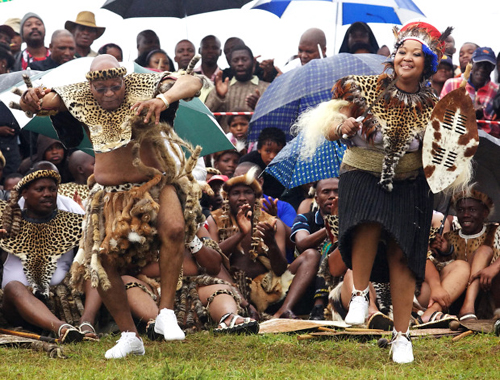
South African President Jacob Zuma dancing with his wife, Ms.
.... oh, sorry can't remember which one.
Twevolution is sweeping Africa’s dictators away. But could it go further? Is there a chance that pretty boy South Africa is next in line?

South Africa? you wonder out loud. Didn’t I say that South Africa started all this almost twenty years ago? [Yes] Haven’t I often hailed the new country’s constitution as nearly perfect? [Yes] Didn’t I write that its domestic policy was nicely redistributing wealth [Yes] and that its foreign policy particularly towards its neighbors was deftly professional?

Yes-Yes-Yes…but.

It could be that South Africa is trying to be such an exemplary modern society that the last vestige of nondemocratic states will be swept away by the Twevolution. And this last vestige is the authoritarian if not autocratic power held by the majority party in the government, the ANC (African National Congress).

And this nearly impenetrable wall of power (the ANC has continually held two-thirds or more of Parliament since Nelson Mandela first became president) might just be cracking by some of the most juvenile political pandering ever imagined.

It’s hard to fault Mandela for anything, much less astronomical majorities in the government he brought to power. But Mandela was not without his own political nasties. The relationship (or not) that he held (or not) with his wife, who at the time was almost equally powerful, we now recognize as tools to constrain the masses.

By most accounts Winnie Mandela would have been right up there with the Mubarak thugs that stormed Tahrir Square on camels. Winnie was convicted of murder and kidnaping but never served a day in jail.

And Mandela’s favor placing went unchecked for a long time. His close revolutionary associate, Cyril Ramaphosa, was set up in new South African businesses
with a patent disregard for either skills or capital once it was clear he would never become president.

Mandela was followed by another ANC miracle worker, Thabo Mbeki. Thabo was less star-strutted than Mandela so less scrutinized, but whatever good he did will forever be eclipsed in history by his paramount achievement: discovering that AIDS was not a virus.

Mbeki told his fellow countrymen to shower well after sex to avoid AIDS. Some claimed this was so he could more easily adjudicate claims against international insurance companies but I think it was to please the masses, develop their support. Whatever it was, it was criminal.

But today we have the biggest oaf of all: Jacob Zuma. Number Three President is famous for having ten wives, but the fact is it may be eleven or twelve. Protocol officials around the world never know what the state dinner place cards should read.

Zuma hails his ancient culture, but I’d put it otherwise: he hails vote getting.

And now Zuma has topped the charts . Last week while Egypt was readjusting world power, Zuma was creating his own eternal life.

“When you vote for the ANC,” he told a rally near Cape Town last week, “you are choosing to go to heaven. When you don’t vote for the ANC, you should know that you are choosing that man who carries a fork… who cooks people.”

Pardoning (or not) a powerful wife, setting your cronies up to be billionaires, denying the science of the disease AIDS that’s killing your people, flaunting culture and preaching eternal life only to those who follow you … none of these juvenile if neurotic acts has managed to derail South Africa’s basically good trajectory into the modern world.

But Twevolution is youth driven, and youth in Africa are incredibly intelligent. You can take just so much nonsense before realizing how distracting it can be from dealing with the pressing issues at hand.

Twevolution may not topple the South African system, but there are growing sounds that it just may topple the idiots at the top

Peace is IN!

Peace is IN!


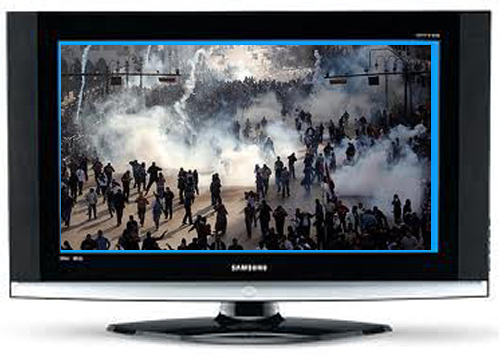
There were people hurt. There were people killed. But the victims were not the losers in a fight, because…they didn’t fight. They protested. Peacefully. Martin Luther King would have been proud. The successful Egyptian revolution was one of peaceful protest.

I know you’ve seen pictures of bloodied faces and bodies being carried, and tear gas wafting through the scene. But please keep in mind there were millions of people protesting. The “death toll” is around 400 and a significantly large proportion of these were actually outside Cairo where (a) there are far fewer educated people and (b) any kind of meaningful protest means anything at all.

Americans have a difficult time analyzing and gauging political change, because our own system is so befuddled by confusion. Take the health care issue, for example. To me and I hope the vast majority of sane onlookers, this is a baby step towards a society that guarantees the health of all its citizens. But I don’t have to remind you of how many think radically differently.

So we tend to listen to change that is evident and obvious and immediate, and I think we also sort of fear it. We are worried that change will take away or at least restrict the rights we currently enjoy, which are wonderfully substantial. So for the vast millions of Americans who still don’t know who Mubarak is much less Elbaradei or Wael Ghonim, they pay attention only when something of ultimate drama happens: death. That’s what TV is made of.

But the fact is that there were very, very few deaths compared to the demonstrations that took place. This is remarkable. Imagine the hundreds of thousands of unarmed and determined individuals who so believed in human rights that they stood upright against heavily armed security forces. Who were ready to sacrifice their safety for an idea. Fortunately, a ridiculously small proportion had to. In fact, it’s something of a testament to the restraint of the security forces and particularly the army that so few were hurt.

I remember my own days as a youthful protester in the 1960s, unarmed as the Egyptians were, charged by police as the Egyptians were, tear-gassed as the Egyptians were, shot at as the Egyptians were. And our few friends who were hurt and died were unarmed, as the few Egyptians who were hurt and unarmed.


There are literally hundreds of videos like the one above, showing hundreds and thousands of protesters, unarmed, demonstrating against highly armed government forces. But by their sheer numbers and naked sacrifice, they won. They’ve won round one.

In America especially we tend to focus on the violence of any event, for two main reasons: it’s wrong, and it makes good TV. But what every person must take so far from the Egyptian revolution is that given the hundreds of thousands of people involved, the millions ultimately, the amount of violence was unimaginably small.

It’s hard for Americans to imagine a dictator falling with so little violence. We are told our wars are waged against dictators, and the level of violence that follows our policy is legend. The number of our own soldiers killed much less locals in Afghanistan and Iraq to topple that regime numbers in the tens if not hundreds of thousands.

We can’t believe Egypt has changed regimes with fewer deaths in a month than America sustained monthly in Afghanistan and Iraq for years.

But it’s true. Grasp it and embrace it. Only good will come out of this. There will be many skeptics and cynics out there now saying, “Yes, but what will come next?” I’m not so naive as to suggest this revolution is over, completed. But I’m idealistic enough and optimistically hopeful enough to command the axiom that only good can come out of the power of peace.

Revolution on TV

Revolution on TV

So what’s more important: water or security? Egypt is as critically important to East Africa as to America, but it is America that is consumed with watching real-time developments there.

The infamous 1917 Balfour Declaration, which is arguably one of the diplomatic starting points for the current drama in Egypt, was not a singular British act. A series of British treaties about the use of the Nile River was thrust on East African countries about the same time as well.

The notorious 1929 treaty, and the brazen 1959 treaty (I say “brazen” because by 1959 Britain had already decided to give independence to most of East Africa) ceded the use of Nile waters, which arise in East Africa and flow through it, to Egypt.

Water use may be the most critical development tool left in the world. Yet as it stands now, Egypt has successfully enforced its treaties with East Africa, effectively denying Tanzania, Kenya, Uganda and the Sudan, sovereign use of the river.

Everyone in East Africa knows that a new Egyptian regime, particularly a democratic one, will be more disposed to reconsidering these one-way, counter-intuitive agreements.

So what happens in Egypt could have a much greater impact on the lives of East Africans than the lives of Americans.

Americans don’t have to worry about water. So we have found other things to worry about, the principal being terrorism. What happens in Egypt now is an intriguing chess came the outcome of which we fear will effect our security.

Yes, probably, but not as much as how it will effect the use of water in East Africa.

So why are Americans so much more consumed with what’s happening in Egypt than East Africans?

Because like so much in American life, we have turned the event into one of entertainment, and that it seems is our paramount endeavor.

And because the rest of the world struggles more. They know on a daily basis how to deal with true threats and denials of basic needs.

In America, today, nothing gets learned except as entertainment. Everything from new cancer drugs to space discoveries is presented as a movie. Incidental perhaps to what are truly our daily needs like a meal and a few breaths of fresh air, we have become so well off that to get our attention about anything we need good graphics and Dolby surround sound.

And this is also why we’re so obsessed with “security.” Because security guarantees uninterrupted entertainment.

I confess. I’ve got Aljazeera streaming in the office right now, and I flip between CNN and MSNBC waiting for the figurative pyramids to fall. And then?

Anti-America Sentiment Grows

Anti-America Sentiment Grows


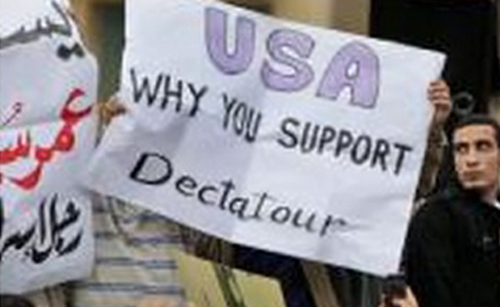
As Egypt’s struggles continue anti-American sentiment grows in places as far away and dear to me as Kenya. Some of this is envy of the powerful but some of it legitimately derides an unfair world order.

Yesterday a widely read blogger in Nairobi associated with one of its main talk radios warned Kenyans of “the rude awakening that has visited the people of Egypt” that their leaders have been “serving a foreign master’s agenda.”

And that master was, among a few others, America.

With bitterness that verged on vitriol, Solomon Gichira writes, “We all know one or two reasons as to why the world came running to our rescue after the 2007/8 election crisis… because they feared losing supplies from our flower or dairy industries among others. However, they will never package their interests that plainly.”

Gichira is referring to the massive intervention by mainly the U.S. and Britain following Kenya’s fraudulent 2007 elections. Led by Kofi Annan the international rescue of Kenya included more than $10 billion and supported first a power sharing deal between the two rival candidates for president and a range of incentives that led to Kenya’s new, excellent August 2010 constitution.

Gichira is dead wrong when he gets specific yet important because he represents a huge swath of public opinion in the educated developing world. Moreover, his general contention is right: world powers don’t do anything altruistically; it must be in self-interest.

U.K. and U.S. interests could care less if Manchester flower markets don’t have enough roses. A more important reason, “strategic interest” in polispeak, is Kenya’s geopolitical position in the war on terror. Kenya’s often superficially irritating actions in this regard, like allowing Omar al-Bashir into the country, detaining radical mullahs without trial, and letting military equipment sneak overland into the South Sudan, are all applauded silently in the halls of Westminster and Washington.

And Kenya’s overt actions with regards to the South Sudan and its constant border squabbles with whatever is left of Somali receive constant praise from the west.

These are the west’s true interests. But Gichira is right: it is an agenda dictated from abroad, one that is not necessarily wholly in Kenya’s interests.

Gichira’s account of the modern history of Egypt and its neighbors leaves something to be desired, but he basically underscores the botched handling of the “Jewish question” and the poor way that both Israel and subsequently Palestine were created by world powers. He rightly conveys in my opinion how Britain deftly relieved itself of Jewish prejudice by exporting it to the Middle East where it ferments worse today.

And he’s right on when berating Britain and France’s manipulation with the U.S. in the security council of the nascent Arab revolutions to overthrow potentates like Farouk, how this led to anti-American sentiment and Cold War support by Russia. That led, by the way, to those “revolutionary” regimes being subverted still again … just by the east, instead of the west.

So basically while I think like so many revolutionary enthusiasts Gichira misuses facts at his peril, his conclusions reflect the feelings of many of us progressives in the west: Developing world peoples have been mistreated mostly by being ignored, and when not ignored, by being used for “self-interest.”

The problem is that I don’t know how this could ever have been different. Big guys bully small guys. That’s our world order. And try as we do to elevate this morality, we just haven’t been able to yet.

“What is not told to the ordinary reader is that the Camp David agreement” Gichira writes “brought with it huge American goodies to the Egyptian leadership” including “financial and military support” and “America’s blind eye to oppression and suppression of any conscious or dissenting voices” in Egypt.

And so now for “the US and Tel Aviv administrations, the chicken have finally come to roost.”

Gichira now tells us that we will “painfully watch as you lose your Mubarak. Not to your well equipped American-Anglo-French-Jewish military muscle, but to the unarmed power of a dissenting population that has had enough of your meddling. At that point, you will remember that the silence Egyptians over these years of your misdeeds and myopic interest was not anything like an acceptance but a big lie.”

Powerful stuff.

I don’t like feeling the whipping boy in a geopolitical contest of David vs Goliath, but I am the American and Gichira is the Kenyan. In the global context of world history, I am the villain simply because I’ve been the privileged, and Gichira is the victim, simply because he’s been the less privileged.

I could apologize for my ancestors’ misdeeds, but I don’t know what would have been better, so I can’t apologize. I don’t know that there would have been a better way.

But what I do know now, thanks to the transparency and intellectual stimulation that gives rise to voices like Solomon Gichira, is that we can begin to act responsibly in a global way, right now. We can stop any overt or tacit support of the Mubarak regime. We can let the streets play out, because now, those Egyptians, like Gichira, are totally capable of handling their own affairs.

Let them come to power, and then let them deal with us. We, too, were once revolutionaries.

Government by the Smart Phone

Government by the Smart Phone

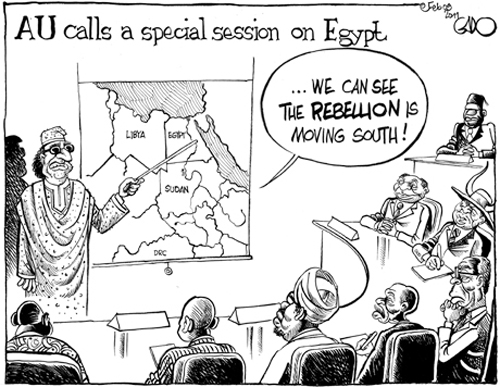
Nairobi cartoonist GADO mocks the African Union's gathering to discuss Egypt.
African governments are toppling because of smart phones. So what happens next? Are taxes set by tweets?

In the last several years significant revolutions happened in Kenya, the Sudan and Ivory Coast, and now Tunisia and Egypt. Africa is on the move; it’s changing faster than we understand.

No surprise to me. Just how fast it’s happening is what boggles the mind. It all seemed to begin with the end of apartheid in South Africa. That was a journey for those liberating that struggle that spanned a lifetime – not exactly fast.

Next in line was the Sudan, a troubled place to be sure, but the actual revolution that has led to a new country started only 6 years ago – again, not supersonic, but speeding up.

Then came Kenya. It’s revolution started in December, 2007, after a failed election and essentially came to fruition with a radically new constitution in August, 2010. Getting faster.

A failed election in the Ivory Coast has that country yet in the throes of radical change. Then Tunisia changed over a few weekends, and now Egypt, yet to play fully out.

The momentum for change has snowballed. And there are quite a few countries left. Tremors are being felt in Tanzania, Uganda, Algeria, Jordan and even sleepy cozy Morocco. If there were more people in Botswana, they would already have had a revolution, there, but instead a shouting match in Parliament will have to do.

What is happening? Dare I ask if Obama’s IT techniques to excite youth is now a model worldwide?

Writing in Kenya’s Daily Nation last week, Catholic University of East Africa professor Maurice Amutabi answered, “Though … Obama is the first known leader to successfully use the Internet … to ascend to power, his success is being emulated all over.”

“Students of history and political science are thrilled by the people power in Tunisia and Egypt. We have not seen anything like it before. It makes the Storming of the Bastille during the French Revolution look ordinary.”

Amutabi delves into this a little bit further. Motivated by less than 144 character tweets, it’s not exactly possible to rally an ideology. People power grows around very narrow goals:

Amutabi knows that the new, youthful forces “have nothing to do with religious zeal or fanaticism.” In fact, he claims, “These crowds do not have any ideology, apart from the fact that they want a change…”

YES WE CAN
CHANGE WE CAN DEPEND ON
.. are both sweet little tweets.

I was so intrigued by Amutabi’s oped that I emailed him for a further analysis. If such narrow goals can bring down governments that have been in power for portions of centuries, and if they’re done so by tweets, what comes next? What happens once people power succeeds?

Amutabi believes that the “tech-savvy” youth will continue to use their technique to vet leaders with greater depth “who are progressive enough to represent the interests of a wider of spectrum of society. The youth have a better chance to consult and reach a consensus on who is a good leader, largely because of ICT.”

Amutabi believes that current leaders arose to power on a series of misrepresentations of themselves. We all know the slogans of politicians worldwide: “This is what the people want me to do” etc etc. “I was elected by the people to” whatever.

Amutabi believes that today’s “information flow is faster and leaders cannot hide their true selves… People get to know about them long before they become prominent.”

So not just a small coterie of investigative journalists and their elite readers would have known that George Bush was a drunk and bankrupt sports club owner? And that would have done the trick?

Perhaps. Although I fear Amutabi’s enthusiasm for the current revolutionary change might discount too heavily an entrenched politic’s capacity to ignore the truth. In America even today there remains a sizeable portion of society who believes Obama was not born here.

But what I found most exciting if unsettling about Amutabi’s beliefs is once people power succeeds and puts its leaders in power, then what?

Must internet polling be used to pass every piece of legislation, for instance?

Will the populations expect to be consulted on every major issue that previously governments decided on their own?

“Yes,” Amutabi answered without hesitation. “The populations are alert to any changes and would demand accountability and transparency…. They have acquired new meaning of their power and gained a taste of strength in numbers and will not look back.”

Wow. This makes California referendums look like grade school elections for what dessert should be served for lunch.

“I believe they will push all the time until they get what they want,” Amutabi concludes. “The political landscape in Africa might never be the same again.”

Or anywhere there’s a smart phone.