How The Hayes is Pitted

How The Hayes is Pitted

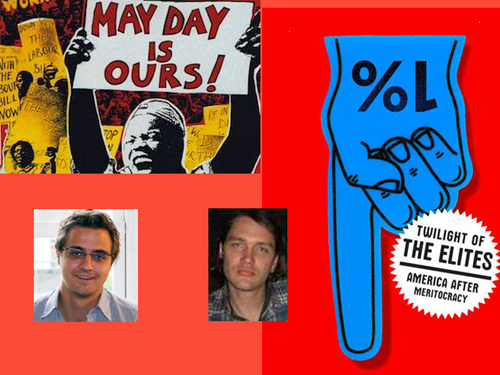
Exclusion and redundancy are today’s evil culprits, not exploitation, says South African Richard Pithouse. And American Chris Hayes thinks this dollhouse is ready to collapse.

Two extraordinary thinkers both a generation younger than society’s current overlords, a half world apart, portend the end of capitalism … in my life time?

Pithouse almost says so, Hayes wouldn’t dare, even though it’s the essence of what they both believe. The difference between two privileged whites, one South African and one American. Yet both fear the consequences of making predictions.

I expect that you like me — whatever your political inclinations — are getting extraordinarily tired of politics. And politics dominates everything. I’ve been an obsessed NPR listener for decades, but now I find myself switching off the morning radio. A news junkie incarnate, I’m beginning to miss the opening of the evening news.

When I scan the web, or browse the cover of the too many magazines that still arrive my doorstep, I look hopefully for little doggies jumping up and down or beautiful ladies smiling unabashedly under their Easter hats. I haven’t yet subscribed to the National Inquirer.

And then, crashing through my ennui and disintegrating the daydreaming of being a little boy, again, march these two whippersnappers, like terminators of spring time, tornadoes ushering in a horribly long and hot summer.

Hayes’ book Twilight of the Elites has just been published and is a masterful history of what Marx portended as the last stages of capitalism: when meritocracy (a favorite Hayes’ term) excludes (Pithouse’ favorite term) all those qualified from any endeavor unless they’re a part of the in-crowd.

Hayes does a nice job of creating this theory carefully substantiating how in America meritocracy has come to be defined more by inherited wealth than anything contextual like knowing how to add numbers.

“And,” writes Pithouse,” the authoritarian and predatory nature of some factions in the ‘political class’ [read: ‘meritorious rulers’] cannot be denied.”

What really bothers me about these guys is that they are phenomenal observers and accomplished historians and I’m tired of both. Hayes has a weekly weekend TV show on MSNBC that is catapulting him into a limelight he might currently be disavowing. The show describes itself as “interviews, and panels of pundits, politicos … from outside the mainstream” even as he becomes mainstream.

Pithouse hasn’t the luxury of becoming a famous white man in South Africa, today, so he burrows within the academic community (Rhodes University) writing enticingly provocative blogs that need considerable editing.

Earlier theorists might have characterized these personal struggles as dialectical. That thought’s enough to send me back into dreaming about milkweed.

Alas to the rescue Alexis Goldstein.

Goldstein is the author and guru of HTML5 which will show you “how to use CSS3 without sacrificing clean markup or resorting to complex workarounds.”

This no nonsense approach to building your website has honed his mind. No fluffy HTML4s or 3s or phps or any of that junk. Just get to it.

And his critique of Chris Hayes is similarly just-get-it-done and right on:

“My great hope for “Twilight of the Elites,” is that readers will put down this book, and join us in the streets. Beginning with Hayes himself.”

But Pithouse suggests the two of them might not be seen in the street, soon:

“…tactics like occupations, road blockades and vote strikes are central to the grammar of the new struggles,” but are “being forged by people who have been rendered surplus to capital rather than exploited by it.”

It remains to be seen if Hayes’ book or Pithouse’s tome of published literature will make either of them rich. But I doubt either of them will be considered surplus.

I’m tired, guys. My generation is tired. You aren’t saying anything that we didn’t scream in the sixties. You’re incredibly smart and you’ve found remarkable new paths to the same conclusions good folk have made for generations, but … where’s the meat?

You aren’t in the streets, and I don’t want you to be in streets, because then you might be killed or maimed like Rodney King and you wouldn’t be able to explain why we should all be in the streets.

So both can be pardoned for not exactly saying what they mean or doing what they should say. And both can be excused for their periods of confusion as they navigate their personal lives to achieve some prominence so that their ideas matter.

And who knows if either will ultimately embrace their own principals. But it’s very good fortune for those of us with some hope that things really will change. (But not by them, right?)

Tusks For Terrorists

Tusks For Terrorists

Until recently Republican obstructionism in Congress hurt few but us Americans. Now, it’s seriously hurting Kenya and harming Somali peace while supporting al-Shabaab!

This is a no brainer. Kenya Wildlife Service (KWS) director, Julius Kipng’etich, told the Senate foreign relations committee last week that Senate Bill 1483 (if it became law) would drastically reduce elephant poaching in Kenya and dramatically escalate Somali peace.

Senate Bill 1483 has no chance of passing. Only 3% of the Senate bills this Congress have passed, and despite widespread bipartisan support, and a bit of chance it would pass in the Senate… no chance in the House.

So even before we discuss what the bill means, who presented it, who supports it, what it does … even before anything substantive about the bill, we know it won’t pass because the House won’t pass anything.

And even before I tell you what it means, I’m going to tell you that the Wall Street Journal, not exactly a bastion of progressive ideas, coyly supports it.

But here’s what it would do, if it could:

The bill is an amendment to the Homeland Security Act that would require all U.S. corporations to reveal their “beneficial owners.” Right now business entities are created under state laws, and those laws do not require the individuals who control the corporation be named. They only require the officers of the corporation or the agents of the corporation to be named.

In money laundering scams, “shell corporations” are created with officers and agents who are beholding to the true overlords who remain unidentified. For example, Somali al-Shabaab opens a bank account in the Canary Islands. Canary Island bank law is so lax that there is nothing in Canary Island records to show this. Instead, for example, John Doe is shown as the CEO.

Like a Swiss bank account, the manipulation of that account is done by number keys.

Next, a “shell corporation” is opened in Delaware, with Jim Heck as CEO, you as treasurer, and so on. This “shell corporation” sells consulting services to Sheik al-Doe in Somalia. Sheik al-Doe, an al-Shabaab leader has just slaughtered an elephant and sold it to Asians for cash. He wires the cash to the “shell corporation” and the corporation moves the money into the Canary Islands account controlled by the al-Shabaab leader.

The terrorist now has easy and legal access to his safeguarded funds, and because the deposits into the account come from an American corporation, the illicit money trail is disguised.

1483 would put an end to this. It would require the “shell corporation” to name its beneficial owners, which are the individuals who control the Canary Islands account, i.e., the terrorist.

Kipng’etich explained that al-Shabaab is poaching elephant and rhino from Kenya’s Arwale and Meru national reserves, selling them on the Asian black market for enormous sums, remitting it illicitly into American bank accounts that transfer it to foreign off-shore accounts, thus safeguarding the funds in the global banking system.

It’s quite interesting that Senator John Kerry, the committee chairman, brought Kipng’etich to Washington do this. There were plenty of other experts on hand to say the same thing.

Of the many who testified, Tom Cardamone of Global Financial Integrity was the most comprehensive, presenting sheaves of evidence about money laundering in the U.S., a good portion of which is through the sale of drugs and ivory.

So Sen. Kerry is digging to the very source, and notably, not a single Republican Senator challenged Kipng’etich’s testimony. But …

… the bill won’t pass. Needless to say it would do us all a lot more good if it did, and it would provide a specially powerful tool for Kenyan anti-poaching.

But it doesn’t matter. Nothing seems to matter. The answer these days is always NO.

Just A Little Misunderstanding?

Just A Little Misunderstanding?

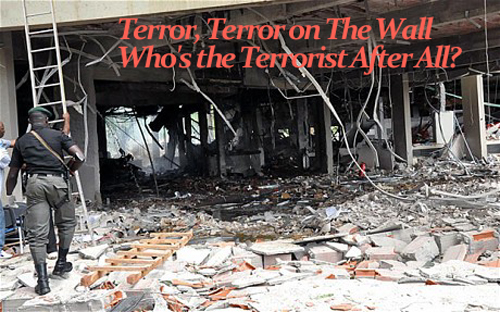
Recent Boko Haram Bombing in Abuja, Nigeria
By Conor Godfrey

Jim has often written about the unpredictability and downright irrationality of U.S. State Department’s travel warnings. But that’s hardly the end of our State Department’s equivocating.

Much more than travel advice, the State Department’s “Foreign Terrorist Organization” designations significantly impact world trade and local development in particular, and I find those designations horribly confusing.

A good example is why West Africa’s Boko Haram has yet to receive the designation despite their constant and increasing terrorist activity.

If suicide bombers driving explosive laden trucks into U.N. buildings doesn’t get you labeled a terrorist organization I don’t know what will. The sect’s string of terrorist attacks have killed more than 1000 people since late 2009 including two deadly attacks on Christian churches yesterday in the northern Nigerian town of Bui.

The seeming ridiculousness of our State Department not labeling these killers as terrorists sent me scrambling for the State Department’s official definition.

The definition is so detailed that many terrorist governments, militias, gangs, etc. can avoid the label… if the State Department is so inclined.

The definition is so comprehensive and all encompassing that almost any martial organization could be called terrorist– including professional armies at war: hijacking, kidnaping, assassination, the use of chemical, biological, or nuclear weapons, and, in the most general clause, the use of explosives or firearms with the intent to cause harm to individuals or property.

“Terrorist organizations” are those entities that train for, plan, finance, or actually carry out “terrorism.”

Oh, and of course, you will see on the State Department website that the Foreign Terrorist Organization designation only applies to groups that threaten U.S. interests, property, or personnel. This allows broad subjective (and likely political) conclusions. Consider, for example, how organizations like the IRA or Mexico’s various drug lords backed by local state governments there could be classified.

You’d think, though, that Boko Haram couldn’t wiggle out of the classification – kidnaping, assassination, and intent to harm for sure. They also, in my opinion, threaten U.S. interests more than the four outfits in Africa that were on the list circa January 2011:

Moroccan Islamic Combatant Group (GICM)
Al-Shabaab
Gama’a al-Islamiyya
Libyan Islamic Fighting Group

Congressmen and many Justice department employees have pressured the State Department to pass judgment on Boko Haram, but State continues to refuse despite the group’s numerous and increasingly spectacular attacks.

The take away here is that labels are political tools and not dictionary definitions. Apparently, the Nigerian government has strenuously requested that Boko Haram be kept off the dreaded list of foreign terrorist organizations.

Why? Well that depends on who you ask. Nigeria’s Ambassador to the U.S., Prof. Adebowale Adefuye, said because such a designation would open to the door for U.S. drone strikes like those in Yemen and Pakistan.

Our reputation precedes us.

Other Nigerian sources claim that such a designation would lead to the harassment of Nigerian citizens abroad, and/or would deter U.S. investment.

This entire debate upsets me because such vagaries leave room for gross manipulation; do some countries get to tell the U.S. who is a terrorist and who is not?

I get the feeling that the Uighurs or the Kurds are either nationalists or terrorists depending on how the political winds are blowing from the U.S. to China, or from the U.S. to the Middle East. What will happen if a weakened Al-Shabaab strikes a power sharing arrangement with the Transitional Government in Mogadishu? I wonder if they will suddenly cease to be terrorists, semantically anyway.

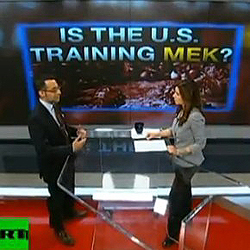
Congress can’t even make up its mind regarding Iran’s Mek.

The haphazard designations of terrorism bring back feelings from the Bush era “War or Terror” where designations were key in the cowboy ‘with us or against us’ mentality.

I am also uncomfortable with the fact the U.S. military has been guilty of many of the sub-clauses defining terrorist activity. We have assassinated foreign citizens, financed foreign militias, and used overwhelming force against legitimate targets even when they are nestled within civilian populations.

Many of these acts (certainly not all) might be legal, but playing politics with simple definitions like “terrorist activity” just increases the ugly feeling that the U.S. creates the rules and then applies them selectively.

I would be interested the hear anyone’s thoughts comparing Boko Haram’s eligibility for the terrorist label with a group like the National Movement for the Liberation of Azawad in Mali. I think there is a substantive difference – do you?

The End of the Gacaca Era

The End of the Gacaca Era

By Conor Godfrey
Earlier this month the last of the Rwandan Gacaca (‘Lawn’) courts closed down.

These communal tribunals, chaired by a council of elders in each community, have processed over 100,000 cases pertaining to the Rwandan genocide.

Since 2001, almost all of the civilian cases have been heard in Gacaca courts, while the International Criminal Tribunal for Rwanda has dealt with abuses committed by the military and other high-ranking officials.

The closure of this judicial chapter has prompted a number of retrospectives from supporters and detractors alike.

If you are unfamiliar with the Gacaca system, read the first two pages of this report for a very evocative depiction of a typical proceeding.

Imagine 9 village leaders elected for their ‘moral character’ arrayed in the village square.

A proposed genocidaire is then marched in front of the elders, with the entire community looking on.

The perpetrator confesses to one or several acts of violence, and then the elders query the crowd to see if anyone else has any other charges to bring against the accused.

After the community has weighed in, the elders determine the punishment and the matter is closed.

These courts were empowered to level sentences of up to life in prison.

My “made in America” mind immediately jumps to all the possible ways that this arrangement could go wrong, but the more I think about it, the less confident I feel condemning the Gacaca system.

Sure- the opportunities for local corruption are huge.

Witness intimidation and other forms of extra-judicial pressure, along with highly variable sentencing, probably led to many miscarriages of justice.

Read this Human Rights Watch report for a really negative view of the whole affair.

And yes, I think it is a rather horrid idea to deal with sexual violence in such a public manner.

However – how else could a country process hundreds of thousands of victims and hundreds of thousands of perpetrators?

Also, as flawed as this process might have been, the public airing of accusations seems to have had a cathartic effect on Rwandan society.

This largely laudatory article points specifically to the fact that many relatives were able to learn where their relatives were buried—a long festering obstacle to reconciliation.

When Americans use the word justice in an international context they really mean western justice.

Western countries also financially underwrite many of the international community’s judicial institutions, thus further entrenching one form of justice as the international norm.

However, that particular system’s focus on free will, individual responsibility and retribution jive poorly with communal conflicts and systemic abuse of any particular group. (Just think of how poorly the U.S. justice system has dealt with racial issues over the last century.)

The truth and reconciliation model allows more people to participate, lends itself to resolving communal conflicts as opposed to punishing aberrant individuals, and, on a more mundane level, is financially and logistically feasible in a country with hundreds of thousands of cases and very limited legal resources

Gacaca courts were far from perfect, but I am glad that 130,000 ex-combatants are no longer rotting in jail waiting for a trial, and hundreds of thousands of victims have been able to yell their accusations out in public.

Does Your State Have Your Back?

Does Your State Have Your Back?

By Conor Godfrey
This poetic essay by Nigerian professor Pius Adesanmi helped me consider the nature of the citizenship I enjoy.

I may rail against certain U.S. policies and politicians, but I know that Uncle Sam has my back abroad.

If I get hurt, arrested, detained illegally, kidnapped, or otherwise physically or legally incapacitated, my blue passport means that someone somewhere is going to do something about it.

(I am however very sympathetic to the argument that not all citizens are equal in terms of state services.)

Nigerian Professor Adesanmi tells his Canadian students that he has “never experienced the psychological comfort of a citizenship considered sacred and inviolable by a state.”

He continues, “ I have never in my life gone to bed with the psychological comfort of knowing that a state has got my back.”

He uses the Yoruba expression “second calabash” to describe how the elite views the citizenry; the expression connotes someone or something of little import, an after thought.

The most recent and vivid manifestations of this are the U.S. and Nigeria’s respective responses to having nationals kidnapped by Somali pirates.

The U.S. exerted tremendous military muscle to rescue one man – Captain Phillips.

Somali pirates held Nigerian hostages on the other hand for 302 days before releasing them to make room for hostages from countries that would actually pay.

In the professor’s words, “The Somalians broke the number one rule of international hostage taking – the life of your hostage must mean something to a particular state – because they believed that anybody in the rulership of Nigeria was even remotely interested in the lives of Nigerian citizens.”

This is harsh stuff.

Obviously military resources might play a larger role than respect for citizenship in determining these outcomes, but symbolically, the images are still potent.

I don’t know if the majority of Nigeria’s 160 million people are second “calabashes” or not, but his argument was convincing in one other respect – Nigerians are treated horribly all over the diaspora, especially in other African countries.

Negative Nigerian stereotyping was rife in every country I ever visited in Africa, some of it laced with simple envy toward a larger and in some respects more successful neighbor.

Nigerians face legal discrimination abroad, and are often targeted by police and security services.

Are Nigerians treated this way abroad because their own state treats them similarly? Because perpetrators know that no one is going to stick up for Nigerian diaspora communities? Maybe.

Recently, South Africa improperly deported over 100 Nigerians on the unfounded suspicion that their Yellow Fever vaccination certificates were fake.

The Nigerian elite reacted with uncharacteristic outrage at this incident, and South Africa was forced to apologize. The South Africans seemed humbled and surprised by the reaction from Abuja. This proves prove the professors point, offered through an adapted proverb – “If you carry piss in your calabash, so will your neighbors when you lend it to them.”

Similiar Social Circles

Similiar Social Circles

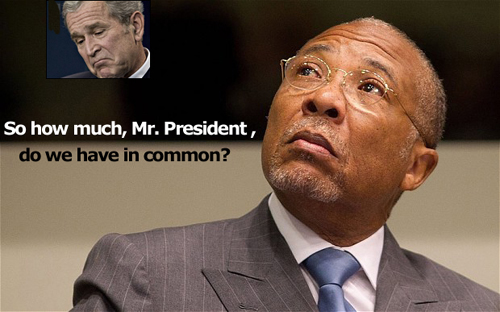
Charles Taylor’s demand that the World Court try George Bush is neither hair-brained or facetious and demonstrates the growing globalization of justice.

Shortly after Liberia’s former strong-man was sentenced by the World Court yesterday to 80 years for “crimes against humanity” he remarked to the press:

“President Bush… ordered torture and admitted to doing so. Torture is a crime against humanity. The United States has refused to prosecute him. Is he above the law?”

Well, the answer of course is, yes.

The World Court is playing increasingly pivotal roles in African justice, and thereby, African politics. Taylor was the strong-man now found responsible for the long blood diamond and blood resource war that devastated much of West Africa in the 1990s. His apprehension and prosecution in The Hague was fundamental to West Africa’s current fragile peace and stability.

Right now the Court is negotiating conducting a similar prosecution against Seif al-Islam Gadhafi, the son of Moammar. Seif is being held by a remote militia group in the south of the desert country, and they refuse to surrender him to current Libyan authorities. But they might just surrender him to The Hague.

Also right now, the Court is trying four prominent Kenyans – two of whom may become presidential candidates. Remarkably, the four are willingly traveling back and forth to The Hague for their trial, although there is wide speculation that as soon as proceedings become threatening to them, their schedules might just become too tied up for further international travel.

So it is really not just banana republic hyperbole regarding Bush. (Important to note, of course, that America is one of the minority of countries in the world that doesn’t recognize the World Court.)

Both Bush and Cheney have canceled multiple trips abroad in the last few years for fear of global prosecution. So even if we don’t recognize this new global justice, it does impact us.

Bush first found his travel restricted on what seemed like an innocuous trip to Canada in October, 2009. While speaking in Calgary, Canada, a warrant for his arrest was issued, but higher courts vacated the warrant allowing him to leave.

Bush then laid low for a couple years before trying, again, in October, 2011. He returned to Vancouver in the company of Bill Clinton. Once again the warrant was issued, and this time he snuck out of Canada by the skin of his teeth. An unusual “higher intervention” stayed the British Columbia’s court action hours before he left.

Bush has made no trips since.

But it was in neutral-grounded, ideologically-bereft Switzerland where both Bush and Cheney faced the most serious possibility of actual arrest. Both canceled previously announced visits when it became apparent authorities would actually apprehend them.

Cheney’s last cancellation was only two months ago, once again testing the presumed friendship if obsequiousness of our nearest neighbor and dearest ally, Canada. The mounting evidence of Cheney’s involvement in torture may have breached the threshold of “higher authorities” power in Canada to prevent his apprehension.

The growing evidence against Bush and Cheney specifically with regards to Guantanamo torture, as well as torture abroad during the Iraq war may not rise to the level of slaughter that Charles Taylor conducted in Sierra Leone.

But this isn’t a body counting analysis. Some actions like torture are no less wrong once than a thousand times. Taylor’s ordered massacres of tens of thousands may indeed be more horrible than Bush and Cheney’s torturing a hundred terrorists. And within that perspective the World Court has sentenced Taylor to 80 years, one of the greatest sentences ever levied by the Court.

So perhaps George Bush should be sentenced to 10 and Cheney to 20. Or something like that.

The point is that the world is developing a sense of global justice around a few top human rights’ issues like torture and innocent massacre about which there is little debate. Africa is taking the lead using the World Court, thereby contributing in a fundamental way to defining exactly what justice means in our increasingly compacted world community.

Whereas we, in America, risk global conflict by berating China for its poor stewardship of human rights, while our former leaders tiptoe across the world careful not to breach the lines of decency. It would be terribly embarrassing were Bush or Cheney arrested for torture, wouldn’t it?

Great Power. Greater Hypocrisy.

Hola Hollande! Following Africa?

Hola Hollande! Following Africa?

Africans are generally pleased with Sarkozy’s defeat by Hollande. To them it suggests that right-wing western policies are on the decline. Virtually all of free Africa is to the left of most western countries.

Africa’s incredible economic growth, now an astounding 2-3 times the west, is likely to remain 1 or 2 points higher than world growth for the foreseeable future, making it among the best areas in the world to invest.

But the growth comes not from the austerity that the Sarkozy-Merkel alliance has thrust on Europe with disastrous consequences, but rather from aggressive infrastructure development and stimulus. Once working the economies were polished up with modest tax increases that nonetheless reduced corporate taxes while redistributing tax burdens onto the wealthy.

This is not a westerner’s right-hand cup of tea.

And this is hardly “socialist.” The widely respected conservative business quarterly, McKinsey, was among the first to notice Africa’s working formula for economic success:

McKinsey acknowledges that the resource revolution mostly spurned by China in Africa, with new technologies that dig deeper and probe further, account for nearly a third of Africa’s growth. And this is what westerners constantly highlight: Africa’s newly rich commodity markets.

But the other two-thirds is twice as important! And according to that McKinsey report, is linked to social policies that include “government action to end armed conflicts… trimming foreign debt…shrinking budget deficits… and privatizing state-owned industries.”

This was accomplished initially by additional government spending and debt, stimulus. The cash for this stimulus came mostly from China. As the recession pulled China back from its high investment in Africa, governments turned to luxury items, in particular cars, for increased taxes. Even as free trade agreements were being negotiated, new tariffs were smacked on imported alcohol and cigarettes, for example.

The result was an increased tax base, even as middle class individuals felt taxes go down and growth continued right through the west’s recession.

This all began more than a decade ago when Africa was sucking up aid like a dry sponge. I remember the forlorn remarks in those days regarding Africa’s “black hole.” But it was precisely this added spending in a time of no growth that ultimately produced the economic powerhouse Africa seems to be, today. Growth, unlike Sarkozy and Merkel (and Romney and Paul) claim, comes not from austerity but from stimulus.

Everything always seems to begin with economics, but sooner or later social ramifications are inevitable. Sarkozy like Romney is an anti-immigrationist, so to speak. And France has no fewer immigration problems than America. For generations France welcomed Africans from its former colonies with wide abandon. But in the last decade exacerbated by the recession immigrants have become the same whipping boys they are now in the U.S.

In 2007 Sarkozy dropped a nuclear bombshell during a speech in Dakar, the capital of one of France’s former most important colonies, Senegal. He was arrogant, patronizing and insulting, and it marked the start of his anti-immigration policies.

“There’s talk that Hollande will give a rebuttal to Sarkozy’s infamous Dakar speech of 2007.” writes an influential African blogger in Paris, but “the essential point is that Sarkozy is gone.”

Social ramifications will take longer to measure. But Hollande has already called Merkel to aggressively advise her of his public’s serious message: stimulus not austerity.

It’s the Africa way! Perhaps Hollande could make a call to Obama, now? Would Bernanke take the call?

Rally Round the Rig, Boys!

Rally Round the Rig, Boys!

Chen Guangcheng overshadows a great diplomatic partnership between the U.S. and China succeeding right now in Sudan.

Yesterday in coordinated diplomacy that worked faster than a ping pong match, the U.S. moved a resolution through the United Nations Security Council that would impose harsh sanctions of both the North and South Sudan if they don’t meet certain goals in two weeks. With Chinese support.

Then China walked the resolution over to the African Union and asked them to deliver it as a reminder of a much older resolution passed by the African Union: North Sudan’s leader is under indictment from the World Court of the United Nations and since refuses to recognize the world body.

Then minutes later (and this is through a wizardry of time zones) the North “agreed in principle” with the mandates in the UN resolution.

This is no ordinary thing.

I’ve written several times in just the past week about the growing catastrophe in the Sudan as a poorly demarcated border between north and south that runs right through the oil fields erupted in war.

For one thing the U.S. – whose interests in South Sudan have been popularized as a George Clooney star movie — backed off as lead negotiator to let China figure it out better, and China did. The U.S. would never have found the time, the interest, or the politics to transport the idea through what it considers a weak and often corruptible African Union.

Many wince at the notion that diplomacy is so practical: It’s all about oil. We especially in America like to believe that goodness is simply an elongation of god, and that we pounded Iraq and Afghanistan and liberated Kuwait and got tangled up in Iran for any number of reasons except oil.

But remember it was that burrowing wolf hound Henry Kissinger who made mince meat of morality and elevated national “self-interest” above the Ten Commandments. And the criminal Richard Nixon was praised yesterday by Hillary Clinton for his overtures to China 40 years ago.

It’s called the Real World.

Yes, Chen should be given asylum in the U.S. Yes, China should reverse policies restricting human rights. Yes, the U.S. should stop lying about its motivations for wars in deserts where the population densities approach that of the arctic circle and day time highs outperform Roundup. And yes, the two should continue to work for harmony in the world.

Get the damn oil flowing in the Sudan, OK? Peace follows.

Partnership for Peace & Oil

Partnership for Peace & Oil

The time has come for China and the U.S. to become allies to stop the war in The Sudan and get oil pumping, again.

The U.S. must immediately nominate China as mediator in the North/South Sudan conflict with wide powers to demarcate borders. Yes it’s agonizingly obvious it’s all about oil, but China unlike the west has never pretended otherwise.

There is now a movement in Congress to implement this as a resolution urging the State Department to do exactly this. Tomorrow Hillary is in China. Unfortunately a Chinese dissident is dominating the issues, so this may not be the moment. But a moment we need.

Yesterday a Dutch journalist confirmed that very nearly all-out war had begun along the border areas. The North declared a State of Emergency which in Bashir-speak is a declaration of war.

This war was started by The South, the dandy of the west, and recently independent from the North. But in typical colonial style, the freedom the west engineered for the south from the north is incomplete and unworkable.

Throughout the last several centuries of western war, colonization then independence, the net effect of the west’s efforts have been to create weak and corruptible states with immature political systems. The recent Arab Spring and Twevolution is rectifying this for much of Africa, but it’s taken more than a half century.

Global events move too fast today to wait 50 years for the Sudans to become friends. China, the U.S. and the west need the oil sooner.

The Director of the World Peace Foundation, Alex de Waal, spelled it out brilliantly in a lecture to the Royal African Society in London as a simple two-step process which is laughingly obvious:

(1) Stop the fighting; and

(2) Adjudicate the borders, which are the oil fields.

But it was de Waal’s eloquent explanation that unlike so many other past conflicts these two imperatives are relatively easy and within reach of the world community.

He explained that there are plenty of UN and African Union troops on the group in South Sudan to stop the fighting and police a cease-fire. It would take minimal resolutions from both organizations to effect this policy. It could happen, tomorrow.

And I’m supplying the implementation of the second imperative: China.

Even as the conflict unfolds, the president of the South was in China accepting an $8 billion loan. And China is about the last friend on earth of the North.

The only obstacle to the above, really, is America. Obama has 100 green berets and support within a few hundred miles of the conflict zone, a rather poignant statement. But current Obama policy isn’t bad. The problem is the lingering militarism of America’s last 40 years.

The president Bushs’ singular expert on Africa, Jedaya Frazer, (who I praise by the way for her handling of the 2007 Kenyan turbulence) essentially argued recently to the Council on Foreign Relations that the North should be bombed out of existence.

Frazer has become the intellectual mouthpiece for the Right Wing. What she says is either what they believe or will. It’s a dangerous sign that once again polarized politics will wreck this otherwise slam dunk solution.

Frazer’s Bush’ pre-Obama militarism to be applied to every conflict in the world had lasting effects on many of our allies. Britain, for example, follows America’s lead on foreign policy and shifts less nimbly than we do ourselves.

But it’s time to bury the ideological hatchet. The west cannot afford another major war in the world any more than China can lose a drop of oil.

I see a real partnership, here.

Bipartisan Balderdash in Africa

Bipartisan Balderdash in Africa

We in America can’t agree to increase taxes for better education or health care, but we can all agree to pay an extra ten million or two to obsess about a fallen Africa criminal.

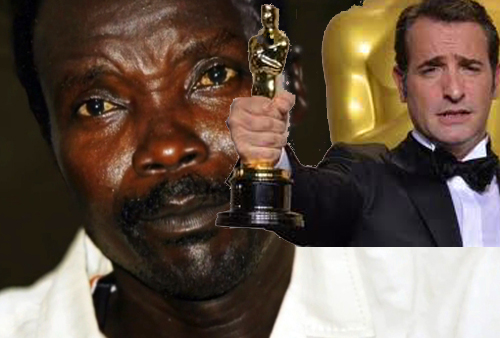
The absolute farce with Invisible Children reached the otherwise empty halls of Congress this week. The viral YouTube video based on much false information, laced with syrupy emotive gimmicks, and which caused riots of disapproval in the country in which it was all supposed to have happened, brought America’s otherwise vicious opponents together in a marvelous Spring Love Fest.

Blood enemies Sen. John Kerry (D-Ma) and Johnny Isakson R-Ga) held hands before the camera and announced new measures to increase the bounty on criminals in Africa while Dept. Asst. Secty. Amanda Dory applauded herself, her country, her State Department and the world for having “significantly degraded” Joseph Kony’s murderous and barbarous crusades against humanity.

The man is probably dead.

They can’t find him.

“It’s a very challenging terrain in which to find a small number of needles in a haystack,” Dory said. She Kony is now in an “evasion and survival mode.” And then she delighted in explaining how Obama’s 100 special forces were pursuing the criminal through “through hanging vines” and “crocodile-infested rivers.”

I just can’t believe this. I can’t believe the 100 million saps who watched the Invisible Children’s video and the good percentage of them who then complained to their elected officials about this fantasy.

But I can believe the response by our elected leaders. They can’t pass a budget, but by god they’re going to send the calvary out after the bad guy, and what better place to pursue a figment of their imagination than the crocodile-invested jungles of deepest, darkest, dimmest Africa.

The power of fiction.

Click the video below to see Ugandans’ attempt to respond to all this nonsense. What the Ugandans want us to know is that the legacy of Kony, not Kony, is the problem. They need Sen Kerry’s bounty money to rehabilitate children, distribute grain seeds, provide counseling.

They above all know we don’t need 100 special forces at a half million dollars or more daily to pursue a man who might be dead, and if he isn’t, is long gone from the scene.

Correction, as I get rather emotional about this. Kony’s dwindling maniacs who probably number around a 100 is a horrible, brutal criminal gang that rivals the 1930s Chicago mob. With or without Kony, whether he’s a live or not, the left over gang has found an occupation that provided they can continue to buy bullets and machetes will continue some blood letting.

And just the thought of that continues even greater terror. I don’t mean to suggest anything Obama or a Green Beret wants to do to reduce the 100 to 90 to 50 to 10 isn’t a good idea. I’m just saying that in terms of the use of available resources, American money, I think the Ugandans have a better idea.

Watch below.

Breakup Brokers need China

Breakup Brokers need China

Only China can stop the Sudanese war. This is the first great test of its diplomatic strength and savvy in Africa.

Last week South Sudan restarted a generation-old war with its former northern master, Sudan, by invading an oil field on the common border which remains disputed territory.

Five days later the South retreated having been whipped to smithereens by the North, and the North then began aerial bombardments of the South which continue today.

South Sudan’s invasion of the disputed oil field at Heglig was the height of abject stupidity. The young country, dandy of the west and George Clooney, is revealing a personality its supporters hadn’t expected: a militant immaturity.

What on earth led the idiots in the South to think they could whip the North, which for a generation had clobbered them from 500 miles away?!

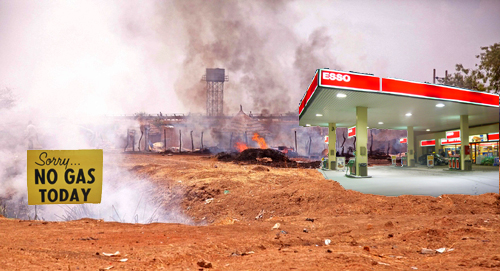
According to a Reuters report today petrol pumps were running low last week in the South and the idiots in Juba decided they had to come up with an excuse to get more oil.

This was likely because the South is running out of foreign currency, a failing of its own fiscal management combined with the international community having not lived up to its donor obligations, including the United States.

But instead the South decided to use PoliWarSpeak and claimed it was because the oil fields on the 20% of the two territories which remain in dispute were being mismanaged or pilfered by the North. Clearly the only option left was to invade and get slaughtered.

The huge swath of rich oil territory which remains in dispute between the two countries is a festering wound of an incomplete breakup, governed essentially by international oil companies. But it was nonetheless producing oil.

And both countries were receiving some revenue, although drastically less than they could if the areas weren’t in dispute. Now oil production is stopped. Dead bodies litter the oil fields.

The western powers led by the United States brokered the breakup, then turned quiescent way too soon. The South has lost all faith in its original supporters.

So the President of the South went hat in hand to China two days ago.

China needs oil more than any other single political entity in the world, and it has warm relations with the North, unlike the western powers which are remembered mostly for sending missiles onto northern pharmacies under Clinton and removing the cash cow from the barn.

So it’s China’s move, and the poor giant is generally not wont to direct politics from afar, preferring a status quo in situ as the perfect state of life.

If it wants oil, it’s got to broker peace. Paradoxical historical imperative, eh?

Trouble in Paradise

Trouble in Paradise

After 4-5 years of impressive political progress throughout the continent, dark clouds form above Africa. The last two days in Kenya haven’t changed my predictions for a peaceful future, but they are worrisome.

I still believe that next year’s March 4 Kenyan election will pass into history as one of the most impressive maturations ever of a young African society into a peaceful world. There has been so much work in Kenya these last five years on a new constitution and public policy that literally tens of thousands (if not hundreds of thousands) of Kenyan citizens have all been deeply and individually vested.

But last week the ugly anemone of ethnicity waved its poisonous tentacles, again. And yesterday as the police tried to stop what they believed was a ratcheting up of ethnic violence their overly violent reaction veered into newly unconstitutional territory that almost perforce thrusts the leading presidential candidate into a death match with his adversary.

Nothing in African politics is simple. You’ve got to be a fan of Shakespeare to be motivated to mine the details for a real understanding.

But after you work through the puzzle, the picture is always the same: ethnic conflict.

Political turbulence and actual coups in Mali and Guinea-Bissau, following potentially as violent events that cooled down in Mauritania and Senegal, are equally complex to what is playing out now in Kenya. But personally I think the stakes in Kenya are much higher.

Kenya’s 2007 political violence set the stage for the rest of Africa’s so-called “spring” or “awakening.” Not just the social mores, the actual software used to organize the rallies in Tahrir Square was written and first used in Kenya in 2007. It’s why I call all this rapid, mostly positive political change in Africa “twevolution” (twitter + revolution).

If Kenya can emerge from this transition new and beautiful, it’s a model for the rest of Africa.

In all the troubled cases in Africa, Kenya in particular, the various ethnic groups are linked to radically different social theories: Raila Odinga, the current prime minister and leading presidential candidate, is a bigger government socialist. His main opponent in public polling, Uhuru Kenyatta, is a smaller government capitalist.

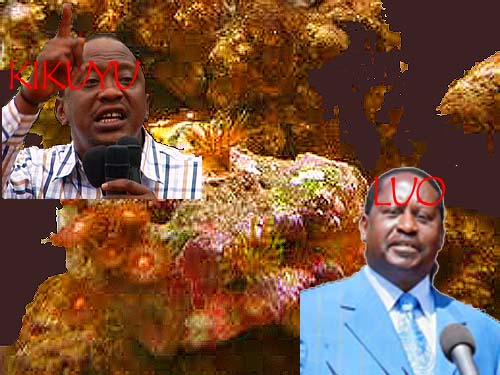
Odinga is Luo. Kenyatta is Kikuyu. That ethnic divide has plagued Kenya since colonial days, and in the same way the Hutus and Watutsis are divided in Rwanda. Raila’s father, Kenya’s first Vice-President, was jailed and tortured by Uhuru’s father, Kenya’s first President.

Ethnic divides around the world throughout history are all the same. Over long periods of time they become wrapped in different religions and political ideologies – which become the tools of their debate in a modern context – but it is the hate the Hatfields have for the McCoys which drives violence.

Less than 20 miles from Nairobi political rallies began several weeks ago, ostensibly for one or another candidate. Several of these were not strictly ethnic, they really were multi-ethnic but highly politically charged. Most were for Raila Odinga. He is the leading candidate and very widely respected throughout the country. He probably commands three-quarters or more of the support of educated Kenyans.

So there was nothing immediately suspicious that some of these rallies were held in a place that 20 years ago was not the multi-ethnic suburb of Nairobi it is, today. It was the heart of Kikuyuland, the home of Jomo Kenyatta, the favorite Kikuyu of the British colonial powers and Kenya’s first dictatorial if beneficent “president for life.”

So on Tuesday when the opposition announced it was going to stage a counter rally in the same place, alarms went off in the public psyche from the desert to the sea.

For one thing the demonstration was announced by a mafia leader, Maina Njenga, who barely escaped jail earlier this year. Njenga is a rabid criminal who is widely considered to have had a major part in the 2007 violence and its lingering aftermaths.

What makes matters more complex is that Uhuru Kenyatta is on trial in The Hague for instigating the violence in 2007.

Even the fact I can say that, “he’s on trial in The Hague,” is absolutely remarkable if unbelievable. Kenyatta and three others have so far submitted to the International Criminal Court’s indictments against them. They are the first accused in the history of the World Court to voluntarily travel back and forth to The Netherlands for a trial that could imprison them for most of their remaining lives.

Any presumptive notion of their public goodness, though, likely belies a much more clever strategy. If Kenyatta actually becomes a candidate (he hasn’t, yet), it would be absurd to think he would continue to succomb to jurisprudence in The Netherlands. Then, what?

The Tuesday gathering that was stopped violently by police was scheduled to have been attended by a number of leaders of several different ethnic groups. It was certainly mostly Kikuyu, but not entirely, and that “not entirely” is what gave it legitimacy.

But the police didn’t see it that way and so banned the meeting, which of course fueled the fire. Tear gas and then ultimately live ammunition were used to stop the rally.

Odinga immediately reacted with indignation, taking the high road. He denounced the police and he has the powers to fire the police leaders if he so chooses.

“Kenyans were yesterday (Wednesday) treated to a spectacle that they thought had been banished from their lives with their new Constitution,” Odinga said in his statement.

“The sight of police officers putting up roadblocks on a major thoroughfare and repeatedly firing rounds of tear gas at hundreds of perfectly peaceful people caused intense alarm,” he added.

Good. Even at his own peril, Odinga is defending the constitution.

Now let’s hope enough other Kenyans do the same. I believe they will.

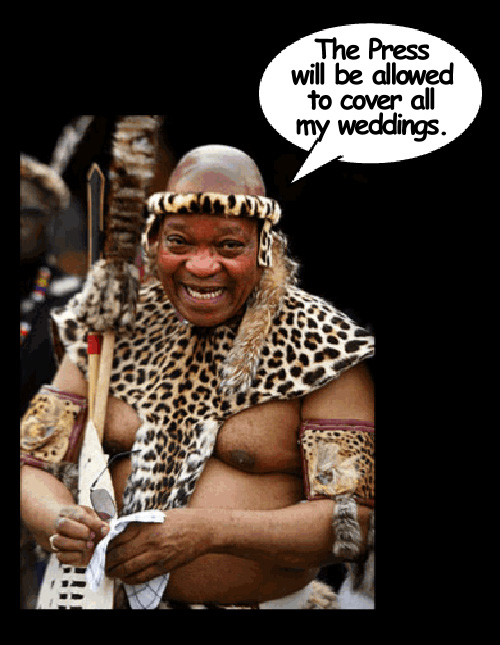
Zulu Kingman Zuma

Zulu Kingman Zuma

More wives and less freedom is the trend in South Africa as President Zuma marries for a fourth time and a draconian government secrecy law moves through the parliaments. There is a chilling connection.

The press is all abuzz with Jacob Zuma’s marriage this coming weekend to a prominent businesswoman with whom he has a 3-year old child. Zuma is 70 and Bongi Ngema-Zuma is 25 years his junior, as are his other wives. He is reported to have more than 20 children.

Zuma’s fun and games with traditional Zulu culture don’t mean much in themselves. He does receive about twice the amount of “presidential spouse allowances” that his predecessors in the presidency took, but technically there is no official position in South Africa – as in the United States, for example – for a “first wife.”

His romantic dalliance is mostly stuff for cartoons. South African family law allows for only one union, but recognizes traditional marriages as well which through private business contracts can then achieve legal equivalency with federal marriage law. It’s not known if Ngema-Zuma or any of his other wives has a contract with him.

I think it fair to say that the vast majority of contemporary Africans think Zuma’s behavior mocks rather than celebrates traditional Zulu customs. “It is ludicrous that things such as this still happen in a world that is changing!” writes Nigerian blogger, Yomi Akinsola.

But I see something more onerous in Zuma’s antics, and I think it fair to call them “antics.” Stripped of Zulu life ways, Zuma’s behavior is not so dissimilar to legions of dominating personalities with multiple sexual partners around the world. The difference is that his is totally above board and validated in current South African society.

Who cares? Lots of people who have tracked the decline of polygamy as societies evolve and prosper. Polygamy as the highlighted folkway Zuma has made it is socially regressive.

And I think intentionally so and it leads to a much more powerful issue. South Africa is slipping back into an apartheid mentality.

The ANC freedom fighters who have controlled the country since 1993, Mandela excepted, sort of anebriated themselves in traditional lifestyles that they – and their parents and grandparents – never engaged in. A sort of mixture of Bronx cheering the old Boers and celebrating majority democracy, flaunting the presumptive apartheid theory that native South Africans were too primitive to run a modern society.

But these guys are having trouble accepting modern democratic principles. They passed a draconian secrecy law last year that is awaiting endorsement by South Africa’s provinces. While not a slam dunk, it’s likely to become law, and then likely to face aggressive court challenges as unconstitutional.

When it becomes law South Africa will attain the unique position of a so-called democratic state controlling the press as much as China does. And there’s a reason that these so-called traditionalist ANC leaders want this.

The press has ferreted out the most scandalous and criminal acts of these old guys imaginable. The list exceeds simply the largess of government no-bid contracts dished out to their families and supporters, to government policies based on the belief that AIDS is not a virus and bribing judges involved in their criminal court cases.

Playing Zulu king is a tactical diversion from these more important issues that vies for column inches in South Africa’s dynamic media and so tends to lessen somewhat the anticipation of horror that passing this legislation naturally evokes.

But even more important than that, regressive legislation identical to apartheid culture would be a hard move over current South African culture … unless “everything old and traditional” suddenly appears good. Sort of mix up the bad of the past with the good of the past and just take the past.

I really don’t think this is a stretch. It’s intellectually offensive when detailed like this, but when streamed through the every day life of South Africa – which by the way is pretty good at the moment – it’s the bitter pill in the coated honey.

Intentional? I don’t think Zuma sat down with his personal coach and asked him how he should behave personally to pass the draconian press law. But with time as his cultural critics tended to line up with his political critics it became rather self-evident.

The Zulu King holds the power of life and death over all his subjects. Zuma’s not quite there, yet, but he’s trying.

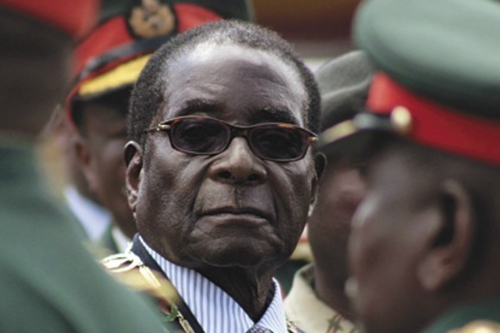
The Evil King is [almost] Dead!

The Evil King is [almost] Dead!

Zimbabwe tyrant Robert Mugabe is near death in Singapore; but what will follow?

Mugabe has been “near death” before, but the reports today are substantial despite an official Zimbabwean government statement castigating foreign journalists for writing “hogwash.”

An important cabinet meeting in Harare last week was surprisingly cut off, his private jet flew to Singapore with literally all his family accompanying him. Sources in Iran, one of his lone allies, yesterday claimed he had turned over power to his equally iniquitous defense minister, Emmerson Mnangagwa.

And yesterday London’s Daily Mail reported from a variety of sources that he was “close to death.”

The web of immorality and culpability for the most torturous human rights abuses, and the bankrupting of a once outstanding African society is a complex and messy one in Zimbabwe. Mugabe’s death will not necessarily mean anything at all changes.

At least not at once. As many as a thousand officials live as millionaires under his protection and that of his close advisers. They are not likely to give this up for power in a country despised by most of the world. Mnangagwa is the likely spider to replace Mugabe over this matrix. And to the extent he can keep the money flowing down the right threads, Zimbabwe will remain an awful place.

As many as a dozen of the thousands of Zimbabwean officials on the take are also likely to be indicted by The World Court in The Hague for crimes against humanity, including of special note his anointed successor, Mnangagwa, who for years controlled the country’s intelligence services.

This inner circle of evil men will likely concede their internal bickering for a government that will be strong and lasting enough to protect them all. A sort of rally round the torture chamber, boys.

So don’t buy your tickets to VicFalls just yet. But all that being said, the “Evil Queen is Dead” syndrome can’t be discounted. This week in a bold move not seen for several years, protestors in Harare dared to stage a demonstration, and spokesmen for opposition movements began to appear on the world media.

Note: the opposition spokesman who appears in the above video carries a similar name to the anointed successor but is not the same person.

Ultimately the day will come when the old man’s regime falls completely. I do wonder what will fill the vacuum. Morgan Tsvangirai, a once fiery and charismatic opposition leader who escaped being crushed to death by agreeing to a fake position of “Prime Minister” in the current government has been totally coopted.

Possibly he could regain some of the old spirit and shepherd the country into a new era, but the few sane Zimbabweans left capable of rectifying this miserable country will no longer accept him as a long-term leader.

Opposition – little as it is right now – is coalescing around the idea of a new constitution, as nascent rebellions are wont to do. But even that seems wimpy, given that Mugabe’s constitution isn’t really so bad. It’s just that he doesn’t follow it… at will.

So “The Evil King” might be dying. But there’s no white king backstage, and the aftermath does not look as rosy as Oz.

The Last Countdown Begins

The Last Countdown Begins

The cycle closes: 11 months from today we’ll know if Kenya has been reborn strong, free and welcoming; or if this potential jewel of Africa has fissured irreparably.

March 4, 2013, is the date set for the next Kenyan election. It will be the first national election since December, 2007, when widespread mayhem caused a near revolution with more than 1200 people killed and as many as a quarter million refugees, many who remain unsettled, today.

I believe the sun will rise on Monday, March 6, over a peaceful, prosperous Kenya. The social and physical construction that is so widespread throughout the country, especially its remarkably near-perfect constitution, bodes optimism.

But Kenya isn’t out of the woods, yet. Yesterday, an actual minister in the Kenyan government was arrested for “inciting violence.”

He was protesting the demolition of slum housing in his constituency to make way for Nairobi’s airport expansion. The controversy is part and parcel to the ideological arguments that exploded in the December, 2007, elections: essentially, rich versus poor.

And the named instigators of the December, 2007, violence – which include prominent members of the current government – are scheduled for trial in The Hague almost at exactly the same time as the national election.

Irony of ironies — unbelievable if you don’t follow Kenyan politics — two of the accused say they will be contestants in the presidential election! If they do stand for election, and if their candidacy gains momentum, they may balk the Hague proceedings and all hell could turn loose in Kenya.

As a businessman and trustee of foreigners’ vacations, I won’t send people back to Kenya until the election is over and judged successful and peaceful. But this isn’t just because of significant conundrums in Kenya’s politics. It’s also because of the Kenyan invasion of Somali.

That has led to multiple tourist incidents, including kidnapings and killings, perpetrated by Somali’s al-Shabaab in retaliation for the military action, and by plain old criminals unleashed by redeployment of Kenya’s small security apparatus to the Somali border out of wild and wooly areas like Samburu and Shaba.

The Kenyan invasion went better than I predicted. I admitted as much in this blog. Not everyone concurs, but even those who portend troubled times for Kenya as a result of the continuing occupation can’t ignore many positive facts happening on the ground right now.

Societies often prosper during their wars, but tourism will not. Vacations are after all, vacations; few have principal motivations based on politics. R&R does not include enhanced security at your beach resort.

But if the annoying al-Shabaab attacks in Nairobi and elsewhere cease as the situation in Somalia improves, and if the March 4 election comes off well, then it will be time to return to Kenya.

I expect both. But beware, Kenya. This could be your last chance. There might not be another countdown to peace and prosperity.