Sheik Aside

Sheik Aside

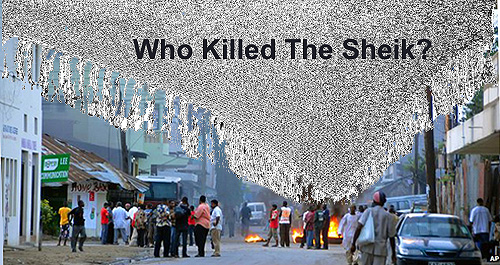
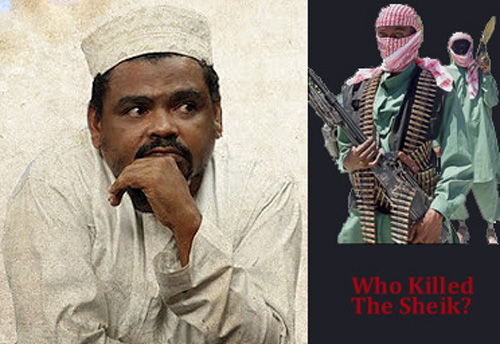
Tuesday’s drive-by killing of the jihadist cleric Aboud Rogo in Kenya marks a small if hopeful turning point in the troubled East African coast.

Real evidence will never emerge so we are left to speculation, but blogs, rumors and common sense seem to converge this time: the murder was specifically intended to stoke religious and ethnic violence.

It did at first, but only at first, and the city did not even fire up like Watts in 1965 or Tottenham only a year ago.

This doesn’t mean that the embers remaining aren’t nuclear. But to me it seems a clear indication that Kenya’s invasion of Somalia, the global “War Against Terror,” and Christian/Islamic confrontation has peaked. In a weak and uncertain way, logic tells me things are going better.

Sheik Rogo was a fiery and provocative cleric, openly recruiting young Muslims in his Mombasa madrassa for al-Shabaab. For years he’s been associated with a number of jihadist attacks in East Africa, including the bombing of the American embassy and several high profile attacks on the coast, including the terrible bombing of an Israeli resort.

He was killed Tuesday in a carefully planned and masterful drive-by attack. The attack car which has not been found, the lack of any leads by police, the particular place the shooting actually began, and the high caliber bullets found at the site and not easily available in Kenya, all point to a very carefully organized murder.

The sheik has been confined to the Mombasa area virtually since 2002 when he surrendered his passport to Kenyan authorities. He remained charged with numerous counts of terrorism, and his legal battles in Kenya are legendary.

But he has never actually been brought to trial, and Kenya has resisted extraditing him to the U.S. for instance, for fear such action would provoke Mombasa’s radicals. So instead Kenya did what a western country can’t discipline itself to do: nothing.

African patience was winning out. The sheik’s prominence peaked. His support was waning. In the most virulent political battle on the coast going on right now, a move by a new but powerful Islamic political party to secede from Kenya, the sheik had no involvement. In fact, it appeared he’d been excluded.

Western detractors tried to pin the assassination on America or the Kenyan police, claiming each was no longer tolerant of the protracted legal battles against the sheik. I seriously doubt this. Obama’s War on Terror is going just fine, in part because people like Rogo have been marginalized. Better to have him contained in Mombasa than Guantanamo.

It’s much more likely that the dying powers in Somalia saw the sheik as a sacrificial lamb. Recruits from his madrassa to al-Shabaab are less important, now that al-Shabaab is being routed.

I think the sheik was killed by a sheik. Disquieting, yes, but when the fighting turns inwards the battlefield grows smaller.

Terrifying Silence in Kenya

Terrifying Silence in Kenya

An awful restraint hangs like a veil over Kenyan journalism today, as civil disturbances continue in Mombasa and Wajir.

In neither area is the trouble as widespread as some international media have reported: the heavily read International Business Times reported “absolute chaos in the city” of Mombasa, which is absolutely untrue.

In fact the disturbances are pretty confined to a four-block area. And in Wajir, the curfew comes as a preventative measure, not in response to growing turmoil.

Nevertheless, I’m concerned at how the mainstream Kenyan press is suppressing coverage. The Mombasa disturbances are as a result of a radical Muslim cleric, on bail but not allowed to leave Kenya for terrorism related charges, being killed by unknown gunmen Monday.

In Wajir two different ethnic groups are in the middle of a spat of revenge killings.

These are two extraordinarily different types of social unrest. The Mombasa trouble is linked to the global war against Islamist terrorism, of which Kenya is an enthusiastic supporter having invaded Somali last October.

The Wajir trouble is ethnic, sparked by dwindling resources.

But my concern is that rather than deal with it robustly as Kenyans normally do, the intellectual center in Nairobi is simply not discussing it.

The city’s major newspaper is providing coverage, but it’s off page one, and the Daily Nation’s battalion of excellent bloggers has ignored both issues completely. But the city’s energetic radio stations, which also provide online coverage, said nothing about Mombasa, today.

The situation in Mombasa is much more serious than Wajir, because of its impact on tourism. Mombasa is where a dozen charter flights weekly arrive with European tourists for Kenya’s world-famous white sand beaches. Half of all Kenyan tourists never see an animal; they’re beach bums.

This will undoubtedly be seriously effected, just as bookings for the important end of the year holiday season become finalized.

And I would be one of those travel consultants who would be telling his clients to go elsewhere this year.

So that’s the likely explanation for the press’ restraint. But it’s not worthy of Kenya’s strong history of truth-seeking and long legacies of critical discussion and self-introspection.

If Kenya falls into denial to deal with its problems, it will surely fail. There are extremely important questions to be explored about the current travails in Wajir and Mombasa.

The most obvious is who killed Sheik Aboud Rogo? It was a typical 1930’s Chicago gangster drive-by assassination. The sheik was speeding in a car taking his wife to a doctor’s appointment when gunmen sped up behind him and sprayed the car, killing him.

One could immediately speculate it was America, trying for months to get the Sheik out of Kenya for trial elsewhere. But it is much more likely a completely internal crime, a Kenyan battle that involves the new and complex politics of leading up to the March elections.

A near internecine battle between the front-runner in Kenya’s presidential race, Raila Odinga, and an arch rival, Miguna Miguna has stirred ethnic and religious unrest throughout the country as Miguna goes campaigning. Miguna has interjected Islam/Christian – Terrorism/Anti-Terrorism into the national debate which disarms many in Kenya’s political elite.

It’s a touchy issue to be sure, but Kenyans have never shied away from dealing with the big issues head on.

Until now.

Renewing [or not] The Strongman

Renewing [or not] The Strongman

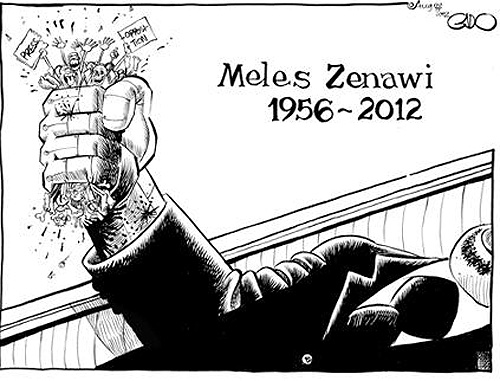
Last week’s death (unusually of natural causes) of Ethiopia’s strongman Meles Zenawi is an unique opportunity for America to reflect on its impact in East Africa, if not the whole of the developing world.

Meles was one of the most ruthless dictators in the world. He was also heavily supported (argue, “propped up”) by the Obama administration. This contradiction was justified because Meles was also instrumental in the War on Terror.

America’s Wars on Communism and Terror and Drugs have governed our policies in Africa for more than a century. The question, now, is whether we are mature enough of a society to throw off these archaic shackles usually described as “self-interest.”

    Cycle One: The War on Communism

In 1960-1962 during the presidency of John Kennedy democratic movements throughout the Congo were quashed and its leaders assassinated paving the way for the continent’s most famous and longest serving tyrant, Mobutu Sese Seko.

    Cycle Two: End of The Cold War

In 1993-95 during the presidency of Bill Clinton democratic movements in the Congo and Rwanda were abandoned to chaos paving the way for seemingly interminable war and ethnic conflict.

At the time the rationale for abandoning Africa to dictators and mayhem was that there was nothing consequential to America in Africa at the time worth fighting for. The Cold War was over

    Cycle Three: The War on Terror

Today, 2010-2012, under the presidency of Barak Obama strongman regimes in Rwanda, Uganda and Ethiopia have received huge amounts of military and development aid paving the way for ruthless dictatorial regimes violating all sorts of human rights.

Today’s rationale is that the War on Terror is going pretty well, and especially well in The Horn of Africa.

Lesser acknowledged but well known is the American Right’s involvement in all three of these cycles. Until the current cycle it was principally from church missions and was admittedly less significant. But during this latest cycle, the involvement of DC’s Church Street and other evangelical groups most prominently in Uganda has been well reported.

The contradictions are explosive:

The most incredible one is that while President Obama has inched his own country away from homophobia quite successfully, his administration piles enormous support on the Ugandan regime which is still trying to pass legislation that will execute gays for being gay and imprison nongays for not revealing that someone is gay.

And there are many more: no military involvement in Libya or Syria, but already a brigade of green berets in Uganda and the CAR; and tax to death or forbid U.S. corporations from extracting coltan and other precious metals from the troubled DRC, but laden Rwanda with extra development aid to build local industries that do just that.

This is not a Right or Left affair, although it seems to always be initiated by Democrats and then massively supported by Republicans that follow. And it is not a Left versus Right affair, either. The fact that Democrats in power are essentially promoting the same thing as evangelic Christians funding movements in African backrooms is clear this is not a Left verus Right affair. It’s a power thing.

It’s ends justify the means. It’s Kissinger’s self-interest dogma. It’s we do what works best for us, irrespective of morals, ethics or human rights. It’s been the way of the world for centuries.

And so we endure Cycle Three: Museveni in Uganda, Kagame in Rwanda and whoever will be Meles’ successor in Ethiopia are all ruthless dictators. Together with American drones, the War on Terror proceeds just hunky-dory.

All hail the African Strongman.

Pop Goes the Weasel

Pop Goes the Weasel

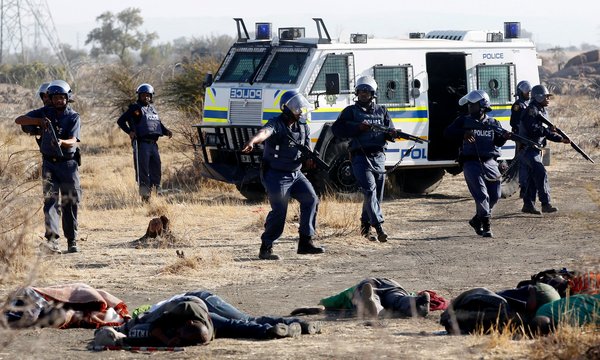
The horrible killing of South African miners yesterday is less news than analysis of not just South Africa’s political legacy, but the whole wide world’s.

Police conceded that at least 34 admittedly aggressive strikers at a platinum mine in the north of the country were killed when things got out of control. The number is probably higher.

While the protest was ostensibly over wages, the weeks leading to the outburst were more of a battle between two labor organizations, the official union for the mine and a renegade self-styled militant union that is passionately communist.

I use that term with caution but deliberately. Communism in a truer and less autocratic way than adopted by the Soviet Union, for example, has been a significant part of South African politics for more than a century. Its leaders would be considered moderate by the style of historic European communism, more like American communists in the 1920s.

But lately South Africa – and the world – have taken significant right turns, becoming more conservative socially and fiscally. And in many places in the world, such as the U.S. under Bush and a number of European nations under current conservative leadership, it’s been downright dictatorial.

It never seems that way at the time. When America invaded Iraq, my own liberal heroes were behind the invasion. But with time history is revealing what a small number of men, motivated not by facts but ideology, actually made the decision.

It was affirmed by a greater segment of society, but the die had been cast. Society as a whole had neither the guts or power to oppose it. Even our “progressive leaders,” or in the case of South Africa, union leaders appear to capitulate to the rightist dogma.

In South Africa, the mining weasel popped. And it wasn’t pretty Thursday.

Earlier this year South Africa almost nationalized the mines. That, too, is a perennial topic it seems in South Africa, but this time they got closer than ever to doing it, and in fact the renegades have expressly said they hope this violence will make the country revisit the issue.

Nationalization would be a thunderclap in the world. Even as a diehard liberal I think it would be far too serious a jolt. This is because South Africa’s reservoir of gold and other precious minerals is too large. In one fell swoop it would alter the way energy is consumed in the world. Moreover, in South Africa it would empower a currently corrupt political leadership that could be spun out of control with their dizzying new responsibilities.

But nationalization was a real topic because blue collar workers are being shafted, just as they are in the United States, and as they are most of all in places like China. It’s a very hard argument to make, because workers are better off, today, in South Africa and China than they were two decades ago.

At the expense, I might add, of American workers.

But without the long analysis needed (read Chris Hayes’ Twilight of the Elites) the point is not so much that workers are being shafted, but that the capitalistic balloon is busting.

The right side of the balloon is the rich owners radically pulling their salaries and dividends even more to the right. But it can’t be pulled that way without pulling the left side an equal distance “shafting” the poor.

We guys in the middle just tread water and wait for the pop.

South African mine workers aren’t, really, too off-center compared to where they were a decade ago, or compared to many other workers in South Africa, today. But from their central location they see their families over there in the poor left being vastly distanced by the owners and stakeholders getting fabulously rich by the platinum they are pulling out with their hands.

New York Times reporter, Lydia Polgreen, nailed it: “The shooting left a field strewed with bodies and a deepening fault line between the governing African National Congress and a nation that, 18 years after the end of apartheid, is increasingly impatient with deep poverty, rampant unemployment and yawning inequality.”

This is ripe stuff for an explosion. Particularly in a society where workers – especially miners – have a history of activism. It isn’t just that they want higher wages, they’ve actually seen their own country’s politics radically moved by their activism.

The violent confrontation, of course, does not make South Africa’s poor richer. But it did make the rich more poor.

So this isn’t the end of it, folks. Where unions still have some power, like South Africa, there’s going to be more and more labor unrest. Relatively rich countries like South Africa will either ultimately nationalize giant industries like mining, or the global capitalistic gyroscope will reset somehow, reversing the trend of the last half century. The richer will become poorer and the poor will become richer.

I vote for the latter. It will be much less violent.

Knight of Power

Knight of Power

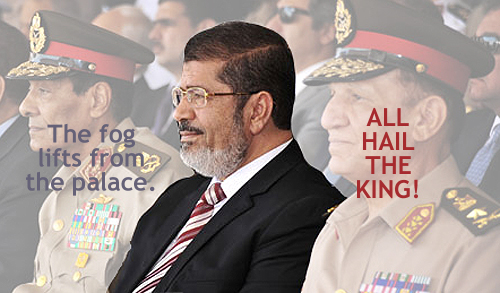
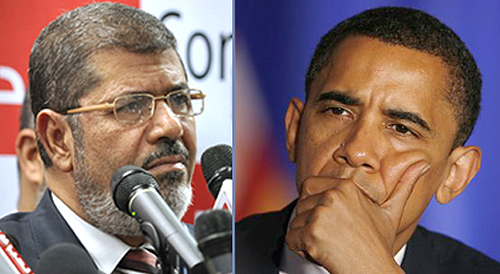
Yesterday, Egypt crowned a new prince. There is nothing for us as secular outsiders to fear of a powerfully Islamic ruler but a lot for the subjects of this new Egyptian strongman to fear.

After yesterday’s palace shakeup Mohamed Morsi is Egypt’s most powerful man. Yesterday, he emasculated the two most powerful military men who have ruled Egypt since Mubarak stepped down. He replaced them with young Islamists in the military clearly now beholden to him. And he has eliminated at least for the time being any legislature that could challenge him.

What’s left?

Time. The progressives who started the revolution long ago fizzled out in the face of overwhelming Islamic democratic sentiment among voters. Rather than force issues of womens’ rights, habeus corpus, free speech and such, they chose to wait and see how oppressive Morsi and team would be to their progressive ideas.

So far there’s been no chance to rate him; the Big Boys have been fighting for the crown. We don’t know what jewels may have spilled out. But one thing is clear: Morsi is scaring to death Egyptian democrats.

Now that the crown is clearly upon Morsi’s head the world may soon know how draconian or — on the completely other hand — how Islamically permissive Morsi will be. Analysts have been delving into Morsi’s past for a clue.

His many years as a college professor in California give progressives hope. Yet I see a remarkable similarity to the young Muammar Gaddafi who carefully and systematically removed opponents as he patiently came to power in 1966-69.

Morsi, however, is no Gaddafi. The Libyan leader for all his narcissism and greed was for all practical purposes a moderate Islamist perhaps because he was a permissive and pretty immoral individual. Morsi is anything but: his Islamic purity is almost terrifyingly strong.

Morsi’s final blow to his opposition was to effectively sack the military strongman Hussein Tantawi yesterday. He did this by manipulating an effective military coup led by the younger, Islamist officers clearly allied to him. And he did it on the 23rd day of Ramadan, which the Koran labels as the “Night of Power.”

The respected Egyptian analyst, Issandr El Amrani, said immediately afterwards, “It is hard to believe [this] purely coincidental.”

Each night of Ramadan Morsi breaks his own highly publicized fast by a 5-minute radio broadcast that answers what are supposedly random call-in questions by everyday Egyptians. But the highly scripted and professionally edited segments are anything but random.

What progressive Egyptians fear most is that two popular ideologies, democracy and Islam, are in critical ways diametrically opposed. But the questions Morsi allows – quite contrary to the flattering NPR report cited above — are about how many bakeries exist and which potholes will be repaired first.

There is no mention of Egypt’s escalating crime, crumbling military in the troubled Sinai, increasing power outages, escalating unemployment or self-imploding stock exchange.

What seems clear to me is that these big, critical issues have been intentionally ignored while the fog slowly lifted from the palace.

Well, the sky is crystal clear today. There is one man in power. He controls the military. And despite earlier popular attempts to recreate a legislature, he has said that Parliament will not reconvene. Since Egypt’s judiciary is essentially a military creation, this means today that Morsi is president, lawmaker and judge.

Some kings are good. Some kings are bad.

Poopooing Philanthropy

Poopooing Philanthropy

Bill Gates’ “Reinvent the Toilet Fair” in Seattle next week illustrates perfectly the limits of philanthropy and why real generosity must come from governments not individual rich people.

The Gates’ Foundation work to prevent and cure malaria is outstanding. The battle against the disease is perfect for individual philanthropy for two reasons. But most philanthropy, if not the vast majority promulgated by private foundations and individuals is wasteful and destructive.

The first reason the Gates’ Foundation work in malaria is valuable is that global agencies and governments from the developed world dare not tread on the mechanisms of global capitalism. Developing a vaccine, or a super small X-ray machine, or the Mars’ Curiosity, takes enormous capital. It’s the reason cancer drugs are so expensive. The drug company must recover not only the huge initial investment for a successful drug but it must also cover the huge losses of failed drugs.

Governments are capable of making these investments to be sure as are multinational corporations, but developed world interest in eradicating malaria in Africa doesn’t reach the threshold of importance developed world society does place, for example, in Mars’ Curiosity. Whether this is right or wrong isn’t my point. It’s just the case that developed world priorities do not extend to malaria eradication in the developing world.

Last year U.S. aid for developing world disease control and prevention – concentrated principally to fight tuberculosis, AIDS and malaria – was $503 million (from an HHS agency budget of $30.5 billion.) Gates alone has spent nearly four times this amount just on malaria research and prevention.

Because that is how much it takes to develop a malaria vaccine. The disease is among the most complex diseases on earth, a legendary evolutionary battle between man and his greatest nemesis, disease.

Neither will the developed world’s capitalist markets undertake a project to eradicate malaria. A malaria vaccine would not generate enough financial return to warrant the investment. Once malaria was controlled in the developed world — just as with polio more recently — the developed world will not provide the additional capital investment from either governments or markets for control in the less affluent developing world.

So it’s a perfect project for a rich man.

The second important reason malaria control is perfect for western philanthropy is because it’s so political. Malaria was eradicated in the developed world by DDT. The developed world now believes that DDT poses too great an environmental hazard to be used, now.

Whether this is rank fiscal hypocrisy or a cold prioritization of self-interest I’m not certain, but the door to quick eradication of malaria in the developing world, using the only historical method we know, has been slammed shut. DDT manufacturing is mostly controlled by the developed world, but more importantly, the threat of sanctions against developing countries that would dare to use it is real.

But most philanthropy cannot be justified by these two reasons. The vast majority of philanthropy funds projects that societies are fully capable of funding themselves. By that I mean not just through government services supported by taxes but more so by the albeit much smaller capitalist markets in the developing world.

They include almost everything from education to sanitation to energy development. When a philanthropist steps into areas like these it’s usually because of a failing in society’s planning or an oversight by market developers. To that extent pointing these out becomes the greatest justification for philanthropy.

But once pointed out philanthropists should move on and the implementation should be left to society. Society, of course, can’t do everything so it picks and chooses its priorities and that process of choosing is the very essence of a society. It should not be usurped by individuals. The best example is education. There’s no doubt that education is fundamental to almost all other development. Everyone agrees with this.

The components of successful education may be innumerable. There will always be a myriad of ways to better society’s educational efforts. Philanthropy has a major role in discovering society’s failings and to discovering innovative components otherwise overlooked by society.

But once discovered it should be left to that society to implement. Implementing it outside of normal societal mechanisms (such as through individual philanthropy) distorts any social plan and usurps the right of the majority.

Community sewage disposal is as fundamental to organized communities as education is to a workable society as a whole. A multitude of techniques are known, the engineering is fully developed, none of the essential technology is protected by copyright, and it’s fair even for a laymen to conclude there aren’t many alternatives to waste disposal except disposing waste.

So the Gates Foundation’s $42 million grants to “reinvent the toilet” are absurd. Like our own current infatuation with ethanol from corn in gasoline, more energy is being used by the so-called innovation than if we just didn’t do it at all.

The reason Nairobi’s sanitation is so underdeveloped is not because Kenya lacks either the resources or technology to lay appropriate sewers in the city’s ground, but because in part the country’s resources are being used instead to fund a war in Somalia.

I’m not arguing whether the war in Somalia is right or wrong, I’m arguing that Kenya should not assume its expense. The turmoil in Somalia was not caused by Kenya. It was caused by the developed world.

So the problem in poor sanitation in Nairobi is that the world as a whole — including Kenya itself — hasn’t owned up to its social obligations even though it’s fully capable of doing so. And this dynamic is propped up by western philanthropy.

If the Gates’ Foundation is successful in creating a “better toilet” for the developing world it could not possibly be more efficient than community sewage works. But it might indeed discover a device that can produce sanitation for a given few who have the wealth to enjoy it, and then delay even further extending sanitation services to the greater society at large.

In a nutshell it divides the rich from the poor, and it accelerates the dividing.

Frankly, I think even Gates’ officials and associates realize this. A blog widely disseminated in the developed world yesterday by Gates associate Diane Scott was rife with self-deprecation and embarrassment and proves what foolishness is going on. I can just imagine my friends in Nairobi reading this and chuckling madly.

Utopia is not in the cards, I know. But philanthropy in the main delays most utopian visions. Gates should be commended for so much of his work, but this – and most philanthropy in general – is just not right.
The Real Terror Within

The Real Terror Within

Terror in travel is a wonderful way for us guides to get our clients into the car on time, and in Africa, snakes seems to be the trick!

In East Africa where I guide there are 42 venomous snakes and every single one is a killer! But now a wonderful assistant professor of biology at Whitman College threatens to diminish my terror trick, but who knows, maybe make snakes a tourist attraction?

Kate Jackson has built the only online database of the snakes of Western and Central Africa. Together with the book completed with venom expert Jean-Philippe Chippaux, it is one of the best field guide toolkits I’ve seen for Africa.

While snakes command the attention of most of us by playing on our abject fear of a miserable death, Jackson’s motivations are considerably more noble. To begin with she is a living example that even the so-called “deadliest” snakes are less so than thought. She herself, has survived cobra and other snake bites.

Snake venom, like honey bee or yellow jacket stings, have a huge variant effect in humans. Generally much more powerful than an insect bite, and always after an agonizing hospitalization, venomous snake bites immediately treated correctly generally don’t kill the victim.

But Jackson’s motivation for exploring the Congo goes way beyond the terror of a snake: “I went to the Congo to try and protect the amphibians and reptiles from the mining.” And in so doing, of course, she will protect humans and their virgin wilderness from mining as well.

The lust for Africa’s natural resources is becoming desperate. (See my blog, yesterday, about Zambian mine workers murdering their Chinese manager.)

In the “green issue” recently published by Whitman’s college online magazine Edward Weinman reported that the Wildlife Conservation Society (WCS) invited Jackson to The Congo to explore a huge area of the west near the Gabon border scheduled for massive mining.

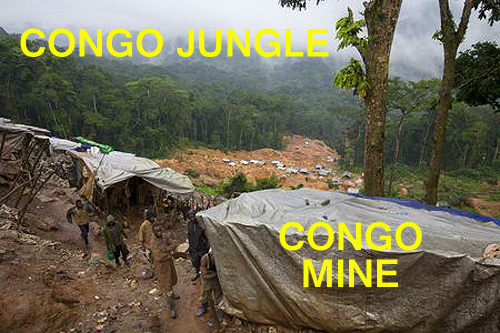
This is something so hard for me to imagine. I was there nearly 20 years ago, looking for lowland gorillas. It was one of the hardest, most extensive expeditions I’ve ever undertaken, and the beauty and intensity of the forest was forever memorable. The notion that this area has so transformed, or will be so transformed, that it will be raped of this pristine character is mind-boggling.

Two mining consortiums, mostly British Zanaga, and Swiss Xtrata have formed a monopoly to mine this area. Both have directors closely linked to the world’s biggest mining company, Rio Tinto. This is clearly considered one of Africa’s most potential areas for mining, and the list of ore goes well beyond coal to diamonds and rare earths.

If left unchecked this mining consortium will wipe away some of the most virgin and pristine areas left in Africa.

Jackson’s work for the WCS is clever and very political. Many mining projects in Africa get their start from the World Bank. They don’t need to, because the mining consortium like the one described above can command capital larger than the Bank can for a given project.

But the Bank overseas so much more than just mineral extraction in developing countries like The Congo. It works closely with the IMF and other UN agencies for local development projects that specific industry companies have no interest in … like hospitals and schools and dams and sustainable agricultural and water projects.

The WCS has a long and successful history of delicately going into a given area designated for mining, doing what we would call here at home an EPA study, and then convincing the World Bank and IMF that wholescale development would be an environmental catastrophe.

The pressure that the Bank can then effect on the country, and its partnership with many other agencies necessary in that country’s development, can force the mining consortiums to compromise in vital ways.

In this particular case, Jackson explains, “We documented the myriad species thriving in this virgin wilderness, not as a means to stop all development, but to instead bargain for a land swap.”

It sounds like Jackson’s work, and those of other scientists, may be successful in protecting a huge area of the Congo from any future development whatever by designating it a national park, in return for a smaller piece given to the mining consortium.

The conflicts in Africa are often much more than just the wars you hear about, or the increasing effects of global warming. They are these more complex issues as well: the Congo will benefit enormously from the mining extraction. It’s hard to argue against this.

But with help from people like Jackson, we might simultaneously be able to preserve just a little bit more of natural Africa from the real terror confronting us: losing the wilderness.

Good News Somalia

Good News Somalia

Puntland is a part of northern Somalia which celebrated 14 years of stability and largely peace on August 1 with parades in the capital of Garowe.
Yesterday clan leaders from around Somalia adopted the first truly national constitution in 40 years. All we need now is an end to the global recession.

There is a lot of trouble in Africa right now, and a lot of it is in Somalia. While the 825 delegates prepared to adopt its historic first constitution in 40 years, two suicide bombers were “detonated” by security forces just outside the building in which the clan leaders were deliberating.

A respected Kenyan journalist quipped, “The Somalia constitutional conference ended with a bang!” His column was a very positive and very optimistic view of the situation in Somalia.

In fact, Onyango-Obbo suggested Somalia may be on a path to a representative democracy far superior to the majority of the soldiers in the African Union’s peace-keeping force in Mogadischu who come mostly from Ethiopia and Uganda:

“History is capricious and has a cynical sense of humour. If the constitution, referendum and subsequent election are pulled off, Somalia might have a freer election than either …Uganda or Ethiopia…”

Africa has a way of fooling us about its future, and Onyango-Obbo might be onto something although I think his characterization of a “cynical sense of humor” might just be plan old irony.

The Somali constitution is strictly Sharia-based, and of course that’s not going to go down well with America’s right. But get this. The constitution also allows abortion and bans female circumcision.

There is nothing specific in the Koran, or the Bible, which forbids either abortion or female circumcision. Clerics over the centuries, and the Catholic Church in particular, have added dogma to the original poetry. It is the interpretation not the literal text that is so contentious, today.

What the Somalis may have demonstrated is that you can take almost any ancient code of behavior and reduce it to is most basic moral principles and still create a modern, contemporary society.

So whether it is a Christian society or one based on Sharia law, it’s quite possible to arrive at similar governments in a modern society.

The reluctance to do this, by Al-Qaeda on the one hand or Christian evangelicals at home on the other, is what causes conflict and belies superficial morality as something usually much simpler like racism.

A peaceful and successful Somali nation has a long list of necessary predicates well beyond just stopping suicide bombers from killing legislators. The Kenyan army has yet to displace the pirate kings of Kismayo. There are nearly a million refugees living just outside the political borders in Kenya. And global warming couldn’t have a more dire effect on the people on planet earth than Somalia.

And this cauldron of political, social and even geological and meteorological turbulence seems these last few months to be spreading across much of the continent, after just a few years of such positive progress.

And that’s why I mention the need for the end of the global recession. Everything it seems in the world is economically based. When economies are improving, so do the politics and societies in general. In fact, with improving economies, strategies to deal with global warming emerge more easily.

So read Onyango-Obbo’s positive take on Somali. Cross your fingers for an European stimulus and re-elect Obama. There are a few other things to do, too.

But then in a few years, Somalia in the lead, Africa will turn better.

The Undemocratic Election

The Undemocratic Election

South Africa like the U.S. allows unlimited campaign financing but Kenya has moved to severely regulate it. Which democracy is likely to last?

These two democratic powerhouses both have progressive constitutions but differ radically on candidate funding. Kenya has yet to hold an election under its new constitution but South Africa is well along, yet I think it’s already clear that Kenya’s much greater regulations will lead to fairer outcomes.

South Africa and the U.S. have essentially unregulated candidate financing. Don’t be fooled by those who argue otherwise, because “essentially” is the formative adverb. There are filings and partial disclosures, but “essentially” a candidate can solicit and distribute unlimited amounts of cash to promote the campaign.

Kenya, on the other hand, is severely restricting such financing. In fact the regulations are so tight that there is public concern that the commissioners regulating the campaign could themselves become instruments of unfairness.

And that’s the current debate in Kenya. There is no debate about whether there should be stiff regulation. Everyone supports in principal rules for limiting campaign spending based on the population and individual earnings level of the electoral area.

Kenya also prohibits corporate financing of individual campaigns as well as severely limits how much a candidate himself can contribute to his own campaign.

It takes no rocket scientist to know why. Money buys votes.

I remember my grandfather in Chicago talking about the rigged elections for mayor. Once we even visited a bar where the alderman was buying drinks for potential voters and … passing out cash.

Later I remember living in Kenya where exactly the same thing happened: Local politicians in a bar buying drinks and votes.

Getting a free beer or pocketing some cash doesn’t in itself guarantee that voter will even go into the ballot box and then if he does tick off your name. So a bit of cleverness was required in those days long past, and it basically came as follows:

“What’s the other guy giving you?”

The answer was rarely “nothing” and more often was always “not enough.”

And that’s the hook in today’s world, too, whether it be South Africa, Kenya or the U.S. Of course there is never enough so long as more is possible. And as evidence that I can provide you with more, here’s a beer.

Or a promised tax cut. Or a promise of “deregulation” intended to mean more cash in your pocket. Ultimately a promise to make you richer, like those who are already rich buying you off.

South Africa after twenty years of new independence is feeling the effects of such unregulated financing. The country is far richer than Kenya and in that regards much like the U.S.

But one party has dominated South African government since Mandela became its first president, the ANC, and the cogent argument today is that money has made it that way.

U.S. election lawyer, Michael Lowry, describes precisely how unregulated financing in South Africa has led to the dominance of the ANC. And like the U.S. it’s more onerous than just the election of a single candidate:

Once unrestricted campaigns elect rich politicians, the dynamic quickly moves to the actual levers of power. In other words, only the rich begin to earn cabinet posts and even military positions.

Soon a single class – or party – is not just controlling the outcome of elections, they are controlling the society.

And democracy no longer exists.

Hot Migration Topic

Hot Migration Topic

Is it really such a burning issue: why are the wildebeest so late?

I’ve often experienced them crossing from Tanzania to Kenya even later, sometimes not until August. Normally, though, the herds cross the two river border that separates Tanzania from Kenya by mid- to late June, so we’re a month behind.

This year it’s stinging Kenya more than before.

Kenya’s tourism is reeling from terrorism and a rapidly inflating currency. So the few tourists coming to the Mara who are expressing disappointment is just another blow the Kenyans don’t need.

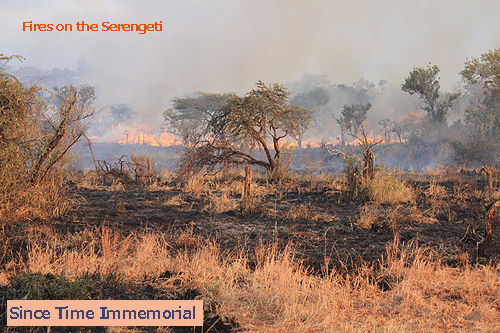
Looking anywhere for a reason their vacation has been diminished, there are a number of American tourists now blogging incorrectly that the reason the migration is late is because the Tanzanians are setting fires in the Serengeti which is disrupting the wildebeest from moving north.

And of course the general collection of end-of-the-world nuts have picked up this version of what’s happening.

They’re all wrong, but first let me explain where the less apocalyptic are coming from.

The wildebeest eat grass and nothing but grass. Their traditional migration patterns are based on where the grass grows when. It’s that simple. Historically the rain pattern traces a parabolic circle the north of which is Kenya’s Maasai Mara and the south of which is Tanzania’s Serengeti.

For more detail, click here.

The rainiest place in East Africa is Kenya’s Maasai Mara. When it’s dry everywhere else, it rains in the Mara, so the wildebeest go there. The Mara is higher and more rocky and has more acidic soil than in the Serengeti, and so the grass isn’t as nutritious. But at least it grows when it doesn’t grow in the Serengeti.

Separate from this rain dynamic that guides the migration is the age-old agricultural and wildlife management question about whether or not to burn grasses on a prairie.

A proponent of burning that I trust explains the necessity as the only way from keeping the prairie from turning into a forest. Most scientists agree with this explanation, but they also disagree that’s good. Most science suggests burning isn’t overall a good strategy for either agriculture (slash-and-burn) or wildlife management. In other words, it might be better to have a few more forests and a few less prairies.

The argument has been going on since Caesar.

Here’s a blogger that’s got it right.

Whichever side you choose, the fact all agree on is that the increased prairies in East Africa over the last half century is part of the reason that the wildebeest population has tripled. Another argument is over whether the current huge size of the wildebeest population is good or not, but certainly from a tourist point of view it is.

Both Kenya and Tanzania park rangers burn their grasslands. Come September and October when the rains return to parts of the Serengeti and the herds begin to leave Kenya, Kenyan rangers start furiously burning to delay their departure from there.

So both sides do it, and both sides argue they do it for scientific reasons, albeit there is a short-term benefit that does for a very short while delay the herds. Burning, as you may startle yourself from remembering 3rd grade science, produces water (moisture) which drops on the burned prairie and immediately sprouts new short grass even without rain.

Alas, a very tempting reason to stay and have another bite.

It was very unfortunate that an excellent Kenyan newspaper, Nairobi’s biggest, propagated the inaccurate story. It’s beneath the standard of the Daily Nation but even worse, suggesting the fires are being uniquely set as a blockage rather than just the normal half-century old grass burning strategy is totally irresponsible.

The greatest reason the herds are late is because the rains – like everywhere in the world – have been very unusual. I’m sitting in a place of a horrible drought. East Africa – northern Tanzania in particular – has had unusually heavy rains, and this has resulted in much more new late grass.

The migration isn’t so hard-wired that animals will leave a food source. Migrations worldwide are driven by food sources. We had an unusual warbler migration this year in the Midwest, because bugs – their food – appeared earlier than normal.

Burning is incidental to this, perhaps a short-term fix delay (a week, maybe two) but nothing more significant. Tourists who believe they can fine tune their “migration vacation” in periods of two-weeks are nuts.

Tanzanians blame Kenyans for everything wrong in Kenya, and Kenyans blame Tanzanians for everything wrong in Kenya. In this case there’s nothing wrong to begin with.

Except bad reporting and tourists who didn’t do their homework.

Clinton’s Congo Collapses

Clinton’s Congo Collapses

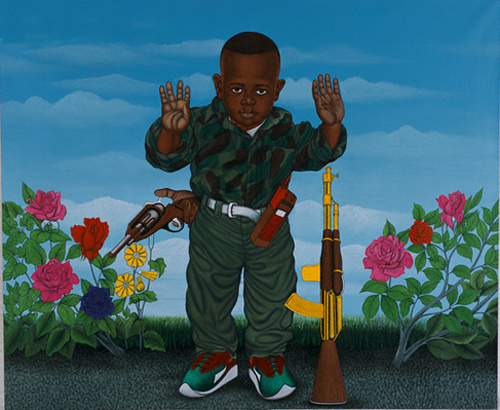
2004 Painting by Cheri Samba
The UN’s actions in eastern Congo to stop the escalating war might work for the moment, but they are useless down the line without an American pivot in Rwanda.

America was drawn into this mess because of the political weakness and inept statesmanship of Bill Clinton.

As time accelerates off those years Clinton comes into sharp focus as a politician par excellance but a pragmatic leader without vision. He road a wave of latent 1960s American aspirations that he was unable to fulfill domestically.

So when Blackhawk Down undid his lofty rhetoric about the global arena, he cowered like a dog who had wandered unintentionally into a mad neighbor’s yard. And he failed to recover quickly enough to stop the 1994 Rwandan Genocide.

Instead, a year later he and other equally timid western leaders began an extraordinarily expensive cleanup, which like BP in The Gulf was cleverly crafted as a great humanitarian accomplishment.

The big then hidden problem was that cleanup included the enthroning of Paul Kagame, the single greatest cause of the Congo flareup, today.

And because the American economy was growing gangbusters, technology was exploding with one grand surprise after another, and America was wallowing in the presumed glory of having won the Cold War, Clinton was capable of assuming greatness just for being around at the right time.

It was inevitable that his terrible neglect – specifically of Kagame’s own obvious vision for Tutsi domination of the region — would one day return to haunt us all … and that day is today in The Congo.

A significant UN Peacekeeping force has been successfully challenged by M23, a powerful warlord army, in Kivu Province in the eastern Congo, and today the local population is being displaced as if Katrina had descended onto middle earth.

The tinderbox will explode at any minute. The only half-rational functioning society in Kivu, the main town of Goma, is due to either fall or be wiped out and the UN sent running.

Yesterday, UN Secretary General Ban Ki-Moon called the leaders of The Congo and Rwanda, the two greatest arch adversaries on earth, to beg for peace. They won’t give it to him.

I’m not sure how to undo a generation of politics predicated on Clinton’s cowardice, but one thing is certain. The U.S. and Europe must stop the unchecked and often unaccounted for support of Rwanda’s merciless dictator, Paul Kagame.

Kagame is front and center in the conflict, a likely billionaire as a result of it, and a fanatic who believes that ethnic conflicts are irresolvable. He has jailed his opponents, likely assassinated them abroad, and struck terror through his population.

And he is funding the war in The Congo, with U.S. and European aid money.

But the U.S. and Europe are stuck trying to justify the past and simply can’t pivot out of their culpability. The U.S. and Europe promote policies of ethnic reconciliation that cost millions but go nowhere, and support Kagame for lack of any alternative because they were the ones that put him in power.

You know, it’s time to own up to our mistakes. We’ve got to step out of a history of governance entrenched in the notion that the past was always right.

America’s vision — Clinton’s plan — for reconstructed Rwanda isn’t working. It’s like culling deer. You might save the roses where you cull, but the problem only then gets worse on the periphery where culling didn’t occur.

The periphery of Kagame’s power is Kivu, the sore that festers and will soon burst. Kagame’s American vaccinations give him immunity so he can wade into the puss and extend his power westwards.

The conflict in the eastern Congo is so complex and daunting that a blogpost seems useless without deep background. Much of what I believe rests on personal experience and a formidable body of often conflicting intelligence and analysis. In fact, probably the only evident truth about The Congo is that its complexity is its undoing.

Study Jason Stearns: His book, Dancing in the Glory of Monsters, was published last year, and I have used above the Samba painting that tops his invaluable blog, Congo Siasa.

Recalibrate your support for Kagame, America. Clinton’s shame is old news.

Who’s the Most Advanced?

Who’s the Most Advanced?

It’s been nearly a month since the complete bonobo genome was published, and it’s absolutely astounding how American creationists dispute the science.

This is the last of the great apes to be sequenced and completes a body of data that can significantly increase our understanding of human evolution.

Bonobos live in central Africa, an endangered primate now proved no closer to humans than chimpanzees. This first great discovery contrasts with primatologists’ presumptions based on anatomy and to a lesser extent, behavior, that had held bonobos were the closest of the great apes to man.

Confirmed is that great apes — chimps, bonobos, orangutans, gorillas and man — are remarkably closely related. This was never in doubt, at least not by rational thinkers. So the excitement of the genome is the evidence now being dissected that will more exactly draw the evolutionary timeline of primate divergence, and the possibility that complete genomes can provide evidence for behaviorial evolution.

The initial theories are pretty exciting. They suggest that the divergence between the common ancestor of all existing primates, including man, was as early as 4½ million years ago. This confirms further that quite a few stars of early hominid development, including the earliest Australopithecines, were not our ancestors, but divergent dead-ends from even earlier common ancestors to our common primate extant ancestor.

And much more interesting information is on the way. Such as the importance of rivers as effective separators of hominid evolution. Or whether the most successful hominid behavior is either “Make Love, Not War” or “Make War, Not Love” as the eminent University of Wisconsin scientist, John Hawks, told the Los Angeles Times.

But the sad story in all of this is how warped America has tried to deny the findings. The leading idiocy is from the heavily funded Institute for Creation Research.

Their resident “scholar”, a Ph.D. of no significance, Jeffrey Tomkins, berated the Nature article and all the corresponding good reporting about it as “misrepresented.”

In what even to this humble laymen was just plain dumb, Tomkins focused on the genetic difference that was shown to exist between the existing great apes, then tried unsuccessfully to extrapolate the notion that they are therefore not of the same stock (have no common ancestor).

As has been the case for the last several decades, scientists mostly ignore this stuff. But I did find one scientist, Ricki Lewis, whose personal analysis of the Nature paper specifically debunks Tomkins.

And has also been the case for the last several decades, Tomkins’ scientific-sounding article was picked up by literally hundreds of religious journals, which then propagated even more blatant misrepresentation and poor analysis of the facts. You can’t exactly call it a lie, but it’s very close.

Do a Google search on Tomkins’ article, and you’ll be amazed with the endless number of mouthpieces – all American – for this nonsense. It’s truly depressing.

Facts and science, today, are being cast aside by this quirky segment of America, and it’s one thing simply to call them out and move on. But we’ve tried that. And while fortunately polling is on our side, and scientific facts like global warming and evolution are miserably slowly making their way into the normal fabric of American life, the outlanders are tenacious and vicious.

So while the actual number of creationists may be slowly reducing, those that remain are getting more and more powerful. They are “cleansing” school textbooks of science, for example, and packing it with their nonsense.

Belief in the simply untrue leads people into weird behaviors, not least of which is voting against their own self-interest. So rejoice that the completion of the great ape genome project gives us so much complete science about evolution that it will be even harder to dispute.

But beware the powers amassed to suppress it. And not just because of the denial of evolution, but for the integrity of all science in America.

Derecho Doom

Derecho Doom

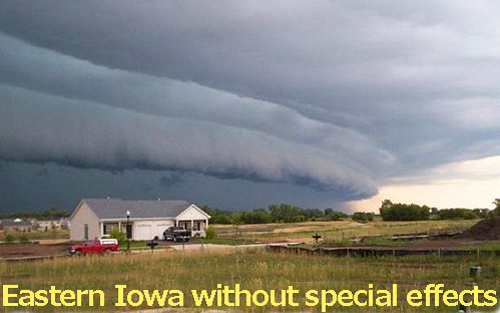
The heat, fire, floods and storms are not normal; we did not evolve to live in this. Finally it’s hitting us the way Africans have been clobbered for years.

Wake up! The Washington Post today had the courage to say it: This Is Global Warming.

The meekness with which we morphed “global warming” into “climate change” amazes me. Call a spade a spade! Kudus to the Post and everyone with the courage to speak the truth.

Our increased technology has shielded us from the suffering that undeveloped peoples have felt for decades. Natural disasters impact us less than undeveloped regions, for the obvious reasons that our shelters and rebuilding apparatus is so much better.

But maybe now the tens of thousands of disbelievers without a/c unable to watch the quarter finals at Wimbledon might now understand what the less fortunate in the world have been dealing with for decades.

Global Warming Causes Natural Disasters. Unlike increased levels of CO2 and the inevitable suffocation it might cause us in oh 200 years, earthquakes and landslides and derechos (what is a derecho?) are here and now.

Today in Sendai City, Japan, world leaders meet to figure out what to do about the increased level of natural disasters since 2000. It’s a fitting location because yesterday Japan restarted a nuclear reactor.

According to the UNDP, natural disasters since 2000 have killed more than a million people and affected over a quarter of the global population. And they’ve cost upwards of US$1 trillion.

Most of this suffering has been in Africa. And the UNDP is necessarily polite and unprovocative. The conference could not have been arranged if fingers pointed to those guilty, but there are those who are guilty:

(1) Carbon Emitters. Global warming is easily blamed for flooding: (ice melts). But melting leads to boiling, cracking and all sorts of other wanton destruction.

(2) Baby Makers. Mankind is growing faster than he’s learning to take care of himself. And yet we rile over China’s one-baby policy.

Africa has joined many prominent nations in trying hard to find remedies. Remarkably, the continent has cut its birth rate even while the developed world bellows it’s not enough. But when Africa points out how wasteful and dirty are the world’s principle carbon emitters, there is a deafening silence.

Africa and the developing world has suffered for a generation mostly because of nothing they’ve done or could have done. Global warming comes from development, from factories and cars and airplanes. It doesn’t come from subsistence farming.

Have you heard the TV guy say, “not in a generation”, “hottest on record”, “never before” more and more? It’s not a fluke, Joe. Hurricanes and sharks in Cape Cod. Snow storms in Mobile. It’s hotter than we can stand for very long. We’re using Spanish words to describe storms that alone can take down Twitter.

Maybe the blind eye is ready to open up.

Dipolar Biplomat

Dipolar Biplomat

Obama fires few, but he just fired our ambassador to Kenya, Scott Gration. Was it over the Mombasa warning last week?

The news is that Ambassador Gration “abruptly resigned.” But we all know what that means.

Several weeks ago, his boss, Kenya’s former ambassador Johnnie Carson, arrived to discuss the future of this high profile diplomat who has courted the Kenyan press, staged humiliating performances (such as when he carried a bag of U.S. donated grain off a cargo ship in Mombasa in defiance of a dock workers’ strike there), and fired more than a few salvos about Kenya’s parliament off command.

Most informed and educated Kenyans loved Gration and his “honest” style. Just take a minute to read the comments that followed Nairobi’s leading newspaper story about the resignation.

The problem is that these readers are so used to politicians who do nothing in the open, that Gration’s style was refreshing, and I suppose, encouraging. The problem is, dear Kenyan readers of the Daily Nation, it might also have been counterproductive.

What was so ironic about his tenure in Kenya was that it was the exact opposite of his previous assignment, as the U.S. special envoy to The Sudan. Then, he was widely criticized as being too soft. In fact it was widely reported the Kenyan job was a way of getting him out of area before the two-country election.

So this suggests someone who marches to his own tune. And you don’t get bin Laden or defeat al-Shabaab by marching to your own tune. It’s a team effort, and Gration may have been a one-man show.

He seemed perfect for Kenya. He was born in The Congo, grew up speaking Swahili, and could tunnel into Kenyan politics in a way few outsiders can.

The bomb blast last weekend in a bar in Mombasa which killed three people (no tourists) and which today seems to have all the hallmarks of an al-Shabaab terror event may have been the straw that broke the camel’s back.

The U.S. alert was pretty expansive, and remains in place today. It prohibits all American government travel to/from the Mombasa area through Sunday. It advises all Americans not to travel there.

Now that seems reasonable enough, doesn’t it? I mean after all a bomb went off.

Yes and no. Yes because a bomb went off. No because two other bombs went off in Africa last week with no American warning even to tourists:

* Abuja, Nigeria and also * Gari, Bauchi, Nigeria. Abuja is where the American embassy is located. And the U.S. has recently contributed to the development of tourism in Bauchi.

And no, because the U.S. has already warned everyone who’s listening not to go to local Kenyan bars. And Kenyans don’t listen to American travel warnings, and it’s not our job to instruct them, anyway.

(Oh, and there was also a bomb in San Francisco, possibly “ecoterrorist,” with no warning. Apologies for being flip, but there’s a point here.)

The U.S. public warnings on Nigeria as a whole and Kenya as a whole are about the same. And quite possibly Gration learned of the potential bombing in Mombasa while his counterpart in Nigeria learned nothing in advance of those bombings.

But the effect of the quick fire, high alert warning in Kenya has devastating consequences for its tourism and what exactly happened? Were one of the 40+ luxury tourist resorts bombed, or the airport bombed, or a main highway bombed, or bridge or port? No, a local bar was bombed. Exactly as has happened multiple times in Nairobi recently and last week in Gari.

This is the signature terror of Boko Horam and al-Shabaab. They’re after locals, not tourists. They’ve said often they don’t mind bumping off a few of those, too, but their targets are local.

Now that doesn’t mean that my company EWT will send anyone racing to Mombasa, quite on the contrary. Several times this week I discouraged inquiries about beach holidays in Kenya. But we aren’t discussing where you should go for your vacation. We’re discussing the appropriate diplomatic response to terror intelligence.

Kenya is actually doing a yeoman’s job against terrorism. As I’ve often written their invasion of Somali goes beyond impressive, almost capable of changing my world view about fighting terrorism. So far, God Willing, foreign visitors out of the fight zones have been untouched. Kenya’s cooperation with America has led to multiple terrorists leader eradicated or arrested.

So actually, in the War Against Terror, Kenya’s doing pretty well.

This doesn’t mean you should take a beach vacation in Kenya. But it is probably good enough for firing the man who jerks to warn his citizens about an event whose odds are won’t effect them.

Jack Daniels not Withstanding

Jack Daniels not Withstanding

So far, so good. The outstanding question about Egypt remains how extremely Islam doctrine will be woven into the new society. And we aren’t going to know that for a very long time.

When my wife guided a group of intrepid Americans to Egypt at the start of this year, she heard first hand presumptions from local Egyptians that tourism was incidental to most of their hopes and inspirations, especially to those held by the Muslim Brotherhood.

“Tourists will have to adapt or not come,” a pessimistic tour official told her, insisting that the new Egypt could choose to ban alcohol and inappropriate dress, two essentials of most tourists.

There are few national leaders whose surname is spelled so many different ways as Mohamed Morsi, the Muslim Brotherhood leader elected as Egypt’s first democratic president this weekend.

This is because few have bothered to translate it out of Arabic until yesterday, when his election was final. Arabic translations are transliterations. It will take a while for the English-speaking dominated world to agree on Morsi, Morsy or Mursi; Mohamed, Mohammed or Muhamed.

Perhaps, he’ll tell us what to do, and that’s been the problem until now. Senator Kerry has made two stealth visits to Egypt this year both times reportedly to talk to Morsi. The results of those meetings have been as unrevealing as the Brotherhood itself.

The Brotherhood has kept quiet counsel not just since the revolution but for the decades previously under Mubarak. They learned how to survive an oppressive regime by keeping quiet.

But there is little question what the most vocal of their supporters want – like the young student who spoke to my wife in January. They want a strict Islamist society, sharia law, abrogated treaties with Israel and Jordan and renewed ties with Iran.

But frankly I don’t think this is what Morsi wants. Extremists are not stealthy. The many decades that the Brotherhood matured under Mubarak tempered it. Morsi is a Ph.D scientist (engineering) who held a faculty position in the California State University system for three years. Two of his five children were born in California and are U.S. citizens.

He taught at Northridge in California, which to be sure is an area of extreme religions. So I don’t doubt his dedication to his own religion. And his veiled wife who has never appeared publicly with her husband allows herself to be characterized as “active in the Brotherhood.”

Well, Ann Romney is active in the Republican Party.

There are many of us good ole American liberals who believe the Israeli power grid needs radical redesign. Many liberals such as myself believe that Iran will change more quickly the more it’s left alone. And who among us will denounce campaigns to cleanse corruption?

If these are the issues that Americans most fear then we should fear Morsi. And if tourists are unwilling to save a bit of money by forfeiting evening wine, I wonder how awe struck the Karnak Temple would make them, anyway.

The methodical, unextreme way the Brotherhood has come to power in Egypt presages no quick, clear indication of their vision for a future Egypt. It reflects only their dogged struggle for power. But if Morsi’s cliched announcement that he is now the “president of all the peoples of Eypgt” is to be believed, I think the cruise ships on the Nile will be sold out in a couple years.

Jack Daniels not withstanding.

From the outside looking in we learn that democracy does not always achieve our preferences yet while hardly discounting our ideals. Now if we could only achieve that prescience from within.