Karibu Kidepo

Karibu Kidepo

kidepovalleyIt is dangerous, now, to visit Uganda. Dangerous for the tourist, and dangerous for those Ugandans who would have to serve the tourist.

A groundswell of travel professionals, media publications and not-for-profits is moving in the direction of an all-out boycott of Uganda tourism. It’s happening so fast that even nimble dictator Yoweri Museveni has been caught off guard.

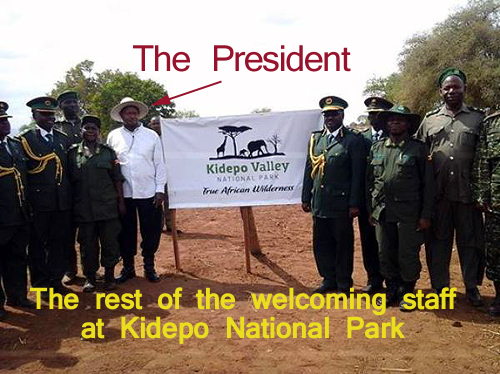
Yesterday he visited one of Uganda’s national parks, decimated recently by elephant poaching. Typical of a man under increasing siege, he lashed out at the “Turkanas of Kenya” and the “Toposas of South Sudan” for exterminating the reasons that tourists come to his country.

“Anybody who enters Uganda with a gun must be shot,” Museveni shouted. Later he issued a directive to the parks service and the military authorizing shoot-to-kill anyone suspected of poaching.

Obviously the elephant poaching problem is not confined to one country’s nationals or another. There are just as many reasons Ugandans would poach as Kenyans or South Sudanese. Museveni is feeling the diplomatic and traveler pinch beginning that could destroy his economy, but foreigners really have no choice, now, but not to visit Uganda.

Under Uganda’s new laws a casual reference to “gay” can technically put you behind bars.

Moreover if uttered in the presence of Ugandans, wittingly or not, those Ugandans are suddenly in a dangerously compromised situation: The law requires that they snitch on you, and if they don’t and it’s later presumed they could have, they too can be jailed.

Of course it remains to be seen how seriously these laws will be enforced, but based on the horrible rhetoric exchanged between Uganda and the west over the weekend, there’s every reason to fear the worst.

Simply put, vacation travelers don’t need the worry that they might say something that would put them or their Ugandan help staff in jail.

A safari is an exciting and intense experience, and rarely are tourists not in the presence of local Ugandans. The driver/guide is an Ugandan. The staff in the lodges is Ugandan, and that means meal service and bellhops among many others.

Rangers and other park authorities are Ugandan.

Shop owners, roadside hawkers, other local tourists are all Ugandans.

Under the law if your conversation mentions LGBT, homosexuality or gayness in any form or in any context, you are to be reported to authorities, the authorities are supposed to arrest you and interrogate you.

I remember well the Cold War days when we instructed all of our travelers visiting places then as controversial as South Africa or Burma, never to mention politics. That was hard.

But this goes further. Ugandans supporting the dictator Museveni are loaded for bear. Their pride has been damaged, their integrity challenged by Obama. Museveni as I said Friday is setting up a David & Goliath situation and casting himself as the moral David.

The anti-gay law was not the only axe to fall. Other laws, including an so-called anti-pornography law have now created what amounts to a dress code in Uganda.

The confusing legislation has led to multiple incidents of women in particular being beaten on the streets of Kampala.

So must the tourist conform as well?

Travel Weekly, an industry standard for travel agents for nearly last half century, dared to suggest yesterday that it would call for the first boycott of travel ever against a specific country:

Travel Weekly executive Arnie Weissman recounted his own interview last year with the Ugandan president who told him “he would not sign legislation that carried stiff penalties.’”

Weissman emphasized that Travel Weekly has never called for a travel boycott anywhere.

Now, however, the journal will call for a boycott if gays in Uganda ask it to.

It’s not at all clear, though, they would dare. That alone could get them jail for life.
Power Plays

Power Plays

brewermuseveniThe wholly political reasons that Uganda’s Museveni and Arizona’s Brewer increased gay discrimination or decreased it are identical. In the perspective of their lives we live in a very morally bankrupt world.

Stipulate: discrimination based on sexual orientation is wrong. Morally wrong.

This week on opposite sides of the world, discriminating against sexual orientation lost all meaning except politically.

It’s so enervating to think for how long, literally decades if not centuries, we’ve worked to establish the morality of equality. Not because someone is successful or not, not because they have the potential for success or not, not even because they’re functional or not.

Discrimination of biological differences, or even culturally preordained differences (nurture vs. nature) is morally unacceptable to the human community. Biology should be left to natural selection, and culture is a sacrosanct responsibility of us being a part of it.

So you would think the increasing protection of equality achieved by LGBT in America would be exhilarating, and it has been until now.

Now it’s changed. Gov. Jan Brewer does not like gays. Her intellect does not rise to relativism. She probably hates gays, and if she does, likely because she’s probably a suppressed gay herself. That’s the dynamic.

So why did she veto a bill that would have discriminated against gays?

Because she had to compromise her values to stay in power. It had everything to do with business in Arizona and religious freedom as she defined it, but it was a compromise of her core T-Party values that have identified her until now. And compromising values was something she had insisted time and again she would never do.

So, yes we won. But there is no victory for the purity of the issue.

In Africa, Yoweri Museveni signed into law one of the most draconian anti-LGBT laws in the world.

It was a long time coming. The withering opposition movement in Uganda staged heroic battles fighting the law and in fact managed to get what was a “death to gays” law changed to “life imprisonment” although no one who has the slightest understanding of a Uganda prison believes anyone can spend a very long life in one.

Museveni told CNN that being gay was “disgusting.”

He probably believes it, for the same reason Brewer does. In fact, these are two peas from the same pod. Why did they act so differently?

Museveni is growing more and more dictatorial, more and more repressive at the same time that his opposition while dwindling is growing more and more violent.

Museveni is rallying the troops, and the troops are cut from the same mold as he is: they are grossly uneducated, horribly frightened at the fast-paced modern world, and worried about their own positions in it.

They are ready to fight, and he needs power.

Dancing with The Devil

Dancing with The Devil

Little Kadogo by Cheri SambaThe U.S.’ complete disengagement from Uganda would seriously jeopardize its already faltering economy, ostensibly but not completely truthfully because we disapprove of the country’s new anti-gay laws.

Together with a variety of European countries that have already suspended aid, the expected U.S. cutoff would reduce the country’s GDP by more than the 2.7% languishing growth it’s currently struggling to achieve.

That will topple the country into recession.

Like Zimbabwe years ago Uganda would become dependent upon its neighbors. Zimbabwe has floated above complete annihilation for nearly two decades because of South African assistance.

Uganda’s neighbor Rwanda is the area’s economic powerhouse. Allied almost exclusively because of tribal reasons, I see Uganda becoming Rwanda’s client state.

Disengaging from Uganda now serves a lot more interests to the United States than just the aggressively stated ones by Secretary of State Kerry regarding human rights.

The U.S. had become somewhat mired in Uganda, starting with Bill Clinton’s forced love affair with the country in the 1990s as a manifestation of his mea culpa with regards to not acting to stop the Rwandan genocide of 1994.

Disproportionately large amounts of aid flowed into Uganda from Clinton’s U.S. Particularly in a country as poorly prepared for business as Uganda, that aid developed a dependency that has been hard to end.

Bush and company nefariously increased U.S. involvement by helping Uganda enact the very law that Museveni signed this week! Bush officials and many more subterranean lobbyists actually lived in Uganda for quite a while ostensibly teaching it “to become democratic.”

The main Ugandan leader of the bill in the legislature was trained by right-wing legislators in the U.S.

All of these cross favors anted up the aid.

Obama could have pulled back, but didn’t. Instead, he used Uganda as the portal to continue the interior chase of terrorists scattered from Somalia’s cleansing. Ugandans cheered the 90 special forces that landed near the capital and marched across the country on Uganda TV, chasing the terrorist Joseph Kony.

That cost a lot.

I ally myself with Norway. The unequivocal ending of its $8 million dollar in aid is a drop in the bucket compared to the U.S., but its morality goes unchallenged:

“Norway deeply regrets that Uganda’s president today signed a new and stricter law against homosexuality,” Norway’s foreign minister, Børge Brende, said Monday. “It will worsen the situation of an already vulnerable group, and criminalize individuals and organizations working for the rights of sexual minorities.”

In contrast, Kerry’s statement comparing Uganda to Nazi Germany has so much anger in it that you know there’s more to it.

And that’s a simple deduction: we want to pull back from mistakes of the past. Clinton’s mistake in Rwanda was compounded by throwing unaccountable aid to Uganda in restitution: that was wrong.

Bush’s involvement in helping Uganda to achieve this anti-gay rights legislation is the wrongest of the wrong.

And Obama’s militarism of Africa is the third wrong. Now that all these missions are accomplished, in typical American fashion, we now disown them.

When we do we’ll be on a more correct path. But it was a moral compromise at many of the junctures that got us to this point, and if you subscribe to Kerry characterizing Uganda as Nazi Germany, then you better characterize America up until now as a House of Chamberlain.

LGBTP?

LGBTP?

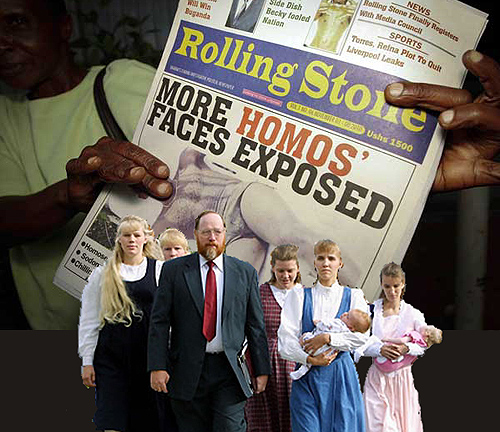
rollingstoneAnti-gay and women-suppression is sweeping through much of the non-Muslim world of Africa with a poignant argument against America.

Today Uganda’s dictator signed a long anticipated anti-gay law in an unusual public ceremony with much fanfare.

Immediately after signing he delivered a very provocative speech saying his actions were a response to “western arrogance” and attempts by countries like America to change Ugandans’ way of life.

The law has been several years in the making and received crucial legal and financial support from conservative American lawmakers unable to impose such nonsense on their own country.

The original called for execution of anyone found to be gay. That’s been changed to life imprisonment. But other parts of the bill are draconian and criminalize the knowledge that someone is gay if not immediately reported to the police.

Uganda has been spiraling into oblivion for several years, and this fire-brand piece of legislation follows a whole series of less known laws that criminalize certain dress like mini-skirts.

Hardly a day after that law was best, hoodlums beat poorly dressed women in the streets of Kampala under the noses of approving police.

Uganda is certainly the most extreme example in Africa of massive reversals of human rights Africans had gained this last half century. But it’s hardly the only one.

Anyone convicted as gay in Nigeria now faces up to 14 years imprisonment, after a much controversial law was passed in January.

Nigeria’s President Goodluck Jonathan couldn’t be more different from Uganda’s Yoweri Museveni. Jonathan is considered progressive and worked closely with western governments in the pursuit of BokoHaram and other terrorists groups.

Totally unlike Museveni he has led a fight against government corruption, rocketing him to popularity. But just as in America, pressed by his right and now facing an unexpectedly close election, Goodluck reluctantly signed Parliament’s bill.

Nigeria is a much more diverse and educated society than Uganda, and the two countries literally span the continent’s diversity. But all over Africa, even in such presumed liberal places as Kenya, anti-gay sentiment is building rapidly.

I cannot find a single country in sub-Saharan Africa where there is not a public campaign to criminalize homosexuality. Even in South Africa with a constitution that more forcibly protects gays than in America, and with same-sex marriage legalized since 2006, a campaign is on.

What’s going on? Why Africa?

The highly popular and respected Kenyan commentator Charles Onyango-Obbo says it’s all about women, not gays.

In a society that condones gayness, women would not have to submit to male authority: “Once you dismantle the sexual hierarchy…then you cannot maintain a political system in which men monopolize power and women have little or none.”

While the light tike Museveni swings his fist at the big guys like America, he’s buttressed by a powerful argument also swinging through Africa:

If same sex relationships are afforded equality in modern societies, why aren’t polygamous ones?

Both deviate from the norm. And Africa not just with its modern Muslim cultures but its centuries of traditional cultures validates polygamy. South Africa’s extremely modern government that has legalized same-sex marriage at the federal level has also legalized polygamy.

So Museveni and similar demagogs around the continent have a hard time criticizing South Africa. But not America.

Has this vicious little tike exposed a flaw in our own reasoning?

Bad Choice

Bad Choice

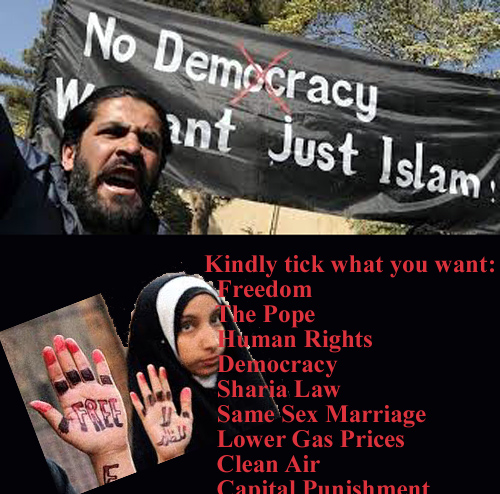
noDemocracyReplacing the dictatorship of the proletariat with dictatorship of the middle class might not be quite the answer. Take Egypt, Ukraine, Thailand, Venezuela … or Nashville.

Egypt was at the beginning of the Arab Spring. The revolution evolved into one of the most amazing democratic movements the world has ever seen, and what’s more, the country somehow managed to pull off a truly free democratic election even with an electorate that included many illiterates.

We didn’t like how it came out.

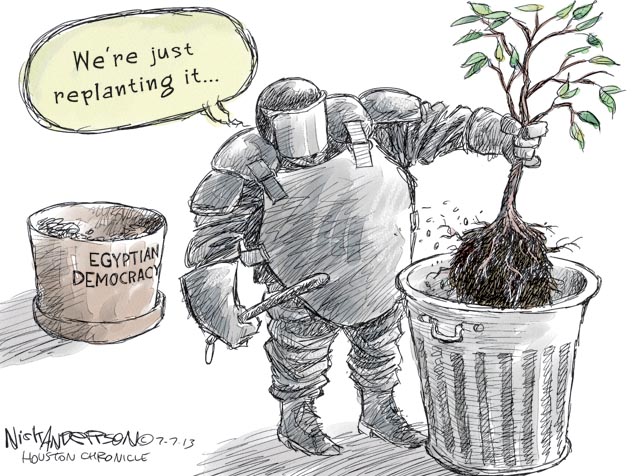
Nor did Egypt’s middle class, the driving force for the revolution, so they went to the streets again, jailed the freely elected president in true Robespierre fashion, then installed some strong man they liked better.

Well, hey, Richard Daley wasn’t all that democratic, either, right? But now Egypt is putting on trial journalists who were doing nothing except what I’ve just done in the few paragraphs above.

And while we’re exploring the depth of irony, consider this amusing digression:

I’m trying to lower my cable bill. So I actually made a long journey from our home in the woods to the city to speak face-to-face with a sales representative at their office. I had a list of 7 channels my wife and I want. (Rots of rock, right?)

The smartly attired sales representative nicely nodded to each of my written requests, throwing in another 80 or 90 other channels necessary for available packages, until she got to “Aljazeera.”

Aljazeera in my estimation covers Africa better and more fairly than any other world news outlet, including the New York Times.

She asked me to wait, went into the back office and returned with her boss who told me they don’t carry terrorist channels.

It’s Aljazeera journalists who are on trial today in Egypt.

So all this doesn’t feel really good to me. I actually would like to visit Egypt, again. And I really would like to watch Aljazeera.

Senator Tim Kane representing the wholesomeness of American democracy and the paradigm of a liberal supporting a strong man is in Cairo, today, to deliver a couple billion dollars in aid with strings.

Egypt “must balance steps towards democracy with the fight against terrorism” Kane explained, as the newest and remarkably still unstable U.S. position.

In Thailand, Venezuela and of course Ukraine, the middle class is taking control. Last week in Nashville, the middle class squashed workers trying to unionize a car plant.

(Funded by a distant upper class, by the way, and with a charge led by the state’s Senator, the very well paid middle class Volkswagon plant workers in Nashville voted against themselves and defeated a proposal to unionize, even after receiving the blessing of the car company that actually hoped they would have.)

What this shows is that democracy can create a bad outcome. And that bad outcome usually is when individuals are somehow influenced to vote against their own better interests.

That can be through religious hysteria, as in Egypt; it can be through blackmail, as in the Ukraine accepting Russia’s oil aid; it can be through deep and lasting ethnicism, as in Thailand; and it can be simply by propagating a good lie, as in Nashville.

By the way, one of the great advancements in the English language of the last several centuries was coming up with a single word for the phrase, “propagating a lie.”

Propaganda.

Democracy has become too vulnerable to propaganda. And what Egypt shows is that even when democracy is reversed to achieve a better human rights environment, for example, it just can’t seem to go in the right direction.

Is there something better?

President’s Day 2014

President’s Day 2014

The Presidents’ Day Holiday in America, today, is perhaps the least celebrated holiday of the year, and it shows how America is moving away from a powerful executive.

How different this is from Africa, today, and how changed Africa has become in just the last few years. African dictators are consolidating their power in places like Uganda, Zimbabwe, Cameroon and Rwanda. And even in the more democratic countries like Kenya and South Africa, the chief executive is wielding more and more power.

Our president is one of the most powerful social chief executives in the world; probably the most powerful among democratic countries. I think this may have worked well in year’s past when essential U.S. policy was pretty unidirectional.

But today, with radically opposed polarities, the prospect of a strong liberal president being succeeded by a strong conservative, etc., does little to move society in any direction but crazy figure eights.

Many government offices are closed, today. Banks are closed. The post office is closed. Some schools are closed and most businesses, like EWT’s, are “technically closed” with the phones not answered. But many workers — perhaps most in America — are at their desks like most any other work day.

Perhaps an affirmation that a strong chief executive shouldn’t be quite so empowered, anymore.

The Kikuyus Will Rule Again

The Kikuyus Will Rule Again

newgadoThursday the ICC trial against the President of Kenya will likely stop, the trial against the Vice President will proceed and for all the world this looks to me like a setup by one tribe to demolish another in Kenya, replaying centuries of vicious racism.

A year from now, the Kikuyus will once again rule the Kalenjins.

It’s hard to connect the obvious dots in this story without massive restraint. The alliance of the current president’s and vice president’s tribes that now rules Kenya, an historic burying of bloody hatchets, is on the surface nothing less than a society maturing and rising above petty politics and racism.

President Kenyatta is Kikuyu. Vice President Ruto is Kalenjin. There are 43 tribes in Kenya and most hate everyone else, but there are few Hatfield/McCoy gun rivalries as great as the Kikuyu/Kalenjin. I can’t think of a good analogy to America, but something like a Elizabeth Warren/Liz Cheney alliance.

Unbelievable.

The president was the king of his tribe, and the vice president was the king of his tribe, and in the 2007 election they were pitted against one another. After the election they started massacring each other.

1300 people were killed but even more notable, nearly a quarter million were displaced. The genocide would have been much worse if the outside world hadn’t quickly stepped in. The settlement forced on Kenya by the recently retired UN Secretary General, African Kofi Annan, was a triumph of international diplomacy.

Part of the complex, tedious settlement included determining the masterminds of the violence and punishing them. As if they weren’t known, and that was the problem: Everyone knew the masterminds: William Ruto and Uhuru Kenyatta.

But shortly after the settlement brought peace and prosperity to Kenya, many especially educated Kenyans were ready to move on beyond racism and fear. A commission was created by Kenyans to investigate the violence.

The Waki Commission was impressive. Drawing on the most prominent professionals in the country, it determined by volumes of evidence who was to blame (no surprises) and suggested they be prosecuted. But its tome of evidence and accusations were sealed by law until Parliament created a judicial process for proceeding.

Parliament couldn’t. Twice it defeated legislation to create the tribunals. Time was passing. The horror of the violence was receding from those in power and the quarter million displaced persons were being swept into the dustbin of history.

So by default in the Annan agreement, justice fell out of Kenya into The Netherlands. The World Criminal Court (ICC) was now mandated with the investigation and trial.

It was a singular disappointment for the African mastermind of the settlement: “Politicians hungry for power have long exploited Kenya’s ethnic divisions with impunity,” Annan wrote in the New York Times. Annan knew exactly what wasn’t going to happen.

The ICC had to fight tooth and nail just to get the details in the Waki Commission, and absent of much of its evidence began its own investigation in Kenya.

The chief ICC investigator, Moreno Ocampo, was an Argentinian well experienced in dealing with the big guys. He was the lead prosecutor of the Argentinian generals who had devastated his own country in the horrible post-Peron era.

After five years of investigations and the unbelievably expensive collection of evidence, the trial began in The Hague last year. Witnesses were whisked and hidden in secret places in the world to protect them. The indictments included Uhuru Kenyatta and William Ruto.

So far so good? Not exactly. In typical Machiavellian fashion the two kings of the arch enemy tribes struck an alliance against … against what? Against justice.

They ran on the same ticket for President and Vice President. And they won. The country of Kenya freely elected as its leaders the very people who had murdered and displaced them.

Speaking out for the first time since term limits forced him to retire last year, Ocampo told Radio Netherlands recently:

“Kenyatta and Ruto were allegedly killing each other, their groups, and then they were smart. They made an alliance and they presented themselves as the reconciliation process.”

Ocampo is depressed that justice as such will now never be served. But he is realistic, too, and he believes that the role he played forced a reconciliation between two leaders who would never have dared to sit in the same room together, before.

But now, there’s a new twist.

For some reason – who could possibly concoct why – the ICC’s witnesses against Kenyatta have all started to disappear. The reason given is that they have withdrawn their stories. The real reason is as Ocampo knows, “… the defence has the right to know them. And after that, it’s much more difficult because they can go to see them in London or wherever they are. And people can threaten their families.”

Kenyatta has the power of the Kenyan government to go anywhere he wants. Ruto as unpowerful as vice presidents everywhere, doesn’t.

The case against Kenyatta is falling apart. Thursday I expect a “status meeting” of the ICC will drop the case against Kenyatta.

But the cast against Ruto proceeds.

One tribe will be convicted. One tribe will be released. Opposites again, the Kikuyus will rule the Kalenjins.

Waiting for Malema

Waiting for Malema

waitingjuliusmalemaSouth Africans are in the lull after the storm of Mandela’s death. But the lull also ends and the future looks troublesome. Elections are in several months.

Of course it may be a worldwide phenomenon. Obama’s Number #1 issue in 2008 was climate change. Anybody hear him speak of that recently?

The Arab Spring is no more. In promising societies like Kenya, politics entrenched in racism has muffled the country like greasy mold. In Tanzania, a new draft constitution reached prime time comedy this week when the only tenant everyone could agree on was an unenforceable edict to “control” corruption.

Mandela’s death coming at the beginning of the end of the Great World Recession was coincidental, but superstitious Africans and me may think otherwise.

The Mandela spirit was a revolutionary one that manifest significant structural change in political control: Power to the people. In today’s fast paced world, though, no one expected every goal to be realized or every project to be completed on time. Africans are uniquely patient.

The South African constitutional guarantee of housing was simultaneously uplifting and dangerous. Something so necessary that is suddenly promised as a human right that must be ensured by government is like a tsunami of common sense. Everyone’s on board. Everyone’s elated.

Except the architects, the engineers, the construction workers that run out of basic building supplies and later, the electricians and plumbers that have neither source or output for their orders.

Ditto for land reform, mining reform, currency reform and a bunch of other things. The New York Times called the mess “Mandela’s Socialist Failure.”

The death of Mandela was the bookend on Stage One of South Africa’s change. Stage Two is growing like a hidden virus in every dark corner of the land.

Politicians know this. The South African poor are among the most educated and aware people on earth. I dare say that the residents of the Cape Flats, Cape Town’s sprawling slum, know more about the world than most well dressed children in Oklahoma.

So after Mandela’s death, the politicians began to scramble.

The stranglehold that Mandela’s party, the ANC, held on the country since Independence began to fracture. Support for the current president and his cortege of rulers-in-waiting began to break down.

An enormous opportunity was born for the multitude of opposition parties. One of the ANC’s strategies all these years was to foment so many singular opposition parties that none were capable of really challenging it.

The most hopeful of the greatest alliances possible broke down last week. The strong party that rules much of The Cape — heavily white and colored – offered to support the presidential candidacy of a rival black party. There was new electricity in the country, but it didn’t last.

Nothing’s left now for the April elections but another win for the ANC.

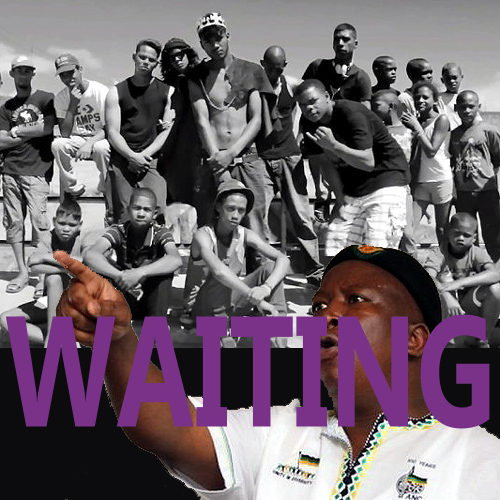
And that will mark the end of the lull. The South African poor, heavily colored and not at all vastly supportive of the ANC, are building a hiphop agenda that lacks any manners whatever.

A vicious radical and possible psychopath, Julius Malema, would like nothing better than to create a Franco-styled proletarian dictatorship. He is the kids’ current hero, the star of their music videos and their dreams. The man who will redistribute wealth with no fear of economic fundamentals.

South Africa has little time to stave this disaster.

Twinkle or Spark?

Twinkle or Spark?

BesigyeAs much of the rest of Africa cuddles with a troubled peace, Uganda’s potential for violence increased substantially yesterday. Whether the iron-fisted ruler Museveni can bash it out before it flames is the question.

As I’ve written before, fights for political reform are ending throughout the continent: Africans are war weary, and in some cases like Egypt, see substantial compromise as the best they can do, now.

Even political unrest that exploded into all out war in places like the CAR and Mali is over, at least for the time being.

Places like the DRC-Congo where the conflict has been ongoing for 20 years now see large territories with no fighting at all.

And in places where global terrorism is a certain factor, like Somalia and Nigeria, the news is promising.

So what’s different about Uganda?

Uganda is one of the diminishing number of African countries run by an iron-fisted dictator. But unlike its nearest cousin, Zimbabwe, Yoweri Museveni’s Uganda keeps sticking it harder and harder to the opposition, an opposition like in Zimbabwe which had all but fizzled out.

We old safari guides know when it’s time to leave the embers die on their own. Stirring them impatiently often flames them up.

Museveni is at least 15 years younger than Robert Mugabe, Zimbabwe’s dictator. Perhaps he sees a long life ahead of him, and perhaps that’s the difference.

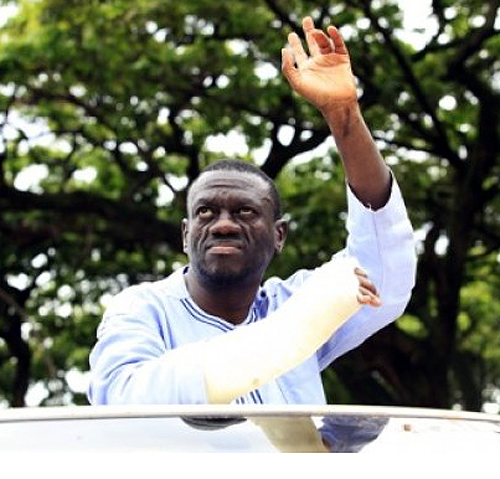
Yesterday, the all but forgotten, decades-long courageous battler for Uganda’s better side, Kizza Besigye, told Ugandans to forget the ballot box, it’s time to rise up.

And his otherwise quiet speech during the funeral of an Ugandan entertainer was headlined and featured and broadcast across the country by one of its largest newspapers.

That in itself is telling. There are so many laws today in Uganda against free speech that the Observer’s gall in irritating (and probably from a Ugandan legal definition, libeling) the current regime is amazing.

Besigye called for an “Arab Spring” style uprising, but stopped short of announcing an armed revolution. Among his suggestions was that farmers withhold foodstuffs from Kampala and that the population as a whole engage in national strikes.

Besigye has been successful in organizing such movements before. Three times he actually ran for president against Museveni, each time losing in clearly fraudulent ballot counts. This week he announced he would not take part in an election, again, but will now concentrate on disrupting Museveni’s regime.

At first I couldn’t see Besigye’s call to his fellow countrymen getting very far. The poor man has more scars and broken bones than you can imagine, having been tortured numerous times.

The recent laws passed in Uganda against gays and other fringe social activity put Besigye in an odd situation of having to ignore them, as most of rural Uganda supports such oppression.

But the recent coverage given Besigye by daring media that absolutely threatens their own survival and safety, and the courage that Uganda’s remaining intellectuals have begun to show is new.

Like Cairo where we now understand the roots of the Egyptian rebellion were literally completely contained, it could be there is enough fire power in the Kampala area alone to spark something.

If it doesn’t, Besigye and whatever is left of Uganda’s opposition, is toast.

South Sudan like them all Crumbles

South Sudan like them all Crumbles

military-democracy1Add South Sudan, Central Africa and Libya to Iraq and Afghanistan and you have the most costly failure in human history to make undeveloped parts of the world in the image of its superpower.

“Most costly” is an understatement. None of us can begin to imagine the 20 years of military hardware costs, personnel deployment costs, global policy orientation costs … except perhaps Eisenhower’s impugned “military-industrial” complex.

And even if that impugned component could be economically conceived as contributing to America’s growth, how do you economically measure the human tragedies? It’s arrogant to simply refer to American military casualties, since the human toll is a hundred, perhaps a thousand times, perhaps ten thousand times American injuries and deaths.

Yesterday, Assistant Secretary of State Linda Thomas-Greenfield told a Senate Foreign Relations Committee that South Sudan was “in danger of shattering.”

None of America’s experiments in democracy abroad was as promising as the South Sudan. Unlike elsewhere in Africa and the Middle East, America’s contribution to its generational civil war was mostly limited to diplomatic involvement.

Which was true of the other side as well. We supported the rebels. Russia and China supported the mother country, Sudan. And when Russia dared to send more than a Mig or two, Clinton bombed a Khartoum factory and Russia agreed to toe the unspoken diplomatic line to not arm the factions in the war.

So the war went on and on and on, very much like Darfur continues in the western Sudan, today. Rather than planes from Russia and tanks from the U.S., guns and hand-held missiles came from arms dealers in Jamaica that had mastered the insecure arsenal of the downfall of the Soviet Union. That wasn’t good, but it kept the war at a lower grade.

The emergence of the new South Sudan nation was a joy to the world, and especially to America. Politicians and celebrities all took credit. Although landlocked, the country’s potential was uniquely good, because it sat on so much oil, because so much of its land was unpopulated and fertile, and because its long civil war had leaders ready to go.

What happened?

Two things. First, democracy. Second, tanks.

DEMOCRACY
It’s one thing to nuke Afghanistan because its leaders bombed the World Trade Center. It’s quite another to suppose you can remake that part of the world in your own image.

We are learning again and again that America’s form of government — indeed lifeways, altogether – doesn’t work in the undeveloped world.

There are dozens of fundamental reasons why. But consider just this: America itself has had constant and serious problems with implementing its own democracy literally from the getgo.

We’ve mastered democracy, perhaps. But from Congressional gridlock to politicians’ lies to the uncertainty in counting votes to the complexities of voting at all … these are complicated, intricate problems created, analyzed and remedied by very modern and often high tech solutions.

I can blithely mention the “unimagined cost” of our mistakes, but even the carefully imagined costs of mistakes in the South Sudan result in that country’s own immediate deaths and destructions.

In America our mistakes are often manifest far from our shores. Not in places like the South Sudan. There is a simple line from a politician’s corrupt actions to the deaths of thousands of his fellow countrymen.

Writing today in African Arguments, Andreas Hirblinger dissects what’s left of South Sudan’s constitution and government and shows that little is left but the authority of the current “democratically elected” president.

Democracy doesn’t work in undeveloped places. This is a lesson the entire era of the “Arab Spring” is finally teaching us.

TANKS
Give two thugs AK47s and you turn a brawl into a war.

So pleased with their creation of the new democratic state in Africa, the western world began pouring in funds without strings.

What did that money buy? Communication systems from IBM? How about urban development consulting from J.D. Powers? No? Almost all the money went to Halliburton and it wasn’t just for catering services on oil rigs.

Not long after George Clooney and Hillary Clinton attended the unveiling democracy in Juba, the U.S. and its allies wittingly or not began arming South Sudan to the teeth.

Surprise! Huge new fighting began with The North. The war was supposed to have been over.

We need worldwide gun control. And that, because it’s so dearly linked to manufacturing and concomitant economic growth, is the harder problem.

Imagine suggesting to a country dominated by such an entity as the NRA that the UN should enforce a ban on all weapon transfers. Yet that is exactly what’s needed.

Fights are organic parts of any social development. Words don’t kill. Fistfights rarely kill. Give a newly emerged nation whose population is still mostly illiterate and has lived for generations by subsistence agricultural an arsenal of modern weapons …. well, I think anyone can understand this argument.

But will we do anything about it?

Maybe. I think Gates’ memoir, statements by Thomas-Greenfield and actions by Kerry have many lines to read between. I think America may be learning this critical lesson about democracy.

No chance we’ll stop the military-industrial complex. Eisenhower was spot on.

#4 : Winter in Africa

#4 : Winter in Africa

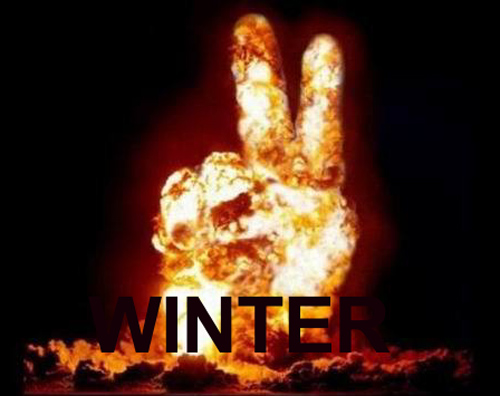
arabwinter.13TOP4The great revolutions that toppled dictators and promised democracy that rang throughout Africa are all but dead. Winter has arrived.

The end of the “Arab Spring” is my #4 story for 2013 in Africa.

(Look sideways at the similar current outbreaks in Thailand and Cambodia and it seems their future is similarly doomed.)

What happened?

I’m more sure of the reasons that didn’t contribute to the failure, then completely understanding the failure itself. The reason the Arab Spring didn’t succeed is not as NPR’s continually inept Ofeibea Quist-Arcton reported Friday on NPR’s Morning Edition.

Quist-Arcton’s simplistic notion that a “lack of leadership” explains why the Arab Spring became Winter, or because institutions have been so poorly formed, is wrong.

It’s the same simplistic analysis proffered by such beacons of intellectualism as Fox News.

And this analysis concerns me greatly, because implicit is that the original movements towards democracy, as modeled after us, were undeniably correct and failed not because of some fundamental problem in theory, but in practice.

That’s simply not correct. The elections in Egypt, Tunisia and earlier, Kenya, were in most regards more transparent and fair than in many places in the U.S. The transitions that ceded power to those who had won were as smooth as our own.

Contrary to Quist-Arcton’s central point, the leadership that took over was decisive and bold. While it’s true there was a threat in Egypt of renewing an executive power dictatorship, it had not yet happened. During the short time Morsi ruled, there was more positive transformation in Egypt’s poorer areas than ever before albeit at the expense of the more vocal middle class.

And that’s problematic policy. But it is not a “failure of leadership” or of “institutions.”

I still believe in the ballot box and democracy, but clearly it didn’t work in Africa. In trying to explain Egypt’s remission into dictatorship at the time it happened, I published a favorite cartoon of mine where a student replies to a teacher’s question, “What is democracy?”

“Democracy,” the student quickly explains, “is the freedom to elect our own dictators.”

We need add that the implementation of those dictators’ policies came through powerful government institutions that were working very well.

Tunisia and Kenya are unique examples in the Egyptian mode, but both have slipped into old ways where like Egypt it seems only heavy-handed authority can achieve enough social stability to do anything. And then, if the authority is beneficent, good happens. If not, bad happens.

We’ve learned two very precious lessons over the last few years in Africa’s experiment with democracy:

1. Democracy can be used to end itself.
2. The start of democracy (the “revolutions”) is never democratic.

Morsi may indeed have been trying to dismantle Egyptian democracy completely, yet he was the most freely elected Egyptian leader ever. And the movement that gave rise to his ascension – the Tahrir Square uprising – was nevertheless a minority of Egyptians. They were notable for being only on the fringe of violent overthrow, but their toppling Mubarak was hardly democratic.

Hardly a few weeks after Egypt’s experiment in democracy failed, the remaining holdouts for hopeful change in places like Mali, Zimbabwe, Rwanda and Ethiopia crumpled away.

Africa is today less democratic, more autocratic; less transparent, more deceptive; and far less promising than five years ago. It has tried and failed with democracy.

Singularly important for ourselves and all functioning democracies was that we and our political brothers refused to sanction that undemocratic removal of democratic regimes.

Intellectuals throughout the western world condemned Obama and other leaders for failing to punish those who ended the experiments in democracy.

Because, I suspect, a leader knows when a leader isn’t. Our leader is just too afraid to level with us.

My eulogy for the Arab Spring was published last month. But my sense that the problem wasn’t democracy, but rather capitalism, I explained months before the military deposed Morsi.

It was in May or even earlier that things around the continent began to look shaky. And the tremors were economic at the time, not political.

The failure of any political system is generally measured by its economy. The economies of Africa under the new democracies were capitalist structured, many virtually built by America and its allies. They didn’t work.

Arguments that it was just bad timing, that these political revolutions came at the end of a world recession and would have succeeded in good economic times disregard the fact that places like Kenya were seeing 7 and 8% GDP growth. So this is not a true presumption.

I know no more than the simple fact that capitalism did not deliver the promise held in democracy. Economists will now have to explain.

Clearly, winter has arrived not because of simplistic notions about the poor implementation of a treasured form of government, but because of flaws either in that system to work capitalism, or in capitalism itself.

Et Tu Uhu?

Et Tu Uhu?

kenyatta.witlessprotectKenyan politics has infected the World Court. There’s little chance, now, that Kenya’s president will be tried as accused for crimes against humanity.

The trial against the vice president remains on track, for now, and the possibility that one will proceed and the other not opens up a whole new can of worms in Kenya.

I don’t consider the ICC, the International Criminal Court in The Hague, to be so just that a simple decision to go to trial means that the accused are guilty. But close. The standards of the ICC are much higher than for the jurisprudence of sovereign states. And the reason the case against Kenyatta is collapsing is because the prosecution’s witnesses are dropping like flies.

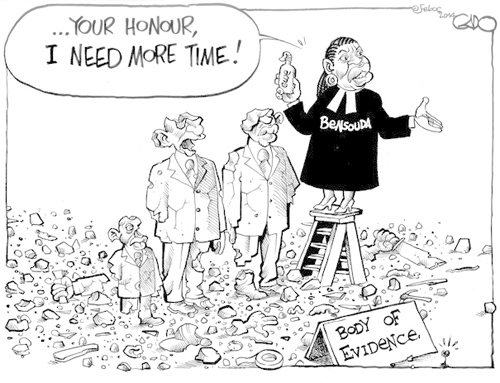
Before advising the court that her case had collapsed, ICC prosecutor Bensouda was quoted by a Kenyan disaspora group as having said, “Witness 4 revealed in May 2012 interview that he had been offered, and accepted, money from individuals holding themselves out as representatives of the accused to withdraw his testimony against Uhuru.”

Whether this unconfirmed report is true or not, the original 11 witnesses against Kenyatta are all now gone. Without witnesses Bensouda’s specific request yesterday to the court was to postpone further proceedings while she tries to get additional witnesses.

It’s not a completely foregone conclusion that the judges will either postpone the trial indefinitely or end it. But close.

The proceedings have teetered from the beginning on the certainty that the witnesses would ultimately testify. That was further complicated when several witnesses actually recounted, claiming that they had been bribed to say untrue things in order to obtain a conviction.

Bribing to convict, bribing to withdraw, it’s all very likely in a Kenya political drama, and I’m not the least surprised it has succeeded so far from home. It’s the way of politics in Kenya.

My sense has always been, and remains, that Kenyatta and his vice-president, William Ruto, are both guilty. I think it fair to conclude that most western world leaders also feel the same way, though they would never say so. But with Kenyatta, it’s all a moot point, now.

And the interest in the affair now turns to Ruto, whose trial is much further on than Kenyatta’s, and whose few witnesses have at least held on. And what’s uniquely interesting is that at the time both men were accused of these crimes, they were accused of attacking each other.

Or more exactly, Ruto’s Kalenjin/Luo alliance supporting candidate Raila Odinga, was in bloody battle with Kenyatta’s Kikuyu supporters of Mwai Kibaki, who was declared the winner of that close election.

Thirteen hundred people were killed and a quarter to a half million displaced.

Why are they now president and vice president … together? Because it was a brilliant political move that won Kenya’s freest and fairest election, and it allied two murderers against their prosecution.

But what now? What if Ruto is convicted and Kenyatta is freed? Does that in itself reignite the tribal enmity that led to the 2007/08 violence? If convicted will Ruto be forced to step down, vindicating the Kikuyu as the all-powerful, forever dominant leaders of Kenya?

Would it ultimately demonstrate that in Kenya you win by hook or by crook?

I wouldn’t be surprised. Can’t be fully convinced of this yet. But close.

Grim Outlook for Kenya

Grim Outlook for Kenya

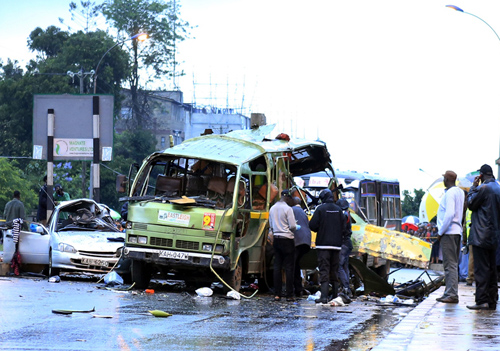
kenyan suicide bomberIs Kenya becoming the new Afghanistan? Another suicide bomber Saturday killed six and injured almost 40 in Nairobi.

The attack was in the Pangani neighborhood of Eastleigh, Nairobi, an area with many Somali immigrants.

The day before on Friday twin explosions in the northeastern town of Wajir killed another person. Thirteen people have been killed this week alone. Panagani was the 4th attack on the 50th anniversary week of Kenya’s independence.

And among the most striking facts about these attacks is that they were hardly headline news. In most of Nairobi’s newspapers, they received scant attention compared to how they were reported in Europe.

And last week a confidential report prepared by the New York City Police Department on Kenya’s Westgate Mall attack analyzed Kenya’s growing violence.

Officers from the NYPD were in Nairobi before the Westgate Mall incident was over, ostensibly to learn from it how to protect New York. Their report confirmed what had been suspected for a long time: the four principal attackers were nearly amateurs by war standards, could have caused enormously more damage if they had better weapons, and apparently all escaped.

One of the chilling aspects to the NYPD report as analyzed in the Daily Beast is how similar the attackers appear in many regards to America’s child terrorists responsible for our growing number of school shootings:

There is only cursory planning. The weapons used are all deadly powerful but often poorly designed for the kind of attack planned, and often, don’t work. Entry and exit for the attackers is easy. And perhaps most chilling of all, worldwide terrorists like those at Westgate are increasingly individualized rather than ideological.

Just like kid shooters in American schools.

This “terrorist war” whatever it has become is usually instigated by individuals who are mentally ill, or who are not ideological but simply angry, often vengeful.

They are not soldiers under some mission command, and they often have no demands. They just want to … kill.

The Westgate Mall attack and the attack this past weekend in Nairobi — as with almost all the attacks these days in Kenya — is basically Somali against Somali. Just as a school shooter is a student against a student.

The Somali terrorists in Kenya claim to be protesting the Kenyan invasion of Somalia initiated in October, 2011. Kenyan troops continue to occupy Somalia.

Kenyan Somalis on the whole very much supported the Kenyan invasion and now the current mission, which as I’ve often pointed out, is really a proxy war for America and France. Kenya would not have been capable of succeeding in that invasion without hardware, training and logistics from America.

And so the targeted terror is at those Kenyan Somali communities. At the same time the police see these communities as harboring the terrorists, which of course they do.

Money, materials for bomb making and suicide mission recruitment is all done within the Eastleigh community of Nairobi. It is often, brother against brother.

So the comparison with Afghanistan ends quickly, as there are far fewer supporters of Kenyan terrorism in Eastleigh than of the Taliban in Kabul.

But like America, which is losing tourism revenue from school shootings and if it continues will likely loose foreign investment, Kenyans are already suffering both.

The promise of the country prior to the Somali invasion of October, 2011, was exceptional. But last year’s election of an indicted war criminal as president, and the growing tribalism that dominates the Kenyan government now threatens Kenya’s growth.

I wrote several weeks ago about Kenya’s falling position with Transparency International. Last week the Thomson Reuters Foundation called Kenya “a thriving underworld aided by political corruption and a large informal money transfer sector.”

Conceding the country could be a financial and services powerhouse for the region, the report concluded the country is “a safe house in a bad neighbourhood.”

So the comparison with America is also flawed. Compared to America’s challenge of just getting guns out of kids’ hands, Kenya’s is far more daunting.

It’s no child’s play in Kenya.

Kenya Tourist Attack

Kenya Tourist Attack

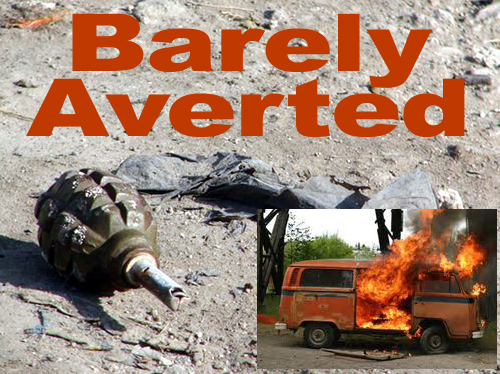
barelyavertedContinued terrorism in Kenya and more public attacks against tourists is resulting in draconian laws that are turning Kenya into an autocratic state.

Kenya’s average of three terrorists attacks monthly continue. Yesterday, ten tourists escaped death when a grenade thrown at them bounced unexploded off their minibus window.

Prior to the Westgate Mall attack foreign investment was growing seemingly undeterred by the increasing terrorist attacks in Kenya. It’s not clear yet if that has changed.

But clearly tourism is down, and tourism remains a fundamental part of the Kenyan economy. Many operators are turning to local and regional tourism. In something that appears desperate to me, the Kenyan Tourist Board is spending considerable funds to lure Nigerian tourists, where terrorism is as bad if not worse than in Kenya.

And not surprisingly, some of Kenya’s most respected tourism companies are now concentrating more of their investment in Tanzania.

Cheli & Peacock, a landmark Kenyan tourist company, announced this week it was opening new offices in Arusha, Tanzania.

The Kenyan government is not an ostrich with its head in the sand. With a string of negative press reports starting with terrorism and extending unendingly to the country’s leaders trials in The Hague, president Kenyatta is growing increasingly authoritarian.

And Parliament seems willing to go along with him.

Increased police powers and a reversal of the decentralization of the police was the most imposing move. Clearly directed against terrorism, there was limited opposition to this fall’s moves, until the courts got in the way.

The Kenyan constitution is a good one, and the government more or less reversed itself on new police laws before an expected challenge in the court. Using Obama’s techniques but for bad ideas, Kenyatta is quietly using his executive powers to take more control over the police and make them less publicly accountable.

Simultaneously, the government wants to muffle the press, and once again Parliament seems ready to go along. I guess the idea is if you can’t wield the power to stop terrorism, perhaps you can stop the reporting of it.

The two laws Parliament may pass next week “seriously restrict the work of journalists and independent media in Kenya and give the government enormous space for censorship,” according to Kenya’s main online newspaper, The Star.

These laws, too, will be challenged in court if passed.

But while we know that tourism is suffering, because the industry is so public and necessarily transparent, we haven’t learned yet that foreign investment may also now be under attack. And if that’s true, Parliamentarians are likely freaking out.

The answer to the end of Kenya’s terrorism begins with leaving Somalia. I’ve been saying this literally since Kenya invaded Somalia in October, 2011. But that’s not in the cards.

Kenya is America and Britain’s proxy in Somalia, and from that point of view, things are going pretty well. If Kenyan troops were to leave, it’s likely the warlords and terrorist would regain control.

So Kenya continues to suffer so that Americans can enjoy their holidays… but not on safari.

Ending Legacies

Ending Legacies

Background image by Justin Ng.
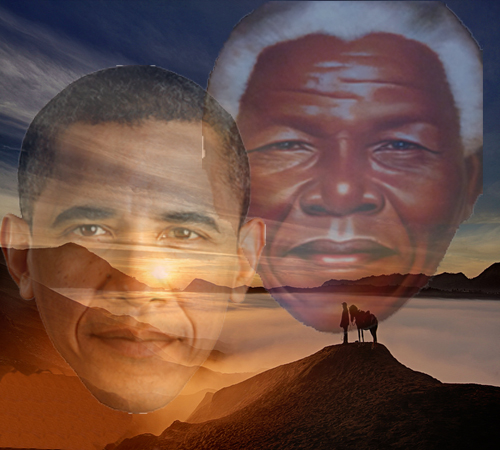
The ANC’s manifestos for what a free South Africa would be is far from what we see, today. Mandela’s vision of the ANC was far from what it was when he was released. White South Africans certainty that a black South Africa would self-destruct was dead wrong.

There’s a lot of myopia in South Africa’s most recent history.

In the rainbow of organizations that confronted apartheid — from the communist party to the almost identical but intensely rival trade unions, to the ANC to the Zulu off-shoots to the white ladies’ “Black Sash” – there were violent disagreements over what a new South Africa should be.

Ending apartheid was the only unifying force. I often wondered while working in a shared office in Johannesburg in the late 1980s and coming into contact on a daily basis with all these different political activists, that if apartheid ended quickly and abruptly, say by some or other group staging a successful coup, that all hell would break lose among the opponents of apartheid struggling for control.

All but white anti-apartheid groups also were unified in desiring a socialist society, one that was fairly tightly controlled from the top, and this was most represented by the certainty that South Africa’s mines would be nationalized.

The gold, diamond, coal and precious metal mines of South Africa is what gives it its wealth.

The communists and most of the trade organizations and radical youth groups also wanted to nationalize the banks. The apartheid government had essentially already nationalized the massive transportation system, so quite apart from equality for the races, education and health, nationalization was a fundamental core of the fight against apartheid.

But apartheid didn’t end abruptly with a coup, but with multiple years of negotiation albeit mostly in secret.

And today South Africa is one of the most capitalistic countries in the world. France, the Netherlands and the Scandinavian countries are far more socialist than South Africa.

The country is also increasingly corrupt. No-bid contracts are the rule of the day for the current government, and that has led to a clique of new age business people that it is assumed either give huge kickbacks or equally valuable political support.

It has compromised the education of young children, the quality of infrastructure, and even the government’s own plans for home construction. This very rich country seems unable to improve the lot of its most oppressed, while its leaders become millionaires.

The country lost a decade or more in the fight and control of AIDS, as both Mandela and his successor refused to believe it was a sexually transmitted epidemic.

The youth of South Africa, those who are called “new borns” for having arrived after Mandela was freed, are understandably angry and impatient. The passing of Mandela will give them new strength.

I believe that one of the reasons South Africa flounders today is because Mandela carried no clear ideology with him into the new South Africa. Like Obama, overwhelmed at the helm of history making a radical change in course, Mandela became the Great Compromiser.

Keeping society at peace during such a serious change overwhelmed everything else. This is completely understandable. For if peace had not been maintained, a revolutionary period would likely have resulted in an even worse situation.

The country’s constitution is a magnificent document, but Mandela had little to do with it (and today’s problems rest squarely in not implementing it fully and well.) The lack of retribution and aura of magnanimity ascribed Mandela was really created by Desmond Tutu and others. The transference of real economic power that was tried in the late 1990s was instigated by the youthful agitators in the mines and the ANC, and by that time, Mandela was already gone.

One of the reasons Mandela did not oversee a major transformation of South African society is because he was a construct of others who were much more powerful than himself.

It’s fascinating today to read of white South Africans’ certainties that Mandela was a maverick operating outside ANC direction, while simultaneously listening to old ANC members claim how they groomed Mandela as their figurehead from the getgo.

The real truth is likely somewhere in between, in that compromise that is Mandela’s greatest and perhaps his only legacy.

“Real Change” remains a political banner. You can change the color of the president in both South Africa and the United States without altering where black people remain on the graphs of economy.

It’s a question that is being asked round the world, not just in South Africa.

But I admit it was a bad time, the early 1990s, to experiment with new social orders. The Cold War had been definitively ended with a victory of capitalism over socialism. It would be several more years before Hugo Chavez would be democratically elected to renew such experiments, and that hasn’t gone particularly well.

Mandela will forever be remembered, and rightly so, for peacefully transferring power from the oppressors to the oppressed. That’s remarkably important and a statement for the ages that retribution never works for any ideology, any idea.

He deserves the great honors that attracted. But the concept of a peaceful transition wears poorly when not enough then changes as a result.

The Cold War has ended. Overt racism at least is grudgingly ending slowly. The Great Recession is ending. From South Africa to the United States, there is an energy in the youth to bring to fruition the symbols their parents created as landmarks out of a terrible past.

It could be an exciting future. And if so, Mandela’s legacy of peaceful transition — and likely Obama’s too — will be an historic moment, the last moment of symbol, a turn towards substance.