Breathtaking Fall

Breathtaking Fall

oldafricafallingfastHow fast and hard is ancient Africa falling? Take a look at Ethiopia.

Ethiopia is the only country in the entire continent of Africa that was never colonized. It was occupied for almost three years by Mussolini during World War II, but save that short episode it has had an indigenous rule since prehistoric times.

In fact, there may be few other societies in the world except parts of China and Japan where this is the case.

Geography is the main reason. The country is bordered by seas, deserts and mountains, effectively walling it from the outer world. This safety and isolation has led to a fascinating indigenous language, musical scale, methods of counting and cultural foundation unlike anything else in the world.

Only Christianity was able to penetrate the closed Ethiopian society, and because it was done so early, Judaism as well worked itself into ancient practices.

The isolation kept Ethiopia ancient throughout most of my life time. But that’s changing, and now changing fast.

And when any society changes as fast as Ethiopia is, there’s turbulence, and given where it’s headed to where it’s been, it’s mind blowing.

The violence of the overthrow of Haile Selassie was unbelievable. The Reign of Terror which followed was one of the most brutal regimes in contemporary history, and the wars with Eritrea and minuscule moves towards democracy have been agonizing.

Today Ethiopia plays with democracy but is one of the most autocratic regimes in Africa. It is also one of the most stable and most productive.

There is only one opposition member of Parliament. There are more local journalists in prison than publish each day in Addis. The current prime minister, Hailemariam Desalegn, succeeded Meles Zenawi who was in power since 1995 until his death in 2012, and between the two of them they have constructed the most powerful totalitarianism in modern times.

The centerpiece of the country’s modernization policy is the ironically named “villagization” of the country, which Human Rights Watch calls “Waiting for Death.” Through massive relocation of its peoples, Ethiopian planners expect to create a more workable, productive society.

“Modern Ethiopia is a paradox,” writes David Smith in London’s Guardian newspaper this weekend. Smith is amazed that only a generation after the famine that killed more than a million people, Ethiopia is now hailed “as an African lion because of stellar economic growth and a burgeoning middle class.”

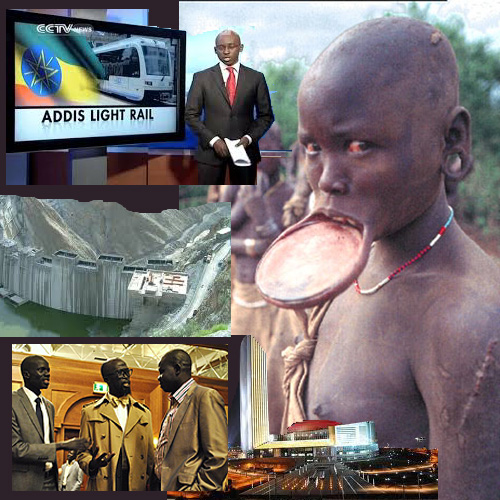
More millionaires are being created in Ethiopia annually than anywhere else in Africa. Addis Ababa, once a quaint and isolated capital known mostly for its antique silver jewelry, has today skylines with Chinese office skyscrapers and modern highways.

Advancements in agriculture developed here may actually be winning the war against desertification and prompted the IMF and World Bank to underwrite what will become Africa’s largest dam.

The scale of this dam and other feeder dams is destined to produce more electrical power in Ethiopia than exists today in all of sub-Saharan Africa down to South Africa.

And all of this rapid modernization forged by an incredibly repressive government threatens to ignore to the point of not preserving many of the beautiful and unique practices of the ancient world.

I recall traveling to a remote region of Ethiopia in the late 1970s to visit the Mursi people, and I continue to refer to that trip as one of the last I ever made where I felt I truly saw Africa in prehistoric times.

“They know that they are practically finished”, William Davidson of Think Africa Press says regarding the Mursi today.

“Their way of life, their livelihood, their culture, their identity, their values, their religious beliefs – all this is being rubbished by a government which sees them as ‘backwards’ and uncivilised.”

There’s nothing wrong with modernizing Africa. But boosting the speed of development at the expense of human rights is wrong. And doing it so fast that valuable connections with the past are lost forever isn’t particularly enticing either.

What’s the point in farming better turkeys if done at the expense of celebrating Thanksgiving?

Watch Ethiopia. Watch the “brave, new world.”

EWT’s Kathleen Morgan leads a comprehensive trip to Ethiopia late this summer. For information call Kathleen at 800-672-3274 x204.

Getting Grandma’s Necklace

Getting Grandma’s Necklace

gettinggrandmasnecklaceIf you want to dispose of Grandma’s necklace, you better do it before August.

Last week Fish & Wildlife inched towards final new August regulations on the sale and use of ivory within the U.S. Orchestras were elated, piano vendors were piqued, and the Wall Street Journal was furious.

The Thursday announcement is based on agency findings made the previous month but only published last week.

The Thursday announcement relaxed previously proposed regulations that would have prevented any musical instrument composed of endangered animal products (like ivory piano keys) to be brought into or taken out of the U.S.

At the same time, though, the agency reenforced proposed regulations that will prevent any individual owner of ivory less than a hundred years old from selling or trading it, unless of course if it is part of a musical instrument.

Other petitioners, like museums seeking the ability to produce exhibitions that include foreign works of art (like ivory that are not musical instruments), were not addressed.

In claiming victory for its lobbying, The League of America Orchestras said the adjustment was “in response to urgent appeals from the League.”

At the same time the revised proposed regulations tightened restrictions on the commercial sale of pianos with ivory keys.

“These regulations … place a burden on the piano industry,” a leading blog contended.

And it might be time to quickly sell your grandma’s ivory on eBay. If current regulations hold to August when officially implemented, individual owners of ivory less than a century old will not be able to trade or sell their products.

This effects personal ownership of jewelry, for example, and would restrict an estate from liquidating such ivory items in probate. It would also forbid any commercial transactions, such as selling Grandma’s “newer” ivory necklaces on eBay.

The agency has yet to specify, though, how an old piece of ivory can be certified to be more than a hundred years old, and it’s very likely that most individual owners of old ivory will not have adequate documentation to be certified.

This infuriated the increasingly irrational Wall Street Journal which somehow bundled into its ire Botswana’s ban on hunting as well, concluding that these two actions will hasten elephant extinction.

In sum it looks like the August regulations will be pretty tough, stiffing capitalists (Grandma) while ameliorating socialists (community orchestras).

I like this attitude, but I remain skeptical that it will help solve the “elephant problem.” I worry that the increasingly complex regulations further American political interests while distracting real conservationists from the problem that there are too many elephants in our increasingly developed world.

If I’m right and this tedious and laborious march to August regulations is mostly political if a tad ideological, it’s not so bad in an era of center ring political fighting. But don’t forget that Obama had no qualms about issuing the only waiver ever for a Wisconsin politician to kill and import an endangered rhino.

Extracted from the bare knuckles of American politics, I wish Americans would focus more on the real problem: what to do about a contentious elephant population in a world where there are too many elephants.

Real and profound questions like should elephants be culled or poachers executed are much more important than whether Emily sells Grandma’s necklace.

Good People Died Today

Good People Died Today

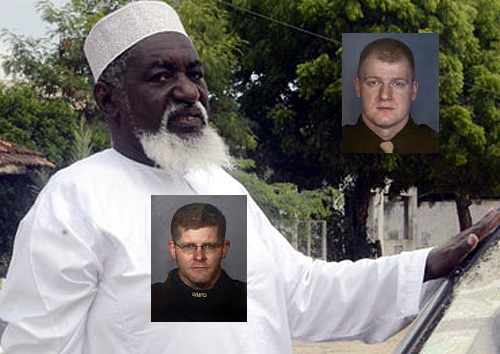
goodpeoplediedtodayYesterday extremists in Las Vegas and Mombasa killed good people of the establishment escalating the War on Terror.

Sheikh Mohammed Idris was shot once in the stomach by a drive-by hit squad in Kenya’s main coastal city, and he died shortly thereafter.

The sheik was famous throughout this trouble region of Africa for his moderate religious stance and his vehement opposition to jihadism.

Although the gunmen are not known it’s presumed that they killed for the ideological reasons that the sheik was so well known.

Not several hours later across the world in Las Vegas another two extremists shot and killed two policemen then a civilian before killing themselves.

The views of the Las Vegas killers were well known, and like the Mombasa murderers they killed for ideological reasons: that the establishment, the government and their agents, the police, were threatening their freedom.

It doesn’t matter that one set of killers might be more “crazy” than the others, which we don’t know, anyway. Nor does it matter that people like this are driven by injustice, perceived or real.

What matters is that the intensity of their beliefs is so strong that not even death deals compromise. Like soldiers of the oldest dogma, they will kill themselves for their beliefs and “innocent civilians” who happen to get in their way are fair game, too.

There is such certainty in their beliefs that they either get what they want or die trying.

This is terrorism. It’s the ultimate act of war, a sort of non sequitur … “Live Free or Die.”

There’s always been terrorism from the earliest times but it’s come to govern our lives today in ways much different from the past.

Societies are much more pervasive and powerful than in the past, so their opponents are more celebrated. A single act of terrorism is instantly known regardless that its actual impact on society is no greater than the murder of Marcus Aurelius.

And so societies feel more publicly aggrieved and become reactionary. A war of response and explanation is ignited between the adversaries as each sets up a battle to win. Winning is what it becomes all about: Assassinating the infidel and catching the murderer.

Terrorism becomes a process rather than a method.

In Kenya the extremely respected opposition political leader immediately announced he was attending the funeral today of Sheik Idris.

Back in the U.S. Harry Reid, the senator representing Las Vegas, called for more gun restrictions. Reid had previously said the militia with which the Vegas shooters claimed affiliation were “domestic terrorists.”

Terrorism is not going to go away. It never has. But whether it’s Afghanistan or Mombasa or Las Vegas, managing it must become the priority, not the false hope of wiping it out.

“Ending the War on Terror” is absurd. A single disenfranchised soul in the society of heaven can create terrorism. There will always be terror. There always has been.

And that’s the first step in managing it better than we currently are.

We need to recognize that even if the terrorists are nothing more than crazy, they weren’t born that way. They become that way. And it’s the society that they fight that facilitated them to want to destroy it.

We need to take responsibility for this mess. It’s as much our fault as al-Shabaab or the Bundy militants that good people died, yesterday.

Bring those murderers back to their childhood. That’s likely when the mistakes were made. What could we, the society, have done back then to ensure they didn’t turn out to become the ruthless murderers they are.

Israeli Fauxpolitik

Israeli Fauxpolitik

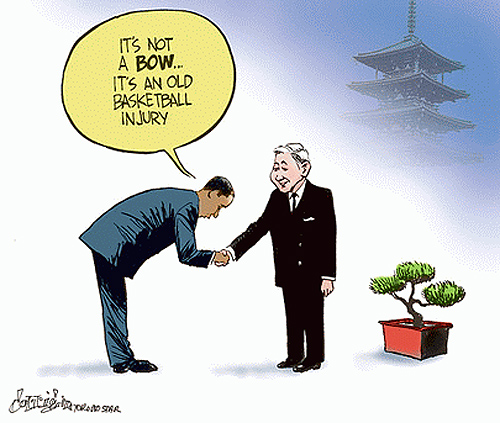
NotABowIsrael’s steamy response to Obama’s acceptance of the new Palestinian government reveals a massive hypocrisy in Israel’s dealings with Africa.

Yesterday Palestine sort of came together, as Fatah (that recognizes Israel) formed a coalition with Hamas (that doesn’t).

The attempted amalgam was further complicated by the fact that Fatah is considered a wholesome government by the U.S. and much of the western world, and Hamas is considered a terrorist organization.

Complications hardly end there: mixtures of oil and water neither lubricate engines or quench thirst. It’s not clear to me the new coalition will be able to do anything but split up, again.

Be that as it may, Israel exploded diplomatically.

Israel spent 24×7 explaining to the media how hypocritical the U.S. was. On today’s Morning Edition, the Israeli ambassador to the U.S. fumed.

I applaud Obama’s action because governments rarely mean what they say, only what they do, and it made me think of Israel’s long and “hypocritical” relationship with Africa.

Apartheid was prolonged, the war in Rhodesia/Zimbabwe was prolonged, the dictatorship of Robert Mugabe is currently prolonged, the development of Ethiopia was inhibited and horrible men from today’s Kagame in Rwanda and Amin in Uganda were sustained … because of Israeli diplomacy, often secret, often not.

Israel’s justification in these and other similar African initiatives was basically two-fold: enhance their national security and protect and recover African Jews. And the dedication to these two missions was uncompromisable, even if it created a conflict with other established credos.

When I was guiding in a once peaceful eastern Congo (now the DRC) in the mid 1980s, I flew my clients south from Beni to Goma on DC3s that came from Israel carrying weapons to the then Rhodesia. I’ve never been clear which side they were destined for, but wherever they were headed it was illegal… and that didn’t matter to the Israelis.

The current dictatorship of the weirdo despot Robert Mugabe is legitimized by an Israeli firm, Nikuv, which “manages” the farce called national elections which keeps Mugabe in power. Many Israelis are themselves furious, calling Nikuv Mugabe’s “fixers.”

The arms shipments to Rhodesia in the 1980s were likely more political than commercial, but it seems Nikuv might be more commercial than political.

In the runup to his mass slaughters, Idi Amin was supported heavily by Israel when the rest of the world had abandoned him. Shortly after staging his coup, Amin visited Israel, since no one else would have him.

Today in neighboring Rwanda, another despot is supported heavily by Israel, president Paul Kagame. Apparently there are some in Israel who believe that Tutsis are ancient Jews.

That seems like a stretch, but it’s no stretch that many Ethiopians were ancient Jews. I’ve seen myself primitive huts 3 or 4 decades ago with Torahs in Hebrew the only book around, and totems of ancient Israeli personalities like the Queen of Sheebah. I’ve seen entire villages that speak only a local dialect and Hebrew.

The belief that these “Falasha” were the Lost Tribe of Dan resulted in 30 years of Israeli involvement in Ethiopia so that it could repatriate 40,000 of the Falasha. The mammoth undertaking ended last year.

In order to facilitate this undertaking, the government of Israel was the only government except the Soviet Union that supported the barbarism of ruthless Ethiopian leaders in the 1980s.

My point has nothing to do with whether these Israeli efforts were right or wrong, but that they were practical to an extreme.

Obama’s search for peace in The Mideast is not practical to an extreme, it’s just practical. Israel’s condemnation? The pot calling the kettle black.

Follow The Law Or… ! Sing

Follow The Law Or… ! Sing

FollowTheLawThroughout sub-Saharan Africa the now distant revolutionary “spring” is continued only by the youth’s music.

Movements for real reform heralded by the February, 2011 “spring” have all but disappeared. Governments that came to power then have turned autocratic defending security and ignoring reform, all in the name of “fighting terrorism.”

Music like the Kenyan Sarabi Band seems all that’s left of the original revolutions. These highly charged politically progressive art forms are massively popular … but I guess not popular enough.

I concede it’s hard not to call kidnappers of the Nigerian school girls, Boko Haram, terrorists. But the reaction of Goodluck Jonathan’s government far surpasses America’s overreaching Patriot Act.

Using the tragedy as justification, Jonathan ordered a full-scale military war in the north of his country, grossly exceeding his constitutional powers.

In Kenya the implementation of a new constitution in 2012 that was widely praised worldwide has systematically been eroded by the current government’s successful power plays hog tying the theoretically independent legislature.

Feeding tribalism like a hungry dog, President Uhuru Kenyatta has rewarded support for a whole series of small measures in the legislature that in sum hugely increases his own power. All in the name of fighting “terrorism.”

Sunday afternoon the country’s largest stadium was packed to capacity with cheering crowds that only slightly exceeded the number of armed policemen and deployed military. When the president arrived in his new “bullet-proof” presidential Toyota, the crowd went mad with applause.

But his increasing authority lets him pick and choose which laws to enforce. Sarabi Band’s hit song, Fuata Sheria, means literally “follow the law” and implores Kenyans to look back to the constitution, away from corruption.

The song approaches desperation. “Follow the Law” is historically hardly a revolutionary slogan, but in this case it is. It’s a plea to return to the idealistic values of Kenya’s youthful constitution, currently circumvented by most of its leaders.

Terrorism is not new, but these overreaching reactions to it were begun by America and now are being adopted by much of the developing world.

I don’t think they work. The reduced terrorism in America since 9/11 is short term. Jihadists and other revolutionaries work through generations, not decades. Successful efforts against terrorism are not as wholly militaristic as America has taught the developed world they should be.

Britain in its fight against the IRA, or Spain against the Basque separatists; Germany against the Baader-Meinhof Gang, Japan against the Red Army, and even Peru against the Shining Light should be the models.

Those all included military components, but negotiations that conceded power and social policy to the adversaries were more important.

And they worked.

In the still maturing and youthful societies of Africa, America’s approach to terrorism has fomented retrogressive moves to dictatorship and large losses of human rights for entire societies.

The old leaders are all back, and their corruption seems now vindicated as they legislate new authority for themselves to “fight terrorism.”

Who Gets The Ivory?

Who Gets The Ivory?

justafewexceptionsA nasty America is emerging in response to new Obama rules to prohibit the sale of ivory within the U.S.

It’s never been fully recognized that the second largest market for ivory sales after China is the United States.

*****
EleStip: My necessary interjection whenever I write of poaching or ivory is to stipulate that I don’t believe that poaching is the most serious problem facing African conservation, today, or even elephants themselves. It’s (a) the human/elephant conflict; and separately (b), elephant overpopulation.
*****

Readers of this blog and other conservationists might not realize that there’s a huge part of America which doesn’t like conservation.

When the Obama administration first proposed the rules in February, there was a huge outcry. Hunters, musicians, retailers and rich grandmothers protested so vehemently that the rules have been toned down.

Fish & Wildlife’s new rules will not formally be implemented until June and can be continually downgraded as the public outcry increases. But I expect they will be severe enough to curtail the ivory market in the U.S.

Sales, auctions, and even gifting of preowned ivory will likely be prohibited.

The theory is that constricting the demand for something reduces its commercial value, which is precisely what conservationists want to happen with elephant tusks.

But the devil is in the detail, and while I applaud the overall move to further regulate ivory, note the alarming exceptions likely to be promulgated with the new regulations in June:
– trophies from shot elephants;
– antique ivory owned prior to 1976; and
– ivory acquired “legally” before 1990.

Those exceptions (and probably others) are so remarkably political in nature that they grossly undermine whatever morality the Obama administration is trying to evince.

It reminds me of the fact that Obama himself is the only chief executive in the history of the world to have issued a waiver to a hunter to bring a shot rhino from Africa back home.

So while the rules are severe enough to massively reduce the trade of ivory within the United States, the few exceptions are the politically powerful NRA, celebrity antique dealers and other rich well-connected families whose inheritances are now more secure.

In other words, big donors.

Worldwide, in fact, the ivory market is constricting. More and more large commercial retailers in Asia are themselves banning the sale of ivory.

This follows numerous moves throughout China over the last several years to ban retail sales of ivory.

I’m sure that these much publicized efforts have their loopholes, too, but it is discouraging that in America, far from where elephants live, the closest to the elite that rule our country and the richest and most powerful are exempt from doing what’s right.

Urgent Appeal for The Serengeti

Urgent Appeal for The Serengeti

Dear Grace & Other Careful Readers
Thanks. This blog is in error. The “petition site” (automatically) contacted me (their deadline for the petition is next week, June 1, 2014) and fed me the links that I took to be current. Fellow bloggers did the same and we contributed to each other’s errors. All the news below is one year old. As far as we know the eviction process is on hold as a result of a suit filed by Maasai leaders which is still alive in the Tanzanian courts.

Petition site organizers believe if they reach 34,000 signatures by June 1, 2014, they will continue the pressure needed to keep the evictions on hold, so please proceed reading and sign the petition. But my apologies to all my readers for syncing off by a year.

– Jim Heck


Desperately needed: your signature on and broadcast of a petition to stop Tanzania from giving away part of the Serengeti to Mideast princes.

Sign this petition and circulate it, now, now. We have little time.

Last year I reported that Tanzania President Kikwete announced that he was going to evict 30,000 Maasai from their homeland in Loliondo in northern Tanzania to enlarge an existing hunting preserve owned by potentates in Dubai and Jordan.

As with the stopped Serengeti Highway, the outcry was substantial, especially locally from the Maasai. Nothing more happened. Until now.

Presuming the resistance had died out, Kikwete announced last week the sale was going ahead.

Manipulating Tanzania’s incredibly corrupt laws, Kikwete has decided to designate this area as a “wildlife corridor” which allows hunting but forces the eviction of the Maasai.

Don’t be fooled by this sinister sobriquet. Kikwete and past Tanzanian presidents have close relationships with Mideast potentates, where most of these old politicians’ money is stashed.

This is a land grab if ever there were one.

And this time the impact is actually less on conservationists and tourists than on local Tanzanians.

“My people’s livelihood depends on livestock totally,” a prominent Maasai politician, Daniel Ngoitiko, told the Guardian. “We will die if we don’t have land to graze.”

And don’t think this means there’s a bunch of dirty nomads running around half naked chasing dying cattle. Loliondo has become an important agricultural hub for Tanzania. We’re talking about modern ranching.

Ngoitiko’s comments could just as easily be said word-for-word by any Texas rancher afraid of a government land grab.

I’m infuriated by Kikwete’s dictatorial stance on this, his total disregard for the Maasai community which is trying so hard and doing so well to modernize.

So just as they begin modern farming techniques, he drives a stake through their back forty. There’s everything in his actions to suggest he’d rather send the Maasai back to the Stone Age than help them develop.

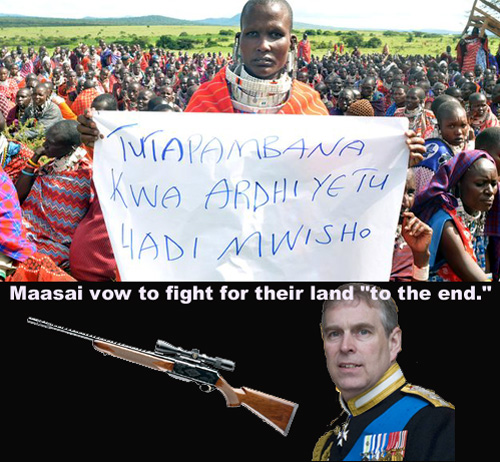
Ngoitiko told the Guardian, “We will fight against it until the last person is gone,” he said. More than fifty local Maasai officials said they will resign if the move goes through, effectively leaving a huge area without any local governance.

In an incredibly condescending dismissal Tanzania’s minister for natural resources and tourism, Khamis Kagasheki, was then quoted in the Guardian article as saying: “If the civic leaders want to resign, they can go ahead. There is no government in the world that can just let an area so important to conservation to be wasted away by overgrazing.”

This is equally a blow to the Serengeti, which the area is contiguous with. It’s a wedge between Kenya’s beautifully protected Maasai Mara and the Serengeti National Park.

Inserting hunting this far into the area could disrupt normal wildlife behaviors.

Please help. Sign the petition and circulate far and wide.

Sunglasses for The Darkness

Sunglasses for The Darkness

MugabeEver heard of a coup d’etat that’s announced in advance? Ever been to Zimbabwe?

The Great Dictator, Robert Mugabe, was once again caught on video visiting a cancer hospital in Singapore several days ago.

His visit to Singapore is not entirely secret: spokesmen for the government conceded he’s in Singapore when he didn’t show up for several important functions in Harare.

But the government denied he’s visiting the Gleneagles Cancer Treatment Hospital to treat cancer. He’s there, they say, for an eye checkup.

It’s long been rumored that the 90+ year-old president has been battling prostate cancer.

Meanwhile, back on the ranch, a political rally was held announcing a coup could take place at any time:

“By the time he comes back from his so-called medical check-up in Singapore, we would have taken power,” a widely respected opposition activist told cheering crowds at a large rally Sunday in a poor neighborhood of Harare.

Well, it’s Thursday and they haven’t taken power and if Mugabe’s still alive he’ll be back, soon.

That, you see, is what’s wrong with Zimbabwe. The opposition is so feeble that it must resort to explaining what it could do, rather than what it does.

The populace cheers what it could do, but dares not support what it does, because the one statistic as large as the fraudulent election results used by Mugabe for his current validation as president, is the number of missing activists.

Those like Job Sikhala, the labor leader turned politician who spoke above, travel about in a ring of armed guards. The government turns the occasional blind eye so long as Sikhala uses only the future perfect tense.

Responding to the widely reported rally, a Zimbabwe government official dismissed Sikhala’s remarks as “coming from a political party that is seeking relevancy.”

Touche.

Relevancy. Every time I think of Zimbabwe and Mugabe I just can’t understand how the people there have facilitated his dictatorship for so long.

Thirty years ago when Mugabe was just consolidating his power, the average Zimbabwean was far better educated, independent, entrepreneurial than the vast majority of their counterparts throughout black Africa to their north.

What happened? Why did they cave so completely?

We know some of the answers: many fled. While there was a white brain drain going on in South Africa the last ten years of apartheid, there was a black brain drain growing in Zimbabwe as the 1990s approached.

This was because the constitution forced on Mugabe by Britain and the U.S. guaranteed a white veto of any government action during the first ten years of Mugabe’s reign, from 1980 to 1990, even though whites were less than sixteenth of the population.

That was a mistake and the better off, better educated black Zimbabweans knew this. They had ten years to make their plans to depart, and tens of thousands did.

The second reason is that from the getgo South Africa has buffered Zimbabwe from international pressures to reform. This is because in the 1990s South Africa began to experience a huge flood of refugees from Zimbabwe, and they continue to do everything to stem the tide.

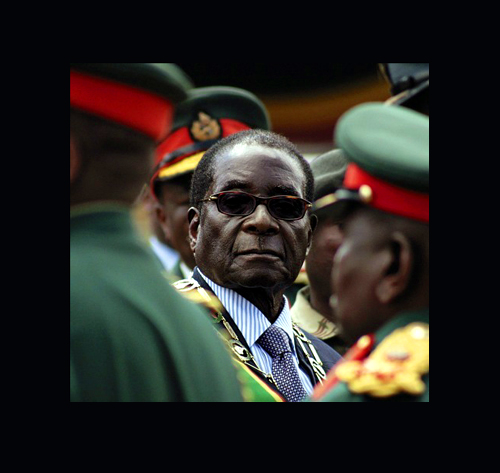
But even so the man who wears dark sunglasses even in the movie theater and his regime is so repressive if not retrogressive I remain highly perplexed.

So perplexed I couldn’t even be surprised if the preannounced coup happened.

Boko Tea

Boko Tea

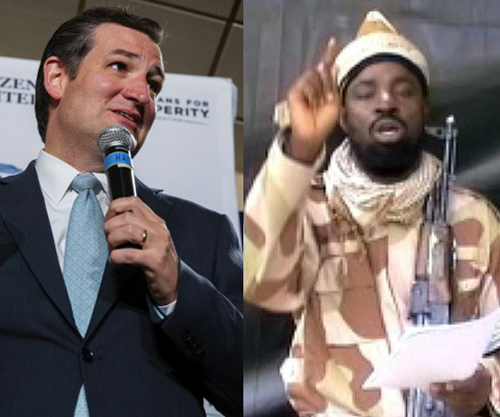
T-PartBokoHaramBoko Haram and America’s T-Party have a lot in common, and neither will disappear until their adversaries adopt some of their moral pinnings.

Boko Haram is on the rise. For more than a decade it’s caused widespread death and destruction in Nigeria, but with its new found fame, it’s expanding into a neighboring country.

“Right now, we are being infiltrated by Boko Haram,” a colonel in the Cameroon army told an Africa-wide press service last week.

Some argue they are “on the run” from northern Nigeria, their stronghold for more than a decade. Others, including myself, believe they’ve been strengthened by their recent worldwide attention.

The group continues to hold nearly 300 kidnapped schoolgirls from northern Nigeria. Many of the world’s western powers are helping Nigeria try to find the girls and eradicate the organization ever since the world’s media locked onto the story.

Like all politics in the west, Boko Haram has become entertainment:

The world press went ape yesterday announcing that primitive African tribes were now “on the hunt” for Boko Haram.

An extremely articulate, gentle and soft-spoken Boko Haram killer in a scarf-wrapped face was the centerpiece of last night’s CBS evening news.

“Boko Haram’s attacks … should be understood as part of an ongoing political-military campaign …to purge, conclusively, Nigeria’s Northern Muslim society of the source of its culture of corruption, decay and mismanagement,” says a Nigerian expert from King’s College, London.

Boko Haram views kidnapping girls from a corrupt society and turning them into tendrils of antiquated Islam a noble feat. That’s because in most of Africa you have to stretch way back to antiquated Islamism to find societies that were not corrupt.

And those were the precolonial days spoken about so highly by most jihadists. Corruption began with colonialism. It’s never ended.

Corruption in all sorts of forms is the only treatise the T-Party can rationally expound. When it gets into specific issues and policies it becomes mired in intellectual bureaucracy. Purity is the key.

As it is with Boko Haram. Little is ever argued in the academic or religious world about the tenants of Islam, or for that matter, the tenants of Christianity, or for that matter, the iconic folkways of the Irish or Poles.

Rather the purity of those tenants is what is argued. And there is little argument that Africa today, Nigeria in particular, is corrupt.

As is America. Nigerian corruption might reach its apex in a High Court judge taking money from an oil company. American corruption is more likely the Koch brothers airing 10,000 TV ads lying about Obama’s citizenship.

Neither example is more corrupt than the other. It doesn’t matter that one might have a greater impact in its respective society than the other. They’re both corrupt and it isn’t effectiveness but nature that generates the violent opposition of the likes of Boko Haram or America’s T-Party.

More than a year ago the Atlantic ran an excellent piece arguing that Democrats will only achieve supremacy over the T-Party if they adopt some of the T-Party’s ways:

“It is time for Democrats finally to steal a move from the Republican’s playbook… a Tea Party for Reform,” Lawrence Lessig argued in that article.

Even before that, analogies were being made between the T-Party and Occupy Wall Street.

Purity.

It’s a hard stake to drive into American or African politics, but it’s what we all need right now.

Soldiers At Bay

Soldiers At Bay

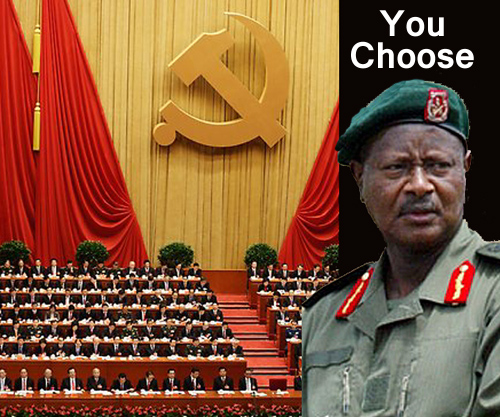
Commie or DespotRevolutionaries make lousy politicians, and that’s why South Sudan is so unstable.

Five theoretically democratic countries in sub-Saharan Africa were born of revolution: Uganda, Zimbabwe, Ethiopia, South Africa and South Sudan.

(Modern Rwanda, which rose from the pyre of the 1994 genocide, never pretended to be democratic. Kenya’s election violence was too short-lived and geographically contained to be considered revolution. And The Congo and Somalia aren’t finished, yet.)

Of the five, South Africa is doing just fine if awkwardly so. Ethiopia is a far, far distant second, and Uganda and Zimbabwe are now lost causes. South Sudan, the newest, is still figuring out its peace land legs and right now, doesn’t look too good.

These five countries provide an excellent study of modern day transition from revolution and suggest what South Sudan must do to succeed.

All five countries sustained a revolution against their previous regime for a generation or more:

South Africa’s ANC was the revolutionary, fighting arm against the Nationalist government that blew up the factories and staged a couple fire bombs while figuring out ways from time to time to close the mines. The ANC is now in control of South Africa’s politics and has been since Independence twenty years ago.

The Ethiopian regime is composed of a segments of rebel groups pursued by the Terror Triumvirate, which assassinated Emperor Haile Selassie in 1974.

The current Ugandan and Zimbabwean regimes consolidated power after violent ousters of repressive regimes (Idi Amin in Uganda and Ian Smith’s UDI in Rhodesia).

The South Sudan is the newest, created from a 2005 peace deal with (north) The Sudan that led to independence in 2011.

All five countries pretend to be democratic and are founded on constitutions based on democracy. Only South Africa is.

Uganda and Zimbabwe are iron-clad dictatorships. Ethiopia is more communist than dictatorship albeit with a pretty wide net of political involvement across various segments of Ethiopian society.

We can predict what might happen to South Sudan based on what happened to the other four.

In all cases, the men (and it’s exclusively men) who shot guns and murdered adversaries of the ancien regime are now the political leaders. As George Washington summed it up when leaving a single term in office, soldiers do not make good democratic leaders.

Foreigners are eager to cast these country’s difficulties as ethnic, and to be sure the internal adversaries are clearly ethnically different. But I think as suggested by Hilary Matfess in an article in Think Africa Press, today, there are other more important reasons.

Once fault lines occur in a society, ethnic groups tend to congeal on one side or the other, and that’s certainly what’s happened in South Sudan. But that doesn’t mean the ethnicity or racism is the actual cause.

Ms. Matfess argues that it’s the constitutional makeup, but I argue that the constitution was made up by soldiers, and that’s the problem.

In a country as diverse, successful and developed as South Africa, soldiering onto the political stage worked well for the ANC, but soldiering into governance is not working so well. Nevertheless in South Africa, autocratic moves by politicians have been checked.

South Africa will do just fine as soon as these old soldiers go, and they are slowly but surely dying or being forced out.

Uganda and Zimbabwe, however, weren’t able to make the transition that I’m sure South Africa has, and both have devolved into despotic regimes.

I see Ethiopia as trying very hard not to slip into a despotic character, and the way it’s trying to do so is by a very restrictive, highly controlled mostly communist system that is forcing the old soldiers to stay at bay. Certainly without this very powerful central authority in Addis, the country would start fighting, again, and one or other of the soldiers would come to power as the despot exactly as Museveni and Mugabe have in Uganda and Zimbabwe.

This is South Sudan’s option, I’m afraid. Lacking the development and diversity that South Africa had historically, South Sudan must figure out “how to keep the old soldiers at bay.”

The only way is by a centrally restrictive “communist” government. All that democracy will do is facilitate war.

This is exactly the opposite of what Ms. Matfess believes, even though I’m using her argument to suggest it. But democracy cannot work until the population is educated enough to engage its mechanisms.

So if The West wants peace in South Sudan, it’s going to have to accept communism.

Now there’s a twist.

Killer Bee Helpful!

Killer Bee Helpful!

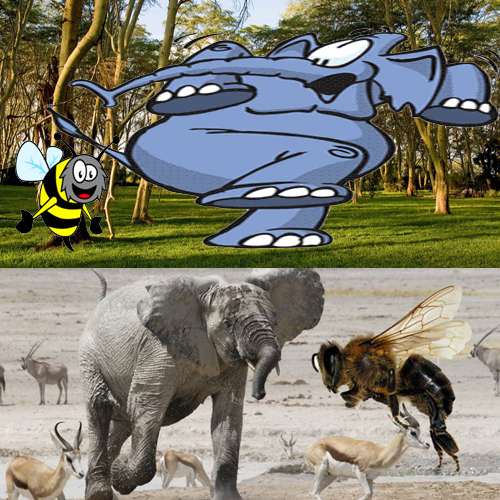
beessaveelesI love this story! African “Killer Bees,” media ingrained mythical honey bees, may be what saves elephants from extinction!

My truck with many conservation organizations today is their scandalous exaggeration of elephant poaching, albeit I stipulate that elephant poaching is a growing problem.

In status quo (which includes increased elephant poaching), elephants are not going extinct.

But if extinction — or even seriously significant decline is postulated, the cause is not poaching. It is the human/animal conflict that is besetting virtually every major African game park on the continent.

Rapidly increasing human populations — particularly agricultural communities around dwindling protected wilderness habitats – is the main cause.

Combined with sluggish economies, massive unemployment, and a growing Asian demand for ivory, the conditions are ripe for increased elephant poaching.

I believe that by minimizing human/elephant conflicts, poaching will decrease.

Despite a couple television specials notwithstanding, elephant poaching isn’t easy. A savvy band of criminals takes considerable risk trying to down a jumbo. Once down the ivory harvest isn’t easy, either.

Many poachers are seriously injured in the hunt, and going to a medical clinic isn’t exactly possible unless the practitioner agrees to overlook the cause of your calve gash, which she isn’t supposed to do.

Many injured poachers get medical assistance from local villagers.

Very special knives and other tools for extracting the full tusk must either be uniquely forged by local blacksmiths or honed by artisans. Again, this requires those tradesmen to “look the other way.”

Community sympathy for poachers facilitates poaching… might be necessary for it to happen at all.

That sympathy comes from two different places:

Foremost are the farmers in those sympathetic communities adjacent wilderness areas who are trying so desperately to grow corn and water melons, two of the favorite foods of wild elephants, today.

Joining them are headmistresses, community leaders and clerics who are incapable of convincing a jumbo not to walk through their building.

Secondly, the sympathy comes from the politico enraged with the government’s inability to compensate farmers and preachers and school boards for their elephant damage, while generously financing more and more upmarket tourist camps.

The threat to elephants is that they live in a place where people no longer want them. Tourism revenue continues to decline as a portion of African countries’ wealth. Agriculture, education and media are now all more important.

So it seems to me that if we can find some wonderful way to keep elephants where they belong, poaching will become harder and harder to accomplish.

We’ve been trying everything:elebarrier

Fences.

Electric fences.

Massive electric fences with big moats.

Pepper spray.

Siren horns.

Air guns.

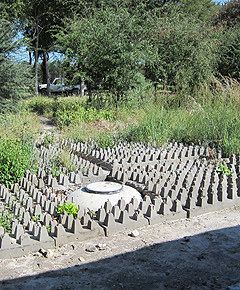
The best ever I’ve found I just experienced a few weeks ago, again, in Botswana’s Nxai Pan National Park: surrounding the toilet and shower complex for the public camp site in the park are a dozen rows of cement blocks fabricated with tiny towers that have a steel rod piercing upwards from the middle.

Elephants really don’t like that. But it’s way, way too expensive for anything but a tourist who has to go.

Alas. African Killer Bees!

Beehives every ten meters linked by special trigger wires, so that when an elephant only lightly touches the wire, the bees are enraged.

Save the Elephants, the University of Oxford and the Disney Worldwide Conservation Fund collaborated on this huge and very successful study.

You see, elephants have bought into the myth that these are “Killer” Bees.

Well, actually, researchers noticed a long time ago that elephants avoided eating their most favorite tree, the acacia, if bees were on the blossoms.

“This was followed by behavioural experiments demonstrating that not only do elephants run from bee sounds, but they also have an alarm call that alerts family members to retreat from a possible bee threat,” project leader Lucy King told AllAfrica.

Hey. Anybody out there can design a chip to scream out an elephant bee alarm?

Democracy Secures Misery

Democracy Secures Misery

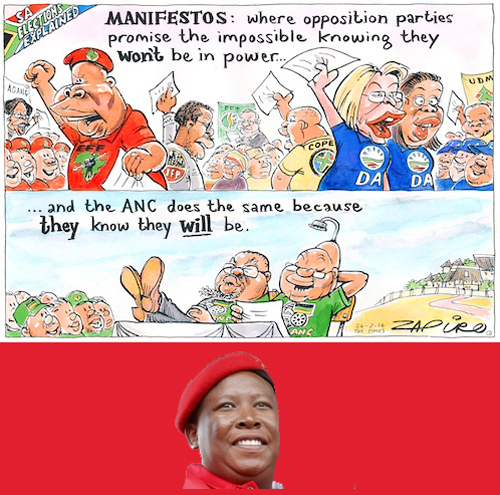
saelectionSouth Africans today “stayed the course” with the bungling ANC in control, but just barely. Change is in the air.

Three weeks ago I predicted that the ANC, which won 70% of the votes cast in 2004, would win less than 60% this time.

With 98% of the votes counted, the ANC has won 62%. Click here for current, updated results.

I was routing for an ANC loss. I wasn’t hoping for any other specific party’s win, because there are so many other parties and the ANC’s main rival, the Democratic Alliance, seems incapable of organizing the wide and disparate opposition to the ANC and so seems destined as a minority voice, forever.

The ANC’s problem is its top heavy leadership, steeped in buffoonery, bribery and bungling. Whether it’s President Zuma’s dozen wives or former President Mbeki’s certainty that AIDS is not a virus, these are the former freedom fighters who obviously never took Civics 101.

Except for Mandela, they lack any skills except survival.

In the 20 years since Independence, and the 12 years since Mandela left taking rational governance with him, the ANC has squandered South Africa’s resources and turned its political hierarchy into the same old self-serving idiots that lead a number of developing African countries.

And that’s the point. South Africa need not be a “developing” country, anymore. It’s rich, prosperous and filled with opportunity. But all this potential has been extirpated by the last two presidents and their cronies in scandal after scandal.

So my 2% mistake in calling the election you can rack up to hope.

Read my recent blog for my explanation as to why South Africans still support the ANC.

The ANC, however, is definitely on the decline. In the province of Gauteng, where Johannesburg and the capital Pretoria are located, the ANC won only 54%. With its mining, banking and other industry, this is South Africa’s most important province.

In the second most important province where Cape Town is located, the ANC won only 34% of the votes. There the Democratic Alliance holds solid control.

What I’m concerned about is that several very radical if incendiary parties, like the one led by Julius Malema, are growing in support. These are radical groups that would significantly alter South Africa’s democracy.

Malema’s EFF (Economic Freedom Fighters Party), showed some significant improvement this year, winning just under 7% of the vote. But it won nearly 13% of the vote in the mining provinces where it commands huge support from the miners.

And the EFF’s first plank is to nationalize the mines and most everything else.

Just as in America, where the evangelical T-Party rose from the ashes of a generation of economic stagnation, so the EFF rose from a generation of poor governance.

It’s unfortunate that “clean government” legitimately can often be associated with authoritarian rule, the beneficent dictator who might feather his own bed but rarely allows others to do so. That’s how I, and I think many hard working South Africans, see Malema.

Nationalization, rapid redistribution of wealth, clamps on lying media, exchange controls … all values some of us hold but which never seem to work too well in practice, particularly in today’s capitalist world.

Yet that is exactly what Malema or incarnations thereof will do to South Africa if the ANC continues its buffoonery and reasonable alternatives like the Democratic Alliance are unable to forge strong alliances.

Bottom line? (1) Disappointment that the ANC showed slightly more support than expected or hoped for. (2) Some hope that the ANC’s dwindling support might be a bucket of cold water dumped on some hot heads. (3) Revolution in the wings.

Fifty Years Later

Fifty Years Later

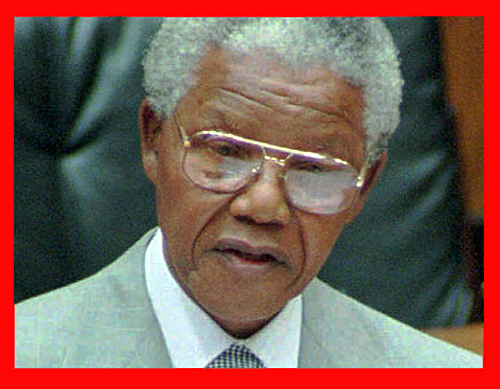
mandelaFifty years on Sunday, one week after the merciless white mercenary Ian Smith wrested control of independence in Rhodesia (Zimbabwe) from the British, Nelson Mandela delivered his greatest speech.

He was in the docket in Pretoria following two years in jail for a variety of charges including murder and sabotage.

Both John F. Kennedy and Lyndon Johnson supported the apartheid regime that brought Mandela to trial. America’s practical diplomacy, which Kissinger would later name realpolitik, needed South Africa’s trade, its uranium, its ports and four missile sites as a contra validation to Russia and China’s inroads in the continent.

The Secretary of State, Dean Rusk, blocked the U.S. from joining the economic sanctions increasingly coming from Europe, warning that weakening white rule would lead to “Communist infiltration.”

Communist infiltration. Inferior race. Slavery. Concepts at one time or another trumped all the glorious democratic principles on which the U.S. was supposedly founded.

And even more ironic that Lyndon Johnson’s great 1964 legislative achievement was the Civil Rights Act.

Alone in America stood Robert Kennedy, who after being denied a visa to visit South Africa in 1965 got one in 1966 and raised all sorts of hell. But not even this was necessarily exemplary morality. Kennedy hated Johnson and seemed positioned to beat him in national elections.

The Founding Fathers were out to lunch in 1964.

During my lifetime I have dedicated my life to this struggle of the African people. I have fought against white domination, and I have fought against black domination. I have cherished the ideal of a democratic and free society in which all persons will live together in harmony and with equal opportunities. It is an ideal for which I hope to live for and to see realised. But, My Lord, if it needs be, it is an ideal for which I am prepared to die.

There have probably been many historical personalities who valued their convictions as strongly and who then, died, and who then, we know little about. The fact that Mandela was not sentenced to death as he could have been likely reflected the apartheid regime’s belief that killing Mandela would have sparked an irrepressible revolution.

I’m not so sure. But I am sure that’s what the Bothas and Verwoerds thought would happen. They were not nice men.

I’m not sure that unwavering conviction is always a good thing. Consider the evil doers of the T-Party or the loonies in the Creationist Movement. Consider the Joseph McCarthy’s or the Klu Klux Klan. Belief just for its own sake can be wretched.

Mandela knew he was not going to be sentenced to death. He knew the white regime better than any of his colleagues, since he had practiced with them as a lawyer. He had felt the bitter racism of his jailors.

He knew that to challenge them with killing him was an ace in the hole. It flipped their own puritanical certainties on their buff. I don’t think Mandela believed the non-white population of South Africa would explode if he were killed. He just knew that his white oppressors thought so.

So I agree that this is a great speech but not because of what it said, but because of what it didn’t say.

He didn’t dare them to execute him. He played on their fears of black domination, based on their own visceral understandings of white domination.

Mandela was a great compromiser. He was not T-Partyish. He was the consummate politician who nevertheless managed to live by a set of principles. And that’s why when he came to power, the whites who remained in South Africa prospered.

Jim posted this blog in Cape Town.

SA Election in Balance

SA Election in Balance

sascaleofjusticeIn three weeks South Africans will likely reelect the ANC to power, but it will also likely be the last time.

Standing for a second term, President Jacob Zuma, wouldn’t have a chance in most any other open democracy. His playful life style and his list of scandals would doom any earnest candidate in any place but South Africa.

In fact in his last two political rallies he was booed, and people in the audience started throwing stones at cars.

So why will he prevail?

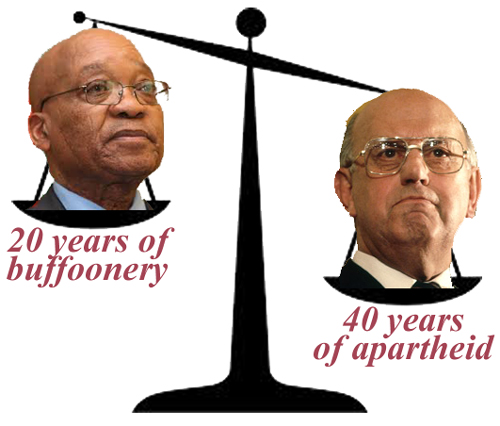
Twenty years since the end of apartheid memories of white rule during the oppressive years of apartheid still run strong. Apartheid began with the Nationalist election victory in 1948, and the insidious laws that began implementation in the early 1950s. That was more than 40 years of politics that was arguably worse than Zuma, today.

So it is remarkable to think that the ANC might not have the staying power that the apartheid regime had.

In 2004, the ANC won 70% of the votes. In 2009 it was 65%. I predict that this time it will be under 60%.

The ANC knows it’s in trouble. In fact, ANC candidates have pledged if they can wrest control of the Western Cape (Cape Town) – which is extremely unlikely – that half of all white civil servants will be immediately fired.

This play on racism marks the desperation of the failing ANC, and Zuma’s ineptitude in particular. It’s typical of banana republics like Zimbabwe, not of mature democracies of the sort South Africa can be.

It hinges on the belief that “you had your 40 years of oppression, we now get ours.”

To be fair ANC officials at lower government levels seem to be doing a decent job. It’s the heavies at the top like Zuma who are creating the aura of buffoonery. And the old adage that all politics is local is also a significant reason that the ANC is expected to win, again, this time.

But their support is dwindling, and with Mandela gone, and with the years clicking by, the end of the ANC can be imagined. The next national election will be in 2019. I expect the ANC will lose, then, unless the antics of their leadership change radically.

Or as many suggest, a palace coup takes place that ousts the old revolutionaries for the technocrats being produced, today.

The South African president is not directly elected by the populace, but by the lower house of parliament. The process is nearly identical to the election of America’s Speaker of the House.

A party convention that disapproved of a sitting president would likely be sufficient for that person to resign or face a humiliating election whipping by his comrades. The magic number being bantered around for Zuma’s survival is 60% or more of the May 7 votes for the ANC. Less, pundits say, and Zuma’s out.

It’s going to be close.

Jim filed this blog from Cape Town.

Joining The Club!

Joining The Club!

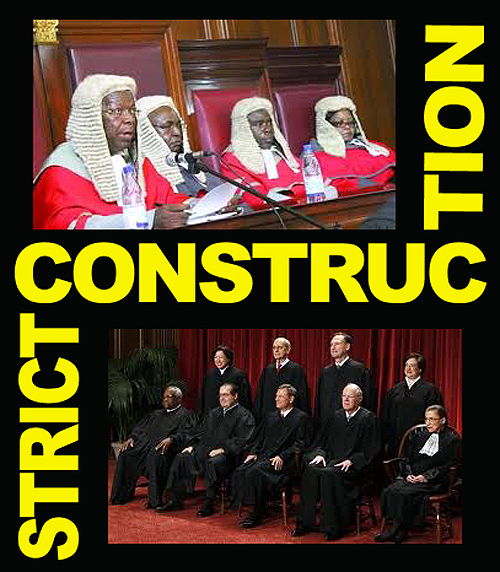
strictconstructionCongratulations, America! You have now joined the exclusive club of despotic African societies!

Yesterday’s Supreme Court decision aligns America with numerous African dictatorships and sequesters us from virtually all the rest of the developed world.

The increasing number of despots and autocratic lawmakers in Africa is directly linked to democracies which “freely and fairly” elect them. “Freely and fairly” is governed by individual African constitutions and laws, as everywhere in the world.

Constitutions and laws in Uganda, Zimbabwe, Cameroon, Angola, Ethiopia – among others – require their leaders and lawmakers to be democratically elected. The most recent atrocity was in Zimbabwe, where even the European Union could not find mistakes in the democratic process which brought the dictator Robert Mugabe to power for his 34th year:

“The EU congratulates the people of Zimbabwe for a peaceful vote and for turning out in high numbers. It welcomes the generally peaceful and orderly manner in which the elections were conducted.”

Zimbabwe’s election was hailed as free and fair by South Africa, that was appointed by several world agencies as the principal moderator, and the African Union.

Here’s the point: Mugabe is horrible for his people and somehow, they are fooled into thinking otherwise.

That’s what money does. That’s what television advertising that tells lies which cannot be challenged in court does. Most people can be convinced by repeated lying.

The specific successful social mechanics that create such a bad outcome were perfectly documented by Human Rights Watch analyzing Zimbabwe’s January elections:

– voter intimidation;
– “ghost” or duplicate voters;
– citizens prevented from voting in opposition areas; and
– state media support for incumbents.

While I think there are plausible arguments that America does similarly, that’s not the point, either. All the HRW infractions cited are legal in Zimbabwe.

If a so-called “democratic society” allows practices clearly intended to dupe or otherwise undermine the free will of its people, the elections can nonetheless be “free and fair.”

So it’s hard to fault our Supreme Court for the decision. It was a logical one. What is the problem is not the Supreme Court, it’s America’s constitution that the Court is “upholding.”

Money rules. Drill down to all the horrible practices in Zimbabwe or any African country, and you get to “influence” which is “money.”

As soon as a certain oligarchy in any society is able to control a certain large percentage of that society’s wealth, they can sustain themselves “freely and fairly” using democracy.

That’s what yesterday’s Supreme Court decision affirms. The American constitution was created more than 200 years ago to protect independent landowners from British domination: to protect the oligarchy capable of ruling distant America.

Albeit that these great men might have been beneficent, they had no intention of ceding any power whatever to slaves or other minorities, much less women or the poor. They constructed a government to protect themselves as better than their British overlords.

The chances of changing the American constitution right now are less than changing Zimbabwe’s, yet that is exactly what has to happen to remove America from the putrid stagnation of a despotic future.

Jim filed this post from Karatu, Tanzania.