Election Day Night Whatever

Election Day Night Whatever

VotedEhElection Day in America is of no interest whatever in Africa, completely unlike the elections two years ago. Do Africans know something we do, too?

Two years ago the African press was filled with American election news. Yesterday and today I could hardly find a single story.

“A handful of toss-up US Senate races this week could hold the key to whether the stock market glides through the year-end in a typical post-midterm election rally,” from South Africa’s MoneyWeb on-line business service is typical of ‘that’s about it.’

Not even blogs, exploding about the American election two years ago, were interested.

To virtually every African, of whatever politics or economic class, the outcome of today’s election in the United States means virtually nothing.

The only relevant if annoying interest is whether there will be a clear outcome, and that muddy situation seems of interest only to high-end investors in Africa:

Reminding readers of the situation with George Bush and the uncertain election then, MoneyWeb worries that an uncertain outcome in the Senate will make the markets volatile.

Uh-huh.

Kenyans’ election commission leaders will actually be on hand in the U.S. to witness the election.

“There is a lot to learn from this election. As you know, America has very advanced electoral institutions that can be very helpful to us in our quest to improve the way we conduct our elections,” the commission’s chairman said today in Washington.

So one must ask: to what avail?

Democracy isn’t what it used to be, in my opinion. My views, your views, figure less than ever in what is happening in our country or community.

My reasons for this are probably yours, too: if it isn’t that I’m being swayed or fooled, lied to or tricked by fancy ads and robo calls and well groomed former leaders under lights, I’m just too darn fed up with the whole thing.

Nothing seems to change. Not for my way or your way. The old guys are still in power.

Hillary vs Bush? Wow, now that’s a fresh of breath air, ain’t it?

Happy Halloween, Ebola Sir

Happy Halloween, Ebola Sir

halloweenebolaNot even the outstanding basement haunted house that I so successfully ran when my children were in middle school can begin to achieve the truly absolutely unbelievable fears of ebola stoked by despicable American politicians.

“An epidemic of fear can be as dangerous as an epidemic with a virus.”

Maine health-care providers, led by the executive vice-president of the Medical Association of Maine issued that quote, in response to Maine’s T-Party governor’s abrasive and ignorant actions against a health care hero who just returned from West Africa.

A third-grader banned from attending her Milford, Connecticut grade school because she just returned from a wedding in Nigeria where she was the flower girl, had to get a court order to go back to school.

Louisiana Governor Bobby Jindal sent out letters to recent returnees from West Africa who were planning to attend this weekend’s convention in New Orleans on tropical medicine, advising them they shouldn’t come.

A Strong, Maine, elementary school teacher was ordered into a 21-day quarantine because she just returned from her vacation in Texas!

Not only did parents panic when the principal of the Hazelhurst Middle School in Mississippi returned from vacation in Zambia, so many pulled their kids out of school, it closed!

“Principal Lee Wannik had returned to school a day early from a recent trip to Africa, where the Ebola virus has been spreading fairly rapidly. Principal Wannik has just returned from attending the funeral of his brother in Zambia, Africa. A meeting was held Tuesday, October 14 in the school’s auditorium, to try to calm parents and officials who wanted the principal to leave permanently.”

Zambia is thousands of miles away from the epidemic, further than London, with no viral epidemic outbreak there and no history of ever having had one.

The day after the parents pulled their kids out of school, the rumor spread
that the principal actually had ebola.

Tuesday Nigerian applicants to a community college 60 miles from Dallas showed their rejection letters to the press: Elizabeth Pillans, the Director of International Programs, confirmed that “Navarro College is not accepting international students from countries with confirmed Ebola cases.”

The applicants who revealed the letters are from Nigeria, which is “ebola free.”

The DeKalb County (part of Atlanta) Georgia K-12 school board issued the following statement yesterday:

“…no new students from Ebola-affected West African countries, including Liberia, Sierra Leone, Guinea, and other affected areas in the United States will be enrolled or allowed to attend classes on school campuses without proper medical documentation and approval by the Superintendent.”

Yesterday Dallas County Judge Clay Jenkins, notable for supporting the grieving family of Thomas Duncan who died of ebola there, told the press:

“…my wife who was in tears [was] told that she can’t work in the [school] cafeteria by some other moms because she might have Ebola, because I might have Ebola, therefore my child might have Ebola, [and] maybe they all need to leave school.”

There’s more: London’s very somber and highly respected Guardian Newspaper ran the following headline this week:

“Panic: the dangerous epidemic sweeping an Ebola-fearing US.”

Follow the link above so that you can read how American Airlines flight attendants locked someone in an airline bathroom because she vomited, how a journalism department at Syracuse University disinvited a Pulitzer-Prize winning reporter because he had been in Liberia, and on and on and on.

Let’s stop. Drill down into each of these and you drill into a conservative, often T-Party community. I’m not saying this is wholly restricted to Republicans. My own democratic governor up for re-election is acting just as immature.

But we’ve got to fight back. The gloves need to come off. The divide is clear. We can’t be polite or shy. The more conservative an area is, the more likely it’s been fomenting this hysteria.

I’ll leave it to others to study why. Meanwhile, I’m pleading with you to join me in calling out the brazen fear-mongers wherever you see them.

Fight back. Inject some sanity back into America next Tuesday.

Between Black & White

Between Black & White

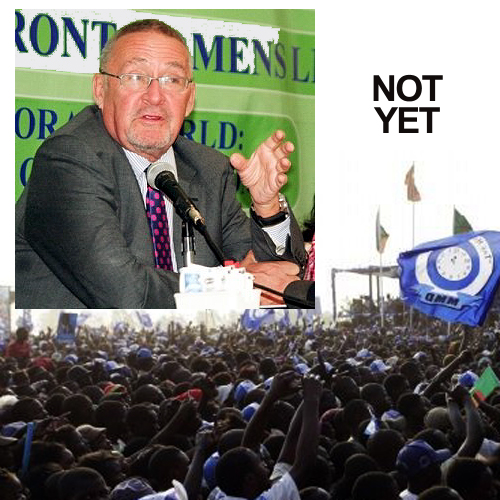
NotYetScottWhite fear of black in America is profound but black fear of white in Africa is even more profound.

Currently of Africa’s 53 countries, only one is being led by a white man, and that came as a great surprise to most in the world, and in fact, to him.

Or did it?

Guy Scott was a close friend for many years of the president of Zambia, Michael Sata, who died early yesterday morning in a London hospital.

Scott’s Ph.D. in agriculture, his birth in Livingstone and his outspoken dedication to remaining essentially unmeaningful except as a symbol gave the former president all sorts of political hedges and foreign notice.

So Sata’s rise to power was never without Scott at his side, and much of Zambia saw this very unusually blended team as just what the country needed four years ago. And so it proved so.

Not because of what Scott brought to the team, but specifically because what he didn’t.

Many vice presidents around the world have no power. It’s a peculiar anomaly of the executive type of democracy that the man designated to replace the dead leader has so little to do or say until that tragic moment comes.

Yet it comes quite often. Presidents of democracies have a very high fatality rate, and not just from assassination. Many don’t achieve the position until they’re quite old and sick. That was the case with Sata, and many wonder if certain Zambians allowed Scott to be put on the ticket as vice president for that very reason.

African executive democracies are almost all much more executive than in America. Each time Sata left the country, he had the power to appoint an acting president, and it was never the white face.

In the last several years Zambia like many African countries has been actively implementing piece by piece a new constitution. Zambia moved faster and faster as Sata got sicker and sicker, but Tuesday the race ended with Sata’s death.

One of the pieces currently up for consideration would eliminate the requirement of the old constitution that limits the president only to persons whose parents were born in Zambia.

Among the reasons this is so contested is because Michael Sata’s son, the very popular current mayor of the Zambian capital of Lusaka, was born to a Sata wife from Malawi.

The mayor, known commonly only by his first name Mulenga (just to avoid muddying the waters), is technically no more eligible than Scott to run for president, but he commands a very powerful political wedge in current Zambian politics.

Scott was born in Zambia in 1944, but his parents were born in Scotland. The Sata/Scott team headed a very popular political party in Zambia, brought to power in no small part because of anti-Chinese sentiment that swept over this fairly industrialized country the last few years.

Chinese investment in Zambia is as intense as anywhere in Africa, but the Chinese ran into hurdle after obstacle when trying to quell the power of Zambian unions.

In his recognized lack of power, Scott often remarked disparagingly about the Chinese as the perfect mouthpiece for his powerful boss. What Scott said was presumed to be what Sata believed, even as Sata negotiated more and more Chinese investment.

They were a perfect team.

The moment Sata died and Scott was confirmed the interim president yesterday, Zambia’s incessant talk of coups heated up:

“…it is a period for the people of Zambia to reflect as to whether this is the kind of constitution we want [or one] that could provide a different scenario all together,” Scott’s African lawyer told the press yesterday in what many consider setting the stage for a herculean political battle.

Sata loved Scott but not so much his son, Mulenga, who hates Scott. The political opposition hates them all, and their leader has already announced he will run for the president.

In my opinion Scott isn’t qualified to be any country’s leader. His crass remarks about Chinese and his oft-stated support for the neighboring and ruthless dictator, Robert Mugabe, disqualify him in my view. He served a cute purpose for a while.

But also in my opinion a white face couldn’t make it yet in any African country. This is where America stands above Africa: Obama may be facing some of the most racist obstacles to governing of any man alive, but he did ascend to highest office.

In Africa, not yet.

Don’t Vote

Don’t Vote

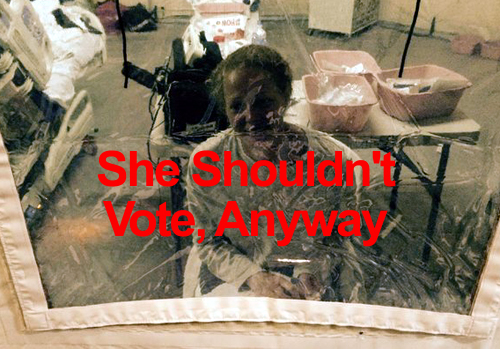
sheshouldntvoteThe depths to which some Americans have descended in an hysterical attempt to protect themselves against ebola has become immoral.

The airport quarantines of health workers arriving from West Africa is dead wrong. It will impede the health services and trade, which West Africa must have to recover, and many more people will die.

In a worse case scenario, the situation which had become better will slide into worse, and the threat to Americans will increase substantially. The policy is self-destructive.

Then why is this happening?

Politics. American politics has become so corrupt our democracy is now impotent. The electorate has lost the ability to analyze issues and is controlled by false claims and fearful media.

Governors Quinn, Cuomo, Scott and Christie are hardly bar chums.

Yet they walked in lockstep to solicit their electorate’s hysteria, because they are all about to lose power, and they are getting votes however they can.

Of course their actions reveal an electorate – if they’re correct – that’s slum ignorant. Are you truly so ignorant? Or like me, do you feel helplessly manipulated?

My own governor, Illinois Pat Quinn, is no angel but I did plan on voting for him as “the lesser evil.” His challenger, Bruce Rauner, is no alternative for a progressive like myself.

So I now have no choice but not to vote for either. This is hardly democracy at work.

But it is at least myself acting on the truth that I know:

The four governors that enacted this barbarian policy are killing people in West Africa and not increasing the protection or health of their own citizens.

In fact, the policy endangers their own citizens’ health and well-being.

This political act against self-interest is what has been happening to America for a generation. Whether it is the senior voting to end Medicaid or the food server voting to end a minimum wage, Americans have been brainwashed with a thousand false ideas to act against what they know is best for themselves.

And now this toxic social personality threatens the lives of thousands.

Facts be damned. Scream don’t think. The man will do anything to stay in power.

I can’t keep him out. But I won’t vote him in.

Zuma in Wonderland

Zuma in Wonderland

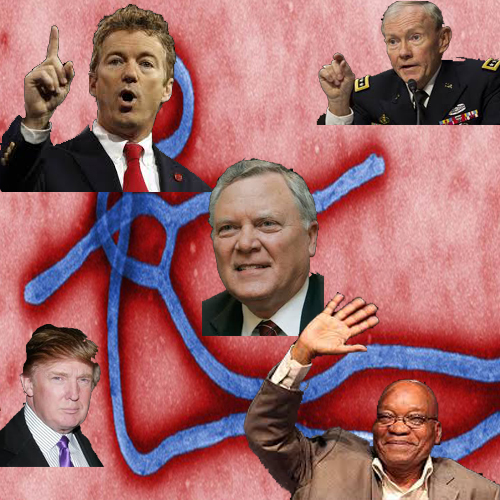
ebolaidiotsWhat do the U.S. Army Chief of Staff, a governor and numerous Congressmen have in common with Jacob Zuma, the President of South Africa?

Like Zuma, they deny simple facts of science, in this case about ebola. Like Zuma, they should be sacked.

Rand Paul and Georgia Governor Zeal along with a host of other nuts in Congress are unfortunately just as astute politicians as Jacob Zuma, so I don’t expect they’ll be leaving the scene, soon.

But Martin Dempsey is a soldier, and the country’s top soldier, and Obama should immediately fire him.

“If you bring two doctors who happen to have that specialty (Ebola) into a room, one will say, ‘No, it will never become airborne, but it could mutate so it would be harder to discover.’ Another doctor will say, ‘If it continues to mutate at the rate it’s mutating, and we go from 20,000 infected to 100,000, the population might allow it to mutate and become airborne, and then it will be a serious problem.’ I don’t know who is right,” Dempsey, the chairman of the Joint Chiefs of Staff, told CNN this weekend.

This is America’s top soldier. This is one reason we have so many failed wars led by a military that’s incapable of being controlled.

Jacob Zuma contends you can simply protect yourself from AIDS by taking a rigorous shower after unprotected sex.

How the world, the U.S. or Africa, has allowed leaders whose beliefs are so warped to survive is more terrifying than any possible 9/11 threat. Neither is really a leader. Both Zuma and Dempsey are followers of the frightened and ignorant masses on which they depend.

Where I grow so angry is that at least one of them, Dempsey, can be sacked. Right now. No questions asked. If Dempsey believes what he said, imagine what he might believe about the war against ISIS.

This weekend CNN in print finally did what CNN-US never could: criticize CNN-US:

“What’s more disturbing than Ebola? The outrageous commentary,” the CNN headline by Michael Martinez read.

I hope the link above works for you, because CNN has modified its story and changed its link several times since it first appeared early Saturday morning. Clearly Martinez’ fresh and honest approach to news is anathema to Wolf Blitzer’s America.

Before all is lost, here are a few other choice comments Martinez compiled in that story:

“If someone has Ebola at a cocktail party, they’re contagious and you can catch it from them.” — Sen. Rand Paul

“The most comforting thing that I heard from (Dr. Brenda Fitzgerald, commissioner of the Georgia Department of Public Health) was that water kills the Ebola virus.” – Georgia Governor Nathan Deal

“The U.S. must immediately stop all flights from EBOLA infected countries or the plague will start and spread inside our ‘borders.’ Act fast!” – Donald Trump

“Reports of illegal migrants carrying deadly diseases such as swine flu, dengue fever, Ebola virus and tuberculosis are particularly concerning.” — Georgia Republican Rep. Phil Gingrey, a medical doctor

“I don’t know … But I think this Ebola epidemic is a form of population control.” — R&B star Chris Brown

Crazy rightest Michael Savage said President Barack Obama wants to infect America with Ebola: “There is not a sane reason to take three- or four-thousand troops and send them into a hot Ebola zone without expecting at least one of them to come back with Ebola, unless you want to infect the nation with Ebola.”

There’s more where these came from and in multitudes of other stories, and it’s a shame that CNN has been so dainty in modifying and adjusting Martinez’ first filing.

These people are influential, powerful Americans. We already know they could care less about Africa, much less any community outside of their own cocktail parties.

Their beliefs have traction in America because Americans are poorly educated and have an increasingly myopic view of themselves and their communities.

The most important fact to recognize on this day that the World Health Organization declared Nigeria “ebola-free” while America still isn’t (because of Texas), is that without much more help from the outside of the sort Obama is offering, the epidemic in Africa will get worse and worse.

It is, in fact, possible to imagine a scenario a few years down the line if people like Dempsey, Paul, Deal and others held sway, where futile attempts to isolate the current infected countries turned into a world epidemic.

That is exactly what these ignoramuses if they prevail will ultimately cause.

Donald Trump couldn’t survive a week without the government he decries, and we’ve been able to live with that contradiction for a long time. His influence on Americans is counterbalanced so far by enough of us sane people.

But his (and other’s) influence in calling for an isolations of West Africa is not so easy to contain in today’s troubled and frightened America.

If you are reading this… if you are not as troubled and ignorant as the characters above, say something, please. Just a sentence. Just a few words of truth to your neighbor.

It’s not just the survival of millions of west Africans that’s in play. It’s the sanctity of truth.
Tired World Invites Strongmen

Tired World Invites Strongmen

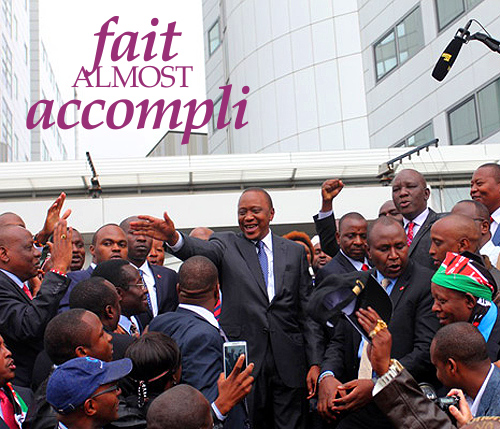
faitacompliKenya’s battle with the World Court is the perfect example of how global institutions are losing relevancy in an increasingly conservative world.

Around the world and especially in Africa societies are becoming conservative and authoritarian. Oligarchies are consolidating power. Minorities are growing submissive. Particularly in Africa this means the Strongman reemerges.

Uhuru Kenyatta is such. Very much like his father, Jomo Kenyatta, the country’s first president for 15 years until his death, Uhuru has masterfully consolidated his power to the point that he is almost invincible.

Kenyatta isn’t quite yet the benevolent dictator like his father, but I imagine after the next election he will be. Afterwards, subsequent elections will be fairly meaningless or simple window dressing.

The reason this is happening is for the same reason it started this way at Independence. Turmoil is considered more expensive and damaging than the increased opportunity that might be unleashed by movements like the Arab Spring.

Kenya under the current Kenyatta has prospered by the geopolitical metrics of economy that seem to govern the world. The World Bank projects 4.7% growth this year, and increasing growth in the years ahead.

While this is down from a few years ago, it’s impressive when you consider the challenge of the Somali War. As that successfully fought war continues positively the literally hundreds of thousands of successful Somali businesspeople in Kenya return to Somali causing a drain on growth… for good reasons.

Kenya’s education and health care policies are among the most progressive in Africa. Womens rights are more progressive in Kenya than almost anywhere elsewhere in Africa except South Africa, and were it not for the highest people in the current administration (e.g., Uhuru Kenyatta) the LGBT community would likely be facing as horrific oppression as it does in neighboring countries like Uganda and Rwanda.

But Human Rights Watch, like me, equivocates Kenya’s appearance of progressiveness with its patent immoralities and lack of democratization.

The Kenyan government under Kenyatta has systematically undermined the World Court’s prosecution of Kenyatta and his Vice-President. The evidence that existed two years ago, collected by the World Court, was damning: Kenyatta was guilty of crimes against humanity. It was eventually how he came to power.

But since he’s been in power the dozen or so witnesses, many of them in witness protection programs in Europe, recanted or disappeared. Pressure on their families back home seems to have been the reason.

So now, there is no evidence. Without evidence, there’s no case.

Yesterday, Kenyatta returned jubilant from The Hague. It’s likely the last time he will go there.

While ICC prosecutors are arguing for various censures of the Kenyan government for its lack of cooperation, other Heads of State in Africa are rallying behind Kenyatta. If the ICC fails to relent, Africa as a whole might leave the ICC.

The many global institutions like the ICC which appeared last century to guarantee the human rights of all global citizens now seem almost irrelevant.

Within Kenya police power has exploded exponentially. Summary arrests and neglect of existing laws protecting the innocent like habeas corpus are routinely ignored. More and more there seems to be only a single authority: Uhuru Kenyatta.

And yet that seems to be what if we dare generalize the “Kenyan public” wants, even those who are theoretically in the opposition.

Stability, however unequal, rules the day.

I think it’s public fatigue. War fatigue, election fatigue, countless fatigues that were so promising only a few years ago but proved futile by today. The world, for whatever underlying reasons, is moving away from freedom in order to avoid conflict.

Of course it’s true here at home, too, as well as Kenya. By the way, yesterday China became the world’s largest economy.

Quarantine Texas

Quarantine Texas

ebolaThe behavior of Americans is contributing to the spread of ebola in war-torn Africa. We’ve got to change.

Inbound airport screening is useless. Reactionary raising of funds “for ebola victims” in schools or churches is abject nonsense.

One of the world’s best virologists said today, “I know that President Obama has raised the whole issue about screening at the airport. It has not worked in the past. It has not worked with influenza, it’s not worked with SARS, MERS. You know, all you do is cause confusion and upset.”

These kinds of knee-jerk responses foil real efforts that could stop the epidemic in parts of West Africa.

First, it distracts real and necessary aid of the sort Obama has sent with our military, so that later an idiotic Congressman can vote against raising the deficit to build hospitals in Liberia because their home-town middle school is already doing something.

Second, it gives all those fear loving Americans a quick fix. Quick fixes don’t work. Even gorilla glue doesn’t live up to its reputation.

Quick fix mentality is why Americans are in such a horrible state, today, socially and morally. It’s why there’s jihadism in the Middle East, and so much poverty and disease in America compared to other industrialized nations.

We are the head of the snake that bites our own tail: Our own regular lives become disrupted by irrational fears.

This is squarely, and clearly, because of individual American reactionism. It all begins at home, not with your Congressperson, so don’t blame her. She’s just reflecting your own irrational fears:

The first warnings about AIDS, the nuclear air raid drills I undertook as a young teenager in remote northwest Arkansas, the police cars guarding the East Dubuque bridge after 9/11, the thousands of people certain that at midnight, December 31, 1999, either their whole world or at least their hard drive would stop.

It doesn’t even have to remind. Americans at this very instant are reacting against themselves: A majority want to bomb Syria and Iraq but that same majority doesn’t believe it will work.

There’s no doubt that irrational ebola fear can be found anywhere in the world where the media has sensationalized it, and that’s where it all begins. Americans, though, believe in their choice of media more than anywhere else in the world, despite their lavish protestations to the contrary.

We Americans tout ourselves for being so generous, but so much of “our giving” is senseless and ultimately useless. Is that really generosity?

It’s likely that now that every American knows that ebola is less of a threat to herself and his community than this year’s flu epidemic ready to begin. It’s likely right now that almost all Americans intellectually accept that their chances of getting ebola are nil.

That it is not very contagious. That it is pretty easily contained in a community with even a half efficient public health system.

Much more importantly, I think most Americans know that if we isolate those three countries in western Africa by stopping air service, for example, that we will not give ourselves more protection yet we will manifestly increase the misery there.

Yet: click here.

Or here.

Or here, of course:

It’s hard for me to not panic against the panic, but I’m trying. Take a deep breath as I’m doing. Let’s remove the exclamation points and get on with our lives. Send your kid to school. Let the airplanes fly to Liberia. Take that vacation as planned.

Tomorrow we’ll talk about how you can do good. Let’s just start today by stopping doing bad.

Time To Call Off The Hounds

Time To Call Off The Hounds

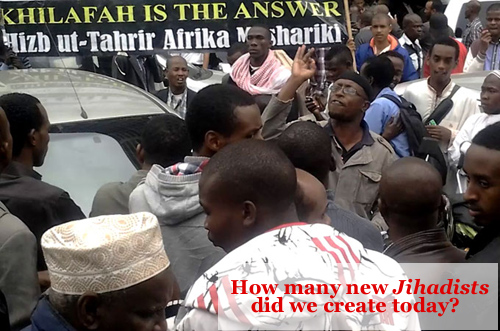
CreatingJihadistsYesterday, hundreds perhaps thousands of new Islamic militants were created in places like Kenya because of America’s bombing in the Levant.

For ten years Arkanuddin Yasin was a little known Islamic preacher in Kenya working for an also little known pan-Islamic political organization called Hizb ut-Tahrir (HT). Yesterday, he and his organization attracted lots more attention by calling on young Muslims throughout Africa to join the fight against the U.S. bombing the Levant.

Kenya has a vibrant, active press. This was not a top news story. Imagine how many more Arkanuddin Yassins there are in Africa much less the rest of the world.

There is a thin line between religious or ideological beliefs and armed revolution. We see it nearly every week at home in America. Cliven Bundy made it onto the national evening news, but there are hundreds more of his kind every single day.

The schism between Islam and Christianity is ancient, but it hasn’t really been elevated to all out war since the end of the Ottoman Empire with World War I. That’s changed. Just as vigilantes on the Texan border have illegally taken over much of the border patrol, there.

It’s not just illegal, but it’s wrong the way ISIS has taken over large swaths of the Levant. It’s not just illegal, but it’s wrong the way Cliven Bundy and the Vigilante Patriots fire their weapons at will.

But the response by the powerful to these groups’ illegal and often immoral actions has made things worse in several ways.

The first mistake by authorities is providing outright support. This is as obviously immoral as the actions the authorities purport to interdict. It includes Saudi princes sending millions if not billions of dollars to jihadists. And in the same vein it includes giving the Vigilante Patriots not-for-profit tax status.

The second mistake is providing tacit support. We learned today that ISIS is earning several millions of dollars daily by selling oil from fields it won in war. Who’s buying this oil? Don’t think it’s so obvious. We know from decades of black market precious metals in Rwanda and The Congo that the principal buyers were Apple and Motorola.

One could argue that poorly managed global capitalism is the second mistake.

The third mistake is over reacting. This occurs in big ways and small ways: It’s the reaction of the U.S. to 9/11 and Kenyan police “roundup” of suspects in Nairobi’s Eastleigh neighborhood following the Westgate bombing.

Overreaction might be understandable but it’s too reactionary to be helpful, and like grade schoolers, we should be taught to contain our emotions. It does nothing but fuel the flames.

There is also the over reaction of getting involved when it’s none of your business. It’s very hard for we Americans to watch someone beheaded on TV without responding, but the fact is that beheadings in Saudi Arabia are common and summary. So how come we’re not bombing Saudia Arabia?

Over reaction is also cowering in fear for no good reason. It’s sending the Dubuque city police to guard the Mississippi river bridge after 9/11. It’s cutting funding for libraries to give the police department armed personnel carriers. It is invading Iraq.

The reason Saudia Arabia, Turkey, Egypt and by the way, Israel, are not fighting alongside the U.S. right now is because their borders haven’t been violated. The reason Iraqis ran from the fight is because there really aren’t Iraqis: Their society has never been formed well enough since we Americans blew it to smithereens.

It’s time to call off the hounds. It’s not an easy thing to do, but how many times do we have to fail trying to do more and ending up making things worse?

Shelter in Place

Shelter in Place

index“The War on Terror,” Version 163 announced by Obama last week, is taking a significant toll on American tourism and business in East Africa.

This weekend the U.S. embassy in Kampala issued the most serious warning in their lexicon of warnings, “shelter in place,” one step before evacuation:

“All U.S. citizens are advised to stay at home or proceed to a safe location. Shelter-in-place and await further guidance. Follow U.S. Embassy Kampala on Twitter and Facebook for the latest updates.”

The warning was issued Saturday and rescinded Sunday, after Ugandan authorities claimed to have foiled a terrorist attack Saturday night.

Then all day Sunday Ugandan military and police went through Kampala ransacking houses and shooting people. This, by the way, is how the Ugandan military works: shoot first, ask later.

It is the same philosophy that gave rise to terrorism in the first place.

It doesn’t work.

Uganda is neither a place to visit or live, right now, and it hasn’t been for some time. That isn’t because of an increased threat of terrorism, but because of the government’s increased militarism.

That seems to be in fashion with U.S. authorities right now.

Kenya is doing a much better job. Security outside the border region is improving, although security along the coast and Somali border is not.

Beheading, by the way, has been a modis homocide among terrorist groups for the last several decades. Recently another Kenyan border village experienced one.

What’s new, of course, is the beheading of westerners. The roughly thousand beheadings of Africans and Arabs didn’t draw any serious attention. But my goodness, we’ve now had three innocent westerners brutally beheaded! Time for action.

Until now terrorists felt that the potential ransom for a westerner was more valuable than the potential public reaction.

They’ve realized now that the PR value of a few beheadings is worth zillions more than a couple hundred million dollars.

We’re now playing into their game exactly as they wish us to.

That’s why they’re winning.

British Aplomb

British Aplomb

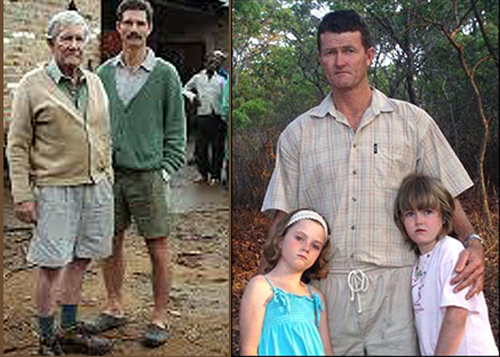
whitezimsMugabe of Zimbabwe told the remaining whites this weekend that they better leave soon.

Although it isn’t the first time he’s made such a statement about the estimated remaining 40,000 whites in the country, this time seemed more serious.

He made the announcement in a convocation of regional chiefs. In Zimbabwe where government doesn’t exist except as Mugabe decrees, local governance is in the hands of regional chiefs that his administration appoints.

In farming communities that were almost exclusively white 20 years ago, many savvy black Zimbabweans took the white land Mugabe allowed them to conviscate, but they continued to contract the previous white owners as managers.

It’s the only reason the country hasn’t totally and completely collapsed.

But this weekend after his proclamation at the chief’s convocation, Mugabe warned that he would “remove those” chiefs who still undertook this arrangement.

“Don’t enter into contract farming with whites. It’s a dangerous, dangerous arrangement that we don’t want,” Mugabe warned.

Britain, however – which is the homeland that most whites could return to – isn’t so accommodating, anymore.

British law allows anyone who was born there or born of British parents to claim citizenship. That includes most of the remaining Zimbabwean whites who were forced to renounce their British citizenship to remain in Zimbabwe.

That alone piques the British aplomb.

But more fairly, the British have been accommodating returning white Zimbabweans for more than two decades. There is a feeling back in London that the ones who have remained had so many opportunities to return before, that there’s no reason to be nice, now.

So the British embassy in Harare which processes returns is charging outlandish fees to do so. By deciding to use the blackmarket rate for the Zimbabwean currency, rather than the official one used for all normal business, potential returnees are being charged 15 times as much.

London’s Daily Mail said the government “defended the move, saying [it] was obliged to recover all its costs worldwide.”

What needs to be pointed out is that many of the whites who remain really have nowhere in Britain to return to. They are multi-generational Zimbabweans, whose fathers and grandfathers and great-grand fathers all retained British citizenship but who never lived there, so were technically born of British parents. Maybe Ancestry.com could find them a connection, but nothing realistic remains.

I see the problem as much with British policy as with the notion these are people who tried to play both ends of the table.

Moreover, a large number of white Zimbabweans are falling into terribly poverty. The costs of processing return citizenship, much less the costs of airline tickets and other resettlement costs, are likely beyond a large portion of them.

This means it’s unlikely many of the remaining whites will heed the old man’s call.

And that’s kind of scary, if old man Mugabe really wants to have his way.

Kill Mom, Sell the Baby

Kill Mom, Sell the Baby

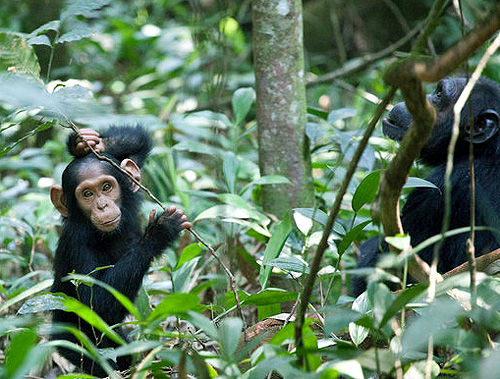
chimpChimps are not as endangered as gorillas, but they are increasingly controversial in developing Africa because they are so human-like.

Most westerners think of chimpanzees as sort of smart dogs. Well, only if the dog is as big as you! That’s right, a full grown chimp averages 5½’ tall and weighs 150 pounds.

This is no monkey.

Chimps are still widespread throughout much of Africa’s great central jungles. But for millennia the jungle peoples, mostly pygmies and settlements at the forest edge, hunted chimps for food. Traditionally chimp meat was an important source of necessary protein.

Babies were never eaten. An adult would be killed and the baby set free, usually to die for being abandoned. As villages and settlements developed, a secondary trade in selling these babies to westerners developed.

Forty years ago in far western Kenya, Kathleen and I had been working for hardly a few weeks when we were offered a baby baboon. I bought and raised it and tried to reintroduce Hamisi into the wild. The baboon’s mother wasn’t killed for food, but because she was raiding a neighbor’s maize garden.

Killing baby anythings seems offensive to most everyone. It was my justification for buying our little baby baboon Hamisi in the first place. But what I didn’t realize then was that a massive trade would develop, a blackmarket in animals like Hamisi, driven by nefarious western and Asian animal traders.

Today there are numerous NGOs across Africa whose mission is to thwart the blackmarket trade in wild African animals. This usually means intercepting the baby taken from the killed mother. And that necessarily means rehabilitating the baby.

One of the more successful organization in the southern edge of chimp habitat is J.A.C.K.. See their video below.

Killing grownup chimps is universally offensive to the developed mind of anyone who has enough food: It approaches cannibalism. Chimps are extremely smart, one of the few animals to actually show emotion, and often mock, taunt, stalk or spy on their human neighbors, the same way people might observe wild animals.

Unlike baboons and gorillas, they don’t raid gardens or kitchens. They’re quite good at finding and in a way nurturing their own food, and they fear humans. I think that their fear is intellectualized very much like human fear is, and very much unlike gorillas and lesser animals that are more reactive.

So I’d venture to suggest that a chimp when coincidentally passing a trader walking through the forest with bananas, that it stops to muse on the consequences of stealing them. A baboon which is much smaller wouldn’t normally challenge a man, but the moment an opportunity arises – the farmer sets down his bag to wipe his brow – the baboon may strike.

The chimp won’t.

Whether this is fanciful or not, the fact remains that chimps don’t raid and pose no threat to humans, other than a reduction of a traditional food source as hunting of them is prohibited.

As Africa develops even rural folks grow more intellectual.

But the need for food is ever present. And the pernicious blackmarket in wild chimps is actually growing. The demand from the west and Asia is strong, as westerners and Asians grow exponentially richer than Africans.

That, today, is one of the major challenges in Africa with regards to chimp conservation. More and more authorities are prohibiting hunting and trading in chimps. Locally authorities justify their action beyond simple conservation – which can be very controversial — although this alternative justification applies more to the lesser primates like monkeys:

Ebola and a number of other viruses, probably like West Nile and flu varieties and possibly even HIV, originated with forest primates, mutated and were transported into the human population through bush meat.

The human/animal conflict is increasingly important throughout Africa as the continent develops so fast. Chimps are at the top of that controversy.

Pitiful Pitbull

Pitiful Pitbull

from SA's Daily Maverick
from SA’s Daily Maverick
Heads of State get into all kinds of trouble, from romantic to fiscal, and many then come toppling down. Jacob Zuma of South Africa is different.

Nearly seven years have past since then as deputy president Zuma replaced an equally quixotic president, Thabo Mbeki. Mbeki followed Mandela and all three were close confidants and collaborators in the anti-apartheid struggle.

Mbeki’s quirks included a belief he tried to make into public policy that the aids virus could be washed easily away with a hot enough shower. Combined with his nambypamby leadership that allowed his underlings like Zuma to constantly thwart him, he finally infected national policy and the ANC showed him the door.

Standing in the wings was Zuma. Profoundly charismatic, it’s now evident he possesses little else.

Zuma strolled into office with multiple wives and a lifestyle flaunting the rich and famous, more than once publicly saying so.

If Mbeki was a mouse, Zuma is a dumb-ass pitbull.

But it just doesn’t seem to matter.

Zuma’s list of scandals will become his legacy, and they include some truly awful stuff like the police massacre at the Marikana mine, his grandiose payment of $2 billion cash to help bailout Greece when his own country was heading into recession, his son’s Playboy antics with yachts and Porsches including killing a taxi cab passenger that he ran into, among many others.

The single one of many that won’t go away I think is about ready to go away.

Zuma built himself not just a mansion, but a resort. Some call it a small city.

I wrote about Nkandla about a year ago when even normally filthy loyal ANC youngsters were getting upset. All told Zuma has spent $24 million on this place, which you can multiply at least 5-10 times for a valid comparison with a similar public use of funds by an American president for personal gain.

You can’t hide fractions of billions of dollars easily, so Zuma didn’t try. His pitiful defense was something like calling it a necessary leadership retreat, a sort of Camp David if you will, although not even the South African military had access to it.

It’s absolutely amazing how ANC brass dismiss these things as “distractions” or “insignificant” or even worse, as press contrivances.

In fact that was Zuma’s first defense when the press went crazy reporting on the details of Nkandla. He’s pushed through Parliament a number of laws restricting press freedom, although the toughest haven’t made it through.

Zuma and his party, the ANC, are still subject to real democratic votes, and you can sit back from afar and muse that well, the South Africans got what they voted for, so what? That might be fine when talking about multiple wives and Playboy lifestyles.

But when basic freedoms like the press start being swept away, then dismissing excesses as personal or flamboyant just won’t work.

And for a while, Zuma seemed cooked.

The ANC rules almost everything but The Cape in South Africa, and finally ANC rulers agreed to allow a public inquiry. Guess what? The prosecutor condemned Zuma and gave him two weeks to repay the cost of Nkandla.

The ANC responded like a pitbull. The prosecutor’s report was leaked earlier than its official publication (which wasn’t that early) and that set the ANC on a rampage.

But the diversion didn’t work, and a few days ago the ANC agreed to a Parliamentary inquiry.

Meanwhile, Zuma is ignoring the public prosecutor and instead, said he will take his orders for repayment from the national chief of police.

One gets the distinct impression that the Chief has enjoyed foie gras at Nkandla.

If Zuma outlives this one, and I think he may, there is absolutely nothing he won’t be able to do, next.

Libyan Democracy in Action

Libyan Democracy in Action

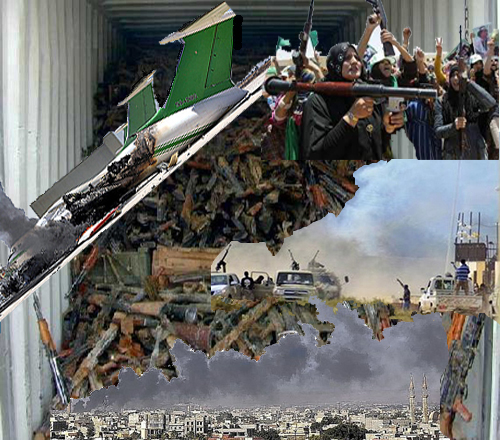
stockpileweaponsThe cocks have come to roost in Libya: yet another example of why instant democracy is a bad idea.

With all the rest of the troubles going on in the world Libya is being neglected if not ignored, and yet the fighting this week in Tripoli rivals almost anything that’s happening right now in Gaza, the Ukraine or Iraq.

The Tripoli airport is in shambles. The tower is down. About 20 commercial jetliners sit idle at wrecked gates or scattered among the tarmac.

“Foreign diplomats, workers flee Libyan chaos by thousands,” the Los Angeles Times reported this morning.

The Philippines is among the dozens of countries evacuating its nationals. This will mean that Libya’s hospitals will collapse.

Thousands of Libyans themselves are also fleeing. Tunisian soldiers killed two trying to stop the crowds surging across the border.

The Washington Post tried to sort out the combatants yesterday and decided that militants, previously from the city of Misrata, are coming out on top. They’ve almost taken over the Tripoli airport.

And it’s not the national Libyan army that’s stopping them. The army has disbanded and many of its highly skilled soldiers – trained by the U.S. and allies – have fled to their respective militias… with their modern weapons. Also supplied by the U.S. and its allies.

The Misratas haven’t taken over the Tripoli airport because several other militant groups led by the Zintanis are in the passenger terminal shooting back.

At the height of the Libyan revolution, Zintanis and Misrata militias fought side-by-side.

And in Benghazi, where the Libyan revolution began three years ago, guess who’s now in control? A former Gaddafi general.

“Towns fight towns; Islamists oppose nationalists; federalists rise up against central government; ex-Gaddafi units clash with former revolutionaries – and everyone has guns, artillery, tanks and missiles, taken from the vast arsenals the deposed dictator had stashed across the country,” Reuters reported yesterday.

After the fall of Gaddafi, western powers led by the U.K., France and Britain stepped in to quickly create democratic institutions. A democratically elected government, fully in place two years ago, was deemed freely and fairly constructed by outside western observers.

The problem is that each individual faction thinks that democracy will immediately get them what they want. The Zintanis, coming from remote Berber mountain villages, felt Gaddafi stole their oil and gave them nothing in return.

The Misratas, more developed and mercantile, fear any kind of religious law and believe their taxes are too high.

Neither grievance has been addressed by the weak existing government, in large part because it has never been able to enforce anything. Too many people have too many weapons.

“Hampered by hypocritical ‘no boots on the grounds’ orders, Western military advisers could do little as Gaddafi’s vast arms stocks were pillaged by all comers,” explains London’s Telegraph’s Mideast correspondent.

Stepping beyond journalism, Richard Spencer then reminded British readers that “I … tried to alert the authorities… to the presence of 100,000 landmines, boxes of Semtex, anti-tank and anti-aircraft missiles lying unguarded in a field and adjacent warehouses in south Tripoli. Nothing was done, and within days they had been pilfered.”

As a columnist for Gulf News Spencer was more explicit:

“The same powers [that topped Gaddafi] seem to have turned a blind eye to a nation whose current sorry state is partly a result of their own faulty policies.”

Which faulty policies? Any of a million that contribute to the toppling of an authoritarian regime replaced by democracy.

I admire the New York Times this morning for warning western countries against abandoning Libya, but the Times analysis is simplistic. This isn’t just a battle between Islamists and non-Islamists: it’s much more complicated than that.

You can’t turn democracy on like a light bulb above the sink. It takes years, often generations to evolve. It’s both the reason that Russia is sliding back into authoritarianism and China is inching towards real democracy. Both of these dramas will likely continue long after I’m gone.

It was the height of absurdity to think that the arsenal of destruction Gaddafi had amassed could be managed by a fledgling democracy. That was the first mistake.

Democracy often works badly. Take our own current state of affairs, although we’ve dealt with ups and downs for so many years I’m hopeful we’ll finally creep out of the irresponsible governing abyss we now found ourselves.

But we demonstrate a certain immaturity if we think that the “help” we gave the Arab Spring revolutionaries would result in anything other than the bloodshed currently playing out. That was the second mistake.

You can’t liberate the oppressed with democracy. It never fills a void. It must be built carefully and that takes a lot more time than American and British election cycles.

Alaska Like Tanzania?

Alaska Like Tanzania?

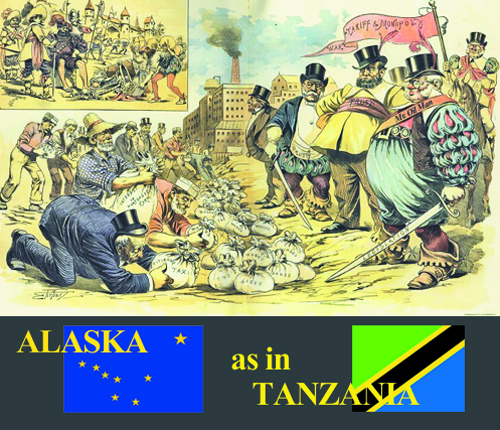
oilforSB21Last week I chastised Tanzania as a singular polity that squanders its natural resource wealth. I was wrong. So is Alaska.

I’m preparing for my once annual Alaskan trip and as always I’m in Fairbanks a few days before my clients arrive. I had no idea how similar it is to Tanzania.

Election mania is everywhere. Billboards, signs, TV ads – I couldn’t understand why compared to my own very political state of Illinois, Alaska seemed so hyped up.

Turns out it isn’t the November election of candidates that’s garnered so much interest. It’s the four referendums forced onto the ballot by grass roots signature campaigns.

Three will be on the general November ballot: legalizing marijuana, raising the minimum wage and banning further mining in certain salmon spawning grounds.

The Big One, though, comes up August 19 and is what made me realize Tanzania doth not stand alone. Ballot Initiative One repeals Senate Bill 21 which has halved the state’s oil tax revenues.

If Tanzania lived up to its IMF optimization, more than three-quarters of its revenue would be from natural resources. Today, 92% of Alaska’s revenue comes from natural resources.

In 2012 the Republican governor Sean Parnell called his predecessor, also Republican Sarah Palin, wrong for reenacting a state tax plan for oil that had been in place for decades. So Parnell, the banks and oil companies, then pushed through a bill in 2013 that reduced the maximum tax (linked to the wholesale oil price) from 75% to 35%.

Now from what we’ve been able to learn mostly from leaks of Tanzania’s strictly secret mining agreements, Tanzania is happy with 3 or 4% and opposition activists in Tanzania are screaming for 15%. So in fairness, the pie graphs aren’t very similar. But here’s the thing:

Alaska has a much, much smaller population and is dependent almost exclusively on mining for state income. And even more important than this, the previous tax plan has worked since the 1970s. Alaskan government, Alaskans who earned on average $1700/month in dividends, and even the big oil companies have been pleased as puddin’ pie.

But as seems to happen everywhere today, Republicans who are so out of touch with their electorate and in the pockets of big money (like oil companies), will do anything to stay in power. They seem to know getting elected on policy isn’t going to work.

Alaska, which has been a poster state for balanced budgets, went $2 billion in the red for the first time, this year. It didn’t even go in the red during the Great Recession!

It went in the red because the Republicans gave half their revenue back to the oil companies!

Here’s the public Republican argument: oil revenues are declining because competition is growing from places like the Dakotas which have virtually no or very little tax on the oil companies.

Here’s the truth: oil revenues have been declining since 1988 as the major oil fields that were first developed in the 1970s mature and dry up. New oil fields are being developed just as fast if not faster in Alaska as in the Dakotas.

Alaska remains the most inexpensive place in the world to develop oil fields.

There is a difference with Tanzania: Tanzania’s revenue due its people is likely being pocketed by politicians. Alaska’s revenue due its people is being given back to the oil companies!

In both cases, I call this stealing. That makes the two polities much more similar than different.

Alaska’s beginning to act like … Tanzania!

The Court Rules

The Court Rules

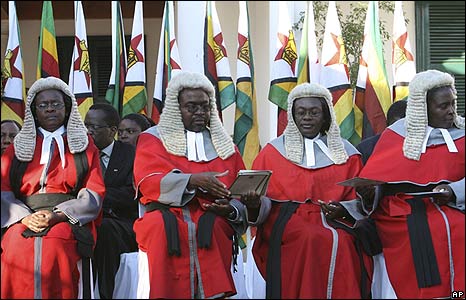
AFricanJudgesDemocracies are hardly well-oiled machines, but African courts – as in the U.S. – are pulling rank and calling all the important shots.

There are a score of new, fresh democracies in Africa in the last generation.

In South Africa, Kenya … but also in Zambia, Malawi, and most of the west African countries, democratic constitutions mostly replaced completely far less democratic ones that were distinguished by very long-serving dictators.

Out of this slow transformation of the continent’s form of governance is emerging a singular outcome: the courts rule.

As to be expected with new constitutions, precedent must be set in the interpretation of complex wording, and that has led to a lot of court rulings regarding personal and press freedom, entitlements and budgetary processes. This is to be expected.

But my interest in this question goes far beyond the obvious.

In Kenya, the courts decided the outcome of the presidential election and continue to decide dozens of elections at lower levels.

While the presidential election was a question over the counting of a very close contest, most of the elections being adjudicated by the Kenyan courts at lower levels are less technical, like whether the victor is fit to serve.

The Kenyan courts are ruling not just who won, but who should win.

In Zambia, the court is about to decide if the powerful President Zata should remain in power because of his health.

South Africa is the most jurisprudence minded on the entire continent. It was here, after all, that the chief and many of the jurists of the supreme court which upheld the immoral laws of apartheid remained the same justices which then systematically dismantled it.

Contrasting the attention and minuscule jurisprudence attending the current South African trial of Oscar Pistorius, South Africa’s Daily Maverick recently claimed that for the vast majority of South Africans the country’s new justice system was “broken beyond imagination.”

Important hearings for bail, sentencing for things like tax arrears and petty crimes, are being summarily dispensed with “not much heed … to the principles of a fair trial.”

While fresher democracies like Kenya are being ruled by the courts from the top down, the Daily Maverick claimed that South Africans are being ruled by the court from the bottom up.

It’s true here, too, at home in the good ole USA.

There’s got to be a correlation here. I think what’s happening is that the courts are filling a power gap.

In a tricameral government where an executive, legislature and the courts are separate but coequal, functioning power is possible when either one is dictatorial or two others at least are working together.

I don’t think even the U.S. Supreme Court can be called dictatorial. There’s no question in my mind that the current high court is the most activist we’ve had in my lifetime, but there’s been enough ambivalence (Obamacare) to suggest it isn’t completely dictatorial.

But because our president has not been forceful, and because our Congress is mired to a halt, the opportunity arises for the court to be proactive.

In fact, this is exactly what’s happening in Africa.

It’s a contentious time, for some further more complicated reason, throughout the world in terms of people coming together to govern.

Perhaps it’s residue from the Great Recession. Perhaps climate change is putting us to sleep.

Whatever the fundamental cause, the activists courts in the U.S. and in Africa, which seem so obstreperous lately might be considered in a slightly better light: at least they’re doing something.