Charging Up

Charging Up

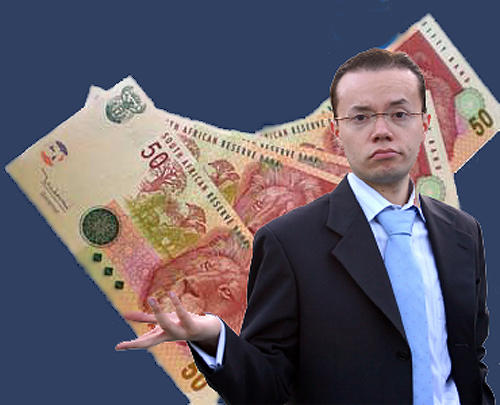
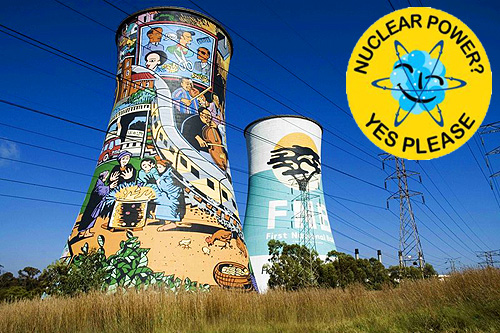
AfNukePowerWorried about Iran’s nuclear power plants? How about Nigeria’s?

I think America’s frantic concern of Iran’s nuclear capability is linked to two irrational fears: that Israel is threatened by Iran and to the even more irrational fear of nuclear power itself.

Let’s calm down and take a look at the African experience, and maybe begin to see modern nuclear power as ordinary and necessary.

Large uranium deposits in Namibia, Niger, Malawi and most recently Tanzania are attracting good amounts of foreign investment ever since raw uranium surged in price to more than $100/pound several years ago.

(Canada is the world’s main source of raw uranium with Australia a close second. But the four countries in Africa exceed both Canada and separately, Australia.)

But today’s market for uranium, the use by nuclear power plants, is concentrated in places like America and France. And yesterday uranium’s spot price fell below $35/pound.

As an index as to how Americans and others in the developed world feel about nuclear power, the uranium spot market is excellent. The fact it sits at about a third of what it once was is a clear statement that there is only a third as much support for nuclear power today as only five years ago.

Until Three Mile Island, Chernobyl and Fukishima there was only minor although very vocal resistance to nuclear power reactors.

But each one of these events garnered more public antipathy to the idea, and for some anti-nuclear activists, Fukishima was the nail in the coffin for further nuclear energy development in the west.

Personally, I think this is terribly short-sighted. When time allows us to quantify the human and economic damage of those three major accidents compared with the same for the extraordinary emissions of coal-fueled power plants, I doubt there will be much of a contest.

But meanwhile, “.. almost all [African uranium mining] projects have been on hold since the collapse in prices that followed Japan’s Fukushima nuclear power plant disaster.”

African officials remain optimistic. One South African called nuclear power “inevitable” this week in an on-going dialogue within Africa that riases this whole topic onto a completely new level: perhaps Africa should use the uranium for itself. Like Iran.

South Africa has had nuclear power since probably the 1980s, and four new nuclear power plants are planned to go online by 2020 or so, with additional plants under study.

Note that South Africa remains a leader in new coal technology, and that there is a vocal minority among South African leaders against nuclear power.

There’s lots of coal in South Africa and throughout the whole of the continent. Right now almost 90% of South Africa’s power comes from coal, but even post-Fukishima there’s a growing sensitivity to carbon emissions, and more importantly, just the long-term costs.

Minister of Public Enterprises Malusi Gigaba told a group in Cape Town this year that the South African government believes that the cost of nuclear electrical power eventually “evens itself out” especially when set against carbon emission savings.

I think what we have to learn from South Africa in particular is that the fear of nuclear power is very introspective, and that when more properly considered in the framework of a greater society, there really is no alternative.

South Africa is head and shoulders in development above the rest of Africa, but it is still Africa. Its public needs are far more desperate than in the developed world. That mix of development with desperation for minimum standards is exactly the right social culture in which to best weigh the good and bad of nuclear power development.

Africans throughout the continent are realizing this. And since they sit on most of the raw material needed for this power it’s not irrational to imagine a world a century from now where the center of global power, literally and figuratively, is in Africa.

A century is a long time. But Africans are already anticipating the day. The best, most completely and sometimes most daunting detail of how the world thinks about nuclear power is compiled and published in Cape Town.

So while the developed world, which is comfortable enough to believe its myths and run from its fears and still have a good meal and nice bed to go to sleep on every night may criticize nuclear energy, the developed world is moving right along.

And if America or China or Britain don’t want Niger’s uranium, well gosh, maybe Niger will just use it itself.

Although it has not yet moved beyond grand announcement, Nigeria of all countries says that Russia is ready to build a nuclear power plant there.

Wednesday’s UN General Assembly’s press release hailed the development of more than 400 new nuclear power plants scheduled to go on-line this decade.

Nor is it surprising that four of the world’s leading scientists on climate change would mount a huge PR campaign this week to promote nuclear power.

Africa is already over Fukishima. The disaster there pales in comparison to the disaster that might just be ending after 53 years in The Congo.

I see the current dip in uranium prices an opportunity for all sorts of good investing. Let’s just hope the developed world gets some of it.
Plant the Corn

Plant the Corn

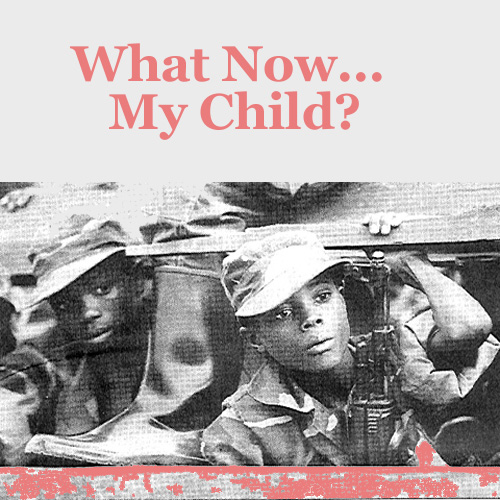
what now my childDon’t turn away from the DRC-Congo just because NPR says peace is imminent. There’s much more to the story.

I, myself, predicted a type of peace would come to the DRC-Congo just about a month ago. And this morning on NPR’s Morning Edition, former Senator Russ Feingold in his capacity as Obama’s special envoy to the region, said fighting was ending.

Good. We’re all glad, and the story behind why this decades-old fighting might, in fact, be ending is an extraordinary one that goes all the way back to when Belgium and the US colluded to disrupt the first democratically elected government of the newly independent Congo in 1961. I called that “Where Terror Was Born.”

The many fascinating chapters of barbarism and war that have followed have included X-Boxes and your cell phone.

To understand the current “peace” it would be helpful to understand all the foregoing but that’s challenging. Let me try to simplify it not too much.

The decades-long fighting in the eastern Kivu province of the DRC-Congo is very much unlike anything in the rest of Africa. The rest of Africa’s wars (excluding those that involved South Africa) are mostly guerila-based, al-Qaeda, Boko Haram jungle and mountain fighters, characterized by suicide bombings and village terrorism.

Traditional military action is pretty new for modern Africa. Obama started it when he came to the presidency and it became apparent to all the world when Kenya invaded Somalia in October, 2011.

Kenya, armed anew by America, trained by America, advised by America, we even saw American soldiers, was America’s proxy. And they “did well.” The Kenyan Army effectively disrupted and ultimately dislodged al-Shabaab from Somalia.

But prior to that 2011 action, organized military action of the sort undertaken by the OAU and UN in such places as Somalia, Rwanda, Angola and so forth, either suffered from a total lack of training (the soliders just didn’t know how to fight, didn’t want to, or just didn’t), or there was no good equipment.

That changed with Kenya’s action in Somalia and it radically continued this year when the UN Security Council approved an aggressive military unit to enter the DRC-Congo, the first ever for the UN in Africa.

And that unit was immediately joined by crack and very well trained and equipped South African troops.

And that’s what defeated the main military group in Kivu, the M23. On Monday they announced a cease-fire and on Tuesday they surrendered.

That’s good, as Feingold said. But it’s hardly the end of the story.

There are many rebel groups in the area, although the dominant one was definitely M23, and I don’t mean to minimize the good news this is. But keep in mind that M23’s leaders have all escaped.

The respectable Think Africa Press said today that M23’s “senior command has dispersed to Uganda and Rwanda,” while many of the expert soldiers of M23 have “gone into hiding, whether fleeing out of the DRC or dispersing into the Virunga forests.”

NPR’s foolish question about accountability, whether the M23 leaders will be tried for crimes against humanity, begs the question whether they will be first captured.

And even if they are, the OAU has already ordered all member states to cease cooperating with the ICC in The Hague, and Kenya’s two leaders on trial there have both been given extraordinary passes from attending their own proceedings: The ICC is falling apart and Africa is instrumental in bringing Humpty Dumpty’s walls down.

Rwanda is furious. Rwanda is ruled by a minority ethnic Tutsi dictator who came to power after the genocide that tried to wipe out his people by the opposing Hutu majority in 1993/94. M23 was formed by Tutsis fleeing Rwanda at that time.

So Rwanda has been supporting the rebellion in The Congo led by M23 for some time. It has facilitated not only an increased clamp on its own oppressed Hutu minority, but an extremely profitable rare earth mining industry overseen by M23 commanders in Kivu.

Here’s what will determine the next stage:

If the UN reaffirms its unusual aggressive mission, peace will be maintained. That itself is so unusual for this area that I wonder what exactly will then happen. Consider that there have been three generations of Congolese in Kivu who have known nothing but warlords.

Peace means fewer people will be killed. That means more people need to eat, have jobs, become somehow productive in a society that has not existed for 53 years.

And that’s where current global and western society fails so miserably. Once the field is cleared of tanks, no one plants the corn.

On the Wings of a Dove

On the Wings of a Dove

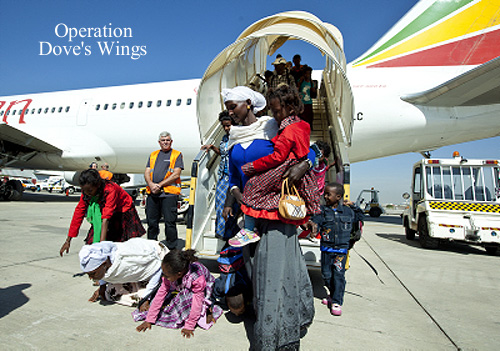
.This month marked the last planned charter flight of presumed African Jews from Ethiopia to Israel, capping a generation’s long program that “repatriated” more than 40,000 Ethiopians.

(Some reports put the number as high as 92,000.)

Referred to as “aliyah,” the collection and immigration of disparate Jews from around the world into Israel is public policy, but is mostly funded privately. Once in Israel the state apparatus provides various educational and financial assistance.

The stated policy of Israel to provide citizenship and security to any Jew anywhere in the world is referred to as the “Right of Return” and imbedded in the entire raison d’etre of Israel.

Many impoverished around the world, however, wishing to invoke the Right of Return are unable to do so on their own. And many who are simply among the throngs of Africa’s impoverished who long to immigrate to someplace with a better opportunity, try to invoke the Right of Return with little evidence they are Jewish.

Avi Bram writing in Think Africa Press this week called the end of Operation Dove’s Wing “A page … turned in the history of Jews in Ethiopia. But despite what Israel may think, the page doesn’t mark the end of the book, but merely a new, uncertain chapter.”

The Ethiopians returned to Israel in Operation Dove’s Wing had to demonstrate seven generations of Jewish lineage to be eligible for aliyah. Over the last ten years large numbers of Ethiopians migrated to the town of Gondar where various Jewish agencies were supporting temples and Hebrew education programs.

But in the end as many as 7,000 Ethiopians claiming to be Jewish were left behind. Now that Operation Dove’s Wing has ended, almost all of the Jewish agency support is ending, although other NGOs to some extent may replace them.

But the dynamic of Africans wanting to be considered one thing or another, so that they can be brought to a better world, and then examined by a stated government policy to credential lineage, verges on institutionalized ethnicity if not outright racism.

In the case of the Ethiopian Jews, the four major programs in 1984, 1985, 1991 and the last ending this month, were funded largely from American, South American and European Jewish communities.

I witnessed the 1984/85 “Operation Moses” which was the first program in Addis, and it differed considerably from what I watched happening this month.

Back then the tarmac of the Addis airport was filled with white tents, El-Al 747s, and many professional Israelis, especially doctors. Busloads of very traditional Ethiopians would come onto the airfield, be examined and were often so naked that they had to be clothed as well before boarding the aircraft.

That operation, by the way, differed in many respects from subsequent ones. Technically these Ethiopians were refugees being bussed in from Sudanese refugee camps through the country they had fled.

The toppling of Haile Selassie, the last emperor, led to a very turbulent period in Ethiopia known as the Red Terror. Large numbers of refugees were sent into mostly The Sudan. The Sudan wasn’t kind to them, being one of the most anti-Israeli countries in the world.

So there was some real humanity in Israel’s program to bring those refugees into greater safety. To be sure, the ruthless dictator of Ethiopia at the time, Mariam Mengistu, had no love for them, and it was also a deft diplomatic effort of Israel that organized the exodus from Addis.

But that being said, I remember thinking from conversations with several Americans who were with me at the time and who were associated with the operation, that quite a few non refugee Ethiopians were squeezing into the mix that was being transported to Tel Aviv.

Regardless, everyone I saw looked like they desperately needed help. If not sick, they were certainly destitute. Contrast that today with the YouTube video of the last charter flight arriving Israel from Operation Dove’s Wing.

Part of the explanation for this difference is simply the good news that Africa has developed so rapidly in the last generation. But that’s the point of contention.

If these Ethiopians who were relatively well dressed and well, well-off, were being given this extraordinary boost of opportunity by now becoming citizens of Israel, while millions of their fellow countrymen remain certainly destitute and impoverished, is this fair?

Many analysts like Avi Bram question if it even well conforms to Israeli policy. But the question I’m posing is whether the Right of Return in today’s world is an anachronism that contributes to racism.

If not, how far back must history stretch to justify such policy. Should Norway facilitate a Right of Return to anyone demonstrating a Viking Heritage through the DNA testing that can now pretty well determine that?

We don’t need more separation in Africa, today, much less anywhere in the world. I applaud Israel for the remarkably humanity the state is giving people in need, but I wonder if the choice of who that humanity is given to is a moral one.

We Need Shrinks not Generals

We Need Shrinks not Generals

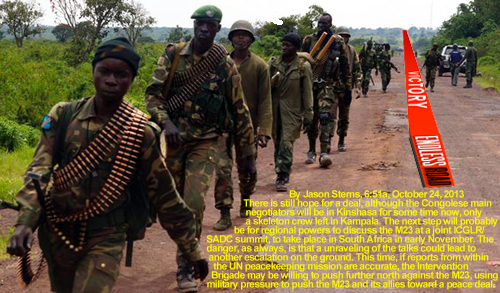
CongoMarchUnder the noise of Snowden, dysfunction of Congress, frantic media and lackluster personality of Obama, the War Against Terrorism is being massively ratcheted up in Africa.

The French Foreign Legion was dispatched last week to the remote deserts of Mali, to support a freely elected government that is being newly challenged by rebel groups in its most outlying cities.

Crack South African troops added to increased United Nations peacekeeping forces and ruthless Congolese government troops newly armed by the west, have been crushing the last of the known rebel groups in the eastern Congo, an area of conflict for nearly a half century.

How’s it going?

Hard. The unspoken but terribly obvious Hollande/Obama alliance to make Africa the last great military battleground against organized terrorism began five years ago in Somalia. American advisers were everywhere in northern Kenya and the port of Mombasa, and French warships were just off the coast of Somalia.

Drones were added and the war begun. Kenya was enlisted as the visible front army and Somalia was “liberated.” Its al-Qaeda affiliates were scattered and what was left of anything organized raced through Uganda into the center of the continent.

The world watched 90 U.S. soldiers chase them across the Uganda.

But Hollande and Obama miscalculated the arsenal of weapons that liberated Libya would make available, and scattered groups in Mali benefited enormously. France’s end-game mission to America’s chasing of the rebels into the center of the continent was to crush them in the Central African Republic (CAR).

But instead, it had to focus on Mali, far northwest of the CAR. So today the CAR is essentially anarchistic. A report published this morning by Amnesty International describes the CAR in the most horrific, barbaric terms. Every civilized person seems to have abandoned the country, making it ripe for organized terrorist control.

Hardly two years ago the focus of visible battles between the west and its proxies, and al-Qaeda and its proxies was in Somalia. Only a few months ago it reemerged in Mali where it persists. And the riffraff, disparate, heavily armed leftovers of a dozen so-called al-Qaeda affiliates or older rebel groups (like the LRA) are now duking it out like barbarians in the CAR.

You cannot eliminate terrorism, Mr. & Monsieur President.

You cannot eliminate unless you had global gun control the likes of which evades my most fanciful dreams. Where there are weapons and the materials for making them, there will be terrorism.

The question is, Are We Safer Now?

Before I give you my opinion, don’t you think it’s important to also ask, Is Africa Safer Now? What right does the west presume in order to use Africa as the backforty into which the wolves are chased and kept at bay?

If the world ever runs out of weapons, we’ll be forced to deal with conflicting ideologies, as well as crazy terrorists, in ways we should develop, now.

Modern force is so omnipresent, as easily mastered by an internet keyboard, that it can’t possibly end conflict, today. It will only interrupt or delay it.

Consider this, first. The conflict in the DRC’s Kivu Province is a half century old. It’s based largely on the same ethnic divisions that caused the Rwandan genocide. Those divisions are festering. The calm in Rwanda is the calm of a benevolent strongman. Once his biceps snap, all hell is going to break loose.

Consider this, second. Organized terrorism is fanatical. Unlike ethnic conflict, terrorism may have no other explanation except the obsession to rule and control.

Both turn men into beasts eager to die – to kill themselves – for reasons they don’t wholly understand. Hypnotic or simply psychotic.

You can’t get them all. We don’t need any more generals. We need shrinks.

Save it By Killing it

Save it By Killing it

Background photo by Dan  Pero.
Background photo by Dan Pero.
Sports hunting’s opposition to “listing” the African lion as an endangered species is a battle royale that unmasks the industry’s indifference to real conservation.

The Asian lion, nearly extinct in India and Nepal, was declared an endangered species in 1970. In July of this year the U.S. Fish & Wildlife Service (FWS), the agency charged with implementing America’s Endangered Species Act (ESA), announced it was considering listing the African lion in the same way it had listed the Asian lion in 1970.

(FWS, ESA, CITES are all magnificent but confusing. After this blog, below, I try to untangle them for you.)

FWS is acting in response to a request by five U.S. organizations: International Fund for Animal Welfare, Humane Society of the United States, Humane Society International, the Born Free Foundation/Born Free USA, and the Defenders of Wildlife and Fund for Animals

These organizations are reacting to a steep decline in lion populations documented especially over the last decade. The decline is related to a number of factors, some of which I’ve discussed in earlier blogs, but basically it boils down to a squeezing down of the size of the African wild as African countries develop so rapidly.

If FWS does “list” lion, it will have several immediate effects. The first is that zoos, circuses and a few individuals who own and possibly breed lion in the U.S. will be further regulated in how they do so.

There is little opposition to this, because the regulations are already pretty tight and zoo organizations are well allied to the EPA.

The second, though, has caused an explosion of opposition: Sports hunters will no longer be able to bring their “lion trophy” home.

As with elephant, today, a hunter could still go over to Africa and shoot a lion where a given country allowed it, but anything but the photograph of his hunt would have to be left behind.

A third but possibly the most important effect of such an FWS “listing” would come a bit later: That would be the similar “listing” of African lion as endangered by a world treaty, CITES. That would essentially end lion hunting throughout the world.

The opposition has exploded. I won’t cite all the sports hunting, NRA related and other organization that have gone ballistic. Just give Google a few words and you’ll spend your next month reading through them.

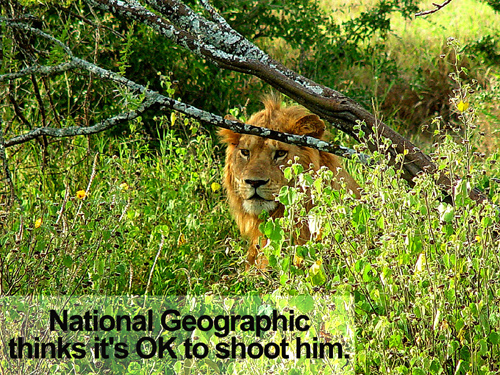
But I am appalled, however, that National Geographic editorialized against “listing” by citing a Tanzanian game reserve that it claimed was dependent upon “$75 million dollars annually from lion hunting.”

NatGeo took up the most prevalent argument around that listing the lion will turn off a spigot of development funds derived from hunting that is essential for conservation, and lion conservation in particular.

The research center NatGeo quoted is a part of the remarkably corrupt Tanzania Wildlife Department, and there’s not a scientist on earth that trusts them.

NatGeo cited three lion experts in the editorial. Paula White, director of the Zambia Lion Project, was one. Zambia as a country has just banned lion hunting and prior to that ban it was earning as much if not more than Tanzania in lion hunts. Kenya has banned all hunting since 1979, and both its lion population and its tourism has grown substantially since.

The second expert cited is the widely respected Craig Packer of the University of Minnesota. In 2010 Packer and two others published a paper in Conservation Biology that gave the Tanzanian government five steps that it must undertake if it were to continue allowing the hunting of lion.

The government has taken none of them.

But what is most of an affront to those of us who read NatGeo in the crib is that the editorial is written by an official of Safari Club International, the world’s largest hunting organization.

NatGeo, as I’ve said before, has gone the way of the Wall Street Journal and Congress. Just survey its weekly fare on its cable channel to confirm this.

Even the New York Times on its op-ed page allowed un-fact-checked statements by a Tanzanian official that were quickly pointed out fallacious by LionAid in the UK.

As any scientist will confirm, animal numbers in Africa are very hard to come by. Government statistics are poorly collected and compiled and often just made up. Tanzania is probably the worst example. So it is hard to wholeheartedly embrace LionAid any more than the Tanzanian government as they duke out numbers.

But the best statistics documented, by researchers like Packer, whose studied recommendations for lion conservation are then wholly disregarded by Tanzanian officials, suggests that those officials are the least likely to present good evidence.

My point in this blog is to argue that “banning hunting” is not going to harm conservation. I think Fish & Wildlife is well advised to consider that banning lion hunting will, in fact, promote conservation. It’s hard to imagine why banning the killing of a species in decline won’t be of some use, if not serious aid.

The recent moves by Botswana and Zambia, and the long history that Kenya has with banned hunting, provide warehouses of proof that banning hunting is a good conservation tool.

The pitiful attempts to enlist academic support for the opposition, as evidenced in the fallacious articles in NatGeo and on the op-ed page of the Times, is just further proof that facts mean little to an industry, which like those supporting the NRA, may be severely hurt by the listing.

So their real colors come out, their ire is fired, when their principal goal, hunting, is challenged.

No, you cannot save lion by killing them.


Endangered species is a somewhat complicated topic. America’s current Endangered Species Act (ESA) of 1973 was signed by President Nixon as a replacement of a 1969 law which had a rough start and rocky judicial test.

The ‘73 law went all the way to the Supreme Court where it was strongly affirmed, and it has been the law governing the protection of endangered species in the U.S. ever since.

Parallel to the American experience, the world as a whole was formulating a treaty that would protect species worldwide. Its first draft was in 1963, but after the American law was affirmed by the Supreme Court in 1973, CITES was also formed in 1973 and now has 180 subscriber nations including the U.S.

While it’s not wholly true that CITES walks in lock-step with ESA, particularly in the last decade, it does tend to “list” species after ESA does.

This only makes sense, because what CITES does is ban the international trade of the species listed. ESA, on the other hand, has much more power within the U.S. It can stop the development of a dam, for instance, or forbid hunting even in a private forest, if it finds a species is being threatened by that action.

And because America remains the largest economy in the world, whatever ESA “lists” becomes easier for CITES to enforce if it “lists” the same species.

My Brother’s Slave

My Brother’s Slave

malcolm-newspapersAfricans mostly blame Republicans but more so blame America’s political system for the catastrophe that could have destroyed them last night.

Of all Africa’s 54 countries, South Africa has the largest economy, and it’s roughly one-twenty-fifth the size of the United States economy. After South Africa comes Nigeria and Egypt. Together those three economies are roughly ten times larger than the combined economies of the remaining 51 countries.

For further example of the importance of scale and how disastrous the debt ceiling catastrophe could have been to Africa, consider East Africa (Kenya, Tanzania, Uganda, Ethiopia, Rwanda and Burundi).

The largest of these economies is Kenya. Its economy is roughly equivalent to the economy of the greater St. Louis metropolitan area, roughly one-two-hundredth the size of America’s economy.

Why does this matter?

Because despite the wide variation of political systems that govern the various African economies, they are all totally and mercilessly dependent upon the dollar.

The value of South Africa’s currency, the Rand, leaped and plummeted in near lock-step with the U.S. stock market, valuing the potential of a deal. When it was finally reached late last night, the Rand increased to its highest level in months.

Most of the world’s gold and diamonds come from southern Africa, and their belly fundamentals are slowly becoming linked to the Rand. In one fell swoop last night, when Obama signed the law to reopen the government and raise the debt ceiling, South Africa’s GNP projections rose by nearly 3%.

A South African considering a vacation to Disneyland could now possibly afford it, where as Tuesday, it was out of the question.

For the much smaller economies like Kenya the catastrophe could have been apocalyptic. The undeniable sudden end of AID and other financial instruments that keep these emerging countries operating day to day, would be switched off.

No petrol for cars. No food for the slums. No spare parts for the hydroelectric damns that produce the country’s electricity. And no extraordinary measures to be sure of the less clear but well known security to contain terrorism, like al-Shabaab.

It was no small deal for Africa. To say those countries’ businessmen and financial leaders had stopped breathing waiting for Obama’s signature is no exaggeration.

“But, the political deal reached on Wednesday does little to set the world right again,” wrote a South African analyst this morning. “Too little, too late. Once again, the symptoms have been addressed, rather than the problem.”

Africans don’t understand this, either:
“Numerous polls show Republicans have taken a hit in public opinion. A Rasmussen poll on Wednesday showed that if congressional elections were held today, 78 percent of Americans would like to see the entire Congress thrown out and replaced.”

That was a widely published report from Africa by Reuters. It’s confusing because in most of the world democracy is run by Parliamentarian systems, and mechanisms would already be functioning for an immediate new election, and we could, in fact, throw all the bums out right away.

But not in America.

“The vote was weird.”

“Drama queens the lot of them.”

“It appears this whole shutdown was so that Cruz could get some votes in his home state.”

“62 percent of House Republicans oppose deal: Bolded bit for those who think both parties are the same.”

The above from an active chat site in South Africa.

“Talk about leaving it on the late side,” wrote South Africa’s FSP Invest’s principal editorial today.

Last week Warren Jeffrey of FSP Invest wrote, “America’s playing chicken with your money…”

Now I know there are a lot of Americans who could care less that distant African nations will really be the ones to feel the tumult of our actions before we do ourselves.

There’s this widespread selfishness in America that what we got we deserve, and what they got is because they did something wrong.

Despite that being ridiculous, it doesn’t even matter if it were true. America for no other reason than its size and success has a responsibility to the rest of the planet, to the universe in which it finds itself king.

Fate or hard work, it doesn’t matter. The world depends upon us. Just as the poor sop on Wabash Avenue out of work for 9 months depends upon us all. DEPENDS UPON is a concept most of the world gets and lots of Americans don’t.

Charity begins at home. And if we just get that one right, we’ll automatically be extending charity to the rest of the world.

A little compassion, eh?

Best Time To See The Falls

Best Time To See The Falls

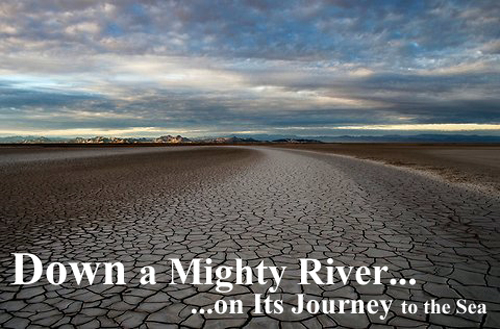
colorado riverThe photo above of the Colorado “river” as it meets the ocean is being used by African environmentalists to stop Botswana from its planned new take of Zambezi water for irrigation.

The Zambezi forms on the border between Namibia and Botswana, where a number of other large rivers like the Chobe and Kwando converge. These rivers are formed in the mountains of Angola after seasonal rains at the end of the year.

Geographically odd, the mountains of Angola are the continental divide for this part of Africa, meaning essentially that the western portion of the divide is hardly more than a quarter the width of the eastern portion. Which means that most water and all major rivers flow eastwards across a large section of Africa into the Indian Ocean.devils.vicfalls

Such is the Zambezi River, which after forming and leaving Namibia and Botswana, runs past Zimbabwe, Zambia, Malawi and finally, Mozambique.

And I’m sure you’ve heard of Victoria Falls, which is only 60k east of Botswana on the border between Zimbabwe and Zambia, where the then magnificent Zambezi tumbles over a mile-wide cataract forming one of the wonders of the world.

It’s a rather important tourist attraction.

Now Botswana has announced to the other countries downriver that it plans to extract a sizable amount of the Zambezi mostly for new irrigation projects.

Food, that is.

Which is exactly a part of the explanation for the Colorado running dry.

Now contrary to enthusiastic tourists who believe they can get up and go at any time to see Victoria Falls, that’s not the case. The Zambezi is an incredibly seasonal river. It never stops flowing, but its flow changes radically with the season.

In November, December and January, an extremely popular time for travel, as the waters are only just forming after the Angola rains, the flow is so small that people who view the falls then see mostly rock.

And by March when the flow is in full swing, the falls are so massive you can see hardly anything but mist.

The best time for viewing the falls is February, June, July and depending upon the water, August. That’s when the photographs were taken that first inspired you to view them.

And the eradicate flow of the Zambezi was so destruction to agriculture downriver from the falls, that years ago the massive Kariba Dam was built. Not only does it control about half the Zambezi’s length (from the middle of the continent to Indian Ocean) but it provides enormous electricity for the area.

So Botswana’s move, Botswana says, is not so radical after all.

But the Zimbabwean Minister of Water Resources Development and Management, Samuel Sipepa-Nkomo, is not so sure. He thinks the idea would be a “great threat” to downstream Zambezi communities. (Likely as great a threat as the current Zimbabwe government is to those communities.)

But try as it might have, the Zimbabwe government has been unable to effect the flow of Victoria Falls. This project will.

There would also be a benefit, if this extraction were accompanied by the building of a dam, which is also being suggested. The area is in dire need of more electricity.

It’s important to note this was long in coming. A Dartmouth University study predicted the impending conflict in 1998.

That study recommended that not just in Africa but everywhere that water is precious (like the Colorado) it should be proportionately paid for. In other words, if there are a 1000 cubic meters on average running through a checkpoint, then if projected use would take 10% of that, that government should pay 10% of what the water was valued.

I kind of doubt that will happen. It didn’t happen with the Colorado, where an elaborate inter-government agency lead by the EPA determines appropriate water use for the States.

A united Africa could also create such endeavors. But …

Meanwhile stay tuned for the altered best times to see the falls.

No Big Deal … Yet

No Big Deal … Yet

no big dealWhat Africans realize better than Americans is that for the last several years America has had to be run almost like an African dictatorship, as Congress closed itself down.

As a result, most of Africa shrugged off the U.S. government slowdown, today, not considering it very important to world affairs or economies. Still trusting in President Obama.

African newspapers and blogs were replete with excellent reporting filed mostly by Reuters and Agence France Presse. Both services specified all the areas where the slowdown will apply, and very little seems to impact Africa or abroad.

For example, a major concern was the processing of U.S. visas, and that will not be curtailed, since the White House has named foreign embassies and consultants as vital services.

Much of Africa’s media has pointed out how Obama like a beneficial African dictator simply declared most foreign services essential, so they aren’t effected.

The Federal Reserve and most foreign aid agencies will stay open.

Financial markets in India and most of Asia, as well as the U.K. also shrugged off the slowdown.

Only currency and commodity markets seemed to react in Africa, and they actually reacted well.

The ailing South African Rand firmed slightly and the price oil dropped slightly.

South Africa, which is so dependent upon the gold price, seemed to think gold would continue a slow recovery in price after tanking several weeks ago.

So what’s the big deal?

“Just to warn you… we will see yet another deadline on 17 October,” reports the influential FSP Invest from South Africa. The author also said South African markets “generally follow global markets” which will depend on U.S. news, especially this week’s non-farm payroll numbers the government (if the spokesman comes to work) announces Friday.

With Congress in virtual paralysis for some time, the U.S. economy has been driven mostly by fundamentals in place and Obama’s presidential directives that he’s been forced to use.

His recent Presidential Policy Directive (PPD) directed towards Africa to build trade has worked well. This would normally have been a part of legislated trade legislation, but with Congress in paralysis, Obama moved alone.

“More trade between Africa and the U.S.” was the recent headline in South Africa’s online “fin24″ financial newspaper.

Supported by recent figures released by the IMF, the head of DHL in South Africa attributed the increased trade to Obama’s PPD.

Of course, everyone knows it shouldn’t be this way. Or rather, this is the way African dictators work, authoritarian rulers that don’t have democratically elected governments.

Like us?

The Real Disneyland

The Real Disneyland

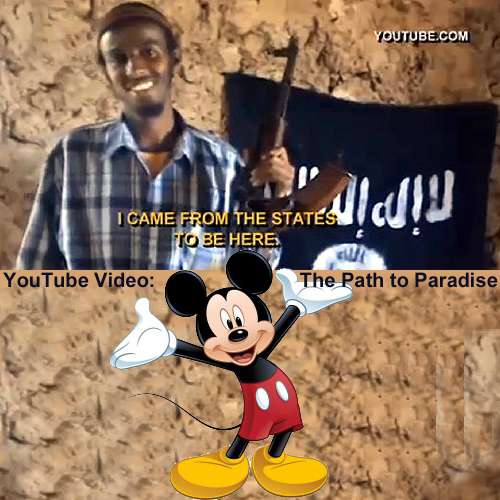
pathtoparadiseThe Westgate Mall attack was al-Shabaab’s dying gasp. There will be more attacks in East Africa, in London, in the U.S., but not from the old al-Shabaab. Not from what was left of the group that was wiped out in Westgate.

Many British analysts believe the attack was led by a fellow Brit, Samantha Lewthwaite. If this is true, it means the organization al-Shabaab has imploded.

The “White Widow” as she was called was essentially the last well-known al-Shabaab commandant. All the others had been killed over the last year.

Possibly less than a month or two ago, an Alabama citizen, al-Shabaab leader Omar Hammami, was killed in an internicine fire fight. He died along with a British compatriot, Osama al-Britani.

So three of the fragile top leadership of al-Shabaab who remained after Kenya routed the group from Somalia are dead. Two Brits, one a woman, and one American.

On PBS yesterday, Kenya’s foreign minister said there were an additional “two or three” Americans fighting as jihadists in the Westgate battle who were killed.

Think about this. Think about this carefully.

Few true journalists or analysts of anything will ever predict the near end to some movement, for fear they’ll be wrong and lose their position. I don’t have to worry about that. I hired myself.

And yes I could be wrong and by so saying I’m honestly diminishing my conviction, but my gut nevertheless tells me otherwise.

Reports that al-Shabaab still controls much of Somalia are incomplete. Al-Shabaab was rarely a coherent single organization, although it did coalesce for several years.

What I suspect is that the warlord society of Somalia, part of which loosely allied itself to al-Shabaab, may be doing so, again. If that’s true, al-Shabaab today is not a trans-national affiliate of al-Qaeda but rather a local political movement, retracting into what it was more than a decade ago.

The Council on Foreign Relations has prepared an excellent and brief primer on al-Shabaab that demonstrates this possibility well.

Does it matter that this one terrorist organization is expiring?

Yes, but it hardly ensures Kenya or the rest of the world that there will be no future attacks. What was left of al-Shabaab were foreigners, not Somalis and many weren’t even Arabs. They may have been Muslims but not even that is certain.

What they are, CBS reported yesterday evening, are wayward kids from developed countries like the U.S. and Britain.

The end of al-Shabaab does not bring an end to wayward kids from Minneapolis.

And that’s the second thought I want you to revisit. A terrorist act is pretty easy to pull off, today. It’s a rush for someone depressed. It’s a mission for someone ungrounded and otherwise uninspired.

“It’s the real Disneyland,” one al-Shabaab fighter told CBS.

Fighting clubs exist all around the world. The normal amoralism of a criminal is easily coopted by some ideology, whether that’s jihadism or some other cultism, and I seriously doubt that any of the actual fighters have studied Zen or Marx.

They’re looking for action and meaning, something they’re unable to get at home. And when they do something bad, we tax our poor to fund a megalothic war machine when we should be taxing the rich to fund schools that inspire young people.

When they pull off a mission at a poorly protected Westgate that a inner city gang from Chicago could have pulled off just as well, we respond by sending a dozen generals and Navy Seals when we should respond by sending social workers and community aid.

And when things go south for the jihadists, their amoralism becomes nihilism. They go out with a bang.

“It’s the real Disneyland,” one al-Shabaab fighter told CBS.

ÇA SUFFIT!

ÇA SUFFIT!

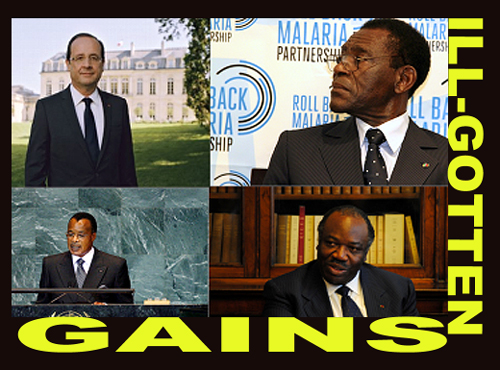
illgottengainsOne white European president is battling three black African despots in what might be the world’s biggest attack on corruption ever seen. Fast cars, Bond’s jet yachts, secret logging of rainforest jungles and the plight of Africa democracy are all at stake.

President Francois Hollande is the first French leader to refuse the cozy, often illegal and until now mutually beneficial relationships French Presidents have developed with Francophone African leaders.

Moreover, he has given the nod to French prosecutors and judges to continue massive investigations into the “ill-gotten gains” by three corrupt African despots.

These ill-gotten gains game from former French presidents. They are the proceeds from business deals removed from regulation by presidential decree, from aid that intentionally required no accounting, and from outright illegal money laundering that former French presidents forbid prosecutors from pursuing. That was the French way.

Says Hollande: “Ça suffit!’

Endorsing the legal nit-picking that a number of progressive French NGOs have been doing for years (see one of the most prominent, Sherpa), Hollande has reversed French policy of nearly the last century.

France’s role in Africa has been huge. Twenty-three of Africa’s current 53 countries were French colonies (compared to only 18 for Great Britain) and the total 2010 per capita GDP in those countries is about a quarter greater than the former British colonies.

America tends to concentrate on the former British colonies like South Africa and Kenya, but France’s role especially in the big oil-producing countries has been huge.

For all the years since African independences in the 1960s and 1970s, French politicians have benefitted enormously from the growing wealth of their former colonies.

In direct contrast with the British, backroom deals and presidential waivers for regulation and other prosecution have developed an incorrigible relationship that has enormously increased corruption at the top, both in France and Africa.

That’s really changing, now.

Hollande is actively going after the “ill-gotten gains” of many African despots, and focused current attention on three: President Denis Sassou Nguesso of the Republic of Congo, President Teodoro Obiang of Equatorial Guinea and the now-deceased President Omar Bongo of Gabon.

There are others. But these three have enormous financial holdings in France, and there is a good chance the French government will now prevail in taking those back.

It is an enormously positive step for the French to have taken.

Bon chance, Hollande!

And Now! Live! From The Hague!!!

And Now! Live! From The Hague!!!

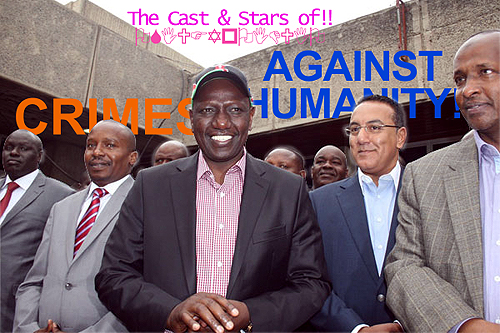
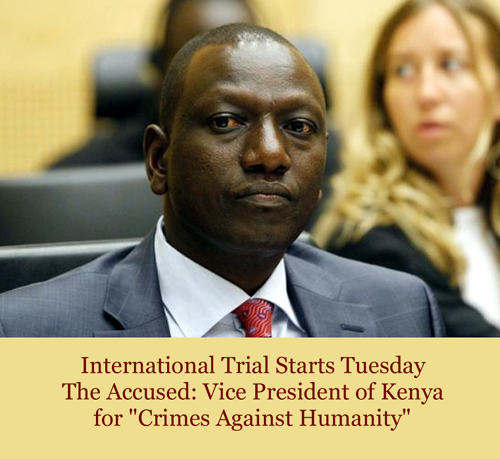
CastofStarsIf you were riveted by the O.J. Simpson trial, you’ll want to adjust your cable contract to get NTV-Kenya: “Tomorrow! Live! The World Trial of Kenya’s sitting President and Vice President for Crimes Against Humanity!”

This doesn’t sound real. Neither Steven Spielberg or William Shakespeare could have concocted this one. This isn’t like a revolutionary tribunal. It isn’t Madame DeFarge and her fellow citizen hookers watching the old king hanged.

William Ruto, the Deputy (Vice) President of Kenya, flew to The Netherlands yesterday … with, by the way, 100 elected members of the current Kenyan Parliament … to stand trial in The Hague’s International Criminal Court (ICC) which the country of Kenya agrees has the authority to imprison those the ICC finds guilty for up to life.

The President of Kenya, Uhuru Kenyatta, will begin his trial on November 12.

Oh, and by the way, the crux of the charges against Ruto was that he tried to kill Kenyatta’s supporters, and the crux of the charges against Kenyatta is that he tried to kill Ruto’s supporters.

The ICC initially was going to try them (and 4 others) all at the same time, but accommodated a Kenyan request that the country’s two top leaders ought not be out of the country at the same time.

How civil.

The bill to the Kenyan government for participating in this ultimate fiasco is astronomical by Kenyan standards. Just consider today’s expense report: Imagine George Bush flying back and forth in Air Force One (and probably Air Force Two to bring Republican Senators and Congressmen) to Amsterdam to allow himself to answer unpressed indictments by the ICC regarding his War in Iraq.

I thought a review of why we’re here might help you.

The court in question is the World Court, the ICC. Americans don’t know much about it, because America refuses to participate:

THE COURT
As of May 2013, 122 states are parties to the ICC, including all of South America, nearly all of Europe, most of Oceania and roughly half of Africa. Another 31 countries, including Russia, have signed but not ratified the treaty.

The progenitors of the ICC originated more than a century ago and include the Red Cross, when the world tried (and failed) to prosecute those responsible for the Franco-Russian War of 1872. The idea was reborn after World War I and then, again, after World War II. The Nuremberg trials finally prompted the United Nations to embrace the idea.

But having studied it endlessly and virtually created it, the UN was stymied
from setting up The Court by the politics of the Cold War.

In June, 1989, in response to worldwide drug trafficking and the imminent Bosnian War, the world more or less (including no America) got together and formed the court as an entity separate from the UN.

So even without America, China and full Russian participation, the Court has grown to represent world justice. Its famous trials include the wicked men of Bosnia, Liberia and Rwanda. These managers of genocide are now behind bars in Holland.

HOW DID KENYA GET THERE?
The democratic election in Kenya at the end of 2007 was miserably mishandled, almost certainly fraudulent and whatever else, too close to call. It was, however, the first truly free election Kenya had ever had, because the two main contestants for the Presidency were so far apart ideologically.

One was for the poor and socialist. One was for the rich and capitalist. And …

…one was from the country’s largest tribe, the Kikuyu; and the other from its second largest tribe, the Luo, who until that moment had basically spent all their history trying to massacre one another.

And so they did, again. This time with the extremely legitimate pretext of a major election gone awry. Within a month of the election, more than 1300 people had been killed but more importantly, in vicious videoed attacks that devolved into ethnic cleansing.

And even more important than that, really, more than a quarter million people were displaced.

The U.S., Britain and Kofi Annan put Kenya back together. Six months after the catastrophe, the two contestants were sharing power, and things were working out. In fact, they worked out so beautifully that Kenya’s then newly written constitution is really a model for modern governance.

Part of the all-party agreement that put the country back together was to determine who had fomented the violence and to prosecute them … in Kenya. It was almost an afterthought that added to the agreement that if Kenya couldn’t get it together to hold the trials, or to mount the investigation, that if Kenya wanted, the ICC would step in.

That’s what happened. Kenya couldn’t get it together. At first it just seemed like too herculean albeit too expensive a task. So the old Parliament that wrote the new constitution hemmed and hawed, debated and ignored, and finally defaulted to the ICC.

Which was really quite reluctant to take the case on. After all, as horrible as 2007/2008 was to every Kenyan, it was nowhere near as horrible as the cases the ICC had been hearing: like the Hutu massacre of 800,000 Watutsis.

The ICC did its work. Among those to be indicted were the leaders of Kenya’s biggest tribe, the capitalists, Uhuru Kenyatta, son of the founder of the country; and the leader of an influential smaller tribe hated by the Kikuyu and who had supported the socialists, the Kalenjin, William Ruto.

For organizing, financing and managing the slaughter of hundreds and attempted slaughter of hundreds of thousands.

Whoa. Embarrassing, to be sure. Kind of riled Kenyans of similar stripes. Parliament exploded but did nothing. Parliament considered giving immunity to these guys, but didn’t. The trials were set.

Then …

William Ruto and Uhuru Kenyatta filed to contest the election of 2012 after they’d been indicted.

Parliament choked. The Presidential Commission authorizing candidates didn’t know what to do. Parliament said do it. The two men indicted for crimes against humanity became candidates.

And then …

… these two murderous rivals combined to form a single party. The leader of the biggest tribe, Kenyatta, would stand for the presidency. The other guy, William Ruto and former arch enemy, would stand with him for the vice president.

And then …

… they won.

Tomorrow, I speculate on what the hell is going on, or, “How Good can a Bad Guy be?”

Don’t Forget Your Popcorn

Don’t Forget Your Popcorn

RUTOtrialBeginsTuesday the Vice President of Kenya personally stands on trial in The Hague for crimes against humanity. Two months later, the President will begin his trial, there.

William Ruto, the Deputy President of Kenya, will be accompanied by about 100 recently elected Members of Parliament who obviously support him.

It is, indeed, one of the most curious performances of achieving justice the world has ever seen. A Nairobi commentator put it this way this morning:

“Most international criminal tribunals have been set up as courts of victors to punish the losers,“ explains Luis Franceschi, Dean of Nairobi’s Strathmore Law School, citing the great trials that followed great wars and historic massacres.

This time in Kenya, though, “The accused [are] not past rulers or sitting presidents, but newly elected leaders. We are witnessing one of those uncommon ironies where democracy seems to clash with justice.”

Add to this complexity yesterday’s action by the Kenyan Parliament to withdraw from the International Court that is holding the trials, and you have the kind of governmental and political mess that has stymied Kenya for so long.

There’s more! The International Criminal Court (ICC) is an independent, global judiciary created and supported by 122 sovereign nations. Kenya is one of those. Proposed as a part of the remedial actions taken after World War II to try war criminals, it became a serious global justice tool after opposition to it by Soviet block allies ended with the end of the Cold War in 1989.

The U.S. is one of the few nations to have specifically rejected the Treaty of Rome which formed the ICC. The other two – you guessed it – are Russia and China.

Yesterday in Kenya’s Parliamentary debate, America was invoked time and again as a reason for Kenya to withdraw.

In a finely worded statement the U.S. issued after the Parliamentary debate, undoubtedly hoping no one would read it because of the Syria Crisis and G20 meeting, America urged Kenya “to fulfill its commitments to seek justice for the victims of the 2007-2008 post-election violence.”

This is a major step back from much more severe statements America made earlier, including “severe consequences” to Kenya if action like this were taken.

Kind of hard to tell Kenya to go to trial in The Hague when you intend to ignore your staunchest ally and the rest of the world that are telling you not to bomb Syria.

This is a mess.

It would have been a mess even if the U.S. hadn’t muddled its diplomacy in Kenya or its image abroad, but believe me, that isn’t helping.

There is every indication at the moment that Kenya’s duly elected and pretty popular top two leaders will stand trial in an international court. Last week technicians from Kenya were allowed into the court chambers to hi-tech wire it up, so that people in Kenya could have real time coverage and communications.

The charges against them and three others are that they were the principals in organizing and funding if not actually managing the terrible violence that followed the disputed 2007/08 elections.

More than 1300 people were killed, many horribly, but perhaps more significantly more than a quarter million displaced. The issue of “IDPs” (internally displaced persons) remains a contentious and difficult one in Kenya even today.

The Hague is conducting The Trial because it was asked to by the Kenyan Parliament.

Not the current Parliament. The current Parliament is entirely new, the first one under a wonderful new constitution adopted last year. But the old Parliament that was viced together by Kofi Annan and others who finally brought peace to the country by March, 2008, first accepted that it must hold trials, then wavered, then asked the ICC to take over.

The ICC did so reluctantly and laboriously. But once things got going, they became unstoppable.

Neither the accused current president or vice president held significant power in the coalition government that brought Kenya out of the cauldron of violence into the new light of a really good constitution.

Both were charged by the ICC as being among the main culprits before they even announced they were running for the leaders of the country created by the new constitution.

The old Parliament debated furiously whether as accused they should even be allowed to stand as candidates, and finally decided they could.

Meanwhile, the ICC was rounding up tons of evidence. It takes the ICC years to achieve enough evidence to bring someone to trial, and in this case they did so very quickly. Trial dates were set initially before Kenya’s presidential election.

But it became clear at that time that the two accused were also very popular in Kenya. Negotiations that kept the old Parliament on board with the ICC successfully pushed the trial dates until after the elections.

Then, the accused won by such a slim margin that Kenya’s newly constituted Supreme Court finally had to affirm the razor thin outcome.

As Uhuru Kenyatta, the current president, and William Ruto, the current vice president, solidified their power and control over the country, witnesses that the ICC had assembled for the trial began to withdraw.

Of an original 30 witnesses, there are today less than half that willing to testify. You can imagine why.

And to make this entire blog meaningless, the process of Kenya withdrawing from the Treaty of Rome that it signed fifteen years ago could not possibly conclude before these trials are over.

Sane minds in Kenya implored Parliament not to become “hysterical” and do what they did yesterday, accomplishing essentially nothing but making Kenya look odd at best, juvenile at worse.

I am absolutely fascinated at this whole process. Clearly, Kenyatta and Ruto if convicted are not going to jail. They’d go home, first, and then stay there.

So why go through the antics in the first place?

They believe they can prove innocence. I suppose we should remain open-minded about this. You know, innocent until proven guilty, and all that. And to be sure a guilty verdict in The Hague requires a lot more evidence and certainty than in a normal court.

It is, indeed possible, that despite all the evidence so far assembled against these two men, they could be found not guilty.

Even so, they’re bad guys. We don’t need an international court to sift through the volumes of news reports that have already convicted Kenyatta and Ruto in the international court of public opinion and I believe that judgment has been a fair one. Although the U.S.’ stand is losing credibility, there’s not a single European power willing to engage either of these leaders.

But in the duplicitous world of global power politics, a not guilty verdict from The Hague might make an appointment in Westminster easier to arrange.

Stay tuned.

All But Nothing

All But Nothing

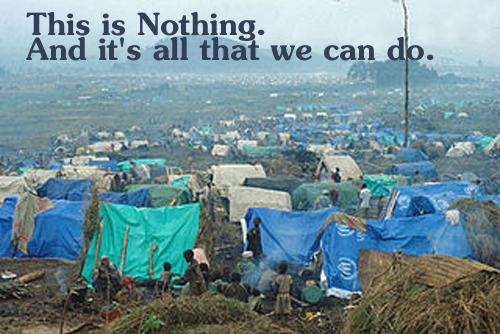
Rwandan_refugee_camp_in_east_ZaireThe West’s recent history in Africa tells America clearly what it should do in Syria.

Twenty years ago the international community led then by Bill Clinton decided to let the mad dogs kill themselves in Somalia, and the international community abandoned a festering civil war that lasted until today.

Somalia is today less lawless than it was with an emerging society and government yet threatened internally by remnants of the warlords who had wrecked havoc of the place, but in sum … peaceful and actually, pretty free.

A year after abandoning Somalia Clinton and his staunch ally, France, blocked the Security Council from stopping the Rwandan genocide. Up to a million people were killed and twice that displaced in one of the most brutal and horrific genocides the world has ever seen.

Today Rwanda is run by a merciless if beneficial dictator and peace is as strong as its many new steel prison gates. The economy fueled by western aid is booming, but be careful what you say in public.

Peace came quickly to Rwanda. It took a generation in Somalia. One is utterly peaceful but not free; and the other is free but not utterly peaceful. Neither outcome is pleasant, but many fewer people are dying miserably.

The west was perfectly able to send missiles, tanks and soldiers into Rwanda and Somalia and create a pacified society, just as it did in the Balkans.

That’s something I wanted to happen at the time in Somalia and Rwanda, and something I might support, now, in Syria.

But anything less than everything is wrong. Clinton couldn’t morally justify intervention in Rwanda or Somalia, he said, because intervention he felt would only make matters worse.

That may have been true in Somalia; it certainly wasn’t true in Rwanda, but regardless, it wasn’t his reason. His real reason having been burned by Blackhawk Down’s failure was that it would be too expensive to be effective, or possibly that such a larger involvement would invoke restraints from other world powers.

Africa is rife with histories of such conflicts that could have been pacified in addition to Rwanda and Somalia: The Congo, Central African Republic, Burundi, Sudan and today, contemporary Zimbabwe. In all these places absolutely horrific situations exist or have existed but did not reach the threshold of western military involvement.

Because in every one of these, however tiny they may seem relative to Syria today, we knew that anything less than a complete occupation and Marshall Plan for rebuilding, would fail. So .. we did nothing.

It was “all” which was not possible, or nothing. I have never forgiven Clinton or his ally France from not going into Rwanda in 1993, but over the years I’ve grown comfortable with having abandoned Somalia, growing to embrace the cogent argument that involvement would only have made matters worse. It was a hard lesson to learn, a very bitter pill to swallow.

Now, for some reason, America is turning away from this learned lesson. Limited involvement in Syria will make matters worse.

America is trying as it does so well to find a loophole, a way around this clear maxim that it is all or nothing. Obama would have us believe that we have an obligation to uphold global human rights, that as the strict parent or stern teacher or Global Policeman, we must punish those who go too far.

In his speech, he called the use of nerve gas “an assault on human dignity” that had to be redressed.

Why are the 1426 people killed last week in Syria by nerve gas more of an assault on human dignity than the 800,000+ that we allowed to be massacred in Rwanda? Or the same number today in The Congo?

Yes, it’s an assault on human dignity in all cases, but selectively applied it loses its imperative force. Presumably nerve gas and the world’s conventions against it violate the ethics of war. That’s rather laughable, of course. Machetes were as effective a weapon of mass destruction in Rwanda, and would have been much easier to prevent.

Obama defined this Red Line, because he believed incorrectly that we have the power to define. We don’t. There is no Red Line. There is massive injustice fueled by ethnic hatred, exacerbated by a capitalistic system gamed by the United States. There is war. There is no point at which that war is bad and then good. Red Lines may have meaning in quantity, but certainly not in quality.

No, the real motivation for Obama to intervene in Syria is the same motivation that kept Clinton from intervening in Somalia and Rwanda: “national security.” Clinton didn’t think national security was threatened. He was right in Rwanda but wrong in Somalia, where al-Qaeda was refueled in the years that followed.

From the amoral point of view of national security, Clinton made one right and one wrong decision. But he did it honestly. No “assault on dignity” was proferred.

Obama should take heed.

Obama and Congress and the military are now obsessed by 9-11. The guilt-ridden ideologues among which are Obama and the second Bush and most of our lot of ineffective politicians are terrified at the notion they might be sitting on their thrones while a 9-11 happens, again.

So they’ll throw the kitchen sink at every shadow of a mouse trying to get into the house. They forget that Somalia and Yemen spawned more terrorists than Syria or Afghanistan:

“The greatest irony of this era in the Middle East is that the two rulers most committed to crushing Islamic fundamentalism in the Arab world, Saddam Hussein and Colonel Gadaffi, were overthrown by the West. And in Afghanistan and Iraq, Western countries won the war but failed to replace the dictators with effective governments,” explains the African analyst, Richard Dowden.

You cannot stop terrorism with itself. In today’s interconnected, high tech world you cannot fight fire with fire. You learn to live with it, stopping it closer to home when you can. Otherwise, anything short of “The All” as was the case in Afghanistan and Iraq, is destined to backfire.

The time has come for America to accept the following:

(1) We cannot stop terrorism against ourselves with preemptive military actions like those currently anticipated in Syria.

(2) We are not powerful enough to reverse a civil war far away from home, without the entire world with us (as it was in the Balkans).

(3) Only the UN is left as world policeman. And it will be a very long time before there is enough unanimity again in the world to so act as it did in Balkans.

(4) America does not have enough power to punish without worse repercussions.

It’s a sad, sad time. But there is no alternative that isn’t even sadder.

Revealing Egypt

Revealing Egypt

fearitselfThere’s a side to Barack Obama few ever notice. It may be the same side, the same expression of every President since our revolution, but it troubles me gravely in today’s modern, interconnected world.

It’s the obsession with defense.

I’ve written often about how incredibly militaristic Obama is in Africa, as we pursue the War on Terror. Now a study just getting notice but completed nearly two weeks ago by the University of California-Berkeley charges the Obama administration with direct involvement in toppling the Egyptian government of President Morsi.

“… a review of dozens of US federal government documents shows Washington has quietly funded senior Egyptian opposition figures who called for toppling of the country’s now-deposed president Mohamed Morsi,” the study which was published in AlJazeera reveals.

So you see the difficulty: I didn’t support Mohamed Morsi and his undemocratic if authoritarian rule. Ergo, rid the anti-democrat with anti-democratic initiatives?

There is a time in every young and emerging great politician’s career when “example” is held higher than “force”:

“To overcome extremism, we must also be vigilant in upholding the values our troops defend – because there is no force in the world more powerful than the example of America,” young Obama once intoned to America.

Either the questionable if immoral foreign policies of America have now become part of the “values our troops defend” or young Obama has strayed far from his founding principles.

Yes, the Obama Administration’s who-knows-if-they’re-legal policies have calmed today’s troubled waters a little bit. And that’s the point. America’s covert funding of anti-Morsi forces violated Egyptian law and may have violated U.S. law as well.

It would hardly be the first time one country violated another country’s law in the arena of global power. More to that point in a minute.

But violating U.S. law may have become little more than a past time of American administrations obsessed with “security” and “defense.” In my own life time we have everything as pitifully irrelevant as the invasion of Granada to earth-shattering wars in Vietnam and Iraq, and now to the wholesale disregard of human rights in the Administration’s interpretation of the Patriot Act.

You see the intellectual difficulty. What if we are more safe? Who cares about the moral costs?

“The State Department’s programme, dubbed by US officials as a “democracy assistance” initiative, is part of a wider Obama administration effort to try to stop the retreat of pro-Washington secularists,” writes Emad Mekay, the brilliant young Berkeley student who authored the article.

Read the whole article to learn the fascinating and intricate details, almost as clever and carefully orchestrated as spying during the Cold War. And I have nothing against spying or pursuing foreign policy cleverly.

But times have changed.

There is no Cold War. China and America, the world’s two greatest protagonists are so incredibly dependent upon one another that “live-and-let-live” has been reduced to “self preservation.”

All that’s left, really, is the War on Terror. It’s a high-tech version of Bobby Kennedy’s destruction of the mob. There’s nothing illegitimate about it, and more to the point, there’s nothing overly American about it.

The War on Terror actually came a bit later to America than to Britain, Germany, Japan and a host of other countries. We may have been the site of the greatest single terrorist event, but I for one believe that was because of a bumbling administration who failed to see simple warning signs.

It was a failure of that one administration, not a failure of policy.

The blurry edge of legality, particularly in a global perspective, gives enormous latitude to those in power to fiddle with morality.

Obama’s gone too far.

Power to the People

Power to the People

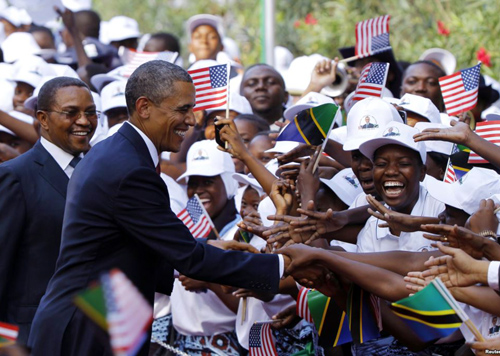
obamatanzaniaAmerican presidents one-upping each other is hardly news at home, but this time round it really is news for Africa. George Bush is personally credited with $15 billion for Africa, now Obama with $16 billion.

This year the Obama Administration requested a total of $7.5 billion for USAid to Africa. Twenty percent of that is for Egypt, with the remaining 43 beneficiary countries receiving $5 billion.

Nigeria is in second place, no surprise. If the country can ever solve its ethnic problems its massive oil reserves will make it literally one of the most important countries in the world.
2013USAidtoAfrica
But what is surprising is third place, Tanzania.

Obama just completed an Africa trip where the signature speeches, most dramatic announcements and largest contingent of Americans traveling with him (800) were in Tanzania. Why Tanzania?

Tanzania’s human rights ranking is terrible. Just before Obama arrived, an opposition rally in Arusha was brutally crushed by police. A month before Obama arrived the Tanzanian government announced wholesale movements of Maasai from their native lands to increase a hunting reserve for Arab princes.

And there’s been scandal after scandal, many centering on the country’s 15-year inability to make money from the discovery of the world’s second largest gold reserve.

Compared to neighboring Kenya, Tanzania is a banana republic with no clear optimistic future.

Why Tanzania?

There are two reasons. The first is because Obama’s predecessor, George Bush, doled out a huge amount of his $15 billion AIDs initiative in Africa to Tanzania. Why Tanzania? Because Kenya wouldn’t have him and South Africa didn’t really want him, either. In fact, because most of Africa did not want to be associated with George Bush.

The Bush Administration alienated most of the world with its invasion of Iraq, Africa included. Its foreign policy was hurtful to emerging countries in virtually all areas, from conservation to economics.

And its missteps were many and severe in Africa. Perhaps the most notable for this discussion was when George Bush became the only leader in the world to congratulate Mwai Kibaki on becoming elected president in 2007. Which he hadn’t been, which was why no other world leader offered the congratulations.

But those congratulations Kibaki immediately published on Kenyan media to consolidate his illegitimate claim to power, and that led to the terrible violence of 2007/2008.

So by process of default, Bush went to Tanzania. Obama has to one-up him. Bush’s $15 billion was for AIDS aid. Obama’s $16 billion is for electrification.

There’s a second reason.

Drones have assassinated no fewer than a dozen terrorists while they were living in Kenya and Tanzania. Kenya doth protest. Tanzania doesn’t.

Aid is a tricky game. I have a sense that Obama has mastered it far better than Bush did, but he’s shackled by his militarism and obsession with killing terrorists, and influenced by not letting his predecessor shine more brightly.

Aid is a tricky game. Morality isn’t. I don’t know how long it will take for America to sync itself into a truly moral stance after our generations of warring, but it doesn’t look like it will be soon.