Choose your culprit: Right or Left.Yesterday The House censured Rep. Charles Rangel for among other things, bribes. And today Nigerian officials confirmed a warrant has been issued for the arrest of Dick Cheney… for bribes.
While the magnitude of the bribes is significantly greater in the Cheney than Rangel case, both involve oil, and both involve men at the highest pinnacles of U.S. power.
On the surface the two men couldn’t be more different: conservative and progressive, white and black, aristocrat and slum-boy. Yes, but the difference even stretched into their souls.
The one I’ve always liked is like your bumbling old uncle who nonetheless brings you the best Christmas presents. Rangel was a progressive, Harlem’s Godfather, articulate and loaded for bear in the public arena fighting for what he thought was right.
Cheney is the Joker incarnate. He appears public only when the vicious veils of his den of inequity are ruffled, and even then rarely says anything. He’s insensitive to public suffering, loved by no one.
But at the bottom of their souls all differences disappear. They’re both corrupt.
I’ve spent a good amount of my adult life explaining to critics of Africa that the popular notion that Africa is corrupt is upside down. Africa is a poor place, or at least has been for most of my life. Corruption usually takes the form of money. That has to come from rich places.
Like Haliburton and the U.S. Congress.
Rangel maneuvered into a tax bill a loophole worth hundreds of millions of dollars to an oil-drilling company that pledged $1 million to build a New York city college named in his honor.
In my book Cheney was the bad guy and Rangel the good guy. Cheney was the elite if effete aristocrat masterfully deploying evil. Rangel was the underdog, wounded vet, loyal progressive slipping into the aristocratic comfort zone with little skill.
Cheney did things to get rich. I suppose Rangel did, too, but mostly to get honor. Cheney seems unmotivated by anything moral. Rangel was dangerously playful with The “Ends-Justify-The-Means” to enrich his down treaded community and obtain personal accolades.
Frankly, I actually think Rangel was also just tired of detail, arrogantly careless, ultimately criminally incompetent or incompetently criminal. That certainly does not describe Cheney. Cheney’s Nigerian crimes are ruthlessly calculated, focused from the get-go.
But they both broke hundreds of laws. The big stash was oil.
(Nothing has been proved in court. In both cases only unlitigated allegations exist, and likely will never move further. But let the truth prevail. Justice is often not revealing, just reflective: as opaque as the power that opposes it.)
Cover them both in oil, and you can’t tell them apart.
There couldn’t be two different characters. Mired in infamy by a fossil fuel.
Tourists have always stood out in the Third World as eccentric, rich visitors. But until now they were neither resented or impugned. That may be changing.
Is it right that you as a tourist pay $1500 per day to stay at &Beyond Ngorongoro Crater Lodge when that is more than the average wage earned by a Tanzania in a year?
And while it’s a bit hard to tell from an email address if someone is white or black, I venture that the critical comments left after Otieno’s column were from white Kenyans and that the blacks were supportive or equivocal. More or less.
Until this year, tourism revenues in Kenya were constantly vying for the top foreign currency earnings with tea and coffee. But Kenya is growing rapidly, and manufacturing, mining and service industries look like they will all surpass tourism within just a few years.
Tourism is no longer the sacred cow it was for at least several generations.
Otieno used the publicity about Kate and William’s engagement as the vehicle to discuss the question: are the privileges given the tourist industry fair?
The royal proposal was made while the two were on holiday in Kenya.
I for one was glad to see Otieno’s column. He began politely enough but ultimately used his talent as a writer to make a very strong case. Otieno penned that “the future tribal king of the British” had stirred up a hornet’s nest in Kenya about privilege, land ownership and income inequality.
“I thought we particularly looked good out there on CNN where the local correspondent ably re-enacted a Jesus-born-in-a-manger scene complete with a muddy footpath and a humble cottage where the royal romance miraculously blossomed,” Otieno joked.
But the joke is right on. Christian charity? Christian fairness?
Do the west’s Christian values apply to the extraordinary tax breaks given &Beyond? To the ownership/management of fertile lands normally unavailable to foreigners? To the visa waivers for foreign managers to live and work in Tanzania?
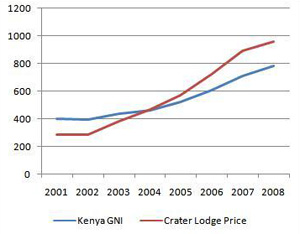
The answers always used to be, Yes of course. Because the benefits to East Africa, mostly in terms of employment, were large enough. But the discrepancy has gotten bigger, not smaller, over the years. Kenyan GNI from the UN. Lodge STO Rates: likely effective average amount received per one night stay from one tourist.
Since &Beyond opened Crater Lodge in the late 1990s, the wealth of individual Kenyans has roughly doubled, impressive yes. But the price of Crater Lodge has increased 400%!
Now in fairness to &Beyond, not all that increase has been pocketed by its stakeholders. But in fairness to East Africans, neither is that increase justified by increased prices or taxes. The truth is somewhere in between, but it seems to me definitely skewed to Crater Lodge’s advantage.
And I think that’s what Otieno is basically referring to.
Honing in like a lasek laser Otieno writes the wealth of a foreign tourist “…symbolizes the kind of inequality and ostentation despised by a large section of the Kenyan society.”
This is only the beginning of the debate, but it’s important to expand, and the bitter voices of foreign managers that dominate the comments following Otieno’s blog are disturbing. That kind of vitriol is not going to help our “tourist cause” one iota.
OK, You Guess. Which country in the world is soon to pass sweeping Cap & Trade legislation requiring new buildings provide hot water from solar panels, massively increasing taxes on industries that break CO2 standards, double the funding for two government EPA-like agencies to among millions of other new responsibilities individually audit every single larger business’ energy efficiencies every three years for violations.
Canada? No.
Japan. No-no. And certainly not the U.S. Our Cap & Trade legislation is dead. Republicans crushed it.
The answer is Kenya. Because environmentally aggressive government policies have spurned growth to record levels.
Shall I repeat that?
Little Kenya, whose GDP is skyrocketing, whose unemployment is at near record lows for a developing country, who is grappling with those ancient problems of inflation and too much demand for small business loans, and gridlock in city traffic – KENYA.
Because every era has drivers of the economy, and important ones right now are industries that peer into a future of no oil. (Even as – remarkable, this is — Kenya has just discovered relatively large amounts of oil!)
The draft Climate Change Bill 2010 is the first of its kind for any country in sub-Saharan Africa. Reading between the lines of the proposed legislation, Kenya’s business newspaper began its story today stating that the main purpose was to … stimulate the economy and provide business growth!
The bill was not just an edict from On High. It was the result of a working group created by the Government in April which was mostly composed of business leaders and advocates.
And try as I have, I haven’t been able to find a single professional, government or scientific voice in Africa that believes climate change must not be aggressively addressed by government legislation.
Africa is effected by climate change nearly as seriously as the islands floating away in the Pacific. Newly erratic and destructive rains and floods have immediate effect on its food source, the result of the ice caps melting too fast.
Africans believe that climate change can be slowed through active government legislation. But the government approach is more pragmatic, self-serving:
“We have been flooded with inquiries from financial institutions like HSBC Bank and JPMorgan, but we cannot engage them now until we have set rules and regulations,” Kenya’s Economic Secretary, Geoffrey Mwau told the African Business Review in that same article.
Alas, let’s now ponder what is happening in “little Kenya” with what is happening in “Big U.S.”
All legislative initiatives at the federal level have been crushed by Republicans. Giant corporations are suing the State of California to stop implementation of its own climate change legislation.
Indeed, a ThinkProgress analysis found that 50 percent of the incoming freshman GOP class deny the existence of manmade climate change, while a shocking 86 percent are opposed to any legislation to address climate change that increases government revenue. Meanwhile, all of the Republicans vying to chair the House Energy Committee — which handles climate and energy issues — in the new Congress are climate change deniers. They include Rep. Joe Barton (R-TX), who infamously apologized to BP shortly after the company’s catastrophic oil spill in the Gulf of Mexico this summer.
I just wish sometimes that we lived in the age of StarTrek. That we could beam our leaders out of America and make them look down at the real universe to see what is happening in the Real World.
Roibos Tea! Owned, Discovered by Nestle!The thousands of little kids like me sent to a freezing winter bed at night with a steaming mug of hot cocoa now have to contend with the fact that their benefactor is one of the most thieving, villainous multinationals in the history of the world!
Nestle (which is now as most things in the U.S. owned by foreigners) is quietly trying to become the global owner of a plant that has grown wild and free in South Africa for as long as there have been bushmen: Roibos.
Or, as properly spelled in South Africa, Rooibos.
Rooibos as a live thing is not attractive. A field of them before they begrudgingly bloom once annually for 5 or 6 seconds looks like a microscope’s eye view peering into the netherworld of bacteria: a bunch of smallish thornless cacti covered with soiled socks.
And whatever truly living thing ever thought of consuming it obviously was climbing a wrung in human evolution. Most things won’t touch it.
I was first introduced to Rooibos when I was working in South Africa in the early nineties. After my first cup of Rooibos tea I felt that I was joining apartheid in a certain death.
But strangely, joining Marmite and Vegemite as healthy food that kids love at first taste, my suitcases coming home were filled with Rooibos tea for my son and daughter.
It took me about 20 years and a genius move by my local grocery store to add ginger to the brew, and I, too, now drink Rooibos. It’s all over America, now. Usually called “Red Bush Tea.”
(Calling Rooibos “red” is like calling the goo left on a wildebeest carcass before the vultures get it red.)
But enough personal ughing.
Rooibos is actually Good for the World. And Nestle has requested an international patent on the organic molecule that makes rooibos Rooibos and it’s found nowhere else on earth!
This is biopiracy and rape in its highest form.
South Africans of every disposition and color have been benefitting from rooibos for hundreds of years. The plant grows only in the Cedarberg Mountains of The Cape Peninsula. Scientifically known as fynbos.
South Africans believe that it can cure acne, slow ageing, inflammation and hair loss, and alter the course of your investments.
Except for the last attribute, the others are explained by rooibos’ explosive antioxidant, Aspalathin. “Most scientists believe the property is available only in the rooibos plant,” writes South African Khadija Sharife who first reported this story in the South African press.
Sharife writes in the current issue of Pambazuka that Nestle has applied for five 20-year patents claiming that it – the multinational – is the “discoverer” of how to extract Aspalathin, and several other molecules from rooibos and a close cousin, the honeybush plant.
And here’s the real affront. Nestle, a Swiss corporation, is not applying for the patent in South Africa, but in Switzerland!
And the Swiss patent office has the authority to issue patents that achieve instant worldwide global enforcement, including in the U.S.!
Sounds absurd, doesn’t it? But there is a wave right now of multinationals trying to patent biological agents, like molecules, all a seeming natural progression of the patent process of genetically altered agriculture.
Fortunately, this little end run on The Cape has been revealed. Natural Justice in South Africa, a South African based not-for-profit got on to the theft and has gotten the South African government involved.
It may not be enough. I for one can understand why no one wanted to patent Rooibos, but I guess we should listen more carefully to our kids. No one has tried to patent Rooibos before. Nestle is the first. That seems critical in the Swiss decision.
So Nestle is reported ready to fight South Africa in Swiss courts for a Cape plant.
A new proposal for the contentious Serengeti highway may have emerged from last week’s elections in Tanzania. It looks promising to me. In perfectly wonderful political language, the Arusha rumor mill calls it “The Compromise.”
Two highways would be built instead of one. The first and biggest would follow the alternate southern route. The second would follow the original route from Arusha but end just outside the east side of the park.
The fact that the second road would still encroach important wildlife areas in the Ngorongoro Conservation Area only enhances its chances of success. Environmentalists have played their cards almost exclusively on the wildebeest migration issue, and if the road stops before entering the Serengeti, this issue becomes moot.
Two roads would cost a lot more, of course, than one. But “The Compromise” might garner western donor assistance, which seems impossible if the road cuts through the Serengeti.
It would also satisfy a major argument used by proponents of the current road, that Maasai communities to the east of the Serengeti are in dire need of development impossible without a good road into their area.
The buzz began circulating in Arusha Wednesday morning after two days and nights of celebrations for Godbless Lema, Arusha’s new 32-year old Member of Parliament. Lema was the successful candidate of the new major opposition party, Chadema.
He had campaigned against building the road. His opponent, incumbent ruling party (CCM) Batilda Burian was the Minister of State in the Vice-President’s Office responsible for environmental affairs.
Lema just didn’t oust a ruling party incumbent. He thumped one of the country’s important environmental ministers, winning 58% to 39%!
Arusha has always been solidly against the road. During the heated campaign Dr. Burian tried unsuccessfully to distance herself from her party’s insistence that the road be built without actually denouncing it, a balancing act that tumbled.
She denied Lema’s charge that she was the “architect” of the highway plan, insisting (remarkably) that she had nothing to do with it.
But Lema countered, ”Ms Batilda Buriani … is the state minister in charge of environment and should have advised the government against the road project…”
Now that the battle is over, tempers are cooling. Lema is unlikely to get anywhere as an opposition MP without compromise with the ruling party that still holds sway over more than two-thirds of parliament.
The road is supposed to begin in Arusha with Arusha contractors. There’s a lot of fluff and not much power in being a single MP in Tanzania, but what power exists usually resides in dispensing the pork. Many of Arusha’s young businessmen – Lema’s peers – are in the tourist industry. But many are in construction. It would be just as hard for him to fall in line with the ruling party as to completely oppose the ruling party’s position.
Alas “The Compromise.”
The current proposed northern route would connect the urban centers of Arusha and Mwanza with a looped road that would transect the northern portion of the Serengeti National Park about 40 km south of the Kenyan border.
An amazing array of scientific, professional and business organizations has lined up squarely against the plan, arguing that it would seriously impact the great wildebeest migration.
Disrupting the migration is THE issue outside of Tanzania, but in Arusha the main concern is that business would seriously suffer from the subsequent impact on tourism. Most of Tanzania’s tourism industry is located in Arusha.
But from the getgo the current and newly re-elected President Jakaya Kikwete has steadfastly insisted the road would be built. Even as foreign donors began to suggest they would have nothing to do with the road, Kikwete claimed that Tanzanians will fund the road themselves without foreign assistance.
Most of us know that’s absurd. We think what Kikwete really means is that the Chinese would do it for him.
But the Chinese have been stung recently by a series of environmental embarrassments, most notably Chinese workers arrested and deported for poaching ivory. They may not be in such an enthusiastic mood to find reasons for bringing their anti-animal reputation up anew.
Alas, “The Compromise.”
Hard to say if the rumor will gain traction, but it seems to make imminent sense to me. Instead of a half billion dollars, it might cost $650 million, and particularly if the Chinese are involved maybe even less. The campaigns against the road must have reached the desks of western aid dispensers. This seems like a compromise made in heaven.
We will know the official outcome of our elections Tuesday, before we know the official outcome of Tanzania’s Sunday elections.
Despite the rapid development in places like Tanzania, there are still many very remote polling stations, and uniformity in how returns are reported publicly rules Tanzanian law. So of course they know right now who won in the urban areas like Dar, but it won’t be reported until little remote villages like Endulen report in as well.
The expected results are much more expected in Tanzania than here at home.
Jakaya Kikwete, the current president, will likely be reelected for his second and final term, although by a much narrower margin than the 80% of his first election.
Kikwete has lost some of his pizzaz. A few weeks after his first election, he dressed up like a commoner and walked into various government agencies, like social security, and experienced the distress of trying to get something done.
He’d walk out and the next day fire most of the staff.
He was hailed for such bravado. But those days are far gone. His main rival, Willibrod Slaa, is riding a wave of anti-corruption sentiment. Foreign donors have halved their donations since Kikwete’s first election, ostensibly because of growing corruption.
This half billion dollars lost annually, in a national budget which is only just over $6 billion, is a sizeable hit. Kikwete has tried some fancy footwork to close the gaps, including increasing the tax on foreign mining companies and issuing bonds, but it still falls massively short.
So the country has moved into deficit spending big time, even while the economy is doing nicely and would not normally mandate such red ink if the donors were being normally kind.
Like here at home, it’s the economy stupid, and in a developing country even when the economy is doing pretty well, for many it seems exactly otherwise. It will be a generation before the developing world can provide to the extent the developed world now does.
And as communication increases and democracy spreads, discontent rules.
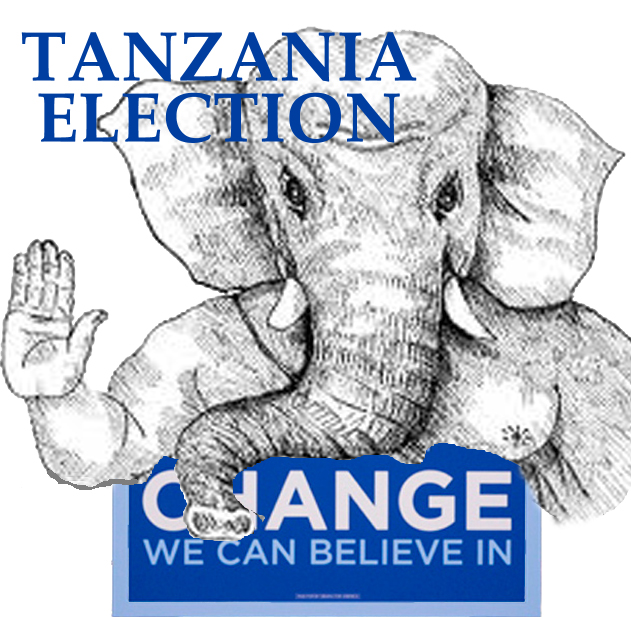
Change, whether you can believe in it or not, motivates everyone’s vote.
Elephants are on the rise, in numbers, in tusk size, in populations, and their growing battle with humans is straight on the top of the mind of Tanzanian voters going to the polls this week.
Lots has been mentioned about the side issue of the proposed Serengeti highway in this weekend’s elections, but an underlying component of that issue can be reduced to elephants.
It’s been more or less accepted in the campaign that if built completely the Serengeti Highway will diminish the vibrancy of the Serengeti/Mara ecosystem mainly by disrupting the wildebeest migration. But this amazing herd does not wander like elephants, and when politicians speak of foreigners’ interests lying “more with animals than people” what is understood is “more with elephants than farmers.”
Our non scientific elephant viewing this year has been phenomenal. I have to stretch my memory back to the seventies to recall the numbers and sizes of elephants we saw this year. And if I as a casual observer had this experience, imagine what the farmer saw.
In fact, several times I saw what the farmer saw. Twice I watched farmers chasing elephants off crop land, obviously at great peril to themselves.
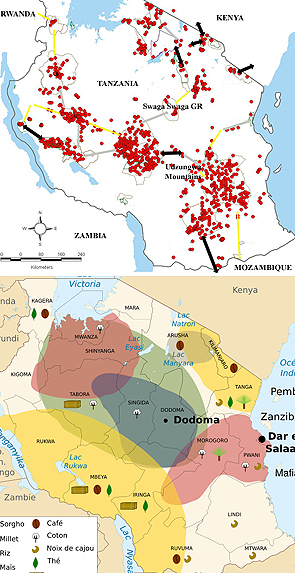
We are waiting anxiously for an important elephant report scheduled to be published before the end of the year by WCS that will show in much greater detail the state of elephants in Tanzania. But we got a glimpse of it this month when the coordinator, Trevor Jones, published one of the important maps that will undoubtedly be seen in the report.
WCS will undoubtedly define important elephant corridors throughout the country that link diverse protected areas. Allowing any animal populations great mobility increase the physical and genetic health of the species.
Jones is going to argue that very tiny corridors especially in the dead center of the country are essential to maintaining the health of the elephant populations.
Notice on the top left map Jones has placed arrows showing the most important corridors.
But these corridors fall directly over the country’s most productive agricultural regions. Note the map on the bottom left from the EU shows where Tanzania’s most productive agricultural lands are, right over Jones’ most important elephant corridors.
And while we may be waiting for Jones’ report, I doubt the voting farmers have to.
Earlier this year the Tanzanians were rebuffed by the world community when a plea to allow them to sell stockpiled ivory was narrowly defeated at the CITES convention in Doha. I robustly supported the Kenyan/U.S. initiative that managed the defeat.
My support for the Kenyan initiative was with the understanding allowing the sales would aggravate elephant poaching and because the case the Tanzanian officials made was terribly flawed, reeking of corruption. But the Tanzanian farmer is less worried about these issues than harvesting his pumpkins.
It was a shame that that important battle in Doha did not address the more serious human/elephant conflict which will now be addressed in the Tanzanian election.
The weather’s been unusually rainy, but I can see through the mist to a 2011 landscape with fewer tourists on safari.
As we approach the most important annual conference for African tour companies in London next month, the news is leaking. Competition is fierce.
Budget travel has been all but wiped out. Midlevel travel is in fierce competition with a major decline in prices, and upmarket travel is contracting capacity and not increasing prices.
For the prospective traveler it looks good on two counts: (1) there will be fewer tourists, and (2) prices are stable or dropping.
For the local African tourism company, there’s going to be a lot of rolling up the sleeves and hard work. I predict more closures, merges and partnerships and a workforce that is likely to contract by another 5% before it bottoms out late next year.
The surge of travel that followed the technical end of an economic downturn is over, and vendors see this from slim forward bookings. By June of this year vendors had noticed a pullback in December holiday bookings, and pretty grim pickings for the start of the year.
This is an economic cycle at its perfection. When travelers realized the earth wasn’t coming to an end last year, those who had waited up to two years to travel all came at the same time. That’s now over, and the market is readjusting to levels that will be here for years to come.
Germany is an important source of foreign tourists to East Africa, and the German economy is doing well. So companies specializing in tourists from this area of north central Europe might even expand next year.
The other source of a smile is the coast. Sun ‘n sand holiday makers from Europe have replenished the Indian Ocean beaches. Charters were pretty full this past season and will likely stay that way next. Africa’s coast is now a nearly completely matured market that can rival coastal holidays almost anywhere else in the world, and so the value particularly for Europeans is pronounced. It’s a wonderful success story. Now, all we have to make sure is that security that Kenya and Tanzanian can provide will do the trick.
But as far as I can tell, Germany’s momentary economy strength and the East African coast are the only two positive signs in a year which otherwise looks very weak and pretty miserable.
Southern Africa’s ridiculously high exchange rates – a result of the world’s reliance on basic resources like gold in an economic downturn – are keeping prices for everything, including tourism products, ridiculously high and this will continue to depress that market.
Often budget travel does well in an economic downturn, but the problem this time is that the younger traveler no longer exists, the Asian traveler which flooded the market last year has stabilized and is decreasing, and all that’s left are pensioners with an increasing concern about their financial future.
To the extent that the midmarket doesn’t depress pricing enough, it will move down to the budget level. We see that happening right now with chain companies like Serena and Sopa providing Somak’s new customers. To the extent that the first two S-companies lack further pricing moves, they will drop customers to the bottom S.
And that’s where the stiffest competition will be next year: The midmarket. It’s where potential travelers will find the best values and where investors will have the most headaches.
The upmarket was the hardest hit when the economic downturn began in 2008, it rebounded the most in 2009, increased a wee bit again this year, and will take the hardest hit next year because its rebound was so high relative to the overall market. Although where it ends up as 2011 will be remarkably close to where it was in 2009.
The volatility of the upmarket is a result of its small size and ability to price quickly depending upon market trends. So with alarming speed &Beyond published incredible deals in early 2009, ended them with the same alacrity in 2010, and is now presenting them again for 2011.
&Beyond is the only transnational company throughout sub-Saharan and southern Africa, and so it has its feet solidly in two different mud pools. One might be sinking while the other is firm. It’s always a good company to look at for comparisons. Right now &Beyond’s pricing is getting much more aggressive in east than southern Africa, I think because of presumptions that Zimbabwe might be coming back on line and a recognition that the East African market for upmarket travel is cooling.
I’ll revisit all these general predictions with hard numbers after the November convention.
Guess what? After a generation of war the peace of a richly endowed part of Africa the size of Texas all comes down to … who gets .. That’s it! .. The what? OIL!
I’ve been writing for several years, now, that I believed – almost counterintuitively and certainly contrary to many observers — that southern Sudan would become a peaceful nation next year. Well, I might have been wrong. But not by much. It might be just slightly delayed as everyone works out who gets rich and who stays poor.
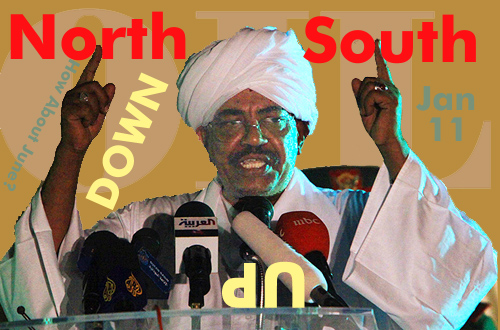
This week we watched some confused hand gesturing by Sudan’s current president, some rational talk by its senior foreign minister, some hand slapping by Hillary Clinton, and some sabre rattling by those expected to become the new South Sudan government. It wasn’t exactly getting ready for a ribbon cutting ceremony.
Other than the Balkans where the combined power of world force shellacked peace to death by imposing the breakup of existing states, or before that the implosion of the Soviet Union by capitalist viruses, there have been no breakups in existing countries in the world.
According to my calendar of state breakups, this was the next one. January, 2011.
The planned breakup of Africa’s largest country, The Sudan, into larger but poorer north and smaller and richer south, was the embodiment of a truly historic peace agreement in 2005.
Extreme, dictatorial and xenophobic Sudan agreed to a referendum. (That meant that individual southern herdsmen who were shot ten years ago if they looked a northern soldier in the eye were supposed to find a ballot box while keeping their eyes on the ground.)
The outcome was obvious from the beginning. The South would become a separate nation. Referendums on a separation are never scheduled because of uncertainty. When there’s uncertainty, unity rules.
The South and the soon to be “North” were never meant to be, anyway. The culture, religion, even geography is considerably different. Like so much that’s wrong with Africa, this was Britain’s fault for believing that contiguous deserts and swamps belonged together because there weren’t any cities in them (at the time).
Only needed one governor, then.
The point in scheduling a referendum is to give the divorcing parties time for counseling. You need to work out visitation rights, alimony, and the thorniest problem of all, oil.
Well, everything’s been worked out right on schedule except … oil.
I just don’t understand why this surprises everyone. Today’s headlines are running around the world proclaiming war.
War won’t happen. Peace is coming, but it might be delayed, so just breathe slowly. And who gets the oil will be decided in The Sudan long before Sunis, Shiites and Kurds decide who gets it in Iraq.
That is not to say that, like in Iraq, the uncertainty or poor agreement does not set the stage for civil war a decade hence. But my prediction stands. Sudan will become two within a few years at most without anymore fighting.
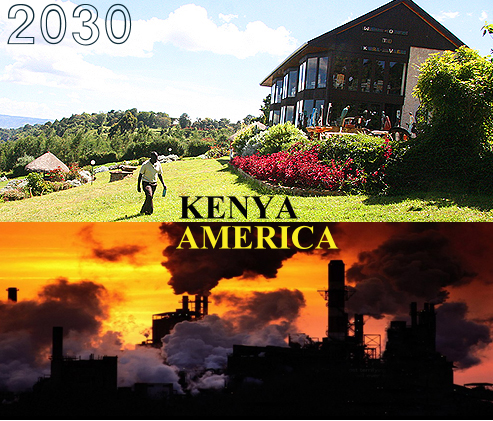
Taking a lesson from Jewish history, the Kenyans begin an important conference tomorrow outside Boston to boost their country to world prominence by 2030.
The official conference name is “Tap into Wealth”, but the name being used repeatedly in the Kenyan press is the “Diaspora Conference.”
Kenya’s certainty of becoming a middle-income nation by 2030 was given an important lift last month with the passage of its new constitution. That document gives dual citizenship to all Kenyans living abroad, and according to Kenya’s Business Daily immediately resulted in increased remittances and queries for new business partnerships from America.
Currently, Kenyans abroad remit more than $1.2 billion annually to Kenya and more than half of that comes from America. Kenya’s entire GDP for 2009 is estimated at just over $60 billion, so that represents a whopping 2% of GDP.
The process of enfranchising and then actively soliciting the franchised is a page out of the Book of the State of Israel, and the Kenyans are quick to point this out.
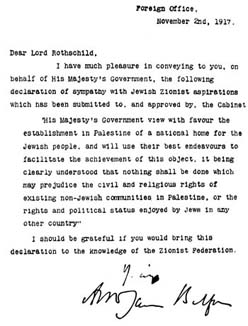
Following the November 2, 1917, letter by then British Foreign Secretary James Balfour to Baron Rothschild, a leader of the British Jewish community, underlining the British vision to develop Palestine for displaced Jews, investment from the Jewish Diaspora began to flood into Palestine and has not stopped since.
Kenyans study this aspect of Jewish history with a view to recreating the conditions, today, that the British created in Palestine in 1917.
The conference commands big brass. Headliners include Kenya’s Deputy Prime Minister, Uhuru Kenyatta, and US Ambassador to Kenya, Michael Ranneberger.
Kenyatta is the son of Kenya’s first president, Jomo Kenyatta, and now the head of one of Kenya’s richest families. He is also widely seen as a presidential contender. Ranneberger is one of America’s most respected ambassadors in a generation, having worked tirelessly to bring Kenya and its constitution to the position it currently enjoys.
But underneath the glitter and star power will be a number of American Kenyans who now for the first time will have unfettered access to Kenyan development, because they will be considered normal Kenyan citizens.
Two of the principal U.S. organizers include Peter Wairegi, publisher of the African American Lifestyle magazine and on-line services, and Wilfred Saroni, current head of a Boston media group and formerly the CEO of a health care training college. In 2006 senior members of Congress awarded Saroni the “Ronald Reagan Republican Gold Medal.”
My interest is Kenya, but many other emerging countries in the world have similar plans. We as Americans need to take these seriously, as we didn’t the Brazilian and Chinese explosions onto the world scene.
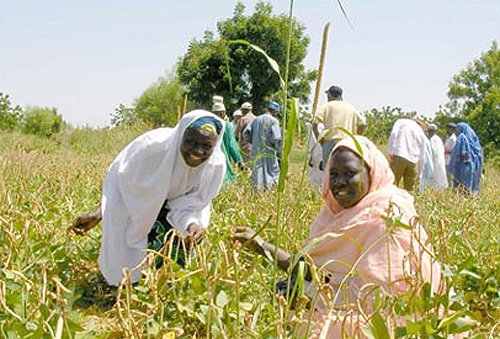
STOP!! Don't pick it, honey! It's not yours!So let’s say you’re enjoying the weeds in your backyard during this warm, beautiful fall when you come across this cute little azure flower. Don’t pick it! It might belong to Pfizer!
Last week’s major COWPEA conference that began in Nairobi and ended in Senegal is the latest of a number of African initiatives to take back their weeds!
Yes, I know, it’s sounds ridiculous doesn’t it? But it happens to be true. In today’s globally managed world of trade, more and more western corporations – mostly pharmaceuticals and agrogargantuans – are stealing magical African life forms that they then patent and make billions from.
These end product treasures include sugar substitutes, many drugs treating everything from diabetes to erectile dysfunction to weight-loss, to plants NASA can grow in space stations for feeding astronauts, to Australian hamburgers!
And the way the world’s closely held patent regulations work allows any corporation that gets its hands on the mother plant first, to look deep inside it for something useful, and then tweak it ever so carefully so that its chemical nature is changed enough to be considered “different.” Then, it patents it. Then, it owns it.
The reason Africa is such a big playground for this game is that the western world has essentially found everything in its own backyard already, and the world’s jungles are too pristine.
Too pristine?
Exactly. Africa has been worked over by growing human populations for millennia, unlike the depths of the Amazon or Borneo. Plants, fungi and microbes have had enough time to evolve into forms with greater associations to humans.
The earliest extant case of this biological theft from the world’s poorest currently benefitting the world’s richest was in the 1980s. Deft little organic theft from one of Kenya’s poorest, most primitive tribes, the Boran, and Zimbabwe’s least developed tribes, the Tuli, led to a current strain of beef used in Australia, an industry estimated to be worth about $7 billion annually.
Australian agro-researcher, Dr. John Frisch, was working to find a way to successfully supply Australian’s growing love of burgers. Australia is basically an arid land, especially where cattle farming occurs.
So he went to Kenya and discovered how healthy the cattle were in the deserts lived in by the Boran tribe. Not quite beefy enough, though. But apparently years before (maybe hundreds of years before) DNA pointed Frisch south, and he discovered in the much more developed country of Zimbabwe the same strain of Borani cattle now selected even better for mass breeding and slaughter among the Tuli tribe of herders.
So then what did these Australian cowpokes do?
Well, first they formed a respectable association, a “joint venture” that allowed Australian scientists into the Boran and Tuli communities doing undoubtedly good work like studying sand and inoculating cows against flu, while … just a bit on the side and very much on the sly… collecting embryos from pregnant cows.
The embryos were quietly taken to Cocos Island in August 1988 where they were implanted into surrogate cows. In March 1990, live calves – parading as ‘Aussies’ – landed in Australia. Since then the now named “Tuli breed” has largely been used as a crossbreed in Australia’s beef industry.
According to the Australian government the introduction of these embryos in 1988 now contributes A$2 billion annually to the value of the beef market.
And now, according to Oduor Ong’wen, director of a prominent Kenyan Trade Think Tank, Australians are selling (note the word, “selling”) pure-bred Tuli embryos on the world market.
And how much have the Boran or Tuli earned from this bio-theft? Zip.
(Much of this post can be attributed Ong’wen’s amazing Biopiracy article published this week in Pambazuka.)
Since that early beefy heist, there have been some victories for the little African guy. The most celebrated case came from the Kalahari Desert.
For thousands of years, the San people (Bushmen of the Kalahari and Namib Deserts) ate the Hoodia cactus to stave hunger and thirst. Unlike western remedies like caffeine or black market drugs, the cactus is a stimulant that doesn’t produce jitters.
In the mid 1990s, South African scientists from the Council for Scientific and Industrial Research (CSIR) identified a previously unknown organic molecule in the Hoodia which they christened P57 (with no equivalent translation into click languages).
CSIR then patented the molecule and sold it in 1997 to Phytopharm plc, which in 1998 subleased the marketing rights to Pfizer for $32 million plus royalties from future sales.
The San people got it together and sued. They sued CSIR, Phytopharm and Pfizer. Pfizer has yet to develop a widely used drug from the source, but it has subsold some of its rights to a number of health food companies and it continues to study the molecule.
Meanwhile, the health food craze over Hoodia exploded and Pfizer easily recooped its initial $32 million investment by selling various rights to health food companies.
Pfizer and Phytopharm have settled with the San Peoples in a questionable agreement. The San are to get 8% of the royalties of any finally created Pfizer product. But there isn’t any finally created Pfizer product yet, even while Pfizer rakes in funds from the health food companies.
Boran/Tuli beef and Bushman uppers are hardly the tip of the iceberg. Current battles are raging in foreign ministries and trade organizations over hundreds if not thousands of life forms being taken from Africa by the western world and turned into lucratively marketed products.
Among the most contested right now, on which western corporations hold patents and Africans are trying to get their fare share, are:
– brazzeine, a protein 500 times sweeter than sugar from a plant in Gabon;
– teff, the grain used in Ethiopia’s flat ‘injera’ bread;
– thaumatin, a natural sweetener from a plant in West Africa;
– the Kunde Zulu cowpea, a bean with super protein that grows fast and easily;
– the African Plum from Kenya for treating certain forms of Prostate cancer;
– a bacteria SE 50 found in Kenya’s Lake Ruiru used to treat diabetes in the drug acrobase;
– a bacteria stolen from a termite hill in Gambia used in an anti-fungal and an immunosuppressant, 29-desmethylrapamycin
– the seeds from a Congolese plant used to manufacture Bioviagra
But there are thousands more.
World law is just developing that will license and control this “BioPiracy.” Needless to say, the big firms are on the side of Pfizer.
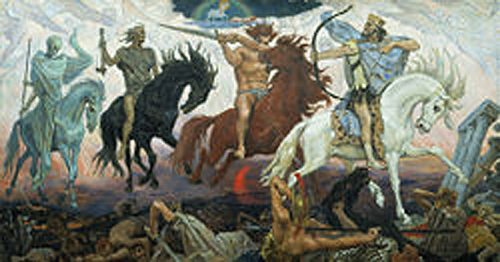
To end terror we've got to deep-six these four guys.For travelers like us terrorism is nothing new. And it’s well past the time that we should lead our fellow Americans into a fuller understanding of what it means and how to minimize it.
If you can’t stand reading through the rest of my poorly constructed nonsense, just jump to the bottom of this for MY SOLUTION.
The penultimate word in the first paragraph is the key: Minimize. Terrorism will never, ever go away. It never has. Pagan potentates enslaved tasters to eat their food, first. Famine and pestilence were certain outcomes for any misbehaving early Christian. Spies stole children from critics of the gulag. Salman Rushdie, and many of his family and friends, have remained in hiding since the 1989 fatwa ordering his murder.
And leaping into the present, Ugandan citizens are so terrified of the proposed laws against homosexuality, that as many gays may be fleeing the country today as Asians who were ordered exiled by Idi Amin in the 1980s!
By the way, know a Mexican in Phoenix?
1. TERRORISM IS NOT NEW
The first and most important point. And it should not be as powerful news as it is, today that there’s terrorism.
Every time the nightly news headlines a terrorism warning, it’s presented as something remarkably unexpected. Every single night the news is filled with mayhem, war and killing, but a terrorism “threat” elicits greater shock.
Because the mayhem, war and killing was not about you. And because the threat is simply that, something that hasn’t yet occurred and so isn’t yet fully defined, so it might involve you. Suddenly, you’re in the news.
And when it doesn’t happen, or does and doesn’t happen to you, then you recycle your psyche to be just as shocked at the next news broadcast of potential terror featuring you. Americans are all hams and gluttons for punishment.
I hate to tell you, but terrorism is just as ordinary an occurrence as hurricanes, lightning strikes and your regular ole every-year airplane crash over Rochester. It’s a part and parcel of our lives.
2. TERRORISM IS NOT MORE POWERFUL TODAY
Don’t give me that baldersash that yes, there’s always been terrorism, but not with the power of airplanes or nuclear weapons.
How many died in the halocaust? How many ships were sunk by kamikazes? How many specific terrorism deaths in the Balkans, or during the many years of conflict in Northern Ireland? How many are still being raped and decapitated in Kivu, The Congo, or Somalia? How many airplanes or nukes would it take to reach this sum?
That is not to say that the methods of terrorism haven’t changed. As the world is more interconnected, all the good and evil within it move further and more quickly. Terrorism in our generation has adopted a travel component that it didn’t use to have it, and that’s the reason we as travelers are more attuned to it.
1985: the Achille Lauro cruise ship hijacking
1985: hijacking of TWA in Cairo
1988: Pan Am disaster over Lockerbie
1996: Atlanta Olympic bombings
1998: American embassies bombed in Kenya and Tanzania
9 -11
2005: 7-7 city bombings in London subway
2008: Slaughter in Mumbai
All the above specifically and successfully targeted travelers on airplanes or tourist hotels, or used travelers to get to their target. There were scores of other unsuccessful attacks like the shoe- and underpants-bombers. That’s a generation and counting of terrorism redefined to some extent by travel.
3. MOST MUSLIM TERRORISTS ARE NOT IDEOLOGUES, JUST WELL PAID
This nonsense that Mideast suicide bombers are half wits who believe they are tending roses in heaven is more baldersash. It just drives me crazy. THEY GET REALLY WELL PAID!
They are completely unlike the long history of soldiers who went into battle for ideological and religious reasons expecting to die fighting.
The most recent ideological suicide soldier was the kamikaze. And the phenomenon did not begin until the loss of Iwa Jima, after which rational people, including well trained Japanese soldiers, knew there was no hope. Read this for a thoughtful explanation of soldier ideologues.
There have been thousands of reports like the ones above corroborating that today’s suicide bombers in the Mideast do it mostly for money, not mostly for their soul or honor, and yet leave it to Americans to twist this around. This fundamental mistake is something the rest of the world doesn’t make.
This account of suicide bombers as relates kamikazes is accurate, but totally inaccurate regarding current Muslim terrorists. It’s typical of the American Right’s, mostly religious, repositioning of facts. This casts a simple proposition, that Muslim suicide bombing can be valued in dollars, into the heavenly worlds of moral conflict making it much more difficult to deal with.
This is because the current conflicts in the Mideast are all economic ones, not ideological ones. Virtually all the major conflicts on earth have been economic and this is no different. The people with more power need oil currently lived on by people with less power.
This is a tough situation and I don’t mean to belittle it in any way. I don’t think it’s clear that we as the people with more power shouldn’t have equal or more rights to the oil than the people who live on top of it. But that’s a different problem, one with a different analysis.
By redefining an economic problem into an ideological or religious one, the arguments are driven less by facts and much more by emotion. And ultimately the only way to win an emotional argument is to be more fanatic.
Please watch this. It’s heart wrenching. Sunday’s “This Week with Christiane Amanpour” stripped our current conflict to its reframed religiosity. And it’s so clear there’s no resolution in sight. So long as religion dominates the perspective, this war will never end.
4. THE CERTAIN WAY TO LOSE THIS WAR IS TO INCREASE THE FIGHTING
“War Against Terrorism” is as inappropriate a phrase as the “War Against Drugs” or the “War Against the Lunacy of 13-year-old Boys.” The real war today is a “War Against People Who Live Over Oil They Won’t Give Us at a Fair Market Price.”
It has been the longest war in the history of the modern world. It began when Edwin Drake extracted the first black liquid from Pennsylvania in 1859. The war really heated up when most of the world’s known oil shifted out of Texas and Oklahoma to godknowswhere deserts in the Mideast only about 50 years ago.
It was sometimes a military fight, but mostly a cultural and diplomatic one. We violated all sorts of our own values in this campaign to annex land for ourselves and our European partners so we could have its oil. We bribed, applied our laws to theirs, fixed markets, we tried everything possible until finally, we had to shoot.
And during this lengthy fifty years or two generations, the poor souls living over there noticed how fancy the cars were that were using oil. Before iPhones that was a bit more difficult, but now you can send a picture of a Dodge Ram all over the world in seconds.
We got richer. They got poorer. We got richer because of their oil.
Doesn’t compute, does it?
What would you do, a young, yet vibrant desert youth whose abs haven’t been yet emaciated for lack of proper nutrition? You watched your grandfather and your father die loathsome deaths mostly from smoking Philips cigarettes. And then with your iPhone, you saw what’s under your home made Jenny the prettiest, richest homecoming queen in the world. How come you can’t wear a carnation?
Today’s terrorism is fire. It’s the fire in the soul of two generations of Mideasterners mostly being denied their rightful development.
Terrorism’s fire is fueled by desperation, wont, poverty. What else can you call a suicide bomber? Don’t fool yourself that they all think they’re going to paradise. This is a very attractive job.
Terrorism must be watered down, not fired up. Terrorism will decline only as the desperation in the world declines, and not a second before. Until then, it will increase, and for those of us fortunate enough to not be so desperate, it will be something effecting our lives …always.
JIM’s SOLUTION TO ENDING THE CONFLICT WITH RADICAL MUSLIMS
It’s kind of hard to do this, because the numbers just won’t stay still:
Anyway, let’s give it a try. During my final edit this morning, the number was One Trillion, eight-nine billion, seven hundred and twenty-four million, one hundred and sixty-five thousand, eight hundred and thirteen dollars.
It’s been three thousand, two hundred and eighty-five days since we invaded Aghanistan on October 7, 2001.
That means, roughly give or take a few cents, we’ve been spending
$331,727,295.50 per day.
Now the area of Iraq and Afghanistan is 426,034 sq. miles. So if we divided how much we’ve been spending per day, that means we’re spending $778.64 each day on every square mile of those two countries.
Now if you don’t mind, I’m going to reduce the $778.64 by about one four-thousandths of a penny, one four-hundred-thousandths of a dollar so that my wife’s favorite local state historical site, the Apple River Fort, can be kept open, which has faced possible closure for budgetary reasons.
That leaves $778.64 available each day for every square mile, which I would bundle up in cheerfully wrapped packages using Halliburton‘s Christmas Wrapping Division, and then drop from a helicopter. Over the course of a year, that’s roughly the salaries of ten suicide bombers in each square mile, or in total, way more than whatever total has ever been paid to all the suicide bombers in the history of mankind.
While America groans about the economy, frenzied business in Nairobi on Wednesday.I know it’s hard for my current and past East Africa safari clients to think of that culture as competitive with our own, but watch out, America, you’re missing the obvious. And by the way, how did you celebrate the Chinese National Day yesterday?
The development in the underdeveloped world is staggering. It’s as staggering as America’s faltering. Once at the top of every metric, today America health care is last among the most developed countries, consistently behind all other developed countries in education, and a continuing slip for more than a decade in personal incomes.
Our consumption increases faster than our production. Bad dynamic. We need to sheath our pride and look to Kenya and China.
These two countries in my life time were once considered abjectly impoverished and underdeveloped. Today they are rocketing into the new world with a potential impact much greater than America’s.
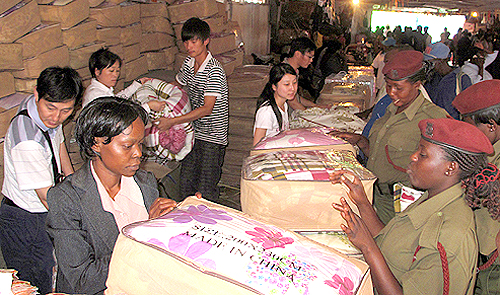
Yesterday, Kenya celebrated the Chinese National Day with elaborate ceremonies in Nairobi. While America was congratulating itself on its constipated legislature passing a law that did little more than slap China on its wrist for currency manipulation, thousands of Kenyans attended a Chinese trade fair in Nairobi on Wednesday, wholesalers buying from manufacturers – it was a madhouse.
The wife of my transport manager in Arusha has a suddenly prosperous business selling Chinese textiles and clothing throughout Tanzania.
And China is getting deep oil, natural gas and precious minerals from areas in East Africa that North American companies abandoned about ten years ago, before China had developed the deep-earth technologies.
The lethargy in America today with local politics, the fatigue with a failing economy and the general overall cultural malaise is a disease of complacency and over confidence.
It’s this presumption that we were always TOP and always will be.
Wake up, America. One of the few metrics we continue to command is military spending and number of wars. And those of us with some experience in the outer world can only keep screaming about what we know: “Foreigners are doing better!” Much better. So it isn’t a problem with the world; it’s a problem with America.
Should we care?
Of course I’m happy for East Africa. But I’m American. I’m not chagrined that I’m being bettered, I’m astounded that we refuse to learn from abroad. That we continue to shoot ourselves in the foot, rather than dare to step forward into a new world.
And that new world is one of Chinas and Kenyas, and if we’re to cure our malaise, we need to look to them.
Everywhere in the world crazies are sprouting from the misery of the economic downturn. And we should take note particularly with what’s happening in Kenya.
Kenya may be the most dynamic emerging society in the world. It ended a mini-revolution with an imaginative coalition between radically different sides, then passed a new, modern constitution that in my opinion is an universal model for morality, human rights and dignity.
These clarion democratic ideals have empowered even the weakest sections of its society, as they should. And the weakest sections of a Kenyan society are far weaker than here, for example!
But poverty in Kenya is a strata quite different from in the U.S. A huge portion of that half of its population still lives relatively calmly in subsistence, not in dependence of society as American poor, do.
But a growing portion of Kenyan poor are amassing in bulging slums surroundings its cities. And in these cesspits of humanity, political awareness and higher education combine in volatile ways.
That was why there was such violence after the contested election of 2007, an election which pitted two very different men against one another. It is very fair to call that an election one of the poor against the rich.
(It is also why the resolution of that conflict was so astounding. Of all the opposites in society, none is as irreconcilable as rich vs. poor.)
Rich versus poor is a pretty simple concept. In Kenya, as this fire burned, it morphed into Luo versus Kikuyu, tribe against tribe. An economic controversy has all sorts of academic qualifiers. Ethnic ones don’t.
What was a panoply of issues with lots of gray between, became black and white. A rich man could argue that the poor will get richer faster if they let him get richer, first! And the poor could argue that their drain on society impedes the rapid growth enjoyed mostly by the rich. So each side is blurred. Each side attracts advocates from the other.
But you can’t change the way you’ve been born. A Luo can’t convince his neighbor the Kikuyu that they share physical genes. That battle was demarcated by god.
That hate is more than visceral, it’s innate.
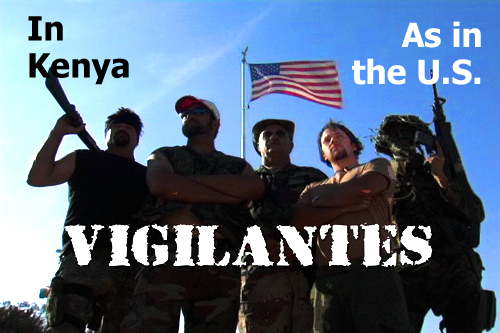
And it has lead in Kenya to vigilante groups springing up throughout the country. This is now Kenya’s greatest social problem.
And when one vigilante group grows very powerful and successful, a remarkable transformation albeit transitory occurs: Society as a whole begins first to tolerate, then later, embrace the thugs. It’s so simple, so nice. No complicated qualifiers, just a mafia leader to tell us what to do.
Mungiki is Kenya’s mob. Born in the slums, its leaders now live in grand houses and control huge businesses. From time to time the government indicts them, or even brings them to trial, and most of the time juries find them guilty of nothing. It started as a Kikuyu-based vigilante group. But today it reins across different cities the way mobsters did in the first half of America’s 20th Century.
There are places in Kenya where it’s impossible to become an elected official without the support of the Mungiki. And you know what that means.
And there are more and more wannabees around the country. Two days ago in a remote area of western Kenya, far from Nairobi and the Mungiki and modern life, 50 youths calling themselves “Sungusungu” stormed a village and hacked to death four people, then trashed their homes.
Sungusungu claims it was avenging the recent murder of a Kenya Assemblies of God church pastor, Mr Michael Onchong’a Nyakundi.
Yes, religion is an easy infusion into these vigilante movements. Ever watch the movie where the mob leader regularly goes to mass?
Kenya has an advantage in this stage of its development that America didn’t have during the years of prohibition. It has more facts, more history, more outcomes that proved how counterproductive the mob was over the long run. Kenya knows from America’s history that vigilante society is self-destructive and ultimately puts itself out.
And while these may be somewhat illusive concepts, they’re real enough I believe to help Kenya get through this period faster than we did in America.
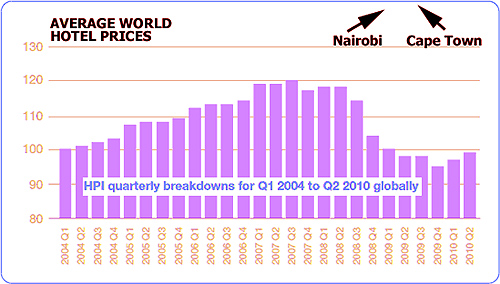
Will increasing safari costs scare away new visitors?As if you didn’t already know, it’s official! This year Africa (Cape Town and Nairobi in particular) saw the highest hotel price increases in the world!
Last week the HPI Index was released by the UK company, Hotels.com. Their biannual report is one of the most accurate and heavily used in the industry.
Of the 15,750 locations surveyed, the Number One city with greatest increase in cost from last year to this was Cape Town (54%), the second was Shanghai, and the third was Nairobi (31%)!
What is even more telling is that both Cape Town and Nairobi are inching their way up into the top ten most expensive hotels in the world. Right now, Geneva holds that rank ($232), but Nairobi is $216 and Cape Town $180.
Overall, world prices have recovered only to where they were in 2004. They peaked in the third quarter of 2007, at that time 20% higher than 2004. World-wide, therefore, prices remain depressed by about 18% from before the economic downturn.
But not African cities! Why?
Cape Town’s answer is simple: the World Cup. Nairobi’s answer is more complicated but is basically two-fold: China and political stability.
China is investing so incredibly heavily in Kenya that it’s pushing up all prices related to visiting one of Kenya’s principal cities (Nairobi or Mombasa). You can’t build a road or drill an oil well without thousands often tens of thousands of builders and consultants that need a place to stay.
And a close second is the marvelous turnaround Kenya has pulled off in the political arena: a new constitution is in place. The city has attracted some of the world’s most prestigious world conferences as result, with tens of thousands of delegates.
This incredible spike in prices in these two African cities has elevated safari prices in the bush, but that seems counterproductive to me. Because occupancies in the bush are falling, after a short surge in 2009. Nevertheless, most properties in the bush have their offices if not sister properties in the city, and the effect was unstoppable.
My prediction isn’t rocket science. I think Cape Town will slip (there isn’t another World Cup coming into town) and Nairobi will stabilize but continue its slow growth upwards.
As for safari prices, I think they will start to disentangle themselves from the anomalies in their cities. 2011 will be a good year for safari vendors, but not as good as 2010, so I think we’ll start to see an end to increases if not actual drops in prices by the end of 2010.
For those of you thinking of going on safari, though, I’m not sure you’ll notice anything. In fact, American resellers increased their costs three or four times greater than the hotels in 2009. This is because they had so heavily discounted them during the economic downturn.
So for the end-consumer, I predict prices will remain the same. What we may see, though, is a return to the great last-minute deals that characterized 2008 and 2009. These were often restricted to same company safaris or very specific lengths of stay, but if you could tolerate the lack of flexibility, it often meant savings of up to a third.
These were heavily booked especially by veteran safari travelers, visitors who had already been introduced to the safari world and knew what they liked and didn’t. So if you’re one of those, and capable of going within a month or two of an announced deal, keep that computer internet engine fired up!