Near the end of Jacob Zuma’s recent State of the Nation address, he made the point, “[South Africa is] building a developmental and not a welfare state..”
Welfare vs. Developmental State. This intrigues me.
Selling South Africa as a developmental state is tough; currently 30% of South Africa’s 50 million people receive some type of social assistance grant—this could be child support, old age support, veteran and disability benefits, etc…
The number of beneficiaries has skyrocketed in recent history—up 300% since 2000.
This led opposition politician Mario Oriani-Ambrosini, of the Inkatha Freedom Party, to claim that “South Africa is a welfare state which dreams of becoming a developmental state.”
But what is South Africa to do?
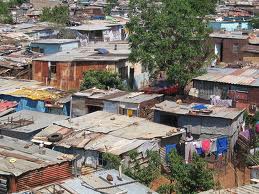
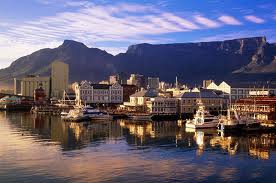
In 1994 when Nelson Mandela took his long walk to freedom South Africa was two countries—one was among the world’s most developed, and the other among the least.
That is still largely true.
In fact, South Africa is more unequal now than in 1994. (Commentators often point out that inequality usually increases as economic growth increases.)
The Two South Africas
How could the African/Colored/Indian populations just snap their fingers and compete with the white populations who had benefited for so long from schooling, finances, geography, access to political power, skills training—everything?
Thus the South African state began a long term black empowerment strategy that, in its current manifestation, is referred to as the Broad Based Black Economic Empowerment Codes (BEE for short).
This required, and still does require, a degree of intervention in economic and state affairs that would be unthinkable in most other countries.
Almost everyone—conservatives or liberal, Afrikaner or Black, Malay or Indian—agrees that South Africa is a special case, and needs to target previously disenfranchised populations with additional help.
The agreement stops there. How much assistance, for how long, and under what conditions, remains extremely contentious.
***(Last week I was speaking with a South African living in the U.S. who told me that South Africa has had ‘one man, one vote, one time’ for more than 15 years, and if Black business can’t compete yet, then they never will… If I may be allowed a slight exaggeration, that would be similar to telling a Black American family in 1878 that they had been free for 15 years, and now they should be able to compete freely and equally in business and society.)***
Americans have been sharpening their arguments on the role of the government for centuries, but I am not sure our tired tag lines on big and small government relate to a situation like South Africa’s.
There are certainly vulnerable, historically disenfranchised communities in the United States— but it’s all a matter of degree.
The side-by-side nature of South African inequality also makes the situation incredibly volatile. Black townships where most of the population lives far below the poverty line exist only kilometers away from affluent, mostly non-black neighborhoods (not unlike parts of the U.S.).
How can the ANC, whose control of the government depends on massive support from poor, black voters, withdraw social support from Black communities that see everyday how ‘wealthy’ the other South Africa is?
Even if the ANC government thought that money would be better spent on job creation initiatives, or education, or health, projects that might reduce dependency, I don’t see how it would be politically feasible for South Africa to transform itself from a welfare to a developmental state.
In that is the case, South Africa needs to achieve the 6% or 7% growth necessary to bring down unemployment without breaking the social safety net.
I’ll stop here, because at this point readers can just turn on CNN for the rest of the arguments. African political problems really aren’t that foreign after all.
What do you get when you spend no money on defense, and instead funnel the vast majority of your budget into developing your population, including huge tranches on universal health care and education?
What if you also embrace intense multiculturalism, and reach out to historical trading partners in India, Europe, Africa, and the Middle East.
Don’t stop there.
What if you also invest heavily in employment absorbing sectors like tourism, ICT, and light manufacturing, thereby creating jobs for your educated and diverse population?
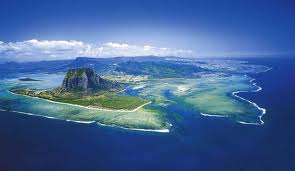
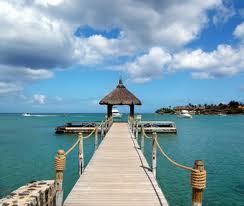
Well then, you would be Mauritius, the African island nation of 1.3 million souls that sits approximately 800 kilometers off the coast of Madagascar.
This week award winning economist Joseph Stiglitz wrote an essay in Slate Magazine about the Mauritian miracle entitled, ‘The Greatest Country on Earth.”
In it he lauds the vibrant Mauritian democracy, their 30 year stretch of ~ 5% GPD growth, relative social equality, and above all, the choices made by successive Mauritian governments since independence from Britain in 1968.
Mauritius deserves the kudos. My only issue with Dr. Stiglitz’s essay was his framing of Mauritius’ successes in terms of U.S failures.
Although he recognizes that the U.S. cannot act like an island nation of 1.3 million (by forgoing a military for example), he spends a fair bit of the essay mocking the U.S. for its inability to empower Americans without causing some sort of financial meltdown.
This makes for provocative reading, but the comparison seems forced to me—scaling is not just a logistical obstacle, it changes the nature of the problem.
A health system that works for 10 people, will not necessarily work for 100 people, even if you increase all the inputs by a factor of 10.
Leaving that aside—what lessons can other African countries, and the U.S. for that matter, take from the Mauritian Miracle?
Versatility.
I have been combing a variety of sources, and talking to a few specialists at work, and it seems that more than any one decision, Mauritian nimbleness has been responsible for its success.
A few historical examples courtesy of Harvard School of Business:
When Slavery was abolished in the British Empire, Mauritian leaders encouraged indentured labor to emigrate from India.
When trade barriers sprung up to make sugar less competitive, Mauritius did two things:
1) They successfully lobbied the EU for trade preferences on sugar, and
2) they read the writing on the wall and immediately started diversifying their economy away from sugar and into light manufacturing.
When those preferential trade terms disappeared for sugar and textiles, Mauritius quickly lowered the corporate tax rate and took advantage of historical connections to India to encourage direct investment in new sectors.
Mauritius exhibits nimbleness in other ways too.
They are part of the Southern African Development Community, the Indian Ocean Community, la Francaphonie, and the League of Portuguese Speaking countries.
This openness creates opportunities that more insular countries do not have.
Mauritian investment in education and human capital means the population can easily re-tool for new sectors and new initiatives. (Though literacy is still only 88%; high for Africa, but not high enough)
The U.S. could use some of this international nimbleness…I read a great essay years ago in Foreign Affairs that argued that the United States’ biggest advantage in the 21st century would be immigration, if policy makers would only take advantage of it.
Immigrants not only start more businesses than non-immigrants, they also bring local knowledge of foreign markets, demand new goods and services from the U.S., and keep the U.S. from falling into a demographic sink hole like Europe.
If U.S. policy makers worked to empower immigrant communities in the U.S. and attract the best and brightest immigrants from other countries, we would vastly improve our international flexibility and competitiveness.
Other African countries have problems that Mauritius does not have—but that does not mean they can’t learn from Mauritius as well.
South Africa now suffers from an incredibly rigid labor market, with major industries surviving on government subsidies.
Their automotive sector is prestigious, but is it economically viable?
Maybe they need to look Eastward to their Island neighbor and invest in forward looking sectors. (I think their new budget attempts to do exactly that.)
Countries fractured by large cultural fault lines such as Nigeria and Cote d’Ivoire could look toward Mauritius as an example of profiting economically from their participation in different cultural orbits.
The people groups in Northern Cote d’Ivoire could benefit from Southern Cote d’Ivoire’s historical associations with partners in Ghana and Togo, while the groups and businesses in Southern Cote d’Ivoire could benefit from Northern Cote d’Ivoire’s relationships with Mali and Burkina Faso.
Obviously this is far easier said than done.
Taking advantage of multi-culturalism requires a centrifugal force at least as powerful as the forces pulling identity groups away from each other.
Countries with economies dependent on a single resource could follow Mauritius’ lead and create incentives for FDI in diverse sectors.
I don’t mean to be glib- investing in the future while meeting the real needs of millions of current citizens is a nigh impossible task.
But that is why each and every success story deserves a good hard look, including small African Islands.
In the last month, South Sudan has asked neighbors and the international community for teachers to staff universities, for money and logistical help for demobilization, disarmament, and rehabilitation of combatants, for ideas on a new national anthem, for help with their financial sector and several hundred other large and small matters that require more or less immediate attention.
All of these requests did not surprise anyone.
One request did surprise me though– South Sudan also asked for $140 million to begin rehabilitating their game parks as a top investment priority.
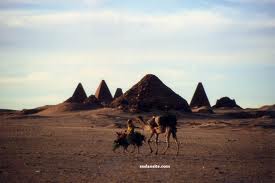
North Sudan
When you think of Sudan, what comes to mind: inhospitable desert, war crimes, tense referendums, oil, refugees, weapons, etc….
Let me offer a few new associations for the soon-to-be-independent South Sudan—jungle, wetlands, teeming with wildlife, and a migration comparable to the Serengeti.
South Sudan is home to one the largest wetlands anywhere—the Sudd—or barrier, in Arabic.South Sudan
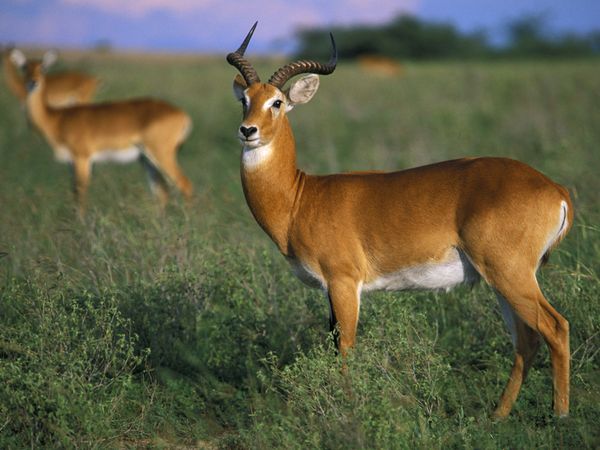
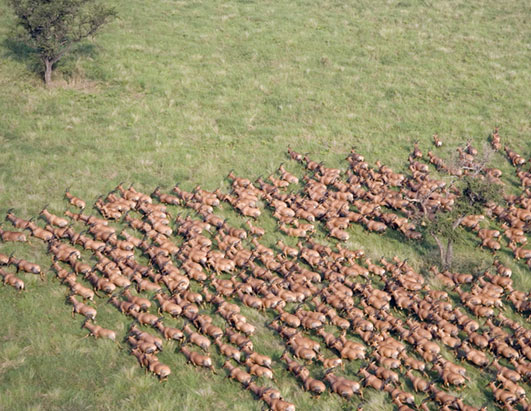
This massive wetland and the Sahelian swathes that border it have traditionally supported all manner of charismatic animals including elephants, lion, hippopotami, and crocodiles, as well as lesser known (at least to a laymen like me) fauna such as the Nile Lechwe (an endangered species of antelope), Tian, Reedbuck, over 400 species of migrating birds, and amazingly, a population of around 1.2 million White-Eared Kob.
The Boma Plateau, adjacent to the Ethiopian Highlands, also supports important populations of wildlife.
In 2007, the United States Agency for International Development and several other international donors worked with the Wildlife Conservation Society to conduct aerial surveys of Southern Sudan, essentially to confirm that the 30 years of intermittent fighting had indeed decimated animal populations.
Against all hope, they found many populations alive and well. Elephants, hippos, and other meaty animals had indeed suffered, but many had weathered the storm.
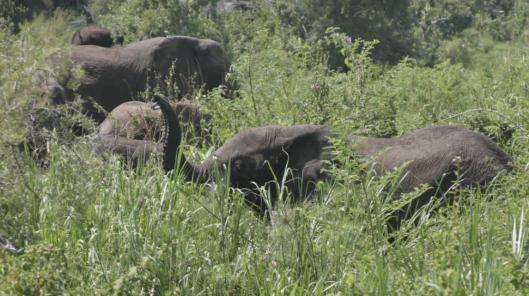
Elephants have dropped from somewhere in the neighborhood of 20,000 to around 6,000.
Zebra are all but gone, and Heartebeest numbers dropped about 95% in total. Many of the animals that survived did so by hiding out in the Sudd, where swampy conditions provided a measure of isolation.
South Sudan needs tourism revenue worse than most countries.
Currently, 98% of South Sudan’s revenue comes from oil. Production will peak in the very short term before beginning a 20-30 year decline after which the wells will simply dry up.
I would value expert opinions on the viability of a real tourism industry in S. Sudan; is there an adventure market that will relish the ‘untapped’ feel of a safari in South Sudan, will private companies invest long term in such an unstable environment, will oil extraction finish off the animals the war never managed to reach?
Most importantly, how can a country with so much human need spend the required sums on wildlife preservation?
In late 2010 National Geographic ran an interesting short piece on the relationship between the multitudes of identity groups in S. Sudan and the wildlife.
The author claims that history has forged a deep bond between people and wildlife in South Sudan.
For centuries, slavers and poachers, often the same people, came into modern day South Sudan to take away slaves and Ivory.
This linked the elephant and human populations groups together as victims in the minds of the tribes.
More recently, both people and animals took refuge in the deep bush or in the swampy Sudd wetlands to avoid the violence, once again creating a bond between human and animal, this time as fellow displaced persons.
This claim interests me quite a bit—that story resonates emotionally, and has certain logic to it, but my experience in Africa has been quite different.
In West Africa, people viewed wildlife as a nuisance, and from my brief experience in East Africa, it seemed like farmers and pastoralists felt the same way.
I came away with the impression that romanticizing wildlife was a privilege for those whose crops weren’t being eaten.
I digress.
To wrap up, whether or not South Sudan can preserve this habitat for tourists seems immaterial to me. It is one of the most important wildlife habitats on the continent.
I have led everyone astray by failing to warn you that the bi-annual, Pan African Film Festival in Ouagadougou (FESPACO) opened Saturday, February 24th, and ended this past weekend.
FESPACO is the most important film festival in Africa, and I would go even further and say that the festival is the most important modern, pan-African cultural event on the continent.
Every year since 1969 FESPACO has gathered African and diaspora intellectuals in Burkina to discuss the major intellectual currents washing over the continent.
The festivals highest prize, the Etalon de Yennenga (Stallion of Yennenga), goes to the film that best represents ‘African realities.’
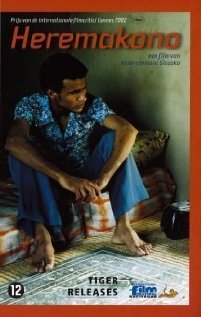
Recent winners include Heremakono, from Mauritania, directed by Abderrahmane Sissako,
Ezra, from Nigeria, directed by Newton Aduaka, Drum, from South Africa, directed by Zola Maseko , and Teza, from Ethipoia, directed by Hailé Gerima.
This year the Golden Stallion went to Moroccan Director, Mohamed Mouftakir, for his film Pegase (Pegasus—trailer only available in French and Arabic) I have not seen it, but the reviews are uniformly positive.
Over 340 films were submitted to the jury; here are a few of the other winners.
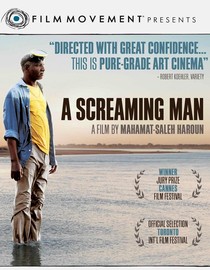
The Silver Stallion: Un homme qui crie (A Screaming Man), Chad, Director Mahamat-Saleh Haroun
The Bronze Stallion; Le mec idéal (The Ideal Guy), Cote d’Ivoire, filmmaker Owell Brown.
Best Actor; Sylvestre Amoussou, Benin, for his role in Un pas en avant, les dessous de la corruption.
Best Actress; Samia Meziane, Algeria, for her role in Le Voyage à Alger (Journey to Algiers).
The African Diaspora Prize; Les amours d’un zombie (The Loves of a Zombie), Haiti, film by Arnold Antonin.
I’m sorry, but youtube did not come through for most of these trailers. Worse still, the only two films above available via Netflix are Drum, and Un Homme Qui Crie, and neither of those are available right away.
That means that you would probably have to order them on Amazon.com if you wanted to see them.
Be sure to post a comment if you find a way to get a hold of any of these movies.
African film is on the rise from dynamic urban spaces to the smallest villages in West Africa. Read this EWT blog written in February of ’10 about the rise of local African films tackling local issues, especially in Nigeria.
You will notice that Nollywood, the Nigerian film industry that currently produces more films than Hollywood and Bollywood combined, was not well represented on the awards podium.
Most Nigerian directors shoot with handheld or inexpensive digital cameras using a local cast and set.
While these amateur films may not make the cut at FESPACHO, they do sometimes make one thing that most FESPACHO submissions do not—money.
The rampant piracy of African films makes large, expensive productions economically unviable.
This also inhibits the creation of a class of well renumerated actors and actresses, studios, and directors. This very issue was the official theme of FESPACHO 2011—how can Africa create a long term viable film industry.
I hope someone comes up with something soon so that come 2013 we can all see a well financed, professionally produced series of films on the revolutions sweeping North Africa.
For the past several weeks pundits have been scouring the world for countries that might, in any way, shape or form, relate to the events unfolding in North Africa.
Darts have landed on China, Iran, all the countries of the Middle East, as well as the remaining Eastern European and Central Asian despots.
On this blog and elsewhere there has also been a lot of talk about what the revolutions north of the Sahara mean for Africa.
But wait—I thought this all started in Africa?
Is there really any debate as to whether or not Tunisia, Egypt, and Libya are on the African continent?
Let me start with the punch line: Africa is more of an idea than a place.
An idea anchored loosely in geography, but far more in psychology.
To illustrate what I mean, I have mocked up a conversation I find myself in with astounding regularity. I currently work at an organization promoting U.S. – Africa trade.
When pushing the new Africa to skeptical investors the conversation often goes something like the following:
The investor first expresses skepticism that Africa fits their firm’s risk profile.
The Africa expert then points out that the African reality has probably surpassed the investor’s outdated perception of the continent: in fact, 6/10 of the fastest growing economies in the world from 2000-20010 were in Africa.
This will momentarily compete for space in the investor’s brain with the national geographic special he was watching last night as he went to bed.
“That is all very interesting” says the investor, but, “…many of those countries are simply benefiting from an increase in oil and commodity prices. And my firm does not like the lack of transparency in most of those nations.”
The Africa expert is undeterred.
Well, “Do you know that Africa boasts a number of countries whose good governance ratings exceed many other countries with whom you already do business?
According to Transparency International, Botswana ranks 33rd in word in terms of transparency, with many other African Countries falling above the median– Mauritius (39th), Cape Verde (45th), Seychelles (49th), South Africa (54th), Namibia (56th), Tunisia (59th), Ghana (62nd).
“Well, those were intriguing comparisons, but some of those island nation’s with good governance are more Indian than they are African, and we all know that South Africa, Botswana and Ghana are outliers in terms of governance. I’m still not sold on Africa”
The Africa expert gives it one more go—“Mr. Investor, do you know that Africa is growing so fast that there are 240 million people who today can only meet their basic needs who will become consumers with disposable income by 2015?
Or, that Africa’s level of urbanization is comparable to those of India and China when those countries’ growth rates began to accelerate?
Or, that North Africa has the most favorable labor demographics in the world, with large numbers of highly educated young people?”
“North Africa?” exclaims the investor. “You mean the Middle East?”
Sigh.
This type of Socratic exchange on nominally African opportunities leaves people with the idea that Africa refers only to the bush, to places with anemic growth, periodic violence, and a rapacious class of elites.
Anything that does not fit that mold on the African continent is ascribed to something or somewhere else—oil, the influence of a former colonial power, similarity to another region, historical idiosyncrasies, anything to avoid the cognitive dissonance generated by the thought of an exciting, stable, growing African economy.
Note: Nothing this archetypal investor said was 100% inaccurate, his comments simply revealed a common bias in our thinking about the African continent.
This is the most diverse continent on the planet, and each of Africa’s 53 (54 with South Sudan) nations manifests that diversity in different ways.
Different historical trading partners, different chief exports, different histories of exploitation and resistance, etc… .
But all of these nations are, to borrow a popular cliché, made in Africa. They are shaped by the geography and cultural heritage of the African continent, from the sands of the Sahara to the waters of Lake Malawi, from teeming urbanity in Nairobi slums to Dogon cliff villages in Mali.
Africa lays claim to all of this—successes included.
Guns — and guns not wanted by the military at that — instead of food. That’s America’s message to the world.
Republican successes in The House over the last two days are ruinous for the developing world, especially Africa. That’s not to say it will ultimately become law, but it sure doesn’t look good with our weak-minded president not directing any defense.
The House, the White House and the Senate are so far apart from each other right now it’s hard to imagine where this is all going to end up. But it doesn’t look good.
So instead of taxing a wee bit little more the rich and mighty, we’re going to starve Africa?
The House bill slashes the Food for Peace program by 40 percent, reducing and sometimes eliminating altogether food for 15 million people in places including East Africa, especially Ethiopian and The Sudan.
The McGovern-Dole Food for Education Program, which currently provides meals to about 4.5 million schoolchildren in poor countries, would be halved.
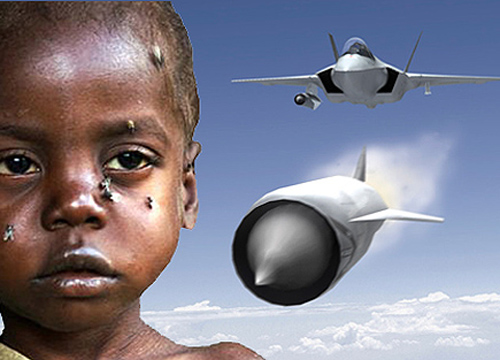
So, after we starve Africa, we’re going to build an extra jet engine for a plane the Pentagon has pleaded with Congress that it doesn’t want.
The $6 billion for the F-35 Joint Strike Fighter extra engine that the Pentagon doesn’t want is being pushed through Congress, in part because the General Electric plant that builds the engine is near Speaker Boehner’s constituency.
That $6 billion is more than three years of all the food aid programs to Africa put together. In fact, we could raise our food aid to Africa if we didn’t have that program!
This is nuts!
Here’s the problem. In my life time we’ve lost a sense of community, to anywhere. I don’t mean just to the rest of the world, but even to our own communities. We have replaced caring for others with caring for the corporation.
The American has been brainwashed into not just thinking the greatest opportunities occur exclusively in the private sector, but only in the private sector without any community regulation or other involvement.
Here’s another problem. We think of security as guns, and often as weapons that are so sophisticated they are the be-all and end-all of our engineering genius and private sector job creation programs. The youth of Africa starting in Tunisia and Egypt have discarded this ancient concept. So should we.
Finally, to the battle that looms:
Our failed “progressive” president lost the initiative when he proposed a reasonable budget rather than defining a starting position that could be negotiated down. We go down any further and we’ll all drown. And that’s after we sink Africa and the rest of the world.
Tomorrow’s presidential election in Uganda will either be the most unread news story in Africa, or the start of Twevolution in East Africa.
The current autocrat is expected to win handily, despite election fraud, unfair international support and his highly undemocratic style of overlording that is often brutal. But if he doesn’t … win handily … CNN might have another place for Anderson Cooper to visit.
The election battle is down to Uganda’s two most famous politicians and arch rivals, Dr. Kizza Besigye, otherwise known as the perpetual loser, against the incumbent, Yoweri Museveni, otherwise known as dictator.
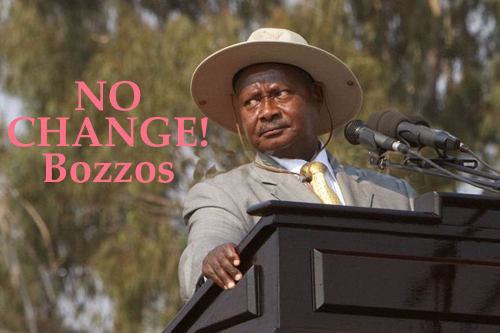
If Museveni wins he will be starting his fifth term and heading towards his 26th year of ruling Uganda. If he wins it’s in part because of long-term support of the American Right. (Get this: his campaign slogan right out of the dimwits of CStreet is, “No Change!”)
Here’s the problem. Kids don’t like grownups telling them what they can and can’t do when they reach their mid twenties.
This is essentially the reason for the Twevolution that’s sweeping the continent. African youth today are sharp, educated and infinitely more connected with the world than the old folks overlording them. That’s particularly true of Uganda.
I’m not saying that youth inherently believe in term limits, but they viscerally know how not changing political rule impedes and inhibits development.
Uganda is rapidly becoming the most backwards country in all of East Africa, when once upon a time, shortly after independence, it was the star. As if slapping this truth into its neighbor’s cheek last week, next-door Rwanda hosted an all-African conference that named Uganda the worst of the five regional East African nations in its capacity to develop.
In fact of all Africa’s 58 countries, Uganda was ranked 21st. That’s pretty awful when you consider that half of Africa’s countries are unstable or at war. (Tanzania, by the way, was 20th. Rwanda was 5th and Kenya was 4th. What was most startling of all, troubled little Burundi was ranked 13th!)
The report was chaired by one of the most respected Africans alive, Grace Machel, the widow of the former president of Mozambique.
Uganda’s youth knows this. And it seems that up to 85% of them are likely to vote tomorrow. In fact international observers on the ground expect a 75% turnout according to a leading newspaper in Uganda, although as many as 140,000 of those registered names may be dead, and 400,000 of them foreigners technically ineligible to vote.
So if the election is close … there is plenty of fodder for fire. The ironic thing is that it’s not expected to be close.
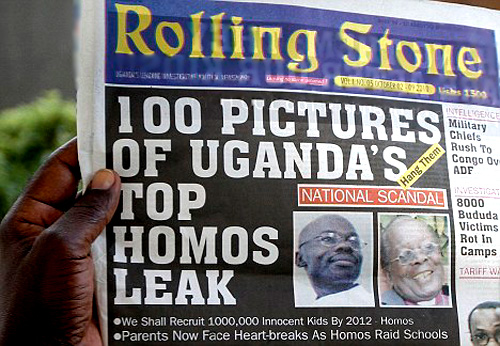
I’ve written before how Museveni is the darling of the American political right. They have been supporting his draconian efforts to do things America can’t, like ban abortions and make homosexuality a capital offense.
I haven’t been able to track it down carefully enough, so it simply remains a hunch right now that American Rightists along with their UK counterparts are stonewalling the World Bank from blocking aid funds that Museveni has been using to beef up his campaign.
The report that’s drawn my attention was published by a fiery, independent on-line publication in Uganda last month.
There’s no doubt that Museveni has used donor funds (including ours) for his campaign, which is one of the reasons he’ll probably win tomorrow. There has never been such a modern, expensive election in Africa before. And it’s been almost all one-sided: for Museveni. TV, ads, billboards, flyers, robocalls — you name it, right out of American campaigning.
It’s also been public that America and the UK are blocking efforts by NGOS like the World Bank from stopping this. The question is, who specifically in the U.S. is doing this?
Anyone out there that would like to prove me right, please go to work!
So with such huge funding support, with an economy that isn’t doing so badly, with enormous pride in the recent discoveries of oil and the relatively recent successful ending of the wars in the north, Museveni has the odds, even with a half million illegal voters.
But if his margin is less than the number of dead and foreign (half million) out of 7.5 million expected to vote, then watch out for Twevolution.
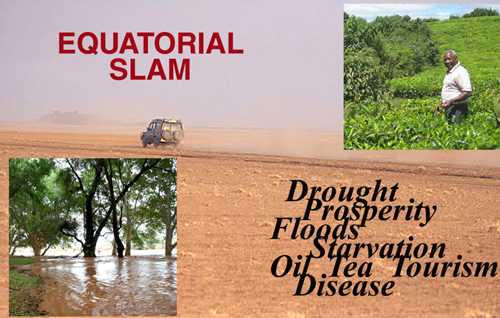
We are just beginning to understand how severe global warming impacts the equatorial regions like East Africa. We know that Vanuatu may flood away, but we now suspect that important parts of East Africa will both blow and flood away, too.
Short rains in specifically defined areas of East Africa failed the end of last year. For those areas, which include large parts of Laikipia (Samburu) and Kajiado (east of Amboseli, parts of Tsavo), crops have failed and hoofed stock losses are projected at more than 20%.
This follows last year’s record floods, which followed a three-year minidrought during which 80% of pastorliasts’ hoofed stock was lost.
Meteorologists are beginning to see a pattern in this jumble of devastating weather. Radical and extreme weather is likely now the “norm” across the equatorial regions of the world, including East Africa.
Much of East Africa is booming economically, especially Kenya, and a large component of this growth is agriculture. Yesterday, Kenya’s Tea Board reported record earnings of nearly $1.3 billion in 2009. This moved tea production above cut flower production ($995 million) and tourism ($850 million).
But unfortunately for Kenya and distinct from its neighbor Tanzania, its agricultural zone is especially vulnerable to global warming. The equator runs right through Kenya, about 40 miles due north of Nairobi. This invisible line seems to be the marker for catastrophe from global warming.
For most of my life, we expected a serious drought in East Africa about every ten years, and when it came, it was widespread and devastating. I remember a drought in the eighties when safaris were hard pressed to find anything but dying cats. An all-day game drive in the crater resulted in one dying hyaena.
Wild animals are particularly resilient, and we know now much better than we knew then that animals know where to go to survive in serious droughts. And men, too, are resilient. A single horrible blow every ten years was expected and unsurprising.
What is happening now is altogether different. Think of the equatorial regions like a blue, red and green quilt. The red areas get drought again and again, sometimes harder than other times but multiple times. The blue areas get hit less far less than the red areas, but often enough, but are then followed by extreme floods. And the remaining green areas are basically wetter than they’ve been in the past.
As you would expect the red drought areas are semi-arid, and these are the areas of the hoofed stock, the pastoralists like the Maasai. Multiple droughts as is happening now is destroying the resilience these people have evinced for milennia. It’s one thing to weather disaster once every ten years. Every 2 or 3 years means whatever seeds were laid by the last grass have completely blown away, along with whatever top soil was left.
But the greatest surprise is that in areas that were normally even more arid than Maasailand, floods are now a regular occurrence. Turkana, far north of Samburu, accustomed to 1 or 2″ of rain annually received nearly 30″ of rain last year. Everything pooled and melted, and now in the throes of a drought, there is little left up there but dust.
Everything is happening so fast, it’s very hard to predict how East African society will adjust to these extremes. Except one thing seems more and more clear: the lifestyle of the pastoralist is doomed.
At least a year’s warning is often possible. The opposing phenomena of El Nino, inevitably followed by La Nina, can predict what is going to happen.
El Nino is the increase in the ocean temperature. About a year after El Nino is diagnosed, heavy rains and floods tumble on parts of East Africa. La Nina is the decrease of temperatures following El Nino, but a decrease below what is normal. About a year after La Nina, rainfall decreases throughout East Africa, causing the specific area droughts over semi-arid land.
The El Nino phenomenon occurred about once every decade in the past. La Nina never occurred. Now, El Nino comes four or five times a decade, always followed by La Nina.
If this becomes a pattern, agricultural production, pastoral life styles and wilderness areas like big game parks, will be rattled to the core.
Another large component of East Africa’s explosive growth is Chinese investment, mostly in infrastructure to develop natural resources like oil. Which is used for factories and automobiles. Which produces more greenhouse gases. Which causes more global warming, more and longer El Ninos and more La Ninas.
This is all happening so quickly in the context of developing economies, that it seems completely unstoppable, even though we possess the science to stop it. The tipping points have been endlessly discussed in the developed world: Cap-and-trade, green technology, electric cars.
But to a Maasai herder surviving day-to-day, or a land owner with oil in the ground in Kenya and three kids who want to go to an expensive university, these are not compelling topics.
The question is, will the land flood away or blow away before enough cash can be acquired to compensate for its loss?
I heistate to underestimate the remarkable resources of the young East Africa, but this challenge looks pretty grim.
Do you sacrifice a small group of ancient people to promote a larger society? We put Indians onto reservations. Should the Kenyans evict 36,000 Ogiek from their forest?
It’s one thing for an activist to threaten you and your grandchildren with no clean water. It’s another when your kitchen faucet stops dripping.
That’s what’s happening in Kenya, today, right now. Even while giant factories are blossoming like mushrooms in my backyard after a morning drizzle. It’s happening right now as 12-lane highways are creeping across the country.
The water rationing schedule announced each week in the newspapers is as ordinary as a TV guide.
And all the needed water comes from one place: the Mau Forest. It’s the only indigenous forest in Kenya, and by our standards for instance, terribly small, only 675,000 acres, an area about the size of Rhode Island.
The Mau provides 7-10 million people with not only clean drinking water, but water for factories and cleaning. Moreover, the recent reduction of the forest has contributed to mud slides and soil erosions that has been devastating.
The Mau has sinisterly been eaten away for nearly a hundred years. British colonials recognized its rich soil and confiscated huge portions for their settlers. Independence only deepened the problem as corrupt politicians confiscated more.
The deposed dictator Daniel arap Moi may own as much as 300,000 acres of what was once Mau Forest, now tea estates.
Kenya is the world’s largest tea exporter. Take it from me, it’s the best tea in the world!
Then, during the political violence following the 2008 election, hundreds of thousands of people fled to the hills. And those hills were largely the Mau. As many as 100,000 people began to squat in the Mau.
Then came the Developed World’s haughty solutions to global warming. In Copenhagen in 2009, then Cancun in 2010, developed countries proposed not reducing their own greenhouse emissions right away, but rather a sort of Global Cap-and-Trade policy without the Cap called “REDD’’ — Reduced Emissions from Deforestation and Forest Degradation in Developing Countries.
$30 billion to the developing world by 2012, and $100 billion more by 2020. Kenya’s portion, if it ever comes: a few hundred million. But that’s sizeable to Kenya, and in order to get it, Kenya has to preserve the Mau. There’s no other forest it can “trade”.
Colonial land grabbing, corruption politician land grabbing-cum-tea development, internally displaced persons and REDD. And not a drop to drink.
Now what.
In what is really a radical, radical move, the Kenyan government has decided to evict everyone from the Mau. All those colonial land-grabbers, some of the modern politicians with tea farms, all the displaced persons from political turbulence, buying all the previous land owners and squatters new land somewhere else, at billions and billions of shillings (that will still be less than the compensation from REDD).
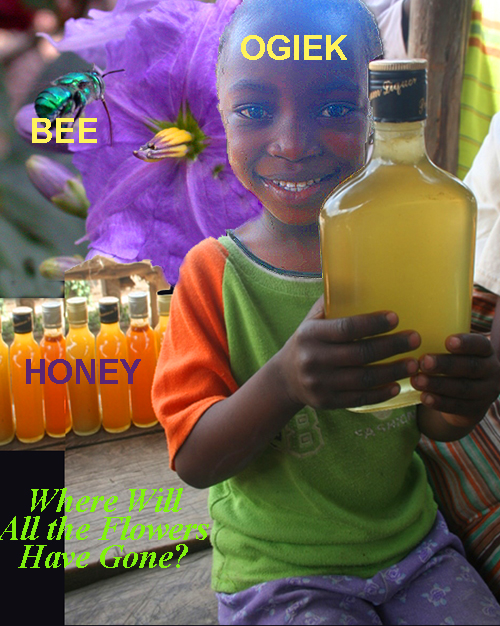
And, the 36,000 Ogiek who have lived there for a number of generations.
The Ogiek are forest people. The generation before the current one was almost entirely hunter/gatherers and bee-keepers. The Ogiek were themselves displaced from arguably better forests around Kenya in the 1930s by British land grabbers. But when they moved, they took their lifeways with them.
But the Kenyan government policy is without qualification. Everyone goes. Including the Ogiek. And, their bees?
No one is wondering about the bees. Unlike temperate forests here at home, forests in Africa rely much more on pollination and cross-pollination to survive. The diversity of the forest biomass is much greater in the equatorial parts of the world like Kenya. Without a constant diversity, the forests collapse.
The diversity is dynamic to some extent, a sort of constant evolution of new species and sub-species. Quite apart from the morality of evicting the Ogiek, the longest living residents of the Mau, what about the bees?
Money talks. REDD talks. Bees don’t.
Great video below about Ogiek and bee-keeping. Stick with the first 30 seconds which have nothing do with Ogiek or bee-keeping.
When you’re sick inside, the outside looks terrible: 2010 was a year of striking differences between surging Kenya and its backward neighbors. 2011 will be the same.
Socially, culturally and politically, it was a GREAT YEAR for Kenya but a BAD YEAR for its neighbors.
Kenya grew fast, started to implement a radical new constitution, improved tourism even while increasing tourist rates, and deftly participated in major global controversies like the CITES attempt to allow selling ivory and the run-up to the South Sudan election.
But the other countries in East Africa? Terrible. Socially and politically Rwanda, Tanzania and Uganda all took huge steps backwards. Contested or ramrodded elections, scandals of unbelievable corruption, and horrendous attempts to extinguish moves to improve human rights gave this part of East Africa a 20th century dictatorial look.
And the actual bombings in Kampala that killed more than 70 people almost suggest that when your internal body isn’t doing so well, you’re going to be nicked by the viruses from the outside.
For many years Tanzania’s tourism was inching up on Kenya’s, outpacing both growth and development. Last year that was reversed, and one can only suppose that tourism is sinking with the overall quicksand felt throughout the country.
It was a BAD YEAR for wilderness and wildlife. The “mini-drought” is now two years behind us, and so almost anything looks good in comparison, but there were two horrendous trends appearing throughout East Africa last year:
Poaching and Politics.
There’s always been poaching, but nothing like the corporate poaching that successfully kills and transports out of private, fenced and patrolled reserves a black rhino. That happened in both Kenya and South Africa. And in Tanzania, the Serengeti lost 20% of its wild rhinos (1 of 5, that until now were patrolled like a child in a perambulator with the Nanny’s grip fastened.)
And Tanzania in its drive to become Africa’s newest pariah first spearheaded a campaign to reverse CITES sanctions on selling ivory, and then announced it was going to kill the wildebeest migration with a road.
In Uganda, Father Museveni gave the nod to start hunting, again, and let South Africans develop the hunting of the rare sitantunga, even as its wildlife count declines.
And there’s nearly as bad a flipside to this wildlife story: where poaching and politics aren’t screwing things up, elephants are. The population explosion is eroding the population’s confidence everywhere that governments can keep the jumbo out of the farm.
It just doesn’t look good for wildlife in this turbulent and developing era in East Africa.
It’s hard to imagine 2011 can be as bad. And at the risk of jinxing the whole kebab but being true to end-of-year stock taking, I’m going to predict the Serengeti highway won’t happen, at least not completely as planned. And if we can get at least that victory, I guess the battle continues with some hope.
And with that my marker for WILDLIFE below moves from bad to good.
Strictly economically, Kenya is in the stratosphere, leaving its neighbors way behind. Now a lot of this is foreign donors nudging the county towards implementing the new constitution, so you would normally expect that to end next year. But next year is one year before the next election, and it was the last election when everything fell apart, so I feel this outside stimulus is going to continue. And then, there’s China, flooding Kenya with infrastructure money as if it’s taken a page out of Obama 2.0.
Elsewhere in East Africa, including Tanzania and despite recent fossil fuel discoveries, things don’t look so rosy. Tanzania’s debt is massive, Rwanda’s long flirtation with foreign aid is about over, and Uganda is so mired in bad bookkeeping we can only presume the worst.
I’m afraid that 2011 will be worse for Kenya’s neighbors and probably the same for near inebriated Kenya.
Here’s my summary for what it was and what it will be:
East Africa Report
2009
2010
2011
SOCIETY Kenya The Rest
Good Bad
Good Bad
Good Bad
WILDLIFE
Bad
Bad
Good
WEATHER
Bad
Good
Good
TOURISM Kenya The Rest
Bad Bad
Good Bad
Good Bad
ECONOMY Kenya The Rest
Bad Bad
Good Bad
Good Bad
Predictions are just that, based on the here and now. If Tanzania can move swiftly to its own new constitution, if Father Museveni steps down, if Karume disappears and is replaced by a coalition-building young person, then societies throughout East Africa will improve.
And with the society, so will the economy.
East Africa is booming, so many of the stories of 2010 were terrifically good news. But there were the tragedies as well like the Kampala bombings. Below I try to put the year in perspective with my top ten stories for East Africa for 2010.
1. Populace democracy grows.
2. Terrorism grows, as does the battle against it.
3. Huge stop in the mercenary purchases of Coltan.
4. Momentum for peace in the runup to establishing a new South Sudan.
5. Tourism clashes with development, especially with the proposed Serengeti Highway.
6. New discoveries of fossil fuels produces new wealth and a new relationship with China.
7. Gay Rights grow public but loses ground.
8. Rhino poaching becomes corporate.
9. Hot air ballooning’s safety newly questioned in game parks.
10. Newest early man discoveries reconfirm sub-Saharan Africa as the birthplace of man.
#1: POPULACE DEMOCRACY GROWS
Theoretically, all the East African countries have operated as “democracies” except for the torrential years of Idi Amin in Uganda. But the quality of this democracy was never very good.
Tanzania was a one-party state for its first 20 years, and that same party continues to rule although more democratically today. Kenya, Uganda, Rwanda and Burundi experienced one dictator after another, even while democratic elections at regional levels challenged the executive.
But the end of the Cold War destroyed the alliances these developing countries had with super powers. Purse strings were cut, and political cow-towing ended. All of them moved towards a truly more democratic culture.
And in 2010 huge leaps were made in all the countries towards more truly representative government. The most important example by far was the overwhelming passing of the new constitution in Kenya in a national referendum where more than 75% of registered voters participated.
And like the U.S. election which followed shortly thereafter, and like support for national health care in the U.S. and so many other issues (like no tax cuts for the rich), Kenyan politicians dragged their feet right up to the critical moment. They tried and tried, and ultimately failed, to dissuade Kenyans from their fundamental desire to eliminate tribalism in government and more fairly distribute the huge wealth being newly created.
I see this as People vs. Politicians, and in this wonderful case, the People won!
And there was some progress as well in Tanzania’s December election, with the opposition growing and its influence today moving that country towards a more democratic constitution.
(It was not so good in Rwanda or Uganda, where stiff-arm techniques and government manipulation of the electoral process undermined any attempt at real democracy.) But the huge leap forward in Kenya, and the little hop in Tanzania, made this the absolute top story of the year.
#2: TERRORISM GROWS
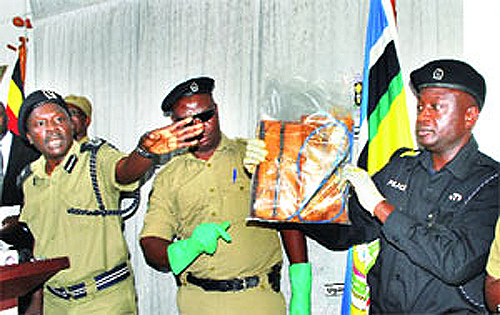
Four smaller bombings in Nairobi’s central business district over the year were eclipsed by two horrible simultaneous bombings in Kampala bars on July 11 while patrons were watching the world cup. Police display an unexploded suicide vest.
Al-Shabaab, Al-Qaeda in Somali, claimed responsibility. And throughout the year Shabaab grew increasingly visible along the Kenyan border as its power in Somali increased.
I’ve written for a long time about how the west has had its collective head in the sand as regards terrorism and Al-Qaeda in particular. Long ago I pointed out that the locus of Al-Qaeda terrorism had moved to the horn from Afghanistan, and this year proved it in spades.
The country with the most to lose and most to gain in this war on terror is Kenya, because of its long shared border with Somalia. And the year also marked a striking increase in the Kenyan government’s war on terror, and with considerable success.
With much more deftness and delicacy than us Kenya has stepped up the battle against Al-Shabaab while pursuing policies aimed at pacifying any overt threats to its security, by such brilliant moves as allowing Omar Bashir into the country and not arresting him (on an international U.N. warrant). As I said in a blog, Kenya Gets It, and the story is therefore a hopeful one.
The Dodd-Frank Act is our victory!The Congo Wars continue but are abating, and in large part because of a little known provision in the Dodd-Frank Wall Street Reform Act which now makes it almost impossible for major corporations in the U.S. to buy the precious metal Coltan on the black market.
A black market which has funded perhaps Africa’s most horrible war for more than a generation. Hundreds of thousands – perhaps millions – have been killed and raped, and more than 20,000 children conscripted into brutal wars, funded by purchases of Coltan and other precious metals by Intel, Sony and Apple.
It certainly wasn’t just this little legislative move. The U.N. peace-keeping force, fabulous diplomatic initiatives by Uganda and a real diplomatic vigilance by the U.S. all were instrumental. But the year ended with the least violence in the region in more than two decades.
#4: SOUTH SUDAN
I may be jumping the gun on this one, because the referendum to create a new country, the South Sudan, is not scheduled to occur before next month. But the runup to the referendum, including the registration process, while labored looks like it’s working.
Allied loosely with the Congo Wars, the civil war between the North and South Sudan had gone on for generations until a brokered peace deal five years ago included the ultimate end to the story: succession of the South into a new country.
The concept is rife with problems, most notably that the division line straddles important oil-producing areas. But in spite of all of this, and many other ups and downs along the way, it looks to me like there will be a South Sudan, and soon. And this year’s new U.N. presence in Juba, donor-construction of roads and airports, all points to the main global players in the controversy also thinking the same.
The creation of a new state out of a near failed one is not the be-all or end-all of the many problems of this massive and powerfully oil-rich area. But it is a giant leap forward.
#5: THE SERENGETI HIGHWAY & TOURISM
Last night NBC news aired a segment on the Serengeti Highway controversy, elevating an East African story into American prime time. Good.
But like so many reports of this controversy, the simplification ran amok. NBC’s reporter Engels claimed the motivation for the road was to facilitate rare earth metals like Coltan (see above) getting into Chinese hands more quickly.
While there may be something to this, it’s definitely not the main reason, which is much more general and harder therefore to fight. As I’ve often written, the highway as planned will be a real boon to the Maasai currently living to the east of the Serengeti, as much if not more than to the Chinese.
And as far as I know, Maasai don’t use Coltan.
Roads bring commerce and may be the single quickest way to develop a region. This region is sorely in need of development and recent Tanzania politics has aligned to the need for this regional development.
The highway is just one of many such issues which came to the fore throughout 2010 in Kenya and Tanzania. Concern that the west is just interested in East Africa as a vacation destination with no regards for the struggle for development, has governed quite a few local elections this year.
The whole concept of tourism may be changing as the debate progresses. I believe very deeply that the Serengeti highway as proposed would hinder rather than help development. But as I’ve pointed out, alternatives are in the works.
And the real story of which the highway story is only a part, is how dramatically different East Africans have begun to view tourists in 2010.
#6: NEW RESOURCE DISCOVERIES ALTER GEOPOLITICS
For years I and other African experts have referred to East Africa as “resource-poor.” Kenya, in particular, had nothing but potash. Boy, did that change this year!
Although only one proven reserve has been announced in Kenya, several have begun production in Uganda and we know many more are to come.
China has announced plans for a pipeline and oil port in northern Kenya at a cost of nearly $16 billion dollars, that’s more than twice the entire annual budget for the Kenya government! Deep earth techniques have matured, and China knows how to use them.
More gold has been found in Tanzania, new coal deposits in Uganda, more precious metals in Rwanda… East Africa is turning into the world’s rare earth commodities market.
A lot of these new discoveries are a result of technology improving: going deeper into the earth. But 2010 freed East Africa from the shackle of being “resource-poor” and that’s a very big deal.
#7: GAY RIGHTS ON THE HOOK
African societies have never embraced gay rights but as they rapidly develop, until now there was none of the gay bashing of the sort the rightest backlash produces in the U.S. U.S. Righties manipulating East Africa.
That changed this year, and in large part because of the meddling of U.S. rightest groups.
In what appears to now have been a concerted many year effort, support from U.S. righties is leading to a vote in Uganda’s parliament that would make homosexuality a capital offense, and would jail for long terms those who failed to out known gays.
This extreme is not African, it is American. Mostly an insidious attempt by those unable to evince such insanity in their own society to go to some more manipulative place. The story isn’t over as the vote has yet to occur, but it emerged and reached a crescendo this year.
#8: RHINO POACHING EXPLODES
Poaching is a constant problem in wildlife reserves worldwide and Africa in particular. Rhino are particularly vulnerable, and efforts to ensure safe, wild habitats have been decades in the making. Dagger from rhino horn.
This year, they seemed to come apart. It’s not clear if the economic downturn has something to do with this, but the poaching seems to have morphed this year from individual crimes to corporate business plans.
This leap in criminal sophistication must be explained by wealth opportunities that haven’t existed previously. And whether that was the depressing of financial goals caused by the economic downturn, increased wealth in the Horn of Africa where so much of the rhino horn is destined, or reduced law enforcement, we don’t yet know. But 2010 was the sad year that this poaching exploded.
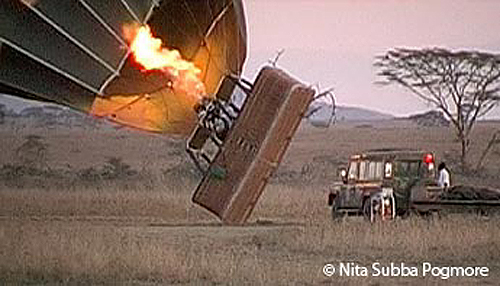
#9: IS HOT AIR BALLOONING SAFE?
Hot air ballooning in Africa’s two great wildernesses of the Maasai Mara (Kenya) and the Serengeti (Tanzania) has been a staple of exciting options to visiting tourists for nearly 30 years. That might be changing. Is it Safe?
A terrible accident in the Serengeti in early October that killed two passengers and injured others opened a hornet’s nest of new questions.
After working on this story for some time I’ve personally concluded 2010 was the year I learned I should not step into a hot air balloon in East Africa, at least for the time being!
#10: EARLY MAN WONDERS
There were not quite as many spectacular discoveries or announcements about early man this year as in years previously, but one really did stand out as outstanding and you might wonder what it has to do with East Africa! Representation by Tomislan Maricic.
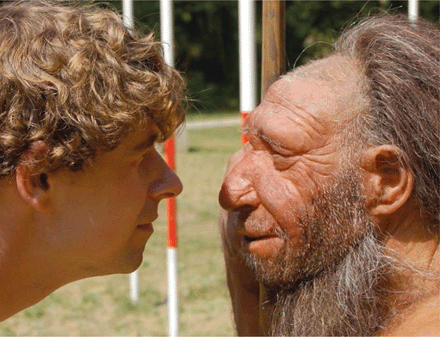
DNA testing of Neanderthal proved that early man from Africa didn’t wipe them out after all, but absorbed them into the ever-evolving homin species.
And that absorption, and not massacre, happened outside Africa to be sure. But it finally helps smooth out the story that began in Africa: It’s likely that Neanderthal were earlier migrants from Africa, and absorption was therefore easier, physiologically and biologically.
It’s a wonderful story, and fresh and exciting, unlike the only other major African early man announcement about Ardi which was really a much older story, anyway.
****************
HAPPY NEW YEAR to all my loyal readers, with a giant thank you from me for your attention but especially your wonderful comments throughout the year. See you next year!
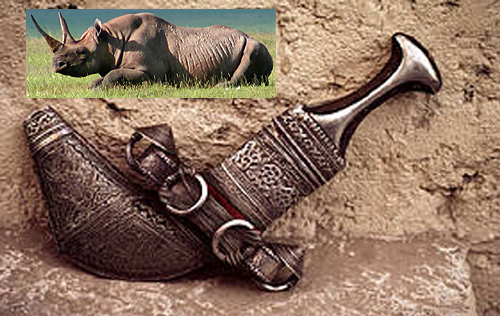
Dagger sold in Sana'a for $15000. The handle is made from rhino horn. The poacher gets $200-1000. Middlemen transporting it to the Horn take about $5000. Skilled carvers take around $2000. Profit in the market more than $7000.Rhino poaching is exceeding even my own direst predictions this year, and I’m trying to understand why.
The Serengeti is one of the world’s largest protected wildernesses, nearly 5000 sq. miles when combined with the adjacent Ngorongoro Conservation Area. There are now only 4 wild rhinos left in this area, after one was found dead this holiday season – it’s horn removed.
This is the most recent of an extraordinary run of killings, most of which were in South Africa where the poaching is more mafia-like, corporate. In East Africa it’s usually individuals working alone.
I wrote about rhino poaching only a few weeks ago but I’m particularly incensed about this loss in the Serengeti. I’ve personally seen poached rhinos several times in northern Tanzania during my career, and try as I have to understand the poor bloke (poacher) just trying to make a buck, the harder it becomes.
Why should I – a foreigner from a distant land – be angry with an impoverished Tanzanian who has tried everything right in his life to get a job and support a family, and just can’t? Who has the daring to kill a dangerous animal? Who has the wherewithal to find the onerous black market?
It’s one thing when you know – as I did in 1998 on the crater floor – that it was a well-paid ranger working in cahoots with the Conservator of the park. But it seems different when it’s a single individual who just can’t get a job and has tried.
So this current surge in poaching I originally linked to the economic downturn. But Africa pulled out of the economic downturn long before we did and has been essentially surging for the last year.
And that’s the key.
Like here at home, the rich are now comfortable with spending their money, again. And it’s the rich to whom the rhino horns go. Mostly to Yemen, but throughout the lower Mideast where rhino horns are prized as much or greater than ivory in Asia.
Like ivory, they carve beautifully and buff even better. Traditionally they were used as dagger handles in male rite de passage ceremonies where Dad gives Butch a special present. Now a days they tend to be made into commercial sculptures and sold like stolen Picassos.
These are the culprits, much more so than the desperate father encouraged to make the actual kill. There’s a real analogy here with the illicit drug market in the U.S. For sure the Mexican mafia are bad guys. But it’s the users of cocaine, not the growers of poppy, who are the real satans.
Important Note: black rhino will not go extinct. They are thriving in private reserves, zoos and small, contained wildernesses like Lake Nakuru. They thrive as they have since appearing on earth because they are big and eat almost anything. They have no predators, except man.
But in the wild, the true open wilderness, their days are numbered. Perhaps it’s time to just come to accept this fact of the modern world. At least until the rich and greedy can be controlled. And that I don’t see happening soon.
A breakthrough discovery announced last week by a University of Illinois professor leads the pack in the race to eradicate malaria.
University of Illinois at Chicago researcher Dr. John Quigley announced a possibly new way to foil malaria at the American Society of Hematology’s annual meeting last week by giving the mosquito supreme indigestion.
(Boy, this is simplification that I’m going to regret.)
More correctly, by increasing the oxidative stress in the mosquito’s gut by killing a gene-activated protein intended to minimize the stress. Got it?
Don’t try. It’s nonetheless fabulous and opens up a whole new area for vaccine development at a time that numerous hopeful results are happening in the battle against malaria.
Malaria can be found in the blood of 1 out of every 12-13 people in the world, more than a half billion individuals.
Sixty percent of these are life-threatening situations. Every year 1.5 million people die of malaria, two-thirds of those in sub-Saharan Africa, a child every 30 seconds. More people in the world have died of malaria since 1914 than from any other single disease, war or natural disaster (120 million).
You would think that with all the wonders of the sort Dr. Quigley and others have discovered, that things are better today than in the past. They are better than a decade ago, but they’re no better and in fact worse than two decades ago, or a century ago.
This is basically because malaria is a poor man’s disease, and for several centuries until the last decade, the world’s poor were basically getting poorer and poorer and increasing much more quickly than the non-poor of the world. And there were few scientific advancements in the battle against malaria.
The recent decade’s change has been mostly in scientific advancements, and the last decade has shown some promise in the world’s avowed goal of minimizing poverty, too.
Malaria is a poor man’s disease, because it’s spread by a blood-sucking insect. More bodies with less protection increases the mosquito, which increases the disease. It’s a simple unprotected population increase vector.
It’s also a tenacious disease. Unlike yellow fever or smallpox or measles, the life cycle of the malaria plasmodium is extraordinarily complex, providing natural selection with all sorts of opportunities to beat the human endeavor against it.
In particular, half-completed efforts in the 1950s and 1960s which basically eradicated malaria in the developed world only provided clever fodder in the undeveloped world for the disease to grow resistant.
Moreover it’s only recently that the world has recognized the economic disaster it causes. (Forget about the moral one, most of modern world policy is driven by economic opportunity. ) We’ve now demonstrated that lost productivity and the emergency responses to people sickened with malaria is far more costly than our aggregate efforts to prevent it.
That’s changing.
The RollBack Malaria Group heavily endowed by the Bill Gates Foundation and a growing number of foreign government agencies has raised awareness to the malaria epidemic, funded numerous research projects and vaccine attempts, and spear-headed in particular accelerated efforts to protect children.
And not all the efforts require the beyond-understanding science of Dr. Quigley. Imaginative scientists from Wageningen University in the Netherlands, the University of Nairobi in Kenya and the Kenya-based African Insect Science for Food and Health Institute announced this month perhaps the most effective trap ever devised for mosquitos:
In fact research is progressing so quickly that some experts worry that effective vaccines will be available by 2015, but without any procedures to use them!
These are the kind of problems that are good to have. So thanks, Dr. Quigley, and the thousands of others working persistently to create this increasingly good news.
The several thousand WikiLeaks about East Africa so far tell us very little that we didn’t already know or deeply suspect. I actually find it rather refreshing.
Basically, East Africans are publicly affronted by the frankness with which Wiki frames the obvious failings of East African leaders and their positive actions as American motivated. And basically American diplomats are shown as being a bit more juvenile than adult when it comes to getting (or not) their way.
Wiki basically shows that the Big Boy got his way with the little toughs. Good. I’m glad we did. And I think most East Africans are, too. From time to time, the Big Boy ain’t so bad.
American policy in East Africa from the end of the Bush years through the present has been right on as far as I’m concerned (except for one significant item: the soon new Southern Sudan.) In the main, an A- overall.
But Wiki takes the charm out of the politics. When all the polite language is peeled from the events, when “convinced” becomes “bribed” and “suggested” becomes “threatened” there’s no question any more that American power bludgeoned its way in East Africa over the last few years:
We bribed Kenyan leaders to be democratic and we bribed them to fashion a more moral constitution. We threatened sanctions if they didn’t bring the proposed new constitution to a vote. We targeted Kenyan youth with a campaign not dissimilar to Obama’s get-out-the-2008-vote, because they were the most energized and least likely to actually vote. And so we got them to vote ..the way we wanted (which was the right way).
We raised a normally behind-the-scenes ambassador to a very public level. We did everything short of leaking ourselves the names of top Kenyan politicians we believed were principally responsible for instigating the violence following the 2007 elections, to the point that these guys became so universally known that real criminal prosecutions against them in The Hague may begin shortly.
Once outed, our ambassador was given other public tasks we hailed as “transparent.” When food that we were delivering to a famine area of Kenya was delayed at the Kenyan port of Mombasa because the bribes paid to off-load it weren’t enough, our dear ambassador took a camera team onto the gangways and started off-loading the grain himself.
We lamented that so much time had to be spent with Kenya’s growing up into a full democracy that we have let Uganda and Tanzania slide. But that doesn’t seem to matter, because they are neither as powerfully geopolitically or as economically powerful as Kenya.
OK. Take a deep breath. Wiki just ratted on the Teacher to that troublesome but promising Pupil. The rest of the class (Tanzania & Uganda) always knew Kenya was the favorite and that it was a tense relationship.
But it’s working, if you concede that current American interests are almost as vital to East Africans as Kenyan interests. I do.
So… This has all been good. Good for East Africa and good for America.
So, WikiLeaks, what was bad?
What Kenyans are currently all upset with is the derogatory name calling carried by U.S. diplomatic cables. Both the president and prime minister of Kenya are called beneficiaries of a network of old boy corruption “feathering” their fortunes “with impunity.”
Yeah. So?
That’s not news. It’s been said in public by many former officials world-wide, much less Kenyan journalists themselves. Frankly, I think this, too, is changing although it was much less evident earlier this year than now. So, anything else, Wiki?
We and Britain publically decided to embarrass Kenya in October, 2008, when a ship carrying 33 Ukrainian T-72 tanks was hijacked by Somali pirates, then freed (after ransom) off the coast of Kenya. Kenya claimed at the time that the tanks were for Kenya, despite journalists claiming otherwise that the Kenyans were creating a corridor for arming southern Sudan.
As then, I still have this intuitive feeling that we’re involved in this, but Wikileaked cables suggest we were affronted by the revelations. The cables paint Kenya as the culprit and us as the surprised school-mom and either way, this is enraging Kenyan leaders who are working so hard to making the January, 2011, elections in southern Sudan work.
I don’t like war, anywhere, but without some military hardware southern Sudan will not survive any attempt at Independence.
Wiki also underscores something I’ve been saying for a long time: China is beating America at the Africa game, the East African parlor in particular.
There’s a lot of name calling, again. One top diplomat, Johnnie Carson, referred to China in Africa as a “pernicious economic competitor with no morals.” (Agence France Presse). “China is in Africa for China,” Carson said as well to a group of Nigerians, insisting there was nothing moral or altruistic in their very large recent economic involvement in Africa.
Yeah. So?
Why is the U.S. involved in Africa? To bring righteousness and moral rectitude to the Dark Continent? Why did Stanley broker for the malicious King of Belgium? Why has any foreign government ever been involved in Africa… or anywhere else foreign for that matter?
In diplomatic niceties we say “self-interest.” When the niceties are dropped, Carson goes on and on castigating China for trying to buy UN votes and other allegiances, something that America is the ace at, especially during the Cold War.
I think this is revealing. I think this is something we as Americans should study. What these leaks reveal in the unrelenting American diatribe against China in Africa is that we’re jealous. We don’t have the cash, anymore, and China does. For years – especially during the Cold War from our government, and right until the economic downturn from our megamonolithic corporations, America spent more in bribes than anybody else.
Now, Wiki explains, China does.
We’re jealous. But the great revelation is the following:
China is spending OUR money. The money from the purchase of toys, car parts, solar panels, and kitchen utensils.
It’s ironic and terribly revealing. We’re still bribing, but not necessarily in our own interests. Rather, in China’s.
One of the most conservative banks in the world has just stated that the fundamentals of liberal East African economies are better than the U.S.’ capitalist one.
I’m certainly oversimplifying Standard Charter Banks “Outlook for 2011” and I don’t pretend to suggest I’ve combed carefully its 128 pages. But there are certain conclusions this world economic expert was forced to make that beg any more complicated explanation.
Standard Charter is important, because its involvement in sub-Saharan and East Africa in particular is among the greatest of any world bank. There are, of course, many other analyses of the global recession and annual predictors of world financial situations. But Standard Charter is most relevant to East Africa.
The bank starts by predicting GDP growth world-wide: East Africa will grow between 6.5 – 9% per annum, while the U.S. will be between 2-3%.
“Emerging economies account for one-third of the world economy but are accounting for two-thirds of its growth. This shift in the balance of economic and financial power looks set to continue, driven by their better fundamentals, policy actions and increasing confidence,” the report contends.
The detailed explanation of what “better fundamentals” and “policy actions” are reads like a text book description of Marxist/Leninism:
— China seems to be doing everything right to stay on top by its capacity to shift economic policy at a moment’s notice, unburdened by democratic dynamics, even if it is “unfair” and risks collapse if its economic domination isn’t secured worldwide.
– Emerging economies like Kenya, Tanzania and Uganda are certainly benefitting from newly discovered and mineable natural resources, but also from an aggressive and liberal monetary policy that discounts the importance of inflation and prints lots of money so that banks can loan out infrastructure development.
There is, of course, much more. But even a stiff collar Scrooge sitting on Bank Street had to state the obvious. In this economic downturn, the economies that are doing best are those that could be maneuvered quickly in ways that are not popular with electorates. Ergo, non-electorate societies will prevail.
At least for now.
This is good news for East Africa, where fiscal and monetary policy is still tightly held by those in power and not really subject to the democratic process. Debt, interest rates, currency policy and even trade and tariff policies are simply not a part of the public lexicon in the way they are in the U.S. and the U.K. In fact these government policies are much more likely to be controlled by western institutions like the IMF than by local opinion.
And normally conservative IMF, like normally conservative Standard Chartered Bank, cannot now impose western values on economies that are doing two, three or four times better than western ones.
It remains to be seen if this is a global economic game changer, or just the anomaly of the sort that appears after a major world economic trauma.
And even if the latter, I believe the sacrosanct presumption that unfettered capitalism is the best the world can do — especially the developing world — is on its way to the proverbial graveyard of antique thoughts.