Not so Nobel

Not so Nobel

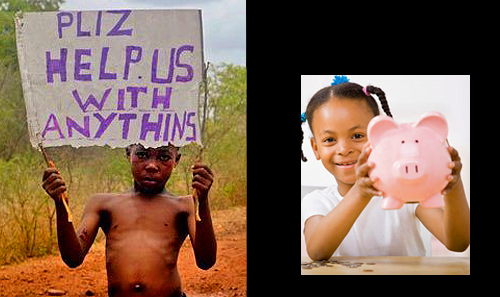
The Nobel concept of microfinance is being revealed as little more than a business whose effects on poverty are no better than any other banking enterprise. Darth Vader sits on many of their boards.

There’s something sweetly compassionate in the pure Islamic concept that money should never be lent at an interest rate. It’s also anathema to modern capitalism. Periodic negative cash flows are intrinsic to many successful businesses; and many genius if awkward ideas would never have come to fruition in our modern economies.

But the two radically different concepts have one thing in common: you’ve got to have money to make money. White angels might have existed in medieval times; today you need collateral.

About two decades ago microfinance emerged as a charitable bridge between the despised money lender and the little guy in need of a few bucks to run his gristmill:

Or buy his heifer, or paint his school house, or open his corner café, or buy his first bicycle so go he could go to work, or plant his half acre of white beans.

It was deemed so successful that many of its original proponents received world bonuses … like the Nobel Prize.

Bangladeshi Muhammad Yunus became the world’s poster banker for helping the poor while helping himself. But, of course, he didn’t intend to help himself; he just meant to help the poor.

The concept is simple. Lend very small amounts of money to responsible people who are very likely to pay you back and keep the interest rate down.

It’s also been around for a very long time. Self-help groups in India formed during the British colonial period and continue throughout the developing world, today. U.S. credit unions were originally formed to provide the service here, although they’ve “grown up” in recent years.

This is a huge capitalistic market, and especially in emerging economies where the only big thing is the urban slum. And since “small” banks don’t exist anywhere, not even in Dhaka, it wasn’t a job banks were doing or wanted to.

Win-win, right? Yes, except it became win-win-win.

The Heifer Project was more or less an early type, and after Yunus won the Nobel Prize in 2006, microfinance became all the fashion. Three Cups of Tea followed on its heals, and today a slough of so-called microfinance charities exist. One of the largest in the U.S. is KIVA whose young female founder and CEO is now the star of a number of national television commercials.

But as New York Times’ Nicholas Kristoff so aptly put it, Three Cups of Tea … spilled. Three Cups of Tea was a patent scam. Money solicited for schools was used for the founders’ own increasingly lavish lifestyle. Moreover, his claims and promises about the why and wherefore of his projects proved widely untrue.

But to be fair, most of the microfinance groups are not like Three Cups of Tea. Their missions aren’t made up. A reasonable percentage of donor money actually gets to the developing area.

The problem is a problem with the concept of microfinance more than with the individual entities that do it. And I think it fair, today, to claim that lofty claims of goodness no longer apply. And there are some critical thinkers who believe microfinance actually increases poverty.

The first discoveries made by analysts in the early 2000s applied to organizations like the Heifer Project where growth spurned greed in the organization. Salaries went up, administrative costs became so high in the Heifer Project that the founders created a shadow foundation board to hide some of the money. In some states this is a felony.

That’s been remedied and today the Heifer Project looks more like it did when it first started, and illegalities are no longer assumed. And the attention that was poured on the Heifer Project about ten years ago reigned in much of these tendencies by other micro finance groups.

But after the scandals of Three Cups of Tea and the early Heifer Project dual foundations, criticism of microfinance in general exploded.

KIVA, America’s microfinance dandy of the here and now, was first harshly criticized almost three years ago by a charity whistle-blower, David Roodman.

Roodman doesn’t claim that like Heifer or Three Cups of Tea, KIVA’s practices may be illegal. Rather, he claims that KIVA manipulates donor money (in the way any good bank would) to maximize effect, and in so doing is misleading donors about what they are actually doing.

KIVA solicits your funds by showing you a number of uplifting small business projects to which you can donate. You then open an account with your donation, which immediately depletes and then fills back up as the debtor repays the loan. You can then, as most do, elect to place your money and its modest earnings into another project.

The problem is that your money is pooled with everyone else’s, and KIVA’s directors disperse it as they see fit.

There’s nothing illegal about this, although it does strike me as sort of a ponzi scheme with yourself. But the point is that it’s grossly misleading.

KIVA realizes that if you as a small benefactor were simply solicited to “fund a small microfinance bank” you’d be much less likely to give than if you supposedly target your money for helping a Congolese self-help group “to buy 2 tubs of tomatoes, a tub of peanuts, and 50 kg of sorghum.”

Thirty thousand people weekly are now contributing to KIVA. And as Roodman rightly points out, “In short, the person-to-person donor-to-borrower connections created by Kiva are partly fictional. I suspect that most Kiva users do not realize this. Yet Kiva prides itself on transparency.”

It remains unclear if Three Cups of Tea has remedied itself like the Heifer Project did. The American Institute of Charity (CharityWatch.org) gives Heifer an “A-“ rating, today.

And that’s the other maybe biggest part of the problem: organizations like CharityWatch and GuideStar are widely used by charity givers to determine if their noble intentions can find Nobel placement.

And through no fault of their own, charity rating agencies use the most basic business criterion to determine honesty if integrity of mission. Nothing wrong with this. It’s exactly what you as a donor should demand.

Except that the mission might not work. Or might even be wrong.

And that’s often the case, especially in the Africa I know. When I sit above my little yellow pad and start adding the millions – billions – of dollars Americans have given to so-called charities in Africa, and then understand how little development was actually produced, it’s heart-breaking.

Roodman has recently published a book, “Due Diligence, An Impertinent Inquiry into Microfinance” which I’d paraphrase in a simplistic way by the above statement, that the mission(s) of microfinance rarely work. And when they’re wrong, they contribute to poverty, they don’t alleviate it.

Roodman himself has been scrutinized, and that scrutiny is widely favorable. Both NGOs here at home as well as those in the developing world are increasingly critical of microfinance in general.

And the reason is pretty simple, too. Bad projects probably outnumber good projects. The private world of giving is probably no better – indeed, probably much worse – than government to government aid.

The net result of microfinance, like most private aid in general, harms the developing world, doesn’t help it.
Eat And/Or Die

Eat And/Or Die

Published on jimbonham.com's blog.
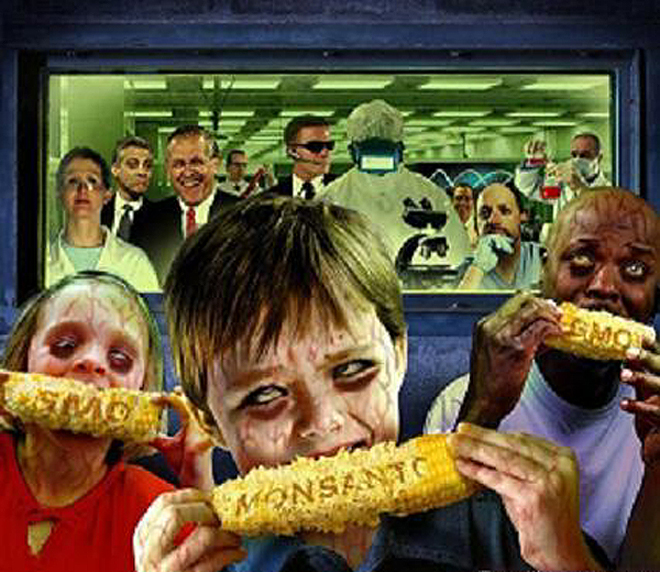
Organic brats and burgers covered with organic lettuce as Nigeria berated our summer holiday grill obsessions and viciously debated a national law to accelerate the use of genetically modified crop seeds.

If my relatives are any indication, America is turning neon green. We couldn’t even use non-organic salt for the July 4th barbecues. And the meat was hormone free and the veggies had to be certified non-bioengineered.

I can’t blame the younger generation. They are beset by pandemics of autism and allergies difficult to explain. And I’m the first to rate the taste of organic food as far superior to all that processed stuff.

But the world is starving and many of Africa’s leading advocates for increased food production are demanding rapid use of anything that can speed up food production and increase agricultural yields.

Last year both houses of Parliament in Nigeria passed a sweeping law allowing the use of any sort of seed whatever, even those not yet vetted as safe in developed countries.

“Nigeria should be feeding the rest of Africa,” Senator Ayo Adeseu explained at a food forum last week in Ibadan. “But we have been lagging behind due to non adoption of the latest in technologies. ….The urgent challenge before the nation is that we should imbibe biotechnology.”

President Goodluck Johnathan has refused to sign the bill. He has refused to comment specifically as to why, but the bill would allow farmers and their cooperatives to buy seeds from anywhere without the need for any government certification whatever.

The desperation to feed the starving of the world increases every year. This is because some headway is being made, and success breeds hope, and food policies and scientific advances occur more slowly than the death of a malnourished child.

The most critical areas are actually outside Africa. India ranks on top, and yet its economy is growing in leaps and bounds. Last month two scientists in “Tropical Medicine and International Heath” explained this in part because Indians were adopting western lifeways wholesale that, in fact, contribute rather than ameliorate hunger on a macro level.

Fast food, too much sugar, an unbalanced diet when overlaid a population that still has wanton starvation only increases it overall.

But the rapid adoption of western lifeways in places like India can also mean rapid adoption of many of our developed concerns about “being green.” India’s small farmers find themselves twisted into a dilemma about their own survival, the higher cost of genetically modified seed, the certainty of a higher yield but the questions about long-term safety.

So Goodluck Johnathan is not alone, and many in the developed world are impressed with the critics of genetically modified food. The principal criticism is of the increased use of pesticides that can be used against bioengineered crops. Dr. Michael Antoniou of King’s College London School of Medicine said last monththat most bioengineered foodstuffs were dangerous.

The pesticides themselves could kill if not handled correctly, they advanced the immunity of viruses and insects that could be massively harmful to crop yield, and finally Dr. Antoniou worries that the bioengineering itself will create a harmful food.

Everyone stipulates that bioengineering increases yields, and as I survey the area around which I live this year of a drought, it’s amazing to see how bioengineered corn seed has created crops that can survive at least marginally without water!

It’s a race to be sure. But is it a race to end hunger or life?

Africa Bails Out Europe

Africa Bails Out Europe

How do you feel during the Holiday Season when you see a homeless person drop a coin in the Salvation Army’s tin?

A deepening world economic downturn, caused mostly by Europe, is having violent effects in Africa even as poor Africa helps to bail out Europe.

It was hardly two years ago that the American stimulus and Ireland’s spectacular comeback from the cliff had markets and spirits alike rising. And Africa seemed to be on a steady path of growth and prosperity. The Arab Spring, modestly violent in Egypt and Tunisia, was good news.

Africa’s situation couldn’t be more different, today.

Mali is essentially two countries, with a violent stalemate between extreme Islamists and a corrupt traditional government in Bamako. The Congo is blowing up, again. Nigeria is near catastrophic civil war in the north. Angola’s strengthening dictatorship provoked widespread demonstrations, yesterday. Uganda’s miserable leader yesterday took advantage of an eviscerated opposition by banning 38 organizations that had refused to denounce homosexuality. That’s the short list.

There’s some good news: Somalia, Kenya. But then there is bad news again: Egypt.

What’s going on, of course, is that the global economy is turning south.

That’s not an oversimplification, nor a rationalization. Even something as complex as Egypt can be explained as the generals’ growing confidence that their naughty ways won’t be interdicted because the big guys have more pressing business to attend to at home: their economies.

When the economy is improving, especially after the depression the world just experienced, no one wants to rattle the boat. The status quo reigns supreme. And that was the situation in much of the world and Africa in 2008-2010.

But when the economy goes sour, the prosperous hibernate, the middle classes begin to panic and the extremists forge strong alliances with the poor. The only salient political power that emerges is extremism. And that’s the situation, now.

So the culpable are those who did nothing, or did something wrong, in trying to remedy the world economic downturn. We’re well beyond what caused it; the new blame shifts now to those who did nothing to remedy it.

Europe.

You can’t tighten your belt while you’re losing weight and hope to put on some pounds. An undernourished kid has to reach critical mass before starting to exercise and build muscle. It’s called stimulus. (Athletes call it steroids.) The U.S. did it. China did it. South Americans did it and Africa did it big time, and they all struggled out of the hole.

But Europe didn’t, and now the world suffers. So what does poor Africa do? At the Los Cabos conference, South Africa pledged an additional $2 billion for the IMF fund designed principally as an European bailout. It did not go over well back in South Africa. But South Africa, the continent’s giant, knows that if Europe falls everything in Africa falls, too.

South Africa is unique among African countries to be considered a “developed country” instead of a “developing country” by world institutions. The classification was made shortly after World War I when the League of Nations appointed South Africa as the custodian of then Southwest Africa (now Namibia) taken from the defeated Germans.

It was a marginal call. In those days societies were seen as defined by their elites and upper class. South Africa’s huge and neglected black populations were seen more as a problem similar to America’s native Americans than as intrinsic to the society as a whole.

Nevertheless South Africa is significantly richer than most African nations and most visitors to its main cities and attractions find it little different from developed world cities and attractions everywhere. But since the end of Apartheid South Africa could have lobbied world institutions to reconsider its classification.

That wouldn’t have been easy, either. It’s not just a matter of pride, but of foreign investment, interest rates and much more. In the end South Africa’s new black rulers decided to retain the global classification.

And now they are fulfilling their responsibilities. And bailing out Europe who couldn’t figure out how to do it themselves.

The Discriminate Marketing of Death

The Discriminate Marketing of Death

Today Tanzanian officials confirmed that a pesticide banned in the US but still produced by an US agrochemical giant is killing elephants and people in East Africa.

The pesticide Aldicarb, responsible for a wave of child deaths in California in 1985, is banned from use in the U.S. and 60 other countries, but the EPA agreement with the manufacturer, BayerCrop Science, allows the company to still market, license and distribute it worldwide.

(As you can see from the comment section below, I over-simplified when referring to BayerCrop Science as an “American company.” When the drug was first found to be too dangerous to use in the United States, it was being manufactured by Union Carbide. But in 2002, more than 15 years after the litigation was in process, a newly-formed German consortium, BayerCrop Science, bought many parts of Union Carbide, including the manufacturing plants for Aldicarb. Aldicarb continues to be manufactured in the United States. It is simply that the ownership of the company has changed from American to German.)

So children and elephants are now being killed in Africa, because the American company continues to market and license it.

Again and again EPA agreements with big agrobusiness stop their murdering in the US but don’t shut down the production to stop the killing worldwide.

I wrote earlier about children and lions being killed in Kenya’s Maasai Mara with Carbofuran, manufactured by the US FMC Corporation. Like Aldicarb, Carbofuran is banned in the US and many other countries.

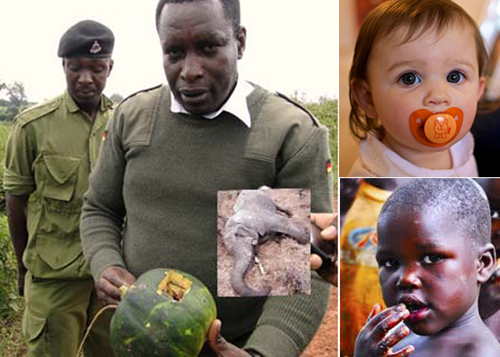
Of the 9 elephant poached in the Manyara and Ngorongoro regions of northern Tanzania this year documented by the Wildlife Conservation Society, officials presume watermelons and corn poisoned with Aldicarb were responsible. The Arusha Times reports that 14 elephants have been poisoned by the drug.

Today the Communications Manager for the Ngorongoro Conservation Area Authority, Adam Akyoo, stated unequivocally that Aldicarb was responsible for poached elephants found two weeks ago. At a news conference he displayed a watermelon that had holes drilled in it that was found near the killed elephants, and he presented a government chemist’s report confirming the holes were filled with Aldicarb.

Powerful pesticides like Aldicarb and Carbofuran are cheap and effective, as any strong poison is. In places like urban India both are used to control rats in the home. Aldicarb has proved specially successful in killing insects that threaten cotton crops.

In the developing world there is a heart-wrenching understanding that the use of such dangerous materials might be better than letting farmers’ marginal livelihoods be threatened or children getting plague and other rat-born diseases. A major debate in the world right now is whether developing countries should use DDT to eradicate malaria, as many in the developed world had done decades ago.

Part and parcel to the DDT debate, and near identical to the debate on global warming, is that the developed world must transfer wealth in some form each time the developing world concedes strategies that it otherwise believes remains overall beneficial to its society.

Yes, of course, this should be done. And it has been done on numerous occasions and continues to be through numerous debt relief programs between the developed and developing world. There’s no reason that pesticides like Aldicarb and Carbofuran can’t be included in these agreements.

In 1985 2000 people, mostly children, fell ill in California after eating watermelon on the 4th of July that had been dusted with Aldicarb, and this is what began the process that ultimately resulted in the pesticide being banned in the U.S.

Certainly that many, if not exponentially more, have died in Africa.

Advocates of the pesticides, most prominently the agrobusiness manufacturers themselves, argue that it is the prerogative of the each independent country to ban, or not ban, the product for sale. And that we have no right to force our beliefs on them.

Balderdash.

DDT, Aldicarb and Carbofuran are indiscriminate killers, and American companies should not be allowed to produce or profit in any way from them. Like many nuclear weapons, the method of manufacturing these pesticides is public.

If Indian companies want to make Aldicarb, they don’t need BayerCrop Science’s permission to use the company’s patent. They can figure it out themselves and would, if global patent law didn’t prevail – which it doesn’t when the US patent holder is finally stopped from any manufacturing.

American corporations should not profit from making murderous stuff and spreading it around a desperate world. If this is capitalism, then it’s time to dump capitalism for something less deadly.

Farmers Driving Lamborghinis

Farmers Driving Lamborghinis

By Conor Godfrey
Yessir. One of the world’s foremost Agriculture oracles, Jim Rogers, recently claimed Agriculture is the oil of the twenty first century on HowwemadeitinAfrica.com.

More evocatively, he quipped that investors should consider indirect plays on agriculture investment such as opening Lamborghini dealerships in farm country, because soon, “farmers are going to be driving the Lamborghinis; stock brokers are going to be driving tractors.”

Jim sees big things in the future for all the world’s breadbaskets: the American mid-west, the Australian outback, and a number of South Asian deltas for example.

But I wouldn’t be writing this blog unless he was the most bullish on Africa.

He summed up the potential for African agriculture like this – “In some of the African nations you don’t even have to farm, just sit by the side of the road long enough and something will grow.”

I have heard very similar sentiments from American farmers in Uganda, Sierra Leone, Guinea, and Angola.

In Uganda for example, the expats marvel that you just have to throw some seeds over your shoulder, turn around, and they will have grown into a forest.

A few weeks ago I wrote a blog post about the perceptions and mis-perceptions of land grabs in Africa.

In short, to coin an old cliché, Africa is the Saudi Arabia of uncultivated, highly arable land, and everyone wants in.

There are two meta trends involving agriculture at the moment that will have a huge impact on Africa for better or worse.

First – prices for commodities that Africa can or already does produce are trending upward for the very long term.

Unless science makes food obsolete or disaster reduces the planet’s population by a few billion, food prices will stay high in historical terms.

The equal and opposite counter trend regarding African Agriculture is climate change.

The African Development Bank and other multi-laterals predict harsh declines in African land productivity over the next 50 years due to changes in rainfall patterns (About 4% decrease annually as a continental average.)

It seems like the smart money – whether you are in development or in the private sector – is on agricultural technology that will mitigate climate risk while taking advantage of superior soil and other factor advantages.

While Lamborghini dealerships in Abidjan are probably still a risky play, irrigation equipment, low-water varietals, and agricultural inputs are all highly lucrative and sustainable ways to think about African agriculture moving forward.

After all, global supermarkets are already increasing the proportion of produce coming from the continent.

If you have ever had an “Out of Africa” fantasy – now is the time to move to the continent and start your farm.

Be Careful What You Wish For

Be Careful What You Wish For

Lion road kill, baby lion attack … two examples this week that we must stop thinking of Africa’s wild animals as human incarnations.

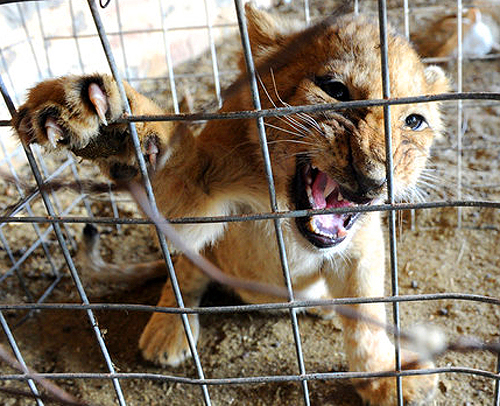
Like a hundreds of other tourists daily, at dozens if not hundreds of similar sites throughout Africa, Madelein Querk was looking forward to that special moment this past weekend when she could actually pet a wild animal. The lion cub bit her in the neck threatening her life, not just her holiday.

A proactive organization studying and promoting lion conservation in northern Kenya called for more “speed bumps” or road impediments on the relatively new Samburu-Marsabit highway after a one-year old lion cub was killed trying to cross the road this weekend.

The two incidents are in some ways dissimilar. The cub attack is the epitome of poor judgment, the logical extension of anthropomorphizing a wild animal into a pet and maybe even a cute little furry baby. The second incident is an excellent example of human/wildlife conflict, but with an error on the side of human.

But they are also strikingly similar in illustrating how we unsuccessfully try to commercialize the wild at great risk to both the wild and us. The wilderness, wild animals and spaces with little or new human intervention, can be protected and conserved to be sure, and generating revenue from those tourists fortunate enough to be able to pay to experience them is a legitimate way of doing so.

But both these examples show this dynamic going too far.

A lion cub is cute in part because we project babyness onto it, the same cuteness of our own experiences with human infants. Sensing helplessness especially is a strong effusion of empathy, and a cynic might even argue an elixir of personal power.

But why don’t we feel the same way when a baby snake hatches? It’s just as helpless. Or a baby shark or baby black widow. Because they’re deadly? So’s a lion. Ask Madelein Querk.

For some reason our non-Maasai culture has codified lions as cuddly but pythons as not. Point is, neither are.

But we commercialized the cuddliness into Teddy Bears and Lion Kings with this haughty notion of generosity filled with forgiveness and redemption until there are piles of childrens’ books affirming the true goodness of Aslan.

Well, lions are good. But not because they obey their mothers and do their homework and help invalid ladies across the street. Their goodness is affirmed when they tear apart a baby wildebeest and eat it alive.

The second example this week is bit harder to understand, and I concede before trying to do so that you need to share my bias first that humans are more important than wild animals. And that is not a bias I came to quickly or easily, and I respect those who differ. Nor am I saying Buddhism be damned. But in the competition of natural selection, I route for man.

The Samburu-Marsabit highway was built by the Chinese to get oil from the desert. They pay well for that privilege and Kenyans welcome the revenue which significantly exceeds the sales of entrance fees into Samburu National Park.

It is also a dangerous place, particularly since the conflict in Somalia came closer. The Northern Frontier has become quite lawless in the last few years. From one sanguine point of view, putting speed bumps on this highway would exponentially encourage shifta, bandits that are notorious in the area.

If Ewaso Lions can demonstrate that this is an integral crossing for lion in the area (as they implied in the article linked above), then build an over- or underpass tunnel as is regularly done for wildlife crossings worldwide. Slowing down the flow of traffic is routing against humans.

In my long career in the wild I’ve grown more and more fond of it. But at the same time I’ve grown more and more angry with attempts to commercialize the wild by either pretending that it is less wild or actually making it less wild against its own nature. And I get particularly furious at efforts to exploit our fantasy empathy at the expense of man’s preeminent needs.

Enjoy the wild for what it is, not what you wish it could be.

Leave It To The Kids!

Leave It To The Kids!

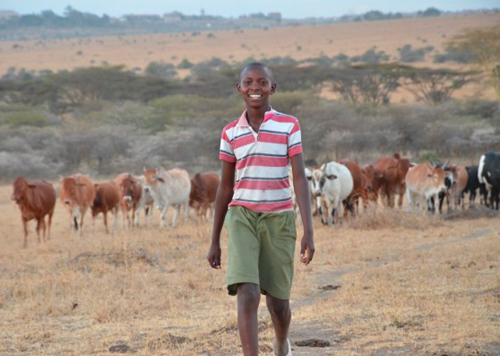
A 13-year old Maasai boy (genius) who rigged up an electric light device that seems to successfully protect his boma from lions is no longer herding his family’s cows. He’s got a scholarship to one of Kenya’s best private schools!

Richard Turere like all young teen Maasai boys was principally responsible for taking care of the family stock. Fortunately, he found time to go to a local school as well, and the little time he had uncorked his genius.

He put what he learned about electricity and lighting to work for himself! Lions are becoming an increasing bother throughout Kenya, as their habitat dwindles, as agriculture explodes and as prey diminishes. They are more and more often preying on cattle and goats.

The traditional Maasai response is to kill the lion, and in fact that’s happening quite a lot. I’ve written about the horrible poisons that are sometimes used in bait traps, and simple gang spearing is turning into something of a national sport.

In Richard’s own area near Nairobi national park, cattlemen had lost 18 cows, 85 sheep and goats and 14 donkeys since November. Their response was to kill three lion in a single week.

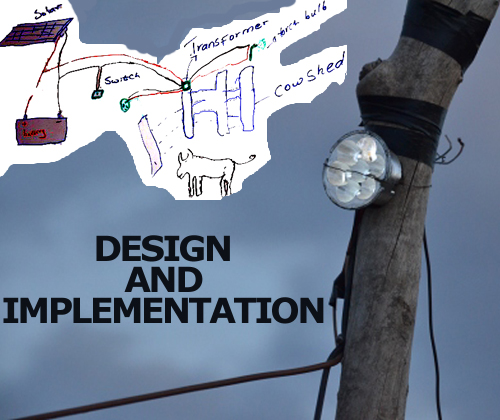
Richard didn’t like that idea, because school had also taught him the importance of wildlife to Kenya’s economy. So he rigged up a series of lights around the kraal in which the stock spent the night, which flashed intermittently and were powered by the same solar panel that ran the family’s TV.

Guess what? No lion! Even while neighbors were still being bothered.

Richard began his experiments when he was 11. He told teachers that he noticed that the lions never struck when people were walking about, including at night with flashlights. Lion won’t come near stock when people are active, so Richard concluded that he could fool the lion into thinking people were around his stockade all night long!

He wired four then five sets of flashlight bulbs around the stockade and connected them to a switching box powered by an old car battery charged by the same solar panel that runs the family’s TV.

The result was a random flashing of lights throughout the night. It seems Richard was right: the appearance is one of people being awake in the area. And while six neighboring farms were attacked by lion in the last several years, the Turere farm was spared!

Richard’s successful and very practical science project got immediate attention country-wide. When the National Geographic Big Cats Initiative found out about it from Wildlife Direct in Kenya, Richard became an instant celebrity. And his genius was doubly rewarded. Not only did he save his family’s lions, but enough patrons came together to send him to one of Kenya’s finest private secondary schools.

The plight of wildlife in rapidly urbanizing Africa looks dim at best to me. But with enough Richards lighting up the darkness, who knows?

Hola Hollande! Following Africa?

Hola Hollande! Following Africa?

Africans are generally pleased with Sarkozy’s defeat by Hollande. To them it suggests that right-wing western policies are on the decline. Virtually all of free Africa is to the left of most western countries.

Africa’s incredible economic growth, now an astounding 2-3 times the west, is likely to remain 1 or 2 points higher than world growth for the foreseeable future, making it among the best areas in the world to invest.

But the growth comes not from the austerity that the Sarkozy-Merkel alliance has thrust on Europe with disastrous consequences, but rather from aggressive infrastructure development and stimulus. Once working the economies were polished up with modest tax increases that nonetheless reduced corporate taxes while redistributing tax burdens onto the wealthy.

This is not a westerner’s right-hand cup of tea.

And this is hardly “socialist.” The widely respected conservative business quarterly, McKinsey, was among the first to notice Africa’s working formula for economic success:

McKinsey acknowledges that the resource revolution mostly spurned by China in Africa, with new technologies that dig deeper and probe further, account for nearly a third of Africa’s growth. And this is what westerners constantly highlight: Africa’s newly rich commodity markets.

But the other two-thirds is twice as important! And according to that McKinsey report, is linked to social policies that include “government action to end armed conflicts… trimming foreign debt…shrinking budget deficits… and privatizing state-owned industries.”

This was accomplished initially by additional government spending and debt, stimulus. The cash for this stimulus came mostly from China. As the recession pulled China back from its high investment in Africa, governments turned to luxury items, in particular cars, for increased taxes. Even as free trade agreements were being negotiated, new tariffs were smacked on imported alcohol and cigarettes, for example.

The result was an increased tax base, even as middle class individuals felt taxes go down and growth continued right through the west’s recession.

This all began more than a decade ago when Africa was sucking up aid like a dry sponge. I remember the forlorn remarks in those days regarding Africa’s “black hole.” But it was precisely this added spending in a time of no growth that ultimately produced the economic powerhouse Africa seems to be, today. Growth, unlike Sarkozy and Merkel (and Romney and Paul) claim, comes not from austerity but from stimulus.

Everything always seems to begin with economics, but sooner or later social ramifications are inevitable. Sarkozy like Romney is an anti-immigrationist, so to speak. And France has no fewer immigration problems than America. For generations France welcomed Africans from its former colonies with wide abandon. But in the last decade exacerbated by the recession immigrants have become the same whipping boys they are now in the U.S.

In 2007 Sarkozy dropped a nuclear bombshell during a speech in Dakar, the capital of one of France’s former most important colonies, Senegal. He was arrogant, patronizing and insulting, and it marked the start of his anti-immigration policies.

“There’s talk that Hollande will give a rebuttal to Sarkozy’s infamous Dakar speech of 2007.” writes an influential African blogger in Paris, but “the essential point is that Sarkozy is gone.”

Social ramifications will take longer to measure. But Hollande has already called Merkel to aggressively advise her of his public’s serious message: stimulus not austerity.

It’s the Africa way! Perhaps Hollande could make a call to Obama, now? Would Bernanke take the call?

Better Visit The Selous Soon

Better Visit The Selous Soon

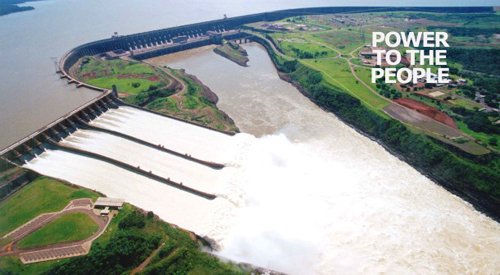
Bruised but recovered from the embarrassing loss of the Serengeti Highway project, Tanzania looks truly set on creating one of Africa’s largest dams over currently one of its largest game parks.

Friday, Energy and Minerals minister William Ngeleja announced during a visit to the area that “This is not a ghost project…Tanzanians will see it kicking off this July.”

The visit was perfectly timed. Heavy rains throughout East Africa have been flooding large agricultural areas and destroying many smaller villages. Not only would the dam produce more than twice the electricity Tanzania projects needed within the country, it would control the devastating flooding that seems on the increase with global warming.

When first proposed in the 1980s the project had a price tag of a half billion dollars. Today the cost is $2 billion, and most of this will come from Brazilian banks.

Environmentalists seem resigned to the project finally happening. The huge outcry raised when the project was first proposed, equally as vociferous when rebirthed the first time in 2002, is today totally lacking.

The best environmental study for the area was conducted by FAO in 1981. At that time there was concern that the large project would seriously disturb the water ecology of the area.

Other studies focusing on the then developing Tanzanian tourist industry in The Selous Game Reserve in particular were more equivocal. The impact area is so large, and the tourist area so small, it’s very hard to predict how these will intersect.

But there’s no question that the area effected will be huge, greater than the Colorado river basin that was effected by the construction of the Hoover Dam. The flood lake itself could exceed 100 sq. miles. The controlled water flow that would absolutely benefit area agriculture and provide stability for dozens if not hundreds of area communities would likely drain another several thousand square miles of wetlands.

Such an impact in the 1980s was deemed too consequential, and the World Bank pulled out of the project in the 1990s. The Norwegians stepped in, then fretted over the impact for several years before also stepping aside after pouring about $25 million into environmental studies.

The uncertainty of how the project would impact Tanzania’s inland fishing industry was the basis for local political opposition that when then allied with environmentalists worldwide effectively eviscerated local support. But it seems now that even while there could be catastrophic impacts to freshwater fishing, local sentiment has swung in favor of more power and less flooding.

Although the World Bank and western agencies remain cautious about resupporting a project they once ditched, Brazil, China and South Africa (the new “BRAC” countries) have no such qualms. The money is there.

It remains unclear how the project would effect the relatively small area where nearly 80% of all tourists visit, the “Lower Selous.” It’s possible this area will see little change other than the greater fluctuation of the Rufiji River along which most of the camps are built. This is something camps in Zambia’s Lower Zambezi have been dealing with for years, as the great Kariba Dam performs similarly.

But the half dozen or so new camps in the “Upper Selous” near Stiegler’s Gorge will likely be drowned away. This includes Serena’s new and popular Mivumo River Lodge.

The world has changed considerably in the last 40 years since the Stiegler’s Dam was first proposed. Global warming was not well understood then and even though development has lagged last century’s predictions, growth is accelerating, today.

A project of this magnitude could have enormous local benefit. What concerns me is that the Tanzanian government and parastatal authorities managing electricity remain corrupt and unprofessional. Yes, there will be new power, but will anybody get it?

But if the Tanzanians can get their own disheveled house in order, then I think it would be unconscionable to trade off the social and economic benefits of the project to save the beautiful, wild and otherwise unmanageable Selous. Unlike with the Serengeti Highway, there is no alternative.

Food and jobs.

Rally Round the Rig, Boys!

Rally Round the Rig, Boys!

Chen Guangcheng overshadows a great diplomatic partnership between the U.S. and China succeeding right now in Sudan.

Yesterday in coordinated diplomacy that worked faster than a ping pong match, the U.S. moved a resolution through the United Nations Security Council that would impose harsh sanctions of both the North and South Sudan if they don’t meet certain goals in two weeks. With Chinese support.

Then China walked the resolution over to the African Union and asked them to deliver it as a reminder of a much older resolution passed by the African Union: North Sudan’s leader is under indictment from the World Court of the United Nations and since refuses to recognize the world body.

Then minutes later (and this is through a wizardry of time zones) the North “agreed in principle” with the mandates in the UN resolution.

This is no ordinary thing.

I’ve written several times in just the past week about the growing catastrophe in the Sudan as a poorly demarcated border between north and south that runs right through the oil fields erupted in war.

For one thing the U.S. – whose interests in South Sudan have been popularized as a George Clooney star movie — backed off as lead negotiator to let China figure it out better, and China did. The U.S. would never have found the time, the interest, or the politics to transport the idea through what it considers a weak and often corruptible African Union.

Many wince at the notion that diplomacy is so practical: It’s all about oil. We especially in America like to believe that goodness is simply an elongation of god, and that we pounded Iraq and Afghanistan and liberated Kuwait and got tangled up in Iran for any number of reasons except oil.

But remember it was that burrowing wolf hound Henry Kissinger who made mince meat of morality and elevated national “self-interest” above the Ten Commandments. And the criminal Richard Nixon was praised yesterday by Hillary Clinton for his overtures to China 40 years ago.

It’s called the Real World.

Yes, Chen should be given asylum in the U.S. Yes, China should reverse policies restricting human rights. Yes, the U.S. should stop lying about its motivations for wars in deserts where the population densities approach that of the arctic circle and day time highs outperform Roundup. And yes, the two should continue to work for harmony in the world.

Get the damn oil flowing in the Sudan, OK? Peace follows.

Partnership for Peace & Oil

Partnership for Peace & Oil

The time has come for China and the U.S. to become allies to stop the war in The Sudan and get oil pumping, again.

The U.S. must immediately nominate China as mediator in the North/South Sudan conflict with wide powers to demarcate borders. Yes it’s agonizingly obvious it’s all about oil, but China unlike the west has never pretended otherwise.

There is now a movement in Congress to implement this as a resolution urging the State Department to do exactly this. Tomorrow Hillary is in China. Unfortunately a Chinese dissident is dominating the issues, so this may not be the moment. But a moment we need.

Yesterday a Dutch journalist confirmed that very nearly all-out war had begun along the border areas. The North declared a State of Emergency which in Bashir-speak is a declaration of war.

This war was started by The South, the dandy of the west, and recently independent from the North. But in typical colonial style, the freedom the west engineered for the south from the north is incomplete and unworkable.

Throughout the last several centuries of western war, colonization then independence, the net effect of the west’s efforts have been to create weak and corruptible states with immature political systems. The recent Arab Spring and Twevolution is rectifying this for much of Africa, but it’s taken more than a half century.

Global events move too fast today to wait 50 years for the Sudans to become friends. China, the U.S. and the west need the oil sooner.

The Director of the World Peace Foundation, Alex de Waal, spelled it out brilliantly in a lecture to the Royal African Society in London as a simple two-step process which is laughingly obvious:

(1) Stop the fighting; and

(2) Adjudicate the borders, which are the oil fields.

But it was de Waal’s eloquent explanation that unlike so many other past conflicts these two imperatives are relatively easy and within reach of the world community.

He explained that there are plenty of UN and African Union troops on the group in South Sudan to stop the fighting and police a cease-fire. It would take minimal resolutions from both organizations to effect this policy. It could happen, tomorrow.

And I’m supplying the implementation of the second imperative: China.

Even as the conflict unfolds, the president of the South was in China accepting an $8 billion loan. And China is about the last friend on earth of the North.

The only obstacle to the above, really, is America. Obama has 100 green berets and support within a few hundred miles of the conflict zone, a rather poignant statement. But current Obama policy isn’t bad. The problem is the lingering militarism of America’s last 40 years.

The president Bushs’ singular expert on Africa, Jedaya Frazer, (who I praise by the way for her handling of the 2007 Kenyan turbulence) essentially argued recently to the Council on Foreign Relations that the North should be bombed out of existence.

Frazer has become the intellectual mouthpiece for the Right Wing. What she says is either what they believe or will. It’s a dangerous sign that once again polarized politics will wreck this otherwise slam dunk solution.

Frazer’s Bush’ pre-Obama militarism to be applied to every conflict in the world had lasting effects on many of our allies. Britain, for example, follows America’s lead on foreign policy and shifts less nimbly than we do ourselves.

But it’s time to bury the ideological hatchet. The west cannot afford another major war in the world any more than China can lose a drop of oil.

I see a real partnership, here.

Breakup Brokers need China

Breakup Brokers need China

Only China can stop the Sudanese war. This is the first great test of its diplomatic strength and savvy in Africa.

Last week South Sudan restarted a generation-old war with its former northern master, Sudan, by invading an oil field on the common border which remains disputed territory.

Five days later the South retreated having been whipped to smithereens by the North, and the North then began aerial bombardments of the South which continue today.

South Sudan’s invasion of the disputed oil field at Heglig was the height of abject stupidity. The young country, dandy of the west and George Clooney, is revealing a personality its supporters hadn’t expected: a militant immaturity.

What on earth led the idiots in the South to think they could whip the North, which for a generation had clobbered them from 500 miles away?!

According to a Reuters report today petrol pumps were running low last week in the South and the idiots in Juba decided they had to come up with an excuse to get more oil.

This was likely because the South is running out of foreign currency, a failing of its own fiscal management combined with the international community having not lived up to its donor obligations, including the United States.

But instead the South decided to use PoliWarSpeak and claimed it was because the oil fields on the 20% of the two territories which remain in dispute were being mismanaged or pilfered by the North. Clearly the only option left was to invade and get slaughtered.

The huge swath of rich oil territory which remains in dispute between the two countries is a festering wound of an incomplete breakup, governed essentially by international oil companies. But it was nonetheless producing oil.

And both countries were receiving some revenue, although drastically less than they could if the areas weren’t in dispute. Now oil production is stopped. Dead bodies litter the oil fields.

The western powers led by the United States brokered the breakup, then turned quiescent way too soon. The South has lost all faith in its original supporters.

So the President of the South went hat in hand to China two days ago.

China needs oil more than any other single political entity in the world, and it has warm relations with the North, unlike the western powers which are remembered mostly for sending missiles onto northern pharmacies under Clinton and removing the cash cow from the barn.

So it’s China’s move, and the poor giant is generally not wont to direct politics from afar, preferring a status quo in situ as the perfect state of life.

If it wants oil, it’s got to broker peace. Paradoxical historical imperative, eh?

Lord of War Behind Bars

Lord of War Behind Bars

One of Africa’s most heinous arms dealers is now in a New York jail for at least 15-20 years. It’s about time. American administrations all the way back to Nixon have avoided prosecuting these terrible men, often because they used them.

Viktor Bout‘s sentence doesn’t begin to bring justice to the millions killed in Liberia, Angola or Sierra Leone, or to ward off future wars of the sort he tried and failed to start in Tanzania. But it’s a start, and it’s long, long overdue.

You can’t make war without weapons. The buildup of weapons during the Cold War was insane, and it wasn’t just limited to the nuclear arsenal that could destroy earth a hundred times. The inventory of tanks, surface-to-air-missiles, grenade launchers and simple guns that were manufactured in the 1960s and 1970s, is mind boggling.

Even the Federation of American Scientists considers illicit arms dealing one of the planet’s greatest threats.

When the Cold War ended and self-destruction grew less likely, the discarded hardware provided business opportunities for the most callous of men, and much of this wheeling and dealing occurred in or through Africa.

(Indeed, major arms dealing occurred in Africa even before the Cold War ended. Unbeknownst to this then young tour guide, I paid $60 x 14 to get my Lincoln Park Zoo safari members onto a DC3 that appeared like magic landing beside our mud encased vehicles near Zaire’s Ituri Forest in 1985.

We scrambled into the aircraft, grabbed individual ropes hanging above the small port windows and sat in jump seats facing the center of the aircraft which was consumed by a well equipped Armored Personnel Carrier (APC) headed for who knows where well south of where we got off when the plane refueled in Goma.)

But it was the huge inventories of weapons opened to the “free market” after the collapse of the Soviet Union that fueled so much death and destruction in Africa in the 1990s and 2000s.

Click here for a quick list of books documenting the incredible mayhem. Viktor Bout was the model for Nicolas Cage in Lord of War.

Bout’s conviction is a bit dicey in itself as evidenced by the judge’s reluctance to levy anything but the minimum sentence. But it shows the determination of the Obama administration to reverse years of immoral American complicity with arms dealing.

As the judge explained when issuing the minimum sentence, Bout was nabbed in a sting operation, a fictitious setup by US agents pretending to represent Columbian rebels.

He may, in fact, never have dealt in South America before. Africa was his kingdom. So while I can’t fault the judge for levying the minimum sentence, I can certainly applaud the Obama administration for doing whatever necessary to get this man off the street.

America’s complicity with illicit arms dealing is legend. Last year Rolling Stone magazine published an incredible story about two kids in Miami Beach procuring cargo planes of weapons for the Bush administration in Afghanistan from illicit sources in Kyrgyzstan.

What?!

The story of illicit weapons is unbelievable. And it isn’t, as Rolling Stone showed, just a product of funny Russians taking advantage of the implosion of their society. It’s equally American kids pretending to be video soldiers who suddenly emerge from their flat sceens to become actual war mongers.

And more often than not, it’s Africa that suffers most.

You can’t make war without weapons. Apparently, you can’t get weapons without Viktor Bouts and Miami Beach 25-year olds. They should all be in jail.

Africa 2050

Africa 2050

By Conor Godfrey
On Friday, I tried to provide a bird’s eye view of the U.S.–Africa relationship, with an eye for the civilizational points of contact like religious organizations, the number of Americans traveling to Africa or Africans traveling to the U.S., and state to state interaction over trade, security, etc…

I tried to make clear that, in my opinion, the relationship suffers from malign neglect, and a distortion brought on by an over emphasis on development assistance.

Before I offer some big picture ideas on how the U.S. could increase the intensity of this civilizational interaction, I suppose the first question is why this would be a good thing in the first place?

Why should American’s care about Africa, or Africans about America, more than, say, central Asia, or eastern Europe?

My basic argument is this – Africa will be a prime source of both creation and destruction over the next fifty to one hundred years.

The continent holds approximately one quarter of the world’s states, the youngest and fastest growing population in the world, seven of the world’s top ten fastest growing economies, and likely, as discussed in an earlier post, 50% of the mineral resources that the world needs to continue its upward trajectory.

The next thirty years will see African societies and individuals innovate to overcome mindboggling development obstacles.

Where states and societies fail to do so, their failure will spin off destructive forces that will extend far beyond the continent’s shores.

African innovation also tends toward the truly disruptive as opposed to incremental improvement.

In many developed markets, legacy technology encourages baby step refinements.

Think of how long it has taken mobile money to take off in the United States.

We are just now seeing the first generation of mobile payment processors, while in Africa, mobile payments were achieving wide market penetration in 2007 and 2008 (mainly M-Pesa at that time).

Why? Because there was not an entrenched cash register culture that was ‘good enough.’

Now apply these dynamics to energy and green tech, waste processing, internet and communications technology, whatever; in developed markets, entrenched technology and powerful interest groups stand to lose from truly disruptive innovation, and therefore need to co-opt or squash it.

Africa can leapfrog these legacy systems and launch entirely new industries.

As Europe, Japan, and other traditional allies turn inward to deal with their impending demographic implosions, the U.S. needs to maintain links with the most dynamic, growing societies abroad.

This includes getting their best and brightest to study in the U.S., and linking our firms with the innovation pipeline coming from emerging markets like Africa.

So lets say you believe that the U.S. needs Africa over the next century.

How do the two societies move their anemic relationship currently based on aid, security, and resources to something more robust? People to people and firm to firm.

Number one. Rebrand America in Africa.

For years America has tried to out humanitarian other countries; the foreign policy and media organs have tried to position American companies and the American people as the nicest, most considerate, and development oriented of all potential donors.

There are simply too many hypocritical counterpoints to really make this narrative stick.

Instead, America should focus on quality and creative cache.

The U.S. MUST protect its brand’s image as the best made, highest quality goods on the market.

Perhaps even more importantly, American companies, gear, and people should present themselves as the coolest, most cutting edge, and most interesting of potential partners for Africa.

The iPhone, Facebook, Twitter, GE, Akon and Lady Gaga, the New York Knicks, Pixar, Black Entertainment Television, MIT, and (oddly enough) Chuck Norris are more effective ambassadors for brand America than 80% of our development programs or security partnerships.

The creative and cultural cache represented by this indicative group of people has another advantage—it can reach over, under, and around state governments to connect directly with average citizens.

I suppose you could call this soft power; I would rather call it putting America’s best foot forward.

More practically, our immigration system needs drastic reform.

I could fill Ngorongoro Crater with the stories I’ve heard of entrepreneurial, honest and otherwise fantastic Africans getting denied visas to the U.S.

I understand the need to control the borders, and to be discerning, but if the U.S. wants the best and brightest to build ties in and contribute to the Unites States, then those people need to get here first.

If they come here on student visas, and study something practical and valuable, then let them work here if they want!

As I am running out of space and audience attention, I would end by encouraging the passage of the Increasing American Jobs Through Greater Exports to Africa Act of 2012, and urging the administration to take action on the upcoming expiration of the African Growth and Opportunities Act (hopefully by adding tax incentives for U.S. companies who invest in key sectors in Africa).

Everyone, from readers of this blog, to policy makers, to the U.S. diplomatic corps, needs to start thinking about how to deepen this relationship. If it withers in the shade of current great power politics all parties will lose.

The Ties that Bind Us

The Ties that Bind Us

By Conor Godfrey
Just a few days ago bipartisan sponsors introduced a bill simultaneously into the house and senate that would, if passed, better coordinate all the various organs of U.S. policy on Africa.

by Black Agenda Report

This got me thinking- well, what is U.S. policy on Africa? In fact, more broadly, what does the U.S.–Africa relationship look like now?

Let’s start with official policy, and move into the more nuanced aspects of the relationship.

On a macro level, the only thing resembling a coherent platform for U.S – Africa relations is a trade program known as the African Growth and Opportunities Act, or AGOA for short.

AGOA allows a wide variety of African exports into the U.S. duty free, and in most cases, quota free as well.

Unfortunately, the only real AGOA success lies in textiles and apparel, and this success has been tempered in recent years by the expiration of a law that previously limited textile power houses like Bangladesh and Cambodia from flooding the U.S. market.

The United States also undertakes several major security operations and partnerships in Africa.

These include anti-piracy patrols in the Gulf of Aden, anti-terrorism partnerships in West and East/Central Africa; and, with their check book at least, the U.S. supports peacekeeping and security service training in a number of places.

Most of these programs are run via the U.S.-Africa Command, or Africom, (paradoxically based in Germany), or the 50 U.S. embassies spread all over the continent.

Uncle Sam also makes a (somewhat half-hearted) effort to promote commercial ties via 8 full time U.S. Commercial Service offices on the continent. (fun fact: There are now 54 countries in Africa.)

That leaves, in terms of official policy anyway, development assistance.

The United States Agency for International Development (USAID) maintains programs in 23 African countries, and in 2010, spent ~ 1.6 billion USD on humanitarian and development assistance.

If you have read any of my other posts, you probably know that I am a development aid skeptic.

I meet formally and informally with African business people every day, and I can say that a huge (I am choosing the word “huge” deliberately) percentage of educated African movers and shakers believe that development assistance is the salient characteristic of U.S.–Africa policy, and bash that assistance as paternalistic and unhelpful.

Exceptions abound: most people cannot say enough good things about U.S. led HIV/AIDS interventions and research, and in places where the U.S. can operate freely, its disaster relief and humanitarian assistance is more efficient and impactful then many other donors.

But are security partnerships and development assistance and international trade the basis of a 21st century partnership?

Maybe. Probably. Well, at least a part of it.

But what about people to people connections?

There are approximately 171,000 Americans living in Africa excluding military, (Source.) compared with 1,612,000 in Europe, and about a million in Asia depending on what one counts as Asia.

Conversely, African citizens now number around 1.5 million in the U.S., and migrants of African origin constitute 3.5 percent of all migrants to the U.S.

That number leaves out the 40 million African Americans that form the traditional or historical diaspora in the United States.

The real Africaanswerman makes his living helping Americans experience Africa. But only 3% of the 28,507,000 annual U.S. based international travelers visited Africa in 2010 (Likely inflated by the World Cup in South Africa!)

There are other ties of course; American religious organizations of all stripes have ties in Africa, and we are just starting to see educational institutions partner with African universities.

However, I have been looking into the best international policy graduate schools the U.S. has to offer, and the African offerings are slim.

Options to take major African languages (French, Arabic, and Portuguese aside) are even slimmer. (There are very, very cool Title 6 centers that teach African languages in some undergraduate institutions.)

The picture I am trying to paint is that of a relationship that screams for attention and coherence.

In my next blog on Monday, I will highlight how I think policy makers and thought leaders in American society could build on natural U.S. ties to the continent, and why I think U.S. society would be better off if we did so.