Africa Bails Out Europe

Africa Bails Out Europe

How do you feel during the Holiday Season when you see a homeless person drop a coin in the Salvation Army’s tin?

A deepening world economic downturn, caused mostly by Europe, is having violent effects in Africa even as poor Africa helps to bail out Europe.

It was hardly two years ago that the American stimulus and Ireland’s spectacular comeback from the cliff had markets and spirits alike rising. And Africa seemed to be on a steady path of growth and prosperity. The Arab Spring, modestly violent in Egypt and Tunisia, was good news.

Africa’s situation couldn’t be more different, today.

Mali is essentially two countries, with a violent stalemate between extreme Islamists and a corrupt traditional government in Bamako. The Congo is blowing up, again. Nigeria is near catastrophic civil war in the north. Angola’s strengthening dictatorship provoked widespread demonstrations, yesterday. Uganda’s miserable leader yesterday took advantage of an eviscerated opposition by banning 38 organizations that had refused to denounce homosexuality. That’s the short list.

There’s some good news: Somalia, Kenya. But then there is bad news again: Egypt.

What’s going on, of course, is that the global economy is turning south.

That’s not an oversimplification, nor a rationalization. Even something as complex as Egypt can be explained as the generals’ growing confidence that their naughty ways won’t be interdicted because the big guys have more pressing business to attend to at home: their economies.

When the economy is improving, especially after the depression the world just experienced, no one wants to rattle the boat. The status quo reigns supreme. And that was the situation in much of the world and Africa in 2008-2010.

But when the economy goes sour, the prosperous hibernate, the middle classes begin to panic and the extremists forge strong alliances with the poor. The only salient political power that emerges is extremism. And that’s the situation, now.

So the culpable are those who did nothing, or did something wrong, in trying to remedy the world economic downturn. We’re well beyond what caused it; the new blame shifts now to those who did nothing to remedy it.

Europe.

You can’t tighten your belt while you’re losing weight and hope to put on some pounds. An undernourished kid has to reach critical mass before starting to exercise and build muscle. It’s called stimulus. (Athletes call it steroids.) The U.S. did it. China did it. South Americans did it and Africa did it big time, and they all struggled out of the hole.

But Europe didn’t, and now the world suffers. So what does poor Africa do? At the Los Cabos conference, South Africa pledged an additional $2 billion for the IMF fund designed principally as an European bailout. It did not go over well back in South Africa. But South Africa, the continent’s giant, knows that if Europe falls everything in Africa falls, too.

South Africa is unique among African countries to be considered a “developed country” instead of a “developing country” by world institutions. The classification was made shortly after World War I when the League of Nations appointed South Africa as the custodian of then Southwest Africa (now Namibia) taken from the defeated Germans.

It was a marginal call. In those days societies were seen as defined by their elites and upper class. South Africa’s huge and neglected black populations were seen more as a problem similar to America’s native Americans than as intrinsic to the society as a whole.

Nevertheless South Africa is significantly richer than most African nations and most visitors to its main cities and attractions find it little different from developed world cities and attractions everywhere. But since the end of Apartheid South Africa could have lobbied world institutions to reconsider its classification.

That wouldn’t have been easy, either. It’s not just a matter of pride, but of foreign investment, interest rates and much more. In the end South Africa’s new black rulers decided to retain the global classification.

And now they are fulfilling their responsibilities. And bailing out Europe who couldn’t figure out how to do it themselves.

Zulu Kingman Zuma

Zulu Kingman Zuma

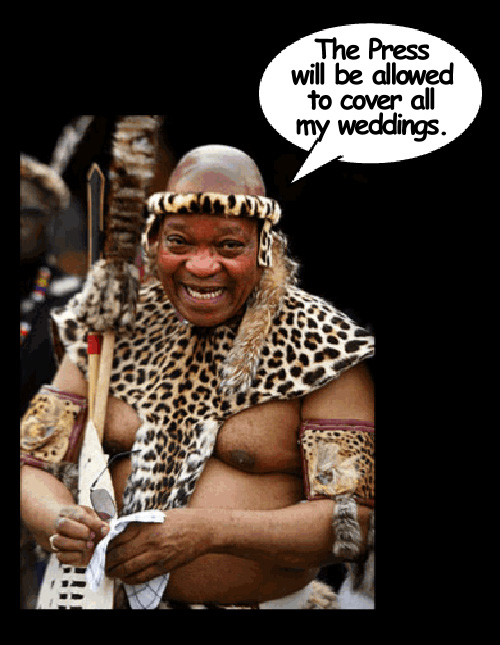
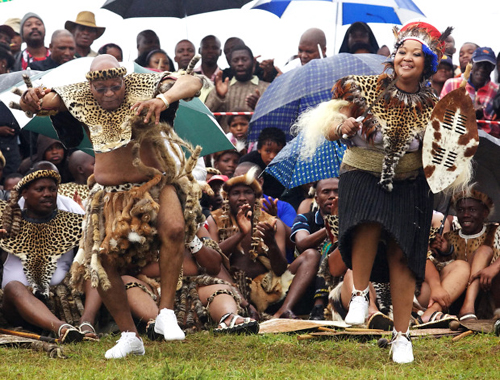
More wives and less freedom is the trend in South Africa as President Zuma marries for a fourth time and a draconian government secrecy law moves through the parliaments. There is a chilling connection.

The press is all abuzz with Jacob Zuma’s marriage this coming weekend to a prominent businesswoman with whom he has a 3-year old child. Zuma is 70 and Bongi Ngema-Zuma is 25 years his junior, as are his other wives. He is reported to have more than 20 children.

Zuma’s fun and games with traditional Zulu culture don’t mean much in themselves. He does receive about twice the amount of “presidential spouse allowances” that his predecessors in the presidency took, but technically there is no official position in South Africa – as in the United States, for example – for a “first wife.”

His romantic dalliance is mostly stuff for cartoons. South African family law allows for only one union, but recognizes traditional marriages as well which through private business contracts can then achieve legal equivalency with federal marriage law. It’s not known if Ngema-Zuma or any of his other wives has a contract with him.

I think it fair to say that the vast majority of contemporary Africans think Zuma’s behavior mocks rather than celebrates traditional Zulu customs. “It is ludicrous that things such as this still happen in a world that is changing!” writes Nigerian blogger, Yomi Akinsola.

But I see something more onerous in Zuma’s antics, and I think it fair to call them “antics.” Stripped of Zulu life ways, Zuma’s behavior is not so dissimilar to legions of dominating personalities with multiple sexual partners around the world. The difference is that his is totally above board and validated in current South African society.

Who cares? Lots of people who have tracked the decline of polygamy as societies evolve and prosper. Polygamy as the highlighted folkway Zuma has made it is socially regressive.

And I think intentionally so and it leads to a much more powerful issue. South Africa is slipping back into an apartheid mentality.

The ANC freedom fighters who have controlled the country since 1993, Mandela excepted, sort of anebriated themselves in traditional lifestyles that they – and their parents and grandparents – never engaged in. A sort of mixture of Bronx cheering the old Boers and celebrating majority democracy, flaunting the presumptive apartheid theory that native South Africans were too primitive to run a modern society.

But these guys are having trouble accepting modern democratic principles. They passed a draconian secrecy law last year that is awaiting endorsement by South Africa’s provinces. While not a slam dunk, it’s likely to become law, and then likely to face aggressive court challenges as unconstitutional.

When it becomes law South Africa will attain the unique position of a so-called democratic state controlling the press as much as China does. And there’s a reason that these so-called traditionalist ANC leaders want this.

The press has ferreted out the most scandalous and criminal acts of these old guys imaginable. The list exceeds simply the largess of government no-bid contracts dished out to their families and supporters, to government policies based on the belief that AIDS is not a virus and bribing judges involved in their criminal court cases.

Playing Zulu king is a tactical diversion from these more important issues that vies for column inches in South Africa’s dynamic media and so tends to lessen somewhat the anticipation of horror that passing this legislation naturally evokes.

But even more important than that, regressive legislation identical to apartheid culture would be a hard move over current South African culture … unless “everything old and traditional” suddenly appears good. Sort of mix up the bad of the past with the good of the past and just take the past.

I really don’t think this is a stretch. It’s intellectually offensive when detailed like this, but when streamed through the every day life of South Africa – which by the way is pretty good at the moment – it’s the bitter pill in the coated honey.

Intentional? I don’t think Zuma sat down with his personal coach and asked him how he should behave personally to pass the draconian press law. But with time as his cultural critics tended to line up with his political critics it became rather self-evident.

The Zulu King holds the power of life and death over all his subjects. Zuma’s not quite there, yet, but he’s trying.

On Safari: The All Good Cape

On Safari: The All Good Cape

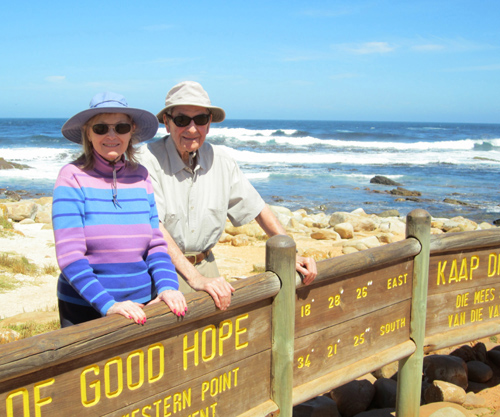
Dr. Lester Fisher, Dir. Emeritus of the Lincoln Park Zoo, with Barbara Shaffer
at the Cape of Good Hope as we began our safari in southern Africa.
I like to begin all southern African safaris in Cape Town, despite it being rather distant from game viewing areas and in spite of its constantly rising costs. As one of the most beautiful cities in the world it portrays so much of what young, modern Africa is becoming.

We spent four nights and five days in The Cape before heading to Botswana for game viewing. It was warm for March, several days in the lower 90s. But fortunately one night of heavy rain turned everything on, like a light switch, and the last of The Cape’s summer flowers and fragrances filled the peninsula.

One day was for the city itself. As with any world class city, I had to pare down the attractions to fit our time. I begin with a walk through the Company Gardens which is laden with history, sated with beauty and ringed with museums.

Nothing exciting was happening in any of the museums except the Slave Lodge, which had a special exhibit about Mandela. The Slave Lodge is one of the more sobering museums in the city, but without some understanding of how slavery affected and was a part of South Africa for so long, you really will never understand the present.

From there we visited what I think has become my favorite Cape Town museum, District Six, but this time I learned how important a guide is, and how fascinating and surprising the experience can be there.

District Six is a “living museum” whose guides are actual persons who were among those evicted from this historic quarter of Cape Town during the most pernicious period of apartheid, the 1960s. Residents who were fourth generation Capetonians were given sometimes less than a week to leave before the home their great-grandparents had built was bulldozed to make into an all-white section of the city.

Prior to the bulldozing, the area was classified as “coloured” meaning it was of mixed races. This could be white and black or Indonesian and Indian, or Malay and white. But it was a close knit, historic, politically dynamic and highly educated community, thrust suddenly into the dustbin of history.

The guides are what make the museum so incredible as they describe not just their lengthy history before the eviction but their lives afterwards and then after the end of apartheid. The story is usually a three-part drama that ends in pretty hopeful and inspiring ways.

But this time the guide we got, a politically active ANC undergrounder at the time he and his family were uprooted from nearly a 100 year history in the community, spent most of his time complaining to we visitors of the current affirmative action policy of the South African government.

Very interesting.

Obviously, the several centuries of apartheid that plagued the Old South Africa is going to take time to remedy, and I doubt there are many who feel that affirmative action is a wrong course of action. But the guide, a District Sixer and therefore a coloured, felt that affirmative action was displacing the opportunities of his family at the expense of blacks. “I’m not anti-black,” he insisted; “I’m just anti black behavior.”

That cliche has rung the world round and been exposed as hyperbole of the greatest sort, and it was a bitter sweet experience for me personally, who has been to the museum so many times, to see this crack in the hopefulness of the New South Africa.

Another day was spent at the Cape of Good Hope, and I can’t remember once before when there was no wind at the top of the Flying Dutchman that overlooks the sea that Dias and de Gama rounded centuries ago. But that was our fortune to be sure! Hardly a breeze, in fact, no clouds and one of the most spectacular views in the world. That day is the day we see the jackass penguins (recently politely renamed “African penguins”) at Boulders, and they’re absolutely some of the funniest things in existence. I like to sneak into the parking lot several blocks from the national park, the “swimming beach” and watch the kids swimming with them!

Another day was spent at Kirstenbosch, with free time to ride up Table Mountain and view the city from Signal Hill. What an amazing place Kirstenbosch is, and how indescribably beautiful. I say that because it isn’t just the gardens themselves which are spectacular, but that incomparable setting below Table Mountain. We nearly cried as our guide was walking us through pastures of bloom and stopped to say hello to an old man who had carried the ashes of wife to a certain point in the gardens that she so loved.

And finally we spent a day in the wine country. You’d be surprised that there really isn’t time to visit more than say two wineries. For one thing, the drive is so spectacular that you don’t want to get off the highway, with the jutting Cederberg mountains framing one beautiful vineyard after another.

I chose vineyards that don’t take tour buses. (We were driving ourselves around in rental cars.) That way you can get incredible attention and detail from the vinter as the wines are described, and real interaction when there are only a small number of people sampling the treasures. I particularly like Rustenberg Winery with its 19th century Victorian garden that is so spectacular as well!

True animal people as we are, part of the day for the wine country was spent at the Eagle Rehabilitation Center associated with the Spier Winery. Nearly half of the Cape Vultures, an endemic species, have been lost to poisoning, and that’s one (but by no means all) of the center’s missions. We got there in time for the 4 pm raptor demonstration and watched a number of beautiful birds flying around, landing on our arms and heads!

The Cape is so wonderful that I just could never see stepping into a game park in southern Africa without first stepping into this wonderland!

Mama Africa

Mama Africa

By Conor Godfrey

Over the past week I’ve made it out to Silver Spring, MD, for a few great African films.

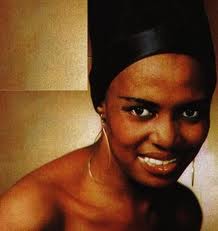
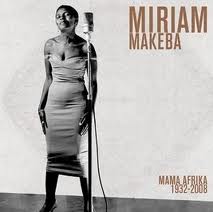
Opening night of the festival featured “Mama Africa” – a cinematic eulogy to the late great South African mega star Miriam Makeba. Find the English language trailer here.

If you don’t dance in your seat I would probably just give up the ghost.

As noted in this Reuters’ review, the worst thing one can say about the film is that it would have been even better had she been alive to comment on her own life.

Miriam was involved with the making of the film up until her death in 2008.

The rest is put together with help from archival footage and interviews with a dozen former band-members, friends and relatives.

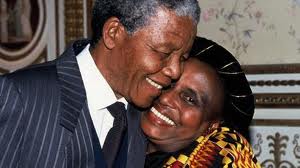
Makeba with Nelson Mandela

In Miriam’s case, this includes many of modern Africa’s founding fathers like Sekou Toure and Julius Nyerere, famous Black panthers like Stokely Carmichael, and world-class musicians from all over the world.

Renown South African Trumpeter Hugh Masekala (Also Miriam’s first husband and lifelong friend) fills in a lot of her early history. (Find an upbeat anti-apartheid track from Hugh here.)

She was born into crushing apartheid township poverty in the 30s, and even spent six months of her first year in jail with her mother who had been sentenced for selling homemade beer.

Her rise was meteoric once discovered.

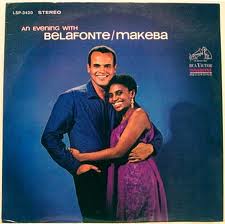
After being caught in the film “Come Back, Africa”, filmed secretly and smuggled out of South Africa by Lionel Rogosin, she was discovered by Mr. Harry Belafonte.

Belafonte went on to introduce her to the greats of the American music scene. She would eventually sing at JFKs birthday, and record with stars like Nina Simone, Desi Gillespie, Paul Simon, and tons of international stars.

She held seven passports and 10 citizenships at the time of her death.

Before the film, I really only knew her mega hits, like “Pata Pata.”

(Or find the song live in concert here.)

During the film, she actually says she wishes that some other song, with more meaning, had become her defining hit.

I suppose there is some irony in the vocal anti-apartheid singer who’s smash hit was, in her words, “a nonsense dance song.”

But there were plenty of more substantive hits as well.

Director Mika Kaurismäki featured songs like the Khosa wedding song “Qongqothwane”, known as the “The Click Song” by English speaking South Africans.

She introduced the song in the movie by saying that “the colonizers have to call it “The Click Song” because they have trouble pronouncing “Qongqothwane” with the right clicks.

One of my favorite pieces of concert footage was “Oxgam.” This particular piece shows her potent smile to good effect.

After all, she essentially had her pick (more like pickS) of husbands wherever she went.

Find the more emotional, slower Makeba in “Khawuleza.”

I also had the pleasure of seeing my old haunts in the Fouta Jallon region of Guinea when the film explored Makeba and her husband Stokley Carmichael‘s exile in Guinea.

After the two wed, all of Makeba’s U.S. dates and deals were cancelled in protest of Stokley’s activism.

At that point, a number of African countries, including Guinea, vied for Africa’s peripatetic daughter to come live with them as she still could not go home to South Africa.

In general, the film was a beautiful tribute to a pan-African hero, a tireless activist for justice in South Africa, and one hell of a voice.

Good luck finding it though – stay tuned here.

On Safari in The Cape

On Safari in The Cape

A Rooibos Tea Farmer in The Cape
Cape Town is my second favorite city on earth, and in no small part because it’s so damn beautiful. The vegetation is lush, but also unique. Giant plants, myriads of bizarre flowers and vines, give an impression of a city in a jungle. Do you drink red bush tea?

I arrived yesterday after several days in the wine country, and it was sixth consecutive day of perfectly clear, hot summer weather. I was ecstatic, because it meant that the guests I would be welcoming today could truly get to the top of Table Mountain, one of the city’s most famous attractions, but one that is rarely enjoyed.

Table Mountain stands over Cape Town like a behemoth angel frozen since the beauty of the world was unveiled. But its head disrupts the complex winds that come from the east, off the world’s warmest sea, the Indian Ocean; and from the west, off the world’s coldest ocean, the Atlantic. When there is the least bit of meteorological turbulence, the grand mountain spins itself into a cocoon of thick cloud even while every other part of the horizon is clear blue.

So we say the mountain is shy. And we learn never to promise a visit to its top, even if you’ve given yourself the week necessary to fully enjoy this place.

So, today, after my guests had arrived, the mountain was back to normal, hiding in its tablecloth.

Never mind, there are hundreds of things to do here, and top of my list is “city bowl” with its overwhelmingly powerful District 6 museum, a stroll with commentary through the Company Gardens, and another stroll through Bokaap including some Malay finger food. And that’s just a start.

And besides, anywhere you go, it’s simply beautiful. Summer, winter, spring fall, something is blooming and exploding color and fragrance. And the best place of all to see a representation is the world famous Kirstenbosch Gardens, one of seven national botanical gardens and among the best in the world.

But I was prompted to write about Cape Town’s horticultural side, today, because of a news report in yesterday’s Cape Times that casts doubt on the longevity of rooibos – you probably know it as red bush tea.

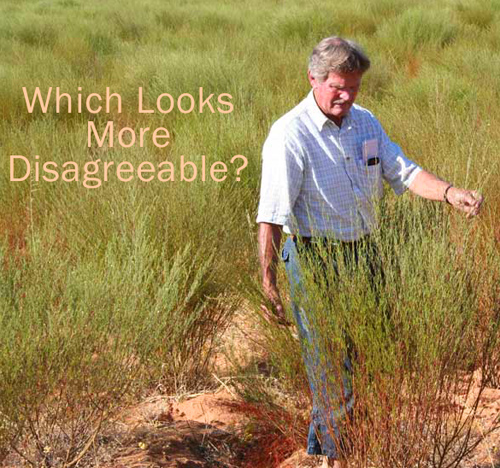
In contrast to everything I’ve said so far, rooibos is not very attractive. It looks like spiney grass. As it ripens just before harvest, it turns brown and ugly, like giant pine needles covered with mildew. And up close it rather smells like bad sap.

Nonetheless, it is one of the world’s most unique teas. South Africans for centuries have lived by it. Early British tourists couldn’t understand why when they ordered tea this despicable infusion arrived instead. And even today, beware. If you say “tea” without qualifiers, it will be rooibos in your cup.

It is admittedly an acquired taste. Like vegemite, haggis, sweetbreads and other basically repulsive sources of energy, when served at a young enough age an immediate affinity is achieved that if missed requires massive concentration to ultimately tolerate.

So my kids, introduced to rooibos at a young age, swore by it. Or rather swore at me if I came home from a safari without it. It took me about 36 or 37 years to finally acquire the taste, but once achieved, it is truly magnificent. Whereas I once described rooibos as tasting something like an infusion of a recently ripped off outer shell of an aged Michelin steel radial, I now think of it as sort of chocolately.

Rooibos farmers don’t actually farm, since it’s a naturally growing weed in one of the super unique micro-climates of the Cape in an area near the Cedarberg mountains. But the farmer’s skills are essential to maximizing the crop: knowing in particular how to, or not to, prepare the soils after each harvest, which traditionally is right about now.

The rooibos farmers here produce 12000 tons of tea annually, and South Africans keep half of that for themselves, or about 2.4 billion cups. Most of the other 2.4 billion cups are drunk by my kids. I drink several cups a day.

There is no question that it has special nutritional values, and this is what has led to the monster battle between Nestle corporation that is trying to obtain a world patent on the active ingredient of Rooibos, and South Africa, which thinks of rooibos as part of its heart and soul.

So today, after nearly a week of unusually hot temperatures in the Cape (mid to upper 80s), climate change experts quoted in yesterday’s Cape Times say the fragile weed could be doomed.

Horticulturally cultivation has failed. People have tried to grow rooibos in Australia, the United States and South America, to no avail. Cultivated rooibos rarely succeeds. It’s got a mind of its own, this thing, and rising global temperatures might doom it forever.

So if you haven’t yet acquired the taste of rooibos, you better start right away. According to these same experts we have less than a hundred years, and it could well take you half of that to learn to enjoy it.

No Coffee Blacks

No Coffee Blacks

My several days in Stellenbosch gave me new insights into the extraordinary difficulties South Africa is trying to confront. My optimism for the future of South Africa has diminished slightly.

Nowhere in the world are the effects of ethnic segregation as easy to see and historically easy to study as in South Africa. And unlike what most Americans think, this isn’t a single generation’s problem: apartheid might be a recent word, but it has been entrenched in South Africa since its prehistory.

Stellenbosch vies with Pretoria as the most conservative major metropolis in South Africa. Just under 100,000 people (a quarter of which are students) it was the first major settlement after the Cape in the late 1600s, the birthplace of Afrikaans and nationalist ideas, and the very center if epitome of Dutch Reformed church theology.

Today it is a producer of some of South Africa’s best wines, a seat of higher learning, and a major tourist destination. I’m here at the end of its summer, its principal tourist season, and there are tourists everywhere from every part of the world.

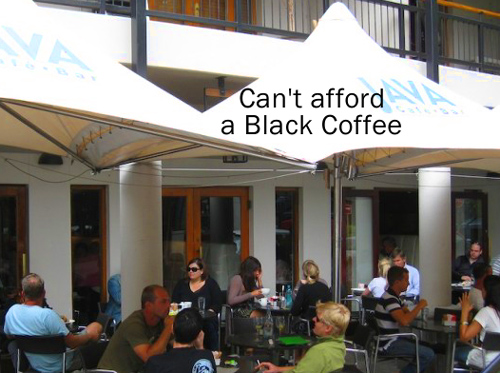
Yesterday midday I waited as all tourists do, hovering over one of the café tables at Java, an excellent restaurant and coffee house on Ryneveld Street, pouncing the moment someone left. Once seated, no concerns that it will take a server some time to finally get around to you!

Every beautiful café in the 4×6 block city center was the same, but it was also clear there were as many South Africans as foreigners. Many were South African tourists, as the South African who can afford to travel does so far and wide. But there were also many locals, enjoying a beautiful Sunday only about an hour after the great central church had disgorged its supplicants.

During my two days and two nights and four meals and coffee breaks during my weekend stay here, allocating a lot of time to maneuvering for a place to sit… I saw only three nonwhites.

When I went to the local “mall” and only main supermarket, it was all reversed. The mall is only a two-block walk from all the beautiful cafes and restaurants, across from the gargantuan city hall. There it was completely reversed. Hordes of weekend shoppers, only scattered whites.

“You see,” my affable waiter at one excellent dinner restaurant with only whites eating said, “this is not a white place.”

That’s hardly an explanation, so I probed.

Essentially, it’s not that he believed nonwhites felt ostracized anymore; indeed, they control not only the government but a growing proportion of South Africa’s huge economy. “It’s too expensive.”

The racial divisions that have plagued South Africa since inception, institutionalized by Britain in the independence act of 1911 and refined and strengthened until apartheid was torn down by Nelson Mandela, stratified economy by race.

And that’s a hard nut to crack.

The October 2011 census statistics are still being processed, but the 2001 numbers are expected to be better. That’s because in the last decade as many as 4-5 million African refugees have either legally or illegally come into the country.

But as of 2001, 1 in 11 South Africans is white, just a slightly higher percentage than “coloureds” — a uniquely South African racial division representing mixed race with a high percentage of whiteness. That means that roughly 4 out of every 5 South Africans is something else, mostly black.

At independence in 1911, 22% of the population was white. By 1980 that had decreased to 18%. The dramatic emigration of the subsequent several decades, which bled the country not only of skills and talent but also capital, was the result of the writing on the wall of history. South Africa was going to change, and so it did in the early 1990s.

But though its constitution is a model for any truly moral society, and though its top industries are becoming more and more under non-white control, and though its government is wholly controlled by nonwhites, whites still reign.

Because, as my nonwhite waiter explained, “it’s too expensive for us.”

Income inequality plagues the world. The United States ranks among the highest of developed world income inequalities with a “Gini Score” of 41. (“0″ is no inequality; “100″ is total inequality.) Most developed countries are in the 20-30 range. But South Africa? 64

This is almost, but not quite, a which came first conundrum, the chicken or the egg. If you got it, you’re not going to let it go easily, and you’re going to do everything possible to keep it for your kids, your cousins and your community. It’s almost … natural.

But what economists recognize today is that in a rapidly growing and interacting global platform, inequalities are unsustainable. Yesterday in Joburg’s Sunday Times business leader Michael Spicer pleaded with his colleagues to do something about this, calling the current situation in the country a “disaster.”

It isn’t that good South Africans of all colors aren’t trying. The University of Stellenbosch, founded by Afrikaners who wanted to restrict virtually all economic gain only to those of Dutch heritage, excluding even the English, today has one of the most progressive enrollment policy of any major South African university.

Together with nearby University of Cape Town admission policies make our own affirmative action policies seem tepid at best. These major institutions are trying to achieve a 40% non-white enrollment by 2016, and they’re well on their way to doing so.

And not without serious controversy. Admission standards for nonwhites have had to be reduced nearly in half to achieve this measured growth. And you know where that leads academics intent on performance.

So it seems that everyone, everywhere in South Africa is trying to reverse what nearly 400 years of unjust history has created. And how they are trying to do it must be a shining example for every part of the world where income inequality breeds disarray.

The question is simply, will it be fast enough.

A Nicer Gentler Walmart?

A Nicer Gentler Walmart?

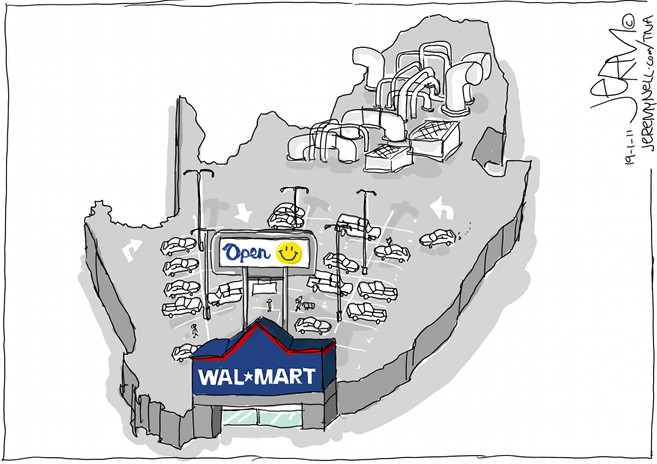
Will South Africa make Walmart nicer? Stay tuned to how all of us should be treating this behemoth of capitalism.

This week the local firm that will be acquired by Walmart when the South African government finally approves the takeover as expected, announced more or less, to hell with procedure, they were going to continue acting like they were already taken over.

Nobody blinked.

It’s not illegal. Massmart Holdings can transform itself however it wants, but the transformation can’t implement Walmart procedure until the deal is finally approved. The net result of this limbo is that it’s costing Massmart some of its expected profitability.

And if the deal is ultimately not approved, Massmart stands to be in rather deep trouble.

Legally today, Walmart owns 51% of Massmart, but other than placing the majority of its board members, it cannot completely function as the Walmart we all know and hate (oh, sorry, or love). South African law distinguishes from majority ownership and corporate control so that even minority South African equity usually governs corporate practice of foreign-held firms.

Massmart can, for example, reorganize its supply chain towards China. But until the Walmart deal is completely approved, it will not be able to place those cheaper China goods on its shelves for customers. It can start the planning and even construction of new stores, but until the tax breaks Walmart negotiated are in place, brick and mortar could make it bankrupt.

When Walmart made the move to acquire Massmart there was significant resistance in South Africa. Opposition was strikingly traditional: Labor organizations were worried that it will reduce jobs and job pay and benefits, and small retailers were worried they’ll be drowned out.

But the acquisition, $2.4 billion, doubled South Africa’s foreign investment in a single fiscal year. That’s kind of hard to ignore. So the process of approval went rather quickly, less than a year, and last summer the final hurdles were overcome and the deal got the South African stamp of approval.

Pending appeal. That’s where we’re at right, now, the appeal.

But the size of the investment is just too big to refuse. Last week the U.S. Chamber of Conference pointedly said to South Africa that if Walmart is refused, it will have a catastrophic effect on foreign investments in South African for years to come.

And there is really one awfully interesting probably good reason that no one thinks the deal won’t go through. It does not mean, as it means in America, that Walmart stores will not be unionized. Walmart has caved on this, and it’s an incredibly important exception.

In fact, it’s remarkable. Low wages and poor benefits is a hallmark of Walmart in the USA. In South Africa that may now not be the case, although the agreement struck with South Africa’s powerful labor unions is not totally ideal.

Massmart employees will likely lose some wages and benefits: most importantly, a type of tenure that tended to guarantee a job with longevity of service.

But it’s still remarkable. First for the obvious reason that it protects the worker. But almost equally because it reveals the hypocrisy of Walmart’s claim here at home that union involvement wrecks their business model.

So if it works in South Africa, any reason it can’t work, here?

Wudst Time Just Move On

Wudst Time Just Move On

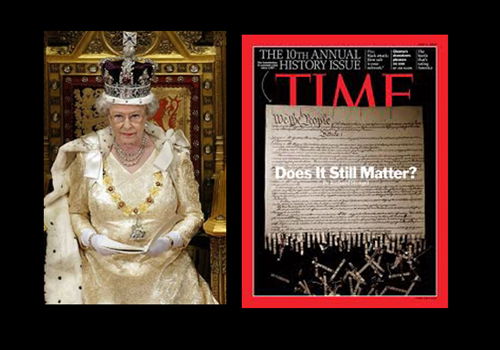
Yesterday I listened painfully to a brilliant African jurist try so hard not to be condescending to a rabid American academic who characterized himself as a “strict constitutionalist.” Some Americans are so stuck in the past. We just can’t see the world whipping past us leaving us in history’s dusts.

So what does one do when in an unusual situation you’re unexpectedly driving across the country on a workday? Listen to NPR’s Talk of the Nation, and the program yesterday afternoon was fabulous: “Should the U.S. Constitution Be An International Model?”

According to the host, Neil Cohen, the program evolved from the tremendous criticism from the right of Supreme Court Justice Ginsburg’s Cairo interview recently where she dared to suggest Egyptians might want to consider other alternatives to the U.S. Constitution when writing their own new one. (After the first two minutes in Arabic, the interview changes to English, stick with it.)

As Slate.Com’s David Weigel posted, the interview “disturbed the balance of the universe.” (The onslaught of rightest invective was so intense there are concerns Congress may try to impeach Ginsburg.)

Headling yesterday’s NPR program was Cape Town professor, Christina Murray. Murray was instrumental in designing the South African and Kenyan constitutions. She was among an exclusive group of global “experts” hired by both countries to assist each in creating a modern form of government.

I would have loved to have listened to Murray and those of similar learned dispositions (like Yale prof Akhil Reed Amar who was also on) talk forever about what I’ve come to realize are two of the world’s newest and now best constitutions. Then perhaps a week later we could start discussing the process of how experts like them were chosen, what motivated the revolutionaries in each country, etc.

But that’s not America, today. Media like NPR feel (under the heavy boot of Congressional funding) a national responsibility to impede intellectual development by giving equal air time to the ignorant. The result is always … nothing but further honing of irreconcilable first principles. Tiring and trite.

The vast majority of intellects studying government systems, today, understand that different cultures emerging in a new world where the ability to protect unique heritages and folkways is at last secure, will have different needs. Like Kenya and South Africa.

The vast majority of intellects studying politics, today, recognize that just as we moved from the diode to the transistor to the computer chip in a mere quarter century, there’s absolutely nothing wrong with altering a bit rules of governance first thought up in 1797.

Yet NPR’s foil to reality on the show, Roger Pilon of the ultra rightest CATO Institute, hogged air time to say the same thing again and again: Raw American 18th century democracy is primae facie the best form of self-governance because the only necessary social objective is to have as little government as possible.

What does a professor say in response to such immature, tautological hogwash? It causes pauses, and that wastes more time. And it transformed Prof Amar into someone who sounded like he was explaining to a four-year old why it was OK that the robin gobbled up the worm.

We’ve got to move on, folks. Murray and Amar and virtually all but one of the callers knew this. The 30+ rights enshrined in the Kenyan constitution offended Pilon who explained he was pretty offended by several of our own Bill of Rights, because “we really don’t need them” arguing that “freedom” means we have “infinite rights” anyway.

I need a plaster. But please, click on the link above and listen to the show. You can turn down the volume when old man Pilon talks.

So kudus to NPR for bringing on Murray, who I hope some day will be nominated for a Nobel Prize. She’s still young and vibrant, and her body of work is exceptional. The constitutions of Kenya and South Africa will be the models for future governments well through this century.

And if we can just get beyond the sludge of our own intransigent ignorance, perhaps even for us.

Public Auction To Murder Rhino

Public Auction To Murder Rhino

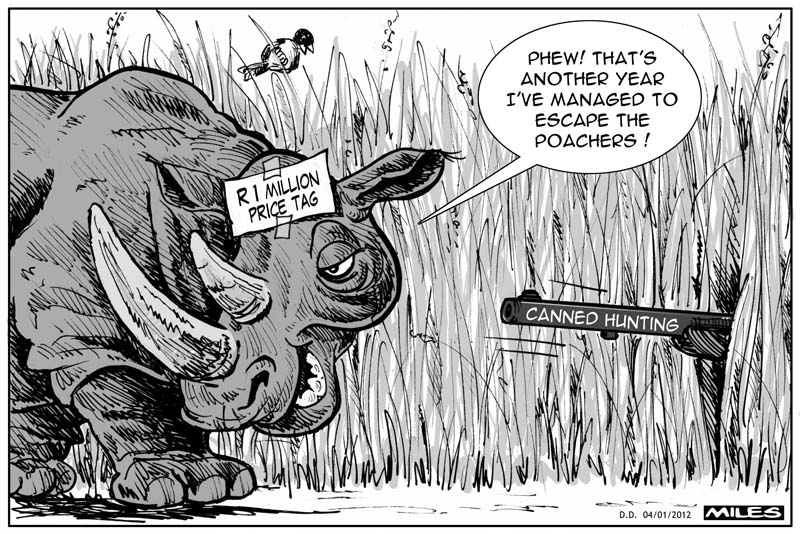
See this cartoonist's blog at http://cartoonsbymiles.blogspot.com/.
If you believe in culling, does that mean it’s OK to invite casual sportsmen into national parks to hunt big animals for a fee? I don’t think so, but South African officials do.

There are two related but very different stories here: the first is the growing number of scandals in the South African government; and the second is the issue of culling and hunting big game like elephants.

I’ve been trying to formulate an opinion on the first for some time, and I can’t. Jacob Zuma is the third president since the end of the apartheid era and one of the last of the old boys who were instrumental in the apartheid struggle with Nelson Mandela.

He’s also the most clumsy, the least intellectual and quite rash. His charisma is more chutzpah than boldness. But payback for being a revolutionary is winding down, and people seem more tolerant of his antics than I would expect presuming he’s on his way out.

And South African society in my opinion is doing remarkably well for having made such a gigantic transition. But scandals are one thing, and the new, growing attempt by the government to centralize power are quite another.

Zuma’s revenge for being made such fun of by the local press seems to be, among other similar acts, shutting it down in patent violation of the constitution. And the courts seem reluctant if reticent to battle him head on.

So in this climate of buffoonery morphing into odious politics, many lesser officials feel a bravado more typical of banana republic magnates than of major democracies.

So very lesser officials – nevertheless very publicly associated with Zuma and his ANC party – who oversee one of KwaZulu Natal’s big game sanctuaries, recently invited outside sportsmen to bid for the right to kill a white rhino in one of South Africa’s most famous reserves, Mkhuze.

Technically the rhino auctioned away to the highest traveling bidder was not within the exact confines of Mkhuze, but in the adjacent Makhasa private community reserve, and this provided the loophole for the overseers of this reserve to be so bone-headedly bold.

Readers may understand this better by a similar association in a more popular area, Kruger National Park, where the adjacent Sabi Sands private community reserve actually draws more American tourists.

Makhasa, like Sabi Sands, is governed to a large extent by the wildlife laws of the adjacent federal authority, between which there is no fencing. It is a single ecosystem. Kruger and Sabi Sands are in the interior far east of the country. Mkhuze and Makhasa are on the coast northeast of Durban.

Southern African wildlife management, particularly within South Africa proper, is likely the best in the world and is packed with professionals who are the stars in their fields. For a very long time they’ve believed in culling derived from intricate notions of “carrying capacity” that they believe they understand better than anyone.

Indeed, they may. The health and sustainability of southern African reserves is far greater, for example, than in East Africa. There are many more species albeit much less drama provided by the large numbers of animals seen in East Africa.

It is precisely the large numbers of animals that South African scientists see in East Africa that they insist will be East Africa’s ultimate downfall, the “tipping threshold” reached when too many unmanaged animals compete for dwindling resources. The crash that can result is often catastrophic and irreversible.

So southern African officials cull. For as long as the reserves have existed and been well managed (Kruger since 1926) culling has regularly occurred, and when the culling is of a springbok it makes much less noise than when it’s an elephant or rhino.

More scientifically, it is rare that a single elephant is culled. It is more likely (wince now) that an entire family is culled babies and all, since elephants are so social that to separate them from their family unit is generally untenable. But single rhinos are regularly culled.

Never, until now, has this excision been opened by auction to sportsmen tourists.

The winner of the auction, referred to anonymously as a “businessman” paid just over $110,000 for the right to shoot the white rhino, which by the way is an extremely docile beast, quite unlike its cousin, the black rhino. Conservation advocates screamed bloody murder, of course.

There are to be sure far too many white rhinos in southern Africa. They breed like cows and basically live like cows. You can virtually pet them. But they’re bigger than black rhinos and magnificent looking beasts. Killing them doesn’t take much skill.

There are so many of them, you can buy a white rhino for less than $10,000 although the transport and maintenance lifts that considerably. Many South African ranchers buy and breed white rhinos so they can then be hunted, and the going rate for legal hunting of such white rhinos is around $50,000, less than half what this anonymous businessman paid.

Add to this the fact that there is an epidemic of rhino poaching occurring right now in South Africa, and it’s been going on for more than a year. That bastion of extraordinary wildlife management, Kruger, has the unmitigated embarrassment of having had 11 rhinos poached this year.

So put all this together and you have to ask yourself who the hell would pay twice the going hunting rate to shoot a rhino in a protected reserve?

Answer: Someone who hasn’t a clue about most everything, e.g.: how much it usually costs, how much furore it would produce, and likely is paying quite a lot more under the table.

This is the kind of folly happening in South Africa right now in many areas of its society. It’s almost like a free-for-all. We can only hope the days of the old boys can be auctioned off as swiftly as was this white rhino.

Top Ten 2011 Africa Stories

Top Ten 2011 Africa Stories

Twevolution, the Arab Spring [by Twitter] is universally considered the most important story of the year, much less just in Africa. But I believe the Kenyan invasion of Somalia will have as lasting an effect on Africa, so I’ve considered them both Number One.

1A: KENYA INVADES SOMALIA
On October 18 Kenya invaded Somalia, where 4-5,000 of its troops remain today. Provoked by several kidnapings and other fighting in and around the rapidly growing refugee camp of Dadaab, the impression given at the time was that Kenyans had “just had enough” of al-Shabaab, the al-Qaeda affiliated terrorism group in The Horn which at the time controlled approximately the southern third of Somalia. Later on, however, it became apparent that the invasion had been in the works for some time.

At the beginning of the invasion the Kenyan command announced its objective was the port city of Kismayo. To date that hasn’t happened. Aided by American drones and intelligence, and by French intelligence and naval warships, an assessment was made early on that the battle for Kismayo would be much harder than the Kenyans first assumed, and the strategy was reduced to laying siege.

That continues and remarkably, might be working. Call it what you will, but the Kenyan restraint managed to gain the support of a number of other African nations, and Kenya is now theoretically but a part of the larger African Union peacekeeping force which has been in Somali for 8 years. Moreover, the capital of Mogadishu has been pretty much secured, a task the previous peace keepers had been unable to do for 8 years.

The invasion costs Kenya dearly. The Kenyan shilling has lost about a third of its value, there are food shortages nationwide, about a half dozen terrorist attacks in retribution have occurred killing and wounding scores of people (2 in Nairobi city) and tourism – its principal source of foreign reserves – lingers around a third of what it would otherwise be had there be no invasion.

At first I considered this was just another failed “war against terrorism” albeit in this case the avowed terrorists controlled the country right next door. Moreover, I saw it as basically a proxy war by France and the U.S., which it may indeed be. But the Kenyan military restraint and the near unanimous support for the war at home, as well as the accumulation of individually marginal battle successes and outside support now coming to Kenya in assistance, all makes me wonder if once again Africans have shown us how to do it right.

That’s what makes this such an important story. The possibility that conventional military reaction to guerilla terrorism has learned a way to succeed, essentially displacing the great powers – the U.S. primarily – as the world’s best military strategists. There is as much hope in this statement as evidence, but both exist, and that alone raises this story to the top.

You may also wish to review Top al-Shabaab Leader Killed and Somali Professionals Flee as Refugees.

1B: TWEVOLUTION CHANGES EGYPT
The Egyptian uprising, unlike its Tunisian predecessor, ensured that no African government was immune to revolution, perhaps no government in the world. I called it Twevolution because especially in Egypt the moment-by-moment activities of the mass was definitely managed by Twitter.

And the particular connection to Kenya was fabulous, because the software that powered the Twitter, Facebook and other similar revolution managing tools came originally from Kenya.

Similar of course to Tunisia was the platform for any “software instructions” – the power of the people! And this in the face of the most unimaginable odds if you’re rating the brute physical force of the regime in power.

Egypt fell rather quickly and the aftermath was remarkably peaceful. Compared to the original demonstrations, later civil disobedience whether it was against the Coptics or the military, was actually quite small. So I found it particularly fascinating how world travelers reacted. Whereas tourist murders, kidnapings and muggings were common for the many years that Egypt experienced millions of visitors annually, tourists balked at coming now that such political acts against tourists no longer occurred, because the instigators were now a part of the political process! This despite incredible deals.

We wait with baited breath for the outcome in Syria, but less visible countries like Botswana and Malawi also experienced their own Twevolution. And I listed 11 dictators that I expected would ultimately fall because of the Egyptian revolution.

Like any major revolution, the path has been bumpy, the future not easily predicted. But I’m certain, for example, that the hard and often brutal tactics of the military who currently assumes the reins of state will ultimately be vindicated. And certainly this tumultuous African revolution if not the outright cause was an important factor in our own protests, like Occupy Wall Street.

3: NEW COUNTRY OF SOUTH SUDAN
The free election and emergence of South Sudan as Africa’s 54th country would have been the year’s top story if all that revolution hadn’t started further north! In the making for more than ten years, a remarkably successful diplomatic coup for the United States, this new western ally rich with natural resources was gingerly excised from of the west’s most notorious foes, The Sudan.

Even as Sudan’s president was being indicted for war crimes in Darfur, he ostensibly participated in the creation of this new entity. But because of the drama up north, the final act of the ultimate referendum in the South which set up the new republic produced no more news noise than a snap of the fingers.

Regrettably, with so much of the world’s attention focused elsewhere, the new country was hassled violently by its former parent to the north. We can only hope that this new country will forge a more humane path than its parent, and my greatest concern for Africa right now is that global attention to reigning in the brutal regime of the north will be directed elsewhere.

4: UGANDA FALTERS
Twevolution essentially effected every country in Africa in some way. Uganda’s strongman, Yoweri Museveni, looked in the early part of the last decade like he was in for life. Much was made about his attachment to American politicians on the right, and this right after he was Bill Clinton’s Africa doll child.

But even before Twevolution – or perhaps because of the same dynamics that first erupted in Tunisia and Egypt – Museveni’s opponents grew bold and his vicious suppression of their attempts to legitimately oust him from power ended with the most flawed election seen in East Africa since Independence.

But unlike in neighboring Kenya where a similar 2007 election caused nationwide turmoil and an ultimate power sharing agreement, Museveni simply jailed anyone who opposed him. At first this seemed to work but several months later the opposition resurfaced and it became apparent that the country was at a crossroads. Submit to the strongman or fight him.

Meanwhile, tourism sunk into near oblivion. And by mid-May I was predicting that Museveni was the new Mugabe and had successfully oppressed his country to his regime. But as it turned out it was a hiatus not a surrender and a month later demonstrations began, twice as strong as before. And it was sad, because they went on and on and on, and hundreds if not thousands of people were injured and jailed.

Finally towards the end of August a major demonstration seemed to alter the balance. And if it did so it was because Museveni simply wouldn’t believe what was happening.

I wish I could tell you the story continued to a happy ending, but it hasn’t, at least not yet. There is an uneasy calm in Ugandan society, one buoyed to some extent by a new voice in legislators that dares to criticize Museveni, that has begun a number of inquiries and with media that has even dared to suggest Museveni will be impeached. The U.S. deployment of 100 green berets in the country enroute the Central African Republic in October essentially seems to have actually raised Museveni’s popularity. So Uganda falters, and how it falls – either way – will dramatically alter the East African landscape for decades.

5: GLOBAL WARMING
This is a global phenomena, of course, but it is the developing world like so much of Africa which suffers the most and is least capable of dealing with it. The year began with incessant reporting by western media of droughts, then floods, in a confused misunderstanding of what global warming means.

It means both, just as in temperate climates it means colder and hotter. With statistics that questions the very name “Developed World,” America is reported to still have a third of its citizens disputing that global warming is even happening, and an even greater percentage who accept it is happening but believe man is not responsible either for it occurring or trying to change it. Even as clear and obvious events happen all around them.

Global warming is pretty simple to understand, so doubters’ only recourse is to make it much more confusing than it really is. And the most important reason that we must get everyone to understand and accept global warming, is we then must accept global responsibilities for doing something about it. I was incensed, for example, about how so much of the media described the droughts in Africa as fate when in fact they are a direct result of the developed world’s high carbon emissions.

And the news continued in a depressing way with the very bad (proponents call it “compromised”) outcome of the Durban climate talks. My take was that even the countries most effected, the developed world, were basically bought off from making a bigger stink.

Environmentalists will argue, understandably, that this is really the biggest story and will remain so until we all fry. The problem is that our lives are measured in the nano seconds of video games, and until we can embrace a long view of humanity and that our most fundamental role is to keep the world alive for those who come after us, it won’t even make the top ten for too much longer.

6: COLTAN WARS IMPEDED
This is a remarkable story that so little attention has been given. An obscure part of the Dodd-Frank Wall Street Reform Act essentially halved if not ultimately will end the wars in the eastern Congo which have been going on for decades.

These wars are very much like the fractional wars in Somalia before al-Shabaab began to consolidate its power, there. Numerous militias, certain ones predominant, but a series of fiefdoms up and down the eastern Congo. You can’t survive in this deepest jungle of interior Africa without money, and that money came from the sale of this area’s rich rare earth metals.

Tantalum, coltran more commonly said, is needed by virtually every cell phone, computer and communication device used today. And there are mines in the U.S. and Australia and elsewhere, but the deal came from the warlords in the eastern Congo. And Playbox masters, Sony, and computer wizards, Intel, bought illegally from these warlords because the price was right.

And that price funded guns, rape, pillaging and the destruction of the jungle. The Consumer Protection Agency, set up by the Dodd-Frank Act, now forbids these giants of technology from doing business in the U.S. unless they can prove they aren’t buying Coltran from the warlords. Done. War if not right now, soon over.

7: ELEPHANTS AND CITES
The semi-decade meeting of CITES occurred this March in Doha, Qatar, and the big fight of interest to me was over elephants. The two basic opposing positions on whether to downlist elephants from an endangered species hasn’t changed: those opposed to taking elephants off the list so that their body parts (ivory) could be traded believed that poaching was at bay, and that at least it was at bay in their country. South Africa has led this flank for years and has a compelling argument, since poaching of elephants is controlled in the south and the stockpiling of ivory, incapable of being sold, lessens the funds that might otherwise be available for wider conservation.

The east and most western countries like the U.S. and U.K. argue that while this may be true in the south, it isn’t at all true elsewhere on the continent, and that once a market is legal no matter from where, poaching will increase geometrically especially in the east where it is more difficult to control. I concur with this argument, although it is weakened by the fact that elephants are overpopulated in the east, now, and that there are no good strategic plans to do something about the increasing human/elephant conflicts, there.

But while the arguments didn’t change, the proponents themselves did. In a dramatic retreat from its East African colleagues, Tanzania sided with the south, and that put enormous strain on the negotiations. When evidence emerged that Tanzania was about the worst country in all of Africa to manage its poaching and that officials there were likely involved, the tide returned to normal and the convention voted to continue keeping elephants listed as an endangered species.

8: RHINO POACHING REACHES EXTREME LEVELS
For the first time in history, an animal product (ground rhino horn) became more expensive on illicit markets than gold.

Rhino, unlike elephant, is not doing well in the wild. It’s doing wonderfully in captivity and right next to the wild in many private reserves, but in the wild it’s too easy a take. This year’s elevation of the value of rhino horn resulted in unexpectedly high poaching, and some of it very high profile.

9: SERENGETI HIGHWAY STOPPED
This story isn’t all good, but mostly, because the Serengeti Highway project was shelved and that’s the important part. And to be sure, the success of stopping this untenable project was aided by a group called Serengeti Watch.

But after some extremely good and aggressive work, Serengeti Watch started to behave like Congress, more interested in keeping itself in place than doing the work it was intended to do. The first indication of this came when a Tanzanian government report in February, which on careful reading suggested the government was having second thoughts about the project, was identified but for some reason not carefully analyzed by Watch.

So while the highway is at least for the time being dead, Serengeti Watch which based on its original genesis should be as well, isn’t.

10: KENYAN TRANSFORMATION AND WORLD COURT
The ongoing and now seemingly endless transformation of Kenyan society and politics provoked by the widespread election violence of 2007, and which has led to a marvelous new constitution, is an ongoing top ten story for this year for sure. But more specifically, the acceptance of this new Kenyan society of the validity of the World Court has elevated the power of that controversial institution well beyond anyone’s expectations here in the west.

Following last year’s publication by the court of the principal accused of the crimes against humanity that fired the 2007 violence, it was widely expected that Kenya would simply ignore it. Not so. Politicians and current government officials of the highest profile, including the son of the founder of Kenya, dutifully traveled to The Hague to voluntarily participate in the global judicial process that ultimately has the power to incarcerate them.

The outcome, of course, remains to be seen and no telling what they’ll do if actually convicted. It’s very hard to imagine them all getting on an airplane in Nairobi to walk into a cell in Rotterdam.

But in a real switcheroo this travel to The Hague has even been spun by those accused as something positive and in fact might have boosted their political standing at home. And however it effects the specific accused, or Kenya society’s orientation to them, the main story is how it has validated a global institution’s political authority.
Bail Out The Joker!

Bail Out The Joker!

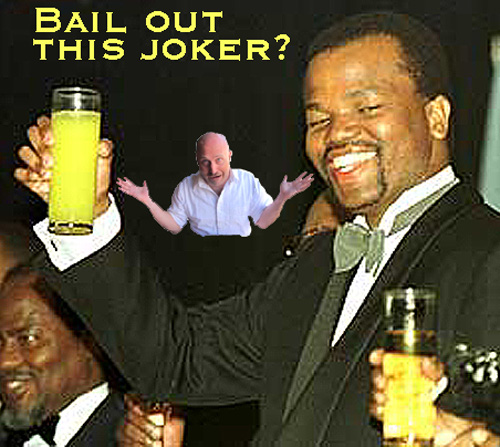
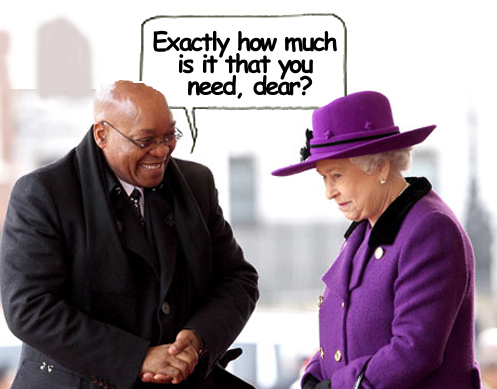
Bailout! Bailout! All Hail the Bailout! Germany for Greece! France for Ireland! EU for Iceland! U.S. for Goldman Sachs! And now! South Africa for itty bitty Swaziland! Is this really necessary?!

Swaziland is a round little hilltop surrounded by South Africa and Mozambique, smaller than New Jersey, with a GDP under $6 billion. Its main industry is absolute King Mswati III who keeps those jobs churning away by building palaces.

There are also casinos.

The King’s piggy bank doesn’t clink, anymore. The IMF refused to bail him out. He turned to South Africa, pleading … jobs.

“A lot of companies are closing down because government has not paid them,” said Hezekiel Mabuza, vice-president of the Federation of the Swaziland Business Community (FESBC).

The king buys a lot locally. He gets good credit.

FESBC has a membership of 500 small businesses, and so far over 50 have closed down because government has failed to pay them for supplied goods and services.

Swazi is one of the most undemocratic countries on earth. Dissent while not sledge hammered away is often harshly suppressed. The country has more or less stagnated as the South African umbrella blooms all around it.

The country’s deficit began exploding in 2009 and hasn’t stopped since, for all the same reasons countries all around the world are having problems: half the debt is basically due to reduced tax revenues and the other half by profligate government spending that continually expected higher tax revenues.

We did it on wars. Greece did it on fata cheese (actually I have no idea why Greece did it). Swazi did it mostly on “Mswati’s profligate lifestyle, which includes building a dozen or so palaces and frequent overseas trips and shopping excursions for his relatives, 13 wives and estimated 27 children.”

Needless to say, South Africans aren’t exactly happy with their government’s announcement.

On the face of it, it seems ridiculous. Bailout an international Play Boy? But calm down. There is method in this madness.

Because it isn’t ridiculous, or South African leaders wouldn’t be taking so much heat for standing their course. Nobody likes Mswati. But if Swazi were abandoned and the fairyland imploded, there would be a flood of refugees into South Africa at a cost that would easily exceed the bailout.

South Africa’s reasonable rationale is that if they increase this joker’s allowance sufficiently, they will stem the tide of misery that would flow from his subjects into South Africa.

It is the same rationale that applies worldwide. Bail out the people who made those bad mistakes because they’re all “too big to fail.” Without their continued nastiness, all their mess becomes yours to sort out, and that would be worse!

The point is, it’s true.

Swazi has a single university, not bad for a rural backwoodsman cousin to South Africa’s plethora of higher institutions. And rightly so, a large portion of the national budget is for the university. Only this year, it hasn’t received a penny.

So it’s closed down. Swazi can’t afford any more of a brain drain, and there are reports of faculty bailing in droves to South African institutions.

Funding for AIDS education, public health and insurance for preschool children is all gone. If you live in Swazi and have AIDS, a young child with pneumonia or a broken foot, you’ll probably make your way into South Africa, now.

So it makes imminent sense that South Africa plug the dyke.

It’s amazing that so many people just don’t understand these bailouts. Whether it was our own, or Europe, or now South Africa with Swaziland, there’s no altruism here. It isn’t a bunch of pussy footing do-gooders with reckless abandon of their own ethics.

It’s cold hard facts. If you don’t do it, it will be worse for you in the future. That simple.

And another thing. A major cause of all the bailouts, ours and Europe’s and even Swazi’s, is largely ours to blame.

Swazi had no mortgage bubble, no goony debt swaps, but its banks engaged in the same reckless lending folly that our banks engaged in.

Money was fast and loose worldwide. And guess who has the most money and the most money managers showing everyone else how to manage money?

Linguistic Source Code

Linguistic Source Code

By Conor Godgrey on April 29, 2011
An article recently published in the journal Science on linguistic diversity echoes an earlier article about the decline of native languages in South Africa.

Linguists had long since decided that searching for a root ancestral language, the mother of all languages if you will, was either ridiculous or moot.

Until now.

Renowned linguist Dr. Quentin D. Atkinson applied techniques usually reserved for studying genetics to the study of language.

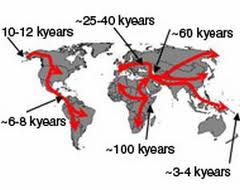
Migration from Africa
His theory goes something like this: it is well documented that genetic diversity decreased as human beings moved further from the African continent.

This occurred because small (genetically more similar) sub groups would break off of the main thrust of the various migrations and settle a specific area.

Dr. Quentin posited that language might have experienced a similar homogenization as languages traveled further and further from Africa.

He did not measure this using words, but phonemes, the basic building blocks of language.

A phoneme is the “smallest segmental unit of sound employed to form meaningful contrasts between utterances.”

In other words, the basic sounds that make up more complicated utterances like syllables and words.

It turns out that linguistic diversity, as determined by the number of phonemes, does indeed decline in relation to how far a language developed from Africa.

The New York Times cited several examples from the full study: “Some of the click-using languages of Africa have more than 100 phonemes, whereas Hawaiian, toward the far end of the human migration route out of Africa, has only 13. English has about 45 phonemes.”

Fascinating stuff.

Now 50,000 years later, the genetic offspring of those migrating ancestors have released the phoneme-inferior but immensely powerful English language to homogenize the source language(s)!

As noted in the Economist article, native (an incredibly relative term) South African languages are jeopardized by the ubiquity and power of English (mother tongue for 8% of South Africans).

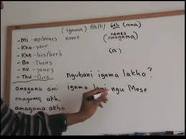
Zulu Lesson
Khosian and Bantu languages alike are unlikely to survive as the mother tongue of most South Africans in six or seven generations unless the government acts on its rhetoric and takes steps to enforce their use in schools.

I am unsure this is even a good idea.

It would only work in incredibly homogenous parts of South Africa, and there is no denying that English offers more economic advantages than Zulu or Khosa—who is the government to tell people that they cannot educate their children in the most economically favorable conditions possible?

For me, thinking about Africa as a “source” is incredibly inspiring; but modern adults should not be saddled with the burden of protecting the source code while missing out on real-life opportunities.

“Shoot the Boer” is Hate Speech–Period

“Shoot the Boer” is Hate Speech–Period

By Conor Godfrey on April 22, 2011

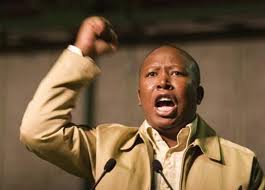
Julius Malema

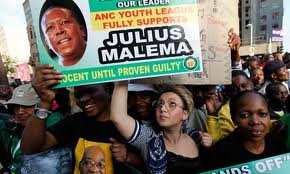
Julius Malema took the stand for the last time in Johannesburg today.

It has been the most colorful of trials.

Most days it seemed more like a star-studded South African concert than a trial, as cabinet members, poets, and even the controversial Winnie Mandela have all paraded through the halls of justice.

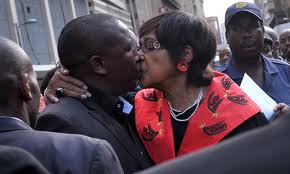
Winnie Mandela

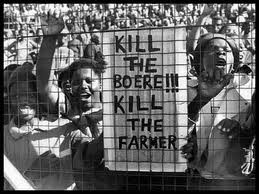
At issue is ANC Youth League President Julius Malema’s refusal to stop singing “Dubul’ Ibhun” (isiZulu for “Kill the Boer”…depending on whom you ask, the name could also be “Ayesab’ Amagwala or “Cowards are Scared”).

Here are the first couple lines:
“yasab’ amagwala (the cowards are scared)
dubula dubula (shoot shoot)
ayeah
dubula dubula (shoot shoot )
ayasab ‘a magwala (the cowards are scared)
dubula dubula” (shoot shoot)

An Afrikaner interest group had the audacity to suggest that Malema’s repetition of “Shoot the Boer,” or “One Settler, One Bullet” constituted hate speech, or an incitement to violence.

How could they possibly have got that impression?

If a bunch of former Black Panthers staged a rally in Time Square and began singing—“One Bullet for Every WASP!,” or “Shoot the White Capitalists!,”–how would people react here in the US?

I imagine not to well. But maybe that is not the right analogy.

Malema and his star-studded defenders argue that the song is a part of history, a testament to the struggle if you will.

They claim that the lyrics are proverbial—aimed at the system of oppression as opposed to individual South Africans of European descent.

This argument is too pedantic for South African realities.

Racial violence is not a long forgotten moment in history.

It happened yesterday, and the day before, and on a massive scale, just two decades back.

In France, the national anthem (La Marseillaise) is a violent, bloody affair:

To arms, citizens! Form your battalions, let’s march, let’s march! Let impure blood Water our furrows!

But people are not arming themselves after hearing it sung at a football match and then going in search of the nearest wealthy people.

It also turns out that “Shoot the Boer” was not even an integral part of the struggle.

Some members of the Pan African Congress (PAC) sang the song in the 90’s, but it was never one of the rousing struggle anthems that Umkhonto we Sizwe (Spear of the Nation- armed wing of the ANC) heavy-weights like Ronnie Kasrils, Baleka Mbete and Pallo Jordan helped compile into a definitive album of struggle songs.

See here for a list of the 25 songs on this Album.

Malema is loose cannon and his mere presence ratchets up racial tension: if the court rules that the speech is protected by South Africa’s wonderfully liberal constitution, than the ANC should clean its own house.

The ANC is a big tent, with room for almost everyone—but not racists.

South Africa Makes BRIC

South Africa Makes BRIC

by Conor Godfrey on March 24, 2011

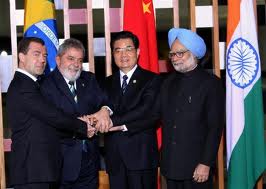
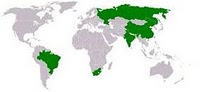
In two weeks, South Africa will be formally accepted into the BRIC grouping of Brazil, Russia, India And China at an economic summit in Beijing.

Just in case you don’t read US weekly—these are the new cool kids on the block.

Gone are the days when the EU was pinnacle of diplomatic achievement.

To be hip now is to be BRIC.

Does South Africa merit this social promotion?

That depends on the criteria.

When Goldman Sacks asset management chairman Jim O’Neil coined the term, he intended it to refer to countries of sufficient size, with favorable demographics, and with an economic environment that would facilitate high growth.

On these measures South Africa does not make the cut.

However …

Terms like these often escape easy categorization.

Do all the European Union member states share a similar cultural or geographic background? (Only if the term “similar” is stretched to the breaking point.)

Does the G20 contain the world’s top 20 economies? (No – South Africa, a G20 member, is actually the 27th largest economy in the world.)

BRIC is no longer merely an economic distinction.

The BRIC club is now a political grouping of countries based loosely on their relative economic influence among developing countries.

In this way, it has the same freedom to act, or to change membership, as any other political-economic grouping, such as the G20, EU, NATO, etc.

The BRIC leadership has shifted its membership criteria away from the founding mantra of large economies experiencing rapid growth to politically important countries whose membership would add value to the BRIC grouping.

This is a well trodden path.

Why did/does the EU extend membership to some of the Balkans?

The Balkans’ economies did not resemble the Western European founding members, nor did the mainly Slavic Balkans’ languages relate to the Germanic or Romance languages spoken in Western Europe.

The EU’s founding members offered membership to select countries in the Balkans in order to encourage the applicants’ respective governments to make the right social and economic choices, and to pacify the zone on traditional Europe’s borders.

Should Turkey be a member of NATO, the North Atlantic Treaty Organization?

Similarly blatant political maneuvering is behind Chinese Foreign Minster Yang Jiechi’s invitation to Jacob Zuma to attend the next BRIC summit.

South Africa’s 50 million people and lackluster 3% growth may lead Jim O’Neil to shoot it down in favor of countries like South Korea, Turkey, Mexico, or Indonesia; but South Africa offers the resource hungry BRIC countries something those other options do not—access.

Access to a continent teeming with ore, industrial metals, and newly minted consumers.

Pundits have been asking the wrong question: they insist on questioning whether or not South Africa merits the BRIC designation based on its size, growth rate, population, etc.

The real question is – does South Africa provide enough value to all four of the current BRIC countries?

That is the ‘merit’ that matters for this lunch table.

Twevolution in South Africa?

Twevolution in South Africa?

South African President Jacob Zuma dancing with his wife, Ms.
.... oh, sorry can't remember which one.
Twevolution is sweeping Africa’s dictators away. But could it go further? Is there a chance that pretty boy South Africa is next in line?

South Africa? you wonder out loud. Didn’t I say that South Africa started all this almost twenty years ago? [Yes] Haven’t I often hailed the new country’s constitution as nearly perfect? [Yes] Didn’t I write that its domestic policy was nicely redistributing wealth [Yes] and that its foreign policy particularly towards its neighbors was deftly professional?

Yes-Yes-Yes…but.

It could be that South Africa is trying to be such an exemplary modern society that the last vestige of nondemocratic states will be swept away by the Twevolution. And this last vestige is the authoritarian if not autocratic power held by the majority party in the government, the ANC (African National Congress).

And this nearly impenetrable wall of power (the ANC has continually held two-thirds or more of Parliament since Nelson Mandela first became president) might just be cracking by some of the most juvenile political pandering ever imagined.

It’s hard to fault Mandela for anything, much less astronomical majorities in the government he brought to power. But Mandela was not without his own political nasties. The relationship (or not) that he held (or not) with his wife, who at the time was almost equally powerful, we now recognize as tools to constrain the masses.

By most accounts Winnie Mandela would have been right up there with the Mubarak thugs that stormed Tahrir Square on camels. Winnie was convicted of murder and kidnaping but never served a day in jail.

And Mandela’s favor placing went unchecked for a long time. His close revolutionary associate, Cyril Ramaphosa, was set up in new South African businesses
with a patent disregard for either skills or capital once it was clear he would never become president.

Mandela was followed by another ANC miracle worker, Thabo Mbeki. Thabo was less star-strutted than Mandela so less scrutinized, but whatever good he did will forever be eclipsed in history by his paramount achievement: discovering that AIDS was not a virus.

Mbeki told his fellow countrymen to shower well after sex to avoid AIDS. Some claimed this was so he could more easily adjudicate claims against international insurance companies but I think it was to please the masses, develop their support. Whatever it was, it was criminal.

But today we have the biggest oaf of all: Jacob Zuma. Number Three President is famous for having ten wives, but the fact is it may be eleven or twelve. Protocol officials around the world never know what the state dinner place cards should read.

Zuma hails his ancient culture, but I’d put it otherwise: he hails vote getting.

And now Zuma has topped the charts . Last week while Egypt was readjusting world power, Zuma was creating his own eternal life.

“When you vote for the ANC,” he told a rally near Cape Town last week, “you are choosing to go to heaven. When you don’t vote for the ANC, you should know that you are choosing that man who carries a fork… who cooks people.”

Pardoning (or not) a powerful wife, setting your cronies up to be billionaires, denying the science of the disease AIDS that’s killing your people, flaunting culture and preaching eternal life only to those who follow you … none of these juvenile if neurotic acts has managed to derail South Africa’s basically good trajectory into the modern world.

But Twevolution is youth driven, and youth in Africa are incredibly intelligent. You can take just so much nonsense before realizing how distracting it can be from dealing with the pressing issues at hand.

Twevolution may not topple the South African system, but there are growing sounds that it just may topple the idiots at the top