Don’t Dumb Down the Migration

Don’t Dumb Down the Migration

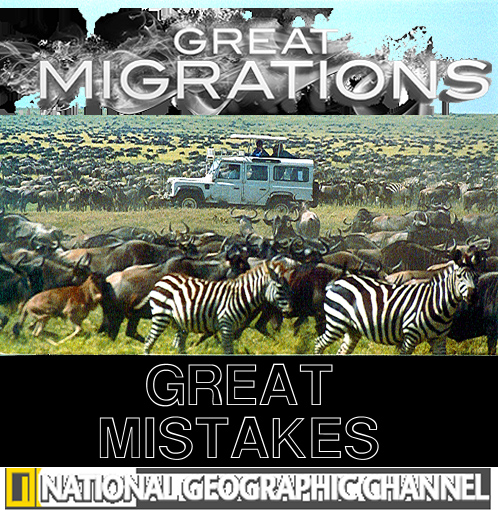
The filming is fantastic! But NatGeo cable shouldn’t have tried to vie with Dancing with the Stars. They’ve really dumbed down what could have been an outstanding work.
I suppose it’s like anything in the media, today. All that’s offered are sound bites, beautiful pictures, and short sentences, all of which reduce the complex into something often indistinguishable from its real self. Complexity is what makes nature so marvelous!

The series documents twelve epic animal groups whose life cycles involve lengthy migrations and then chronicles one of each of the cycles.

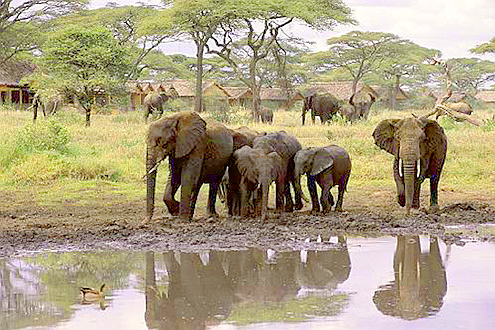
In absolutely stunning photography we watch several families of Mali elephants trekking across the great western deserts, see dusk skies suddenly blackened by myriads of bats, follow giant whales on their lengthy journeys through the oceans, as well as watch the wildebeest migration which is so dear to my own heart.

I can’t speak with much authority on much more than the wildebeest migration in East Africa and the zebra migration in Botswana, but I think it’s fair of me to presume that what is so critically missing in the explanations of those two migrations probably has something similar lacking with them all.

NatGeo says, “Starting in May or June, wildebeest walk from the southeast Serengeti plains westwards toward Lake Victoria and turn north into the Maasai Mara, in search of fresh… By November, they’ve exhausted new grazing lands, and return south.”

One of the features of the migration – one of the really exciting aspects to it – is that when it “starts” as NatGeo correctly says in May or June, it’s an explosive start. It’s hardly a walk. It’s a race, a marvelous thing to see. Files of wilde several or more miles long might stampede for 3 or 4 hours without stopping.

It’s also wrong to suggest they all move together. I’ve never known a single year in the 38 since I’ve visited the Serengeti where this is true. The “herd” at most can be defined in three parts, often in six or seven, each part of which moves mostly north, but some east while others west. There is no “one route.”

With regards to the zebra in Botswana, the production suggests they are drawn into the Kalahari’s pans for salt which isn’t plentiful enough in the Okavango where the migration “starts”. This, too, is wrong. The zebra migrate onto the Kalahari plains shortly after the rains have grown grasses that are much more nutritious than they can obtain in the swamp. So it’s here that they calve, so that the herd has a more nutritious food source to grow the babies.

Some may call all this nitpicking. But there’s a much, much more serious flaw in the larger narrative. NatGeo claims (I believe as with all the animal groups discussed) that the wilde are “hard-wired” to move. That’s simply not the case.

The wildebeest migrate when triggered by hunger. The zebra are likely triggered by enzymes similar to our own feelings of “hunger” after eating a high sugar breakfast, feelings likely caused chemically by pregnancy that draw them away from the less nutritious swamp grass to the much richer plains grasses.

If the animals aren’t hungry, they don’t migrate. NatGeo doesn’t deny this, but it claims that getting hungry is inevitable for such a large congregation of wildebeest, for example. Several times in the narrative Alec Baldwin remarks how they’ve eaten themselves out of house and home wherever they stop to graze, and so then must migrate.

That’s wrong. There’s much more land and grass in the Serengeti than wildebeest, zebra and gazelle available to eat it. So long as it rains, there will be enough grass virtually everywhere, and the wildebeest won’t migrate.

I’ve seen it often enough in forty years. Even this year there was an anomalous migration.

The East African reported last month that “A change in the spectacular wildebeest migration schedule in the great Serengeti-Mara ecosystem has caught ecologists offguard.

That was an exaggeration but it stands as evidence that there is nothing regular about the herbivore migrations. They move when they run out of food, and that happens when it stops raining.

The governing aspect to this great migration is not some hard-wire neuron in the wilde’s head. It’s climate. And that’s a critical component in understanding what is probably true of most of the world’s animal migrations:

There’s more to it than just the animal, itself. The planet is interlaced with life, and what happens to the wildebeest can indeed be traced to the melting glaciers in Alaska. Particularly now with global warming, there is more and more rain especially on the equatorial belt, and this will alter not just the wildebeest’s behavior but likely the behavior of all life along the equator.

Some may argue this is too subtle a distinction, but it really isn’t. Asserting that the migration is innate, “hard-wired” into the life cycle of the wilde robs it of the bit of independence it has as a life form. It begs the question of how much hard wiring we as humans carry around.

I don’t doubt there is hard wiring in all life forms. We normally call it instinct. But instinct removed from environment has no value. I’ve never watched wildebeest migration in a zoo.

There may, indeed, be animal groups NatGeo filmed that migrate to hard-wire responses. Perhaps the monarch’s complexity is so described; perhaps there is something similar with most bird migrations.

But not with wildebeest. And I doubt with any of the larger animals like the elephant seals or whales.

Animals don’t have our level of cognizance to be sure. But let’s not rob them of their own levels of consciousness. They make choices, and they sometimes make the wrong ones. That is one of the reasons for mass migrations: there will likely be more correct choices than incorrect choices, so the herd as a whole continues to survive and validate its natural selection.

Thanks, NatGeo, for some outstanding film. But let’s work a bit harder on avoiding common denominators that dull the polish of the world’s remarkable complexity.

Two Roads, not One

Two Roads, not One

A new proposal for the contentious Serengeti highway may have emerged from last week’s elections in Tanzania. It looks promising to me. In perfectly wonderful political language, the Arusha rumor mill calls it “The Compromise.”

Two highways would be built instead of one. The first and biggest would follow the alternate southern route. The second would follow the original route from Arusha but end just outside the east side of the park.

The fact that the second road would still encroach important wildlife areas in the Ngorongoro Conservation Area only enhances its chances of success. Environmentalists have played their cards almost exclusively on the wildebeest migration issue, and if the road stops before entering the Serengeti, this issue becomes moot.

Two roads would cost a lot more, of course, than one. But “The Compromise” might garner western donor assistance, which seems impossible if the road cuts through the Serengeti.

It would also satisfy a major argument used by proponents of the current road, that Maasai communities to the east of the Serengeti are in dire need of development impossible without a good road into their area.

The buzz began circulating in Arusha Wednesday morning after two days and nights of celebrations for Godbless Lema, Arusha’s new 32-year old Member of Parliament. Lema was the successful candidate of the new major opposition party, Chadema.

He had campaigned against building the road. His opponent, incumbent ruling party (CCM) Batilda Burian was the Minister of State in the Vice-President’s Office responsible for environmental affairs.

Lema just didn’t oust a ruling party incumbent. He thumped one of the country’s important environmental ministers, winning 58% to 39%!

Arusha has always been solidly against the road. During the heated campaign Dr. Burian tried unsuccessfully to distance herself from her party’s insistence that the road be built without actually denouncing it, a balancing act that tumbled.

She denied Lema’s charge that she was the “architect” of the highway plan, insisting (remarkably) that she had nothing to do with it.

But Lema countered, ”Ms Batilda Buriani … is the state minister in charge of environment and should have advised the government against the road project…”

Now that the battle is over, tempers are cooling. Lema is unlikely to get anywhere as an opposition MP without compromise with the ruling party that still holds sway over more than two-thirds of parliament.

The road is supposed to begin in Arusha with Arusha contractors. There’s a lot of fluff and not much power in being a single MP in Tanzania, but what power exists usually resides in dispensing the pork. Many of Arusha’s young businessmen – Lema’s peers – are in the tourist industry. But many are in construction. It would be just as hard for him to fall in line with the ruling party as to completely oppose the ruling party’s position.

Alas “The Compromise.”

The current proposed northern route would connect the urban centers of Arusha and Mwanza with a looped road that would transect the northern portion of the Serengeti National Park about 40 km south of the Kenyan border.

An amazing array of scientific, professional and business organizations has lined up squarely against the plan, arguing that it would seriously impact the great wildebeest migration.

Disrupting the migration is THE issue outside of Tanzania, but in Arusha the main concern is that business would seriously suffer from the subsequent impact on tourism. Most of Tanzania’s tourism industry is located in Arusha.

But from the getgo the current and newly re-elected President Jakaya Kikwete has steadfastly insisted the road would be built. Even as foreign donors began to suggest they would have nothing to do with the road, Kikwete claimed that Tanzanians will fund the road themselves without foreign assistance.

Most of us know that’s absurd. We think what Kikwete really means is that the Chinese would do it for him.

But the Chinese have been stung recently by a series of environmental embarrassments, most notably Chinese workers arrested and deported for poaching ivory. They may not be in such an enthusiastic mood to find reasons for bringing their anti-animal reputation up anew.

Alas, “The Compromise.”

Hard to say if the rumor will gain traction, but it seems to make imminent sense to me. Instead of a half billion dollars, it might cost $650 million, and particularly if the Chinese are involved maybe even less. The campaigns against the road must have reached the desks of western aid dispensers. This seems like a compromise made in heaven.

And, after all, that’s what the Serengeti is.

Oh those Scandalous Wildebeest!

Oh those Scandalous Wildebeest!

Reports in the media that the great wildebeest migration this year has made a wrong turn and surprised ecologists is absurd. There is nothing anomalous about the migration this year.

The East African newspaper reported Monday that “A change in the spectacular wildebeest migration schedule in the great Serengeti-Mara ecosystem has caught ecologists offguard.”

Using reports that seem confined to a luxury private lodge in Tanzania just outside the Serengeti near the Kenyan border, the article went on to say that 150 – 200,000 wildebeest were reported around this lodge in September, “never before seen.”

This was then picked up worldwide. Such reliable on-line sources for Africa as ETN headlined the same day, “Mystery as great wildebeest migration cut short in Maasai Mara Game Reserve.”

Stop! Stop! This is all wrong!

Now none of this current balderdash is as infuriating as the scandalous “Wildebeest Migration Blogpost” – which of this writing, by the way, hasn’t had an entry since June. That completely misleading blog actually comes out of a South African tour company whose principals are never in Tanzania. Figure that one. Practically everything in that blog is dead wrong.

SO beware oh yee of internet searches.

The main article which started all the nonsense Tuesday seemed to have been motivated by a single blog from &Beyond’s Klein’s Camp, a great private camp just east of the Serengeti and south of the Kenyan border. Their blogs have reported numerous wildebeest herds as early as September. But they’ve been going and coming, as is normal in a year of heavy rains.

This has been a year of heavy rains.

Deeper into the Mara, that is further north from Tanzania, many camps like Governor’s reported “best migration season ever” this year, which would normally mean Tanzania saw nothing abnormal at all.

What’s the truth?

The truth is that it has rained so heavily this year, that there is good grass in many places that in normal years there would not be good grass. This means the migration is spread out all over the place.

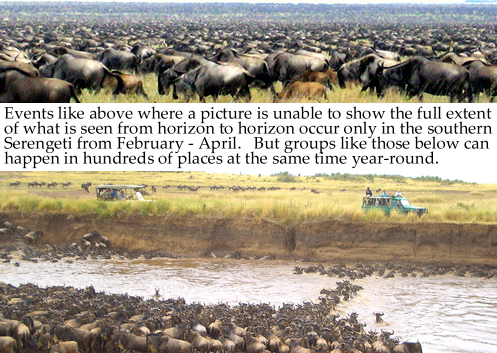
Tourists – even veterans – tend to report they’ve seen a “great migration” when at best they can see only a tiny fraction of the herds. There are likely 1.5 million wildebeest.

When I sit atop Wild Dog Hill southwest of Ndutu in late March and look around me for 360-degrees over flat plains covered by wildebeest, from a horizon on the west that is probably 60-70 miles from the horizon on the east, we are probably at best seeing a quarter million. This scene only happens in the southern Serengeti from February – April if the rains are normal. Only a teeny-weeny fraction of tourists ever sees this.

The vast majority of tourists see “the migration” as large numbers of wildebeest moving across the plains or jumping over rivers, and these groups probably at most number a few thousands.

Smaller events like these can happen in a thousand different places nearly at the same time! These are usually in the last half of the year, mostly reported from Kenya’s Maasai Mara (because that’s where most of the tourists go). But these types of events can happen almost anywhere year-round depending upon the rains.

Wildebeest don’t have schedules. Unlike monarch butterflies or Wilson’s warblers, they aren’t triggered into migration because of changing daylight or diminishing temperatures. Unlike caribou or polar bears, they aren’t triggered into migration because of ice. They move to wherever they can get a good meal, whenever they can get a good meal.

It’s just that over centuries the rainfall has been more or less regular. (That, by the way, may be changing with climate change, but not enough yet to alter long-term statistics.) Normally, heavy rains fall on the southern Serengeti during the first half of the year, and heavy rains fall in the Mara (northern Serengeti) during the last half of the year.

So, normally, they move south to north around mid-year for the rain produced grass, and then return north to south at end-year for the rain produced grass.

This year there was a lot more rain than normal everywhere, and it ended later and began earlier. So wherever they moved they could eat. So they’d eat themselves out of one place, then race over to another. Then it would rain where they just were, so they’d race back. This is not unusual.

The reporter got charged up when he made the mistake of asking Tanzanian scientists what it all meant. In complete deflection of the facts, the Tanzanians basically said it was great … because the “unusual ecological change” meant there were more wildebeest in Tanzania than Kenya, and they just love to stiff their Kenyan counterparts.

For tourists, it was great everywhere! So don’t worry either if you’re a traveler or a lover of animals. Everything’s doing just fine.

At least this year.

Safety Concerns hit Serengeti Balloons

Safety Concerns hit Serengeti Balloons

Disgruntled Employee or real Whistle Blower, that is the question.

The tragic crash of a Serengeti hot air balloon last week raises some very old questions and puts into doubt the safety of hot air ballooning in Tanzania.

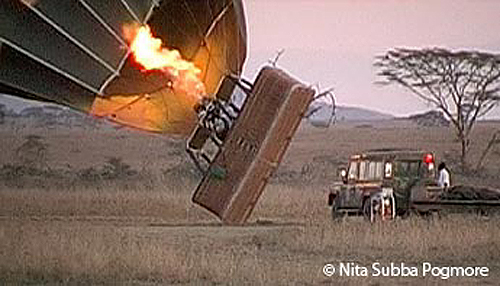
Two passengers were killed (an American and a Dane) and eight seriously injured after the smaller of two balloons lifted off at dawn a week ago Wednesday and then crashed in turbulent winds. The flight of the larger balloon was aborted by the pilot who felt the winds were too strong.

Although no official investigations have been completed, a simple review of the situation suggests neither balloon should have been allowed to fly.

Serengeti Balloon Safaris (SBS) has acknowledged that the winds were 30 mph as the smaller gondola attempted an emergency landing that went very wrong.

Two balloons are scheduled to lift off daily in the Serengeti, and this season ballooning just began in Tanzania’s Tarangire National Park as well. But Tanzania’s total capacity pales in comparison to Kenya’s, where as many as 14 balloons fly daily in a single reserve, the Maasai Mara.

I’ve spoken to principles of balloon companies in both countries, and my gut feeling is that they do it much better in Kenya than Tanzania. This might be simply because the Kenyan industry is so much larger and has had a much longer experience. And extraordinary caution is required when asking someone in Kenyan tourism about Tanzanian tourism, and vice versa, as the rivalry is profound.

But off-the-record Kenyans generally express sympathy with a vengeful website launched by what is certainly a disgruntled former SBS employee, Nigel Pogmore. Kenyans insist that many of Pogmore’s accusations of SBS’s unsafe procedures would never be seen in Kenya.

Pogmore’s long list of what SBS does wrong is mostly ridiculous, as I an untrained pilot, dare to determine. But a few do standout:

Pogmore claims he was fired because he was a “whistle blower” after being appointed SBS’ Safety Officer and then in the course of that job uncovered all sorts of safety irregularities. SBS claims Pogmore was a disgruntled employee with a very short fuse and that his past employment history bears this out.

So I asked SBS Managing Director, Tony Pascoe, why he hired Pogmore in the first place. Pascoe has not answered despite several emails to him.

Pogmore claims SBS balloons fly virtually until they run out of fuel, and therefore violate an industry standard that there be 50% fuel reserves left at the end of a flight.

While this may, indeed, be the industry standard, this is one that many Kenyan companies don’t manage, either. (Although no Kenyan company claimed they would fly until they were out of fuel.) The balloon flights in East Africa are generally short by industry standards and over pretty uncluttered (no power lines) geography. Provided the winds aren’t unusual, they can usually expect to land anywhere along the expected flight path.

Pogmore severely criticized the procedure by which SBS fired up their balloons in the morning, claiming the method they used to raise the pressure in the gas tanks was unsafe and that passengers were boarded in unsafe ways.

He also specified faulty equipment on 5 of the 6 balloons owned by SBS. This included poor or faulty Emergency Rapid Deflation (ERD) capability, fuel gauges and incorrectly maintained fire extinguishers.

Most scathingly, Pogmore claims SBS essentially ignored required safety inspections, insisting that a normal inspection took 2-3 trained staff 4-5 hours, but that his experience proved there were some inspections completed in less than ten minutes.

SBS, of course, is defending itself against all these accusation at their new “answer” site, balloonsafety.info. The problem was that site is very similar to the problem with Pogmore’s site: there’s too much emotion and not enough facts.

I had a courteous phone call with a close relative of SBS Managing Director, Tony Pascoe, and a subsequent courteous email exchange with Tony.

Tony thanked me yesterday when I advised him I had reduced our conversations into a few simple questions I would appreciate him answering.

But when I sent those questions in writing, as agreed, they’ve gone unanswered. Pascoe has suddenly gone silent. A subsequent reminder email also went unanswered.

Please see below in comments. The CEO of SBS finally did answer some of these questions after this blog was posted.

This leads me to believe they have something to hide, or at least aren’t well enough prepared yet to answer some very serious accusations.

Should you take a hot air balloon ride on your safari?

My answer for the time being is, No, not if it’s in Tanzania.

Electing a Serengeti Highway Auction

Electing a Serengeti Highway Auction

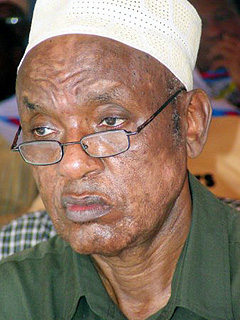
Will this man if elected determine the highway route?
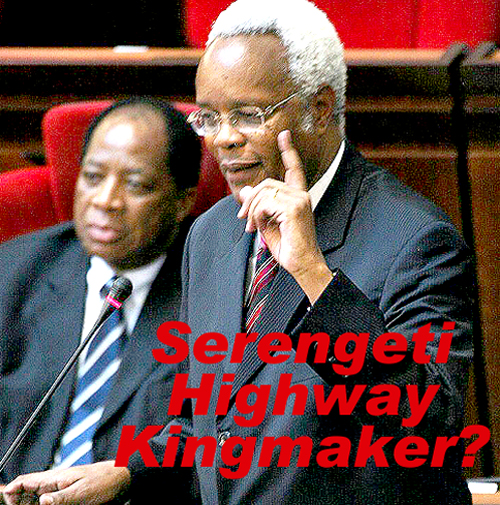
The imminent election of a formerly disgraced Tanzanian politician may determine the route of the controversial Serengeti Highway.

Tanzania’s disgraced former Prime Minister launched his political comeback yesterday by vowing to push through the Serengeti highway despite environmental objections.

But in typical Tanzania PoliSpeak, Lowassa left open which route he supports. I think the man is on track to become the final power broker for how the highway is built and that he’s essentially going to put the route up for international auction.

As with everything in Tanzanian politics, a lot of reading between the lines is necessary. There is a possibility that Edward Lowassa is just a loose canon trying to avenge his disgrace, being carefully rehabilitated by power elites, or just blowing populist hot air.

Lowassa’s flamboyant political rally in Mto-wa-Mbu, specifically where the highway is scheduled to begin, came only one month before the national election on October 31. He is running on a small, opposition party ticket (Chama cha Demokrasia na Maendeleo, “Chadema”) which currently has only 6 of the 295-seats in Parliament and no national officials.

(Chadema may be the biggest threat to the ruling autocracy in Tanzania, although it’s hard to see enough victories in Parliament to impact the balance of power.)

Lowassa cannot run on the ruling party ticket, because he was thrown out in 2008. At the time he was the second most powerful man in Tanzania, its prime minister, but he got mired in one too many scandals.

He resigned as Prime Minister on February 7, 2008, after being implicated in a corrupt deal with the Houston energy firm, Richmond Development, where it was widely speculated he received enormous kickbacks for electrical services that were never delivered.

His resignation and that of other implicated ministers which immediately followed saved him from any formal investigation into the extent of criminality.

Making the Serengeti Highway a primary campaign position allies him with his former friend and now President, Jakaya Kikwete, who is also the man who forced his resignation in 2008.

But unlike Kikwete, he hasn’t specified which route — north through the Serengeti or south outside animal reserves — he favors. And listening to him yesterday at his rally, you’d think the issue wasn’t whether to lay the tarmac north or south, but whether to build a highway for the common man or preserve lions for tourists to see.

“Environmental activism should change. [Activists] should not be more concerned by the welfare of the animals than that of our people who need development,” Lowassa shouted to the cheering crowd.

Lowassa began his career as the area’s police boss, and he remains very popular locally so is likely to win. His opponent is an evangelical minister whose main campaign issue is that the election, scheduled for October 31, should not be held on the Sabbath.

Lowassa is playing both ends of the field. He can win the election and still embrace either the northern or southern route.

And then, he will become the most prominent politician whose constituency is closest to the actual highway area. He will become crucial in any negotiations down the line.

I think this is what Lowassa is doing, sneaking his way into an issue that not even the ruling elite can control, one that is certain to ensure his political rehabilitation on the national level.

He’ll give Kikwete an acceptable path towards changing his own position, which is that the northern route is the best one, while ingratiating himself into the political elite once again.

Lowassa will be up for the highest bid. That’s the nature of the guy. So NGOs, start the fund-raising, because Lowassa’s victory will be a sure sign that the highway’s route is up for auction.

Serengeti Highway Update

Serengeti Highway Update

Keep on trekkin, guys! Relief just over the next ridge!
Unfortunately the American zoo convention ending today in Houston will make no statement about the Serengeti highway, but other news is promising.

You can think of the zoos inaction in either of two ways: (1) this seemingly impressive group of American conservationists is just too amorphous and internally divisive to reach consensus on anything; or (2) like so much of America right now, doing nothing is the greatest achievement possible.

This is particularly true in light of the recent Nature article in which virtually every important researcher in the Serengeti signed on. This included the Americans George Schaller of the Bronx Zoo, Anna and father Richard Estes, Andrew Dobson of Princeton and the adopted American, Charles Folley. They were among 27 prestigious scientists who contributed to an article entitled, “Road will ruin Serengeti.”

And there’s more at home:

Tanzanian media, which while not government controlled is certainly government suppressed, has been growing increasingly bold in opposing the proposed construction.

Dar-es-Salaam’s largest newspaper, The Citizen, today reposted an old story about UNESCO considering withdrawing the Serengeti’s World Heritage status if the road is laid. What’s so interesting about this is that the paper got the permanent secretary, the career civil servant who heads Tanzania’s Ministry of Natural Resources and Tourism, to lie … sort of.

While it takes reading between the lines, I’m absolutely certain this is what the article intended. Dr Ladislaus Komba told The Citizen that UNESCO had “suspended its warning” after being assured that new environmental studies would first be conducted.

That’s probably not true. At least UNESCO will not confirm its true. The last policy report focusing on the Serengeti issued by WHC can be read by clicking here and that was in 2003. At the recent meeting in Brasilia, there was resolution statement that is, indeed, a warning that policy could change if the road is built.

But The Citizen has unmasked Komba for inverting events. The Tanzanian government offer to make new environmental studies came well before the WHC conference in Brasilia last month, where all the news and hearsay, and “warning” was reported.

There has been no official suspension by WHC of that warning. In fact the warning warns they better make good on past promises, which include a better environmental study than currently on the table. So no official suspension of anything, therefore. And page one news in Tanzania, now.

There’s been a lot of dosie-dose going around the ridiculous presumption that forceful opposition will make the Tanzanian leadership close ranks on this issue. First of all, that just isn’t true. There has been much forceful opposition (double-down on that Nature article) from the getgo. And now the Kenyan Government itself has become involved.

The wimps have claimed the Kenyans have been silent, because they too didn’t want to upset the Tanzanians any further. Balderdash. The Kenyans have had other things filling their agenda… like a new constitutional referendum, a World Court investigation of their politicians and war on the border with Somalia.

So I have to admit I was pleasantly surprised when Komba’s counterpart in Kenya, Mohammed Wa-Mwachai, issued a statement last week that said in part, “We have instructed our Tanzanian High Commission to set the stage for negotiations [about the Serengeti highway] and we hope to come up with an amicable solution.”

The Kenyans, actually, have the most to lose. Their one great remaining game park with large herbivore herds roaming the plains is the Maasai Mara, the top of the Serengeti ecosystem. The reduction of the current 1+ million wildebeest to less than 300,000 as estimated by the Nature article would cripple Kenyan safari tourism.

So we’re sorry that the American zoos were composed mostly of invertebrates, but keep the pressure up. In sum, the news has been good!

Call your zoo NOW!

Call your zoo NOW!

American zoos could help stop the Serengeti highway.
Call your zoo director now and tell him to “Support AZA’s resolution opposing the northern route for the Serengeti highway.”

Towards the end of this week, zoo directors, research coordinators and many other zoo employees will be heading to Houston for the annual zoo convention.

Concerned members are trying to get the momentum going to pass a resolution that will oppose the northern route currently staked out in the Serengeti for a highway. They are encountering great resistance among the membership.

This isn’t because there are members who support the highway, quite to the contrary. I doubt you would find a single AZA member who supports building the highway.

But it’s because the organization is so nebulous. The excuses I’ve heard range from “it’s not our responsibility” to “it will cause a backlash.” Both extremes are ridiculous if not arrogant and presume an unrealistic character of what AZA actually is.

Zoos, today, have morphed into wonderful institutions, so different from what they were when I was a kid. Many of my clients’ jaws drop when I say this, and I have to agree with them that watching a captive animal is not my cup of tea.

But putting animals on display, today, is becoming a secondary role for the best zoos. You would be very hard pressed not to find a zoo in America today, which doesn’t have something to do – some money invested – in the Serengeti.

Zoos are turning into wonderful research institutions. Their captive animal populations have become ever more precious as the world’s biodiversity crashes. They have unleashed a scientific potential that exists in their employees that is doing wonder in Africa.

So they, probably more than any other group of institutions, has a real and immediate interest in what happens in the Serengeti.

What is true is that their association isn’t a very good one. One part of their association, the SSP groups which manage marvelously the placement and movement of one captive animal with another across all zoo borders, is a work of genius. But, I’m afraid, that’s about it.

So it’s time they step up to the plate and make a concerted effort to evince their missions and their ideals. They must join a growing chorus of wildlife NGOs opposing the highway, and it will definitely help.

So please, call your zoo now. Ask to speak to the director, and you’ll likely be able to. If you can’t, get his email address after leaving a phone message.

We must stop this highway.

To read my other blogs about the highway, click below:

Tanzanian President reaffirms doing the project.

Tanzanian Minister of Tourism has questionable links to highway.

World Bank withdraws funding for Tanzanian road building.

Serengeti Highway Alert and summary.

Serengeti Highways & Monopolies

Serengeti Highways & Monopolies

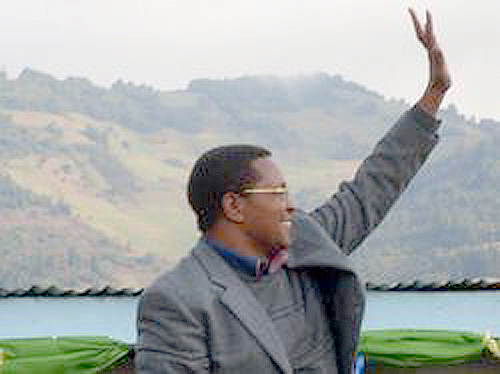
President Kikwete is digging in his heels about building the highway.
Your voice against the Serengeti highway has attracted the attention of the most powerful in Tanzania. Unfortunately, he’s digging in his heels.

During an end of July live television speech to the country President Jakaya Kikwete said that “under no circumstances” will the government be deterred from building the road.

Kikwete doesn’t shy from the limelight, but most keen observers seriously doubted he would enter this fray. Whether the road cuts 40-50k through the neck of the Serengeti as planned, or is rerouted on a more lengthy route as we all would prefer, there are going to be very angry people, locally and foreign. Ethics, conservation and the Serengeti aside (be damned!), this is no good place for a politician.

So what’s his motivation?

I think I know, and I think he has a point (that he hasn’t made), and that point isn’t strong enough for him to really push this calamity through…

It’s already widely known that Kikwete is invested in the newest of the Serengeti lodges, the Kempinski Bilila.

If it weren’t for his intervention in the first place, this lodge would never have been built. It had initially failed to get the necessary permits from Tanzania conservation and wildlife authorities. Kikwete intervened.

Counting Bilila, there are ten principal lodges serving the Serengeti.

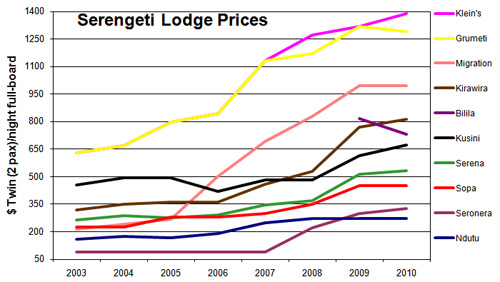
Only one other property, Grumeti, joined Kikwete’s Bilila in the realistic drop in prices from 2009 to 2010. All the other 9 defied market indicators arising from the world recession.

Is Kikwete’s support for the Serengeti highway linked to a belief that the property companies monopolizing the Serengeti are out of touch with markets and need to be forced into greater competition less Tanzania tourism suffer?

Boy, is that giving the fellow the benefit of the doubt! But it’s true. All the other 9 properties have been around for many decades; several of them are approaching the half century mark.

And they all market as if we were in the 14th century. When the good times roll, they raise prices as we would expect. But when a world recession hits, they also raise prices or don’t reduce them. This half-baked theory is “be damned cash flow”, just maintain some modicum of profit.

Before reading on, take a look at the price comparison of the Serengeti Lodges shown just below, then drop down to continue reading.

Based on average tour operator contract prices.
For retail prices add 20-30%.

Raising prices in a declining market reduces cash flow but profits can be somewhat maintain by cutting off lots of operations.

Like jobs.

As much as a third to a half of Tanzania’s tourism employees in 2006 is currently without work.

Tanzania doesn’t have an unemployment security system. There are no legal inhibitions to just telling someone not to come to work today… or anymore. AND those poor folks collect no compensation from the state once “made redundant.” Tanzania has no safety net for the newly unemployed.

That’s the ouch of the policy, but the fact is that it’s a terribly poor business strategy, anyway. It’s a short-term fix and a long-term disaster.

All the training, operational achievements, marketing strategies suddenly hit a brick wall. And to regain them when things get better isn’t just a matter of rehiring those who were fired. That rarely happens.

Serena Hotels built and integrated a modern and very expensive worldwide reservations system in 2007. It took thousands of hours to implement. They adopted an imaginative “Active Senior” program around the same time with some target marketing.

EWT just used Serena Hotels in Kigali and Kampala. It was a nightmare. I personally was at the check-in desk in Kigali untangling a terrible mess. And they seemed to have dropped their “Active Senior” program, just at the time such a program would reap huge benefits: (If any market niche is immune to the world recession, it’s seniors.)

The much better strategy is to follow capitalist principals of supply and demand. Don’t loose your investment in people’s training or marketing strategies that remain viable, and get enough cash flow to see them through the hard times.

Lower prices.

Unfortunately, unlike pricing, we can’t get occupancy rates as they are closely guarded secrets. But there is much anecdotal evidence to suggest that while Bilila is probably the most luxurious lodge in the Serengeti, when it opened in 2008/2009, it drastically lowered its initial asking prices.

And then Bilila dropped prices from 2009 to 2010, to keep its occupancy constant. Kempinski won’t say, but the best anecdotal evidence we’ve collected suggests Bilila has achieved this strategy.

If true, Bilila is reacting to real market forces and maintaining a constant cash flow by doing nothing else than lowering prices. Whereas all the others are laying off staff, closing portions of their properties and extending off-season closures.

Bilila is new, well run, and managed to the current market. There hasn’t been any new lodge in the Serengeti for more than a decade since the out-of-the-way and hodge-podge configured Mbagaleti was built. Before that it was another ten years earlier when Elewana (luxury branch of Sopa Lodges) purchased and rebuilt Migration Camp.

Frankly, that was just fine by me and many, many others. The exclusiveness of the Serengeti is one of its principal draws.

But Kikwete has a point, even if he hasn’t expressed it. The old dogs controlling the existing lodges in the Serengeti: Serena, Sopa, &Beyond and TAHI, are rutted in savoring their monopolies. As with inflexible pricing, Kikwete may see the whole cartel is inflexible to any new notion, good or bad.

Alright, so I’ve made a point, and perhaps Kikwete has, too. But is it germane to this argument about the Serengeti road?

No.

I returned from Uganda, today, and one of the most glaringly obvious difficulties it has in rebuilding its national park system is that major thoroughfares cut right through their wildernesses.

Queen Elizabeth National Park is essentially bisected by a main road, and there are burgeoning little towns at every stop conceded not to be an actual national park proper. The stress on the area’s wildlife is huge.

The tarmac roads that crisscross the great South African reserve, Kruger, absolutely stunt its wilderness growth. Kruger has one of the lowest ratios of migrating herbivores to the rest of its animal population of any park in Africa.

Herbivores constitute the base of the mammalian food chain. It eventually feeds not just the lions but the gerbils and acacia.

Mr. President Kikwete, if I’ve struck a chord with you, let’s work this out another way. I’d be all for disinvesting the monopolies that currently control the Serengeti: Legislate the right for only a single property company in each unique reserve, for example.

But don’t kill the Serengeti. That’s the worst strategy of all.

Ivory Highways in Tanzania

Ivory Highways in Tanzania

Shamsa's Plan
A courageous legislator in Tanzania’s Parliament has charged Tanzania’s Minister of Tourism with corruption. The pieces to the puzzle seem to fit.

Last week Tanzanian MP, Magdalena Sakaya, publically accused Tanzania’s Minister for Tourism, Shamsa Mwangunga, of deceit with regards to her attempt to sell ivory stockpiles.

This is no small matter. Sakaya is one of a handful of outspoken backbenchers who the government of Tanzania is increasingly suppressing. Just last week, for instance, the Court of Appeals refused to allow any independent candidates in this year’s national election.

Shamsa is one of the most corrupt members of the Tanzanian government. She led the failed effort to obtain permission from the Convention on International Trade in Endangered Species of Wild Fauna and Flora (CITES) in Doha last March to sell a stockpile of elephant tusks.

Sakaya noted that 11 of the 27 tonnes of illegal ivory confiscated worldwide in 2007 came from Tanzania. And in 2009 that number was 12 of 24. (Elephant Trade Information System)

Yet, Sakaya explained, official records by the Ministry of Tourism or any other government department show no such large numbers of confiscated ivory.

Why not?

“Conspiracy to legalize trade of elephant tusks and their products surrounds the request,” Sakaya said in Parliament. “The Opposition camp believes the request is a ploy intended to deceive Tanzanians.”

Sakaya charged “high ranking government officials” with running a syndicate of poaching and suggested that it would be these same individuals who would have benefited from the ivory sale had CITES approved it.

Many of us are wondering, now, if Shamsa’s new push for a Serengeti road is in typical personal retribution for her failed effort to sell ivory at CITES.

In an interview with The Citizen last week, the minister denied that the 40-kilometer stretch of east-west road through the northern Serengeti would disrupt the wildebeest migration.

What?!! What planet does this person come from?

Depending upon the weather as many as a million wildebeest and half again as many zebra and other gazelle funnel north through this relatively small area into Kenya’s Maasai Mara every year.

To the east is heavily populated Kenya; to the west is heavily populated Tanzania. It’s their only route to the fresh and lasting grasses that the Mara provides during the dry season.

If the road is as heavily used as anticipated, this will result in massive disruption of the migration. Consider the extraordinary efforts that were employed by the Alaskan pipeline, including high bridges and deep tunnels, to lessen the effect on the caribou migration in a part of the planet where not another soul lives or needs to drive on a road!

Consider the massive destruction of the wildebeest migration in Botswana when the veterinary fence was built there in the 1980s.

The evidence is the stuff that a 3rd grader can use for a science report.

“Those criticizing the road construction know nothing about what we’ve planned,” Shamsa claimed.

That’s for sure. Kickbacks, new clothes from Zurich, foreign trips….

Click here to join the growing forces opposing the road.

SerHighway Reveals More Corruption

SerHighway Reveals More Corruption

Mrema blown out?
Public pressure may be working to forestall the Serengeti highway. The terrible corruption of the Tanzanian government is coming to light.

Tanzania has a far less dynamic and transparent media than either Kenya or Uganda, but the “little engines that could” are blowing their whistles as hard as they can!

A tiny on-line publication, This Day, reported today that the World Bank has withdrawn a US$8.4 million offer to finance new government buildings in Dar-es-Salaam, specifically because of the growing controversy of corruption in the Tanzanian roads’ agency.

(The bank’s on-line directory still showed the project was current, today. But This Day has a remarkable record of accuracy.)

If true, it is not clear whether this is in response to the growing outcry against the Serengeti Highway, or simply a response to a lot of dirty laundry the proposed project has aired.

Several publications and blogs – most of them on-line and not widely available to the public in Tanzania – today came down brutally on the CEO of the Tanzania National Roads Agency, Ephraim Mrema, for widespread corruption.

Recently Mrema canceled the specific site for which the World Bank had made its loan to build the TANROADS headquarters, after more than $1 million had already been spent on designers and architects.

“World Bank officials in Dar es Salaam were angered after they discovered that they were misled by the TANROADS management about key aspects of the project and have since withdrawn their funding,” said an anonymous TANROADS official quoted today by This Day.

Mrema was appointed in 2007 by Andrew Chenge, then Attorney-General but since fired, for an appointment of three years ending on June 3, 2010. But Mrema remains in office, today.

Following Chenge’s resignation and later indictments on charges of corruption, a government inquiry began into Mrema’s own dealings. The inquiry has charged him so far with overstepping his authority, clinging to a position since expired, and fomenting a “reign of terror” within the agency.

The Vice-Chairman of TANROADS, theoretically Mrema’s second-in-command, Dr Samuel Nyantahe, has officially called the situation a “serious crisis.”

“…the situation at the agency is very grave as there is a reign of terror … urgent government intervention is needed to forestall further deterioration and decadence,” Nyantahe said in an April 12, 2010, letter addressed to the Prime Minister of Tanzania, made public today by This Day.

“How can a public service official (Mrema) exhibit blatant insubordination behaviour and get away with it?” the letter continues.

Mrema’s answer is that he has been officially sanctioned by Tanzanian President Jakaya Kikwete. The president’s office was silent, today, on the growing controversy.

On May 3 last year, the ministry in charge of roads censured Mrema. Omar Chambo, the Permanent Secretary, formally reprimanded Mrema for a number of contractual and ethical violations. “Implementing [unapproved actions] contrary to my instructions amounts to insubordination,” says part of Chambo’s letter to Mrema.

It must be serious. In December, 2008, Mrema paid Chambo an “honorarium” of $7000 from the TANROADS coffers for seemingly no reason.

In Tanzania you don’t bite the hand that feeds you unless that hand’s ready to be chopped off.

Serengeti Highway Alert

Serengeti Highway Alert

Your urgent help needed to stop this.
The Tanzanian government has approved a major highway construction program that will bisect the northern Serengeti. It’s disaster. We need your help, now.

Click here to join the growing list of individuals and organizations opposing this move.

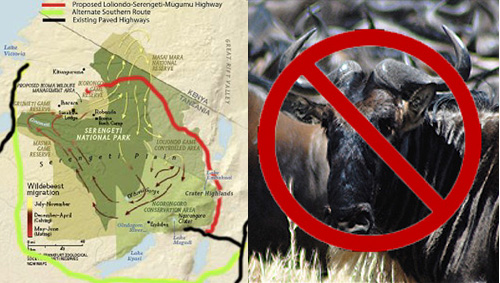
The US$480 million highway will travel just east and south of Ngorongoro Crater and around the eastern side of the Serengeti, cutting into the park east to west just north of the Kenyan border.

The road will sever a critical corridor for the annual migration of hundreds of thousands of wildebeests, zebra and other animals. It is absolutely reminiscent of the 1980s veterinarian fence that effectively ended the great wildebeest migration in Botswana.

The Serengeti’s principal donor and scientific NGO, The Frankfurt Zoological Society, says, “The entire Serengeti will change into a completely different landscape holding only a fraction of its species and losing its world-class tourism potential and its status as the world’s most famous national park – an immense backlash against the goodwill and conservation achievements of Tanzania.”

(Contrary to many media reports, it will not link the Serengeti with Kenya’s Mara. In fact last week Tanzania’s tourist officials pointedly denied a Kenyan report that the Sand Rivers border post at the Serengeti/Mara junction will open.

The highway will decrease the time it takes to drive from the Serengeti into the Mara through the Isbenia border post. Currently it takes approximately 5 hours to drive from the Serengeti’s Grumeti Gate into the Mara’s Isbenia gate. From the new gate exit in the northwest part of the Serengeti currently planned, this driving time to the Mara’s Isbenia Gate would be reduced to less than 3 hours.

Facilitating easier access between these two giant wildernesses is good, but in no conceivable way could justify this wild atrocity.)

Currently, the Serengeti/Mara/Ngorongoro ecosystem is a certified UNESCO World Heritage Site. This designation would be lost if the highway construction commences. This in turn will decrease ancillary operating revenues for the park and likely jeopardize the fragile anti-poaching programs currently in place.

This terrible development is not a surprise. Human/animal conflicts in Africa are growing and in East Africa were exacerbated by the last three years of bad weather and poor rains. Elections in Tanzania and Uganda, and a constitutional referendum in Kenya are fueling the debate. I concur completely with many politicians in these countries that for far too long the western world has ignored the serious problems arising from supporting tourism parks while not adequately developing the local populations, particularly those on the periphery of these areas.

But this is not the answer.

A modern road is absolutely needed between the city centers of northern Tanzania and Lake Victoria, the mission of this new road. Several alternatives exist for longer highways that would skirt the ecosystem altogether.

Since they would travel through more populated areas, you would think that these alternatives are attractive to the Tanzanian government.

The Frankfurt Zoological Society claims the alternate routes would not cost more, but local media reports have suggested otherwise. The lack of hard data is frustrating, but I think this may be part of a dangerous game of chicken Tanzania is playing with NGOs and foreign donors.

Please help. Click here to add your voice to the opposition, then petition your lawmakers and wildlife NGOs to help Tanzania raise the added funds for the alternate routes.

Back on (a wet) Track!

Back on (a wet) Track!

Now at one of my favorite Serengeti lodges, Ndutu.
As we enter the great migration season in Tanzania everyone ready to go (including me) wants to know the state of the veld. Well – dare I suggest it? – it looks… wonderful.

I wanted to say “normal” but normal doesn’t exist, anymore, in these confused eras of global warming. But frankly that’s what 2010 looks to be: right on the charts of normalcy for the last 30 years of climate statistics.

Which makes it very abnormal for the last 3-5 years. So in that context 2010 is on target to produce the finest scenery and best game viewing in the last five years!

Mother Nature broke the 3-year “drought” as you would expect her to: grumbling and shaking off somnambulant neglect with thunderous bursts of rain which in some places, like the western and northern Serengeti, represented some of the most incredible torrents ever seen.

On Christmas Eve 1.5-1.7 inches of rain fell in one day over most of this area. For the month of December the Serengeti/Mara ecosystem experienced nearly 7.0 inches of rain. This is nearly three times “normal”.

The deluge resulted in worries that El-Nino was battering, again, and that soon the world would float away. Didn’t happen… yet, anyway. And western climate prediction centers show a real return to normal patterns for the remainder of the year.

This is my favorite area in the world. From the Talek River in the Mara to the central Steppe of Tanzania, the veld is now a deep, rich green. On the flat prairies of the Serengeti the “wet” wildflowers are all over the place:

Little white flowers looking exactly like their nickname, Tissue Paper Flower, (Cycinium tubulosum) literally cover the veld, almost like snow. Remarkably this year, they’ve even covered the veld as far north as Samburu. Unusual and rarer apricot and red versions have been reported in abundance in the Mara salient.

A bit anxious and not normally so prolific, Kenya’s national flower, The Flame Lily,(Gloriosa superba) is already standing out. (This is one of the reason locals are worried about the deluges continuing; but I think superstition is getting in the way. Lilies are tubers and build up residual nutrient stores during dry times, and these guys are just impatient to get going!)

The wildebeest migration was normal for the first time in years. Last year it lingered in the northern Serengeti (the Mara) almost until January, as the rains further south were light. But this year the great herds were well south of the Sand River by early December… just like scientific papers crunching 30 years of data say they should.

The Ewaso Nyiro River in Samburu, the Tsavo River in Tsavo, the many rivers in the Mara including the Great Mara, the many rivers in the Serengeti, and the two lakes in Ndutu (Masek and Ndutu) are all recovering, looking normal, after spurts and backups throughout December.

Grazers including all the plains antelopes are becoming fat and sassy. Browsers, especially elephant, are still struggling, searching those areas with new growth but relying on grass until it happens. Giraffe are a bit luckier, they can reach the new, high acacia shoots.

An incredible sight was reported in mid-December as Lake Manyara began to refill, and on one day, December 14, literally several hundred thousand flamingos returned. Where had they been?

European migrant birds are down in great numbers. The massive and awesome funnels of tens of thousands of Abdim storks have been seen above the crater.

Nature is balanced, and compared to what most of us felt was a stressful several years now ended, the predators thought otherwise. It was heyday for lion, hyaena, jackal, leopard and cheetah. For them the return to normal times means predation is much harder, and already camps like Governor’s in the Mara are reporting fewer cubs surviving, more internecine fighting.

The yin and yang of the veld. But I for one feel enormously relieved. There is a stress when surveying an African veld that is distressed for lack of rain unlike any other experienced in the modern world. It is a helplessness that pivots the intellect into moments of superstitious hope. That arthritic spiritual response is agonizing, and now — at least for now, it’s gone.

Maasai Rebellion?!

Maasai Rebellion?!

A continuing struggle in the private game reserves of the Mara/Serengeti border area has been exacerbated by the drought and economic downturn and may turn violent.

A number of private reserves in the Loliondo area, which lies on the eastern border of the Serengeti and southern border of the Mara, risk growing civil disruption by the local Maasai as well as rapidly increased poaching.

This is a beautiful area that is normally big game rich, although it is quite seasonal. It includes &Beyond’s prestigious Klein’s Camp, as well as a number of less upmarket camps. Until recently it was a model for Community Based Tourism (CBT) projects.

But the Tanzanian government’s decision to forcibly evict thousands of Maasai from the area has provoked several violent encounters between rangers and Maasai. Moreover, the drought which is worse just over the border in Kenya, has motivated thousands more Kenyan Maasai to migrate into the Tanzanian area with their herds. And finally, the economic downturn has led to a serious increase in poaching in the area.

The area is a tinderbox. Maasai are legendary for their personal bravery, but as communities they are not wont to organize. But this time it might be different.

A coalition of 25 prestigious local Tanzanian organizations, including the Legal and Human Rights Centre (LHRC) and Lawyers’ Environmental Action Team delivered a letter on August 27 to the Tanzanian government, demanding that the forced evictions stop. Then on September 10 the coalition demanded a number of legislative and policy changes that would begin to remove some of the foreign businesses from the area.

The government’s response was brutal.

The Minister for Natural Resources and Tourism, Ms Shamsa Mwangunga, released a statement on September 14 slamming the coalition, threatening harsh sanctions against them, and almost as an aside, promising that the government would keep the area safe for tourists.

My take is that this is not going to get better, soon.

* * *

A decade ago Tanzania was in the forefront of CBT development and it was here in Loliondo that the model was working best. There were some truly outstanding individuals, such as Hoopoe Safaris’ Peter Lindstrom, who worked tirelessly not only to protect these wilderness areas from rampant development, but to fashion them into productive businesses for the Maasai who owned the land.

The idea was pretty simple and has been successful all over the world. Rather than farm wheat or grow cattle, camps and lodges would be built that would attract tourists who wanted to experience the natural, wild area.

The benefits to the Maasai ten years ago were substantial. Hoopoe’s small 8-tent camp at Olipiri generated as much as $35,000 annually for the otherwise impoverished local community. In the successful decade that followed a number of village Maasai became Hoopoe employees, were educated in the cities by Hoopoe, then started their own businesses.

In 2004 Conde Nast awarded Hoopoe the prestigious “Best EcoTourism Company in the World” award, in part for their efforts here.

Several other companies also became involved. &Beyond (formerly CCAfrica), and Dorobo Safaris all undertook similar arrangements to Hoopoe’s. Klein’s Camp (&Beyond) became one of the most prestigious camps in Tanzania.

But as I think back to those days, I suppose we should have known things would go awry. To begin with, there was an odd apple in the box: the OBC corporation. This United Emirates’ company was squeezed between the Klein’s and Hoopoe concessions. And guess what, they were hunters.

And not just your ordinary everyday quarter-million dollar tourist hunter. This is a corporation of the royal family of the Emirates. They don’t like commercial flights, so they built an airstrip on the concession that could take jumbo jets. And when they arrived each July and August to decimate the area game, they erected little cities. I remember when I would drive into Hoopoe’s camp, my cell phone would welcome me to “United Arab Emirates CellTel Company.”

Clearly most everything that OBC did was beyond the rules the government had set for CBT programs. Start with air waves and then add air routes. Everyone at the time knew that there was more involved than relationships with the Maasai. Royal money was exchanging hands.

From time to time guests at Klein’s would complain they would see zebra shot. But it was very infrequent and in the main the Arabs did their best to stay under the cover of their air waves. They were also there only two months every year.

But they were also weird bed fellows to the good souls like Hoopoe and Dorobo who were truly trying to build a sustainable Maasai project.

Enter drought and world economic decline.

Poaching has increased everywhere, of course, and serious local battles such as the one that left 30 people dead not far from the tourist camps in Kenya’s Samburu two weeks ago are much more serious right this moment than what is happening in Loliondo. But Loliondo’s history is more convoluted and may take much more than just the predicted rains to recover.

5-Bell Alarm

5-Bell Alarm

The Serengeti development project received a pledge of $350 million, today, from an institution that doesn’t exist.

Tanzania’s Daily Star newspaper reported today that a “FINANCIAL institution headquartered in Geneva, Switzerland had pledged to [sic] realise 350 million US Dollars (about 500 bn/-) to finance the construction of an international airport in Serengeti District.”

The newspaper, citing Tanzanian government officials, said the name of the institution was , “Sustainable and Innovative Project Investment Office BV- Ltd) ( SIPIO).”

A simple google search revealed no such institution in Switzerland. A google search of the individual responsible at the so-called institution, according to The Star, Ben Verbeek, also has no google pull-up except for a single Facebook Page where he lists himself as a consultant.

This is the biggest scam in the history of Tanzania.

The Star also reported that the so-called nonexisting institution’s $350 million is 80% of the project cost, and that the additional 20% will come from….

You guessed it, Grumeti Reserves.

SERENGETI ALARM

SERENGETI ALARM

The Serengeti ecosystem is being compromised by a corrupt Tanzanian government and greedy businessmen representing themselves as conservationists.

An international airport may be built in the Serengeti; a modern highway may connect the Mara with Grumeti; and ten more lodges and hotels might all be built, without any real public discourse or environmental analysis, and with the tacit blessing of worldwide conservation organizations benefitting from the ultimate winner in this scheme, American billionaire hedge fund trader, Paul Tudor Jones.

There has been a continuing debate for more than a decade as to whether the Serengeti should be more aggressively developed for tourism, particularly when compared to its rich and much more developed Kenyan neighbor to the north, the Maasai Mara.

But this honest debate is being trumped by devious and corrupt businessmen and politicians. It is revealing the greedy truths of so-called conservationists like Paul Tudor Jones (the Grumeti Reserves), testing the integrity of otherwise reputable wildlife organizations like the Frankfurt Zoological Society, and impugning the Tanzanian government’s commitment to conservation.

It’s an intricate web of deception and deceit, and like so much in bureaucratic Tanzania, urgent matters get bogged down in contrived public debate that’s little more than grandstanding, while behind the scenes powerful politicians move sinister plans that never had any intention of being influenced by the public.

The Story (Part One):
Background

The Ngorongoro/Serengeti/Mara ecosystem is a contiguous wilderness that represents the core of East Africa’s protected big game. The total size is 9485 sq. miles, a little bit smaller than Maryland and little bit bigger than Vermont.

Tanzania’s Ngorongoro/Serengeti component is 8900 sq. miles or about 94% of that total area. The remaining portion, Kenya’s Maasai Mara, is only 585 sq. miles, about 1/20th the size of the Tanzania component.

But the Mara has more than 5 times the accommodation of the Ngorongoro/Serengeti, roughly 4700 beds compared to around 940. (These numbers according to Tanzania’s prime minister, Edward Lowassa, speaking to Parliament in August, 2007. I think they’re roughly accurate, but it’s symptomatic of this whole debate that no government agency in either Kenya or Tanzania has completed an official count, and no clarity as to whether these numbers include lodges which exist just outside park boundaries sustains the confusion.)

So the density of accommodation in the Mara (beds per sq. mile) is roughly 80 times greater than the density in the Serengeti/Ngorongoro.

The reason for this is both historical and environmental. Historically, Kenya developed much earlier and more quickly than Tanzania, and during this earlier development stage, was a much more stable country. That’s changed in the last few years, but the development began in the 1960s in Kenya. Following an economic collapse in Tanzania in the 1980s, the tourist industry there really didn’t start developing until the 1990s.

Kenya has a generational, 30-year advantage.

Environmentally, the Mara is the wettest place of all East African protected wildernesses. That means two important things: first, it attracts and sustains over the course of any cycle (such as a full year) the largest biomass. Second, it can sustain heavy tourist use – like off-road driving and septic waste management – because of the dynamic regeneration of the ecosystem afforded by heavy rains.

While the great wildebeest migration comes and goes into the Mara and other parts of this larger ecosystem, the remaining biomass of the Mara is pretty stable year-round. That’s not true of the Serengeti/Ngorongoro, which is much more seasonal: basically the first half of the year is wet, the last half, dry. So the Mara is the more stable ecosystem. This means its tourist attractions are more consistent year-round. It will obviously attract investors more easily.

(Now whether or not the current tourist density in the Mara is too much is a debate of its own, and I think it is. But the “environmental” arguments used by proponents to increase development of the Serengeti/Ngorongoro, based on the successes of the Mara’s heavy development, ignore these real environmental differences.)

Even though the Serengeti/Ngorongoro component is the lion’s share of the overall area, this 90-95% of the total area is a much more fragile and easily disturbed ecosystem than the Mara.

During the dry season, much of it’s a dustbowl, easily damaged by too much use. And that’s the whole rub of the problem. You can’t open the area just when it’s wet. In fact, tourists tend to come on seasons of their own making: holiday and summer periods, for example, which have little correlation with the state of the environment at the time.

So it’s a legitimate, honest debate that needs to be had. Is the Mara now overdeveloped? Is the Serengeti/Ngorongoro underdeveloped? But this debate seems secondary to a real putsch right now to develop the Serengeti hog-wild… pun intended.

Part Two:
White Angel really Dark Knight?

In one fell swoop at the beginning of this decade, the American billionaire hedge fund trader, Paul Tudor Jones, laid down a wad of cash and bought an area the same size as Kenya’s Mara that rested on the northern border of the Serengeti’s western corridor. The area had been a hunting reserve for years. He called it “Grumeti Reserves” and built three luxury lodges to provide the mighty and wealthy from around the world an exclusive retreat. There were anti-poaching patrols and anti-paparazzi patrols.

This was unprecedented. Neither Kenya or Tanzania had ever allowed a single developer to control so much area. Many people – especially at the time – believed Jones was an honest conservationist. I never did. For one thing, his “projects” managed to reach as far away from scrutiny as possible. The first was in the growingly disturbed country of Zimbabwe. This second one was in the fabulously corrupt country of Tanzania.

Although the public fanfare that preceded these two monstrosities headlined conservationist objectives, what was more important was the huge amounts of money he was giving to the conservation organizations working in the area, particularly the Frankfurt Zoological Society and the African Wildlife Foundation.

It reminds me of Senator Baucus’ principal campaign contributors.

It’s important to note that Jones is a hunter. And because these huge parcels of land are his, he can hunt on them, and does, even while marketing them for photography safaris. I don’t see anything wrong with hunting when done properly. But big game hunters on the major donor list of big conservationist organizations like AWF and the Frankfurt Zoo is the exception, not the rule.

When Jones tried some of his antics in a more transparent society, like the United States, he was called out. Jones systematically bought up land in Chesapeake Bay to build a 20-room mansion on a wetland of great importance to the area. In 1990, the U.S. Fish & Wildlife Department fined him more than $2 million for tampering with the tidewaters of Chesapeake Bay, presumably to allow for mallard hunting year-round on his estate.

At least all the above was public, and available for all of us to argue about. What we’re coming to believe, now, is that there was also a lot of dealing under the table with the powers that held real control over Jones: Tanzanian politicians.

Part Three:
Tanzania’s Political Carrying-Capacity

In March, 2006, the then Tanzanian Minister for Infrastructure, Basil Mramba, signed a memorandum of understanding that gave the Grumeti Reserves exclusive use of millions of dollars from the U.S. Millennium Challenge Corporation (the MCC) to quickly and more extensively develop the Serengeti.

Hmm. Grumeti Reserves was a private corporation on private land. Just because it touched the Serengeti, didn’t mean it was the Serengeti.

The MCC was a Bush fiasco, another political attempt to paint selfish politicians in a better light. It was originally funded in 2003 with $4.8 billion to help eradicate poverty in the Third World. But by the end of 2007, only $155 million had been spent. (A similar fate occurred to Bush’ much heralded and little used Aids Initiative.)

By 2008 the fund was axed by Congress, in all but name.

All of this was good for the Serengeti, because the development plans couldn’t go forward. Meanwhile, Jones’ three lodges in the Grumeti Reserves were under-performing in spades. Jones tried everything possible to get things going: a block buster film that would be shot there, handing over management to the Singita Group of South Africa. Nothing worked, even while the rest of Tanzanian tourism was having its bloated heyday.

The Tanzanian Minister who signed the original agreement with Grumeti is now the Minister of Industry, Trade and Marketing, a much more important ministry. Late last year, Minister Mramba revealed that Jones was going to get private capital to do what the MCC could no longer do:

1) build an international airport at Mugumu in the Serengeti district, a 2.5 mile-long runway that could take jumbo jets at a cost of $13.4 million. This is very near Jones’ lodges;

2) build a modern highway linking Kenya’s (high tourist density) Mara into the Serengeti National Park at a cost of $50 million, right by Jones’ lodges;

3) relocation of the Tanzanian wildlife authority headquarters to nearer the new airport, at a cost of around $16 million, which includes the relocation of an existing village at Robanda.

$80 million is chump change to Jones. And if it were used for real conservation and studied Serengeti development, it would be a heaven’s ransom. But it’s not going to be for real conservation or studied Serengeti development. It’s going to build an asphalt path for the rich into Jones’ private retreat.

This is the first time that I’ve wished that U.S. Fish & Wildlife had jurisdiction in Tanzania.

Part 3:
Jones changes the tide, again.

Jones previously had tremendous support and enormous cooperation from the Serengeti’s main wilderness protector, the Frankfurt Zoological Society. But this time, they’ll have none of his scullduggery.

The Frankfurt Zoo has condemned the plans. Joe ole Kuwai, projects director of Frankfurt Zoological Society’s Tanzania Regional Office said, “Zoologists are opposing the project and [are]… to press for the halting of the projects.”

The Society’s main spokesperson, Dagmar Andres, added that a rise in tourists would severely damage the Serengeti’s very fragile ecosystem. She said: “They will have all the problems you have in the Masai Mara with all these hotels and all this traffic” without the Mara’s regenerative powers.

Unfortunately, conservation organizations just don’t have the clout of government. The first big new lodge in a decade, the Kempinski Bilila, opened for business this June. One of its principal investors is the president of Tanzania.

Minister Mramba has tendered more than ten other locations for new lodges in the Serengeti.

The most important opposition to all this development came from the Director General of the Tanzanian parks authority himself, Gerald Bigurube. Last year he told the East African Newspaper that development of human activities in Serengeti would restrict the movement of animals, reduce gene flow, and seriously impact the overall biomass.

On July 13, Bigurube was sacked. Charges were trumped up against him regarding payments for advertising programs marketing Tanzanian wildlife.

The distinct impression is that the bulldozer is already bulldozing.

Addendum:
Recent guests to the Grumeti Reserves.

On September 7, Grumeti Reserves hosted Roman Abramovich, the Russian billionaire and notorious owner of Britain’s Chelsea Football Club. He arrived in his own private 767, but since the runway hasn’t yet been built on the reserve, he had to land at Kilimanjaro Airport. Tanzania’s Deputy Minister for Industries and Commerce, Cyril Chami, welcomed him on the tarmac. Did he apologize for the Mugumu runway not yet being built?