Who Loves Bernie?

Who Loves Bernie?

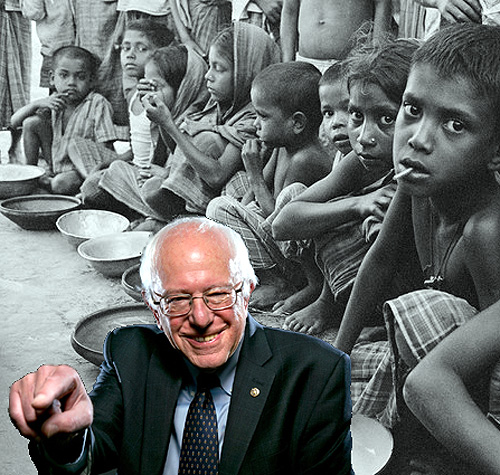
Sanders and the WorldAn American/South African has turned Bernie Sanders on his head, revealing a gaping contradiction in the ethos of this growingly popular progressive.

I like Bernie. I like him more than Hillary and probably more than Joe and my ideal presidential contest is Trump vs Sanders.

But an American turned at least resident South African has stayed my Sanders’ enthusiasm as nothing else I’ve read.

J. Brooks Spector was an American diplomat some years ago when he decided to leave America and take up residence in South Africa. He set up some businesses in the country, taught at a major university, ran a theater and is seen on South African TV interpreting the world from a former American’s eyes.

Commenting today on the drowning of the Syrian refugee child Alyan Kurdi, he writes:

“…nobody can point to any acts by an outside power that have set off these recent waves of migration, other than the US being an economy that is growing in contrast to so many others…”

Ah-hah! I thought, and it had nothing to do with migrants and everything to do with Bernie.

For decades I’ve felt oppressed by my own beliefs, which often raise slight smiles and dismissive stares from my clients who are always much wealthier than I am. My safaris get wonderful reviews but if I lose a client it’s often, as one wrote me, “when you talk politics. Safari guiding has nothing to do with politics.”

As ridiculously incorrect as that remark is it typifies the state of American Progressivism for the last 40 years.

Until Bernie Sanders.

There really are people out there – lots of people like me – fed up with life’s stagnations. The status quo has a remarkable ability to squelch dissent. But you can put up with something being downright unfair for just so long.

It would be one thing if America weren’t growing, but as Spector points out, America versus the rest of the world is growing quite well. But … as Bernie so eloquently explains: not for the 98% and I and likely most of you reading this are in the 98%.

Moreover, we more stable of the 98% are very sensitive to those who are sinking … like some of our kids or friends’ kids, or important parts of our communities that we’ve been so deeply involved with for years.

Bernie wants to change that. He wants to level the playing field, right? He wants to spread out the largess, taking some of the unfair success of the few and reapportioning it to the many.

I like that. After all it is the many which provide the few with their growth at the expense of not growing themselves.

Although Spector was referring to migration, what if we expand his notion to all the world’s problems?

Then immediately we have some serious problems with Bernie’s views on trade: If farm subsidies should be reduced in the U.S., shouldn’t tariffs worldwide be reduced, or dare I say it, Free Trade? His initially welcome views on foreign intervention – “Don’t!” – become questionable: if the federal government must audit individual police departments, what about Assad?

Or let’s talk about AID. If we subsidize rebuilding I-90, what about the Suez Canal or the great new Ethiopian dam?

And so it goes. If Bernie’s hyper focus on putting our own house in order results in a fairer, bigger house for all here at home, will it be at the expense of the rest of the world growing less?

“At present, however, the prevailing international order still means that individual nations will decide what is best for them to do… within the realm of their [own] national politics. Don’t expect the impact of [Alyun Kurdi’s] death to trump individual conceptions of national interest.”

Or, for that matter, the implosion of Burundi or the rape of capitalism by Chinese moguls.

It is a pernicious contradiction increasingly evident the smaller you conceive your world.
Heroes To Africa

Heroes To Africa

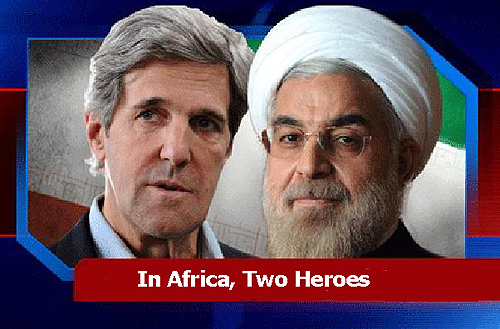
Two Heroes to AfricaA huge sigh of relief could be heard coming from Africa when the Iran Deal was secured this week. It was hard for them to understand why Americans might not have accepted it.

It was hard for me to find any African opposition whatever to the deal, as hard as I tried surveying every news outlet and blogpost I could find in Africa. I was particularly surprised this was the case in Nigeria.

Nigeria’s potential as Africa’s financial powerhouse rests with its enormous reserves of oil, and the Nigerian government announced recently that it expects a quarter of its government revenues could be lost if the Iran deal goes through:

“US-Iran deal: Nigeria could lose N333bn by year end,” Nigeria’s major business newspaper reported.

This is because Nigeria and Iran produce the same quality of crude. Before the Iran sanctions were imposed a number of years ago the two were each other’s main competitor.

Reduced government revenues won’t just occur because Iran will be able to effectively compete again with Nigeria, African analysts warn, but also because there will be “a further drop in crude oil prices” as even more oil is made available to an already saturated market.

So despite this startling understanding, Nigerian public opinion is squarely behind the deal.

“The Republicans dominate the military industrial complex of America and they love and appreciate war more than they treasure and seek peace,” writes an important Nigerian commentator.

This is the sentiment throughout the continent, although outside Nigeria, commentary is a bit more biting:

“In a sense,” writes one of Nairobi’s most prominent columnists, “Obama’s real contest is not with Congress. It is with a small but powerful Middle-Eastern state that holds extraordinary – even abnormal – power over … Congress.

“One can write a whole book on why exactly Israel has this unique capacity to make America dance to her every tune.

“Empires begin to decline when they lose touch with reality. Diplomacy has lost meaning to the Republicans. It’s either their way, or the gun.”

“The Iran nuclear deal would curtail its nuclear programme. The only people who can hate that are the kind who just love war,” according to one of South Africa’s most read dailies.

“Republicans … seem downright furious diplomacy prevailed over the threat of more missiles.

“For Republicans, the Iran nuclear negotiations have never been about getting ‘a good deal’ for the US. They’ve simply wanted to preserve their ability to kill people … whenever they want.”

These are tough words from a normally moderate and respected newspaper, and it reflects the utter frustration that otherwise thoughtful and intelligent Africans felt when confronted with the possibility that Republicans might have scuttled the deal.

Well anyway, frustrations aside at last, the deal seems done. Perhaps its demonstrable success over the next few years will be one of the final nails in the coffin of America’s Republican Party, an old GOP movement that may truly have seen its day.

$ Means Everything

$ Means Everything

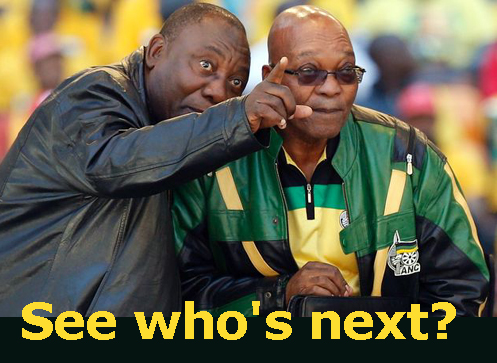
Ramaphosa&ZumaCyril Ramaphosa is not Donald Trump but they share something loved by their electorates: lots of personal wealth.

Therefore, each is claiming, they are not beholden to special interests.

Ramaphosa is South Africa’s Deputy President, erudite like Brush, soft spoken like Carson, business accomplished like Romney, and filthy rich like Trump. And the electorate seems to value the wealth above all else.

South Africa is nearing a leadership crisis. The terms of its current president, Jacob Zuma, are slowly and miserably coming to an end, but not quickly enough for South Africans.

Zuma has mounted one scandal after another, and is so plagued by corruption and coercion that he no longer tries to hide it.

His most transparent scandal is the $24 million taxpayer dollars spent building Nkandla, a personal residence in Kwa-Zulu with taxpayer money. Every day that Parliament opens, MPs shout, “Pay back the money!”

He won’t.

So the issue is currently in court, along with other litigation against him for misuse of educational funds, his son’s Playboy antics with yachts and Porsches including killing a taxi cab passenger that he ran into, and horrible neglect of the country’s deteriorating labor union situation, once an essential ingredient of ANC power.

As the second president to follow the saint, Nelson Mandela, he was a great step-down from the quixotic and often enatic Thabo Mbeki, whose legacy is mostly based on his certainty that the AIDS virus was easily washed away by showering after sex.

Ramaphosa might change all this. He has a real shot at following Zuma. He’s as much a part of the inner core of ANC rebels as Mandela, Mbeki and Zuma, which still today seems to be an essential credential for becoming the new South Africa’s Head of State.

It’s all very similar, in fact, to the first several presidents of our own Republic, revolutionary heroes.

But there are real outside contenders developing because of Zuma’s absolute craziness. In steps Ramaphosa out of the business world, where he’s been quietly earning billions.

Frankly I don’t think Zuma’s problem is that he’s beholden to special interests, but the electorate absolutely thinks otherwise.

And they see Ramaphosa the same way so many Americans see Donald Trump, freed from the outside sources of wealth that are so necessary for winning an election, today.

I find this fascinating. In both places wealth creation is not yet presumed evil in itself, even when it can be demonstrated that often that creation is at the expense of the poorest.

Rather, it’s the “dream” that has replaced the dream of freedom: Freedom of tyranny is no longer as important as freedom from your creditors.

I see it as the same thing, really, but the intellectual exercise of equating the two seems beyond the capacity of the 10-second sound bite consumer.

So if you believe this, then you might as well believe that someone who is truly freed from the creditors that broker elections and governance might be a fair bloke after all.

Forget about such incidental things as poverty, disease, infrastructure and the Syrian War. Look at that bank statement!

Zimbabwe Downdate

Zimbabwe Downdate

mugabefallsRobert Mugabe is like the feral cat that keeps showing up at the bird feeder.

It goes away for long periods of time and then appears daily, for long periods of time. It looks arthritic as it raises itself out of a pool of sunshine on one day, then pounces on a vole a meter away like a young bunny rabbit.

Whenever it acts the back yard trembles. It always catches something, and you can hear the bones crush as it eats the poor thing whole.

Robert Mugabe has been Zimbabwe’s leader for 35 years. For at least 25 of those he’s been an abject dictator. His main prey: white people, but that’s hardly all that fills his larder.

He’s eaten up virtually every living thing that has opposed him. In this power obsession he’s neglected one of the most beautiful and potentially rich countries on the continent.

Last week for the first time I can determine Zimbabwe media universally criticized his “State of the Union” address. He mumbled, fumbled, fell on the way to the podium, then misread his prepared remarks.

Mugabe’s leading mouthpiece media newspaper, for instance, the “New Zimbabwe,” dared to publish recently:

“While his handlers have insisted the Zanu PF leader is as fit as a fiddle, Mugabe’s body posture show a man very much being dragged to events with his body in evident protest as he struggles to walk.

“The veteran leader’s speeches are now slurred and he uncharacteristically says very little outside the prepared texts.”

Many of us have predicted his demise for years using events like this, or times that he’s shown up at the only modern hospital in the world that will take him (Singapore). A few weeks later he’s smiling at another opponent being cut down.

So summer is ending and another year passes with Robert Mugabe as leader of this beleaguered place. Another round of feisty politicians, hopeful politicians, progressive politicians have been swept out of power leaving little to hope for.

(Where do all these volunteer victims come from?)

The result is a politic totally unknown, a power vacuum or free-for-all looming in the wings.

One day this despicable old man will die. The political landscape he has fashioned is scorched, devoid of possibility. The land he has pillaged for four decades is tired and bleached of its nutrients.

I have been saying for years that little will change when the old man goes. It will take years to reignite the spirit of Zimbabwe in the people who remain there.

If any spirit at all is left.

The Lion Returns

The Lion Returns

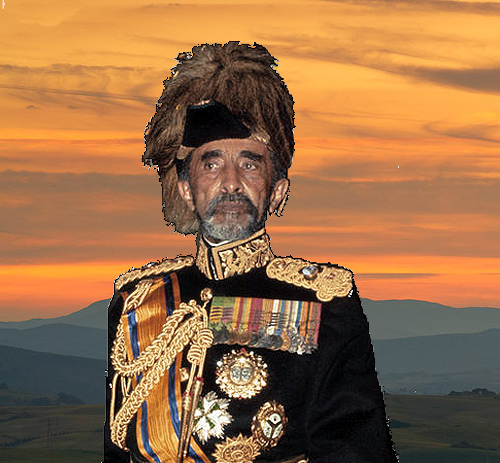
Tuscany 28Forty years ago today the Lion of Judah disappeared in mystery yet as the fog of time clears, his legacy becomes the legacy of Africa.

When Haile Selassie “disappeared” on August 28, 1974, a new era of democracy and freedom exploded onto the continent. All of us were ecstatically hopeful.

What a mess.

It went not so badly for 10-15 years. I’m inclined to think the culprit is the Cold War. Global politics during the Cold War courted Africa at all costs, creating and magnifying corruption. Then the end of the Cold War triggered an abrupt end to all interest whatever in Africa!

The continent was dropped on its butt from the ivory tower of global democracy.

Fifteen years after the Emperor disappeared Africa was in shambles: wars, disease and pestilence, droughts, and possibly worse of all, increasing poverty.

The Africa Condition reached its nadir towards the end of the 1990s. By the middle of the last decade things were beginning to turn around, and today The Africa Condition is the best it’s ever been in my life time.

What’s happened? The Emperor has returned, and I’m not a Rastafarian.

Haile Selassie was the 77th Solomic emperor of Ethiopia from 1930 to his death in 1974, but there were many emperors who preceded his 13th Century dynastic line, all the way back to the Queen of Sheba and King Solomon in 3 BC.

Known by the ancients as the Land of Punt, and believed by early Christians to be the hallowed land of Prester John, the country is sealed by formidable geography. It’s the only country in Africa never to have been colonized.

The likelihood that an early Queen actually did visit Jerusalem and bring back with her legions of intellectuals and wise men is a reasonable presumption.

If her visit actually did occur in 3 BC, her initial dynasty kept contact with Jerusalem at least through the birth of Jesus Christ, because around 3 AD Ethiopia had founded much of its strength on a form of Christianity that has been retained to the present day.

But around 3 AD the last hints of openness to the world closed, again. The isolation of the society allowed the early seeds of civilization to blossom unencumbered by the wars that beset the cradle of civilization. Ethiopia grew inwards.

It blossomed with an unusual and rich language; a music with funny scales, chords and progressions; and food and drink totally unique not just to Africa but the entire world.

I very much believe that the principle engine of social change for any society comes from the outside. So while Ethiopia’s impenetrable geography ensured the country was protected from the outside world’s turmoils, it also simultaneously retarded all social development.

Nothing could come into Ethiopia. There was a millennium of peace and no social change. Emperors flourished.

The isolation grew difficult by the beginning of the 1970s. Flush with the youthful energy that ended the Vietnam Conflict and started the Civil Rights movement and fired the new technologies of communication, Addis began to shake.

What followed the Emperor’s disappearance is correctly called the “Red Terror.”

Anger had built for generations. For all practical purposes, it exploded into a horrible and brutal revolution.

We have this weird notion in America that revolution is always good, because our very, very distant past revolution heralded a good era.

Not so in more modern times, even not so in the French revolution which almost immediately followed the American revolution. Revolutions are more typically followed by terrible turmoil.

The revolution and the turmoil that followed the Emperor’s disappearance is coming to an end throughout Africa. From the ashes have emerged a couple truly democratic and free societies as in South Africa and Kenya.

But the majority is not like that: The majority is composed of Rwandas, Egypts and Zimbabwes, ruthless autocratic societies each with its own little emperor.

The Lion of Judah has returned.

Smiling Terrorists

Smiling Terrorists

mamoutdouadIf you’re an American, you probably don’t understand terrorism. Your egoism’s unique fears cloud your rational analysis. Two excellent examples of this, today:

The first is simple. On a not-very-left but not-right morning TV show, today, Morning Joe, a quick mention of the ISIS beheading of a Croatian oil worker who was kidnapped in Cairo elicited the following conclusion : “…shows the increasing reach of ISIS.”

The correct take on what happened is exactly the opposite. Terrorist groups that are failing at normal warfare, as ISIS is in the Levant, break up into individuial guerillas undertaking easier, simpler acts.

It’s a clear demonstration they are becoming weaker.

It’s equally true of the other major terrorist organization in Africa: al-Shabaab. Both BH & Shabaab were large-scale military organizations that have been routed leaving no well organized terrorist armies left in Africa.

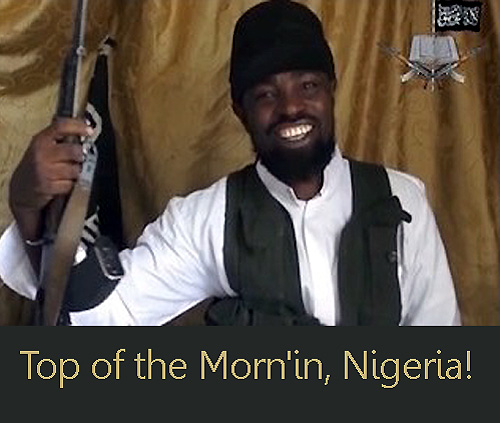
BH’s long time leader, Abubakar Shekau, who at one point controlled nearly a fifth of Nigeria, has apparently been killed or exiled and replaced by Mahamat Daoud who the Chadian leader said yesterday wants to negotiate peace.

There’s no reason to negotiate with Boko Haram, now. There’s little of it left.

According to Reuters, BH now controls hardly anything in Nigeria except a small, remote forest.

Mahamat Daoud smiles. Find me another picture of a major terrorist smiling.

The remarkable turnaround in Nigeria this year is linked to several factors. First, the newly elected president is a former general who has successfully consolidated Nigeria’s civil administration with its military, not seen before.

Like former times in several South American countries, the military and civilian sects of society never got along. Civilian rule was corrupt and inefficient. Frequent military coups returned stability to the country but also resulted in massive human rights violations.

Nigeria’s current president, former general Muhammadu Buhari, who won the March presidential election seems to have changed this … at least so far.

The other factor is widespread presumption of massive U.S. military aid. In fact the sudden and productive delivery of U.S. weapons to Nigeria seems to have become an issue locally.

The Christian Science Monitor reported last week that Buhari is himself concerned that defeating BH depended upon outside military support, and has called for the creation of a Nigerian military-industrial complex so the country can produce its own weaponry.

(A topic of its own, of course. Whatever else can be said of ‘supporting your allies’ it becomes undeniable that the world becomes further militarized.)

The new conciliatory face of BH is quite unlike what happened to Shabaab. Shabaab splintered and fled in face of Kenyan troops and U.S. special services on the ground in East Africa. Shabaab never offered to negotiate.

In Kenya and Uganda it devolved into guerilla attacks such as the Westgate Mall. That now has all but ended as what’s left of Shabaab evaporates outside of Somalia. Within Somalia the remaining militants are struggling to retain small areas of control.

For good reasons or bad ones, whether the current state of affairs will be lasting or short-lived, terrorism in Africa is way down.

Many American’s problem is that they demand 100% of everything. Something that’s bad, like terrorism or back problems or faulty car brakes, gnaws at them virtually until there is no problem left at all.

And that rarely happens.

So their ability to calmly consider the problem and enthusiastically work towards a best if partial solution is compromised by their fear that that itty-bitty 1% not taken care of, will take care of them.

Only in movies is this a meaningful way of life.

Strongmen Clapping

Strongmen Clapping

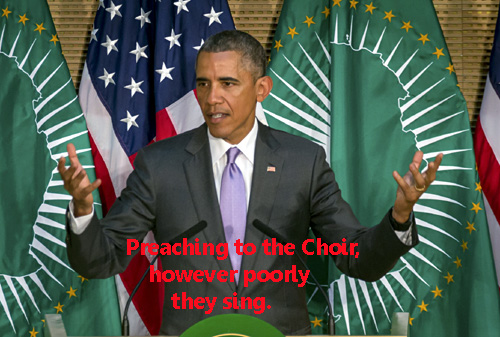
Barack ObamaObama’s speech to African Heads of State in Addis Ababa several weeks ago was both naive and inspiring and made me realize how weak a President but how strong a role model he is.

Obama minced no words when calling out African leaders for corruption, misuse of power and insensitivity to human rights. It was no diplomat speaking when he repeated his oft-stated opprobrium about the continent:

“Africa doesn’t need strongmen, it needs strong institutions.”

What was singularly remarkable was that this line was followed by wild applause, clapping from the strongmen.

It was the case throughout this most remarkable address. Many lines in Obama’s speech were more than sufficient to jail him in many of the countries whose Heads of State wildly cheered those remarks.

“In many places across Africa, it’s still too hard to start a venture,” he said, alluding to powerful nepotism and biased regulations that favor the wealthy classes. “Here in Africa corruption drains billions of dollars from economies that can’t afford to lose billions of dollars.”

He boldly claimed that many basic human and democratic rights “are denied… many Africans. When journalists are put behind bars for doing their jobs, or activists are threatened as governments crack down on civil society — (applause) — then you may have democracy in name, but not in substance. (Loud applause.)”

He nuked all diplomatic etiquette when charging three sitting African leaders with crimes against humanity: in the South Sudan, Burundi and Central African Republic. Strong supporters of these regimes … clapped.

“I have to also say that Africa’s democratic progress is also at risk when leaders refuse to step aside when their terms end. (Applause.) Now, let me be honest with you — I do not understand this. (Laughter.)”

The chairman of the AU, the forum at which he was speaking, is Robert Mugabe of Zimbabwe, a “president-for-life” who is as ruthless as they come. He did not clap. But the representatives from South Africa at his side, who have diligently supported him year after year, did clap.

“The bottom line is that when citizens cannot exercise their rights, the world has a responsibility to speak out. And America will, even if it’s sometimes uncomfortable — (applause)”

At this point many commentators in Africa began to wonder if African leaders understood English well enough to know what they were applauding. That, they do.

“In Africa this was a revolutionary speech,” wrote Richard Dowden of the Royal African Society.

Let me tell why this shouldn’t baffle you, but indeed makes sense.

Africa’s leaders fall into two categories: good guys who can’t get much done, and bad guys who spend their public lives denying their own prevarications.

Right now almost all of the 54 African presidents fit into one or the other of those two categories.

Category One Guys applauded enthusiastically, hoping beyond hope that Obama’s force will infiltrate the networks and institutions that constantly obstruct them.

Category Two Guys applauded because they’re in denial … at least public if not personal denial. (It takes a Freud or Landers to determine which.)

So I’m not baffled, and I don’t think this speech is revolutionary. Obama was giving all of them just what they wanted.

For me the speech focused my growing understanding of exactly who Obama is.

I see Obama as a weak leader. He’s a professor, a role model, a stellar person. He believes like all good wise mentors that the spoken word can be as powerful as the clever act.

In that, especially in Africa, he is oh so wrong.

Vigilance in Tanzania

Vigilance in Tanzania

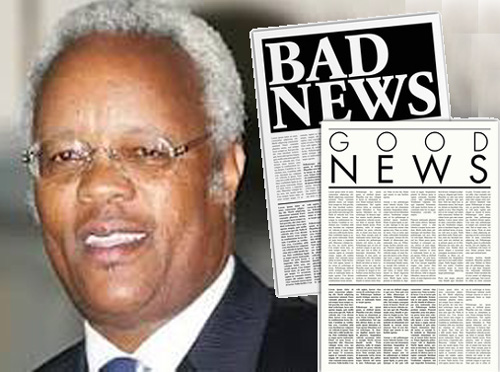
GoodNewsBNLowassaVigilance in Tanzania, folks. A surprising political situation has developed which might bring enormous benefit to the country or … might cast it into turmoil.

For 50 years the Tanzanian government has been ruled by a single party, the CCM [Chama Cha Mapinduzi]. Although certified by western powers as democratic, it never really has been.

In the early days there was no pretense. For the first 20 years, Tanzania proudly declared itself a socialist nearly communist country. At the end of the Cold War it changed its tune and western powers like the U.S. warmed to their new found reticence.

Be that as it may, it’s always been a core group of central leaders who have chosen the president. In the last 15 years the process has opened up enough to allow for truly opposition members of parliament, but none of them attained any real power in governance.

That may be changing with the announcement a week ago Tuesday that a controversial and very famous politician, former Prime Minister Edward Lowassa, had defected from the CCM to lead the opposition.

That wouldn’t have meant much a year ago, because there are so many fractured opposition parties. One of the strategies of a strong single party state flirting with democracy is to foment so much opposition that alliances between often small regions become impossible.

For example in Tanzania, the ZUF, or principal party of Zanzibar, has never allied itself with any other political group. Considering itself extremely unique, aggressively Muslim and very committed to succession, no other mainland political organization would join forces with it.

That’s changed with Lowassa’s defection, and many in Tanzania see it as a miracle. The heavily Catholic Chadma party, CCM’s principal nemesis, has forged a country-wide alliance with virtually all the opposition parties, including the ZUF.

Lowassa seems to have brought them altogether, agreed that he is the one man in the country that for the first time ever in Tanzania’s history could destroy the single party state.

So what’s wrong with this?

Edward Lowassa until yesterday had retreated from politics after being charged as the kingpin in a terrible 2007/2008 scandal when he was prime minister. More than $120 million dollars was paid to a Richmond Electricity Company in Texas to deliver electrical generators that would massively increase the country’s power.

The company, according to Transparency International, appears to be a shell corporation and no generators were ever delivered. The scandal nearly brought down the then new Kikwete government, which ultimately said Lowassa was principally to blame.

Lowassa until now has only softly denied the charges while disappearing out of public life. Tuesday he claimed he tried multiple times as prime minister to vacate the contract, but that “higher authorities” disallowed him from doing so.

He then claimed he was made the fall guy when the details of the contract leaked.

Anything else? If this scandal can be swept under the rug, what’s concerning about Lowassa forging a real opposition that can actually challenge the one party state?

Technically, nothing. But ghosts of Kenya Past haunt the process.

More or less the same thing happened in 2006 when Kenyan opposition leader, Raila Odinga brought together all of the opposition against the ruling party which had controlled Kenya since its Independence.

He won. At least that’s my take on the situation, but the election judges all from the main KANU party ruled otherwise. The result was incredible civil disturbance which resulted in more than 1300 deaths and 120,000 displaced persons.

It took five years to fix, and fix it well the Kenyans have. The change which seems now to be settling on Kenya strikes me as well and good and extremely promising. But it came about, literally, through revolution not the ballot box.

The Kenyan ballot box instigated the revolution that followed. The parallels with Tanzania are exceptional.

The Tanzanian election is the end of October. Stay tuned.

Oil & People

Oil & People

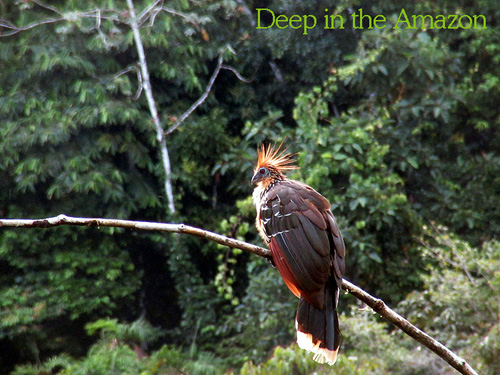
DeepInamazonAs I wait here in Arusha for my clients to arrive tomorrow, I’m haunted by my visit to the Amazon a few weeks ago.

It wasn’t just the goose bumps and occasional terror produced by the massive, towering jungle with its chaotic screaming sounds. I was profoundly moved by the local people who hosted us and who are demonstrating remarkable courage refusing the wealth of oil that sits below them.

Ecuador’s Amazon is one of the richest biomass areas in South America and includes Yasuni National Park, which the Wildlife Conservation Society says is “one of the most biologically diverse forests in the world.”

The area is also the home of several clans of Huaorani people who continue to forcibly resist development, violently opposing all efforts to contact and civilize them.

But controversy with oil companies dominates the area. The first discoveries of huge reserves in the 1960s led to a mini oil boom that was eventually stopped when several massive spills galvanized local opposition. An increasingly leftist government in Quito became incensed by the significant ecological destruction of their Amazon.

One of the tribes in the area, in fact, the Achuar Kapawi, successfully obtained a large judgement against Occidental Petroleum after a persistent six years of expensive litigation in New York (spearheaded by EarthRights International).

But even more significant reserves were discovered in the late 1990s and so the pressure on the Quito regime grew substantially. The Correa administration asked the United Nations to calculate its reasonable return over ten years if it allowed the oil to be developed. The UN came up with a figure of $7.2 billion.

President Rafael Correa then addressed the opening session of the United Nations in 2007 and asked the assembly to create a trust fund that if if subscribed by half that amount, $3.6 billion, would be used by his administration as an alternative to developing the oil in the Amazon.

Correa challenged us global conservationists to put up, or shut up.

Several years later only $110 million had been pledged and less than $13 million actually paid into the trust. So in 2011 Correa struck a deal with a consortium of multinationals for a federal royalty of $17.06/barrel and invited the companies to negotiate final deals with the various owners of the Amazon land where the reserves were located.

Nineteen of the 26 indigenous communities in the Yasuni National Park area have so far struck deals with the oil companies. The Sani-Isla community, which owns about a half million acres including a small portion actually inside the national park, has repeatedly refused deals.

Multiple times oil company representatives have requested and received an audience with Orlando, the 70-year old, democratically elected Sani-Isla leader, who is also a shaman, and who also worked for the oil companies for 20 years in the 1960s to 1980s.

Orlando’s first job with an oil company was as the most menial of laborers, the poor bloke who has to climb inside a giant oil barrel and swab it clean. By the time he left more than 20 years later he was a foreman on an oil rig.

Orlando grew increasingly horrified by the drugs, alcoholism and prostitution that always seems to beset an oiltropolis. He pleaded with management multiple times for rules and regulations to curb the errant behavior so alien to his way of life, but to no avail.

So he led his 600 Sani-Isla people to vote no to oil. Instead, they built a tourist lodge with Orlando’s savings. It’s always hazardous to critique a place you’ve been so soon after leaving it, but my initial impression is that my 7th Amazon visit, this time to Sani Lodge, was the best I’ve ever had in a jungle.

The earnings from Sani Lodge have funded a school, but it’s small and basic and has no bathrooms. They’ve also built a health clinic but it’s very rudimentary, dependent upon infrequent nurse volunteers.

On all sides of the Sani’s half million acres of Amazon, oil rigs are churning. Those communities with negotiated deals have modern schools and health clinics. Some have running water. Some even have sanitation systems. Many of their smarter children are getting scholarships to U.S. schools.

Sani Isla’s children are just as smart as any, and ironically the oil boom trusts created in the 1960s actually provided scholarships for some of the San Isla children.

Javier Gualangi is the principal guide at Sani Lodge and one of Orlando’s chief supporters. He spent three years studying biology at a college in Portland, Oregon, and he traveled across the States, visiting wilderness sites from California to Minnesota to the Everglades, in part on oil company tabs.

It was in the Everglades that his longing for the Amazon grew acute.

“That was when I knew I must come home,” he told me.

At 27-years old he has yet to start a family. He gently refused his parents’ arranged marriage, and he insists that Orlando has the correct vision for his people.

“Before we began our conservation efforts with the lodge,” he told me, “there were hardly any capuchin monkeys left.” This is the case throughout much of the Amazon, by the way. “Today they’re all over!”

We saw many. Javier’s enthusiasm for the wild is almost unbelievable, especially because he expresses it so elegantly in excellent English. What is such a remarkable person doing here? I asked myself, when the modern world is at his fingertips?

Javier showed me more stuff in the Amazon, I think, than I saw in all my combined previous six visits. He found at night the treasured paca. (See this Flickr link for pictures.) He showed us the Great Potoo, many many-banded aracari, lots of caimans, wooly and howler monkeys.

He knew the scientific names of … well, everything: plants, bugs, animals. He explained how trees walk across the ground, how mushrooms invade moths, how eels electrify our imaginations!

Two professional birders who were with us at the lodge said they came here specifically because there are more species of bird than anywhere else in Ecuador’s Amazon.

But – as I cautioned Javier – Sani Lodge as good as it is will never achieve the revenue stream of oil. Was there not a way to negotiate with the companies to protect the community’s social and cultural values?

Javier’s radiant face always seemed to smile knowingly. He said nothing at first, then pointed to a black bird deep in a bush near our canoe that was singing a most haunting Amazon tune.

“That,” he said with pride, “is the plumbeous antbird. You can’t see it anywhere else but here! It’s disappeared from the other communities.”

I listened to the hauntingde-escalating warble, a quintessential Amazon bird song echoed even louder as it sallied through the dense jungle around us. Then suddenly, the great forest fell surprisingly silent for all of a second. My tummy thundered. You could hear albeit from ten miles away the distant low rumbles of an oil rig in the next community downstream.

OnSafari: Tanzanian Election

OnSafari: Tanzanian Election

BackRoomPoliticsAll the talk in Arusha is over next month’s choice of a new president of Tanzania. That may confuse you non-communists who think the election is October 25.

The election is October 25. But the president isn’t chosen in the election.

Most African countries have become pretty democratic and that includes Tanzania. On October 25 Tanzania will vote freely for candidates in all levels of government from local to the presidency.

But like South Africa today where the ANC dominates the electorate, the real choice for president isn’t determined in the national election. It’s determined in nominating committees, some open and some closed, assemblies of party faithful (not unlike the American caucuses for primaries) but ultimately by just a handful of party officials.

In Tanzania’s case this will all culminate in mid-July when the ruling CCM party announces its candidate.

The story is then essentially over. There will be opposition candidates, but no coalition among the opposition candidates who are as eager to eat up each other as the main CCM candidate. Since many of these opposition parties are very regional if tribal, CCM is certain to get the largest vote.

There will be plenty of local governments run by opposition parties, and the important town of Arusha is one of those where the opposition party Chadma holds sway. But the power-and-purse held by the national government is exponentially greater than even in the American system, so local government is often tightly beholden to the national paymasters.

So the CCM candidate announced in July will become the winner in the national election. This isn’t a sham as in China or rigged as in Russia. It will be the “free will of the electorate.” It is as truly democratic as the winnowing process of primaries is in America, or the fractured parliamentary campaigns are in Israel.

And it’s simply another example of why democracy is broken … worldwide.

The technological revolution has already given us the tools for a truly democratic construct for choosing leaders. Were unfair influences like biased media and pork barrel legislation and unlimited campaign money prohibited, I expect America would have much different leaders than it does now.

Frankly, I really don’t think there would be many Americans voting for either Jeb Bush or Hillary Clinton in that fairy tale world. In Tanzania and South Africa current politicians would also be shown the door.

But who would be shown in?

That’s the scary part. Would it be a current Pop Star? Somebody with a memorable name?

We are doomed in the truly democratic parts of our planet to vote not for whom we think will be good, but for whom we think will be less bad.

Progress is possible. In South Africa an opposition coalition that could defeat the ANC is a possibility. In Tanzania committee sessions and party leader convocations should be changed to primaries. In America big money should be prohibited and campaigns shortened.

Everywhere in the democratic world, widely publicized debates should be organized and probably overseen by officials from a foreign society altogether in an attempt to achieve fairness!

Because if democracy can’t be made to work in this technologically rich world, then the default is Chinese authoritarianism or the Russian mafia.

So three cheers for Tanzania’s election on October 25! …or July 12 or whatever!

Forming The World Order

Forming The World Order

bashiratsummitOne of the most difficult things for anyone or any thing to do is cede control … to give away your authority to someone or something else. South Africa did that, today, and the United States in an identical situation in March refused to.

In my estimation, this makes South Africa more modern, more moral and presents a future more promising than the U.S. The world is becoming increasingly interconnected and interdependent upon every part of itself.

A global society with ultimate authorities will some day be an absolute certainty. The societies which embrace this future and now work towards it will be the movers and shakers in it.

Those who refuse may decay.

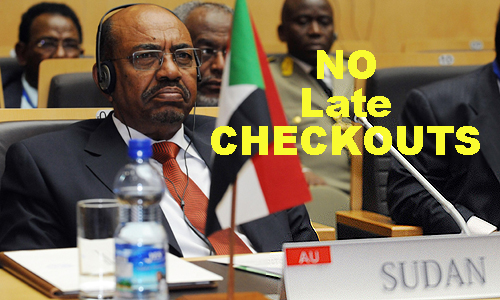
Omar al-Bashir, the dictatorial leader of The Sudan, was in South Africa earlier today attending the African Union summit in South Africa. A court ordered his arrest on an indictment from The World Court for crimes against humanity, because South Africa is a signatory to the World Court Treaty.

But minutes before the order was issued, Bashir jetted out of the country.

Bashir was in New York in March for the opening session of the United Nations. Although numerous organizations and individuals petitioned various U.S. courts to have him arrested, no court issued a warrant because the United States is not a signatory to the World Court treaty.

So he stepped onto a world stage and addressed the opening as all World leaders are allowed to do. He legitimized his ruthless rule. Obama could have cooperated with the World Court, even without a formal treaty, but he elected not to.

The situation in South Africa was not without controversy. Before The Court ordered his arrest, it ordered that he not leave the country while it deliberated the case.

The current government of South Africa headed by President Jacob Zuma was caught off guard, as it has continually been throughout Zuma’s troubled reign.

Having little choice but to play with the court that, in fact, has kept Zuma somewhat immune to the ramifications of his scandals, the South African government aruged that Bashir was technically not in South Africa, but in the nether world of the Africa Unity Summit, and therefore South African laws didn’t apply.

The Court adjourned for an hour at noon South African time after a morning of deliberation. In that hour Bashir was sped away from the summit in a black limo to a nearby South African airbase, where his plane’s engines were running.

He leaves behind him another Zuma scandal: Zuma heeded the call by the Court to deliberate the question, but essentially just ignored the earlier order to keep Bashir in the country until a decision was reached.

Bashir is under indictment by The World Court for crimes against humanity mostly in Dafar.

On Friday, the South African government urgently appealed to the court in The Hague to rescind their arrest warrant while Bashir attended the African summit.

Saturday, The World Court refused and a local South African court then ordered Bashir to remain in the country while it deliberated on numerous motions from South African citizens.

It’s not uncommon for Heads of State, including George Bush, to avoid international travel because of fear of being arrested in a foreign country.

Bush and Cheney avoided travel to Canada and Switzerland shortly after the end of the Bush presidency because of numerous lawsuits filed against them for the fraudulent war in Iraq.

Bashir has avoided almost all travel since being indicted, this because the majority of the world subscribes to the World Court. In March, however, he traveled to New York to address the opening session of the United Nations, having received assurances from the Obama administration that he would not be arrested.

The U.S. is not a signatory to the World Court convention, as virtually every African country is. Moreover, the Obama administration believes that peace in South Sudan is critical and dependent upon Bashir’s cooperation.

At the time, The World Court, which is a child of the United Nations but technically no longer linked to it, requested the UN to arrest Bashir. Ban ki-moon declined, answering that he lacked such authority.

It was a terrible travesty of human rights that Obama and Ban ki-Moon allowed the ruthless dictator to address the world assembly.

It’s arguably a greater travesty that President Zuma picks and chooses which court orders he will obey at home, but the overall situation and outcome in my estimation puts South Africa as a whole in a much more moral situation than the U.S.

Accepting authority is never easy. But without a world authority in the near future there will be no authority for anyone.

Freedoms Crumbling

Freedoms Crumbling

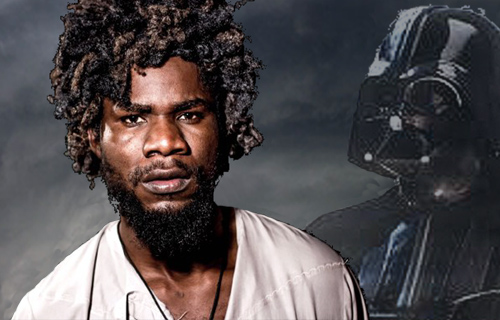
VaderPilatoNo wonder that stability may trump Africa’s expanding democracies. Just look at Mosul or the Boko Haram held areas of Nigeria.

Today a popular rap singer was arraigned by a Lusaka magistrate for “defaming the president” of Zambia even though such a specific law doesn’t exist.

Pilato’s rap depicts the president as an oaf who spends much of his time drinking.

Pilato is very popular, very political and shows a definite sophistication of complex issues. This rap, for example, berates a political merger between two previously antagonistic political parties.

But the hook which gave his rap such a wide audience was the accusation of drunkenness. Drunken old men in rural Africa are the bane of their families, a condition closely associated with dementia.

It’s understood that age and dementia are not willful situations but nonetheless divine the good old men from the bad old men: prosecutor, judge and jury be damned.

So prosecutor, judge and jury respond, waging their own powers in equally questionable ways. A judge arraigned Pilato, today, but who knows for what. A prosecutor will now have to trump up charges, and a jury may assert its legitimacy by adjudicating violations of nonexistent laws.

From my untrained ears, Pilato doesn’t seem to be a specially powerful artist. Acting as if he’s a threat to society, makes him one and only because of that.

Last week at the inauguration of the new president in Nigeria, local journalists so accosted President Mugabe of Zimbabwe that his office later called them Boko Haram.

The video of the SaharaReporters’ encounter is particularly illustrative.

In my view, the so-called journalists were offensive. I’m hardly a supporter of Mugabe, who I consider one of the most devilish leaders Africa has ever seen.

I believe there are times when journalism should work with politics. I remain a devotee of Angela Davis and Herbert Marcuse. But this incident in Nigeria is not one of them.

These reporters had little interest beyond making headlines of themselves. “There is no democracy in Zimbabwe!” the woman journalist yells after persistently being unable to get Mugabe to answer her question, “Is there democracy in Zimbabwe?”

So with Pilato, no there’s not “too much” freedom of speech. But with the Nigerian journalists, yes they exercised “too much” freedom of speech.

There are ignorant rich, and there are ignorant poor, and technology is thrusting them backwards into the age old irresolvable battles between religions and tribes.

Neither side understands the facts, yet the IT technologies of iPads and iPhones present them constantly with situations requiring immediate reactions.

There is a reason that ISIS bans most technology. It wants to control the culture and the first step in controlling anything is to neutralize or pacify it. Many in Mosul as in the Boko Haram areas of Nigeria actually prefer such pacification to confrontation. My father did.

Democracy doesn’t exist without confrontation. Open societies need it. But when it reaches the level that technology brings it to, today, it’s like fusion. It expands under its own power and becomes uncontrollable and unpredictable.

When confrontation is such that it provokes a yearning for less freedom than more, when stability becomes society’s first priority, Darth Vader arises again.

Should Obama Visit to Kenya Go On?

Should Obama Visit to Kenya Go On?

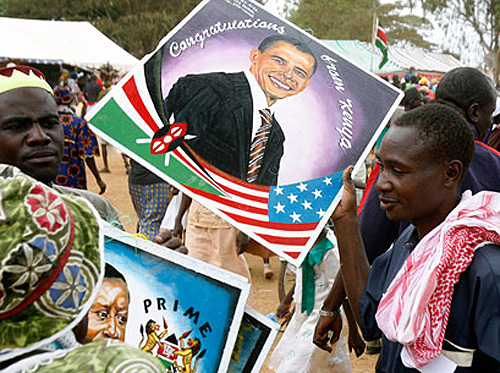
obama-kenya-2Obama’s end-of-July one-day visit to Kenya is causing as much controversy as Bruce Jenner’s to the New York Gym. Why?

People leaning left like Robert Rotberg writing in Politico have a litany of reasons topped by a presumption it’s too dangerous. To me that proves many on the left are as dangerously myopic as they claim people on the right are.

Those on the right see it as an opportunity to prove the birther theories.

Even many Kenyans are shocked by the cost and expected mayhem that will result from the single-day visit.

The White House announced the visit several months ago. The principle reason given was that Obama will attend the 6th annual Gobal Entrepreneurship Summit, which is traditionally hosted by developing nations whose economies are showing significant promise.

Like Kenya.

I think that announcing the date of his visit several months in advance is tempting fate, and I wouldn’t be surprised if his arrival an departure details changed at the last minute. But there are many diplomatic reasons that Obama needs to visit Kenya, now.

First is that he’s already visited Tanzania. Tanzania and Kenya are the Tweedle-Dee and Tweedle-Dum of East Africa, but security at least until recently has always been better in Tanzania if for no other reason than it’s a few hundred more miles from Somalia.

But visiting the poorer cousin scoffs the successful one and Kenya’s security has definitely improved.

At the time of the Tanzanian visit the president of Kenya was under indictment by the World Court for crimes against humanity. Those have now been dropped removing that very significant diplomatic barrier.

Kenya’s role in the “liberation of Somalia” and thus a necessary component of Obama’s pursuit of world terrorists was singularly important, entirely supported by the U.S. Kenya was in effect the U.S. proxy. It’s understandable Obama wants to validate this relationship.

After nearly a decade of monopolizing Kenyan investment, the Chinese have retracted somewhat. This gives the western world important entres they didn’t have just a year ago. Coupled with the GES conference, Obama’s hard-core reliance on capitalism necessitates he recognize this situation.

Finally, I’ve never felt Obama mastered his position of power as he should have. He will go down in history as a weak president. I’ve also felt his spirit was robust, it’s just that he was entrapped by the enormity of the institution. For example, he appointed Elizabeth Warren to oversee his most significant reformation of the financial system even while retaining as his closest advisors the people she is most critical of.

So, perhaps more hopefully than realistically, I see Obama visiting Kenya as a rebuff to his own administration’s ridiculously layered and duplicate travel advisories on Kenya. I know that tourists don’t have an extra $60 million to drop out for their security, but still, if the President can go, why shouldn’t you?

In some form esoteric or otherwise I think Obama wants to deliver this message.

So it makes sense, diplomatically and psychologically, and with the power of a reinvigorated CIA and chance changes in scheduling, a net plus for everyone.

So I’m certain it will happen. My ultimate source for this opinion is Mama Sarah, Obama’s step-grandmother and closest living relative in Kenya. He’s visited her before, but …

she expects him, again.

Devilish Democracy

Devilish Democracy

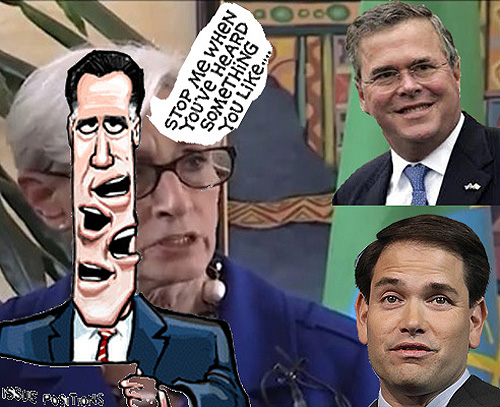
doublespeakDouble-speak infects more than Republican candidates for president. Take Obama’s undersecretary of State who just called Ethiopia “a young democracy.”

The political art of saying something you don’t believe or not saying something you believe, and then mixing it altogether to avoid responsibility for either position, is little more than a ploy that I think we all get.

For me it’s a turnoff, a reason to criticize and withdraw support. The flipside is just as definitive: it’s why I wish Americans would elect more Senator Warrens and Feingolds.

But politicians do it because it works. They bolster existing support or garner new admirers who apparently “don’t get it” that double-speak is the ploy that entraps them.

Ethiopia has an election scheduled for next month. As with all elections in communist and authoritarian states these are political shams, not real elections. There are no opposition candidates.

It is like the “caucuses” that choose the leaders for most of Chicago’s north shore communities, from mayors to school board presidents. A group of ‘learned leaders’ gets together and chooses single candidates for each position who then run in “an election” without opposition.

Obama’s Undersecretary of State, Wendy Sherman, was captured on video in Addis Ababa recently declaring that “Ethiopia is a democracy that is moving forward in an election that we expect to be free, fair and credible.”

The Washington Post called her remarks, “startling.”

The Global Peace Index ranks Ethiopia 139 of 162 countries analyzed. The index is determined by a country’s “absence of violence.”

Ms. Sherman, undaunted, replied with a letter back to the Post which began, “Ethiopia is a valuable partner in a critical region, from peacekeeping to fighting al-Shabab to pursuing peace in South Sudan. Ethiopia, among the world’s fastest-growing economies…”

Now in fairness to proponents of double-speak, it’s not known exactly what mistake Ms. Sherman made. Did she misspeak when saying Ethiopia was developing a democracy? Or did she not intend that her remarks get home? In other words was this double-speak to build a relationship with a regime that is one the most ruthless on earth?

There is no real election coming up. It will be rubber stamping the current regime with a fraudulent tabulation of presumed voters.

Human Rights Watch explains why there could not possibly be a real election:

“Thirty journalists and opposition members” are in jail for criticizing the government, “security forces responded to protests by Muslim communities with excessive force and arbitrary detentions.

“The Ethiopian government continues to forcibly resettle hundreds of thousands of rural villagers… relocating them through violence and intimidation.”

But guess what? Ethiopia’s doing well, economically. Guess what else? It doesn’t like al-Shabaab or al-Qaeda. More and more economics and the “war against terror” seem to be the sole bases by which societies most admire one other.

Jeb Bush and Marco Rubio will not say or will not not say whether invading Iraq was right or wrong, but through mastering double-speak they will say everything but. (I’m beginning to wonder if the real reason for the Iraq War was that GW knew without one we would fall into the Great Recession, which we did just as a new president was arriving to stop it.)

Here’s my dilemma with regards to Ethiopia – or China at the bottom of the scale of democracy and human rights – all the way up to the presumed clarion caller, America:

What if the electorate is fooled? What if the electorate is stupid? What if the electorate is illiterate? What if the electorate doesn’t even know what it’s voting for? What if results are misread like in Broward County in 2000?

Democracy can really screw up a good situation. As Ms. Sherman was quick to point out in her reply letter to the Post, Ethiopia is reducing poverty and providing social services to its population at a remarkable rate. Much faster, for example, than democratic Zambia or Liberia.

If suddenly all of China, including half the population that can barely read or write or even understand the native language of the candidates, were allowed to vote, what would happen?

Is democracy more valuable than children’s full stomachs? More valuable than peace?

The Man is Back

The Man is Back

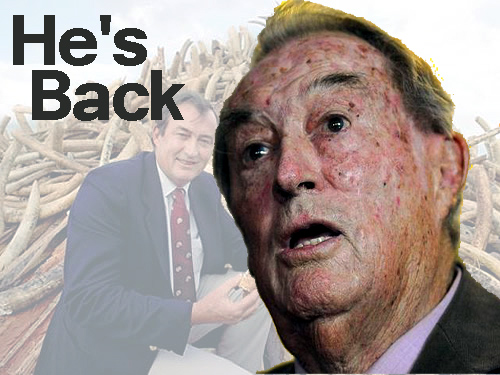
richardleakeybackRichard Leakey is back. Not as the paleontologist. Not as the politician. As head of Kenya’s Wildlife Service. Window dressing at its finest!

Leakey is a very enigmatic character. I immediately disliked him during our first meeting in the late 80s when he was flying high as the architect and czar of the movement that was successfully stopping elephant poaching.

His accomplishments were many and a few years later he would demonstrate some exceptional personal courage when he was nearly assassinated while trying to develop a progressive political party in a country that at the time was being run by an iron-fisted dictator.

But he has had a lot of missteps in a variegated career that spanned science, wildlife administration and raw politics.

That’s his critical flaw: doing too many things, so doing nothing exceptionally.

Last month Kenya’s president, Uhuru Kenyatta, appointed Leakey “Chairman” of the service that he founded almost 30 years ago, the Kenya Wildlife Service.

The position is similar to the chairman of the board of a corporation, so technically Leakey is not supposed to be involved in the actual running of the now massive organization. Local observers, however, think he might have more proactive inclinations.

Nearly fifteen years ago London’s Guardian newspaper asked if “there is any more fight” left in Richard Leakey? Leakey was certainly in the nadir of his many careers then. He was never charismatic like his father, but his public persona had just taken a whipping when he mysteriously resigned from the head of a “dream team” America helped create in Kenya to battle corruption.

His health is reported even worse than when I last met him at the Field Museum in Chicago on the anniversary of his father’s 100th birthday in 2003. Then, he seemed hardly able to talk.

I think Kenyatta appointed Leakey, so soon after a stream of American celebs including Kerry and Clinton visited Kenya, to reconnect with America and the west. Leakey, and his father Louis, are adored in western circles where they had extraordinary success fund raising.

Kenya is in a bit of a slump right now. The vicissitudes of Americans not understanding the ebola situation, the recession in Europe from which the bulk of Kenyan tourists have always come, and the lingering worries about terrorism following the country’s invasion of Somali four years ago have all combined to really challenge an otherwise dynamic economy.

Kenya Airways, which I think is one of the finest if not the finest airline in Africa, came under government scrutiny today for losing more than $100 million dollars last year at a time when most global airlines were making tons of cash.

Relying more and more on outside foreign aid, particularly because of the Somali invasion, Kenya’s internal engines are sputtering and Kenyatta recognizes that only foreign investment will reverse this.

IBM, for example, has yet to fully fund a major Kenyan investment that it announced in 2012.

In my opinion none of this heralds any real crisis but simply demonstrates how susceptible a young emerging nation is to western fears.

“Poaching” is a topic that still commands American attentions. Africans understand much better than westerners that there really isn’t an elephant poaching crisis right now. But westerner’s insatiable need for crisis has narrated a different story, and Leakey is still known as the pivotal character that stopped the real elephant poaching of the 1980s.

Savvy President Kenyatta understands he has to now stroke American psyches. Appointing Leakey is part of this strategy.