Kenyan Crossroads

Kenyan Crossroads

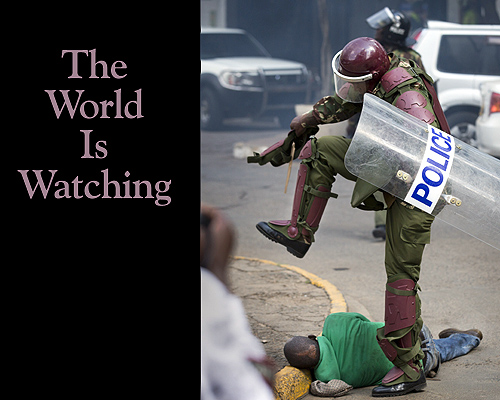
kenyanpoliceIf the Kenyan police don’t clean up their act for next Monday’s protests, tourists should pull out.

Yesterday’s police brutality in Kenya is unacceptable. Property can be protected and citizens safeguarded without beating to death someone who has fallen helplessly onto the street. It’s a despicable, cancerous mentality.

The police action yesterday was worse than in Ferguson or Baltimore or anywhere in the U.S. It reminds me of the late sixties during the anti-Vietnam War and Civil Rights’ demonstrations.

According to Kenya’s respected religious leaders a “volatile political environment” now threatens to undo the country.

Societies go through these difficult times. I’m very proud of having participated in the protests of the sixties and the result of those protests makes me even prouder and made my country stronger. I wish the Kenyan protesters well.

But now as then, in Kenya as worldwide, police action must be kept just and measured.

Kenya’s main opposition party, Cord, announced some time ago that every Monday until the August-2017 national elections, it would stage a demonstration outside the Nairobi downtown offices of the IEBC, the government entity that oversees elections. Cord opposes the current commissioners who it claims are biased against them.

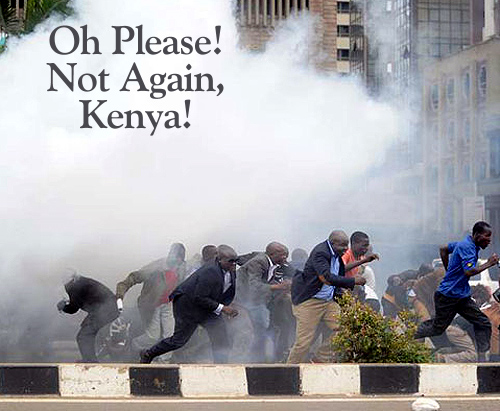
Until the last several weeks these marches attracted hardly a few dozen people. They grew with the police action that clobbered them to a pulp and choked the city with tear gas.

Political leaders made an absolutely wrong decision to meet these rather benign protests with such force. Only now – possibly too late – are the leaders acknowledging negotiations over the IEBC should begin.

But riots are popping up all over the country now: in Kisumu, in the Kibera slum … even shutting down Nairobi university over an issue as pitiful as whether the students should be allowed to cook in their dorms.

Seemingly random police gunfire even broke a window in the government run coffee exchange office.

Yesterday the Nairobi mayor demanded the prosecution of police caught acting mercilessly brutal on hundreds of cameras and phones.

It’s too late to return to the simple issues that triggered all of these demonstrations. The central issue now is police brutality.

Good politicians and astute public leaders don’t allow issues to fester like this. Kenyan leaders did, and they’re now boxing themselves into a situation of relying more and more on the police.

Most of Kenya’s leaders are old, perhaps too old and arthritic to act with the deliberation and speed now needed to restrain the police.

If they don’t, the situation will spiral out of control. No amount of new police violence will stop it.
Not Again, Kenya!

Not Again, Kenya!

teargasinnairobiThe news is not good out of Kenya. Not totally worrisome yet but troubling.

Several public demonstrations which I see as markers of robust democracy have been met with too much government force. We all know the counter reactions this brings, and that’s what worries me.

If the Kenyan authorities don’t soften their act soon, all the progress Kenya has made in the last 12-15 months will be lost.

It began last month with university demonstrations. In the last few days two completely separate incidents, one involving a protest of the election commission and another regarding the arrest of a Muslim cleric both degenerated into a real mess when the police unnecessarily fired teargas, shot into the crowds and starting beating protesters.

We know what using too much force does: spawns more violence. This morning more protests continued in the streets of Nairobi and so far, anyway, the police are behaving themselves.

The issues aren’t really the issue. University demonstrations are chronic through Africa, protests over election officials seem endless, and the mounting religious tensions all over the continent are leading to religious demonstrations.

Nothing’s wrong with all of that. Healthy protest is a reflection of a healthy democracy and is supposed to generate a mediation or negotiation process that leads to lessening tensions.

But in Kenya recently, just the opposite is happening.

The government is clamping down like never before. Police action is brutal. At least five protesters in the demonstration against the arrest of the Muslim cleric were killed by police. Photographs suggest some police state in creation.

In the case of the protests over the election commission, there were less than 80 or 90 people protesting, almost the same number of police who confronted them.

That one is particularly troubling as it could be harbinger for the 2017 national elections, and even more poignant because among those tear-gassed was Raila Odinga, the leader of the opposition.

Almost simultaneously other small violent protests erupted in other parts of western Kenya where Odinga commands the polity.

Even a hint of upcoming election violence could doom all of Kenya’s progress in the last few years.

Kenya has enjoyed remarkable peace over the last year compared to the terrorist inflicted violence that destroyed tourism several years ago. Its economy is good and the people seem prosperous.

It’s all on the table, now, and it’s all a simple matter of how to deal with opposition.

The answer is not police batons and tear gas.

The Old Man Won’t Nod

The Old Man Won’t Nod

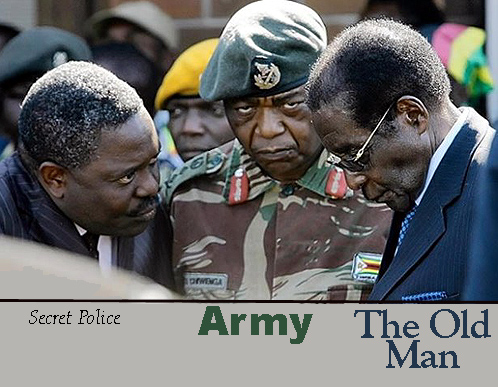
mugabe consentReading the Inyanga tea leaves, studying the day-old photographs, it appears to me that Robert Mugabe wants to turn control of Zimbabwe over to the Army but just can’t. He just can’t give up the reins of power.

If he did it could avoid more bloodshed but at the same time might even further perpetuate Zimbabwe’s sad oppression. Never in my life has there been a country in Africa so raped of its potential by its self-imposed leaders as Zimbabwe.

The possibility that Zimbabwe’s North Korean-like behaviors and criminal neglect of its educated population, natural beauties and rich natural resources might continue for another generation takes my breath away. It just seems so unfair.

Mugabe is 92 years old and feeble, possibly suffering from dementia. The single greatest indication that the time is nigh is how quickly this week Zimbabwe’s false and always artificial economy started unraveling:

There’s no cash in ATMs. More and more gas stations are closing. Food deliveries are growing scarce.

But Mugabe’s power is so absolute that until a change of power is signaled by him publicly, or until he dies or effectively loses control of reality, those waiting in the background won’t move.

Until recently his wife, a generation younger and allied with the secret police, was arranging a transfer of power from Mugabe to herself. Apparently, though, the old man didn’t approve. She’s fallen from the limelight.

So in stereotypical Cold War, despotic fashion, the sidelines are drawn: the secret police vs. the army. Each desperately wants the old man’s nod, so that they can obliterate the other. They have begun the inevitable posturing.

Waiting for the old man’s nod.

The fictitious political “opposition” which over the last several decades has done little but provide another reality TV show drama is powerless. Citizens of Zimbabwe are so beholden to the system which oppress them that like the citizens of North Korea it’s arguable they have little sense of the outside world.

Which is amazing because unlike North Korea Zimbabwe simply doesn’t have the resources to block the internet, for example. But when the time comes, there is no political opposition organized enough to do anything but present their scarred bodies to more police brutality.

If the old man doesn’t nod and simply fades further away, the secret police will ultimately battle the army and it will be bloody.

For how long? A day? A month? An hour?

No one knows and no one knows who will emerge as the new despot. The shorter the conflict, the more powerful the despot who follows.

The longer the conflict, the more lives lost and resources plundered, the greater the chance the world and especially Zimbabwe’s South African neighbor and benefactor might sit up and do something proper. But I don’t see that happening. I think it will be short and deadly.

And the second generation of a Lost Zimbabwe will begin.

Of Shoes & Planes

Of Shoes & Planes

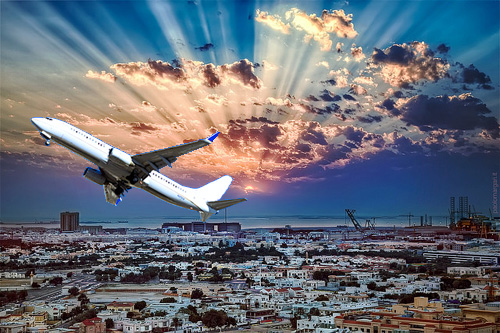
slave-statesWhile one current election debate is about the immorality of American multinationals using slave labor abroad, it’s time to understand how entire societies are now doing this.

America’s alliance with the Gulf States is preeminent foreign policy. But the Gulf States are enslaving Africans as if it were the 18th century, again.

Gulf States need labor. They are cash rich and muscle poor. Seventy percent of Kuwait and 84% of Qatar’s population is composed of foreign laborers who have no rights, lured by the prospect of a job – any job.

An Ugandan journalist, Yasin Kakande, will soon publish a scathing account of such African labor in a new book, Slave States: The Practice of Kafala in the Gulf Arab Region.

In the preview to publication one of several personal stories is being circulated, that of “Harriett” from Uganda.

Harriet earned an advanced degree at a respectable Ugandan university but could find no job. Lured by recruiters from the Gulf States, she paid an agent $600 for a visa and air ticket to Dubai.

Part of the agreement includes a “sponsor.” This is very similar to what is required by immigrants into the United States. In Harriett’s case, it was a company, an airline.

The airline needed lots of unskilled laborers to clean its aircraft between flights. Kakande doesn’t name the airline, and he I think he should, but virtually all the Gulf airlines are expanding incredibly rapidly.

With fares and service that the more established carriers are finding hard to match, these companies do not use other Gulf States citizens for their employees because … there aren’t any.

So to give you the fine service and remarkable fares, these companies hire people like Harriett.

Harriett was offered a salary of $215 per month. That isn’t bad by Ugandan standards so she took it. What she learned, though, was that it hardly kept her alive in Dubai.

The only lodging she could find was to share a one-room apartment with three other foreign workers. The apartment didn’t allow any cooking, so all meals had to be purchased as take-outs, and that was expensive.

The apartment didn’t allow any laundry, except when using the apartment’s laundromat, and that was expensive.

When Harriett developed terrible rashes determined to come from the harsh cleaning agent the airline was using, Babacon, she was taken to a hospital and treated. When she left the hospital, the airline reduced her salary from $215/month to $54/month to cover the medical treatment.

The only way she could try to get another job was to get a “NOC” letter from the airline. This “No Objection Consent” from the sponsor was required, but the airline refused.

Harriett’s personal story actually ends better than this, but many don’t. Few workers have the savvy, intelligence or skills that Harriett had.

So I find it annoying that while our current election debate properly engages the question whether Nike is using Bangladesh labor, the liberal reply that they oppose such policies doesn’t address the current liberal administrations alliance with the Gulf States.

Much less the increasing number of Americans using Gulf States airlines.

Hypocrisy seems a part of all politics, but in today’s age a clarity of meaning is being demanded. Some say that’s why Trump is so popular – he might be wrong, he might be dangerous or dumb, but he says what he means.

I’m not sure I agree with that. But I understand the thirst for clarity of meaning, and criticizing American multinationals for subcontracting foreign labor is no more important than recalibrating our immoral alliance with the Gulf States.

Or deciding which airline you’re going to fly.

The Year of the Beast

The Year of the Beast

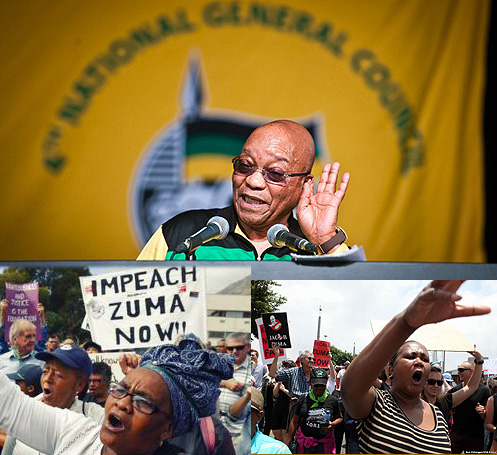
impeachzumanow“T’is the autumn of treason.” Things are heating up in South Africa:

“Twenty-two years into democracy and nearly three years after Mandela’s death, the air is again thick with political paranoia… of high treason … sedition and betrayal, with talk of mysterious foreign… agents who have “infiltrated” the mass media, business, foreign multinationals, NGOs, religious bodies, opposition parties and student movements and who … threaten the state.”

The administration of Jacob Zuma is running scared and has begun to defy democratic institutions. This is new. Previously he was something of a lone gun. Now, he seems to be organizing his government into a fortress of ignominy.

From afar one wonders if a global malaise is sweeping the world. Demonstrations, impeachments and lots of name shouting in South Africa is exactly what’s happening in Brazil.

But the South African story has been building for a longer while, and I think that Jacob Zuma and the ANC party that led the country out of apartheid is sinking fast.

Here’s a quick timeline:

The current president, Jacob Zuma, was pegged a failure from the start and it was remarkable that the ANC actually brought him to power. He was instrumental in the revolution and Mandela originally named him a Deputy President.

But he was sacked from the government in 2005, ostensibly when prosecutors charged him with rape (acquitted by the High Court) but more so because he nearly destroyed a Burundi peace process that was underway at the time.

Two years later in 2007 a high court rules that there is sufficient evidence to prosecute him for a variety of corruption charges, including bribery. Most people thought his story was over.

Then, remarkably, the ANC nominates him into a position to become the third president of the country after the end of apartheid, after Mandela and Mbeki.

Although South Africans were aghast I saw it very much as our first several presidents who all came from the revolutionary movement. Maybe, I thought, he’d now clean up his act.

Anything but. He built himself a gigantic mansion using public funds in broad daylight, flaunted his public duties and appeared like playboys all around the world with a different girl at his elbow every night, sacked and appointed people at will and let cronies siphon off millions of public funds and probably worse of all, ordered in police to massacre mining demonstrators.

To call the man a buffoon is generous. What he is a too typical African potentate dictator, and that doesn’t fit modern South Africa.

Jacob Zuma is now officially on the way to being impeached. Not quite as far along as his colleague in Brazil, but far enough that he’s now lashing out, threatening arrests and implying even more if the opposition continues with its program to get rid of him.

Even more severe, the ANC is considering “recalling” him, which in the arcane and rather old-fashioned communist way forces his resignation. The ANC would do so to avoid the more public impeachment.

Like elsewhere around the world, the ANC as a dominant political party may be in trouble partially due to this global political malaise. It may indeed be “down and out” in the same way the American Republican or Brazilian Worker’s Party seem to be tumbling down. And that is, of course, an incredibly interesting story.

But the main story in South Africa is squarely the story of Jacob Zuma. Whether it’s coincidental that his buffoonery dove-tails with global revolution, or whether he is organically a part of the virus bringing revolution to the world, right now Jacob Zuma is in deep trouble.

And for the good of South Africa and its revolution, he better fall quick.

Symbol Savvy

Symbol Savvy

Trump as a symbolAccording to a successful white South African male progressive, “Anyone who cares about gender equality [should vote for] Hillary Clinton, irrespective of her policies and …whether Donald Trump is the alternative.”

Jarred Cinman argues on a number of fronts, but the one that struck me right away was, “Her symbolism is more powerful than her presidency ever will be.”

Cinman is head of NativeVML, an up and coming South African ad agency whose impressive clients include many of the high-end spirits (like Chivas Regal) and several important banks (like Nedbank). His Hillary endorsement appeared yesterday in South Africa’s most popular, out-of-the-mainstream digital media, the Maverick.

Few understand discrimination as those who live in South Africa, and few can wrestle with their guilt as well as a white South African male.

But Cinman’s principal argument, that Hillary Clinton is a symbol of womens liberation, is the sort of the argument I’ve been using for Bernie: Don’t despair that he won’t get anything done, it’s what he represents.

So if we reduce our support to symbols, then which is more important? A Woman President. Or a Socialist President?

Cinman comes from a part of the world considerably more socialistic than we are. That might explain why he doesn’t see the matchup as I do.

Many, many well educated people I meet around the world don’t know, for example, that America doesn’t provide universal health care.

But for the sake of argument, presuming Cinman is not one of these foreigners with American starlight in their eyes, what is so powerful about the symbol of a Woman President?

First, he presumes correctly that the “male power elite” runs everything, runs the whole world for that matter. Well if a Woman President is so powerful, why is the male power elite still running India and Brazil, or framed a different way, how much really will a single Woman President change this?

Slap, slap. How much would a single Socialist President change this?

Symbols often fade quickly when too easily thrust into importance. Cinman himself discusses this unintended emasculation. When symbols finally make it, they:

“do not have the resources, self-esteem, networks and context to actually take control.”

Further he argues that this starts to institutionalize the original discrimination:

“The truth is many black people in South Africa still believe themselves to be inferior.”

The oppressed take on the character of the oppressors: “They strive toward the same prizes… This striving often benefits the very people they sought to outmanoeuvre.”

So let me get this right.

Vote for Hillary because she’s a woman. You don’t need any other reason. The symbol of a Woman President is so important, that:

1) She won’t be able to accomplish anything.

2) Other women will be marginalized or ensconced in their previous roles.

You see, this isn’t totally fair of me. Cinman’s argument is poorly made and ridiculously vacuous. Mostly, it’s incomplete.

Had he simply also pointed out that Hillary is an incredibly accomplished person, whose list of political accomplishments is very impressive and who has bucked the establishment and won (Benghazi Hearings), the symbol starts to shine.

And because he neglected doing this, even eschewed doing so, I think his brand of thinking may be similarly being applied by Bernie’s opponents to Bernie.

So let’s move beyond the symbols, OK?

COP21 Obfuscation Detritius

COP21 Obfuscation Detritius

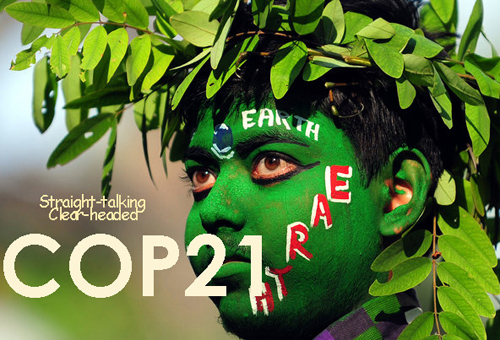
COP21Today on Earth Day only one major head of State (from France) attends the signing statement at the United Nations of COP21, the breakthrough global climate agreement negotiated in Paris last year.

French President François Hollande is the star. He was instrumental in negotiating African developing countries into the deal, but there aren’t any African Heads of State here to sign with him.

John Kerry signs for the U.S. Obama is not here as he’s telling Cameron who’s not here, either, not to leave the EU.

Should we worry?

COP21 is good, but its worst part is another acronym, INDC, Intended Nationally Determined Contributions, that was created at the behest of the developing world and negotiated principally by Hollande.

The premise is that development cannot be compromised in the poorer countries of the world.

As Bolivia and Ecuador explained in a joint statement during the negotiations, “These climate reparations would give to economies relying on progressive extractivism the necessary resources to transition to clean energy without having to sacrifice their social and redistributive policies.”

Translate: pay us not to burn fossil fuels. The implementation in nicer language will be written in each country’s INDC.

In other words, Kenya will forge head with additional solar, wind and other non-fossil fuel methods of making power, but primarily only if Britain, the U.S. and Japan – its principal aid givers – pay them to do so.

I think this is remarkably fair. But it’s politically dicey.

Most Americans (69%) now support efforts to reduce greenhouse gas emissions, BUT … they do not believe (45%) that climate change is a “serious problem.”

What was that?

That’s the same position in 10 of the major 17 countries who pushed through COP21. Only in India, Germany, Canada (only barely, 51%), Mexico, Brazil, Italy and France does the public accept that climate change is a “serious problem.”

So that’s how dumb the world is, and that’s why Hollande is at today’s signing ceremony. France, he is saying, is not as dumb as America or China where (get ready to scratch your head) 71% of the public supports international treaties to reduce greenhouse gas emissions, but only 18% believe that climate change is a serious problem!

I would love for some data from Africa, but except for South Africa (56% support reducing greenhouse gas emissions, but only 45% believe climate change is a serious problem) polling in other African countries doesn’t exist.

You see if you stripped out the motive for reducing greenhouse gas emissions, climate change, then what replaces it?

In developing countries it’s pollution. Pollution is as much an issue in Nairobi as Beijing.

In the developed countries it’s … what? Support for fracking? I just don’t know.

Here’s another take. It’s likely today that most Africans, and maybe even most Americans, recognize that climate change is real. Whether you elevate climate change to a “serious problem” is the key.

There are so many problems in Africa with greater priority, like food and water and poverty, that even if it’s plausible climate change contributes to these, it isn’t as important so the moving goal post of “serious” might not be reached.

In America I think it’s more contentious: it’s political.

Alas for the straight-talker Trump and the clear-headed Sanders, our only solutions to sweeping away the detritus of obfuscation?

Shell Games in Africa

Shell Games in Africa

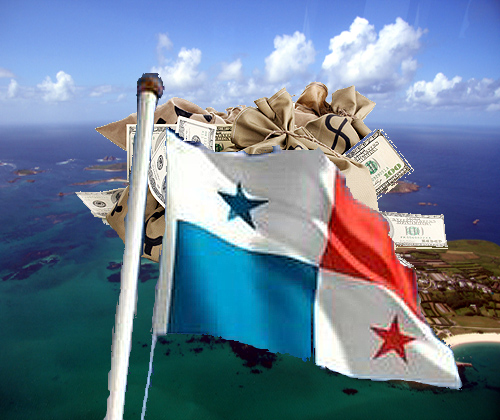
panamapapershidemoneyEver since the leak last week Kenya’s Daily Nation has published multiple stories of hanky panky exposed by the Panama Papers. One of their best is about a shady Danish character who has terrorized Kenya for some time, and the story makes Agatha Christi look like a children’s author.

Peter Bonde Nielsen arrived in Kenya some 30 years ago and learned quickly the political racket. (In the U.S. we call it “lobby.”) He was often seen among the most powerful politicians.

Then, he was rich.

His penultimate scandal was a few years ago just as Kenya was designating a huge amount of land near the town of Kajiado for a massive industrial and high-tech development scheme. Surprise, Nielsen owned a lot of the land.

But as often happens with tricky surveys, the airstrip was laid over various plots owned by different people before they were contacted or bought out. Nielsen, who had built a luxury private lodge in the area to woo his politicians was so furious that he turned his anti-poaching unit into a fully armed militia.

Meanwhile the true owners of the place, two different clans of Maasai, began to argue over the ownership of this increasingly valuable land and challenged Nielsen’s militia. Skirmishes, gun battles and fatalities ensued.

Not good for PR. Nielsen’s influence began to slip.

Nielsen’s official Kenyan company was called Avon.

[Important Digression: there are more “Avon” companies in the world than under any other name. Guess why?]

The address of Nielsen’s “Avon” was Titan Hangar, Wilson Airport. As the heat on Nielsen increased he bought a company, called Titan Worldwide Ltd. (TW) [no website] through Mossack Fonseca, the law firm central to the Panama Papers.

Don’t confuse TW with Titan Aviation that owned the hanger which was the address of Avon, and please don’t confuse it with Atlas Air Worldwide, the actual owner and parent company.

Backed by references from Kenya’s reputable Stanbic Bank Nielsen transfers the shares of the companies that previously owned Titan, Europan and Lespian [no wesbite], to Avon. So he now owned Titan, technically didn’t own Avon, which was now owned by the people who previously owned Titan.

Confusing? Intentionally so.

Then two years ago Avon is sold to a Mossack Fonseca law firm in the British Virgin Islands, Harneys, allowing Avon to remove all its assets and records from Kenya. There is now nothing left in Kenya with which to investigate Nielsen.

This story shows that illicit fund transfers aren’t simply theft, but masterful paths for all kinds of deceit.

Developing countries – especially those in sub-Saharan Africa – are losing a greater percentage of their GDP to illicit financial transactions than any other part of the world.

As journalists throughout Africa delve into the Panama Papers it becomes clear once again that Africa’s being hurt the most. And it’s not as detractors would presume only or even mostly African potentates stealing people’s money, although they figure well enough in the scandal.

Instead it’s mostly shady foreign investors like Nielsen taking advantage of Africa’s weak currency and financial laws.

“African states need cash for development, but their tax revenues are lower by the billions than they should be because of illicit financial flows,” South Africa’s Daily Maverick explains.

It’s absolutely true that it takes two to tango. Nielsen needed corrupt Kenyan politicians, and they are – or at least were, a dime a dozen. But Africa is replete with these morally depraved opportunists from the western world. They come in all forms from evangelical preachers to crooks like Nielsen.

But note: Without a Mossack Fonseca skilled in taking advantage of the terrible weaknesses of our global capitalist system it would be a lot harder for these guys to make their scam.

Revolutionary Religion

Revolutionary Religion

mboroThe world is itching for a fight. Not another war – although they seem inevitable – but fights within societies, bangers and busters, revolutions, civil wars. This is how some South Africans see the world today.

Recently Nechama Brodie of South Africa’s “Mail & Guardian” charged a highly respected American research organization with promulgating controversy and hate through media manipulation.

M&A charged that the widely respected Pew Research Center inflamed religious tensions in the U.S. by republishing a research study they didn’t do and giving it a more provocative title.

Pew – which concentrates much of its research on social and religious trends – reported on a 2015 study by the Demographic Institute and retitled it as a Pew Report, “Why Muslims are the world’s fastest-growing religious group.”

M&A pointed out that the original studies – a behemoth of research by a huge collection of social scientists – had no intentional focus on what particular religion might or might not become the dominant one. The report’s mission was specifically to study persons who consider themselves unaffiliated to any religion.

But PEW took that research and rebranded it in an inflammatory way. It didn’t skew or misinterpret the research, it simply looked at it from an unusual angle differently from what the original designers intended. Brodie calls this “hyperbole” and I agree.

I expect Pew will simply argue this is creative mining of data. But to what end? To the same end that media excuses itself from all such inflammatory reporting: it’s what the public wants.

That means the public wants inflamed religious tension. That means the public wants disruption, bangers and busters, revolutions, civil wars.

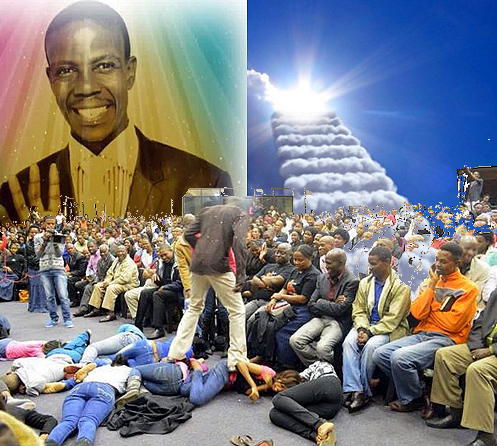
In another closely related South African story, Pastor Mboro was snatched from his Easter service in Johannesburg by a beam of light that took him to heaven where he took selfies of himself and Jesus ‘hot’ Xhosa wife.

The Prophet Mboro later recanted his story when confronted by South Africa’s CRL Commission. The Commission was set up specifically to counter the growing fanaticism among South African religious groups.

So South Africans know a little bit about religious ridiculousness and we should take heed. Prophet Mboro earned a tidy sum from his journey to heaven by selling a lot of his selfies for $350 each!

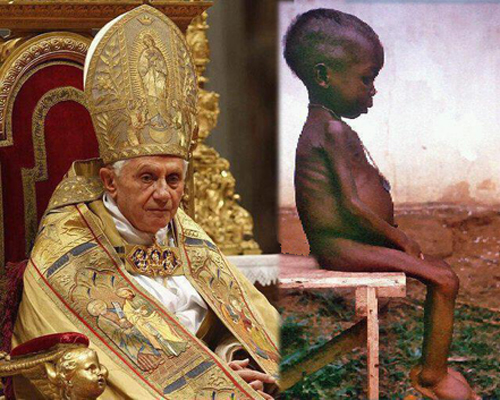
That exceeds most Americans’ monthly tithing to their churches, but it’s a lot less than Pew researchers get paid daily! By the way, Pew is funded by the Pew Charitable Trust, an endowment of oil company heirs.

Got enough kindling? Feel the Bern?

Our Endless Drought

Our Endless Drought

ennuitrumpLike Donald Trump unexpected and near violent political events across Africa are dying down but not going away.

I suppose it’s natural to make comparisons between where you’ve been for a long time and your home, but I’m incredibly struck by how Africa and America seem to have stopped moving. At least the places I know:

Lots of poignant news in Africa – like Donald Trump running for President in the United States – broke around the middle of last year:

Student protests across South Africa, the final end of ebola, the certain pacification of Mali and Somalia, the certified end to Boko Haram’s rule in northeast Nigeria (in fact, the possible essential ending of terrorism continent-wide), the final criminal verdicts in Kenya’s leaders’ trials, and perhaps most representative of all: the imminent death of 92-year old Robert Mugabe.

Mugabe is not dead, although he’s uncharacteristically quiet.

Student protests continue in South Africa, although no longer as disruptive. There is certainly some peace in Mali and Somalia, but there are also incessant suicide attacks. Today the criminal court in The Hague will likely string out further the Kenyan Vice-President’s trial.

And so it goes. Donald Trump is still in the race, but … less so?

What is it about our times that reflects such ennui? “Are everyday women suffering from a bout of fashion boredom?” a reporter in South Africa asks.

“There is a sense of ennui and foreboding,” one of South Africa’s tourism consulting companies says.

It elaborates:

“Last year’s feel good combination has now changed to one of wait-and-see in the United States… Experts indicate that there are multiple clouds on the horizon: …an unstable European economy, recession in Brazil, low employment rates, a slowing down of the Chinese economy.”

I randomly picked a grad student’s dissertation at Stellenbosch University, submitted in December. Stellenbosch was where some of the most violent and successful student protests were launched last year:

“…many of us are struggling with the questions of meaning and purpose. And, like the Hamlet from Act One, we conclude that there is no meaning, no purpose, only vague and arbitrary laws and expectations (formed by God or society, which may end up being the same thing) that keep us on the beaten track of existence.”

A tad grim.

One of Africa’s most vocal revolutionaries is a professor at Rhodes University in South Africa. I have followed Richard Pithouse for years. He is quick witted, extraordinarily articulate and until recently … hopeful.

But lately his calls-to-arms have morphed into unsettled poetry that belies malaise:

“People are gathered on the street, the street that became the primary site of insurgent student assembly over the last week. Four women, two students, an academic and a priest speak on… The ancient, it seems, is entwined with the hip.

“New possibilities are opening, new possibilities forged in struggle by courageous young people, new possibilities that, like the songs of sadness, are as real as the promise that comes with the smell of rain on dry earth.”

There is a lingering drought in South Africa. There is no new rain on the dry Karoo.

Let’s hope this is simply all impatience and not dismay. Today is yet another media-insisted Waterloo Day for Donald Trump. Jacob Zuma might wake up tomorrow and resign. Students at Stellenbosch might have their fees waved. The real culprits of Kenya’s 2007 violence might confess. Tanzanian legislators might pass a new, wonderfully democratic constitution.

It will start raining, again.

Or not.

One For All

One For All

richandpoorHave you noticed? Income inequality is a hot issue. Ok, try this one. How many billionaires’ net worth equals half the rest of the world?

14000? Maybe be bold and guess 765?

How about… 62.

Kenyan commentator Rasna Warah called this yesterday “a new extreme.”

It’s tough enough when a Kenyan realizes that his country’s entire GDP isn’t even as great as Chicago’s, but inequality like this converts disbelief into abject anger.

It’s no longer a matter of understandable time, time for development, time for industrialization. The collection of wealth among a few individuals has occurred with lightning speed.

In 2010 it was 388 individuals. Five years later, it’s 62, despite the fact that the world’s overall economy has grown substantially in those five years.

The collection of wealth in so few hands is terrifying.

“In a world where one in nine people go to bed hungry every night, we cannot afford to carry on giving the richest an ever bigger slice of the cake,” Oxfam’s chief executive told the Guardian newspaper.

It is the respectable organization Oxfam that published the report several weeks ago.

I find it equally terrifying that I wasn’t able to learn about this from my own media. This strikes me as absolutely astounding: A commentator in Kenya that brought it to my attention.

It’s impossible to presume any logical fairness created this division. It’s just not statistically possible. Even 62 Big Blues would not be able to corner the market or coral capitalism to this level of advantage.

Oxfam, and I, believe it is structural within capitalism, and this is the reason that capitalism needs regulation. We’ve gone through a period of hyper deregulation, and this is the result.

More than $7.6 trillion of wealthy individuals’ net worth is held in off-shore tax havens.

On the one hand you can’t begrudge a wealthy person making herself wealthier. But the loopholes that allow this to occur, allow it to be freed of taxation, is often the result of the wealthy directing politics.

“These elites and über-rich individuals — and often their corporations — exploit the system for personal benefit in a way not possible for the rest of us,” one South African publication claims.

The ability of the wealthy to now direct history is mind-blowing.

Thanks to some Kenyans for letting me know. Clearly it’s not something the 62 want announced just yet.

But when is the horrible question.

Where Has All the Power Gone?

Where Has All the Power Gone?

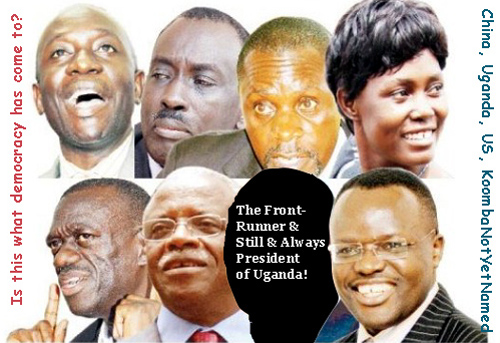
UgandaPresidentialElectionAre you tired of political debates? Join presidential front-runners Donald Trump and self-appointed president-for-life in Uganda, Yoweri Museveni.

Trump and Museveni have a lot in common: similar policies (e.g., none) and style (dismissive, offensive, threatening).

And … they’re both way ahead in the polls.

Museveni’s spokesman told reporters yesterday that he can’t make the last debate (he’s not made any of them) because of a “tight campaign schedule” and because “people he hasn’t addressed are yearning to hear from him and he can’t disappoint them.”

The spokesman added that “most of the questions have [already] been asked” and that answering the same questions “would be a repetition.”

In two weeks Museveni will win another “election” and become Africa’s longest serving dictator after Robert Mugabe.

He has some very Trump-like brownshirt strategies this time around:

(1) Over the last year his government funded 30,000 “volunteers” from around the country that local police have trained in “crime prevention, ideology and patriotism.” I’m not sure if they give out their names, but there might be a Cliven Bundy or two among them.

(2) In past elections Museveni simply sent thugs beat to a pulp his perennial rival, Kizza Besigye, but this year by sanctioning more candidates than he’s ever allowed before, the other candidates are doing the beating!

(3) Museveni is leading in the polls. According to pollsters the overwhelming reason is that the electorate fears Museveni will kill them if they don’t vote for him.

Last night in America we had our first valid presidential debate. Front-runners duked it out while masterfully remaining polite despite media taunts, defining clear differences that could result in meaningful voting.

That was one of how many? A dozen debates so far?

Even in America, like Uganda, like Zimbabwe, like for numerous school board elections or union chapters or government cells in China or Greenland, democracy is horribly corrupted.

Power has shifted from each individual citizen’s one-man vote that reflected her own studied self-interest to manipulators and tricksters. Power today rests solely with collectives of elite.

In some places like China they may, indeed, be intellectuals. In America, it’s corporations. In Uganda it’s a single man: If the guy’s good, things will be OK. If the guy’s bad, tough story. Hard to say whether flipping the coin on a personality or choosing a complex social collective is better. Talk about lesser of the evils…

Is democracy dead?

Halisi na ukweli!

Halisi na ukweli!

iowaelectionLetter to my African Friends:

Last night I watched the first official tallies of this presidential election. I realized that meaningful social change using democracy is something possible in Africa but not very likely in America.

This because in places like South Africa and Kenya you’re tinkering with new constitutions; in Tanzania you’re considering a whole new constitution.

America’s constitution will soon be 250 years old. Unlike Europe where constitutions were changed often radically many times, most Americans believe that our aged constitution remains the best plan for running a society.

That’s because most Americans are afraid of change.

In my short lifetime unexpected hurt has beset us Americans, social pain not experienced since our Civil War almost 150 years ago. Because for most of our 250 years American society was healthier, freer and happier than almost all the rest of the world, most Americans think our current hurt is temporary and unusual, and that we should just “keep on trucking” and ultimately things will get better.

Meanwhile with each passing year our constitution ossifies even more. Every constitution tries to perpetuate itself, and we let ours get away with murder.

Here’s what I want to tell you as you fashion your new societies with democracy:

1) Executive presidencies like America’s are bad. Too much attention becomes focused on a single person. Parliamentary democracies like Europe have a much longer and more prosperous future.

2) Don’t tinker with the media. We did. We allowed oligarchy business crazies like Rupert Murdoch to buy then control our media. Our free and democratic society should have stopped him. He did too many illegal or almost illegal things to gain control, and then with time this control seemed organic, not ordered like it really was. The desperate needs of one man started to grow through the entire society.

3) Don’t be afraid to enforce the truth. This is a touchy subject, and the retort you’ll hear is that there are differing views on what’s true. That’s playing around with the language. Kutekeleza ukweli. Swahili is better for saying this. There is a truth, a reality, an ukweli. Climate change is halisi. Put them together and “ukweli na halisi” is incontrovertible truth, and we’ve lost it in America.

We allowed economic forces to deny reality. I suppose that doesn’t matter in some cases, and the argument is that the “right to say anything” is a part of free speech. But when those forces deny climate change, deny womens’ rights, deny voters’ rights, deny science, it gets rid of truth. That’s what’s happened in America.

I think this is because our system is so old it perforce doesn’t work as well as more modern systems of government, and while that isn’t ukweli na halisi it’s close. Our society is afraid of change, and so much so that it now freely allows denial of the truth.

Finally don’t think you’re without problems or that we Americans don’t have a lot to admire. We’re much less racist and ethnic than you are. Racism and ethnocentricity could very well be your Achilles Heal, just as fear of change is ours.

We are fiercely independent, and you aren’t. Many of you think of independence as courageous but pointless. We equate independence with freedom, and so should you.

Those of you reading this are likely part of the “emerging middle class.” You’re no longer herding goats or trucking Jerry cans from the river. Your society has managed to liberate you personally from many economic hardships.

Lots of your brothers and sisters aren’t where you are, yet. Don’t abandon them for your own stardom, as we so often do in America. Don’t embrace the false notion that “you pulled yourself up” so why can’t they?

There’s not a one of us that did anything alone.

Last night as I watched my hero, an old man rally his young supporters, I too felt like an old man, and that America was an old man’s home. Youth in America is a minority, suppressed and coopted. But in Africa youth is the majority!

Any energy I have left to change my own society comes only when I think of you and the changes that you can bring to our world.

#6-7 – Pathetic Politicians

#6-7 – Pathetic Politicians

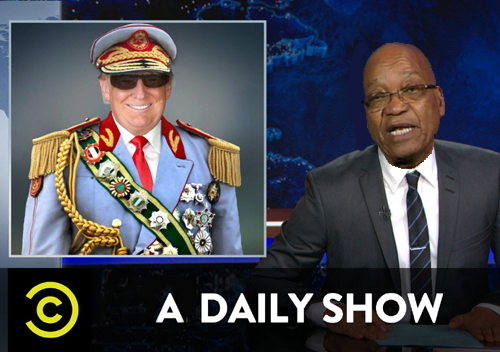
a dailiy showMy #6 and #7 most important stories of 2015 in Africa sort of go together, “Zuma the Clown” and “Trump,” two of the most unimagineable politicians in history, one in South Africa, one in the U.S.

They are inextricably linked by their unique ability to sustain their popularity by maligning their supporters, a sort of SM political love.

Trump really didn’t start hogging the stage until midyear, but ever since then Africa has been almost obsessed with him.

It started with the fascination that in America a crazy, like Marie Le Penne of France, might actually be taken seriously. More analytic observers probed “inner meanings” to suggest this showed both how open democracy was and how strong it would be finally restraining these “crazies.”

While Trump was on his ascendancy, State President Zuma on the other hand was going in the other direction. Problem is that Zuma has been falling for some time, and his hole seems bottomless.

There are few modern leaders in essentially democratic societies who have been mired in such scandal as Jacob Zuma. Normally leaders who reach the point he has – like the Toronto mayor or South Carolina governor, fall pretty quickly.

But Zuma carries with him more than his own folly. He’s a symbol of the anti-apartheid movement, one of the last of the original revolutionaries. To many patriotic South Africans, certifying his collapse would be tantamount to questioning the anti-apartheid movement.

It seems a stretch to me, but I’m not a 50-year old South Africa who felt enormous liberation in the mid 90s.

What these two buffoons have in common is that they are supported by people they dislike if not disdain. Trump has no intention of helping the poor. Zuma seems simply incapable of organizing anything constructive.

Yet it is precisely the poor from which Trump gets his main support, and from the well educated managerial class of South Africa that Zuma get his.

So what else do they have in common?

Public disdain for critics. Almost overnight the two of them have given critics a bad name even while themselves criticizing their detractors with regular sorties of foul language into normally hallowed territories like spouses and other family members.

I think what the two demonstrate is that the whole damn world is fed up with the systems in place and they are about as radical a divergence from existing systems as you can come up with.

Perhaps it’s a social, subconscious frustration that the Arab Spring fizzled out. That’s an awfully hard thesis to construct but on a macro level, I think it’s a reasonable assessment of social perceptions, today.

They lash out at the ruling elite and convince their supporters they aren’t ruling elite, because above all, they lie.

Damned world isn’t it, when that’s the only sure way to success?

(For my summary of all the top 10 stories in Africa in 2015, click here.)

#5 – Trumps Influence

#5 – Trumps Influence

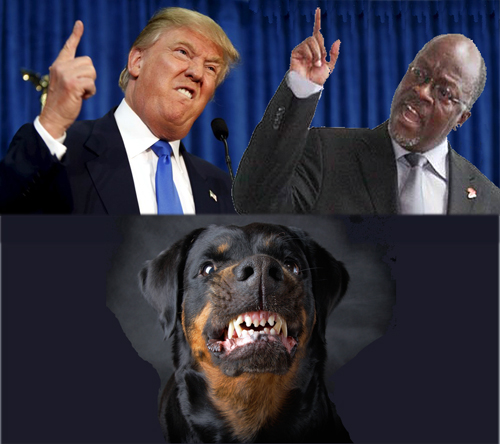
trumpmagufuliLast week the new Tanzanian president, already nicknamed “Bulldozer,” announced he was deporting all illegal workers. It was a direct hit on neighbor Kenya, because much of Tanzania’s professional class comes from Kenya.

The #5 story in Africa for 2015 was the Tanzanian election, and it tells a horrible tale of democracy and may be foretelling the future for the U.S. and worldwide.

Magufuli’s deportation order followed all sorts of other blustering initiatives, including ranting in front of a group of high-profile African businessmen that they would be jailed if they don’t pay their taxes and executive actions slashing the national budget.

Magufuli is an object lesson in democracy. Everything he is doing at the moment is wildly popular in Tanzania: damned if it isn’t legal, or ethical or even moral. It’s … popular.

Consequences? Who knows, it’s popular! The polls say so!

We’re getting a good dose of that lesson right now during our own presidential campaign. Democracy is showing its true colors.

Tanzania’s election last fall was peaceful and certified by all sorts of outside observers as free and fair. But the choice available to the people at the time, Magufuli vs. Lowassa, was not a choice that a lot of the electorate wanted. So goes democracy.

And guess what?! It wasn’t a choice that the power elites wanted or expected!

Sound familiar? Edward Lowassa (Jeb Bush) was the establishment favorite. Instead, Magufuli (Cruz? Trump? Milton Don’tknowyet) became the nominee. Foreshadowing what might happen this summer in the U.S., Lowassa (Jeb Bush) then mounted his own rebel campaign.

Magufuli’s decisive victory stunned everyone, I think even his supporters. But then, there was no jubilation, just depression and tension.

Did the people get what they wanted? If they did, did they know what they wanted? Did they want what they knew they wanted?

End of First Book.

The Beginning of the Second Book opens with Magufuli firing up the team.

Hiding behind trucks in shady parts of Dar to unmask criminals, telling tax evaders he’s going to put them all in jail, far exceeding his executive authority with actions slashing the budget.

Now, deporting “illegals.”

Think he might suggest building a wall?

I don’t think the Second Book is going to end well, but we’ll see. But the first book is done. It shows that the democratic process is not a democratic process. What influences elections in Tanzania might be different than what influences elections in the U.S., but the result is the same.

Influence trumps rational choice.

Stay tuned. Or maybe if you’re an American, take heed. Either way. Keep the message to a sound-bite length.

(For my summary of all the top 10 stories in Africa in 2015, click here.)